
10 Small Reading Nook Ideas to Make Space for a Good Book
10 Small Reading Nook Ideas to Make Space for a Good Book There is a particular kind of tiredness that…
10 Small Reading Nook Ideas to Make Space for a Good Book
There is a particular kind of tiredness that only a good reading corner can fix. Not the couch, which invites scrolling, and not the bed, which invites sleep. A real reading nook is a small, deliberate corner that says this is where books live. The good news is that you do not need a window seat, a library, or even a spare room. Most of these ideas fit into a corner you already walk past every day.
Each idea below focuses on one decision, what to buy or build, how to place it, and a cheaper way to get the same feeling. Pick the one that matches your space and start there.
Jump to an idea
- A supportive cushion and soft throw
- A directed reading light
- A small side surface for a cup
- A basket with current books
- A low footstool
- A curtain controlling glare
- A narrow wall shelf
- A textured rug defining the corner
- A framed print in the background
- A washable cushion cover
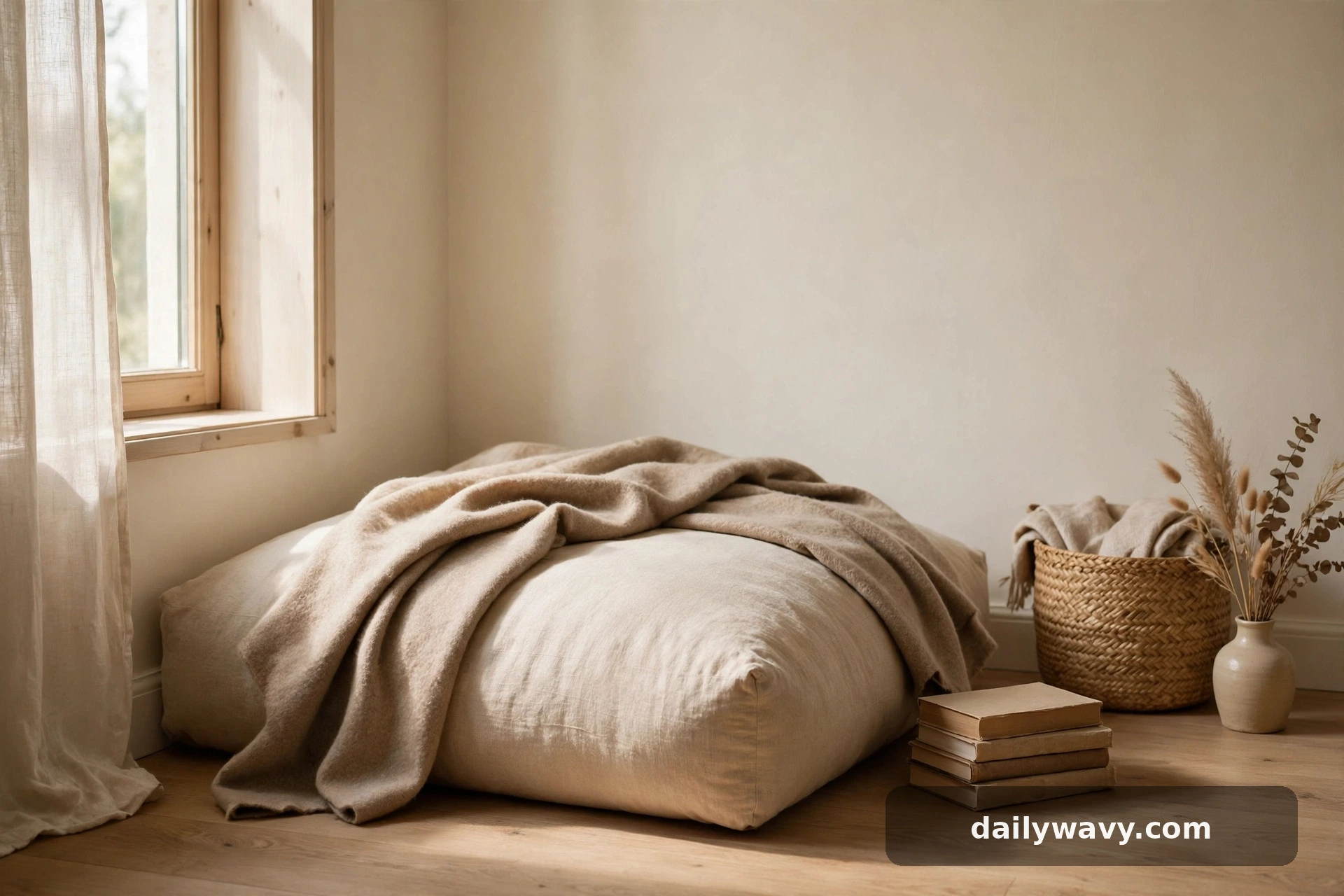
1. A supportive cushion and soft throw
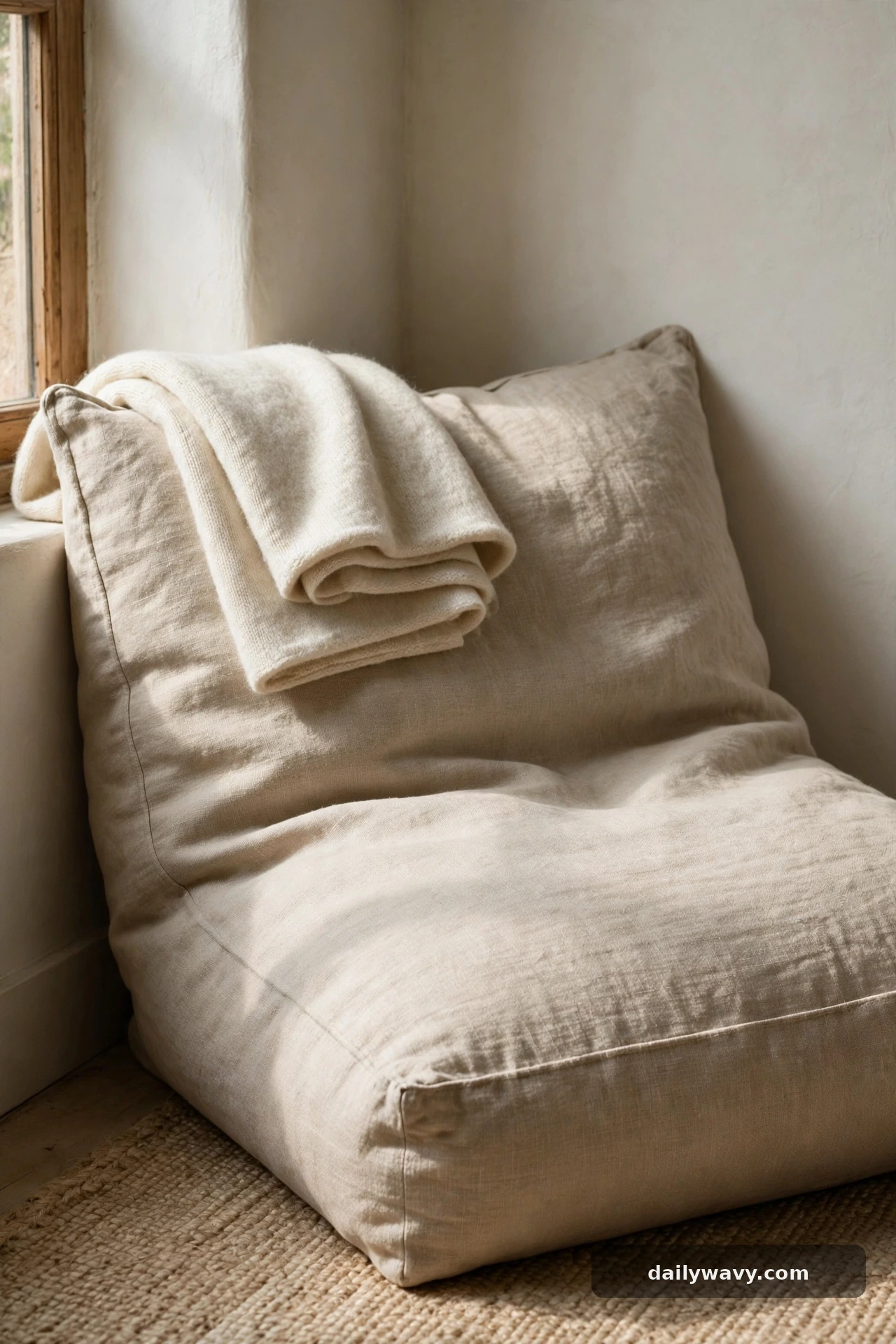
Every reading nook lives or dies on its cushion. Not the decorative kind that slides off the moment you lean back, but a real, dense, hold-you-up cushion. This is the single purchase that turns an empty corner into a reading spot, so spend your energy here first and let everything else follow.
Look for a floor cushion or a firm square cushion around 24 inches on each side and 5 to 6 inches thick. Foam with a fiber wrap gives you structure that still feels soft. Feather alone will flatten within a week of daily reading. Cotton canvas, wool blend, or a tight linen weave for the cover will survive being dragged around and leaned on.
Place it against a wall or the side of a bookshelf so you can wedge it upright for back support. Toss a soft throw over the top, wool or cotton around 50 by 60 inches, folded once so it is easy to grab when the room cools down. The throw does double duty: warmth and a visual signal that this corner has a job.
A lower-cost alternative: layer two standard bed pillows inside a single large cushion cover from a thrift store. It will not be as firm, but propped against the wall it gets you reading tonight.
2. A directed reading light

Overhead lighting is the enemy of a cozy corner. It washes everything flat and leaves your book in a puddle of glare or shadow. A directed reading light, one you can aim, changes the whole mood and saves your eyes during evening chapters.
A clip-on or clamp lamp is the most flexible choice for a small nook. Clamp it to a shelf, a windowsill, or the back of a chair at about 15 to 20 inches above and slightly behind your shoulder. Warm white, around 2700K to 3000K, feels restful. Aim for something in the 400 to 800 lumen range, bright enough to read by without flooding the corner.
If you have a side table, a small adjustable desk lamp with a swing arm works beautifully. The arm lets you pull the light close for fine print and push it away when you just want atmosphere. Plug-in wall sconces with a cord cover are a clean option if you cannot clamp anything.
A lower-cost alternative: a battery-operated puck light or a rechargeable clip lamp from a hardware store. No wiring, no commitment, and you can move it until the position feels right.
3. A small side surface for a cup
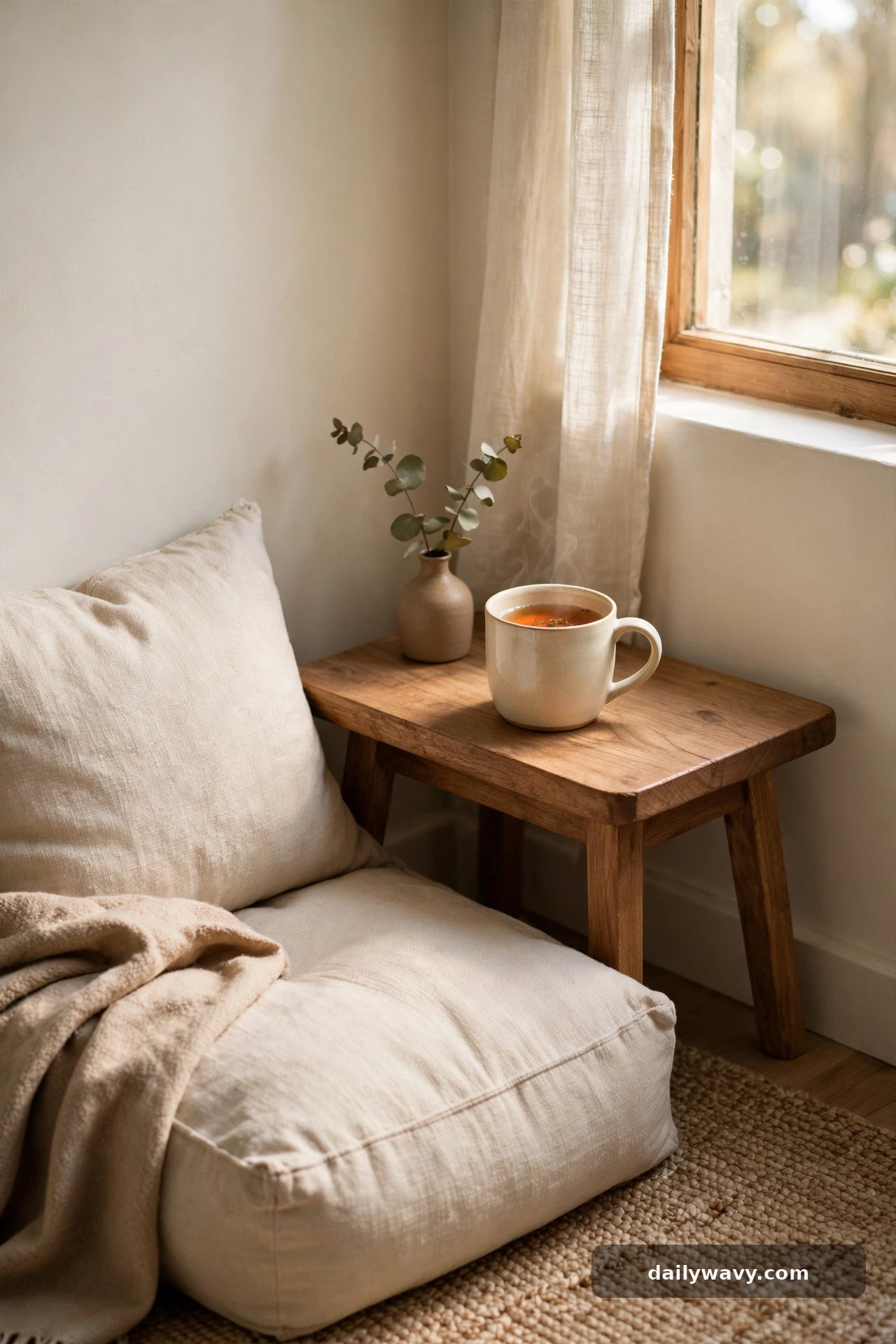
A reading nook without somewhere to set a cup is a nook you will keep leaving. Tea goes cold on the floor, coffee rings appear on the rug, and the spell breaks every time you stand up. A small side surface, even one barely bigger than a saucer, keeps the ritual intact.
The surface needs to be stable, reachable without leaning, and about the height of your seat plus 2 to 4 inches. A folding tray table, a small stool, a wall-mounted fold-down shelf, or even a sturdy plant stand all work. Aim for a top around 12 to 16 inches square. Anything larger starts eating the corner you are trying to protect.
Place it on your dominant-hand side, within a comfortable arm’s reach of about 18 to 24 inches from the center of your seat. If the surface is light, put a felt pad under the cup so nothing slides when you nudge the table getting comfortable.
A lower-cost alternative: a wooden crate turned on its side or a stack of two sturdy hardcover books you already own topped with a small tray. Not elegant, but it holds a mug and costs nothing.
4. A basket with current books
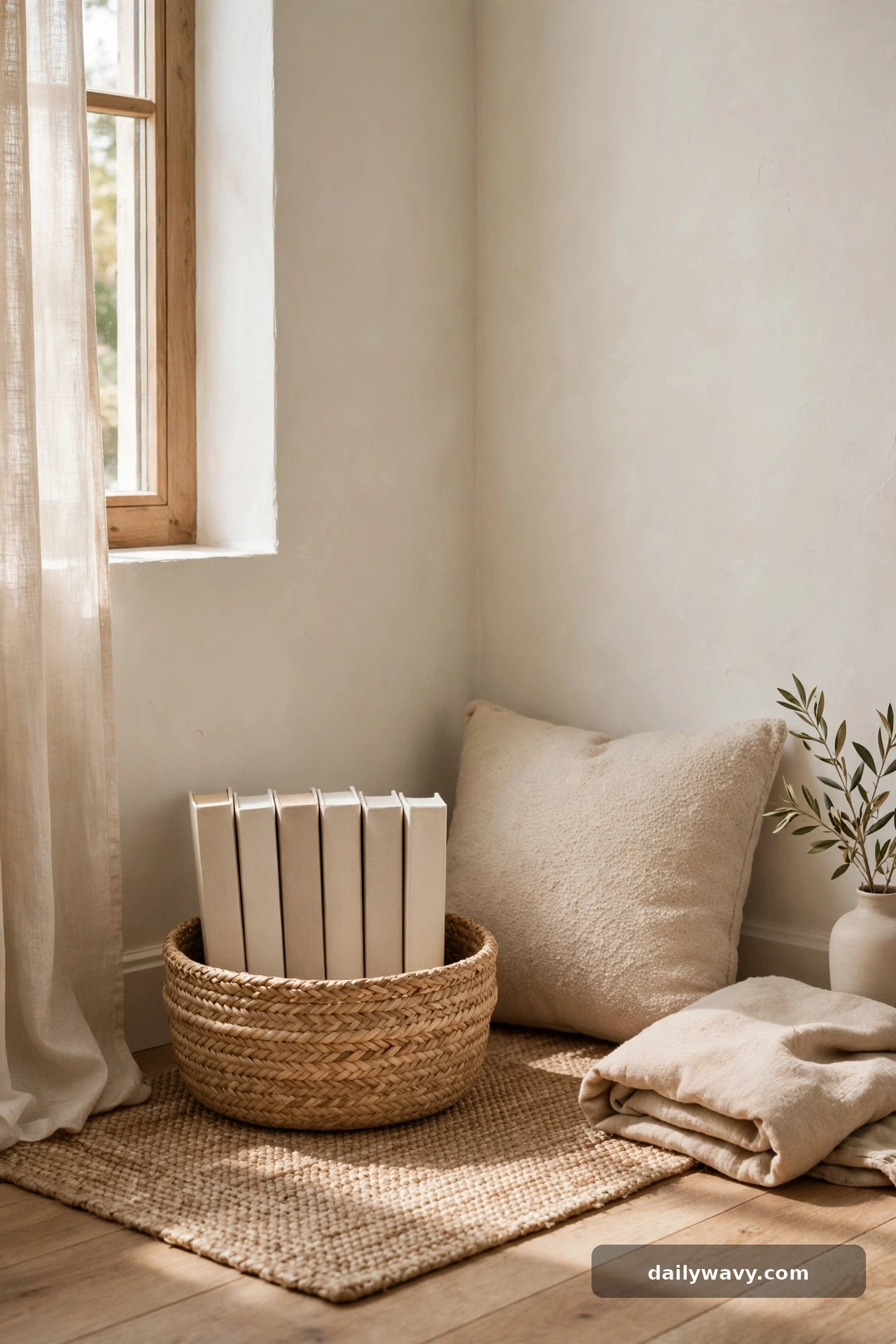
The books you are actually reading should live in the nook, not across the room on a shelf you never visit. A basket holds your current stack, your next pick, and the one you keep meaning to finish, all within arm’s reach and looking intentional instead of cluttered.
Choose a basket with structure, seagrass, cane, or a lined fabric bin about 14 to 18 inches wide and 10 to 12 inches tall. It should hold 5 to 8 books upright without them toppling. An open top or a wide mouth matters more than a lid, because friction kills the habit. If reaching in feels like a chore, the books migrate back to the shelf.
Set it beside or slightly in front of your seat, on the floor or on a low shelf. Keep it to current reads only. The moment it becomes storage for books you finished months ago, it stops being a reading basket and starts being clutter. Rotate it weekly.
A lower-cost alternative: a paper grocery bag folded down to a tidy cuff, or a canvas tote hung from a wall hook. Both hold a small stack and both cost nothing.
5. A low footstool
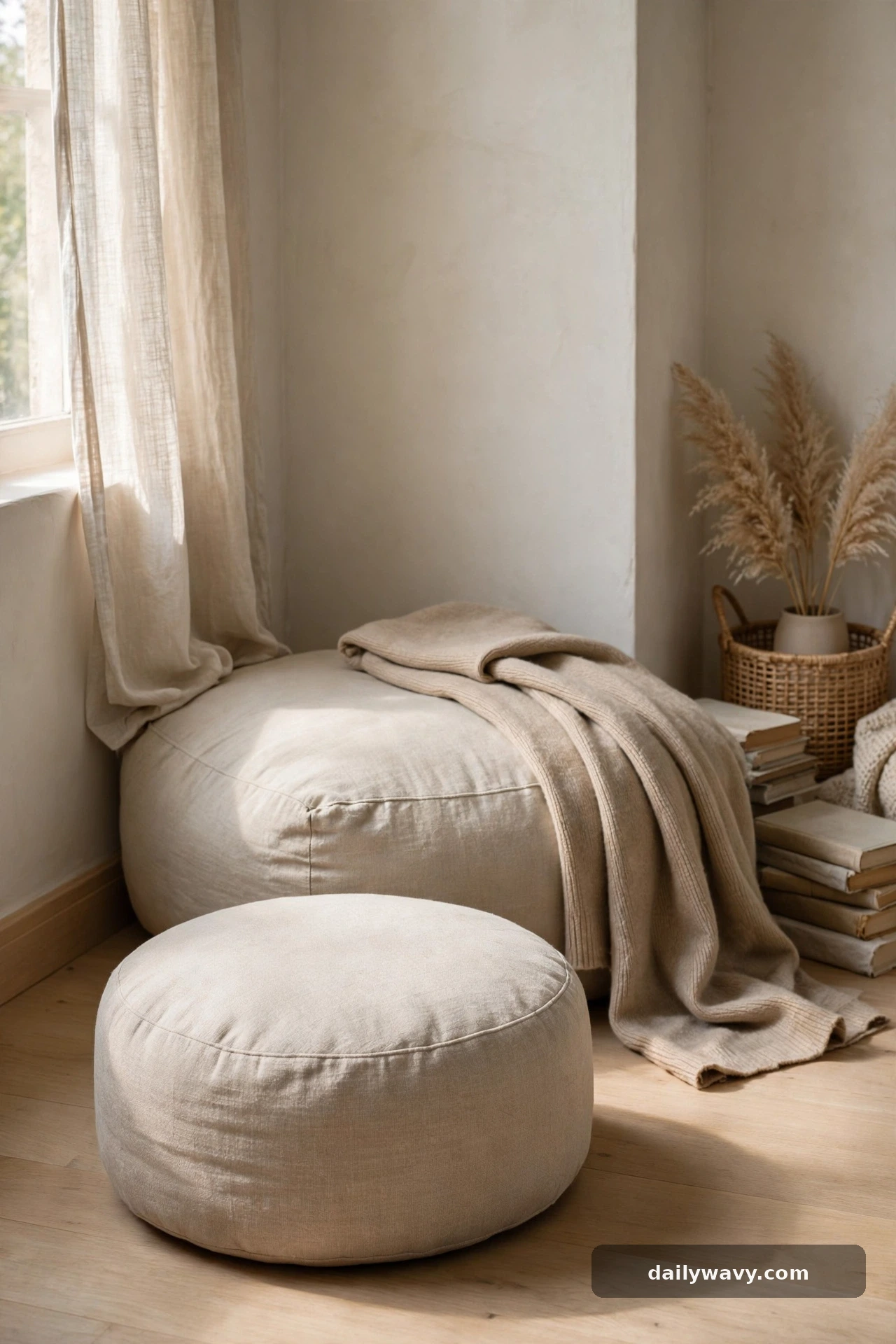
Feet up changes everything about how long you can sit and read. A low footstool takes the weight off your lower back, stops your legs from going restless, and makes a floor cushion feel like a proper chair. It is the difference between twenty minutes and two hours.
The right height is roughly half your seat height. If you are on a floor cushion about 6 inches off the ground, a footstool around 10 to 12 inches tall keeps your knees slightly below your hips, which is the comfortable position. For a low armchair, match it to about 14 to 16 inches. Upholstered tops are kinder to bare feet than wood.
Look for something light enough to nudge with one foot, because you will move it constantly. A small pouf, a storage ottoman, or a simple upholstered stool all work. If space is truly tight, a storage ottoman earns its footprint by holding blankets inside.
A lower-cost alternative: a firm bed pillow stacked on a low step stool, or a folded quilt on an upside-down storage bin. Test the height before you commit to anything permanent.
6. A curtain controlling glare
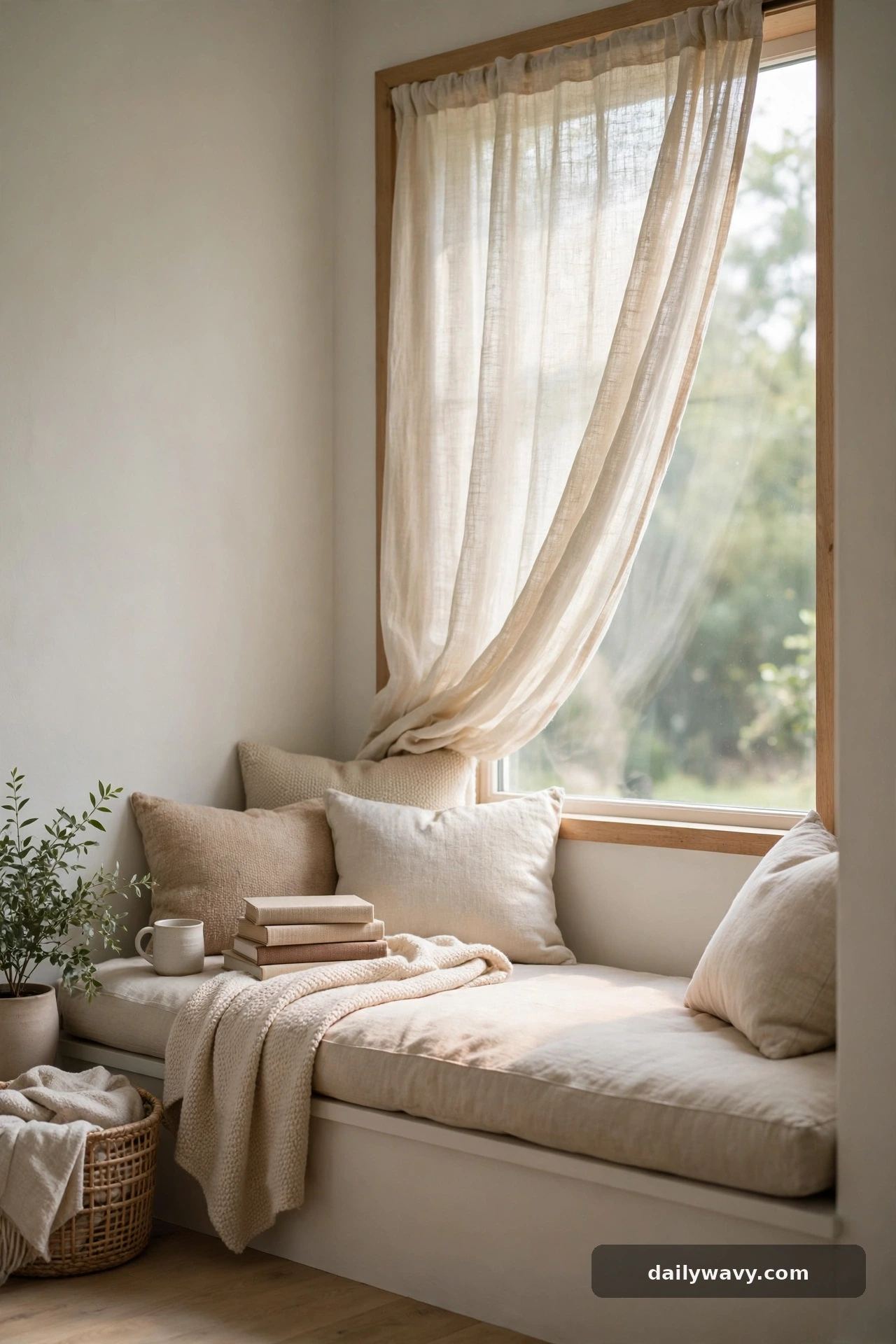
If your nook sits near a window, you already know the problem: glorious light at 10 a.m., blinding glare at 4 p.m. A curtain that controls glare without killing the daylight lets you read in the same spot all day instead of chasing shade around the room.
A linen or cotton curtain in a light color diffuses harsh sun while keeping the corner bright. Hang it on a simple rod or a tension rod inside the window frame, wide enough that the panel can be pulled fully to one side when you want the view. For a nook beside a window, a single panel around 40 to 50 inches wide usually covers a standard window half.
Mount the rod 4 to 6 inches above the window frame and extend it 3 to 4 inches beyond each side so the fabric stacks off the glass. This one detail makes the window look bigger and keeps the curtain from blocking light when open.
A lower-cost alternative: a frosted window film on the lower half of the glass, or a paper accordion blind. Both cut glare for a few dollars and need no hardware.
7. A narrow wall shelf
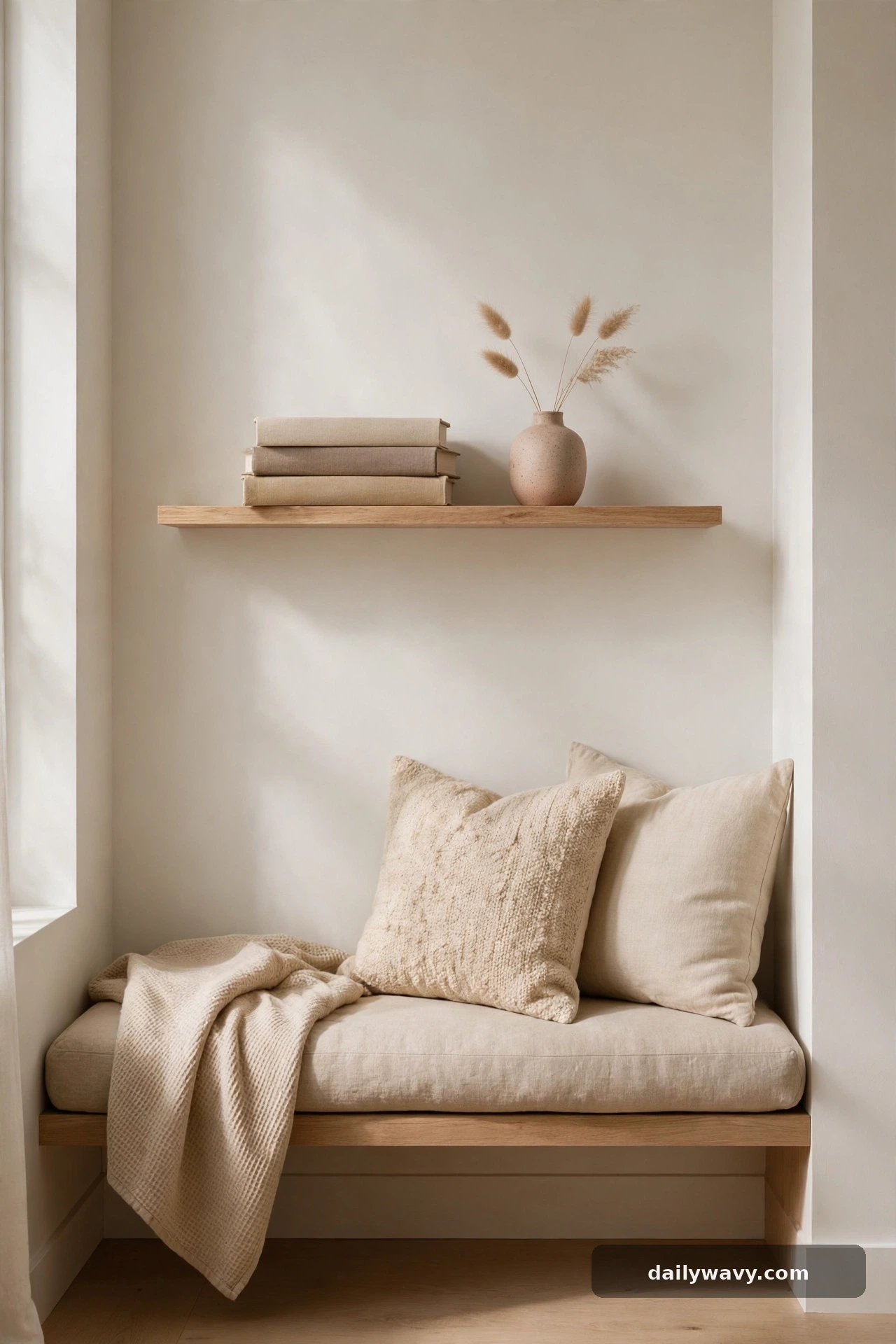
Floor space is precious in a small nook, so storage should go up, not out. A narrow wall shelf above or beside your seat holds the books you are cycling through, a small plant, or a candle, without stealing a single inch of floor.
Keep the shelf shallow, 6 to 8 inches deep, so it reads as a ledge rather than a bookcase. Mount it at a height you can reach without standing, usually 48 to 60 inches from the floor depending on your seat. One shelf is often enough; two staggered short shelves look more deliberate than one long one.
Use proper wall anchors, because books are heavy. A 24-inch shelf of paperbacks can weigh 20 pounds or more. A simple bracket shelf in painted wood or a floating shelf with hidden hardware both look clean. Style it loosely: a short stack of books, one small object, some breathing room.
A lower-cost alternative: a picture ledge from a big-box store, or a reclaimed board on two L-brackets. Sand it, paint it the wall color, and it disappears into the room.
8. A textured rug defining the corner

A rug is the fastest way to tell your brain that this corner is a room within a room. It marks the boundary, softens the floor under your cushion, and adds the texture that makes a nook feel finished rather than improvised.
Size it so your seat and footstool both sit fully on it, with a few inches to spare. For a floor-cushion nook, a 3 by 5 foot rug is usually right. For a chair-based nook, 4 by 6 feet gives you proper coverage. Low pile or flatweave is easier to keep clean and does not fight with the cushion sliding around.
Texture matters more than pattern here. A jute, wool, or cotton flatweave in a warm neutral adds grip and visual warmth without competing with your books and throw. If the floor is cold, layer a smaller soft rug over a larger flat one for insulation where your feet land.
A lower-cost alternative: a bath mat, a yoga mat wrapped in a quilt, or a thrifted rug cut to size. The boundary effect works no matter what the rug cost.
9. A framed print in the background
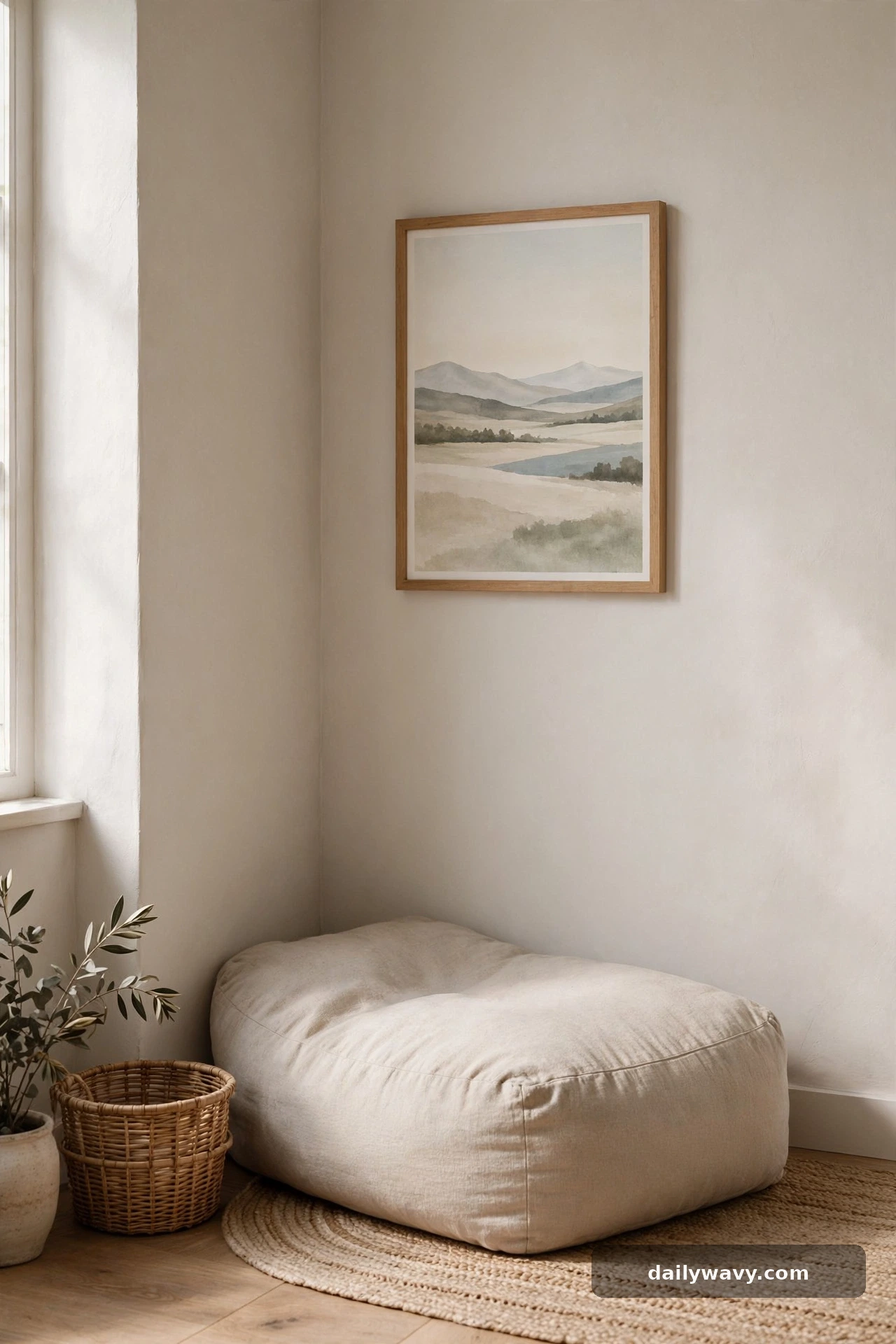
A bare wall behind a reading nook feels unfinished, and unfinished corners do not invite lingering. One framed print, hung where you see it when you look up from the page, gives the nook personality and a sense of permanence.
Choose something calm: a landscape, an abstract in muted tones, a vintage book illustration. The frame should be simple, wood or black metal, and the art should be sized to the wall, not the nook. A single piece around 16 by 20 inches suits most small corners. Hang it so its center sits about 57 inches from the floor, the standard gallery height that feels natural.
Keep it to one piece or a tight pair. A gallery wall over a reading nook competes with the book in your hands for attention. Let the art be background, not the main event.
A lower-cost alternative: a page torn from a calendar, a postcard in a document frame, or a print from a library book sale. Frame it simply and nobody will know the difference.
10. A washable cushion cover
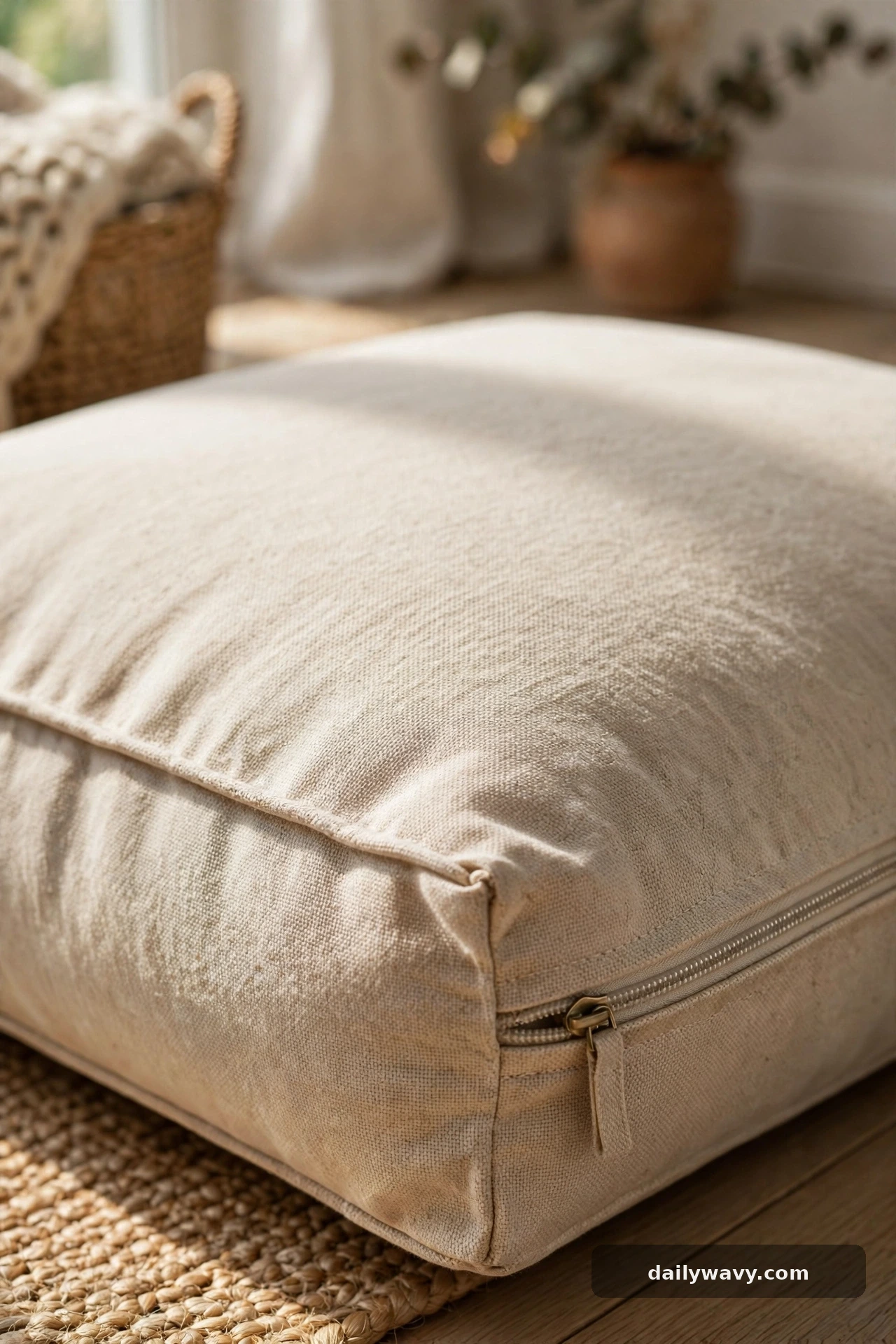
Here is the unglamorous truth about reading nooks: they get lived in. Tea spills, the dog claims the cushion, dust settles, and a beautiful corner slowly turns dingy. A washable cushion cover is the small practical decision that keeps your nook inviting for years instead of months.
Look for a cover with a hidden zipper, in a machine-washable fabric like cotton canvas, denim, or a performance linen blend. Avoid dry-clean-only fabrics no matter how beautiful they look in the store. Buy two covers if you can: one on the cushion, one in the wash, so the nook never sits naked.
Wash on cold and line dry when possible to prevent shrinking, and check the care label before the first wash, not after. A mid-tone color or a subtle pattern hides the wear between washes far better than pure white.
A lower-cost alternative: a standard pillowcase in a pinch, or a thrifted duvet cover cut and sewn to size. The zipper matters more than the fabric source.
Frequently asked questions
How much space do I actually need for a reading nook?
A corner about 3 by 3 feet is enough for a floor cushion, a small side surface, and a basket of books. A chair-based nook wants closer to 4 by 4 feet so you can pull the chair out and stretch your legs. Measure your corner before buying anything, and tape the footprint on the floor to test it.
What is the best lighting for reading?
A directed, adjustable light at 2700K to 3000K warm white, positioned above and slightly behind your shoulder. Avoid relying on overhead room lighting alone, and avoid placing a bright window directly behind your book, which creates glare on the page.
Can I make a reading nook in a bedroom corner?
Yes, bedrooms are ideal because they are already quiet and private. Keep the nook visually separate with a rug or a curtain so it feels like its own zone. If the bedroom is small, a floor cushion that slides under the bed during the day keeps the room flexible. For more bedroom ideas, see our small bedroom with a queen bed guide.
How do I keep a small nook from looking cluttered?
Give everything a home: books in the basket, the throw folded on the cushion, the cup on its surface. Cap the book basket at current reads and rotate weekly. One framed print and one shelf are enough decoration. Clutter in a nook usually means too many books, not too much furniture.
What if I have no spare corner at all?
Steal one. The end of a hallway, the space beside a wardrobe, or a deep windowsill with a cushion can all become a nook. A folding chair and a clip lamp turn any 2-foot-wide strip into a reading spot that packs away. Small spaces reward creativity, as our narrow living room layout ideas show.
How do I make the nook comfortable for long reading sessions?
Support matters more than softness. A firm cushion that holds your back, a footstool at the right height, and a directed light prevent the aches that cut sessions short. Add a throw for temperature changes and keep water or tea within reach so you do not have to get up.
The corner is waiting
A reading nook does not need to be big, expensive, or perfect. It needs a comfortable seat, good light, and the small rituals, a cup of tea, a stack of current books, that make you sit down and stay. Start with the cushion, add the light, and let the corner grow around your habits. Your next favorite book deserves a proper place to be read.
For more ways to carve calm corners out of compact rooms, browse our small entryway decor ideas and the full Home and Decor collection.



2 Comments