
12 Small Front Porch Decor Ideas for a Welcoming Entrance
12 Small Front Porch Decor Ideas for a Welcoming Entrance A small front porch has one job and about six…
12 Small Front Porch Decor Ideas for a Welcoming Entrance
A small front porch has one job and about six feet of space to do it. It has to welcome people, survive the weather, and stay out of the way of the door, the steps, and the mail carrier. The good news is that a tight entry works in your favor: a few well-chosen pieces read as intentional, while a big porch needs a lot more to feel finished. This guide walks through 12 ideas that fit small porches, each with what to measure, what materials to buy, and how to place everything so the space stays safe and walkable.
Jump to an idea
- A pair of proportionate planters
- A single compact bench
- A layered mat with safe flat edges
- A small seasonal wreath
- A weather-rated lantern
- A narrow side table
- A modest outdoor cushion
- A house-number display
- A plant grouping beside the door
- A low basket with outdoor-safe contents
- A repeated metal finish
- A single accent color
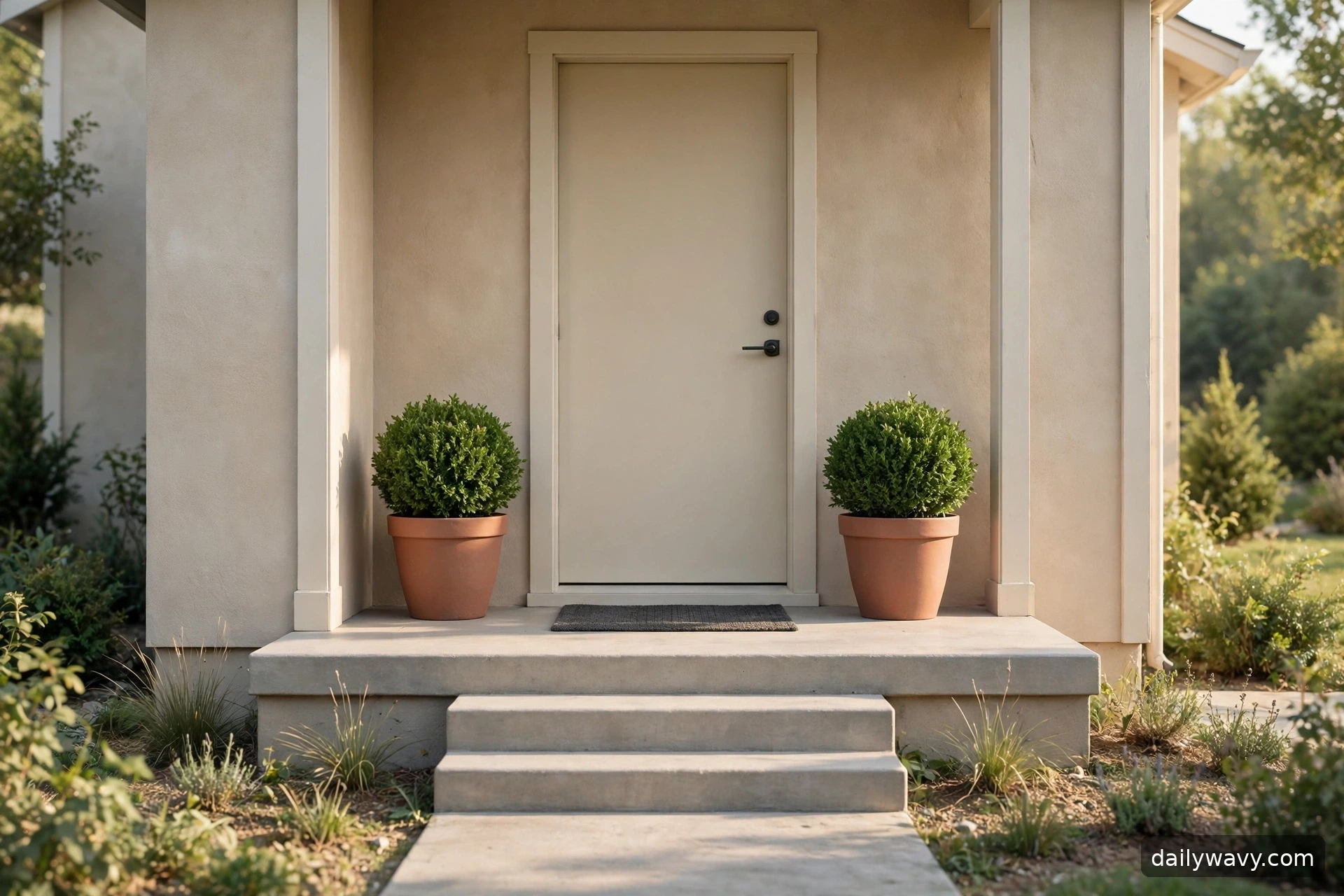
1. A pair of proportionate planters
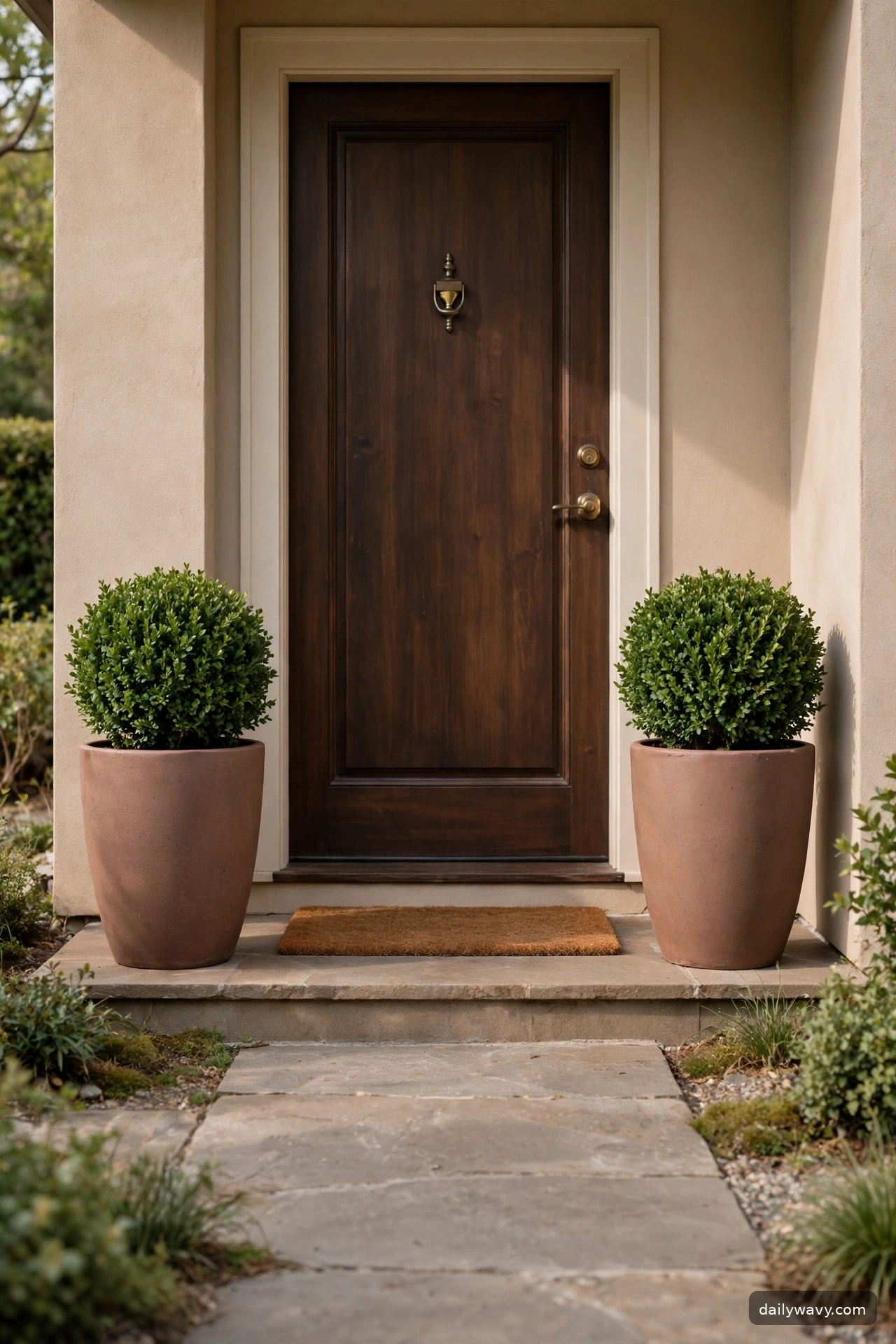
Two matching planters, one on each side of the door, is the fastest way to make a small porch look finished. Symmetry does the heavy lifting, so the rest of the space can stay simple. The trick is proportion: on a compact landing, planters that are too tall or too wide crowd the doorway and make the porch feel smaller than it is.
What to measure: Measure the width of your door first. A good rule of thumb is to keep each planter between one-quarter and one-third of the door width. For a standard 36-inch door, planters about 12 to 16 inches wide and 14 to 18 inches tall sit comfortably without pinching the walkway. Leave at least 30 inches of clear walking width between the planters, and keep them off the door swing entirely.
Materials: Choose frost-proof containers rated for outdoor use in your climate. Terracotta looks warm and classic but can crack in hard freezes, so in cold regions look for fiber-clay, glazed ceramic rated for frost, or resin planters that mimic the look. Use a quality potting mix and make sure every pot has a drainage hole.
Placement: Set the planters equidistant from the door frame, pulled a few inches away from the wall so air circulates behind them. Keep them on the landing, not on the steps, so the walking route stays clear.
Effort: An afternoon project. Fill, plant, water, done.
Lower-cost alternative: One large planter on the hinge side of the door instead of a pair. A single statement pot costs less and still anchors the entry.
2. A single compact bench
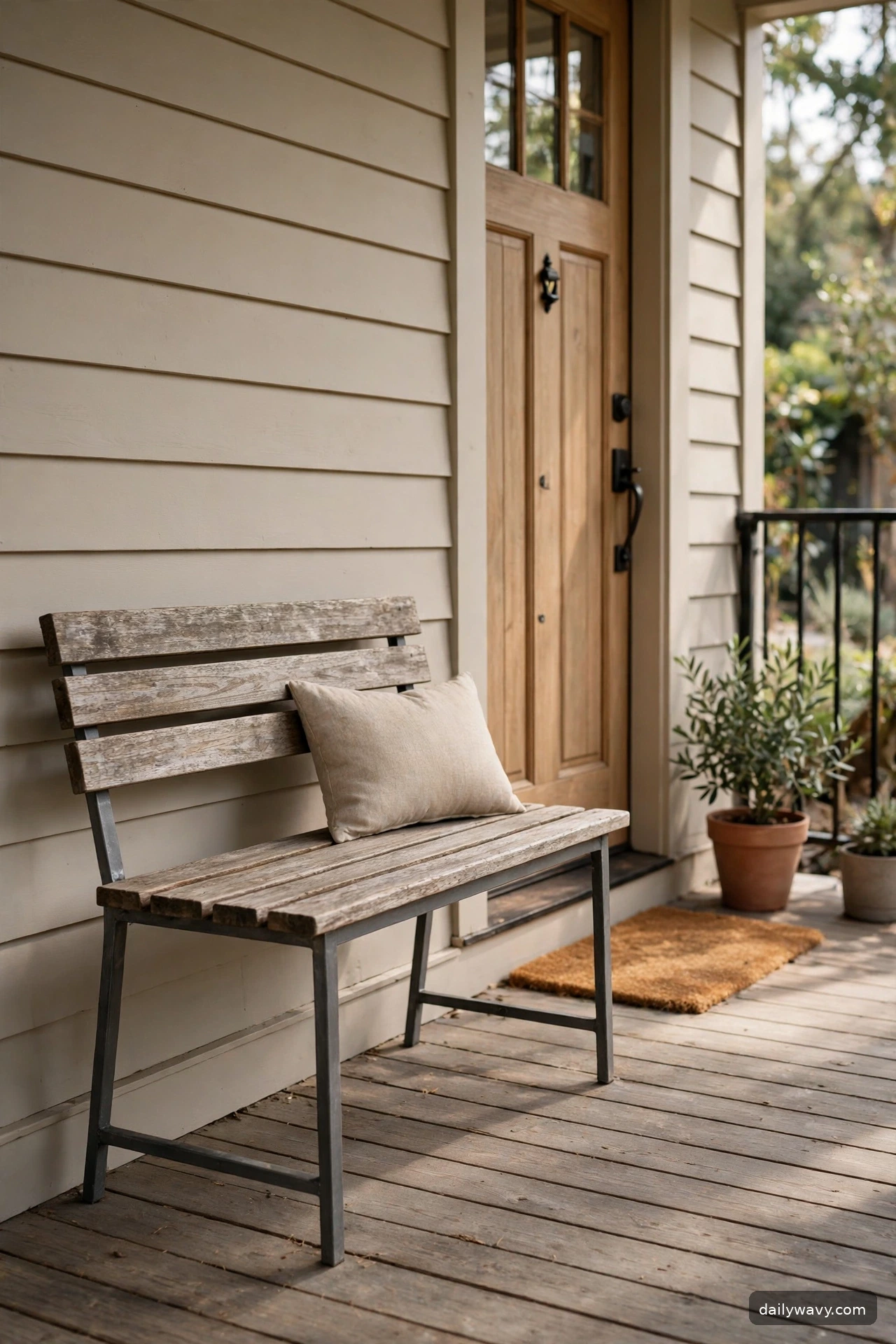
A small bench gives a porch somewhere to set down groceries, a bag, or a tired pair of legs, and it instantly makes the space feel like a room instead of a pass-through. On a small porch, one bench is the limit. Two pieces of seating furniture will fight for the same square footage.
What to measure: Look for a bench between 32 and 40 inches wide and no more than 16 inches deep. Before you buy, tape out the footprint on the porch floor and open the front door fully to confirm the swing clears it. Keep the walking path from the steps to the door at least 30 inches wide at every point.
Materials: Teak, cedar, and powder-coated metal all hold up outdoors. If the bench sits in direct sun, lighter finishes stay cooler to sit on. Add felt or rubber pads under the legs to protect porch paint and to keep the bench from sliding.
Placement: Push the bench against the longest uninterrupted wall, ideally on the opposite side from the door handle so arriving guests are not squeezed. The same compact thinking works inside the house too; our narrow living room layout guide uses the same measure-first approach for tight rooms.
Effort: A weekend find at a garden center or a thrifted piece with a fresh coat of exterior paint.
Lower-cost alternative: A sturdy wooden stool or a small folding bistro chair that tucks against the wall when not in use.
3. A layered mat with safe flat edges

Layering a flat outdoor rug under a coir doormat is a designer trick that works at any scale, and it is especially useful on a small porch where the mat is one of the few decor elements you see. The bottom layer adds pattern and color; the top coir mat does the actual scraping. The critical detail is flatness: curled edges are a trip hazard and they catch the bottom of the door.
What to measure: The layered rug should be at least as wide as the door, ideally 4 to 6 inches wider on each side. Keep the total stack under half an inch thick so the door clears it. If your door already grazes the floor, skip the layered look and use a single low-profile coir mat.
Materials: A flat-weave outdoor rug made from polypropylene or recycled plastic handles rain and sun. Top it with a natural coir mat, which is the rough fiber that actually cleans shoes. Avoid rubber-backed mats on painted porch floors in hot climates; the backing can bond to the paint.
Placement: Center the layers on the door. Pull the stack at least 2 inches back from the door swing arc so the bottom of the door never catches an edge.
Effort: Ten minutes, including centering and straightening.
Lower-cost alternative: A single quality coir mat in a generous size reads just as polished when the edges lie flat.
4. A small seasonal wreath

A wreath is the one piece of porch decor that works at every size, and on a small porch it earns its place because it decorates the door itself without taking up a single inch of floor space. The mistake to avoid is going too big. An oversized wreath on a standard door looks like it is wearing the house.
What to measure: For a standard 36-inch door, a wreath between 18 and 24 inches across is the sweet spot. Hang it so the center sits at or just above eye level, roughly 60 inches from the porch floor. Measure your door width and subtract about 12 inches for a balanced look.
Materials: Faux greenery wreaths with eucalyptus, boxwood, or simple seasonal stems last for years outdoors and never need watering. If you prefer fresh, choose hardy greens and expect to replace them each season. Hang with an over-the-door hook, a suction hanger rated for the wreath weight, or a simple nail; renters should stick to removable hooks.
Placement: Center the wreath horizontally on the door. If you have a door knocker or handle that competes visually, hang the wreath slightly above center.
Effort: Fifteen minutes to hang, plus a seasonal swap twice a year if you like.
Lower-cost alternative: A simple greenery swag or a single large bow on a removable hook gives the same finished-door feeling for less.
5. A weather-rated lantern

Good light is what makes a small porch feel welcoming after dark, and a single lantern beside the door covers both safety and atmosphere. The non-negotiable part is the rating: anything wired or plugged in outdoors must be listed for wet or damp locations, and the box will say so. This is not the place for an indoor candle lantern dressed up as a fixture.
What to measure: Mount a wall lantern so the center of the light sits 60 to 66 inches from the porch floor, roughly at eye level, and 6 to 12 inches from the door frame. If you are using a freestanding lantern on the floor, choose one 14 to 20 inches tall so it reads as intentional rather than lost.
Materials: Look for metal and glass lanterns explicitly rated for outdoor use. For a no-wiring option, solar lanterns with warm-white LEDs (around 2700K) give a cozy glow; place the solar panel where it gets direct sun for part of the day. Battery-operated flameless candles inside a glass lantern are a renter-friendly choice.
Placement: One lantern on the handle side of the door is enough for a small porch. Two flanking the door can overwhelm a narrow entry, so skip the pair unless the wall space is genuinely wide.
Effort: A plug-in or solar lantern takes minutes. A hardwired wall lantern is an electrician job; follow the manufacturer’s installation and clearance instructions exactly.
Lower-cost alternative: A single solar stake light aimed at the door, or a string of outdoor-rated fairy lights tucked along a railing, adds glow without any wiring.
6. A narrow side table
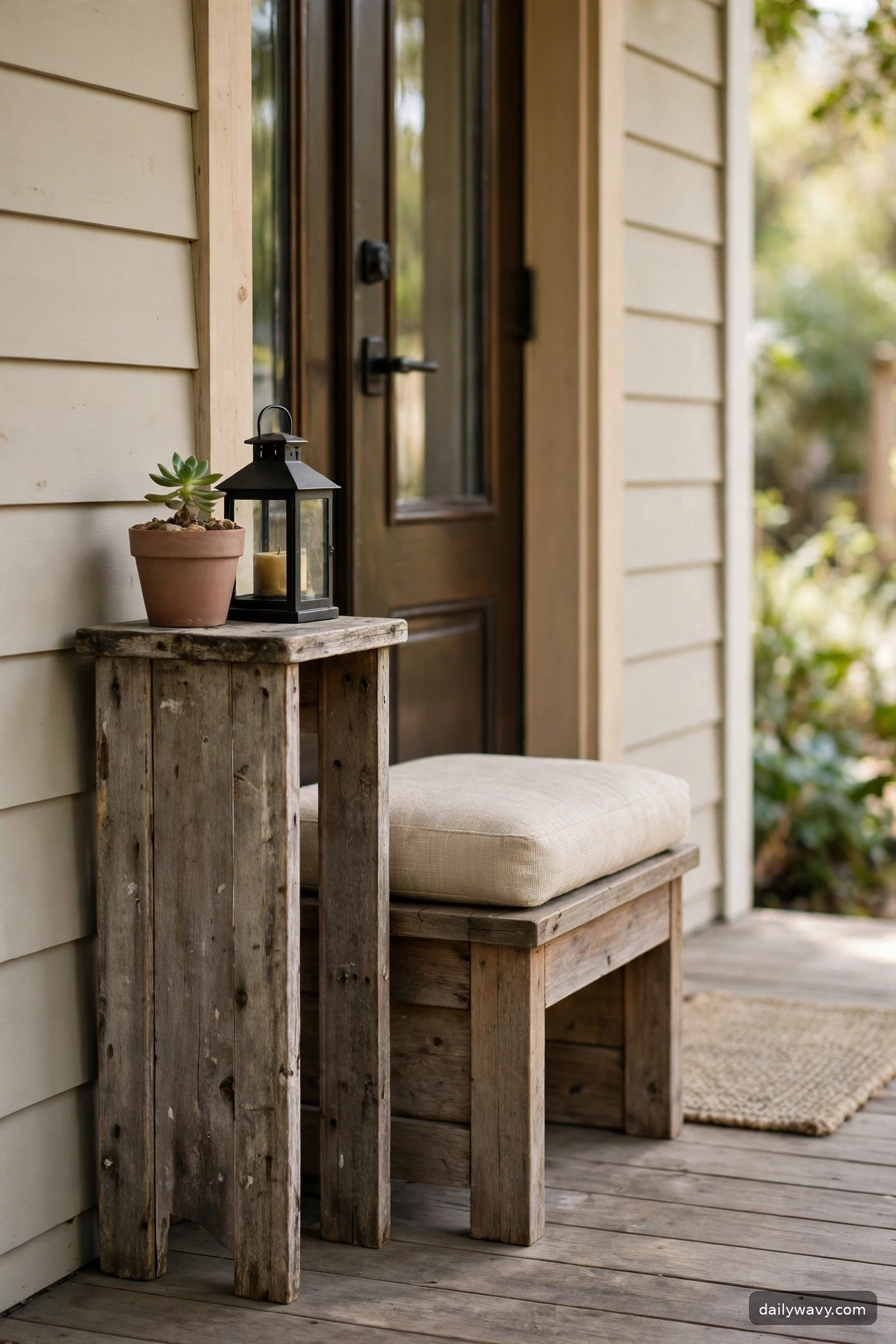
A slim side table next to a bench turns the bench into a real sitting spot: somewhere for a coffee cup, a book, or a small plant. On a small porch the table has to be genuinely narrow, not just marketed as compact. Anything deeper than about 16 inches starts to eat the walkway.
What to measure: Aim for 12 to 16 inches deep and 16 to 20 inches wide, with a height within 2 inches of the bench seat. Tape the footprint on the floor and walk the route from steps to door; if you have to sidestep, it is too big.
Materials: Powder-coated metal, teak, or resin wicker all survive outdoors. A table with a lower shelf adds storage for a watering can or a folded throw without taking more floor space.
Placement: Tuck it at one end of the bench, against the wall, on the side away from the main walking path. Keep the tabletop clear of anything fragile that wind could knock over.
Effort: A quick purchase and placement, or a weekend repaint of a thrifted plant stand.
Lower-cost alternative: A sturdy overturned crate or a small plant stand at the right height works as a side table for the cost of a coat of exterior paint.
7. A modest outdoor cushion

One or two cushions soften a bench and add the color story to a small porch. Modest is the operative word: a bench buried under throw pillows looks cluttered at this scale, and every extra cushion is one more thing to drag inside when it rains.
What to measure: Match the cushion to the bench. A 36-inch bench takes one 18-inch lumbar cushion or two 16-inch squares comfortably. Measure the seat depth and keep cushions at least 2 inches shallower so they do not hang over the edge.
Materials: Choose solution-dyed acrylic or polyester fabrics labeled for outdoor use; they resist fading and mildew far better than indoor fabrics. Look for removable covers with zippers so you can wash them. Store cushions in a deck box or indoors during heavy rain to extend their life.
Placement: One lumbar cushion centered, or two squares slightly angled. Keep the bench seat usable; the cushion should invite sitting, not guard it.
Effort: An afternoon of shopping, or a simple sewing project if you have outdoor fabric and a zipper foot.
Lower-cost alternative: A folded outdoor throw draped over the bench arm adds softness and color for the price of one textile, and it doubles as a lap blanket on cool evenings.
8. A house-number display
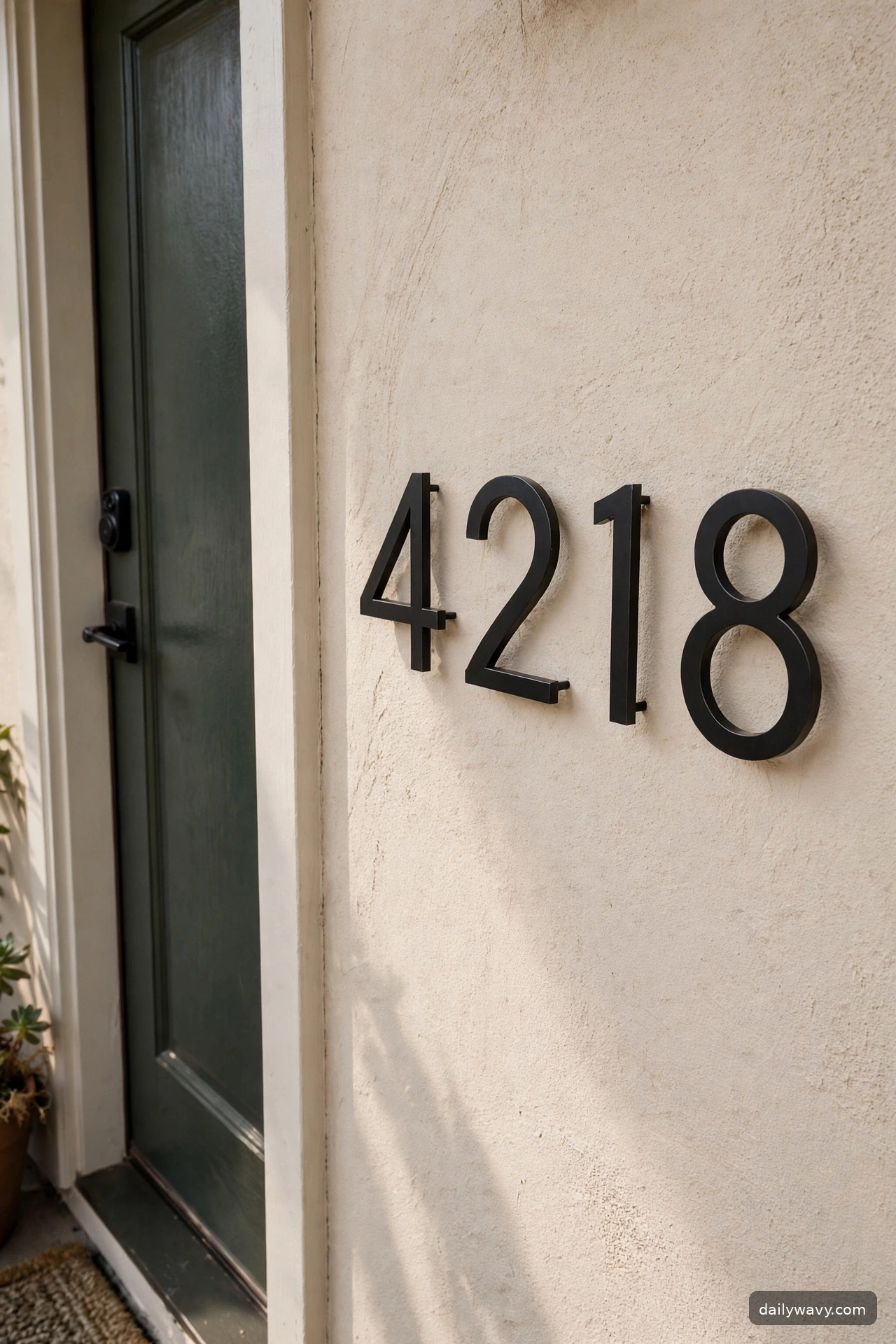
Crisp, legible house numbers are part of porch decor, and they are also practical: delivery drivers and emergency responders need to read them from the street. This idea earns its spot because most porches get it wrong, with numbers that are too small, too dark, or hidden behind a planter.
What to measure: Choose numbers at least 4 inches tall so they read from the street; 5 to 6 inches is better on a setback house. Mount them in a straight horizontal line, with even spacing, at eye level beside the door or on the porch post closest to the walk.
Materials: Metal, acrylic, or ceramic numbers in a high-contrast finish against your wall color: dark numbers on light walls, light or reflective numbers on dark walls. Use exterior-rated mounting hardware and a level; crooked numbers are worse than small ones.
Placement: The latch side of the door is the natural spot, visible as visitors approach. If a column or railing blocks the view from the street, move the numbers to the porch post nearest the walkway instead.
Effort: About 30 minutes with a drill, a level, and a pencil.
Lower-cost alternative: A simple painted plaque or a modern address stake near the walkway, both removable, which also suits renters.
9. A plant grouping beside the door
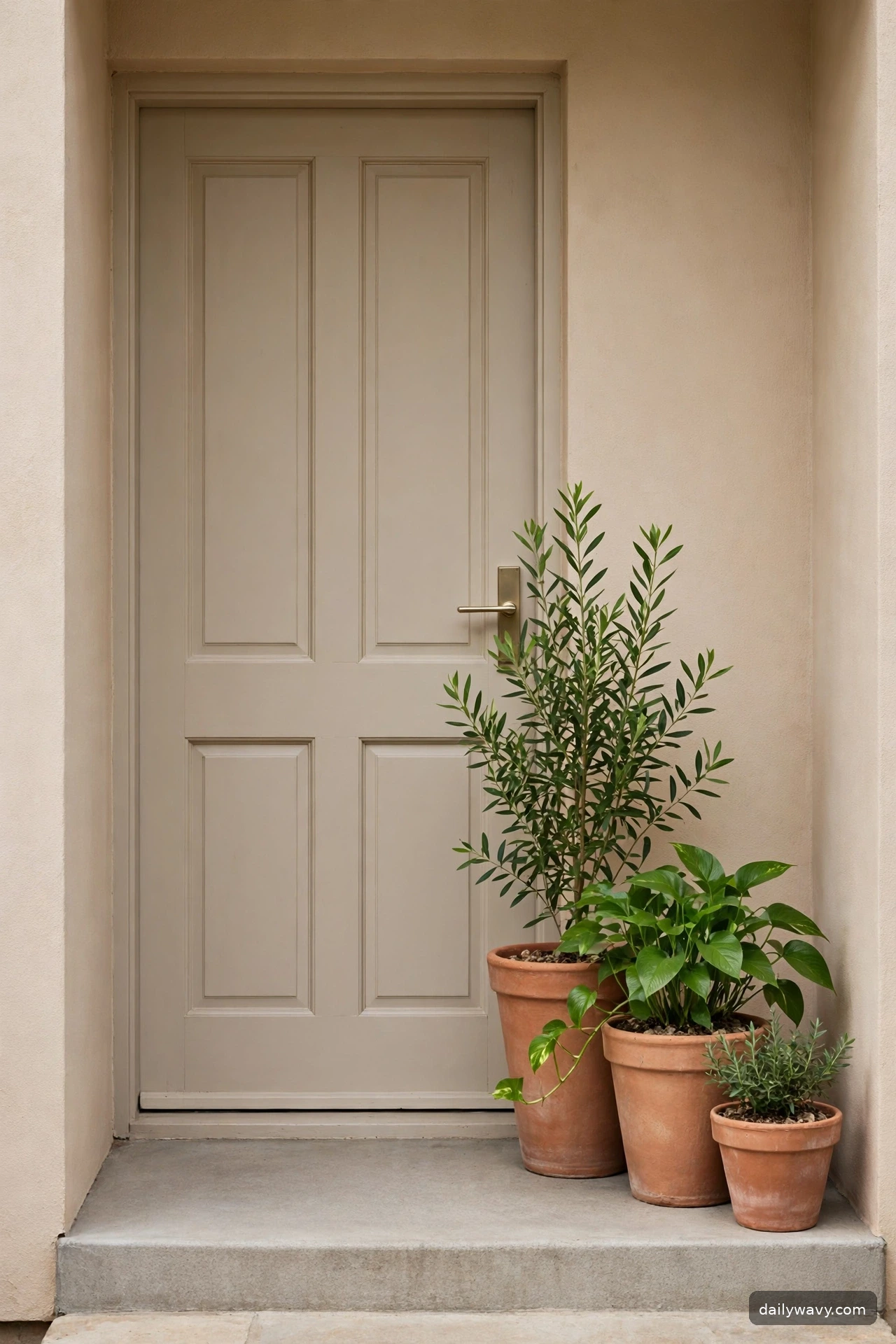
When a matching pair of planters feels too formal, a small cluster of three pots in different heights gives the same greenery with a more relaxed, collected feeling. The grouping works because odd numbers read as natural, and varying heights create a little landscape instead of a flat row.
What to measure: Keep the whole cluster within a 24-inch-wide footprint so it hugs the wall. Vary heights by 6 to 10 inches between pots: a tall thriller plant, a medium filler, and a low spiller at the front. Confirm the cluster sits outside the door swing and leaves the walking path clear.
Materials: Use weatherproof containers in one material family, such as all terracotta or all matte black, so the grouping looks intentional rather than random. Pick plants suited to your light conditions and climate zone; a local nursery can confirm what survives your winters. All pots need drainage.
Placement: Cluster the pots tight against the wall on the hinge side of the door, tallest at the back. If your porch is fully shaded, choose shade-tolerant plants rather than fighting the light.
Effort: An hour at the nursery and an afternoon of potting.
Lower-cost alternative: Three matching nursery pots slipped inside one large basket or crate reads as a single styled moment for very little money. The same layered thinking carries through the front door too; our small entryway decor guide styles the space just inside.
10. A low basket with outdoor-safe contents

A lidded basket on the porch floor corrals the small things that otherwise drift around an entry: a folded throw, the dog leash, a watering can, spare reusable bags. It adds texture and warmth while quietly doing storage duty, which is exactly what a small space needs from every piece.
What to measure: Keep the basket low, under 16 inches tall, and no wider than 20 inches, so it tucks beside a bench or under a side table without blocking anything. Measure the gap where it will live before you shop.
Materials: Choose weather-resistant woven materials: resin wicker, sealed seagrass, or powder-coated wire with a liner. A lid matters; open baskets collect rain and leaves. Contents must be outdoor-safe: synthetic throws, not wool; plastic or metal watering cans, not paper bags.
Placement: Beside the bench, under the side table, or in the corner nearest the door, wherever it is reachable but out of the walking line. Never place it on the steps.
Effort: A single purchase and a quick sort of what goes inside.
Lower-cost alternative: A galvanized metal bucket or a wooden crate with a piece of outdoor fabric draped over the top does the same job with rustic charm.
11. A repeated metal finish

This is the quietest idea on the list and one of the most effective. When the lantern, the door handle, the planter feet, and the wall hook all share one metal finish, a small porch looks designed rather than assembled. Mixed metals are fine in a big space; in a tight one, repetition reads as calm.
What to measure: You do not need to measure anything except your existing hardware. Note the finish on your door handle, hinges, and any mounted fixture, then match new pieces to it. Matte black is the easiest finish to match across brands; oil-rubbed bronze varies more between makers.
Materials: When buying new pieces, look for the same finish name and, when possible, the same brand family for consistency. For existing mismatched pieces, a coat of exterior-grade spray paint in one finish unifies everything for a few dollars. Remove hardware before painting and let it cure fully.
Placement: Apply the finish to at least three visible points: typically the lantern, the door hardware, and one more, such as planter feet, a wall hook, or the bench frame.
Effort: An afternoon of swapping or spray-painting small pieces.
Lower-cost alternative: Spray paint is the budget hero here; one can of exterior metal paint can unify a lantern, a hook, and a planter stand in a single afternoon.
12. A single accent color

A small porch decorated entirely in neutrals can look serene but flat. The fix is one accent color, used once or twice and nowhere else. A mustard doormat, a brick-red planter, or a deep teal cushion gives the eye somewhere to land and makes the whole entry feel intentional.
What to measure: Limit the accent to one or two items totaling less than about 10 percent of the visual field. A doormat plus a small planter in the same color is plenty. If you can count the accent in three or more places, you have a color scheme, not an accent.
Materials: Pick the accent in a weatherproof form: an outdoor rug, a glazed pot, or a solution-dyed cushion. Because it is the only color, choose one you will still like in every season, such as deep red, mustard, forest green, or navy.
Placement: Put the accent where the eye naturally lands first: the doormat, the wreath, or the planter nearest the door. Keep everything else in restrained warm neutrals so the accent does its job.
Effort: As simple as swapping one mat or one pot.
Lower-cost alternative: A can of exterior paint on your existing front door is the boldest single-accent move of all, and renters can get the same effect with a removable colored mat.
Frequently asked questions
How do I decorate a very small porch without blocking the door?
Start by taping out the door swing and a 30-inch walking path from the steps to the door, then decorate only outside those lines. Choose wall-mounted and door-mounted pieces first, since they use zero floor space, and keep floor pieces few, low, and against the walls.
What plants work best in porch planters?
Pick plants suited to your light and your climate zone. For sun, hardy choices include boxwood, dwarf conifers, and lavender; for shade, ferns, hostas, and ivy do well. A local nursery can confirm what survives your winters, which matters more than any list. Always use pots with drainage holes.
How do I keep outdoor decor from blowing away?
Choose heavy, low-center-of-gravity pieces, and add weight where you can: a few inches of gravel at the bottom of planters, sandbags inside hollow decor, and museum putty under small tabletop items. Bring lightweight textiles and wreaths inside before major storms.
What is the safest way to light a small porch?
Use fixtures explicitly rated for wet or damp locations, installed according to the manufacturer’s instructions; hardwired work belongs to an electrician. For a no-wiring option, solar lanterns or battery flameless candles in glass lanterns give warm light with no electrical work at all.
Can I decorate a porch as a renter?
Yes, with removable everything. Use over-the-door wreath hooks, suction-cup hangers rated for the weight, freestanding planters, solar lights, and layered mats with no adhesive. Avoid drilling into trim or masonry, and keep the original fixtures untouched so move-out is simple.
How do I make house numbers easy to read from the street?
Use numbers at least 4 inches tall in a high-contrast finish against the wall, mounted straight and at eye level where the approach view is unobstructed. Reflective or light-colored numbers on dark walls read best at night; dark numbers on light walls read best by day.
A small porch does not need a lot. It needs a clear path, pieces that can take the weather, and a few choices that look deliberate. Start with the planters and the mat, add light, and let the space tell you what it still wants. For the room just inside the door, our small entryway decor guide picks up where the porch leaves off, and the home decor collection has more ideas for every room.


2 Comments