
12 Coastal Bathroom Decor Ideas with Practical Finishing Touches
12 Coastal Bathroom Decor Ideas with Practical Finishing Touches A coastal bathroom works when it feels like a breath of…
12 Coastal Bathroom Decor Ideas with Practical Finishing Touches
A coastal bathroom works when it feels like a breath of fresh air, not like a gift shop exploded on the vanity. The look comes down to restraint: a calm palette of soft blue and warm white, natural textures, light wood, and every single thing earning its place. These twelve ideas are finishing touches, not renovations. Each one respects the one rule bathrooms never forgive, which is that moisture wins every argument. Everything here uses moisture-tolerant materials and practical storage, so the room stays beautiful on day four hundred, not just day one.
Jump to an idea
- A restrained towel palette
- A framed moisture-appropriate print
- A simple countertop tray
- A compact plant suitable for the actual light
- A textured washable bath mat
- A consistent set of containers
- A mirror with a style-matched frame
- A small freestanding stool
- A practical hook rail
- A closed basket for spare supplies
- A plain shower curtain with subtle texture
- A wood-look accent suitable for humidity
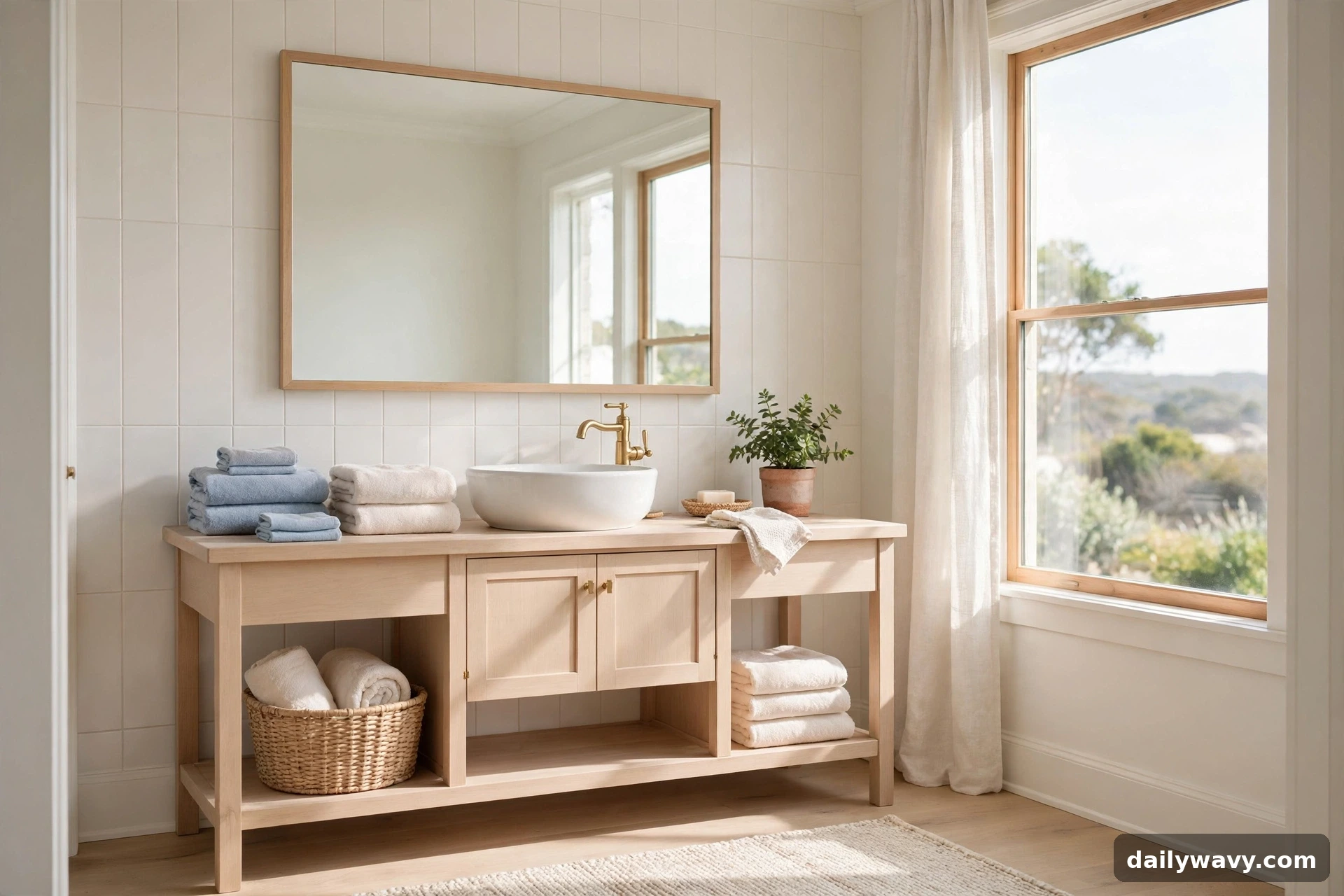
1. A restrained towel palette
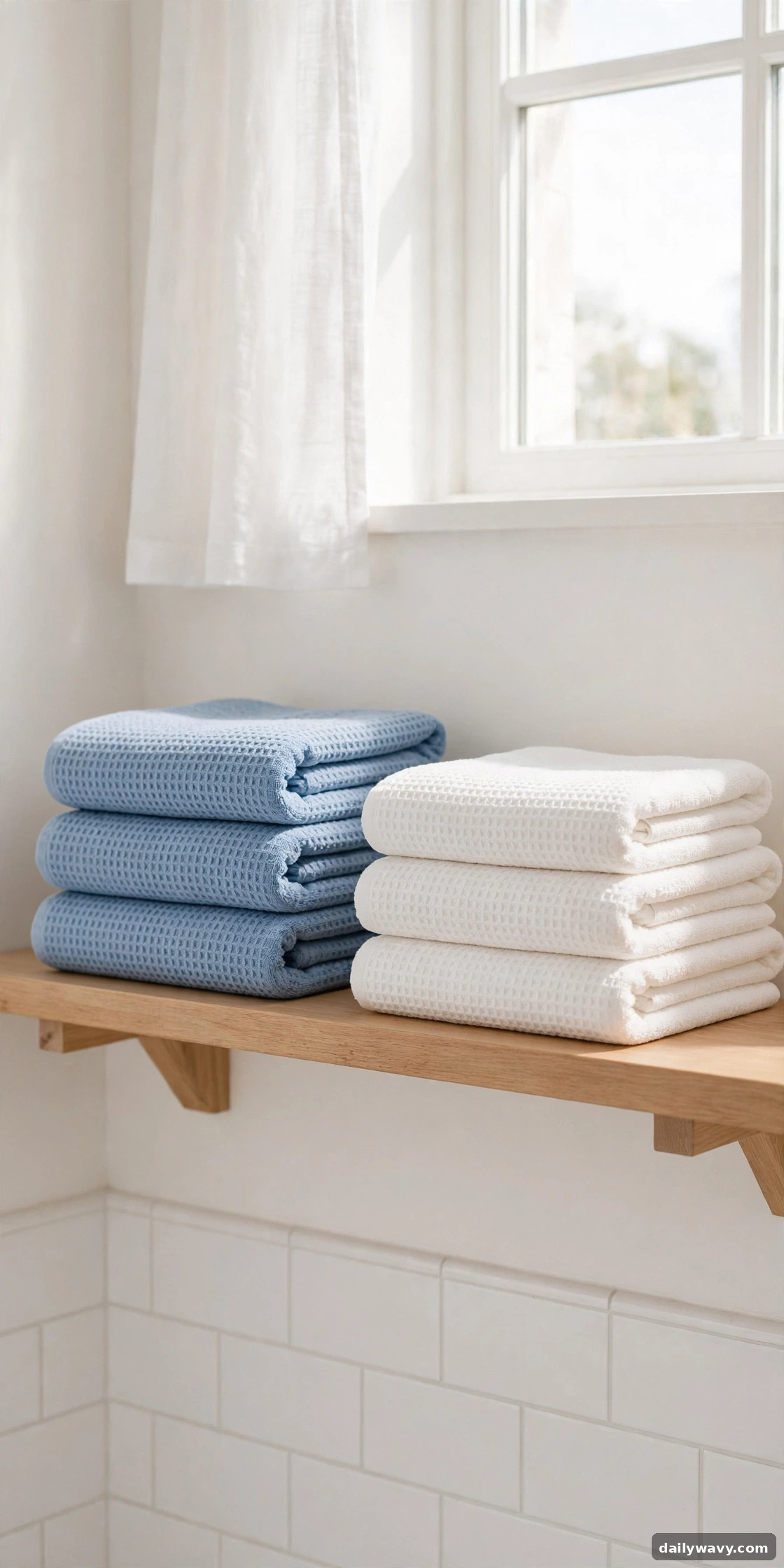
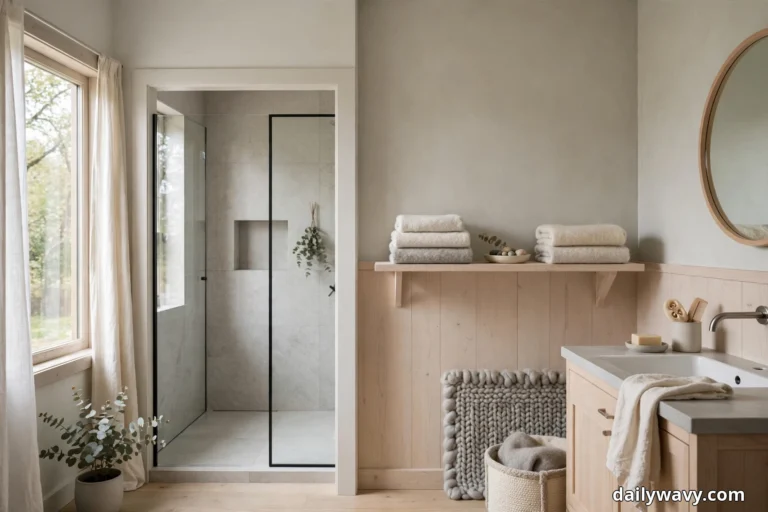
Towels are the fastest way to set a coastal mood, because they cover more visual ground than almost anything else in the room. The trick is restraint. Choose two colors and commit: a soft blue for the bath towels and a warm white for the hand towels, or the reverse. When every towel in the room speaks the same two colors, the bathroom reads as designed instead of assembled from whatever was on sale.
What to measure: your towel bar or hook spacing. Bath towels run about 27 by 52 inches, hand towels about 16 by 28. Make sure the bar is wide enough that a folded bath towel hangs without bunching, which keeps it drying properly instead of staying damp in the folds.
Materials: 100 percent cotton or cotton-bamboo towels in solid colors. Avoid heavy novelty prints with anchors and starfish, which fight the calm palette. A waffle or dobby weave adds texture without pattern.
Placement: bath towels on the bar nearest the shower, hand towels on a ring or hook by the sink. Roll spare sets on an open shelf if you have one, showing the color story at a glance.
Effort: an afternoon of shopping. The arranging takes ten minutes.
Lower-cost alternative: keep your existing white towels and add just two soft blue bath towels. Even that small shift changes the whole read of the room.
2. A framed moisture-appropriate print
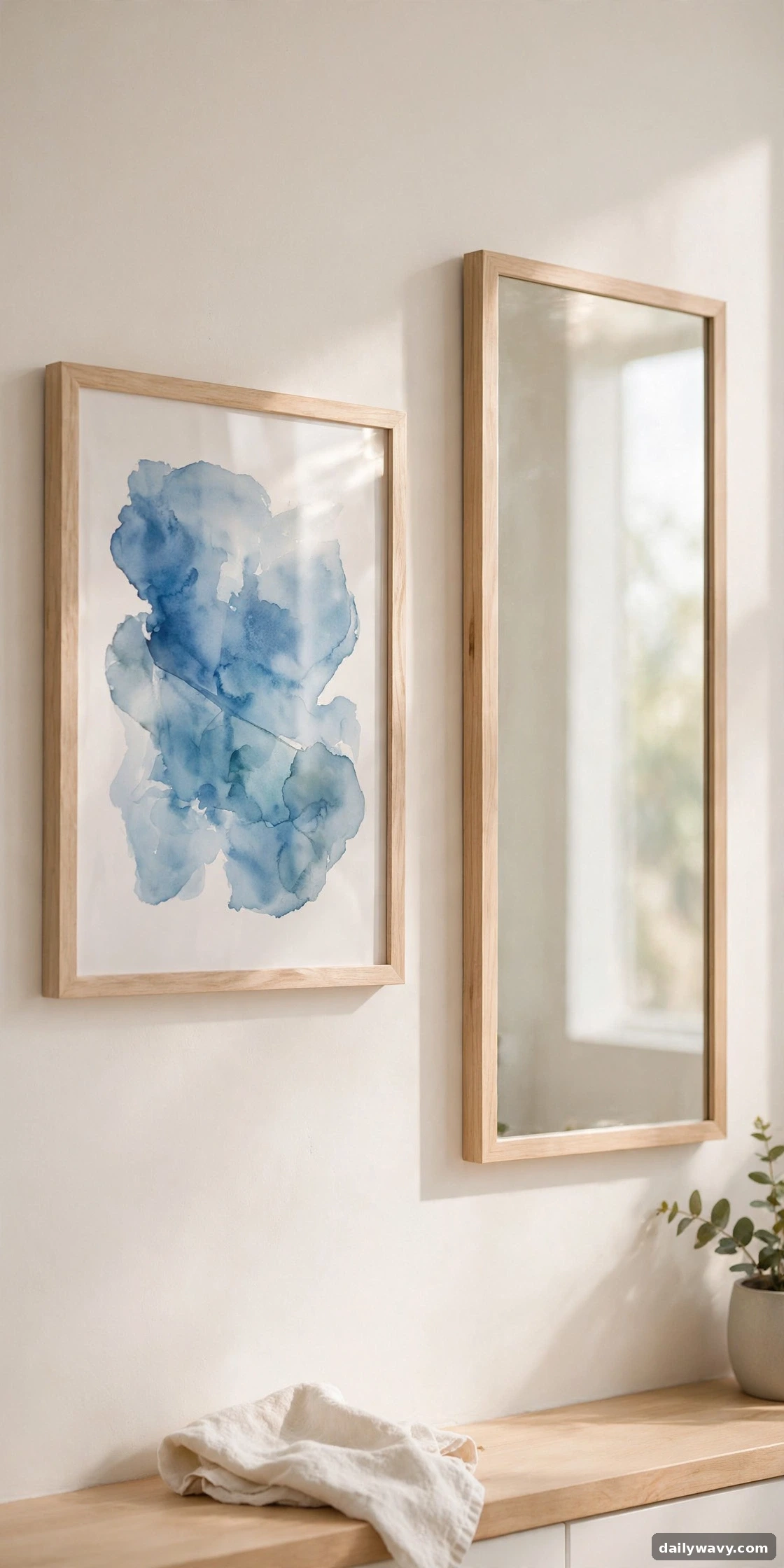
Bare walls make a bathroom feel unfinished, but paper and humidity are a bad pairing. The answer is a framed print made for damp air: a giclee or photographic print behind glass or acrylic, sealed in a frame that will not warp. A soft seascape, an abstract wash of blue, or a simple botanical keeps the coastal feeling without a single seashell in sight.
What to measure: the empty wall. Above a towel bar or beside a mirror, an 11 by 14 inch frame suits a small wall, while a 16 by 20 fills a larger stretch. Leave at least 6 inches of clearance between the frame and any direct splash zone.
Materials: a print on archival paper behind glass or acrylic, in a sealed wood or metal frame. Avoid open-backed frames and canvas wraps in steamy bathrooms, since trapped moisture behind them causes warping over time. Never hang ordinary paper art where shower steam hits it directly.
Placement: on the wall opposite the shower or beside the vanity mirror, where it catches natural light but stays out of the steam path. Hang at eye level, with the center of the frame around 57 inches from the floor.
Effort: under an hour, including hanging.
Lower-cost alternative: a downloadable print in a standard frame from a craft store, sealed with a bead of clear silicone along the back edge to keep humid air out.
3. A simple countertop tray

A vanity counter without a tray becomes a slow drift of bottles. A simple tray gathers the daily items into one intentional shape, and in a coastal bathroom it doubles as a style anchor. Light wood, woven seagrass, or whitewashed rattan all suit the palette while standing up to the occasional splash.
What to measure: the usable counter depth. Most vanities give you 18 to 22 inches front to back. Choose a tray around 10 by 14 inches so it holds your soap, a small plant, and two or three daily bottles while leaving clear space around the faucet.
Materials: acacia wood, teak, or woven seagrass with a water-resistant finish. Avoid raw untreated wood, which absorbs water and darkens unevenly. A quick wipe with a damp cloth should be all the maintenance it needs.
Placement: on the counter beside the sink, not directly under the faucet arc. Keep the tray at least a few inches from the edge so nothing gets knocked off in a morning rush.
Effort: ten minutes to arrange.
Lower-cost alternative: a shallow wooden serving tray you already own, given a coat of clear water-based polyurethane on all sides.
4. A compact plant suitable for the actual light
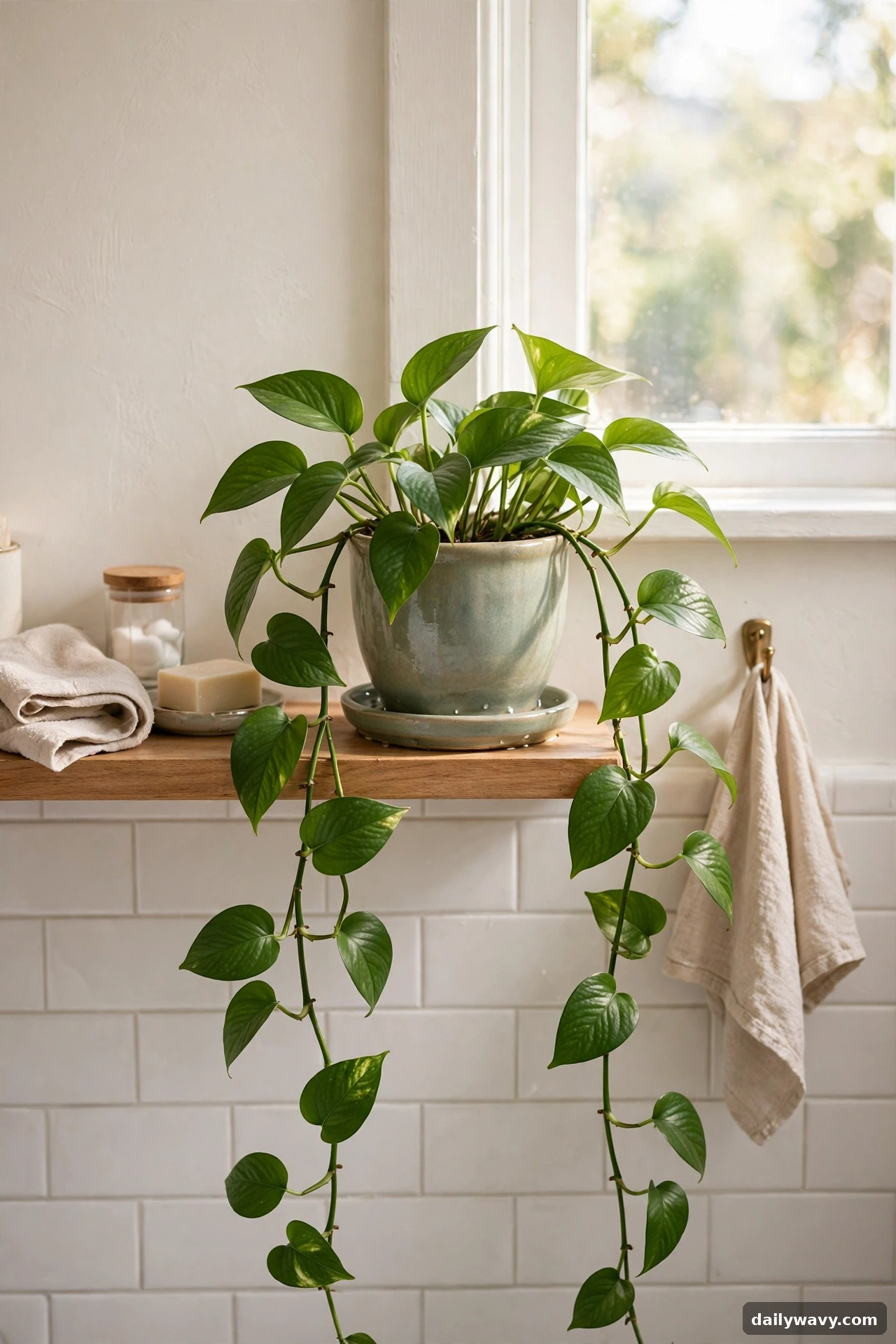
A living plant is the one coastal touch that never looks like a theme, but only if the plant can actually survive your bathroom. Match the plant to the real light, not the light you wish you had. A bright window suits a small fern or pothos. A windowless bathroom needs something that tolerates low light and humidity, like a snake plant or a ZZ plant.
What to measure: the light. Watch the spot for a day. If it gets a few hours of direct or bright indirect sun, you have options. If it stays dim, stick with proven low-light plants and skip anything flowering.
Materials: a small plant in a pot with drainage, set on a saucer or inside a cachepot. Terracotta breathes well but dries fast; glazed ceramic holds moisture longer. Either works if you water to the plant, not the calendar.
Placement: on the counter tray, a shelf, or the back of the toilet tank, wherever the light actually lands. Keep leaves clear of the faucet stream and out of reach of the shower spray.
Effort: twenty minutes to pot and place, then whatever your watering routine is.
Lower-cost alternative: a pothos cutting rooted in a jar of water. It costs nothing, loves humidity, and the jar suits the coastal palette on its own.
5. A textured washable bath mat

The bath mat is underfoot every single day, which makes it one of the most felt details in the room. A textured, washable mat in warm white or soft blue grounds the coastal palette and feels good on bare feet. Texture matters more than pattern here: a looped cotton, a ribbed weave, or a low-pile tuft reads coastal without any printed imagery.
What to measure: the floor in front of the shower or tub. A 21 by 34 inch mat suits a standard shower door; a 24 by 40 covers a tub front nicely. It should sit flat with at least an inch of clearance from the door swing.
Materials: 100 percent cotton or a cotton blend with a non-slip backing, machine washable. Avoid memory foam mats with non-removable covers in damp bathrooms, since the foam core can stay wet underneath and develop odor.
Placement: flat on the floor where you step out, never bunched against the tub. Hang it over the tub edge or a hook between uses so air circulates and it dries fully.
Effort: five minutes.
Lower-cost alternative: a flat-weave cotton rug in the right colors. It washes easily and dries faster than a thick mat.
6. A consistent set of containers
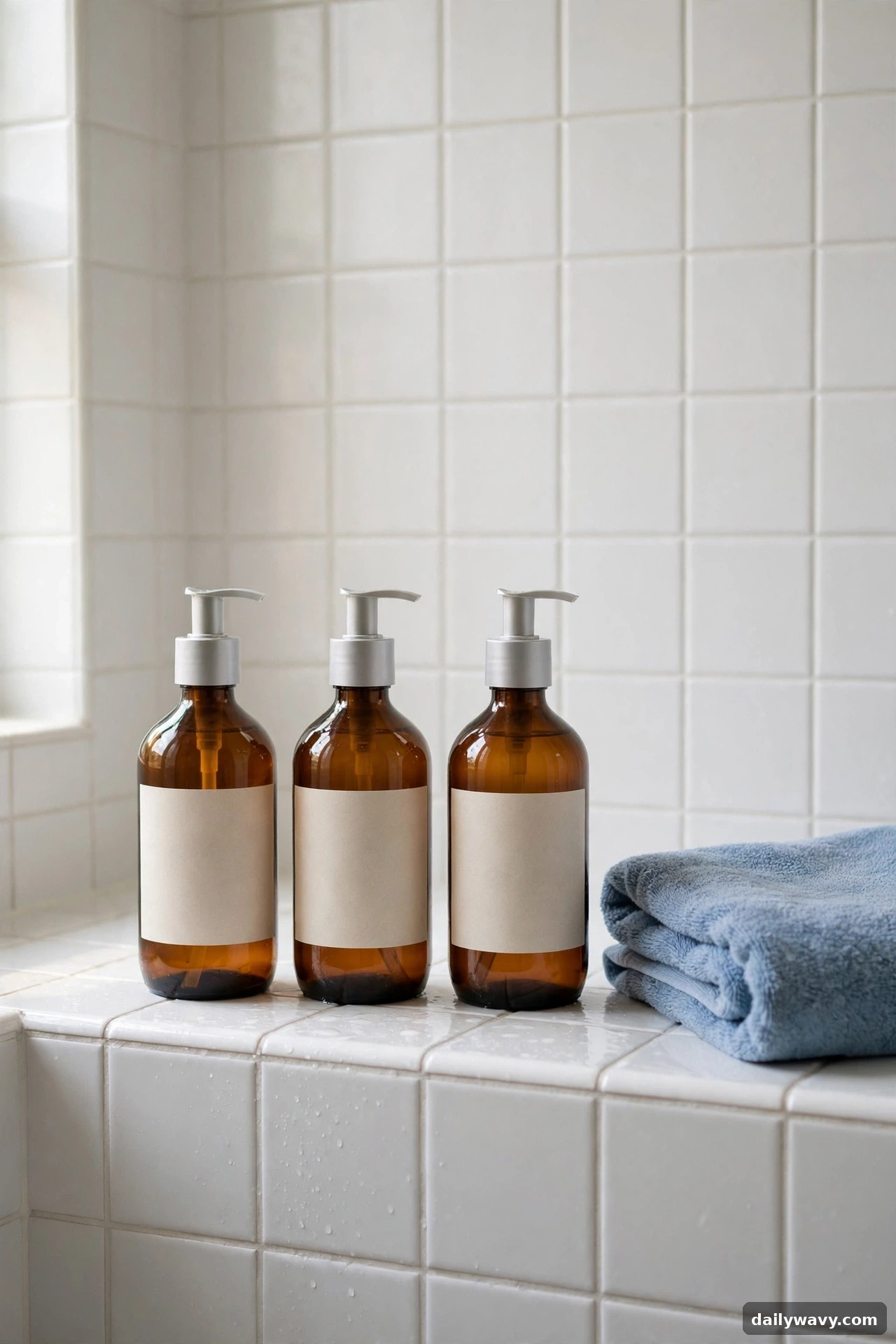
Nothing breaks a calm bathroom faster than six mismatched bottles. Decanting your shampoo, conditioner, and body wash into a consistent set of containers is the single highest-impact tidy-up you can do. Matching pump bottles or simple amber glass with minimal labels turn a crowded shower ledge into one quiet row.
What to measure: the ledge or niche where they will live. Standard pump bottles are about 3 inches wide and 8 inches tall. A set of three needs roughly 10 inches of ledge, plus room to grab each one without knocking its neighbor.
Materials: PET plastic or glass pump bottles with waterproof labels. Glass looks beautiful but think about where it sits: on a low shower ledge it is fine, on a high shelf above a hard tile floor it is a breakage risk. Choose plastic for anything stored above waist height over tile.
Placement: grouped on the shower ledge or in the niche, labels facing forward. Keep one spare set under the sink for refills rather than crowding the ledge with backups.
Effort: thirty minutes to decant and label.
Lower-cost alternative: buy the set once and refill from bulk bottles. The same decanting logic works beautifully in a pantry too, as our small pantry organization ideas show, and the visual calm is identical.
7. A mirror with a style-matched frame

The mirror is usually the largest single object in a bathroom, so its frame sets the tone whether you plan it or not. A frameless builder mirror reads as an afterthought. Swapping in, or framing over, a mirror with a light wood or whitewashed frame pulls the whole vanity area into the coastal palette in one move.
What to measure: the existing mirror. A frame kit needs the exact outer dimensions, measured twice. Leave the mirror mounted and build or buy a frame that overlaps its edges by about an inch on each side for a clean finished look.
Materials: a lightweight wood or composite frame rated for humid rooms, sealed on all sides. Avoid raw MDF, which swells with moisture. A whitewashed pine or oak-look frame suits the palette and the humidity.
Placement: centered over the vanity, with the bottom edge about 40 inches from the floor in most bathrooms, or a few inches above the backsplash. Keep it clear of direct shower spray.
Effort: an afternoon if you build a frame from trim, under an hour if you buy a ready-made frame kit.
Lower-cost alternative: paint the wall behind a frameless mirror in a soft blue. The color does the framing work for the cost of a sample pot.
8. A small freestanding stool

A small stool beside the tub or vanity is one of those pieces that looks decorative and works constantly. It holds a folded towel, a candle, or a book within reach of the bath. In a coastal bathroom, a light wood or woven stool adds the natural material the palette needs at floor level, where rooms often feel cold and hard.
What to measure: the gap where it will stand. A stool 12 to 14 inches across and 16 to 18 inches tall tucks beside most tubs and vanities. Make sure it clears any door swing and does not block the path you take getting out of the shower.
Materials: teak, acacia, or sealed bamboo. These woods handle bathroom humidity far better than pine or untreated softwood. A woven seagrass or rattan stool works too, as long as it has a sealed finish and never sits in standing water.
Placement: beside the tub within arm’s reach, or at the end of the vanity. Style it with one folded towel and leave it at that; a stool piled with objects stops being useful.
Effort: none beyond buying and placing.
Lower-cost alternative: a sturdy wooden step stool you already own, sanded smooth and sealed with water-based polyurethane.
9. A practical hook rail
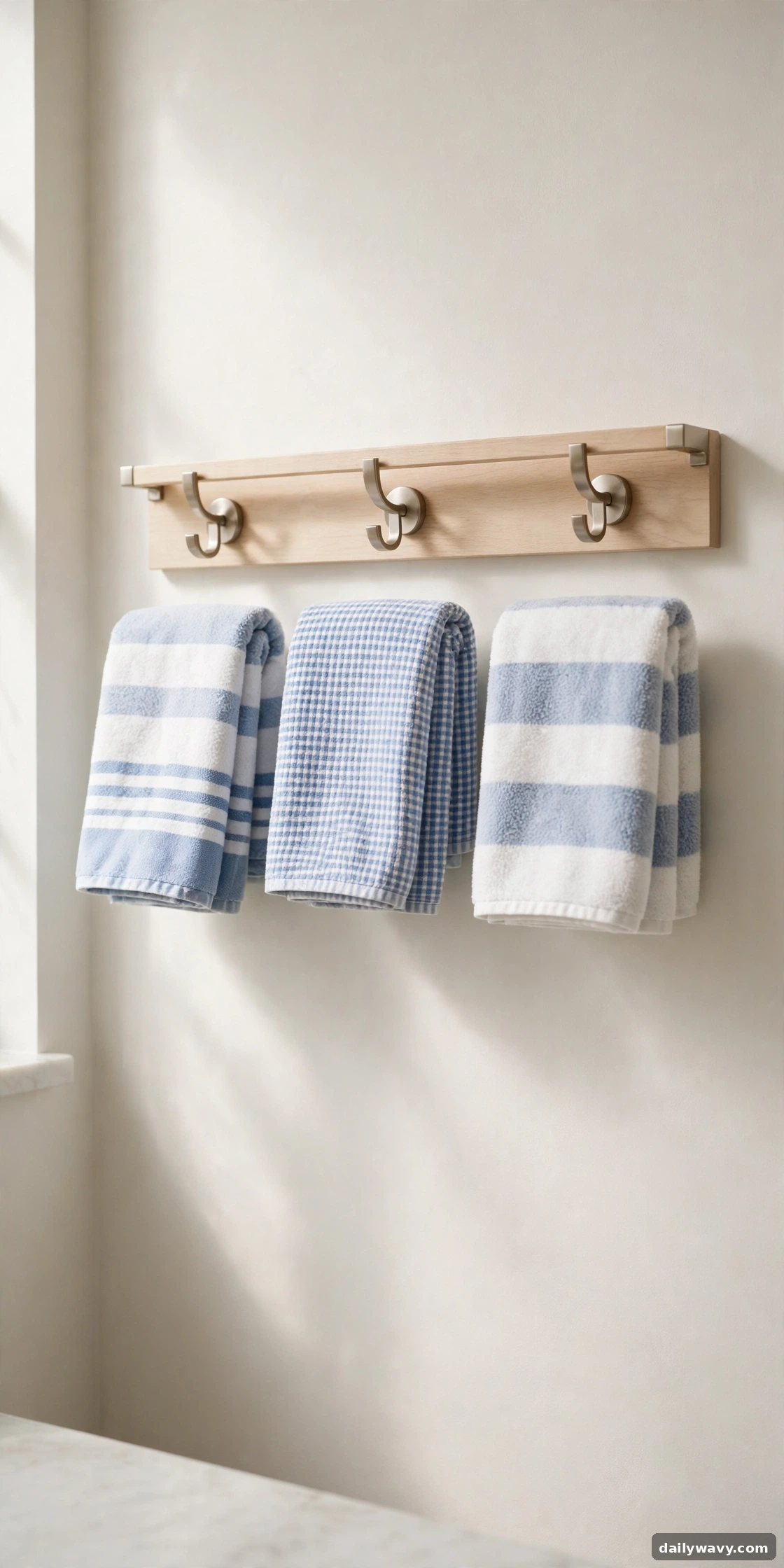
Towels need somewhere to dry between uses, and a hook rail gives you flexible hanging without drilling a bar into tile for every towel. A simple rail with three or four hooks in brushed nickel, matte black, or light wood keeps the wall tidy and the towels aired. It is the workhorse of the coastal bathroom: practical first, pretty as a side effect.
What to measure: the wall run. Allow about 8 inches of width per hook so towels hang without overlapping and drying properly. Mount the rail with the hooks around 60 inches from the floor, high enough that a folded bath towel clears the floor.
Materials: a solid wood rail with metal hooks, or an all-metal rail, mounted with proper wall anchors. In tile, use a masonry bit and plastic anchors; in drywall, use toggle bolts. The rail must hold wet towels, which are heavier than you expect.
Placement: on the wall nearest the shower, or on the back of the door if wall space is tight. Never above an electrical outlet or switch, and keep it clear of the toilet tank lid swing.
Effort: about an hour including mounting.
Lower-cost alternative: individual adhesive hooks rated for the weight, replaced yearly. They hold a hand towel fine, though a rail is sturdier for bath towels.
10. A closed basket for spare supplies
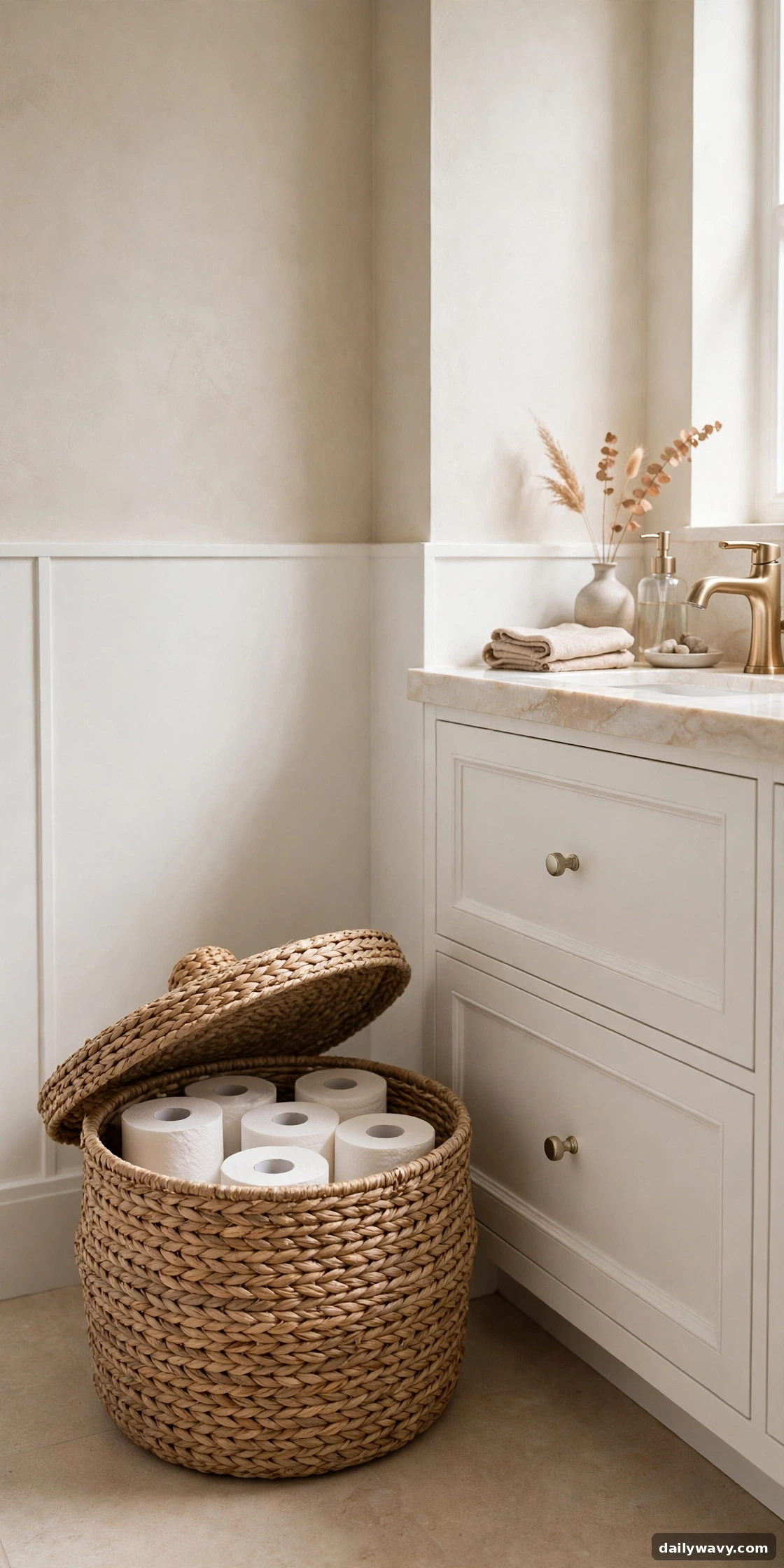
Open shelves look airy until they hold six rolls of toilet paper and a stack of cleaning bottles. A closed basket hides the practical supplies while adding the natural fiber texture the coastal palette loves. Lidded seagrass or woven cotton baskets keep spare toilet paper, extra towels, and cleaning supplies out of sight but within reach.
What to measure: the shelf or floor spot. A basket around 14 by 10 by 10 inches holds a surprising amount without dominating. If it goes on an open shelf, measure the shelf height with the lid on, not off.
Materials: seagrass, water hyacinth, or woven cotton with a lid. These fibers handle bathroom air well. Skip lidded baskets for anything damp: store only dry goods inside, and never toss a wet washcloth in and close the lid.
Placement: on the lowest open shelf, beside the vanity, or on the floor next to the toilet. One basket is a tidy solution; three baskets start to look like storage instead of decor.
Effort: ten minutes to fill and place.
Lower-cost alternative: a lidded box in white or natural canvas. For more small-bathroom storage thinking, our small bathroom storage ideas cover the same hide-it-beautifully principle in depth.
11. A plain shower curtain with subtle texture

The shower curtain is the largest fabric surface in many bathrooms, which gives it enormous influence over the mood. A plain curtain in warm white or soft blue with a subtle texture, a waffle weave, a fine stripe, or a light slub, reads as coastal without any printed scene. It also has a practical job: it must actually keep water in.
What to measure: the rod height and tub or shower length. A standard curtain is 72 by 72 inches. Hang the rod so the curtain’s bottom hem falls about 2 inches above the tub floor or shower base, never pooling, which breeds mildew.
Materials: a machine-washable fabric curtain, polyester or cotton blend, with a separate mildew-resistant liner. Wash the fabric curtain monthly and replace the liner when it discolors. Avoid heavy non-washable curtains in a daily-use shower.
Placement: on a tension or mounted rod, rings gliding freely. Pull it fully closed after each shower so it dries evenly instead of staying bunched and damp.
Effort: twenty minutes to hang and steam out the fold creases.
Lower-cost alternative: keep your liner and replace only the outer curtain. The outer layer is what you see, and a fresh one transforms the room for very little.
12. A wood-look accent suitable for humidity
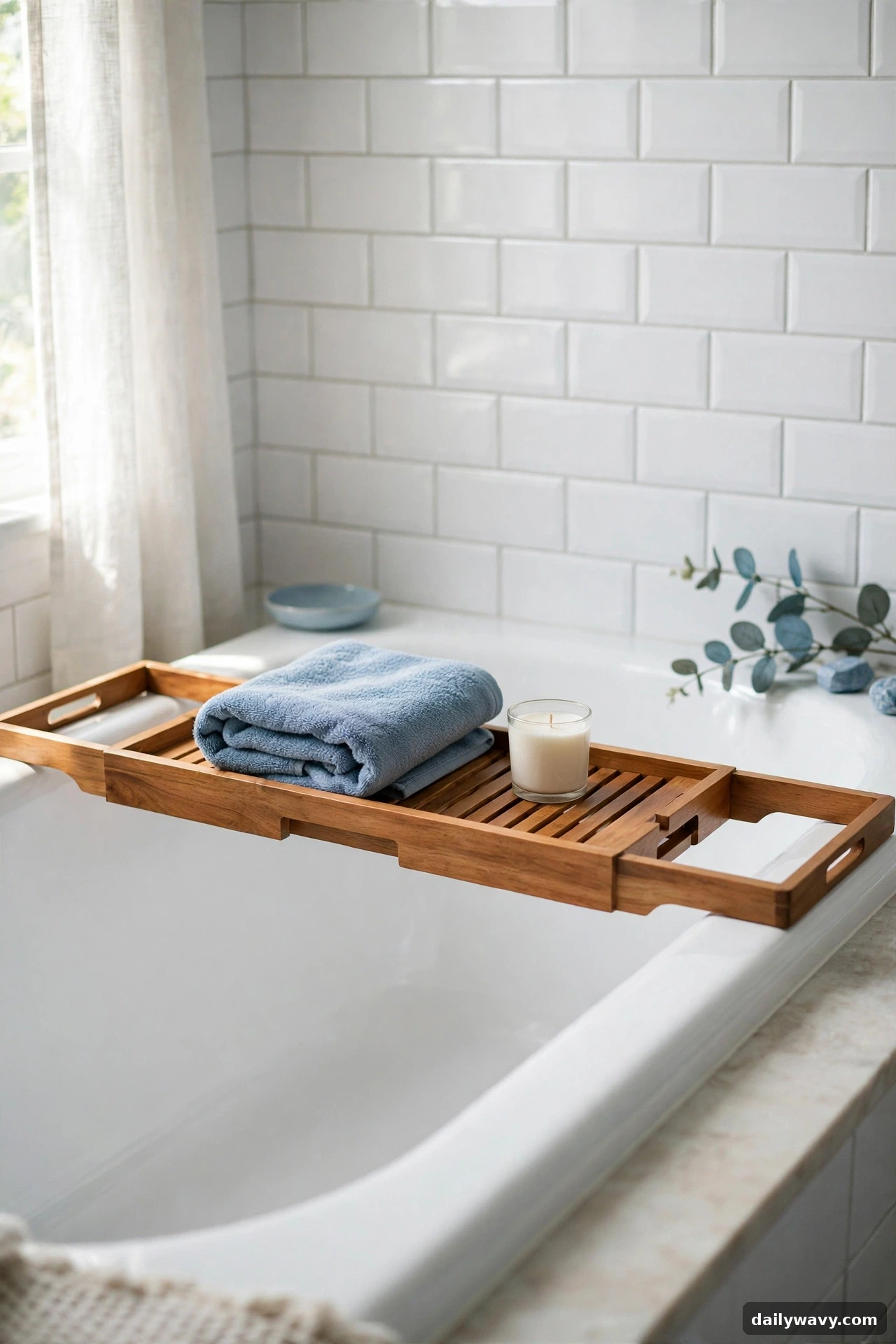
Real wood and daily steam are uneasy companions, which is why the wood-look accent matters: it brings the warmth of timber without the maintenance anxiety. A wood-look bath caddy across the tub, a wood-look toilet paper holder, or wood-look floating shelves in a sealed composite give you the material richness of the coastal palette with none of the warping risk.
What to measure: the specific spot. A tub caddy must span your tub’s width, usually 28 to 32 inches, with non-slip ends. Floating shelves need the wall width and a check that they clear the mirror and any door swing.
Materials: wood-look PVC, sealed composite, or porcelain tile in a wood grain. These materials shrug off humidity that would cup or crack solid wood. If you love real wood, choose teak and oil it twice a year, accepting that it will silver over time.
Placement: the caddy across the tub, shelves on the wall opposite the shower spray, small holders within reach of their use point. Keep every wood-look piece out of direct, constant water contact.
Effort: under an hour for a caddy or holder, an afternoon for shelves.
Lower-cost alternative: a single wood-look shelf above the toilet. One warm horizontal line is often all the wood tone a small bathroom needs.
Frequently asked questions
How do I keep a coastal bathroom from looking like a beach theme?
Stick to the palette and the materials, not the motifs. Soft blue, warm white, light wood, and natural fiber read coastal on their own. The moment you add starfish, anchors, or rope knots, it tips into theme. Every idea in this guide works without a single novelty prop.
What colors work best for coastal bathroom decor?
Soft blue and warm white do the heavy lifting, with light wood tones and natural fiber neutrals supporting. Keep the blue muted rather than bright, think sea glass rather than swimming pool, and let white lean warm so the room feels sunny instead of stark.
Can I use wallpaper in a bathroom?
Ordinary wallpaper is not waterproof and will peel in steamy bathrooms, so do not treat it as a moisture solution. If you love the look, use it only on walls far from direct water and steam, with good ventilation, or choose a product specifically rated for humid rooms and follow the manufacturer’s guidance.
How do I decorate a bathroom with no window?
Lean on light colors, a good mirror, and layered artificial light in a warm white tone. Choose low-light plants like snake plants or ZZ plants, or skip live plants entirely in favor of the texture ideas here: the bath mat, the towels, and the basket do plenty of visual work without any daylight.
What is the most moisture-safe way to add wood tones?
Use wood-look materials rated for humidity, sealed composites, or porcelain in a wood grain, as in idea 12. Real teak and cedar handle moisture better than most woods but still need periodic oiling. Never put raw softwood where it will get wet regularly.
How often should I wash bathroom textiles?
Bath mats weekly, towels every three to four uses, and the shower curtain monthly. Frequent washing is what keeps the coastal palette looking fresh instead of dingy, and it prevents the musty smell that no decor can cover.
The quiet-coast rule
If one principle ties all twelve ideas together, it is this: let the palette and the materials do the talking. Soft blue and warm white, light wood, natural fiber, moisture-tolerant everything. No single piece here shouts, and that is exactly why the room feels like the coast instead of a costume of it. Start with the towels and the tray, add the plant and the print, and let the rest follow as you live with the room. A coastal bathroom should feel like exhaling. If it does, you got it right.
For more bathroom thinking, see our small bathroom storage ideas for the practical side of the same rooms, and browse the full Home and Decor collection for more.



One Comment