10 Cream Sofa Styling Ideas with Colors and Textures That Work Together
A cream sofa is the easiest furniture to love and the trickiest to finish. It goes with everything, which means…
A cream sofa is the easiest furniture to love and the trickiest to finish. It goes with everything, which means it goes with nothing in particular until you give it a palette and a plan. The secret is pairing: one striped pillow beside a solid one, a woven basket holding a folded blanket, a washable rug with a subtle pattern keeping the room grounded. Below are 10 complete styling ideas, each built around a single element you can add, move or swap in an afternoon. Every idea covers what to measure, which materials work, where to place things, how much effort it takes and a realistic lower-cost alternative.
Jump to an idea
- A Striped Pillow Beside A Solid One
- A Woven Basket For A Folded Blanket
- A Small Round Accent Table
- A Soft Ottoman With A Serving Tray
- A Framed Art Pair Centered Above Seating
- A Narrow Console Behind The Sofa
- A Reading Lamp Beside One Arm
- A Washable Rug With A Subtle Pattern
- A Linen Curtain Backdrop
- A Vintage Trunk Used As A Table
Cream Sofa Styling Basics: Palette, Pillows and Rug Scale
Before you buy a single pillow, decide on three things. First, the palette. A cream sofa looks best with a restrained warm-neutral base (think oatmeal, sand, soft taupe and warm white) plus one or two accent colors used sparingly. Navy, forest green, rust and charcoal all sit beautifully against cream because they give the eye somewhere to rest. Second, pillow sizing. A standard 84-inch sofa takes two 20-inch square pillows and one 12-by-20-inch lumbar per side, or a simpler arrangement of one 22-inch square behind one 18-inch square. Keep inserts two inches larger than the cover for a full, tailored look. Third, rug scale. The front legs of the sofa should sit on the rug, which usually means an 8-by-10-foot rug for a standard sofa or a 9-by-12 for a larger seating group. A rug that is too small makes even the prettiest sofa look stranded.
1. A Striped Pillow Beside A Solid One

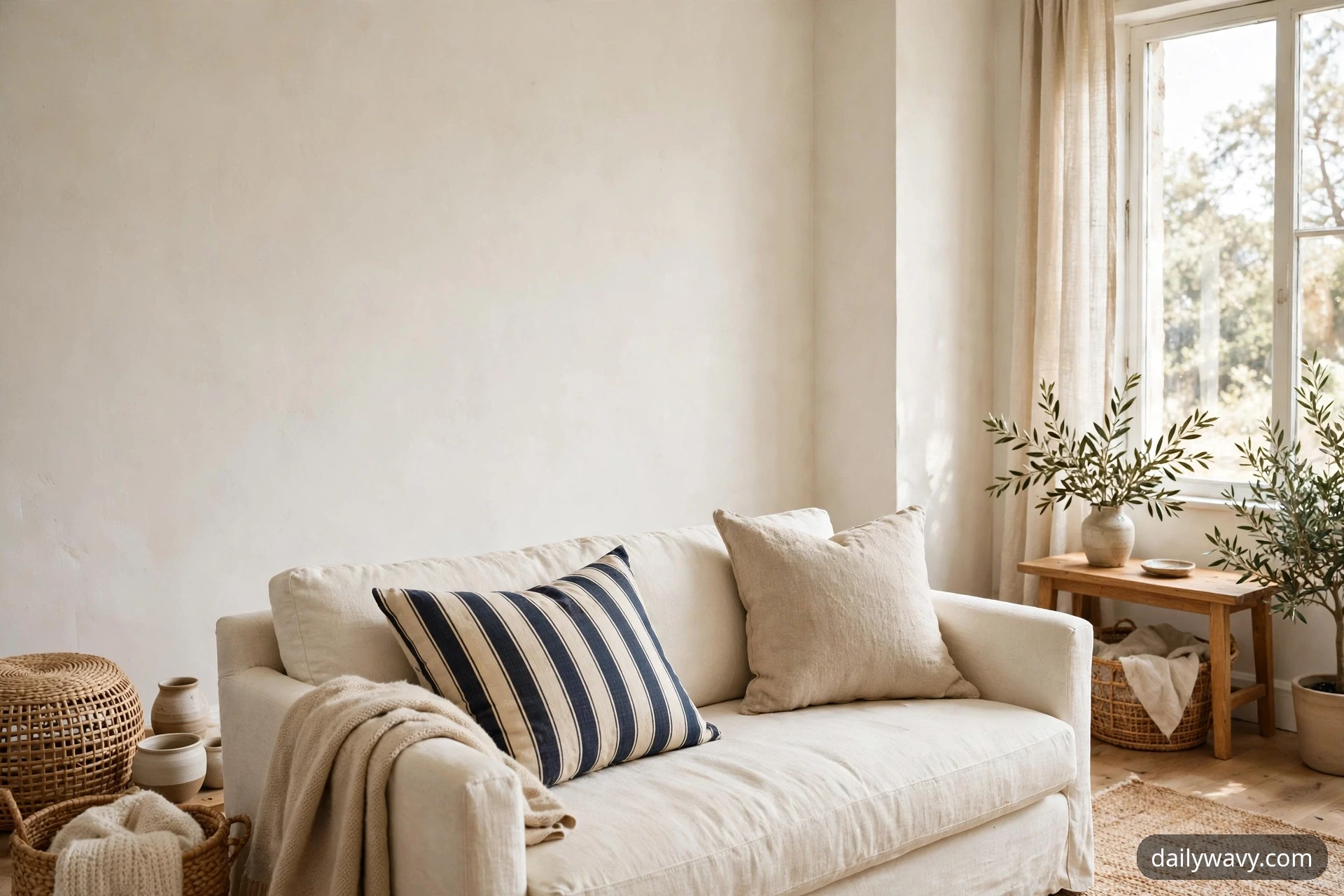
A striped pillow beside a solid one is a quick way to wake up a cream sofa. The stripe adds movement and pattern without overwhelming the room, and the solid pillow beside it gives the stripe room to breathe. Choose a classic ticking stripe in navy and cream or a wide awning stripe in rust and sand. Pair it with a solid linen pillow in a tone pulled from your rug or throw.
What to measure: Your sofa seat depth and back height. On a standard sofa, use 20-inch squares; on a loveseat, drop to 18-inch squares. Inserts should measure two inches larger than the cover.
Materials: Cotton or linen covers with feather or feather-blend inserts. Feather blends hold their shape better than pure down and cost less.
Placement: Place the striped pillow at each outer corner of the sofa, angled slightly toward the room, with the solid pillow tucked in front of it. Mirror the arrangement on both sides for symmetry, or use one striped pillow on one side and solids on the other for a relaxed feel.
Effort: About 20 minutes, including fluffing and arranging.
Lower-cost alternative: Pillow covers. A pair of striped pillow covers over pillows you already own costs a fraction of new pillows and lets you test the pattern before committing.
2. A Woven Basket For A Folded Blanket
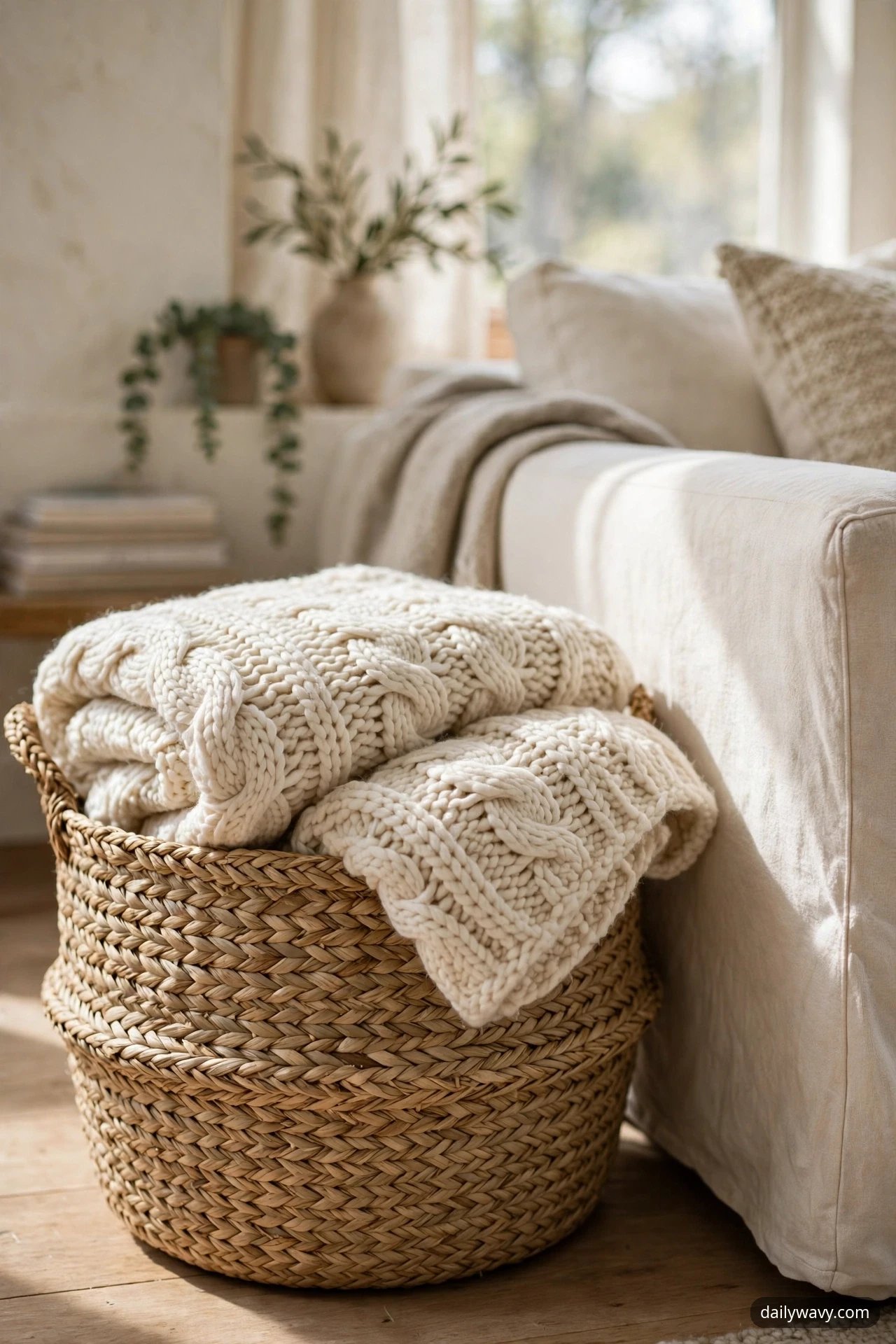
A woven basket holding a folded blanket is the kind of detail that makes a living room feel finished. It adds natural texture against the soft upholstery, keeps a throw within reach on cold evenings and fills that awkward empty floor space beside the sofa arm. Seagrass, water hyacinth and rattan all work; pick a weave with visible texture rather than a smooth lacquered finish.
What to measure: The floor space beside your sofa. A basket 14 to 18 inches in diameter and 16 to 20 inches tall fits most spots without crowding the walkway.
Materials: Seagrass or water hyacinth for a casual look, rattan for something more structured. Line the basket with a folded throw in a chunky knit or waffle weave so the blanket does double duty as decor.
Placement: Set the basket beside the sofa arm, slightly angled, with the folded blanket draped over one edge so the texture shows. Keep at least 30 inches of clear walkway beside it.
Effort: About 10 minutes to position and fold the blanket.
Lower-cost alternative: A secondhand basket from a thrift store, cleaned and dried in the sun, looks just as good as new for a few dollars.
3. A Small Round Accent Table
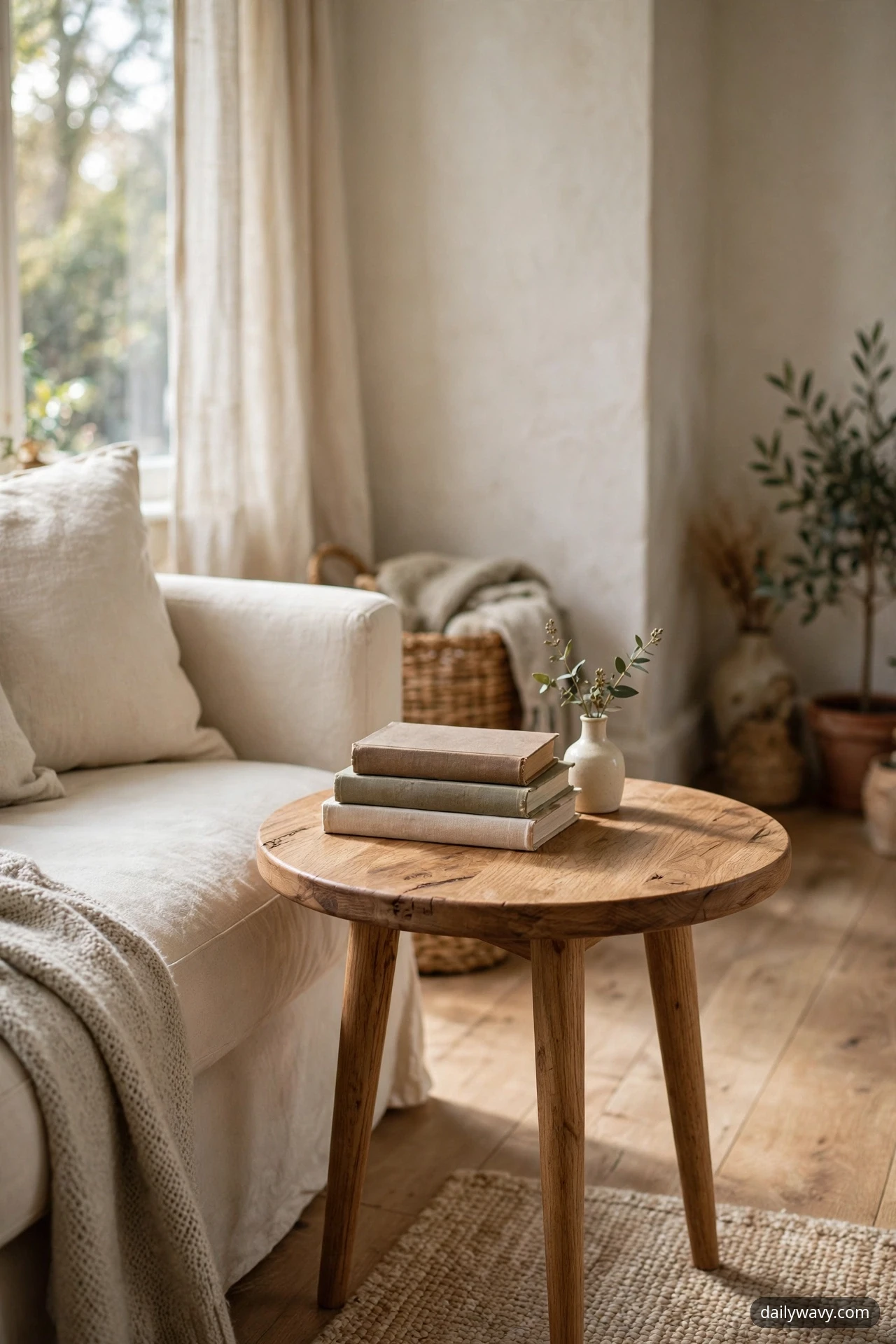
A small round accent table beside a cream sofa solves the eternal problem of where to put a coffee cup. Round tables are forgiving in tight spaces because there are no corners to bump, and a wood or marble top adds a material the sofa does not have. Aim for a table that is roughly the same height as the sofa arm, so reaching for your drink feels natural.
What to measure: The height of your sofa arm (usually 24 to 28 inches). The table top should land within two inches of that height. A diameter of 16 to 20 inches is plenty for a lamp base or a cup and a book.
Materials: Solid wood for warmth, marble or travertine for a cooler contrast, or a metal drum table for a modern edge. In a cream-sofa room, warm wood keeps things inviting.
Placement: Slide the table within arm’s reach of the seat, about two inches from the sofa arm. If the space is tight, a C-shaped table that slides under the sofa works just as well.
Effort: About 15 minutes to position and style with a small stack of books or a bud vase.
Lower-cost alternative: A sturdy wooden stool or a vintage plant stand at the right height does the same job and often costs less than a purpose-built side table.
4. A Soft Ottoman With A Serving Tray
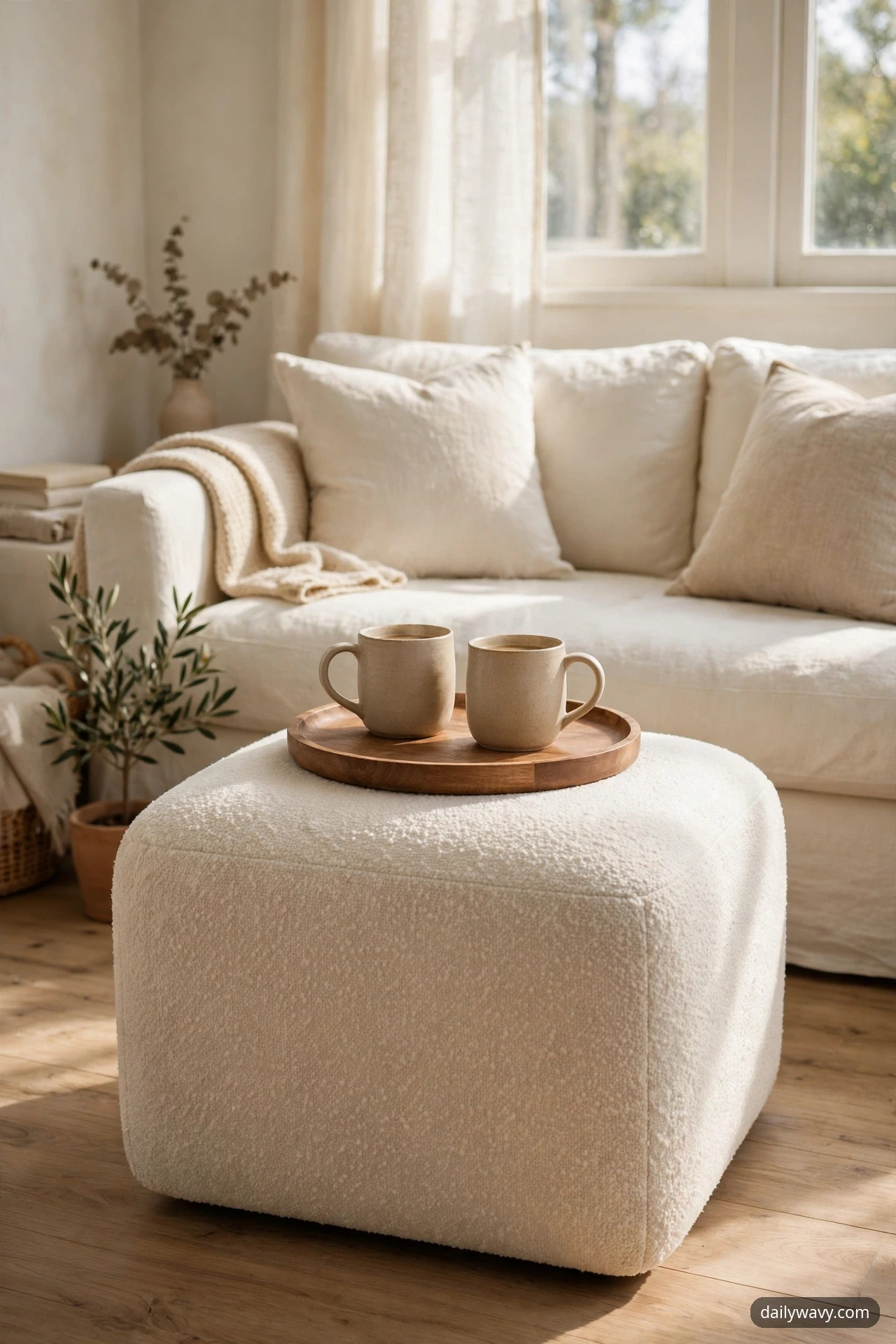
A soft ottoman with a serving tray on top is one of the hardest-working pieces you can add to a cream sofa setup. It serves as a footrest, extra seating when guests arrive and, with a tray, a stable surface for drinks and snacks. Choose an ottoman in a contrasting texture, like a nubby boucle or a cognac leather, so it reads as intentional rather than an afterthought.
What to measure: Your coffee table footprint and the distance from the sofa. The ottoman should sit 14 to 18 inches from the sofa edge. A 30-by-22-inch ottoman suits a standard sofa; go larger only if the room allows 30 inches of walkway around it.
Materials: Boucle, performance velvet or leather for the ottoman. A wooden or rattan tray, 16 to 20 inches across, keeps drinks steady on the soft top.
Placement: Center the ottoman in front of the sofa like a coffee table. Place the tray slightly off-center so part of the ottoman stays usable as a footrest.
Effort: About 20 minutes to position, style the tray and fluff the ottoman.
Lower-cost alternative: A firm lidded storage ottoman from a discount store, topped with a thrifted wooden tray, gives you the look plus hidden blanket storage.
5. A Framed Art Pair Centered Above Seating

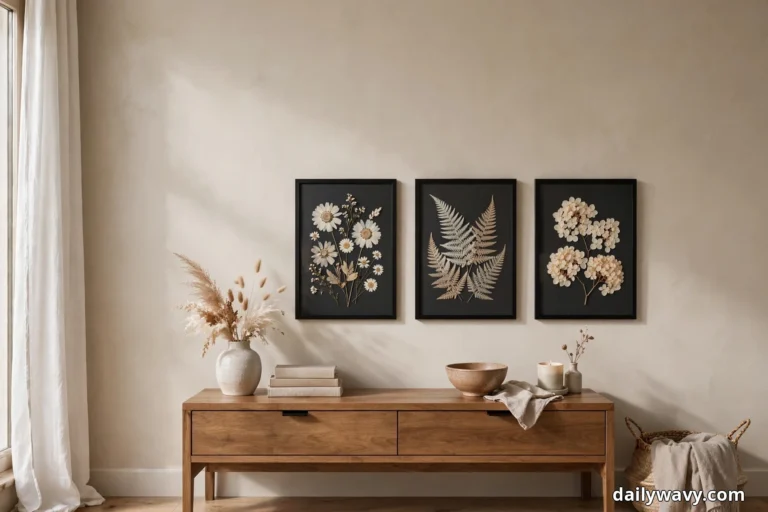
Bare wall above a cream sofa makes the whole arrangement feel unfinished. A framed art pair, centered above the seating, anchors the sofa and introduces color and personality. Two pieces often work better than one small frame because they fill the width of the sofa without demanding a huge single canvas. If you would rather build a fuller arrangement, our living room gallery wall ideas show layouts you can recreate. Abstract landscapes, botanical prints or simple line drawings all complement a cream palette.
What to measure: The width of your sofa. The pair should span roughly two-thirds of that width. Hang the center of the grouping 57 to 60 inches from the floor, and keep the bottom of the frames 6 to 8 inches above the sofa back.
Materials: Matching frames in oak, black or brass for a cohesive pair. Use a level and two picture hooks per frame so nothing tilts over time.
Placement: Center the pair on the sofa, not on the wall. In a room with an off-center window, align to the furniture and let the wall be asymmetric.
Effort: About 45 minutes including measuring, marking and hanging.
Lower-cost alternative: Print high-resolution art files at a copy shop and frame them in ready-made frames. The result looks polished for a fraction of commissioned art.
6. A Narrow Console Behind The Sofa
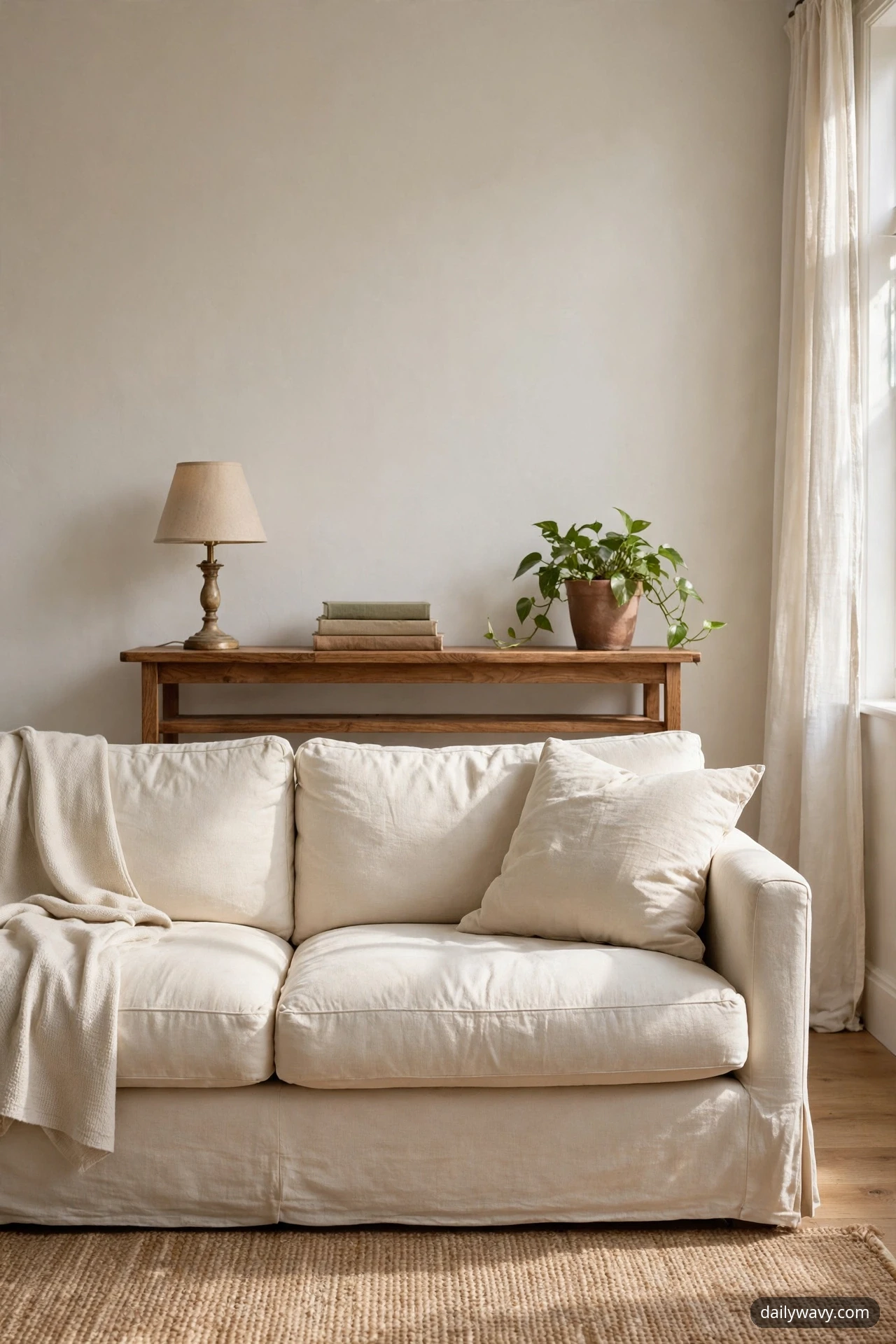
When a cream sofa floats in the middle of a room, the back of it can look bare from the entryway. A narrow console behind the sofa fixes that and adds a landing spot for keys, a lamp and a stack of books. Because it sits behind seating, it needs to be slim enough not to push the sofa into the walkway. If you are working out how to arrange seating in a tricky footprint, the same planning logic in our guide to narrow living room layouts applies here too.
What to measure: The length of your sofa back and the depth you can spare. The console should be 10 to 12 inches deep and a few inches shorter than the sofa. Height should match or sit just below the sofa back.
Materials: Wood with a lower shelf for baskets, or a slim metal-and-wood design for a lighter look. Avoid glass tops if you have small children.
Placement: Push the console flush against the sofa back. Style it with a table lamp on one end, a small stack of books in the middle and a plant or vase on the other end.
Effort: About 30 minutes to position and style.
Lower-cost alternative: A narrow bookshelf turned sideways, or two matching cube shelves, creates the same surface for far less than a dedicated console table.
7. A Reading Lamp Beside One Arm

A reading lamp beside one arm of the sofa turns a pretty corner into a used corner. Floor lamps with an adjustable arm or a pharmacy-style shade direct light exactly where a book sits, while a shaded table lamp on a side table gives softer ambient light. Either way, warm light (2700 to 3000 Kelvin) keeps the cream upholstery looking creamy rather than gray.
What to measure: Seat height plus the height of a seated reader’s shoulder. The bottom of the lampshade should sit at about shoulder height when you are seated, roughly 42 to 48 inches from the floor for a floor lamp.
Materials: Brass or matte black metal for the lamp body, linen or cotton drum shade for soft diffusion. Avoid bare bulbs, which create harsh glare on light upholstery.
Placement: Position the lamp just behind or beside the arm on your dominant reading side, angled so the shade directs light down onto the seat, not into your eyes.
Effort: About 15 minutes to assemble and position.
Lower-cost alternative: A plug-in wall sconce with a swing arm, mounted at the right height, costs less than a quality floor lamp and frees up floor space.
8. A Washable Rug With A Subtle Pattern
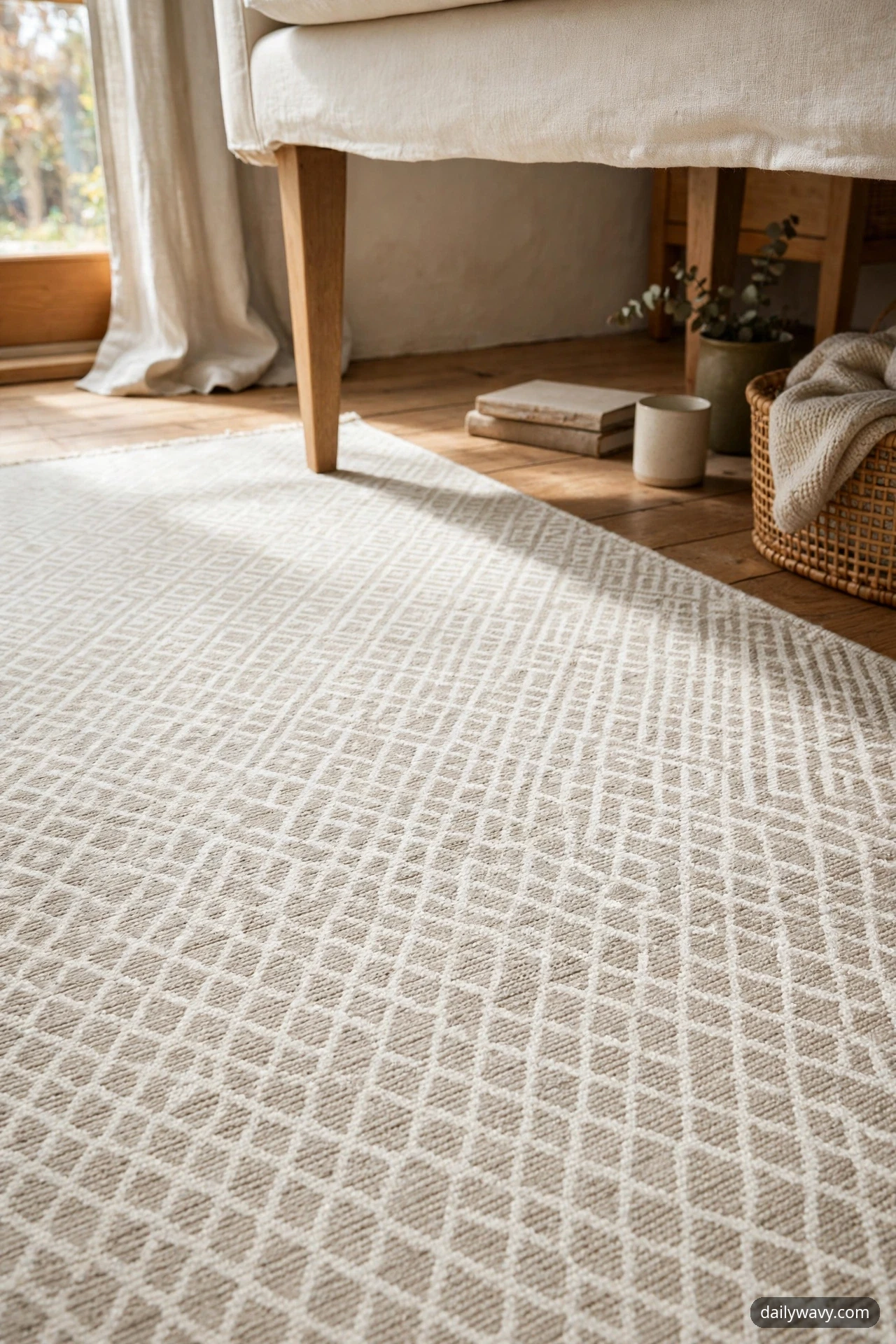
A cream sofa plus a light rug can feel like a lot of pale fabric, which is exactly why the rug needs a subtle pattern. A low-contrast geometric, a faded vintage motif or a soft stripe adds definition underfoot without competing with the sofa. Washable rugs are the practical choice here, because a cream sofa already demands enough upkeep without adding a high-maintenance rug to the mix.
What to measure: Your seating area. The rug should extend at least 6 inches beyond the sofa on each side, with the front legs of the sofa resting on it. For a standard 84-inch sofa, an 8-by-10-foot rug is the sweet spot.
Materials: Machine-washable flatweave or low-pile rugs in cotton or synthetic blends. Look for patterns with at least two tones, like ivory and greige, so the design reads from a distance.
Placement: Center the rug on the sofa and main seating, leaving 12 to 18 inches of bare floor between the rug edge and the walls in an average room.
Effort: About 30 minutes to unroll, position and flatten the rug.
Lower-cost alternative: Layer a smaller washable rug over an inexpensive large jute rug. You get the scale of a big rug with the pattern and washability of a smaller one.
9. A Linen Curtain Backdrop

Linen curtains behind or beside a cream sofa soften the whole wall and add the one texture upholstery cannot provide: gentle, moving drape. Hang them high and wide so the window looks larger and the sofa sits against a backdrop of soft folds rather than a hard wall edge. Our living room curtain ideas cover rod placement, panel lengths and fabrics in more detail. Natural linen in ivory, flax or oatmeal keeps the palette calm.
What to measure: Window width plus 8 to 12 inches on each side for the rod, and mount the rod 4 to 6 inches above the window frame. Panels should be one and a half to two times the window width for proper fullness, and end just above the floor.
Materials: Real or linen-look curtains with a natural slub texture. Avoid shiny polyester, which clashes with the matte softness of a cream sofa.
Placement: If the sofa sits under or near a window, center the curtains on the window and let the sofa overlap the lower panels slightly. On a bare wall, curtains can frame the sofa like a backdrop.
Effort: About an hour including rod installation and steaming the panels.
Lower-cost alternative: Drop-cloth curtains, hemmed and hung with clip rings, give you the linen look for a fraction of custom drapery prices.
10. A Vintage Trunk Used As A Table
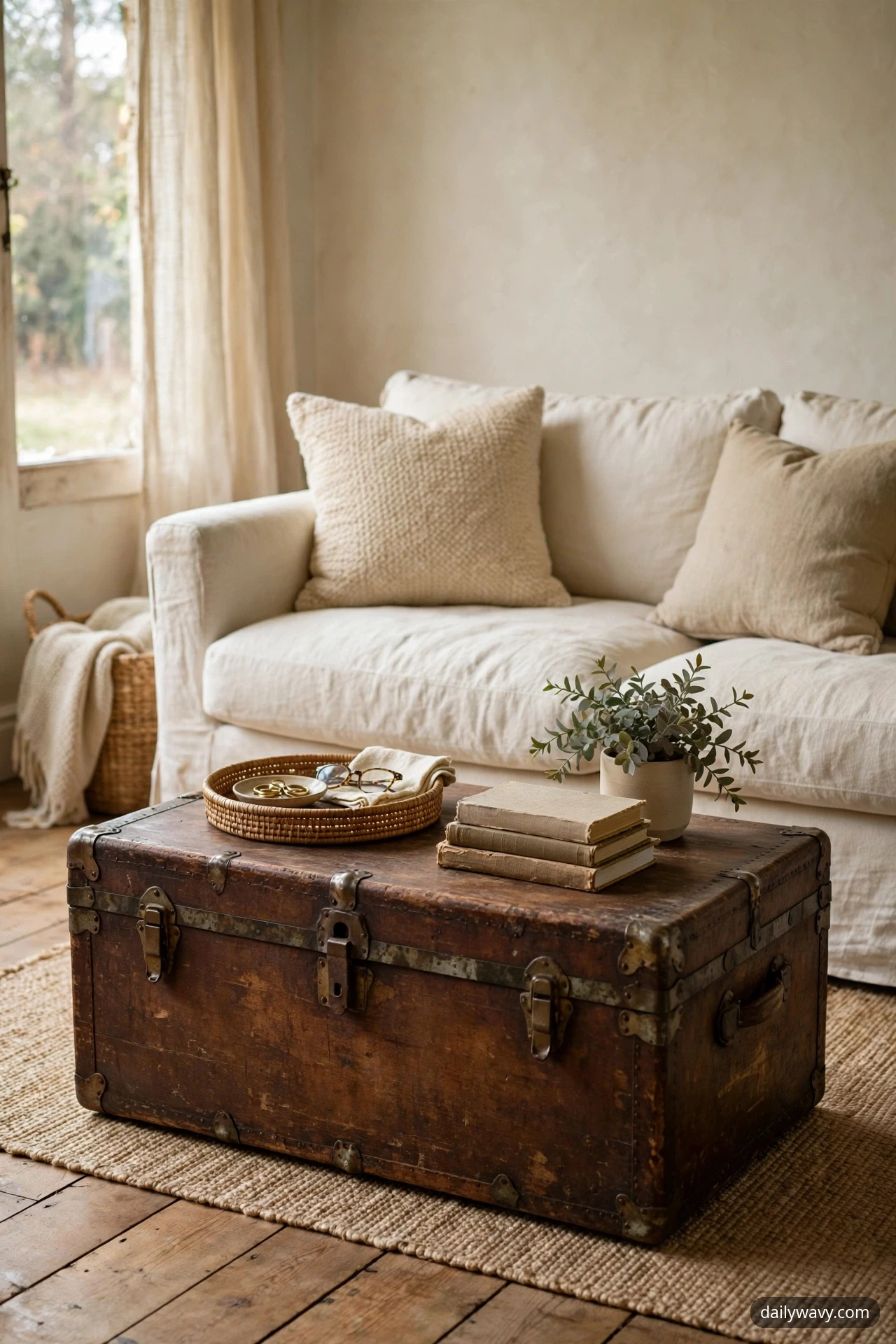
A vintage trunk used as a coffee table gives a cream sofa room the one thing new furniture cannot: history. The worn wood, metal corners and patina add character that balances the softness of cream upholstery, and the hollow interior swallows blankets, board games and all the clutter a living room collects. It is also a natural fit near an entry, where similar storage-minded styling works well, as shown in our small entryway decor ideas.
What to measure: Standard coffee table height is 16 to 18 inches, and many trunks land close to that range. Check that the trunk is 36 to 48 inches long for a standard sofa and stable enough not to rock.
Materials: Wood or metal-bound vintage trunks with a flat, sturdy lid. Line the interior with cedar or lavender sachets if it smells musty, and add felt pads underneath to protect floors. Keep sachets inside the closed trunk, away from pets that might chew them.
Placement: Center the trunk 14 to 18 inches from the sofa. Style the top with a small tray, a stack of books and one low plant so the surface stays usable.
Effort: About 30 minutes to clean, position and style.
Lower-cost alternative: Flea markets and estate sales are full of trunks for a fraction of antique-store prices. A coat of clear wax revives dry wood beautifully.
Cream Sofa Styling Questions, Answered
Will a cream sofa show every stain?
Cream shows more than charcoal, but performance fabrics have changed the equation. Look for sofas labeled stain-resistant or performance weave, keep a fabric-safe cleaner on hand and treat spills the moment they happen. Slipcovered cream sofas are among the most forgiving, since the covers go straight in the wash.
What colors go best with a cream sofa?
Warm neutrals first: oatmeal, sand, camel and soft taupe. Then add one deeper accent, like navy, forest green, rust or charcoal, in pillows and art. Metallics like brass and aged bronze warm up the palette, while black accents add definition.
How do I keep a cream sofa from looking boring?
Texture is the answer. Mix linen, boucle, leather, wood, woven fibers and metal in the same room. A cream sofa surrounded by several different textures reads as layered and intentional, never flat.
What size rug goes with a cream sofa?
The front legs of the sofa should sit on the rug. For a standard 84-inch sofa that means an 8-by-10-foot rug in most rooms. In a large open room, step up to 9-by-12 so the seating group feels anchored.
Can I mix a cream sofa with dark wood furniture?
Yes, and you should. Dark wood gives a light sofa visual weight and keeps the room from floating away. Balance it with lighter accents, like a linen curtain or a pale rug, so the contrast feels deliberate.
How often should I rotate pillows and throws?
Seasonally is plenty. Swap in lighter linens and brighter accents for spring and summer, then bring back wool throws and deeper tones for fall and winter. The sofa stays the same; the mood changes around it.
Pull It All Together
A cream sofa is a starting point, not a finished room. Pick two or three of these ideas, the ones that solve your actual problems, whether that is a bare wall, a missing side table or a rug that never quite fit. Style in layers, step back often and trust the palette. For more room-by-room inspiration, browse our Home & Decor ideas and save the combinations you love.