
14 Small Dining Room Decor Ideas for Meals and Gatherings
14 Small Dining Room Decor Ideas for Meals and Gatherings A small dining room does not have to feel like…
14 Small Dining Room Decor Ideas for Meals and Gatherings
A small dining room does not have to feel like a compromise. When every piece earns its footprint, a compact space can host weeknight dinners and real gatherings with room to breathe. The secret is proportion: a table sized to the room, lighting that lands where you eat, sightlines you can see across, and surfaces that wipe clean in minutes. Below are fourteen ideas that work in genuinely small dining rooms, each with the measurements, materials and placement thinking to make it real.
Jump to an idea
- A low centerpiece with clear sightlines
- A natural-texture runner
- A simple pendant aligned to the table
- A framed artwork at comfortable eye level
- A pair of lamps on a sideboard
- A washable rug scaled to chair movement
- A small plant in a quiet corner
- A wood bowl on a console
- A restrained chair-cushion palette
- A mirror reflecting natural light
- A ceramic pitcher with seasonal stems
- A linen tablecloth with plain dishes
- An asymmetrical arrangement on storage furniture
- A small gallery group on one wall
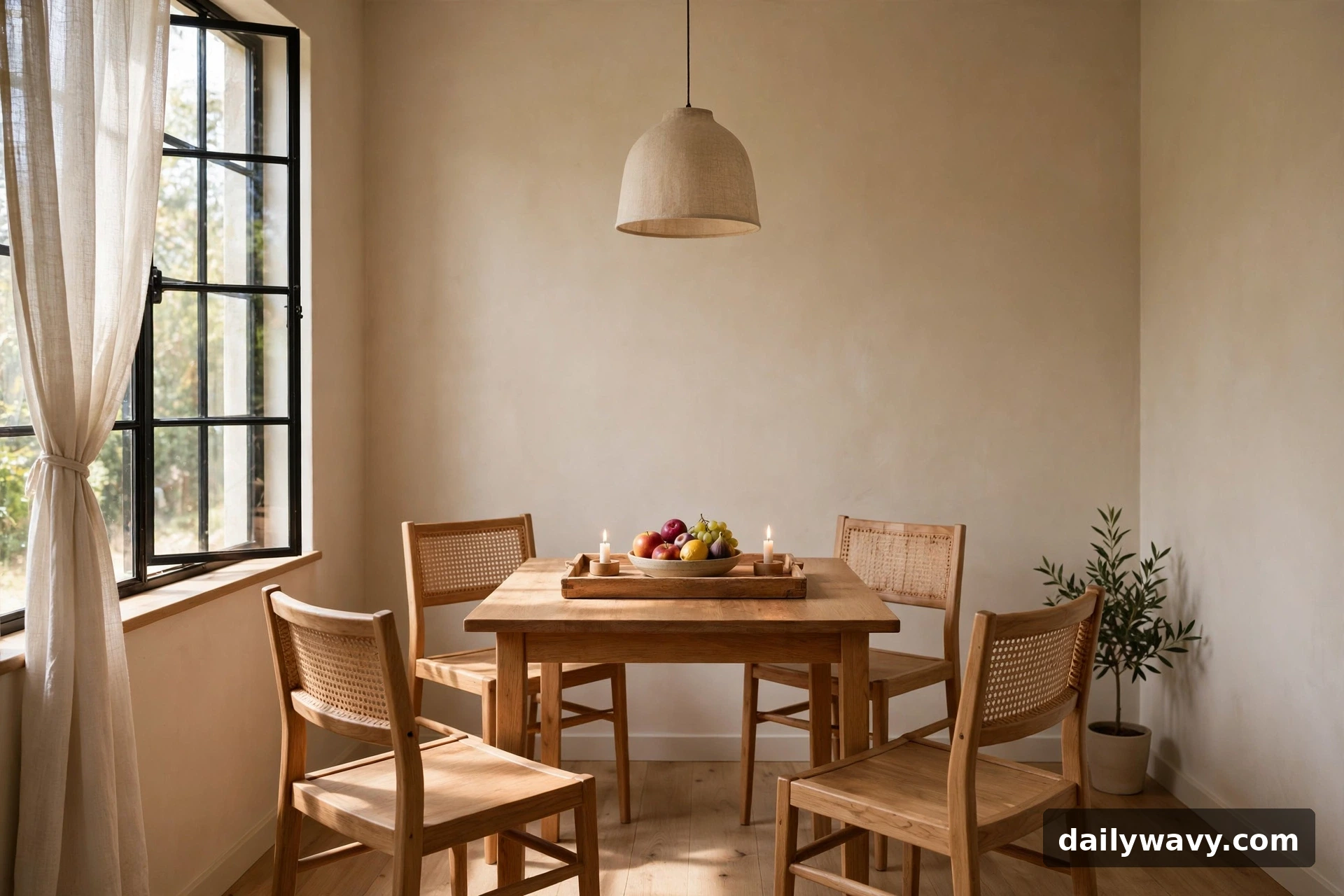
1. A low centerpiece with clear sightlines
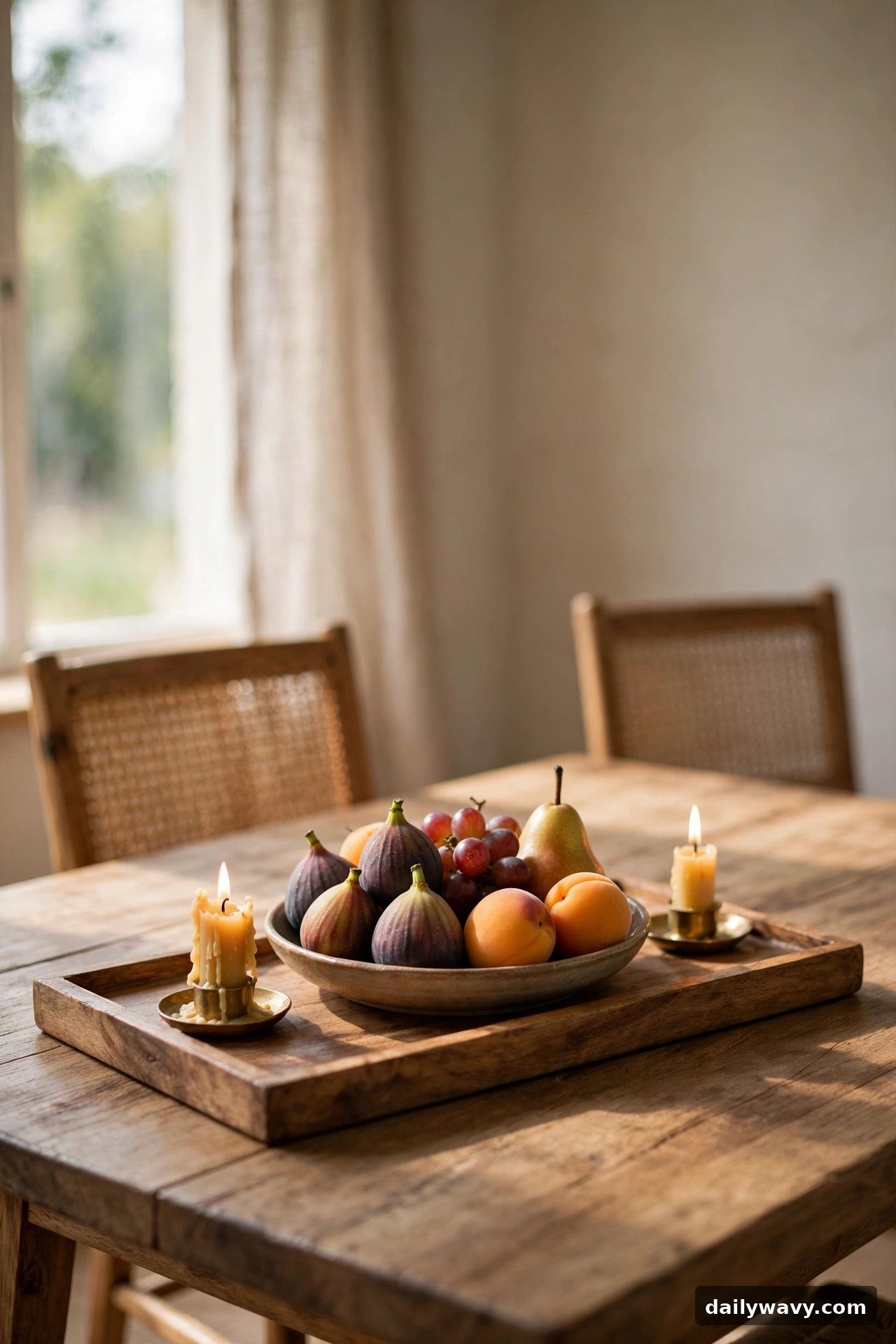
The fastest way to make a small dining room feel cramped is a tall centerpiece. When the arrangement blocks the view across the table, conversation has to work around it and the room reads as divided. A low centerpiece, kept under twelve inches tall, leaves sightlines open so the whole table feels like one shared space. Think a shallow bowl of fruit, a low tray with three small candles, or a single stem in a short vase.
The practical decision is containment. A tray or shallow platter corrals the pieces into one movable unit, so clearing the table for serving takes five seconds instead of five trips. Choose a tray around fourteen to eighteen inches long for a standard rectangular table, or a round tray about twelve inches across for a round table. That scale leaves real working surface on both sides for dishes, which matters more in a small room where every inch of table counts.
What to measure: the clear space between place settings. Leave at least twenty-four inches of table width per diner, and let the centerpiece occupy only the middle third of the table. For materials, wood, stone or woven trays add warmth without visual noise. A realistic lower-cost alternative is a rimmed baking sheet lined with a folded linen napkin, which gives the same corralled look for almost nothing.
2. A natural-texture runner

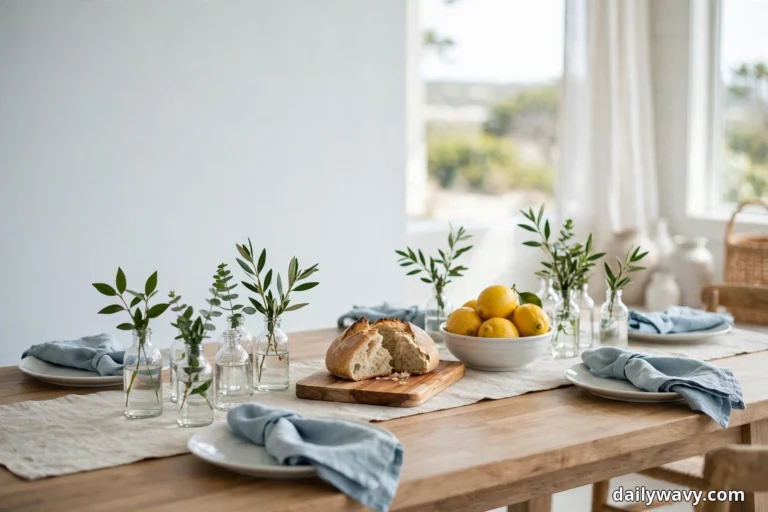
A runner does the work of a tablecloth without hiding the table. In a small dining room it adds texture and a finished feeling while keeping the wood visible at the ends, which helps the table read as furniture rather than a covered lump. Natural textures like jute, cotton or linen keep the palette calm and forgive crumbs in a way that a patterned runner never will.
The practical decision is length. A runner should overhang the table ends by six to twelve inches, enough to look intentional but not so much that it drapes into laps. For a sixty-inch table, a runner around seventy-two to eighty-four inches long lands right. Width is simpler: twelve to sixteen inches wide gives a generous band down the middle without creeping under plates. When guests arrive, the runner stays put and plates go straight on top, which is the whole point.
What to measure: your table length first, then buy or cut the runner to that plus twelve to twenty-four inches total. For cleaning, choose a machine-washable cotton or a jute runner you can shake out and spot clean; avoid anything that needs dry cleaning in a room where food is the main event. A realistic lower-cost alternative is a length of drop cloth or canvas cut to size with the edges fringed by hand, which costs a few dollars and looks genuinely good.
3. A simple pendant aligned to the table
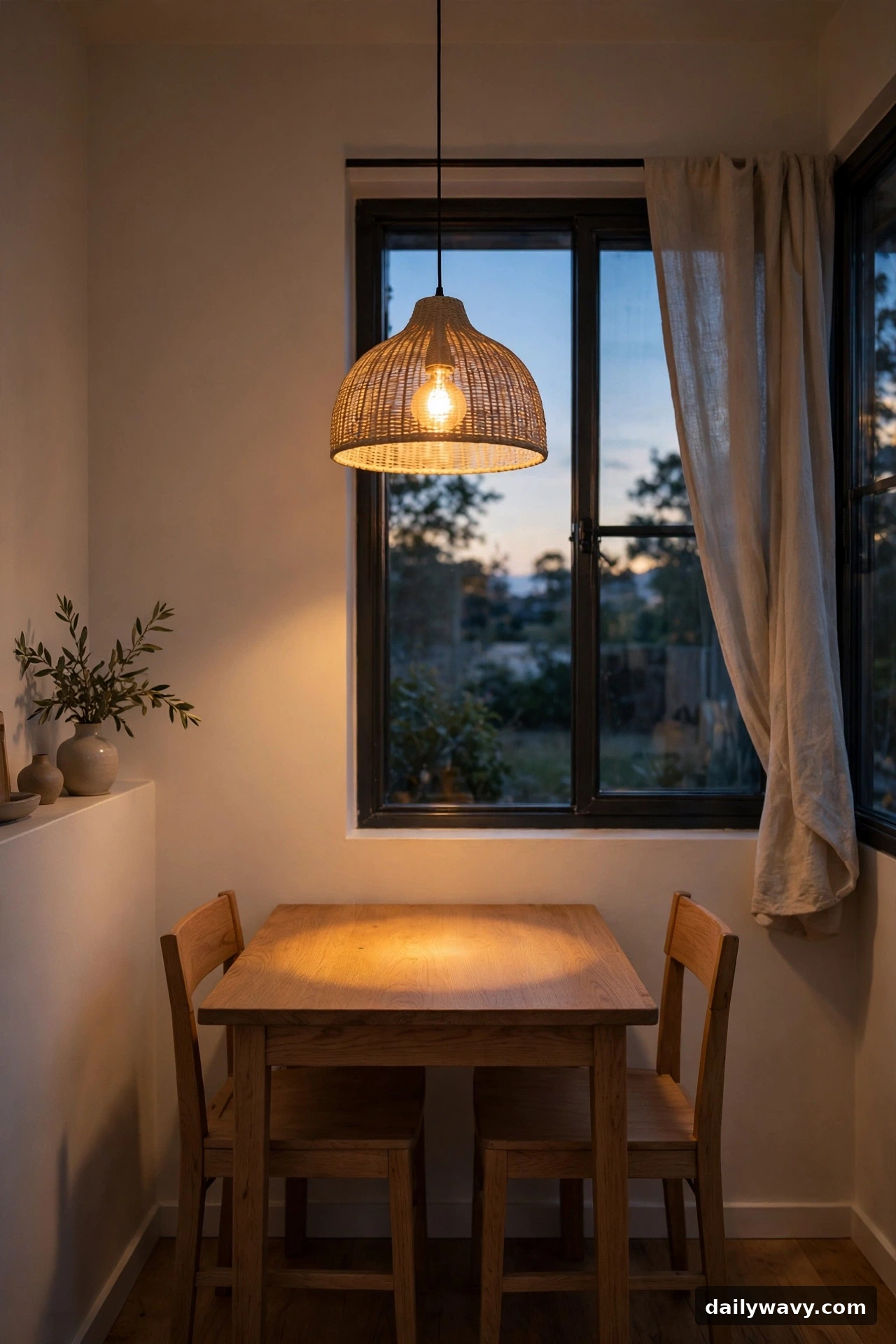
One well-placed pendant does more for a small dining room than any amount of decor. It marks the table as the heart of the room, pulls the eye down to where people gather, and gives evening meals the warm pool of light that makes everything taste better. The key word is aligned: the pendant centers on the table, not on the room, so the light lands on the food.
The practical decision is height. Hang the bottom of the pendant thirty to thirty-four inches above the tabletop. Lower than that and it blocks sightlines and heads; higher and the light floats away from the table and flattens the mood. For a table under forty-eight inches long, one pendant with a shade twelve to sixteen inches across is plenty. Longer tables can take two smaller pendants spaced evenly, but one strong light usually beats two weak ones in a small room.
What to measure: tabletop to ceiling, minus your chosen drop. If the fixture is hardwired, have it installed by a qualified electrician, especially in older homes where the existing box may not be rated for a pendant’s weight. A realistic lower-cost alternative is a plug-in pendant on a swag hook with the cord run neatly to the wall, which gives the same centered glow with no wiring work. Use a warm bulb around 2700K and a dimmer if the circuit allows, since dining light should be able to drop from task-bright to candle-soft.
4. A framed artwork at comfortable eye level
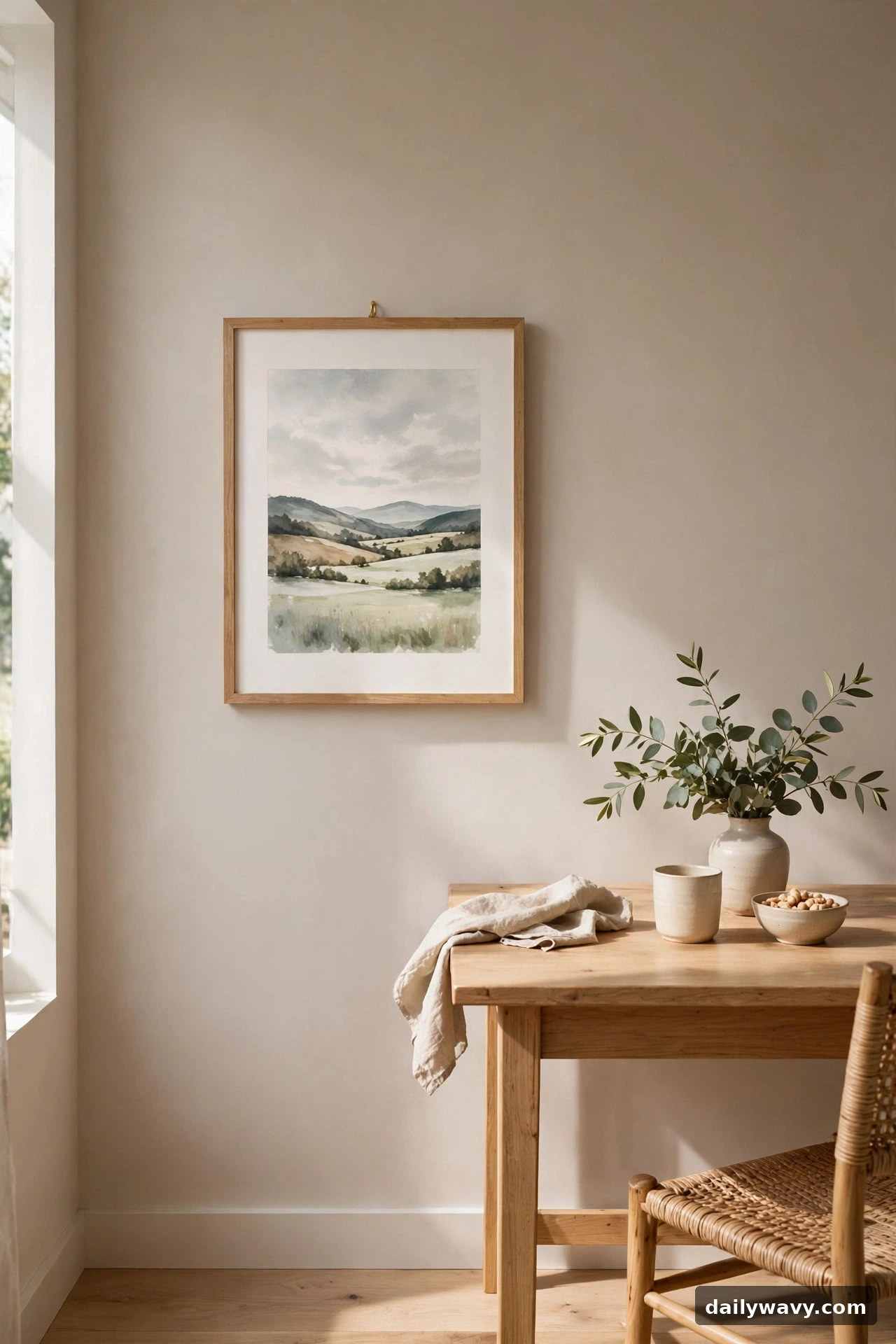
Bare walls make a small dining room feel unfinished, but one well-hung piece of art makes it feel designed. The trick is hanging it where seated eyes actually land. Gallery standard puts the center of the artwork at fifty-seven to sixty inches from the floor, which sits right in the sightline of someone sitting at the table. That single decision makes the art feel connected to the meal instead of floating above it.
The practical decision is scale. In a small room, one medium piece beats a large one that overwhelms the wall. Aim for artwork roughly two-thirds the width of the furniture below it, so a forty-eight-inch sideboard gets a piece around thirty-two inches wide. Keep the frame simple, thin wood or matte black, so the art does the talking. A landscape or still life suits a dining room; anything too busy competes with the food.
What to measure: the wall width and the furniture below, then the hanging height from the floor to the artwork’s center. Use two hooks or a French cleat for anything over ten pounds so it hangs level and stays put. A realistic lower-cost alternative is framing a beautiful calendar page, a vintage map, or your own photograph in a standard-size frame, which looks intentional and costs very little.
5. A pair of lamps on a sideboard

If your dining room has a sideboard or console, a pair of lamps on top is the easiest upgrade in this whole list. Two matching lamps bring symmetry to a small room, which reads as calm and orderly, and they add a second layer of light for evenings when the pendant alone feels stark. They also make the sideboard look styled rather than just storage.
The practical decision is height and glow. Lamps around twenty-four to thirty inches tall suit a standard thirty to thirty-six-inch sideboard, keeping the total composition under the sightline. Choose warm bulbs at 2700K to match the pendant, and fabric shades that diffuse the light softly. The pair should match exactly; near-matching lamps look like a mistake, while identical ones look like a decision.
What to measure: the sideboard top, leaving at least six inches of clear surface at each end so the lamps do not crowd the edges. Keep cords tidy with a cord cover or by routing them behind the sideboard. A realistic lower-cost alternative is a single statement lamp plus a small stack of books on the other end, which gives asymmetry that still feels balanced.
6. A washable rug scaled to chair movement
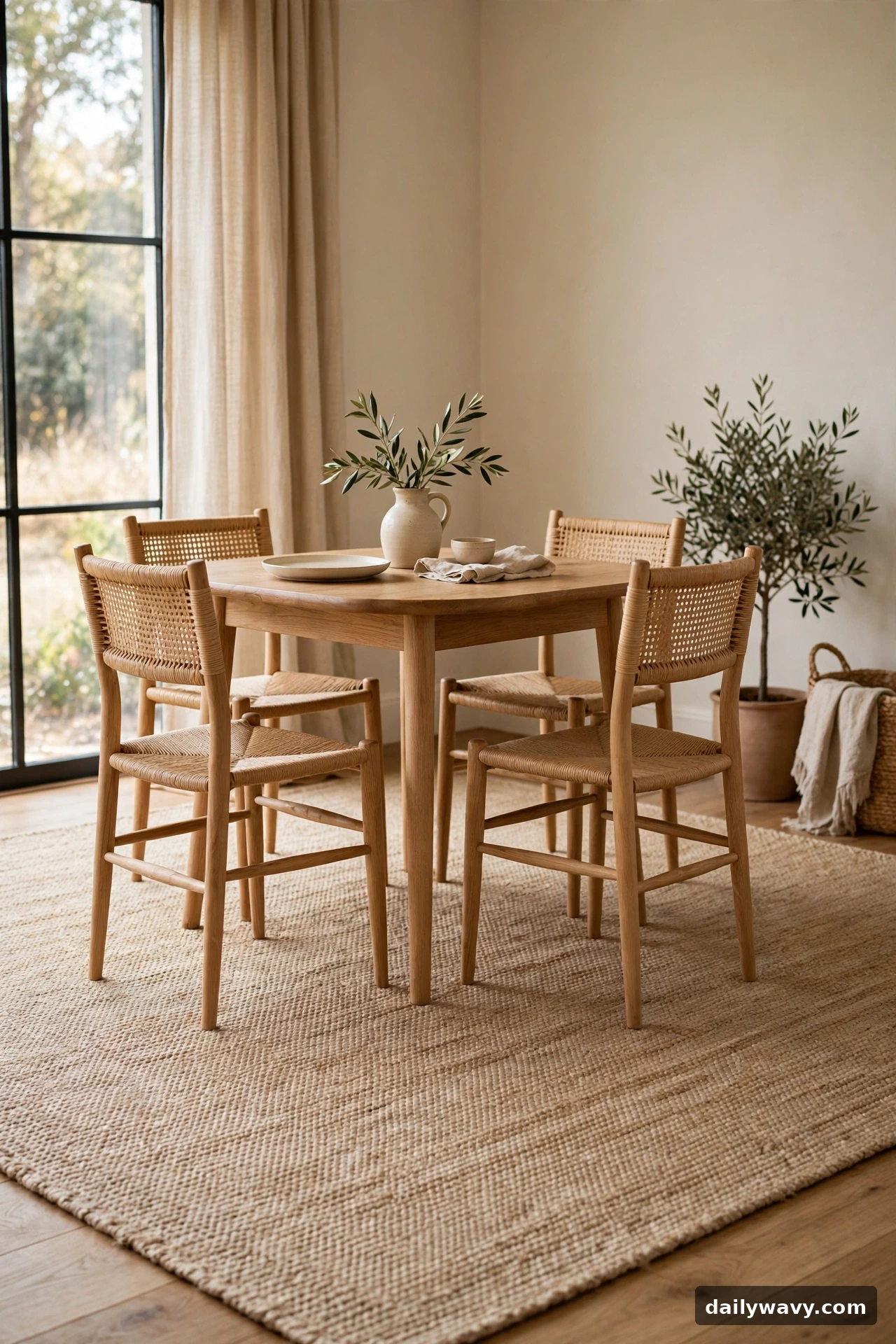
A rug grounds a dining area and softens the acoustics, but the wrong size is worse than none. The rule that matters: the rug must extend at least twenty-four inches beyond the table on every side, so chairs stay on the rug when pulled out. A rug that ends under the chair legs catches, bunches and announces itself as too small every time someone sits down.
The practical decision is washability. Dining rooms collect crumbs, spills and chair-leg wear, so choose a low-pile rug you can actually clean. Machine-washable rugs in a five-by-seven or six-by-nine have become genuinely good, and indoor-outdoor rugs in natural weaves shrug off red wine with a hose-down. Low pile, under half an inch, matters because chair legs glide instead of dragging.
What to measure: table dimensions plus forty-eight inches in each direction for the minimum rug size. A forty-by-sixty-inch table needs at least a six-by-eight-foot rug, and an eight-foot round rug suits a forty-eight-inch round table. For chair pull-back, confirm twenty-four inches of rug behind each chair position before buying. A realistic lower-cost alternative is layering a washable flat-weave over the existing floor and skipping the pad, since dining chairs need a firm surface more than extra cushion.
7. A small plant in a quiet corner
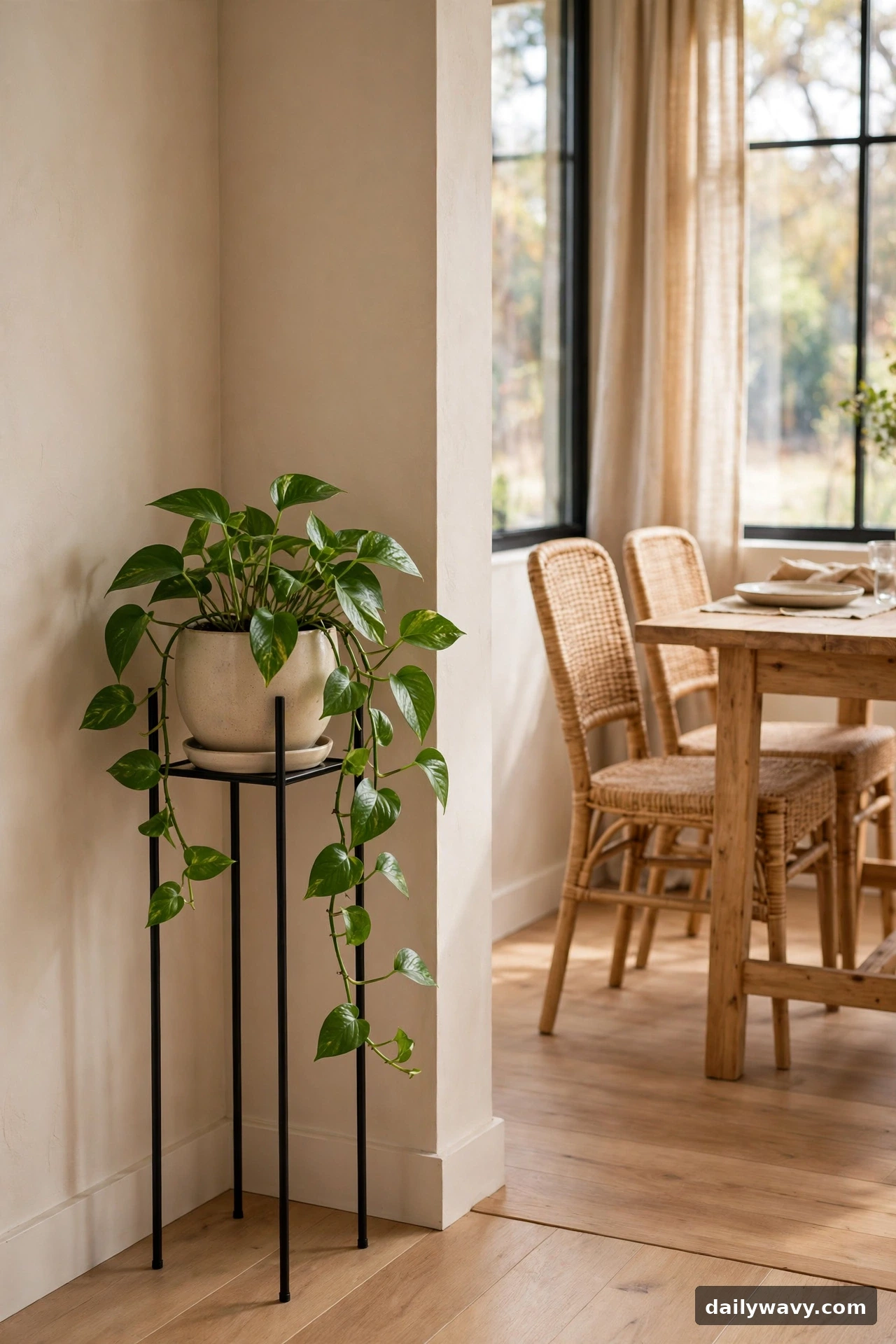
One plant is decor. Five plants is a greenhouse. In a small dining room, a single well-chosen plant in a quiet corner adds life without stealing floor space or competing with the table. The corner by the window is the natural home: the plant gets light, and the room gets a soft green accent that makes everything around it feel more considered.
The practical decision is the plant itself. Choose something that tolerates the light you actually have and forgives the watering you actually do. A pothos on a small stand, a snake plant in a ceramic pot, or an olive tree in a slim planter all suit dining rooms. Keep the footprint small, a pot eight to ten inches across, so the corner stays a corner and does not become an obstacle.
What to measure: the corner’s clear floor space, keeping at least thirty inches of walkway past the plant to the nearest chair. For accessibility and cleaning, a plant on a stand with a saucer is easier to water without dripping and easier to move for sweeping. Materials: a ceramic or clay pot with drainage and a saucer underneath; skip cache pots with no drainage unless you are diligent about emptying them. A realistic lower-cost alternative is a grocery-store pothos in a thrifted ceramic pot, which looks like a design choice within a week of trailing.
8. A wood bowl on a console
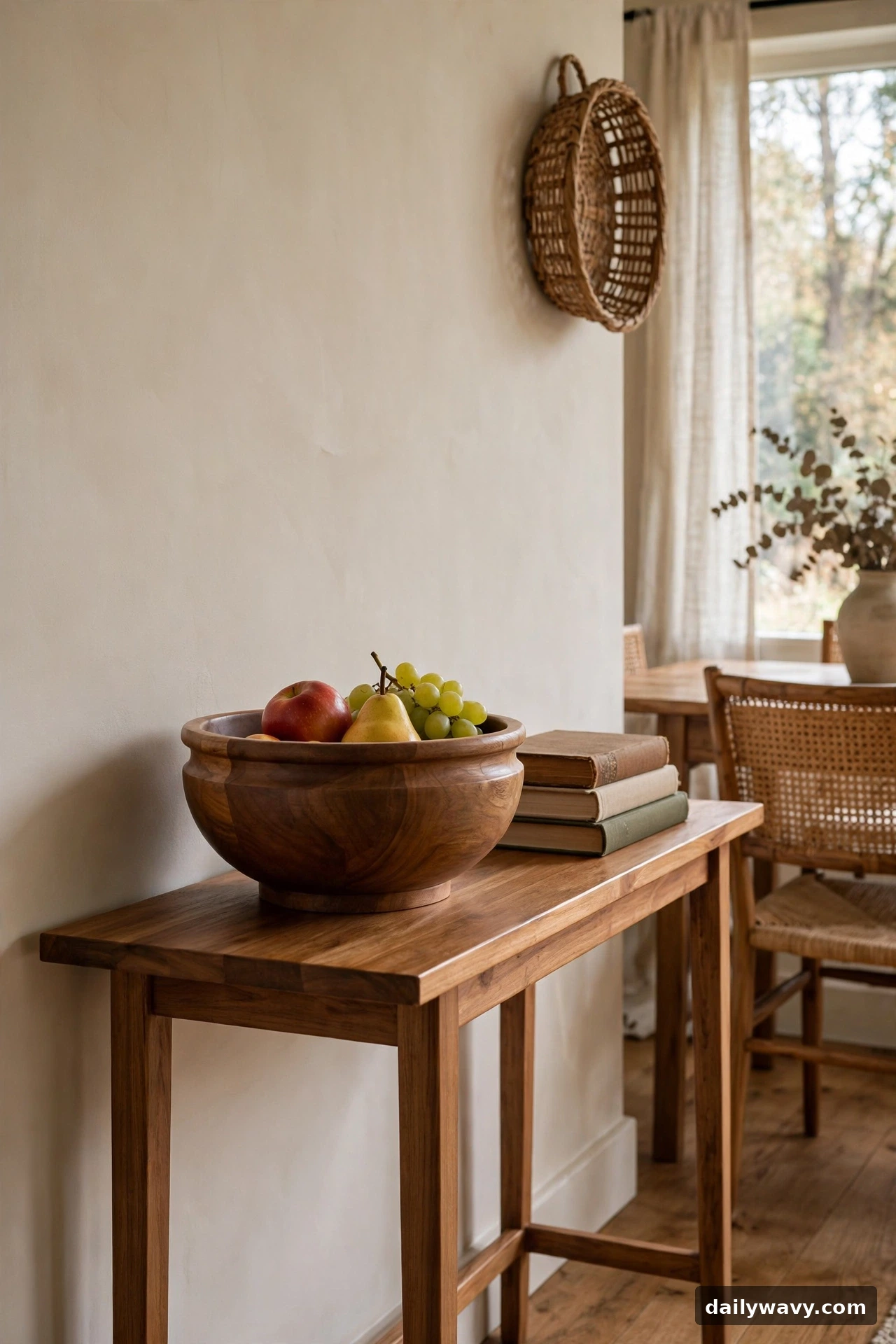
A console or narrow sideboard in a dining room collects clutter: mail, keys, the sunglasses nobody claims. A single wood bowl gives all of it a home. It reads as decor, works as a catch-all, and keeps the surface clear enough that the console still looks like furniture instead of a landing strip. Filled with fruit, it doubles as a serving piece.
The practical decision is size and placement. A bowl ten to fourteen inches across suits a console without dominating it; smaller and it looks lost, larger and it becomes the only thing you see. Place it slightly off-center rather than dead middle, which looks more natural and leaves room for a small stack of books or a candle beside it. Wood warms up the hard surfaces of a dining room and hides fingerprints better than ceramic or metal.
What to measure: the console depth, usually twelve to sixteen inches, and keep the bowl’s diameter a few inches less so it sits comfortably. For cleaning, a food-safe oil finish on the bowl wipes clean and can hold fruit directly. A realistic lower-cost alternative is any large serving bowl you already own; the trick is committing it to the console instead of the cabinet.
9. A restrained chair-cushion palette
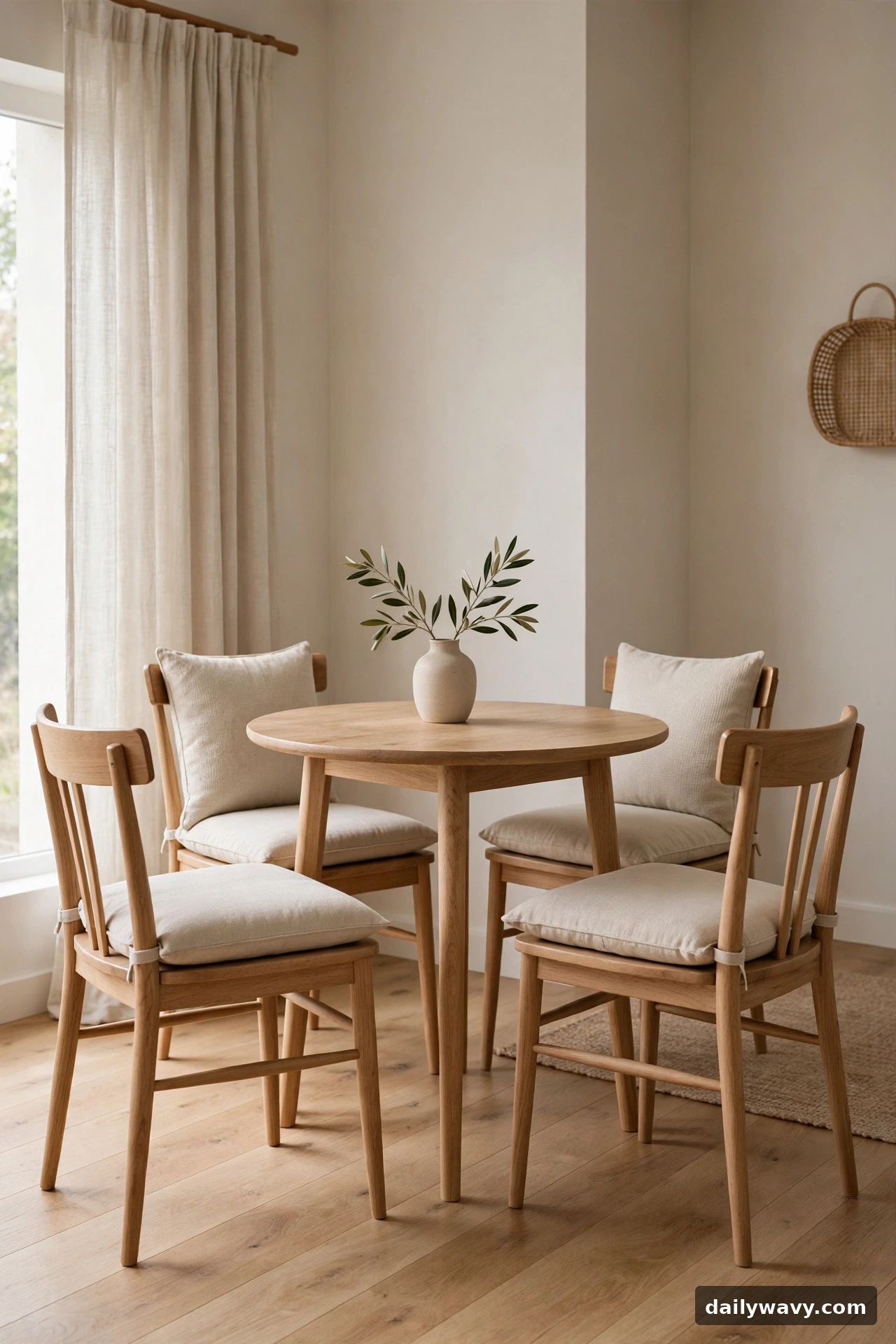
Chair cushions are where small dining rooms quietly go wrong. Six chairs in six different cushions, or one loud pattern repeated six times, makes the room feel busy before anyone sits down. A restrained palette, two or three colors at most, in washable fabrics, keeps the seating calm and lets the room’s other details show.
The practical decision is the fabric. Dining chairs take real abuse: food, elbows, sliding in and out. Choose cushion covers you can remove and machine wash, in a tight weave that resists stains. Cotton canvas, linen blends or outdoor-rated fabrics all work. Tie-on cushions suit wood chairs; slip-on covers suit upholstered ones. Pick a palette drawn from the room, a warm neutral plus one accent that echoes the art or the rug, and repeat it without variation.
What to measure: the chair seat, then buy cushions about an inch smaller all around so they sit centered without overhanging. For cleaning, removable washable covers are non-negotiable in a dining room; anything spot-clean-only will look tired within months. A realistic lower-cost alternative is dyeing or recovering existing cushions in one fabric, which unifies mismatched chairs for the price of a few yards of canvas.
If your dining area flows into the living space, the space planning in our narrow living room layout ideas shows how to keep an open plan feeling intentional rather than crowded.
10. A mirror reflecting natural light
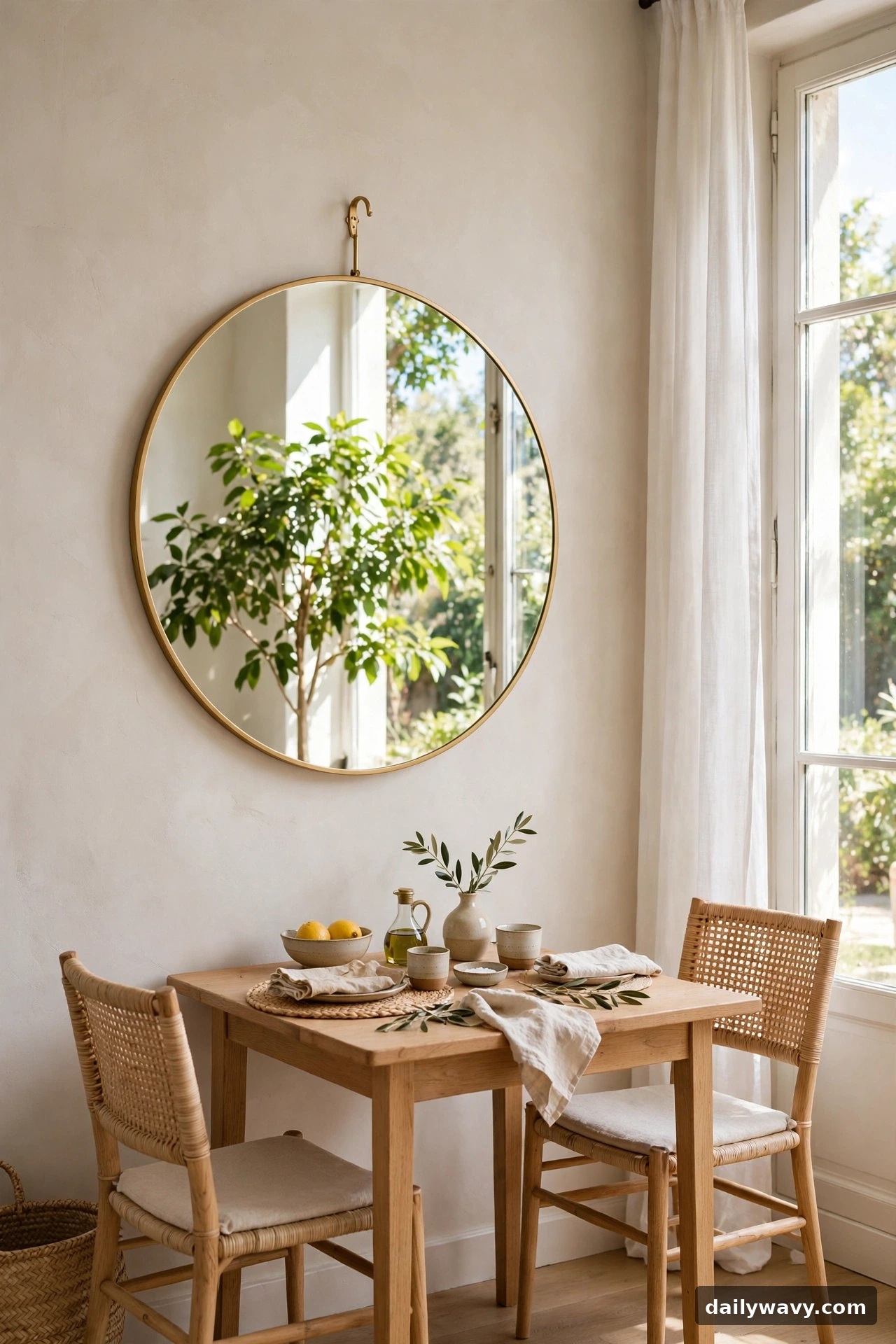
A mirror is the oldest small-room trick because it works. Hung to catch a window, it doubles the daylight and gives the eye somewhere to travel, which makes the walls feel farther apart than they are. In a dining room it also adds a little evening glamour, catching candlelight and the pendant’s glow.
The practical decision is placement. Hang the mirror on the wall adjacent to the window, not opposite it, so it reflects light into the room rather than glaring back at the window. It should reflect something worth seeing: the window itself, a plant, the art on the opposite wall. Never place it where it reflects clutter, the kitchen mess or the television, because a mirror doubles whatever it sees. A round mirror thirty to thirty-six inches across suits most small dining rooms; larger starts to feel like a statement the room did not ask for.
What to measure: hang the mirror’s center at the same fifty-seven to sixty inches as artwork, and confirm from a seated position that it catches the window, not the ceiling. For cleaning, a mirror in a dining room collects cooking film; wipe it monthly with glass cleaner and a microfiber cloth. A realistic lower-cost alternative is a thrifted mirror with a dated frame, refinished in matte black or warm wood tone spray paint.
11. A ceramic pitcher with seasonal stems

Fresh flowers are lovely and high-maintenance. A ceramic pitcher with seasonal stems gives the same living touch with a fraction of the fuss. In spring it might hold cherry branches, in fall dried wheat, in winter eucalyptus that scents the room for weeks. The pitcher itself is the constant; the stems rotate with the seasons, which keeps the room feeling current without redecorating.
The practical decision is scale. The arrangement should sit comfortably on the sideboard or console, not the dining table, where it would fight the centerpiece for attention. A pitcher eight to twelve inches tall with stems rising another twelve to eighteen inches above it fills the vertical space above a sideboard beautifully. Keep the palette to one or two stem types; a mixed bouquet reads as busy in a small room.
What to measure: the surface it will stand on, leaving six inches of clearance on each side. For longevity, dried and preserved stems last months and need only dusting; fresh stems need water changes every two to three days. Materials: a handmade-look ceramic pitcher in a matte glaze, white, cream or soft gray, which suits every season’s stems. A realistic lower-cost alternative is foraging: branches, grasses and seed heads from the yard or a park, arranged in any large jar, look genuinely beautiful.
12. A linen tablecloth with plain dishes

For gatherings, a tablecloth transforms an everyday table into an occasion. Linen is the right choice for a small dining room: it drapes softly, wrinkles gracefully, and its texture adds richness without pattern. Paired with plain dishes, white, cream or soft stoneware, the table looks calm and generous, and the food becomes the decoration.
The practical decision is the drop. A tablecloth should hang eight to twelve inches over the table edge, enough to look dressed but not so long that it pools in laps. For a sixty-by-thirty-six-inch table, a seventy-by-one-hundred-eight-inch cloth lands right. Choose machine-washable linen or a linen blend; anything dry-clean-only will spend its life folded in a drawer. Plain dishes in one color let the food and the cloth carry the table, and they mix across sets without clashing.
What to measure: table length and width plus sixteen to twenty-four inches each way for the drop. For cleaning, wash linen in warm water and skip the iron; its natural wrinkle is the look. A realistic lower-cost alternative is a cotton or cotton-blend cloth in a solid color, which presses easier than linen and costs far less.
13. An asymmetrical arrangement on storage furniture
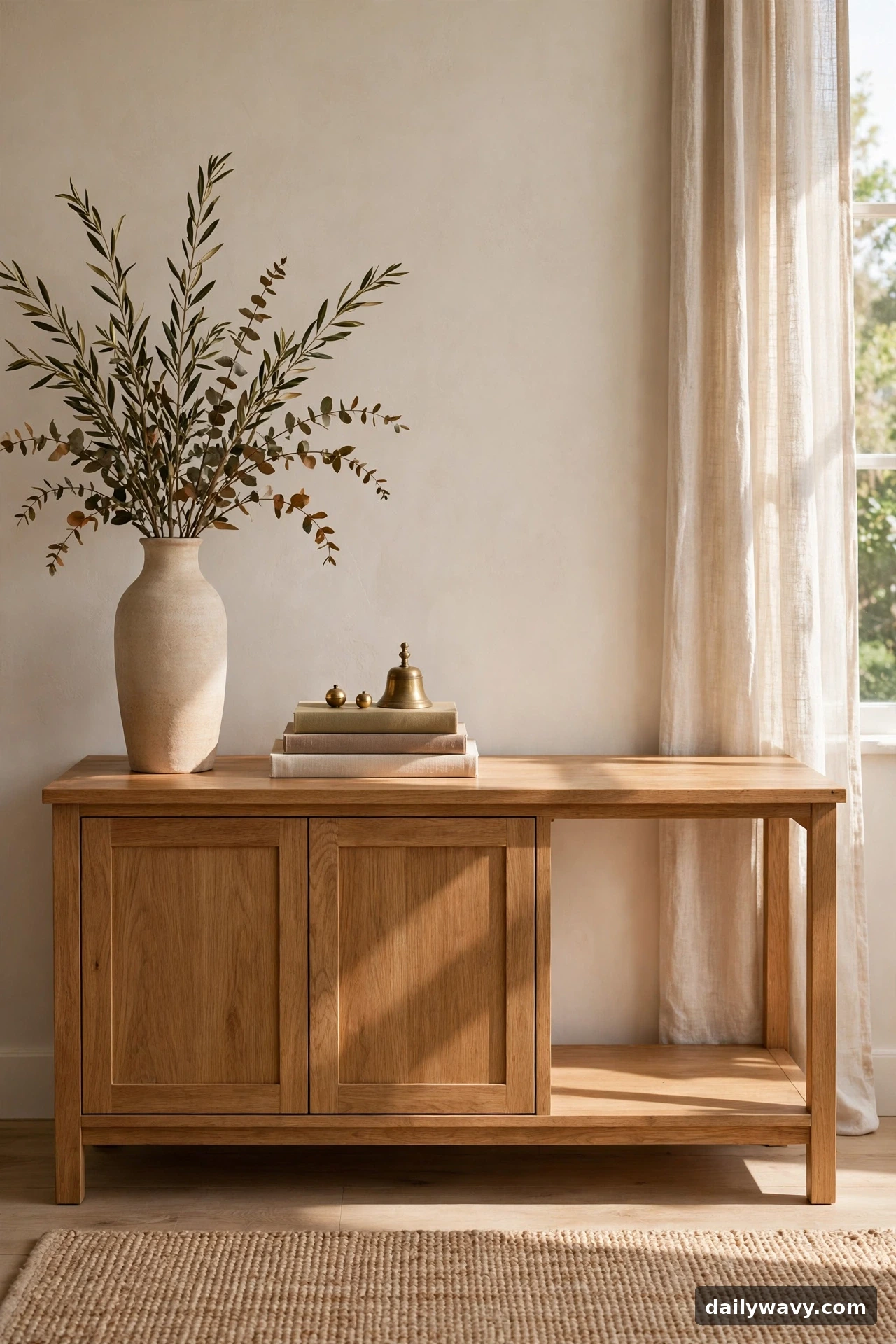
Symmetry is safe, but asymmetry has energy. On a sideboard or storage cabinet, an off-center arrangement, a tall vase on one end, a low stack of books and a small object on the other, feels collected rather than staged. In a small dining room it also has a practical advantage: the empty stretch of surface stays usable for serving dishes during a gathering.
The practical decision is the grouping rule. Work in odd numbers, three or five objects, with varied heights: one tall piece, one medium, one low. Leave real breathing room between the group and the edge of the furniture, at least eight to ten inches of clear surface somewhere, so the arrangement reads as styled, not crowded. Anchor the tallest piece toward one end rather than the center, and let the eye travel across.
What to measure: the furniture top, then plan the arrangement to occupy no more than two-thirds of it. For stability, keep tall vases away from the walkway edge and use museum putty under anything top-heavy if the house has kids or pets. Materials: mix two or three, ceramic, wood, glass or metal, for a collected feel. A realistic lower-cost alternative is shopping your own house: a vase from the living room, books from the shelf and a candle from the bedroom often compose better than anything bought for the purpose.
14. A small gallery group on one wall
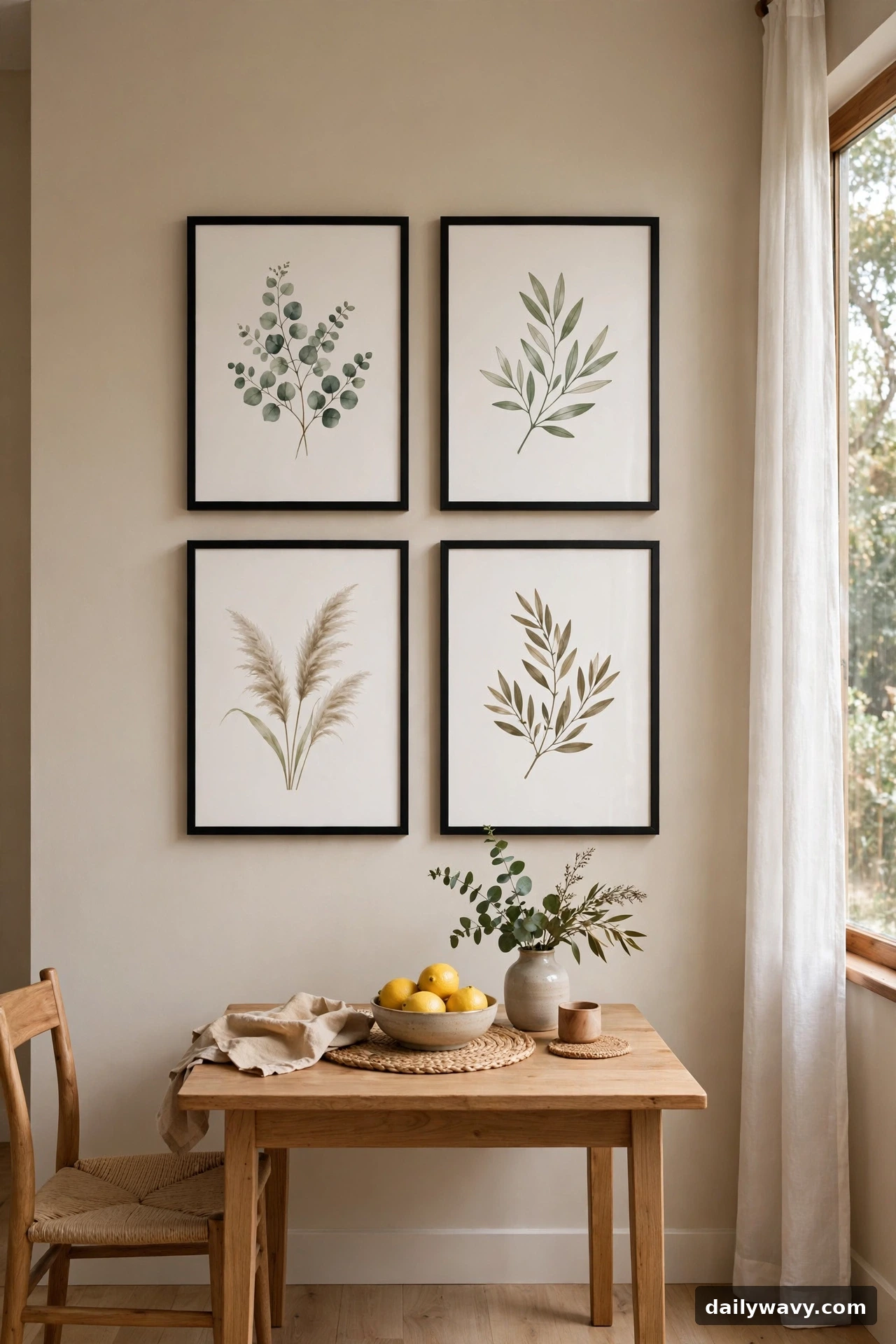
One wall of art gives a small dining room personality without scattering attention around the room. A small gallery group, three to five frames hung together, fills a blank wall with interest and draws the eye along it, which makes the wall feel wider. The key is keeping it to one wall; art on every wall in a small room competes with itself.
The practical decision is the layout. Plan it on the floor first: arrange the frames with two to three inches of consistent spacing between them, then transfer the arrangement to the wall with painter’s tape outlines before hanging. A grid of same-size frames looks orderly; a salon mix of sizes looks collected. Either works if the spacing stays even and the overall group forms a rough rectangle or square, which reads as one composition rather than scattered frames.
What to measure: the wall’s width, keeping the group’s total width between one-half and two-thirds of it, and the center of the group at fifty-seven to sixty inches from the floor. For hanging, picture-hanging strips suit renters and light frames; small nails or hooks suit heavier pieces. A realistic lower-cost alternative is printing your own photographs in black and white at a drugstore and framing them in matching inexpensive frames, which looks remarkably polished.
Frequently asked questions
How much space do dining chairs need behind the table?
Allow at least twenty-four inches from the table edge to the wall for pulling chairs out and sitting down comfortably. If people need to walk behind seated diners, thirty-six to forty-four inches is the comfortable range. In a truly tight room, a bench on one side saves the pull-back space entirely.
What size rug belongs under a small dining table?
The rug should extend at least twenty-four inches beyond the table on all sides so chair legs stay on the rug when pulled out. For a forty-by-sixty-inch table that means a rug around seven by nine feet. When the room cannot fit that, skip the rug rather than using one the chairs catch on.
How low should a pendant hang over a dining table?
Thirty to thirty-four inches from the tabletop to the bottom of the shade. That height lights the food without blocking sightlines or heads. If anyone at the table is very tall, err toward the higher end of the range.
How do I keep a small dining room from feeling cluttered?
Give every surface a job and keep one of them clear. Limit decor to the ideas in this list rather than adding all of them, keep the palette to three or four colors, and store serving pieces out of sight until they are needed. Visual calm comes from restraint, not from more storage.
What is the best lighting for a small dining room?
Layers: one pendant centered on the table for focus, plus a pair of lamps or a wall light for fill. Keep every bulb warm, around 2700K, and put the pendant on a dimmer if possible. One bright overhead alone flattens a small room; layered light gives it depth.
Can I mix chair styles in a small dining room?
Yes, and it often looks better than a matched set. Keep one unifying element, the same wood tone, the same cushion fabric, or the same color family, and let the silhouettes differ. End chairs in a different style from side chairs is the easiest version, and it suits small rooms because it breaks up the visual block of six identical chairs. A small dining room rewards the same thinking as any small space: measure first, choose pieces that work hard, and leave breathing room around everything. Start with the table, the light and the rug, the three decisions that shape the whole room, then add the layers that make it yours. For more small-space ideas that share this philosophy, our small entryway decor ideas keep the flow going from the front door to the table, and the home decor collection has room-by-room guidance for the rest of the house.

One Comment