15 Dining Room Pendant Ideas with Form and Function in Mind
The pendant over your dining table works harder than almost any light in the house. It has to flatter the…
The pendant over your dining table works harder than almost any light in the house. It has to flatter the food, make faces look good across the table, and still read as a beautiful object in daylight when it is switched off. Most of us inherit a builder-basic fixture and live with it for years, simply because choosing a replacement feels risky. These fifteen ideas take the guesswork out of it. Each one explains how to size the fixture, hang it, and recreate the look, so you can shop with measurements instead of hope and end up with light that actually earns its place.
Jump to an idea
- A Textured Shade With Gentle Light
- A Low-Glare Light Aimed At The Task
- A Small Accent Highlighting Artwork
- A Subtle Contrast Against The Wall
- A Vintage-Inspired Silhouette
- A Contemporary Cylindrical Form
- An Adjustable Head For Practical Use
- A Dimmable Option Where Compatible
- A Rounded Shape Softening Straight Lines
- A Ceramic Or Wood Accent On The Base
- A Restrained Dark Fixture In A Light Room
- A Light Finish In A Dark Corner
- A Compact Design Leaving Useful Surface Space
- A Layered Arrangement At Different Heights
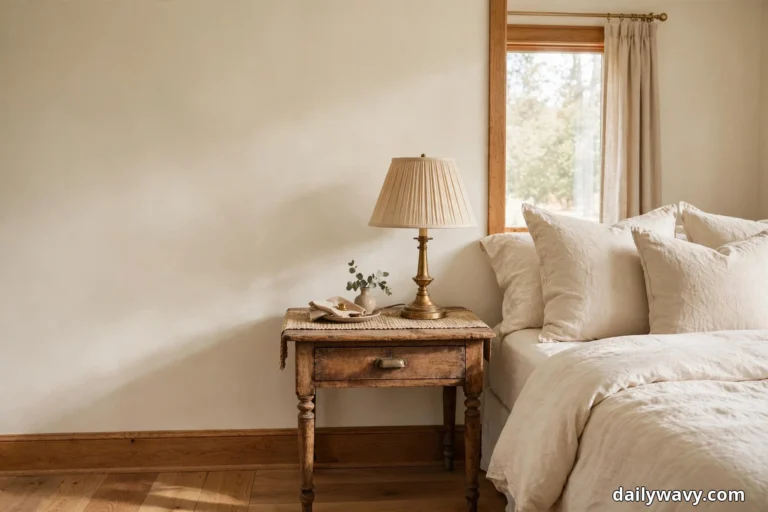
- A Warm Shaded Light Beside The Focal Area

The dining room pendant rules before you hang anything
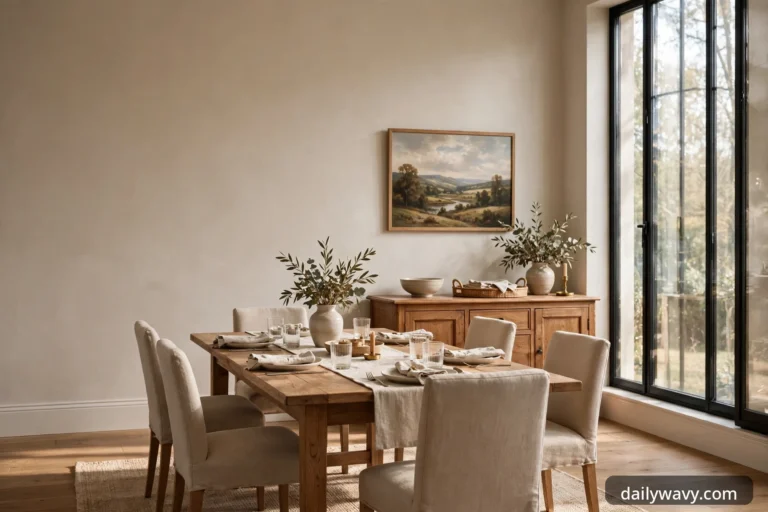
Before you fall in love with a fixture, take ten minutes with a tape measure. Add the room’s length and width in feet, and treat that number as inches: a 12-by-14-foot dining room suggests a fixture around 26 inches across. For a single pendant over the table, keep it to about one half to two thirds of the table’s length so it never feels like it is crowding the ends.
Height matters more than almost anything. The bottom of the shade should sit 30 to 36 inches above the tabletop in most rooms. If your ceilings run above 10 feet, add roughly 3 inches of height for every extra foot of ceiling. People should be able to see each other’s faces under the fixture, not around it.
Choose a warm bulb, usually marked 2700K, because cool white turns a dining room into a cafeteria. If you want the cozy dim glow of a restaurant, buy a fixture labeled dimmable and pair it with a compatible dimmer switch, since mismatched pairs flicker. Any wiring beyond swapping a like-for-like fixture at an existing ceiling box should be handled by a licensed electrician following local requirements, and the fixture itself should carry a recognized safety listing. Check that the ceiling box is rated for the fixture’s weight before you hang anything heavy.
One last rule worth remembering: light should fall off believably. Textured and frosted shades soften the pool of light on the table, while clear glass and open bulbs throw hard edges. Decide which mood you want, then every idea below will make sense.
1. A Textured Shade With Gentle Light

A ribbed ceramic or woven rattan shade turns a harsh bulb into a warm wash of light. The texture breaks up the glow so it lands on the table in a soft pool instead of a spotlight circle, and the shade itself becomes the thing guests notice from across the room. It suits almost every style of dining room.
What to measure. Measure the table length and divide by two for a starting shade diameter, then measure your ceiling height to plan the drop. A 30-inch shade over a 60-inch table is the sweet spot, and you want 30 to 36 inches of clearance from the shade’s bottom edge to the tabletop.
Materials. A textured pendant shade (ribbed ceramic, woven rattan, or pleated linen), a warm dimmable LED bulb around 2700K, and an adjustable cord kit so you can tune the height after hanging.
Placement. Center the shade over the middle of the table, not the middle of the room, since tables rarely sit dead center. In a two-chair apartment setup, the same idea works with a shade as small as 14 inches across.
Approximate effort. A weekend afternoon: unbox, assemble, hang from the existing box, and adjust the cord.
Lower-cost alternative. Slip a woven seagrass basket shade over an existing single-bulb cord pendant. It gives the same soft light for a fraction of the price. Keep the basket clear of the bulb and use a cool-running LED bulb so the shade never sits against a hot bulb.
2. A Low-Glare Light Aimed At The Task
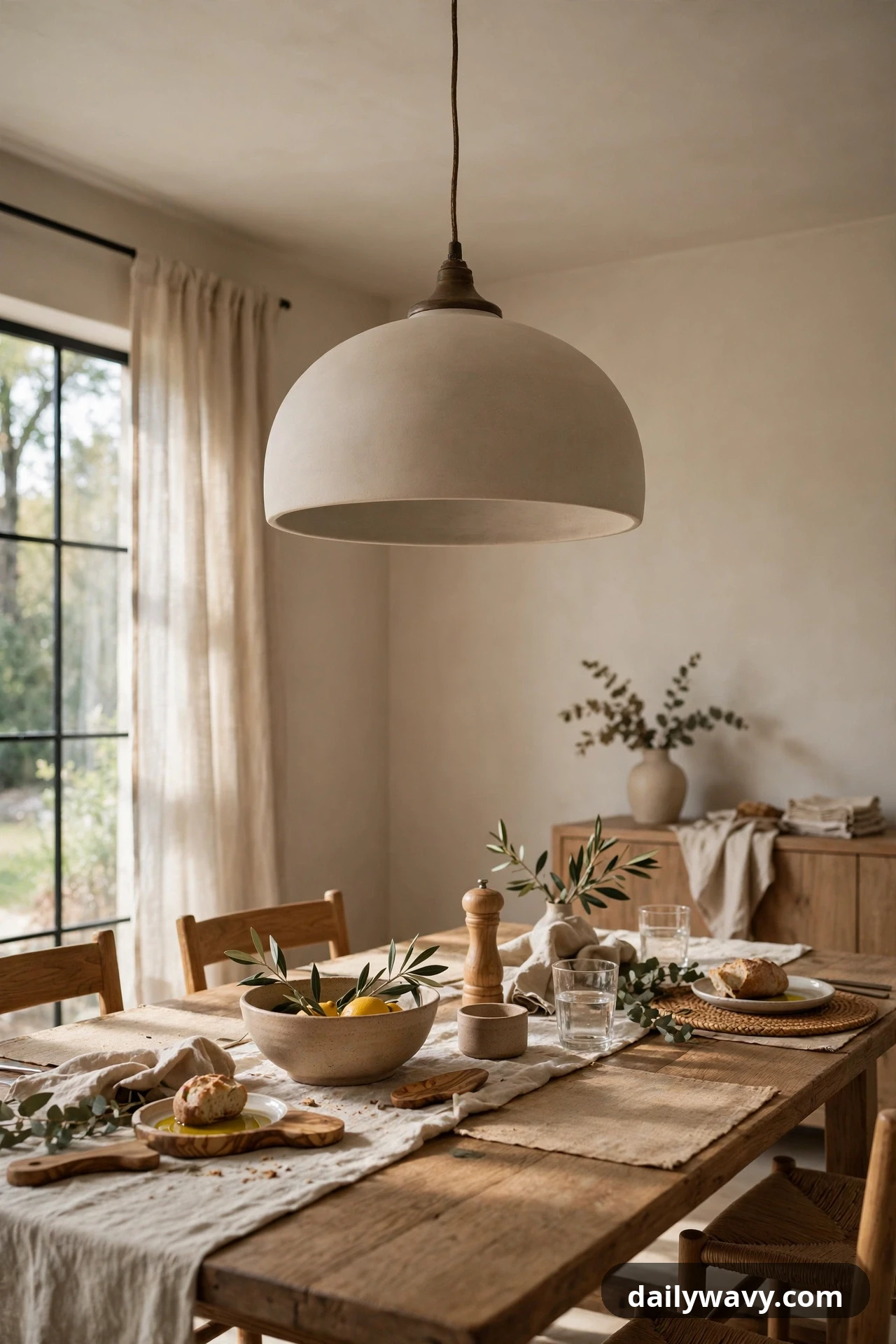
Some dining rooms do double duty as homework stations, puzzle tables, and bill-paying desks. For those, a pendant with a shielded or louvered diffuser aimed straight down keeps light on the work surface and out of your eyes. The effect is calm rather than moody: bright where your hands are, gentle everywhere else.
What to measure. Light aimed at the task should cover the tabletop area you actually use, so a 48-inch table for two wants a fixture roughly 30 to 36 inches wide or two smaller fixtures spaced evenly.
Materials. A pendant with a recessed diffuser or louvered shade, an opal glass disc if you are retrofitting, and a frosted bulb to cut hot spots. A warm 3000K bulb reads bright without going clinical.
Placement. Hang it 30 to 34 inches above the table, slightly lower than a decorative pendant, so the light pool stays tight. Keep the shade’s rim above seated eye level so nobody catches a direct bulb glare.
Approximate effort. One afternoon, about the same as any pendant swap, plus a test evening of sitting in each chair to check for glare.
Lower-cost alternative. Add a clip-on diffuser or a frosted bulb sleeve to the pendant you already own. Glare drops immediately.
3. A Small Accent Highlighting Artwork

Dining rooms often have one great wall: a framed print, a family photo cluster, or a piece of art you actually chose. A small adjustable accent light, a slim picture light or a tiny spot on a cord, gives that wall its own moment after dark. The room instantly feels layered instead of lit by one lonely fixture.
What to measure. Measure the artwork’s width. The accent light should span about two thirds of the frame’s width and sit 6 to 12 inches above the frame’s top edge for an even wash.
Materials. A small hardwired picture light or a corded spot with an aimable head, warm 2700K bulb, and if the artwork matters to you, a UV-filtering option to protect it.
Placement. Mount or hang the accent centered over the artwork, aimed so the light washes down the frame without throwing a bright spot in the middle. Keep it on the same dimmer plan as the main pendant if you can.
Approximate effort. A picture light on an existing outlet is a one-hour job. A hardwired one joins the electrician’s visit for the main fixture.
Lower-cost alternative. A battery-operated picture light with a remote gives the effect with no wiring at all, and the warm versions now look convincingly like the wired kind.
4. A Subtle Contrast Against The Wall

In a room painted warm white or cream, a pendant in a slightly darker finish, soft black, aged bronze, or deep olive, reads as jewelry rather than equipment. The contrast is quiet, just enough to draw the eye upward and give the room a focal point without shouting.
What to measure. Because contrast fixtures read larger than light ones, size down slightly: aim for the lower end of your diameter calculation, and double check the 30 to 36 inch hang height so a darker shade never looms over diners’ heads.
Materials. A pendant in a matte dark finish, warm bulb to keep the look inviting, and a fabric-covered cord in a tone that blends with the ceiling so the fixture appears to float.
Placement. Center over the table and let the wall behind it stay simple. One framed piece or a plain plaster wall is the right backdrop; a busy gallery wall fights with the contrast.
Approximate effort. An afternoon, since you are simply choosing a finish, not a new configuration.
Lower-cost alternative. Spray an existing metal shade in matte black using a heat-rated paint, working outdoors or in a well-ventilated space, and swap the cord for a fabric one. The silhouette stays the same, the mood changes completely.
5. A Vintage-Inspired Silhouette

An aged brass dome, a schoolhouse opal globe, or a fluted glass shade borrows a century of charm in one gesture. Vintage-inspired pendants pair beautifully with both antique tables and modern ones, because the shape does the talking and everything else can stay quiet. They also photograph well, which matters if your dining room lives on Pinterest.
What to measure. Vintage shades run small, so measure generously. A 14-inch schoolhouse globe needs friends: plan two or three across a 72-inch table, spaced evenly so the group fills the middle of the table without crowding the ends.
Materials. A vintage-style pendant with aged brass, opal glass, or seeded glass details, an Edison-style LED bulb (warm and dimmable) for the look without the heat, and a cloth cord for period flavor.
Placement. Hang at 30 to 34 inches above the tabletop. If you are grouping several, keep the spacing between shade edges to about 6 inches so they read as a family.
Approximate effort. A weekend, mostly spent hunting the right shade. Salvage shops and reproduction lighting stores both work; check wiring condition on anything truly old.
Lower-cost alternative. A new reproduction shade on your existing cord set delivers most of the look. Real antiques are lovely but need a licensed electrician to rewire safely.
6. A Contemporary Cylindrical Form

A clean metal cylinder, matte white or brushed steel, is the minimalist’s answer to the dining pendant. It disappears into a modern room by day and throws a crisp column of light by night. Because the shape is so simple, it lets your table, chairs, and art carry the personality.
What to measure. Cylinders look best in multiples. For a 60 to 72 inch table, three 8 to 10 inch cylinders spaced evenly give a rhythm that one large shade cannot. Measure the table first, then divide the length into equal bays.
Materials. Cylindrical pendants in a consistent finish, matching warm LED bulbs, and a linear canopy if you are hanging three from one ceiling point. A slim suspension cable keeps the look clean.
Placement. Hang each cylinder so its bottom edge sits 30 to 36 inches above the table, and keep 12 to 18 inches between shade edges.
Approximate effort. A weekend, plus a second pair of hands to hold the linear canopy level while you mark the ceiling.
Lower-cost alternative. Three identical inexpensive drum pendants from a big-box store, hung at the same height on matching cords, read as a set even if the shades are simple.
7. An Adjustable Head For Practical Use

If your dining table hosts laptops, sewing projects, or board games that last until midnight, an adjustable pendant is the hardest-working option here. An articulating arm or an aimable gimbal head lets you swing light exactly where the action is, then tuck it back for dinner.
What to measure. Measure your reach: the head should aim at the table’s working zone without forcing you to lean. Note the arm’s full extension so it never collides with a tall centerpiece or a lifted wine glass.
Materials. A pendant with an articulating arm or gimbal shade, a secure wall or ceiling mount rated for the arm’s leverage, and a warm dimmable bulb so task light can soften into dinner light.
Placement. Mount it to one side of the table’s center or on a nearby wall so the arm can swing across the surface. Leave 18 inches of clearance around the arm’s arc for everyday movement.
Approximate effort. An afternoon for a plug-in wall version; a hardwired arm joins the electrician’s list.
Lower-cost alternative. A clamp-on articulating desk lamp in a warm finish, fixed to a sideboard behind the table, aims light across the surface for very little money.
8. A Dimmable Option Where Compatible

The single most transformative upgrade in any dining room is not a new fixture, it is a dimmer. Full brightness for homework and cleanup, a low warm glow for dinner. The catch is compatibility: the fixture, the bulb, and the dimmer all have to agree, or you get flicker and buzz.
What to measure. Check the bulb box for a dimmer compatibility list and the dimmer for its minimum and maximum load. LED bulbs draw so little power that one lone bulb can fall below an old dimmer’s minimum, so measure the total wattage of everything on the circuit.
Materials. A fixture labeled dimmable, LED bulbs from the dimmer manufacturer’s compatibility list, and a modern LED-rated dimmer switch. A wall plate that matches your switches keeps it tidy.
Placement. The dimmer goes by the room’s main entrance at standard switch height, about 48 inches to the center of the box. Put a second dimmer at the far end of a long room if you walk through often.
Approximate effort. Have a licensed electrician swap the switch, and test the full dim range at night before you call it done.
Lower-cost alternative. A plug-in dimmer module on a corded pendant gives dimming with no wall wiring at all, as long as the bulb is dimmable.
9. A Rounded Shape Softening Straight Lines
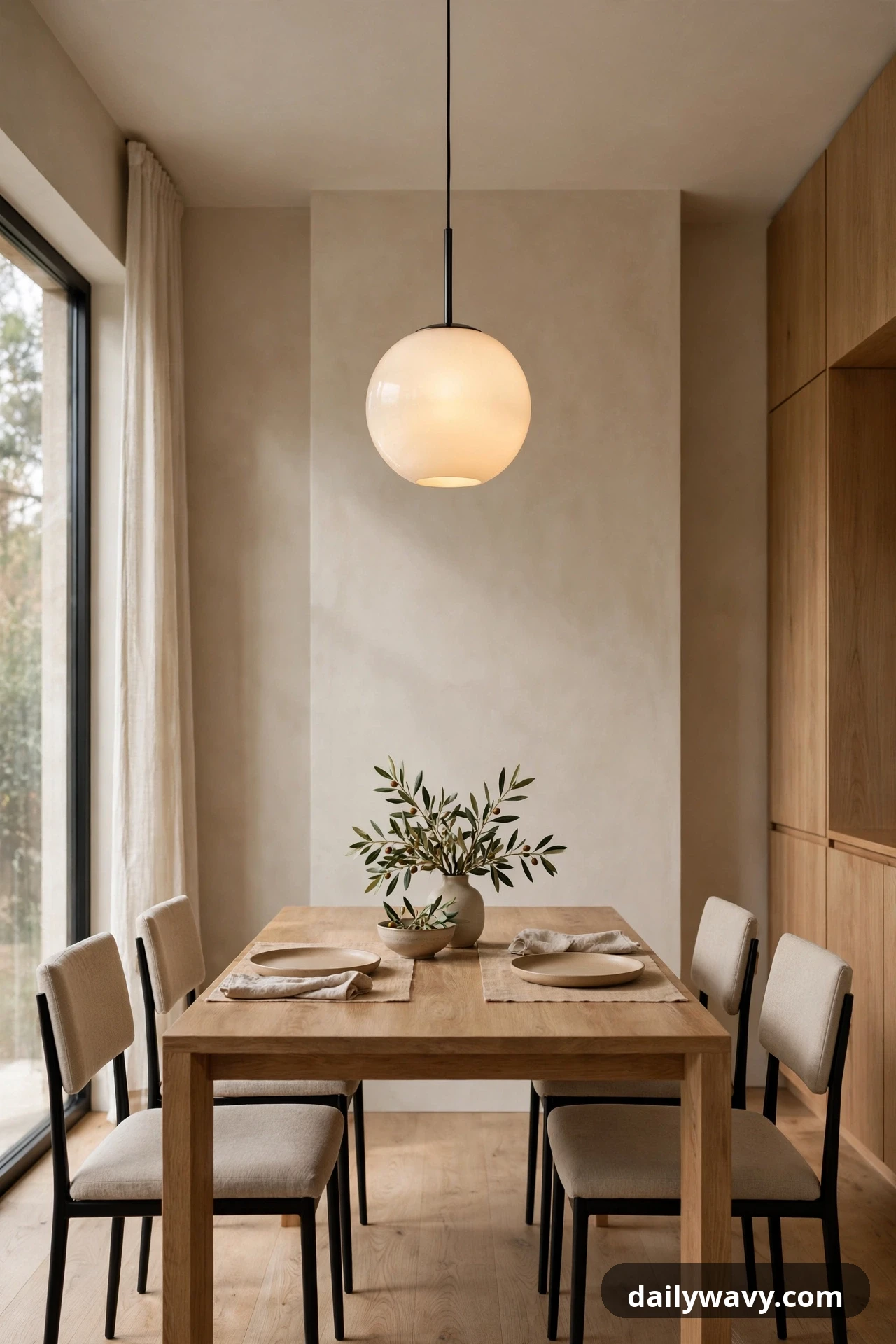
Modern dining rooms collect rectangles: the table, the sideboard, the windows, the rug. A globe or dome pendant breaks the grid with one soft curve, and the room instantly feels friendlier. Opal glass globes are the classic choice because they glow evenly in every direction.
What to measure. Globes read smaller than they are, so size up a touch: a 16 to 20 inch globe suits a 60-inch table. Measure ceiling height too, since a globe’s glow is prettiest with a little air around it, 36 inches of clearance below feels generous.
Materials. An opal glass or frosted globe pendant, a warm dimmable LED bulb, and a simple cord or slim stem. Avoid visible hardware that fights the soft shape.
Placement. Center over the table at 32 to 36 inches above the surface. If a rectangular chandelier is what you had in mind, one generous globe replaces a whole fixture with less visual noise.
Approximate effort. An afternoon. Globes are light, so most ceiling boxes handle them easily.
Lower-cost alternative. A paper globe lantern on a cord kit is the budget classic. It gives the same soft round glow, and replacing the paper every few years costs very little. Use a cool-running LED bulb and keep the paper clear of the bulb.
10. A Ceramic Or Wood Accent On The Base

Sometimes the most interesting part of a pendant is where the shade meets the cord. A turned wood collar, a glazed ceramic cup, or a woven wrap at the fixture’s base adds a crafted detail that reads as custom. It is a small move with an outsized effect, especially in rooms that already lean handmade.
What to measure. Measure the shade’s top opening so the accent collar or cup fits snugly. Note the cord diameter too, since the accent has to thread over it or clamp around it.
Materials. A wood or ceramic shade collar, a compatible pendant shade, and a warm bulb. If you are crafty, a turned-wood finding from a lighting parts supplier costs a few dollars.
Placement. The accent sits at the top of the shade where it meets the cord, so hang the fixture at the usual 30 to 36 inches and let the detail do its work where standing guests can see it.
Approximate effort. An afternoon, with most of the time spent choosing the right accent piece. Assembly is usually a single set screw.
Lower-cost alternative. Wrap the top of an existing shade with jute twine or a strip of leather, secured with a dab of heat-safe adhesive. It reads as a deliberate design detail.
11. A Restrained Dark Fixture In A Light Room
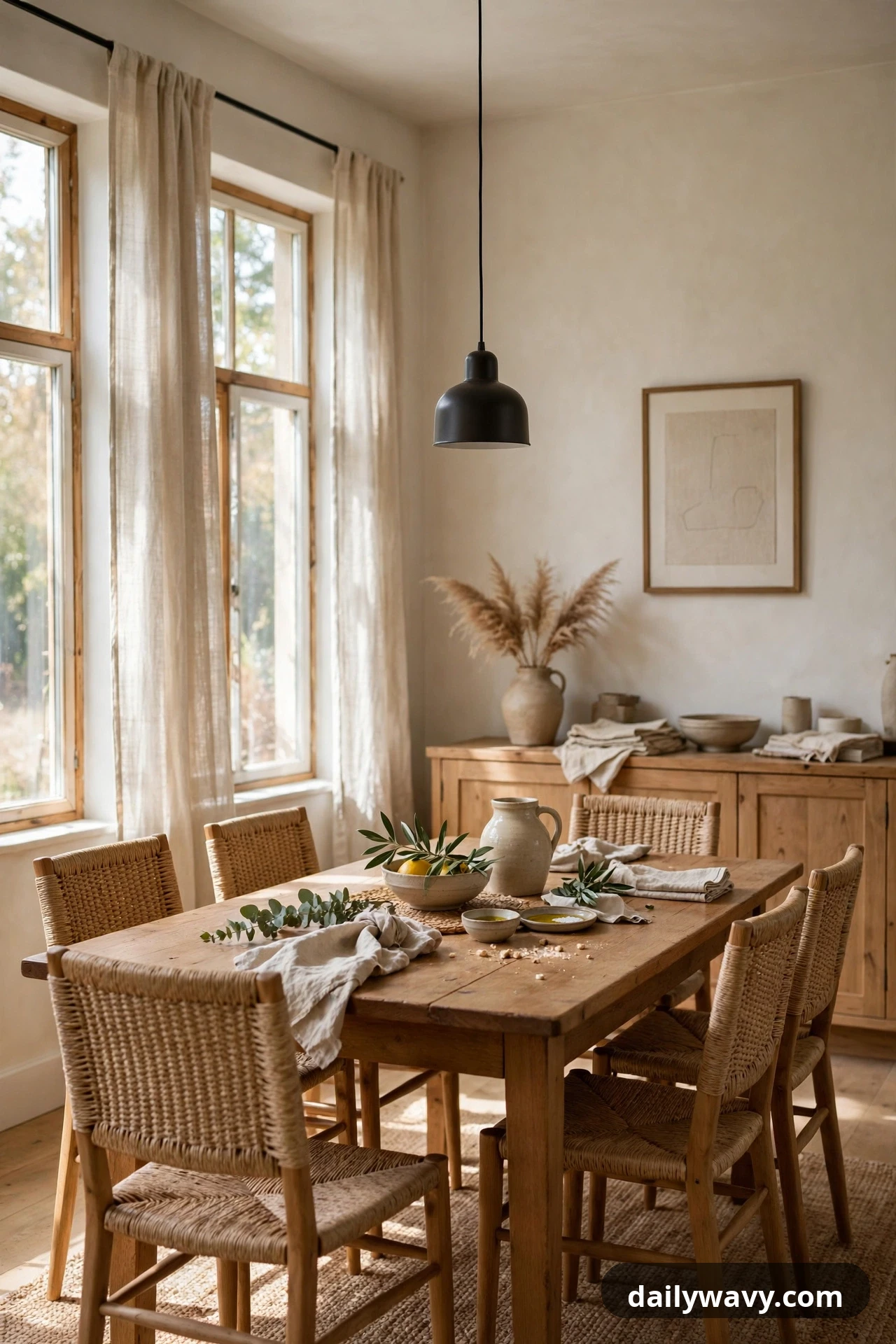
A single matte black pendant in an otherwise pale dining room acts like punctuation. It anchors the table, gives the eye somewhere to land, and makes everything around it look brighter by comparison. The key word is restrained: one dark fixture, not a collection.
What to measure. Dark finishes absorb light visually, so keep the fixture modest: 18 to 24 inches across over a standard table. Measure the room’s overall brightness too, since this idea needs decent daylight or warm wall paint to keep the mood from going cave-like.
Materials. A simple matte black pendant (dome, cone, or drum), a warm bulb with good color rendering so food looks appetizing, and a black or dark bronze cord to match.
Placement. Center over the table at 30 to 34 inches above the surface. Let the surrounding walls and ceiling stay light; the fixture is the contrast, everything else is the canvas.
Approximate effort. An afternoon pendant swap, nothing more complicated than usual.
Lower-cost alternative. Paint an existing light-colored shade matte black with heat-rated spray paint, working outdoors or in a well-ventilated space, and swap in a warm bulb. The transformation takes an hour plus drying time.
12. A Light Finish In A Dark Corner
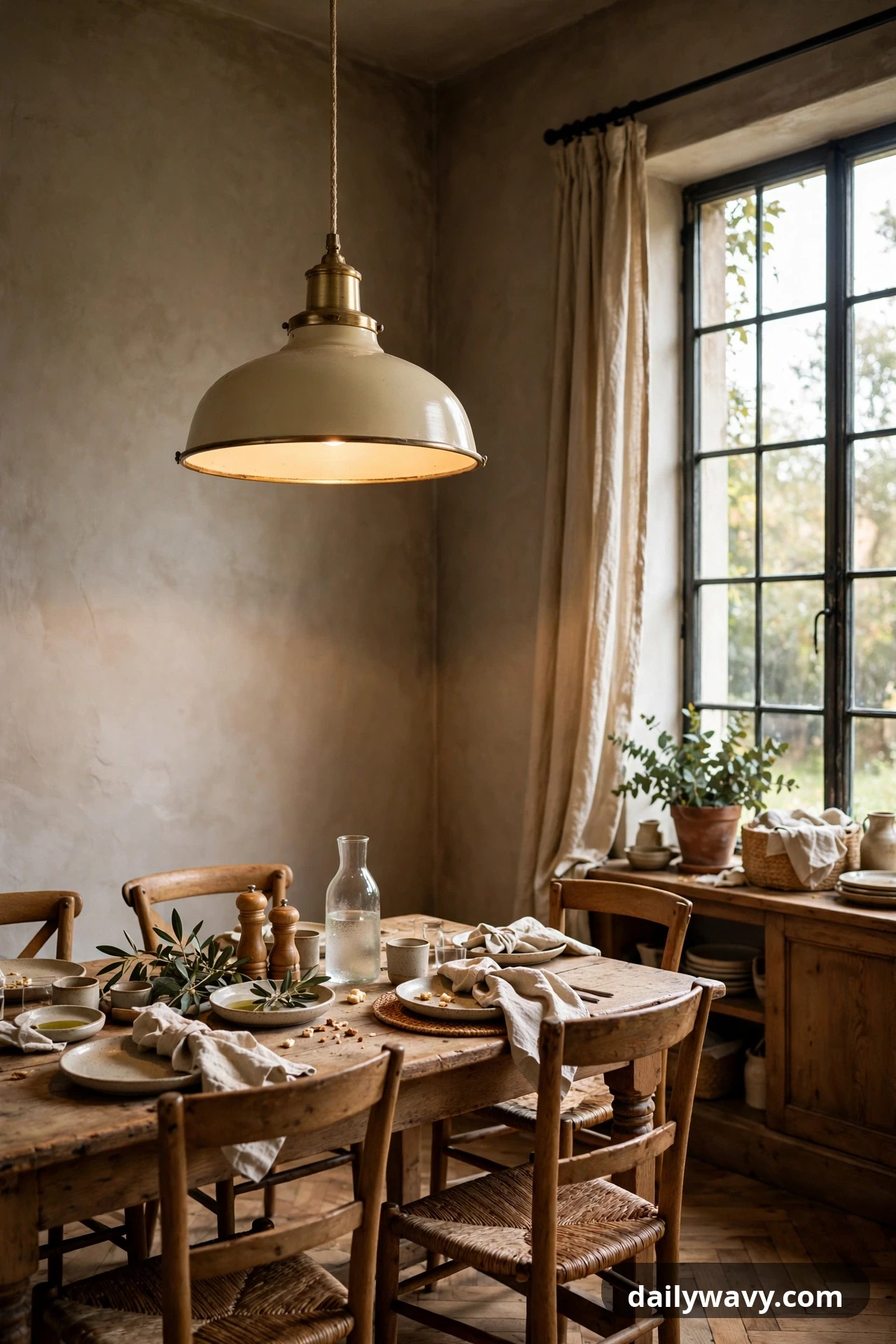
Not every dining area gets the bright corner. If yours sits in a dim nook, under a staircase, or on the north side of the house, a pendant in a light finish, cream, polished brass, or white glass, bounces every bit of available light around. It visually lifts the ceiling and makes the corner feel intentional.
What to measure. Measure the nook’s width and the table’s position within it. In a tight corner, a 12 to 16 inch shade keeps clearance comfortable, and you may hang it a touch lower, 28 to 30 inches, to pull the light pool onto the table.
Materials. A light-finished pendant with a reflective or translucent shade, the warmest bulb you like (2700K keeps it cozy rather than stark), and a light-toned cord that disappears against a pale ceiling.
Placement. Center over the table even if the table is off-center in the room. In a dark corner, the pendant defines the dining zone, so let it claim the space.
Approximate effort. An afternoon, with extra attention to the hang height test at night.
Lower-cost alternative. A white paper or fabric drum shade over your current fixture brightens the corner immediately, and both are inexpensive to replace.
13. A Compact Design Leaving Useful Surface Space

Small dining rooms, especially ones where the table pushes against a sideboard, need pendants that know their place. A compact shade on a short drop gives you light without stealing headroom or crowding the serving surface. The sideboard stays fully usable, which is the whole point.
What to measure. Measure the gap between the table edge and the sideboard, and the sideboard’s height. The shade should clear the tallest thing you set on the sideboard by at least 12 inches, and its diameter should stay well inside the table’s width.
Materials. A compact pendant (12 inches or less across), a short cord or semi-flush mount, and a warm bulb. A shade with a closed top keeps dust off the serving area.
Placement. Hang at 28 to 32 inches above the table, and nudge the fixture toward the room’s center rather than the wall so the light pool favors the table, not the sideboard.
Approximate effort. An afternoon. Compact fixtures are the easiest to hang because they are light and simple.
Lower-cost alternative. A semi-flush mount in a pretty finish gives the same space-saving effect and often costs less than a true pendant.
14. A Layered Arrangement At Different Heights
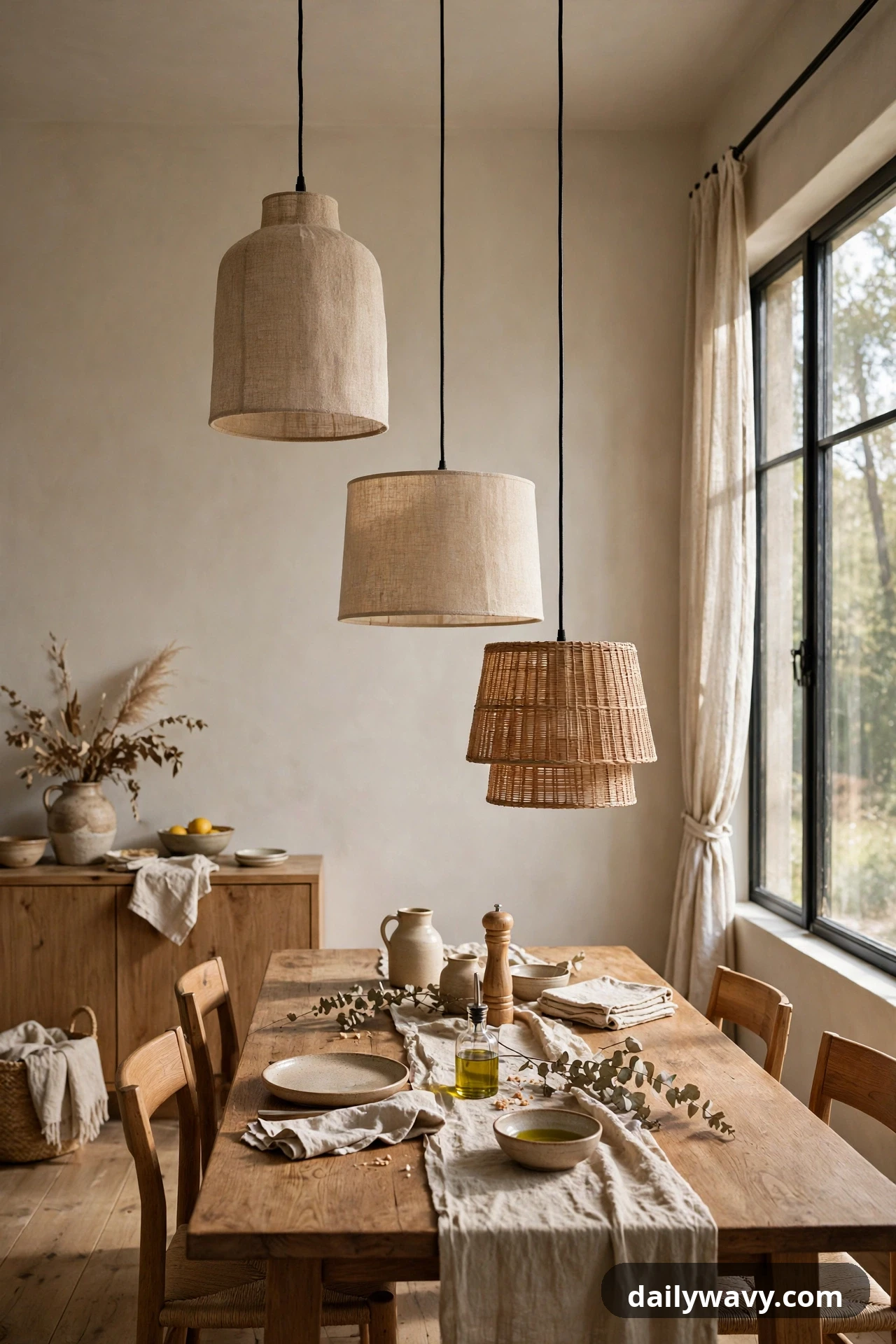
Over a long table, one fixture at one height can feel flat. Hanging two or three pendants at staggered heights, a few inches apart, adds movement and lets each light do a slightly different job: one for the serving end, one for the conversation end. The result looks designed rather than installed.
What to measure. Measure the table length and divide into equal bays. Plan the tallest drop for the center pendant and step the outer ones up by 3 to 4 inches each. Keep every shade bottom within the 30 to 36 inch band above the tabletop.
Materials. Two or three matching or coordinating pendants, an adjustable cord set for each so heights can be tuned on the ladder, and warm dimmable bulbs throughout so the layers glow as one.
Placement. Space the pendants evenly along the table’s center line, with the lowest one over the middle. Step back and sight along the row at eye level to confirm the stagger reads as intentional, not accidental.
Approximate effort. A weekend, since you are hanging and leveling multiple fixtures and tuning their heights.
Lower-cost alternative. Three identical plug-in pendants on a ceiling-mounted track or a simple wood beam give the layered look with far less wiring.
15. A Warm Shaded Light Beside The Focal Area

The pendant over the table gets all the attention, but a small shaded light beside the dining area, on a sideboard or hung low near a buffet, is what makes the room feel finished. It adds a second, lower layer of warm light that flatters the whole scene and gives the table pendant something to play against.
What to measure. Measure the sideboard or buffet top: the shade’s base should occupy no more than one third of the surface so serving space survives. If hanging, measure 24 to 30 inches above the sideboard top.
Materials. A small shaded pendant, a shaded wall sconce, or a petite table lamp with a fabric shade, plus a warm 2700K bulb. A fabric shade softens the light beautifully.
Placement. Set it to one side of the sideboard, not centered, so it reads as an accent rather than a second focal point. Keep it on the same dimmer scene as the main pendant when possible.
Approximate effort. A table lamp is a ten-minute styling job. A hung pendant or sconce is an afternoon, often sharing the electrician’s visit.
Lower-cost alternative. A small shaded lamp you already own, moved from a bedroom to the sideboard with a fresh warm bulb, costs little more than a fresh warm bulb and changes the room’s evening mood completely.
Frequently Asked Questions
How high should a dining room pendant hang?
The standard guidance is 30 to 36 inches from the bottom of the shade to the tabletop. If your ceilings are higher than 10 feet, add about 3 inches per extra foot. Always check that seated guests can see each other under the fixture, and raise it a little if the table doubles as a workspace.
How big should the pendant be?
Add the room’s length and width in feet and use that number in inches as a starting diameter. Over the table, a single fixture should span about one half to two thirds of the table’s length. For multiples, each fixture can be smaller as long as the group covers the same span.
Can I install a pendant myself?
Swapping a fixture at an existing ceiling box is a common homeowner task where local rules permit, as long as you turn off the breaker and follow the manufacturer’s instructions. Anything beyond that, new wiring, moving a box, or a heavy fixture, belongs to a licensed electrician. When in doubt, hire the pro; it is a short visit.
What kind of bulb should I use?
A warm white LED around 2700K suits almost every dining room. Choose bulbs labeled dimmable and check them against your dimmer’s compatibility list to avoid flicker. Good color rendering matters more than brightness: food looks better under it.
Will one pendant be enough for a long table?
Tables over 72 inches long usually look better with two or three smaller pendants spaced evenly, with the outer fixtures spanning about two thirds of the table’s length. A single fixture on a long table leaves the ends in shadow.
My dining table is also my desk. What works best?
Pair an adjustable or aimable pendant (idea 7) with a dimmer (idea 8). Full bright light for work hours, low warm light for dinner, all from the same fixture.
The right light changes the whole room
A dining room pendant is one of the few fixtures you look at every single day and one of the cheapest rooms to transform with a single swap. Start with your measurements, pick the idea that matches how you actually use the table, and let the light do the rest. If your dining area flows from the kitchen, our small pantry organization ideas keep the hardworking side of the space just as considered. And when the entryway is the first thing guests see, small entryway decor ideas make the arrival match the dinner. When the dining area shares an open plan, the narrow living room layout guide helps with the shared space. For the rest of the house, browse the full Home & Decor collection.