15 Industrial Bathroom Decor Ideas with Practical Finishing Touches
Industrial style can feel cold on a screen, but in a real bathroom it is the opposite. The mix of…
Industrial style can feel cold on a screen, but in a real bathroom it is the opposite. The mix of blackened metal, warm wood and raw brick or concrete gives a small room structure without fuss. These fifteen ideas focus on the finishing touches, the storage, textiles and small styling moves that make an industrial bathroom feel considered and comfortable. The materials in every idea tolerate moisture, and the storage stays practical, because a bathroom that looks great but works badly is not a success. No electrical gadgets beside water, no wallpaper pretending to be waterproof, just honest, buildable details you can start this weekend.
Jump to an idea:
- A Closed Basket For Spare Supplies
- A Plain Shower Curtain With Subtle Texture
- A Wood-Look Accent Suitable For Humidity
- A Modest Wall Shelf Outside Splashes
- A Small Vase With One Stem
- A Repeated Metal Finish In Accessories
- A Low Storage Cabinet
- A Neatly Folded Hand-Towel Grouping
- A Patterned Fabric Accent
- A Simple Wall-Color Focal Area
- A Basket For Rolled Clean Towels
- A Restrained Towel Palette
- A Framed Moisture-Appropriate Print
- A Simple Countertop Tray
- A Compact Plant Suitable For The Actual Light
The Industrial Bathroom Rules Before You Start
Industrial bathrooms live and die by material honesty. Choose things that can take humidity: powder-coated or stainless steel, sealed or teak-like wood, ceramic, glass and quick-dry fabrics. Leave untreated iron and raw wood out of the splash zones unless you enjoy rust and swelling. Keep all electrics away from water and never hang ordinary wallpaper in a wet room, no matter how good the pattern looks. It will bubble and peel, and it is not a waterproof surface.
Storage comes before styling. A bathroom with nowhere to put the spare toilet paper will never look calm, however nice the fixtures are. Plan one closed spot for supplies and one open spot for daily items, then decorate around them. Finally, ventilate. A good exhaust fan or a window you actually open does more for your finishes and your towels than any styling trick, and it keeps metal fixtures rust-free for years.
1. A Closed Basket For Spare Supplies

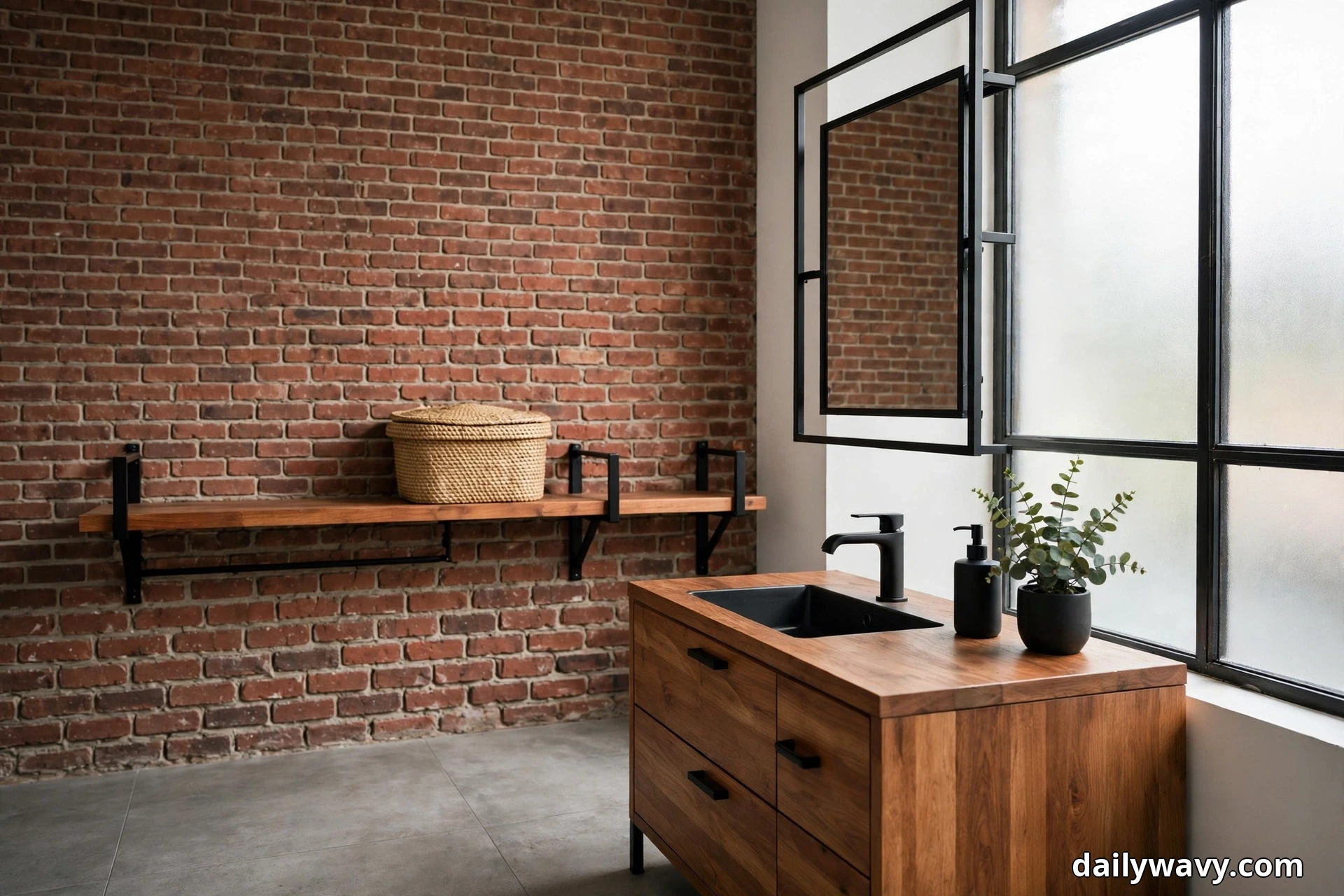
Spare supplies need a home that closes. An open stack of toilet paper rolls reads as clutter, while the same rolls inside a lidded basket read as styling. Pick a basket in a moisture-tolerant material: seagrass with a wipeable liner, woven plastic that looks like rattan, or a powder-coated wire basket with a fabric lid. The lid matters. It keeps dust and steam off the contents and gives you one more flat surface in a small room.
How to recreate it: Choose a basket roughly 14 inches wide and 10 inches deep, sized to hold four to six rolls plus a few backup bottles. Set it on a wall shelf, on top of a low cabinet, or on the floor beside the vanity, wherever it is reachable but out of the splash path. Line a natural basket with a machine-washable bag so it survives the humidity.
Lower-cost swap: A plain black fabric storage cube with a lid does the same job for under ten dollars and fits most shelf cubbies.
2. A Plain Shower Curtain With Subtle Texture

In an industrial bathroom the shower curtain is the largest textile in the room, so it sets the tone. Skip busy prints and choose a plain curtain with subtle texture, a waffle weave, a soft slub, or a fine rib in warm gray, charcoal or stone. The texture keeps it from looking flat, and the plain color lets the metal, wood and brick do the talking. Hang it on matte black rings or hooks to tie it into the hardware.
How to recreate it: Measure first. Standard curtains are 72 by 72 inches, but check your rod height and allow the hem to clear the tub edge or floor by an inch. Look for a polyester or PEVA liner separately, because a decorative curtain alone will soak through. Expect to spend 25 to 50 dollars for a curtain that drapes well and washes cleanly.
Lower-cost swap: A white waffle-weave curtain from a big-box store costs under 15 dollars and works perfectly with black hooks.
3. A Wood-Look Accent Suitable For Humidity
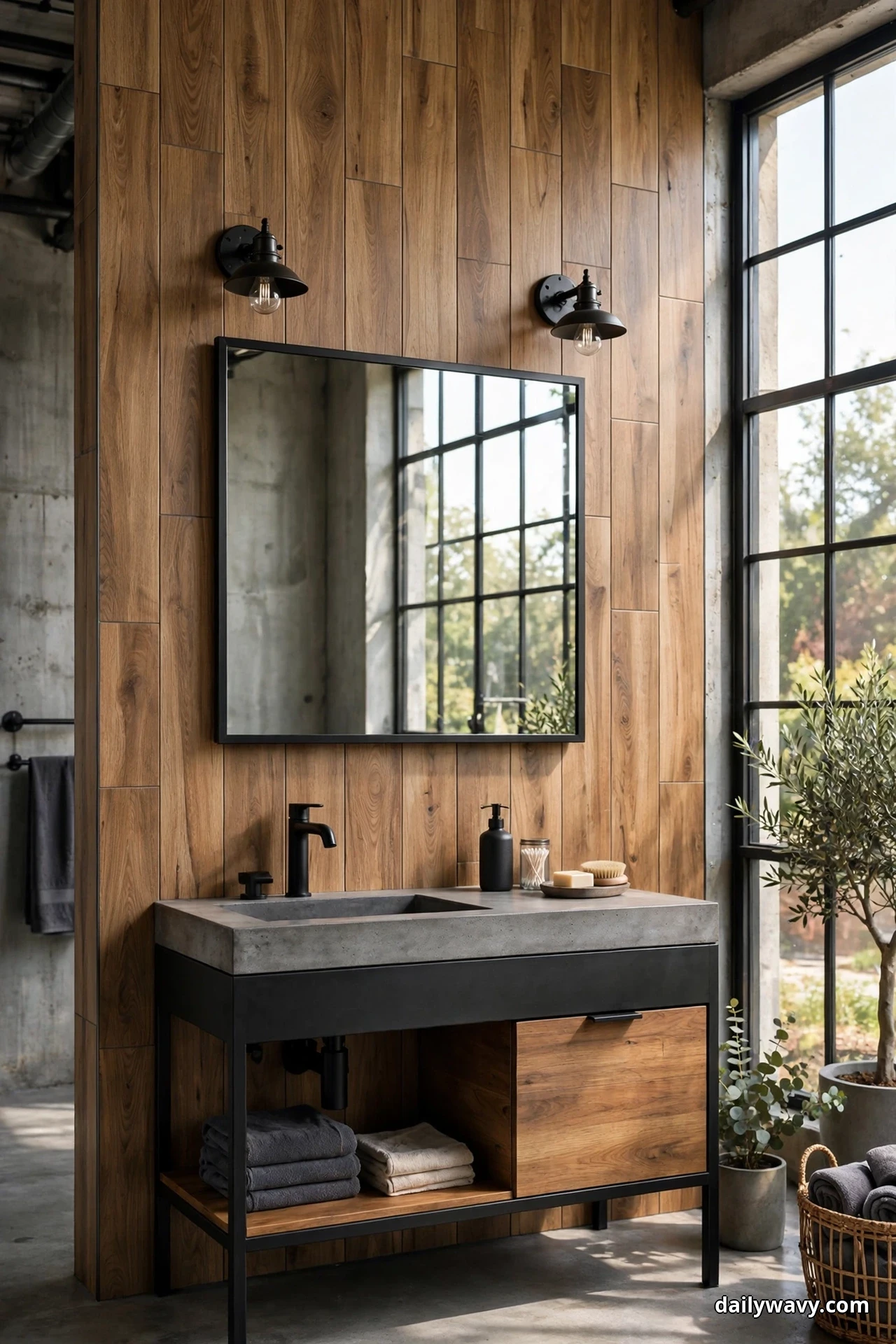
Real wood and steam are a short-lived romance, but you can still get the warmth. Wood-look porcelain tile, sealed teak accessories, or a waterproof vinyl plank used as a wainscot give you the grain and tone without the swelling. Use it as one accent, a vanity front, the wall behind the mirror, or a shelf face, and let the rest of the room stay hard and wipeable.
How to recreate it: For a tile accent, wood-look planks typically cost 3 to 8 dollars per square foot before installation, and a single wall in a small bathroom needs far less than you think. For accessories, choose solid teak or acacia pieces that are oiled rather than varnished, so they can be re-oiled once a year instead of peeling. Keep any wood surface outside the direct shower spray.
Lower-cost swap: A teak-look bath mat or a single sealed bamboo tray on the vanity brings the same warmth for under 20 dollars.
4. A Modest Wall Shelf Outside Splashes
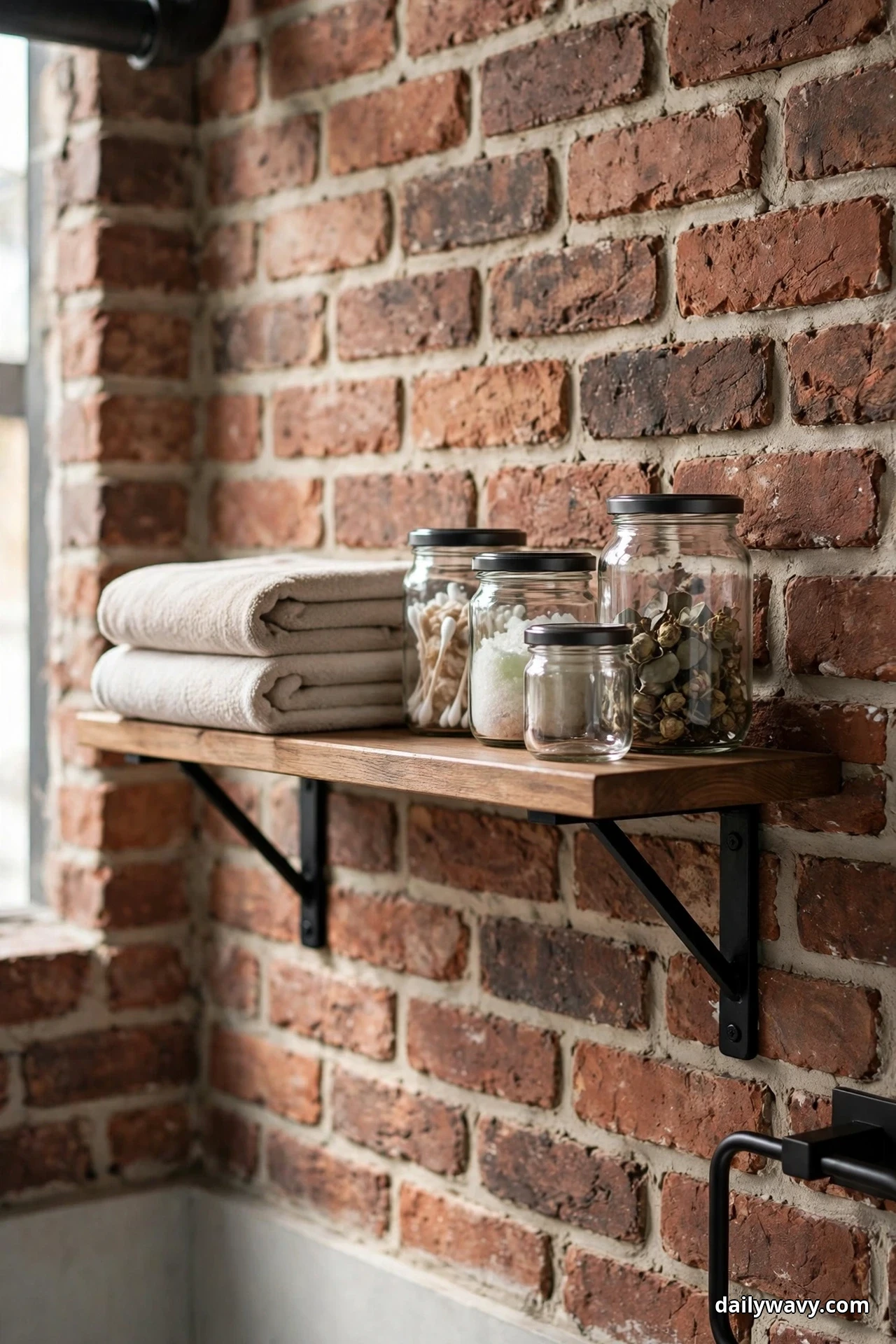
One modest shelf, mounted where splashes never reach, gives an industrial bathroom its gallery moment. Black metal brackets with a sealed wood plank are the classic pairing. Keep it modest: 24 to 30 inches wide is plenty in most bathrooms, and two brackets beat one for a solid, non-wobbly feel. Style it with things that survive humidity, sealed jars, folded towels, a small plant, and leave real breathing room between objects.
How to recreate it: Mount the shelf at least 18 inches above the vanity backsplash and well away from the shower or tub edge. Use wall anchors rated for the wall type, tile needs masonry anchors and a slow drill with water cooling, drywall needs toggle bolts. Brackets and a plank cost 20 to 40 dollars together. Check that the shelf is level in both directions before you load it.
Lower-cost swap: A single floating shelf with hidden brackets costs under 15 dollars and hides the hardware entirely.
5. A Small Vase With One Stem
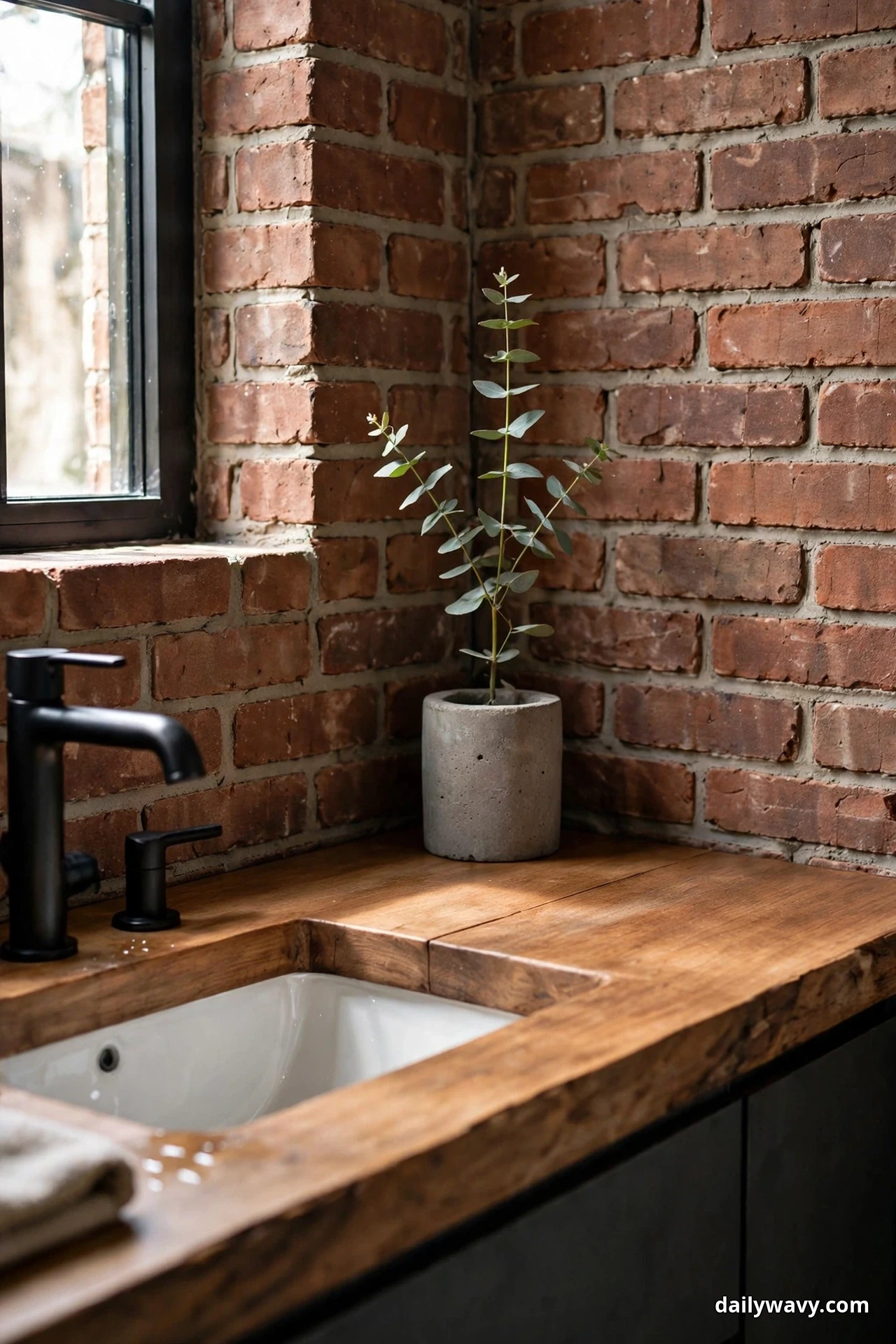
One stem in a small vase is the whole styling secret of many designer bathrooms. It adds life and a vertical line without crowding the counter or demanding maintenance. Eucalyptus, a dried grass stem, or a single faux stem in matte ceramic all work. The trick is scale: the vase should be 4 to 6 inches tall, small enough to tuck beside the soap dispenser and big enough not to vanish.
How to recreate it: Pick a vase with some weight to it, stoneware or concrete, so a swinging towel does not knock it over. Place it at the back corner of the vanity, the spot you never reach for daily items. A real eucalyptus stem lasts weeks in steam and smells wonderful; dried stems last months with zero care. Rinse the vase weekly to prevent film.
Lower-cost swap: A thrifted ceramic bud vase and a stem clipped from your own garden costs almost nothing.
6. A Repeated Metal Finish In Accessories
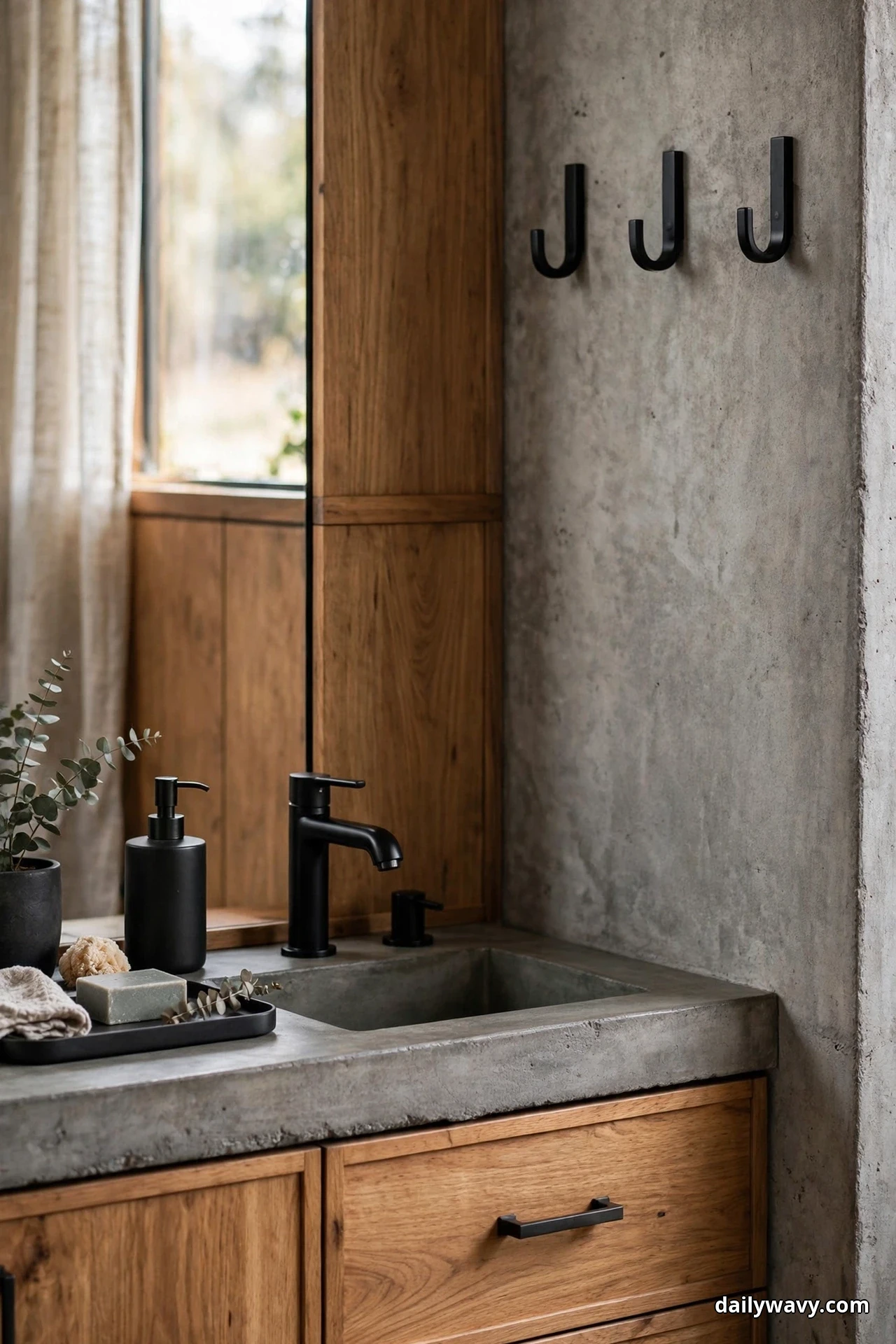
An industrial room looks intentional when the metal finishes match. Pick one finish, matte black is the workhorse, brushed nickel or aged brass if you prefer warmth, and repeat it across the accessories: soap dispenser, tray, hooks, toilet paper holder, mirror frame. Five small matching pieces do more for cohesion than one expensive fixture. This is the same finish-matching language that makes small spaces feel pulled together, and it works far beyond bathrooms. Our small entryway decor ideas use the same trick with hooks and frames.
How to recreate it: Audit what you already own before buying anything. Often you only need to replace two or three pieces to make the finish consistent. A coordinated accessory set, dispenser, tray, toothbrush holder and waste bin, costs 30 to 60 dollars in one finish. Keep the finish on dry surfaces and wipe metal weekly to prevent water spots from dulling it.
Lower-cost swap: A can of matte black spray paint rated for metal refreshes mismatched accessories for about 8 dollars. Let pieces cure fully before using them.
7. A Low Storage Cabinet

Tall cabinets crowd small bathrooms and wobble on uneven floors. A low storage cabinet, 24 to 30 inches high, tucks under a window, beside the vanity, or against a side wall and swallows the ugly stuff: cleaning supplies, spare towels, the plunger. Doors matter more than shelves here. Closed doors hide the visual noise that makes industrial rooms feel chaotic instead of calm.
How to recreate it: Look for a cabinet with adjustable feet so it sits level on tile, and a moisture-resistant finish, powder-coated metal or sealed MDF with metal legs. Measure your spot and leave an inch of clearance on each side for cleaning. A decent small cabinet runs 60 to 120 dollars. Put the heaviest items on the bottom shelf to keep it stable, and anchor it to the wall if children use the room.
Lower-cost swap: A metal utility cart with a fabric skirt or bins costs under 40 dollars and rolls out of the way for mopping.
8. A Neatly Folded Hand-Towel Grouping

Folded towels are the cheapest styling object in the house. A stack of three or four hand towels, folded in thirds with the edges aligned, on an open shelf or the low cabinet reads as deliberate and hotel-like. The folds should face the same direction, and the stack should look used-but-tidy rather than showroom-perfect. Slight imperfection keeps it human.
How to recreate it: Choose hand towels in one restrained color and a quick-dry weave, ribbed cotton or a cotton-bamboo blend. Fold each in thirds lengthwise, then in half, so they stack into neat rectangles about 8 by 5 inches. Rotate the top towel to the bottom weekly so they wear evenly and dry fully between uses. Four quality hand towels cost 20 to 35 dollars and last years.
Lower-cost swap: Re-fold the towels you already own. The technique costs nothing and the improvement is instant.
9. A Patterned Fabric Accent

Industrial rooms can go flat with all that metal and concrete, so one patterned fabric accent adds the softness the room needs. Keep it to a single piece and a quiet pattern: a thin charcoal stripe, a small geometric, a faded kilim-look bath mat. One pattern is an accent. Three patterns is a different decorating style entirely.
How to recreate it: The bath mat is the safest place for pattern, since it is washable and replaceable. Choose a low-pile, machine-washable mat with a non-slip backing, roughly 20 by 32 inches for a single vanity. Wash it weekly on hot and hang it over the tub edge between uses so it dries fully. A good mat costs 20 to 40 dollars. If you prefer the pattern on the curtain, keep the rest of the textiles plain.
Lower-cost swap: A patterned hand towel used only for display on the shelf brings pattern in for under 10 dollars.
10. A Simple Wall-Color Focal Area
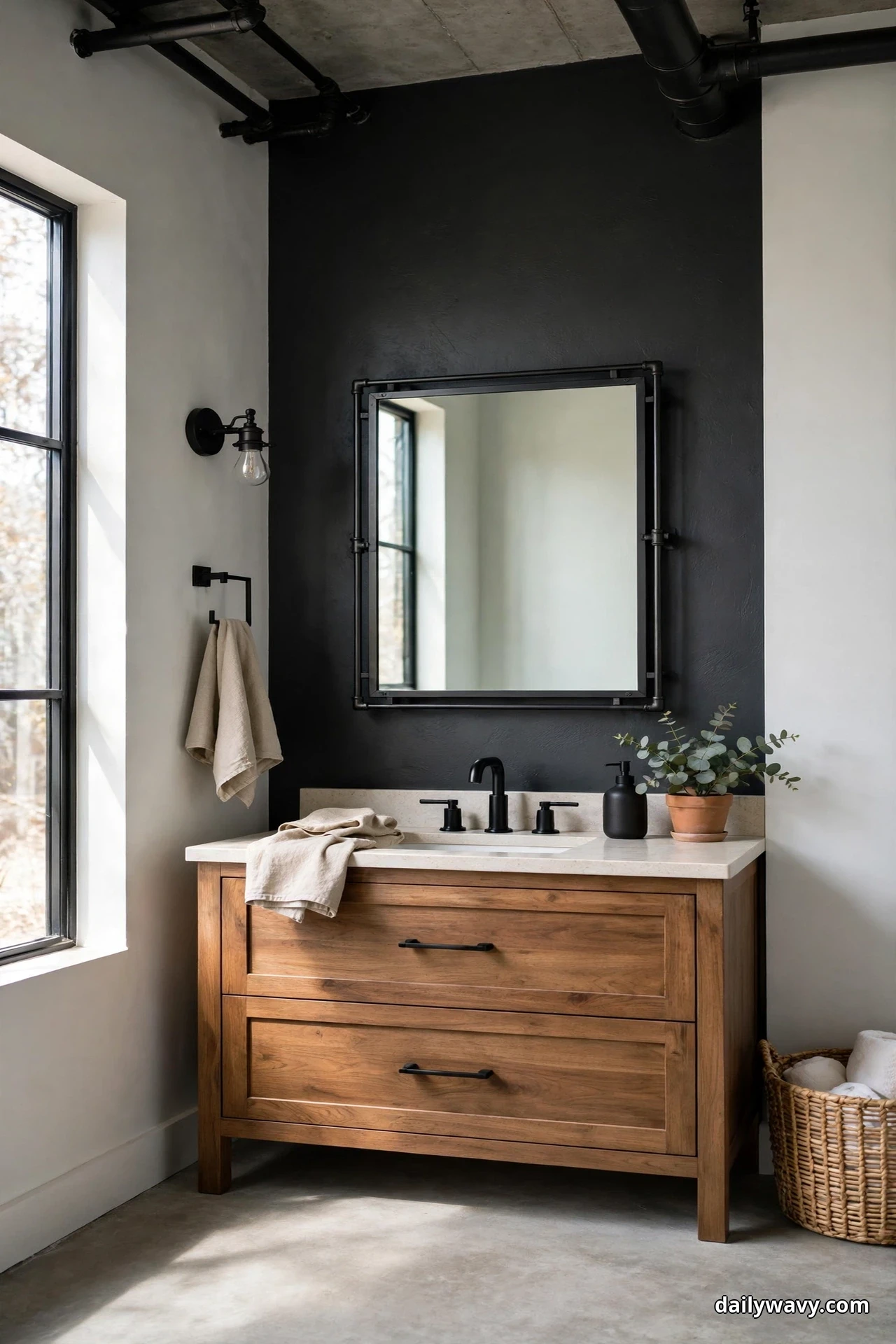
One wall of the right color can do the work of a full remodel. In an industrial bathroom, a deep charcoal, a warm putty, or a moody olive behind the mirror or vanity gives the metal fixtures something to play against. Keep it to one wall. Four walls of dark paint in a small, steamy room closes in fast.
How to recreate it: Use a paint labeled for bathrooms or kitchens, which resists moisture and mildew far better than standard wall paint. Clean and lightly sand the wall first, and do two thin coats rather than one thick one. A gallon covers about 350 square feet, so a single wall in most bathrooms needs well under a gallon, and the whole project costs 25 to 40 dollars including a roller and tape.
Lower-cost swap: Paint just the vanity wall or the wall behind open shelving. Half the paint, most of the effect.
11. A Basket For Rolled Clean Towels

Rolled towels in an open basket are the spa trick that works in real bathrooms too. Rolling takes less space than folding, keeps edges tidy, and makes it easy to grab one without toppling the stack. Use a moisture-tolerant open basket, wire, sealed wood slats, or woven plastic, and keep it where towels stay dry: on the low cabinet, a bench, or a high shelf.
How to recreate it: Roll bath towels tightly from one short end, tucking the loose edge underneath so the roll holds. A medium basket holds four to six rolled bath towels. Keep the basket away from the shower spray and the sink splash zone, because rolled towels that stay damp will smell. Wash and re-roll weekly. A suitable basket costs 15 to 30 dollars.
Lower-cost swap: Roll the towels you own into a crate or box you already have. The spa look is in the roll, not the container.
12. A Restrained Towel Palette
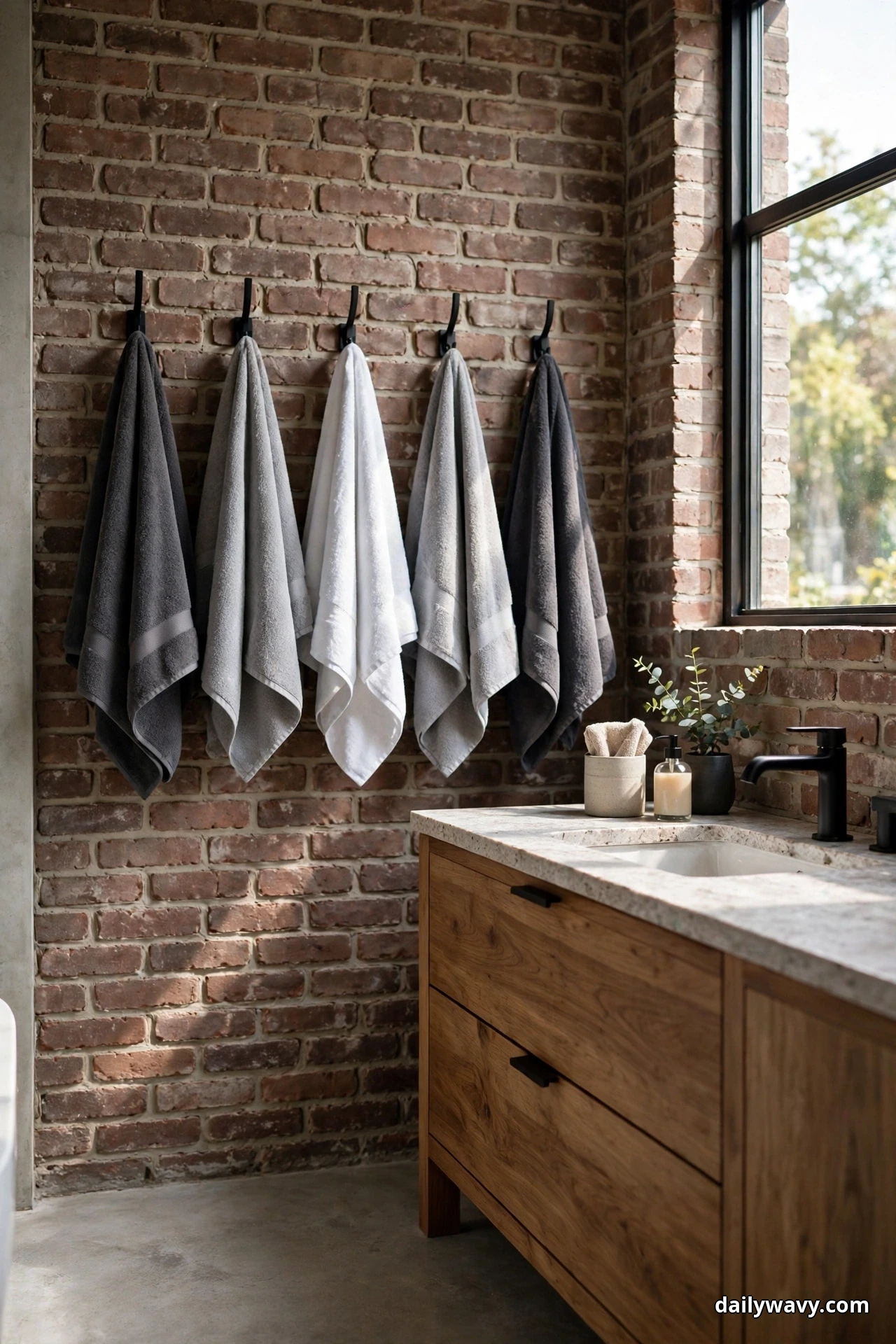
Towels are the biggest color blocks in a bathroom, so their palette is a design decision. A restrained palette, two or three tones like charcoal, stone and white, or warm gray, rust and cream, makes everything else in the room look more deliberate. Mixed brights, by contrast, fight the calm that industrial style does best.
How to recreate it: Pick your two anchor tones plus white, and replace towels in groups rather than one at a time. Bath, hand and washcloth in the same tones, or a dark bath towel with lighter hand towels for contrast. Buy towels from one brand line so the dye lots match. A full matching set for one bathroom costs 40 to 70 dollars. If your bathroom runs cool and bright, our small bedroom with a queen bed ideas show how the same restrained-textile thinking works in another small room.
Lower-cost swap: Dye old white towels in one batch with a machine dye in charcoal or stone. One box of dye refreshes a whole set for under 10 dollars.
13. A Framed Moisture-Appropriate Print
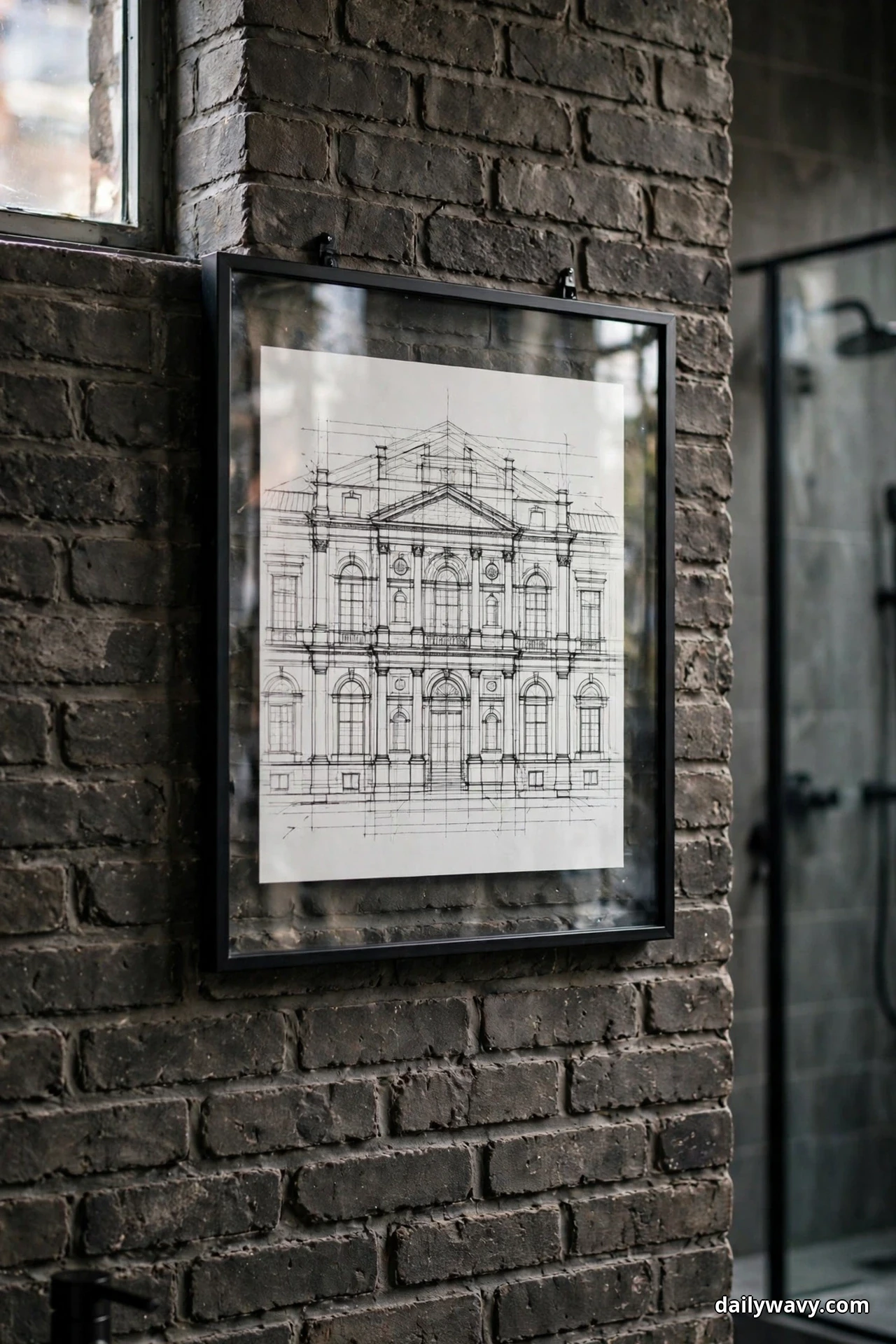
Art belongs in bathrooms, with one condition: the frame and print must handle steam. Use a sealed frame, metal or sealed wood, with the print behind glass or acrylic, and hang it on a wall the shower never reaches. Black and white architectural prints, line drawings, or vintage diagrams suit industrial rooms perfectly and never argue with the fixtures.
How to recreate it: Choose a print size that suits the wall, 8 by 10 inches over the toilet or beside the mirror, larger on an empty wall. Seal the back of the frame with kraft tape to slow moisture creeping in from behind. Hang with two hooks rather than one so it never tilts in the steam. A frame and print together cost 20 to 45 dollars. Check the glass for fogging in the first weeks; persistent condensation means the spot is too wet for art.
Lower-cost swap: Print a free public-domain architectural drawing at a copy shop and frame it in a thrifted metal frame.
14. A Simple Countertop Tray
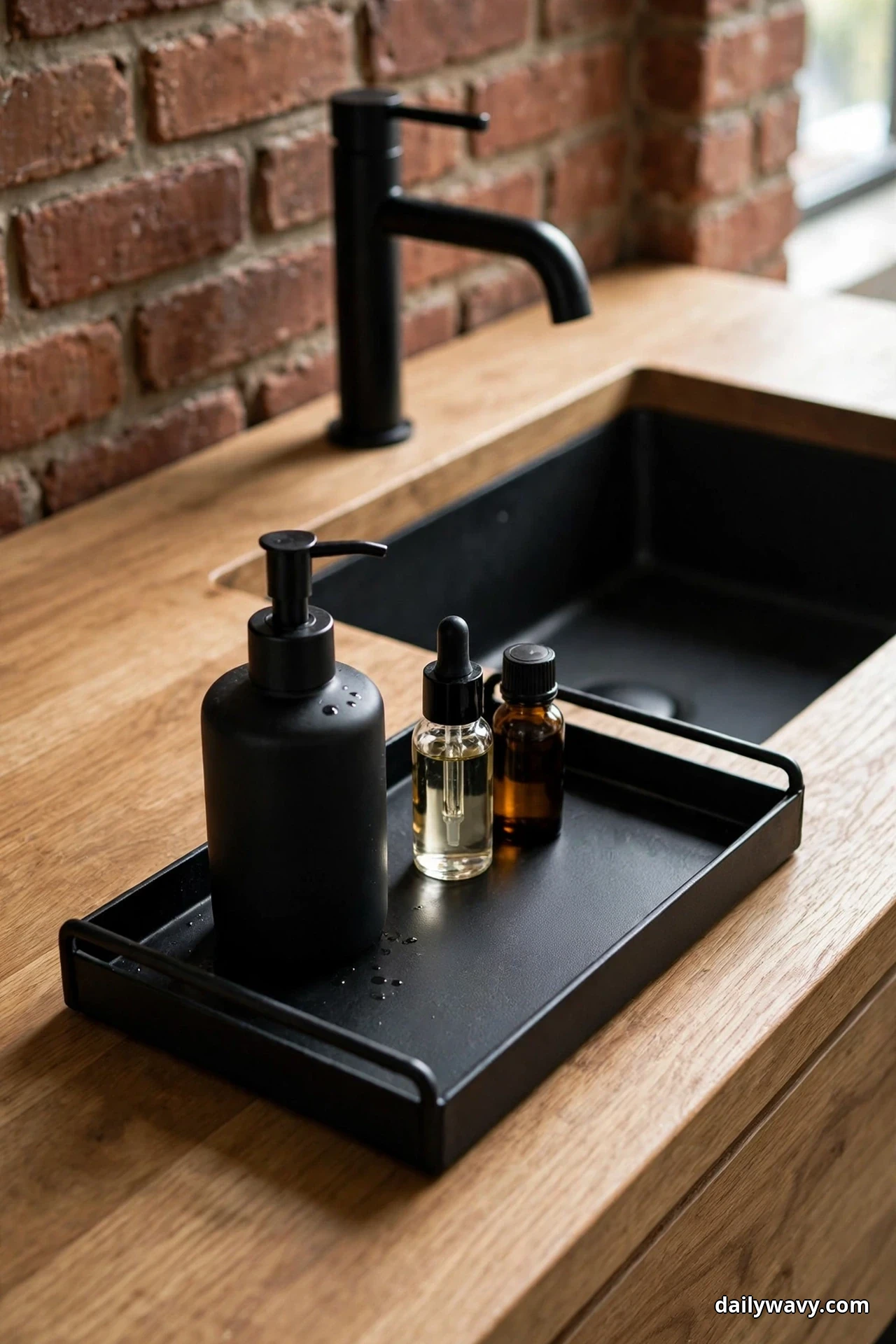
Loose bottles on a vanity are visual noise. A simple tray corrals the daily items, soap dispenser, a small dish, maybe the vase from idea five, into one intentional group, and it makes cleaning a one-lift job instead of a bottle-by-bottle shuffle. Metal, sealed wood, stone, or ceramic all work; pick the tray in your repeated metal finish to strengthen the cohesion from idea six.
How to recreate it: Size the tray to the vanity, roughly a third of the counter width and deep enough to hold the tallest bottle with room to spare. A 12 by 8 inch tray suits most single vanities. Look for a tray with a raised lip so nothing slides off, and a waterproof surface that wipes clean. Expect 15 to 35 dollars. Keep the tray a few inches from the faucet so it stays out of the splash path.
Lower-cost swap: A small baking sheet or a thrifted wooden box tray, wiped down and sealed, corrals bottles just as well.
15. A Compact Plant Suitable For The Actual Light
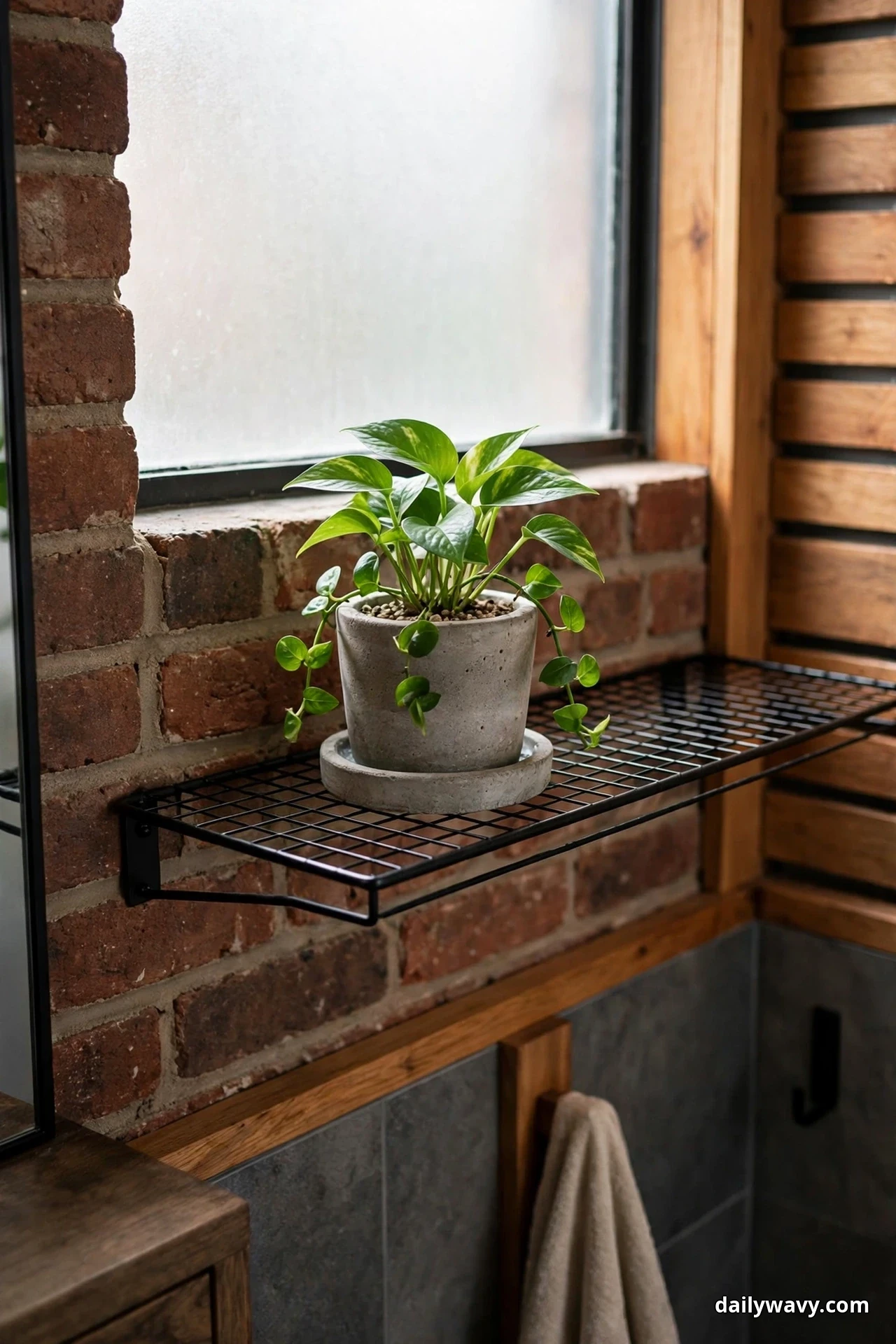
A plant is the finishing touch that tells the room someone lives here, but only if it can survive the actual light you have. Most bathrooms offer low to medium light and high humidity, which pothos, ferns, and snake plants genuinely enjoy. A compact plant in a concrete or stoneware pot, 4 to 6 inches across, fits a shelf, the low cabinet, or the back of the vanity without hogging space.
How to recreate it: Match the plant to your light honestly. No window or a tiny frosted one means a pothos or ZZ plant. A bright window means a small fern or a pilea. Use a pot with drainage and a saucer, and water only when the top inch of soil is dry, because bathroom humidity slows evaporation. A plant and pot together cost 12 to 25 dollars. Wipe leaves monthly so steam film does not dull them.
Lower-cost swap: Propagate a pothos cutting from a friend’s plant in a jar of water. Free, and it roots in weeks.
Frequently Asked Questions
Will metal fixtures and accessories rust in a steamy bathroom?
Quality fixtures in stainless steel, brass, or powder-coated finishes are made for bathrooms and will not rust with normal ventilation. Cheap uncoated iron accessories are the ones that spot and rust. If you love the look of raw metal, keep those pieces far from direct water and wipe them dry, or choose powder-coated versions that give the same look with real protection.
Can I use real wood in an industrial bathroom?
Yes, with two conditions. Choose moisture-tolerant woods like teak or sealed acacia, and keep them outside the direct spray zones. Oil-finished wood can be re-oiled yearly instead of peeling like varnish does. For floors and shower walls, wood-look porcelain tile gives the warmth with none of the risk.
Is wallpaper ever okay in a bathroom?
Standard wallpaper is not waterproof and will bubble and peel in steam, so do not use it as a waterproof surface. In a well-ventilated powder room with no shower, a vinyl-coated wallpaper on a wall far from splashes can work. In a full bathroom, paint labeled for bathrooms is the safer way to get color.
How do I keep bathroom textiles from smelling musty?
Dry everything fully between uses. Hang towels spread out, not bunched, wash bath mats weekly, and keep the exhaust fan running during and for twenty minutes after showers. Quick-dry weaves help, but airflow is what really prevents mustiness.
Do I need to change my lighting for an industrial look?
You do not need to rewire anything. Swap the shades or fixtures for cage-style or matte black options that fit your existing boxes, and use warm white bulbs around 2700 to 3000 Kelvin so the room feels inviting rather than clinical. Keep all fixtures rated for damp locations, and never place plug-in accessories beside water.
Can I get this look in a rental without permanent changes?
Absolutely. Nearly every idea here is renter-friendly: baskets, trays, textiles, plants, a framed print hung on adhesive strips, and a peel-and-stick wood-look accent all come down cleanly. Save the paint and shelf-mounting for rooms you own, and invest in the portable pieces you will take with you.
A Bathroom That Works As Good As It Looks
Industrial style earns its keep when the room works hard and looks effortless doing it. Start with the storage, the closed basket for supplies and the low cabinet that hides the clutter, then layer in the textiles and the small styling moves. Keep your materials honest about moisture, repeat one metal finish so everything hangs together, and let one plant and one stem of green soften all that metal and stone.
If storage is your starting point, our guide to small bathroom storage goes deeper on making every inch count in tight rooms. And when you are ready to carry the same calm, considered feeling into the rest of the house, browse the Home and Decor collection for more room-by-room ideas.