12 Small Bedroom With A Queen Bed Ideas to Make Better Use of Your Space
A queen bed measures 60 by 80 inches, and in a small bedroom that footprint decides everything. The trick is…
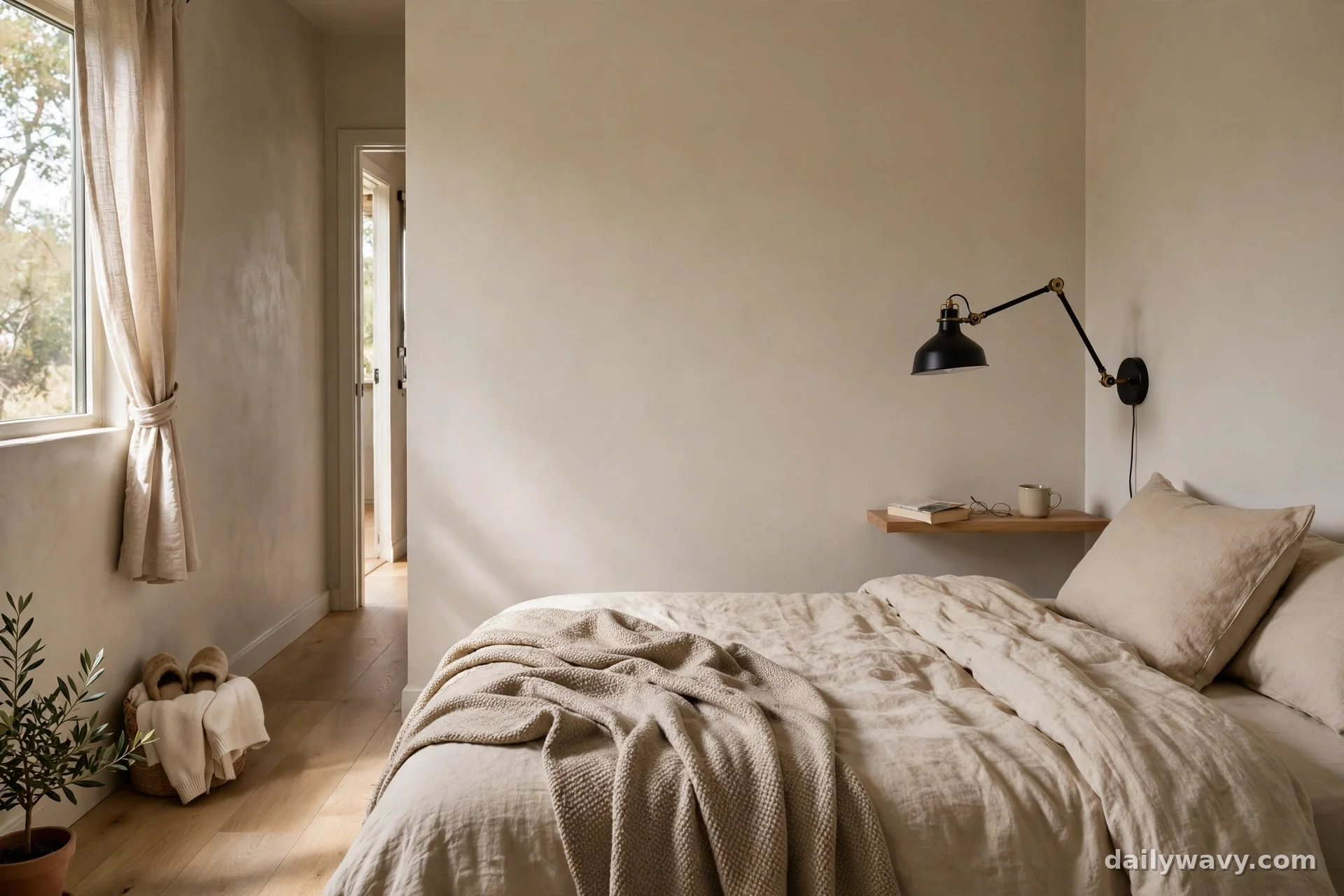
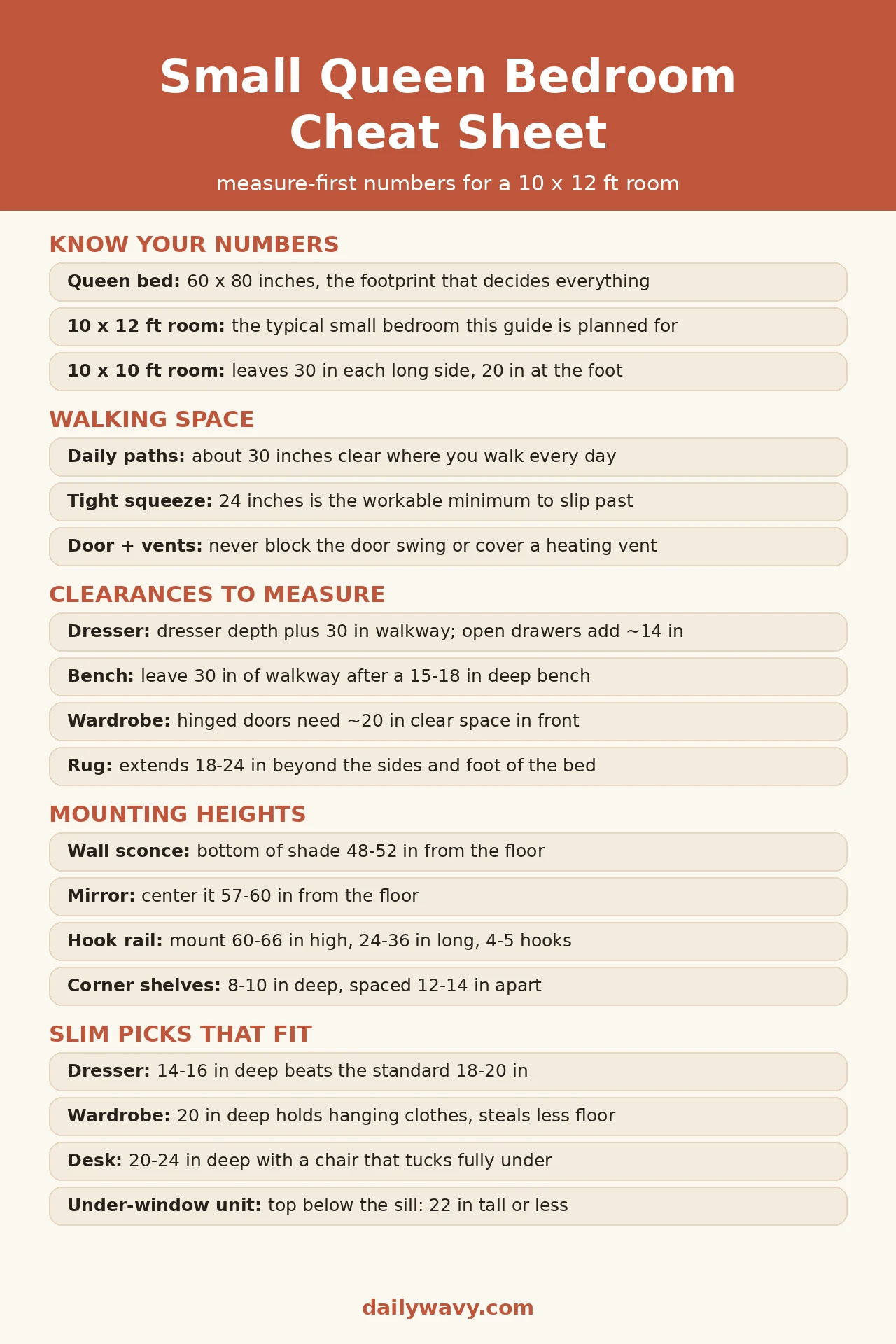
A queen bed measures 60 by 80 inches, and in a small bedroom that footprint decides everything. The trick is not to fight the bed. Work around it with pieces that earn their floor space: lights that move to the wall, storage that hides in plain sight, and furniture slim enough to leave a real walking path. Each idea below was planned for a typical 10 by 12 foot room with one door and one window, and every one keeps the exits clear. Measure your own room first, then pick the ideas that fit your walls.
Jump to an idea
- A Wall Light Replacing A Table Lamp
- A Narrow Bench With Hidden Storage
- A Mirror On An Unused Vertical Wall
- A Compact Desk With A Tuck-In Chair
- A Shallow Dresser Opposite The Bed
- Curtains Keeping The Window Clear
- A Rug That Defines The Sleeping Zone
- A Slim Freestanding Wardrobe
- A Folding Luggage Rack Stored Flat
- A Wall Hook Rail For Daily Items
- A Corner Shelf For Books
- A Low Storage Unit Below A Window
1. A Wall Light Replacing A Table Lamp
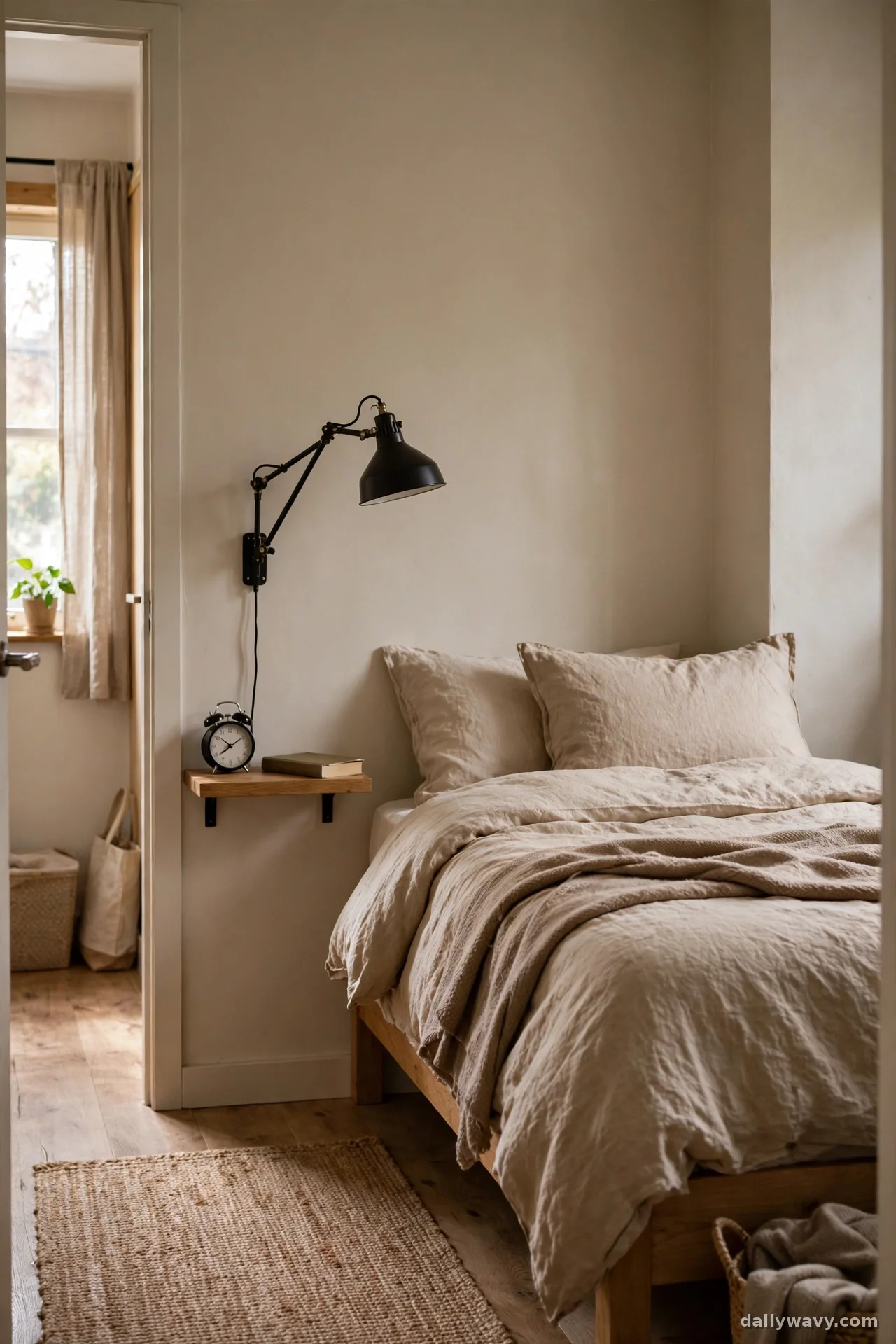
A table lamp needs a nightstand, and a nightstand needs about 16 to 20 inches of floor depth on each side of the bed. Move the light to the wall and you can shrink the nightstand to a small floating shelf, or skip it entirely. This one change frees the most floor space of any idea on this list.
Measure the wall beside the bed first. You want the bottom of the shade roughly 48 to 52 inches from the floor, which lands near eye level when you sit up to read. Check where the nearest outlet sits, because a plug-in sconce keeps this a no-electrician project. A swing-arm style is worth the extra few dollars since you can pull the light toward you for reading and push it flat against the wall during the day.
Mount into a stud when you can. If the only good spot has no stud, use a toggle bolt rated for the fixture weight. Hide the cord with a paintable cord cover that runs straight down to the outlet. The whole job takes 30 to 60 minutes with a drill and a level.
A realistic lower-cost alternative is a clamp lamp fixed to the headboard or a wall-mounted shelf. It gives you the same freed-up surface for a fraction of the price, though the look is less polished.
2. A Narrow Bench With Hidden Storage
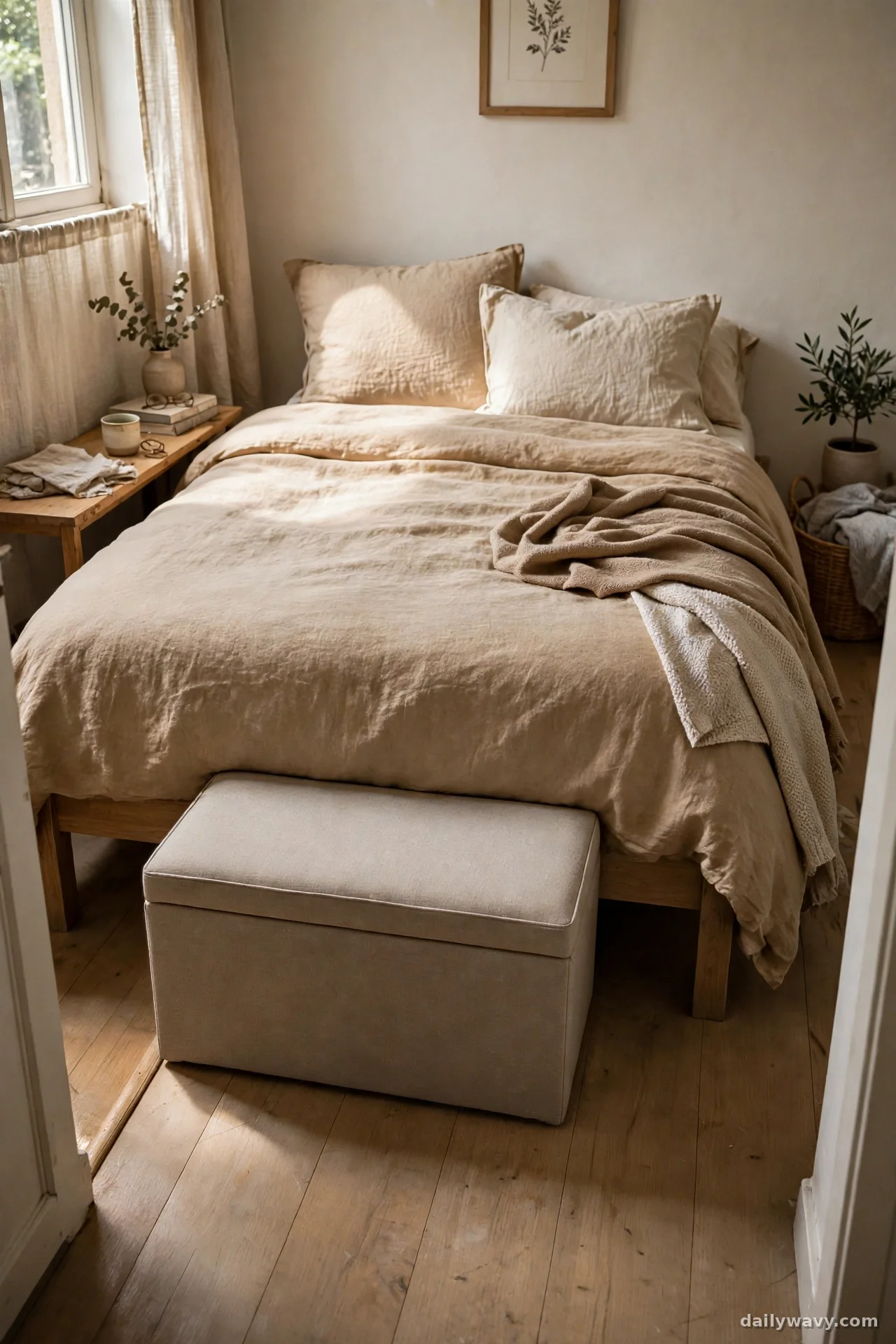
The foot of the bed is usually dead space, but only if you have the clearance to use it. Measure from the foot of the bed to the opposite wall or furniture. You need about 30 inches of walkway left over after the bench goes in. In a 12 foot long room with an 80 inch bed, that leaves roughly 34 inches to work with, so a bench 15 to 18 inches deep fits with room to spare.
Pick a bench 48 to 52 inches wide so it lines up inside the 60 inch width of the bed rather than sticking out past it. A hinged lid gives you storage for spare bedding, off-season clothes, or shoes. Ventilated or slatted designs suit blankets better than airtight ones, which can trap musty smells.
Placement matters more than the bench itself. Center it on the bed, and leave it pulled a few inches away from the footboard so bedding does not catch when you lift the lid. If the foot of your bed faces the door, this also creates a natural landing spot for a bag or a robe.
Assembly or delivery is the only effort here unless you build one, which is a weekend project with basic tools. A realistic lower-cost alternative is a lidded storage ottoman in the same footprint. It holds less, but it costs less and works in rooms where even a bench feels tight.
3. A Mirror On An Unused Vertical Wall
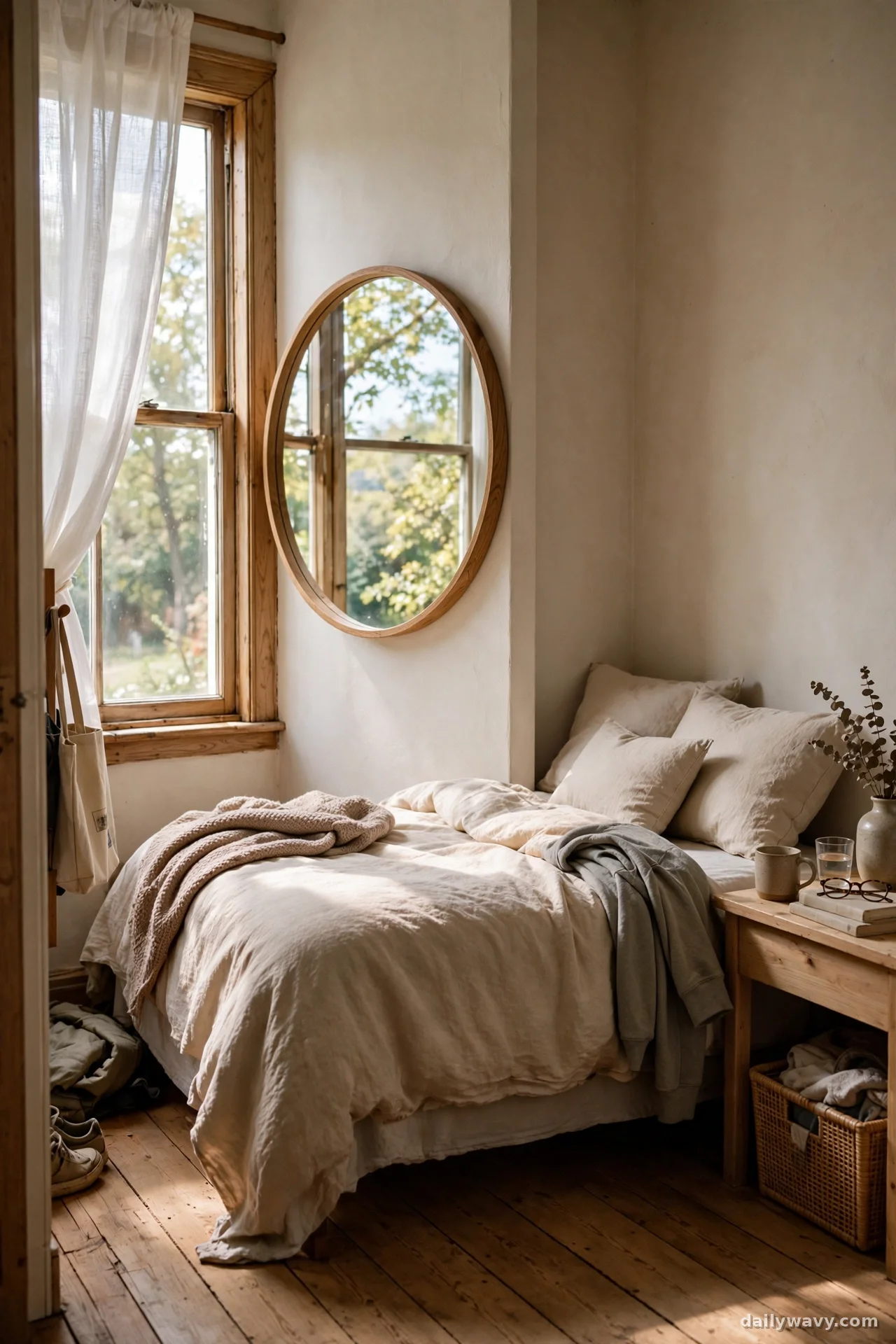
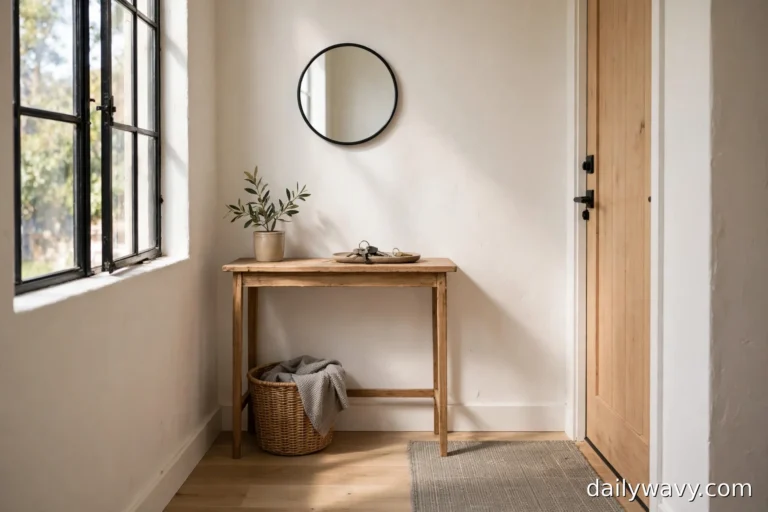
Small bedrooms almost always have one wall section that holds nothing: beside the door, between the window and the corner, or the short wall the bed does not touch. A mirror turns that dead stretch into something useful. It bounces daylight deeper into the room and gives you a full view when getting dressed.
Measure the empty wall width and pick a mirror that fills about two-thirds of it. Hang the center around 57 to 60 inches from the floor, which suits most adults. The best placement is on a wall beside the window rather than opposite the bed, so it catches daylight without throwing morning sun straight at your pillow.
Use proper wall anchors. A full-length mirror is heavier than it looks, and drywall alone will not hold it safely. Two D-rings and picture wire distribute the weight better than a single nail. If you rent and cannot drill, a leaning floor mirror works, but budget about 8 inches of floor depth and a wall it can safely rest against.
This takes about 20 minutes with a level and a drill. A realistic lower-cost alternative is a set of smaller square mirrors grouped as one arrangement. The effect is similar and the pieces are easier to hang alone.
4. A Compact Desk With A Tuck-In Chair
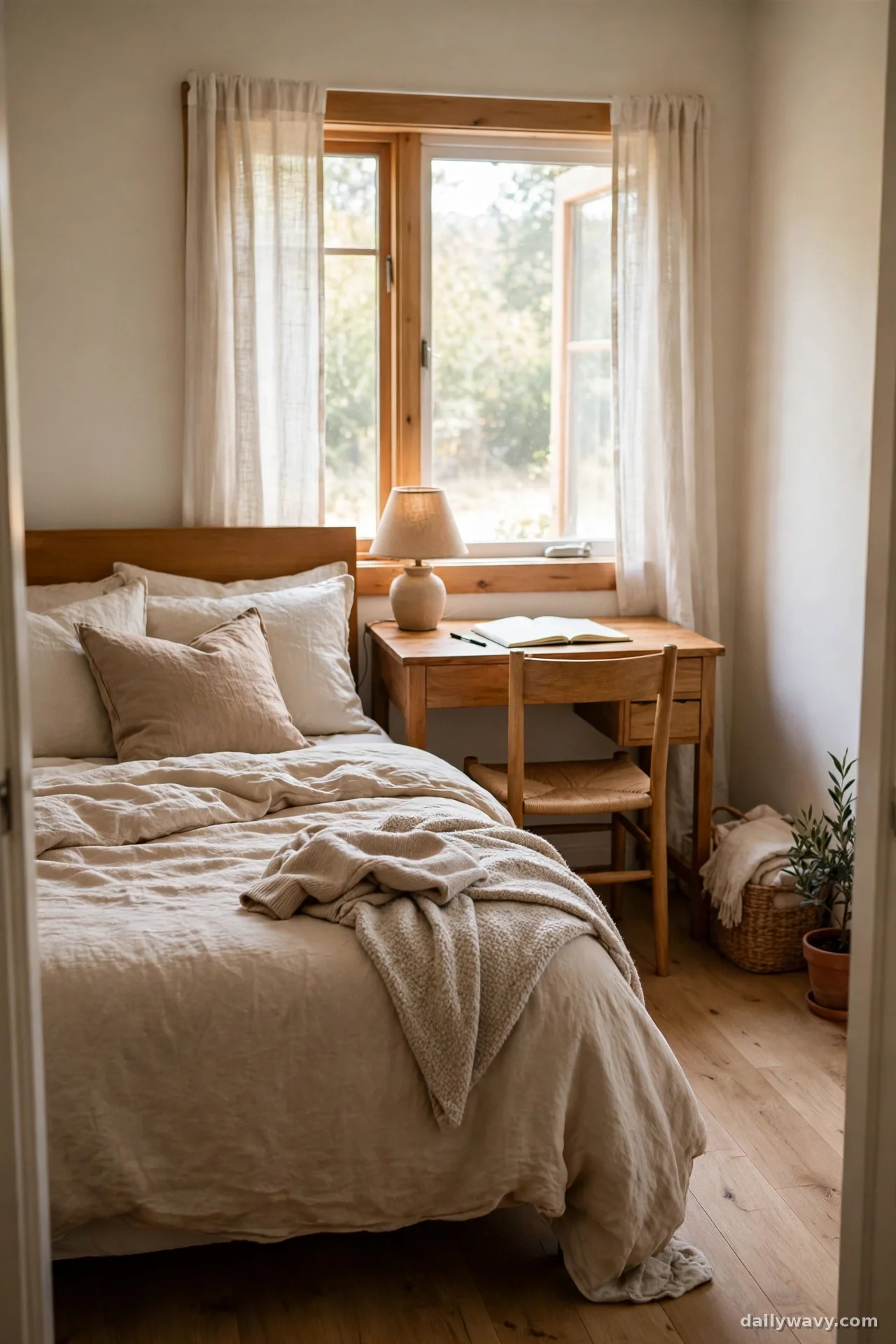
A bedroom desk only works in a small room if the chair disappears when you are done. Measure a wall segment 36 to 42 inches wide, then choose a desk 20 to 24 inches deep. An armless chair or a backless stool tucks fully underneath, which keeps the walkway clear and the room visually calm.
The wall under or beside the window is usually the best spot. You get daylight for working, and the desk does not block the bed or the door swing. Check the chair height against the desk: you need about 10 to 12 inches between the seat and the underside of the desktop for your legs. If the desk has drawers, make sure they do not hit your knees.
Cable management matters in a small space where every cord shows. A single adhesive cable tray under the desktop keeps chargers off the floor. Assembly takes about an hour for most flat-pack desks.
A realistic lower-cost alternative is a wall-mounted drop-leaf table. It folds flat against the wall when you are not working, which beats even a tucked-in chair for floor space, though the work surface is smaller.
5. A Shallow Dresser Opposite The Bed
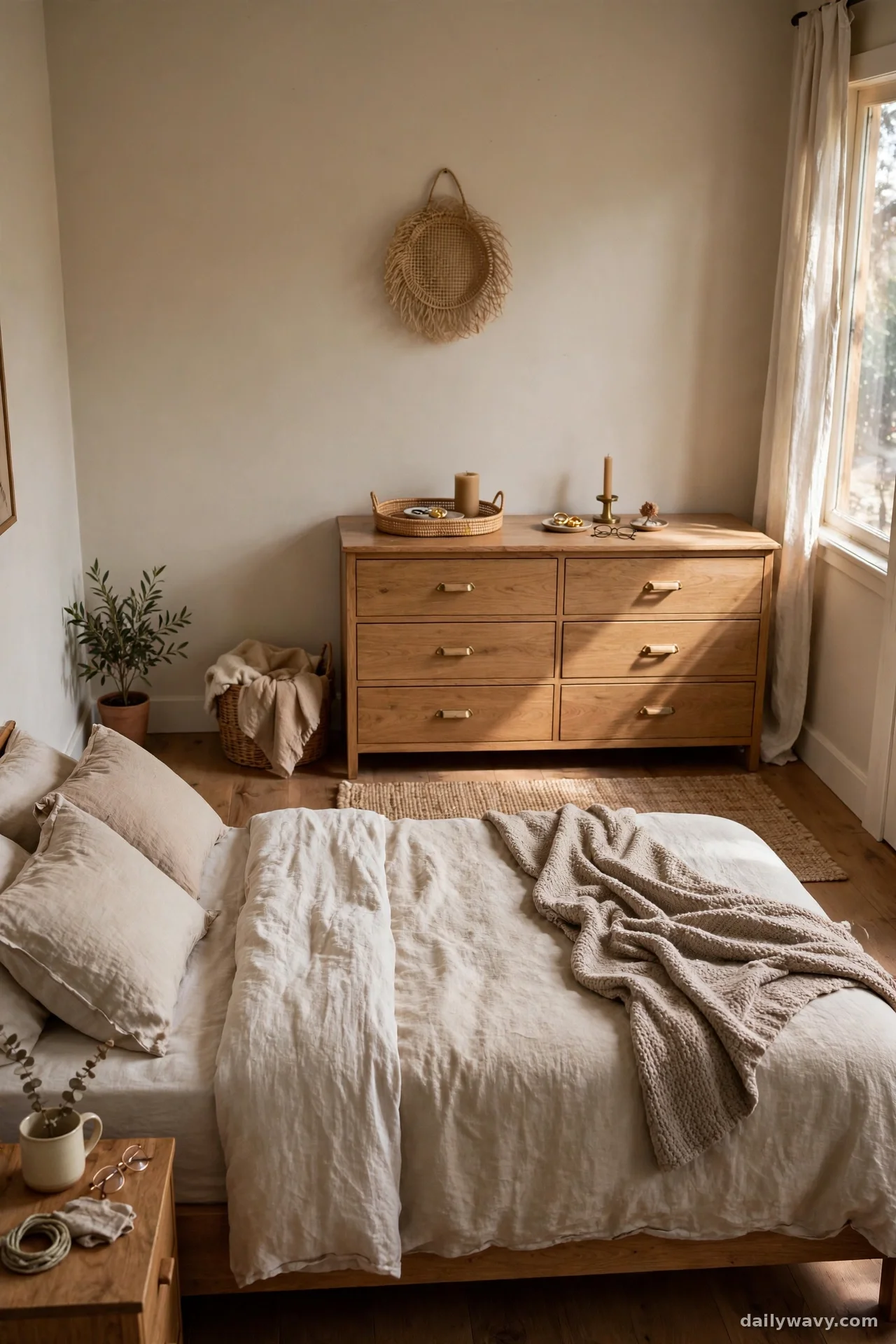
A standard dresser is 18 to 20 inches deep, which eats a walkway fast. A shallow dresser at 14 to 16 inches deep holds folded clothes just fine and leaves the passage usable. Measure from the foot of the bed to the wall: you need the dresser depth plus about 30 inches of walkway. An open drawer adds roughly another 14 inches of reach, so plan the walkway with drawers in mind, not just the closed front.
A 48 to 60 inch wide dresser gives you six usable drawers without dominating the wall. Place it centered opposite the bed so the room feels balanced. Keep the top mostly clear: a small tray for keys and a lamp is enough. A cluttered dresser top makes the whole room feel smaller than it is.
Check the door swing before you commit. If the bedroom door opens against the dresser wall, you may need to shift the dresser a few inches or add a door stop. This is a delivery-and-position job rather than a project, though anchoring a tall dresser to the wall is smart if you have kids.
A realistic lower-cost alternative is two low bookcases placed side by side with fabric bins. The storage is just as accessible and the total cost often runs lower than one good dresser.
6. Curtains Keeping The Window Clear
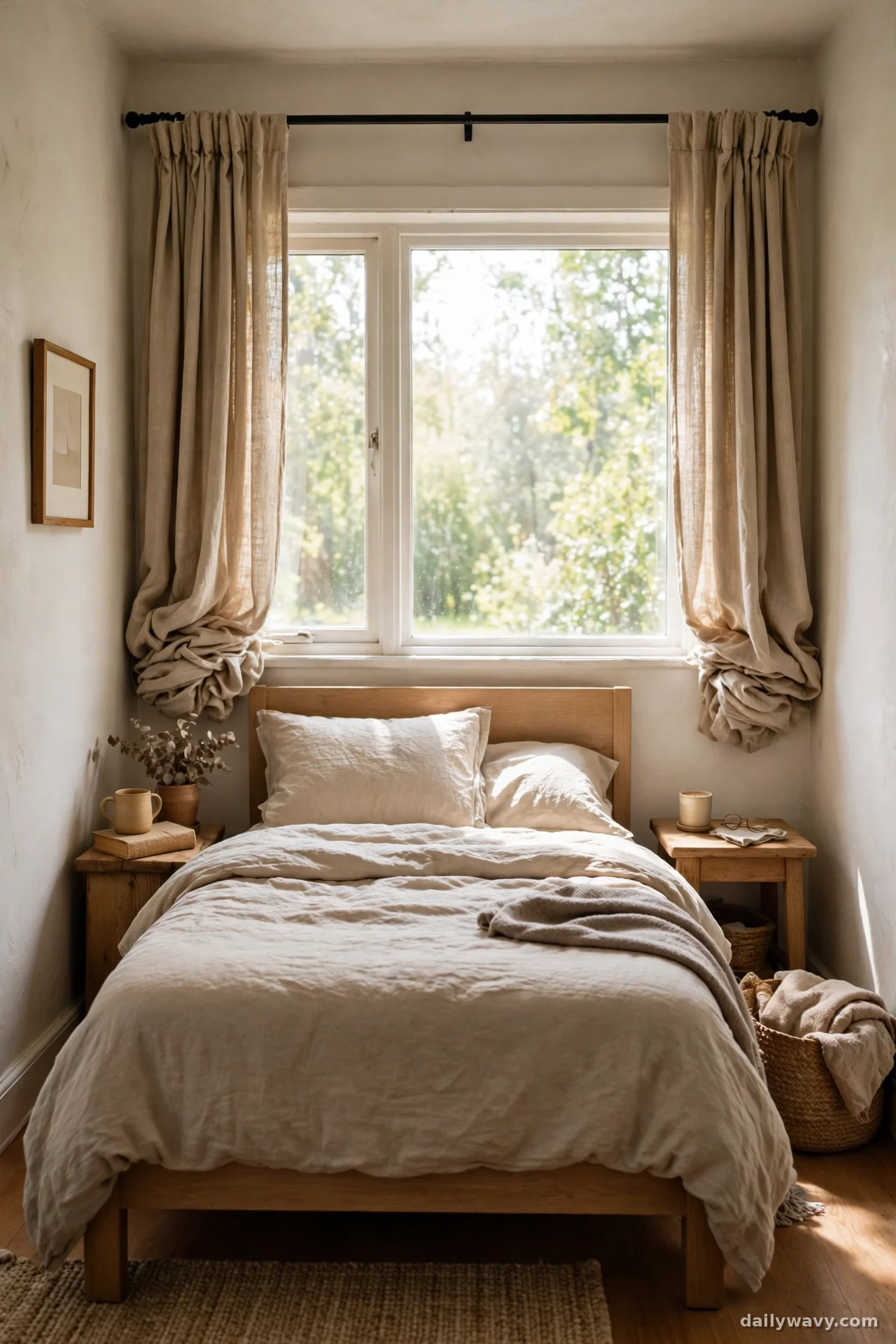
Curtains go wrong in small bedrooms when the panels cover half the glass. Hang the rod 4 to 6 inches wider than the window frame on each side and a few inches above it. When the curtains open, the panels stack on the wall instead of the window, so you keep every inch of daylight and the glass stays fully usable.
Measure the window width first, then buy a rod to match the extended span. Light-filtering panels in a warm neutral keep the room bright while softening the view. Floor-length panels make the ceiling feel higher, but in a truly tight room, panels that end at the sill avoid tangling with furniture below.
Mount the brackets into studs or use proper drywall anchors, since curtain rods take sideways pull every day. This takes about 30 minutes with a drill and a level. If you cannot drill, a tension rod inside the frame works, though the panels will cover some glass when open.
A realistic lower-cost alternative is a single wide panel on one side if the window is small. And if you are working with two windows instead of one, use the same wider-rod trick on both and let the panels stack on the wall between them, so neither window loses any glass.
7. A Rug That Defines The Sleeping Zone
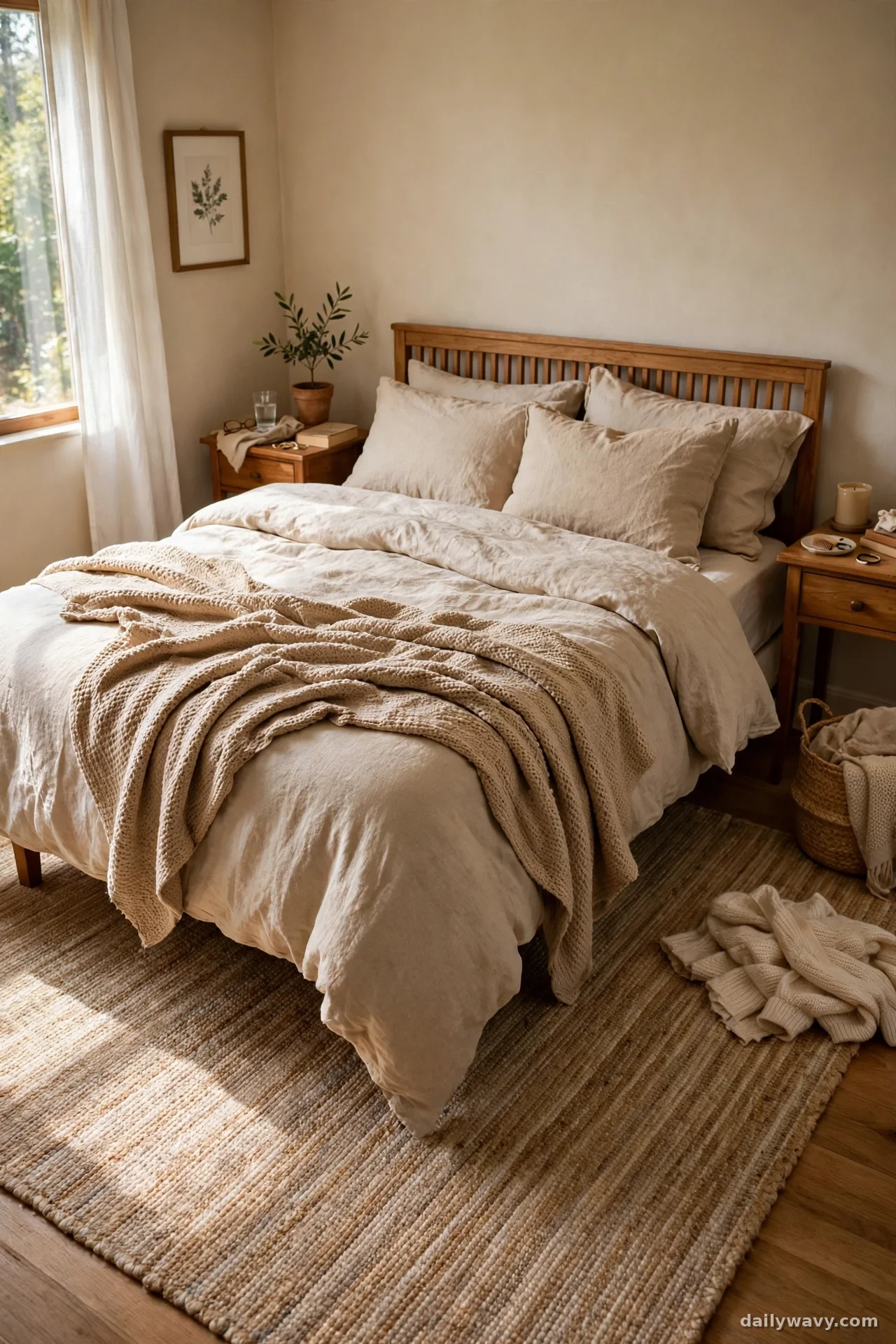
In a small room the bed can look like it is floating in leftover space. A rug anchors it and marks where the sleeping zone ends and the walking zone begins. Measure so the rug extends 18 to 24 inches beyond the sides and foot of the bed. For a queen, a 5 by 8 rug works in tighter rooms and a 6 by 9 in rooms with a little more floor.
Position the rug so it starts about a foot from the headboard and runs past the foot of the bed. The front legs of nightstands can sit on it, which ties the whole arrangement together. Choose a low pile. Anything plush catches the door swing and makes the room harder to vacuum around the bed.
This takes 15 minutes: lift, slide, straighten. The only real work is moving the bed, which is easier with a second person. Vacuum the floor underneath while it is exposed.
A realistic lower-cost alternative is two narrow runners, one along each side of the bed. You get the soft landing where your feet hit the floor each morning without buying a full-size rug.
8. A Slim Freestanding Wardrobe
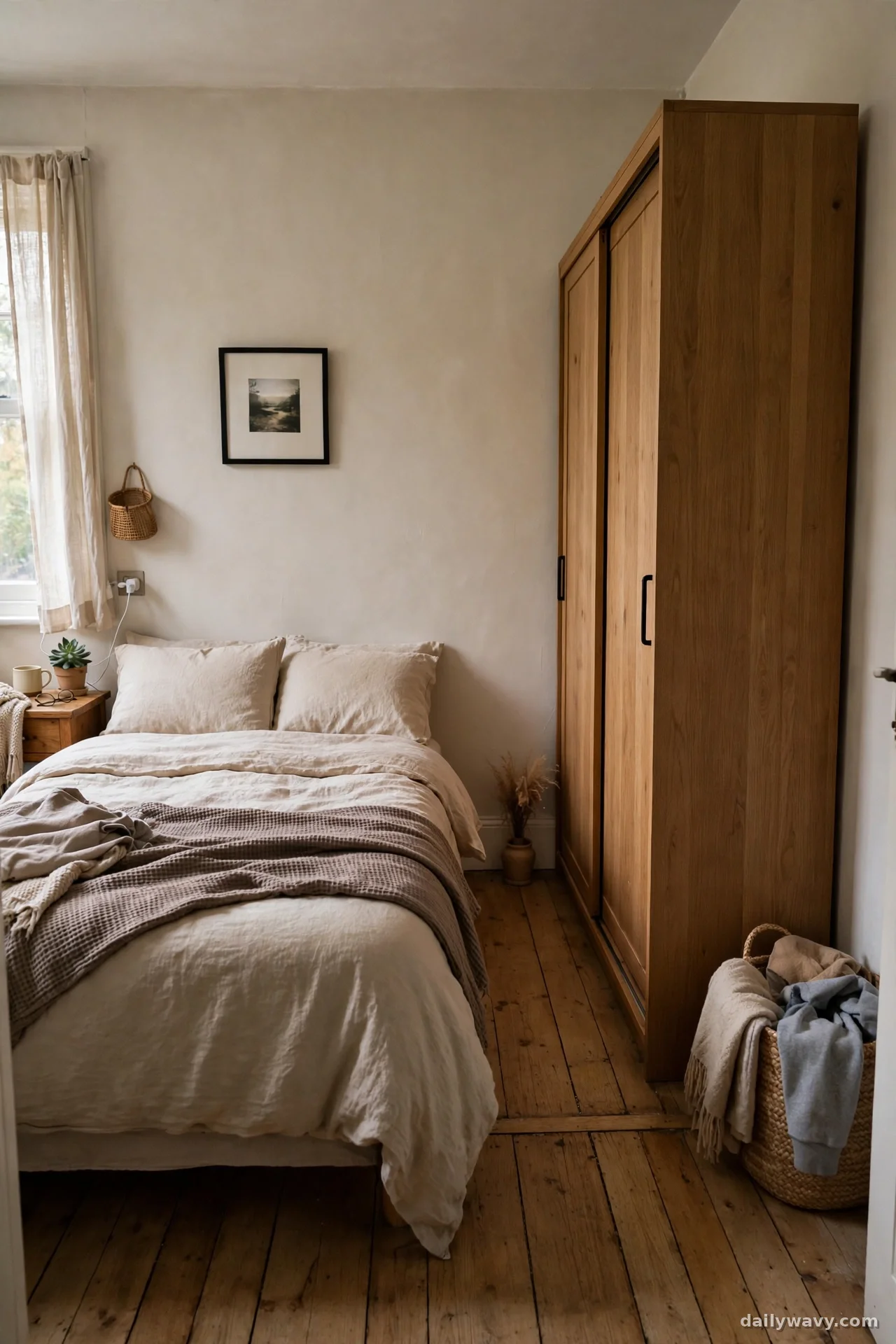
When the closet is tiny or missing, a slim wardrobe saves the room. Standard wardrobes run 24 inches deep, but 20 inch models hold hanging clothes fine and steal less floor. Measure the wall you plan to use, then subtract the door swing: hinged doors need about 20 inches of clear space in front, while sliding doors need none.
Place the wardrobe on the longest uninterrupted wall, ideally the one the bed does not touch. Keep it clear of heating vents and the door arc. If the room is narrow as well as small, these narrow bedroom layout ideas show how to place tall pieces without blocking the walking route.
Assembly takes one to two hours for most flat-pack wardrobes, and anchoring to the wall is worth doing since tall furniture can tip. Inside, a double-hang rod setup roughly doubles the hanging capacity compared to one long rod.
A realistic lower-cost alternative is a sturdy garment rack with a fabric cover. It holds a surprising amount, costs far less, and the cover keeps everything looking tidy.
9. A Folding Luggage Rack Stored Flat
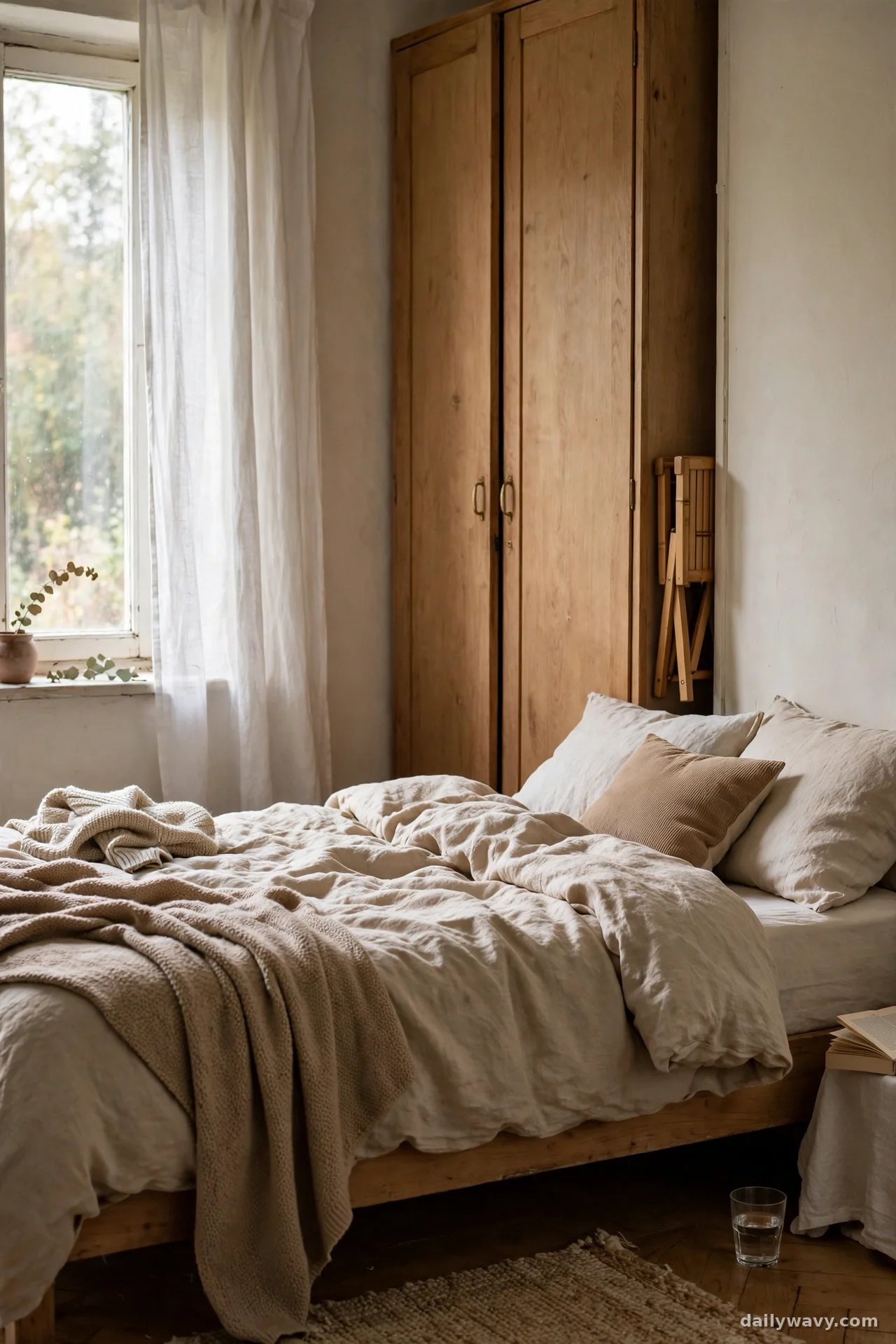
Guest suitcases are the classic small-bedroom problem. They land on the bed, then the floor, then the only chair. A folding luggage rack solves it by giving the suitcase a proper home that vanishes when guests leave. Open, it measures about 20 by 26 inches. Folded flat, it is roughly 3 inches thick.
Measure the gap behind the door or beside the wardrobe. Most rooms have one slim dead space that fits a folded rack perfectly. Bamboo and wood models look better than metal ones and hold up well. Check the weight rating before buying, since a packed large suitcase can pass 50 pounds.
There is no installation and no effort beyond unfolding it. When you travel yourself, the same rack works in reverse: pack on it instead of the bed, and your bedding stays clean.
A realistic lower-cost alternative is simply sliding the suitcase under the bed. It costs nothing, though you lose that under-bed space for anything else.
10. A Wall Hook Rail For Daily Items
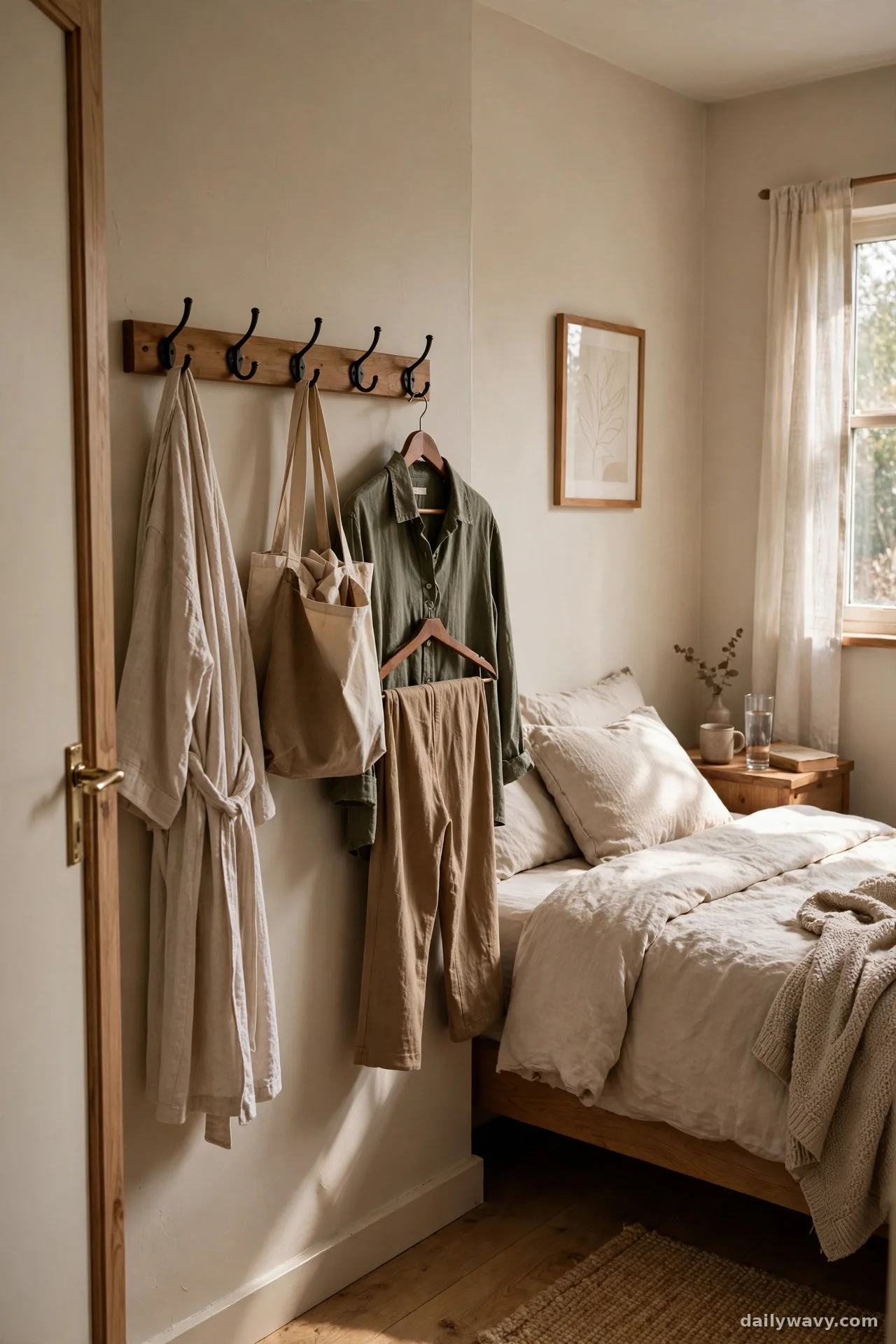
Robes, tomorrow’s outfit, and the bag you grab every morning all need a home that is not the floor or the bed. A hook rail puts them on the wall in a strip about 24 to 36 inches long. Mount it 60 to 66 inches from the floor so coats hang clear of the baseboard.
Measure for studs first. A rail loaded with bags and jackets gets heavy, and drywall anchors alone can pull out over time. Place the rail near the door or beside the wardrobe, never directly above the pillows where things could fall on you while you sleep. Four to five hooks suit one person; add a second rail rather than overloading one.
Screw it in with a level and you are done in 20 minutes. Wipe the wall behind it first, since that strip collects dust once hooks go up.
A realistic lower-cost alternative is a row of adhesive hooks, but check the weight rating on the package and give the adhesive a full day to cure before hanging anything heavy.
11. A Corner Shelf For Books
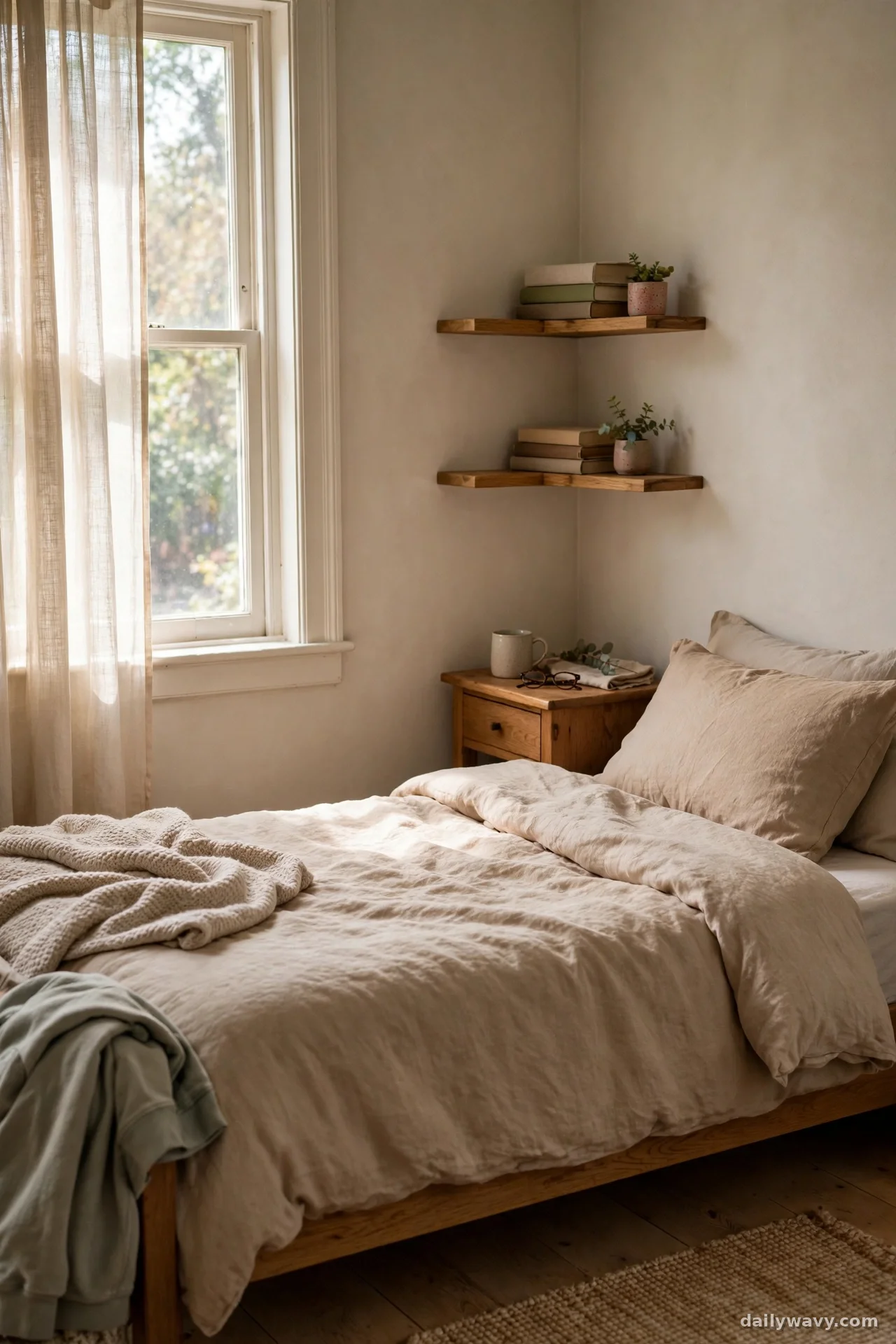
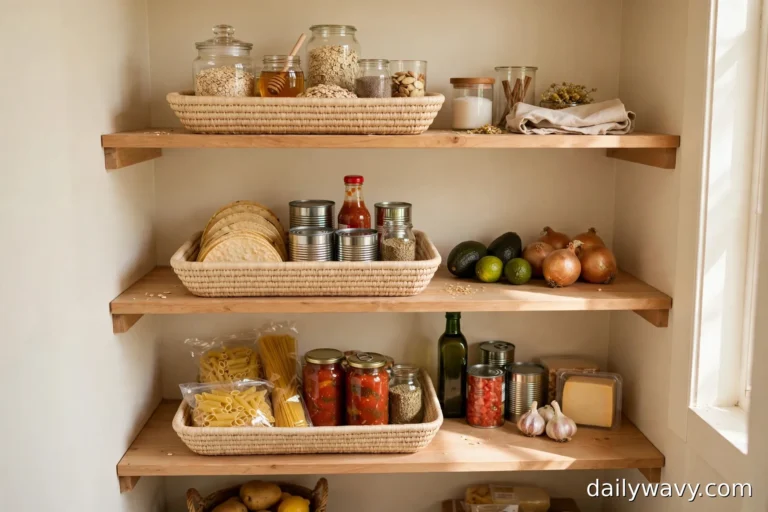
Corners in small bedrooms usually hold nothing but dust. A corner shelf turns one into a book nook without touching the floor. Measure the corner clearances and choose shelves 8 to 10 inches deep, which fits most books without jutting into the room.
The best spot is the corner nearest the bed, mounted a little above nightstand height so books stay within arm’s reach. Two or three shelves stacked 12 to 14 inches apart hold a real collection. Use a level on both walls, since corners are rarely perfectly square and a tilted shelf shows.
Floating corner shelves need solid anchors in at least one stud. Bracketed shelves are more forgiving and easier to level. Either way, keep the total load modest: books get heavy fast, and a small shelf is not a library.
This takes about 30 minutes. A realistic lower-cost alternative is a single straight floating shelf on the short wall by the bed. It holds the current reads even if it does not use the corner.
12. A Low Storage Unit Below A Window
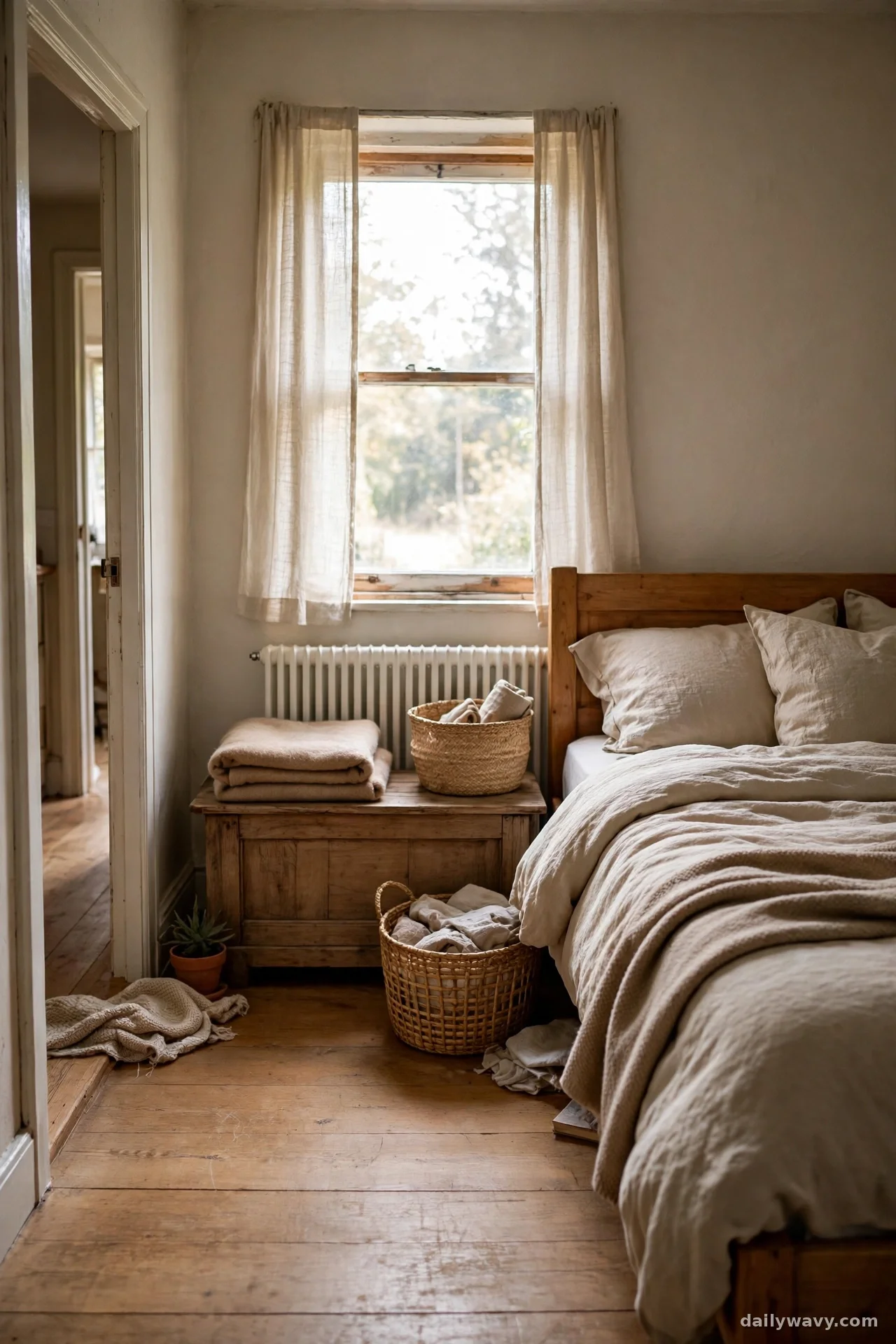
The wall under the window is often the only long stretch left in a small bedroom, and a low unit puts it to work. Measure the sill height first: the top of the unit must sit below it, which usually means 22 inches tall or less. Measure the wall width too, and leave a few inches clear on each side so the unit does not look wedged in.
A low credenza or a wide storage bench both work. The bench version doubles as extra seating, which is handy in a room with no chair. Keep the unit clear of radiators or heating vents, which often sit under windows. If yours does, leave the manufacturer’s recommended clearance and choose open-front baskets instead of a closed cabinet so heat can circulate.
Center the unit under the window for a balanced look. Assembly takes about an hour for most flat-pack pieces. If your room is narrow as well as small, the walking-route guidance in these narrow bedroom layout ideas pairs well with this placement.
A realistic lower-cost alternative is a row of lidded storage cubes. They cost less, need no assembly, and you can rearrange them as the room changes.
Frequently asked questions
Can a queen bed fit in a 10 by 10 foot bedroom? It fits, but barely. A 60 by 80 inch bed in a 120 by 120 inch room leaves 30 inches on each long side and 20 inches at the foot. That works if the door opens against a wall rather than into the bed, and you will want wall-mounted lights instead of nightstands. Measure the door swing before anything else.
How much walking space do I need around the bed? Aim for about 30 inches of clear passage where you walk every day, such as the side you get out of bed and the path to the door. Twenty-four inches is the workable minimum for squeezing past, but it feels tight long term. Anything under that and you will be turning sideways daily.
Where should the bed go in a small room? Put the headboard against the longest solid wall, ideally one without a window or door. Centering the bed looks best, but pushing it into a corner frees a surprising amount of floor if the room is truly tiny. Never block the door swing or cover a heating vent.
How do I fit a dresser in a small bedroom? Choose a shallow dresser 14 to 16 inches deep and place it opposite the bed or on the wall beside the door. Remember that open drawers add about 14 inches of reach, so measure the walkway with drawers open. If no wall fits, move folded clothes into the closet and use the dresser space for something else.
What if the bedroom door hits the bed? First try shifting the bed a few inches along the wall. If that fails, a hinge-pin door stop prevents damage, or you can have the door rehung to swing the other way. Reversing the swing is a small carpentry job that solves the problem permanently.
How can I make a small bedroom feel bigger? Keep the floor as visible as possible: furniture on legs, a rug that does not reach wall to wall, and nothing stored in the walking paths. Light wall colors and one large mirror help, but the biggest change comes from clearing surfaces. A room with clear floors and clear tops always reads larger than its measurements.