15 Formal Dining Room Decor Ideas for Meals and Gatherings
A formal dining room earns its keep at the moments that matter: holiday dinners, long Sunday lunches, the evening friends…
A formal dining room earns its keep at the moments that matter: holiday dinners, long Sunday lunches, the evening friends stay later than planned. The trick is decorating it so it feels gracious rather than stiff, beautiful for the big night but still like home on an ordinary Tuesday. This roundup gives you fifteen complete ideas, each one achievable in a real house with honest materials, clear numbers, and a realistic sense of effort. Each idea explains where things go, what to measure or count, and what it costs in time and money. If the hallway leading in could use the same care, our small entryway decor ideas show how a gracious first impression carries into the dining room.
Jump to an idea
- A framed artwork at comfortable eye level
- A pair of lamps on a sideboard
- A washable rug scaled to chair movement
- A small plant in a quiet corner
- A wood bowl on a console
- A restrained chair-cushion palette
- A mirror reflecting natural light
- A ceramic pitcher with seasonal stems
- A linen tablecloth with plain dishes
- An asymmetrical arrangement on storage furniture
- A small gallery group on one wall
- A contrast chair at the head of the table
- A shallow tray grouping serving items
- A bench cushion with a washable cover
- A repeated accent color in textiles

How formal dining rooms actually work
A formal dining room is not a museum gallery with chairs. It is a room that does two jobs: it hosts the meals you plan for, and it sits quietly the rest of the time looking like it belongs in your house. The rooms that pull this off share a few habits. Every piece has a clear purpose. Nothing blocks the path between kitchen and table. The palette stays calm enough that the food and the people become the color. And the lighting flatters everyone, which is the real secret behind every dining room people love.
Before you buy anything, stand in the doorway and notice what your eye lands on first. That first view is the room’s sentence, and every idea below helps you write it well. Measure the room, the table, and the largest piece of furniture before you shop, because formal rooms forgive almost nothing about scale. Then work idea by idea, starting with the walls and the light, and finish with the small things you touch.
1. A framed artwork at comfortable eye level
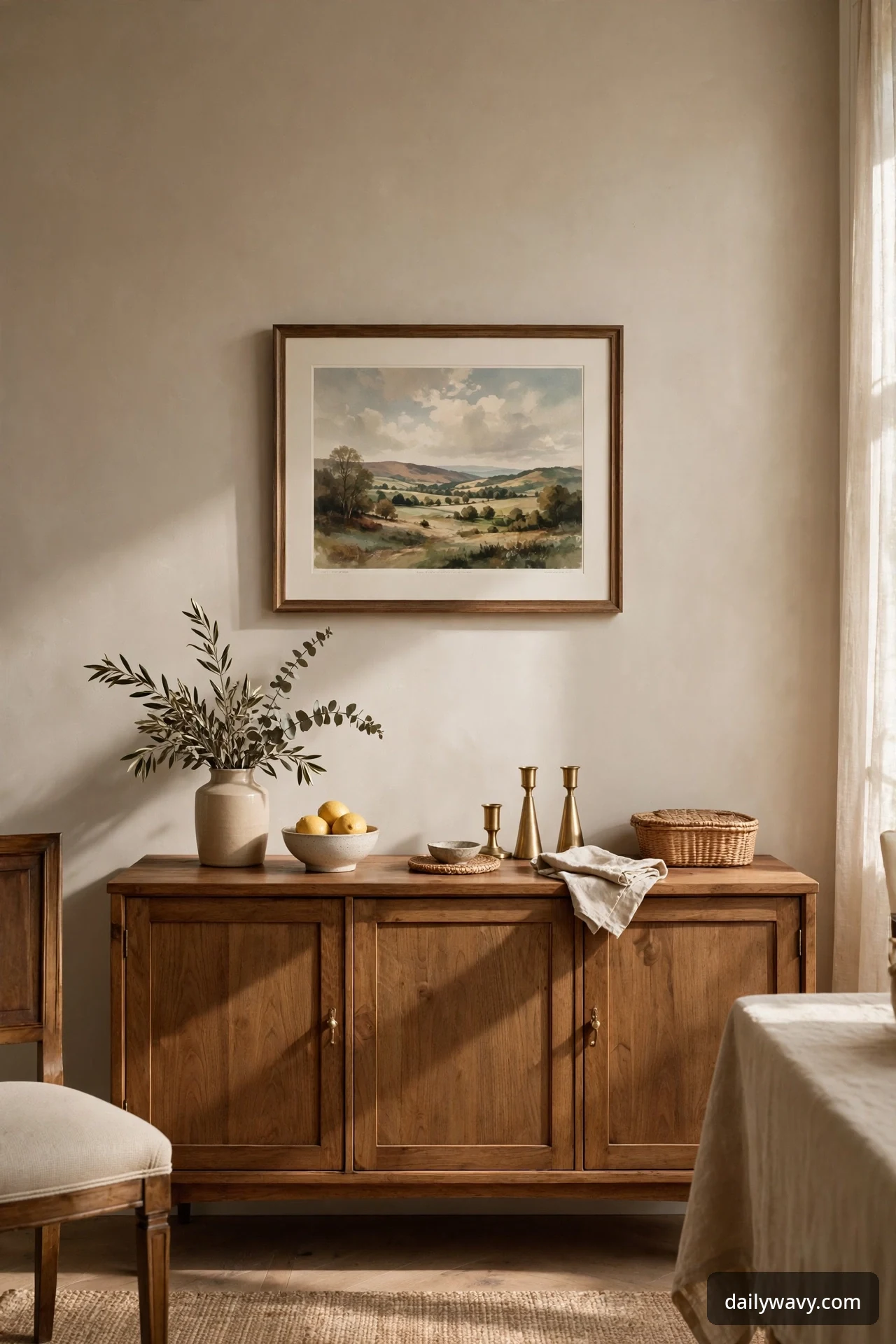
One well-chosen framed piece, hung where a standing guest naturally looks, gives the room its anchor. Eye level means the center of the artwork sits about 57 to 60 inches from the floor, which suits most adults without craning. Over a sideboard, leave 6 to 8 inches between the top of the furniture and the bottom of the frame so the two read as one composition rather than two strangers.
What to measure: Wall width where the piece will hang, the sideboard height, and the viewing distance from the table’s far side. A piece that spans roughly two-thirds the width of the sideboard below it looks intentional.
Materials: A frame with real depth (1.5 to 2 inches), glass or acrylic that does not throw glare from the chandelier, and a picture-hanging hook rated for the frame’s weight. Cotton rag mats resist yellowing far longer than paper ones.
Placement: Center the artwork on the wall or on the sideboard below it, not on the room’s geometric center. In a dining room, the furniture sets the symmetry.
Approximate effort: An afternoon, including the trip to buy the hook. Hanging itself takes about twenty minutes once the spot is marked.
Lower-cost alternative: A framed print from an open-edition artist or a well-chosen vintage frame with new art inside. Thrifted frames with fresh mats look custom for very little.
Tip: If the glass reflects the chandelier from the dining chairs, swap to museum glass or reposition the frame a few inches higher. Glare can spoil an otherwise good piece.
2. A pair of lamps on a sideboard
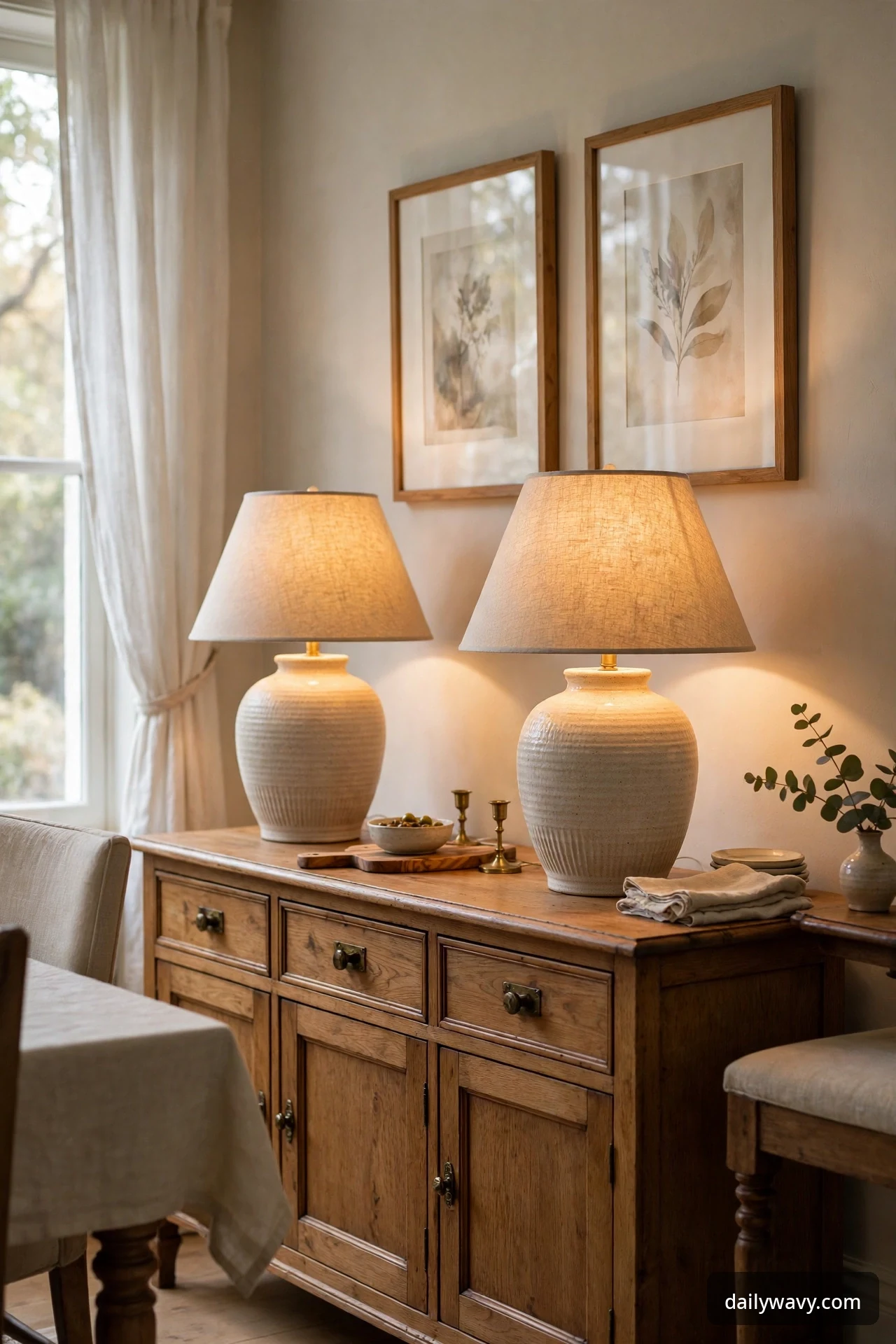
Two matching lamps on a sideboard do three things at once: they frame the artwork or mirror above, they give the room a warm pool of light that the overhead fixture cannot, and they make the sideboard feel like a destination instead of a parking spot for clutter. Symmetry reads as formality, which suits this room well.
What to measure: The sideboard’s length and the lamp heights. Aim for lamps 26 to 32 inches tall overall, with the bottom of the shade sitting just above eye level when you are seated at the table (roughly 42 to 48 inches from the floor). The pair should sit at least 6 inches in from each end of the sideboard.
Materials: Lamp bases with some weight (ceramic, stone, or wood), linen or cotton shades, and warm bulbs around 2700K. A dimmer, even a plug-in one, turns the same lamps from task light to candlelight mood.
Placement: Mirror the pair exactly, shades at the same height, cords tucked behind. If artwork hangs above, the lamps should sit just inside the artwork’s width.
Approximate effort: An hour of shopping decisions plus fifteen minutes of styling. The hard part is committing to a pair instead of one of each.
Lower-cost alternative: Matching shades on secondhand bases, or two identical new lamps from a budget line. The match matters more than the maker.
Tip: Bulbs that are too cool (4000K and up) make a formal dining room feel like an office. Stay warm and dim.
3. A washable rug scaled to chair movement
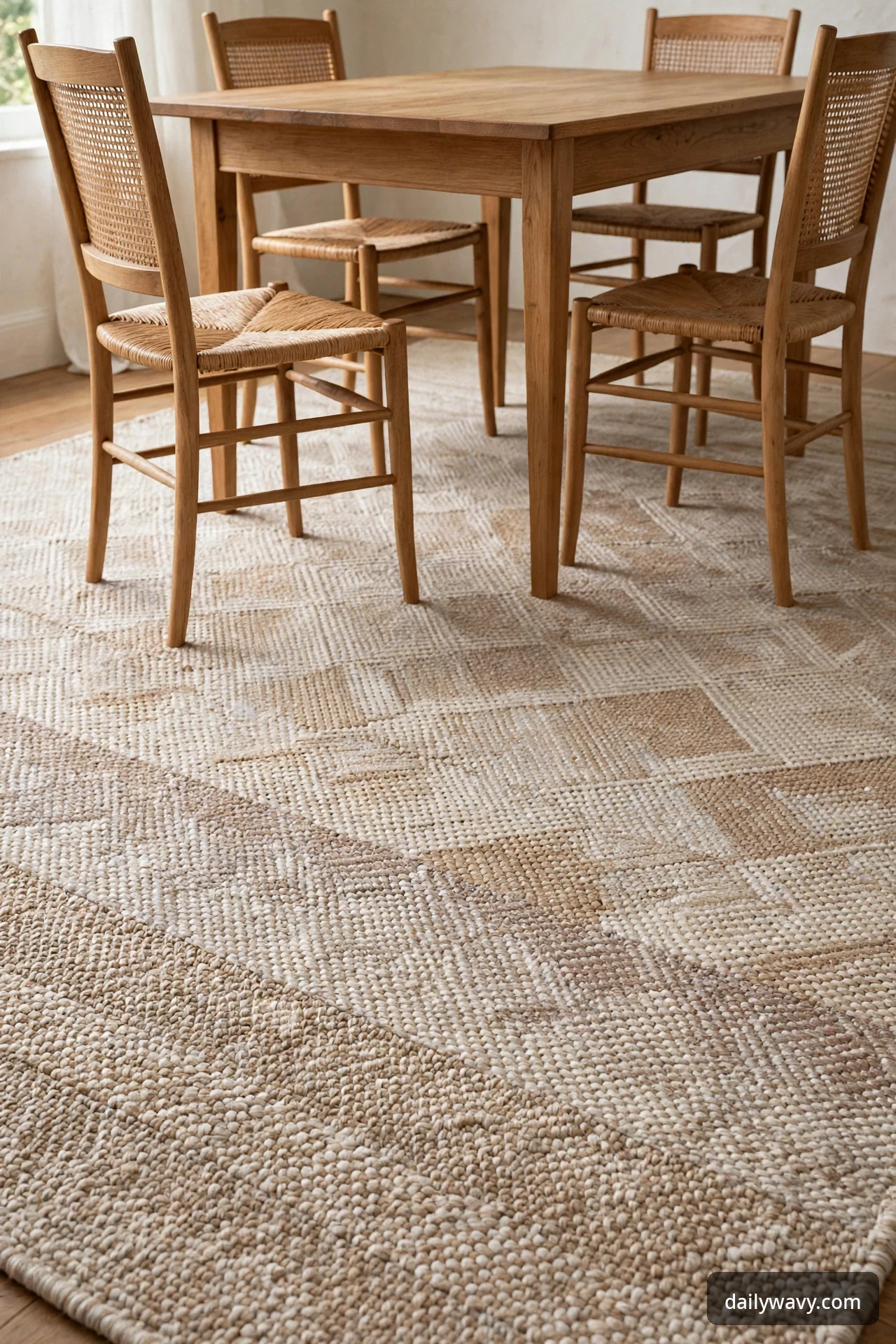
The rug under a dining table takes some of the hardest wear in the house: chair legs scraping back, dropped food, and the occasional full glass of red wine. A washable rug changes the calculation entirely. You get the softness and the zone-defining shape of a proper dining rug, and the confidence to actually use the room.
What to measure: The table’s footprint plus 24 inches on every side, minimum. When every chair is pulled out as if someone is sitting down, all four legs of every chair should still be on the rug. For a standard 72-inch table with six chairs, that usually means an 8 by 10 foot rug.
Materials: A low-pile washable rug (cotton flatweave or a quality machine-washable synthetic), plus a felt rug pad to stop creeping and protect the floor. Avoid high pile; chair legs sink and wobble.
Placement: Center the rug on the table, not on the room. If the room is off-center, the table and rug move as a unit.
Approximate effort: An afternoon. Moving the table, laying the pad, and positioning the rug is a two-person job but a straightforward one.
Lower-cost alternative: A washable runner pair or a smaller washable rug layered over a larger inexpensive flatweave. You still get the washable landing zone where the chairs move.
Tip: Wash the rug before the first big gathering, not after. Factory finishes can make new rugs repel water in odd patches, and a first wash evens everything out.
4. A small plant in a quiet corner

Formal rooms go stiff when everything in them is symmetrical and still. A small plant in a corner that would otherwise sit empty breaks the geometry just enough. The green reads as alive against wood and linen, and guests register the room as cared for rather than staged.
What to measure: The corner’s footprint and the light it gets. Most dining room corners suit a plant 18 to 30 inches tall in a pot 8 to 10 inches wide. Check the distance from the nearest window and be honest about whether the plant will get any real daylight.
Materials: A forgiving plant (a pothos, a small olive, or a cast-iron plant all tolerate dining room light), a pot with a saucer or a cachepot with no drainage that you water carefully, and a small waterproof mat if the floor is wood.
Placement: The corner farthest from the kitchen traffic path, where nobody will brush the leaves carrying a platter. Raise it on a low plant stand if the corner feels too low and dark.
Approximate effort: Thirty minutes including potting. Ongoing effort is a weekly watering check, which is the real cost people forget.
Lower-cost alternative: A cutting from a friend’s pothos in a thrifted ceramic pot. In six months it looks like you bought it full grown.
Tip: Dust the leaves monthly with a damp cloth. Dusty leaves in a formal room read as neglect faster than a bare corner does.
5. A wood bowl on a console

A single beautiful wood bowl on the console is the kind of detail that makes guests slow down and look closer. It adds organic warmth against lacquered or painted furniture, and it is useful: keys, napkins, or the fruit you actually plan to serve at dinner all have a home. One good bowl usually beats a crowd of small trinkets.
What to measure: The console’s depth and the bowl’s diameter. The bowl should occupy no more than a third of the console’s length and sit comfortably within its depth, with at least 4 inches of clear surface in front for a leaning frame or a small stack of books.
Materials: A solid wood bowl (acacia, walnut, or olive wood all age well), food-safe oil finish if you plan to serve from it. Avoid thin turned bowls that feel light; weight is what makes it feel substantial.
Placement: Off-center on the console, roughly at the one-third mark. Pair it with something vertical on the opposite end, a lamp or a tall vase, so the console has a rhythm.
Approximate effort: A shopping trip and five minutes of styling. Choosing the bowl is the whole project.
Lower-cost alternative: A turned-wood salad bowl from a home store, or a vintage wooden bowl found secondhand and re-oiled with food-safe mineral oil. The shape matters more than the species.
Tip: Keep the bowl’s purpose consistent. If it holds fruit, it always holds fruit. A bowl that changes jobs weekly starts to look like clutter.
6. A restrained chair-cushion palette

Dining chairs with cushions in two or three closely related tones look tailored instead of busy. Restrained does not mean boring; it means the cushions support the room instead of competing with it. When the palette stays quiet, the table setting and the artwork get to be the color in the room.
What to measure: Seat dimensions for each chair, and count how many cushions you actually need. Measure one seat and buy or make to that size; mixed chair styles can share a cushion fabric even when the seats differ slightly.
Materials: Performance fabric or tightly woven cotton/linen in your chosen tones, with ties or a non-slip backing. If you sew, 1 yard of 54-inch fabric usually covers four standard seat cushions.
Placement: All chairs get cushions, or all chairs go without. Half-cushioned sets look accidental. If you have host chairs at the ends, they can carry a slightly deeper tone as a quiet distinction.
Approximate effort: An afternoon if you are tying on ready-made cushions; a weekend if you are sewing simple boxed cushions.
Lower-cost alternative: Dye existing light cushions with fabric dye in your chosen tone, or buy cushion covers instead of full cushions and reuse the inserts you have.
Tip: Test the fabric against your rug and curtains in daylight before committing. Neutrals clash more often than people expect; two beiges from different families can fight all day.
7. A mirror reflecting natural light
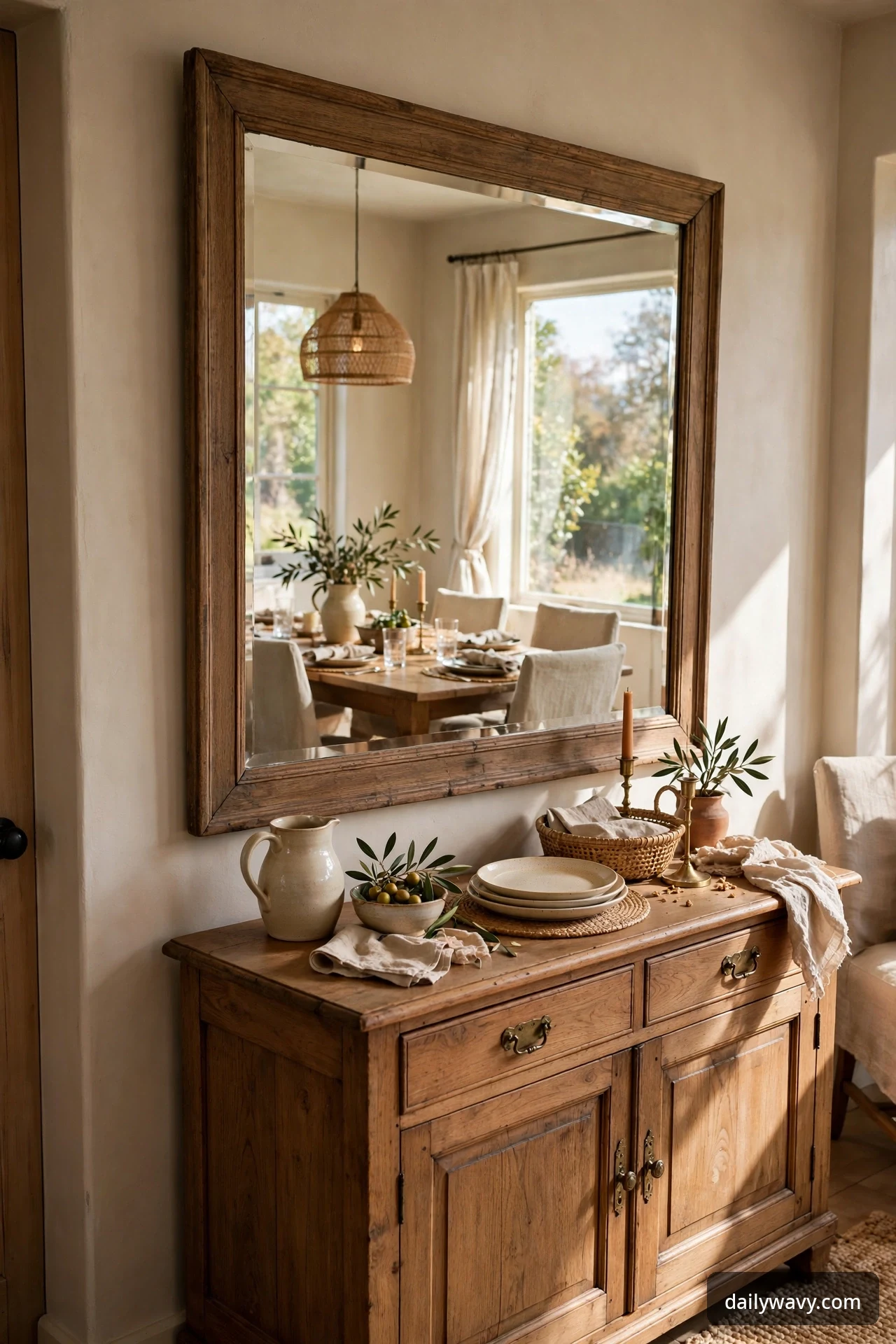
A mirror opposite or adjacent to the window doubles the daylight and doubles the candlelight at dinner, a long-standing formal-dining trick. It also gives the room depth on the wall where a window cannot go. Hung at the right height, it reflects the table setting rather than the ceiling, and that reflected glow is what makes evening meals feel special.
What to measure: The wall’s width and the window’s position. The mirror should be centered on the available wall and sized like artwork: roughly two-thirds the width of the furniture below it. Hang it so its center sits at the same 57 to 60 inch eye level, and check the reflection from a seated position.
Materials: A mirror with a frame that matches the room’s metal or wood tones, and proper wall anchors. Large mirrors are heavy; a French cleat rated above the mirror’s weight is the safe choice.
Placement: On the wall that catches the window’s light at an angle, not directly opposite if that creates glare at the table. From the host’s seat you should see the window’s light, not a bright white rectangle.
Approximate effort: An hour including marking and anchoring. Large mirrors are a two-person lift.
Lower-cost alternative: A secondhand mirror with a dated frame, repainted in a finish that matches your hardware. The glass is the expensive part; frames are cheap to transform. The same mirror-over-furniture trick anchors a narrow living room layout, where a mirror above a console finishes the wall instead of leaving a bare corridor side.
Tip: Clean the mirror the morning of a gathering, not the night before. Dining rooms collect a fine film from cooking, and evening light shows every streak.
8. A ceramic pitcher with seasonal stems
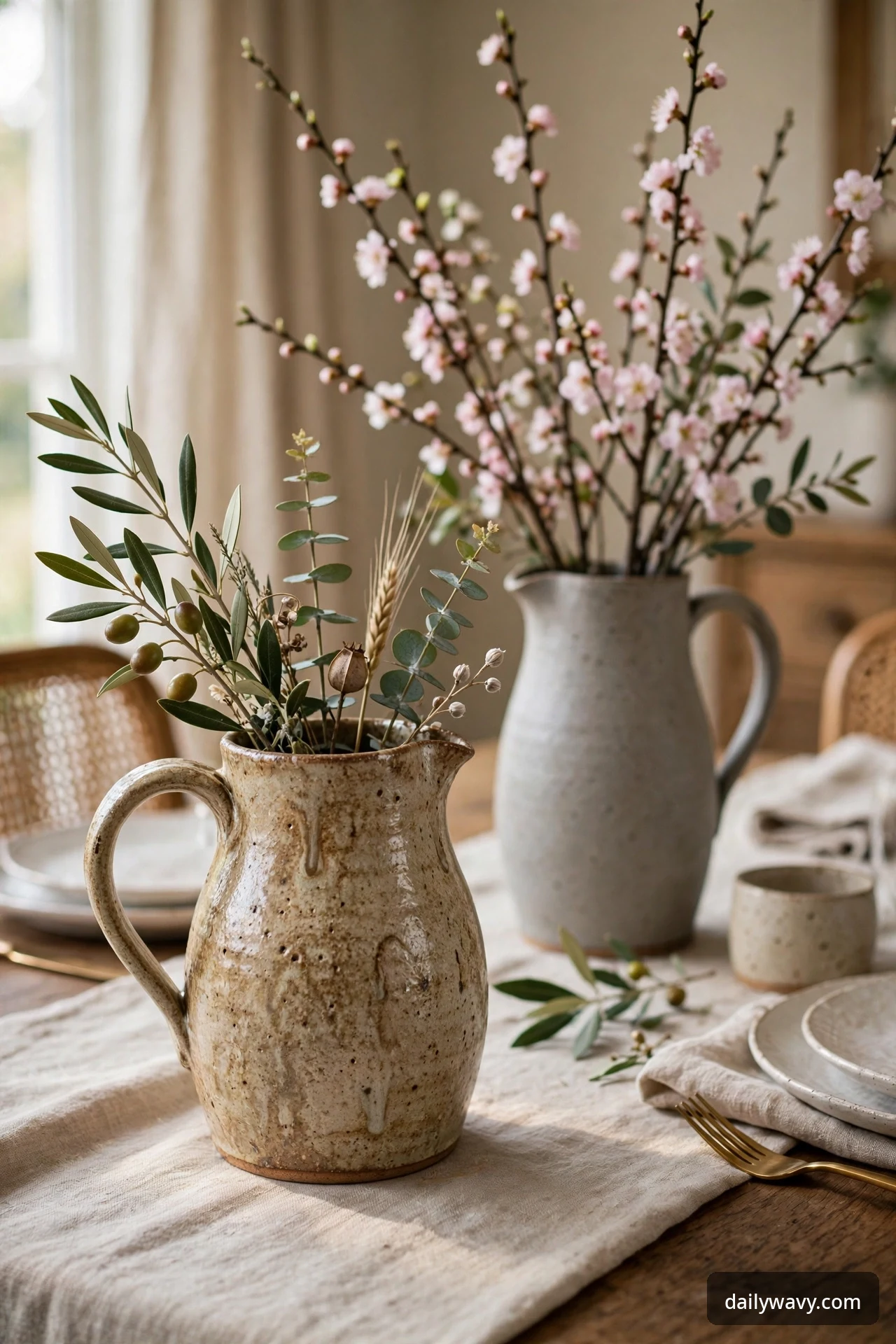
Fresh stems in a ceramic pitcher say the room is alive right now, not decorated once and left. The pitcher matters as much as the stems: handmade ceramic with a soft glaze brings craft into a room that can otherwise feel all straight lines. Change the stems with the seasons and the room refreshes itself four times a year for the price of a market bouquet.
What to measure: Table width and the pitcher’s height. The arrangement should stay below eye level across the table, so a pitcher 8 to 12 inches tall with stems cut to keep the total under about 18 inches works for conversation.
Materials: A ceramic pitcher with a stable base and a waterproof interior (or a glass insert inside a porous vessel), plus a small pair of stem cutters. Choose stems with presence: branches in winter, flowering stems in spring, grasses in summer, seeded stems in fall.
Placement: Centered on the table for daily life, moved to the sideboard when you set the table for a meal. A centerpiece that cannot move is a centerpiece that gets in the way.
Approximate effort: Twenty minutes at the market plus ten minutes of arranging. The habit, not the task, is the effort.
Lower-cost alternative: A thrifted ceramic pitcher and grocery-store stems, or branches cut from your own yard in a simple stoneware jug. Structure beats expense; bare branches look intentional in the right vessel.
Tip: Change the water every two to three days and re-cut the stems each time. Cloudy water in a beautiful pitcher undoes the whole effect.
9. A linen tablecloth with plain dishes

For the meals themselves, a washed linen tablecloth with plain dishes is one of the most quietly luxurious combinations. The linen brings softness and a little rumple that says real life happens here, while plain dishes let the food be the pattern. Fancy patterned china has its place, but plain white or cream dishes make every meal look considered with zero effort.
What to measure: Table length and width, plus the drop you want. For a formal look, the cloth should fall 10 to 15 inches past the table edge on each side. Measure the table, add twice the drop plus 2 inches for hemming and shrinkage, and buy to that size.
Materials: Washed European linen or a linen blend (pure linen wrinkles beautifully; blends wrinkle less), and simple stoneware or porcelain dishes with a clean rim. A set of 12 plain dinner plates covers most gatherings.
Placement: The cloth centered so the drop is even on all sides. If the table has leaves, own two cloths or one generous cloth that works with the leaves in; a too-small cloth looks worse than no cloth at all.
Approximate effort: A shopping afternoon and one wash before first use. Linen softens with every wash, so it only gets better.
Lower-cost alternative: A cotton-linen blend cloth and plain white restaurant-grade dishes, which are nearly indestructible and cost a fraction of boutique stoneware. Nobody at the table will know the difference.
Tip: Iron only the center panel if you must; fully pressed linen looks corporate. The gentle wrinkle is the point.
10. An asymmetrical arrangement on storage furniture
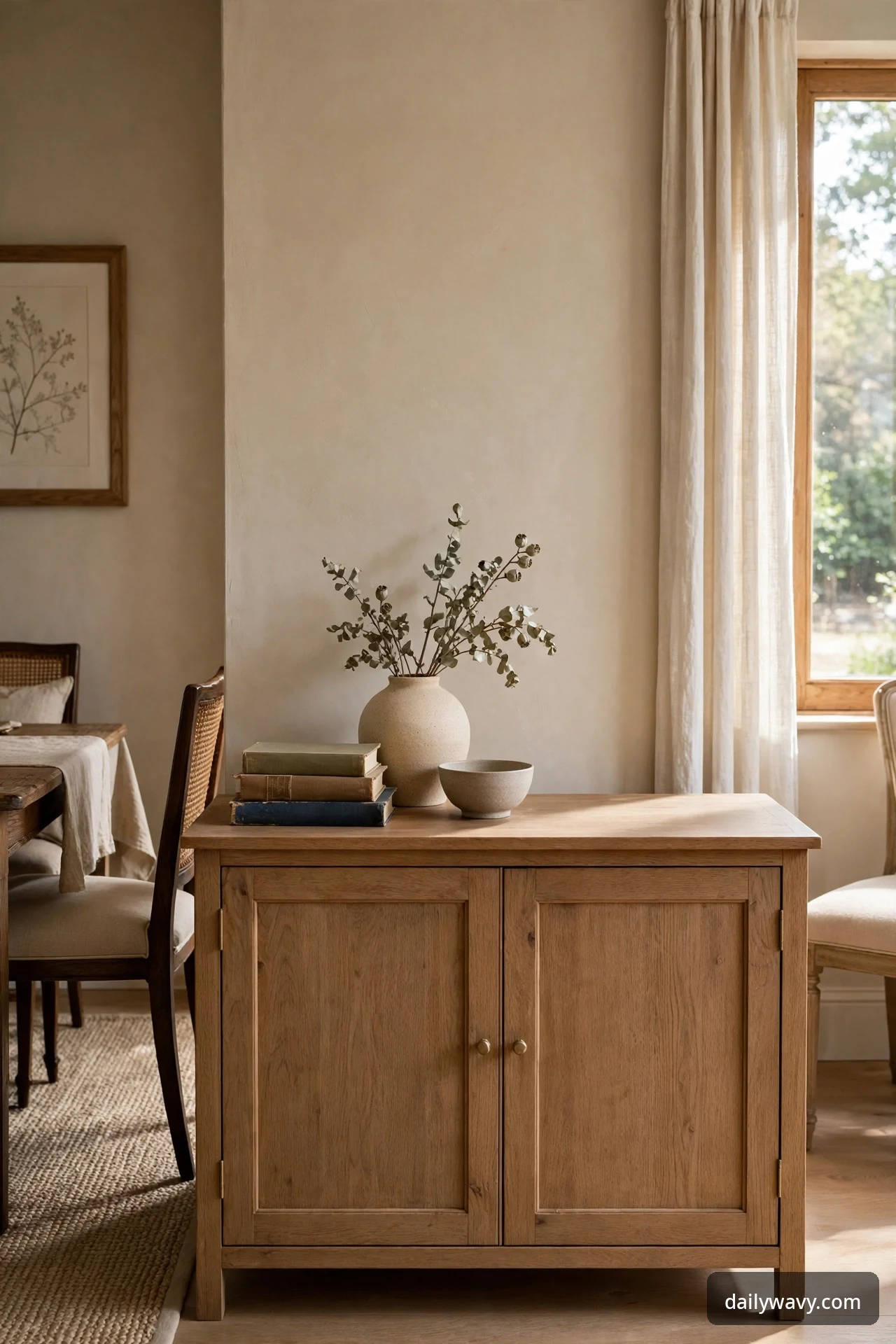
Storage furniture like a sideboard or a low bookcase gives you a long stage, and an asymmetrical arrangement keeps it from looking like a hotel lobby. Group objects in odd numbers, vary the heights, and let one side breathe. The asymmetry feels collected over time rather than installed in an afternoon, which is exactly the feeling a formal dining room needs to avoid stiffness.
What to measure: The furniture’s length and the ceiling height above it. Plan groupings that occupy about two-thirds of the length, with the tallest object reaching no more than two-thirds of the way to the ceiling.
Materials: Three to five objects with different heights and textures: a stack of books, a vase, a small sculpture or bowl, and one living thing. A tray underneath can corral the smaller pieces into one visual unit.
Placement: Anchor the arrangement at one end or just off-center, never split evenly down the middle. Leave genuine empty space on the other side; the emptiness is what makes the arrangement look deliberate.
Approximate effort: An hour of moving things around and stepping back. This is styling, not shopping, and most people already own the pieces.
Lower-cost alternative: Shop your own house first. Books, a cutting board stood on end, and a jar of dried stems cost nothing and often beat a matching store-bought set.
Tip: Photograph the arrangement with your phone and look at the photo, not the furniture. The camera shows balance problems your eyes forgive in person.
11. A small gallery group on one wall

A tight group of three to five small frames on one wall gives the room personality without the commitment of a full gallery wall. Small works suit dining rooms because people view them up close, leaning in between courses. Keep the group to one wall so the room still has quiet surfaces elsewhere.
What to measure: The wall section and the frames. Lay the arrangement on the floor first and measure the whole composition; a good small group spans 24 to 40 inches wide. Keep 2 to 3 inches between frames for a tailored look.
Materials: Frames that share one finish or one color family, art at a consistent scale, and proper picture hooks. Paper templates taped to the wall let you adjust the layout without extra nail holes.
Placement: Center the group at the same 57 to 60 inch eye level, on the wall guests face while seated. Avoid the wall behind the host’s chair if the host will block it all evening.
Approximate effort: A weekend afternoon including the floor layout and the hanging. The template step feels slow and saves the wall.
Lower-cost alternative: Uniform inexpensive frames with prints you already own, or a set of small vintage frames in mixed finishes united by one mat color. Cohesion comes from the mats as much as the frames.
Tip: Include one piece with a touch of the room’s accent color. It ties the wall to the textiles without anyone noticing why.
12. A contrast chair at the head of the table

Two chairs that differ from the rest, one at each end of the table, is the classic host-chair move. The contrast marks the gathering as an occasion: these seats are for the people holding the evening together. A deeper color, a different silhouette, or an upholstered arm where the side chairs are plain wood all do the job.
What to measure: Seat height and overall height against your existing chairs. Host chairs can be taller and more generous, but the seat height should match within an inch so nobody sits noticeably higher or lower than their neighbor.
Materials: Two host chairs in a fabric or finish that echoes something else in the room: the curtain color, the rug’s border, the artwork’s frame. Upholstered hosts with wooden side chairs is the most forgiving combination.
Placement: One at each head of the table, pulled in like the rest. Resist the urge to angle them outward; the table is the focus, and angled hosts look like they are leaving.
Approximate effort: A furniture shopping trip and delivery wait. This is one of the slowest ideas on the list only because good chairs take time to find.
Lower-cost alternative: Slipcovers in a contrast fabric over two existing chairs, or a pair of secondhand armchairs reupholstered in a single bold fabric. The contrast reads the same at a tenth of the price.
Tip: Sit in the host chair yourself before guests arrive. If it is noticeably more comfortable than the side chairs, your guests will fight over it, which is a compliment and a seating-chart problem.
13. A shallow tray grouping serving items

Serving pieces live better grouped on a shallow tray than scattered across the sideboard. The tray turns the carafe, the small bowls, and the napkins into one composed unit, and when dinner is served you lift the whole tray to the table in one trip. It is a decor idea that is genuinely practical.
What to measure: The sideboard’s depth and the tray. A tray 14 to 20 inches long and no deeper than the furniture minus 4 inches keeps everything reachable. Measure your tallest serving piece to make sure it clears any art hanging above.
Materials: A shallow tray with handles (wood, lacquered, or metal), and the serving items you actually use: a carafe or pitcher, a small bowl for bread, folded napkins, and salt and pepper. Nothing decorative-only; every piece should earn its spot by being useful.
Placement: On the sideboard nearest the kitchen door, so the path from kitchen to table to sideboard is one smooth loop. During a meal, the tray moves to the table and returns after.
Approximate effort: Thirty minutes of gathering and arranging. You already own most of this.
Lower-cost alternative: A thrifted wooden tray sanded and oiled, or a large rimmed baking sheet lined with a linen napkin for casual-formal nights. The grouping is the idea; the tray is just the frame. Keeping serving pieces organized where you use them follows the same logic as a good small pantry organization system: everything visible, everything reachable.
Tip: Edit the tray seasonally. The pieces you need for a summer dinner are not the pieces you need at Thanksgiving, and a tray that never changes starts to look like a display.
14. A bench cushion with a washable cover

A bench on one side of the table seats more people in less space and looks relaxed against formal chairs, but a bare bench gets uncomfortable fast. A cushion with a washable cover solves both problems: comfort for long dinners and a cover you can throw in the machine after the gravy incident. Choose the cover in a fabric that can take it.
What to measure: The bench’s length, depth, and the gap under the table. The cushion should stop 1 to 2 inches short of the bench ends and leave the bench’s edge visible. Check that seated guests can still push in; a thick cushion plus a low apron can trap knees.
Materials: A 3 to 4 inch foam cushion cut to size, wrapped in batting, with a zippered cover in washable performance fabric or outdoor-rated linen. Two covers means one is always clean.
Placement: Centered on the bench, with the zipper facing the wall side. If the bench sits against a wall, add two loose pillows in the room’s accent color for back support.
Approximate effort: An afternoon if you order the foam cut to size; the cover is a simple sewing project or an upholstery shop’s quick job.
Lower-cost alternative: A folded quilt or a pair of flat bed pillows in washable shams, swapped out when they flatten. Not as tailored, but genuinely comfortable and nearly free.
Tip: Wash the cover after every third or fourth use even if it looks clean. Dining bench covers absorb cooking film invisibly, and the wash keeps the fabric from going dingy.
15. A repeated accent color in textiles

One detail that helps a formal dining room feel designed rather than assembled is one accent color repeated in three or four textile spots: the curtain trim, the bench cushion, the napkins, maybe the rug’s border. Repetition is what turns separate purchases into a scheme. The color itself matters less than the discipline of repeating it.
What to measure: Nothing to measure, but count your repetitions. Three is the minimum for the eye to register a pattern; five is usually the maximum before it feels themed. Walk the room and list every textile before you add the next one.
Materials: Your chosen accent in fabrics that share an undertone: napkins, a table runner or bench cushion cover, curtain trim or tiebacks, and one upholstered element. A deep green, a warm rust, or a classic navy all behave well in formal rooms.
Placement: Spread the repetitions around the room rather than clustering them. One near the window, one at the table, one on the seating. The eye should travel to find them.
Approximate effort: A season of small additions rather than a single project. This idea works best layered in over time as you find the right pieces.
Lower-cost alternative: Napkins and a runner in the accent color do most of the work for very little money. Ribbon trim sewn onto existing curtains adds a third repetition for the price of a spool.
Tip: Photograph the room in black and white on your phone. If the accent disappears in grayscale, your values are too close together and the color is not doing its job; go deeper or lighter.
Frequently asked questions
How formal is too formal for everyday use?
Too formal is when the room makes you hesitate to use it. If you find yourself eating in the kitchen to protect the dining room, pull back one notch: swap the most delicate textile for a washable version, or replace a fussy centerpiece with the ceramic pitcher and stems. A formal dining room should invite use, not guard against it.
What size art belongs over a sideboard?
Aim for art that spans about two-thirds the width of the sideboard, hung with its center 57 to 60 inches from the floor. One strong piece almost always beats a scattered cluster in a formal room, because the symmetry of the room wants a single confident gesture.
Can I use a washable rug in a formal dining room?
Yes, and in a dining room you probably should. Modern washable rugs come in patterns and textures that read as formal, and the ability to wash away a spill is worth more than any hand-knotted pedigree when the room actually gets used for meals.
How do I keep a formal dining room from feeling like a museum?
Add one living thing, one handmade thing, and one thing that shows use: the plant, the ceramic pitcher, the wood bowl that actually holds fruit. Museums are perfect and still. Your room should be composed but alive, with evidence that people eat here.
What lighting works best for formal dining?
Layers: the overhead fixture on a dimmer for the table, the pair of sideboard lamps for warmth, and candles for the table itself. No single source should do all the work. Warm bulbs around 2700K flatter both food and faces, which is the whole point of the room. Keep open flames away from linen, curtains, and paper, and never leave candles unattended.
How do I decorate differently for gatherings versus daily use?
Keep the room’s bones constant and change the surface layer. Daily life gets the pitcher with stems and the tray on the sideboard. For a gathering, move the pitcher aside, lay the linen cloth, set the plain dishes, and light the candles. Ten minutes transforms the room because the foundation never moves.
A room ready for its people
A formal dining room done well is not about impressing anyone. It is about giving the meals that matter a room that takes them seriously, with light that flatters, chairs people can sit in for hours, and surfaces that forgive real life. Work through these fifteen ideas at your own pace, starting with scale and light and ending with the small repetitions that make it yours. The room will tell you when it is ready: you will stop straightening it and start using it. For more rooms with the same calm, collected feeling, browse our Home & Decor ideas.