16 Vinyl Record Display Ideas to Give Your Finds a Place
There is a particular kind of happiness in flipping through your own records. The sleeves have softened at the corners,…
There is a particular kind of happiness in flipping through your own records. The sleeves have softened at the corners, the labels carry a history only you know, and the whole stack is proof of years of good taste and lucky thrift-store finds. Most collections, though, live in a crate on the floor or a closet shelf where nobody sees them. These sixteen ideas change that. Each one treats your records as part of the room, not just storage, with real measurements, materials, and placement guidance so you can recreate the look this weekend. Whether you own twelve LPs or twelve hundred, there is a version here that fits your space and your style.
Jump to an idea
- A Restrained Shelf Vignette
- A Neutral Background Highlighting Texture
- A Mixed Old-And-New Grouping
- A Compact Corner Display
- A Repeated Shape With Varied Finishes
- A Wood-And-Ceramic Pairing
- A Dark Backdrop For Light Objects
- A Light Backdrop For Dark Objects
- A Small Arrangement Beside A Lamp
- A Seasonal Variation Using The Same Base
- A Monochrome Display With One Accent
- A Framed Or Bounded Composition
- A Functional Object Used Decoratively
- A Simple Giftable Version
- A Small Tonal Grouping
- A Single Focal Object With Negative Space
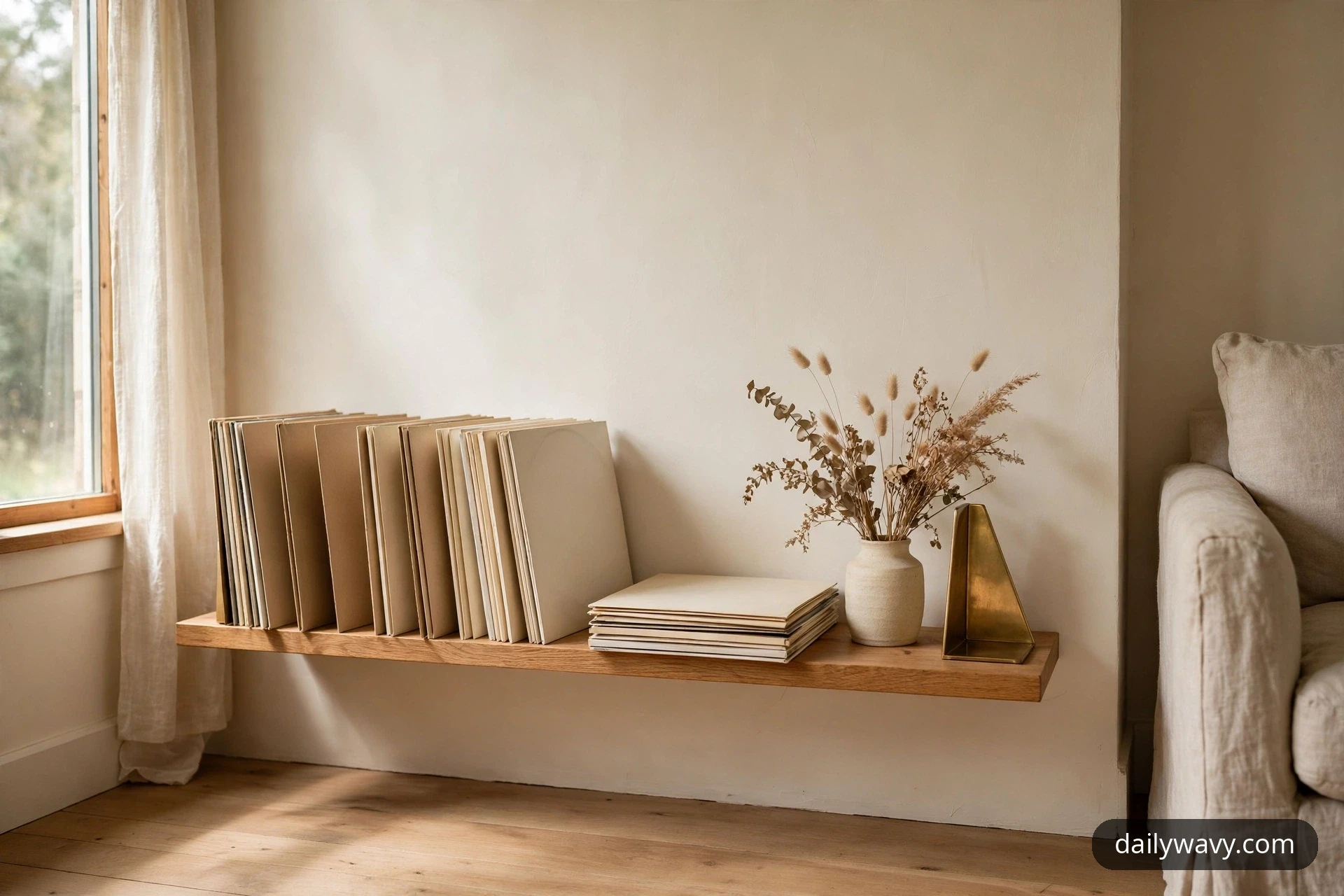
The vinyl display rules before you start
Records are tougher than they look but they have three enemies: heat, sunlight, and pressure. Keep every display away from radiators, sunny windows, and hot lamps, because sustained warmth warps vinyl over time. Store LPs upright, the way books stand, and never leave them leaning hard at an angle or stacked flat under weight for months, since both cause ring wear and warping. Handle records by their edges and the center label so skin oils stay off the grooves, and give sleeves a quick wipe with a dry anti-static cloth before shelving them so dust does not build up.
Weight is the practical surprise. A full foot of LPs weighs around 30 pounds, so a packed 13-inch cube of records can weigh 35 to 40 pounds. Whatever holds your collection must be genuinely sturdy: solid wood, metal, or well-braced cube shelving rated for heavy loads, set level on the floor or anchored to a stud if wall-mounted. Measure your space first, leave room for the records to breathe (about 13 inches of vertical clearance per LP row; an LP sleeve stands 12 3/8 inches tall), and plan for growth. Collections expand. Every idea below works with these rules, so your display looks good and treats the records well.
1. A Restrained Shelf Vignette
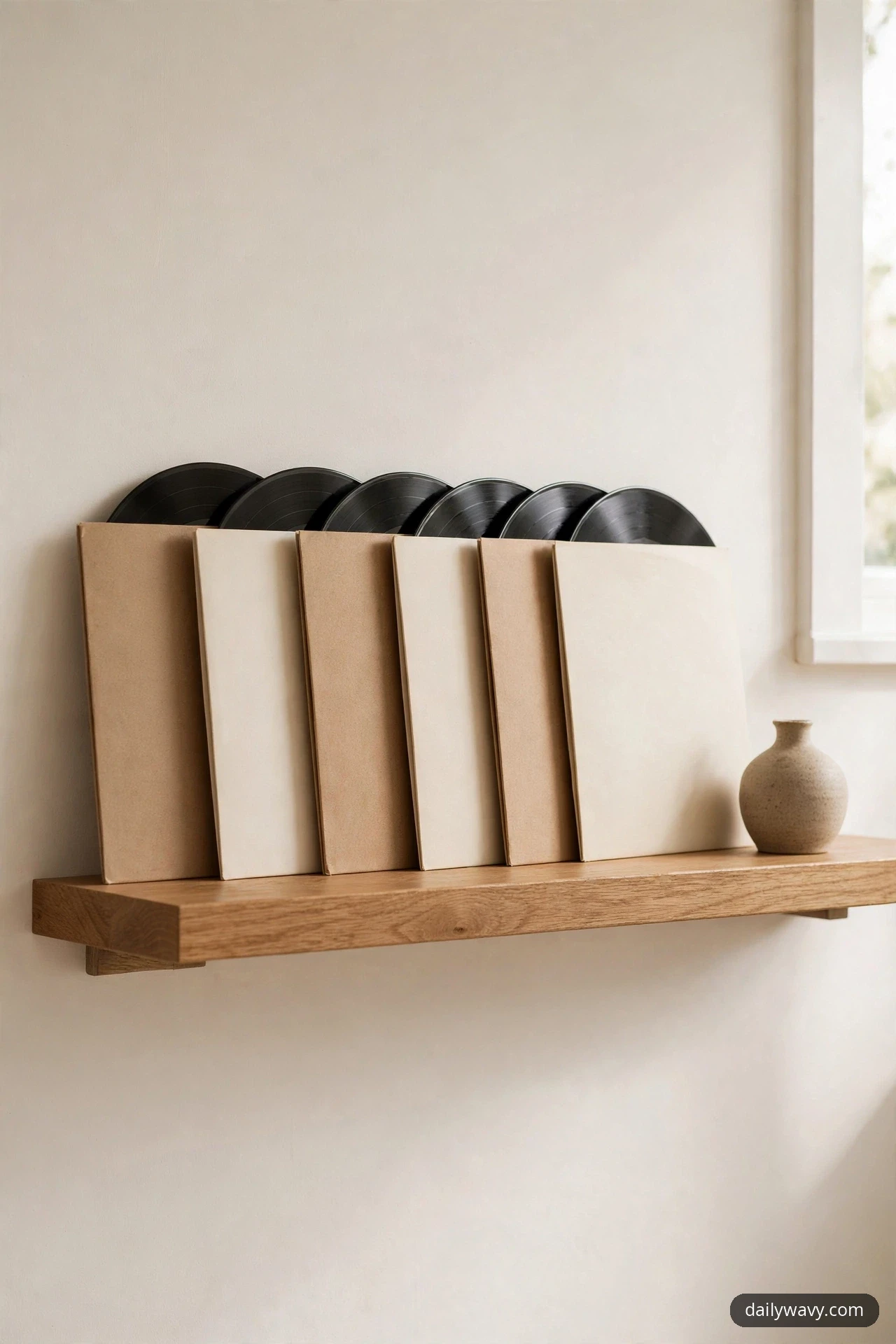
Less is doing all the work here. A single oak shelf holds a short row of upright records in cream and kraft sleeves, a small stoneware vase, and nothing else. The restraint is the point: each object gets its own breathing room, and the eye reads the whole thing as one calm composition instead of a cluttered shelf. It suits anyone whose collection is still modest or whose room is already busy enough.
What to measure. Measure the shelf length and plan for about 6 to 10 records per foot of shelf, leaving at least a third of the shelf empty. Check that the shelf is 13 to 14 inches deep so sleeves sit fully supported, and confirm the wall anchors are rated for at least 30 pounds for a loaded two-foot shelf.
Materials. One solid wood shelf with hidden brackets or cleats, plain inner and outer sleeves in cream or kraft, one small ceramic or stoneware object.
Placement. Mount at eye level in the living room or hallway, away from direct sun. Keep the record row to one side and the decorative object to the other, with a hand’s width of empty shelf between them.
Approximate effort. An afternoon: one shelf to mount, sleeves to swap, objects to arrange. Budget around $25 to $60 for the shelf and hardware if you do not already own one.
Lower-cost alternative. Restyle an existing shelf you own. Slip records into kraft paper sleeves (a few dollars for a pack) and borrow the vase from another room.
2. A Neutral Background Highlighting Texture
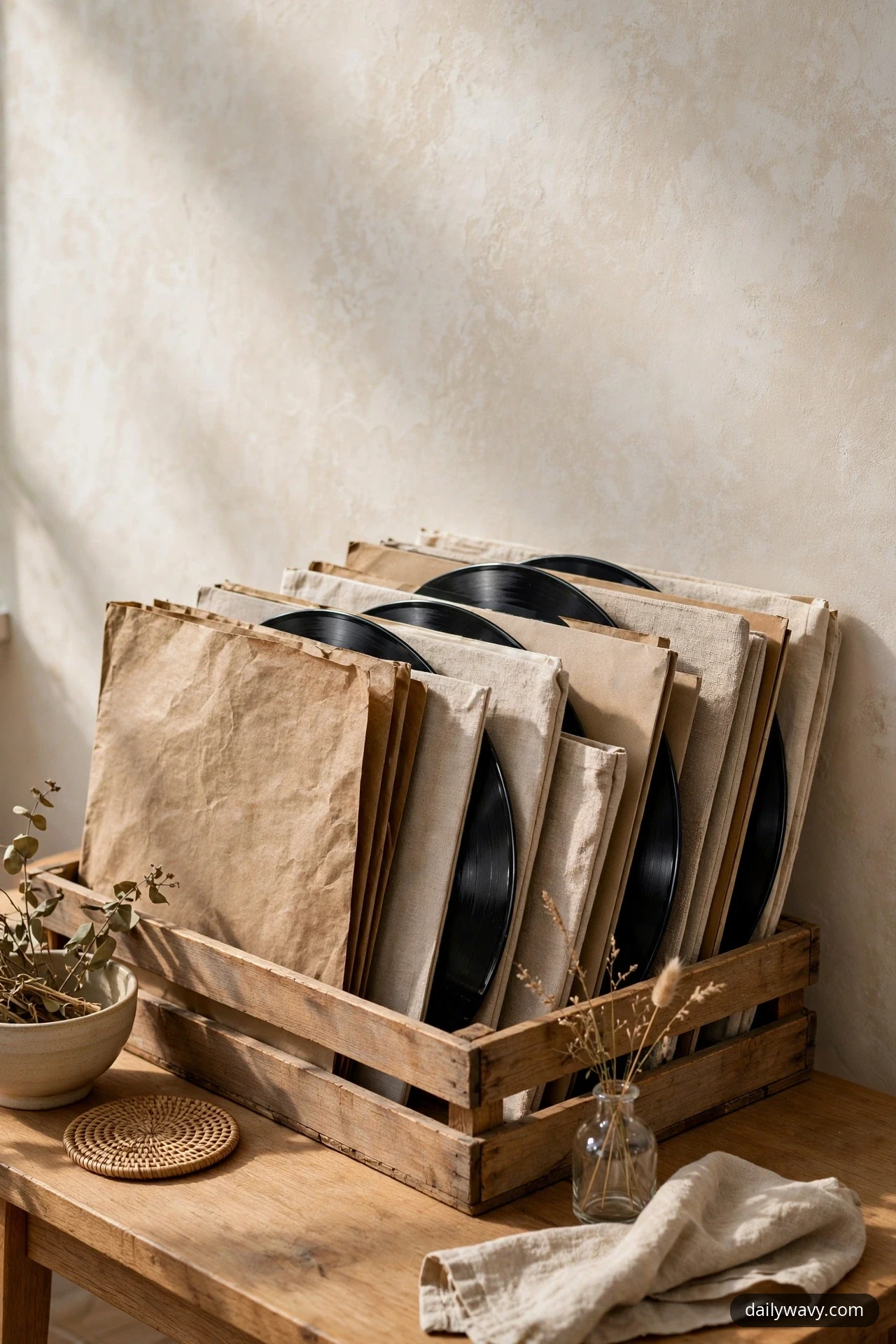
This idea lets the materials do the talking. Vinyl records in kraft paper and linen-fabric sleeves sit in a low wooden crate against a warm white limewashed wall, and the whole scene glows quietly. When the background stays neutral, small differences in texture become the decoration: the weave of the fabric sleeve, the grain of the crate, the matte wall behind. It is a forgiving look for renters because nothing needs to be hung or drilled.
What to measure. Measure the crate opening so records stand with about an inch of clearance above the sleeve tops, typically 13 to 14 inches of interior height. Make sure the crate is at least 13 inches deep front to back.
Materials. A sturdy wooden or canvas crate, kraft and linen sleeves, and a wall in warm white or soft plaster tone.
Placement. Set the crate on a side table, bench, or the floor against a plain wall, near natural light but out of the sun’s direct path.
Approximate effort. Under an hour once you have the crate. Crates run $15 to $40; sleeves are a few dollars per pack.
Lower-cost alternative. Turn a solid cardboard box inside out and wrap it in kraft paper for a convincing stand-in while you hunt for the perfect crate, and keep the row short so the box stays sturdy.
3. A Mixed Old-And-New Grouping
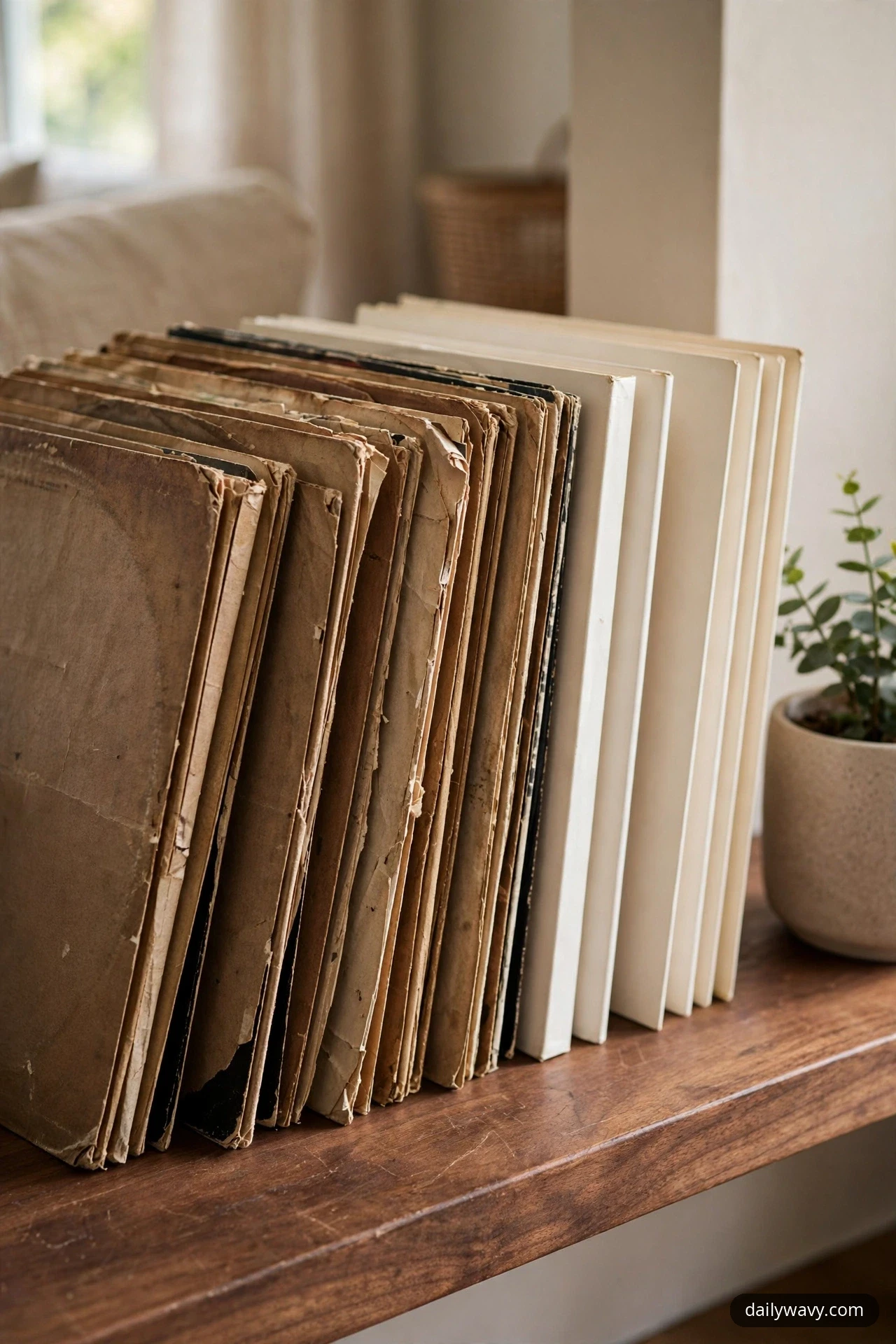
A collection tells a better story when it shows its age range. Here, worn sleeves with softened corners and faded spines stand next to crisp new pressings, and the contrast is the charm. The old records say you have history; the new ones say you are still listening. A small modern plant at the end of the row keeps the whole thing feeling current instead of dusty.
What to measure. Sort your records by sleeve condition first, then measure how many inches of shelf the vintage group needs versus the new group. Plan the plant’s spot so its leaves clear the sleeve tops by at least 4 inches.
Materials. Your existing collection, a walnut or dark wood shelf, one small potted plant in a plain pot.
Placement. A living-room or study shelf at eye level. Put the vintage group on the left, the new group on the right, and let the plant anchor the end like a bookend.
Approximate effort. An hour of sorting and styling. No purchase required if you own the plant and shelf.
Lower-cost alternative. Propagate a cutting from a friend’s plant instead of buying one, and use a small stack of books as the end anchor.
4. A Compact Corner Display
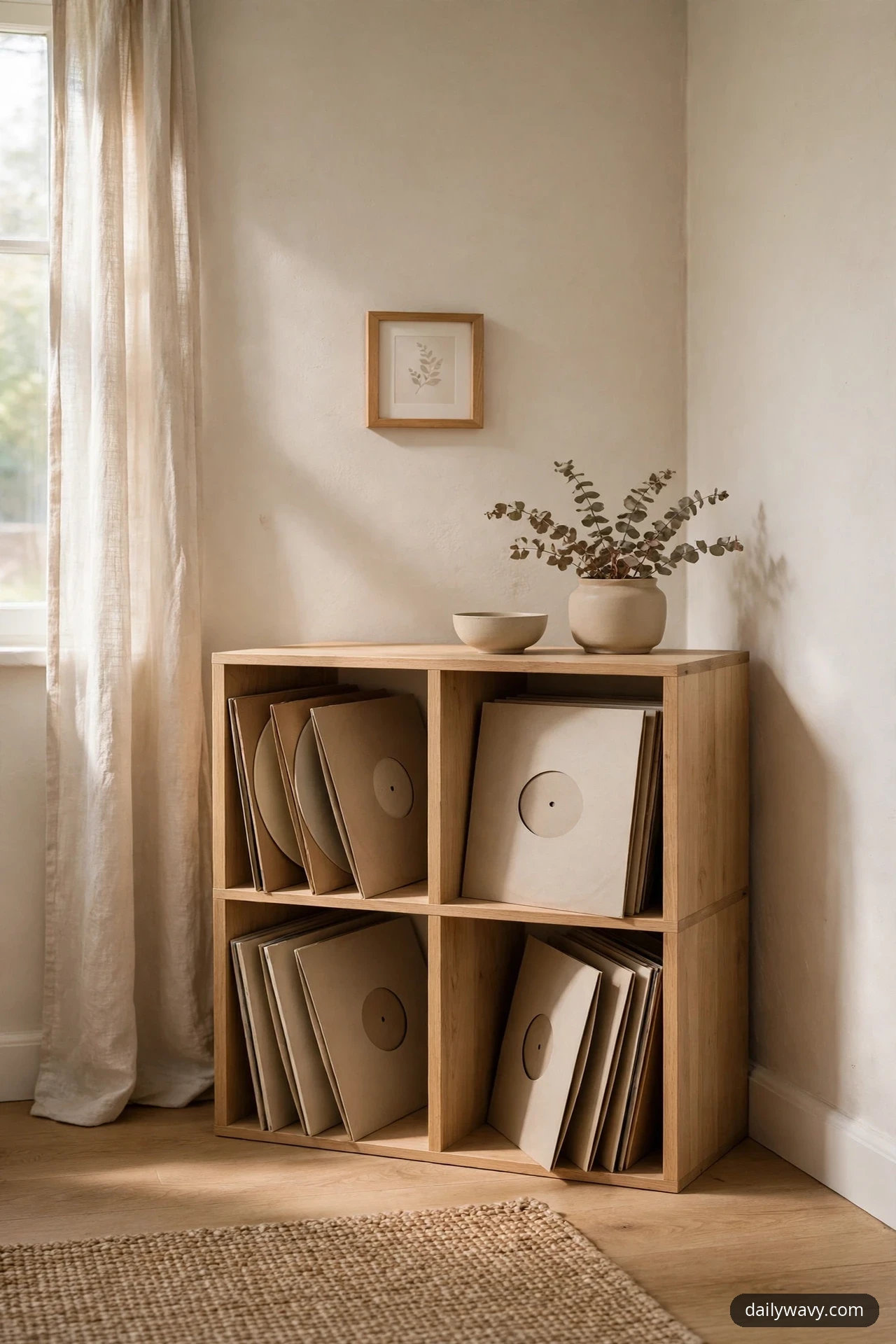
Corners are among the most underused real estate in a home, and a small cube shelf turns one into a record nook. A two-by-two cube unit tucked into a corner holds a starter collection, a tiny framed print hangs above, and suddenly a dead corner has a purpose. This is the idea to steal if you rent a small apartment and every square foot has to earn its keep.
What to measure. Measure the corner’s wall-to-wall clearance and the cube unit’s footprint so it slides in without blocking baseboards or vents. Each cube opening should be at least 13.5 inches square for LPs. If you are placing records beside your entryway storage, the same measure-first habit applies here, as in a small entryway.
Materials. A sturdy cube shelf unit (solid wood or heavy-duty composite), plain sleeves, one small framed print or postcard.
Placement. Push the unit fully into the corner, records facing out. Hang the print centered above at eye level, about 6 inches above the unit’s top.
Approximate effort. A couple of hours including assembly. Cube units run $40 to $120 depending on material.
Lower-cost alternative. Stack two sturdy milk crates zip-tied together for a zero-cost cube, or check thrift stores for solid wood units.
5. A Repeated Shape With Varied Finishes
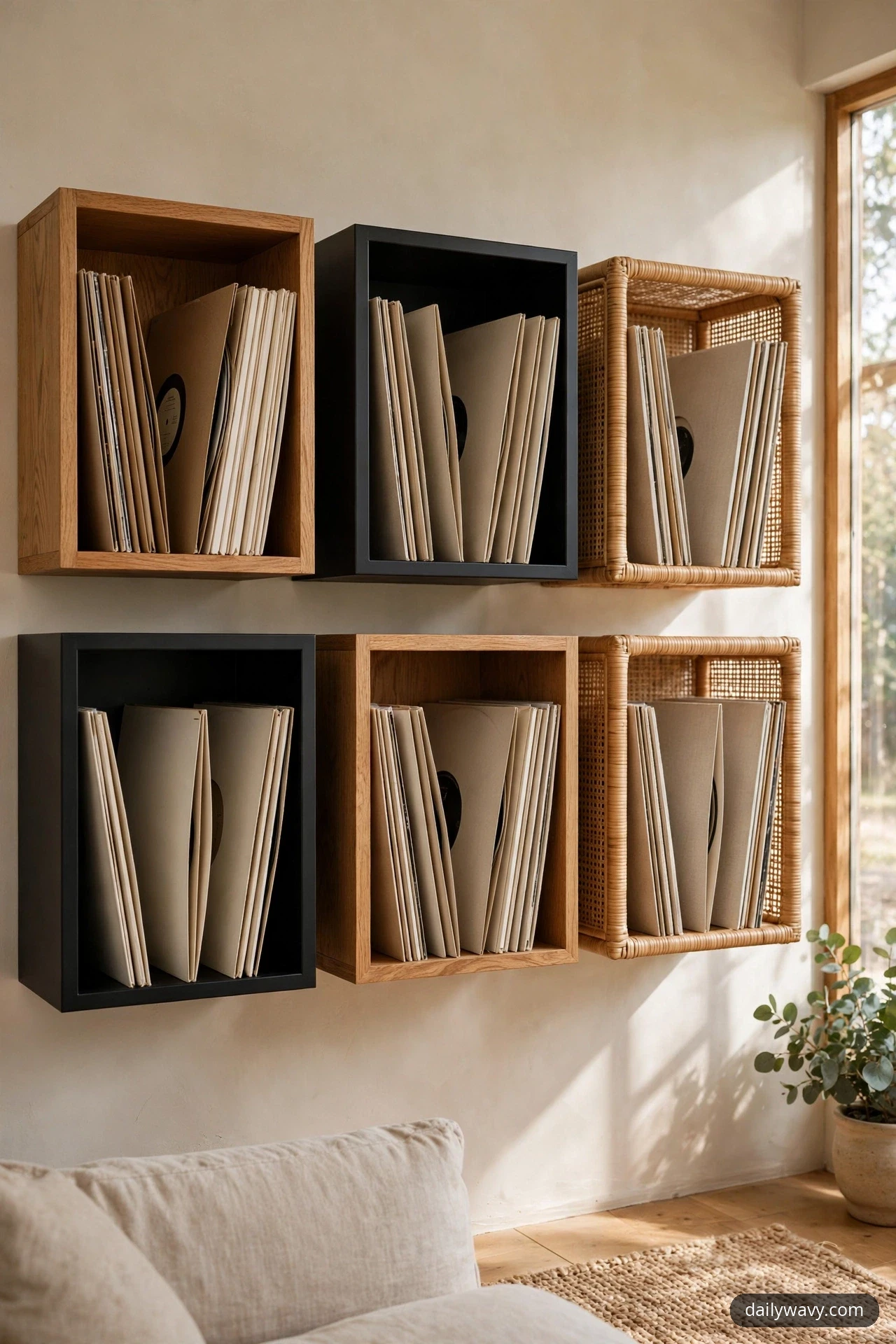
Repetition is one of the oldest tricks in interior styling, and it works beautifully for records. Six identical square cubbies in a grid, two in oak, two in matte black metal, two with rattan fronts, turn a collection into architecture. The shapes match, so the wall looks calm; the finishes differ, so it never looks flat. It is a strong choice for a large blank wall that needs presence.
What to measure. Measure the wall width and plan a grid with 2 to 3 inches of space between cubbies and at least 6 inches of margin at the edges. Each cubby needs a 13.5-inch square opening. Add up the loaded weight and confirm wall anchors or a floor-standing unit can carry it.
Materials. Six cube shelves in mixed finishes, or one large unit with varied insert fronts, plus plain sleeves for visual consistency.
Placement. Center the grid on the wall at a height where the middle row sits at eye level. Keep it away from heat sources and direct afternoon sun.
Approximate effort. A full day if wall-mounting six units; less for a floor-standing grid. Budget $150 to $400 depending on materials.
Lower-cost alternative. Buy six identical basic cubes and vary only the fronts with peel-and-stick wood-look or rattan-look panels.
6. A Wood-And-Ceramic Pairing

Wood and handmade ceramic are a natural pair, and records sit comfortably between them. A low wooden crate of LPs in kraft sleeves stands next to two handmade vessels in cream and sand tones on a console table, and the whole arrangement feels collected over years rather than bought in a day. The handmade quality of the ceramics softens the graphic punch of the record sleeves.
What to measure. Measure the console table’s depth and keep the crate plus ceramics within the back two-thirds so nothing overhangs the front edge. Leave 13.5 inches of vertical room above the crate for pulling records out.
Materials. A low wooden crate, two handmade-look ceramic vessels, plain sleeves.
Placement. On a console or sideboard in the living room or dining room. Group the crate and ceramics close enough to read as one arrangement, about 2 inches apart.
Approximate effort. An hour of styling once the pieces are in hand. Handmade-look ceramics are easy to find at craft markets and home stores.
Lower-cost alternative. Use canning jars or thrifted pottery as the ceramic element; the handmade look matters more than the price tag.
7. A Dark Backdrop For Light Objects

Contrast is drama, and a dark wall is one of the fastest ways to get it. Cream and pale-grey sleeves standing on a walnut ledge against a deep charcoal wall practically glow, and a small brass picture light above turns the row into a gallery moment. This idea suits evening listeners: the display looks its best when the room is dim and the light is on.
What to measure. Measure the ledge length and allow 6 to 8 records per foot so the row looks curated rather than crammed. Mount the ledge so record tops sit 4 to 6 inches below the picture light.
Materials. A deep-toned wall (paint or a large dark panel), a walnut picture ledge rated for at least 25 pounds, a plug-in brass picture light, light-toned sleeves.
Placement. Any wall that can go dark without shrinking the room: behind a sofa, in a hallway, or in a dedicated listening corner. Use an LED bulb so the light runs cool near the sleeves, and keep the picture light’s cord hidden with a cord cover.
Approximate effort. A weekend if painting is involved; an afternoon for ledge and light only. Paint and supplies run $30 to $60; the ledge and light add $40 to $90.
Lower-cost alternative. Hang a large piece of dark fabric or a charcoal flat-weave rug behind the ledge instead of painting.
8. A Light Backdrop For Dark Objects

The mirror image of the previous idea, and just as striking. Black vinyl records in simple dark frames hang in a row on a bright white wall above a light oak sideboard, and the dark-on-light contrast reads crisp and modern. Framing individual records also protects the sleeves you love most while turning them into art.
What to measure. Measure the sideboard’s length and space the frames evenly with 3 to 4 inches between them. Use 12.5-inch square frames made for records so the sleeve fits without forcing. Hang the row so frame centers sit at eye level, around 57 to 60 inches from the floor.
Materials. Record frames with UV-protective acrylic (worth it for sleeves you care about), wall anchors, a light oak or white sideboard.
Placement. Above a sideboard or dresser in the living room or bedroom. Keep the frames out of direct sunlight even with UV acrylic, since no filter blocks everything.
Approximate effort. An afternoon of hanging. Record frames run $10 to $25 each.
Lower-cost alternative. Mount sleeves directly with removable poster strips in a neat grid for a renter-friendly version at a fraction of the cost.
9. A Small Arrangement Beside A Lamp
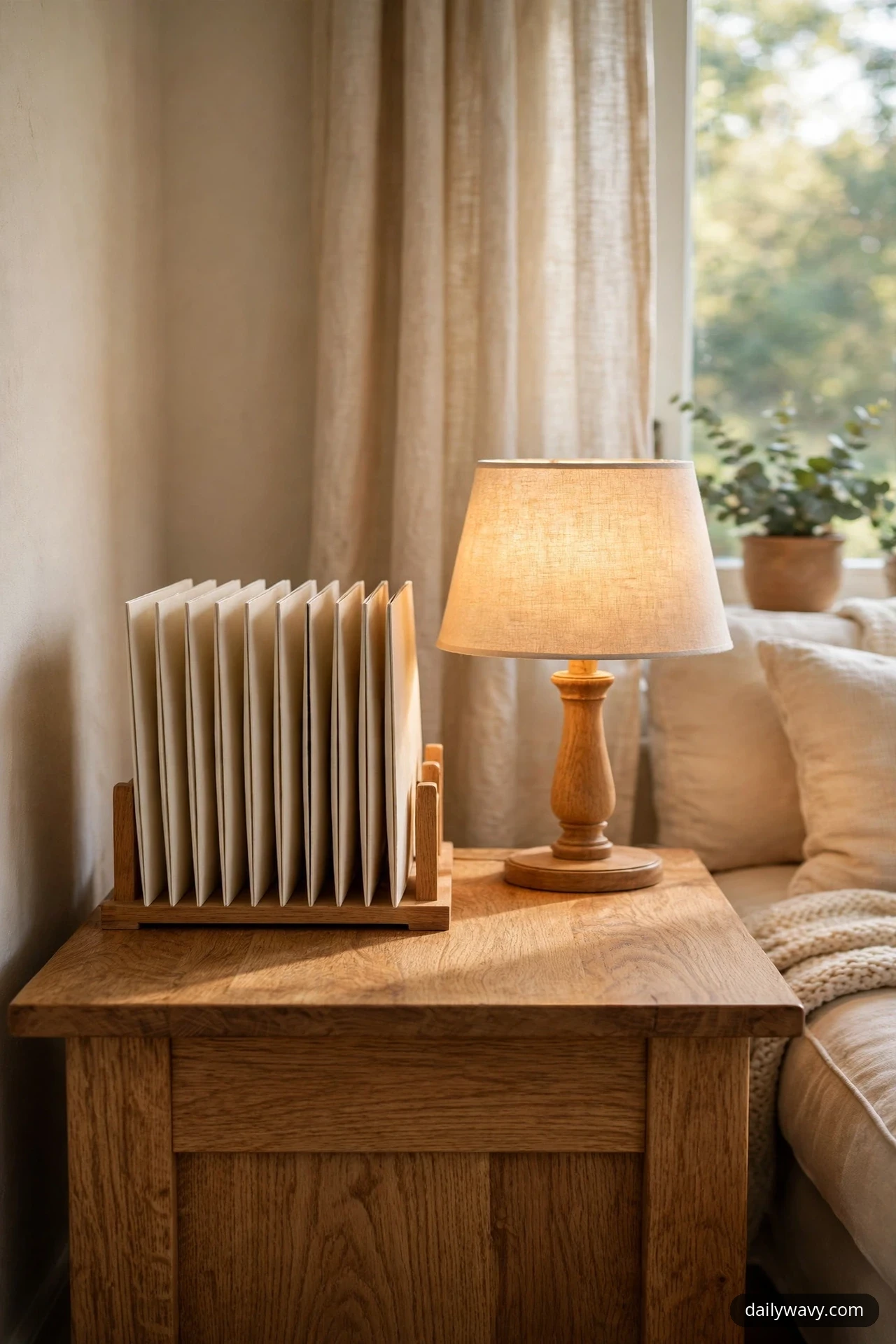
A lamp changes how a display feels after dark, and records look wonderful in warm lamplight. A small tabletop rack of records next to a glowing linen-shade lamp turns a side table into a listening station: the sleeves catch the light, the spines become readable, and the corner feels intentional instead of leftover. This is a cozy idea for people who play records in the evening.
What to measure. Measure the side table’s surface and give the record rack and the lamp each their own zone with at least 3 inches between them. Check that the lamp base is stable and the shade clears the tallest sleeve by 4 inches. Keep sleeves at least 12 inches from a hot bulb; LED bulbs run cooler and are the safer choice here.
Materials. A small tabletop record rack or short crate, a table lamp with a fabric shade, plain sleeves.
Placement. On a side table in a living-room corner or beside a reading chair. Route the lamp cord behind the table so it never snags a sleeve.
Approximate effort. An hour of arranging. Tabletop racks run $20 to $45; lamps vary widely, and thrift stores are full of good ones.
Lower-cost alternative. Lean a short row of records in a sturdy bookend pair beside a lamp you already own.
10. A Seasonal Variation Using The Same Base

Some of the smartest displays are the ones you can refresh in a few minutes. Keep the same oak shelf and record row year-round, and change only the styling at the ends: dried autumn stems in October, a sprig of pine in December, a small bud vase of fresh flowers in spring. The records stay put; the mood changes. It keeps the display feeling alive without any real work.
What to measure. Reserve 6 to 8 inches at one end of the shelf as the seasonal zone, and note the vase or vessel height so stems clear the ceiling or shelf above.
Materials. Your existing record shelf, plus one small vessel and seasonal stems or greenery. Dried stems last for months and cost a few dollars a bunch.
Placement. Wherever your main record shelf lives. Swap the seasonal element when the mood strikes, and keep anything shedding (like pine needles) in a tray so debris stays out of the sleeves.
Approximate effort. A few minutes per season. A bunch of dried stems runs $5 to $15.
Lower-cost alternative. Forage responsibly: a few interesting branches from your own yard, trimmed and dried, cost nothing.
11. A Monochrome Display With One Accent
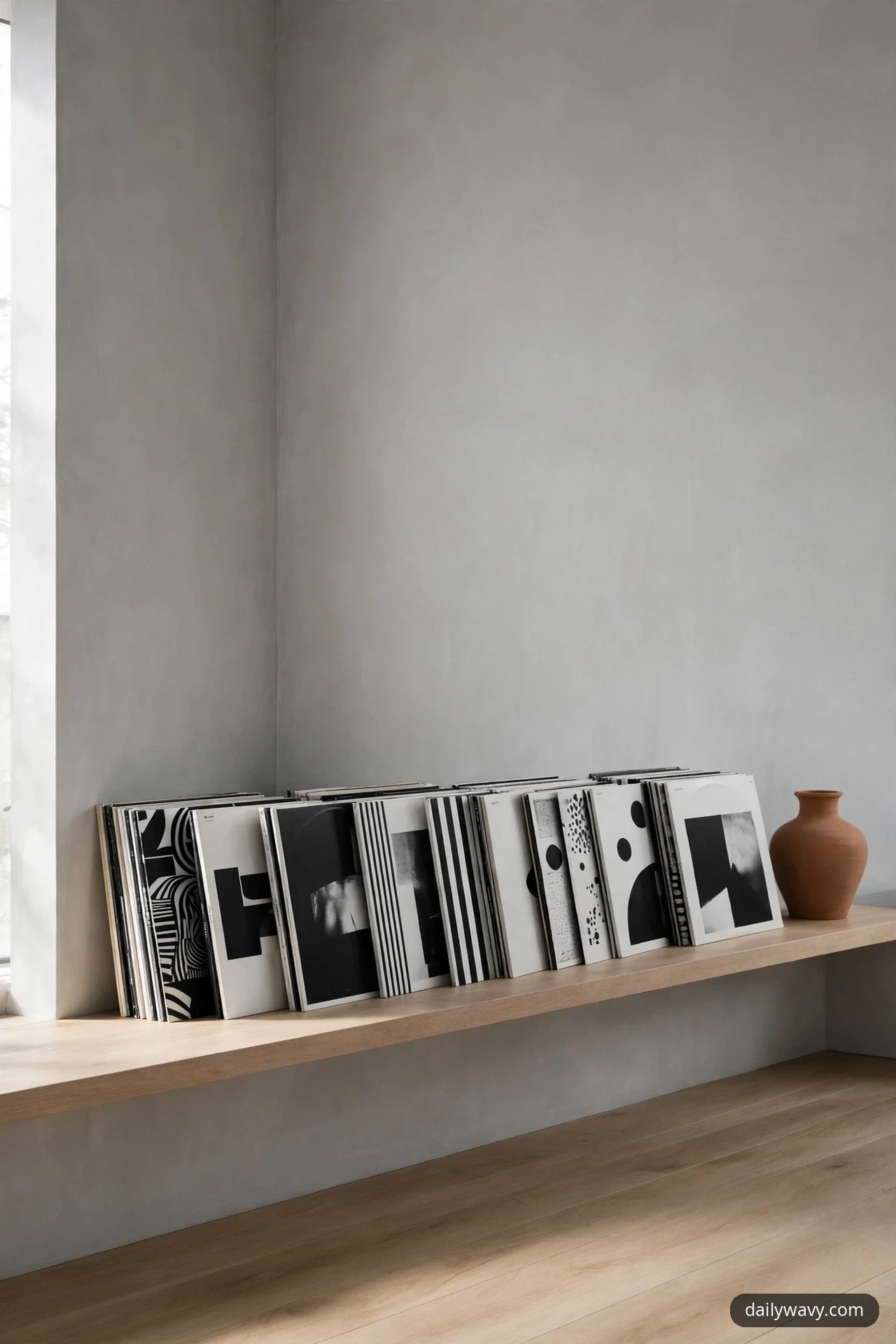
Monochrome is one of the easiest palettes to get right because there is almost nothing to clash. Black-and-white sleeves stand in a long row on a low shelf against a soft grey wall, and a single terracotta vase at the end does all the talking. The eye travels the calm row, lands on the accent, and the whole display feels designed. If choosing colors stresses you out, start here.
What to measure. Measure the shelf and plan the record row to fill about three-quarters of it, leaving the last quarter for the accent object. The accent should be roughly the height of two record sleeves stacked, around 25 inches at most, so it reads as part of the row.
Materials. Black, white, and grey sleeves (or your records’ existing monochrome-leaning covers), one accent object in a single warm color like terracotta, brass, or amber glass.
Placement. A long low shelf or sideboard in the living room. Keep every other decorative object away from this shelf so the single accent stays single.
Approximate effort. An hour of sorting sleeves by tone. The accent object is the only possible purchase, $10 to $30.
Lower-cost alternative. Spray-paint a thrifted vase in terracotta or matte black for a low-cost accent (spray outside or in a well-ventilated area).
12. A Framed Or Bounded Composition
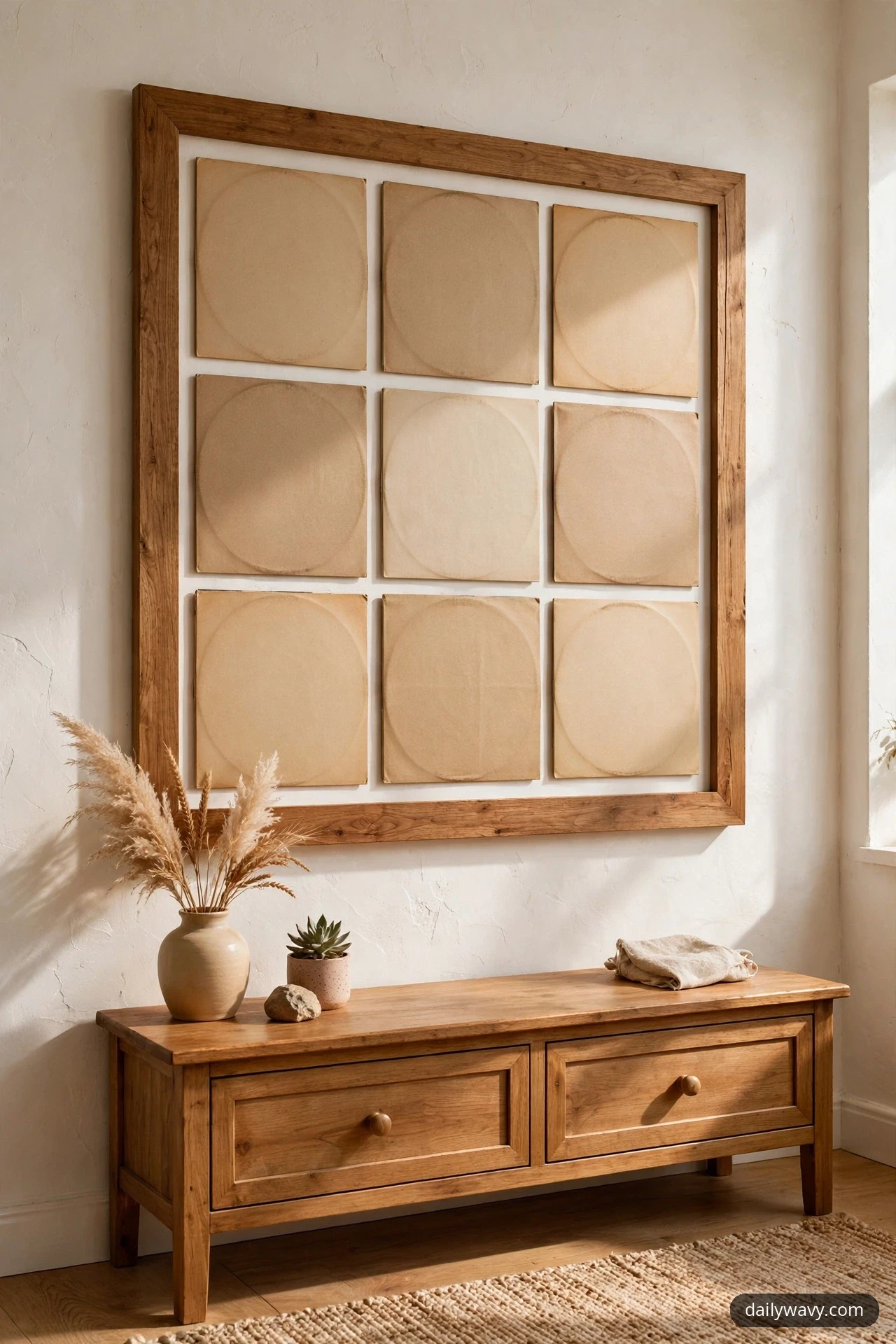
A frame tells the eye where to look. Nine record sleeves arranged in a grid inside one large empty frame become a single piece of art instead of nine separate objects, and the boundary makes even a mixed collection look deliberate. This is the idea for the collector whose taste runs wide: inside the frame, eclecticism reads as curation.
What to measure. Measure nine sleeves in a 3-by-3 grid with half-inch gaps: about 38 inches across for the sleeves and gaps, plus the frame. Mark the wall with painter’s tape before hanging anything, and check the layout at eye level from across the room.
Materials. One large empty frame (or four lengths of molding joined), nine favorite sleeves in protective outer sleeves, sturdy wall anchors.
Placement. A prominent living-room or hallway wall with enough viewing distance to take in the whole grid, at least 6 feet back.
Approximate effort. An afternoon of measuring and hanging. Large empty frames run $30 to $80; molding strips are cheaper if you are handy.
Lower-cost alternative. Tape the grid outline on the wall with washi tape and mount the sleeves inside it with removable strips.
13. A Functional Object Used Decoratively
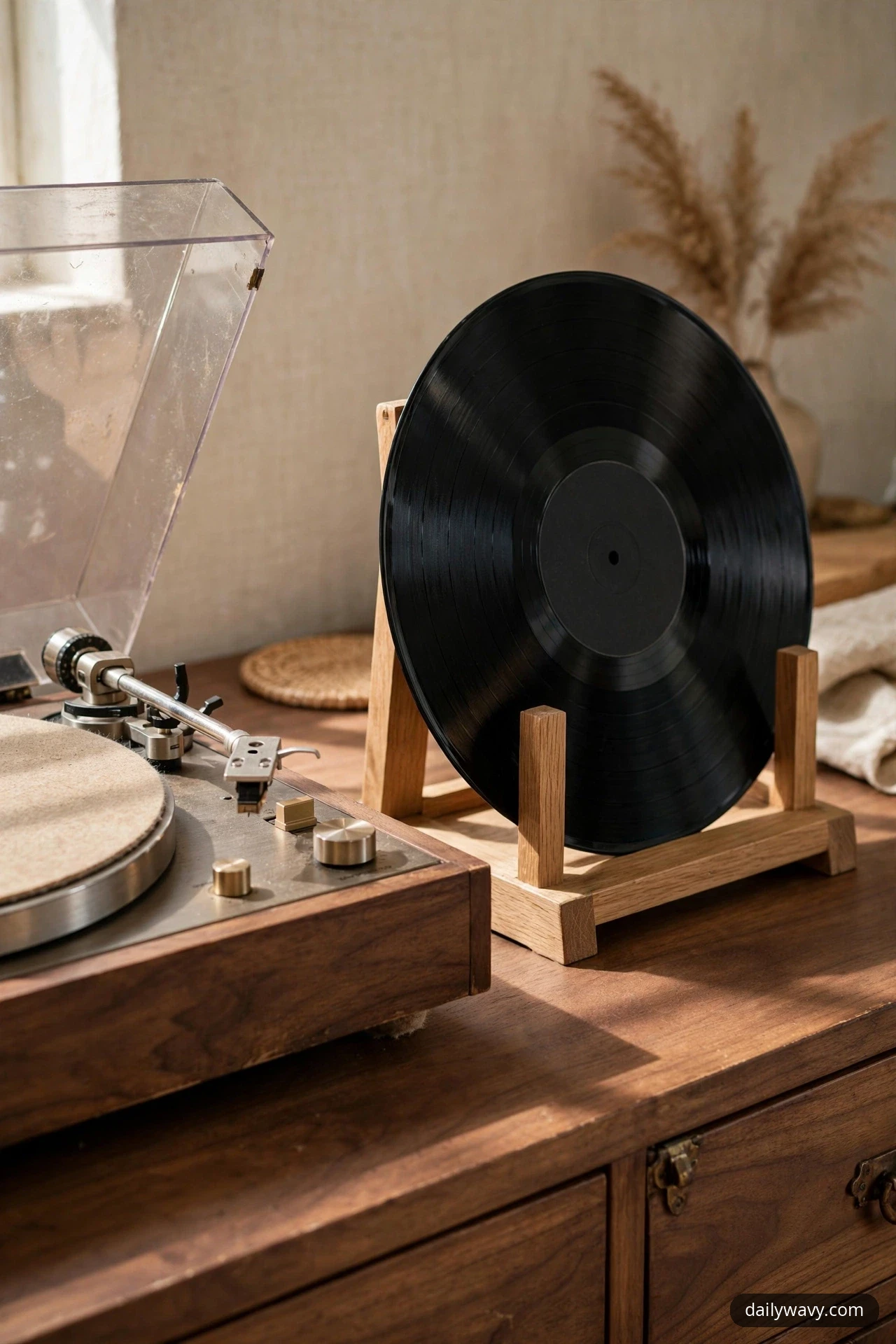
Some objects earn their place by working and looking good at once. A vintage turntable on a walnut sideboard, with one record resting in a wooden display stand beside it, is both the way you play music and the room’s focal point. When the functional piece is beautiful, there is no need for extra decoration around it. Let the turntable be the star.
What to measure. Measure the sideboard’s depth and keep the turntable at least 2 inches from the front edge so the tonearm clears when it swings. Leave 14 inches of clearance above for lifting the dust cover, and route power and speaker cables with slack so nothing pulls.
Materials. Your turntable, a wooden record display stand, a stable sideboard or console.
Placement. The sideboard goes where you actually listen: near your usual seat, with speakers placed to form a comfortable triangle with it. Keep the display stand’s record out of the sun.
Approximate effort. An hour of rearranging and cable routing. Wooden display stands run $15 to $30.
Lower-cost alternative. Prop the featured record in a simple plate stand from the kitchen aisle for a few dollars.
14. A Simple Giftable Version
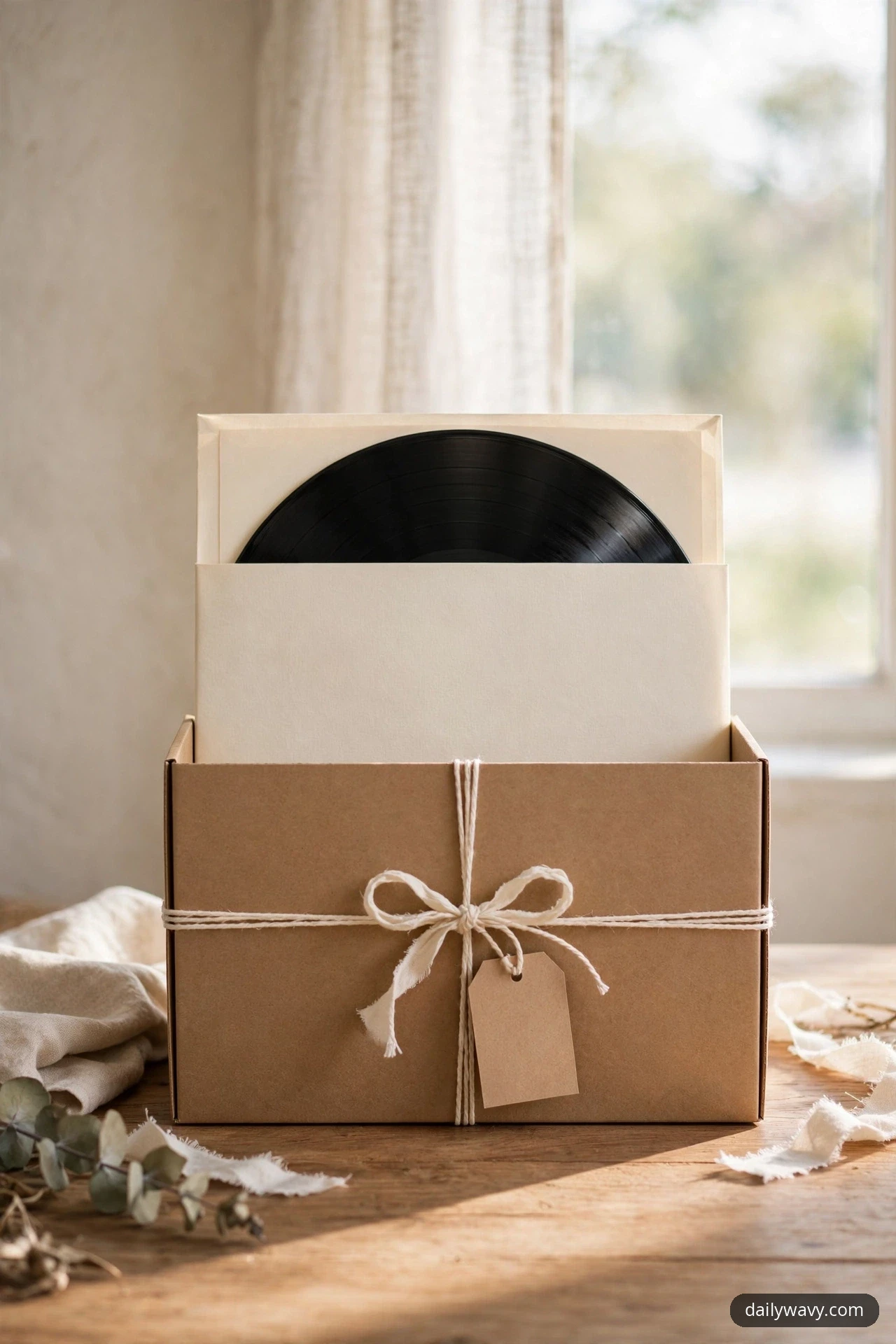
A record makes a wonderful gift, and the packaging is half the pleasure. A kraft gift box tied with cotton ribbon, holding a vinyl record in a cream sleeve with a small blank tag, looks thoughtful before it is even opened. Keep one ready-made for birthdays and holidays, and you will never be caught giftless. It also doubles as pretty storage on a shelf in the meantime.
What to measure. Buy or make a box at least 13 inches square and 1.5 inches deep so the sleeved record slides in without bending. Keep the ribbon simple: one wrap and a bow.
Materials. A rigid kraft gift box, cotton or grosgrain ribbon, a blank tag, the record in a protective outer sleeve.
Placement. On a shelf or side table where it can be admired until gifting day. Store it upright and out of the sun like any other record.
Approximate effort. About fifteen minutes to assemble. Boxes and ribbon run $5 to $12.
Lower-cost alternative. Wrap the sleeved record in kraft paper with twine for a rustic version that costs very little.
15. A Small Tonal Grouping

Tonal grouping is the quiet luxury of styling: everything in the same family of warm beige, sand, and brown, with the records as the anchor. Sleeves in warm neutrals sit on a light oak shelf beside a woven basket and a small stack of books, and the whole corner hums in one key. Nothing shouts, everything belongs. It is especially lovely in a reading corner or bedroom.
What to measure. Pull every sleeve in warm beige, tan, brown, and cream tones and measure the total inches they need. Plan the shelf so the tonal row fills most of it, with a little room at the end for flipping, for the full effect. If the display sits near your sleeping space, keep the corner restful; see our small bedroom with a queen bed guide for more small-space ideas.
Materials. Warm-toned sleeves (yours or plain kraft replacements), a light oak shelf, a woven basket, a few books.
Placement. A bedroom, study, or reading corner shelf. Keep the palette strict: if a sleeve breaks the tone, move it to another display.
Approximate effort. An hour of sorting and styling. Kraft sleeves to unify the look cost a few dollars per pack.
Lower-cost alternative. Slip offending sleeves into plain kraft outers temporarily; the collection underneath stays untouched.
16. A Single Focal Object With Negative Space

One of the boldest moves on this list is also the simplest: one record, one wall, and a lot of empty space around it. A single sleeve mounted alone on a large warm-white wall, with a slim oak bench below, turns one favorite album into a gallery piece. Negative space gives the object importance. Choose the record that means the most to you, because it will get all the attention.
What to measure. Give the single sleeve at least 24 inches of clear wall on every side. Hang the center at eye level, 57 to 60 inches from the floor. The bench below should sit at least 12 inches beneath the frame.
Materials. One meaningful record in a protective outer sleeve, a 12.5-inch record frame with UV-protective acrylic, wall anchors.
Placement. A hallway, stair landing, or any wall that currently does nothing. Keep it out of direct sunlight to protect the sleeve.
Approximate effort. Under an hour. A good record frame runs $15 to $30.
Lower-cost alternative. Mount the sleeve with four removable strips in a perfect square of painter’s tape for a renter-friendly gallery moment.
Frequently Asked Questions
How do I keep records safe while displaying them?
Keep them upright, out of direct sunlight and away from heat sources like radiators and hot lamps. Use outer sleeves to protect the covers, handle vinyl by the edges, and make sure shelves are level and sturdy. A display that follows these basics keeps records in good playing condition for years.
How many records fit on a standard shelf?
Plan for about 50 to 60 LPs per foot of shelf when they stand comfortably upright without squeezing. A 13-inch cube, the common standard, holds roughly 60 to 70 records. Always leave a little room at the end of each row so you can flip through and pull records out easily.
Will sunlight really damage my records?
Yes, over time. Direct sun fades sleeve artwork noticeably within months and sustained heat can warp vinyl. Even indirect bright light adds up, so the best displays sit near natural light for looks but out of the sun’s direct path. UV-protective frames help for wall-mounted favorites but are not a substitute for shade.
What is the cheapest way to start displaying records?
Plain kraft or white outer sleeves unify any collection for a few dollars, and restyling a shelf you already own costs nothing. A sturdy crate or a pair of bookends on an existing bookshelf is a complete display. Spend first on protection (outer sleeves) and stability (a level, solid shelf), then on looks.
Can I display records in a small apartment?
Absolutely. Corner cube units, single wall ledges, and tabletop racks all work in tight spaces, and several ideas above were designed for small footprints. A narrow living room can carry a record display beautifully if you keep the arrangement shallow and the palette calm. See our narrow living room layout guide for more small-space ideas.
How do I dust displayed records?
Use a dry anti-static brush or microfiber cloth on sleeves, wiping in one direction. For the vinyl itself, a carbon-fiber record brush before playing lifts surface dust without scratching. Dust the display area monthly so buildup never reaches the grooves.
Your collection deserves to be seen
Records are one of the few collections that look as good as they sound, and they ask for very little: a sturdy shelf, a spot out of the sun, and a little breathing room. Start with the idea that matches your space, whether that is a single framed favorite or a full wall of cubbies, and let the collection grow into the display. The best record wall is the one that makes you want to pull something off the shelf and play it. If your display bug spreads to other collections, the same measure-first, group-by-tone thinking works in a tidy small pantry too, and the broader home decor collection has more styling ideas in the same spirit.