10 Outdoor Dinner Table Setting Ideas with Simple Styling Details
There is something about eating outside that makes even an ordinary weeknight dinner feel like a small celebration. The light…
There is something about eating outside that makes even an ordinary weeknight dinner feel like a small celebration. The light is softer, the air carries the smell of cut grass or someone's rosemary bush, and nobody is in a hurry to clear the table. But a beautiful outdoor table does not happen by accident. Wind knocks things over, the sun fades napkins, and a tall centerpiece blocks every face you actually want to look at. These ten ideas keep the styling simple and the table fully usable, so the setting works as well as it looks. Each one is built for real evenings outside, with low arrangements, sturdy materials, and details that take minutes rather than hours.
Jump to an idea
- Woven Placemats With Clear Glasses
- A Row Of Tiny Ceramic Vessels
- A Wood Tray With Small Plants
- A Single Wide Shallow Bowl
- Patterned Napkins With Solid Dinnerware
- A Subtle Contrasting Charger Plate
- A Small Bread Board As A Shared Focal Point
- Clear Bottles Holding Green Cuttings
- A Compact Dried-Stem Arrangement
- A Handwritten Place Card
Outdoor tables play by different rules
Indoors, a table setting is mostly about looks. Outdoors, it is about physics. Wind, sun, uneven ground, and insects all get a vote. The good news is that the rules are simple, and once you know them, every idea below falls into place.
Keep everything low. Nothing in the center of the table should stand taller than about 12 inches if you want guests to see each other. That one rule eliminates the classic mistake: a towering vase that turns dinner into a game of peek-a-boo. Low arrangements also survive gusts far better than tall ones.
Choose materials that can take weather. Ceramic, stoneware, wood, glass, and cotton all do fine outdoors for an evening. Paper napkins are a breeze risk, so use cloth. If a storm rolls in, you want everything to either be washable or cheap enough not to cry over.
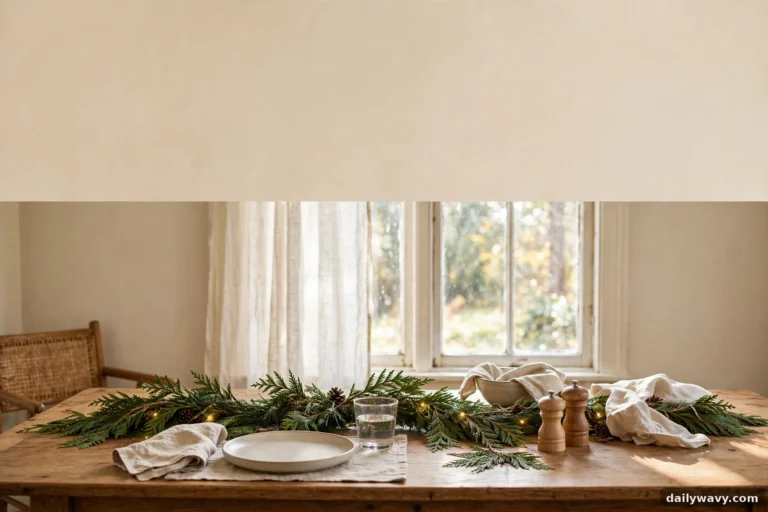
Give things weight. A breezy evening is the difference between a table that looks styled and a table that sheds napkins across the lawn. Heavier napkins, small vessels with water in them, and wooden pieces stay put. If your patio gets real gusts, set the table no more than an hour before guests sit down.
Get the cutlery right. Outdoor tables deserve the same respect as indoor ones. Fork goes on the left of the plate, knife on the right with the blade facing the plate, spoon to the right of the knife if you need one. Glasses sit above the knife. It takes only a moment and makes the whole table look like you knew what you were doing.
Plan for everyday, not just holidays. Every idea below works for a regular Tuesday. A couple can stretch into holiday territory with small swaps (deeper colors, a seasonal stem), and the FAQ at the end explains how. If your outdoor space opens off your entryway, you may also like our ideas for small entryway decor.
1. Woven Placemats With Clear Glasses

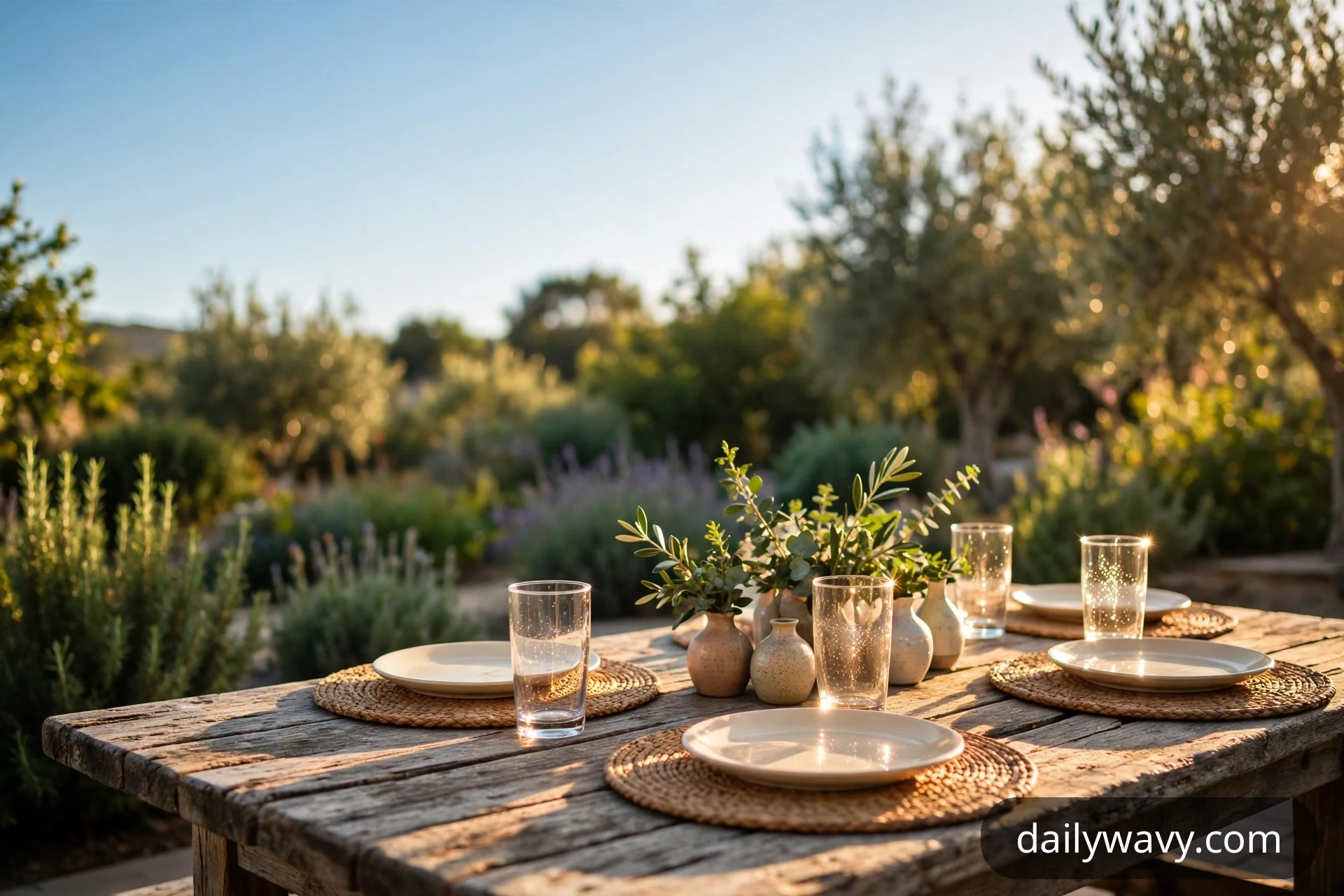
There is a reason restaurant patios in the Mediterranean all lean on woven texture. A round seagrass or water-hyacinth placemat does three jobs at once: it protects the wood from hot plates, it gives every setting a finished edge, and its rough weave catches sunlight in a way flat mats never do. Paired with clear glasses, the whole table glows a little.
What to measure. Measure your table width and divide by the number of guests per side to check fit. A 14-inch round placemat needs about 20 inches of elbow room per person, so a 60-inch table seats three per side comfortably and four with a cozy squeeze. Leave as much room as you can between opposite placemats for shared dishes; about 24 inches on a wide table is ideal.
Materials. Round woven placemats (seagrass, water hyacinth, or rattan), clear glass tumblers or stemless wine glasses, your everyday dinnerware. Woven mats in the $3 to $6 range per piece look just as good as expensive ones once a plate is on top.
Placement. Center each placemat 1 inch from the table edge. Set the plate on the mat, then place the glass at the top right, just above the knife. The weave is busy enough that you need nothing else under the plate.
Approximate effort. Ten minutes to set for six. Woven placemats shake clean quickly, which is half their charm.
Lower-cost alternative. Cut 14-inch rounds from a burlap table runner, or use folded cotton tea towels as soft, washable placemats in the same natural spirit.
2. A Row Of Tiny Ceramic Vessels
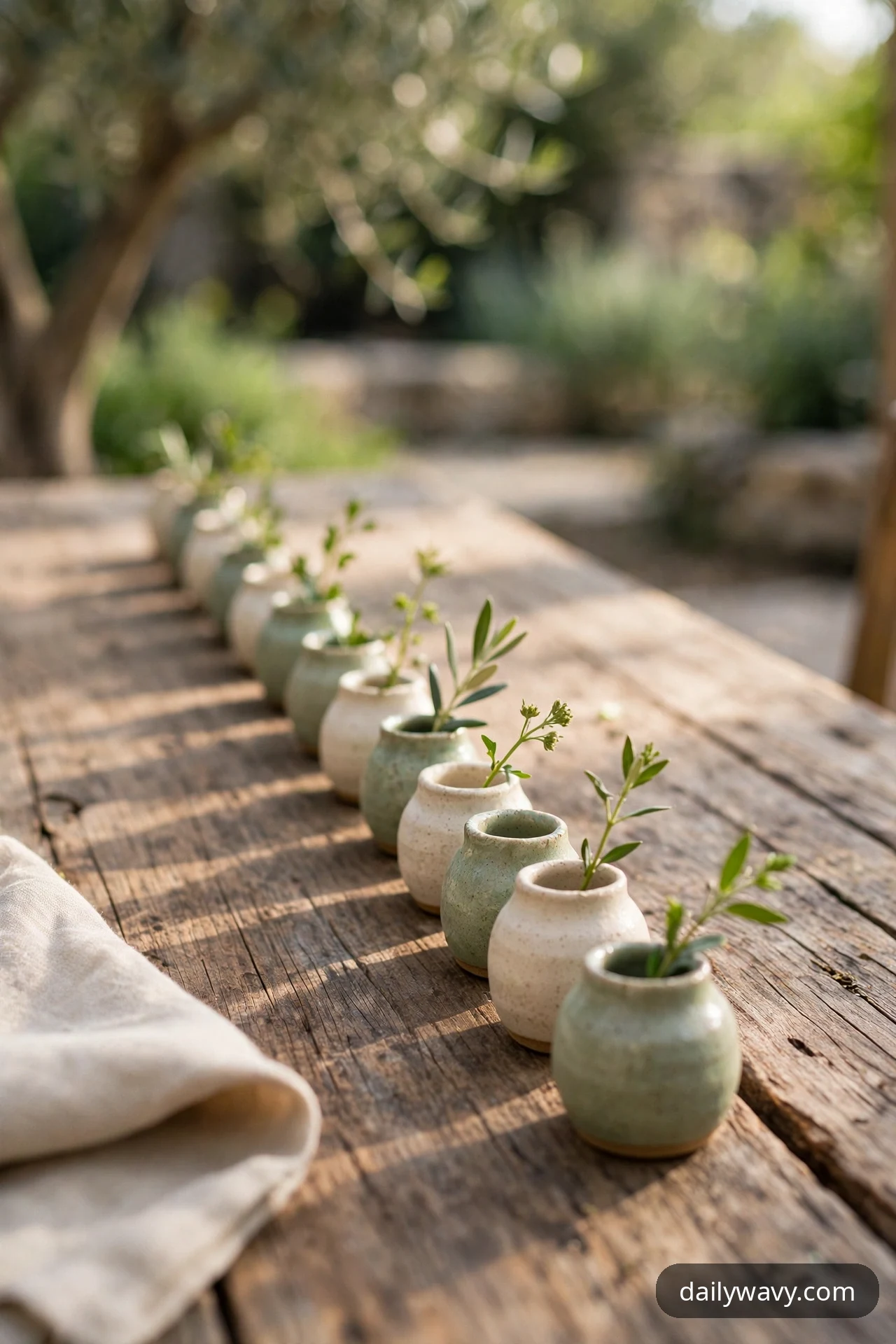
Instead of one centerpiece, line up five to seven tiny ceramic vessels down the middle of the table and tuck a single stem into each. The row reads as one long, low arrangement, but every piece is small enough to lift away when the food arrives. Nothing blocks a face, nothing blocks the bread basket, and the whole thing takes about five minutes.
What to measure. Your row should stop at least 12 inches from each end of the table so serving dishes have landing room. Space vessels 6 to 8 inches apart. Keep every vessel under 4 inches tall.
Materials. Small bud vases, shot-size ceramic cups, or espresso cups in cream, sage, or soft blue. Single stems: herbs (rosemary, mint, thyme), a eucalyptus sprig, or one wildflower each. Fill each vessel two-thirds with water so stems drink and weight holds against wind. Eucalyptus is for looks only: it is not food-safe, so keep stems out of drinks and serving dishes.
Placement. Run the row straight down the center, or zigzag it slightly for a more casual feel. Cluster three vessels together at the middle if the table is round instead of rectangular.
Approximate effort. Fifteen minutes including a walk around the garden for cuttings. Vessels can be set hours ahead; add stems last so they stay fresh.
Lower-cost alternative. Small jam jars or spice jars work the same way, and a grocery-store herb plant provides weeks of stems for the price of one bunch of flowers.
3. A Wood Tray With Small Plants
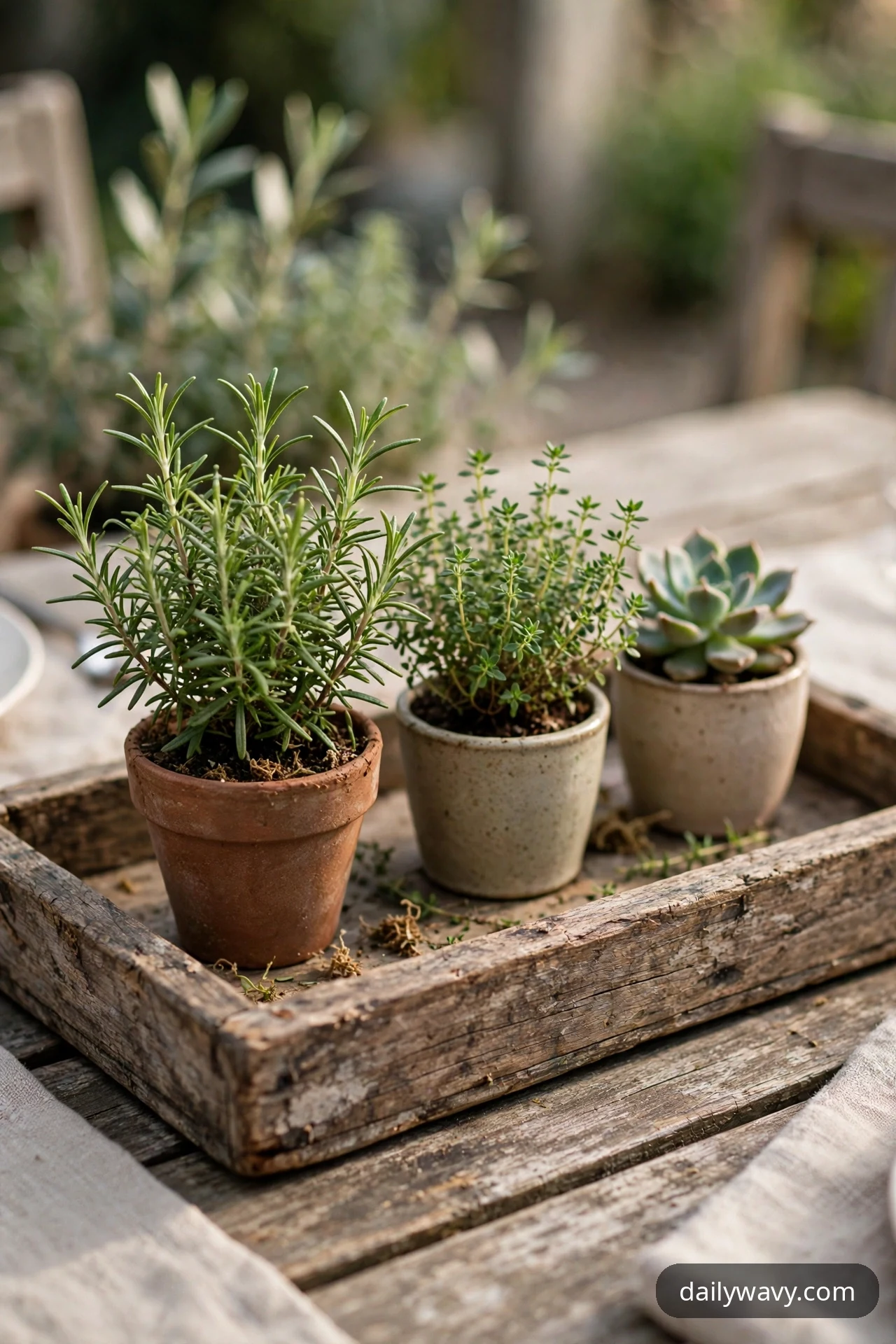
A wooden tray corrals everything into one movable unit, which is exactly what you want outdoors. When it is time to eat, you lift the tray and the centerpiece disappears in one motion. Fill it with small potted plants and it doubles as a living garnish station: guests can snip mint into their water or rosemary onto their plates. Rinse snipped herbs before they go into food or drinks.
What to measure. The tray should be no wider than one-third of the table width, and no longer than half the table length, so place settings have breathing room. A 16-by-10-inch tray suits a table for four to six.
Materials. A low wooden tray with handles (acacia or teak weathers beautifully), three to five small potted herbs or succulents in 3-inch pots, a folded linen cloth under the pots to protect the tray. Slip the nursery pots inside slightly larger ceramic pots for a finished look.
Placement. Set the tray dead center. Arrange pots tallest at the back, shortest at the front, and leave a bare corner of the tray for a small dish of olives or nuts that guests can reach.
Approximate effort. Twenty minutes if you are potting up herbs; five if the plants are already in pots.
Lower-cost alternative. A baking sheet or rimmed wooden cutting board stands in for the tray, and seedling six-packs from the garden center cost a few dollars.
4. A Single Wide Shallow Bowl
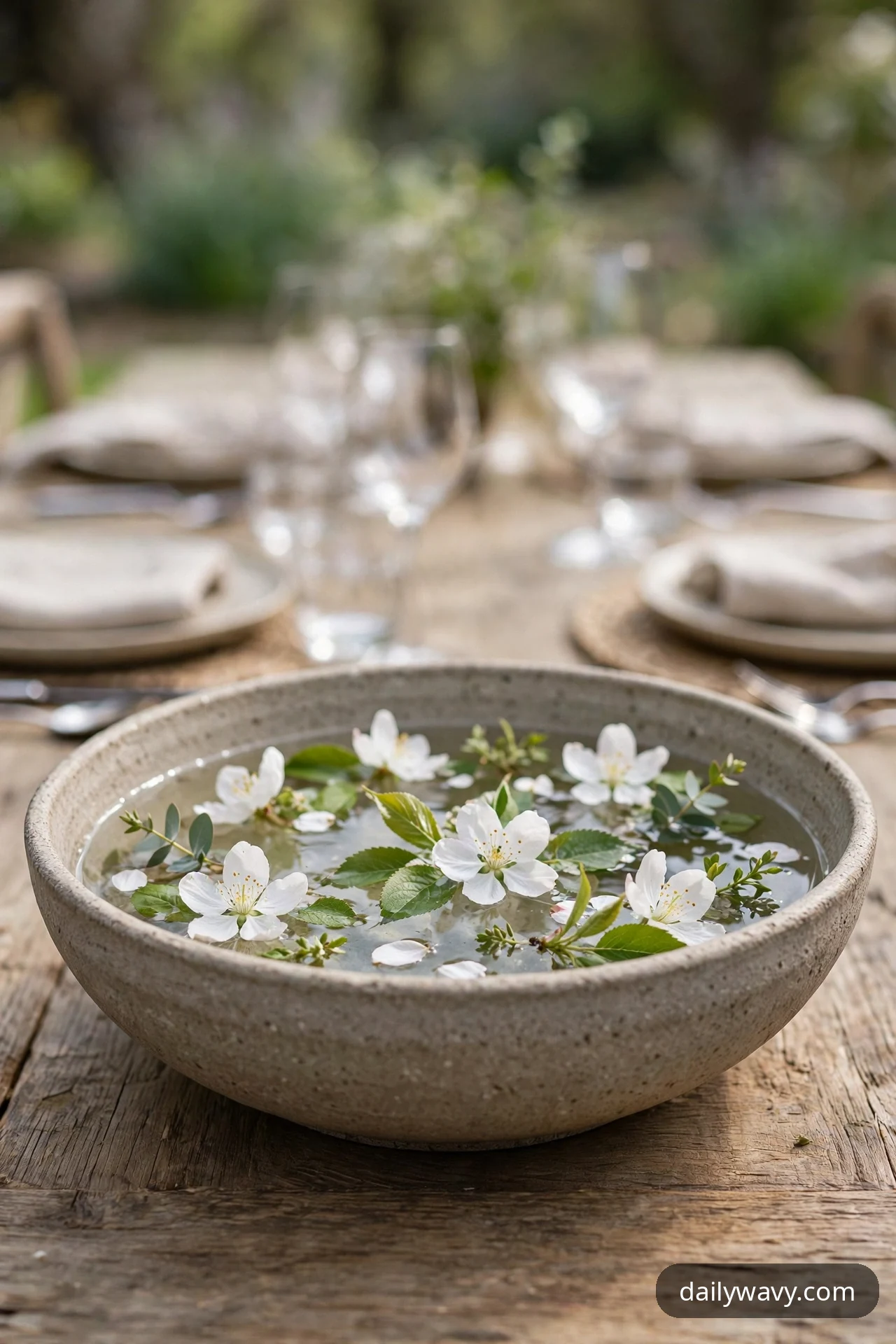
One wide, shallow bowl of water with a handful of floating blossoms is one of the lowest-effort centerpieces you can set out, and it looks like you tried much harder than you did. The still water catches the sky, the blossoms drift slowly, and the whole arrangement sits barely 3 inches above the table, so conversation flows right over it.
What to measure. The bowl should span no more than one-third of the table width. A 12-to-14-inch bowl suits most tables. Keep the table clear 8 inches around it for serving dishes.
Materials. A wide shallow bowl in stoneware, ceramic, or even enamel. Water, plus floating elements: gardenia or rose heads, citrus slices, a few herbs, or plain white blossoms. Everything should float, so choose heads and slices over whole heavy flowers.
Placement. Center the bowl. Add the water first, then float the blossoms just before guests arrive so nothing wilts. If the evening is breezy, skip floating petals and use citrus slices, which ride wind better.
Approximate effort. Five minutes. This is the centerpiece for people who claim they have no time for centerpieces.
Lower-cost alternative. A large serving bowl you already own works perfectly. Grocery-store roses sacrificed for their heads cost less than any arranged bouquet.
5. Patterned Napkins With Solid Dinnerware

Pattern is the fastest way to make a plain table look considered, and napkins are the cheapest place to put it. A botanical stripe or small check in cotton reads cheerful outdoors without competing with the garden itself. Keep the plates solid cream or white so the napkins stay the star.
What to measure. Cloth napkins should be at least 16 inches square for dinner; smaller cocktail napkins look skimpy next to a full plate. Buy one extra beyond your guest count in case of spills.
Materials. Patterned cotton or linen-blend napkins (stripes, checks, or small botanical prints in two colors at most), solid dinnerware, plain flatware. Cotton napkins in the $2 to $4 range survive years of washing.
Placement. Fold each napkin into a simple rectangle and lay it left of the fork, or fold once and tuck it under the fork. Skip elaborate folds outdoors; wind will undo them and they look fussy next to a garden. Iron or steam the napkins once and they will hold a crisp fold through dinner.
Approximate effort. Ten minutes of folding for six guests. Wash and reuse instead of buying paper every time.
Lower-cost alternative. Cut napkins from cotton fabric yardage (a yard makes four) and hem the edges, or dye plain white napkins with tea for a soft natural pattern.
6. A Subtle Contrasting Charger Plate
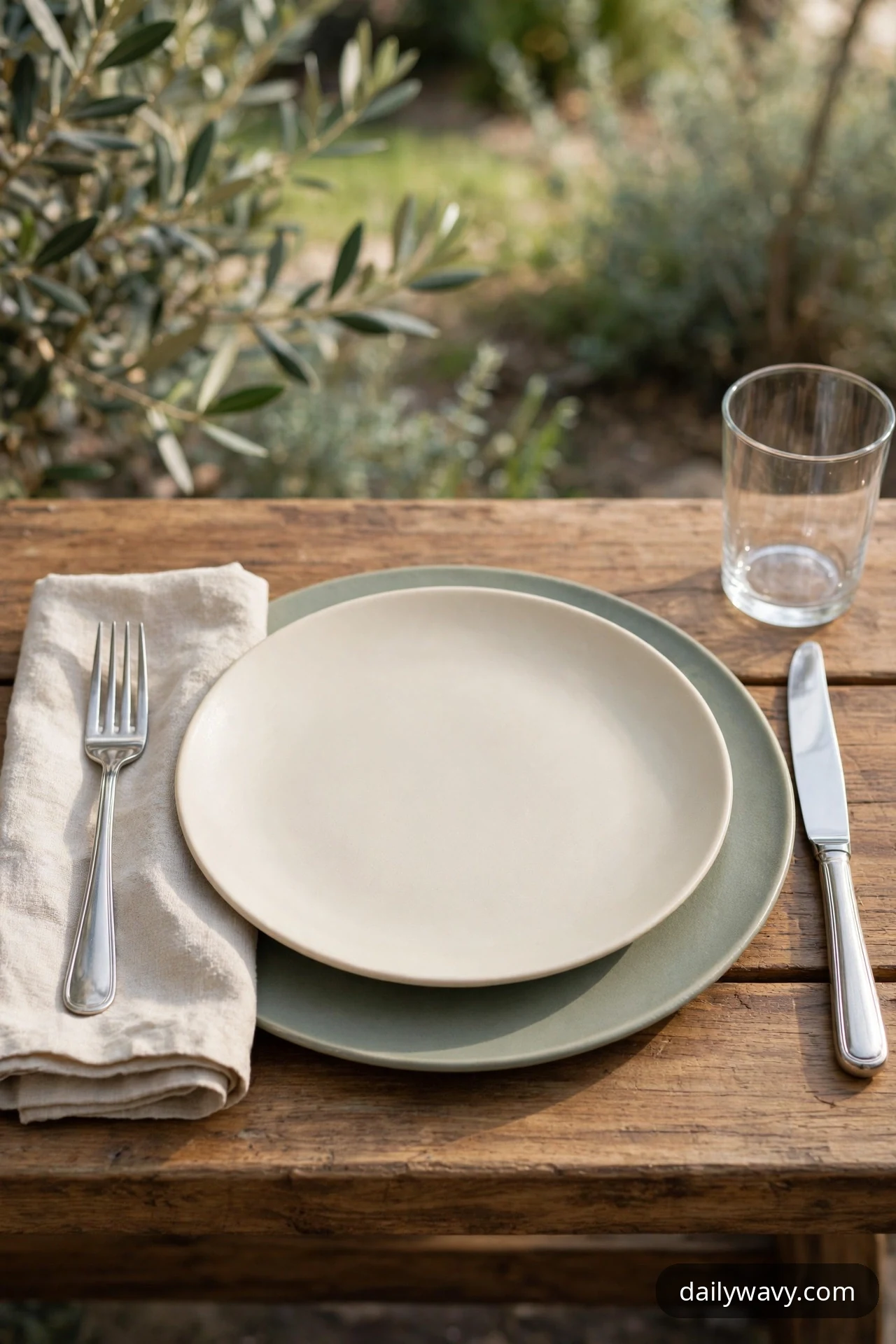
A charger is the plate under the plate, and it is the easiest luxury trick in table styling. It never touches food, so it never needs washing, and it frames your dinnerware with a ring of color. Outdoors, keep the contrast subtle: sage under cream, soft terracotta under white, weathered gray under stoneware. The effect is polished, not flashy.
What to measure. Chargers run 12 to 14 inches in diameter; the dinner plate should leave at least a 1-inch border of charger visible. Space settings 24 inches center to center so chargers do not crowd.
Materials. Charger plates in a muted contrasting tone (wood, rattan, or matte ceramic all work outdoors), your regular dinner plates on top. Rattan chargers are light, cheap, and practically indestructible outside.
Placement. Center the charger on the placemat or directly on the table, then set the dinner plate on top. Fork left, knife right with blade facing the plate, napkin on the plate or under the fork. Remove the charger with the dinner plate when clearing, or leave it as the base for dessert.
Approximate effort. Five extra minutes beyond normal setting. The visual payoff is wildly disproportionate.
Lower-cost alternative. Large rattan chargers run a few dollars each at discount home stores, and a round wooden cutting board per setting gives the same layered look.
7. A Small Bread Board As A Shared Focal Point
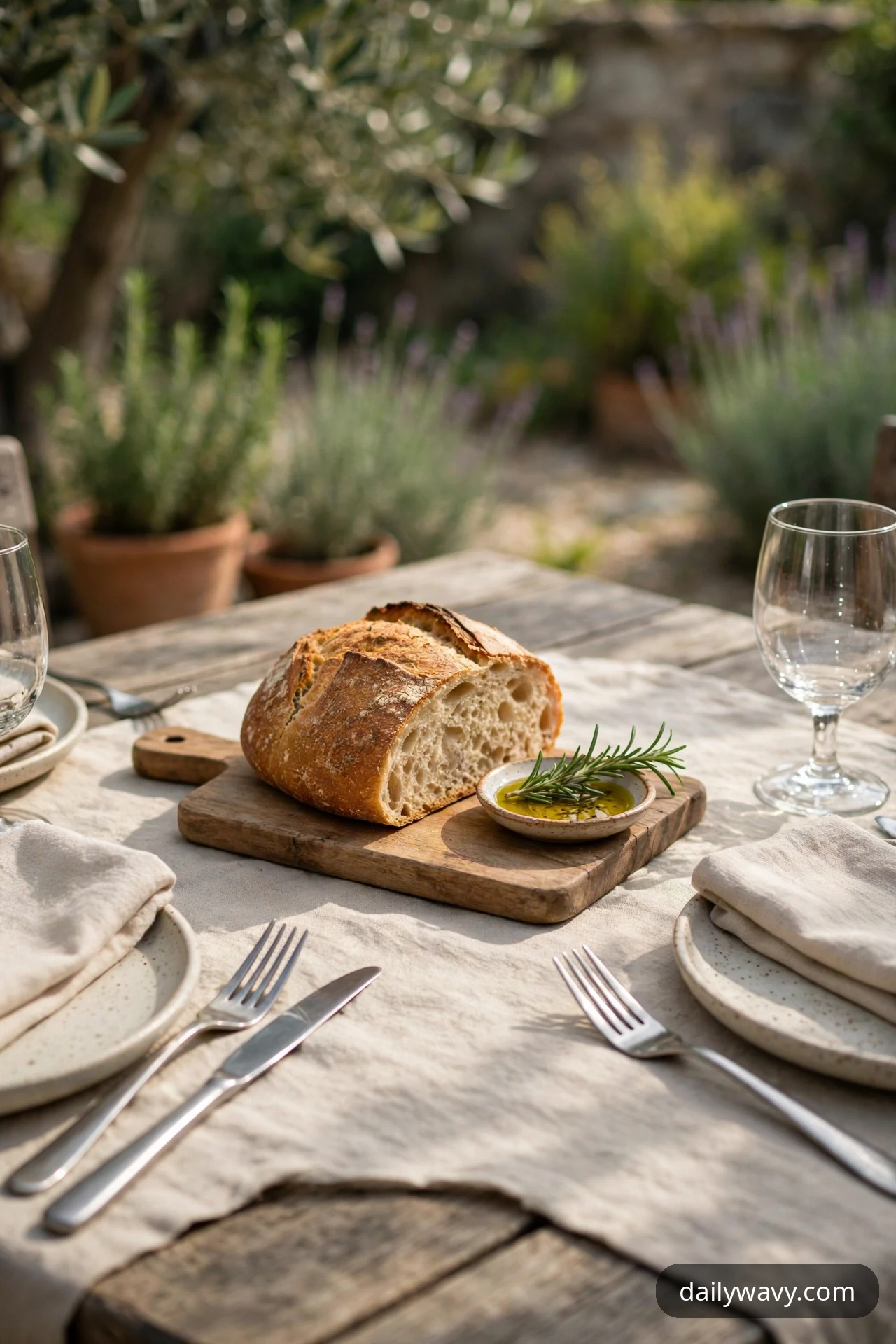
The most beautiful centerpiece on a dinner table is often food itself. A small wooden bread board with a torn loaf, a dish of olive oil, and a sprig of rosemary sits in the middle of the table and does double duty as decor and the first course. Guests reach for it, talk over it, and it looks better half-eaten than pristine.
What to measure. The board should be 12 to 16 inches long so it reads as a centerpiece, not a side plate. Leave 10 inches of clear table on each side for passing dishes.
Materials. A small wooden bread or serving board, a rustic loaf (torn, not sliced, for texture), a small ramekin of good olive oil with flaky salt, fresh rosemary or thyme. A serrated knife on the board lets guests cut their own.
Placement. Set the board in the center before guests sit. Replenish the bread once during the meal rather than overloading the board at the start; a fresh second loaf arriving mid-dinner feels generous.
Approximate effort. Five minutes plus the bread run. Store-bought artisan loaves are completely fine here.
Lower-cost alternative. Any wooden cutting board works. Day-old bread from the bakery discount rack, warmed in the oven, often tastes just as good as a fresh loaf.
8. Clear Bottles Holding Green Cuttings
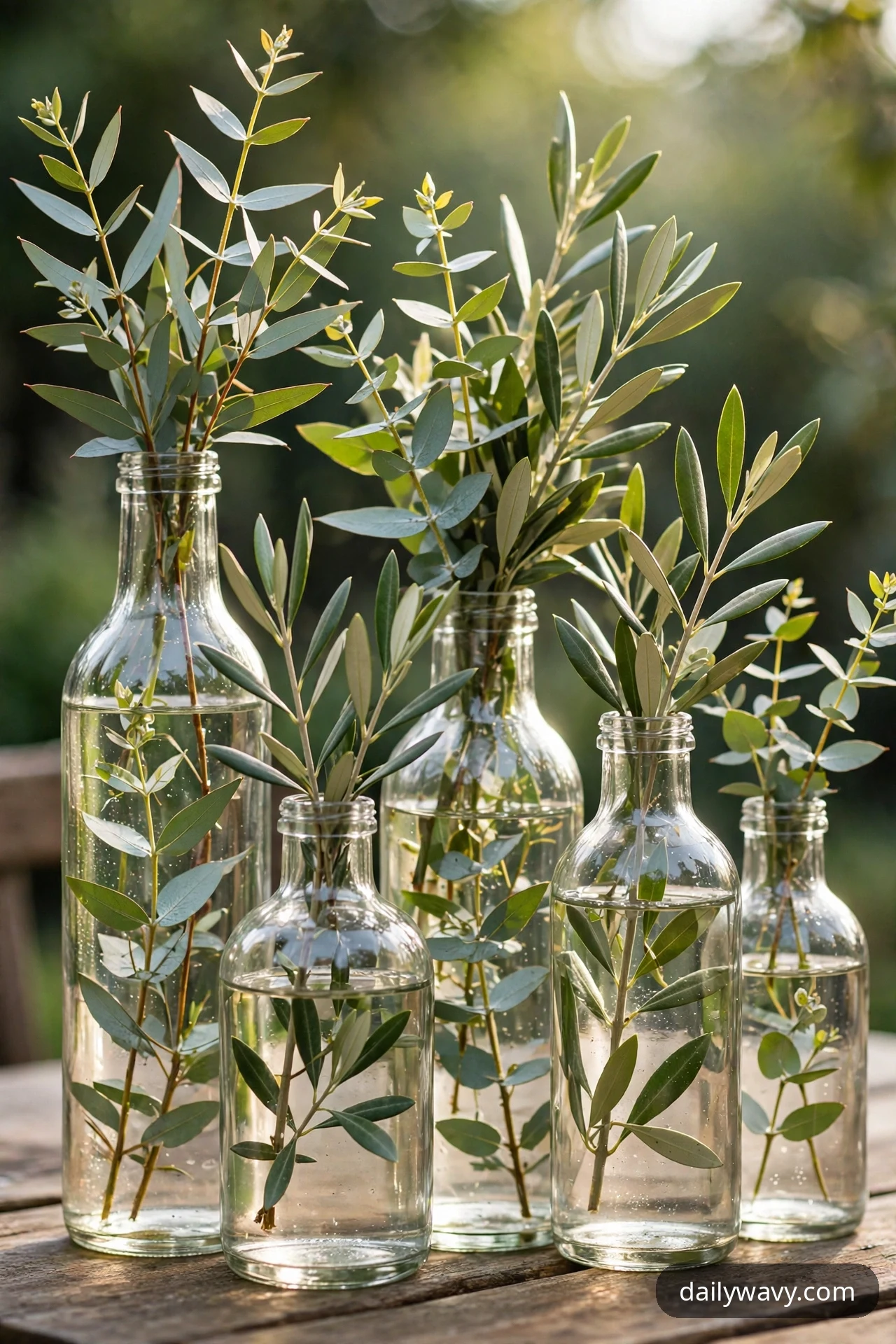
Clear glass bottles with green cuttings are the outdoor table's answer to candlelight, minus every drawback. Backlit by late sun, the glass glows, the leaves throw soft shadows, and the whole thing costs very little if you have a garden. Group three to five bottles of different heights and you have a centerpiece with real presence.
What to measure. Keep the tallest bottle under 12 inches so sightlines stay open. Group bottles within a 12-inch circle or a short row no longer than 18 inches.
Materials. Clear glass bottles (olive oil bottles, apothecary bottles, simple bud vases), water, green cuttings: eucalyptus, olive branches, rosemary, ferns, or whatever is growing nearby. Strip the lower leaves so stems sit clean in the water. Eucalyptus is for looks only: it is not food-safe, so keep stems out of drinks and serving dishes.
Placement. Cluster the bottles slightly off-center so the arrangement feels collected rather than staged. Tuck the group near the middle of the table but leave room for serving dishes at both ends. Refill water if the evening is hot.
Approximate effort. Ten minutes of gathering and arranging. The bottles can be set out all afternoon.
Lower-cost alternative. Save glass bottles from the recycling bin and remove the labels with a hot soak. The garden provides the greenery free.
9. A Compact Dried-Stem Arrangement
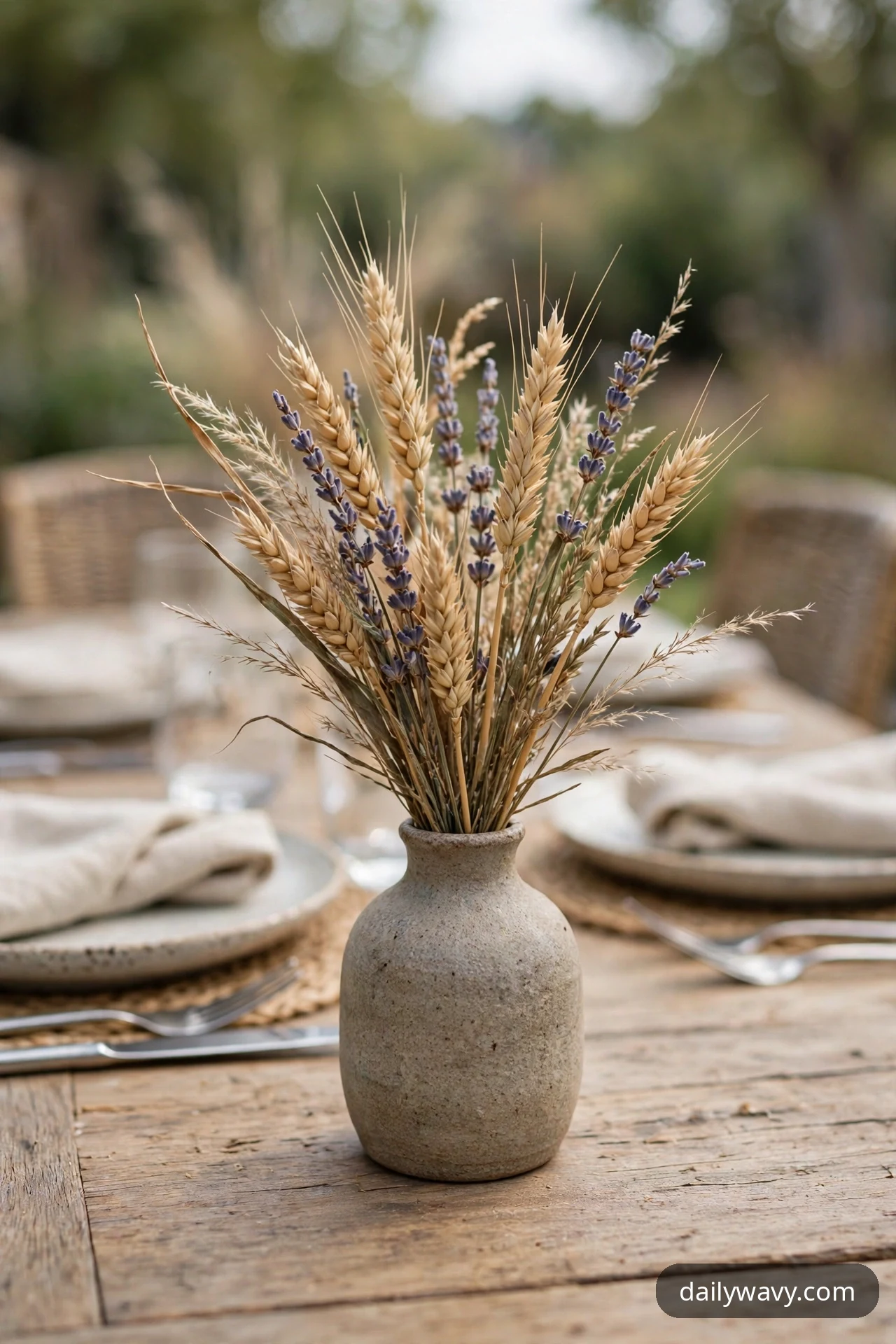
Fresh flowers wilt in heat, but dried stems do not care about temperature, wind, or being forgotten on the table overnight. A compact bundle of dried wheat, lavender, and grasses in a small vase gives you texture and a soft scent that actually suits an outdoor evening. This is the arrangement you make once and reuse all season.
What to measure. The finished arrangement should stand 6 to 8 inches above the vase rim, and the whole thing should stay under 12 inches total. The vase mouth should be 2 to 3 inches wide so stems stand without flopping.
Materials. A small stoneware or glass vase, dried stems: wheat, lavender, bunny tail grass, dried eucalyptus. Keep dried eucalyptus decorative only: it is not food-safe, so keep stems away from serving dishes. Choose three textures in one color family (all honey tones, or honey plus soft purple) for a collected look rather than a craft-store explosion.
Placement. One arrangement centers a table for four; a table for eight gets two, spaced evenly. Because dried stems are light, set the vase on a small tray or add a few stones at the bottom so a gust does not topple it.
Approximate effort. Ten minutes to arrange, then zero maintenance for months. Shake off dust occasionally.
Lower-cost alternative. Dry your own: hang garden herbs, grasses, or wildflowers upside down in a dark closet for two weeks. Lavender from one plant scents a whole table.
10. A Handwritten Place Card
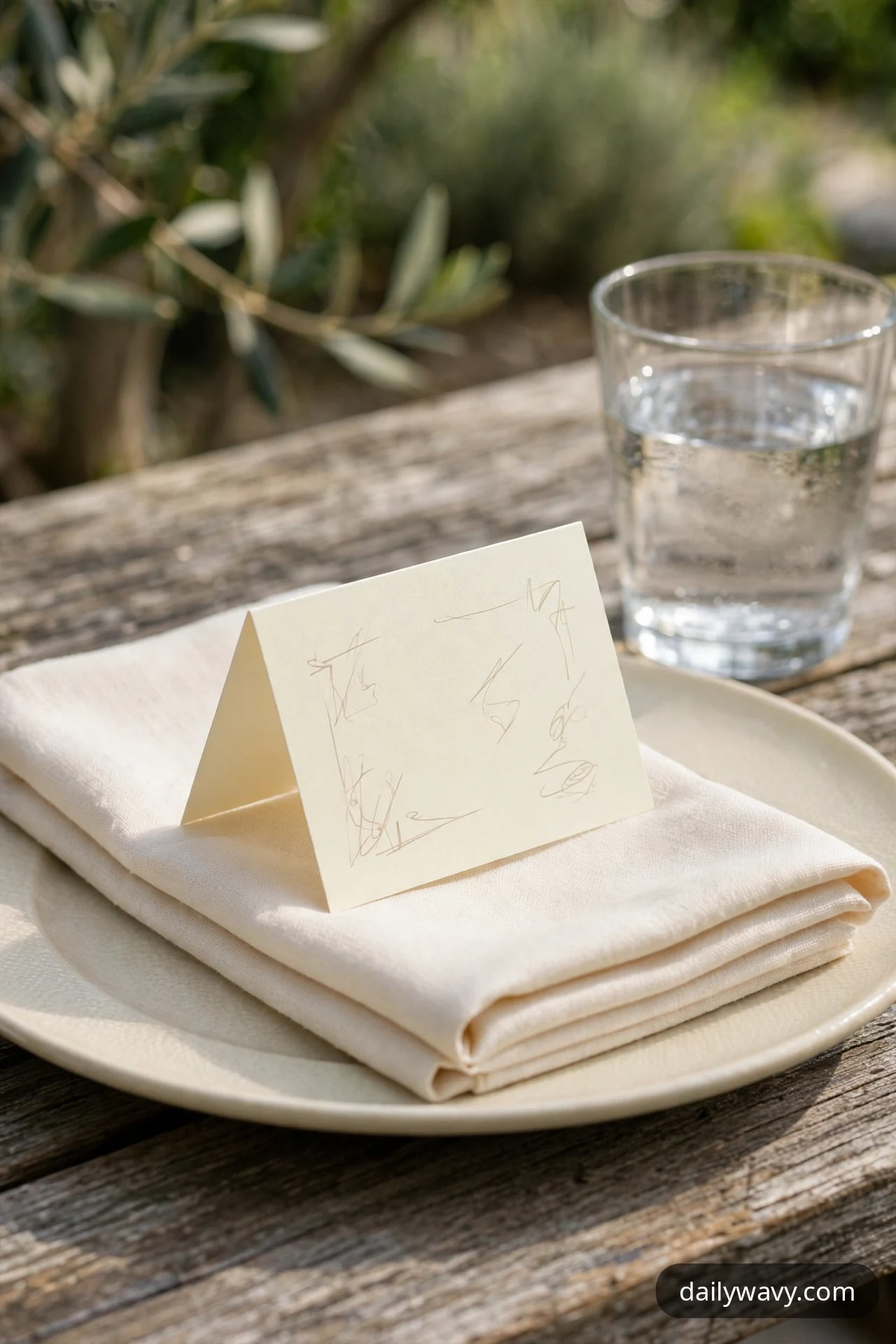
A place card is a small thing with an outsized effect. It tells each guest, before a word is spoken, that this seat was prepared for them specifically. Outdoors, keep it simple: a folded tent card in heavy paper, a name in your normal handwriting, propped against the napkin. No calligraphy skills required. Yours will look better than perfect script because it looks like you.
What to measure. Tent cards should be about 3 by 2 inches folded; big enough to read from across the table, small enough not to clutter. Use card stock of at least 65 lb weight so cards stand in a breeze; lighter paper folds over.
Materials. Blank tent cards or card stock cut and folded, a pen with waterproof ink (gel or fine marker), one card per guest plus one spare for the inevitable surprise plus-one. Write first names only.
Placement. Lean each card against the folded napkin on the plate, or tuck it into the tines-side of the fork setting. Place cards after the table is fully set so you can match names to seats deliberately: put the chattiest guests in the middle, couples across from each other rather than side by side.
Approximate effort. Fifteen minutes of writing for eight guests. The thoughtfulness-to-effort ratio is hard to beat.
Lower-cost alternative. Cut cards from any heavy paper you have: watercolor paper scraps, kraft card stock, even the backs of old greeting cards. A sprig of rosemary tucked behind each card costs nothing and looks intentional.
Frequently asked questions
What is the difference between an everyday outdoor table and a holiday one?
The bones are identical to an everyday dinner table setting: same low centerpiece, same cutlery order, same placemats. For a holiday, deepen the palette (swap sage for forest green, cream for deep rust), add one seasonal stem to the vessels, and upgrade the napkins. You do not need a separate set of everything; one or two swaps signal the occasion.
How do I keep things from blowing away?
Weight is everything. Use cloth napkins instead of paper, put water in every vessel, choose wooden or ceramic pieces over light plastic, and set the table as close to mealtime as the wind demands. On genuinely gusty evenings, skip the place cards and loose petals entirely.
Can I use real glass and ceramic outside, or should everything be shatterproof?
On a stable table on a patio, real glass and ceramic are fine and look far better. Save shatterproof melamine for poolside or uneven lawn setups where a dropped plate is likely. Keep a small tray handy for carrying fragile pieces in if weather turns.
What do I do if it rains halfway through?
Have a plan before you set the table. A patio umbrella, a covered porch nearby, or even a large indoor table cleared in advance all work. Choose centerpieces that can move in one lift (trays, bowls) so the retreat takes only a moment, not a panicked relay.
How many centerpiece pieces is too many?
If you cannot set down a serving bowl without moving decor, you have too many. One idea per table is the rule behind this whole article: pick the one that fits your evening and let it breathe.
What about lighting if I am not using candles?
String lights overhead are the classic answer and flatter everyone. Solar path lights around the patio edge, a lantern with a flameless insert on a side table, or simply timing dinner for golden hour all work beautifully. This article keeps things candle-free by design, and you will not miss them.
A table that invites lingering
The best outdoor tables are not the most elaborate ones. They are the ones where everything is within reach, nothing blocks the conversation, and the styling looks like it grew there rather than being installed. Pick one idea, set the table a little earlier than usual, and then sit down while the light is still good. For more ways to make your home feel considered inside and out, browse our Home & Decor collection, and if you are still organizing where all this tableware lives, our small pantry organization ideas will help it all fit.