15 Traditional Living Room Ideas to Make the Style Your Own
There is a reason traditional living rooms never really go out of style. The look is built on balance, comfort,…
There is a reason traditional living rooms never really go out of style. The look is built on balance, comfort, and rooms that feel settled rather than staged. A traditional living room means symmetry you can feel, wood with real grain, textiles that invite you to sit down, and a layout that makes conversation easy. It is not about being formal. It is about warmth that lasts. These fifteen ideas take the classic elements and show you how to use them in a real home, with real measurements and realistic budgets. Find the ones that fit your space and make the style your own.
In This Guide:
- Soft Ottoman Replacing A Sharp Table
- Window Seat With Tailored Cushions
- A Floor Lamp Beside A Book Stack
- A Large Plant In A Simple Pot
- Two Small Tables Instead Of One Large Table
- An Upholstered Bench Against The Wall
- A Narrow Console Behind The Sofa
- A Sculptural Pendant Over The Seating
- Low Coffee Table With Layered Textiles
- Conversation Seating Around A Wool Rug
- Wood Console With A Ceramic Lamp
- Curtains Framing One Generous Window
- Reading Chair With A Side Table
- Open Shelving With A Restrained Display
- Textured Cushions On A Compact Sofa
The Traditional Living Room Rules Before You Start
Traditional style has a few reliable principles. Start with symmetry: furniture in pairs, or at least balanced weight on both sides of a focal point like the fireplace or sofa. Choose warm woods like oak, walnut, or cherry with a real finish you can feel. Layer textiles in classic patterns like stripes, florals, checks, or damasks, but keep the palette tight so the room reads calm. Leave walking paths of 30 to 36 inches between furniture, and give coffee tables 14 to 18 inches of breathing room from the sofa. Finally, mix one or two antiques or vintage-style pieces with comfortable modern seating so the room feels collected over time rather than bought in one afternoon.
1. Soft Ottoman Replacing A Sharp Table
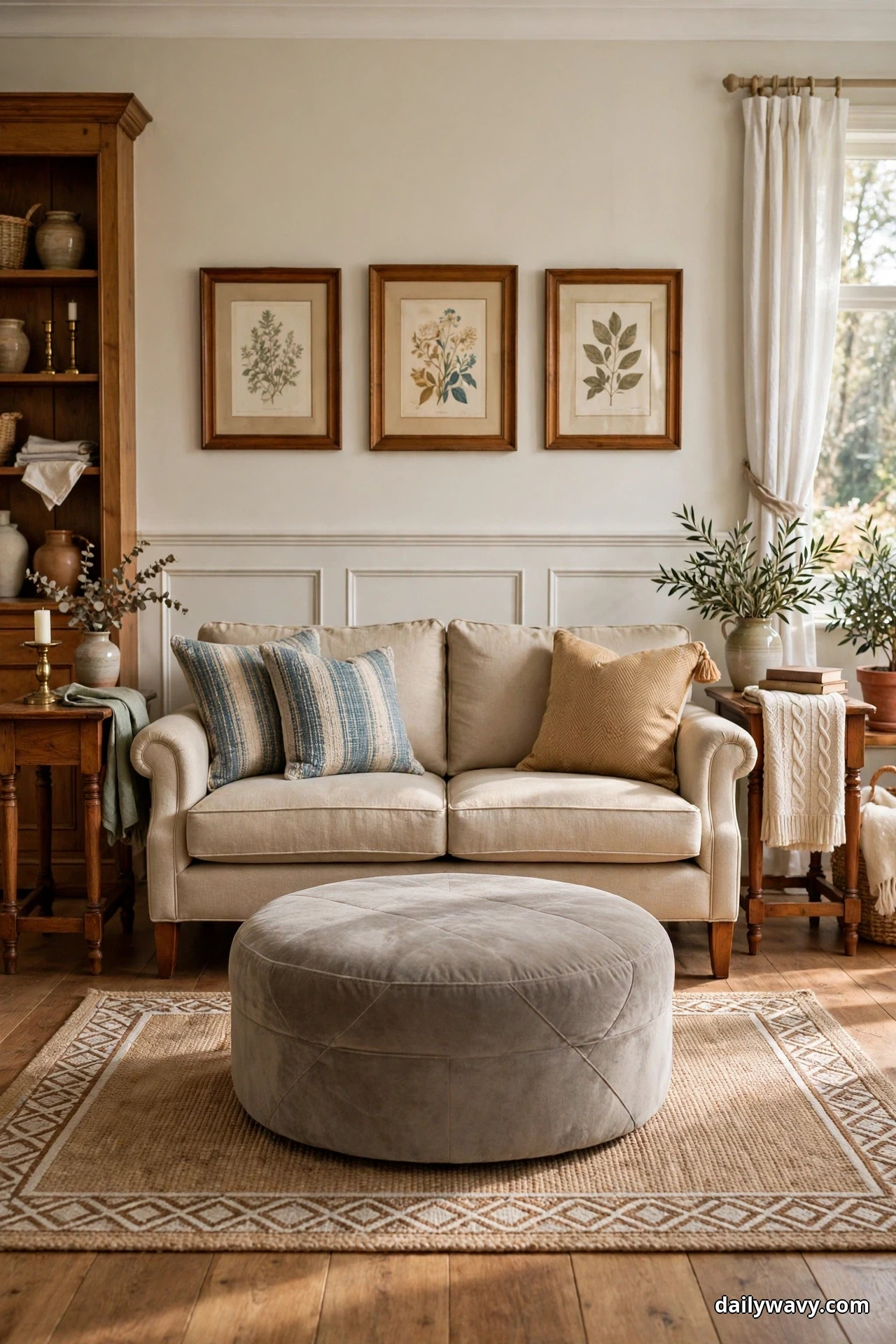
A big upholstered ottoman makes a wonderful stand-in for a coffee table. It softens the center of the room, doubles as extra seating, and is far friendlier to shins and small children than a hard-cornered table. Look for an ottoman about two-thirds the length of your sofa and roughly the same height as the seat cushions, usually 16 to 18 inches. A flat top works best so you can add a tray for drinks. Expect to spend $250 to $700 for a well-made upholstered ottoman, or half that if you find a sturdy vintage one and have it recovered in a durable fabric like linen or a stain-resistant weave. Top it with a large wooden tray to create a stable surface for coffee cups, then style the tray with a small stack of books and a candle.
2. Window Seat With Tailored Cushions
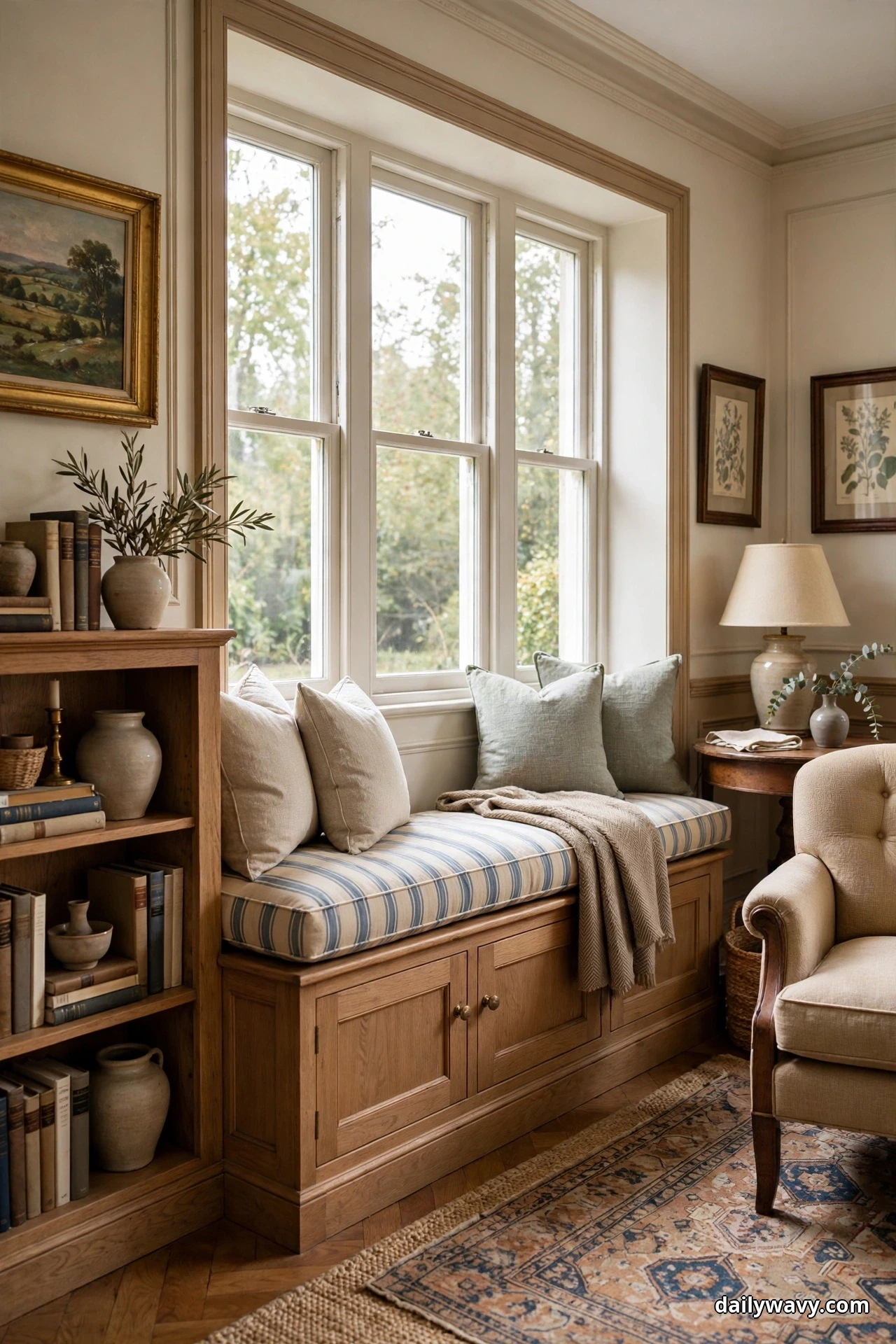
If your living room has a deep window, a window seat turns dead space into the most fought-over spot in the house. You do not need custom carpentry to get the look. A low storage bench or a pair of sturdy bookcases with a plywood top can form the base, and a 4-inch foam cushion cut to size gives the seat its comfort. Cover the cushion in a tailored fabric with piping, which reads far more traditional than a plain throw pillow look. Keep cushions tailored and symmetrical: two or three lumbar pillows in a classic stripe or small-scale floral, plus one larger square pillow in a solid that picks up the wall color. Budget around $150 to $400 for the bench base, $80 to $150 for custom-cut foam, and $60 to $120 for fabric if you sew the cover yourself. The result is a reading nook that feels built into the house.
3. A Floor Lamp Beside A Book Stack
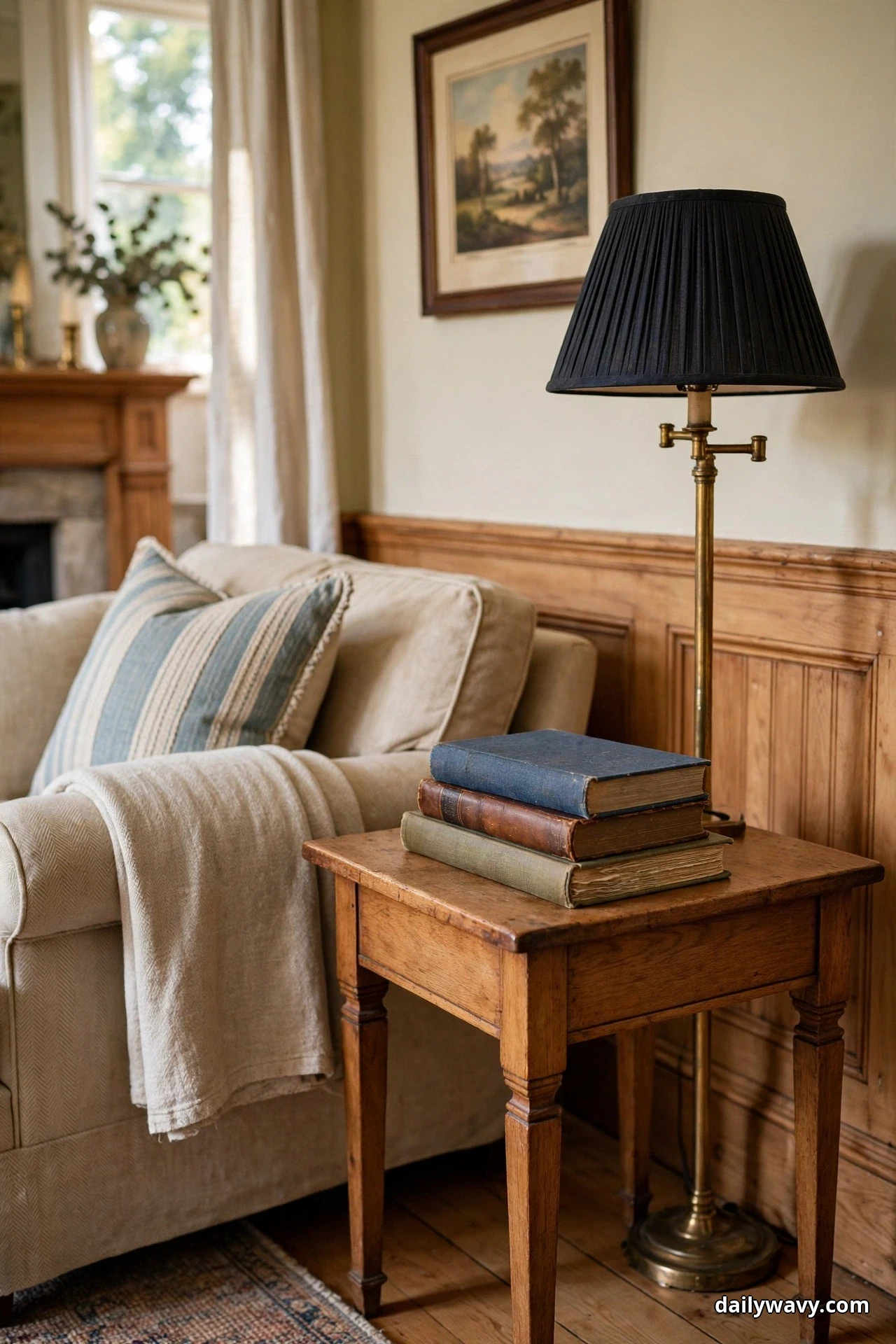
Overhead light alone makes a traditional living room feel flat. A floor lamp beside a small stack of books adds a warm pool of light and a quiet, bookish personality. Choose an arc or pharmacy-style floor lamp with a fabric shade, which throws a softer glow than a bare bulb. Place the lamp 6 to 8 inches beside the chair and make sure the bottom of the shade sits at about eye level when you are seated, roughly 42 to 48 inches off the floor. Stack three or four books on the side table next to it, largest on the bottom, and top the stack with something small like a brass magnifier or a small plant. A good floor lamp runs $120 to $350. Use a warm white bulb (2700K) so the light feels like late afternoon rather than an office.
4. A Large Plant In A Simple Pot
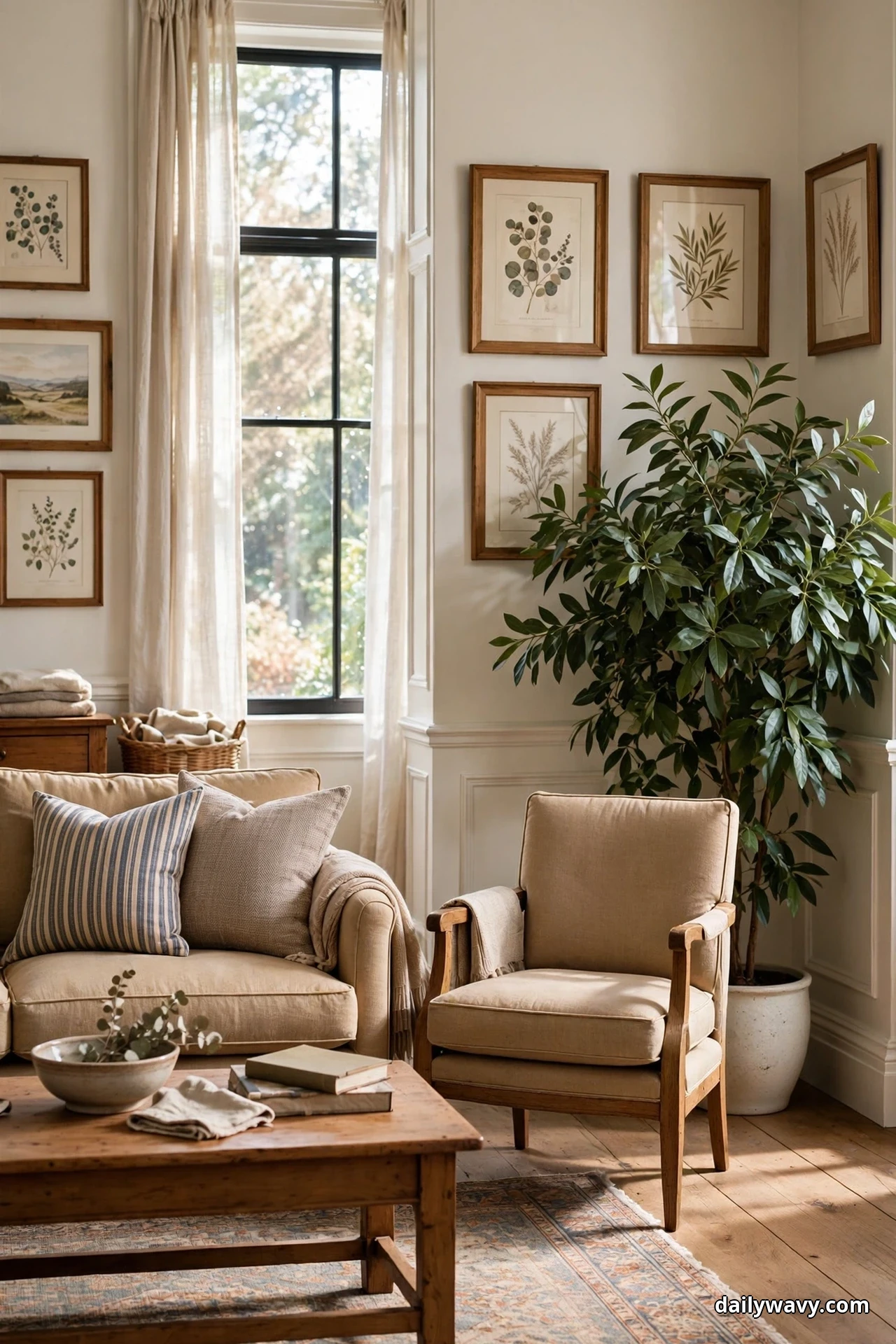
Traditional rooms can lean heavy on wood and upholstery, and one large plant is the easiest way to lighten the whole scene. Pick a statement plant like a fiddle-leaf fig, olive tree, or kentia palm in the 5 to 7 foot range, and set it in a simple ceramic or clay pot so the plant stays the star. Place it in an empty corner or beside the fireplace where it can catch natural light without crowding the walkway. Water needs vary, so check the nursery tag and stick to a routine: most indoor trees want a deep drink only when the top two inches of soil are dry. A healthy nursery tree this size costs $80 to $250, and a good simple pot runs $40 to $90. One big plant always looks more intentional than five small ones scattered around.
5. Two Small Tables Instead Of One Large Table
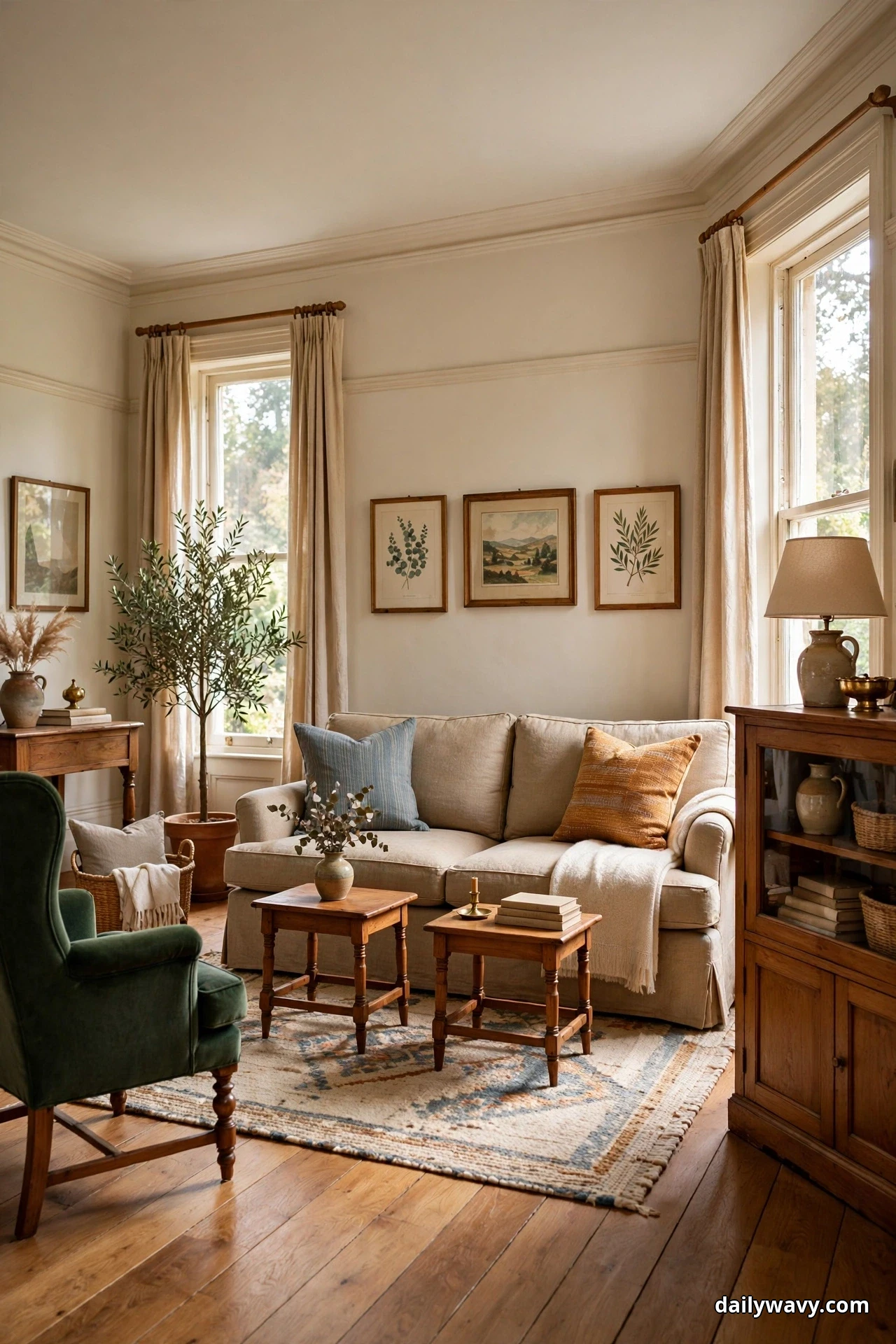
One oversized side table can unbalance a sofa, but two small tables flanking it create the symmetry traditional style loves. The trick is keeping them matched or at least related: same height (within an inch or two), similar wood tones, and lamps or decor of similar scale on top. Each table should sit about level with the sofa arm, usually 22 to 26 inches high, and leave just an inch or two of gap from the sofa so reaching a drink feels natural. Round tables soften a room full of rectangles, while square ones feel more formal. Budget $100 to $300 per table for solid wood pieces at secondhand or discount furniture stores. Top each with a matching lamp and the whole arrangement suddenly looks designed rather than assembled.
6. An Upholstered Bench Against The Wall
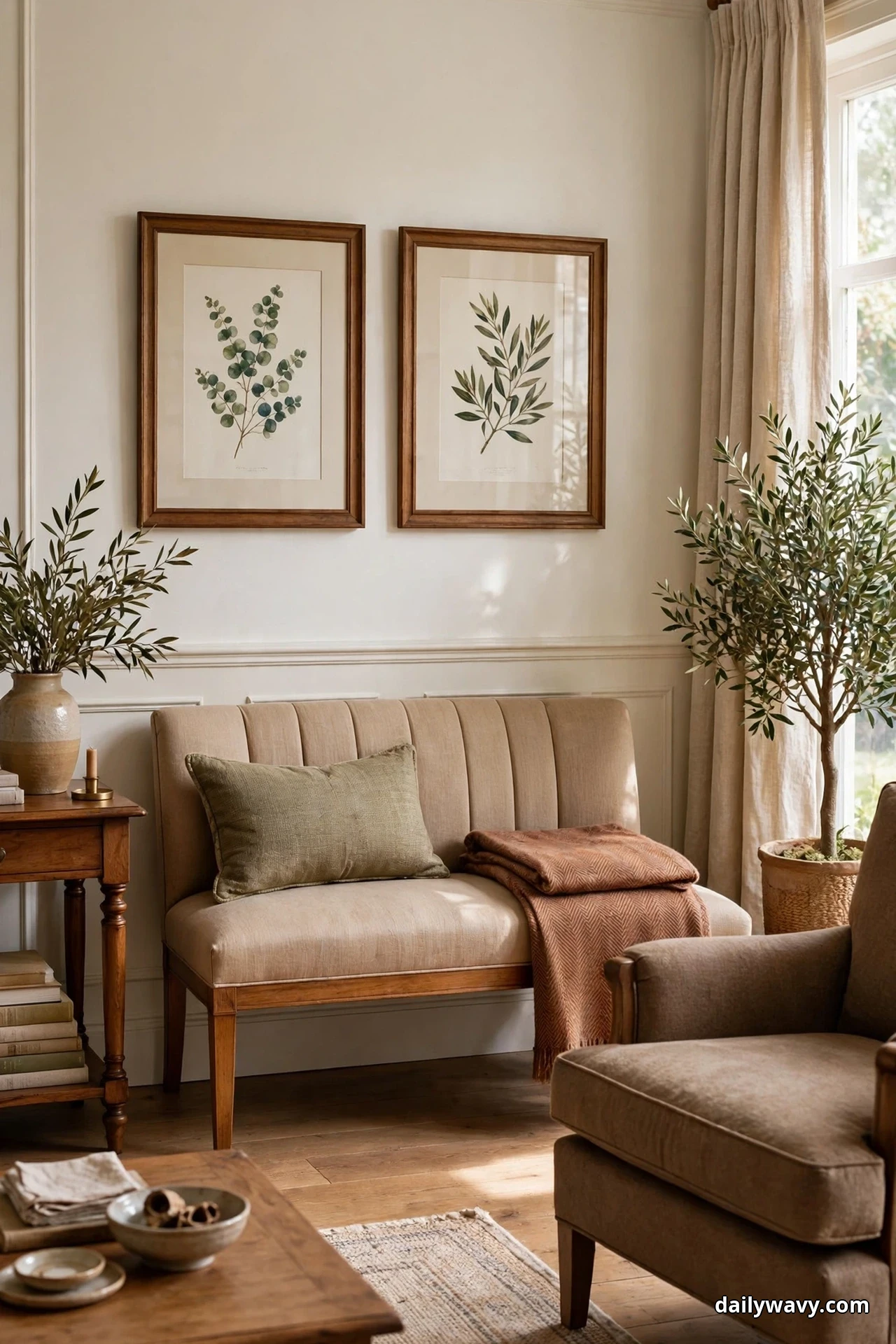
An upholstered bench against a blank wall solves two problems at once: it fills an awkward empty stretch and gives you flexible seating that moves wherever guests gather. Look for a bench 42 to 54 inches long so it reads substantial without eating the room. Style it with one lumbar pillow and a folded throw, and hang a framed print or a pair of sconces above it so the wall feels finished. Many benches come with hidden storage inside, which is perfect for stashing throw blankets or board games. Expect $180 to $450 for a quality upholstered bench. Place it under a window, at the foot of nothing in particular, or along the wall behind a floating sofa to anchor the back of the arrangement.
7. A Narrow Console Behind The Sofa
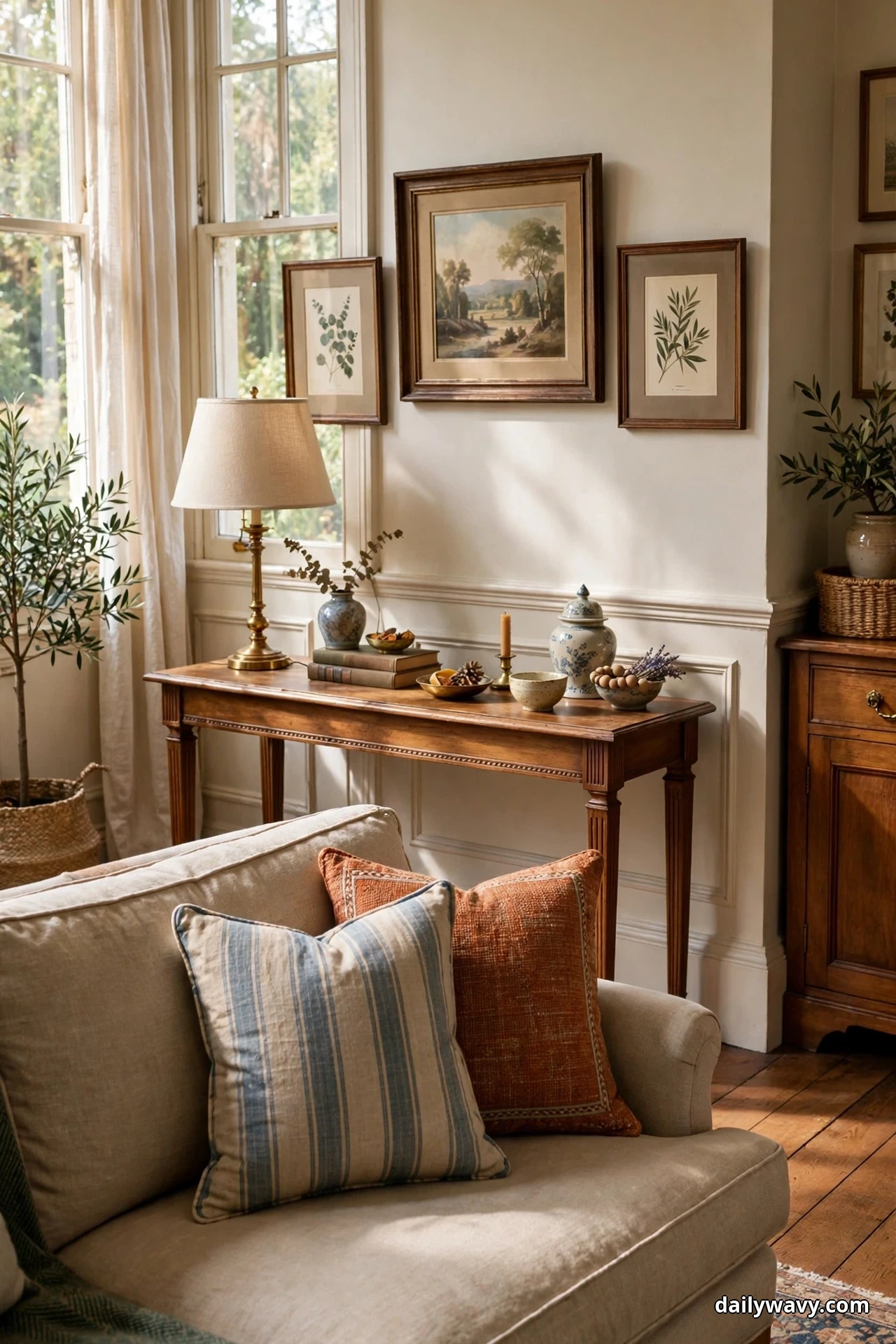
When a sofa floats in the middle of the room, the back of it can look unfinished from the entry. A narrow console table, 10 to 14 inches deep, tucked right behind the sofa gives that view a purpose. Style it with a pair of matching lamps or candlesticks for symmetry, a stack of two coffee table books, and one low green element like a small fern or a bowl of lemons. Keep the total height of the styling below eye level from across the room so the console adds interest without blocking sight lines. A simple wood console costs $120 to $350. This one piece makes a floating layout feel deliberate, which is exactly the confidence traditional rooms are known for.
8. A Sculptural Pendant Over The Seating
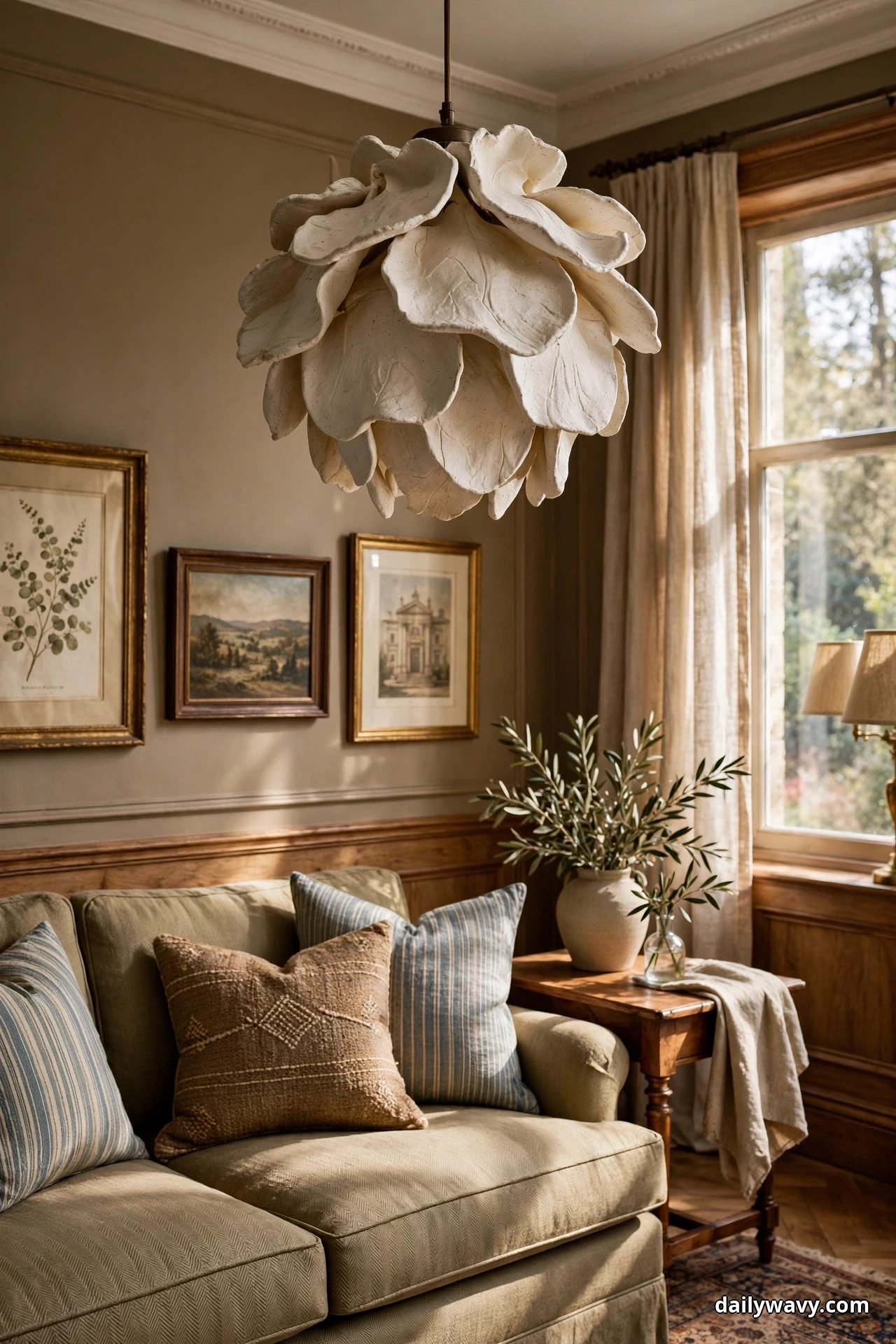
Traditional does not have to mean predictable, and one sculptural pendant over the seating area proves it. A drum shade in linen, a brass lantern, or a rattan dome all work as long as the shape has presence. Hang it so the bottom of the fixture sits 30 to 36 inches above the coffee table, or about 7 feet off the floor if there is no table beneath it. Choose a dimmable warm bulb so you can lower the light for evenings. A statement pendant runs $150 to $500, and swapping a builder-grade flush mount for one pendant is the fastest single change you can make in a living room. Keep the rest of the lighting simple so the pendant stays the star.
9. Low Coffee Table With Layered Textiles
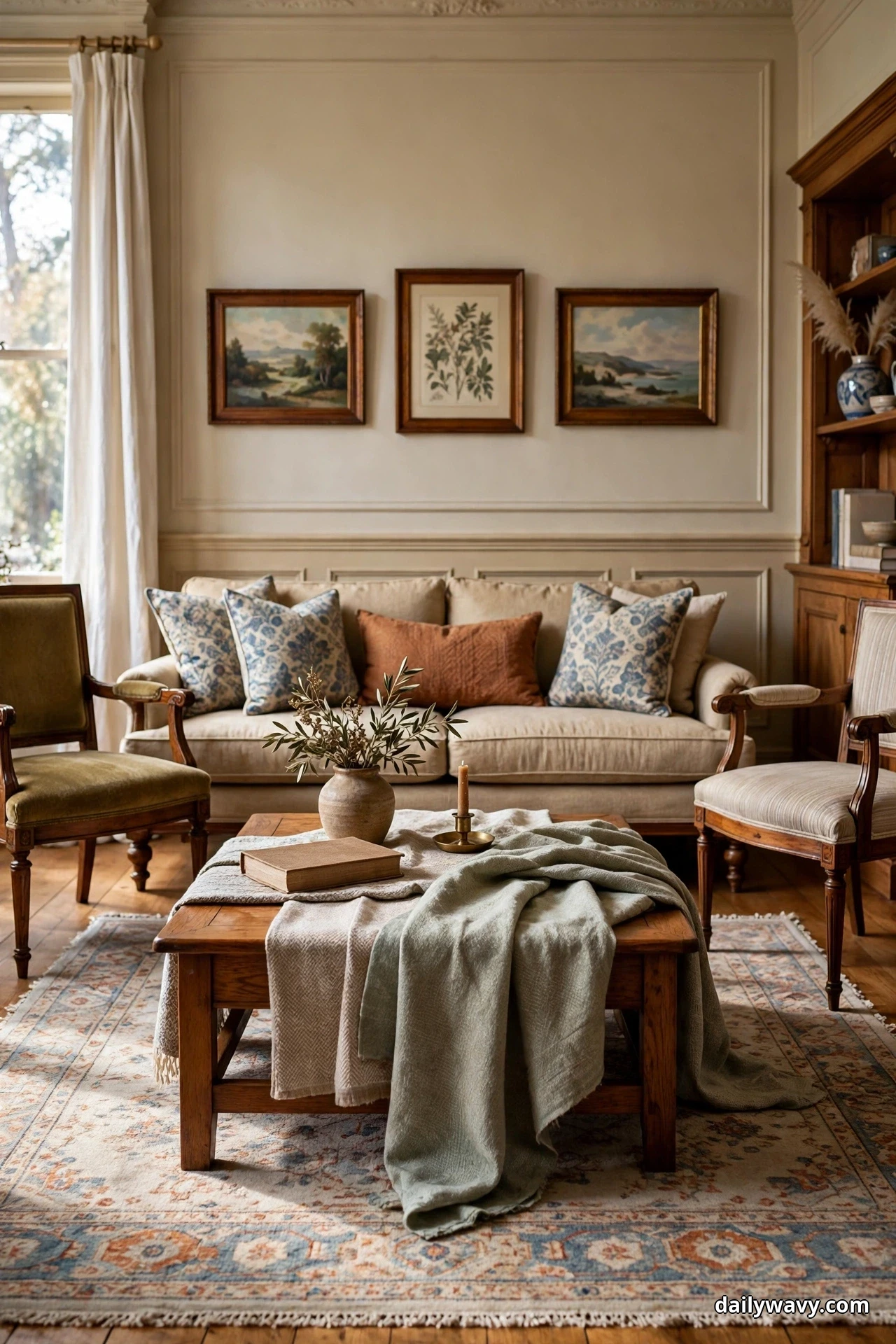
A low coffee table, 14 to 16 inches high, paired with layered textiles underneath creates a relaxed, collected feeling that still reads traditional. Start with a flat-weave rug large enough that the front legs of the sofa and chairs sit on it, then add a smaller, softer rug or sheepskin layered on top at an angle for texture. On the table itself, use a runner or folded textile under the tray so the wood peeks out at the edges. The layering is what makes it work: hard table, soft rug, crisp runner, worn leather or wood tray. A solid wood low coffee table costs $200 to $500. Keep the palette to two or three colors across all the layers so the room feels rich rather than busy.
10. Conversation Seating Around A Wool Rug
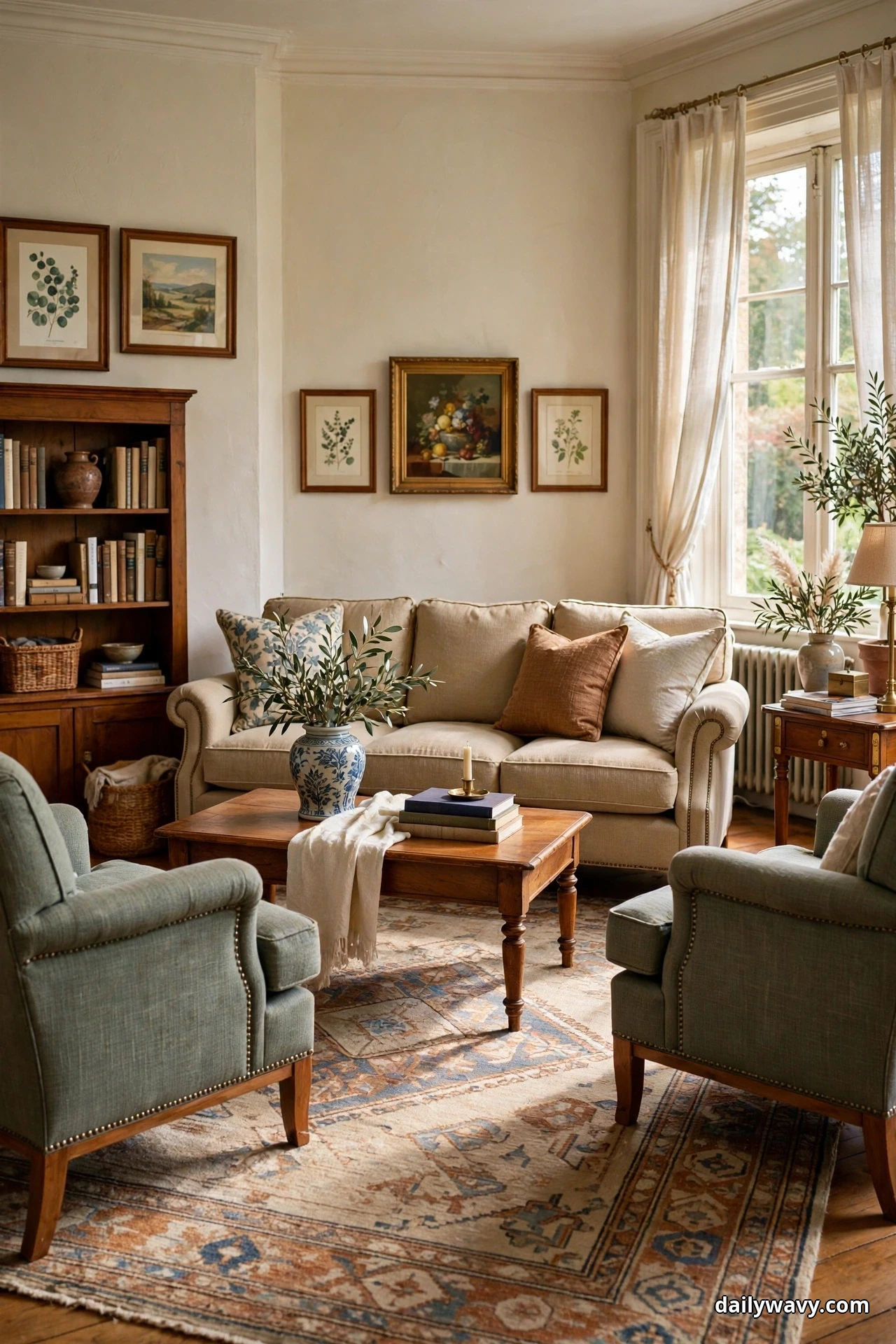
The heart of a traditional living room is a seating group arranged for conversation, and a wool rug is what holds it together. Place two armchairs facing the sofa across a coffee table, all four front legs on the rug. For most rooms an 8 by 10 foot rug is the sweet spot, and it should extend at least 6 inches beyond the chairs on each side. Wool is worth the investment: it resists stains better than synthetics, feels substantial underfoot, and lasts for decades. Expect $400 to $1,200 for a quality wool 8×10, though estate sales and rug outlets often have beautiful options for far less. Keep the chairs 5 to 8 feet apart so conversation feels easy without shouting. If you are working with a long narrow room, our guide to narrow living room layouts shows how to adapt this arrangement without crowding the walkway.
11. Wood Console With A Ceramic Lamp
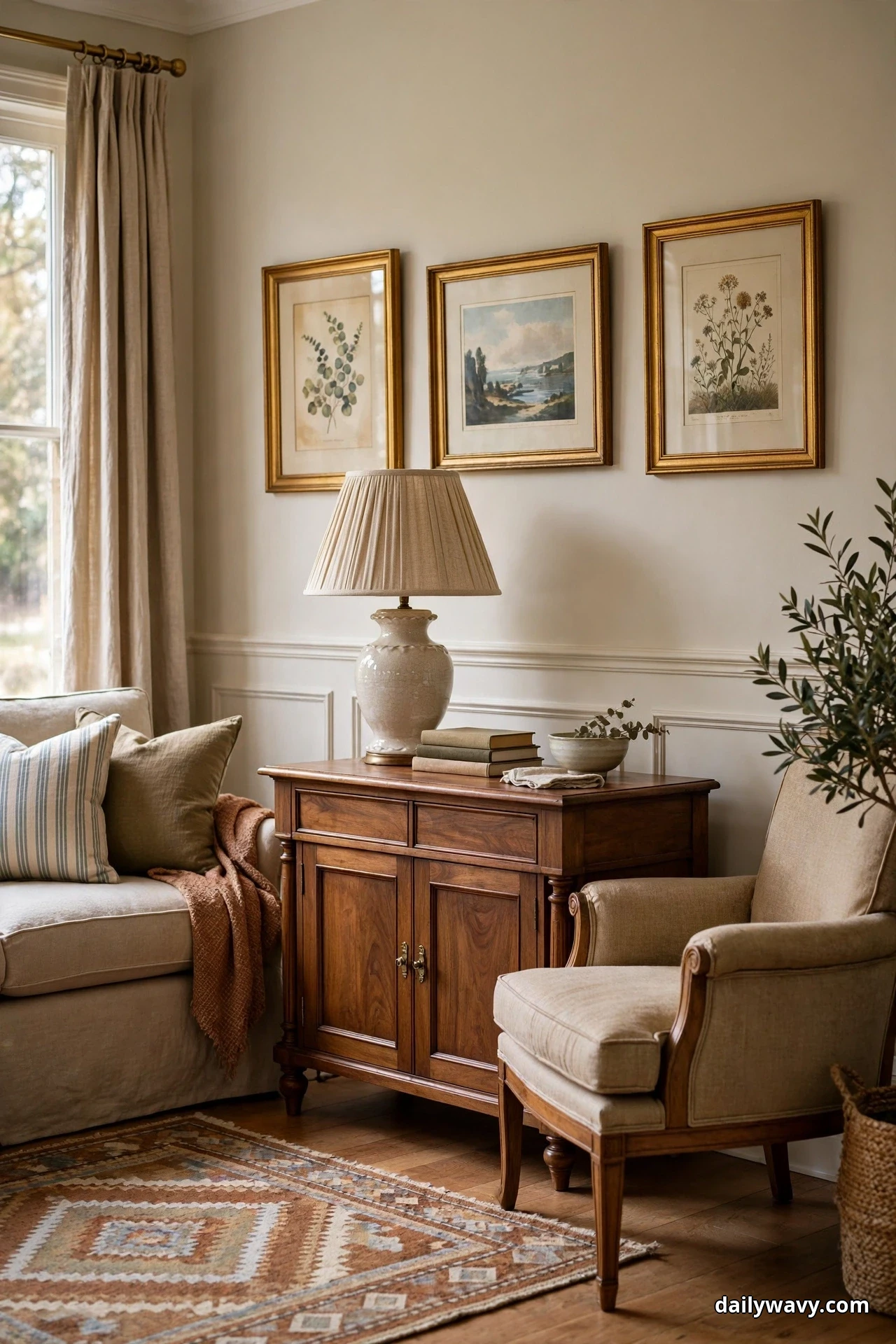
A wood console topped with a ceramic lamp is a classic pairing that brings warmth and a handmade touch. Look for a console in oak or walnut with simple turned legs or a plank top, 48 to 60 inches long for most walls. The lamp should be substantial: a ceramic base 18 to 24 inches tall with a linen drum shade, so it holds its own against the wood. Place the console on a wall that needs grounding, like behind an entry sight line or under a large mirror, and add one stack of books and a small bowl to keep it from looking like a lamp store display. A good wood console runs $150 to $400 and a quality ceramic lamp $80 to $200. The combination of wood grain and glazed ceramic is one of those pairings that never looks dated.
12. Curtains Framing One Generous Window
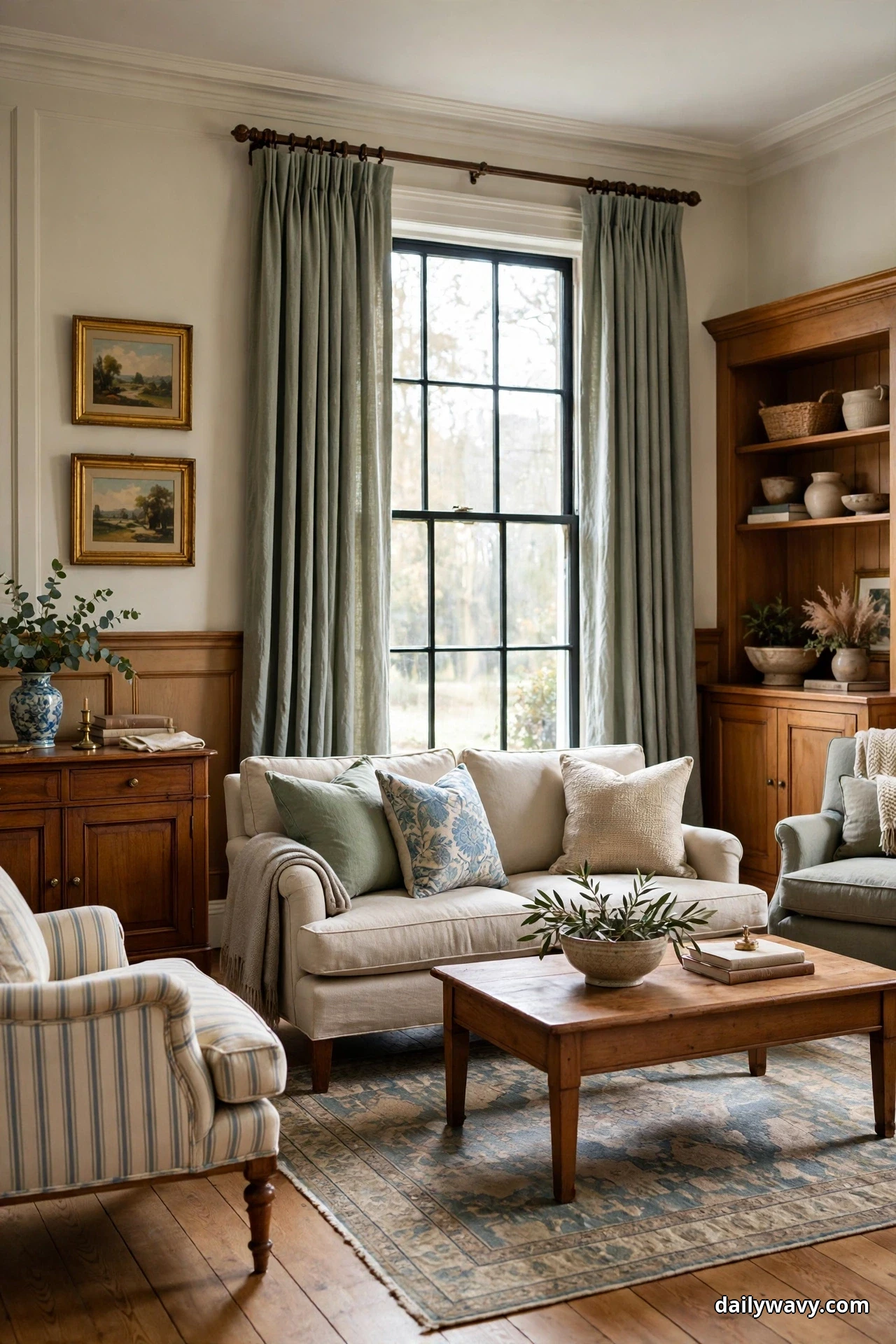
Nothing says traditional like floor-length curtains framing a generous window. Hang the rod 4 to 6 inches above the window frame and extend it 8 to 12 inches past each side so the panels stack on the wall and the window looks bigger. The panels should just kiss the floor or puddle slightly, never hover an inch above it. For a traditional feel choose linen, cotton duck, or a subtle damask in a solid color that relates to the rug. Two panels per window look fuller than one. Budget $60 to $150 per panel for ready-made lined curtains, or $200 to $400 per panel for custom. If your windows need more than curtains, the small entryway decor ideas show how the same tailored approach works at the front of the house too.
13. Reading Chair With A Side Table
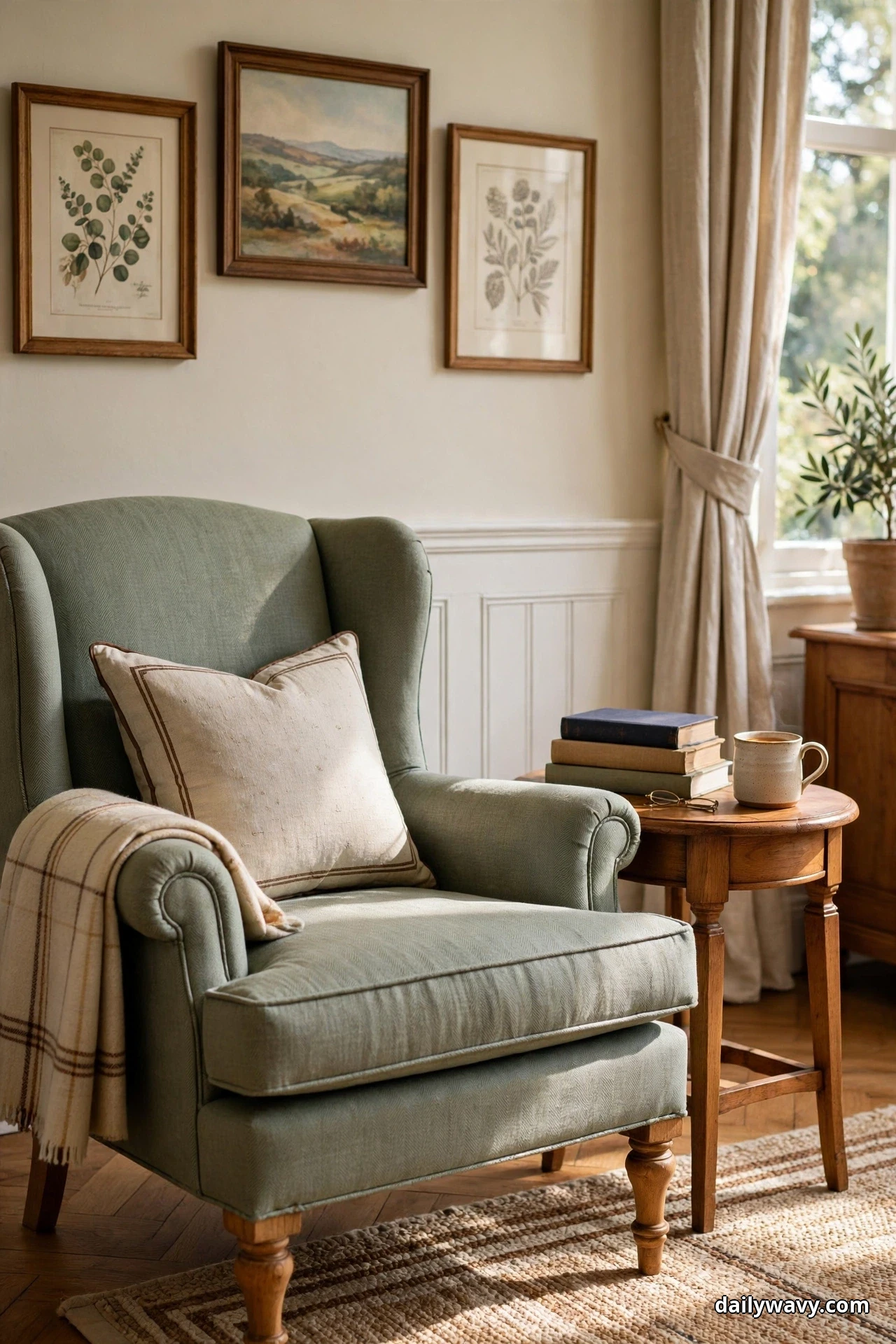
Every traditional living room deserves a corner that belongs to one person and one book. A comfortable reading chair with a small side table is all it takes. Choose a chair with a high back and arms you can lean into, a wingback or a deep club chair both suit the style. Tuck a side table 16 to 20 inches in diameter right beside it, close enough to reach a cup without leaning. Add a floor lamp or a small table lamp for reading light, and finish with a throw draped over one arm. A good reading chair costs $300 to $800, and a simple side table $60 to $150. Angle the chair slightly into the room rather than flat against the wall so it joins the conversation when the book is closed.
14. Open Shelving With A Restrained Display
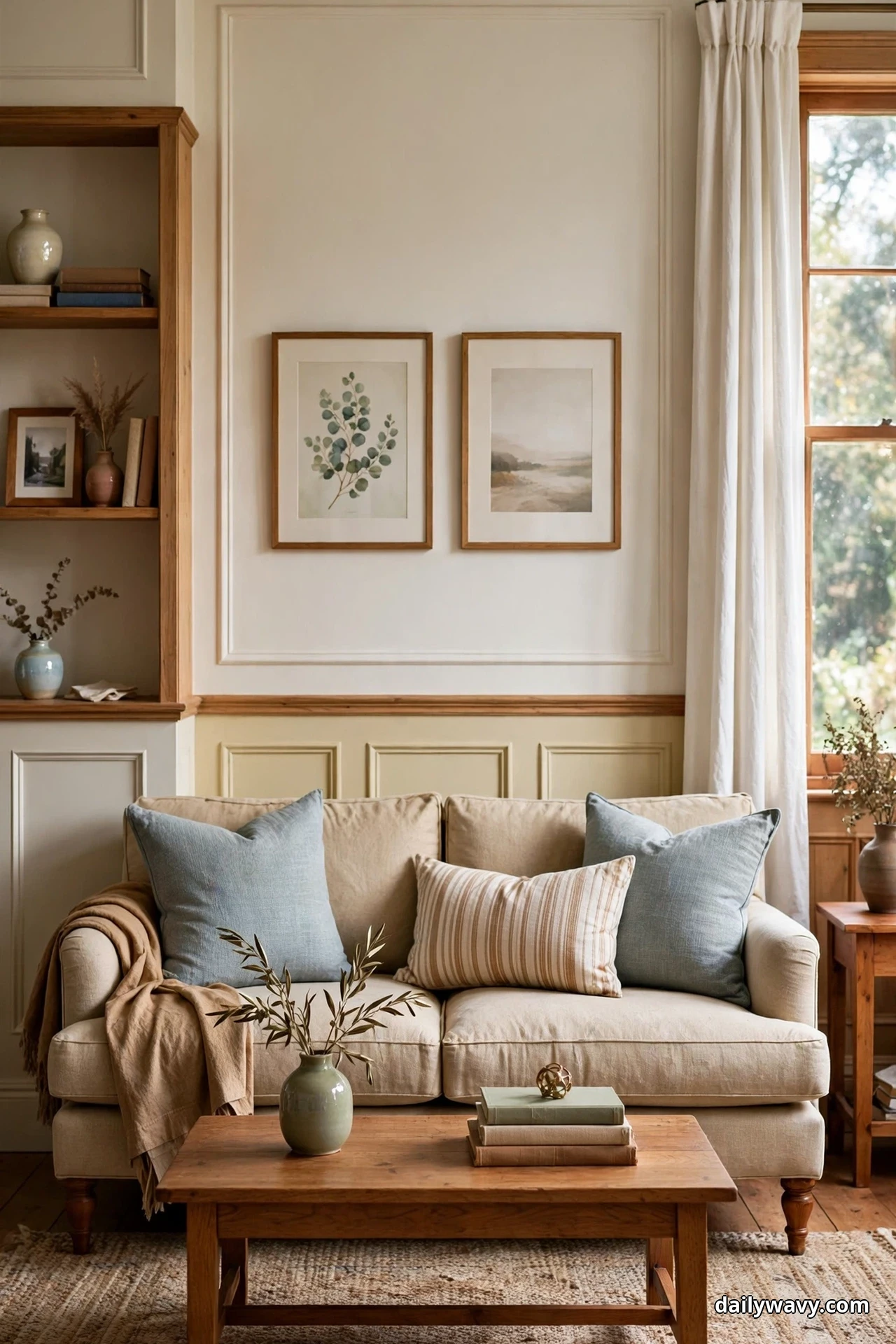
Open shelves work in traditional rooms when the display stays restrained. The rule is simple: group objects in odd numbers, vary the heights, and leave more empty space than feels natural at first. Books stacked horizontally make good risers for small objects. Mix materials: ceramic, brass, wood, and one framed photo, and repeat one color across the shelves so the whole unit reads as one composition. Step back after every shelf and remove one thing. Open shelving units in solid wood cost $150 to $450. Dust the shelves monthly, since open storage collects it. For keeping the rest of the house just as calm, the small pantry organization guide uses the same edit-as-you-go thinking in the kitchen.
15. Textured Cushions On A Compact Sofa
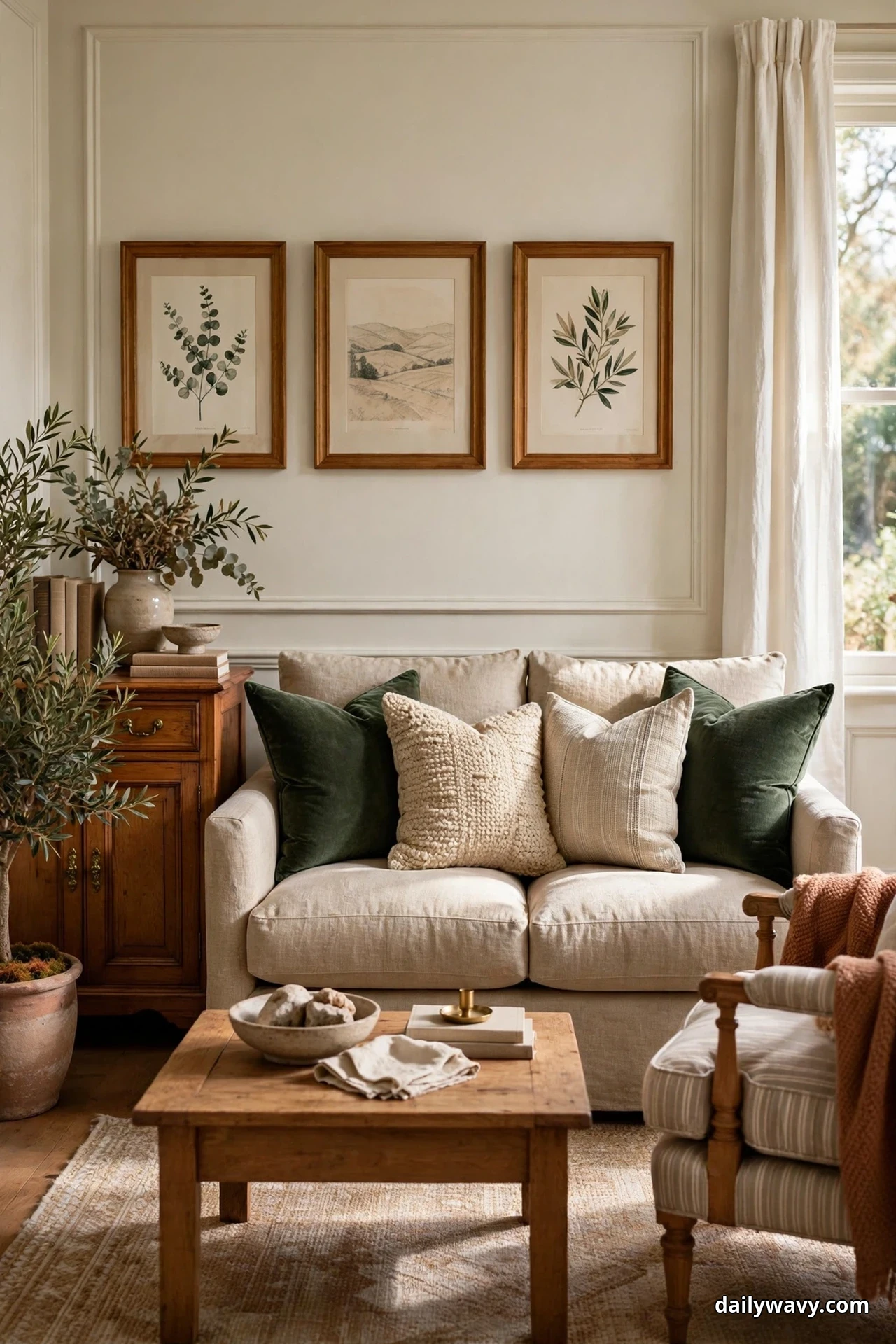
If your sofa is on the compact side, textured cushions are the fastest way to give it a traditional, tailored richness. Mix three textures: a velvet, a linen, and something nubby like bouclé or a woven stripe. Keep the colors in one family, for example creams, camels, and soft greens, so the mix feels curated. Use 18-inch squares for the back corners and one 12 by 20 lumbar in front. Karate-chop the tops of the square pillows for that classic tailored dent. Good cushion inserts matter more than the covers: buy feather or feather-blend inserts two inches larger than the cover for a full, plump look. Expect $25 to $60 per complete pillow. Five well-chosen cushions can make a modest sofa look like it was styled for a magazine.
Traditional Living Room FAQs
What exactly defines a traditional living room?
Balance, symmetry, warm woods, and classic patterns. Traditional rooms favor pairs of furniture, tailored upholstery, framed art, and a calm palette with one or two accent colors. The feeling is settled and comfortable rather than stark or overly casual.
Can traditional style work in a small living room?
Yes, and it often works better than minimalism in small rooms because layered textiles and warm wood make a tight space feel cozy rather than empty. Stick to a compact sofa, one strong rug, and two or three of the ideas above instead of all fifteen. Browse the full Home & Decor collection for more small-space friendly styling.
How do I mix traditional with modern pieces?
Keep the architecture of the room traditional: symmetrical layout, classic rug, tailored curtains. Then let one or two modern pieces in, like a clean-lined chair or a sculptural lamp. The modern piece should share the room’s color palette so it feels chosen, not accidental.
What colors work best in a traditional living room?
Warm neutrals form the base: creams, taupes, soft grays, and warm whites. Layer in classic accent colors like navy, hunter green, burgundy, or brass gold. Keep the palette to three or four colors total so the room stays calm.
Is traditional style expensive to achieve?
It does not have to be. The style rewards secondhand finds: solid wood furniture, framed art, and wool rugs all show up at estate sales and thrift stores at a fraction of retail. Spend your budget on the pieces you touch every day, the sofa and the rug, and save on decor and side tables.
How do I keep a traditional room from feeling stuffy?
Leave breathing room. One large plant, some empty shelf space, and curtains that let in real daylight keep the formality from tipping into a museum. A room you actually live in, with a book left open and a throw within reach, never feels stuffy.
The Takeaway
Traditional style endures because it is built on comfort and balance rather than trends. You do not need to buy a whole room at once. Start with the layout: a rug that fits, seating that faces each other, light at more than one height. Then add the tailored details, curtains that touch the floor, cushions with real texture, wood you can feel. Pick the three or four ideas from this guide that suit your space and your budget, live with them for a while, and add more when you are ready. That slow, collected feeling is the whole point of traditional, and it is exactly what makes these rooms feel like home.