12 Christmas Table Decor Ideas with Details You Can Reuse
12 Christmas Table Decor Ideas with Details You Can Reuse Christmas decorating works best when it stays simple. A table…
12 Christmas Table Decor Ideas with Details You Can Reuse
Christmas decorating works best when it stays simple. A table looks beautiful with one strong idea carried through, not ten competing ones. This guide collects twelve practical table decor ideas you can actually build: real materials, honest effort estimates, storage notes so you can reuse them next year, and the safety clearances that matter around food and flame. Every idea is shown with its own photo, and each one is designed for a real dining table, console table, or coffee table in a lived-in home.
Jump to an idea: 1. A Simple Seasonal Garland Placed Safely | 2. A Bowl of Season-Appropriate Natural Objects | 3. A Handmade Paper Detail | 4. A Compact Wreath as a Focal Point | 5. A Pair of Bud Vases | 6. A Low Wooden Tray with Seasonal Objects | 7. A Single Accent Color Repeated Three Times | 8. A Subtle Patterned Fabric | 9. A Framed Seasonal Artwork | 10. A Cluster of Small Ceramic Ornaments | 11. A Natural-Texture Basket | 12. A Ribbon Detail on an Existing Object

1. A Simple Seasonal Garland Placed Safely
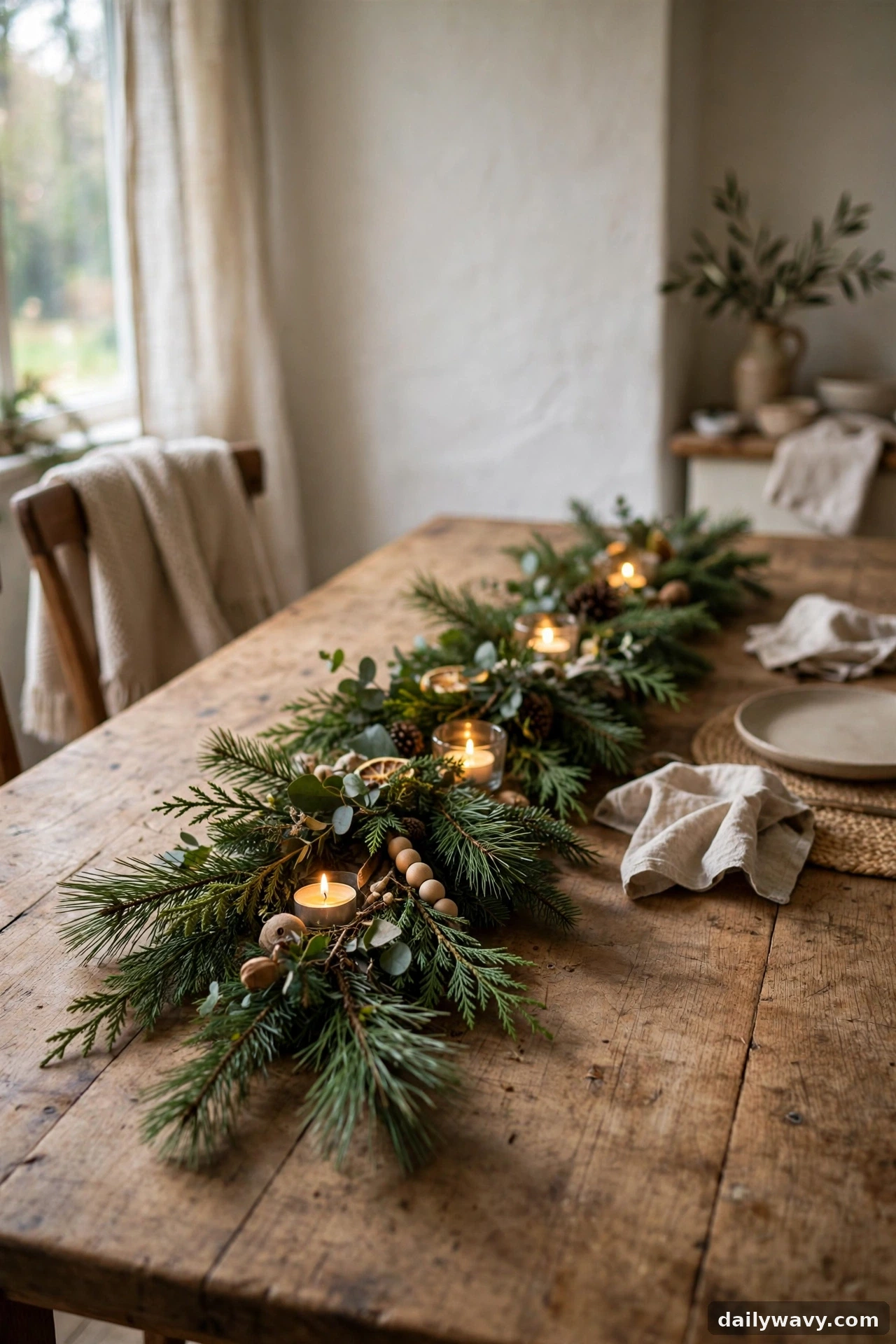
A garland running down the center of the table is the classic Christmas table look, and it works because it fills the visual middle without raising anything tall enough to block conversation. Use a fresh cedar or pine garland, or a good faux one with wired branches you can shape.
Measure your table first. For a 72-inch dining table, a 4-foot garland leaves about a foot of bare table at each end, which keeps place settings clear. Lay the garland down the center, then pull it slightly off-center so it is about 4 inches wide instead of a bulky rope. Tuck in three to five small battery-operated tea lights or a short string of fairy lights for the warm glow in the photo.
The safety part matters here: keep every bit of garland at least 12 inches from any open flame, and never drape it near or across candle flames. Flameless LED candles are the practical choice on a dining table because someone always bumps the table. Fresh garland dries out over two to three weeks, so buy it close to Christmas or mist it lightly every few days.
A full fresh garland costs around $30–$60 depending on length; a decent faux garland runs $25–$40 and lasts years. The lower-cost version is foraged evergreen branches from your own yard or a local tree lot's trimmings pile, which are often free, wired together loosely with floral wire you already own.
To store: roll a faux garland loosely, tie it in two places, and keep it in a box with the lights attached so next year you unroll and plug in. Fresh garland composts when it is done.
2. A Bowl of Season-Appropriate Natural Objects
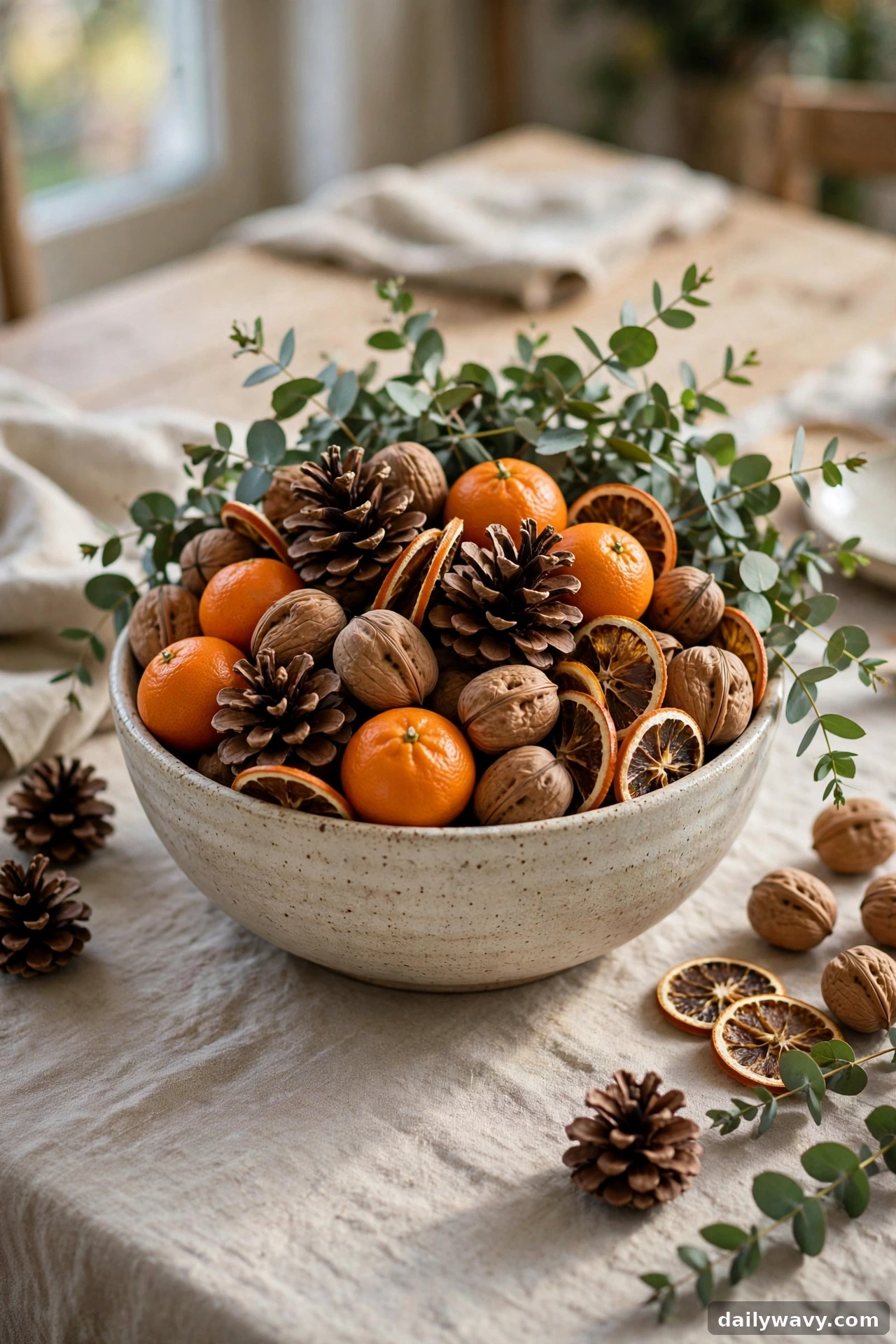
One beautiful bowl full of seasonal things is the lowest-effort centerpiece that still looks intentional. Pinecones, whole walnuts in shell, clementines, dried orange slices, and a few sprigs of eucalyptus are the materials that read instantly as Christmas.
Choose a bowl 10–14 inches wide for a dining table; anything smaller disappears, anything bigger crowds the place settings. Fill it loosely so items sit above the rim in a natural mound. Put the heaviest items (pinecones, nuts) at the bottom and the lightest, most fragrant things (eucalyptus, dried oranges) on top. Two or three clementines add fresh color that real fruit gives better than anything fake.
Placement is simple: center the bowl on the table, or slightly toward one end on a round table so it does not fight with a centerpiece plate of food. This is a food-adjacent display, so keep it to one side of the table during an actual meal if you need serving space.
Effort is about 20 minutes of gathering and arranging. A bowl you own plus foraged or grocery-store naturals costs $10–$20. The budget version is a single pinecone gathered on a walk, a few chestnuts from the pantry, and one orange sliced and dried in a low oven (about 200°F for 2–3 hours).
Reuse: pinecones, dried slices, and faux items go into a labeled box for next year. Compost the fresh fruit and replace it each season.
3. A Handmade Paper Detail

Paper details make a table feel personal without any real expense. Paper stars hung at different heights over the table, folded place cards, or simple paper chains are all handmade details that guests actually notice.
For place cards, cut heavy cardstock to about 3.5 by 2 inches, fold tent-style, and write names with a gel pen or brush marker. Ten cards take about 30 minutes including writing. For hanging paper stars, buy a pack of pre-folded accordion stars ($8–$12 for a set of three) or fold your own from kraft paper using any online tutorial; hang them from the ceiling or a branch suspended above the table with clear fishing line at staggered heights.
Measure the drop: hang stars so the lowest one sits at least 24 inches above the tabletop, well clear of heads and serving dishes. Keep paper away from any open flame entirely; use flameless candles if paper details are on the same table.
Paper is the lower-cost idea by definition: a pack of kraft paper or cardstock costs $5–$8 and makes dozens of pieces. Store flat stars unfolded in a large envelope between sheets of tissue; folded stars and cards go in a zip bag labeled with the year so you can reuse them.
4. A Compact Wreath as a Focal Point

A small wreath laid flat in the middle of the table works as a centerpiece you can see over. It is the table version of the classic wreath look, scaled down for a dining surface.
Pick a wreath 12–16 inches across for a standard dining table, 10–12 inches for a small round table or coffee table. Lay it flat, then set a cluster of three flameless pillar candles of different heights in the hollow center, or a single hurricane vase with a candle inside. The wreath frames the candles and hides their bases.
Measure your table width before buying: you want at least 12 inches of clear table on each side of the wreath so plates and glasses fit. A wreath that is too big eats the whole table.
Fresh mini wreaths cost $15–$25 and last the season; faux ones cost $20–$35 and reuse forever. The budget move is a grapevine wreath form ($4–$6) wrapped with foraged greenery and a little floral wire.
Fire clearance: real candles inside a wreath need at least 12 inches of clear space above the flame and nothing flammable within that zone. Flameless candles remove the worry entirely and look convincing through frosted hurricane glass. Store a faux wreath flat in a box with tissue so the shape holds; compost a fresh one.
5. A Pair of Bud Vases

Two small bud vases with a few stems each give a table the freshness of real greenery without the bulk of a big arrangement. This is the easiest idea on this list to get right.
Use two vases of different heights, 4 and 6 inches tall works well, in the same material or color so they read as a pair. Fill each with three to five stems: a sprig of pine or cedar, a stem of eucalyptus, and one berry stem. Keep the total height under 12 inches so guests can see over them.
Place the pair off-center on a rectangular table, about a third of the way from one end, or cluster them with a candle on a round table. Refresh the water every two to three days; evergreen stems last two to three weeks indoors.
Two simple glass or ceramic bud vases cost $10–$20 for the pair, or use small jars and bottles you already own. Stems are free if you clip from your yard (with permission if it is not yours) or $5–$10 for a bundle at the grocery store.
Storage is just the vases themselves; wash, dry, and shelve them. Compost the greenery when it fades.
6. A Low Wooden Tray with Seasonal Objects

A tray turns a scattered group of decorations into one finished arrangement, and it lifts off the table in seconds when you need the space for serving dishes. That practicality is why stylists use trays constantly.
Choose a tray 16–20 inches long for a dining table, with sides no more than 2–3 inches high so it stays low. Arrange inside it: a small candle cluster (flameless), a few pinecones, a sprig of greenery, and one or two ornaments. The rule is odd numbers and varied heights, with nothing taller than about 10 inches.
Measure the tray against your table before loading it up; it should leave room for place settings on both sides. On a coffee table, a smaller 12–14 inch tray holds a candle, a tiny tree, and a bowl of nuts.
A plain wood tray costs $15–$30; thrift stores usually have them for $3–$8. The contents can be entirely things you already own, rearranged for the season.
Keep candles in holders with at least 12 inches of clearance above any flame, and never leave real candles burning unattended. Store the whole loaded tray as-is on a closet shelf if you have the space; next December you set it down and you are done. If storage space is tight, our small pantry organization ideas share shelf-by-shelf tricks that work for holiday boxes too.
7. A Single Accent Color Repeated Three Times

Designers repeat one color three times because the eye reads it as intentional rather than random. Pick one accent, deep red, forest green, brass gold, or icy blue, and place it in three spots on the table.
The three spots can be: red taper candles in brass holders, red napkins, and a small bowl of red ornaments as the centerpiece. Or green: a green table runner, green taper candles, and a green glass ornament cluster. Keep everything else neutral (cream, white, wood) so the accent does the work.
This costs almost nothing if you shop your own home first; most people own one red or gold something. Buying new, three matching items run $15–$30 total. Measure nothing here; this is about editing, not building.
The lower-cost version is using what the season gives you: three clementines in a row down the table, or three pinecones sprayed gold with a $4 can of craft paint.
Store the accent pieces together in one labeled bag or box so next year you grab "table red" and the whole look comes back in five minutes.
8. A Subtle Patterned Fabric

A runner or tablecloth with a quiet pattern, thin stripes, a small check, a tone-on-tone damask, instantly makes the table feel dressed. Subtle is the key word; the fabric should whisper Christmas, not shout it.
Measure your table and buy a runner that hangs 6–10 inches over each end; for a 72-inch table, an 84–90 inch runner is right. A full tablecloth should drop 8–12 inches past the edge on all sides. Lay the runner straight down the center, or angle two runners in an X on a round table.
Cotton and linen runners cost $15–$35; a full tablecloth runs $25–$60. The budget option is a length of fabric from a craft store ($8–$12 per yard, no hemming needed if you use pinking shears or fray the edge intentionally for a rustic look) or a flat bedsheet in a seasonal color.
Fabric near candles needs the same 12-inch flame clearance as anything else flammable; flameless candles make this a non-issue. Wash and fold the fabric after the season, and store it with your holiday linens so the set stays together.
9. A Framed Seasonal Artwork

A framed print leaned on the wall or sideboard behind the table gives the whole dining area a finished backdrop. It is the one idea on this list that decorates the room around the table rather than the table itself.
Use a frame 11×14 inches or larger so it holds its own from across the room; smaller frames get lost. Lean it on a sideboard, console, or mantel behind the dining table, or hang it on the wall at eye level (center about 57 inches from the floor). Printable Christmas art costs $3–$8 from digital download shops, or frame a page from a vintage book, a botanical print, or your child's drawing.
Match the frame to your room: black or brass frames suit most dining rooms. The lower-cost version is printing at home on heavy paper and using a frame you already own.
No fire concerns here since it is on the wall or furniture away from the table, but keep it out of splash range if it sits on a sideboard near serving dishes. Store the print flat in the frame; swap the art back out in January and the frame returns to year-round duty.
10. A Cluster of Small Ceramic Ornaments
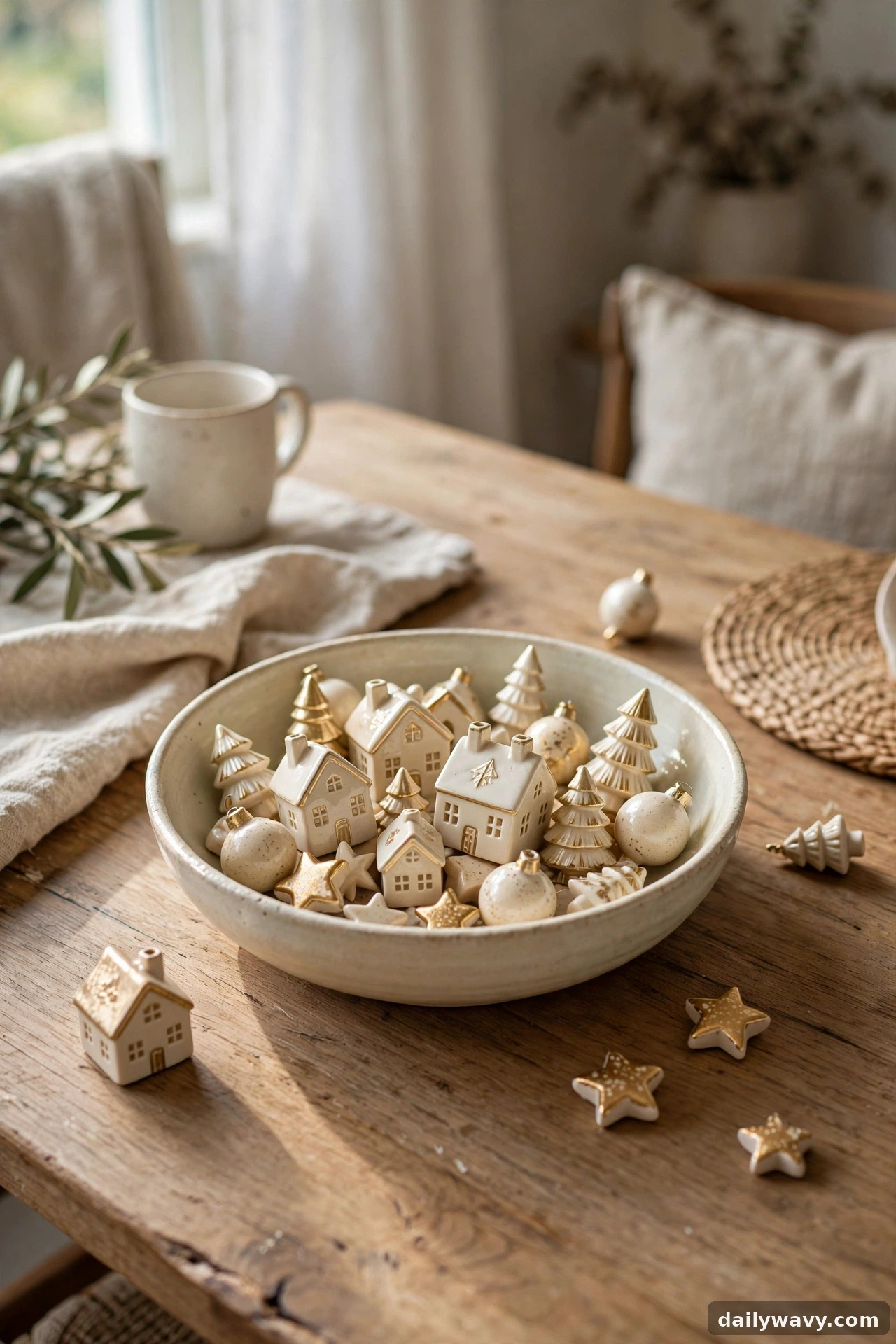
A tight group of small ceramic ornaments, houses, trees, stars, piled in a low bowl or scattered down the table runner, gives sparkle at table level without the fragility of hanging glass balls where elbows fly.
Use 7–12 small pieces (2–4 inches each) in two or three coordinating colors. Cluster them in a shallow bowl or tray, or trail them loosely along the garland from idea 1. Ceramic is the practical choice: it survives a knock off the table that would shatter glass.
Small ceramic ornaments cost $1–$4 each at craft and home stores; a full cluster runs $10–$25. The budget version is air-dry clay ornaments you make yourself ($6 for a pack of clay that makes twenty) painted with craft paint.
Keep ornament clusters away from the table edge where sleeves catch them, and off to the side of serving zones. Wrap each piece in tissue and store in a divided box or egg carton; ceramic chips if pieces knock together in a bag.
11. A Natural-Texture Basket

A basket brings warmth and texture that balances all the shiny Christmas things. Fill a seagrass, wicker, or rattan basket with pinecones, greenery, and a string of fairy lights, and set it on a side table, bench, or the floor beside the dining table.
Size the basket to its spot: a 10–12 inch basket suits a side table, a 14–18 inch one works on the floor. Fill it full so the contents mound above the rim; sparse baskets look unfinished. Weave a short battery fairy-light string through the contents for evening glow.
Baskets cost $12–$30 new, or $3–$8 thrifted. The filling is free if foraged or $10–$15 for a bag of pinecones and a greenery bundle.
Battery lights get warm but not hot; still, keep the battery pack accessible (not buried) so you can switch it off, and use a timer to avoid running it all night. Store the basket with its filling intact in a dry spot; refresh the greenery next year and the basket itself lasts for years.
12. A Ribbon Detail on an Existing Object

Ribbon is the fastest way to make ordinary objects look like Christmas decorations. Tie a wide grosgrain or velvet ribbon around a vase, a candle holder, a chair back, or the neck of a bottle on the table.
Use ribbon 1.5–2 inches wide for vases and candle holders; narrower 1-inch ribbon suits chair backs and napkin rings. Cut generous lengths, tie a simple bow, and trim the tails at an angle. Deep red, forest green, and champagne gold are the classics; measure about 24 inches per bow so you buy enough (a 3-yard spool dresses three to four objects).
A spool of quality ribbon costs $5–$10 and covers the whole table. The lower-cost version is fabric strips cut from an old scarf or shirt, which actually look better, softer and less perfect, than new ribbon.
Keep ribbon away from open flames; it is fabric and it will catch. Flameless candles solve this completely. After the season, untie the bows, roll the ribbon around a cardboard tube, and store it flat so it does not crease.
Christmas Table Decor FAQ
How do I decorate a Christmas table on a small budget?
Start with what you own: a tray, a bowl, candles, and ribbon you already have cover four ideas on this list for almost nothing. Add foraged greenery and pinecones (free), a $5 spool of ribbon, and a bag of clementines, and the table looks fully dressed for under $20.
What is the safest way to use candles on a Christmas table?
Use flameless LED candles. They give the same warm glow with zero fire risk, which matters on a table where people reach across, sleeves dangle, and paper details sit nearby. If you use real candles, keep 12 inches of clear space above every flame, never leave them unattended, and keep all garlands, fabric, ribbon, and paper well away from the flames.
How far in advance can I set up my Christmas table?
Faux and dried arrangements can go up anytime from late November. Fresh greenery lasts two to three weeks indoors, so set it out in mid-December and mist it lightly every few days. Fresh fruit like clementines holds about a week at room temperature; swap in fresh ones before the big meal.
How do I keep decorations from getting in the way of dinner?
Build the centerpiece on a tray or in a single bowl so it lifts off in one move. Keep the total centerpiece height under 12 inches so guests see over it, and leave at least 12 inches of clear table on each side for plates and glasses. Anything tall or wide moves to the sideboard during the meal.
Where should I store everything after Christmas?
Group by idea, not by type: the ribbon, the tray contents, and the accent-color pieces each get their own labeled bag or box. Faux garlands roll loosely, wreaths store flat, and fabric washes and folds with your holiday linens. Label everything with the year so next December is a fifteen-minute setup instead of a treasure hunt.
Can I use the same decor ideas on a coffee table or entryway table?
Yes, just scale down. Use the smaller measurements in each idea: a 12-inch tray instead of 20, a 10-inch wreath instead of 16, a smaller basket. The same principles, odd numbers, varied heights, one accent color, work on any surface. For a full entryway plan, see our small entryway decor ideas, and if the coffee table sits in a tight living room, our narrow living room layout ideas can help you place it.
Ready to set the table? Pick one idea, shop your home first, and let the table look like Christmas without a cart full of new things. When the rest of the room needs the same treatment, browse our Home & Decor ideas for more seasonal styling.