15 Vintage Book Display Ideas to Give Your Finds a Place
Old books have a way of making a room feel settled. The cloth spines, the softened corners, the faint smell…
Old books have a way of making a room feel settled. The cloth spines, the softened corners, the faint smell of paper and time: they bring a warmth that new decor rarely manages. If you have been collecting vintage books from thrift stores, estate sales, or your grandparents’ shelves, you already own the raw material for beautiful displays. The trick is giving them a place that shows them off without looking cluttered. This guide walks through 15 achievable ways to display vintage books, from narrow nooks to tabletop clusters, each with real measurements, materials, and a lower-cost alternative.
Jump to an idea
- A vertical display in a narrow nook
- A balanced pair with different heights
- A small tabletop cluster
- A restrained shelf vignette
- A neutral background highlighting texture
- A mixed old-and-new grouping
- A compact corner display
- A repeated shape with varied finishes
- A wood-and-ceramic pairing
- A dark backdrop for light objects
- A light backdrop for dark objects
- A small arrangement beside a lamp
- A seasonal variation using the same base
- A monochrome display with one accent
- A framed or bounded composition
Read your books before you style them
Before a single book goes on a shelf, take twenty minutes to sort. Group your finds by height first, then by tone. You will immediately see which piles belong together, and the styling almost plans itself. Dust each book with a dry, soft cloth or a clean paintbrush, working from the spine outward so you do not push grit into the pages. If a book smells musty, stand it open in a dry, airy room for a day or two; skip the scented sprays, which can stain cloth.
Two honest cautions will protect your collection. Direct sunlight fades cloth spines surprisingly fast, so keep displays out of the sunniest window or rotate the books every few months. And damp is the real enemy: never style vintage books against an exterior wall that sweats in winter or inside a humid bathroom. With those two rules honored, everything below is fair game, including the entryway table you pass every day (the same hardworking spot our small entryway decor ideas dress up for first impressions).
1. A vertical display in a narrow nook

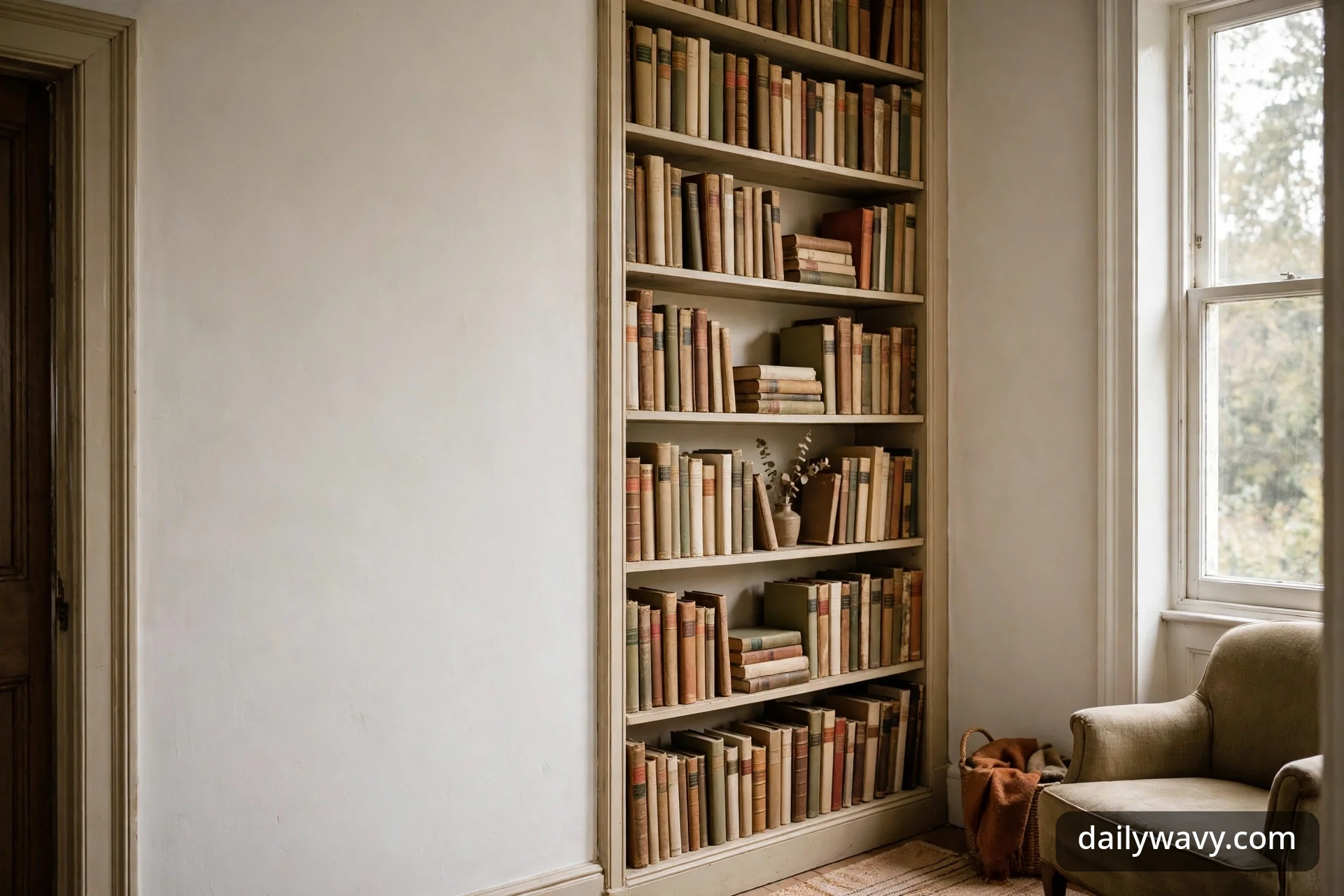
Every home has that awkward sliver of wall: between the door frame and the window, beside the fireplace, at the end of a hallway. A tall, slim tower of books turns that dead space into one of the most interesting spots in the room, because the eye loves a vertical line that it did not expect.
Measure the nook’s width, depth, and height, and leave one to two inches of clearance on each side so books slide in without scraping. A narrow bookcase, a ladder shelf, or even three sturdy wooden crates screwed together will fit spaces as slim as ten inches wide. Sort your tallest books for this spot and shelve them upright with spines facing out, heaviest volumes on the lowest shelf where the unit is most stable. Anchor any freestanding unit to the wall with a simple anti-tip strap, which costs a few dollars and takes only a few minutes. Check the unit’s rated load before filling it, since a full shelf of hardcovers is heavy. Expect an afternoon of arranging and a budget of $40 to $120 for the shelving. The lower-cost route is a set of unfinished pine crates from a craft store, sanded smooth and stacked, which gives the same vertical rhythm for under $30.
2. A balanced pair with different heights
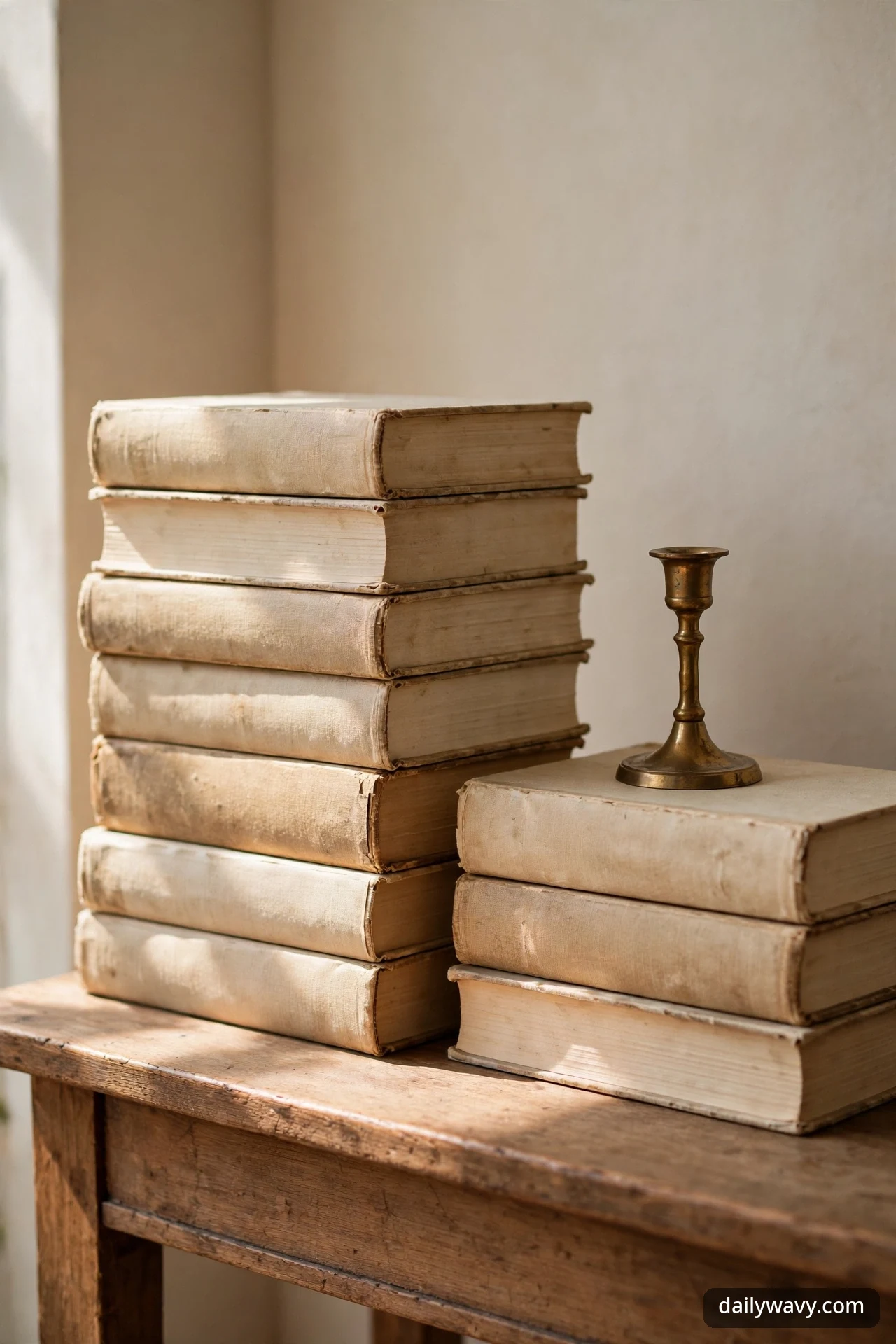
Two stacks side by side, one tall and one short, create the kind of easy balance that makes a console or sideboard look styled rather than stored. The height difference is doing all the work here: it gives the eye a little staircase to travel, which feels intentional even when the books themselves are a happy thrift-store jumble.
Measure your tabletop first and reserve at least a third of the surface as clear space; a crowded console reads as clutter no matter how pretty the books are. Build the taller stack to six to ten inches (roughly five to eight average hardcovers) and the shorter one to three to five inches. Place the taller stack slightly behind and to one side, the shorter in front, and crown the shorter stack with one small object: a brass candlestick, a tiny framed photo, or a smooth stone. The whole arrangement takes about twenty minutes and costs nothing if the books are already yours. If you want a thrifted candlestick or small dish to finish it, plan on $3 to $8 at a secondhand shop instead of $20-plus new.
3. A small tabletop cluster
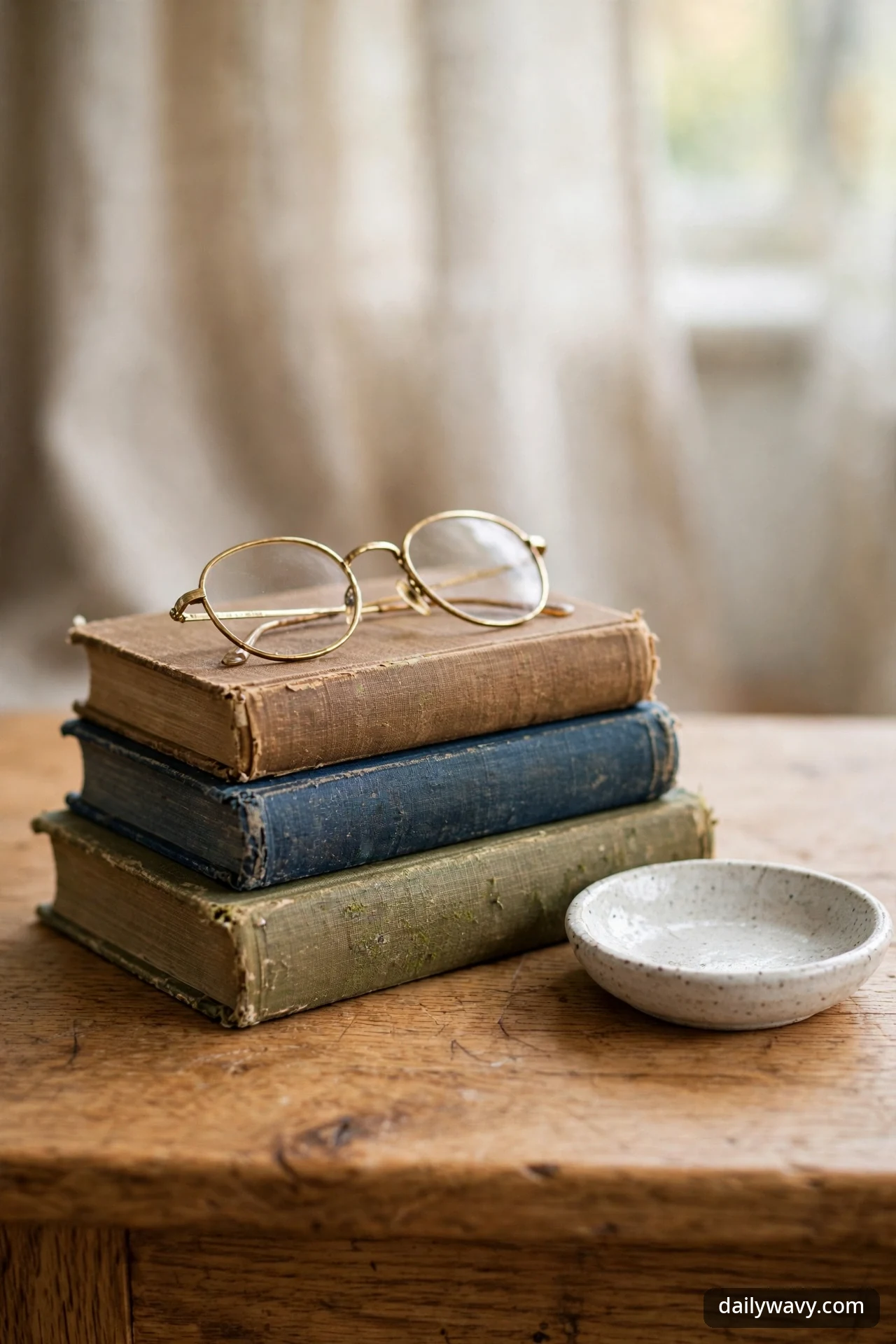
A side table only needs three to five books to feel complete. This is the display for the chair you actually read in: a short stack within arm’s reach, your glasses on top, and suddenly the corner has a purpose. It works because it looks used, not arranged.
Check the table’s surface and keep the cluster to one corner, leaving clear room for a cup of tea. Choose books with your prettiest spines facing outward, since you will see this stack up close every day. Fan the top book open a few pages if the binding allows it, or lay your reading glasses across the stack for that lived-in signal. Ten to fifteen minutes is all it takes, and there is no cost beyond the books. The lower-cost alternative is simply restraint: use the three books you already own rather than buying a matched set, because a cluster of beloved, worn volumes usually beats a row of strangers.
4. A restrained shelf vignette

One shelf, five to seven books, one object, and generous empty space. That is the whole formula, and it is one many stylists reach for when a bookcase starts looking heavy. Restraint lets each spine breathe, so the textures and faded titles do the talking instead of competing for attention.
Measure the shelf depth before you start; most vintage hardcovers need six to eight inches, and books pushed past the shelf edge look precarious. Stand two or three upright, lay two or three flat in a short stack, and leave at least a third of the shelf empty. Add a single companion piece with a contrasting texture, like a stoneware vase with dried grasses or a small wooden box. Arranging takes about thirty minutes including the inevitable reshuffling. If your shelves are the deep, dark kind that swallow small objects, a $10 battery puck light tucked under the shelf above will lift the whole vignette for far less than rewiring anything.
5. A neutral background highlighting texture
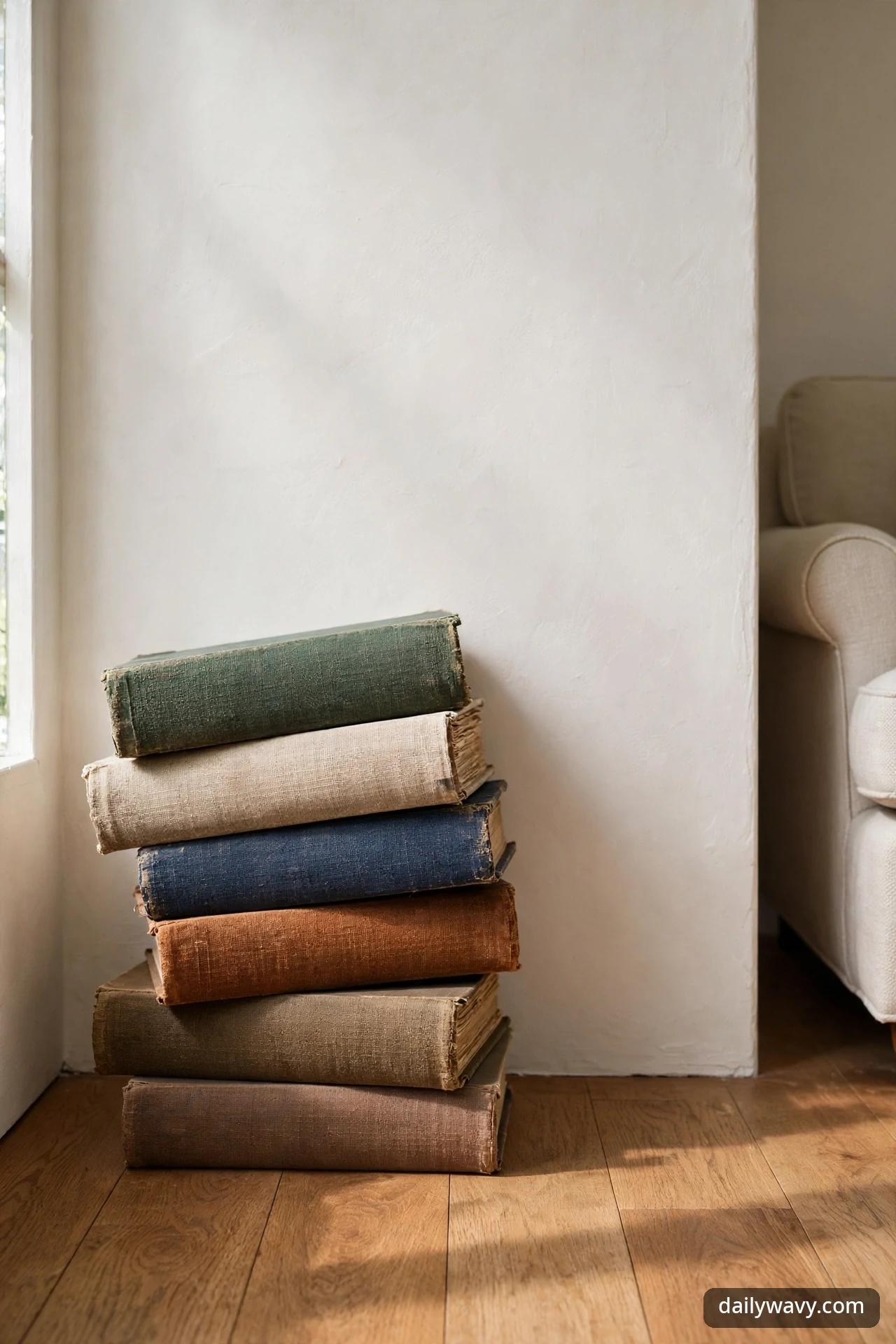
Cloth spines, cracked leather, deckled page edges: vintage books are a texture feast, and they show best against the quietest possible background. A plain warm-white or linen-toned wall turns every bump and fade into a feature, the way a gallery wall makes art look important.
Stand back and look at the wall you have in mind; if it is busy with patterns or a bold color, this idea belongs on a calmer wall. Lean a tall stack of books against the baseboard or arrange a low, wide row on a bench in front of the plain surface. Mix finishes deliberately: nubby cloth next to smooth leather next to rough-cut pages. The styling itself takes under an hour. For the background, a gallon of warm-white paint runs about $30 to $45 and transforms the whole corner; the lower-cost version is a length of unbleached canvas drop cloth ($12 to $18) tacked neatly behind the books as a soft, wrinkle-friendly backdrop.
6. A mixed old-and-new grouping

A shelf of nothing but antiques can start to feel like a museum gift shop. One crisp modern object, a clean-lined ceramic vase, a current art print, a simple black frame, snaps the whole grouping into the present day. The contrast is what makes both sides look better: the old books seem more storied next to something new, and the new piece seems braver next to something old.
Take stock of what you already own before buying anything; check whether you already own a modern vase or frame that is not earning its keep. Place the vintage books as a solid block on one side of the credenza or shelf, then give the modern piece its own breathing room on the other side rather than sandwiching it between volumes. Keep the color conversation simple by echoing one tone: the rust in a book’s spine picked up in the glaze of the vase, for example. This is a twenty-minute restyle with zero cost if you shop your own home. If you do buy the modern anchor new, a small handmade-look vase runs $15 to $30, or $4 to $7 thrifted.
7. A compact corner display
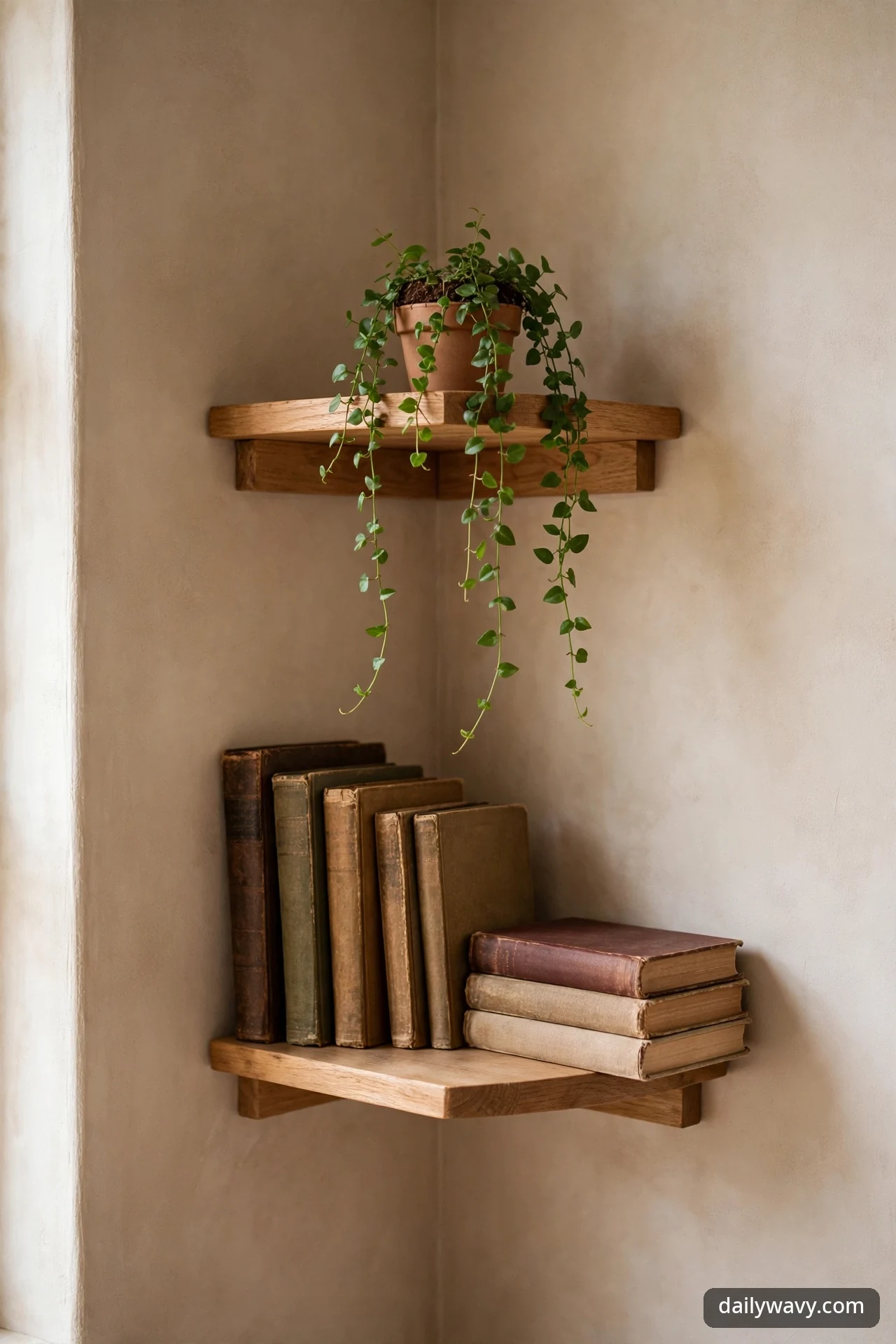
Corners waste more space than almost any other spot in a room, and a pair of small corner shelves turns one into a jewel box for your best finds. Because the display is small, every book in it gets noticed, which makes this the right home for the volumes with the prettiest spines or the most interesting titles.
Measure the corner carefully, since walls are rarely perfectly square; twelve to sixteen inches per shelf side is a comfortable scale that holds real books without crowding. Mount the shelves at a height you can reach without a stool, typically 48 to 60 inches from the floor for the lower shelf. Arrange books upright on one shelf and in a flat stack on the other, and tuck one small trailing plant or tiny object at the end for softness. Mounting takes an hour or two including finding the studs; expect $20 to $50 for a pair of corner shelves and brackets. The lower-cost path is a single floating shelf turned at 45 degrees across the corner, which needs only two brackets and holds a surprising number of books.
8. A repeated shape with varied finishes

There is a quiet thrill in a long, even row of upright books where every spine is a slightly different material. The repeated rectangle gives the shelf a calm rhythm, while the varied finishes, worn cloth, polished leather, faded paper jackets, keep it from ever looking flat. It is the bookshelf equivalent of a well-planned gallery wall.
Pull the books for one shelf and sort them by height, keeping the row within about two inches of variation so the top line stays calm. Alternate finishes as you shelve: cloth, leather, paper, cloth, leather. If one book towers over its neighbors, lay it flat at the end of the row as a bookend for a leaning stack. No new materials are needed and the effort is under an hour for a standard three-foot shelf. The lower-cost alternative applies if your collection is thin: fill the gaps with books turned spine-in for a parchment-toned filler row, then replace them as your thrifting luck improves.
9. A wood-and-ceramic pairing
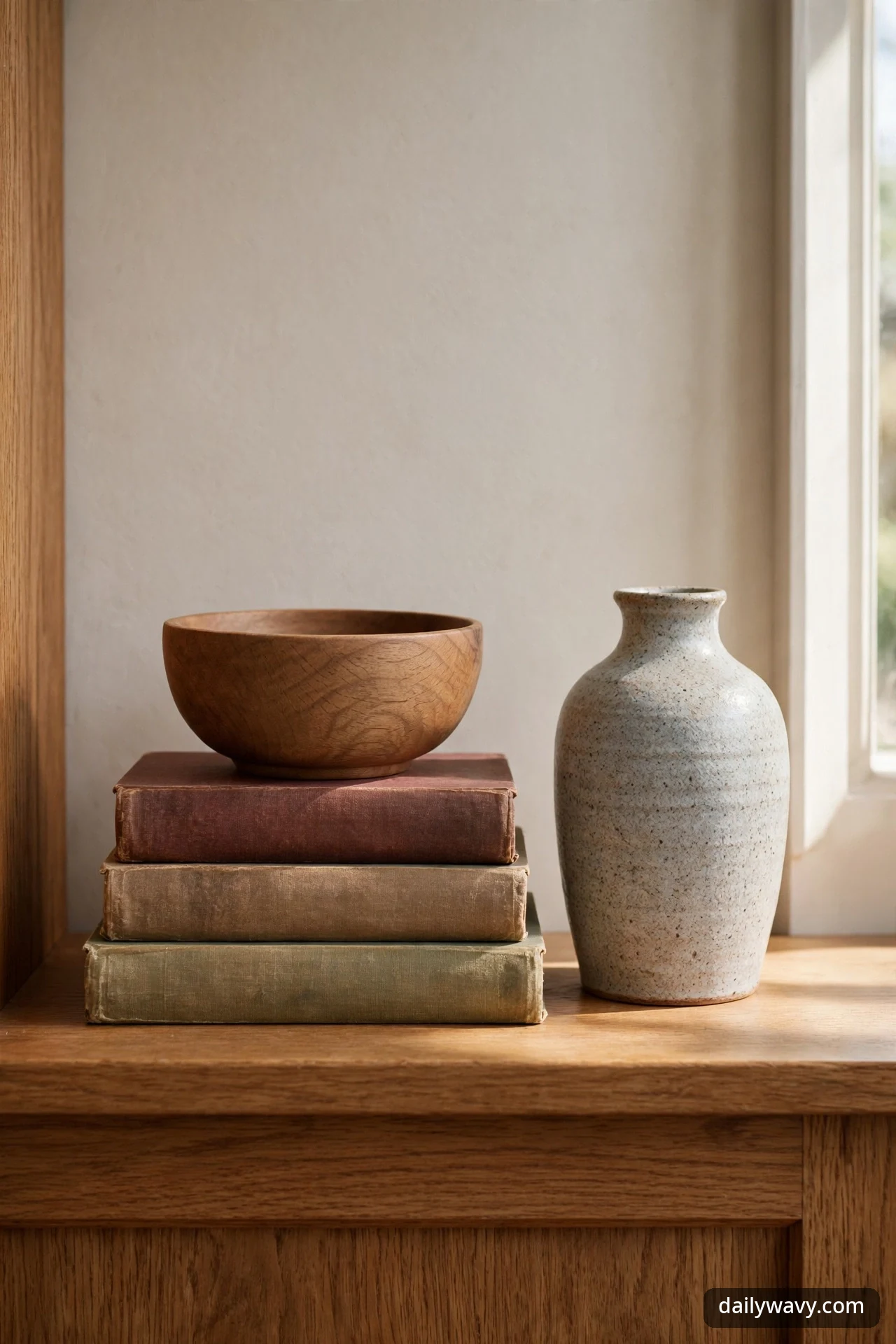
Books, wood, ceramic: three materials that have shared rooms for centuries, and they still flatter each other effortlessly. The matte paper and cloth of old volumes sit beautifully against the grain of wood and the glaze of stoneware, giving a shelf a collected-over-time feeling that a single material rarely manages alone.
Build the trio on a stable surface at least ten inches deep. Start with a short stack of three to five vintage books as the base, set a hand-turned wooden bowl or small carved box on top, and stand a ceramic vase just behind or beside the stack. Vary the heights so the three pieces read as a family rather than a lineup. Styling takes twenty minutes; sourcing the bowl and vase at thrift stores typically costs $5 to $12 total. If you would rather not buy, raid the kitchen for a wooden salad bowl and a plain stoneware mug with the handle turned to the back: the materials matter more than the pedigree.
10. A dark backdrop for light objects
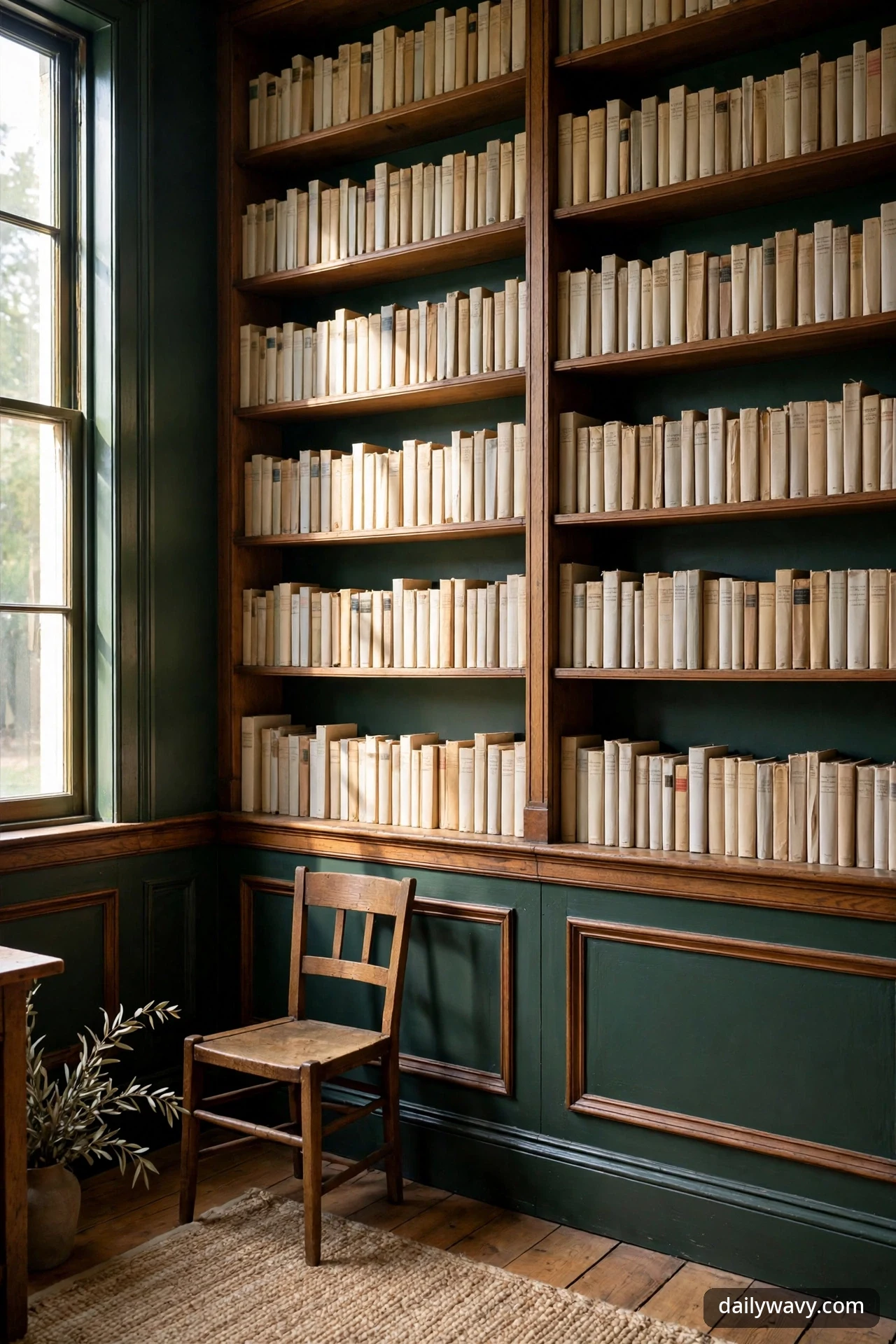
Cream, ivory, and pale tan spines practically glow against a dark backdrop. Paint the wall behind your shelves deep green, charcoal, or espresso, and even the most ordinary thrifted volumes suddenly look like a curated collection. Dark paint recedes visually, so the books step forward, which is exactly the drama a reading corner wants.
Before committing, test a large sample board against the shelf for a few days; dark colors shift dramatically between morning and lamplight. If painting the wall feels like too much, a sheet of foam core or thin plywood painted in your chosen dark tone and leaned behind the books gives the same effect and is fully reversible. Measure the shelf opening and cut the board to fit with a half-inch margin all around. A quart of quality paint ($16 to $22) covers a bookcase back or an accent panel. The whole project runs an afternoon. For renters or the commitment-shy, the painted board is the answer: it stores flat behind the bookcase when you want the light look back.
11. A light backdrop for dark objects
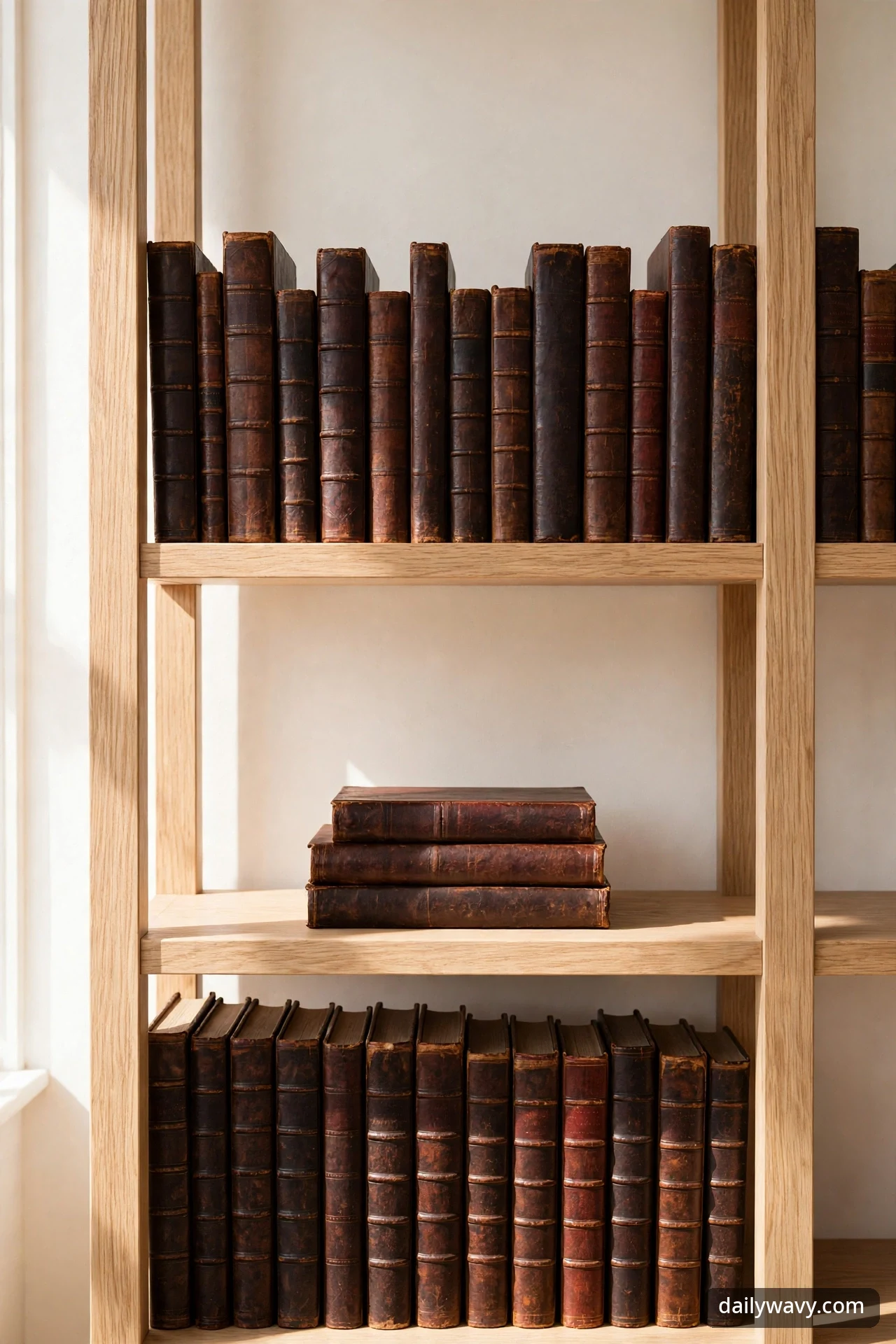
Dark leather bindings, deep oxblood, espresso brown, forest black, have a richness that disappears on a dark shelf and sings on a light one. Set them against warm white walls or pale oak shelving and every gold-stamped title catches the light. This is the display that can prompt visitors to ask where you found your books.
Look for the lightest wall or bookcase you own; north-facing rooms with soft, even light are ideal since they will not bleach the leather. Shelve the darkest volumes at eye level where the contrast reads strongest, and break up long dark runs with one flat stack in a lighter tone so the shelf does not feel heavy. Styling takes under an hour and needs no purchases. If your only bookcase is dark wood, the lower-cost fix is lining the back panels with cream wrapping paper or light linen fabric, cut to fit and held with removable adhesive strips: ten dollars and fully reversible.
12. A small arrangement beside a lamp
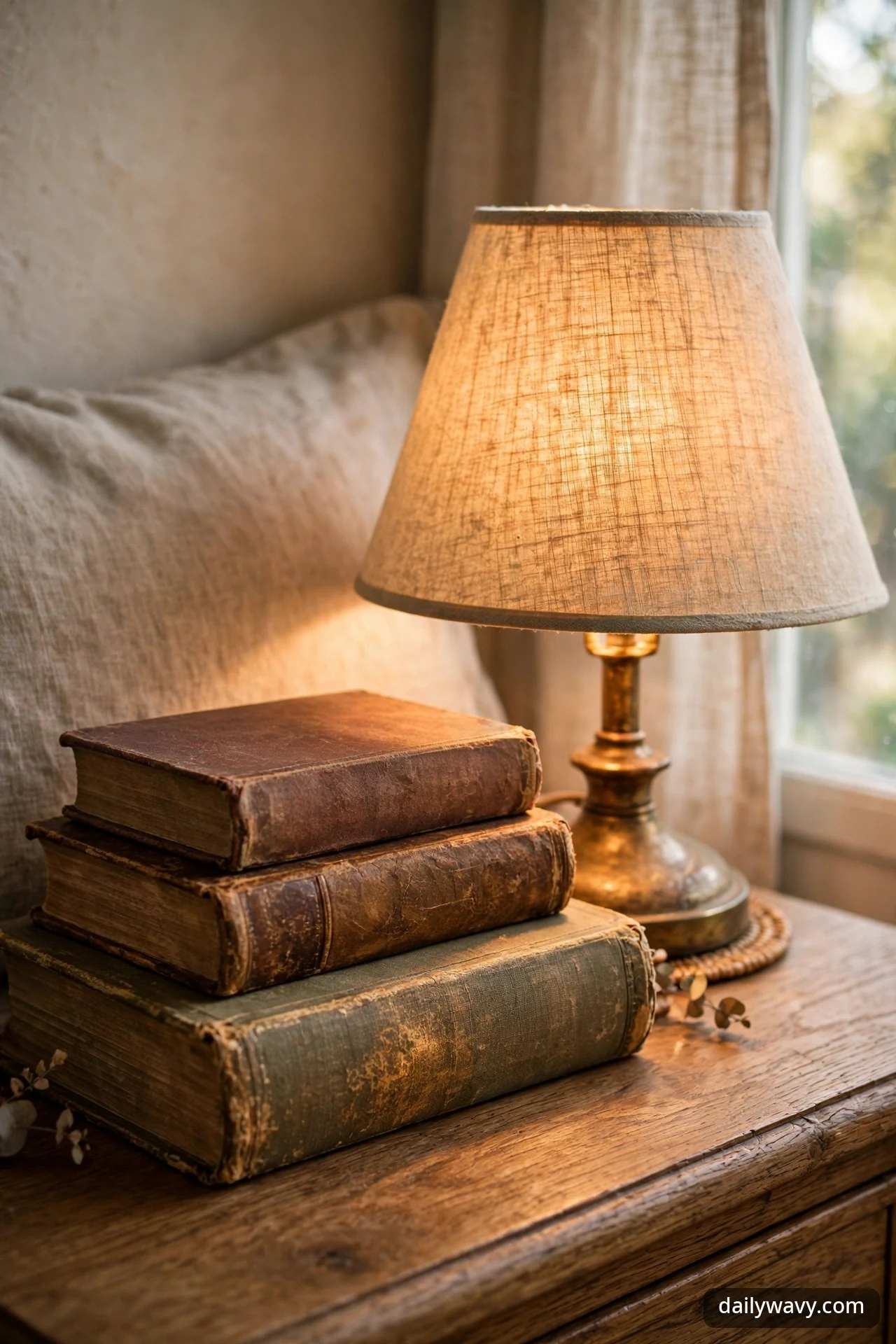
Books and lamplight belong together. A neat stack of vintage volumes beside a glowing lamp turns a nightstand or side table into an invitation, and the warm light does flattering things to aged cloth and gilt titles. This is the easiest display in the whole guide, and one of the most charming.
Measure the tabletop and give the lamp its required footprint first; the books get whatever is left, which is usually plenty for a stack of three. Keep books at least six inches from hot incandescent bulbs, and consider switching to an LED bulb, which runs cool and will not dry out old bindings or fade spines. Stack the books largest on the bottom, and leave the top of the stack clear or crown it with your current read. Ten minutes, no cost. If the lamp you own throws harsh light, a $12 linen-look shade softens everything, books included. (Bedside styling pairs naturally with a restful bedroom, and our small bedroom with a queen bed ideas show how to keep nightstands calm in tight quarters.)
13. A seasonal variation using the same base

Here is the secret to a display that never goes stale: keep the books exactly where they are and change one small thing with the seasons. The base arrangement, your favorite shelf or stack, stays constant, while a single seasonal touch swaps in and out. It takes only a few minutes, and the shelf feels fresh four times a year.
Choose your base first: a stable vignette you love enough to live with year-round. Then define the swap: dried wheat or seed heads in autumn, a forced branch or small nest in spring, a sprig of eucalyptus in winter, a tiny shell or piece of driftwood in summer. Store the off-season pieces in a labeled shoebox so the swap is genuinely quick. Each seasonal refresh costs nothing if you gather from the garden or a walk, or $3 to $6 for a bundle of dried stems at a craft store. The discipline is the point: one change, not a redecoration, keeps the books as the stars.
14. A monochrome display with one accent

Pull every cream, beige, ivory, and soft gray volume you own onto one shelf, and you will have one of the calmest displays in your home. Monochrome styling works because it removes color as a distraction; what is left is pure texture and form. Then add exactly one accent, a rust-terracotta bowl, a small ochre vase, a single deep green plant, and the whole shelf wakes up.
Sorting by tone takes about an hour for a large collection, and it is oddly satisfying work. Shelve the neutrals with slight variation in height so the row does not look like piano keys, then place the accent object off-center, roughly a third of the way along the shelf. One accent is the rule; two starts an argument. No purchases are necessary if you shop your own shelves for the accent piece. If you buy one, a small handmade-look ceramic in a warm earth tone runs $10 to $20, and it will earn its keep in vignettes all over the house.
15. A framed or bounded composition
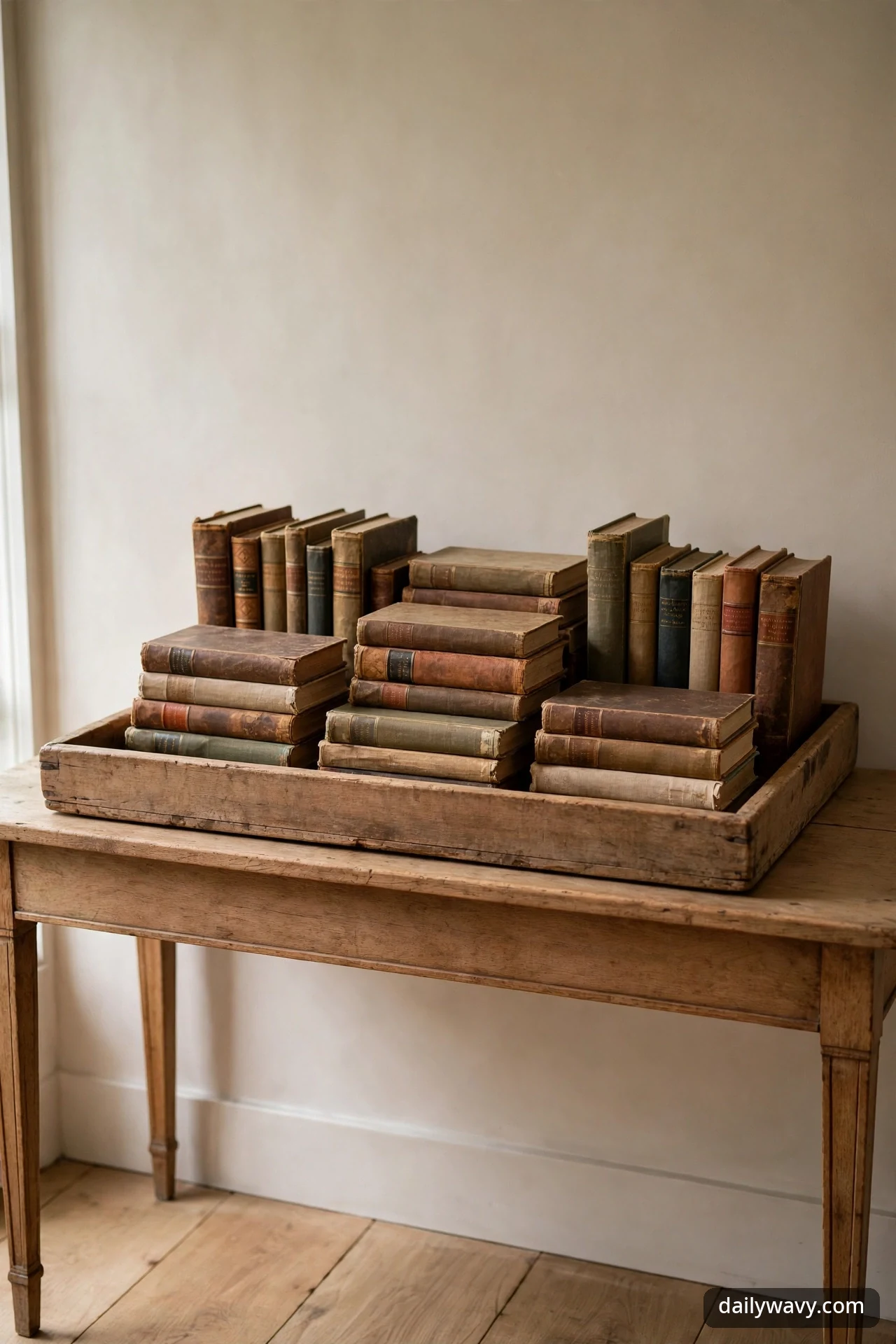
A shallow tray, a picture ledge, or even a low-sided wooden box gives a book grouping a finished edge. The boundary tells the eye where the display starts and stops, which is why the same pile of books looks like clutter on a bare table and like styling inside a tray. It is the simplest upgrade in this guide.
Measure your tabletop and choose a tray that leaves clear surface around it; a tray covering more than two-thirds of the table will look marooned. Inside the tray, mix upright and stacked books, keeping the tallest pieces toward the back. Trays with a lip of one to two inches hold everything securely without hiding the spines. A good-looking wooden or rattan tray costs $15 to $35 new, or $4 to $8 at a thrift store. The lower-cost version is a rimmed baking sheet you already own, lined with a piece of linen: honest, sturdy, and completely hidden once the books are in.
Frequently asked questions
How do I clean vintage books before displaying them?
Dust with a dry, soft cloth or a clean, soft paintbrush, brushing from the spine toward the fore-edge so grit does not work into the pages. For musty smells, stand the book open in a dry, airy room for a day or two. Avoid water, cleaners, and scented sprays, which can stain or warp old cloth and paper.
Will sunlight damage my vintage books?
Yes. Direct sun fades cloth spines and can dry out leather over time. Style displays out of the sunniest window’s path, or rotate the books every few months so fading stays even. Sheer curtains are a simple, effective filter.
How many books make a display instead of clutter?
Think in small, odd-numbered groups with breathing room: three to seven books per vignette, and at least a third of any shelf or table left clear. If you cannot see the surface the books sit on, edit the group down.
Can I display books that are damaged?
Absolutely. Turn torn spines to the back, use wobbly volumes as the middle of a stack where they are supported, and let worn copies be the ones you actually handle. A book with a loose hinge can lie flat as the base of a stack for years without further harm.
Where can I find vintage books inexpensively?
Thrift stores, library book sales, estate sales, and flea markets are the classic sources, with most hardcovers priced between $0.50 and $3. Library sales on the final day often discount remaining books further. Condition varies, so flip through before buying.
How do I keep displayed books from getting dusty?
A monthly pass with a dry microfiber cloth or soft brush keeps shelves fresh. In very dusty homes, styling books inside a glass-front bookcase or behind the tray-and-frame boundaries above cuts cleaning dramatically.
Give every find its place
A good vintage book display is one that fits the books you actually own and the rooms you actually live in. Start with one idea from this list, the narrow nook, the bedside stack, the restrained shelf, and let it settle for a week before styling the next spot. If your shelves live in the main living area, our narrow living room layout ideas show how a shallow bookcase can define a boundary in a narrow room, and you can browse more styling inspiration across Home & Decor.
A natural companion for the shelves you just styled is our thrifted vase display ideas guide.