15 Entryway Without A Closet Ideas for a Welcoming First Impression
Walking into a home with no coat closet raises the same questions every time. Where do the bags go? Where…
Walking into a home with no coat closet raises the same questions every time. Where do the bags go? Where do the coats live? A closetless entryway is not a problem to solve but a small space to style on purpose. The best entries skip bulky furniture and lean on a handful of well-chosen pieces that each earn their square footage.
These 15 ideas give your entryway without a closet a landing zone for every daily ritual: keys, mail, coats, umbrellas, and that pair of shoes you grab. Each idea includes what to measure, what to buy, and where to put it, plus a budget-friendly alternative. Start with the one that solves your biggest pain point.
Jump to an idea
- A Small Lamp On A Safe Surface
- A Slim Upright Umbrella Holder
- A Lidded Box For Small Essentials
- A Framed Print Beside The Door
- A Washable Seat Cushion
- A Narrow Shelf Above A Clear Walkway
- A Vertical Storage Arrangement
- A Small Plant Outside The Traffic Path
- A Basket For Outgoing Items
- A Designated Mail-Sorting Tray
- A Repeated Hardware Finish
- A Shallow Decorative Bowl
- A Simple Coat Rail With Clear Spacing
- A Folded Blanket On A Bench Corner
- A Narrow Tray For Keys

Measure first: door swing and walkway
Before buying a single hook, measure your door swing and your walkway. Open the front door fully and mark where it lands. Then measure the walking lane from the door into the room: most people need at least 30 inches of clear passage to walk through comfortably with a bag in hand. Anything you place, a console table, a bench, a rail, has to live outside that lane.
Sketch your wall segments too. In a closetless entry, walls do all the work, so note the width of each usable wall run, the height to any switches or thermostats, and where the light lands at morning and evening. A small lamp changes everything in a dark corner, but only if it sits on a surface wide enough to hold it safely. Keep these numbers handy as you read: each idea below tells you what to check and where to place it.
1. A Small Lamp On A Safe Surface

An entryway without a closet often sits in the dimmest corner of the home, and a small lamp fixes that faster than paint. The warm pool of light signals that someone lives here and cares, which is the whole point of a first impression.
What to measure: the surface you plan to set it on. The lamp base needs a stable spot at least 6 inches square on a table or shelf that will not wobble when the door slams. Measure the outlet distance so the cord reaches without crossing the walkway.
Materials: a small table lamp with a sturdy base, 12 to 18 inches tall, plus an LED bulb in a warm 2700K tone.
Placement: set it on the console table or shelf closest to the door, toward the wall side, so it never teeters near an edge.
Approximate effort: an afternoon shopping trip and a few minutes of placement.
Lower-cost alternative: move a lamp you already own from a bedroom or office. Swapping a shade for a linen one you like costs far less than a new lamp.
2. A Slim Upright Umbrella Holder

Wet umbrellas dripping across the floor are one of the small miseries of a closetless entry. A slim upright holder keeps them contained and upright, and it takes up barely more room than the umbrellas themselves.
What to measure: the footprint. Look for a holder 6 to 8 inches across at the base so it slips beside the door without blocking it. Count your umbrellas and make sure the holder fits them all.
Materials: a weighted umbrella stand or tall woven basket with a drip tray, ideally in a material that suits your palette, like rattan, powder-coated metal, or ceramic.
Placement: on the hinge side of the door, outside the door swing arc, where rain can drip away from wood floors.
Approximate effort: one purchase and immediate placement.
Lower-cost alternative: a tall kitchen canister or a sturdy vase you already own works as a stand, with a folded towel underneath as a drip mat.
3. A Lidded Box For Small Essentials
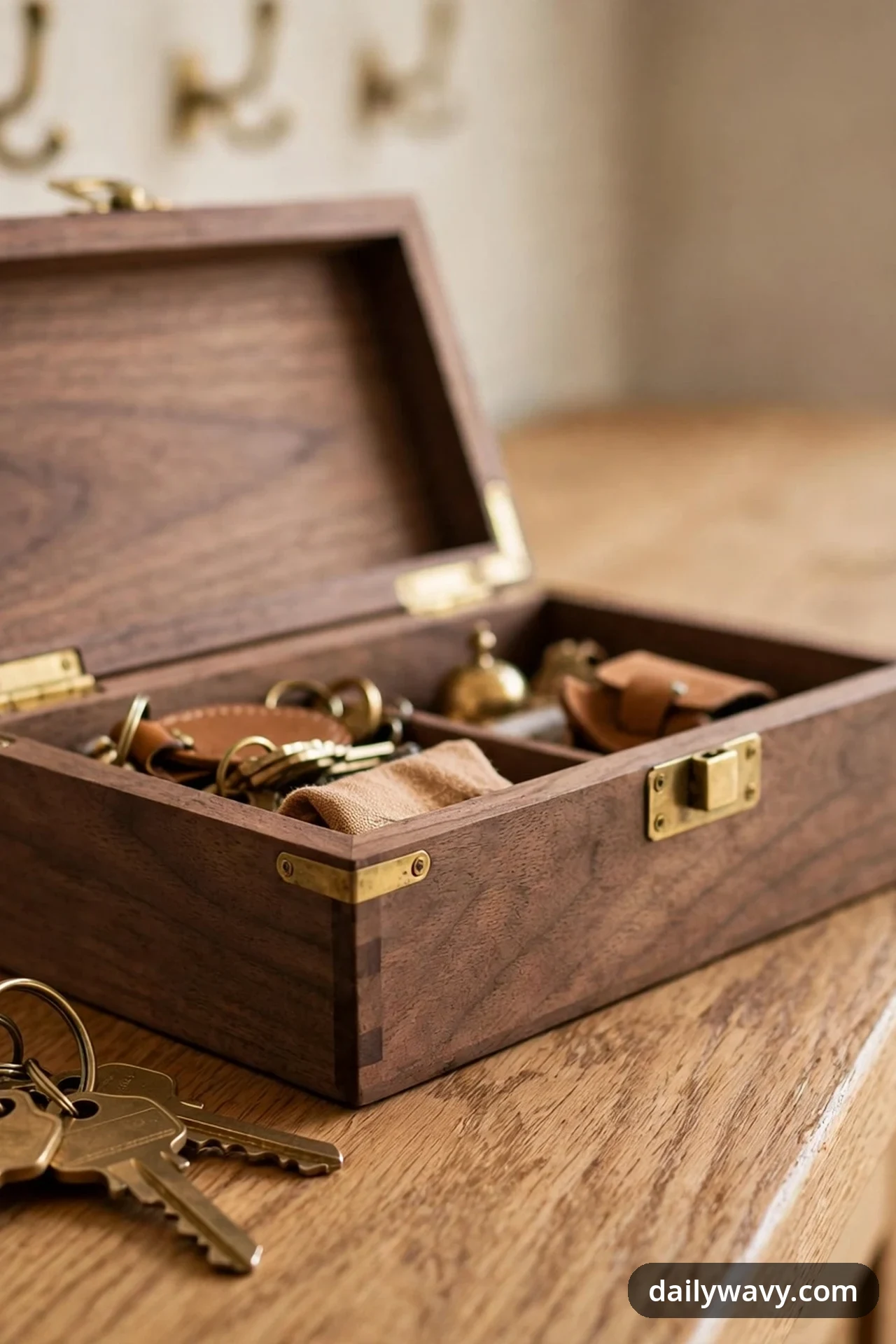
Loose keys, spare change, a spare house key, dog treats. The small stuff migrates to every flat surface in a closetless entry until one lidded box gives it a home. A lid keeps the look calm even when the contents are chaotic.
What to measure: the surface it will sit on. Boxes around 8 to 12 inches long fit most console tables without crowding them.
Materials: one lidded box in wood, leather, or sturdy fabric with a structured lid that lifts easily one-handed.
Placement: on the console table near the door, on the side closest to where you stand when you come in.
Approximate effort: under an hour to choose and style.
Lower-cost alternative: a shoebox wrapped in leftover wallpaper or kraft paper looks surprisingly good, especially with a strip of ribbon as a pull tab.
4. A Framed Print Beside The Door
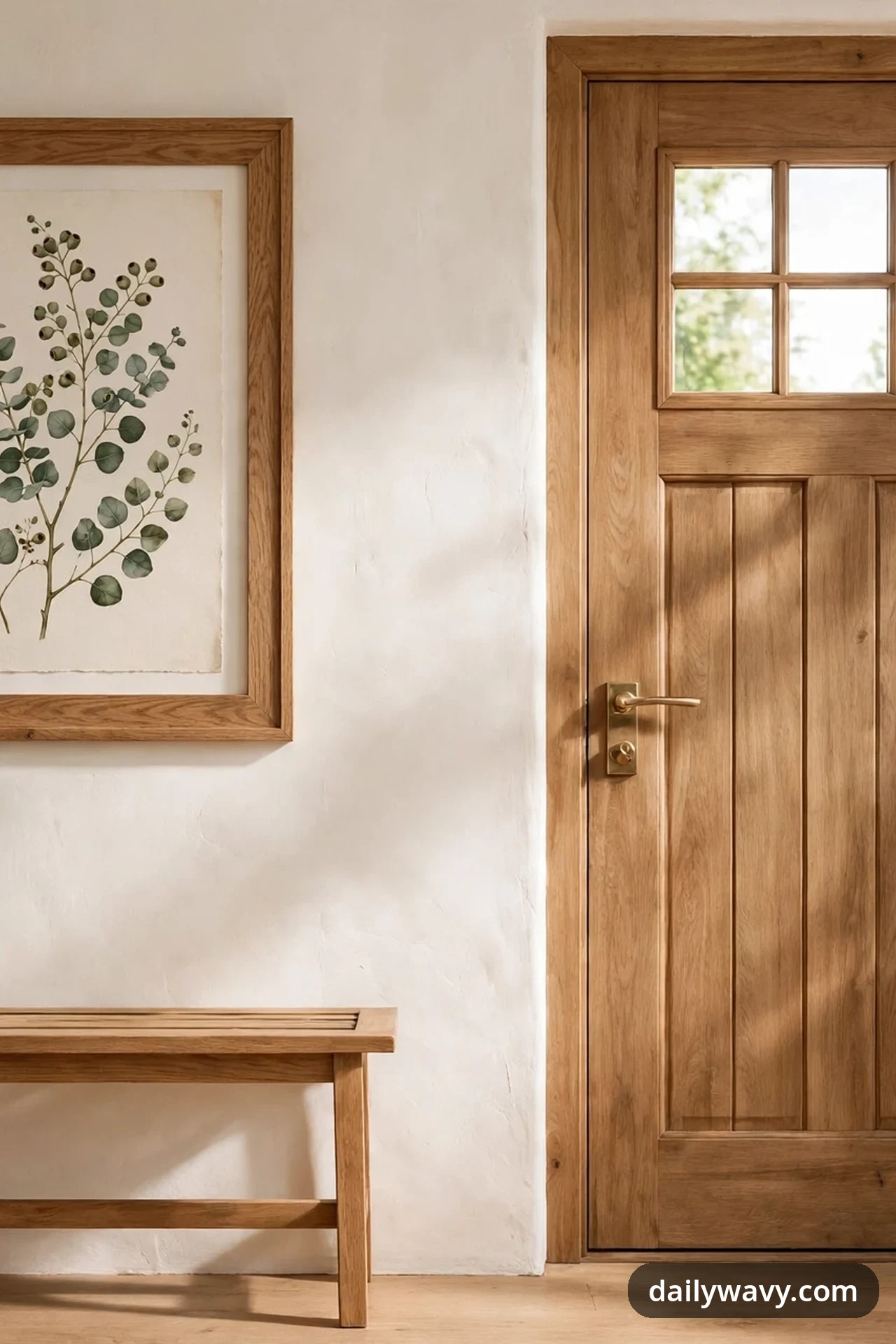
Without a closet door to anchor the wall, an entry can feel unfinished. One framed print beside the door gives the eye somewhere to rest and tells your story before anyone takes a step inside.
What to measure: the wall space beside the door frame. Center the print at roughly 57 inches from the floor, which is standard gallery height, and leave at least 4 inches of clearance from the door trim.
Materials: one frame in oak, black, or brass, sized to the wall, 11 by 14 inches suits most entries, plus a print you genuinely like.
Placement: on the latch side of the door where it catches the light, or on the largest uninterrupted wall run.
Approximate effort: an hour including hanging.
Lower-cost alternative: frame a page from a calendar, a postcard, or your own photo. A simple frame makes almost anything look intentional.
5. A Washable Seat Cushion

Sitting to pull on shoes changes an entryway from a pass-through to a place. A washable cushion on a bench or sturdy stool invites a pause, and it handles muddy days better than bare wood or upholstery.
What to measure: your bench or stool seat. The cushion should cover the seat with an inch of overhang on each side, and measure seat height too, since you need a comfortable perch, ideally 16 to 18 inches high.
Materials: a cushion with a removable, machine-washable cover in cotton twill, canvas, or a sturdy striped weave. Ties or a non-slip base keep it put.
Placement: on the bench or stool, positioned outside the walking lane, usually along the wall opposite the door swing.
Approximate effort: a shopping trip and a few minutes.
Lower-cost alternative: fold a spare throw blanket into a thick pad and tuck it over the seat, securing it with a strap underneath.
6. A Narrow Shelf Above A Clear Walkway
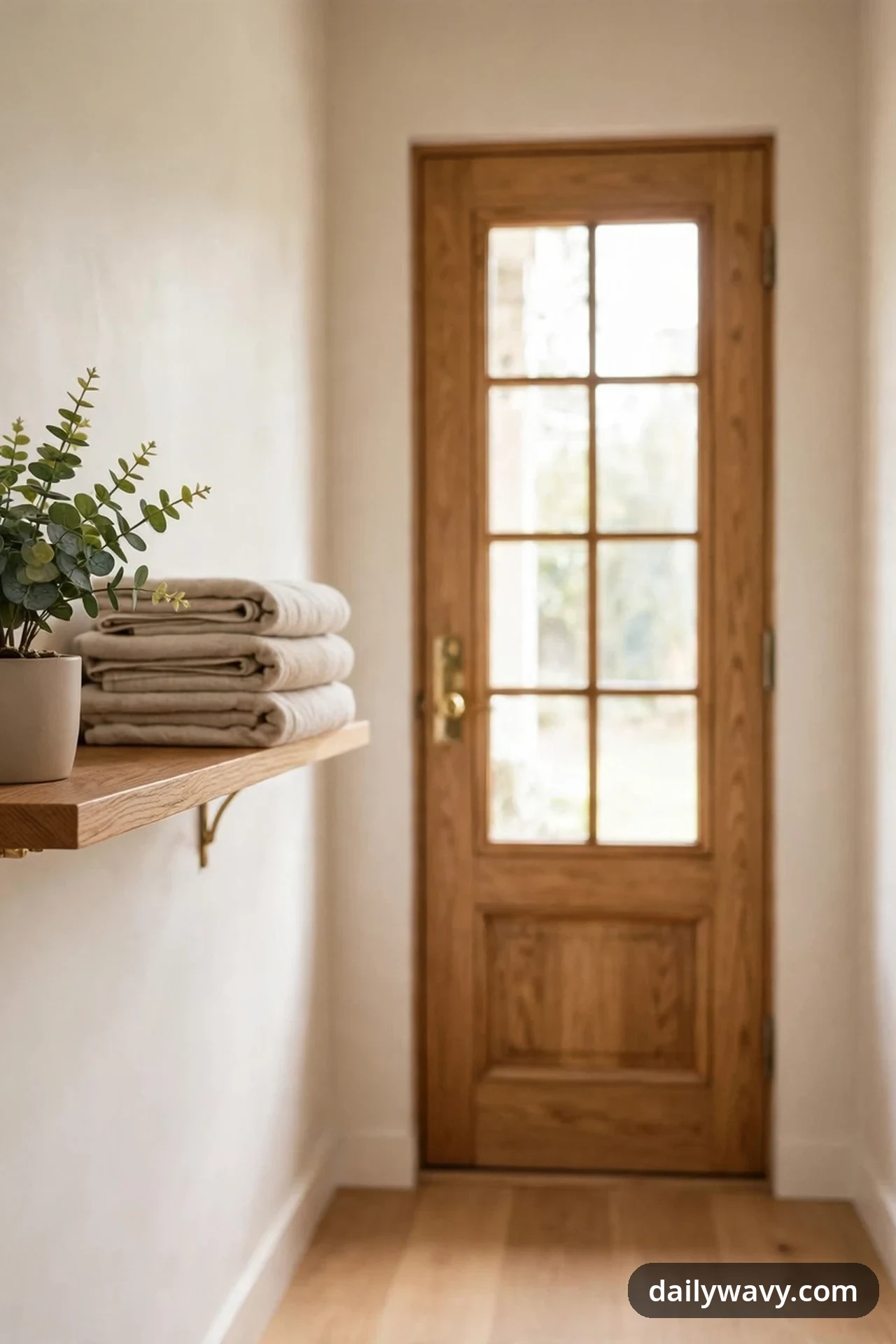
Floor space is the scarcest resource in a closetless entry, so look up. A narrow shelf mounted above head height adds storage for gloves, sunglasses, and small baskets without touching a single inch of your walkway.
What to measure: mount the shelf at least 6 feet 4 inches from the floor so even tall visitors pass under it comfortably. Keep the shelf depth to 6 to 8 inches so items stay reachable and visible.
Materials: a wall shelf with solid brackets, a level, a stud finder, and screws appropriate to your wall type. Plaster and drywall need anchors or a stud; tile needs the right drill bit.
Placement: on a wall over the walking lane, never over a seating spot where someone might bump it, and away from the door swing.
Approximate effort: one to two hours including mounting.
Lower-cost alternative: a single sturdy picture ledge can double as a narrow shelf and looks built in.
7. A Vertical Storage Arrangement
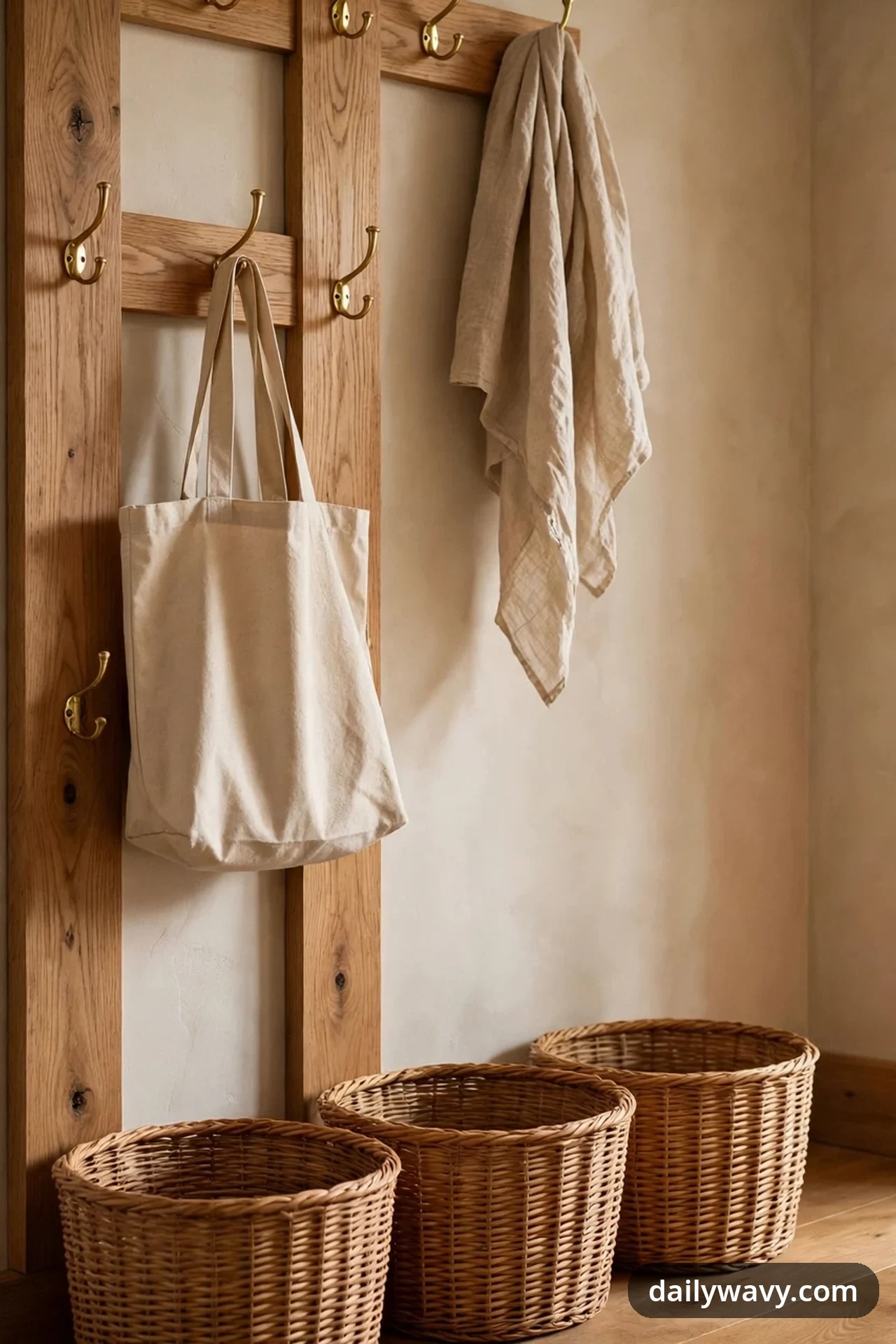
When there is no closet to absorb the daily load, the wall has to do it. A vertical arrangement, a rail with hooks, a pegboard, or a ladder shelf, turns one slim wall run into coat, bag, and basket storage.
What to measure: the width of the wall run. Mark hook positions so each hook has at least 8 inches of horizontal space, which keeps coats from swallowing each other.
Materials: a wall-mounted rail, pegboard, or narrow ladder shelf, plus hooks and a couple of baskets or bins for the lower levels. Mount the rail or board into studs, or use anchors rated for the load, since coats and full baskets get heavy.
Placement: on the most open wall run, keeping the lowest basket at least 6 inches off the floor and everything clear of the door swing.
Approximate effort: two to three hours with mounting.
Lower-cost alternative: three individual wall hooks in a row do the same job for a fraction of the cost and look deliberately minimal.
8. A Small Plant Outside The Traffic Path
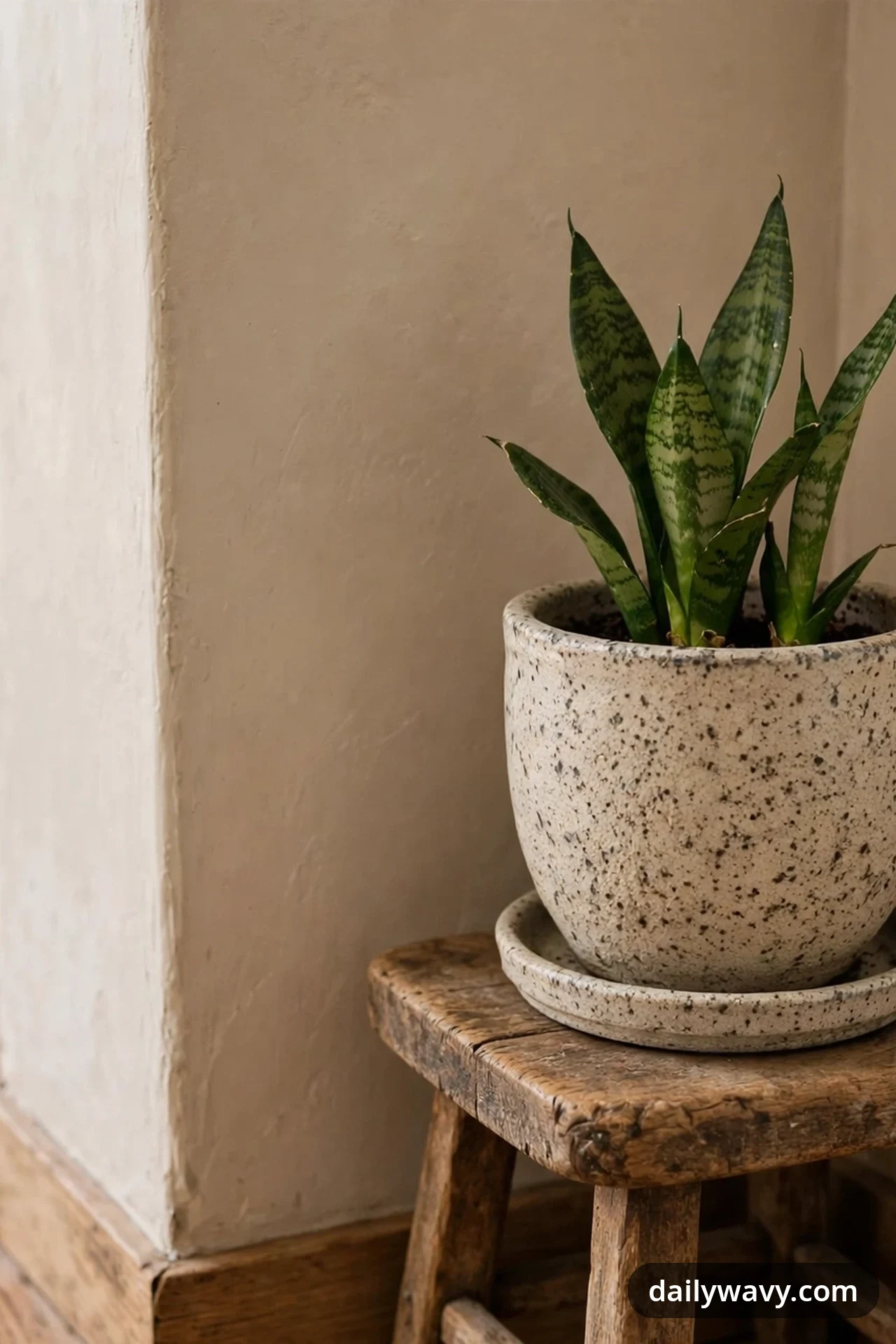
A plant is the fastest way to make a hardworking entry feel alive. The trick in a tight space is placement: outside the traffic path, where it gets noticed but never bumped.
What to measure: the spot where the walkway ends and the corner begins. Leave at least 4 inches between the pot and the edge of the walking lane so bags never clip it.
Materials: a compact, forgiving plant, a snake plant, pothos, or ZZ plant, in a pot with a saucer. Check the light in your entry first; low-light plants suit windowless corners. Keep them out of reach of pets that chew, since snake plants, pothos, and ZZ plants can upset cats and dogs if eaten.
Placement: on a stool, a shelf, or the floor of a corner beside the console, anywhere outside the 30-inch walking lane.
Approximate effort: a nursery trip and a few minutes of potting.
Lower-cost alternative: propagate a pothos cutting from a friend's plant. It roots in water in a week or two and costs nothing beyond a jar of water.
9. A Basket For Outgoing Items

Library books, returns, the package going back to the post office. Without a closet shelf to stash them, outgoing items pile up on the floor. One basket by the door catches them all and reminds you to take them on the way out.
What to measure: a floor spot beside the door, outside the swing arc, roughly 12 to 16 inches square.
Materials: one sturdy basket with a flat, stable base, big enough for parcels but small enough to stay out of the way.
Placement: on the latch side of the door at floor level, where you will see it when you reach for your keys.
Approximate effort: a few minutes of shopping.
Lower-cost alternative: a paper grocery bag with the top folded down works for a week while you hunt for the right basket.
10. A Designated Mail-Sorting Tray
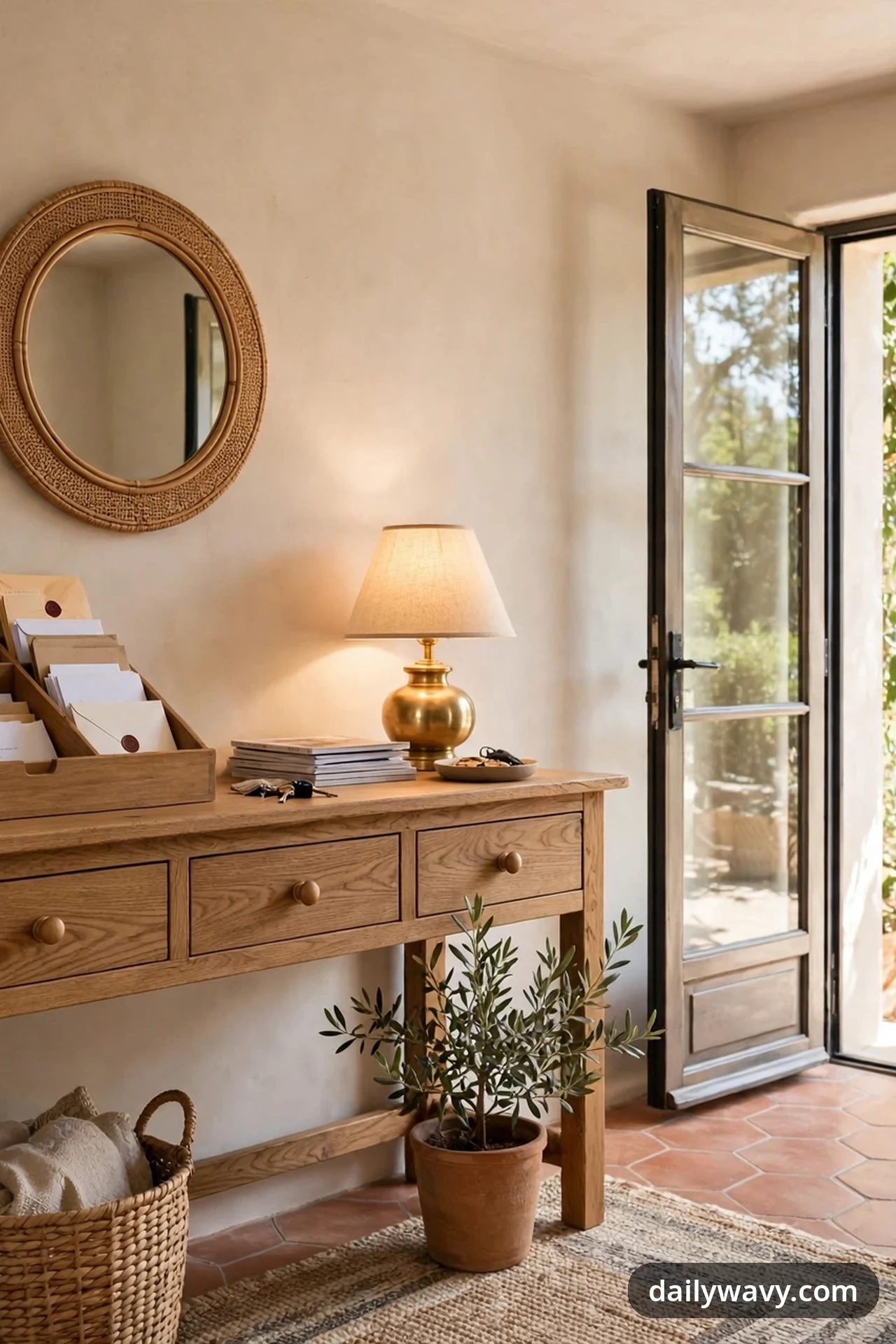
Mail multiplies silently. A designated tray with two simple zones, one for action items and one for recycling, stops the pile from taking over your only surface.
What to measure: your console table or shelf. The tray should use no more than a third of the surface so the rest stays clear for keys and a lamp.
Materials: a shallow tray, a two-tier letter organizer, or two small stacked boxes, labeled or not, in a material that matches the room.
Placement: on the console table or entry shelf, closest to the door, with the recycling bin or bag within arm's reach.
Approximate effort: an hour to set up and sort the backlog.
Lower-cost alternative: two magazine files stood side by side, one labeled action, one recycle, do the job neatly.
11. A Repeated Hardware Finish
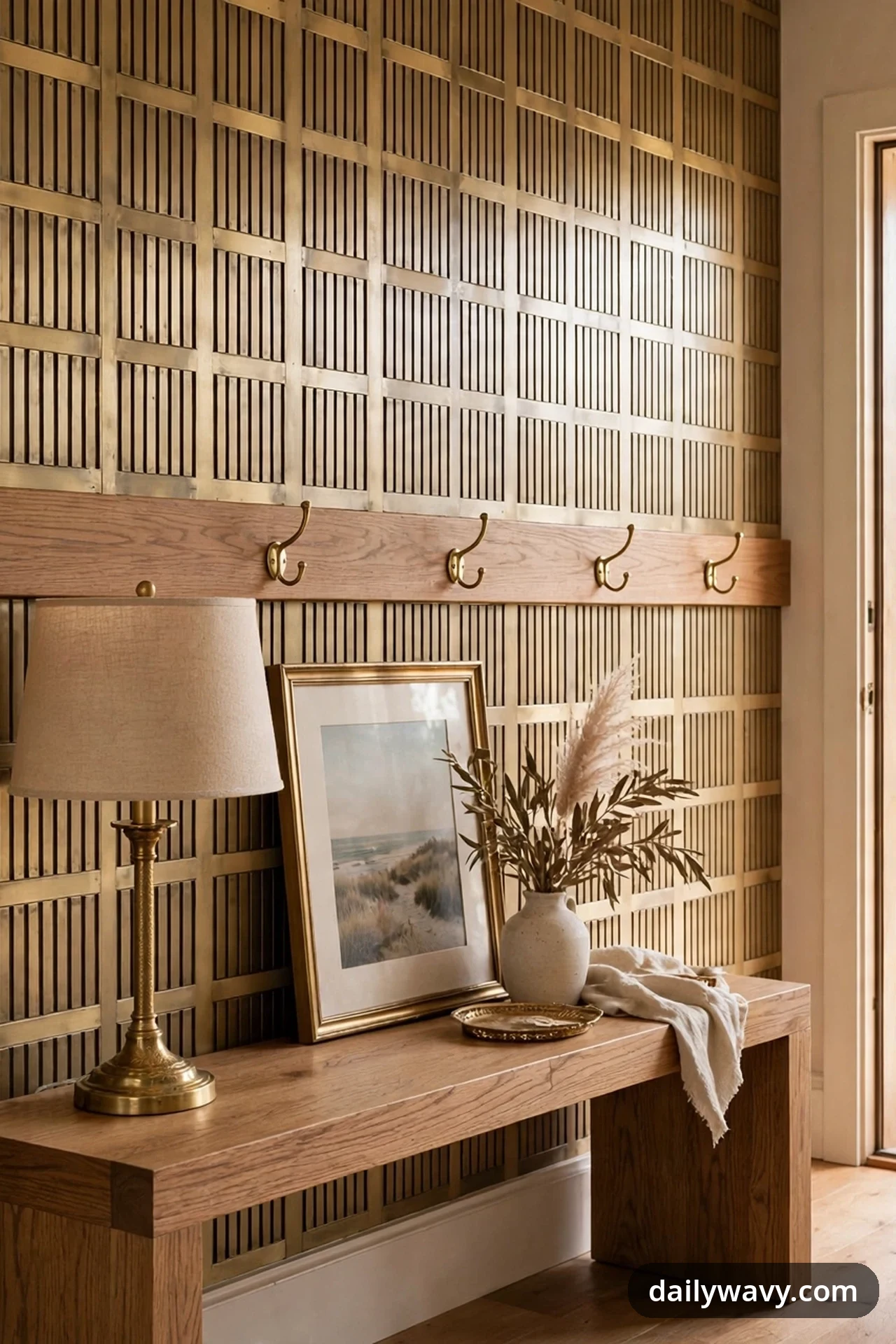
A closetless entry can look scattered because every piece arrived separately. Repeating one hardware finish, brass hooks, a brass lamp base, a brass-framed mirror, ties it all together without buying a matching set.
What to measure: nothing to measure, just audit what you already have. Count the finishes in the room and pick one to repeat at least three times.
Materials: three or more small pieces in one finish, brass, black, or nickel, spread across hooks, lamp, frames, and handles.
Placement: distribute the finish across the entry, on the wall rail, the table, and the art frame, so the eye connects them.
Approximate effort: a weekend of swapping and small purchases.
Lower-cost alternative: spray paint mismatched small items in one finish. A can of metallic spray paint unifies hooks, frames, and trays beautifully. Work outdoors or in a well-ventilated area when you spray.
12. A Shallow Decorative Bowl
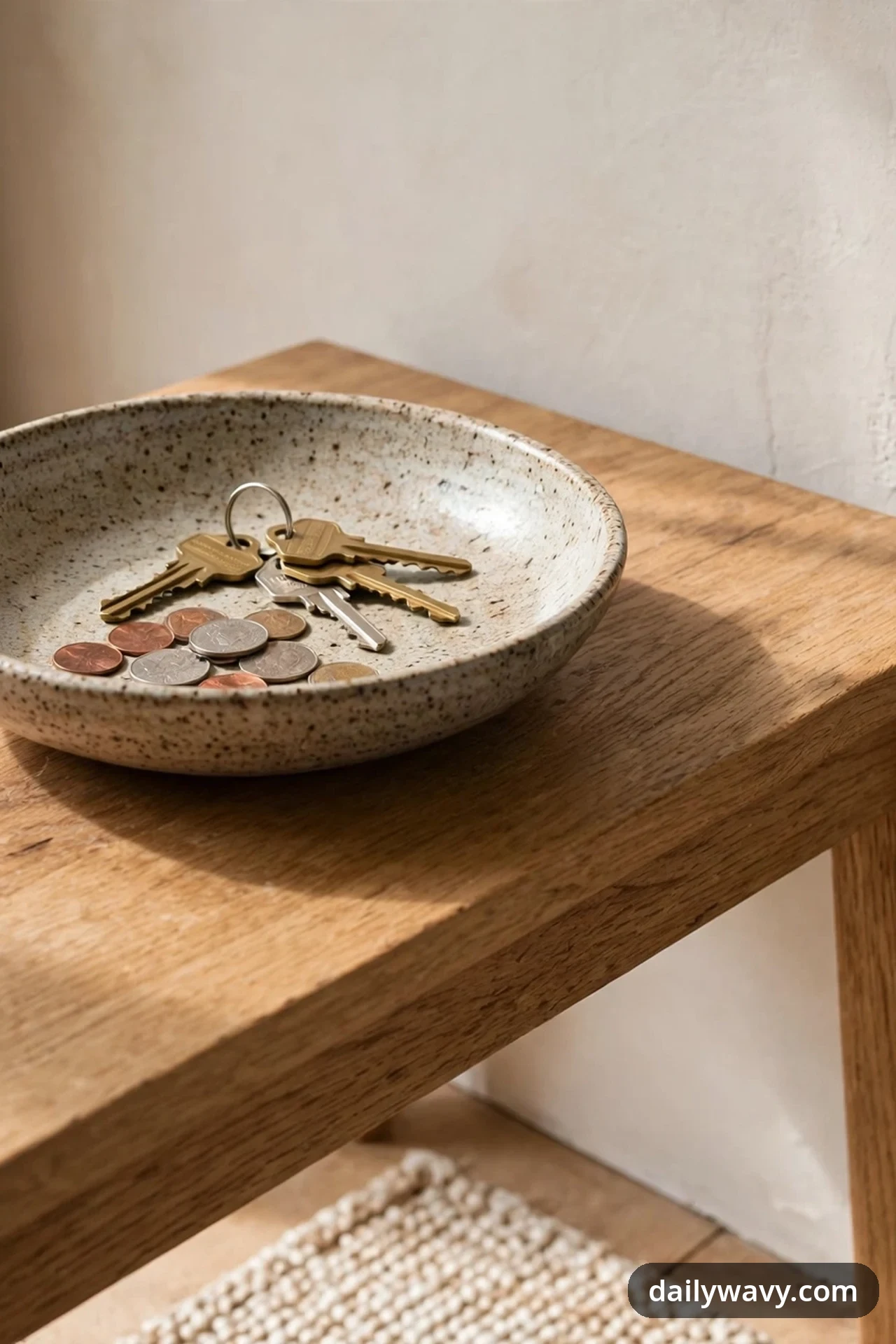
A shallow bowl is the entryway's quiet hero. It corrals the keys and coins you empty from your pockets every evening, and its low profile means it stays below sightlines and leaves the table feeling open.
What to measure: the console table surface. The bowl should sit comfortably with room to spare, typically 6 to 10 inches across.
Materials: one shallow bowl in ceramic, stone, or wood with some heft so it does not slide when you toss keys in.
Placement: on the console table at the exact spot where your hand naturally lands when you walk in. Use it every time you walk in and it soon becomes a habit.
Approximate effort: a single purchase.
Lower-cost alternative: a small plate or saucer from your kitchen does the same job until you find the bowl you love.
13. A Simple Coat Rail With Clear Spacing
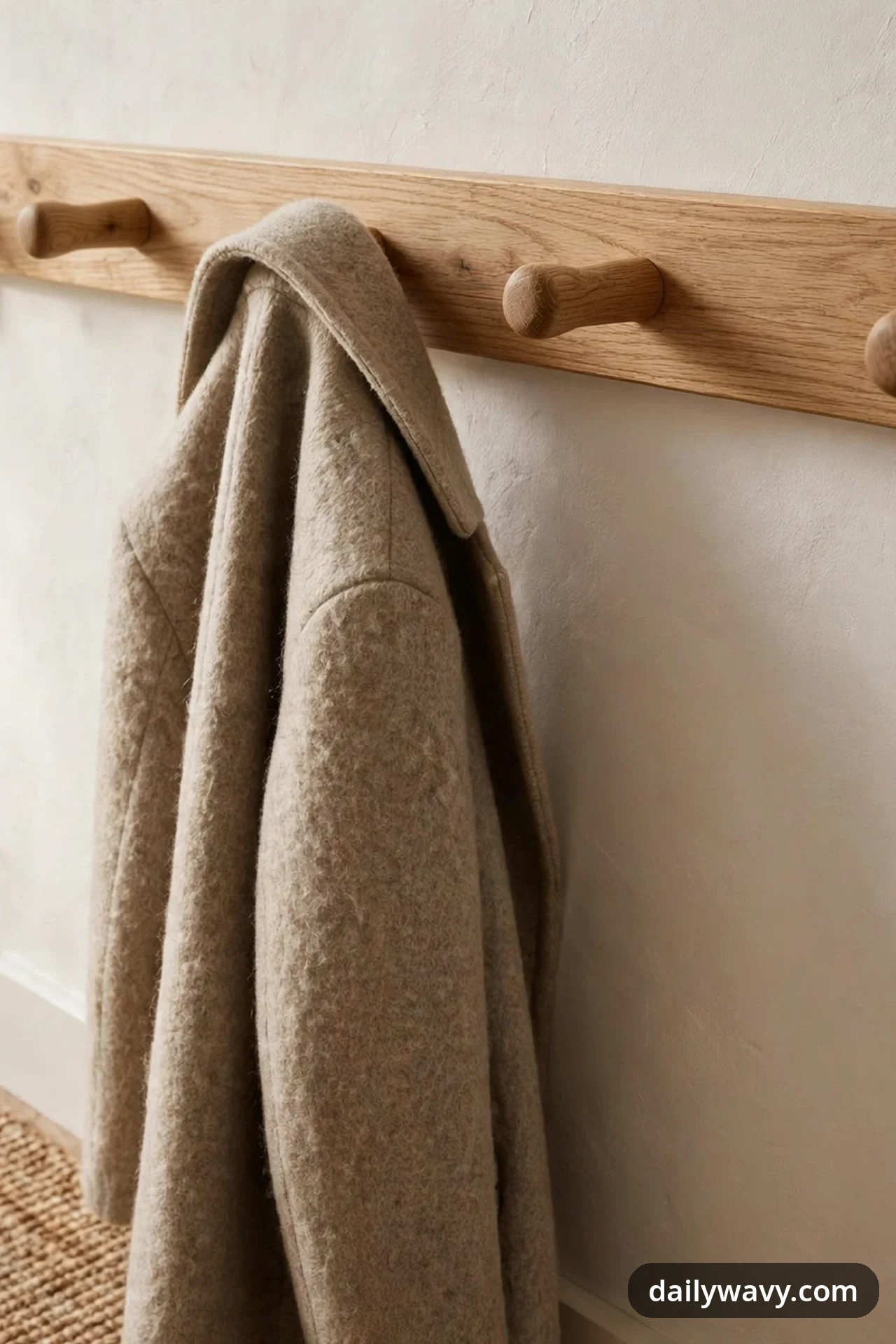
Coats have to live somewhere, and a simple rail with generous spacing beats a crowded hook strip every time. Clear spacing means coats dry properly and each one stays grabbable, which is the whole job.
What to measure: allow at least 8 inches between hooks, and mount the rail at about 66 inches from the floor for adult coats, lower if kids use it.
Materials: a wall-mounted rail with sturdy hooks, a level, stud finder, and proper anchors for your wall type. Choose hooks with a rounded profile so they do not snag fabrics.
Placement: on the longest clear wall run, outside the door swing, with a mat or tray below to catch drips.
Approximate effort: one to two hours including mounting.
Lower-cost alternative: individual wall hooks spaced widely apart give the same airy result for less money.
14. A Folded Blanket On A Bench Corner

A folded blanket on the bench corner does two jobs at once: it softens the hardest-working seat in the house and waits ready for a chilly car ride or a drafty porch chat. It is the kind of detail guests notice.
What to measure: the bench corner. Fold the blanket to roughly a third of the bench's width so the seat stays usable.
Materials: one throw blanket in wool, cotton, or a soft blend, in a color that echoes your palette.
Placement: folded in thirds or quarters on one corner of the bench, never across the middle where people sit.
Approximate effort: a few minutes of folding.
Lower-cost alternative: any throw you already own works. Fold it crisply and the effect is the same.
15. A Narrow Tray For Keys

Keys are one of the easiest things to lose in any home, and a closetless entry gives them nowhere to hide. A narrow tray, small enough for the tiniest console, turns key-dropping into a reflex.
What to measure: your smallest available surface. Trays as small as 4 by 8 inches work; the key is that it fits where you stand when you enter.
Materials: one narrow tray in brass, leather, or ceramic with a slight lip so keys stay put.
Placement: on the console table, shelf, or narrow ledge closest to the door, exactly where your hand falls.
Approximate effort: a single purchase and a little habit-building.
Lower-cost alternative: a small dish or even a sturdy coaster marks the spot until the real tray arrives.
Frequently asked questions
Where do coats go in an entryway without a closet?
A wall-mounted rail with hooks spaced at least 8 inches apart handles daily coats well. For a bigger household, add a second lower rail for kids and guests. Keep the rail outside the door swing and place a tray or mat underneath for drips.
How do I keep a small entry from feeling cluttered?
Give every category of item its own container, keys in a tray, mail in a sorter, shoes on one mat. Corralled clutter reads as organized. Also keep at least 30 inches of walking lane completely clear; the clear path is what makes the space feel calm.
Can I make a landing zone without a mudroom?
Yes. A landing zone is just a defined spot for the five daily things: keys, wallet, mail, shoes, and a coat. A slim console table or a wall rail with a basket covers all of it in a couple of square feet.
What is the best lighting for a dark entryway?
A small lamp on a stable surface is a flattering option because it adds warm light where you need it. If there is no surface, a battery-powered sconce or a plug-in picture light works without wiring.
How do I stop shoes from taking over?
One rule: shoes you are not wearing today live elsewhere. A single mat or tray at the door holds the current pair for each person, and everything else goes to the bedroom closet.
Will wall-mounted pieces damage my rental?
Most rails and shelves need screws, which many landlords accept if you patch the holes when you leave, but check your lease first. For a no-drill option, use freestanding pieces, a leaning ladder shelf, a bench, and baskets, that touch no wall at all.
A welcoming entry, no closet required
Living without a closet at the front door stops feeling like a compromise once each daily ritual has its own small home. Start with the basics, a place for keys, a place for coats, a place to sit, then add the layers that make it yours: the lamp, the art, the plant. Related spaces to explore include our guide to small entryway decor and our narrow living room layout ideas, and our narrow hallway entry decor ideas, plus the full Home & Decor collection.