12 Stacked Washer Dryer Laundry Area Ideas for a More Useful Laundry Space
A stacked washer and dryer buys you back the one thing a laundry room never has enough of: floor space….
A stacked washer and dryer buys you back the one thing a laundry room never has enough of: floor space. But that tall, narrow tower can also feel like a compromise if everything around it is just bare wall and a hamper shoved in the corner. These twelve ideas turn the area around your stacked unit into a small, hardworking station where every motion has a place. Each one respects the things a stacked unit demands, like door swing, ventilation, and service access, and most of them are renter friendly and reversible.
Jump to an idea
- A wall hook for light tools
- A compact folding surface
- A lidded hamper with ventilation
- A small jar for loose pocket items
- A closed container for detergent
- A shelf above a reachable work zone
- A vertical organizer on an unused wall
- A slim basket for clean cloths
- A small framed print away from moisture
- A neutral palette with one accent color
- A labeled repair or stain-treatment bin
- A compact ironing-tool storage spot
The stacked-unit rules before you buy anything
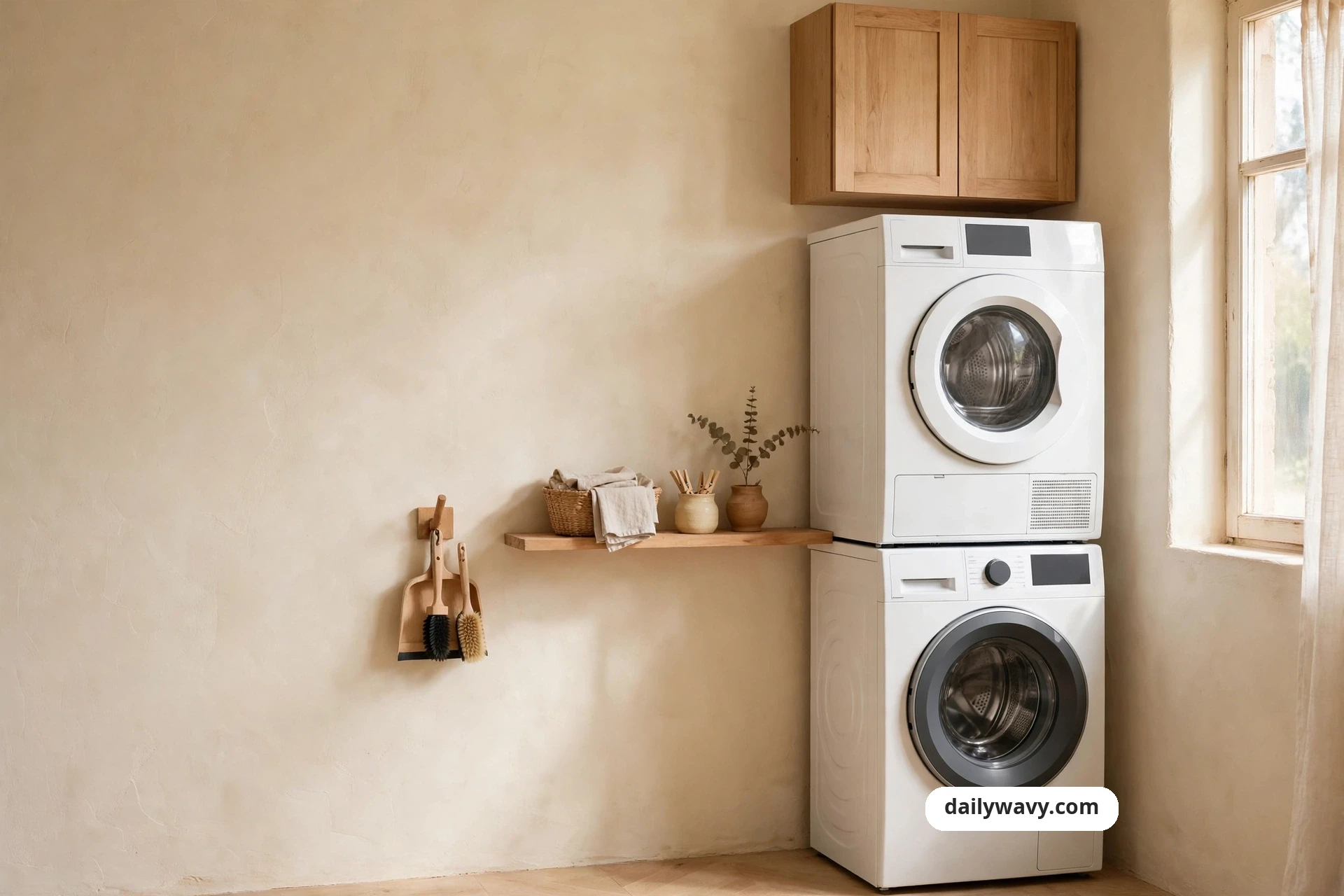
Measure first and decorate second. A standard stacked pair is about 27 inches wide and 76 to 78 inches tall, and the doors need a clear swing arc of roughly 20 to 24 inches in front. Leave at least an inch of air on each side and a couple of inches behind the unit so hoses and cords stay accessible for service. Never block the vents: most electric dryers still need their vent hose run (ventless models are the exception), and gas units have fixed clearances printed on the appliance label, so check the manual before placing anything close. Keep the floor in front of the doors clear of trip hazards, because you will step into that space with a full basket in your arms. With those basics handled, every idea below fits around them. Detergent stays in its original container or in a clearly labeled one, hooks and organizers use damage-free mounts where renting, and nothing here requires moving the appliances or touching a vent.
1. A Wall Hook for Light Tools

There is a particular kind of annoyance reserved for the dustpan that keeps falling behind the dryer. A single sturdy wall hook beside the stacked unit ends that little daily friction. It holds the light things you reach for constantly: the hand brush, the lint roller, the small dustpan. They hang at eye level, off the floor, and they stop migrating around the room.
What to measure: the clear wall strip beside the unit, usually 8 to 14 inches wide. Choose a hook rated for at least 5 pounds, and mount it around 60 inches from the floor so the tools hang clear of the door swing. Materials are simple: one wood or metal wall hook, two screws and anchors, or a high-strength adhesive hook rated for damp environments if you rent. Placement goes on the wall beside the unit, never above it where a falling tool could land on the door seal.
Approximate effort: fifteen minutes with a drill, five with adhesive. A realistic lower-cost alternative is a single over-the-door hook on a nearby closet door, which holds the same three tools for about the same zero-effort install.
2. A Compact Folding Surface

A stacked unit steals the one surface every laundry area needs, the place to fold. A small drop-down shelf gives it back without taking a single inch of floor. Folded down, it holds a shirt or two at a time; folded up, it disappears against the wall. The rhythm becomes almost pleasant: pull warm laundry from the dryer door, turn, fold, done.
What to measure: the available wall width beside the unit and your own reach, the shelf should sit 34 to 36 inches from the floor, roughly counter height. A wall-mounted drop-leaf shelf 24 by 16 inches in light wood or melamine works well. Materials: the shelf board, a pair of folding brackets rated for 25 pounds or more, screws and wall anchors. Placement belongs on the wall beside the unit at folding height, positioned so the open shelf never blocks the washer or dryer door arc. Check the arc before you drill.
Approximate effort: a one-hour weekend job. A realistic lower-cost alternative is a sturdy 18-inch wooden crate top turned on its side as a small folding perch on a rolling cart, or simply folding on a nearby counter, which works but means carrying each load out of the nook.
3. A Lidded Hamper with Ventilation

An open hamper in a small laundry area does two things wrong: it shows everything, and it lets damp laundry steam against the wall. A tall, lidded hamper with ventilated sides fixes both. The lid keeps the room looking calm, and the slats or woven weave let air circulate so sweaty gym clothes and damp towels do not go sour between laundry days.
What to measure: the floor footprint beside or in front of the unit, aiming for a hamper around 17 by 17 inches square and 24 to 28 inches tall. Woven seagrass, ventilated plastic, or a canvas bag on a bamboo frame all work. Materials are the hamper itself plus a washable liner if it does not include one. Placement: beside the unit with its lid fully opening without hitting the appliance doors, or in the nearest corner with a straight path to the washer. Never wedge it against the vent hose side.
Approximate effort: a single purchase and ten minutes to line it. A realistic lower-cost alternative is a basic mesh pop-up hamper tucked behind the door, which breathes well but looks less tidy.
4. A Small Jar for Loose Pocket Items

Every household has the same mystery collection: coins, buttons, a lone earring, a hair tie, all shaken loose in the wash. A small jar on a shelf near the unit gives those orphans a home and saves the washing machine pump from the coin that rattles through every cycle. Empty it once a month and you will be surprised what comes back to you.
What to measure: a shelf or ledge at least 4 inches deep within arm’s reach of the washer door. Any clean glass jar with a wide mouth, about a pint in size, works. Materials: the jar and, if you like, a small paper label marked “pocket finds.” Placement goes on the shelf or counter ledge nearest the washer, never on top of the stacked unit where vibration walks it toward the edge. Glass and spinning dryers do not mix.
Approximate effort: five minutes. A realistic lower-cost alternative is a repurposed jam jar, which is exactly what this idea deserves anyway.
5. A Closed Container for Detergent
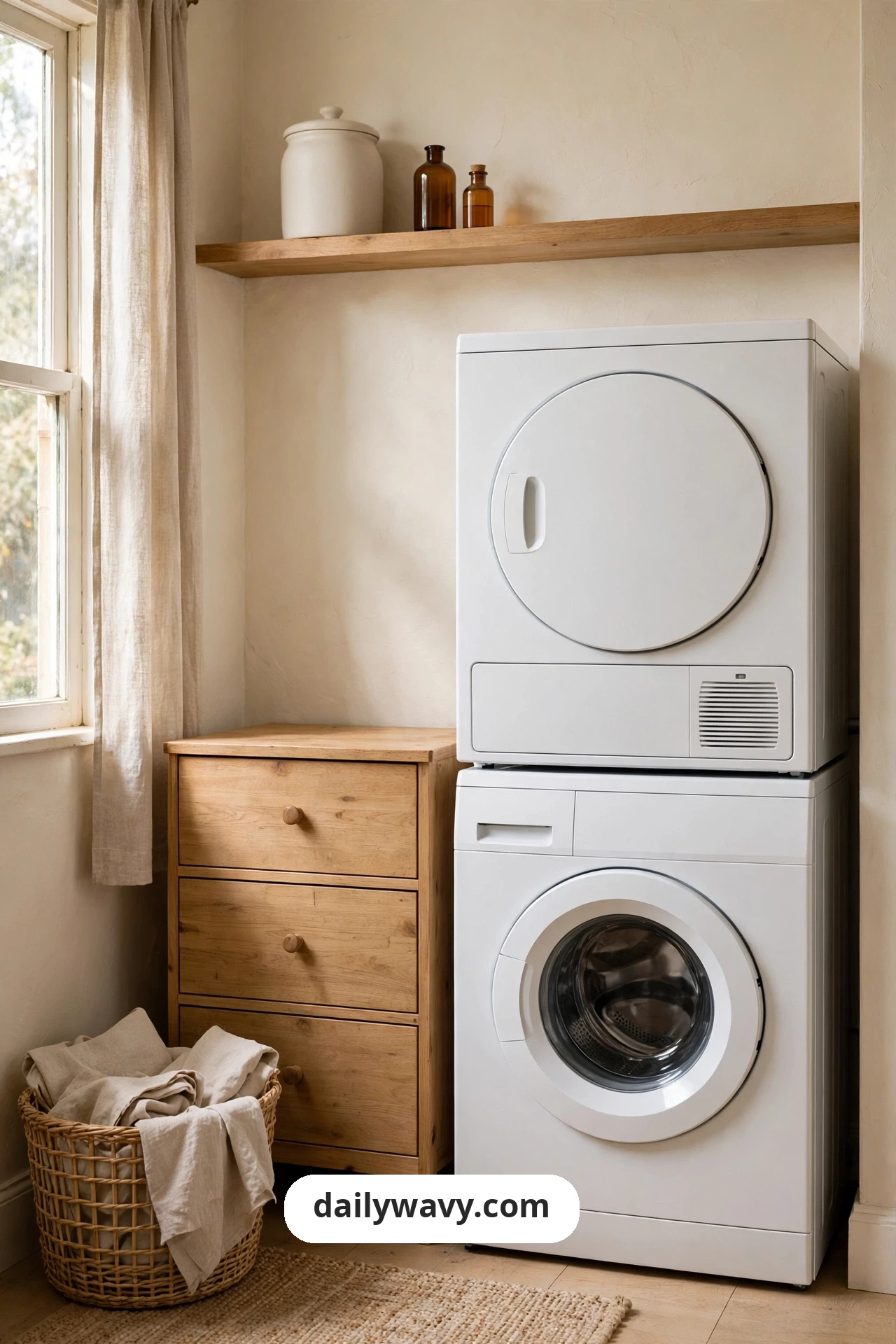
Detergent that sits open loses potency, spills powder on everything, and in a small household with kids or pets it is a safety problem. A closed container, either the original bottle with the cap firmly shut or a sturdy canister with a clear label, keeps the powder dry, the liquid sealed, and the look tidy. One closed container on the shelf reads as calm; three open boxes read as chaos.
What to measure: the shelf depth and height clearance, pods and powder bags need about 10 inches of height. Use a ceramic or heavy plastic canister with a gasket lid, or keep the original packaging and add a clear handwritten label if you decant. Safety note: detergent stays in its original container or a correctly labeled one, and pods live up high and out of reach of children. Materials: the container and a label. Placement belongs on a shelf above or beside the unit, at your comfortable reach height, never on the floor where it can be kicked.
Approximate effort: ten minutes including labeling. A realistic lower-cost alternative is a large zip-top bag inside a labeled shoebox, which seals just as well and costs almost nothing.
6. A Shelf Above a Reachable Work Zone
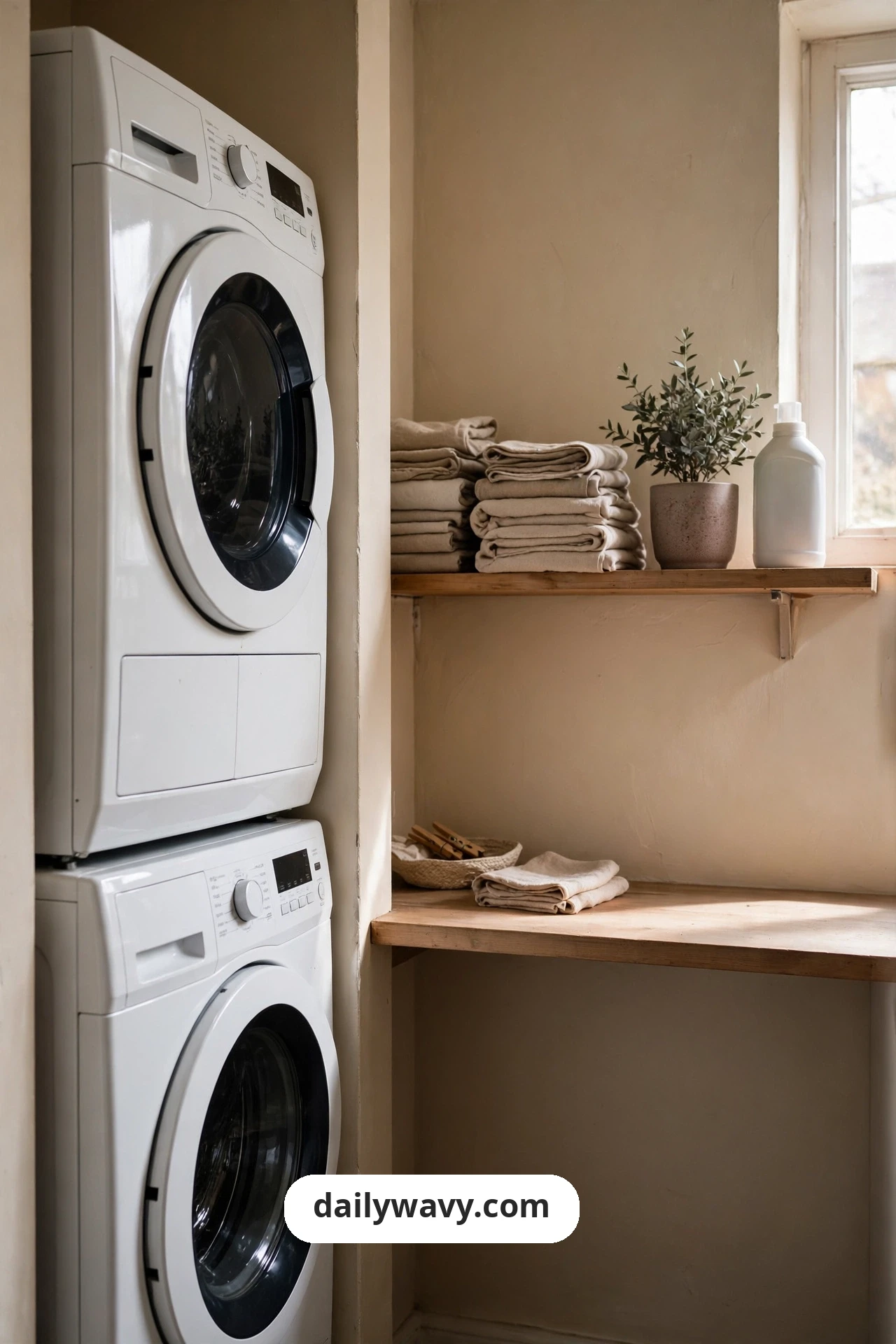
The wall above a stacked unit is usually dead space, but the wall above your work zone is prime real estate. A floating shelf mounted at a height you can actually reach, around 60 to 66 inches, holds the daily-use supplies: detergent, stain spray, dryer sheets, a small plant. The rule is reachability. Anything you need with wet hands should not require a step stool.
What to measure: the clear wall run beside the unit, and your own fingertip reach. A painted wood shelf 24 to 36 inches wide and 10 to 12 inches deep suits most nooks. Materials: the shelf board, two concealed or decorative brackets rated for the load, screws and stud or masonry anchors. Placement goes above your folding surface or counter, never above the stacked unit itself where reaching over the machines is awkward and heat rises. Keep at least 18 inches of clearance above a countertop.
Approximate effort: one to two hours with a level and a stud finder. A realistic lower-cost alternative is a tension-rod shelf kit or a pair of adhesive ledge strips for light items, both renter friendly and reversible.
Organization up here matters as much as anywhere else in the house. If shelves are your thing, the same measure-first logic we use for small pantry organization works beautifully in a laundry nook: zone the shelf by task, label the edges, and keep the daily items at hand level.
7. A Vertical Organizer on an Unused Wall
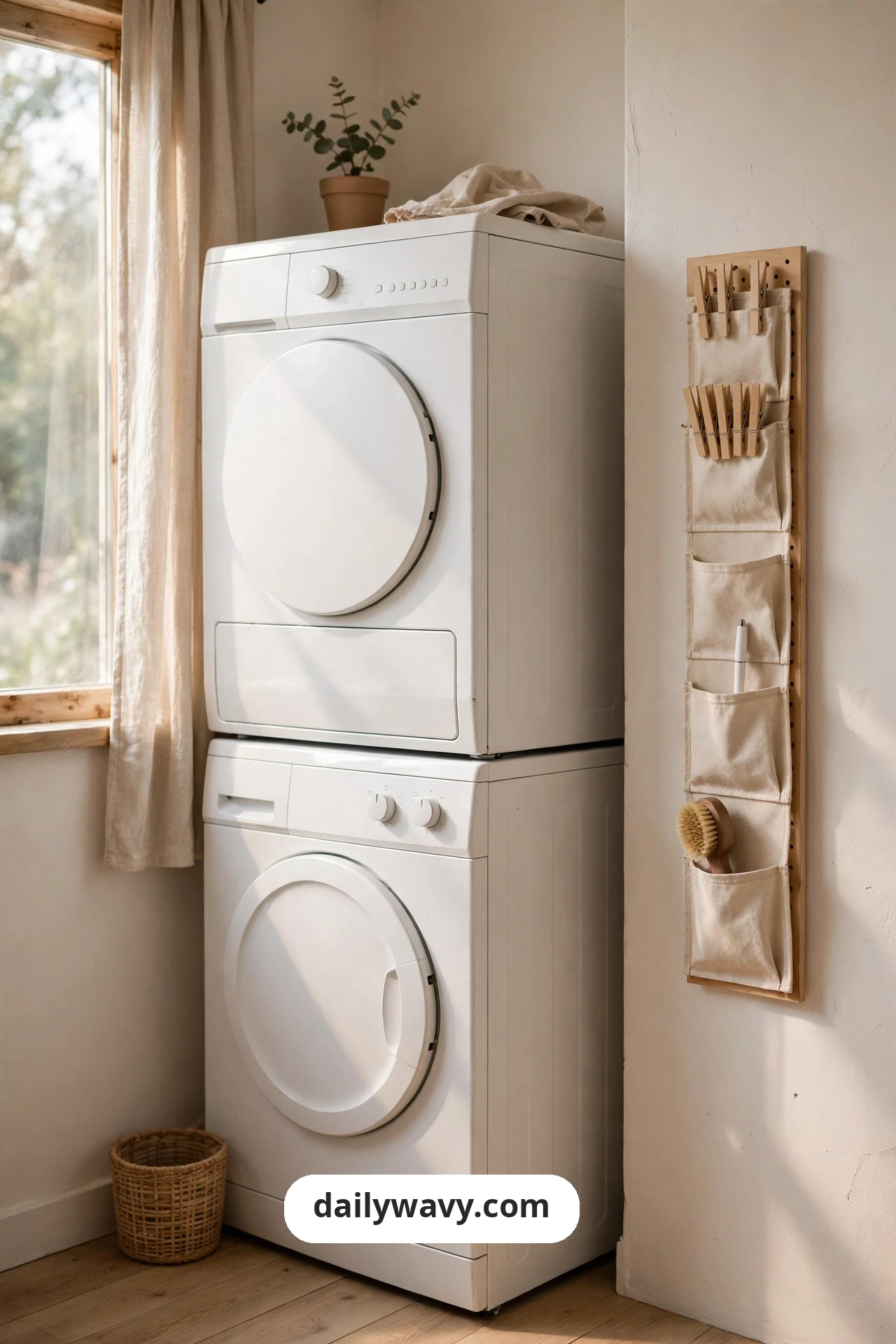
Laundry nooks almost always have one forgotten wall: the side wall, the strip behind the door, the patch of drywall that does nothing. A slim vertical organizer claims it. A pegboard strip, a row of pocket organizers, or a narrow rail with hooks turns that dead wall into the home for clothespins, the stain pen, the measuring scoop, and the little brush you use on collars.
What to measure: the unused wall’s width and height, most strips work in a 12-inch-wide run. Materials: a 12 by 24 inch pegboard or fabric pocket organizer, hooks or pegs, and removable adhesive strips or screws depending on your rental situation. Placement belongs on the side wall or the wall beside the door, anywhere that stays dry and does not interfere with the door swing. Keep it clear of the vent hose path.
Approximate effort: thirty minutes. A realistic lower-cost alternative is a hanging shoe organizer cut to size on the back of the laundry door, which gives you a dozen pockets for very little money.
8. A Slim Basket for Clean Cloths
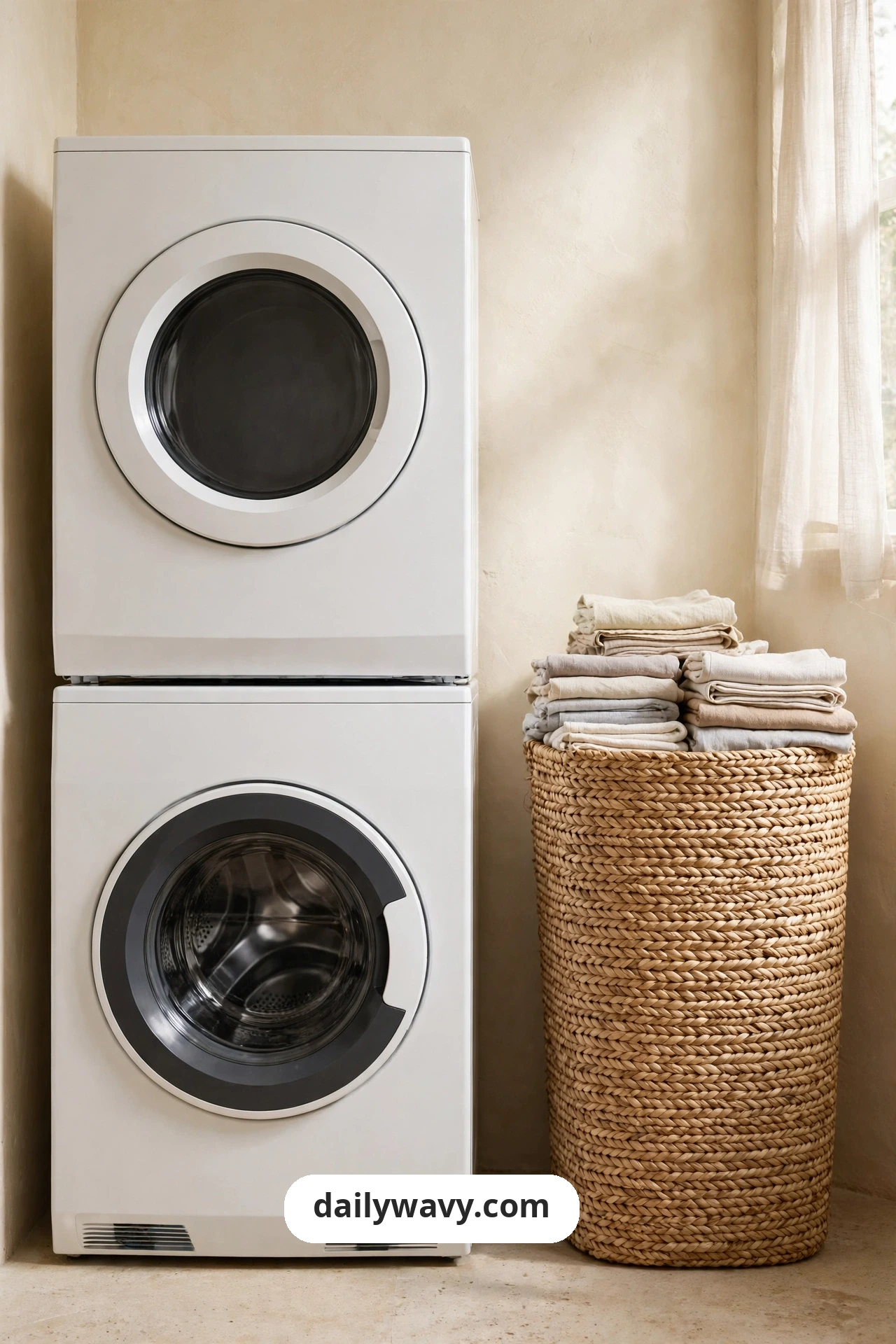
Microfiber cloths, dusting rags, and cleaning mitts multiply in every home, and they deserve better than a crumpled heap on the dryer. A slim basket parked beside the unit keeps them folded, visible, and grab-ready. When you can see your cloths, you actually use them, and the room reads as maintained rather than mid-chore.
What to measure: a gap 8 to 12 inches wide beside the unit, at least 20 inches tall. A tall woven or fabric basket with handles fits neatly. Materials: the basket and nothing else, though a folded cloth on top makes a nice finished look. Placement: in the narrow gap beside the unit, pulled out enough to grab cloths one-handed. Make sure it does not press against the side vent clearance.
Approximate effort: a purchase and a place. A realistic lower-cost alternative is a fabric grocery tote hung on your wall hook from idea 1, which holds the same cloths for free.
9. A Small Framed Print Away From Moisture

A laundry area is a room, and rooms feel better with one small piece of art. The trick is placement: hang the print on the driest wall, opposite the machines or near the door, where steam never reaches. A simple botanical print or a line drawing in a thin oak frame adds warmth without competing with the work the room does. It is the difference between a utility corner and a space someone thought about.
What to measure: a dry wall section at least 12 inches square, ideally on the opposite side of the room from the washer. Materials: a small framed print, 8 by 10 or 11 by 14 inches, with a proper frame rather than bare paper, and a picture-hanging strip or nail. Placement goes on the wall farthest from the machines, never directly above the units where rising steam and heat will warp the paper. If your laundry area is a steamy closet with no dry wall, skip the art and choose a washable wall decal instead.
Approximate effort: ten minutes. A realistic lower-cost alternative is a page from a calendar or a postcard in a simple frame, which looks just as intentional.
10. A Neutral Palette with One Accent Color

Small utility rooms go wrong when every object shouts a different color: the red detergent, the blue basket, the neon clothespins. Calm the whole nook with a base of warm neutrals, cream walls, natural wood, woven baskets, white machines, and then let exactly one accent color do the talking. Terracotta, sage, or dusty blue, repeated in two or three small doses like a towel, a rug, and a plant pot, pulls the whole space together.
What to measure: nothing to measure, this is a styling edit. Walk the room and gather the loudest items. Materials: one or two accent pieces in your chosen color, a small washable rug, a folded towel, a plant pot, and neutral replacements for the worst offenders, like a plain basket to replace the bright plastic one. Placement: spread the accent color in a triangle, rug, shelf item, and wall hook area, so the eye travels. Keep the machines themselves neutral; they are the backdrop, not the feature.
Approximate effort: an afternoon of editing and one small shopping trip. A realistic lower-cost alternative is a can of paint in your accent color for a single small item you already own, like a wooden stool or a basket rim.
The same calm-base thinking that makes small entryway decor feel welcoming applies here too: keep the base quiet, and let the accent color do the talking.
11. A Labeled Repair or Stain-Treatment Bin

Stains have a clock on them, and the treatment supplies always seem to live somewhere else in the house. A small labeled bin in the laundry area ends the delay: stain-removal spray, a soft brush, a needle and thread card, a lint roller, all in one place, all labeled. When a spill happens, you reach, treat, and toss the garment straight into the washer. That speed is the difference between a stain that lifts and one that sets.
What to measure: a shelf spot or counter corner about 12 by 8 inches. A small wooden crate, fabric bin, or lidded box works. Materials: the bin, a tag or label marked “Stain & Repair,” and the supplies you already own. Placement belongs on the shelf or beside the folding surface, within two steps of the washer door. Keep sprays upright and caps tight, and store everything in original or correctly labeled packaging so nobody mistakes a stain remover for a cleaning spray.
Approximate effort: twenty minutes to gather and label. A realistic lower-cost alternative is a labeled zip-top bag inside your existing basket, which holds the same kit and takes up no extra space.
12. A Compact Ironing-Tool Storage Spot

Nobody wants a full ironing board unfolding in a laundry nook the size of a closet. A compact storage spot solves it: a wall-mounted iron holder or a narrow vertical slot that holds a compact steam iron and a folded tabletop pressing pad. You get the function of an ironing station in about six inches of wall. For the quick collar touch-up or the wrinkled shirt emergency, it is all you need.
What to measure: a wall strip 6 to 8 inches wide beside the unit, clear of the door swing. A heat-resistant wall-mount iron holder plus a folded mini pressing pad, or a narrow fabric slot organizer, does the job. Materials: the holder, mounting hardware, and a tabletop pressing pad that folds flat. Placement goes on the side wall at about 48 inches high, where the iron is reachable but out of the way. Let the iron cool fully before storing, and never store it plugged in.
Approximate effort: thirty minutes to mount. A realistic lower-cost alternative is a heat-resistant silicone iron rest mat on your folding shelf, which protects the surface and costs very little.
Frequently asked questions
How much clearance does a stacked washer dryer really need?
Plan for about an inch of air on each side, two to four inches behind for hoses and cords, and a clear door swing of roughly 20 to 24 inches in front. Always check your model’s manual for the exact vent and service clearances, since gas dryers have fixed minimums printed on the appliance label.
Can I put shelves directly above a stacked unit?
It is better to place shelves beside the unit or above your work zone rather than directly over the machines. Heat rises, reaching over tall appliances is awkward, and a shelf above the unit can block service access to the top of the dryer.
What is the safest way to store detergent in a small laundry area?
Keep detergent in its original container or a sturdy, clearly labeled one, with the lid closed. Store pods and concentrates up high and out of reach of children and pets, and never transfer chemicals into food containers.
How do I make a rented laundry nook nicer without drilling?
Adhesive hooks rated for damp environments, tension-rod shelves, over-the-door organizers, and freestanding baskets cover most ideas in this list. Everything here can be done reversibly if you choose the mounting method with your lease in mind.
Where should the hamper go in a tiny laundry area?
Beside the unit with the lid able to open fully, or in the nearest corner with a straight path to the washer door. Keep it off the vent-hose side and out of the door swing so you can load the washer without moving it.
How do I keep a small laundry area from smelling musty?
Ventilate the hamper, leave the washer door ajar between loads so the gasket dries, and wipe the door seal monthly. A lidded but ventilated hamper, like the one in idea 3, keeps damp laundry from going sour while still looking tidy.
A small room that works as hard as you do
A stacked washer dryer already made the smart space trade. These twelve ideas finish the job around it: tools on a hook instead of the floor, a folding surface that vanishes when you are done, detergent sealed and labeled, and one calm accent color tying it all together. Pick the two or three that solve your biggest daily friction and start there. The rest can wait for a slow Saturday. For more small-space organization thinking, see our small laundry room decor ideas and browse our home decor ideas, where every guide is built for real rooms, not showrooms.