20 Small Laundry Room Decor Ideas for a More Useful Laundry Space
20 Small Laundry Room Decor Ideas for a More Useful Laundry Space A small laundry room can feel like a…
20 Small Laundry Room Decor Ideas for a More Useful Laundry Space
A small laundry room can feel like a closet you are afraid to open, or it can feel like the most satisfying room in the house. The difference is rarely square footage. It is whether everything has a place, whether you can move around the machines, and whether the space looks calm enough that you do not mind spending time in it. These twenty ideas are built for real small laundry rooms: galley layouts, stacked machines, closet conversions. Each one pairs a styling choice with a practical job, so the room ends up both prettier and easier to use.
Jump to an idea
- A shallow shelf for daily supplies
- A labeled basket for each sorting category
- A hanging rail for air-drying
- A fold-flat drying solution
- A narrow rolling caddy
- A washable runner clear of doors
- A wall hook for light tools
- A compact folding surface
- A lidded hamper with ventilation
- A small jar for loose pocket items
- A closed container for detergent
- A shelf above a reachable work zone
- A vertical organizer on an unused wall
- A slim basket for clean cloths
- A small framed print away from moisture
- A neutral palette with one accent color
- A labeled repair or stain-treatment bin
- A compact ironing-tool storage spot
- A basket for ready-to-return laundry
- An open landing space for folded items

1. A shallow shelf for daily supplies

The supplies you reach for every load should live where your hand naturally goes. A shallow shelf, mounted above the washer and dryer or on the nearest wall, keeps detergent, dryer sheets and stain spray visible and grabbable instead of buried in a cabinet. The shallow part matters: shelves 8 to 10 inches deep hold bottles without swallowing them, and they stay clear of the space where front-loader doors swing open.
Mount the shelf at a height you can reach without a step stool, usually 48 to 54 inches from the floor. A solid wood shelf on simple metal brackets suits the room’s workhorse character, and a pair of brackets every 32 inches keeps it sturdy when loaded with full detergent bottles. The styling win comes from editing: keep only the daily bottles on this shelf and move bulk refills elsewhere. Three to five matching or coordinated containers look deliberate. A lower-cost alternative is a single sturdy board from the hardware store, sanded and sealed, on basic L brackets you probably already own.
2. A labeled basket for each sorting category

Sorting laundry is the kind of chore that disappears when the system is visible. A set of baskets, one labeled for each of your sorting categories, turns a jumble of clothes on the floor into an orderly row. Most households need three: lights, darks and delicates or special care. The labels are doing the real work here, because anyone in the house can sort without asking.
Choose baskets that fit your footprint. Rectangular baskets around 14 by 18 inches line up neatly against a wall; round ones work in corners. Woven seagrass or sturdy canvas bins both look warm against white machines, and canvas ones can be tossed in the wash themselves when they get dusty. Attach simple clip-on or chalkboard labels so you can change categories if your habits shift. A realistic lower-cost alternative is repurposing three matching storage boxes or even sturdy shopping bags tucked into a single wooden crate.
3. A hanging rail for air-drying

Delicates, hand-wash items and anything you want to keep out of the dryer need a place to hang, and a wall-mounted rail claims that spot without eating floor space. A short stainless or wooden rail with a few S-hooks, mounted on an empty stretch of wall, handles shirts, bras and workout tops that would otherwise drape over every door handle in the house.
Mount it where drips will not matter, away from the folding surface and clear of electrical outlets. A rail 24 to 30 inches long fits most small rooms, and it should sit at least 60 inches high so hanging garments clear the floor. Leave a few inches of wall clearance behind it for airflow, which is what actually dries clothes instead of leaving them damp. For renters, an over-the-door hook rack or a tension rod braced between two walls gives you the same function with zero holes. A lower-cost alternative is a single row of sturdy adhesive hooks rated for a few pounds each, spaced along the wall.
4. A fold-flat drying solution

A full-size drying rack is a space hog, but a fold-flat drying rack gives you the same drying area on demand and disappears when the load is done. Wall-mounted accordion racks and slim folding towers both collapse to a few inches deep. Open it on wash day, close it after everything is dry, and the room stays clear the other six days of the week.
Look for a rack with at least 20 feet of drying line or rod space, which handles a full load of delicates. Mount a wall unit at counter height so you are not bending, and make sure it folds flat against a wall that does not block the appliance doors. Wood racks look the nicest in a styled room; powder-coated metal ones handle heavier wet loads. Test the folding mechanism in the store if you can, because a rack that fights you will not get used. A realistic lower-cost alternative is a folding wooden clothes horse you lean against the wall when not in use.
5. A narrow rolling caddy

Every laundry room has a dead zone: the gap between the machines and the wall, usually 6 to 10 inches of wasted space. A narrow rolling caddy turns that sliver into storage. These slim carts, typically 7 inches wide and 20 inches deep, slide into the gap and hold bottles, brushes and dryer sheets on three tiers. Pull it out when you need something, roll it back when you are done.
Measure your gap before buying, since they come in a few widths. Choose one with a handle or top rail so you can pull it without tipping it, and check that the wheels lock if your floor slopes. The styling trick is restraint: fill the tiers with your most-used items and keep the tops tidy, because a caddy that bulges with clutter just moves the mess into the open. A lower-cost alternative is a tall narrow basket on the floor of the gap, though you lose the pull-out convenience.
6. A washable runner clear of doors

A laundry room floor takes a beating: wet shoes, dropped socks, the occasional splash. A washable runner adds warmth and pattern while protecting the floor, and because it goes in the machine, it never becomes a grimy permanent fixture. Keep it clear of appliance doors so nothing catches when you open them.
Measure the walkway, not the whole room. A runner 24 to 30 inches wide and 4 to 6 feet long covers the standing zone in front of the machines. Low-pile cotton or machine-washable rugs with a non-slip backing work best; thick piles trap lint and fight with door swings. Choose a pattern you like looking at daily, because you will see it every load. A realistic lower-cost alternative is a bath mat you already own, as long as it lies flat and does not slide.
7. A wall hook for light tools
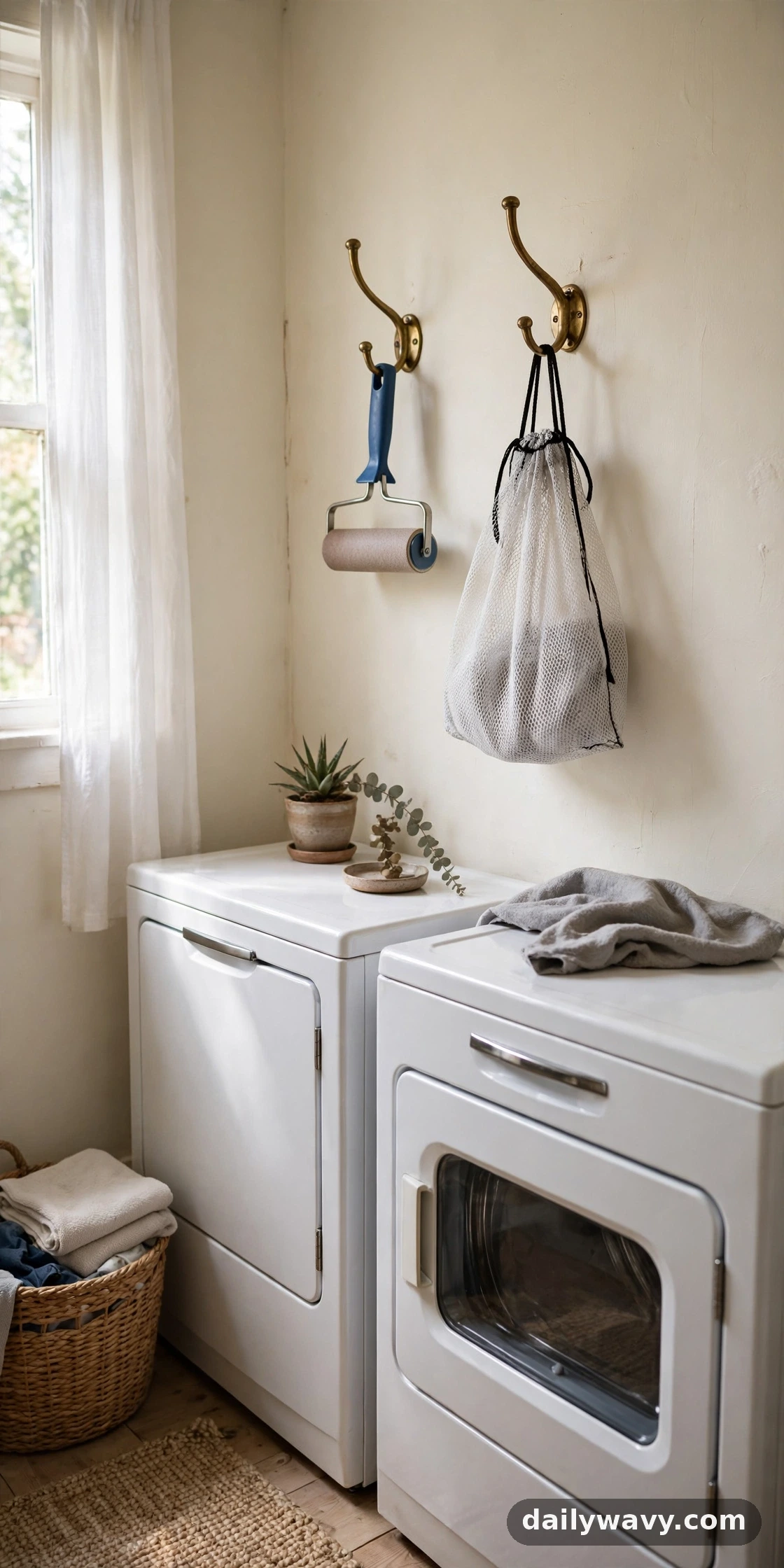
A lint roller, a mesh wash bag and a small brush are the light tools of the laundry room, and they vanish into drawers exactly when you need them. One or two wall hooks near the machines keep them hanging in plain sight. It is a tiny change that removes a surprising amount of friction from the routine.
Mount hooks at shoulder height on the side wall or the inside of a cabinet door. Sturdy adhesive hooks rated for 5 pounds or more work fine for these light items and keep the method renter-reversible. Wood or brass hooks look intentional; plain plastic ones do the job invisibly. Group the tools on one hook or give each its own, whichever keeps them from tangling. A lower-cost alternative is a single over-the-door hook on the laundry room door itself.
8. A compact folding surface
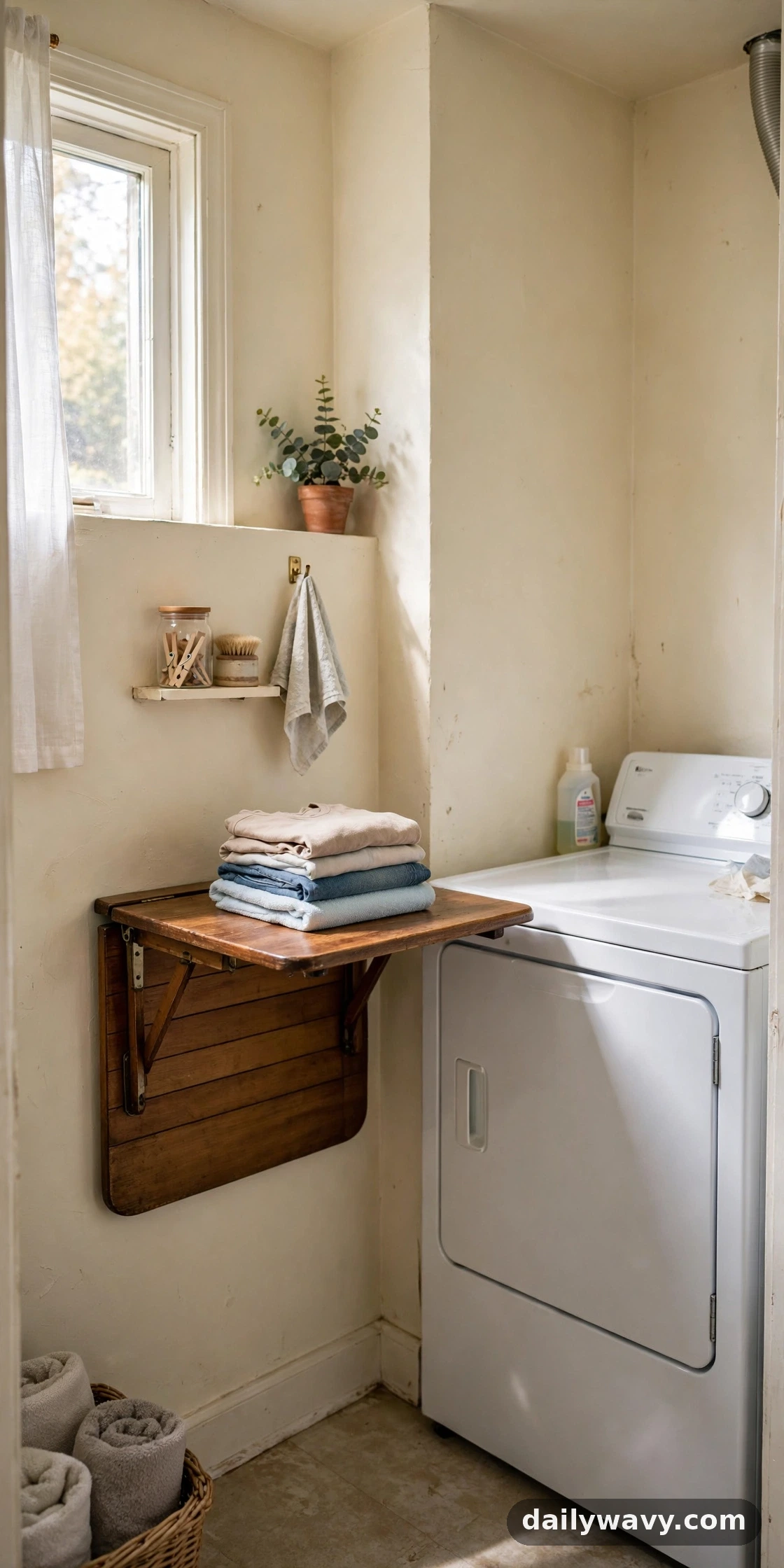
Folding on top of the machines works until the dryer is running and everything vibrates onto the floor. A dedicated folding surface, even a compact one, changes the rhythm of laundry day. In a small room, this usually means a wall-mounted drop-leaf table or a countertop spanning front-loaders, sized to hold one basket of clothes at a time.
A surface 24 by 36 inches is enough to fold a full load in batches. If you are mounting a drop-leaf, set it at 34 to 36 inches high, standard counter height, and make sure it folds down clear of the machine doors. A plywood or butcher-block top on folding brackets looks warm and costs little; the brackets do the engineering. Keep the surface clear between folding sessions so it reads as a design feature, not a dumping ground. A realistic lower-cost alternative is a large wooden cutting board laid across two machines as a temporary folding top.
9. A lidded hamper with ventilation

An open hamper is a visual mess and a smell risk. A lidded hamper with ventilation slots or a woven open weave hides the pile while letting air circulate, which matters in a small room where damp clothes can start smelling musty within a day. The lid is what makes it furniture instead of clutter.
Size it to your laundry volume. A 15 to 20 gallon hamper handles a few days for two people; go bigger for families. Ventilation can be actual slots, an open weave or a lid that does not seal airtight. Place it where you naturally undress or where the sorting baskets live, so dirty clothes go straight in instead of landing on the floor. Woven seagrass or rattan hampers look the best; lined canvas ones contain odors a bit better. A lower-cost alternative is a tall trash can with a flip lid, lined with a washable bag.
10. A small jar for loose pocket items

Coins, hair ties, receipts and the occasional mystery key: every load produces pocket archaeology. A small glass jar on the shelf or folding surface gives these strays a home instead of the machine drum or the trash. It is a small detail that makes the room feel managed.
Any clean jar works, 8 to 16 ounces, with a wide mouth so you can drop things in one-handed. A simple glass mason jar shows the contents, which is part of the charm; a ceramic canister hides them if you prefer a cleaner look. Empty it monthly and return what is claimable. This is one idea where the lower-cost alternative is simply using a jar you already have, which is also the best-looking option.
11. A closed container for detergent
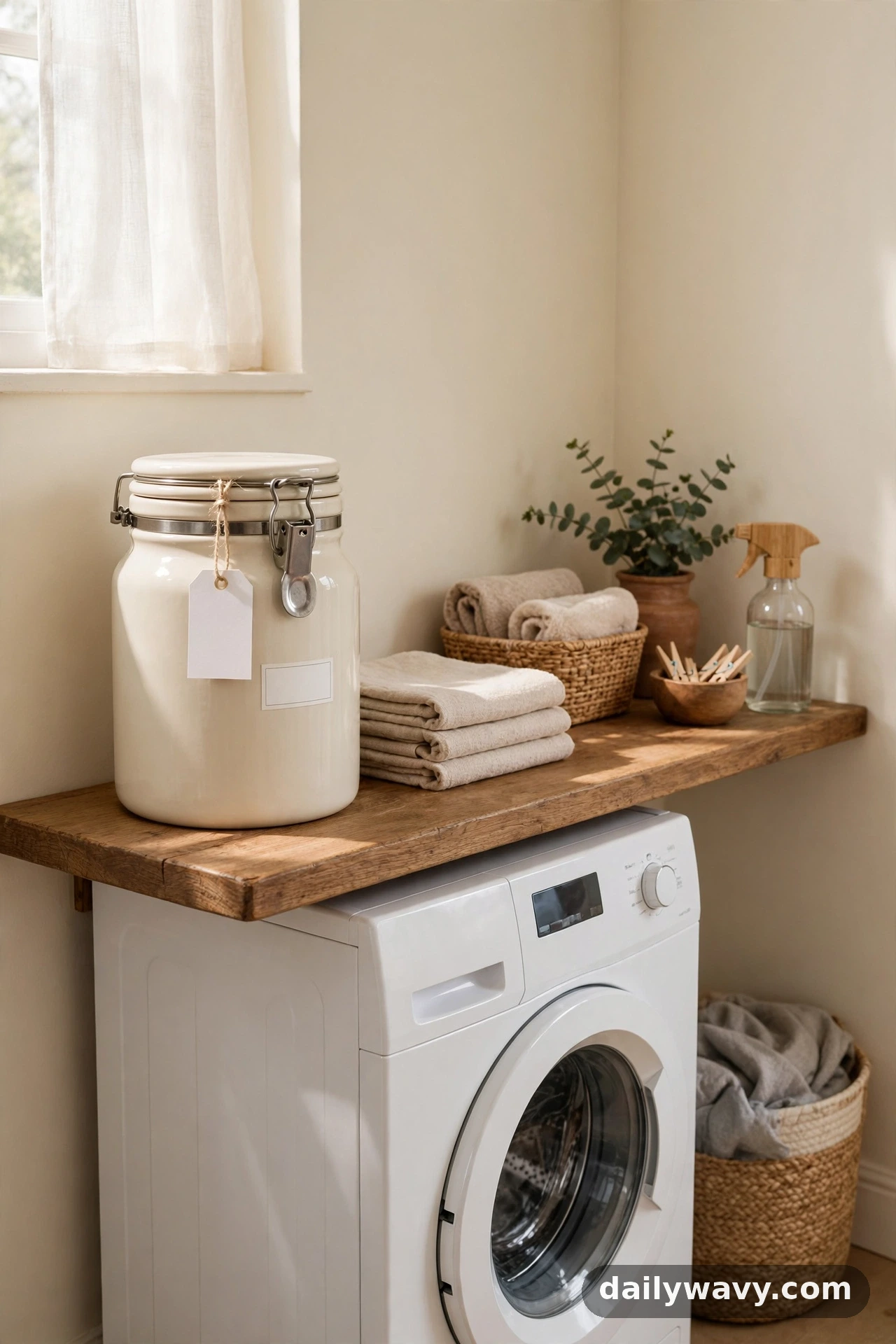
Detergent packaging is loud: bright labels, bulky jugs, pods in crinkly bags. Moving detergent into a closed container calms the visual noise and keeps the product dry and fresh. The safety rule is firm here: keep detergent in its original packaging or transfer it only into a correctly labeled, child-resistant container. Never use an unmarked jar, and never store pods where children or pets could reach them.
A ceramic canister with a locking lid or a purpose-made detergent dispenser both work. Size it to hold a reasonable amount, about half a standard jug, and refill from the bulk bottle stored in a cabinet. Label it clearly with the product name and any hazard warnings from the original label. Place it on the shallow shelf from idea one, within arm’s reach of the washer. A lower-cost alternative is keeping the original jug but decanting daily-use amounts into a smaller clearly labeled squeeze bottle.
12. A shelf above a reachable work zone
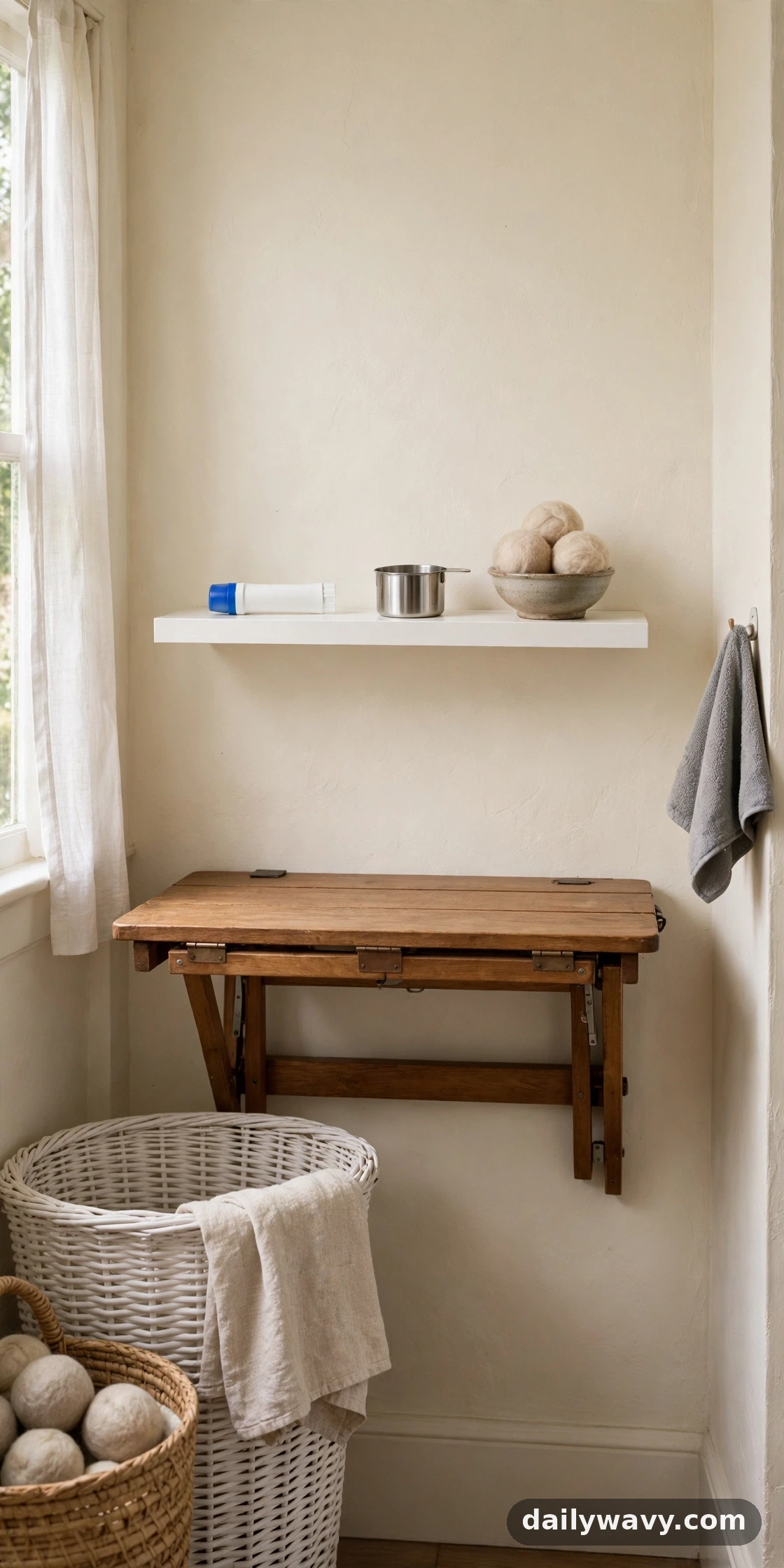
Not every shelf has to be a display. A plain shelf mounted above your folding surface or sorting station, at a height you can reach without stretching, holds the things you use mid-task: the stain stick, the measuring cup, the spare dryer balls. It keeps the work surface clear, which is the whole point of having one.
Mount this shelf 18 to 24 inches above the work surface, low enough to grab items without a step stool. Keep it 10 to 12 inches deep so it does not shadow the surface below. Brackets or a simple floating shelf both work; the floating style looks cleaner in a small room. Limit it to task items, not decor, so it stays functional. A realistic lower-cost alternative is a narrow picture ledge, which is shallow, cheap and easy to mount.
13. A vertical organizer on an unused wall

Small rooms waste their walls. A vertical organizer, a pegboard, a slatted panel or a series of small hooks and pockets, turns one unused wall into the room’s storage backbone. Hang the iron, the lint roller, spray bottles and the folding rack on it, and the floor stays clear.
A pegboard 24 by 36 inches fits most laundry rooms and holds a surprising amount with standard hooks. Mount it on the wall opposite the machines or beside the door, where it does not block ventilation or the dryer vent path. Paint it the wall color for a built-in look, or leave natural wood for warmth. Arrange items by frequency of use: daily tools at hand height, occasional ones higher. For renters, a freestanding pegboard on legs or a tension-mounted panel gives the same vertical storage without holes. A lower-cost alternative is a row of adhesive hooks and a hanging shoe organizer cut to fit.
14. A slim basket for clean cloths
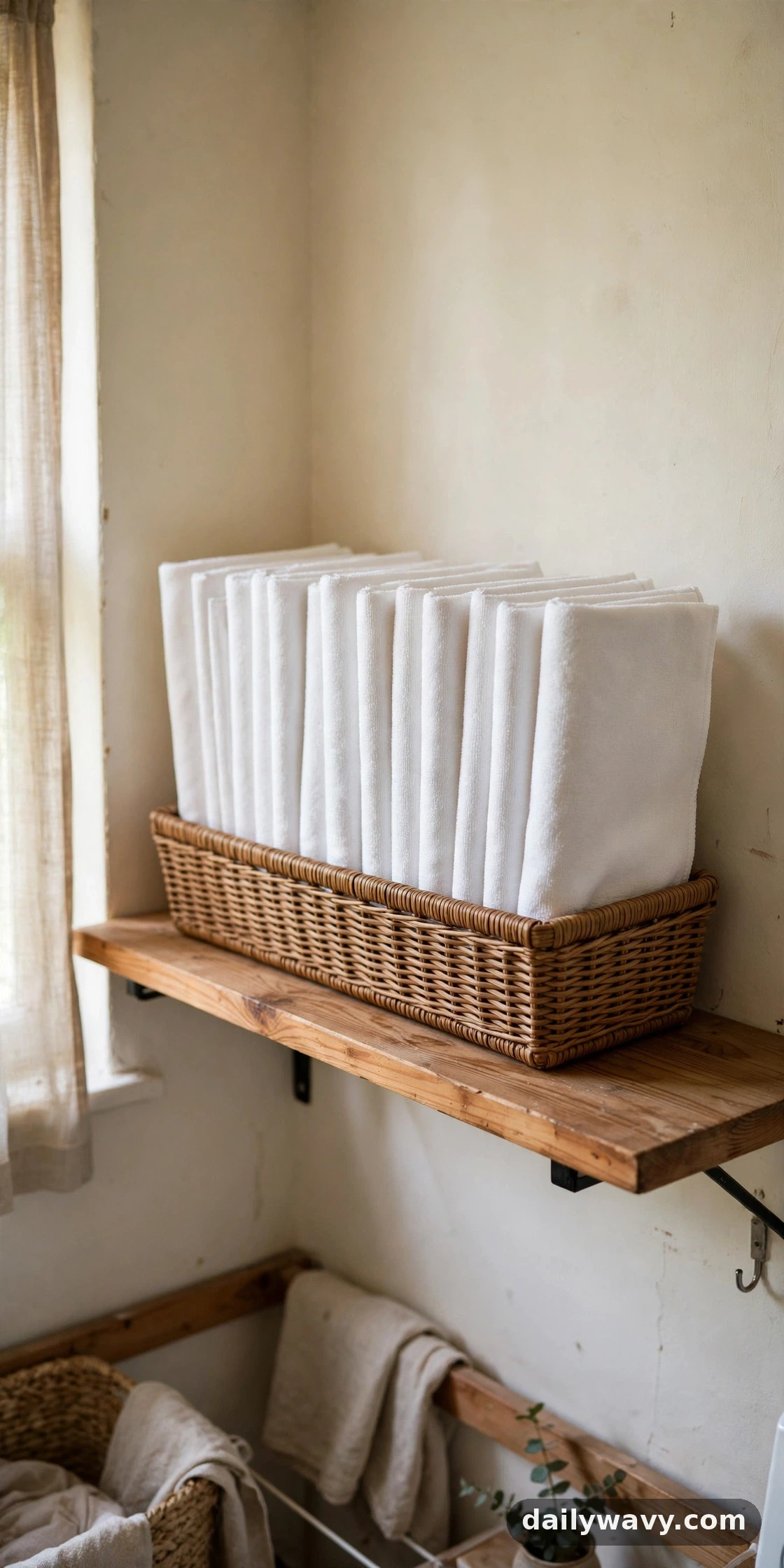
Microfiber cloths, dusting rags and cleaning towels need their own spot, separate from the laundry in progress. A slim basket, narrow enough to tuck on a shelf or into the rolling caddy, keeps clean cloths clean and ready. It is a small category that otherwise ends up crumpled in a drawer.
Choose a basket around 8 by 12 inches, woven or canvas, with a low profile so cloths are easy to grab. Fold the cloths once and stand them upright, file-style, so you can see each one. Keep it near the folding surface or on the shallow shelf. Wash the basket liner monthly. A lower-cost alternative is a clean shoebox wrapped in contact paper, which is honestly hard to tell apart once it is full of folded cloths.
15. A small framed print away from moisture
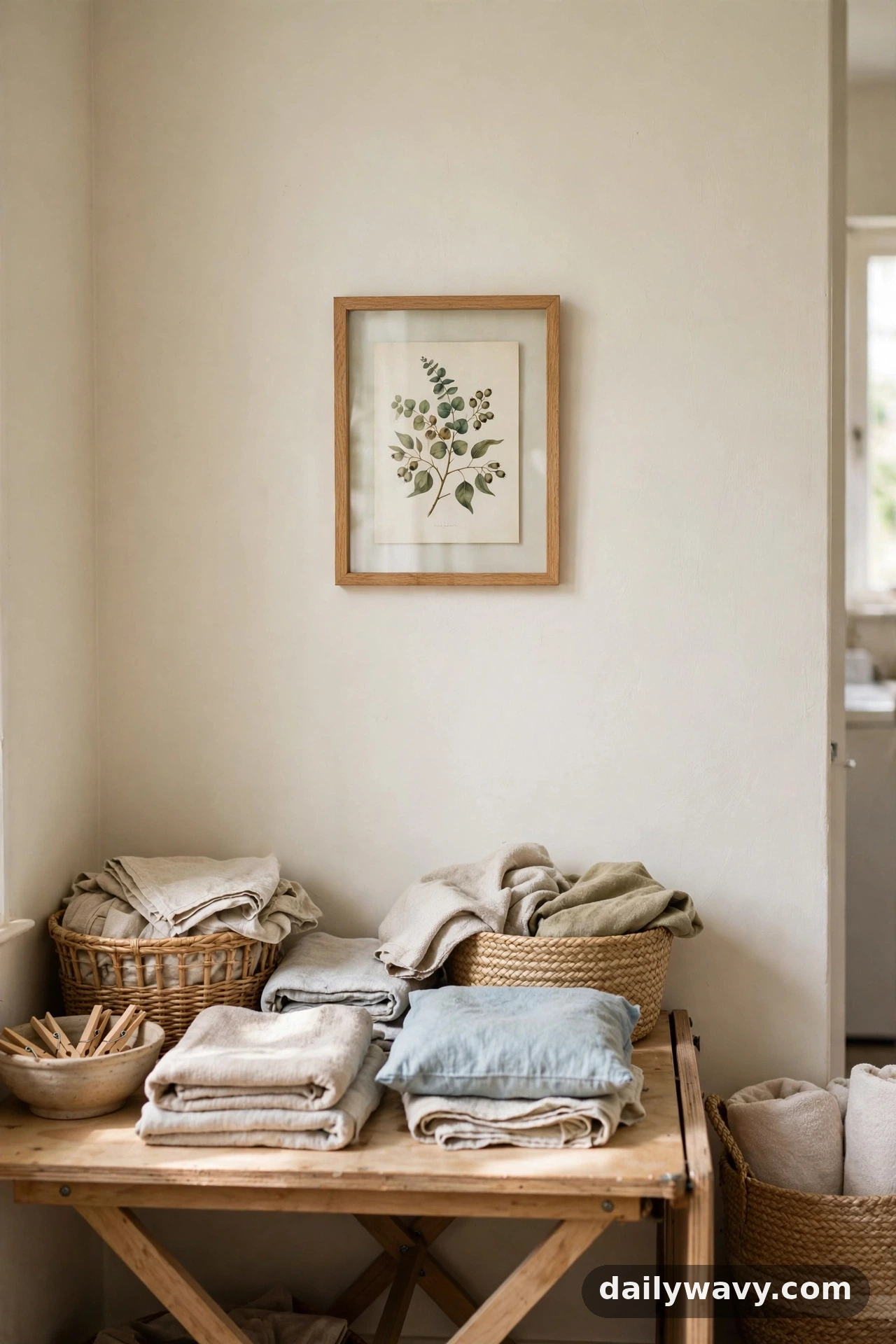
A laundry room does not have to look like a utility closet, and one small framed print is often all it takes to change the feeling. A botanical print, a simple line drawing or a vintage laundry advertisement adds personality without cluttering the work zones. The key is placement: hang it away from direct moisture, not above the machines where steam rises.
An 8 by 10 inch frame suits a small room; anything larger fights the scale. Hang it on the wall you face while folding, so you actually see it. Use a frame with glass or acrylic to protect the art from humidity, and keep it off walls that get condensation. Thrift stores and printable art sites make this nearly free. A realistic lower-cost alternative is framing a page from an old calendar or a postcard you already love.
16. A neutral palette with one accent color
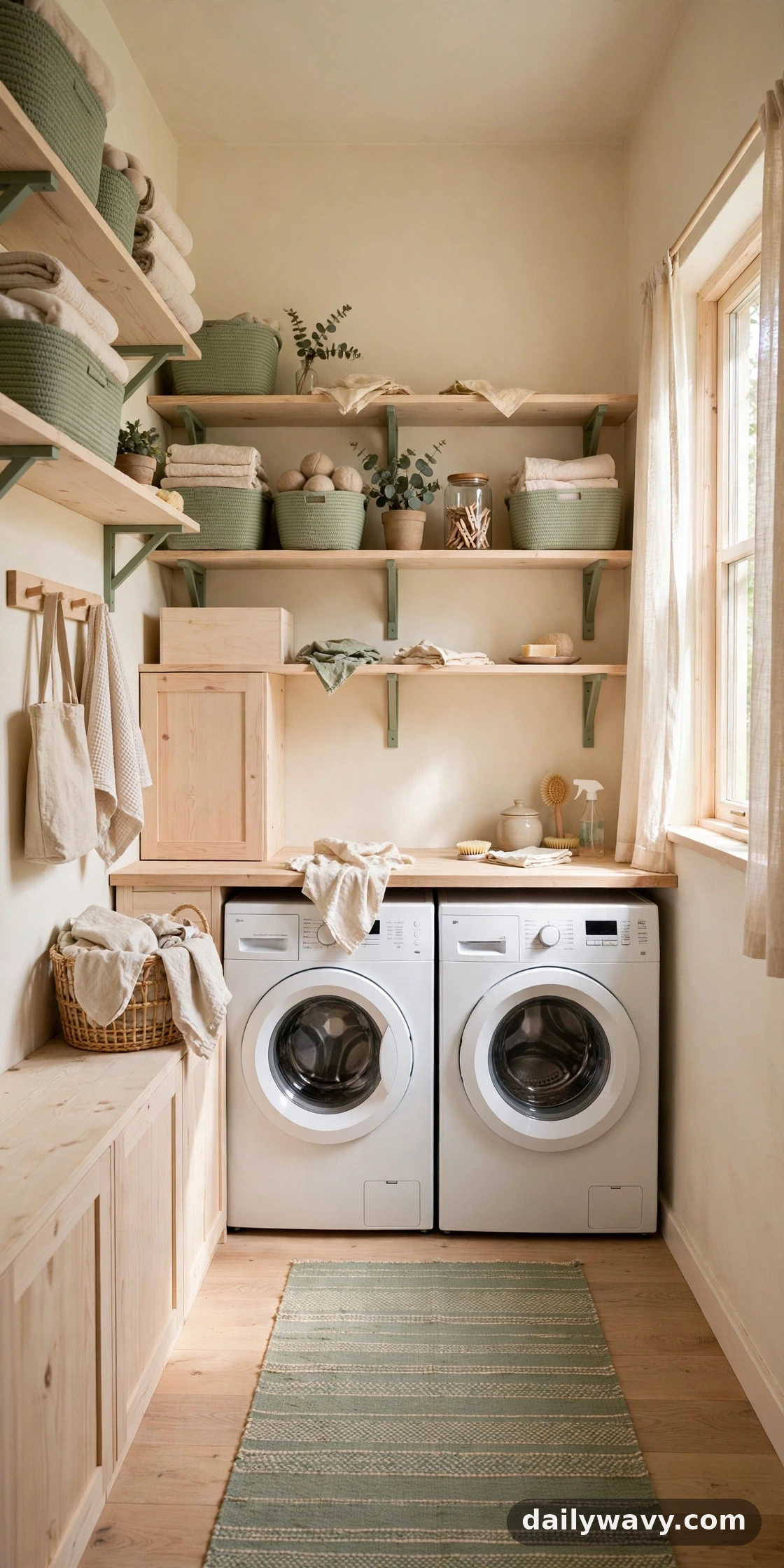
Small rooms feel bigger when the palette stays quiet. Warm white walls, pale wood, natural fibers and white machines create a calm base, and one accent color, sage green, dusty blue, terracotta, keeps it from feeling sterile. The accent appears in small doses: the runner, the baskets, the framed print, a painted shelf bracket.
Commit to the base first. If the walls are already white, you are most of the way there; if not, a single coat of warm white paint is the highest-impact change on this list. Then introduce the accent in three places, no more, so it reads as a scheme rather than a coincidence. Baskets, textiles and small accessories are the easiest carriers because they are cheap to swap if you change your mind. A lower-cost alternative is working with what you have: gather every item in one color family you already own and let that be the accent.
17. A labeled repair or stain-treatment bin
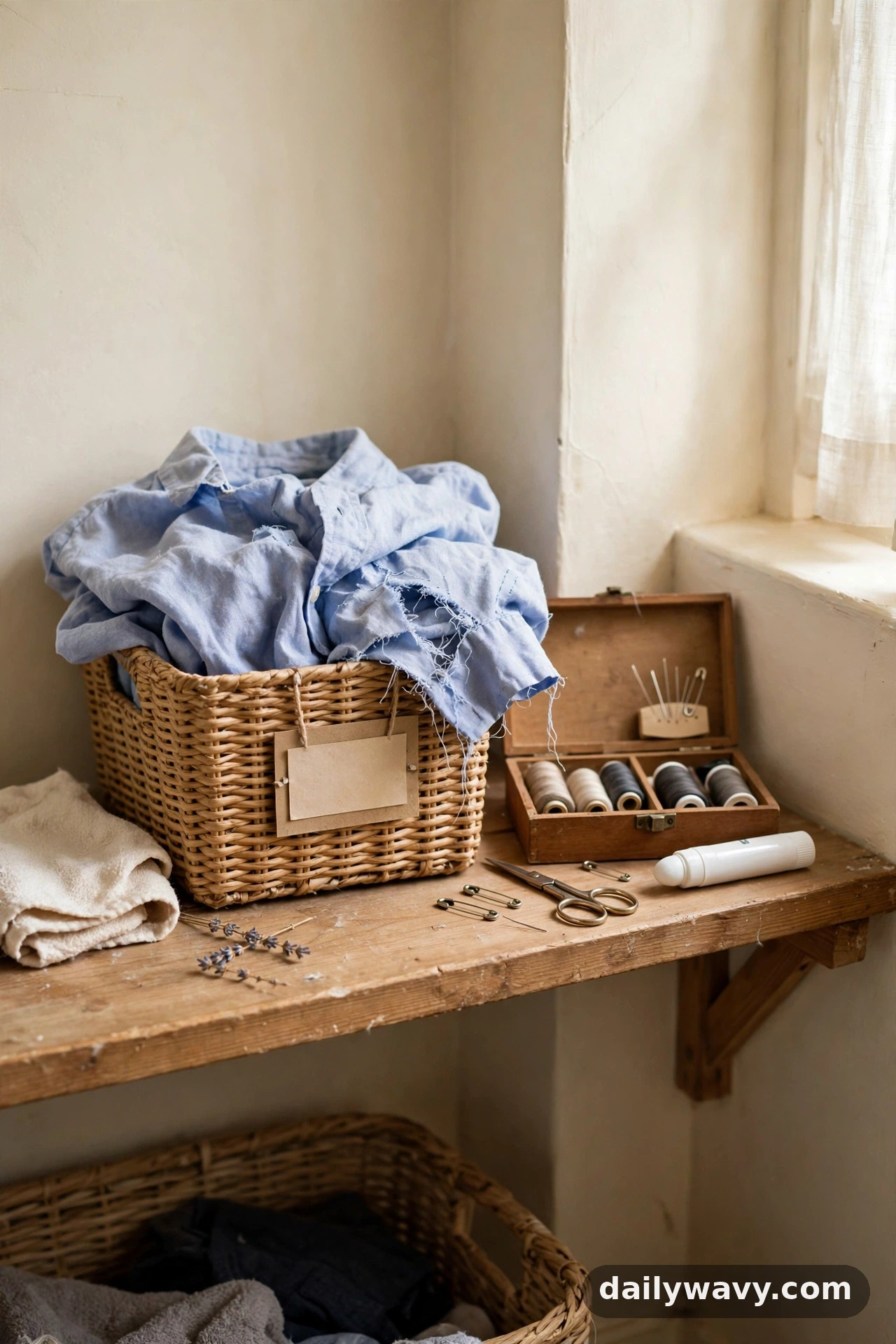
The shirt with the loose button and the pants with the mystery stain both need a holding zone, or they live on top of the dryer indefinitely. A small labeled bin, marked for repairs and stain treatment, gives these in-between items a parking spot. When the bin fills, you know it is mending session time.
A 6 to 8 quart bin is plenty; this is a waiting room, not storage. Keep a basic sewing kit and a stain-treatment stick in or beside it so the barrier to action is low. Place it on the shelf or near the folding surface where you will see it. The label matters because an unlabeled bin becomes a junk drawer within a month. A realistic lower-cost alternative is a zippered pouch or a small tote bag with a luggage tag as the label.
18. A compact ironing-tool storage spot
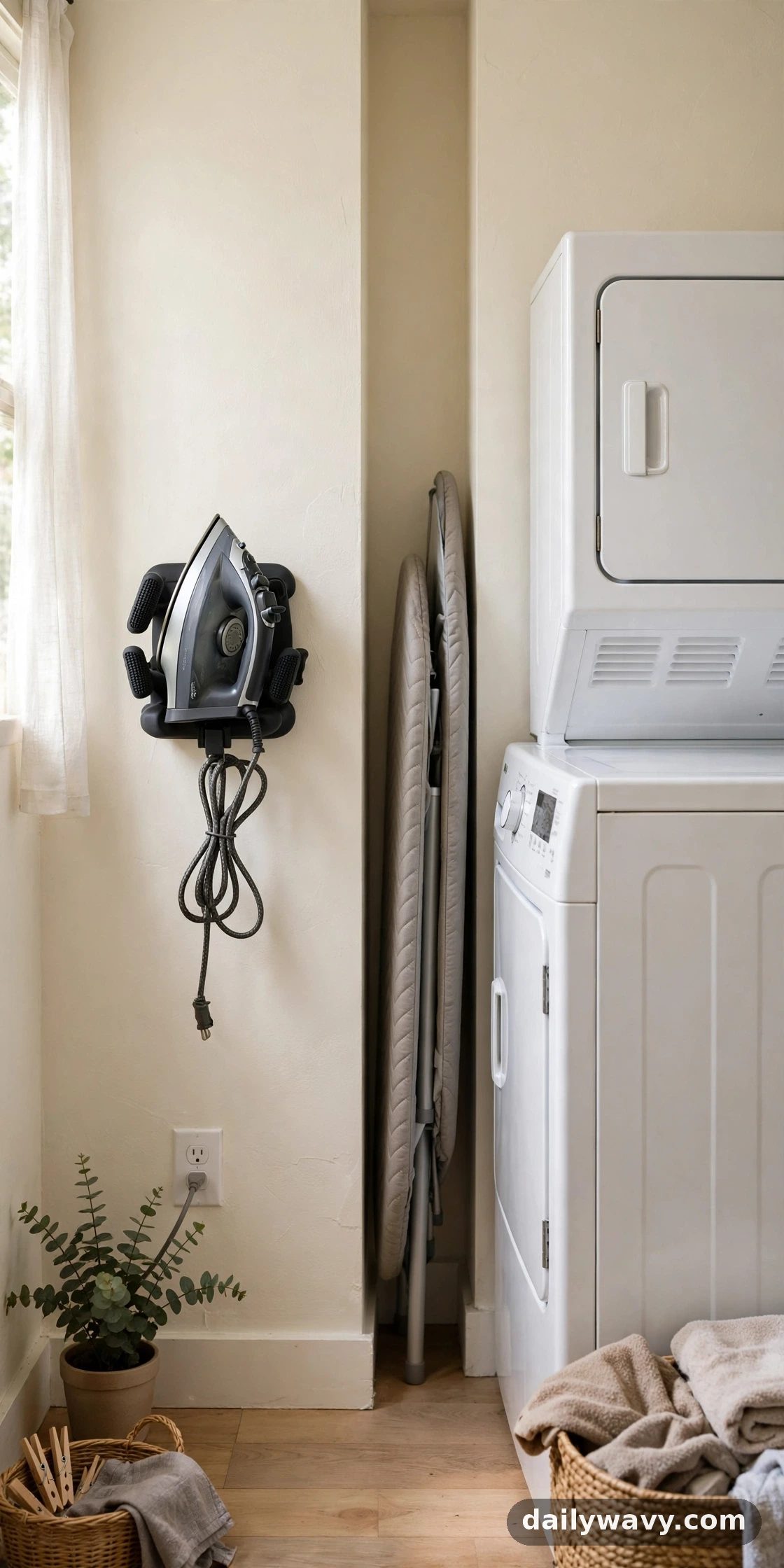
An iron and a full-size ironing board do not fit gracefully in a small laundry room, but the tools still need a home. A compact solution, a tabletop ironing pad that lives on the folding surface, or a wall-mounted iron holder with a slim board stored upright behind the machines, keeps pressing possible without the bulk.
A tabletop ironing pad around 18 by 30 inches turns any heat-safe surface into an ironing station; store it rolled or flat on the shelf. If you prefer a real board, the slim apartment-size boards, about 12 inches wide, stand upright in a 4-inch gap. Mount a heat-resistant iron holder on the wall or the side of a cabinet, and always let the iron cool before storing. Keep the cord wrapped and the water tank empty between uses. A lower-cost alternative is a thick cotton towel folded on the folding surface as a pressing pad, which works fine for quick touch-ups.
19. A basket for ready-to-return laundry

Clean laundry has a final stage that most systems ignore: the folded clothes waiting to go back to bedrooms and closets. A dedicated basket for ready-to-return laundry holds this last step instead of letting folded piles colonize the folding surface. One basket per floor or per person keeps it simple.
A medium open-top basket, around 12 by 16 inches, works for most households. Keep it near the door so grabbing it on your way out is natural. Fold directly into it during folding sessions, and make the return trip part of the routine rather than a separate chore. Woven or canvas baskets look good sitting by the door. A lower-cost alternative is using one of your sorting baskets, emptied and relabeled, as the return basket.
20. An open landing space for folded items

The last idea is really a rule: keep one surface permanently clear as a landing space for folded items. It can be part of the folding surface, a wide shelf or a cleared section of counter. When a basket of warm clothes comes out of the dryer, they need somewhere to land that is not the floor and not a pile of supplies.
Dedicate about 18 by 24 inches, and defend it. That means the landing space holds nothing between folding sessions: no detergent, no tools, no decor. It is the runway, and runways stay clear. This discipline is what keeps the whole room feeling calm even on heavy laundry days. The styling is the emptiness itself. There is no lower-cost alternative because this one is free; it is just a decision.
Frequently asked questions
How do I keep a small laundry room from feeling cramped?
Keep the floor clear and the palette calm. Rolling caddies, wall hooks and vertical organizers move storage off the floor, and warm neutrals with one accent color make the walls recede. The single biggest change is usually editing: remove everything that does not serve a laundry task.
Where should I put things so renters can undo it all?
Adhesive hooks, tension rods, over-the-door racks, freestanding caddies and furniture-style pieces all leave no trace. Avoid wall-mounted folding tables and pegboards if your lease is strict; use a leaning clothes horse and a rolling cart instead.
How do I store detergent safely around kids and pets?
Keep detergent in its original container or a correctly labeled child-resistant one, stored up high or behind a closed door. Never transfer pods or liquid into food jars or unmarked bottles. A locked cabinet is the safest option in homes with small children.
What if my laundry room is also a passageway?
Prioritize circulation. Keep the walkway at least 30 inches wide, choose a flat runner that will not trip anyone, and put all storage on the walls or in the gaps beside machines. Fold-flat solutions are essential here.
How do I deal with moisture and smells in a small laundry room?
Ventilation is the fix: make sure the dryer vents properly outside and leave appliance doors open between uses so drums dry out. A lidded hamper with ventilation keeps dirty clothes from musting up the room, and washable textiles can be refreshed regularly.
What is the cheapest way to make the room look better?
Paint, editing and one textile. A coat of warm white paint, removing everything non-essential, and adding a washable runner or a framed print changes the room for very little money. Most of the ideas above have a low-cost version built in.
A small laundry room asks for smart choices, not big ones. Pick the ideas that match your layout, keep the clearances your machines need, and let the room earn its keep one tidy shelf at a time. If you are tackling other small spaces too, our small pantry organization guide and small bathroom storage ideas use the same calm, practical approach. For the broader picture, browse the Home and Decor collection.