20 Headboard Wall Panel Ideas for a Distinctive Bed Wall
A bed wall does more than hold a mattress in place. It sets the mood for the whole room, and…
A bed wall does more than hold a mattress in place. It sets the mood for the whole room, and a thoughtfully designed headboard wall panel turns a flat stretch of drywall into the calm, intentional center of your bedroom. Whether you are renting and need something removable, working with a tricky window, or simply want more personality without repainting the entire room, panels give you a defined focal point with a fraction of the commitment. The twenty ideas below are all achievable in a weekend, use materials you can actually find, and come with the practical details that make the difference between a pin-worthy image and a finished project you live with happily.
In This Guide:
- A Monochrome Bed-Wall Composition
- A Horizontal Line Connecting Bedside Zones
- A Removable Decorative Treatment
- A Subtle Geometric Pattern
- A Single Accent Color Repeated In Cushions
- A Vintage-Inspired Outline
- A Softly Textured Finish
- An Understated Frame Around The Sleeping Area
- A Simple Centered Form With Bedside Lighting
- A Restrained Vertical Rhythm Behind The Bed
- A Soft Neutral Palette With Textured Bedding
- A Darker Focal Area Framed By Light Walls
- An Asymmetric Art Arrangement Nearby
- A Pair Of Small Wall Lights
- A Narrow Ledge For One Framed Print
- A Curved Outline Echoing A Bedside Table
- A Low Profile Beneath A Window
- A Tall Focal Shape In A Plain Room
- A Contrasting Border Detail
- A Warm Material Paired With Cool Linens
The Headboard Wall Panel Rules Before You Start
A few basics will keep every project on this list looking finished rather than improvised. Measure the wall before you buy anything: a panel that is roughly two-thirds to three-quarters the width of your bed tends to look deliberate, while one narrower than half the bed reads like an afterthought. Standard queen beds are 60 inches wide, so plan your panel between 40 and 45 inches across unless you are deliberately going wall to wall. Height matters too: most panels run 30 to 60 inches tall, with taller shapes suiting rooms with 9-foot or higher ceilings.
For renters, look for panels that hang like art on two French cleats, or choose lean-to panels that simply rest against the wall behind the bed, anchored with a single safety strap into a stud. Paint-grade MDF panels (half-inch to three-quarter-inch thick) take paint beautifully and cost far less than solid wood, while plywood panels in birch or oak veneer give you real grain to show off. Always locate studs or use proper drywall anchors rated for the weight. One person can hang most of these; the tall ones want a second pair of hands.
1. A Monochrome Bed-Wall Composition
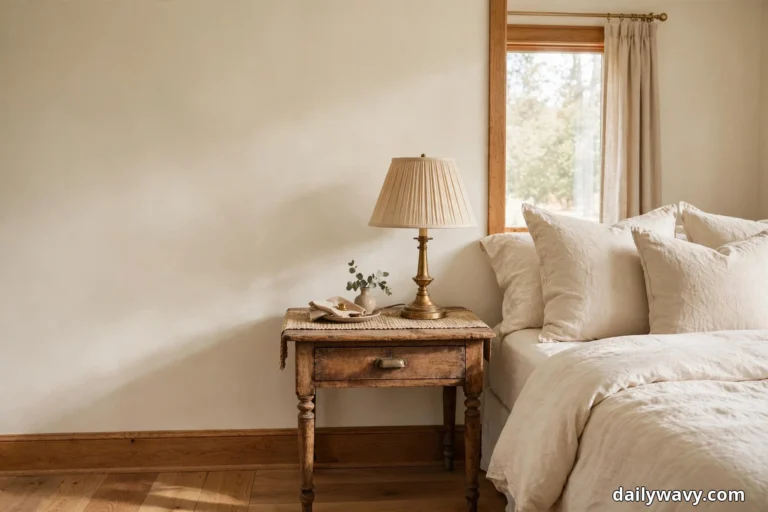
There is a particular quiet that comes from a bed wall done in a single color family. A monochrome panel composition means the panel, the bedding, and even the bedside tables all live in shades of one hue, like warm white, soft gray, or sandy beige. The eye relaxes because there is nothing to resolve, and the room feels instantly calmer. Start with a large panel in the mid-tone of your palette, then let the duvet run one shade lighter and the throw one shade darker. Wood tones still work here if you keep them muted, like a natural oak nightstand next to an ivory-paneled wall. The trick to keeping monochrome from feeling flat is texture: linen bedding, a boucle cushion, a wool rug. Three textures minimum, all in the same color story. Recreate it by painting an MDF panel and the wall behind it in the same paint, using a shade with a little warmth so it never reads clinical.
2. A Horizontal Line Connecting Bedside Zones
Small bedrooms often feel chopped up: a nightstand here, a lamp there, nothing relating to anything else. A long horizontal panel that runs wider than the bed, stretching from one bedside zone across to the other, ties everything into one gesture. It works beautifully with wall-mounted reading lights and slim floating nightstands that tuck underneath. Measure from the outer edge of one nightstand to the outer edge of the other, then add 4 to 6 inches of overhang on each side. A panel 20 to 30 inches tall keeps the proportions right. Use half-inch MDF for a light panel, or real wood boards laid horizontally for a slatted effect. Mount a slim LED picture light or two swing-arm sconces directly on the panel to make it feel built in rather than stuck on.

3. A Removable Decorative Treatment
Renters do not have to live with a boring bed wall. A removable treatment can be as simple as a fabric panel hung on a tension rod between two floor-to-ceiling curtains, or a lightweight plywood panel hung on picture hooks rated for the load. One of the most forgiving options is a padded fabric panel: batting wrapped in linen or cotton duck, stretched over a plywood backing, hung with French cleats. It gives you an upholstered headboard look with zero wall damage beyond two small screw holes. Peel-and-stick molding is another route: lightweight foam or vinyl trim pieces that adhere with removable adhesive and can be painted any color. Budget about $60 to $150 for a queen-sized panel using hardware-store materials. When you move, the panel comes down in minutes and the wall only needs a dab of spackle.

4. A Subtle Geometric Pattern
Geometric patterns on a bed wall add structure without shouting. The key word is subtle: a shallow chevron milled into MDF, wide chevron panel molding applied in a tone-on-tone paint, or a simple grid of square frames painted the same color as the wall. Because the pattern sits in one plane and one color, it reads as texture from across the room and reveals itself as geometry up close. Apply pre-made panel molding strips (typically 1 to 2 inches wide) with construction adhesive, mitering the corners at 45 degrees for clean joints. Caulk the edges before painting so the lines look crisp. Plan your grid on paper first, working out so the bed visually anchors the composition: most successful layouts place the bed against the center of the pattern, not off to one side.

5. A Single Accent Color Repeated In Cushions
Designers talk about repetition, and this is the easiest version to execute. Pick one accent color, paint or stain the bed-wall panel in it, then echo that exact color in two or three cushions on the bed. A deep forest panel with forest cushions, or a warm terracotta panel with matching lumbar pillows, gives the room an instant sense of intention. Keep everything else neutral so the color has room to breathe. When choosing the shade, test a large sample board against your bedding in both daylight and lamplight, because colors shift noticeably between the two. Match the cushion color to the panel by taking a paint chip to the store rather than trusting your memory. One accent color done three times reads as design; the same color done once reads as an accident.

6. A Vintage-Inspired Outline
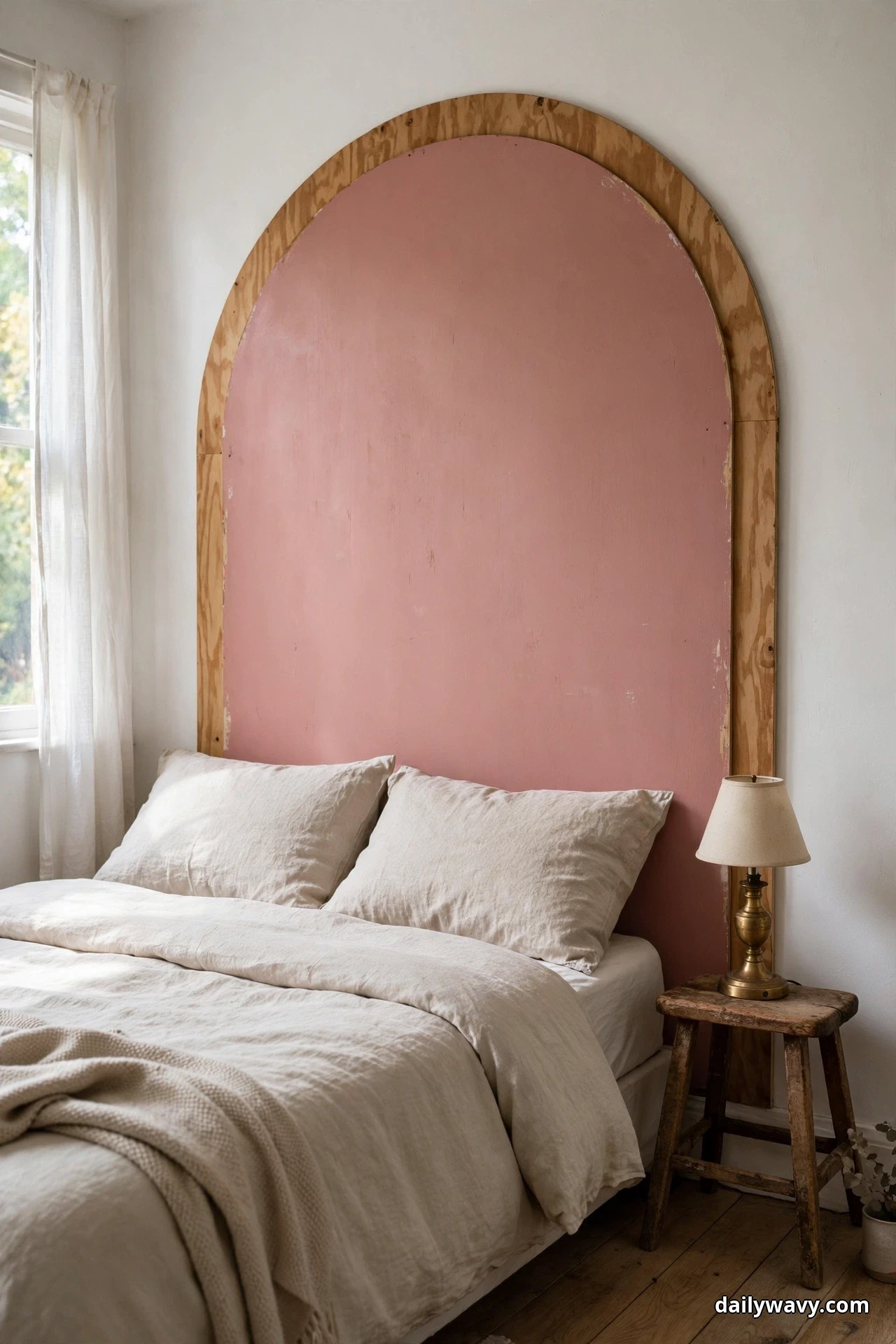
A panel with an old-fashioned silhouette, think arched tops, stepped edges, or a gentle ogee curve, brings a collected, inherited feel to a bedroom. You do not need actual antiques: cut the shape from three-quarter-inch plywood with a jigsaw, sand the edges smooth, and finish with a satin paint in a historic shade like deep olive or dusty rose. The vintage reference works best when the rest of the room stays simple, because too many competing shapes fight for attention. Pair it with straightforward modern bedding and one genuinely old object, like a worn wood stool or a brass lamp, so the reference feels layered rather than themed. Trace the outline onto the plywood with a large compass or a flexible curve ruler to keep both sides symmetrical. A quart of paint and a weekend is genuinely all this one asks.
7. A Softly Textured Finish
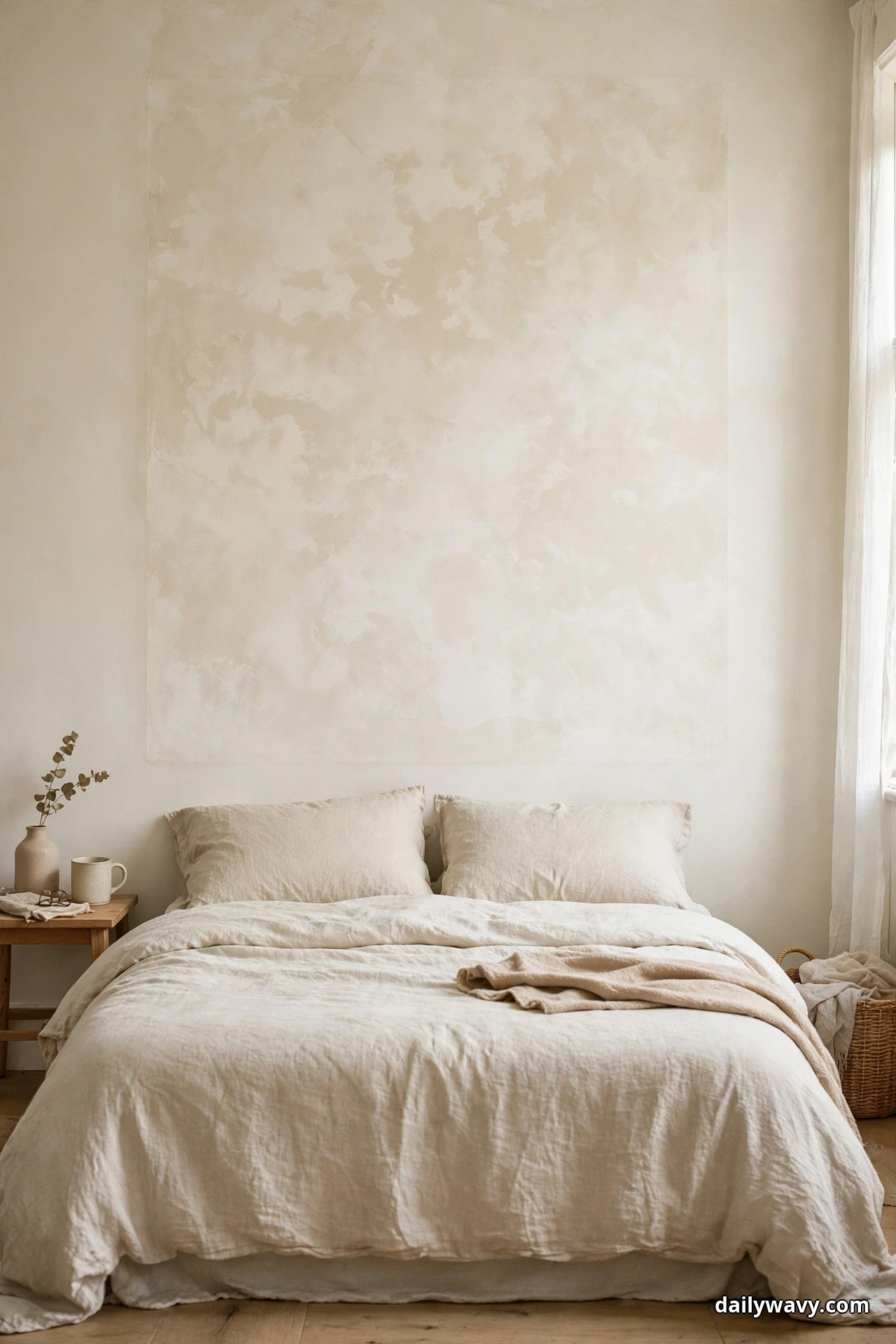
Some walls want to be touched, not looked at. A softly textured panel finish, limewash paint, a fine grasscloth wallcovering mounted on a panel, or padded linen over batting, adds depth that changes with the light through the day. Limewash goes on with a block brush in crisscross strokes over a mineral primer and dries into cloudy, tonal variation that hides minor wall flaws. Grasscloth brings a woven shimmer that works in nearly every palette. Both are quiet finishes, which means they pair well with patterned bedding or colorful art elsewhere in the room. Keep the panel size generous here: texture needs square footage to read. A small patch of texture can look like an unfinished experiment, while a full wall-width panel looks like a deliberate choice.
8. An Understated Frame Around The Sleeping Area
Instead of a panel just behind the pillows, picture a thin frame that outlines the whole sleeping zone: up both sides and across the top, like a picture frame for the bed itself. This approach suits people who want definition without a big central mass. Use slim wood battens, about 1 by 2 inches, painted to match the wall or one shade deeper. The frame typically sits 6 to 10 inches outside the mattress on each side and runs up to about 6 feet high, though you should adjust for your ceiling height. Inside the frame, the wall stays bare, which keeps the look light. It reads especially well in rooms with little else on the walls, because the frame gives the eye one clear thing to rest on. Level the top piece carefully; a sloping line across a tall wall is very visible.
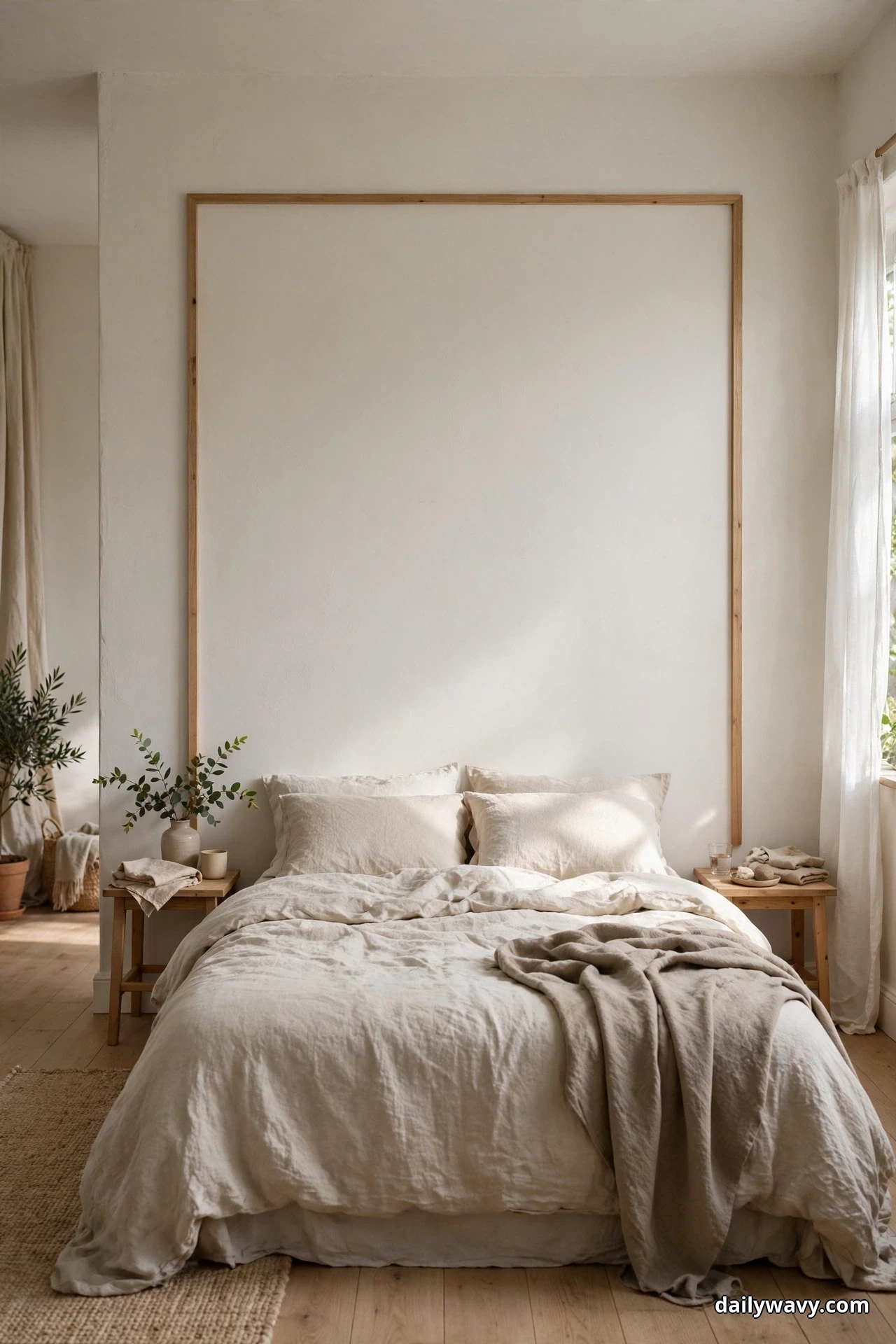
9. A Simple Centered Form With Bedside Lighting
Lighting makes a bed wall. A simple centered panel, square or gently arched, paired with two small wall lights mounted directly on it creates a boutique-hotel moment in an ordinary room. Plug-in wall sconces with cord covers keep this renter-friendly; hardwired ones give a cleaner result if you own the home and want to hire an electrician. Mount the panel so its center aligns with the bed, then hang the lights 18 to 24 inches above the mattress surface and about 12 inches in from the panel edges. Warm light, 2700 Kelvin, flatters skin and bedding alike. Choose shades that direct light down for reading and up for ambience. The panel itself can be nearly plain, because the lights and their shadows become the decoration. This combination suits small bedrooms where table lamps would eat up nightstand space.
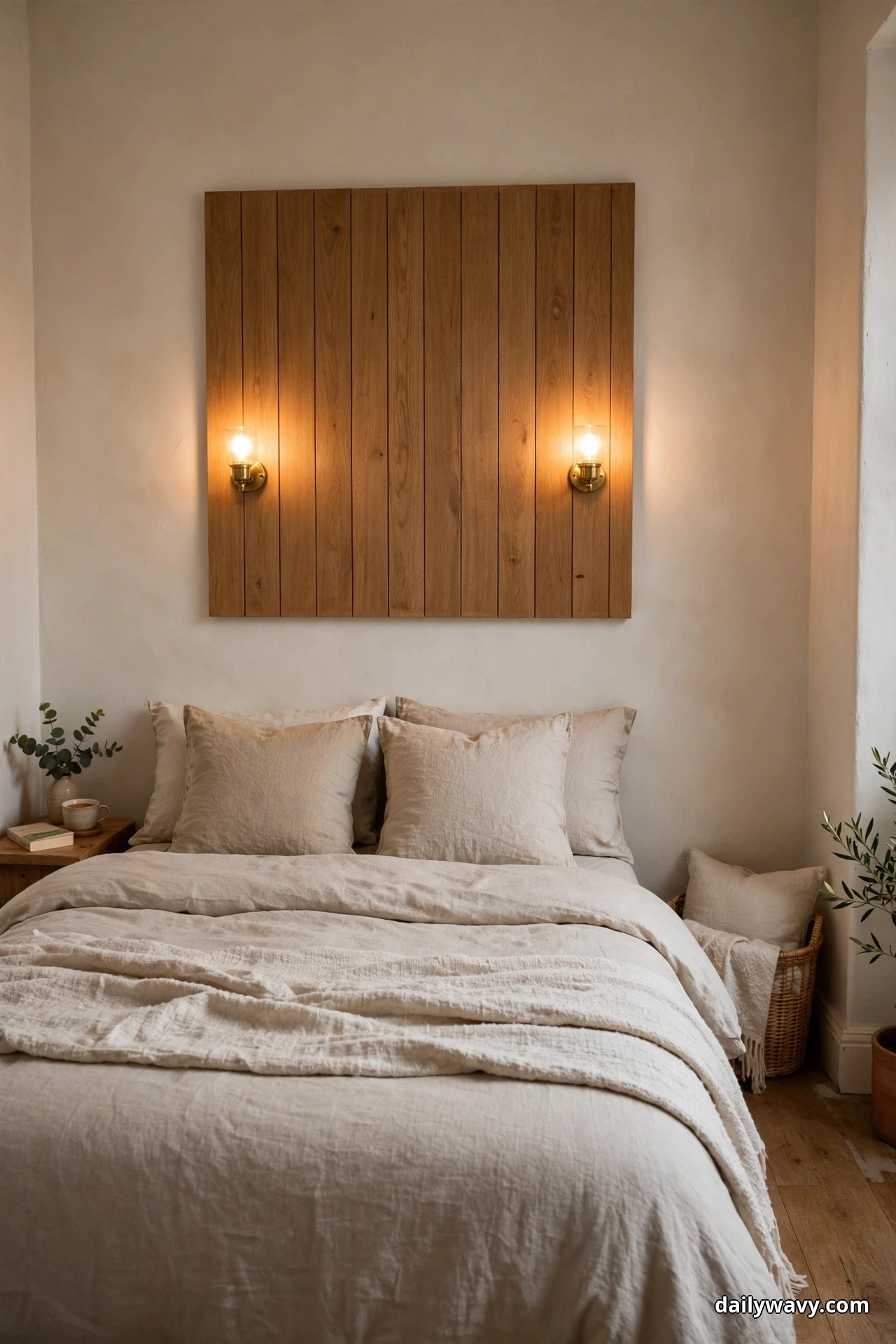
10. A Restrained Vertical Rhythm Behind The Bed
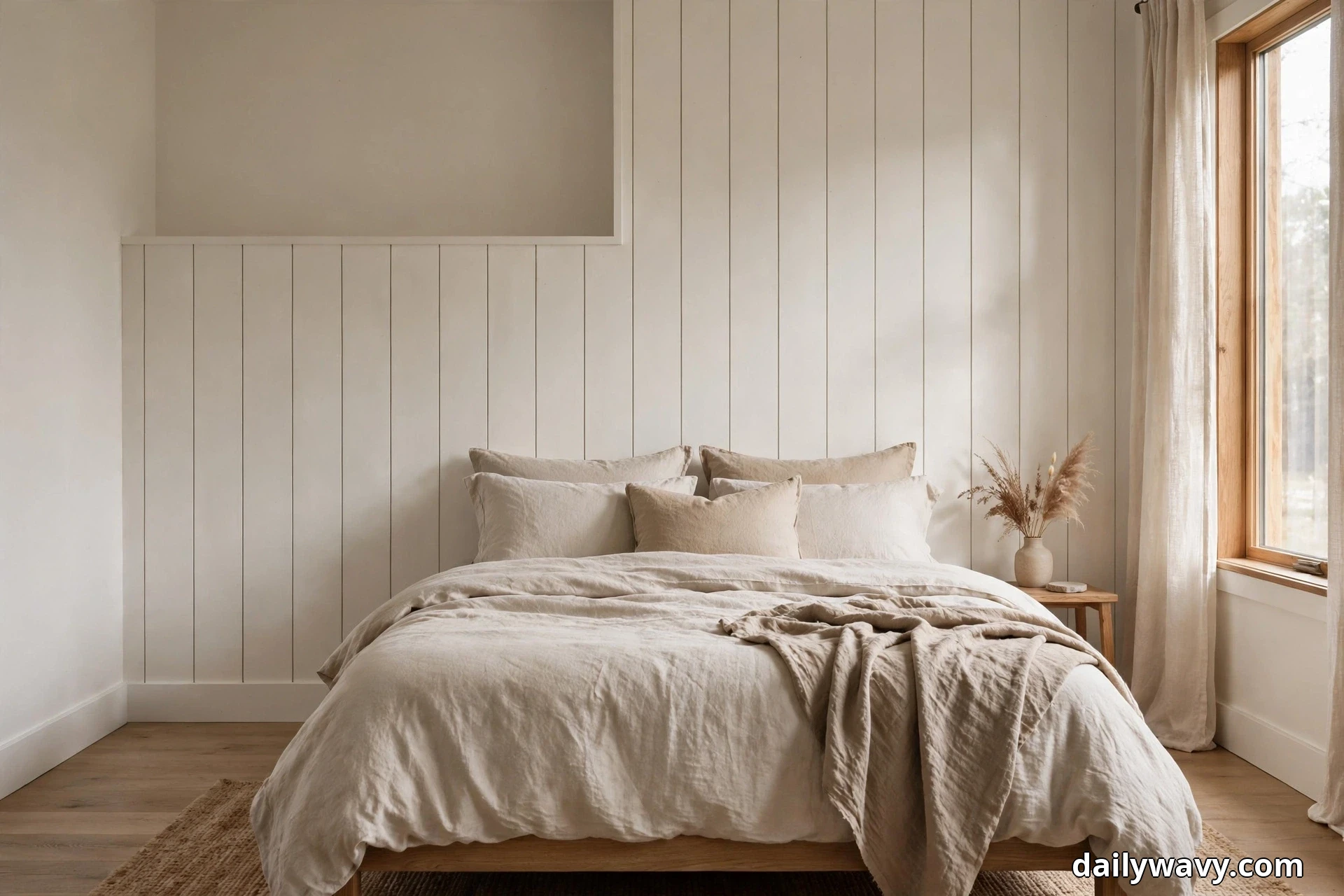
Vertical slats or battens draw the eye upward and make standard 8-foot ceilings feel taller. The rhythm works when the slats are evenly spaced and identical in depth, so take the time to cut spacers from scrap wood and use them as you install. Narrow gaps of half an inch to an inch read as modern; wider 2-inch gaps feel more relaxed. Keep the slats the full height you choose, from behind the mattress to about 12 inches below the ceiling, or run them floor to ceiling for maximum drama. Paint them the wall color for a tonal effect, or stain them in a warm wood tone against white walls for contrast. Vertical lines also hide the visual seam where two wall colors meet, which makes this a handy fix for rooms where the bed wall meets an angled ceiling or a color change.

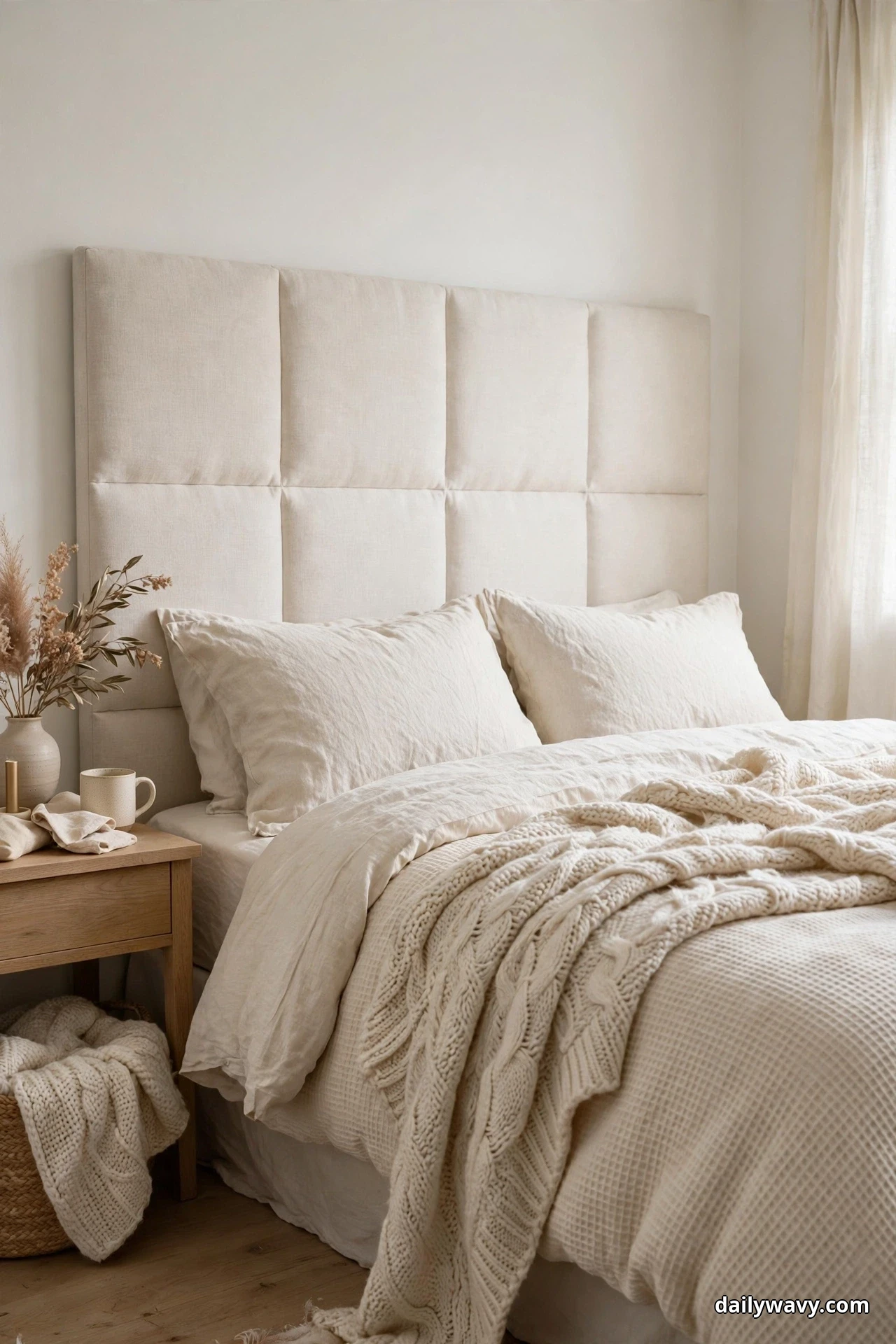
11. A Soft Neutral Palette With Textured Bedding
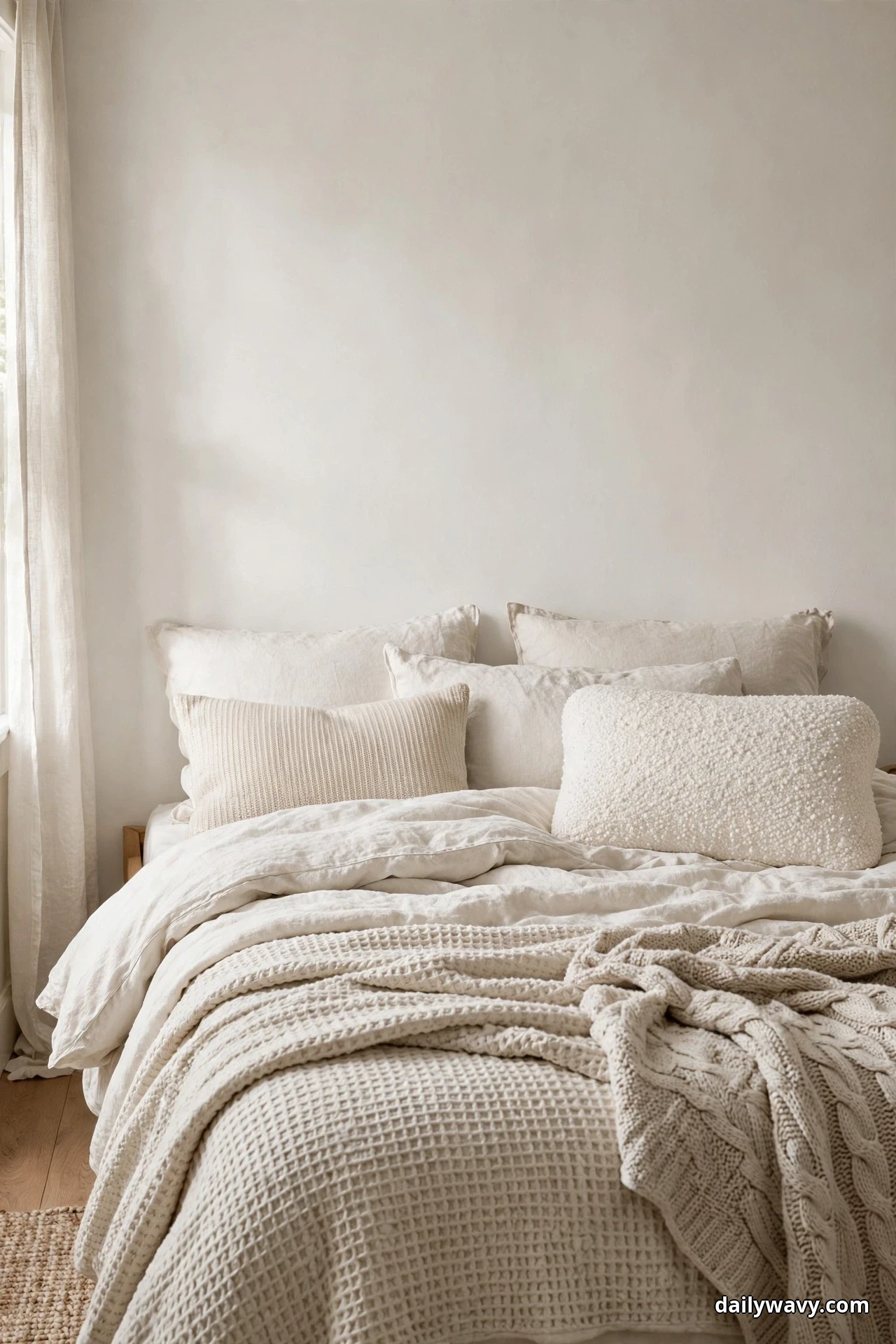
Sometimes the panel is not the star at all; the bedding is. A soft neutral panel in warm white, greige, or pale stone gives textured bedding the quiet backdrop it needs to carry the room. This is the layered, rumpled look: a waffle-weave duvet, a chunky knit throw, linen shams in slightly different shades of cream. Because the panel stays simple, you can change the whole mood of the room just by swapping the textiles, which makes this the most forgiving idea on the list for people who redecorate often. Build the panel from padded linen or a limewashed board and keep the palette to three neutrals: one for the panel, one lighter for the duvet, one deeper for the throw. The difference between beige and beautiful is almost always texture, so layer at least four distinct ones.
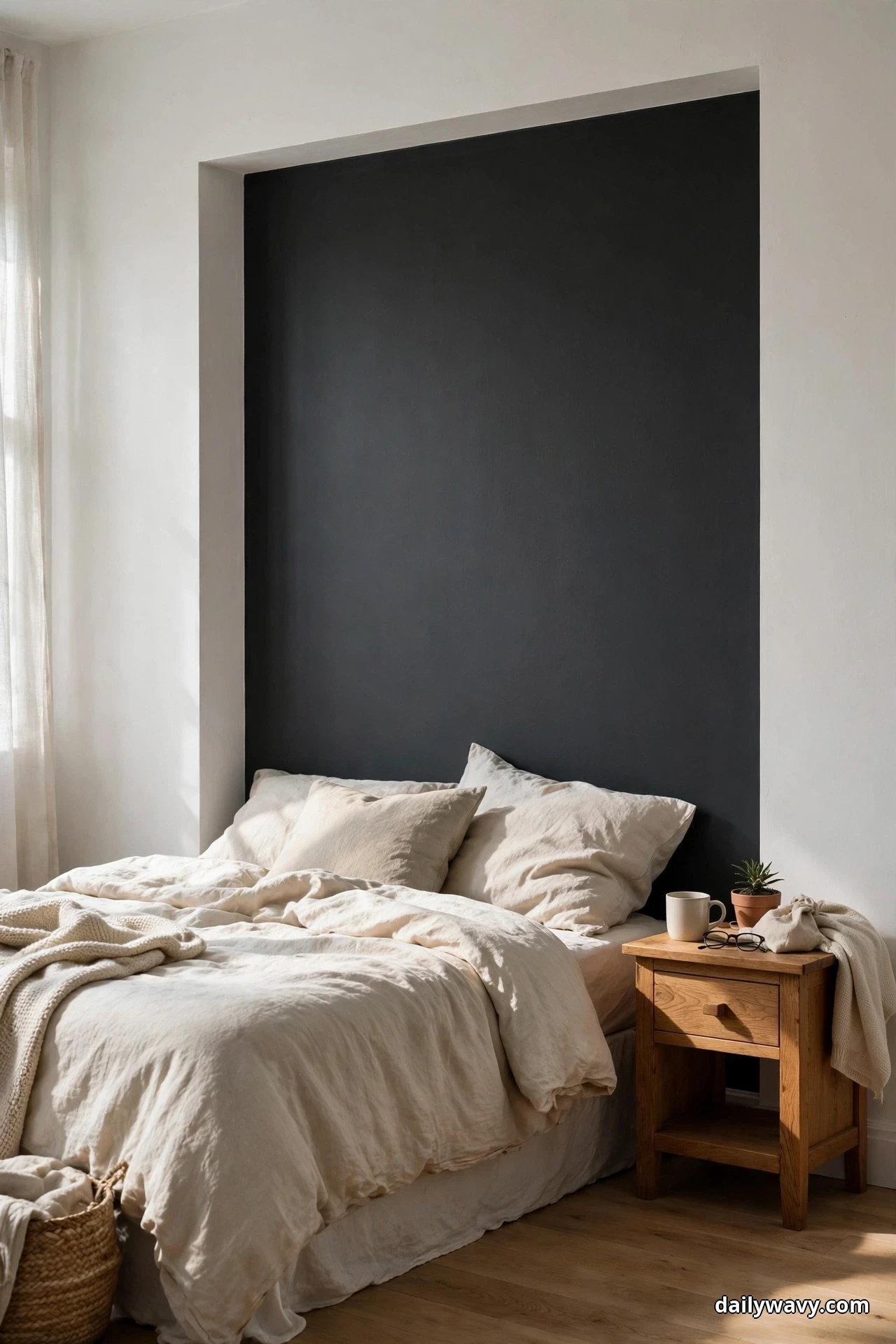
12. A Darker Focal Area Framed By Light Walls
A dark panel on a light wall is the quickest way to create drama in a bedroom. Deep charcoal, forest, or navy panels absorb light and push the wall backward, which paradoxically makes a small room feel deeper rather than smaller. The contrast needs the rest of the room to stay light: pale walls, pale bedding, one warm element like oak nightstands to keep it from feeling cold. Matte paint finishes absorb light best and hide surface imperfections; satin gives a softer, more forgiving glow. Go a full shade darker than you think you want, because dark colors lighten visually on a large panel. If you are nervous, start with just the panel rather than painting the whole wall, since a defined dark shape feels intentional while a half-hearted dark wall can feel like a mistake.
13. An Asymmetric Art Arrangement Nearby
Who says the panel has to sit behind the bed? An asymmetric arrangement of framed prints or small panels hung off-center on the bed wall gives the room a gallery feel while still defining the sleeping zone. Hang one large panel or frame slightly left or right of the bed center, then balance it with a smaller piece on the opposite side at a different height. The imbalance is the point: it feels collected rather than decorated. Keep the frames consistent, same wood tone or same slim black profile, so the variety sits in the placement, not the materials. Use paper templates taped to the wall to audition layouts before you hammer anything. This suits eclectic bedrooms where a single symmetrical panel would feel too formal, and it lets you show off art you already own. Browse our small entryway decor ideas for more ways to hang art with confidence.

14. A Pair Of Small Wall Lights
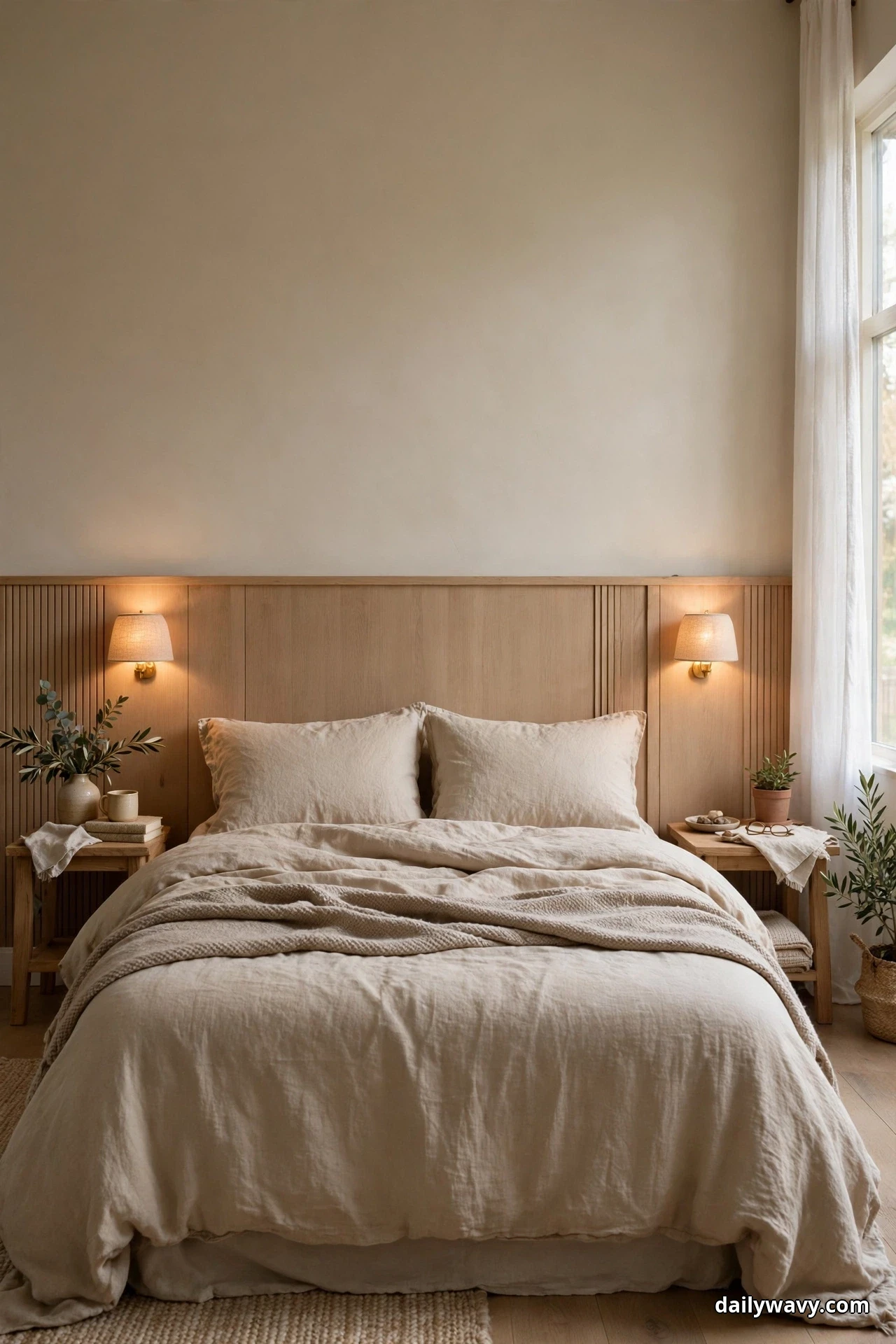
Even a modest panel transforms when you add light. A pair of small wall lights flanking the bed, mounted on or just above the panel, creates pools of warm light that make the whole room feel designed. Small is the operative word: compact globe or drum sconces, about 4 to 6 inches across, keep the scale right for bedrooms. If you cannot hardwire, plug-in sconces with fabric-covered cords run to the nearest outlet, and cord covers painted the wall color make them nearly invisible. Place them so the bottom of the shade sits around 48 to 52 inches from the floor, which puts the light at a comfortable reading height when you are sitting up in bed. Two matching lights beat one large fixture here; symmetry at the bedside is inherently restful.
15. A Narrow Ledge For One Framed Print
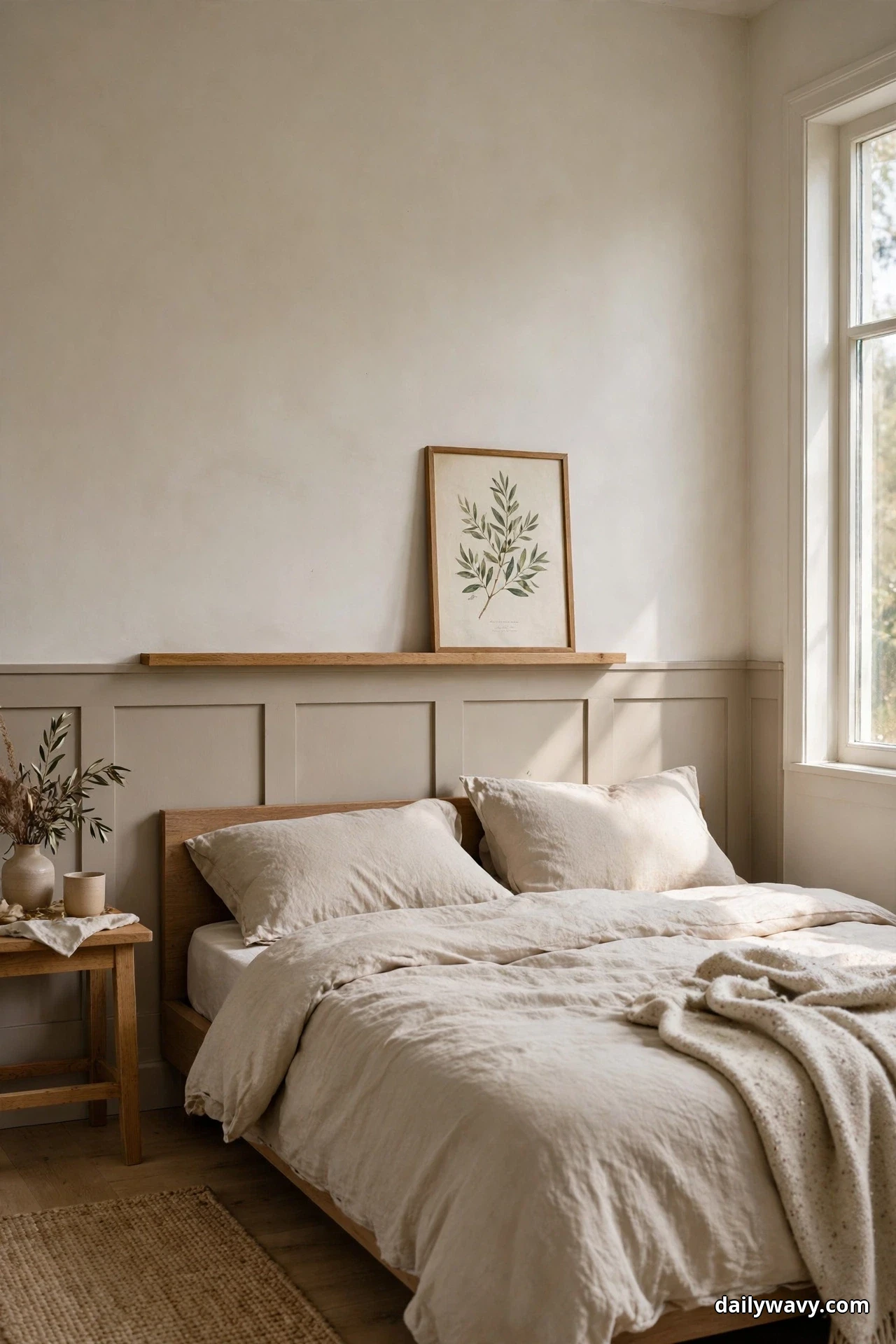
A narrow picture ledge, 2 to 3 inches deep, mounted just above or across the top of a low panel gives you a display surface that changes whenever you want. Lean one framed print, a small vase, or a trailing plant against the wall on the ledge. The shallowness is a feature: it forces restraint, so you end up with one or two objects instead of clutter. Mount the ledge into studs with screws, since even light objects add up when they sit on a shallow shelf. A 36-inch ledge suits a queen bed; go 48 inches for a king. Keep the print simple and the frame slim, because the ledge is a stage, not a storage unit. Swap the art seasonally: a botanical print in spring, a moody landscape in winter. The whole refresh costs nothing.
16. A Curved Outline Echoing A Bedside Table
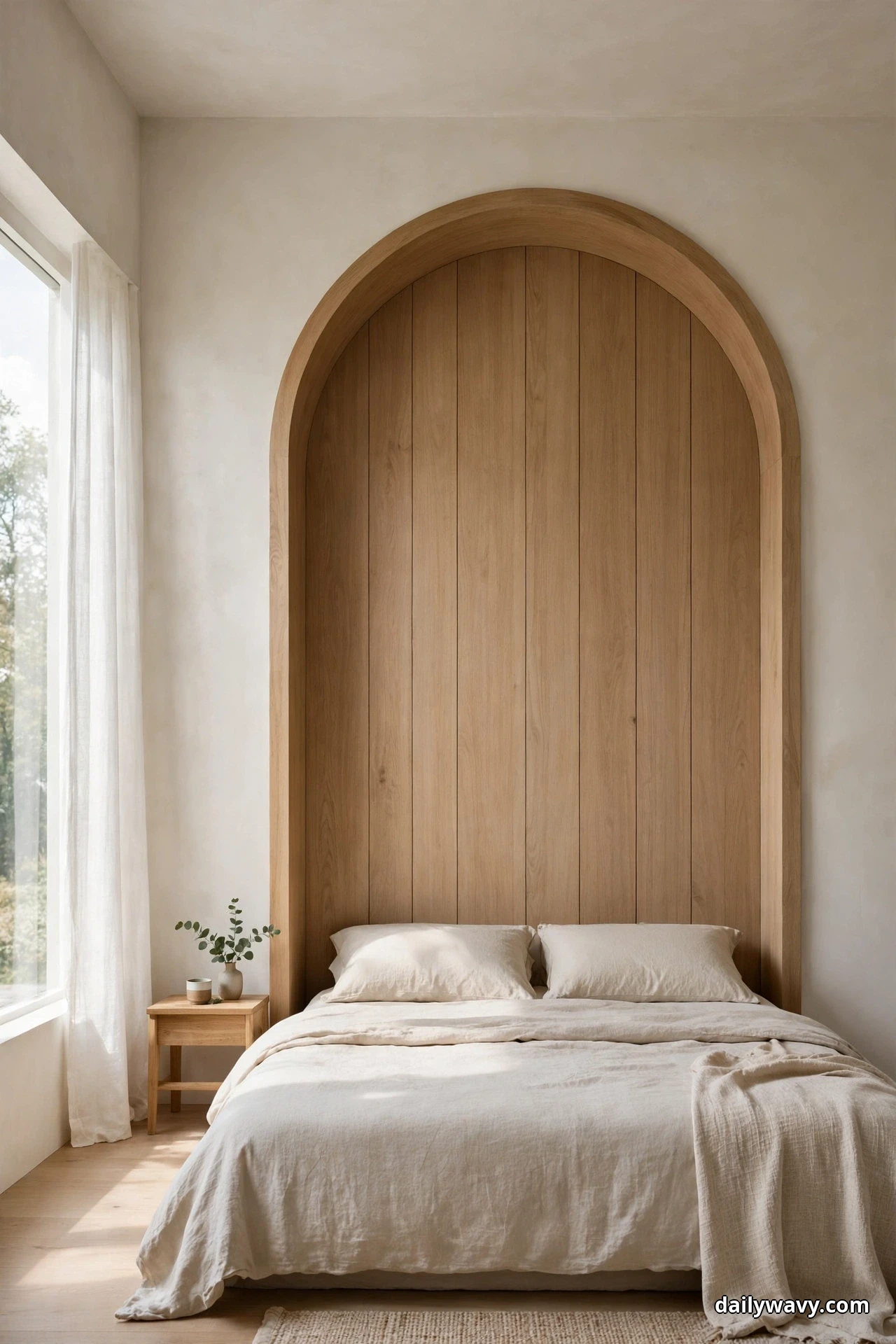
Curves soften a bedroom instantly. A panel with an arched or softly curved top that echoes the curve of a round bedside table creates a quiet conversation between the two shapes. The arch does not have to be grand: a gentle radius across the top of an otherwise rectangular panel is enough. Cut the curve with a jigsaw following a traced arc, then sand thoroughly so the edge feels smooth. A round table below an arched panel is the classic pairing, but a curved lamp base or even a round mirror nearby works the same way. Keep the panel finish calm, because the shape is already doing the talking. One curve repeated in two places reads as design; five different curves reads as confusion, so let the echo stay between the panel and one other object.

17. A Low Profile Beneath A Window
Bedrooms with a window on the bed wall need a panel that sits low, below the sill, so daylight stays unblocked. A low-profile panel, 24 to 30 inches tall, runs wall to wall under the window and gives the bed a defined base without fighting the glass. Because the panel is short, its finish matters more: choose something with presence, like a dark stain, a fabric upholstery, or a row of vertical slats. The bed then sits against it naturally, and the window floats above like art. Check that the panel top clears the mattress top by at least a few inches so the bed does not hide the panel entirely. This is also a smart fix for radiator walls in older homes, since a low panel finishes the wall around the radiator; just leave the radiator itself uncovered so its heat can circulate freely. Our narrow living room layout guide uses the same low-and-long logic for tricky walls.
18. A Tall Focal Shape In A Plain Room
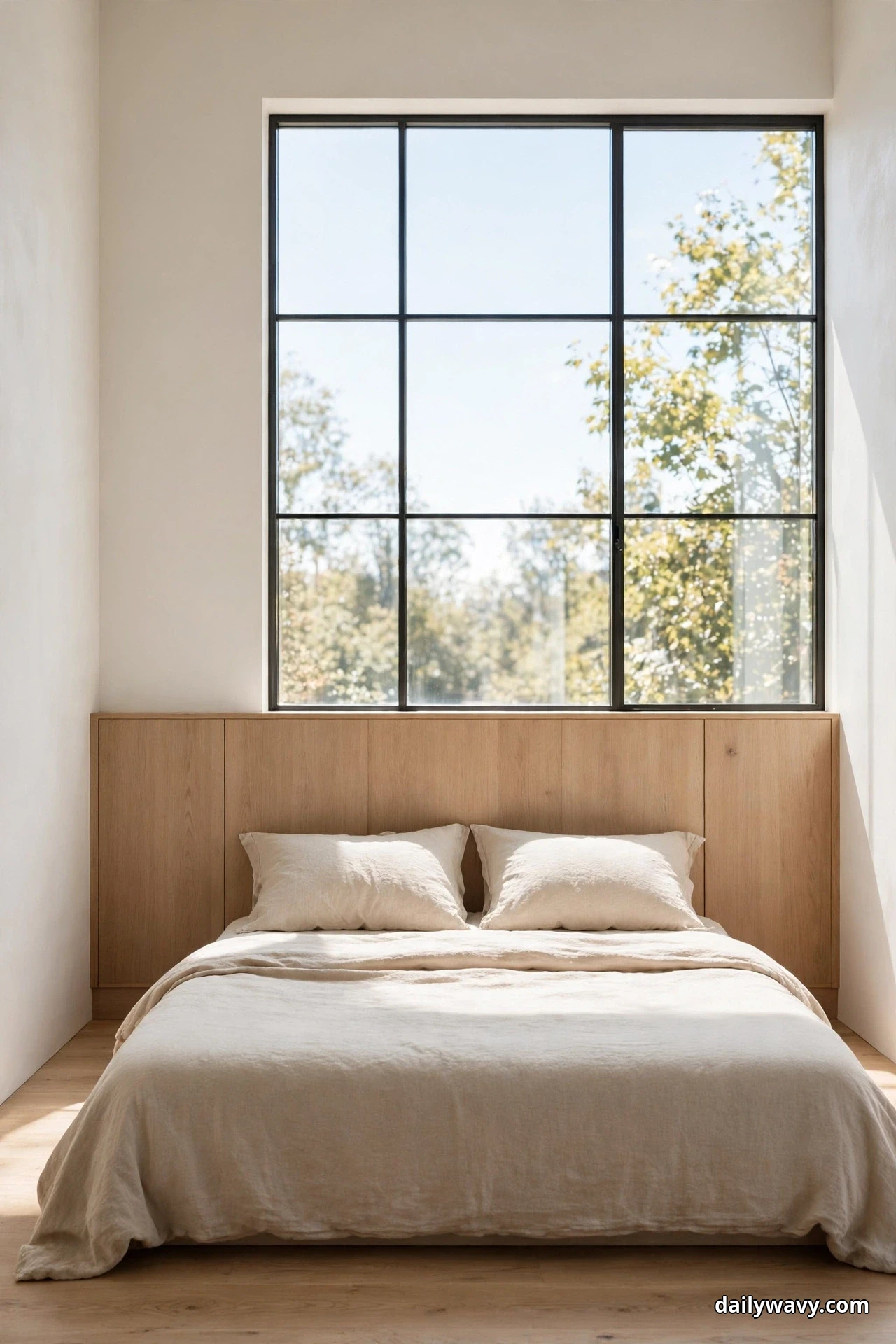
In a plain room with little architecture, one tall panel shape can do the work of a whole renovation. Go tall: 60 inches or more, or run it floor to ceiling on a standard 8-foot wall. A single tall rectangle, an oversized arch, or a wide panel reaching nearly to the ceiling becomes the room’s one strong gesture. The rest of the room should stay minimal, because a tall panel plus busy bedding plus cluttered nightstands is too many competing ideas. Keep bedding simple and surfaces mostly clear. This approach flatters high ceilings most, but it also helps low ceilings feel taller by pulling the eye up. Use lightweight materials if you go floor to ceiling: half-inch MDF over a simple frame is plenty rigid and much easier to hang than a solid panel that size.
19. A Contrasting Border Detail
A contrasting border is the jewelry on an otherwise simple panel: a thin band of dark trim around a light panel, a brass or wood inlay along the edge, or a painted stripe 2 inches inside the panel’s perimeter. The border defines the panel’s shape crisply, which matters on walls where the panel and the paint are close in tone. Apply thin molding with adhesive, or paint the border directly with painter’s tape for a perfectly straight line. A border also lets you echo other elements in the room, like black window frames or brass hardware, tying the whole space together without adding another big color. Keep the border slim, under 2 inches wide, so it reads as a detail rather than a stripe. Small move, outsized polish.

20. A Warm Material Paired With Cool Linens
End with contrast of temperature, not color. A warm-material panel, honey-toned oak, walnut, woven rattan, or even a clay-toned plaster, paired with cool linens in white, pale gray, or soft blue, gives the bedroom the tension that makes it feel finished. Warm and cool need each other: all-warm rooms can feel heavy, all-cool rooms can feel flat. The panel carries the warm side; the bedding carries the cool side; one or two shared neutrals in the middle keep them from arguing. If your panel is wood, oil it rather than varnishing for a matte, touchable surface that shows the grain. Then keep the linens crisp and light. This warm-meets-cool pairing is the reason so many hotel bedrooms feel instantly restful, and it translates directly to a home bedroom. Find more bedding and textile ideas in the Home and Decor collection.

Frequently Asked Questions
How big should a headboard wall panel be?
A good starting point is two-thirds to three-quarters of your bed’s width: about 40 to 45 inches for a queen bed, wider if you want it to extend past the nightstands. Height typically runs 30 to 60 inches, with taller panels suiting higher ceilings. When in doubt, go slightly wider rather than slightly narrower; a skimpy panel looks accidental.
Can I hang a panel if I am renting?
Yes. Use a lightweight panel hung on two picture hooks or a French cleat, which leaves only small holes that spackle easily. Padded fabric panels and lean-to panels resting against the wall behind the bed are the most renter-friendly options. Avoid heavy solid-wood panels and construction adhesive, which both risk deposit disputes.
What is the cheapest way to make a headboard wall panel?
Paint-grade MDF is the budget winner: a 4-by-8-foot sheet costs a fraction of finished wood and takes paint beautifully. A simple queen-width panel from half-inch MDF, paint, and two cleats typically runs $50 to $120 in materials. Peel-and-stick molding strips over a painted wall are even cheaper and fully reversible.
Should the panel go behind the nightstands too?
Either works, but decide deliberately. A panel that runs behind the nightstands creates one continuous line and ties the wall together, which suits modern rooms. A panel that stops at the mattress edges keeps the bedside zones separate and reads as more traditional. Panels that awkwardly stop halfway behind a nightstand look unfinished, so avoid that middle ground.
How do I keep a dark panel from making the room feel small?
Balance it with light walls, light bedding, and good lighting. One dark panel on one wall reads as depth, not enclosure, as long as the other three walls stay bright. Add a mirror or metallic lamp nearby to bounce light around, and keep the dark finish matte so it absorbs light softly instead of glaring.
Can a panel work with a bed that already has a headboard?
Absolutely, and the combination can look richer than either alone. The panel becomes the wall’s architecture while the headboard provides the furniture layer. Keep the two distinct: a wood headboard against a painted panel, or an upholstered headboard against a slatted panel. If both are the same material and tone, they blur into one and you lose the effect.
The Takeaway
A headboard wall panel is one of the highest-impact, lowest-drama projects a bedroom can have. Pick the idea that matches your constraints: removable if you rent, low-profile if a window rules the wall, tall and simple if the room needs one strong gesture. Measure twice, buy materials once, and hang it level. Then live with it for a week before you judge it, because a new focal point takes a few days to settle into the room. Save your favorite ideas, pin the ones you will try this weekend, and give your bed the backdrop it deserves.