20 Vintage Nightstand Styling Ideas with Space for Your Essentials
A vintage nightstand is a small stage, and it performs best when it looks collected rather than crowded. The old…
A vintage nightstand is a small stage, and it performs best when it looks collected rather than crowded. The old wood already brings character, so your job is to give it purpose. The best bedside styling keeps room for the lamp, the book, and the glass of water, while a few thoughtful objects add warmth and personality. These twenty ideas show you how to style a vintage nightstand without losing the surface space you actually use every night, so it stays beautiful and genuinely useful.
Jump to an idea:
- 1. A Textured Runner Under A Lamp
- 2. A Simple Glass Carafe On A Tray
- 3. A Catchall Bowl In Matching Tones
- 4. A Single Sculptural Accent
- 5. A Framed Photograph With A Short Vase
- 6. A Charging Area With Tidy Cable Routing
- 7. A Tray Holding A Notebook And Pen
- 8. A Pair Of Balanced Objects Of Different Heights
- 9. A Soft Fabric Mat Beneath Essentials
- 10. A Small Mirror With A Ceramic Vessel
- 11. A Narrow Upright Book Arrangement
- 12. A Shaded Lamp Beside A Small Tray
- 13. One Flower Stem In A Low Vase
- 14. A Stack Of Two Books
- 15. A Lidded Box For Everyday Objects
- 16. A Small Clock With Negative Space
- 17. A Ceramic Dish For Jewelry
- 18. A Leaning Frame Secured Against Slipping
- 19. A Woven Basket Below The Surface
- 20. A Tiny Plant Beside A Reading Light
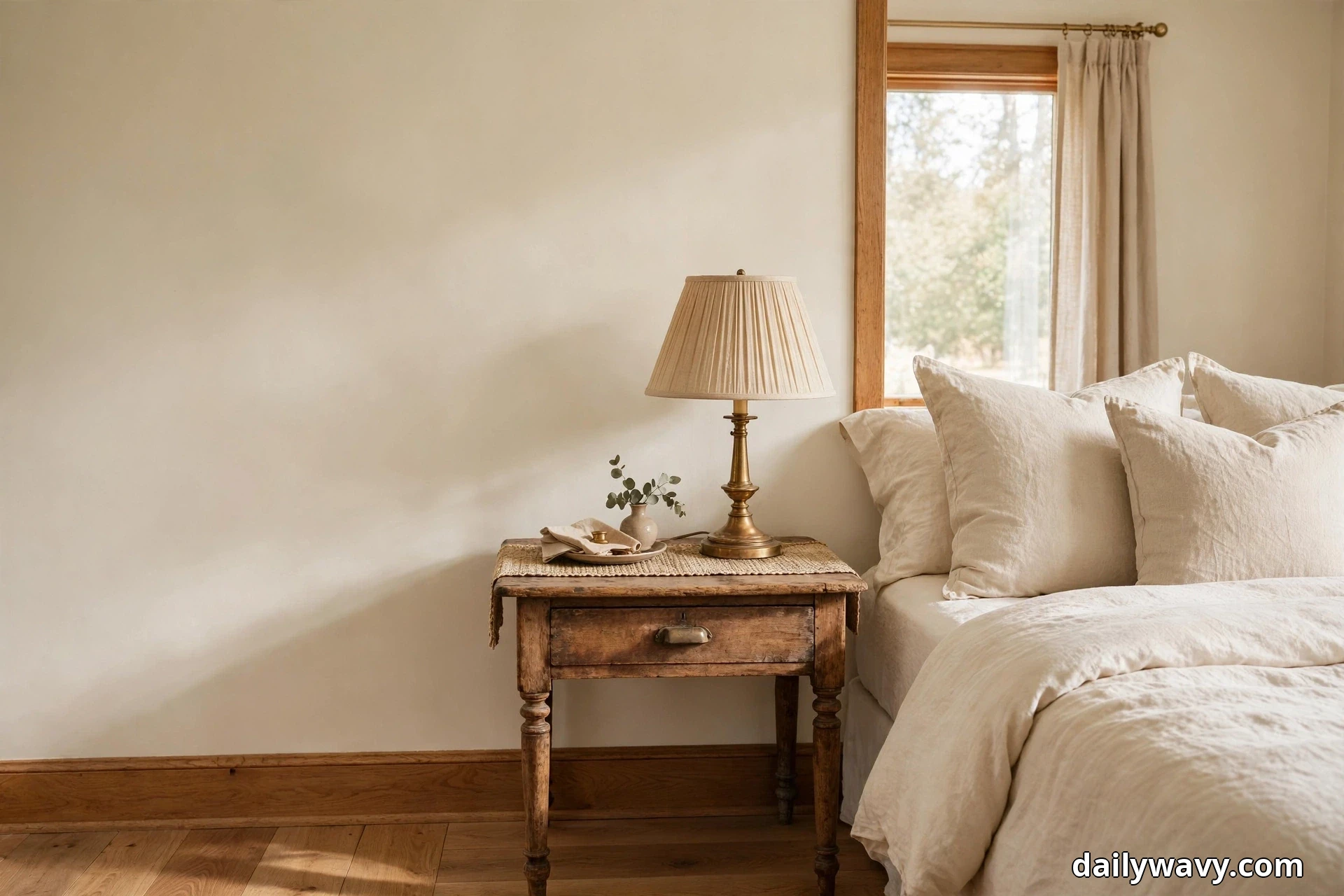
The Vintage Nightstand Rules Before You Start
Before you place a single object, measure the surface. Most vintage nightstands are between 18 and 26 inches wide, which sounds generous until a lamp claims a third of it. Leave at least one clear zone, roughly a third of the top, for the things you reach for in the dark: water, phone, glasses. Everything decorative should fit in the remaining two thirds.
Protect the old wood. Vintage finishes scratch and ring easily, so put felt pads under anything with a hard base and use a coaster or tray under drinks. If your lamp has a fabric shade, switch to an LED bulb, which runs far cooler than an old incandescent and is kinder to both the shade and the wiring. And keep the weight sensible. These pieces were built for a lamp and a book, not a tower of ceramics.
One more rule: group in odd numbers and vary the heights. Three objects of different heights almost always look better than two matching ones, and a low tray, a medium book, and a tall lamp give the eye a natural path to follow.
1. A Textured Runner Under A Lamp

A runner does for a nightstand what a rug does for a room. It anchors the lamp, softens the hard wood, and pulls the whole surface together into one deliberate composition. Choose a woven cotton, jute, or linen runner with visible texture, something roughly 8 to 10 inches wide and long enough to run front to back with an inch or two of wood showing on each side.
How to style it: Center the runner on the nightstand, then set the lamp base on top of it, slightly toward the back. Add one low object, like a book or a small bowl, at the front corner of the runner so the texture reads as a foundation rather than a loose cloth. Keep the edges of the runner at least an inch from the table edge so it never catches a sleeve.
Lower-cost swap: A folded linen napkin or a narrow piece of burlap from a craft store gives the same layered effect for a few dollars.
2. A Simple Glass Carafe On A Tray
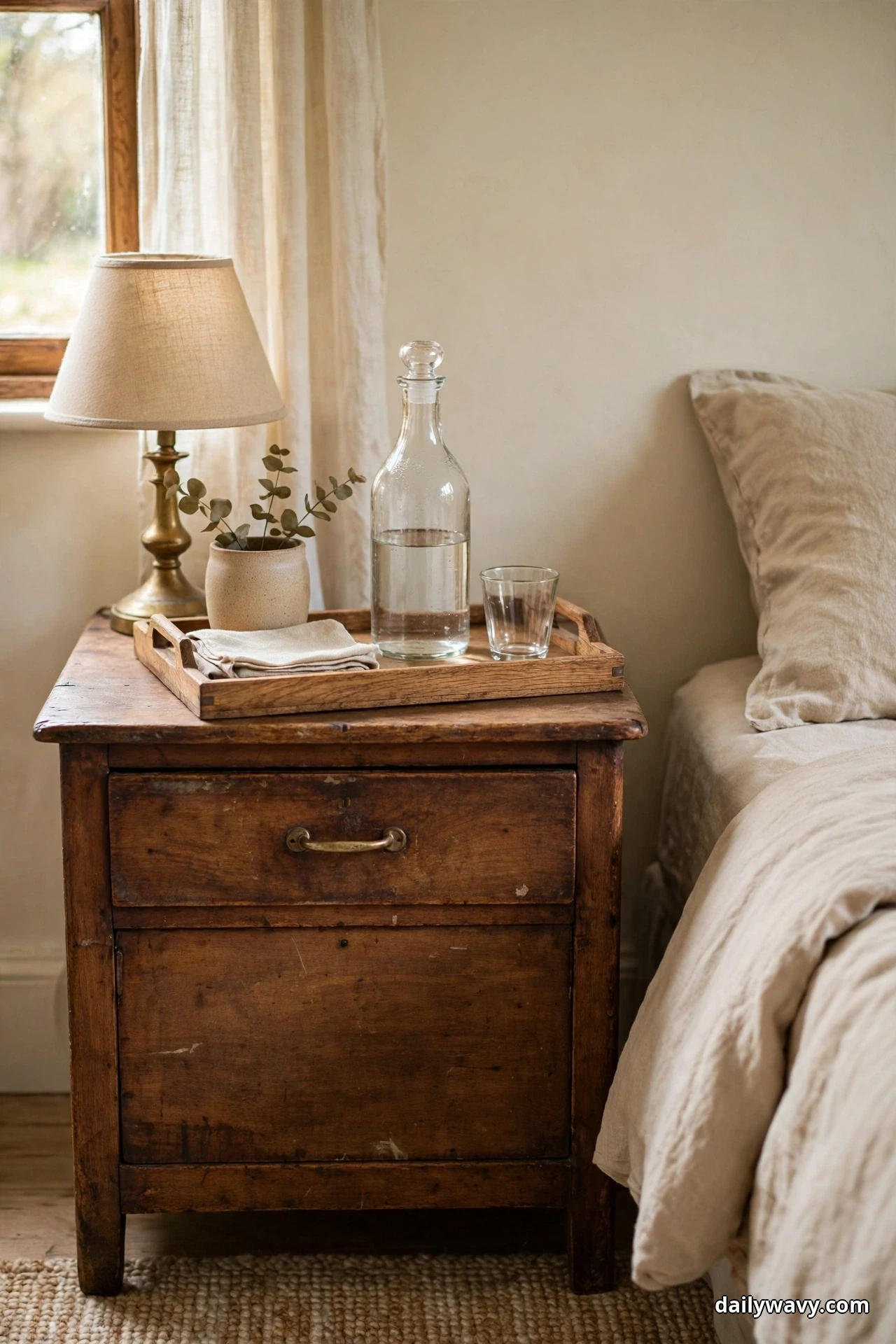
A bedside carafe is one of those small luxuries that costs almost nothing and gets used every single night. A simple glass carafe with a matching tumbler, set on a small wooden or brass tray, looks intentional and catches spills before they reach the vintage finish. Pick a carafe that holds 16 to 24 ounces, enough for a night, and a tray at least an inch wider than the carafe on each side.
How to style it: Place the tray in the front corner nearest your side of the bed so the glass is reachable without leaning. Fill the carafe each evening and rinse it each morning. A plain tray in wood or hammered metal suits vintage furniture best, and it gives the set a clear boundary on the surface.
Lower-cost swap: A clean glass bottle with a small tumbler balanced on top works the same way and costs nothing if you already own them.
3. A Catchall Bowl In Matching Tones
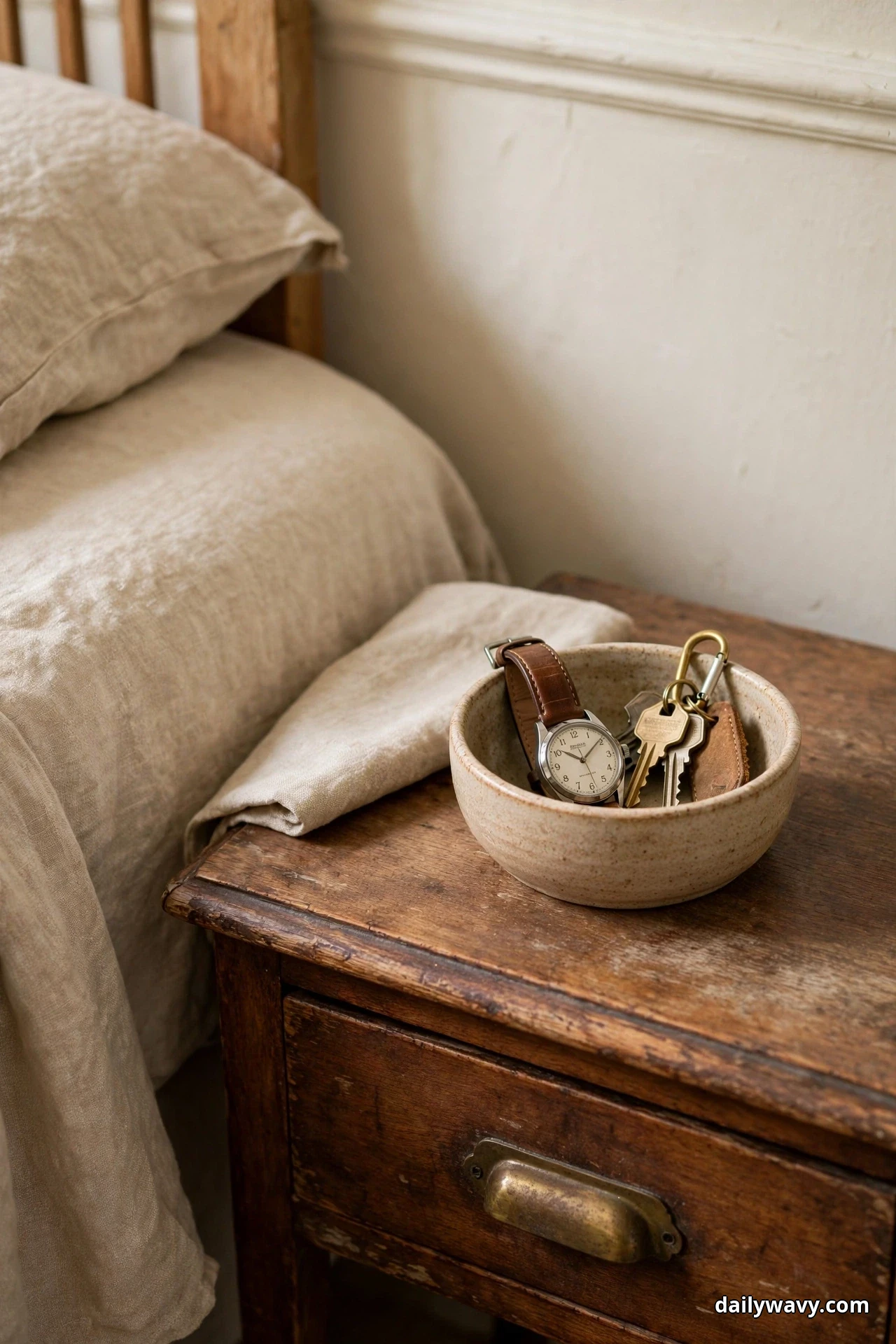
Keys, a watch, loose change, and earbuds all need a home by the bed, and a catchall bowl keeps them from migrating across the surface. Choose a bowl in a tone that echoes the room: warm cream, oatmeal, soft gray, or aged brass. A bowl about 4 to 5 inches across holds the essentials without dominating the table.
How to style it: Set the bowl on the opposite side from the lamp, near the front edge where you naturally drop things when you come to bed. Keep only what you use daily in it. When the bowl starts collecting clutter, that is your signal to edit. A shallow ceramic or stoneware bowl with a matte finish looks best against aged wood.
Lower-cost swap: Any small ramekin, saucer, or thrifted teacup can serve as a catchall while you look for the right piece.
4. A Single Sculptural Accent
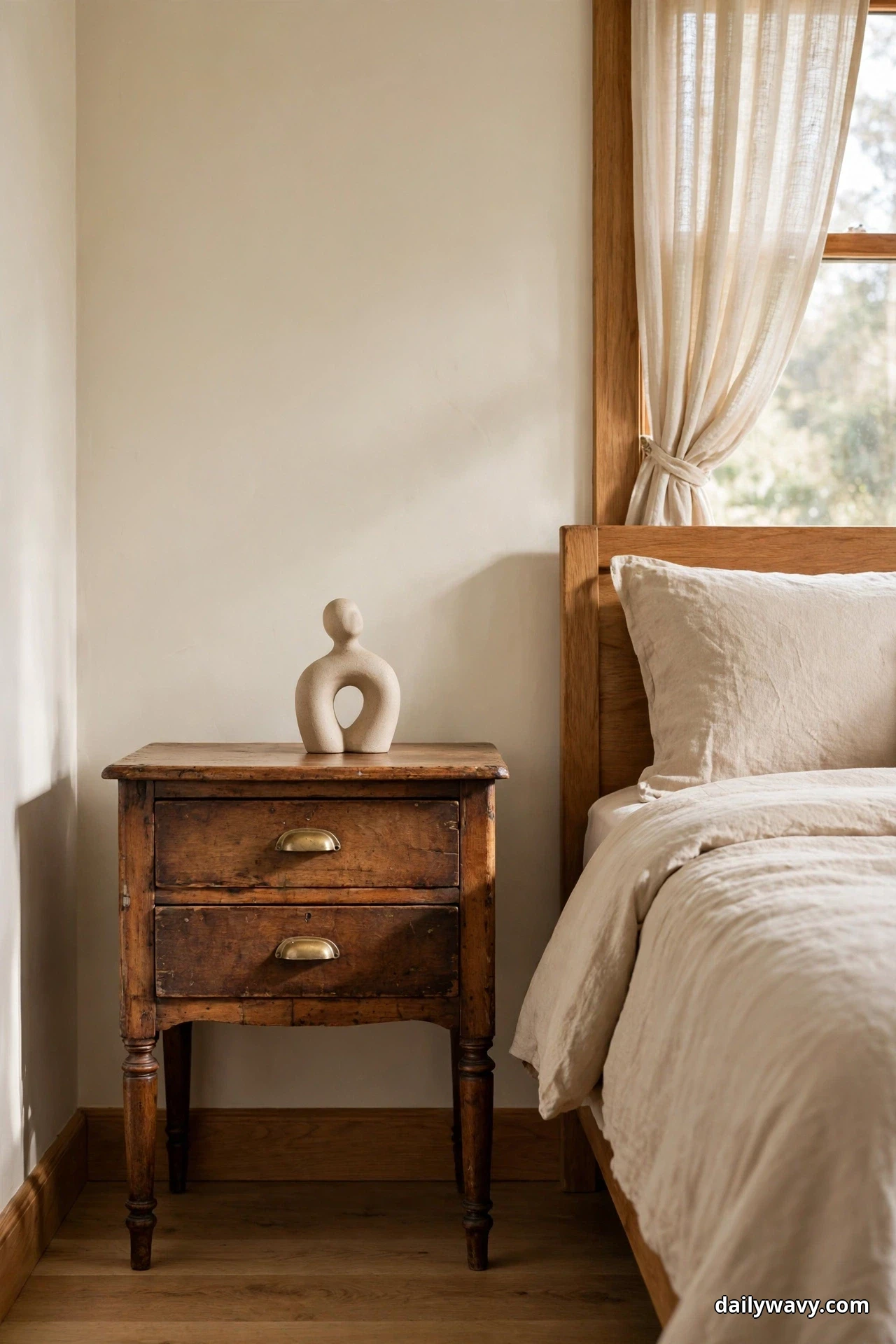
One confident object says more than five timid ones. A single sculptural accent, like a small abstract ceramic, a carved stone form, or a turned-wood piece, gives the nightstand a focal point and lets the vintage wood do the talking. Keep it between 4 and 8 inches tall so it reads as an accent, not a monument.
How to style it: Place the accent toward the back corner, off center, where it will not block the lamp light or get knocked by a book. It should be the only purely decorative object in its zone. If everything else on the table has a job, this one piece earns its place simply by looking good.
Lower-cost swap: A smooth river stone, a piece of driftwood, or an interesting shell from your own collection can play the same role.
5. A Framed Photograph With A Short Vase

A photograph and a vase are a classic pairing because they balance each other: the frame adds personal meaning, the vase adds life. Keep the frame small, 4×6 or 5×7 inches, and the vase short, no taller than 5 inches, so the combination stays low and calm. A brass or thin black frame and a simple ceramic bud vase work with almost any vintage finish.
How to style it: Lean or stand the frame slightly behind the vase, angled a few degrees toward the bed so you can see it when you lie down. Put a single stem, a sprig of eucalyptus, or dried lavender in the vase. Change the stem weekly and dust the frame when you do.
Lower-cost swap: Print a favorite photo at a drugstore and frame it in a thrifted frame; a jam jar makes a perfectly good bud vase.
6. A Charging Area With Tidy Cable Routing

Phones charge by the bed, but cables do not have to ruin the look. A small charging stand or dock, plus a slim cable channel or a few adhesive clips along the back edge, keeps everything tidy and stops the cable from dragging across the vintage surface. Choose a stand in wood, leather, or matte ceramic that matches the room.
How to style it: Set the stand at the back corner nearest the outlet. Route the cable along the back edge of the nightstand with adhesive clips, leaving just enough slack to lift the phone. A short 1-foot cable is neater than a coiled 6-footer. Charge the phone face down at night if the glow bothers you.
Lower-cost swap: A small stack of books with a cable threaded behind them works as a stand in a pinch, and a binder clip on the table edge keeps the cable from sliding off.
7. A Tray Holding A Notebook And Pen

A notebook by the bed catches the thoughts that arrive at midnight and the lists that form at dawn. A small tray, roughly 8 by 10 inches, holds the notebook and pen together as one tidy unit and protects the wood from pen marks. Choose a clothbound or linen-covered notebook that looks good closed, because it will spend most of its time that way.
How to style it: Place the tray on the side of the nightstand you reach with your writing hand. Keep the pen clipped to the notebook or lying across it so it does not roll. A tray with a low lip is easier to lift things from than a deep box.
Lower-cost swap: A small baking sheet or a wooden cutting board from the kitchen can stand in as the tray.
8. A Pair Of Balanced Objects Of Different Heights

Styling in pairs works when the two objects share something, a material, a color, or a mood, but differ in height. A tall brass candlestick beside a low stone bowl, or a slender vase next to a squat box, creates a pleasing step down that guides the eye. Aim for a height difference of at least 4 inches so the contrast reads clearly.
How to style it: Place the taller object toward the back and the shorter one in front and slightly to the side, with 2 to 3 inches between them. They should feel related but not matched. Brass with stone, ceramic with wood, and glass with linen are combinations that rarely fail.
Lower-cost swap: Two candlesticks of different heights from a thrift store, or a tall bottle beside a low mug, achieve the same rhythm.
9. A Soft Fabric Mat Beneath Essentials

A fabric mat protects vintage wood from scratches, rings, and the daily scrape of glasses and books, and it adds a layer of softness that hard furniture needs. Look for a woven cotton, felt, or quilted mat about 12 inches square, in a tone that sits quietly under your essentials.
How to style it: Center the mat under the zone where your essentials live: lamp base, book, glasses. Let 2 to 3 inches of mat show around the objects so it reads as a layer rather than a coaster. Felt and quilted cotton also dampen the clink of a glass set down at night, which your partner will appreciate.
Lower-cost swap: A folded cotton placemat or a square of wool felt from a fabric store works beautifully and costs very little.
10. A Small Mirror With A Ceramic Vessel
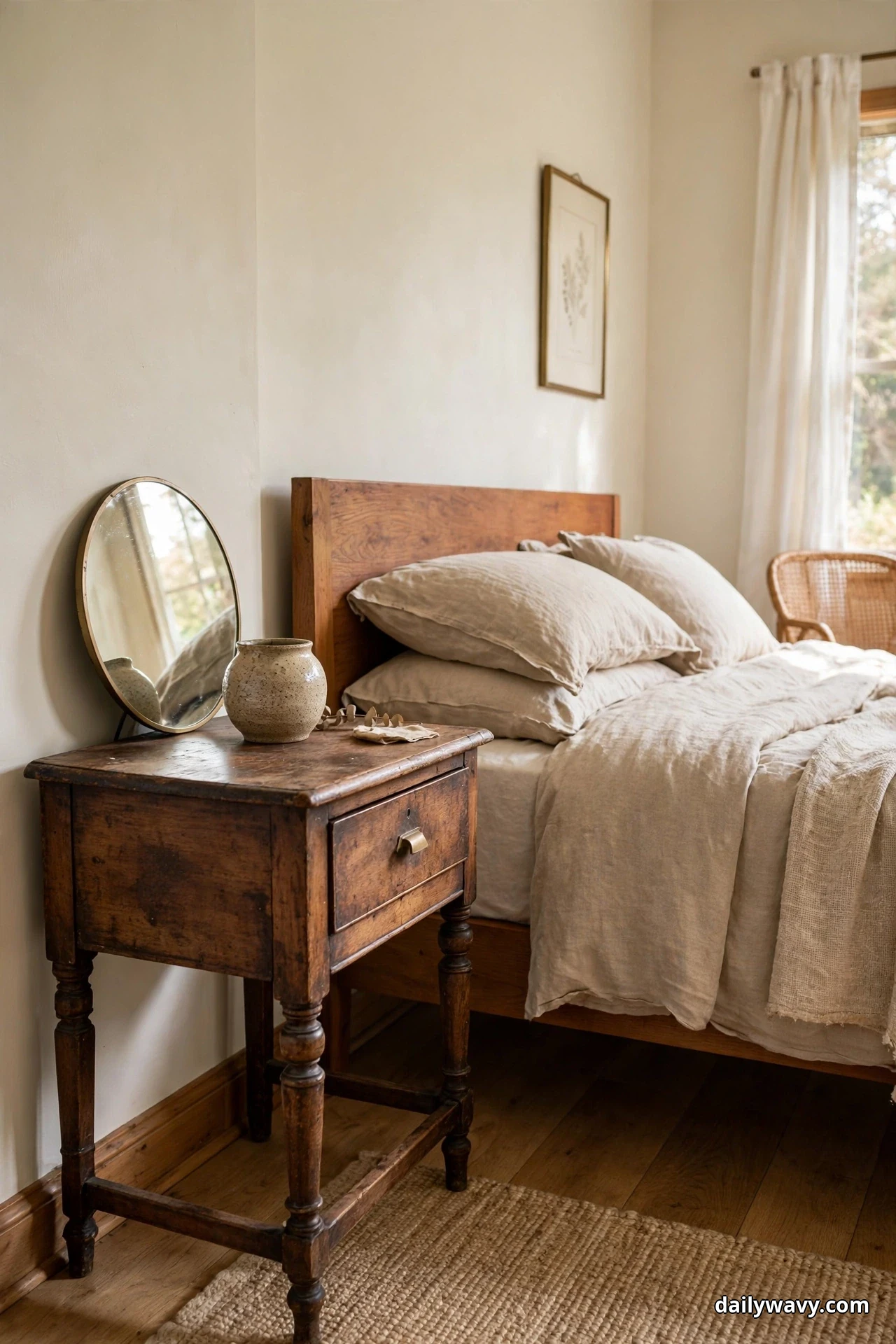
A small mirror on a nightstand bounces morning light around and makes a tight corner feel larger. Pair it with a ceramic vessel, a small vase or lidded jar, and the two objects balance reflection against texture. Keep the mirror 6 to 8 inches across, either round or arched, with a thin frame that does not compete with the vintage wood.
How to style it: Prop the mirror against the wall or a stack of books at a slight angle, with the ceramic vessel in front and to one side. Angle the mirror so it catches the window light, not the lamp. Wipe the mirror weekly; dust shows fast on glass.
Lower-cost swap: A small round mirror from a discount store in a plain frame, paired with any handmade-looking mug, gives the same effect.
11. A Narrow Upright Book Arrangement
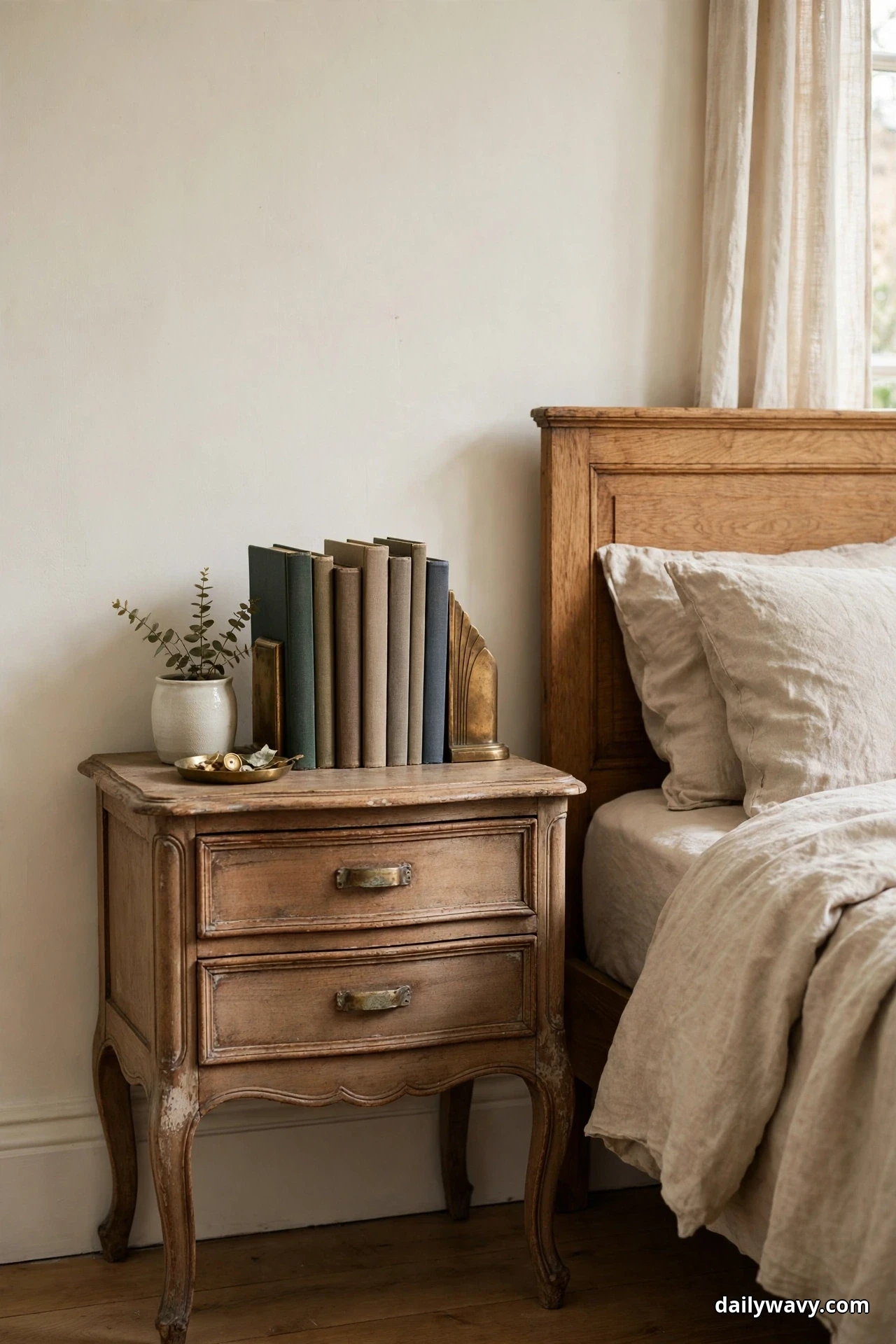
If you read in bed, your books deserve better than a wobbling pile. A narrow upright arrangement, four to six books standing spine-out and held by a single bookend, takes up less than 6 inches of surface and looks like a tiny library. Choose books you are actually reading or love to reread, and let their spines add quiet color.
How to style it: Place the upright row at the back of the nightstand, spine facing out, with the bookend on the outer end. Keep the tallest book under 10 inches so the row stays below the lamp shade. Rotate the current read to the front of the row.
Lower-cost swap: A heavy stone, a small potted plant, or a doorstop can serve as a bookend until you find one you like.
12. A Shaded Lamp Beside A Small Tray
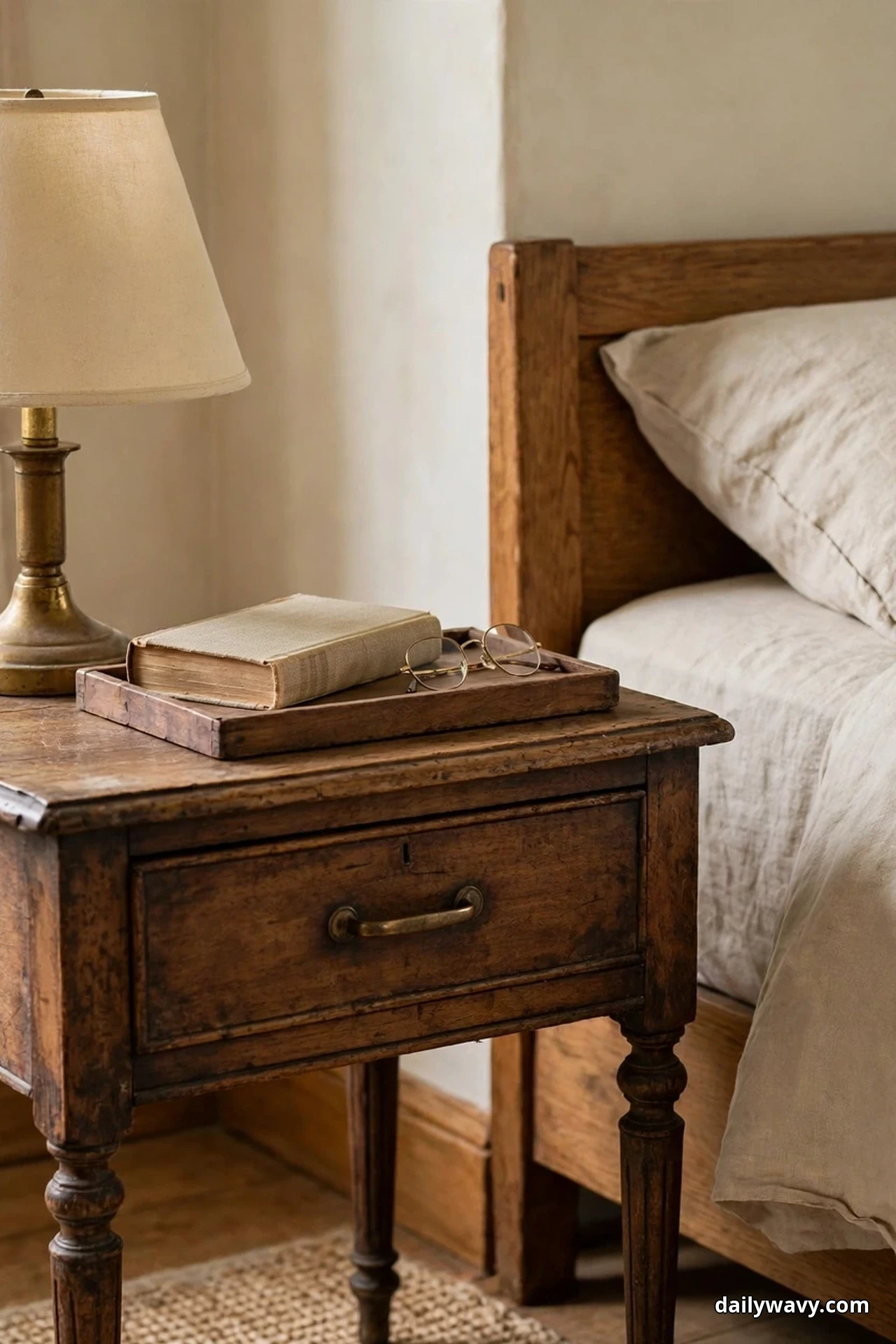
The lamp is the anchor of the nightstand, and giving it a companion tray makes the whole surface feel composed. A fabric or linen shade in cream or oatmeal softens the light, and a small tray beside the base corrals the book and glasses that migrate toward the light. The lamp base should be slim enough to leave room: look for bases under 6 inches in diameter.
How to style it: Set the lamp toward the back corner, with the tray in front of it or to the side. The bottom of the shade should sit roughly at eye level when you are sitting up in bed, which is usually a lamp 24 to 28 inches tall on a standard nightstand. Use a warm-white LED bulb for a cozy glow.
Lower-cost swap: A thrifted lamp with a new shade looks entirely fresh; shades are inexpensive and change the whole character of the lamp.
13. One Flower Stem In A Low Vase
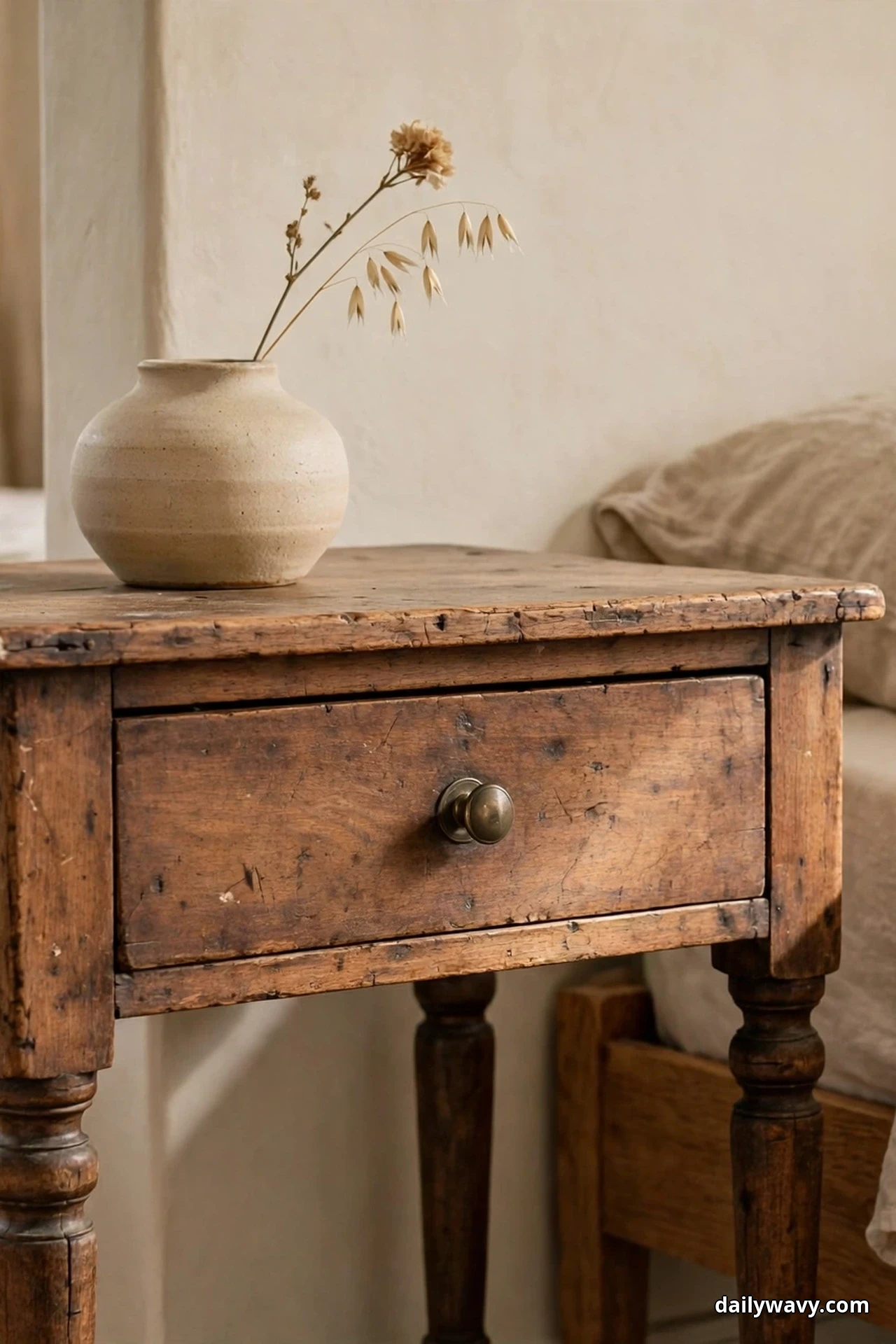
A single stem is the quietest way to bring life to the bedside. One rose, one ranunculus, one stem of stock in a low vase, no taller than 4 inches, looks deliberate and never blocks your view or the lamplight. The low height is the whole trick: it keeps the arrangement humble and proportionate to the small surface.
How to style it: Place the vase near the front of the nightstand where you will see it when you wake. Trim the stem short so the flower head sits just above the rim. Change the water every two days. In off weeks, a dried stem or a sprig of eucalyptus keeps the habit going without the upkeep.
Lower-cost swap: A single stem from the grocery store costs a dollar or two and lasts a week; a cutting from the garden costs nothing.
14. A Stack Of Two Books
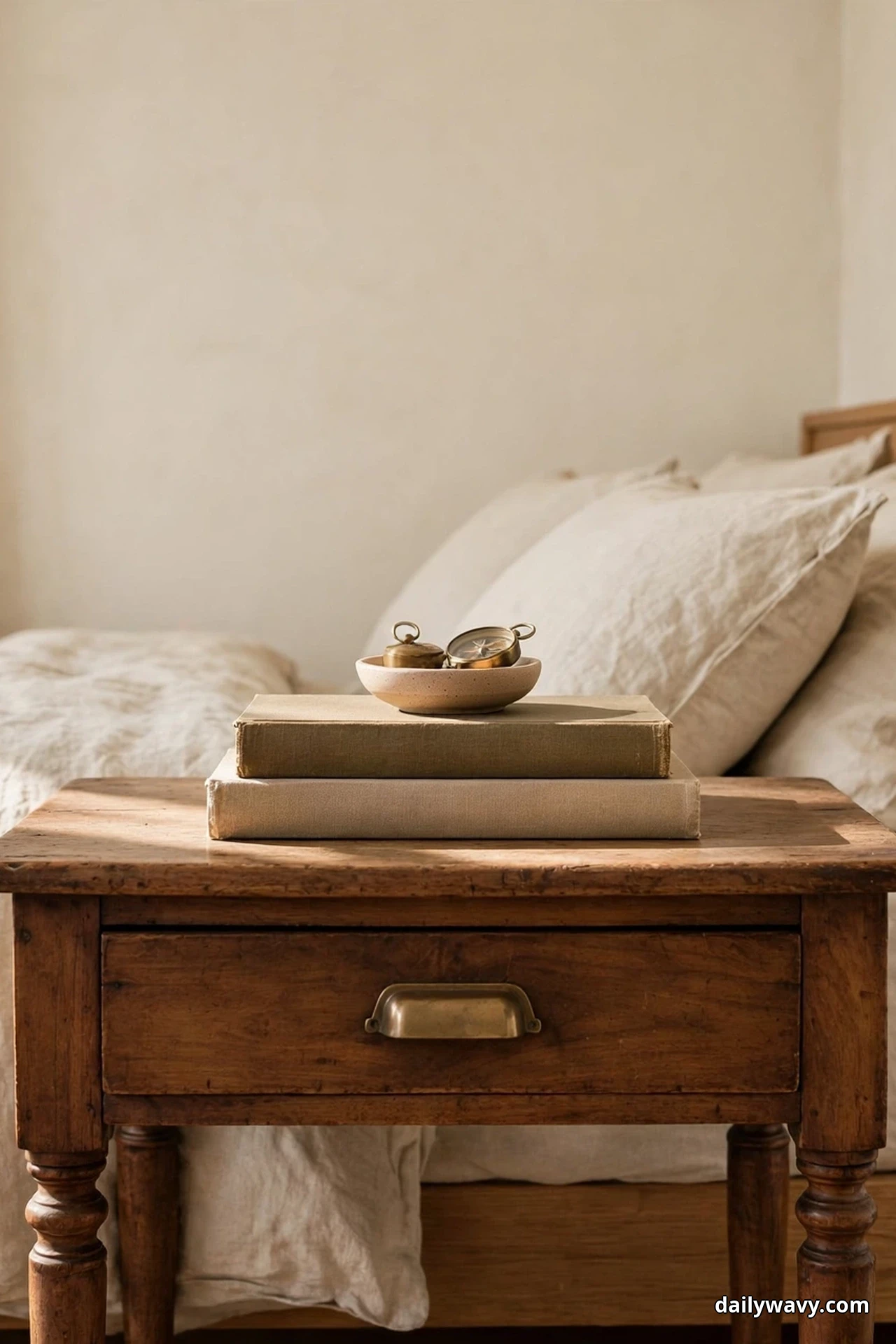
Two books, stacked flat with the largest on the bottom, make a stable little pedestal that doubles as a riser for a small object. The stack adds height variation to the surface and gives you something to set a candle, a small dish, or your glasses on. Keep the total stack under 4 inches so it stays a platform, not a tower.
How to style it: Align the spines on the same side for a tidy look, and place the stack in the middle zone of the nightstand. Top it with something small and beautiful: a candle, a bud vase, or a trinket dish. Choose books with attractive covers or remove the dust jackets for a cleaner look.
Lower-cost swap: Any two hardcovers you already own will do; the trick is in the alignment and the object on top.
15. A Lidded Box For Everyday Objects
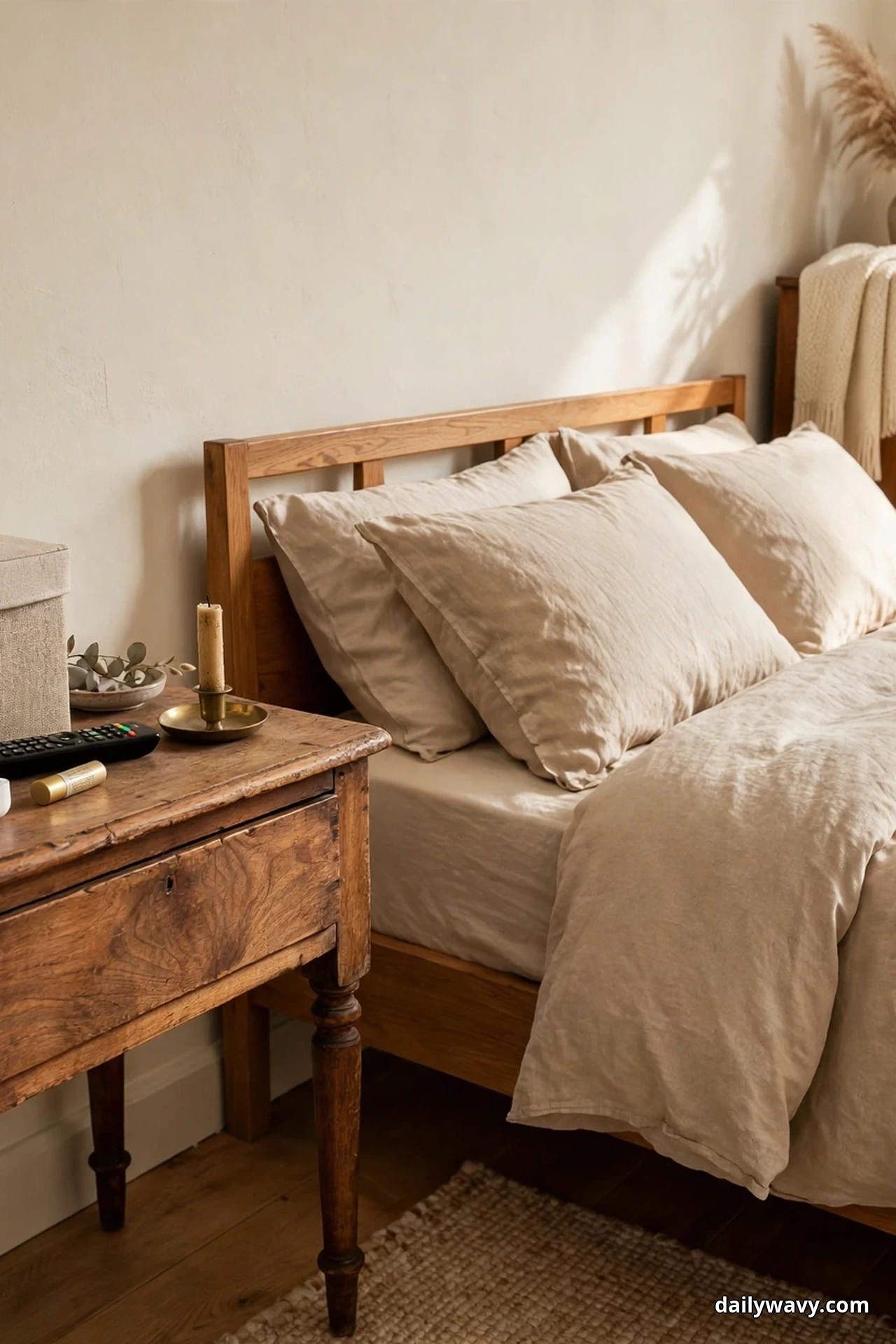
Some bedside things are better hidden: the remote, lip balm, earbuds, spare batteries. A lidded box swallows them all and leaves a clean surface behind. Choose a box 6 to 9 inches long in wood, woven seagrass, or fabric-covered board, with a lid that lifts off easily with one hand.
How to style it: Set the box toward the back or side of the nightstand, where you can reach the lid without looking. Inside, keep only the true bedside kit; if you have not touched something in a month, move it out. A box with a slightly textured or patterned lid can be decorative in its own right.
Lower-cost swap: A sturdy shoebox wrapped in linen or kraft paper, or a lidded basket, hides clutter just as well.
16. A Small Clock With Negative Space

A small analog clock on the nightstand is both practical and sculptural, and it frees you from checking the time on your phone. The trick is to give it room: surround it with several inches of empty surface on every side so it reads as a deliberate choice rather than clutter. A twin-bell alarm clock or a simple round desk clock, 4 to 5 inches across, suits vintage furniture.
How to style it: Place the clock where you can read it from the pillow, usually angled slightly toward the bed. Keep the space around it clear of everything else. If the ticking bothers you, choose a silent-sweep movement, which most modern reproductions offer.
Lower-cost swap: A thrifted clock with a fresh battery, or even a handsome kitchen timer, gives you the same analog charm.
17. A Ceramic Dish For Jewelry
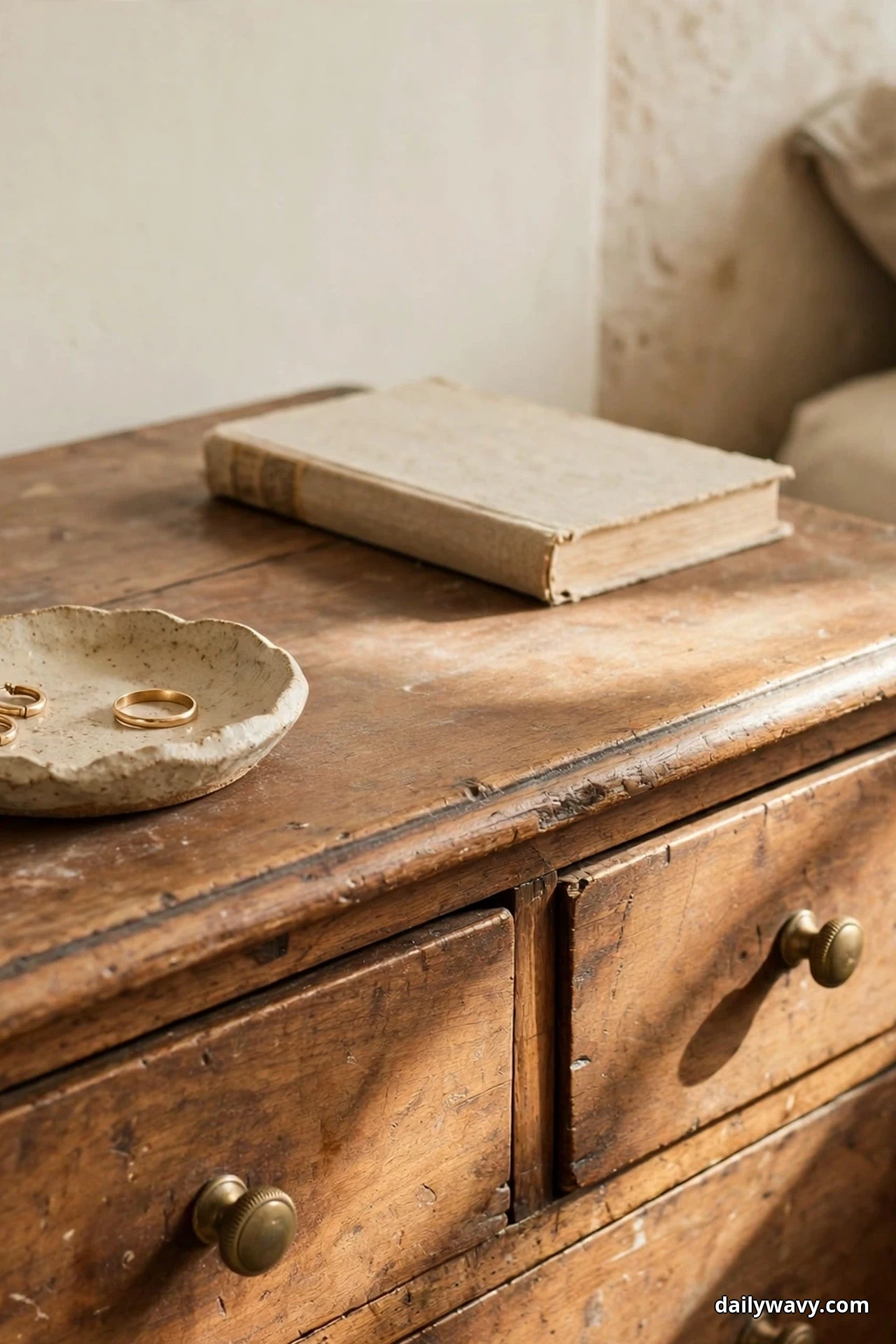
The ring, the earrings, the watch: they all come off at night and need a safe landing spot. A small ceramic dish, 3 to 4 inches across, keeps them together and off the wood, where metal can scratch. Choose a dish with a slightly raised edge so nothing rolls away, in a glaze that complements the room.
How to style it: Set the dish on the side of the nightstand nearest where you undress, within easy reach. Make it a habit: jewelry lands in the dish the moment it comes off. A handmade-looking dish with an irregular edge adds craft and character to the surface.
Lower-cost swap: A small saucer, an oyster shell, or a thrifted trinket dish all work; the habit matters more than the dish.
18. A Leaning Frame Secured Against Slipping
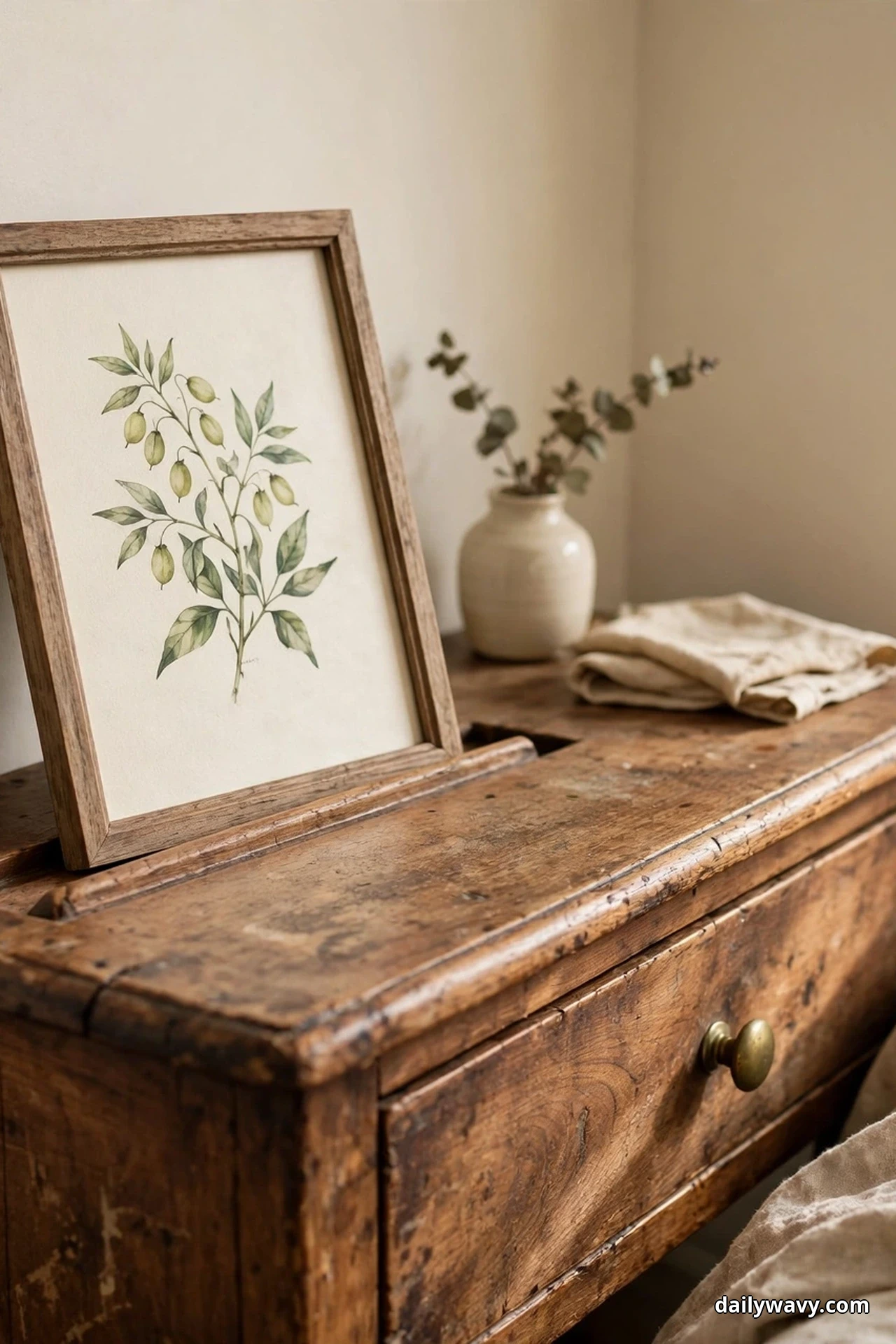
Leaning a frame against the wall is more relaxed than hanging it, and on a nightstand it adds height without a nail. But a leaning frame on a surface you bump in the dark needs to be secure. Use a frame with a deep enough base to sit steadily, and add a small museum-gel dot or a strip of non-slip shelf liner under the bottom edge so it cannot slide.
How to style it: Lean the frame at a slight angle, 5 to 10 degrees, with its top resting against the wall. Keep it behind the lamp or beside it, never in the reach zone. A 5×7 or 8×10 frame works best; larger frames belong on the wall, not the table.
Lower-cost swap: Museum gel and non-slip liner are inexpensive and invisible, and they secure any frame you already own.
19. A Woven Basket Below The Surface
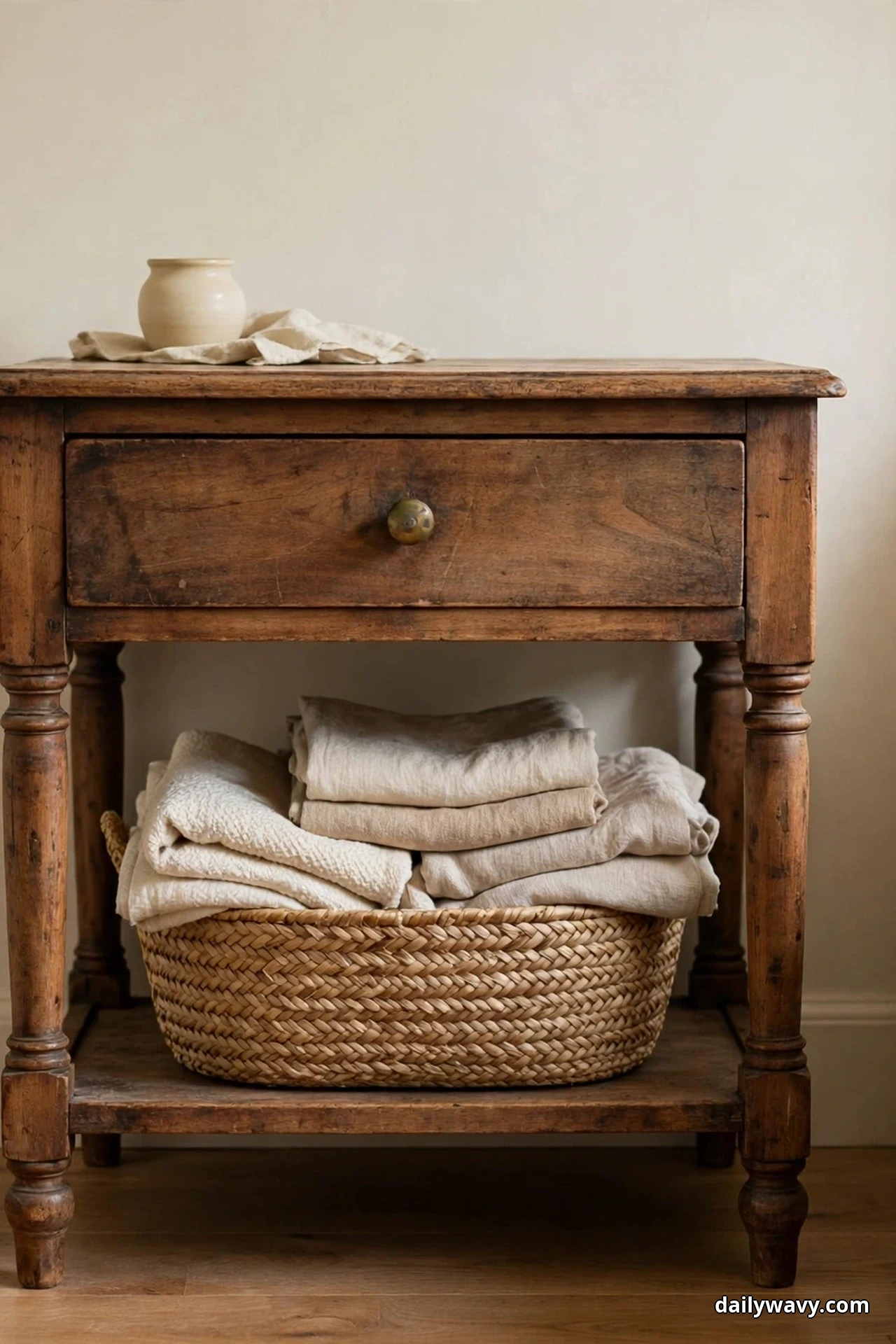
The space below a vintage nightstand is styling real estate too. A woven basket on the lower shelf or the floor beside the table holds extra throws, sleep masks, or the book you finished, freeing the top surface for the essentials. Choose a basket that fits with an inch or two to spare on each side, in seagrass, rattan, or woven cotton.
How to style it: Tuck the basket fully under the nightstand or just beside it, with the opening facing out for easy access. Roll rather than fold throws so you can see them all. Empty the basket seasonally; it tends to collect things you meant to put away.
Lower-cost swap: A sturdy paper shopping bag with the top folded down, or a fabric tote, holds the same things while you shop for the right basket.
20. A Tiny Plant Beside A Reading Light

A tiny plant softens the bedside and gives the nightstand a living note. Choose something that tolerates low, indirect light and occasional neglect: a pothos cutting, a small snake plant, or a haworthia in a 3-inch pot. Keep it beside the reading light rather than behind it, so both get what they need.
How to style it: Set the plant in a small ceramic or terracotta pot with a saucer to protect the wood. Water sparingly; most small plants die from overwatering, not neglect. Dust the leaves monthly with a damp cloth so they can breathe.
Lower-cost swap: A cutting rooted in water in a small glass jar is free, pretty, and lets you watch the roots grow.
Frequently Asked Questions
How many objects should I put on a vintage nightstand?
Three to five objects is the sweet spot for most nightstands, plus the lamp. Fewer looks bare, more looks cluttered. If you cannot set down a glass of water without moving something, you have too many.
How do I protect vintage wood from water rings?
Use coasters, trays, and fabric mats under everything wet or cold. For extra protection, a coat of clear furniture wax once a year helps the finish resist moisture, and it deepens the patina beautifully.
What size lamp works best on a small vintage nightstand?
Look for a lamp 24 to 28 inches tall with a base under 6 inches in diameter, so the shade sits near eye level when you sit up in bed. A slim profile leaves more usable surface.
Can I style a nightstand I also use for storage?
Yes. Use the drawer or cabinet for the private clutter and keep the top for the essentials plus two or three decorative pieces. A lidded box on top handles the overflow that does not fit inside.
How do I keep the nightstand from looking cluttered?
Give every object a zone, group small things on trays, and leave at least a third of the surface clear. Edit monthly: remove anything you have not used or enjoyed in the last few weeks.
What colors work best with vintage wood nightstands?
Warm neutrals are the safest pairing: cream, oatmeal, soft beige, warm gray, and aged brass. They let the wood’s patina be the star. If you want color, add it in small doses through books, flowers, or a single ceramic piece.
A Nightstand That Works As Good As It Looks
A vintage nightstand does not need much to shine. It needs room for the things you use every night, protection for its old finish, and a few objects chosen with care rather than collected by accident. Start with the lamp and the essentials, add one layer at a time, and step back often to check the balance. The best bedside styling looks effortless because every piece earned its place.
If you are refreshing the whole bedroom, our small bedroom with a queen bed ideas show how to make a compact room feel generous, and the small bathroom storage ideas solve the other tight space in the house. For the entry, see small entryway decor ideas, and browse all of our room guides in Home & Decor.