16 Wood Coffee Table Decor Ideas with Room for Everyday Use
A wood coffee table is the workhorse of the living room. It holds your morning coffee, your feet on a…
A wood coffee table is the workhorse of the living room. It holds your morning coffee, your feet on a tired evening, the board games on a Friday night. So decorating it is a balancing act: you want it to look beautiful when nobody is touching it, and still be usable when everybody is. These sixteen wood coffee table decor ideas do exactly that. Each one leaves real room for everyday life, uses pieces you can find at a normal store, and works with the warm character of wood rather than fighting it. Browse the ideas, save your favorites, and try one this weekend.
In This Guide:
- A Small Framed Photograph Beside A Vase
- A Lidded Basket For Remotes
- An Asymmetric Arrangement Leaving Serving Space
- A Textured Mat Beneath A Tray
- A Low Arrangement Of Dried Stems
- A Glass Pitcher Used As A Vase
- A Terracotta Pot And Brass Object
- A Compact Game Box With A Flower Stem
- Low Vase With One Branch And A Book Stack
- Woven Tray With A Candle And Coasters
- Ceramic Bowl Beside Two Oversized Books
- A Small Plant With A Sculptural Object
- A Shallow Bowl Filled With Seasonal Fruit
- A Dark Tray With Clear Glass Bud Vases
- A Single Wide Floral Arrangement
- Three Varied-Height Vessels On One Side
The Wood Coffee Table Rules Before You Start
Before you buy a single thing, learn the proportions that make a coffee table look styled instead of cluttered. Most rectangular coffee tables are 42 to 48 inches long and 20 to 24 inches deep. Your decor should occupy roughly two thirds of that surface and leave the rest genuinely clear for mugs, remotes, and feet.
Keep heights low. Anything you place should stay under 12 inches tall, because you need to see the person sitting across from you. A tall floral arrangement belongs on a dining table, not between you and your guest. Group items in odd numbers, threes work beautifully on wood, and give each group breathing room of at least 4 to 6 inches.
Wood needs protection too. Always set coasters or a tray under anything wet or hot, and use felt pads under heavy ceramic or metal pieces so they do not scratch the finish. A tray is your best friend: it corrals small items into one intentional shape and lifts away in seconds when you need the whole surface.
Finally, style for the light you actually have. A table near a window can handle glass and mirrors because they will catch the daylight. A table in a darker corner looks better with warm textures like woven trays, terracotta, and candlelight. Now, the ideas.
1. A Small Framed Photograph Beside A Vase
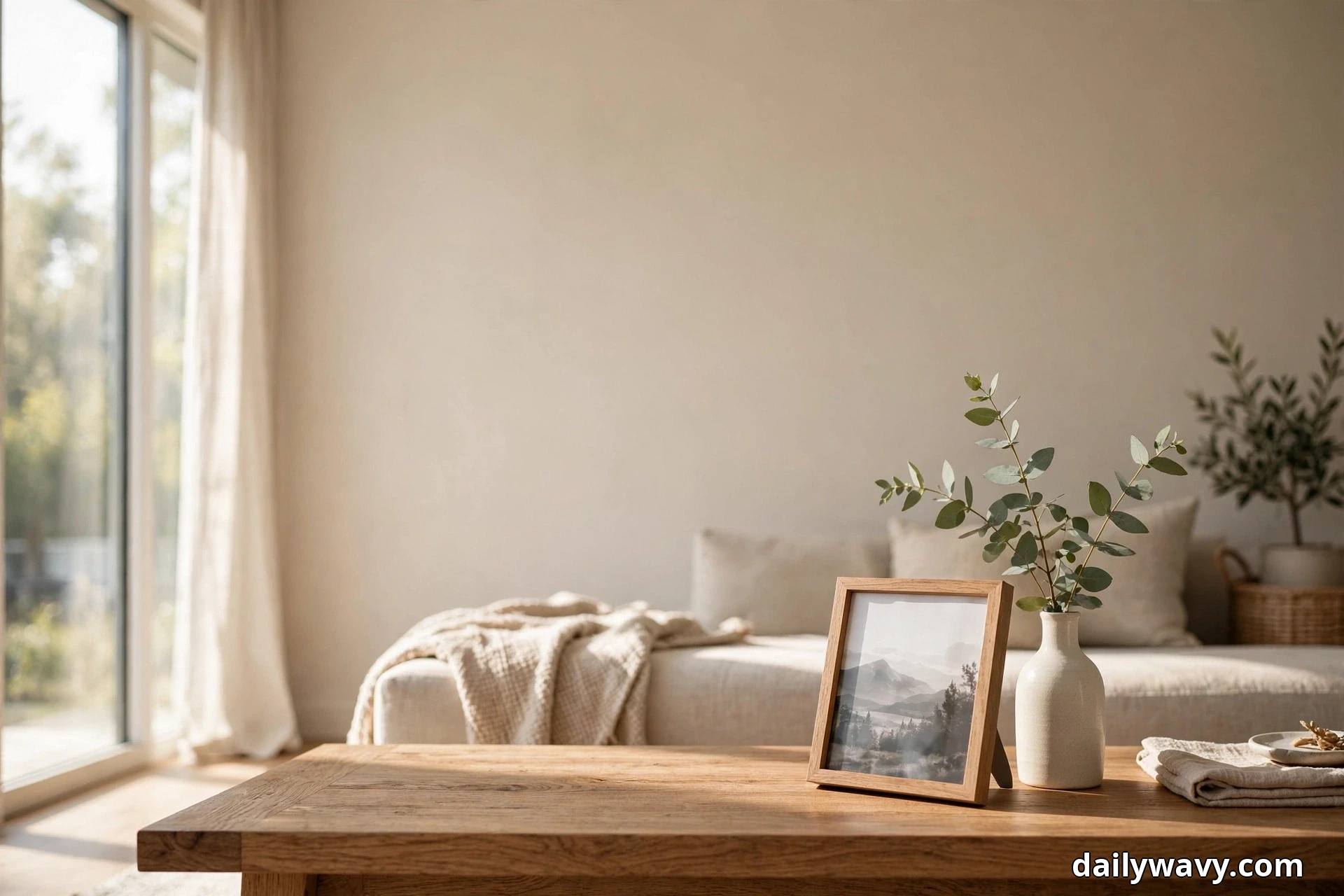
There is something immediately personal about a framed photograph on a coffee table. It says someone lives here, and it gives guests something to pick up and smile at. Paired with a simple vase, it becomes a complete little vignette that takes up almost no space.
How to pull it together. Choose a frame no larger than 5 by 7 inches, in wood, brass, or matte black to echo your room. Set it at the left or right end of the table, angled slightly toward the sofa. Next to it, place a bud vase or small cylinder vase 6 to 8 inches tall with a single stem or two, real or good-quality faux. Keep both pieces within a footprint of about 10 by 8 inches so the rest of the table stays open. Use a favorite print rather than a stock photo; the personal detail is the whole point.
Effort and budget. About 15 minutes and $10 to $30. The budget-friendly version: print a photo at a drugstore for under a dollar, use a frame you already own, and cut a stem from the yard.

2. A Lidded Basket For Remotes
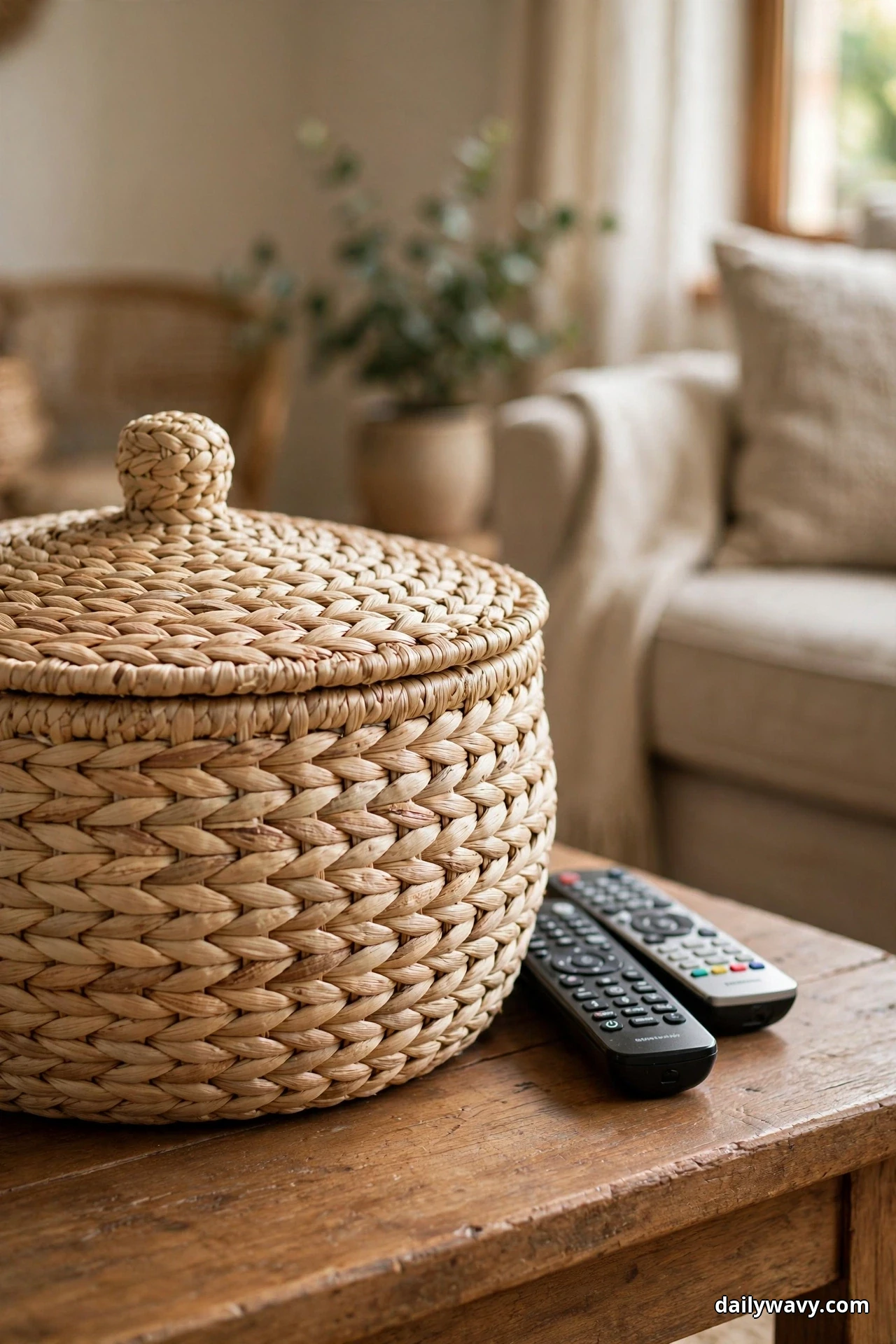
Remotes, chargers, and reading glasses have to live somewhere, and a lidded basket turns that necessity into decor. On a wood table, a woven basket adds texture and warmth while hiding the everyday clutter that ruins a styled look.
How to pull it together. Look for a lidded basket about 10 to 12 inches wide and 5 to 6 inches tall, in seagrass, rattan, or woven palm. It should sit low enough not to block sightlines. Place it at one end of the table or in the center of a tray. Inside goes everything you reach for daily: remotes, a coaster stack, lip balm, the TV guide. Measure your table first; the basket should take up no more than a quarter of the surface. If your table is round, a round basket echoes the shape nicely.
Effort and budget. About 10 minutes to set up and $20 to $45 for a good basket. The budget-friendly version: use any lidded box you own, or line an open basket with a cloth napkin so small items do not fall through the weave.
3. An Asymmetric Arrangement Leaving Serving Space
Symmetry looks formal; asymmetry looks like a real home. Pushing your decor to one side of the table and leaving the other side genuinely empty gives you a serving zone for drinks, snacks, or a laptop, and the table looks styled rather than staged.
How to pull it together. Choose one end of the table and build a cluster there: a small stack of books, a candle, and a low bowl or vase, all within a 14 to 16 inch zone. Leave the remaining half to two thirds completely clear. The cluster should have varied heights, something flat (books), something medium (bowl), and something a little taller (candle or vase), all under 12 inches. Step back and check from the sofa: the empty side should read as intentional space, not forgotten space. Rotate which end holds the cluster if the room’s traffic flow suggests it.
Effort and budget. Zero cost if you shop your own shelves, about 20 minutes of arranging. The budget-friendly version is the same version, since this idea is about placement, not purchases.

4. A Textured Mat Beneath A Tray
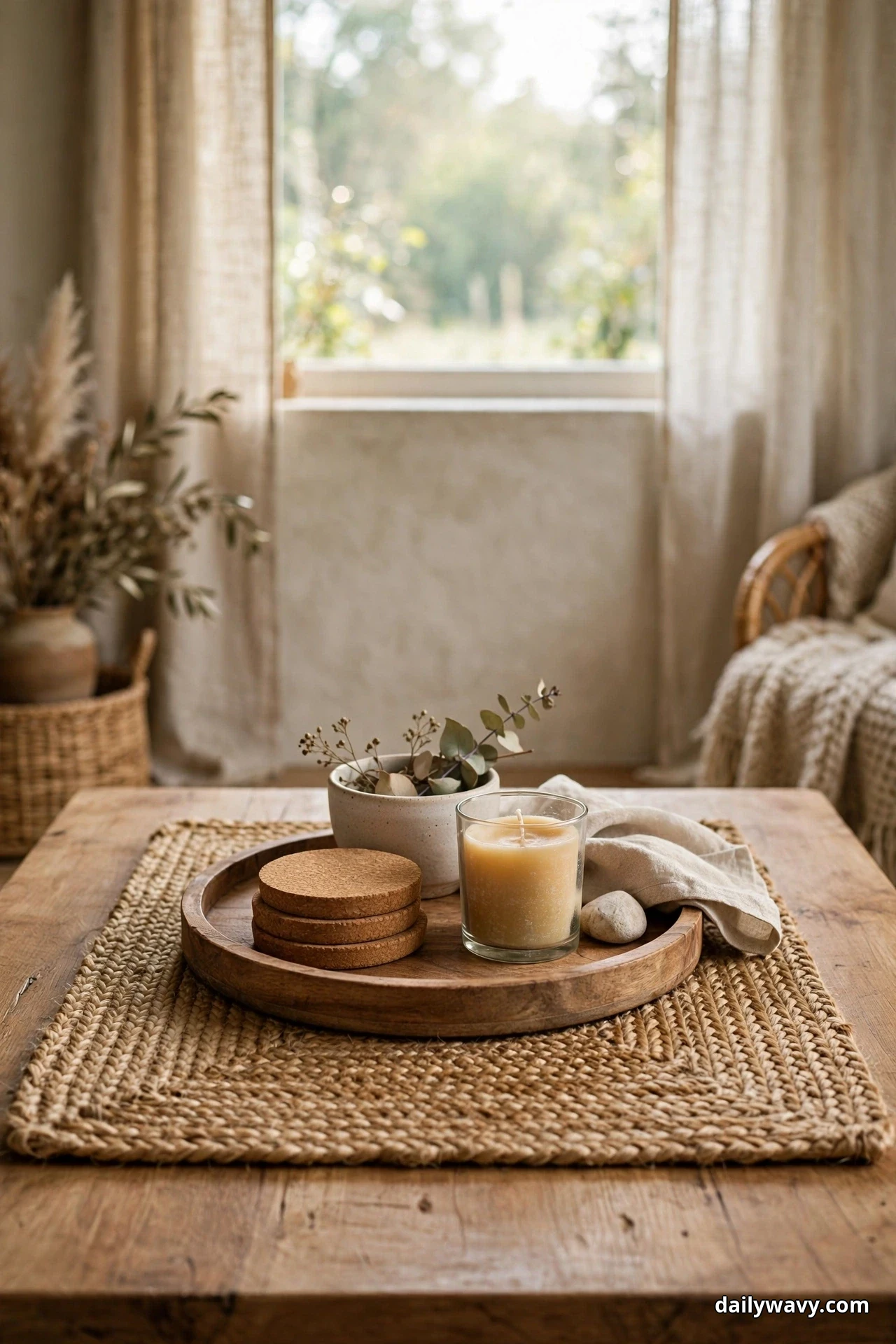
A flat woven mat under a tray does two quiet jobs at once: it protects the wood finish and it visually anchors the arrangement so the tray does not look like it just landed there. On a wood table, layering texture over woodgrain looks rich without adding visual noise.
How to pull it together. Find a flat placemat, table runner cut down, or round jute mat about 2 inches larger than your tray on every side. A 16 by 20 inch tray wants roughly a 20 by 24 inch mat. Lay the mat slightly off-center for a relaxed feel, then set the tray on top with your candle, coasters, and a small object inside. The mat’s edge should show evenly around the tray. Choose natural fibers like jute, sisal, or woven cotton in a tone close to your table’s wood so it reads as a layer, not a contrast.
Effort and budget. About 10 minutes and $12 to $30. The budget-friendly version: fold a linen table runner in half or use a large woven placemat you already own.
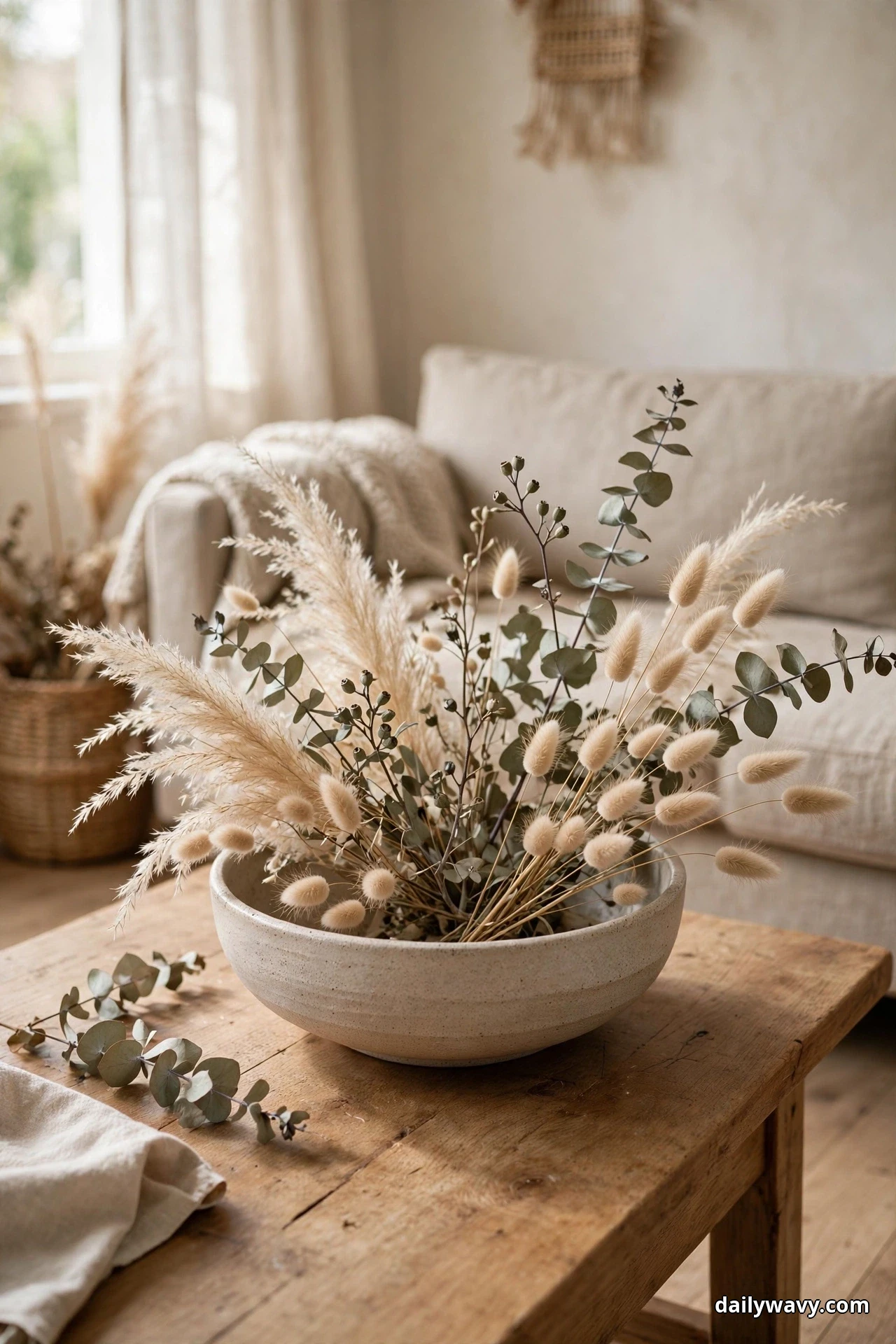
5. A Low Arrangement Of Dried Stems
Dried stems are the lowest-maintenance greenery you can own. No water, no wilting, no weekly replacement, and they bring beautiful sculptural lines to a wood table. Pampas grass, dried eucalyptus, bunny tails, and wheat all work.
How to pull it together. Choose a low, wide vessel, a bowl, a short crock, or a basket, no taller than 8 inches, and trim your stems so the total arrangement stays under 12 inches. A good rule: stems should be about one and a half times the height of the vessel. Fan 5 to 9 stems loosely rather than packing them tight; air between the stems is what makes it look designed. Place the arrangement toward the center or slightly off-center of the table. Keep it away from high-traffic edges where sleeves will brush it.
Effort and budget. About 15 minutes and $15 to $35 for a bundle of dried stems plus a vessel. The budget-friendly version: dry your own. Hang eucalyptus or lavender upside down for two weeks, or cut ornamental grasses in late summer and let them dry in a vase.
6. A Glass Pitcher Used As A Vase
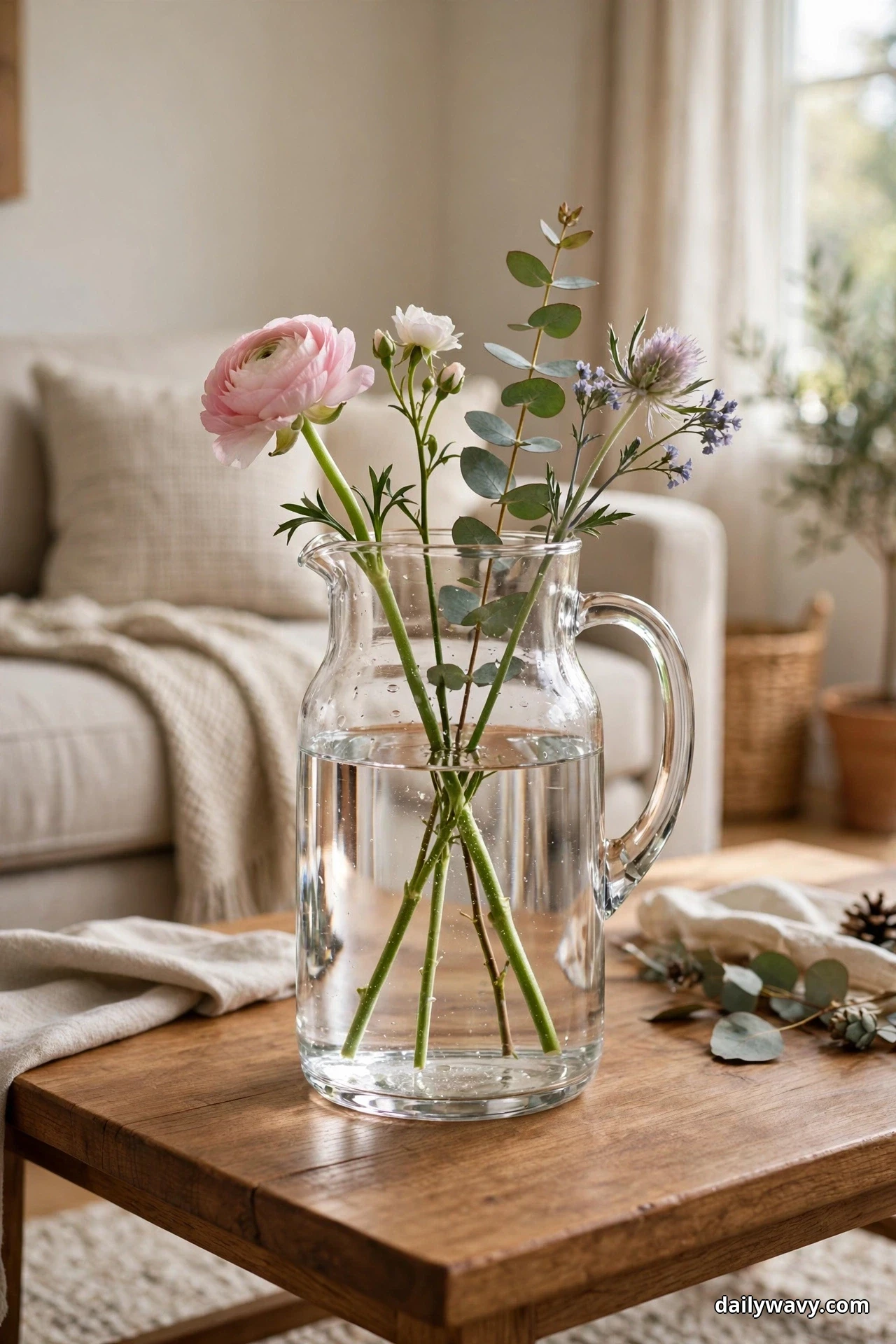
A simple glass pitcher pulls double duty: it is a vase today and a serving piece when you need it. Clear glass keeps the look light on a wood table, and the water line with fresh stems adds a sparkle that opaque vases cannot.
How to pull it together. Use a glass pitcher 6 to 9 inches tall with a clean silhouette, no busy patterns. Fill it two thirds with water and add 3 to 5 fresh stems: eucalyptus, garden roses, or even grocery store tulips. Place it slightly off-center so it does not dominate. Because it is clear, keep the water fresh and the stems trimmed every few days. On a dark wood table, glass reads especially well because it reflects the light instead of adding another dark mass.
Effort and budget. About 10 minutes plus the cost of stems, $8 to $25 for the pitcher if you do not own one. The budget-friendly version: any clean glass jug, carafe, or large mason jar works the same way.
7. A Terracotta Pot And Brass Object
Terracotta and brass are a classic warm pairing, and both look at home against wood. The matte clay softens the shine of the brass, and together they add an earthy, collected feel that suits rustic, Mediterranean, and modern farmhouse rooms.
How to pull it together. Start with a small terracotta pot, 4 to 6 inches across, holding a compact plant like a fern, pothos, or a small olive topiary. Beside it, set a brass object 4 to 8 inches tall: a candlestick, a small bowl, or a vintage-style magnifying glass. Keep the two pieces close, about 2 inches apart, so they read as a pair. Add a coaster or felt pad under the brass to protect the wood, and a saucer under the terracotta if the plant is watered in place.
Effort and budget. About 20 minutes and $20 to $50. The budget-friendly version: spray paint a plain pot in a terracotta tone and use any gold-toned object you already own; from three feet away, nobody can tell.

8. A Compact Game Box With A Flower Stem
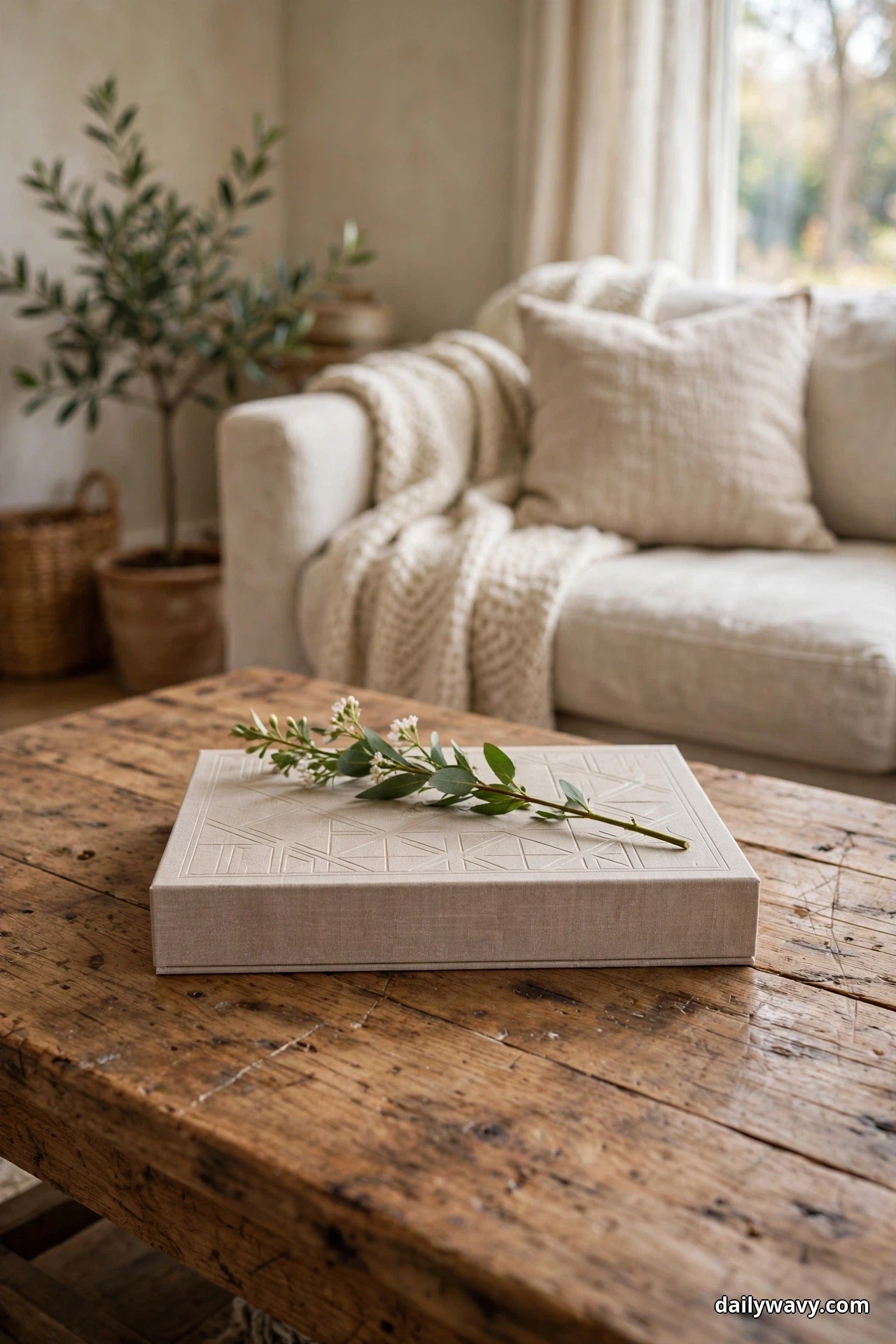
If your family actually plays games at the coffee table, stop hiding them in a closet. A handsome compact game box becomes decor, and tucking a single flower stem beside it turns a practical item into a styled moment.
How to pull it together. Choose a game with an attractive box, no larger than about 10 by 8 inches. Card games, tile games, and classic board games in slim editions all qualify. Stack one or two boxes neatly, spines aligned, at one end of the table. Lay a single fresh or faux stem across the top box at a diagonal, or stand it in a tiny bud vase beside the stack. The whole footprint stays under 12 inches wide, and the games stay within reach for game night.
Effort and budget. Free if you own the games, about 5 minutes. The budget-friendly version is the default: this idea costs nothing beyond a stem from the yard.
9. Low Vase With One Branch And A Book Stack
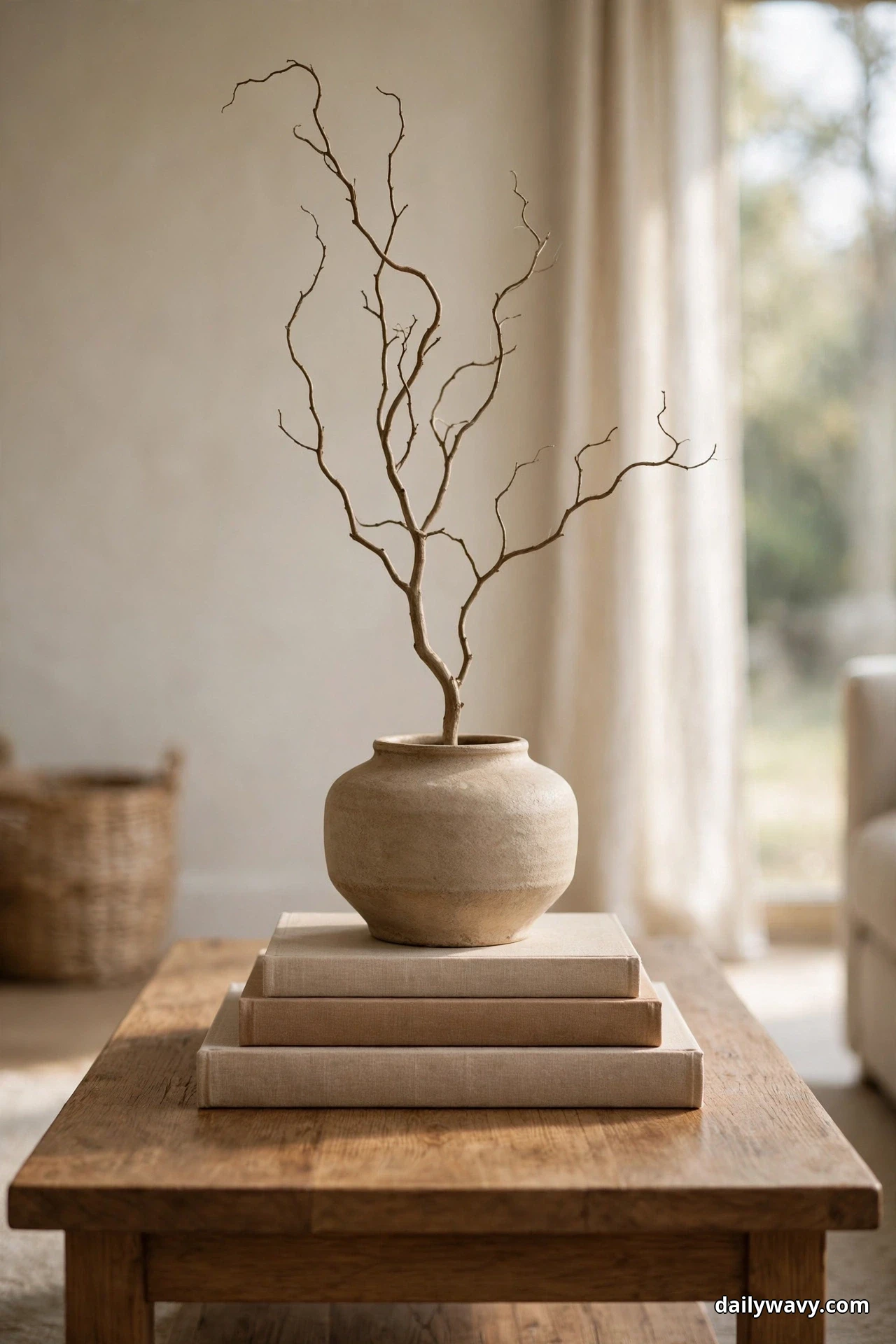
One dramatic branch in a low vase is the minimalist’s answer to a floral arrangement. It adds height and line without bulk, and the book stack underneath grounds it so the branch does not look lonely.
How to pull it together. Stack 2 to 3 coffee table books, largest on the bottom, for a total height of 4 to 6 inches. On top, set a low, heavy vase 5 to 7 inches tall, something with enough weight to hold a branch steady. Add a single branch 18 to 24 inches long: cherry blossom, curly willow, or a sculptural bare branch all work. The branch will rise above the 12 inch sightline rule, but a single thin branch does not block views the way a full bouquet does. Rotate the branch every week or two so it dries evenly if it is real.
Effort and budget. About 15 minutes; branches are often free from the yard, and a good low vase runs $15 to $35. The budget-friendly version: use library books or books you own and a branch pruned from any tree.
10. Woven Tray With A Candle And Coasters
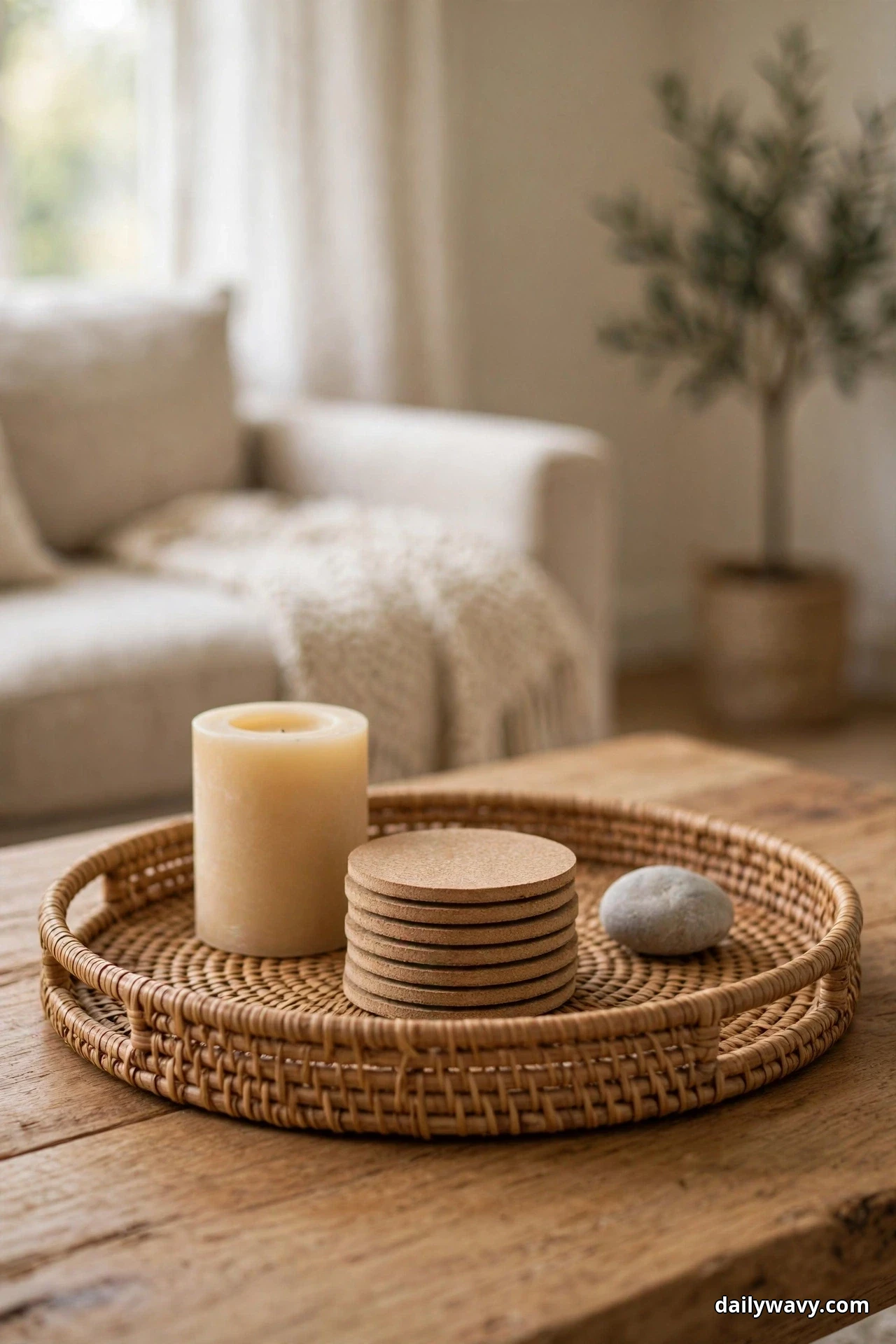
This is the everyday hero of coffee table styling. A woven tray holds the three things you actually use, a candle for atmosphere and coasters for protection, in one liftable unit. When guests arrive with drinks, the whole tray moves in one motion.
How to pull it together. Choose a woven tray 14 to 18 inches across, round or rectangular, with handles if you plan to move it often. Inside, place a pillar or jar candle 4 to 6 inches tall, a stack of 4 to 6 coasters, and one small decorative object like a shell, a stone, or a tiny plant. Keep everything inside the tray’s rim so nothing slides off when you lift it. Set the tray slightly off-center to leave open table on one side. Choose coasters with cork or felt backs to protect both the tray and the table.
Effort and budget. About 15 minutes and $25 to $55 for tray, candle, and coasters. The budget-friendly version: use a baking sheet lined with a cloth napkin as the tray, and coasters cut from cork tiles.
11. Ceramic Bowl Beside Two Oversized Books
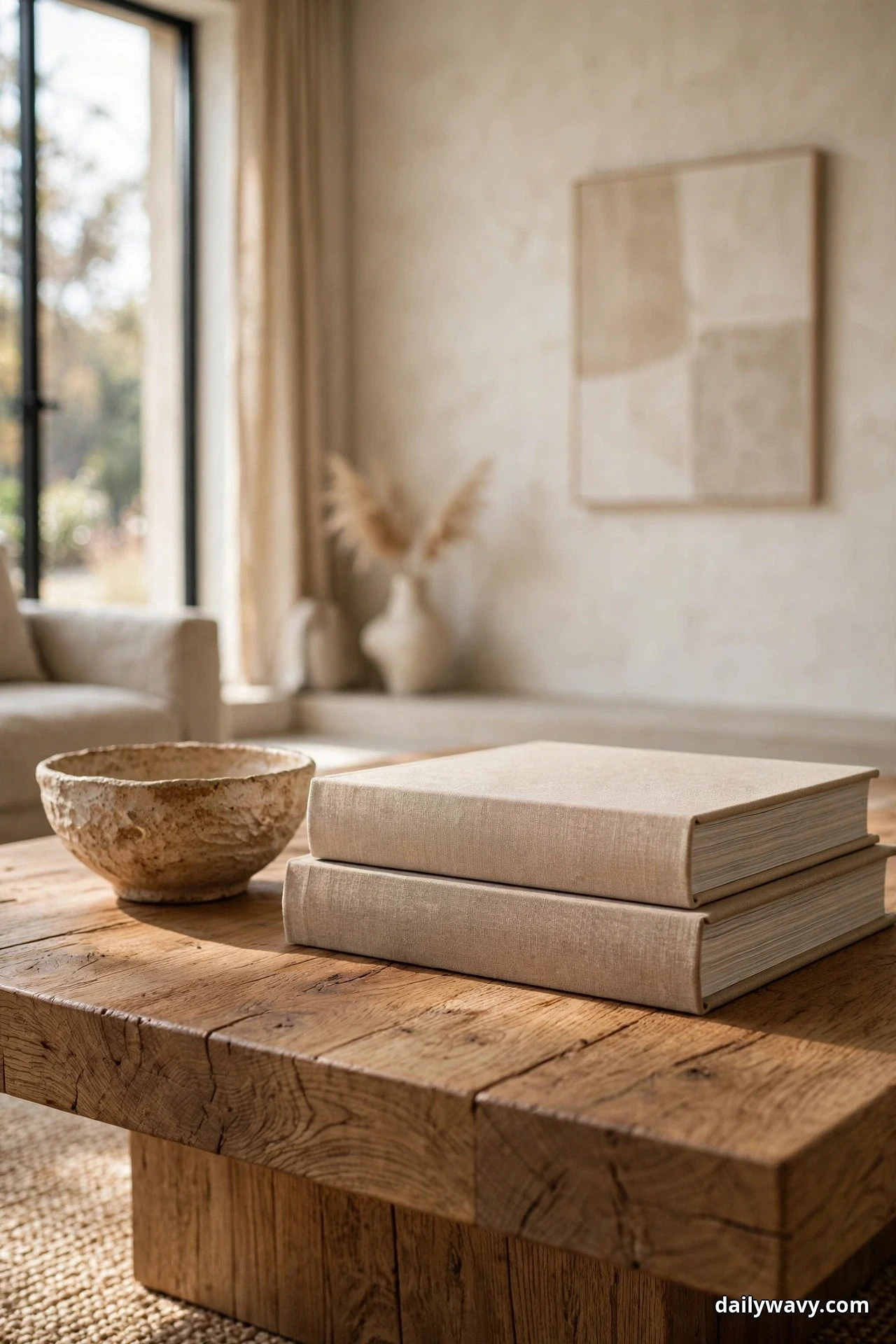
Oversized art and photography books are made for coffee tables, and flanking them with a handmade-looking ceramic bowl creates a gallery feel. The bowl’s organic shape contrasts beautifully with the books’ sharp rectangles.
How to pull it together. Choose two oversized books, each roughly 10 by 12 inches or larger, and stack them with the more colorful cover on top. Beside the stack, place a ceramic bowl 6 to 8 inches across, handmade-look with visible texture or a reactive glaze. The bowl can hold nothing, or a few decorative objects like dried seed pods. Leave about 3 inches between the books and the bowl so each piece has its own space. This pairing works best on larger tables, 44 inches and up, where the books do not swallow the surface.
Effort and budget. About 10 minutes; books run $25 to $60 each new, but thrift stores are full of beautiful art books for $5 to $10. The budget-friendly version: borrow the look with any large books you own and a bowl from the kitchen.
12. A Small Plant With A Sculptural Object
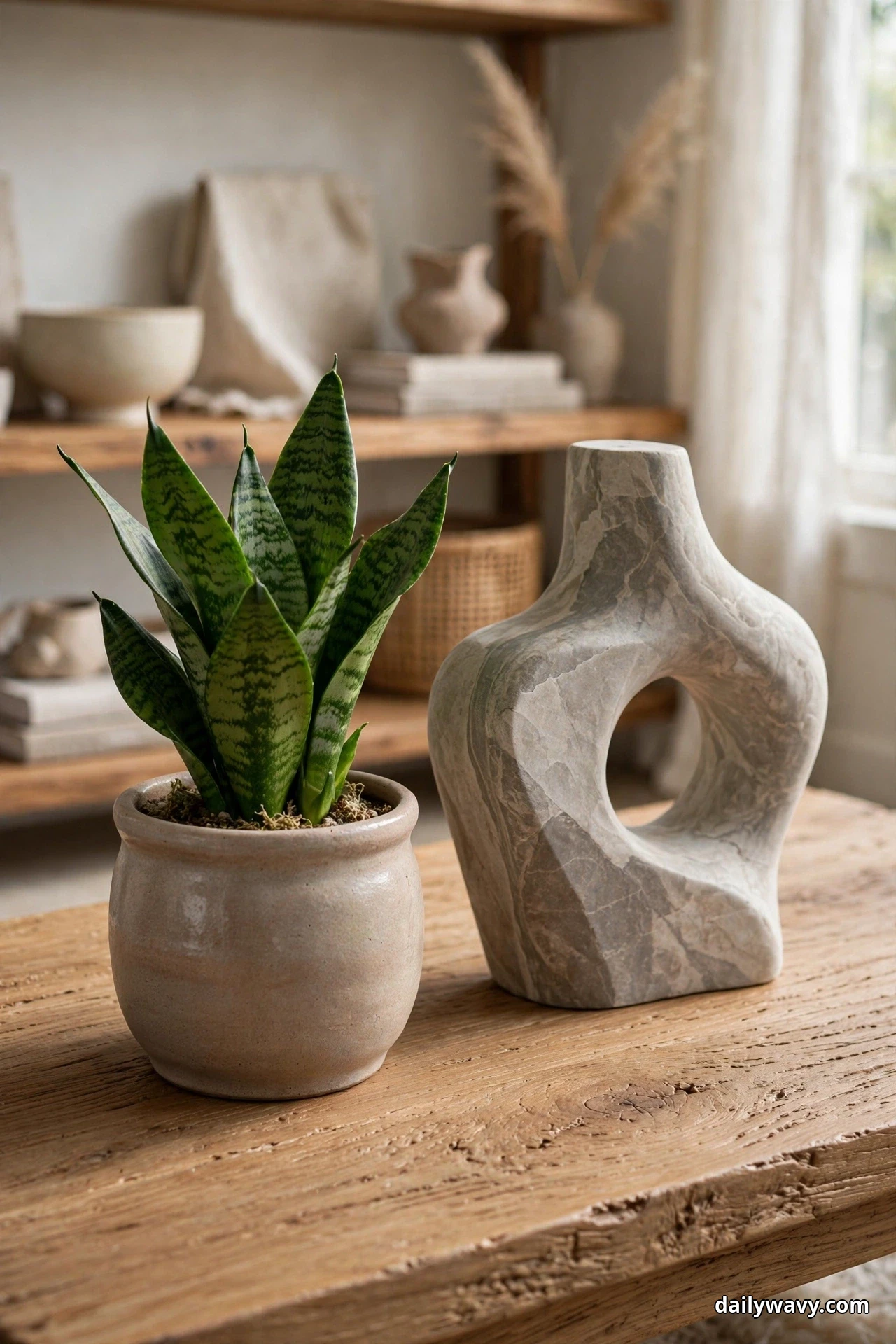
A living plant next to something sculptural, a carved figure, an abstract stone, a piece of driftwood, gives your table the feel of a curated shelf. The plant brings life; the object brings personality.
How to pull it together. Pick a small, forgiving plant in a 4 inch pot: a snake plant pup, a ZZ cutting, a small succulent, or a pothos. Set it in a cachepot that suits your room. Beside it, 2 to 3 inches away, place a sculptural object 5 to 9 inches tall. The object should have an interesting silhouette from the sofa’s viewing distance. Keep the pair within a 12 inch zone at one end of the table. Water the plant over the sink, not on the table, to protect the wood.
Effort and budget. About 20 minutes and $15 to $40. The budget-friendly version: propagate a pothos cutting in water for free and use a found object, a smooth stone, a piece of driftwood, or a thrifted figurine.
13. A Shallow Bowl Filled With Seasonal Fruit
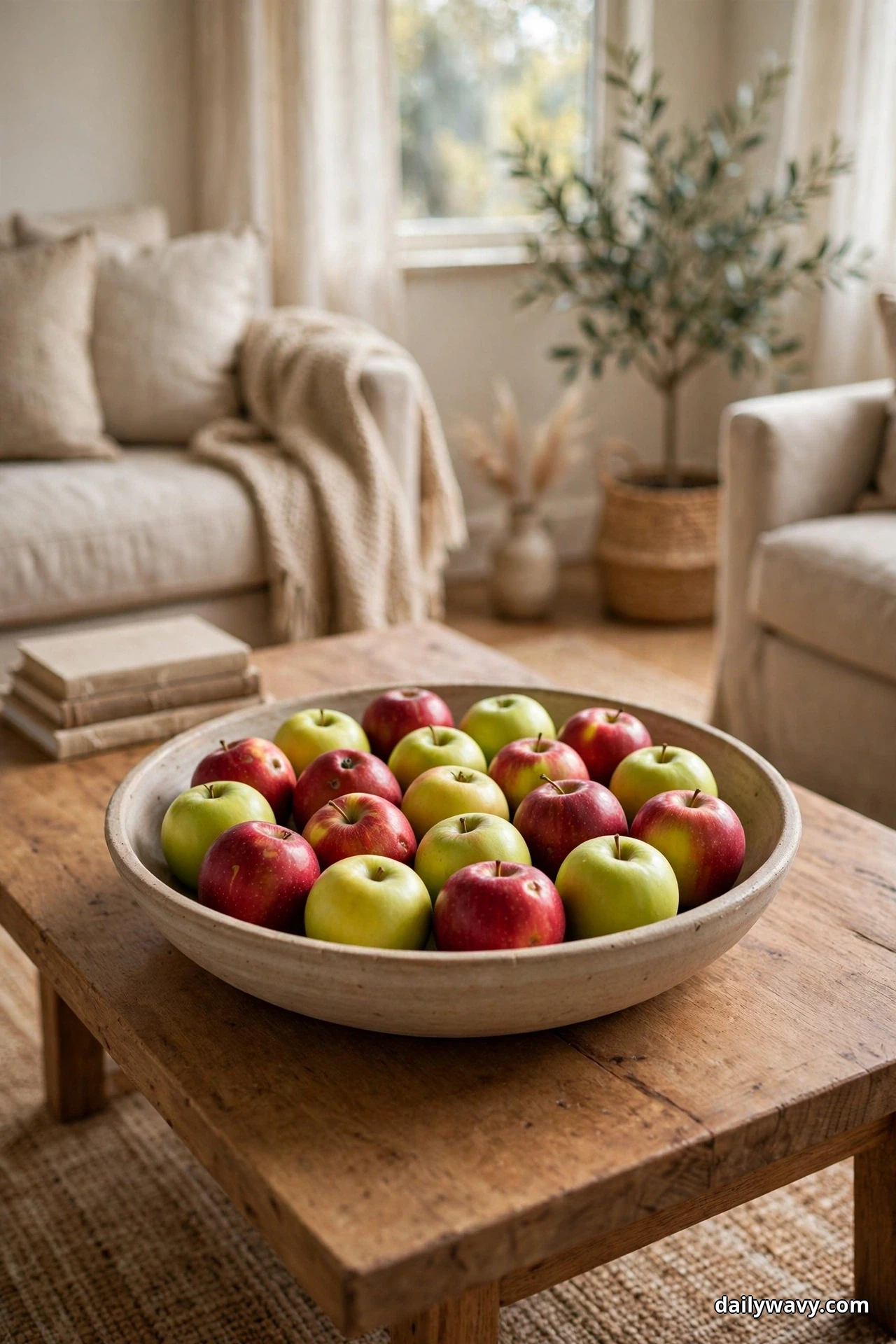
A bowl of real fruit is decor you can eat. It adds color, it invites grazing, and it changes with the seasons so your table never looks static. On wood, a shallow bowl in ceramic, wood, or stone looks especially natural.
How to pull it together. Choose a shallow bowl 10 to 12 inches across with a low profile, no more than 3 inches tall. Fill it with one or two types of seasonal fruit for a cohesive look: apples and pears in fall, citrus in winter, stone fruit in summer. Keep the fruit to a single layer so the bowl does not look like a grocery display. Place the bowl toward the center of the table where hands can reach it. Refresh the fruit weekly and wipe the bowl, since fruit can leave sticky residue on the finish.
Effort and budget. About 10 minutes plus the fruit you were buying anyway; a good bowl costs $20 to $45. The budget-friendly version: use any wide, shallow bowl you own and fill it with whatever fruit is cheapest that week.
14. A Dark Tray With Clear Glass Bud Vases
A dark tray, black, espresso, or charcoal, creates striking contrast on a medium or light wood table. Lined with tiny clear bud vases, each holding a single stem, it becomes a miniature flower installation that takes up very little room.
How to pull it together. Find a dark rectangular tray 14 to 18 inches long. Line up 3 to 5 small bud vases, 3 to 5 inches tall, along its length with 1 to 2 inches between them. Fill each with water and a single stem: one rose, one sprig of eucalyptus, one wildflower. Vary the stem heights slightly, tallest in the middle, for a gentle arc. The dark tray makes the green stems and clear glass pop, and the whole arrangement lifts away as one piece when you need the space.
Effort and budget. About 20 minutes and $30 to $60 for the tray and vases. The budget-friendly version: paint a thrifted tray dark and use small glass bottles, spice jars, or shot glasses as bud vases.

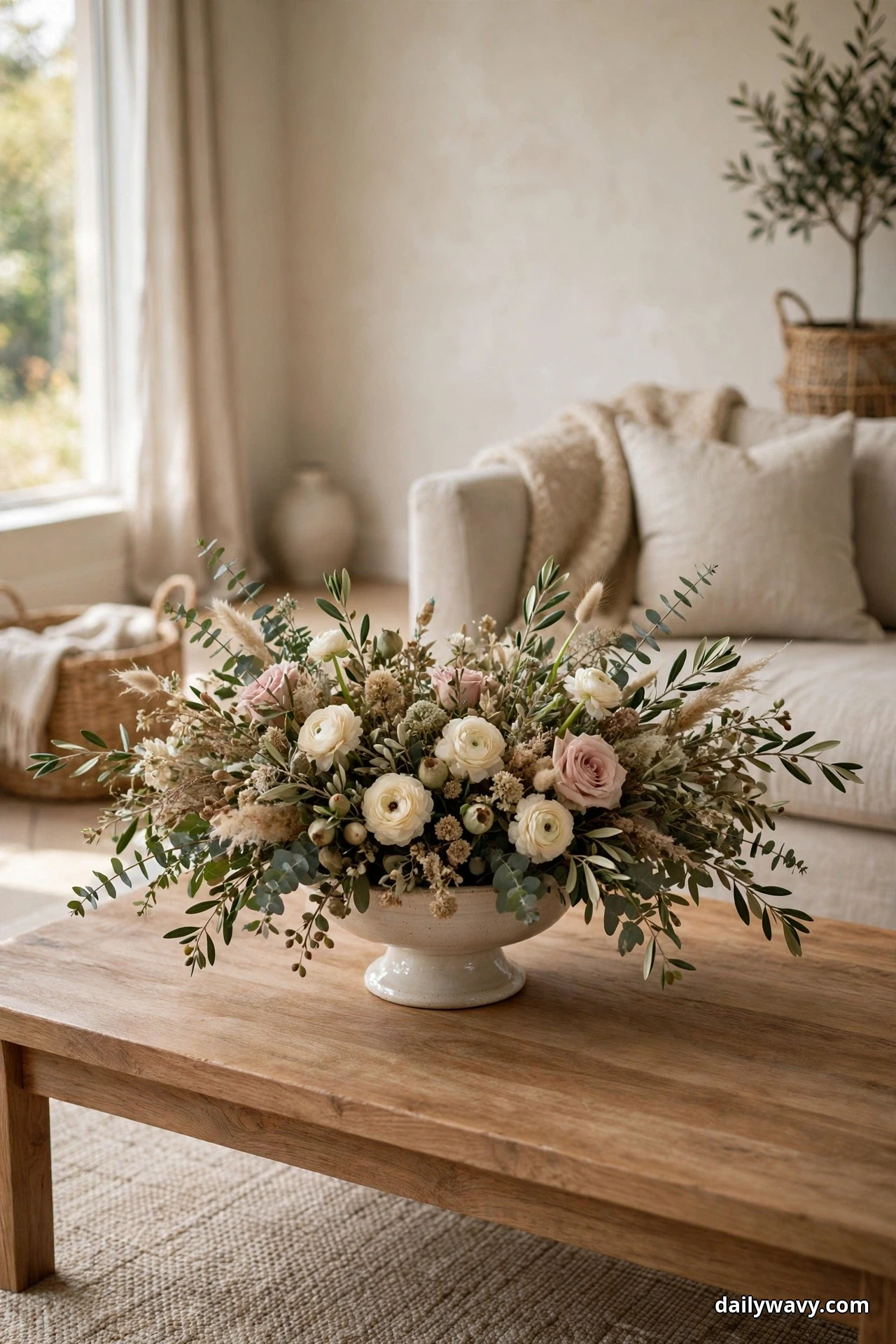
15. A Single Wide Floral Arrangement
Sometimes one generous arrangement is all a table needs. A single wide, low floral piece makes a confident statement, and because it is the only thing on the table, the wood itself becomes part of the design.
How to pull it together. Choose a wide, low container, a footed bowl, a low trough, or a wide ceramic dish, 12 to 16 inches across and no more than 6 inches tall. Build the arrangement wide rather than tall: anchor with floral foam or a frog pin, then add 8 to 12 stems of 2 to 3 varieties, keeping the total height under 12 inches. Let some stems drape over the container’s edge for a natural feel. Center the arrangement on the table and leave at least 8 inches of clear wood on each end for drinks. Refresh water every two days.
Effort and budget. About 30 minutes and $25 to $60 for flowers plus the container. The budget-friendly version: use grocery store bouquets, they are bred to look full, and split one $15 bouquet across the arrangement with greenery from the yard.
16. Three Varied-Height Vessels On One Side
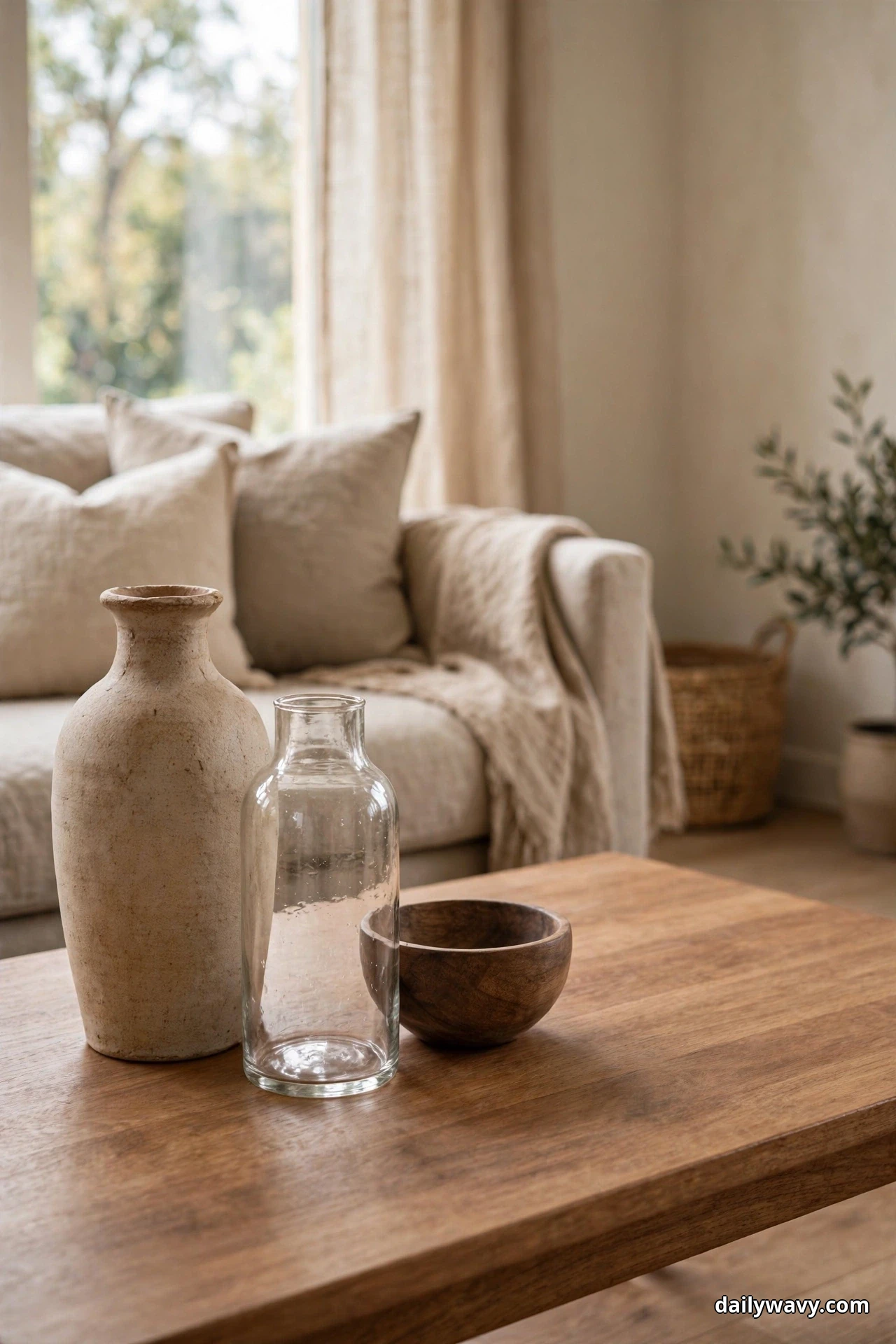
The classic designer’s trick: three vessels of different heights grouped on one side of the table. It works every time because the eye loves a descending rhythm, and keeping them all to one side preserves the rest of the surface for real life.
How to pull it together. Gather three vessels, a tall one (10 to 12 inches), a medium one (7 to 9 inches), and a short one (4 to 6 inches). They can match in material or mix: all ceramic in different glazes, or glass, ceramic, and wood. Cluster them 1 to 2 inches apart at one end of the table, tallest at the back. Leave one vessel empty, put stems in another, and let the third hold something small like matches or a tea light. The trio should occupy about a 12 by 10 inch area. If your room is small, this one-sided approach keeps the table feeling open, which matters in a narrow living room layout where every inch counts.
Effort and budget. About 15 minutes and $20 to $50 if you buy new vessels. The budget-friendly version: gather what you own, bottles, jars, and vases from around the house, and unify them with a coat of the same spray paint.
Wood Coffee Table Decor FAQ
How much of my coffee table should stay clear?
Aim to keep at least one third of the surface completely open for daily use. Decor on two thirds, clear space on one third. If your household actually eats, works, or plays games at the table, push that to half clear.
Will candles damage a wood coffee table?
The heat will not hurt the finish from a normal distance, but wax drips and water rings will. Always set candles on a tray, a coaster, or a heat-safe plate, and trim wicks to a quarter inch so flames stay small and steady.
What is the best height for coffee table decor?
Keep the bulk of your arrangement under 12 inches so you can see across the table. One thin branch or stem can go higher, but anything wide or dense above 12 inches will block conversation.
How do I style a very small coffee table?
Choose one idea instead of combining several. A single tray with a candle and coasters, or one low bowl of fruit, is plenty on a table under 36 inches long. Less really is more at small scale.
How often should I change my coffee table decor?
Seasonally is a good rhythm. Swap stems, fruit, or the books on top, and the table feels fresh without a full restyle. A quick dusting and rearranging every month or two keeps it looking intentional.
Can I mix wood tones between the table and the decor?
Yes. Mixing a walnut table with lighter oak trays or acacia bowls looks layered and collected. Keep the undertones consistent, all warm or all cool, and the mix will feel deliberate rather than mismatched.
The Takeaway
A wood coffee table does not need much to look beautiful, just intention. Pick one idea that fits how you actually live, leave real room for the everyday, and let the wood do half the work. Its grain, its warmth, and its patina are already decor; everything you add should earn its place. Try one arrangement this weekend, live with it for a week, and adjust. The best styled table is the one that still works when life happens on it.
If you are refreshing the whole room around the table, browse our Home & Decor ideas for more lived-in styling, and if your home’s first impression needs love too, our small entryway decor ideas pair beautifully with a well-styled living room.