14 Narrow Hallway Entry Decor Ideas for a Welcoming First Impression
Your front door opens into a corridor barely wider than a coat, and the space has to work like an…
Your front door opens into a corridor barely wider than a coat, and the space has to work like an entryway anyway. That is the whole challenge of narrow hallway entry decor: every inch earns its place, nothing blocks the walkway, and the first view of your home still feels warm and put together. These 14 ideas are built for that exact situation, from a mat that can take wet boots to a mail tray that stops paper from taking over the table. Measure your door swing and your walking lane first, then pick the ideas that fit. Small does not mean neglected, and our small entryway decor ideas cover roomier entries from there.
Jump to an idea
- A durable mat at the door
- A compact closed shoe cabinet
- A single wall hook for a daily bag
- A small lamp on a safe surface
- A slim upright umbrella holder
- A lidded box for small essentials
- A framed print beside the door
- A washable seat cushion
- A narrow shelf above a clear walkway
- A vertical storage arrangement
- A small plant outside the traffic path
- A basket for outgoing items
- A designated mail-sorting tray
- A repeated hardware finish

The two measurements that matter before you buy anything
Open your front door all the way and mark the arc it sweeps with painter’s tape. That zone is spoken for, so nothing you add can live there. Next, stand in the hallway and find your walking lane: most people move comfortably with 30 to 32 inches of clear width, and 36 inches is generous. If your hallway is 40 inches wide, that leaves you about 8 to 10 inches of usable depth on one side. Write those numbers down, because every idea below is built around them.
You do not need a mudroom to have a landing zone. A landing zone is just one flat surface plus one vertical spot: a place to set down keys and a place to hang a bag. The rest of this guide shows you how to fit that into a hallway that feels like it was designed by someone who never owned a coat.
1. A durable mat at the door
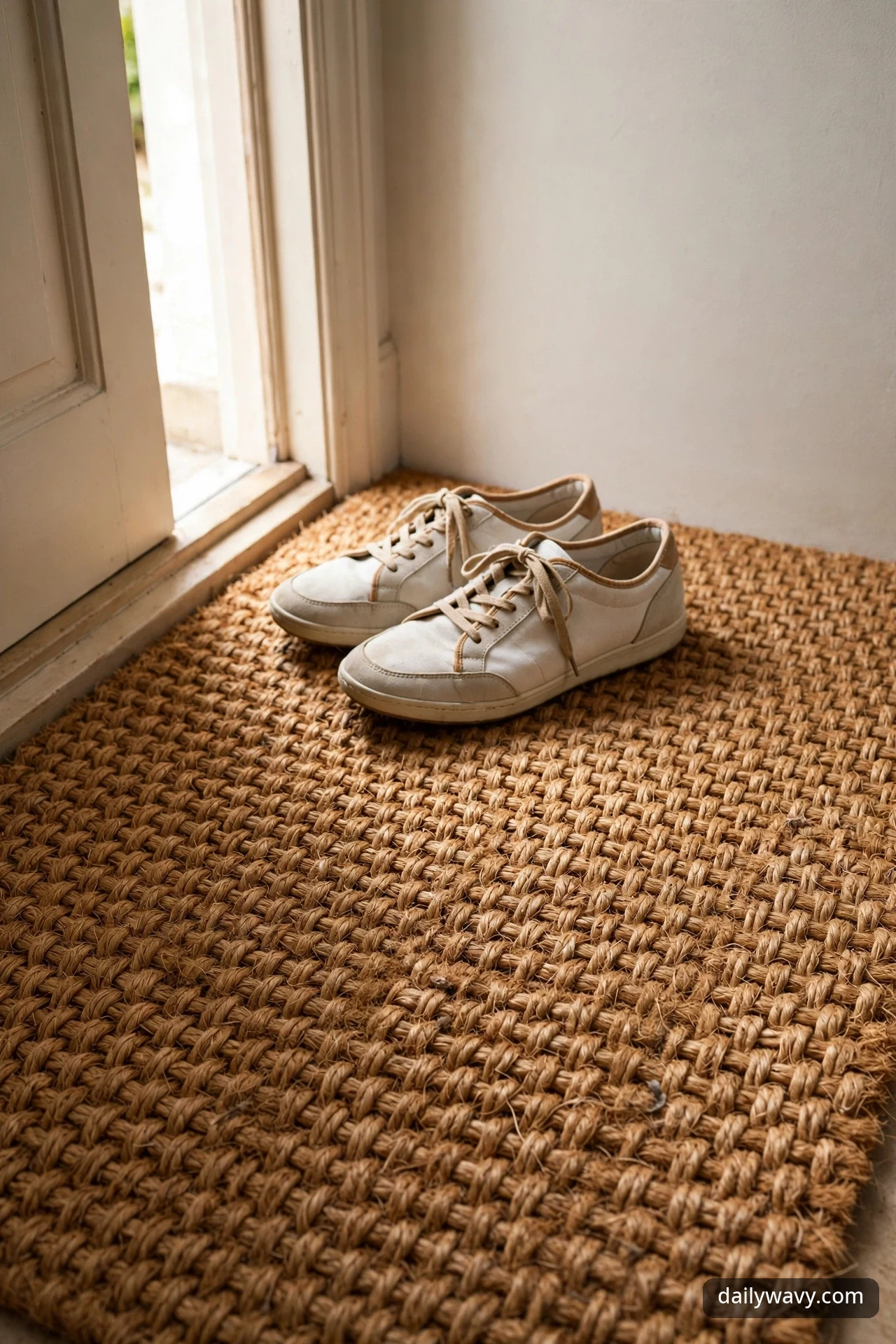
The mat is the first thing guests see and the last line of defense for your floors, so it carries more weight in a narrow hallway than anywhere else. A flat-weave coir or low-profile rubber-backed rug in a neutral pattern traps grit without tripping anyone, and it visually tells visitors exactly where to stand. Choose one that spans most of your hallway width but leaves a couple of inches of floor visible on each side, so the mat looks fitted rather than squeezed in.
What to measure: the width of the door opening plus at least 12 inches on each side, if the hallway allows it. Length is flexible, but 30 to 48 inches gives enough steps to actually wipe shoes. For materials, coir sheds dirt well but dries slowly, so in rainy climates pair it with a boot tray or choose a woven recycled-plastic rug that dries fast. Avoid anything with a pile higher than half an inch; thick rugs catch heels and toes in tight quarters.
The one practical decision is inside versus outside. An outdoor mat catches the worst of the mud, and an indoor mat catches what is left. If you only have room for one, put it inside, since that is the one you will see every day. Vacuum it weekly and shake it out over a balcony or trash bin monthly. A mat that is cleaned regularly lasts much longer than one that is not, and it keeps looking intentional instead of tired.
Approximate effort and cost: low. A good 24-by-36-inch coir mat runs about $20 to $40, and laying it down takes thirty seconds.
2. A compact closed shoe cabinet

Open shoe racks in a narrow hallway look like a yard sale in progress, because you see every shoe from two feet away. A slim closed cabinet with tilt-out doors solves this: it hides the clutter, keeps the walkway clear, and the top becomes your landing surface for keys and mail. Look for a cabinet 6 to 8 inches deep, which is roughly the depth of a pair of shoes standing toe-first, and tall enough to hold two or three pairs per person.
What to measure: your walkway math from earlier. A 7-inch-deep cabinet against a 40-inch hallway leaves about 33 inches of walking lane, which works. Measure the cabinet height against your comfort too; waist height (around 30 to 36 inches) doubles as a console, while a taller unit gives more storage but eats visual breathing room. Keep it clear of the door-swing zone you taped off.
For materials, matte lacquer or light oak laminate wipes clean and does not show fingerprints. Ventilation matters, so drill a few discreet holes in the back panel or choose a cabinet with slatted fronts. That keeps shoes from smelling like a gym locker. Mount the cabinet to a wall stud if you have kids or a dog that leans, because top-heavy cabinets tip forward when a tilt door opens.
A realistic lower-cost alternative is a bench with a hinged top instead of the tilt-out doors, if your hallway is wide enough for the seat depth. The rule stays the same: closed storage beats open storage in a hallway this narrow.
Approximate effort and cost: moderate. A ready-made slim shoe cabinet costs $60 to $150 and needs about an hour of assembly.
3. A single wall hook for a daily bag
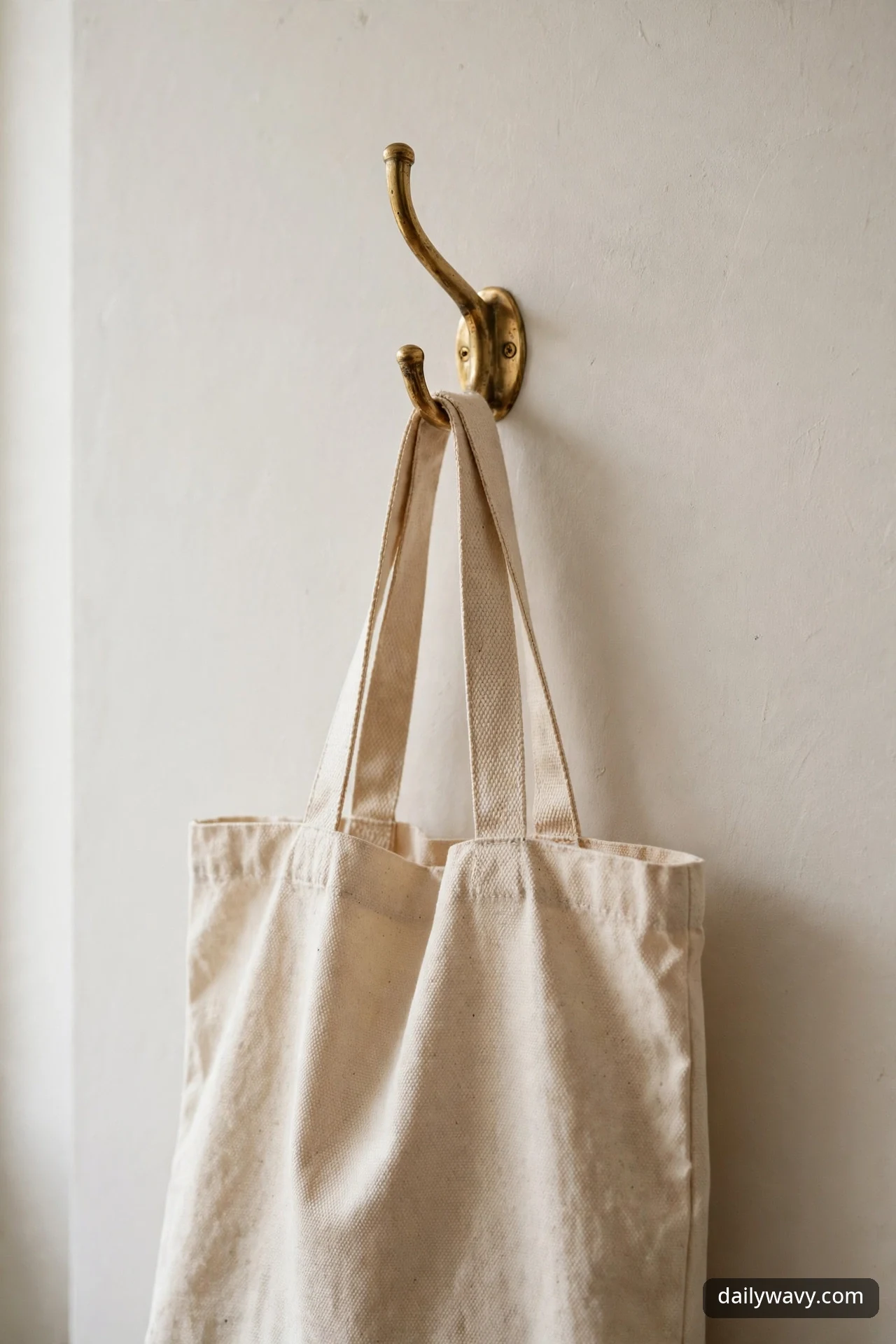
One strong hook on the wall beats a row of hooks that never get used, because the daily bag is the only thing that actually needs to live by the door. A single brass or matte-black hook at about 60 inches from the floor holds a tote, backpack, or coat without poking into the walkway, and the empty wall around it reads as calm rather than empty. This is one of the cheapest ideas in the guide and one of the most effective.
What to measure: your height and the bag’s drop. Hang the hook so the bag’s bottom clears the floor by at least 6 inches, which keeps it from collecting dust or blocking the mat. If you share the hallway, give each person exactly one hook and no more; the constraint keeps the wall tidy instead of turning it into a coat sale. Mount into a stud or use a toggle bolt rated for at least 25 pounds, because a loaded bag plus a jacket is heavier than you think.
The practical decision is hook style. A double hook lets a bag hang on one arm and keys on the other, while a single knob looks cleaner. Both work; pick the finish you will repeat elsewhere (see idea 14). Avoid over-the-door hooks on the front door, because they interfere with the door swing and scratch the paint over time.
A troubleshooting tip: if your bag slides off, the hook is too shallow. Replace it with a hook that has an upturned tip rather than retraining the bag.
Approximate effort and cost: minimal. A solid metal hook costs $8 to $25, and installation takes fifteen minutes with a drill.
4. A small lamp on a safe surface
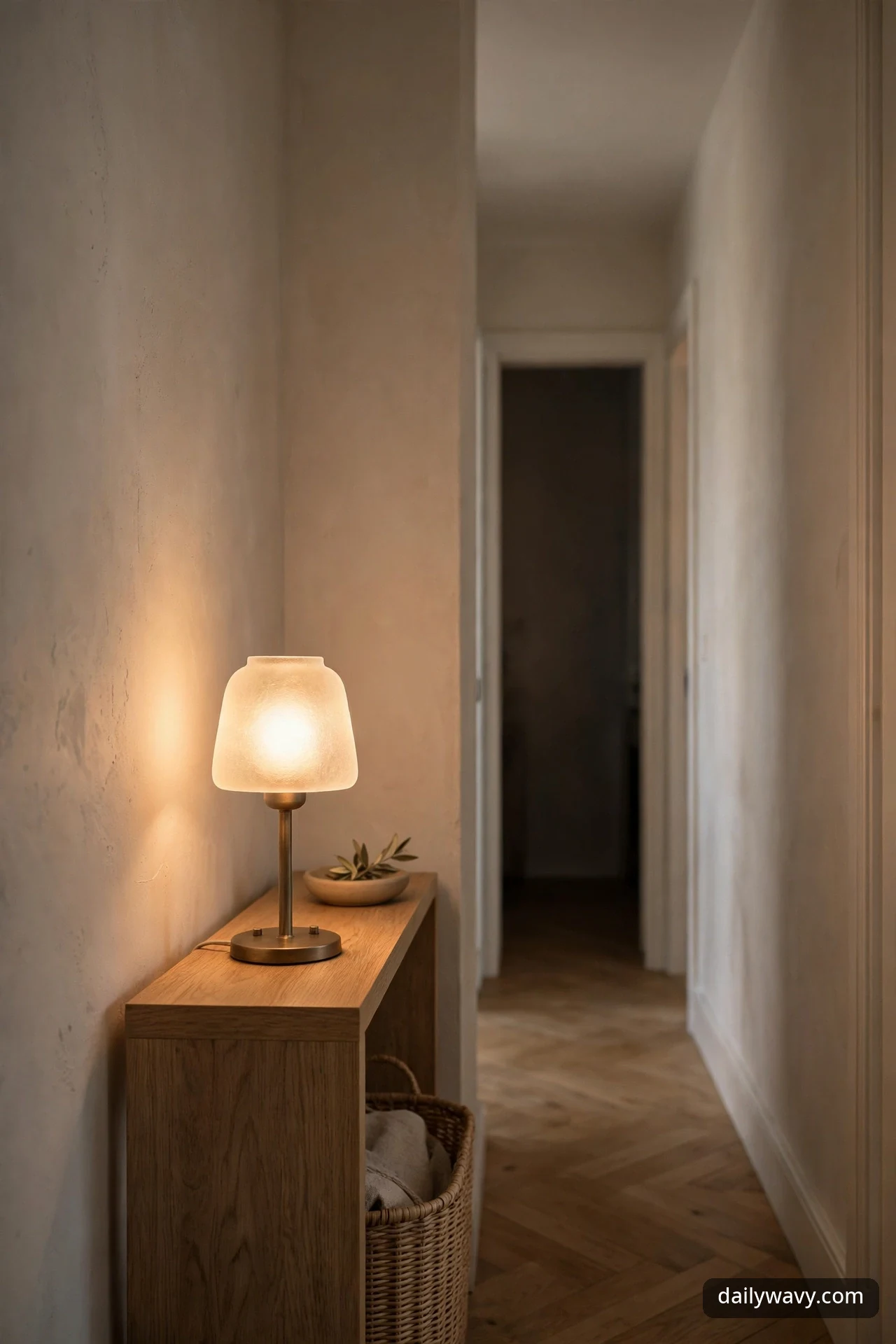
Hallways are usually dark, and a dark hallway feels narrower than it is. A small lamp on top of the shoe cabinet or a narrow console fixes the light and signals that someone lives here with intention. Keep the lamp short, under 18 inches tall, with a shade that hides the bulb from eye level, so nobody gets glare while walking past. A warm bulb around 2700K makes the walls feel closer in a good way.
What to measure: the depth of the surface the lamp will sit on. The base needs at least a 2-inch margin from every edge, so a 7-inch-deep cabinet wants a lamp base no wider than 3 inches. In practice, look for a lamp with a small footprint and a shade that stays within the surface. Keep the cord tucked behind the cabinet with adhesive clips, running down to an outlet, never across the walking lane.
For materials, ceramic or frosted glass bases are a safe choice. Keep coats, bags, and fabric away from the shade, since fabric draped over a lit lamp is a fire risk. A lamp with a three-way touch switch is genuinely useful here: one touch when you come in with full hands, rather than fumbling for a pull chain. If there is no outlet nearby, a rechargeable cordless lamp does the same job and only needs charging every week or two.
A realistic lower-cost alternative is a battery-operated motion-sensor sconce mounted on the wall, which gives you light without a surface at all. Just make sure it is mounted above shoulder height so it never enters the traffic path.
Approximate effort and cost: low to moderate. A compact table lamp runs $25 to $70; cordless rechargeable versions cost a little more.
5. A slim upright umbrella holder

Wet umbrellas have no business leaning in a corner, dripping across the mat. A slim upright holder, about 8 inches square in footprint, tucks beside the door and turns that puddle into a contained detail. Choose one with a removable drip tray or a solid base, so you are not mopping the floor every time it rains.
What to measure: the gap between the door frame and the nearest furniture. Most hallways have a dead corner right inside the door that is too small for anything else; that is your umbrella spot. Keep the holder at least a few inches from the door swing so a full-size umbrella fits without scraping. Measure your longest umbrella to make sure the holder is tall enough, usually 20 inches or more.
For materials, weighted ceramic or metal resists tipping, which matters when the wind catches a wet umbrella. Mesh or cane holders look light and pretty but let water seep through onto the floor, so only use them over a waterproof tray. In a hallway this narrow, one holder for the household is plenty; extras belong in a closet.
A troubleshooting tip: if umbrellas keep tipping out, the holder is too short or too wide. A taller, narrower cylinder grips umbrellas better than a shallow bowl, and it takes up less floor.
Approximate effort and cost: low. A slim ceramic or metal holder costs $20 to $50, ready to use immediately.
6. A lidded box for small essentials
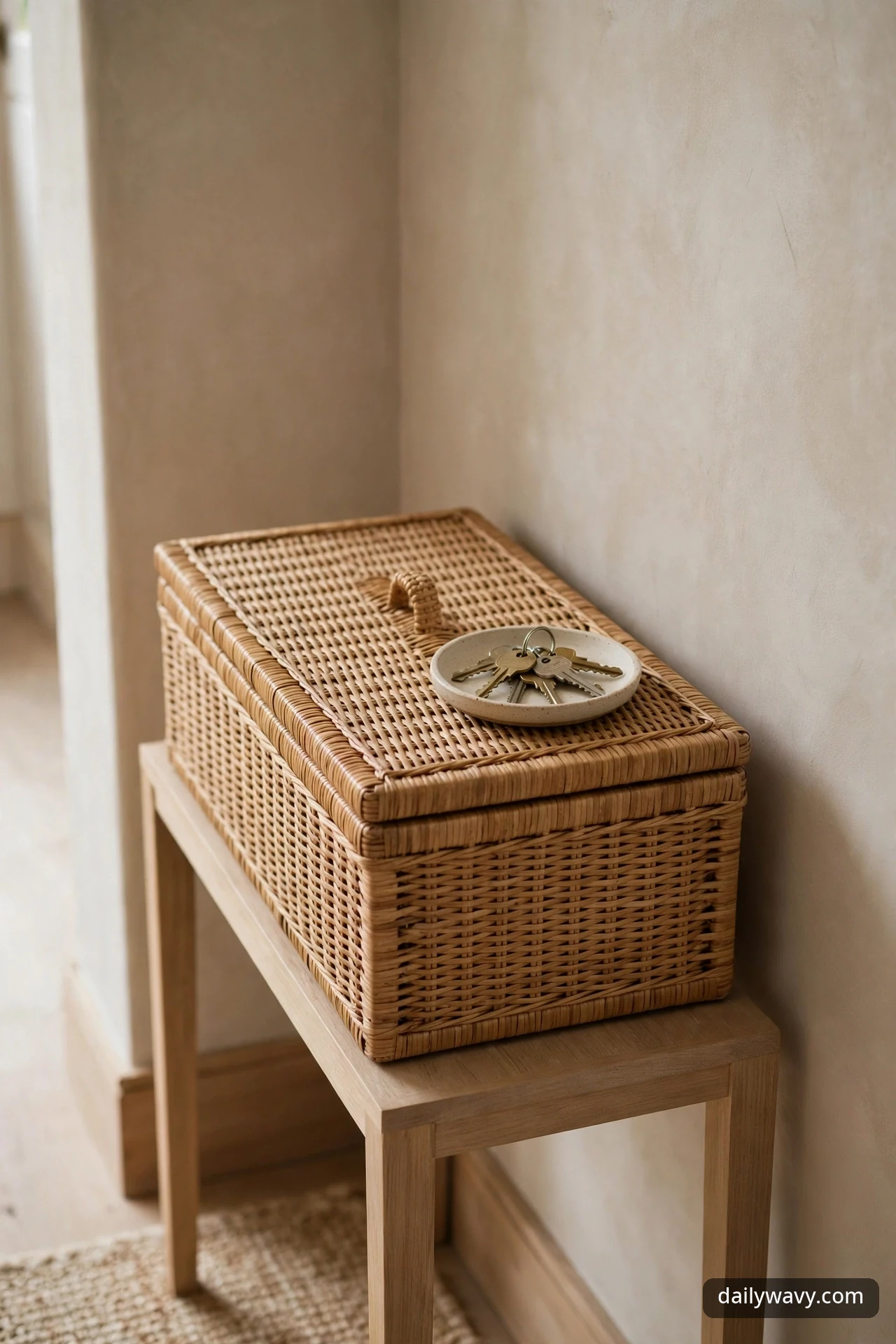
Keys, sunglasses, the dog’s extra leash, that one screwdriver you always need at the door: small essentials scatter across any surface and make a tidy hallway look messy in a week. A lidded box on top of your shoe cabinet or shelf collects them all in one good-looking container. Because the lid hides the contents, the box usually looks styled, even when the inside is pure chaos.
What to measure: the surface you will set it on. A box around 8 to 10 inches long and 5 to 6 inches deep sits comfortably on a slim cabinet without crowding the lamp. If you share the hallway, go one size larger or give each person their own small box; shared boxes turn into archaeology. Choose a box with a tray inside if you have a lot of keys, since stacking them in a pile tangles them.
For materials, woven seagrass, leather, or lacquered wood all read as decor rather than storage. Avoid clear boxes here, because the whole point is hiding the jumble. Put a small dish on the box lid for the one set of keys you grab every morning, so you never have to open the box on your way out.
A realistic lower-cost alternative is a shallow tray instead of a lidded box. It works for a week, but trays show everything, so be honest about whether you will curate it daily. Most people will not, which is why the lid exists.
Approximate effort and cost: low. A good-looking lidded box costs $15 to $45.
7. A framed print beside the door

A bare wall beside the door reads as unfinished, but a full gallery wall overwhelms a narrow hallway. The sweet spot is one framed print, hung at eye level, sized to the wall it sits on. A single piece of art gives the hallway personality without demanding the space that a bookshelf or console would, and it is one of the fastest ways to make the entry feel deliberate.
What to measure: the width of the wall segment beside the door. Your frame should span roughly 60 to 70 percent of that width; on a 20-inch wall, a 12-to-14-inch frame is right. Hang the center of the print at about 57 to 60 inches from the floor, standard gallery height, so it lines up with the sightline of anyone standing in the hallway. Keep the frame depth under 2 inches so nothing juts into the walking lane.
For materials and imagery, choose something with a calm palette that echoes your hallway colors, since you will pass it a dozen times a day. A thin wood or black frame suits most styles. Avoid glass that throws harsh reflections under a hallway light; non-glare acrylic or matte finishes keep the print readable.
A troubleshooting tip: if the print looks crooked no matter how you hang it, the wall itself may not be plumb. Use a small level and two nails or a picture-hanging strip pair spaced wide, which resists the slow drift that single-nail hangs develop.
Approximate effort and cost: low. A ready-made framed print runs $25 to $80; a thrifted frame with your own print can cost under $20.
8. A washable seat cushion

If your hallway holds a bench or a sturdy shoe cabinet with a flat top, a washable seat cushion turns it into a place to sit and pull on boots. This only works where you have the depth, so check your numbers first: a seat needs about 14 to 16 inches of depth to sit on comfortably, which means most truly narrow hallways skip this one. But if yours fits, it is one of the most welcome details in the whole guide.
What to measure: the seat surface length and depth, then buy a cushion at least 2 inches smaller on every side so it does not overhang and catch passing hips. The washable part is non-negotiable: an entry cushion collects shoe dirt, wet coats, and pet hair, so choose a cover with a zipper that survives the washing machine. Outdoor fabric or a sturdy cotton canvas both work; avoid silk, velvet, or anything that needs dry cleaning.
For materials, look for a cushion with a dense foam or fiber core at least 2 inches thick, so it does not bottom out after a month. A cushion that ties to the seat with strings stays put instead of sliding onto the floor. Keep a second cover in the closet if the cushion is daily-used; swapping covers is easier than waiting for laundry day.
A realistic lower-cost alternative is folding the idea into a wall-mounted drop-down seat, which disappears when nobody is sitting. Only do this if you use a seat rated for seated weight and mount it solidly into studs, because a seat that wobbles gets ignored.
Approximate effort and cost: low to moderate. A washable bench cushion costs $25 to $60.
9. A narrow shelf above a clear walkway

Floor space is the scarcest thing in a narrow hallway, but the wall above head height is completely free. A narrow shelf mounted at about 72 to 78 inches, well above the walkway, adds storage and style without touching your circulation. This is where the mail tray, the lidded box overflow, or a row of small baskets can live, lifted out of the traffic lane entirely.
What to measure: your tallest household member’s height plus a comfortable margin. Nobody should ever duck, so the shelf underside needs at least 6 inches of clearance above the tallest head. Keep the shelf depth to 6 inches or less, which holds books, baskets, and small decor without casting the hallway into shadow. Mount into studs with brackets rated for the load; floating shelves look cleaner, but a bracketed shelf you trust beats a floating one you do not.
For materials, a stained wood shelf with metal brackets repeats the hardware finish you will choose in idea 14, which ties the whole hallway together. In a dark hallway, paint the shelf the same color as the wall so it disappears and only the objects on it read as decor. Leave at least a third of the shelf empty; a packed shelf above a narrow walkway feels like it might fall, even when it is perfectly secure.
A troubleshooting tip: if items keep sliding off, the shelf is not level or it is too shallow for what you are storing. Add a 1-inch lip rail to the front edge, which is nearly invisible but stops everything from migrating.
Approximate effort and cost: low to moderate. A 24-inch wood shelf with brackets costs $20 to $50, plus an hour for careful mounting.
10. A vertical storage arrangement

When the floor gives you nothing, go up. A tall, narrow storage unit, a coat rack with shelves, or even a stack of wall-mounted hooks and baskets turns one square foot of floor into five feet of storage. The trick is keeping the footprint tiny: look for pieces 12 inches deep or less, and let height do the work.
What to measure: ceiling height and the walkway math. A 72-inch-tall unit against a 40-inch hallway keeps 28 inches of walking lane if it is 12 inches deep, which is tight but workable for a side passage. Measure the reach height too; daily-use items should live between 15 and 60 inches from the floor, with seasonal things up top. Keep the unit out of the door-swing zone and away from any light switch.
For materials, open ladder-style racks look airy but show every item, so they only stay tidy if you edit ruthlessly. Closed tall cabinets cost more and weigh more, but they swallow coats, bags, and the vacuum without a visual trace. If you go open, add a few matching baskets to create the same calm effect; baskets from our small pantry organization routine work just as well in a hallway. Anchor anything taller than 48 inches to the wall, always.
A realistic lower-cost alternative is a tension-rod system or a series of individual hooks and baskets mounted directly on the wall, which gives you the same vertical storage for a fraction of the price.
Approximate effort and cost: moderate. A tall narrow cabinet or quality coat rack runs $80 to $250.
11. A small plant outside the traffic path
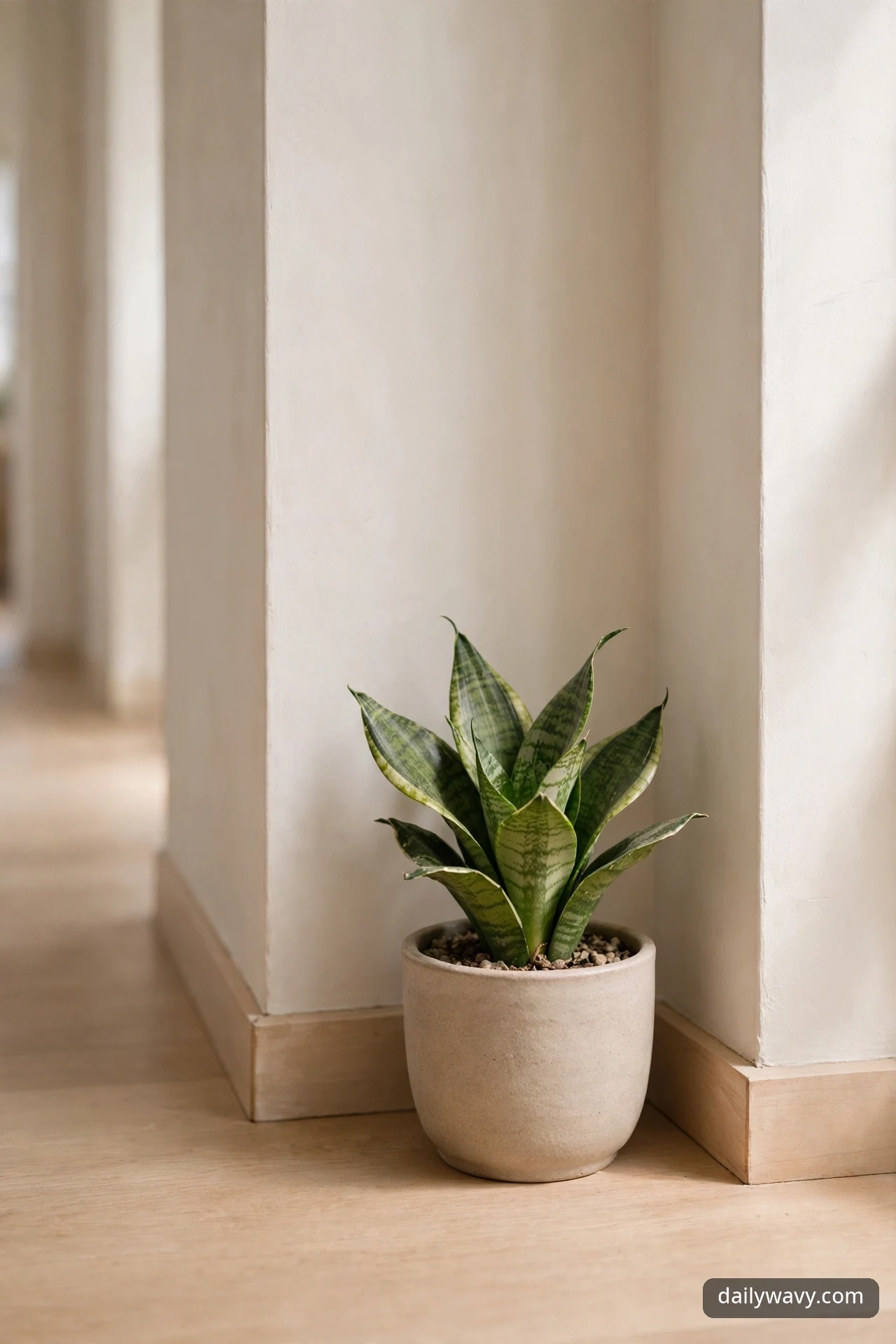
One small plant can do more for a narrow hallway than almost any other single object, because living green tells the eye the space is cared for. The key phrase is outside the traffic path: a plant that gets brushed daily gets shredded, so it belongs in a corner, on the shelf from idea 9, or on top of the shoe cabinet against the wall.
What to measure: light and clearance. Hallways near the front door often get decent indirect light, which suits pothos, snake plants, and ZZ plants. Measure the spot: the pot plus the plant’s mature width must fit without entering the walking lane. On the floor, a 6-inch pot is the sweet spot; on a shelf, 4 inches is plenty. Keep trailing plants trimmed or pinned, since a pothos vine at face height is a hazard, not decor.
For materials, choose a pot with a saucer or a cachepot with no drainage hole, because hallway plants get watered in place and nobody wants runoff on the mat. A heavy ceramic pot resists tipping if it lives on the floor. Set a watering reminder on your phone, since hallway plants are out of sight and easy to forget; once a week for most low-light varieties is enough.
A troubleshooting tip: if leaves yellow, the plant is either overwatered or getting zero light. Move it closer to the door’s light source before changing your watering, since light is the usual culprit in hallways.
Approximate effort and cost: low. A small pothos or snake plant in a ceramic pot costs $15 to $35.
12. A basket for outgoing items

Every household has things that need to leave: returns, library books, the bag of donations, the parcel for the post office. Without a designated spot, these pile up on the shoe cabinet and sabotage your tidy hallway. A basket by the door catches all of it, and grabbing the basket on your way out becomes a habit instead of a hunt.
What to measure: a floor spot or shelf corner that does not block the walking lane or the door swing. A basket around 12 to 14 inches wide and 10 inches tall holds a week’s worth of outgoing items without becoming a second closet. If the basket lives on the floor, keep it tucked against the wall; if it lives on the high shelf from idea 9, choose one with handles for easy lifting.
For materials, woven seagrass or a sturdy canvas bin both look intentional and flex around odd shapes. Label it “outgoing” or “to go” with a small tag, because a labeled basket gets used and an unlabeled one becomes a junk drawer. Empty it at least weekly; the basket works because it is a staging area, not storage.
A realistic lower-cost alternative is a reusable shopping tote hung on the single hook from idea 3 when it is not holding your daily bag. It is less pretty, but the system is what matters, not the container.
Approximate effort and cost: low. A good woven basket costs $15 to $40.
13. A designated mail-sorting tray
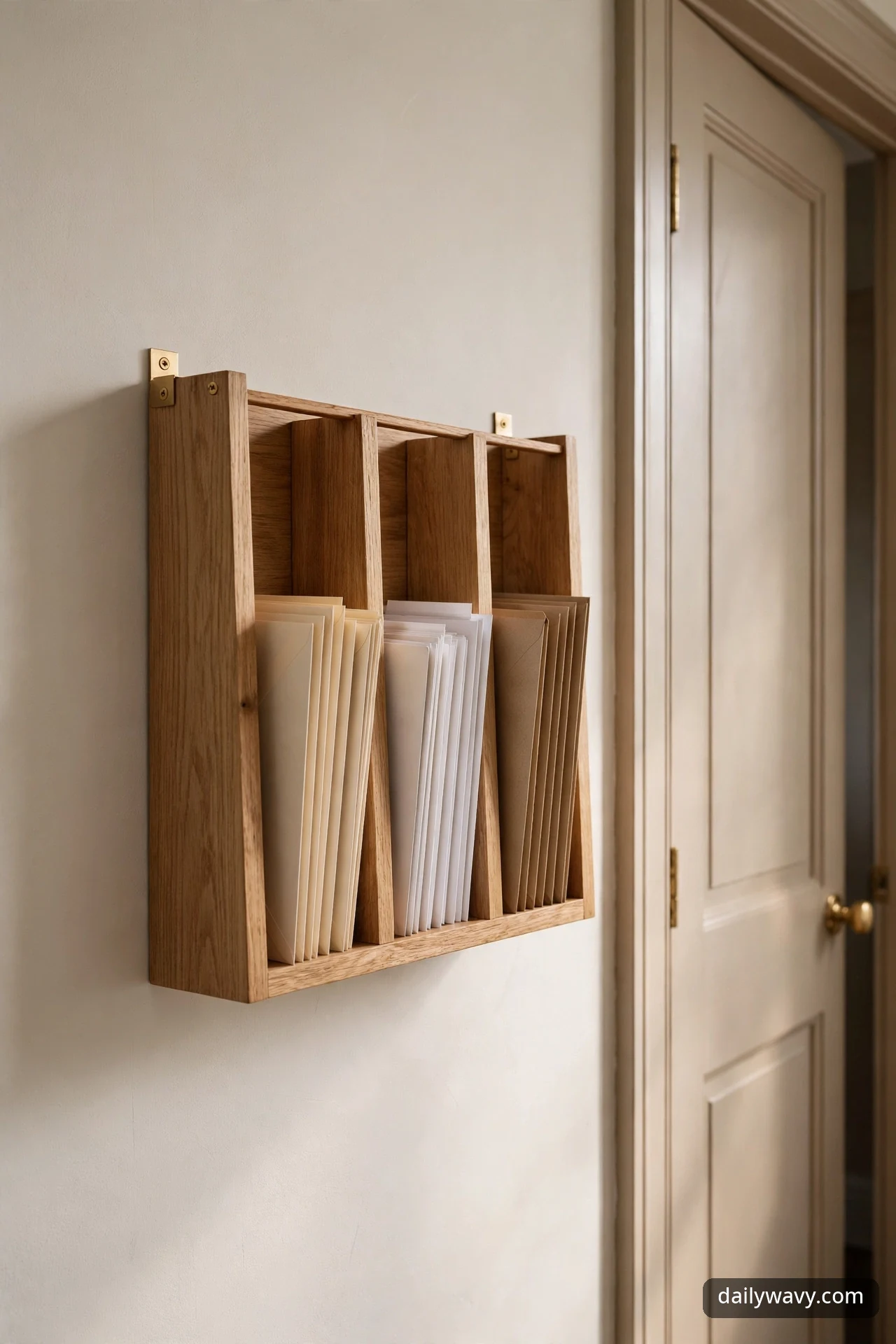
Mail builds up faster than almost anything else in an entry, because it arrives daily and has no natural home. A wall-mounted or shelf-top sorting tray with two or three slots ends the drift: one slot for action items, one for filing, one for recycling. The paper still arrives, but it stops spreading.
What to measure: the wall or shelf space where the tray will live. A wall-mounted sorter about 12 inches wide and 10 inches tall fits beside the door or above the shoe cabinet. If it goes on the high shelf, make sure you can reach the slots comfortably; sorting mail you cannot reach is mail you will not sort. Keep the recycling slot closest to the door, so junk mail exits the house on the next trip out.
For materials, wood or metal sorters look like furniture; acrylic ones show every envelope and tend to look busy. Give the action slot a small pen and a sticky-note pad, so bills get opened and noted the day they arrive instead of aging in the tray. Process the tray twice a week: recycle the junk, file the keepers, and act on the rest. A tray that never empties is just a prettier pile.
A troubleshooting tip: if the filing slot overflows, you are keeping too much paper. Most statements and notices are available online; the tray is for the week’s mail, not the year’s archive.
Approximate effort and cost: low. A two- or three-slot wall sorter costs $20 to $45.
14. A repeated hardware finish
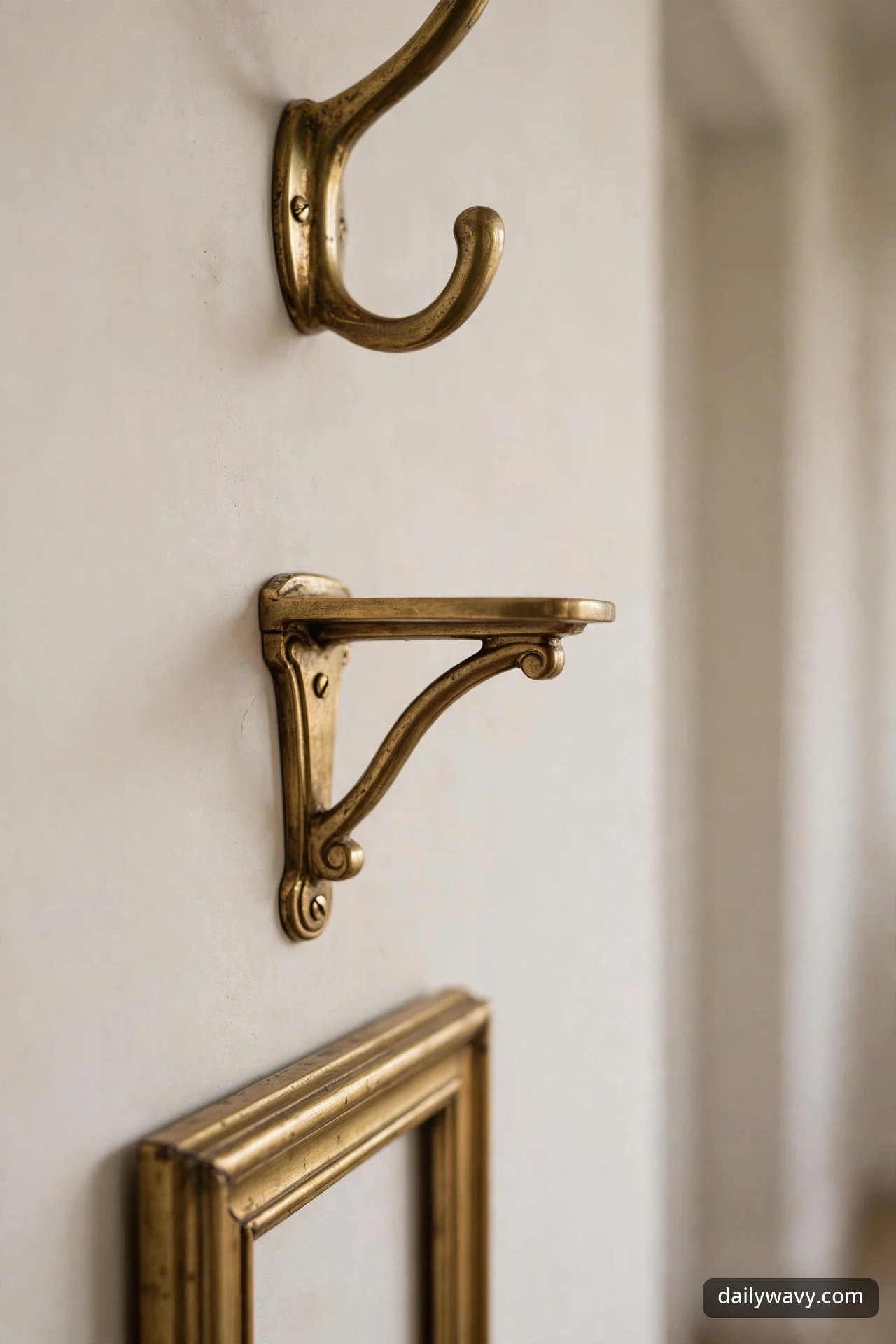
This last idea is invisible in the best way. When the hook, the lamp base, the shelf brackets, the picture frame, and the umbrella holder all share one finish, brass or matte black or brushed nickel, the hallway reads as designed rather than accumulated. Nothing here is large or expensive; the power is in the repetition, which gives the eye a thread to follow down the whole corridor.
What to measure: nothing new, but audit what you already have. List every visible metal piece in the hallway: hooks, brackets, the lamp, the frame, the umbrella holder, the doorknob, the light switch plate. You do not have to replace everything at once. Start with the pieces you are buying for this guide, in your chosen finish, and swap the older ones when they wear out or when budget allows.
The practical decision is which finish. Warm brass suits warm-neutral hallways and aged wood; matte black suits modern doors and crisp white walls; brushed nickel suits cool grays. Pick the finish that already appears on your front door hardware if you can, since the door is the largest metal object in the space and everything else will harmonize with it.
A realistic lower-cost alternative is spray paint: a can of quality metal-finish spray paint in your chosen tone unifies mismatched hooks and brackets for under $10. Prep with a light sand and a primer, and it holds up well indoors.
Approximate effort and cost: low. Unifying finishes with spray paint costs under $10; replacing pieces gradually costs whatever your style budget allows.
Narrow hallway entry FAQ
How wide does a hallway need to be for an entry setup?
If you have 36 inches or more, you can fit a slim cabinet or bench along one wall and keep a comfortable walking lane. Between 30 and 36 inches, stick to wall-mounted ideas: hooks, a high shelf, a framed print, and the mat. Under 30 inches, keep the floor completely clear and put everything on the walls. The mat and the hook alone still count as an entry.
What goes in a hallway landing zone if there is no mudroom?
One surface and one hook. The surface holds a lidded box for keys and small essentials, and the hook holds the daily bag. Add the mail tray and the outgoing basket if you have the room. That is the whole system; everything else in this guide is decoration around it.
How do I keep a narrow hallway from feeling cluttered?
Closed storage is the biggest lever, which is why the shoe cabinet has doors. After that, repeat one hardware finish, keep the palette to three neutrals, and leave some wall deliberately bare. If you are organizing bins and baskets anywhere in the house, the same editing rules from our small pantry organization guide apply: matching containers, visible labels, nothing on the floor that does not have to be there.
Where should the light go in a dark hallway entry?
Put the main light where you need to see: over the landing surface or beside the door. A small lamp on the cabinet plus the ceiling light is usually enough. Warm 2700K bulbs flatter skin and wood alike. If there is no outlet, a rechargeable cordless lamp or a battery sconce above shoulder height works without any wiring.
Can I fit a bench in a 40-inch hallway?
You can fit a bench, but the math is tight. A 12-inch-deep bench against the wall leaves 28 inches of walking lane, which works for passing through but feels snug with bags or kids. If the hallway is the only route to the rest of the house, many people prefer keeping the floor clear and using the wall instead. Measure your real daily traffic before you commit.
How do I make the entry feel welcoming without adding clutter?
The mat, one plant, one framed print, and warm light do most of the work. Those four are decor, not storage, and they are the reason guests say “this is nice” before they notice how narrow the space is. Everything else in this guide is there to keep the clutter from undermining them.
A first impression that fits the space
A narrow hallway entry does not need to apologize for its size. It needs a mat that takes the weather, a hook that holds the daily bag, a closed cabinet that hides the shoes, and a few details, a plant, a print, a repeated finish, that tell visitors someone thought about this space. Start with the two measurements, build the landing zone, then add the ideas that fit your width. Your hallway will never be wide, but it can be one of the most considered rooms in the house. For more ideas in the same spirit, browse our Home & Decor collection and keep shaping a home that works as well as it looks.