16 Round Nightstand Styling Ideas with Space for Your Essentials
A round nightstand asks for a different kind of thinking than a square one. There are no corners to tuck…
A round nightstand asks for a different kind of thinking than a square one. There are no corners to tuck things into, and every inch of the curve is visible from across the room, so clutter shows fast. The good news is that round tops are forgiving once you understand their geometry: one calm anchor object, one working group you reach for every day, and clear space around both. These sixteen ideas each style a round nightstand without stealing its function, with real measurements, reach and cable guidance, and the practical details that keep the surface useful. If your bedroom also needs layout help, our narrow living room layout guide shows how the same small-space logic applies beyond the bedroom.
Jump to an idea
- A lidded box for everyday objects
- A small clock with negative space
- A ceramic dish for jewelry
- A leaning frame secured against slipping
- A woven basket below the surface
- A tiny plant beside a reading light
- A textured runner under a lamp
- A simple glass carafe on a tray
- A catchall bowl in matching tones
- A single sculptural accent
- A framed photograph with a short vase
- A charging area with tidy cable routing
- A tray holding a notebook and pen
- A pair of balanced objects of different heights
- A soft fabric mat beneath essentials
- A small mirror with a ceramic vessel
The proportions that make a round nightstand work
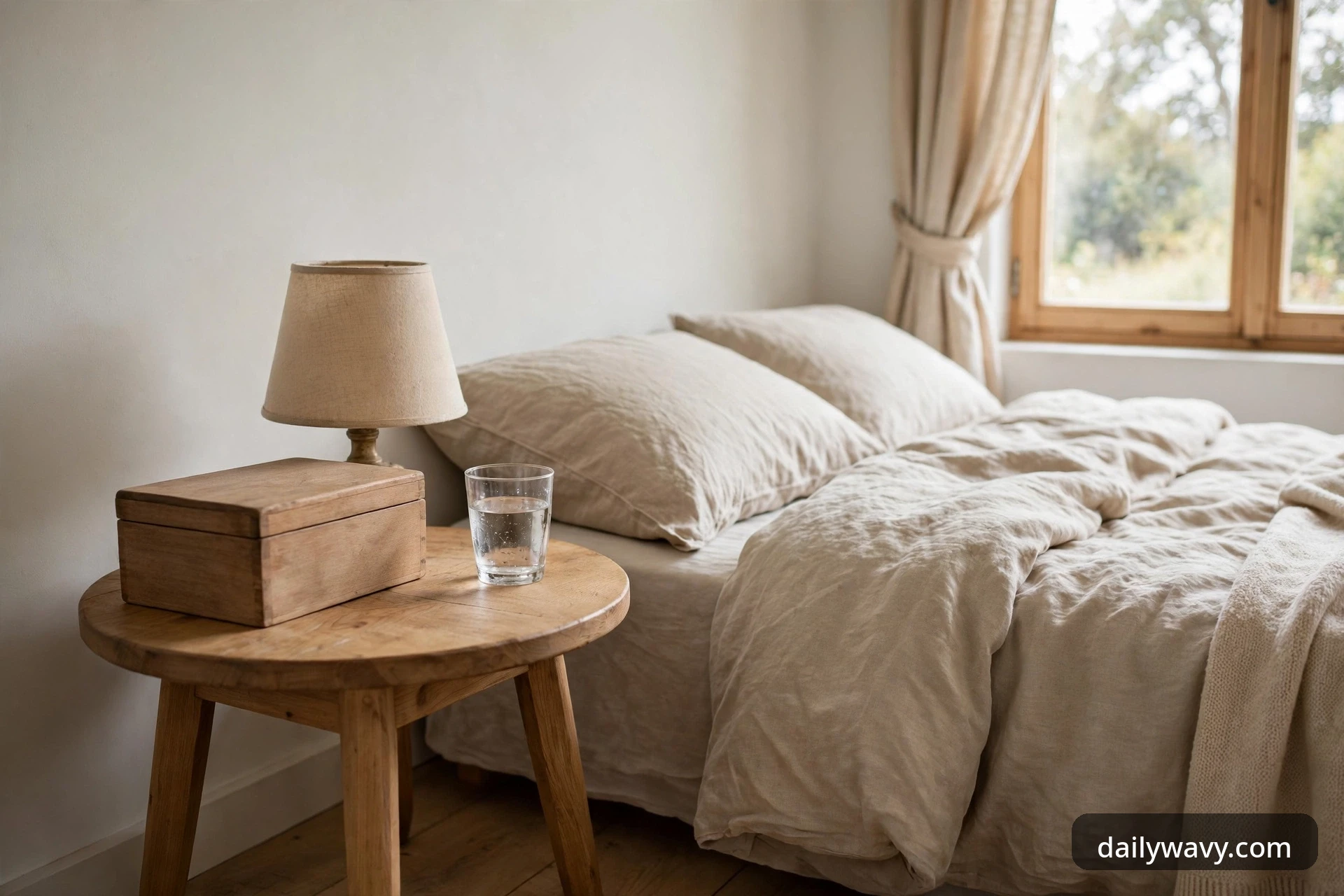
Measure the diameter before styling anything. Most round nightstands are 16 to 20 inches across, which gives you roughly 200 to 315 square inches of surface. Plan to keep at least one third of that clear, because you need room to set down a book, a phone, or a glass without rearranging everything.
Reach matters as much as surface. The top of the nightstand should sit within 2 inches of your mattress height, and the items you touch half asleep, a lamp switch, a water glass, a clock, belong on the half of the circle nearest the bed. Anything you only admire can live on the far side.
Watch the glare. A reading light with a visible bulb reflects off varnished wood and white walls, so choose a shade that hides the bulb from your seated eye line, and point the light at the book, not at your eyes. Route lamp and charger cords behind the table and down to the outlet in one drop, secured with a small adhesive cord channel so nothing dangles where it catches your ankle. If your nightstand is a tall pedestal or column style, anchor it with anti-tip furniture straps to the wall stud, because a top-heavy round table tips more easily than a square one when you lean on it.
1. A lidded box for everyday objects
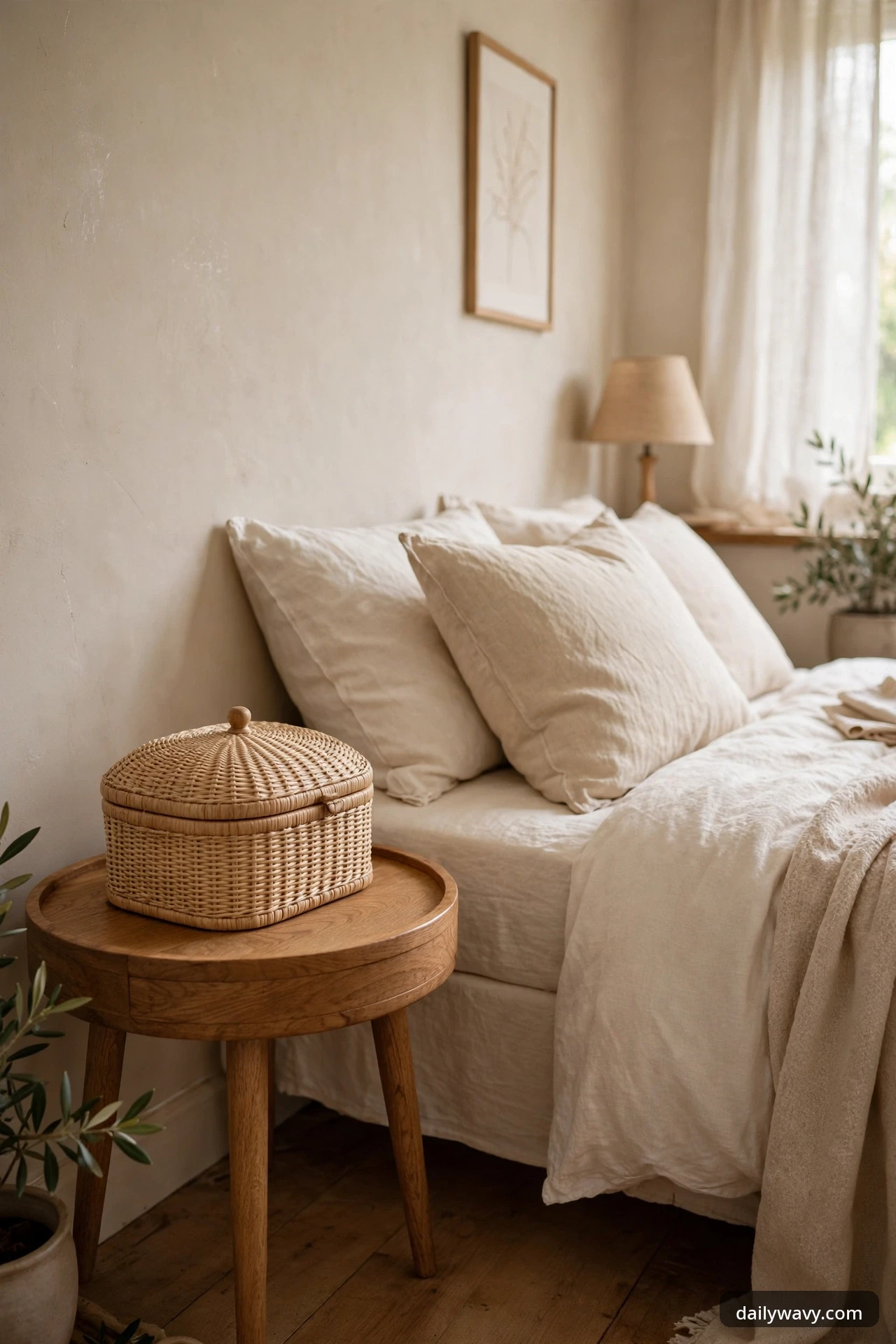
Start with the simplest idea in the whole roundup: one beautiful lidded box, roughly 6 to 8 inches long, sitting slightly off center on the bed side of the nightstand. Inside it goes everything that normally scatters: the lip balm, the spare hair tie, the sleep mask, the reading glasses. The box is the anchor, and because it closes, the surface reads as calm even when the contents are chaotic.
Choose a box with a flat lid you can also set a glass on top of, and keep it under 3 inches tall so it stays clear of the lamp switch and the clock. A wood, lacquered, or woven box around $20 to $40 looks intentional; a shoebox rarely does. For reach, slide the box 3 to 4 inches in from the bed-side edge so you can find the lid by touch in the dark without knocking it off. The practical win is the nightly reset: lift the lid, drop in the day’s small objects, close it, and the whole bedside reads tidy in ten seconds.
2. A small clock with negative space

A clock only earns its place if you can read it instantly and it leaves breathing room around it. Pick a dial between 4 and 6 inches wide, with a matte face, and set it near the back edge of the nightstand, angled slightly toward the pillow. The negative space matters: leave at least 4 inches of clear surface on each side of the clock so it does not compete with the lamp or your water glass.
Glare is the thing that ruins bedside clocks. A glossy glass face will throw back the lamp light right into your eyes at night, so look for an acrylic or matte lens, and tilt the clock face a few degrees forward if it has an adjustable stand. If you charge a phone beside it, keep the clock on the opposite side of the lamp from the charger so the cord never drapes across the dial. A small analog clock also doubles as a gentle morning anchor: one glance, no doomscrolling, which is the real point of keeping the phone out of the first five minutes of the day.
3. A ceramic dish for jewelry

The last thing you remove before sleep is the first thing you need in the morning, so give it a dedicated landing spot. A ceramic dish 4 to 5 inches across catches rings, studs, and a watch without letting anything roll. The slight curve of a handmade dish does real work here: flat surfaces on a round table let small things migrate, and the dish’s low rim stops them.
Place the dish on the far half of the nightstand, away from your water glass, because one elbow swing at a full glass is all it takes to soak a pair of earrings. If the dish is patterned, keep everything else near it plain so the table does not look busy. For reach, keep the dish within a comfortable arc of the pillow, roughly 8 to 10 inches from where your hand lands when you sit up. The dish also protects the nightstand finish from watch clasps and ring bands that scratch varnish over time, so choose a dish with a soft, unglazed underside or add a felt pad underneath.
4. A leaning frame secured against slipping
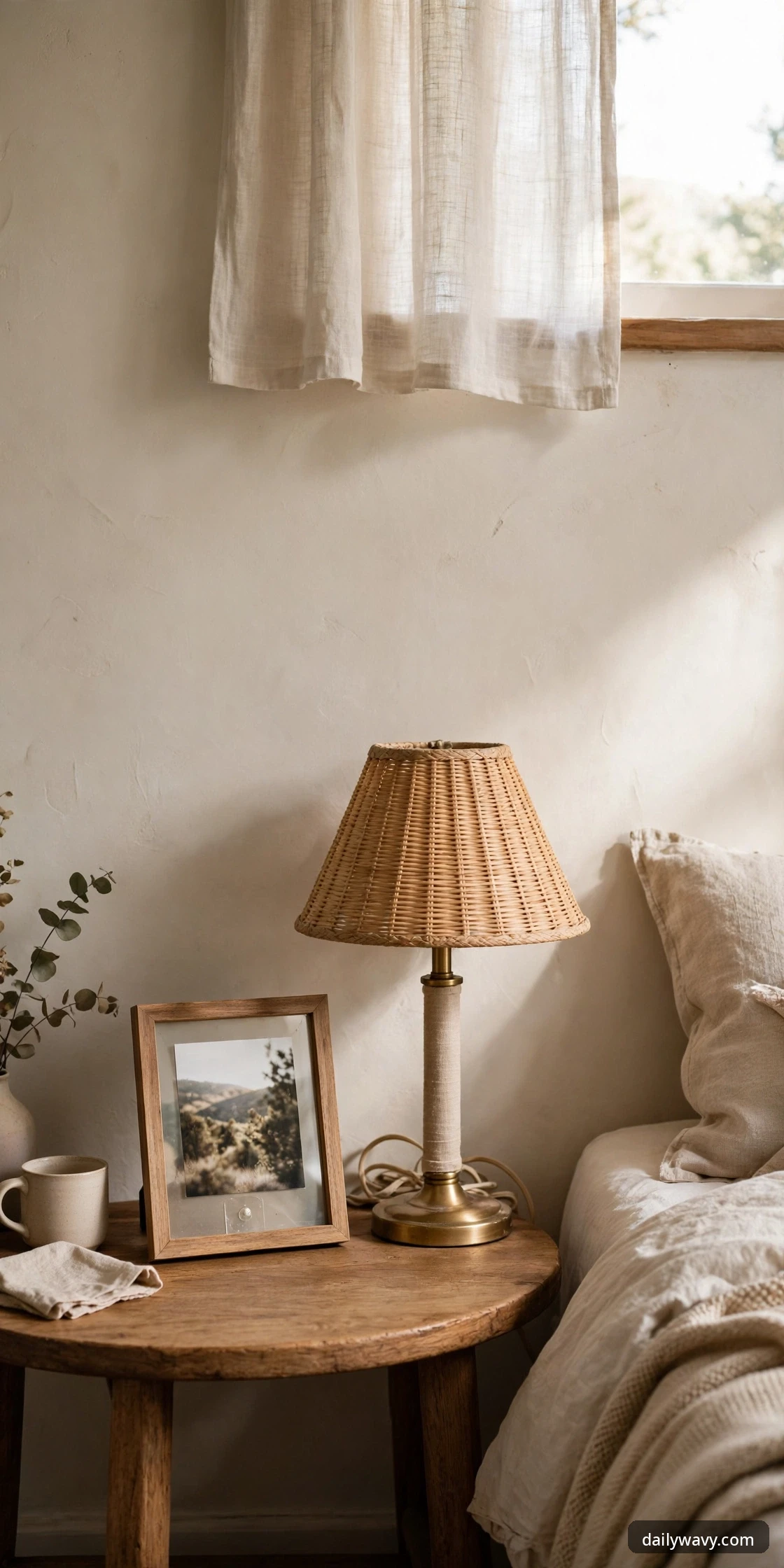
A leaned photo or art print softens a bedside more than a standing frame, but the round edge of the nightstand gives a leaning frame almost nothing to grip. The fix is simple and invisible: a strip of museum putty or a small adhesive bumper on the back of the frame, and the frame’s top leaning against the wall, not the table edge. This keeps it stable even when you bump the table reaching for water at night.
Keep the frame to 5 by 7 inches or smaller; anything larger dominates a 16 to 20 inch round top and starts casting awkward shadows from the lamp. Angle it slightly toward the bed so you actually see the image from the pillow instead of staring at a glare stripe. The glare rule applies doubly here: put the frame on the opposite side of the lamp from the bed, or choose a frame with a matte print instead of glass, so the lamplight does not bounce a white rectangle into your eyes. The result reads personal and relaxed, like a shelf you arranged in five minutes.
5. A woven basket below the surface
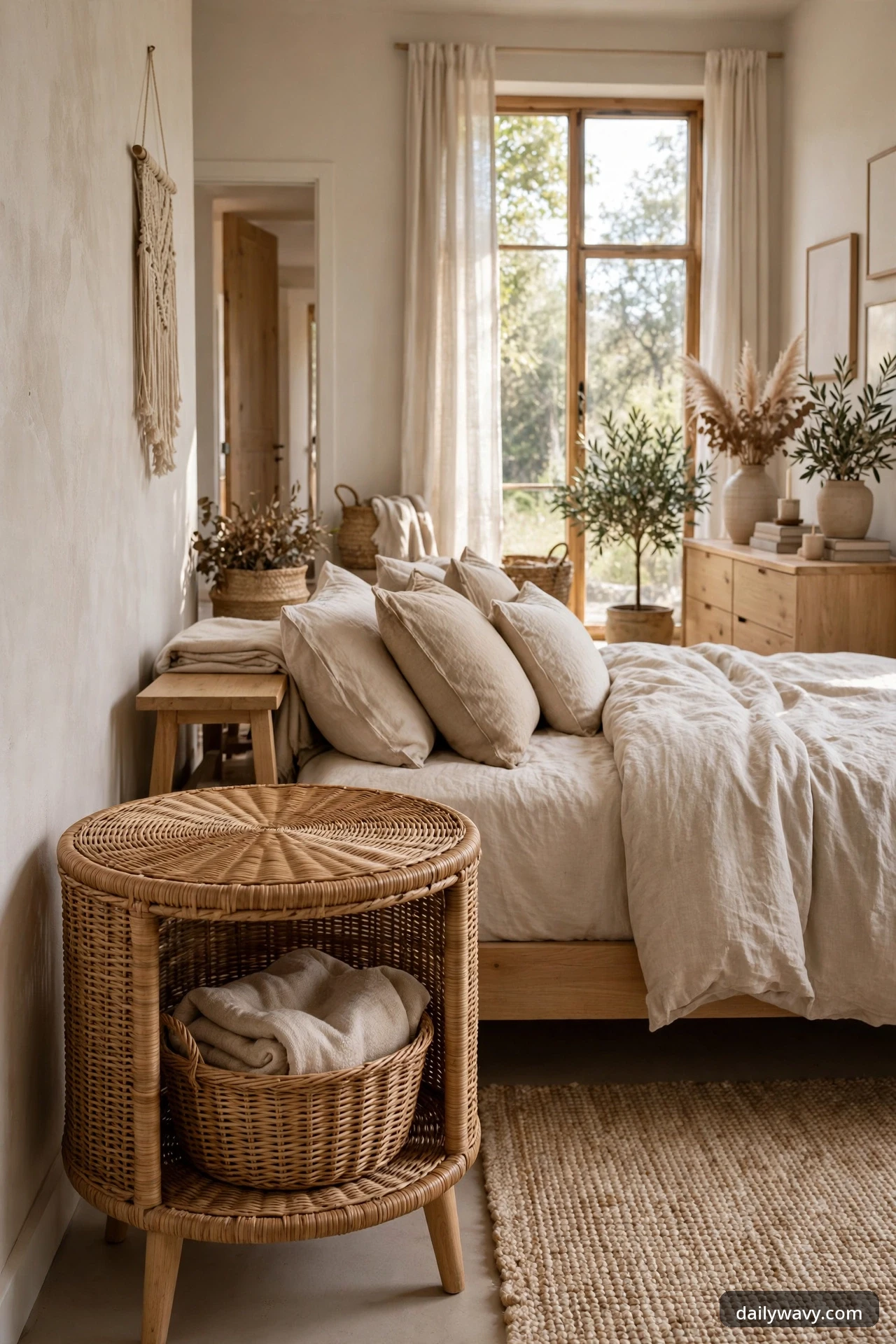
The surface of a round nightstand is small, but the space under it is often wasted. If your nightstand has an open base or a lower shelf, a woven basket underneath holds the bulky things that do not belong on top: the extra throw blanket, the current novel you are not reading tonight, the charging brick you want out of sight. Measure the opening first and leave an inch of clearance on each side so the basket slides in and out without scraping.
Keep the basket shallow enough that nothing inside it presses up against the tabletop from below, and choose an open weave only if you are fine seeing the contents, or a lined one for a cleaner look. This is also where cable handling gets easier: run the lamp cord down behind the table and coil the excess inside the back of the basket instead of letting it puddle on the floor. One basket under the nightstand replaces roughly three items that would otherwise clutter the top, which is the difference between a styled surface and a full one.
6. A tiny plant beside a reading light

Greenery beside a lamp is a classic pairing, but on a round nightstand the scale has to be exact. Choose a plant in a 3 to 4 inch pot, placed on the far side of the lamp, away from the bed. A succulent or small snake plant works because it tolerates low, indirect bedroom light and survives the occasional forgotten watering. Keep the total height under 10 inches so the plant never blocks the lamp shade or shades the book you are reading.
Glare control matters here too: glossy leaves throw back lamplight, so a matte-leafed plant like a fern photographs and lives better beside a lamp. Put a small saucer or a cork mat under the pot, because condensation and watering drips will ring a wood top within weeks. If your nightstand is 16 inches across, the plant and the lamp together should occupy no more than half the surface, leaving the bed side completely clear for your glass and book.
7. A textured runner under a lamp

A round runner, about 12 to 14 inches across, does three quiet jobs under a lamp: it defines the lamp’s zone on the curved surface, it protects the finish from lamp scratches and heat, and it adds texture that makes the whole bedside look considered. Choose a flat-woven cotton, jute, or felt round, because anything with a tall pile wobbles the lamp base.
Center the lamp on the runner rather than centering the runner on the table; the runner is a mat for the lamp, not a doily for the table. Let the runner extend 2 to 3 inches beyond the lamp base on all sides so the cord can exit over the edge of the mat and route behind the table without lifting the runner’s edge. For reach, place the lamp and runner toward the back of the nightstand, on the bed side, so the light falls over your shoulder when you read and the front half of the surface stays clear for your hands. The texture contrast, smooth lamp base against nubby weave, is what makes this look styled instead of accidental.
8. A simple glass carafe on a tray
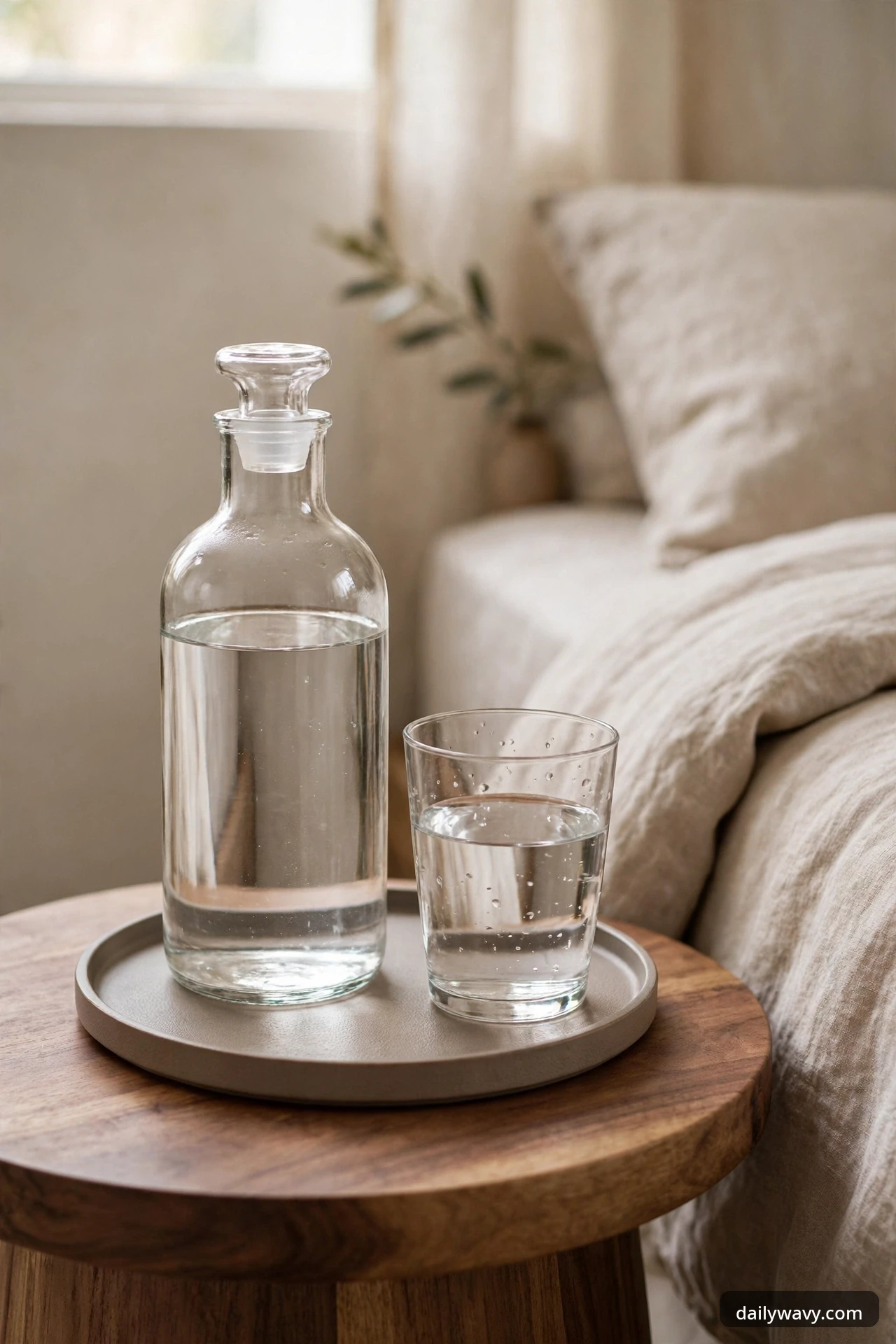
A carafe and glass solve the nightly water run, and on a tray they stop being a spill risk. Choose a carafe that holds at least 20 ounces so it lasts the night, and a tray with a lip at least half an inch tall to contain drips. The tray, roughly 10 by 7 inches, defines the water zone and keeps condensation off the wood, which matters more on a round table where a spill has nowhere to hide.
Place the tray on the bed side of the nightstand, closest to your hand, because this is the thing you reach for half asleep. Skip tall, narrow carafes that tip when you grab the glass in the dark; a squat carafe with a wide base is a safer shape. Glass also helps with glare: clear glass next to a lamp sparkles, but a carafe with a frosted or lightly tinted body avoids the harsh pinpoint reflections of clear glass under a bulb. Wash the carafe every morning and refill at night; standing water for days is also the part that makes the whole idea fail.
9. A catchall bowl in matching tones

A catchall bowl is the informal cousin of the lidded box: everything goes in, nothing is hidden. The trick is the color match. Pick a bowl in the same tone family as the nightstand, warm wood with a terracotta bowl, white lacquer with a cream stoneware bowl, so it reads as part of the furniture instead of clutter. A 5 to 6 inch shallow bowl holds the phone, the glasses, the chapstick, and whatever else accumulates, without any of it sliding off the curve.
Because the bowl is open, what goes in must stay tidy by itself, so commit to emptying it once a week. For reach, set the bowl just behind the center line of the table, on the bed side, where your hand lands naturally. Keep the bowl away from the water glass side; condensation on the bowl’s contents is annoying and avoidable. If the bowl is metal, add a felt pad underneath, because a brass or aluminum bowl dragged across a wood top every night will leave a ring of fine scratches within a month.
10. A single sculptural accent

Sometimes the strongest styling move is restraint. One sculptural object, a carved wood knot, a stone sphere, a small abstract ceramic form, sitting alone on the far half of the nightstand gives the whole surface a gallery calm, and it works because everything else stays ruthlessly functional. Keep the accent under 8 inches tall and give it a footprint of at least 3 inches so it does not get knocked over by a sleepy arm.
This idea suits nightstands that already hold a lamp, a glass, and a clock, because the accent fills the visual gap without adding a job to do. For anchoring safety on a tall pedestal nightstand, choose an accent with some weight, stone or solid wood rather than hollow ceramic, since a light object on a tall, tippy table is likely the first thing to fall. Do not pair the accent with another decorative object; the point is the singular silhouette against the wall. If you get bored, rotate the accent seasonally instead of adding a second one.
11. A framed photograph with a short vase
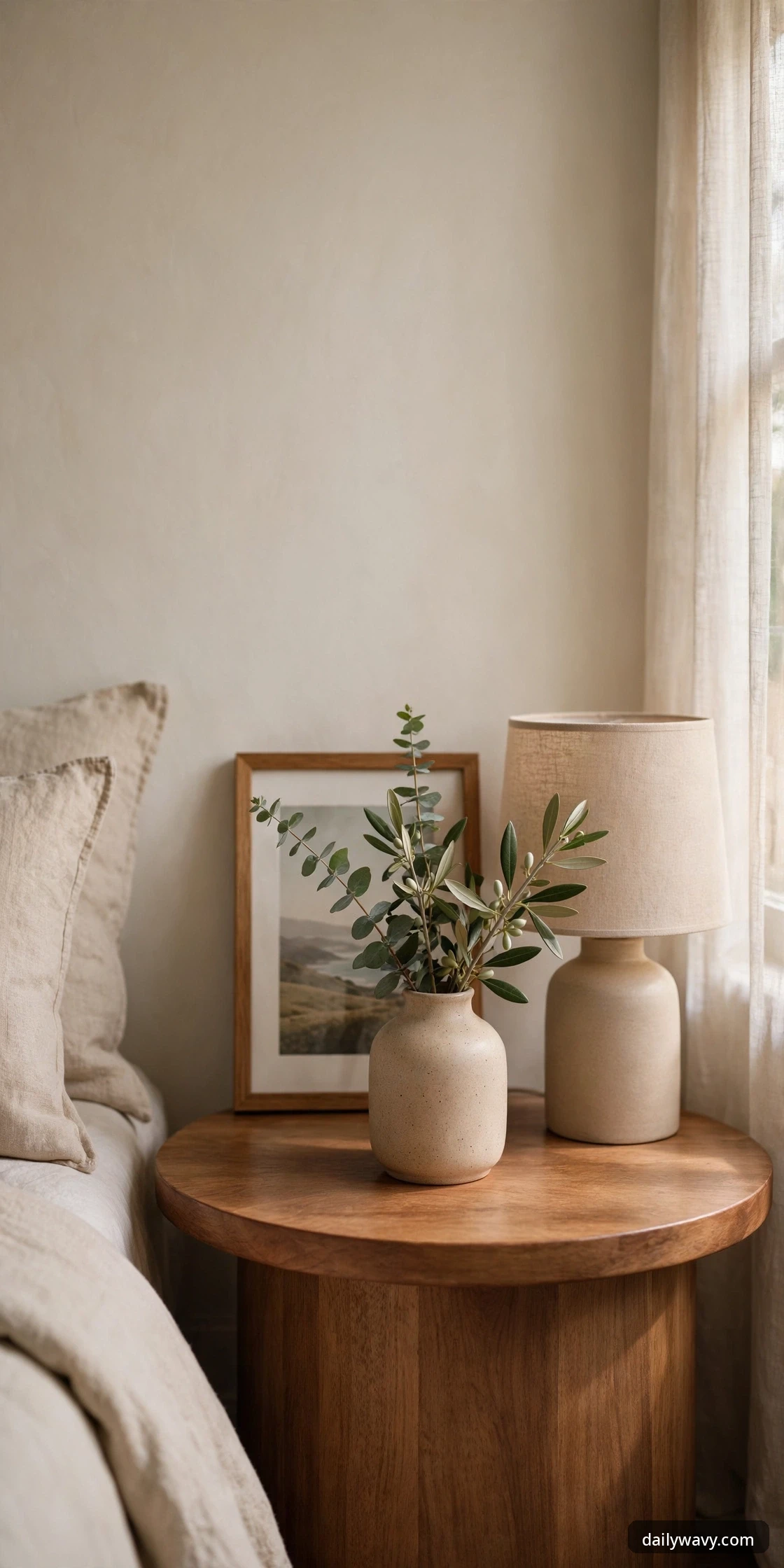
This pairing works because of the height contrast: a 5 by 7 inch framed photograph in front, a short vase 4 to 6 inches tall behind it, and the two together form one visual block instead of two competing objects. Put the photograph on the far side of the nightstand and the vase just behind it, so the flowers rise above the frame and both stay clear of your water glass.
The vase must be short and stable; a tall bud vase on a round surface tips at the slightest bump, and spilled water on a photo frame is a bad ending. A squat ceramic or glass vase with a wide mouth holds a few stems without drama. For glare, angle the frame a touch toward the bed and keep the vase between the frame and the lamp so the vase body blocks direct lamplight from hitting the glass. Change the stems weekly or use a realistic faux sprig; dead flowers on a nightstand make the whole idea look abandoned instead of loved.
12. A charging area with tidy cable routing
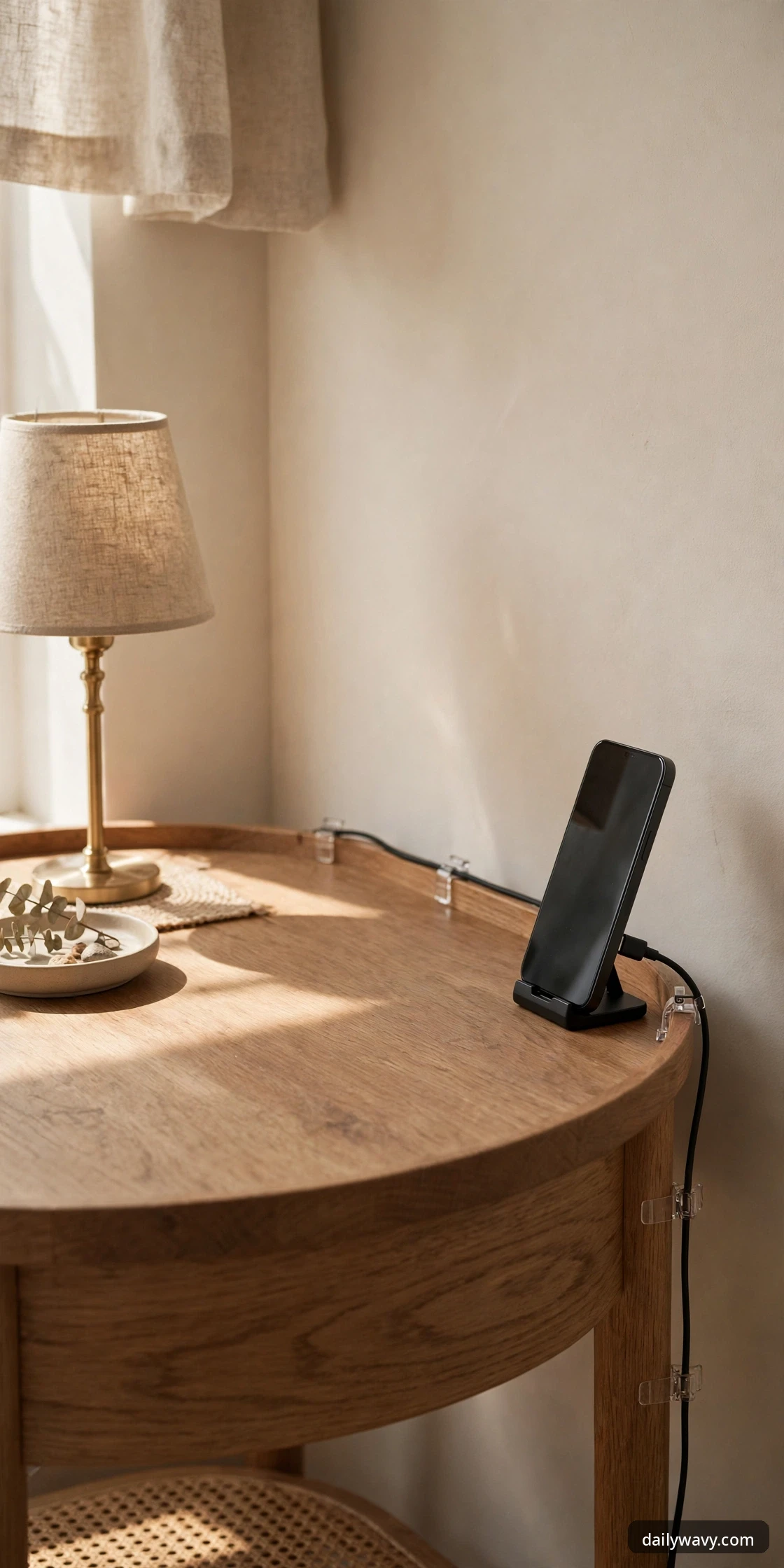
Phones charge on nightstands, and the cords are the reason most bedsides look messy. The styled version is deliberate: one short charging cable, a small dock or a low-profile stand, and the cable routed behind the nightstand and secured with adhesive clips so nothing lies across the surface. A 3-foot cable is usually enough if the outlet is behind the bed; a 6-foot cable is what creates the puddle.
Place the charging spot on the far edge of the nightstand, not the bed side, so you are not tangled in the cord when you roll over, and keep the phone face-down so notifications do not light up the room. If you charge more than one device, a small multi-port charging pad, roughly 8 by 5 inches, consolidates everything into one footprint and one cable to route. This is also where the anchored tall-nightstand rule earns its keep: if you lean hard on the table while plugging in your phone, a strapped pedestal stays put and an unstrapped one walks. Our small entryway decor ideas use the same hide-the-cord logic for hallway consoles.
13. A tray holding a notebook and pen

Ideas arrive at 2 a.m., and a notebook on the nightstand catches them. The tray keeps the notebook and pen from sliding across the curved surface and defines their zone, so the rest of the table stays free. A tray around 10 by 7 inches fits a standard 5 by 8 inch journal plus a pen, with room to spare.
Choose a pen that writes on the first stroke in the dark, a gel pen you trust, because a dry pen at 2 a.m. is the detail that kills the habit. Keep the tray on the bed side but behind your water glass, so the glass is the first thing your hand finds. For reach, the notebook should open flat with one hand; lay-flat bindings or softcover journals beat stiff hardcovers that snap shut. If you wake up with a to-do list habit, this single tray replaces the phone as the capture device, which is a quieter way to start the day than a lit screen.
14. A pair of balanced objects of different heights

Designers reach for the high-low pair because it usually looks intentional. On a round nightstand, group two objects of clearly different heights, one around 10 inches and one around 5, on the far half of the surface: a medium candlestick with a short bowl, a tall vase with a low box. The height difference creates a tiny skyline that the eye reads as styled, and the pair occupies one corner of the circle instead of spreading across it.
Keep the taller object toward the back and the shorter one in front, so the arrangement reads from the pillow without the tall piece blocking the short one. The pair should sit within a 6 inch circle of space; any wider and they stop reading as a pair and start reading as two separate things you forgot to put away. Glare check: if the tall object is glass or polished metal, place it on the far side of the lamp so it does not throw reflections toward the bed. This is one of the fastest styling upgrades in the roundup, and it costs nothing if you shop your own shelves first.
15. A soft fabric mat beneath essentials
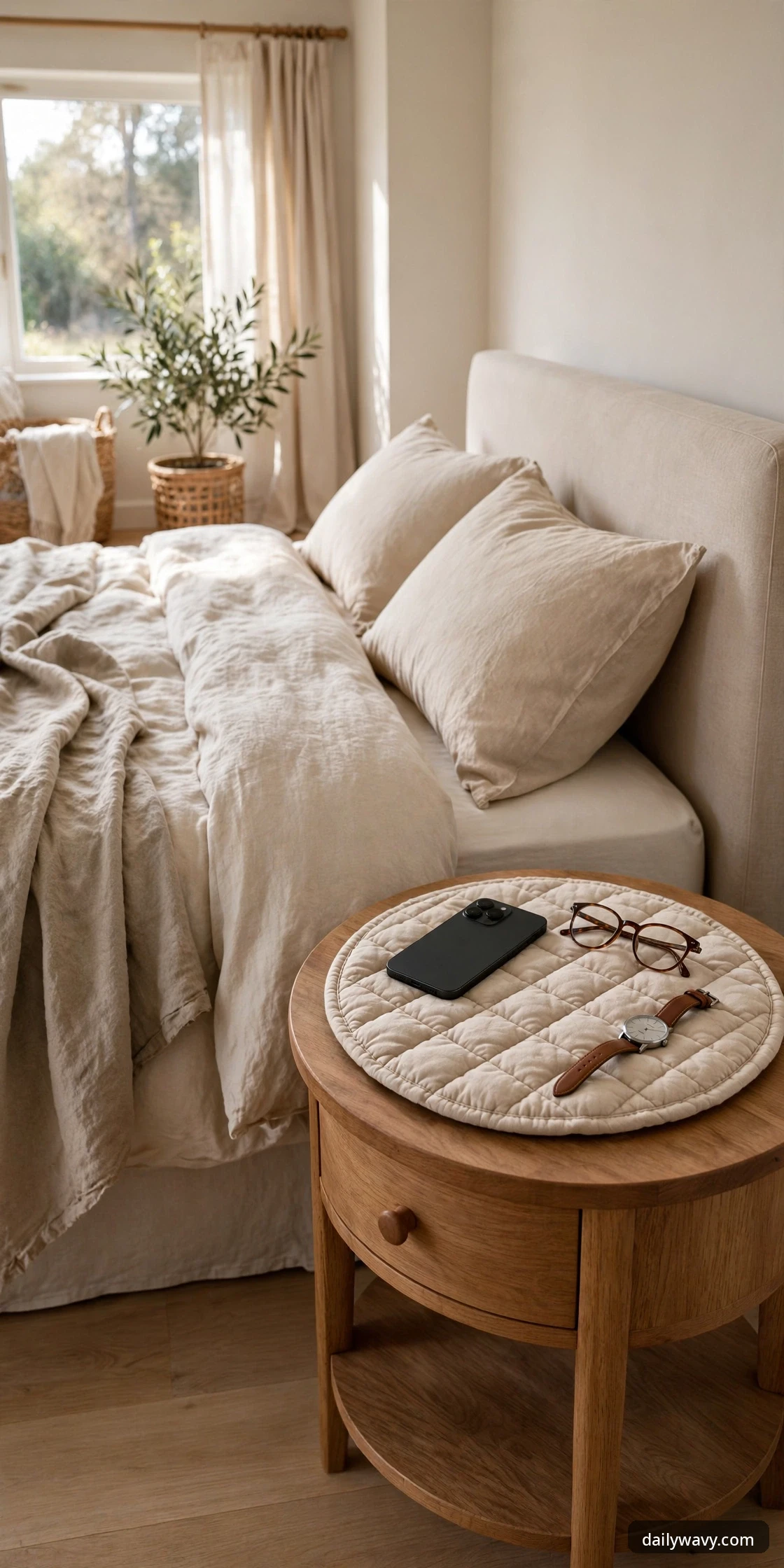
A soft mat, a round of quilted cotton or felt about 12 inches across, sits under your phone, glasses, and watch, and it does practical work beyond looking cozy. It muffles the sound of setting things down, it stops small items from sliding on the smooth round surface, and it protects the finish from daily friction. Choose a washable fabric, because bedside mats collect dust, lotion residue, and the occasional water ring.
Lay the mat on the bed side of the nightstand, under the working group, and keep decorative objects off it so the mat reads as a tool, not as decor. The mat’s edge should sit at least an inch inside the table edge so it never catches on clothing or bedding. For anchoring, this is a good moment to check the tall-nightstand rule: a pedestal table with a soft mat on top is still a pedestal table, so make sure the furniture straps are doing their job before you load the surface. Wash the mat monthly; a dingy mat is worse than no mat.
16. A small mirror with a ceramic vessel
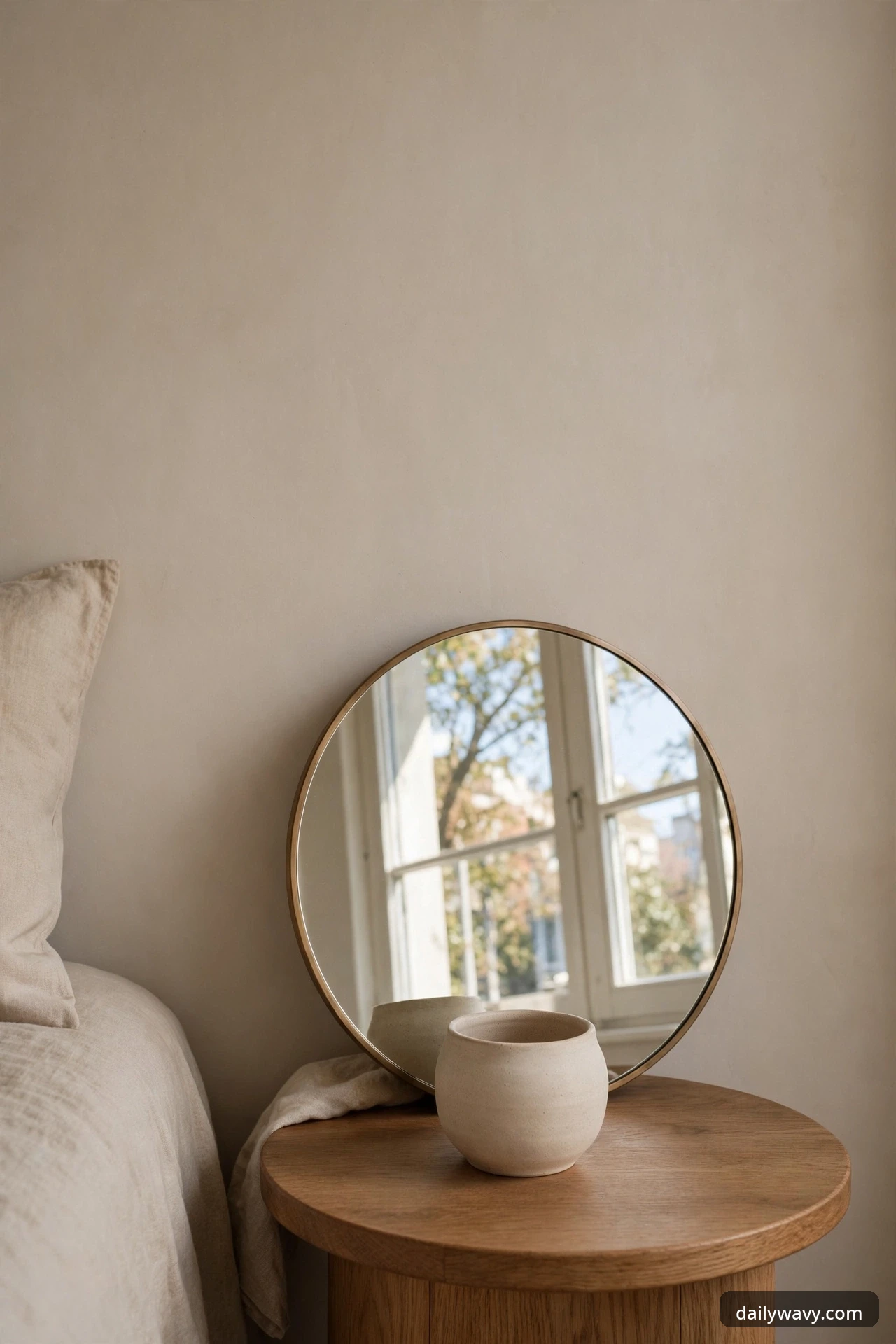
A small mirror on the nightstand bounces morning light around a dark bedroom corner, and beside a ceramic vessel it looks like a considered still life instead of a random object. Keep the mirror under 8 inches in diameter, propped against the wall or on a small stand, angled so it reflects the window, not the bed. The ceramic vessel, 5 to 7 inches tall with a simple silhouette, sits just in front of the mirror’s edge.
Glare is the real constraint here: a mirror angled wrong throws a bright rectangle onto the pillow or the ceiling, so check it from the bed in daylight and adjust the tilt until the reflection lands on the wall or the floor. Place the pair on the far side of the nightstand, away from the water glass and the phone, because a mirror plus a spill is a cleanup you do not want. If the mirror has a thin metal frame, add a felt pad under it; metal edges on wood tops scratch. The payoff is a bedside that looks finished with just two objects, which is the right density for a round surface.
Frequently asked questions
What size nightstand works best with these ideas?
A round nightstand 16 to 20 inches in diameter handles every idea in this roundup. Under 16 inches, pick only one idea per nightstand and keep the rest of the surface clear, because two styling ideas on a 14 inch top will crowd out your water glass.
How do I keep the surface useful, not just pretty?
Reserve the bed-side half of the circle for function: lamp, water, clock, phone. Style the far half. If you cannot set a book down without moving something, you have styled too much, so remove one object.
How do I hide lamp and charger cords on a round nightstand?
Route both cords straight down behind the table in a single drop, secure them with small adhesive cord clips, and use an adhesive cord channel from the tabletop to the floor. A 3-foot charging cable keeps the excess from pooling; coil any extra inside a basket under the table.
Will a leaning frame or mirror fall off the curved edge?
Not if it leans against the wall with museum putty or adhesive bumpers on the back, and not if you keep it small, 5 by 7 inches or under. Anything leaning on the table edge itself, rather than the wall, tends to slide on a round top over time.
Do I need to anchor a round nightstand?
Tall pedestal or column-style nightstands should be secured to a wall stud with anti-tip furniture straps, because their narrow base and high center of gravity make them tip when you lean on them. Low, wide drum tables are stable enough to skip it.
What if my nightstand is smaller than 16 inches?
Choose ideas with a single small footprint, the ceramic dish, the catchall bowl, or the soft mat, and skip pairings like the photograph with vase. One idea, well executed, usually beats three ideas squeezed together.
Keep going
A styled nightstand is a small project with a big payoff, and the same logic, one anchor, one working group, clear space around both, scales to every surface in the bedroom. If your room itself needs a bigger rethink, our small bedroom with a queen bed ideas show how to make tight spaces feel generous, and the Home & Decor archive has every room-by-room guide in one place.