16 Ladder Shelf Styling Ideas with Useful Styling Details
A ladder shelf is the friendliest piece of furniture you can own. It leans against the wall, asks for almost…
A ladder shelf is the friendliest piece of furniture you can own. It leans against the wall, asks for almost no floor space, and holds more than it has any right to. The trick is in the styling. Left alone, a ladder shelf becomes a leaning tower of random objects. Styled with a little intention, it looks like the calm, collected corner of a home that has its life together. These sixteen ideas show you how to get there, one shelf at a time, with details you can actually recreate this weekend.
In This Guide
- A Restrained Color-Coded Book Section
- A Trailing Plant Along One Edge
- A Set Of Useful Jars Or Containers
- A Plate Displayed Upright
- A Trio Of Small Collectibles
- A Leaning Mirror On A Secure Ledge
- A Lidded Box And One Flower Stem
- A Small Clock Between Two Book Stacks
- A Vintage Camera As A Collected Object
- A Ceramic Pitcher Used For Stems
- A Pair Of Layered Frames
- Horizontal Book Stacks With A Ceramic Bowl
- One Framed Photograph Beside A Plant
- A Low Basket Concealing Small Objects
- A Tall Vase Balanced By A Short Stack
- A Pair Of Matching Boxes

The Ladder Shelf Rules Before You Style Anything
Before a single book goes up, make the shelf itself behave. A ladder shelf leans, which means gravity is always doing a little work on your arrangement. Anchor it to the wall with an anti-tip strap or furniture anchor, especially if you have kids, pets, or live anywhere the ground shakes. Most freestanding ladder shelves are perfectly stable once leaned at their designed angle, but the anchor turns \”perfectly stable\” into \”never think about it again.\”
Mind the taper. Ladder shelves get narrower toward the top, which is a feature, not a flaw. The deepest shelf sits at the bottom (often 10 to 12 inches), and the top shelf may be only 4 or 5 inches deep. Put the heaviest, most-used items low and the lightest, most decorative items high. A realistic load is 15 to 25 pounds per shelf for a standard wooden unit, so books belong on the lower two shelves and ceramics and frames live up top.
Leave breathing room between shelves. Twelve to eighteen inches of vertical clearance per shelf lets objects read as individual choices instead of a wall of stuff. If your shelf has fixed rungs, work with what you have and let the taper do the visual sorting for you.
Adapt the contents to the room. In a kitchen, everything on the shelf should earn its keep: jars of dry goods, a stack of everyday bowls, the olive oil you actually reach for. In a bathroom, choose moisture-tolerant materials. Sealed wood, powder-coated metal, glass, and glazed ceramic handle steam fine. Paper, raw unfinished wood, and anything with iron that can rust belong somewhere drier.
1. A Restrained Color-Coded Book Section
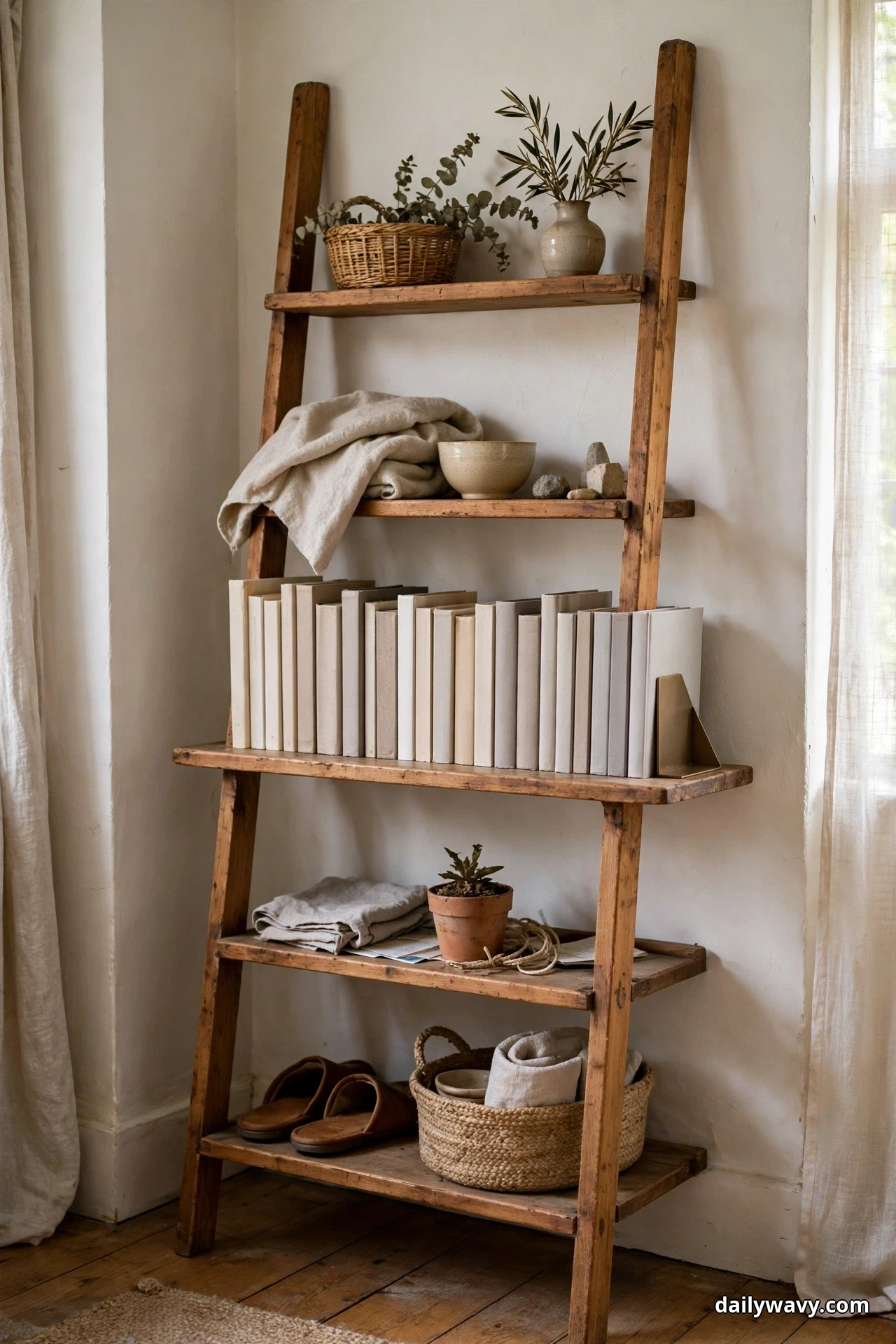
There is a fine line between a color-coded bookshelf and a rainbow explosion, and the difference is restraint. Instead of sorting every book in the house by hue, pick one shelf and group its books into two or three neighboring color families: warm neutrals, soft blues, or creams and tans. Pull the spines forward so they sit flush with the shelf edge. The result reads as calm and curated rather than chaotic.
To recreate it, start with the books you already own and group them loosely by tone. You do not need a full spectrum. A shelf of cream, beige, and soft gray spines next to a shelf of deep greens looks intentional without trying too hard. Keep the tallest books on the outer ends so the shelf’s silhouette stays even.
One practical note: books on angled ladder shelves can lean and slide. A small bookend or even a heavy ceramic object at the end of the row keeps everything upright. Dust the shelf before you start. A clean surface makes even a modest book collection look considered.
2. A Trailing Plant Along One Edge
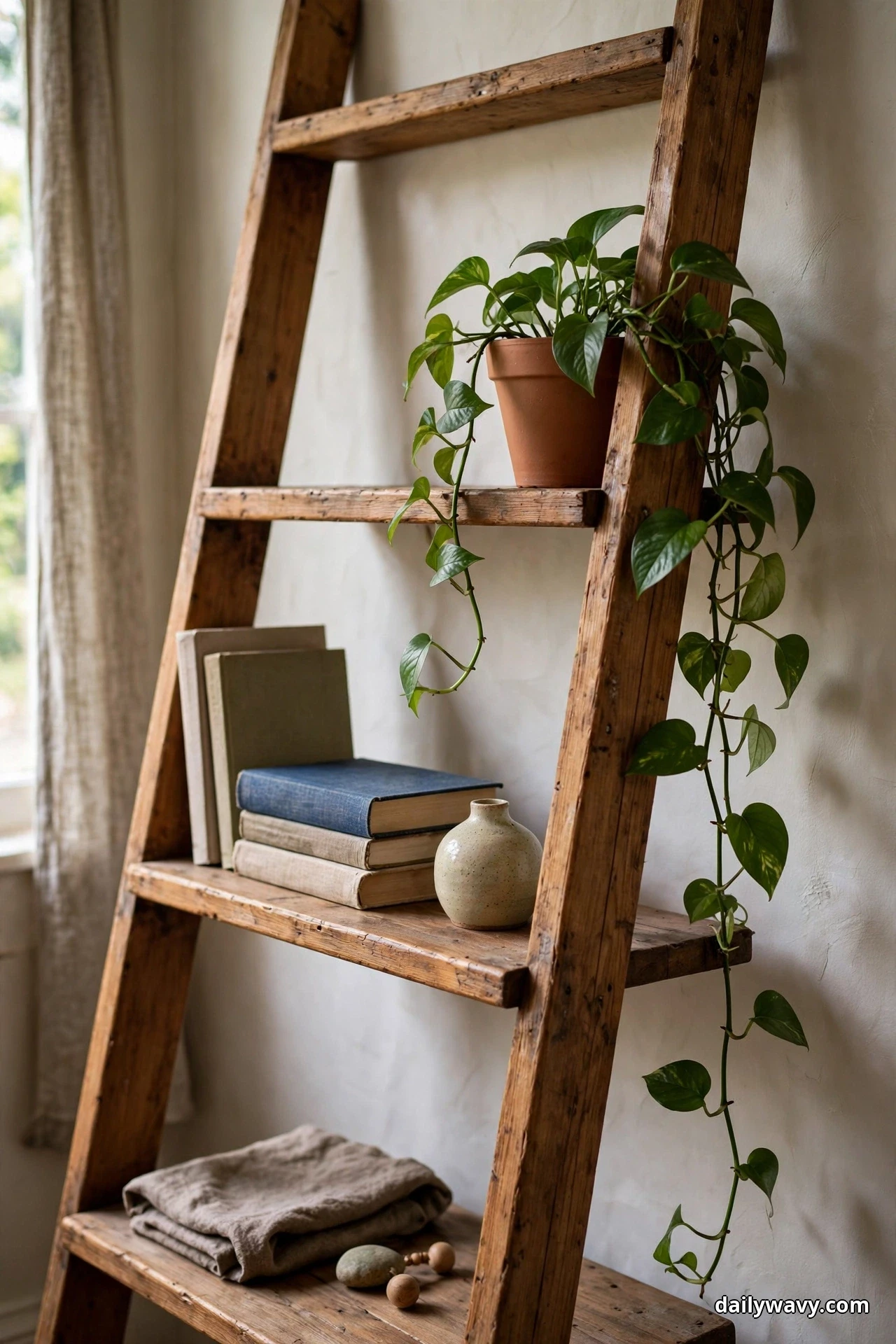
A trailing plant softens the straight lines of a ladder shelf like nothing else. Place a pothos or philodendron in a simple pot on one of the upper shelves, close to one edge, and let the vines spill down the side. The green breaks up the horizontal rhythm of the shelves and makes the whole unit feel alive rather than arranged.
Choose the edge deliberately. One trailing plant on one edge looks artful. Two plants on two edges looks like a jungle gym. Keep the pot itself simple, matte ceramic or terracotta, so the plant is the star. A cachepot without drainage is fine indoors as long as the nursery pot inside has holes and you empty the saucer.
Water over the sink, not on the shelf, and let the soil dry slightly between waterings. Wipe the shelf beneath the pot every few weeks. Even careful watering leaves mineral rings over time, and a quick wipe keeps the wood finish intact.
3. A Set Of Useful Jars Or Containers

Matching jars turn open storage into a display. Group three to five glass jars or lidded canisters on one shelf, filled with things you genuinely use: coffee beans, loose tea, pasta, cotton balls, bath salts. The repetition of shape is what makes it beautiful. The contents are what makes it useful.
In the kitchen, this idea shines on a ladder shelf beside the counter. Decant dry goods into airtight glass jars and label them simply, a strip of masking tape and a marker is honest and looks good. Keep everyday items at hand height and refills up high.
In a bathroom, the same idea works with moisture in mind. Glass and glazed ceramic jars handle humidity without complaint. Avoid decanting anything that needs its original packaging for safety information, like medications or cleaning products. Cotton rounds, spare soap, and Epsom salts are the right citizens for this shelf.
4. A Plate Displayed Upright

A single beautiful plate, stood upright on a small plate stand, turns a shelf into a gallery. It works best with a plate that has something to say: a hand-thrown stoneware piece, a vintage find with a painted rim, or a serving platter you love too much to hide in a cabinet.
Set the plate stand on a mid-level shelf where it catches the light. A clear acrylic stand disappears and lets the plate float. A small wooden easel adds warmth and suits rustic or farmhouse rooms. Keep the plate slightly off-center on the shelf and balance it with something low and simple on the other side, a small stack of books or a low bowl.
This is not the spot for your everyday dinnerware. Choose one plate with character. If it is valuable or fragile, keep it on a lower shelf where a bump is less likely, and make sure the stand grips the plate securely before you walk away.
5. A Trio Of Small Collectibles

Three small objects, grouped closely, read as one intentional vignette instead of three random things. The magic number is three, and the magic rule is variation: vary the height, vary the material, vary the shape. A small brass object, a smooth stone, and a tiny framed print. A candle in a holder, a shell, and a miniature vase.
Keep the trio tight. Objects should sit within a hand’s width of each other, on one shelf, with empty space around the group. That negative space is what makes it look styled rather than stored. A small tray underneath can corral the group and makes dusting easier, just lift the tray, wipe, and set it back.
Rotate your collectibles seasonally if you like. The shelf stays fresh, and the objects you swap out feel new again when they return. This is also the kindest way to display souvenirs. Three chosen pieces tell a story. Thirty pieces on every shelf tell no story at all.
6. A Leaning Mirror On A Secure Ledge
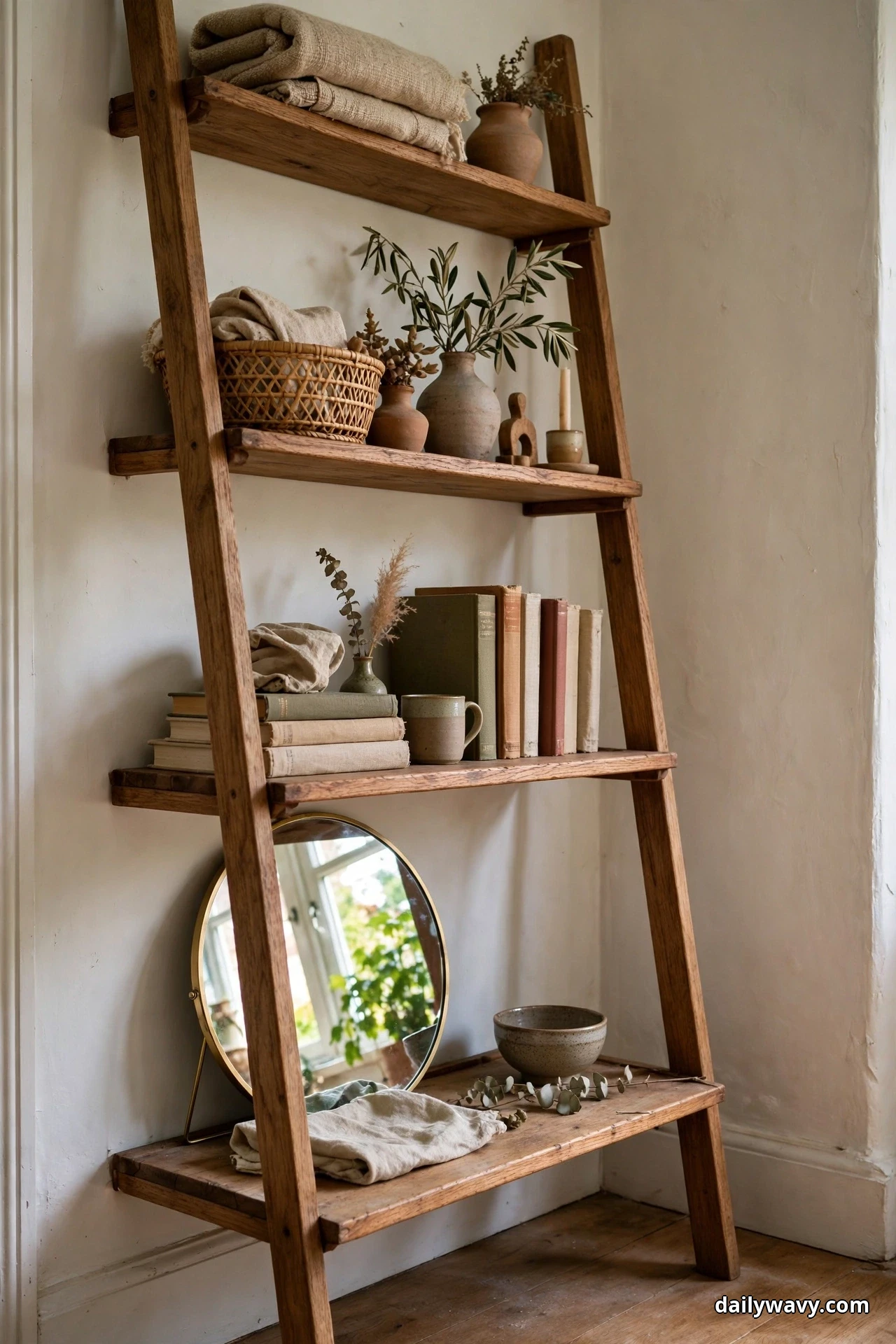
A small mirror leaning against the wall on one of the deeper lower shelves bounces light around the room and makes the whole corner feel bigger. It is one of the oldest stylist tricks, and it works on a ladder shelf because the lean of the mirror echoes the lean of the unit.
Safety comes first with this one. The mirror must sit on a shelf deep enough to hold its full base, at least 8 inches, and it should lean against the wall, not against the shelf uprights. For anything heavier than a pound or two, add a small museum-gel dot or an L-bracket behind it so a bump cannot send it forward. Round mirrors soften all the shelf’s straight lines. Arched mirrors do the same with a little more personality.
Angle the mirror slightly so it reflects something worth seeing: a window, a plant, a piece of art. A mirror reflecting a blank wall is a missed opportunity. This idea pairs beautifully with the entryway, where a quick glance on the way out the door is genuinely useful. If you are styling a ladder shelf for an entry, our small entryway decor ideas have more ways to make a tight space work hard.
7. A Lidded Box And One Flower Stem
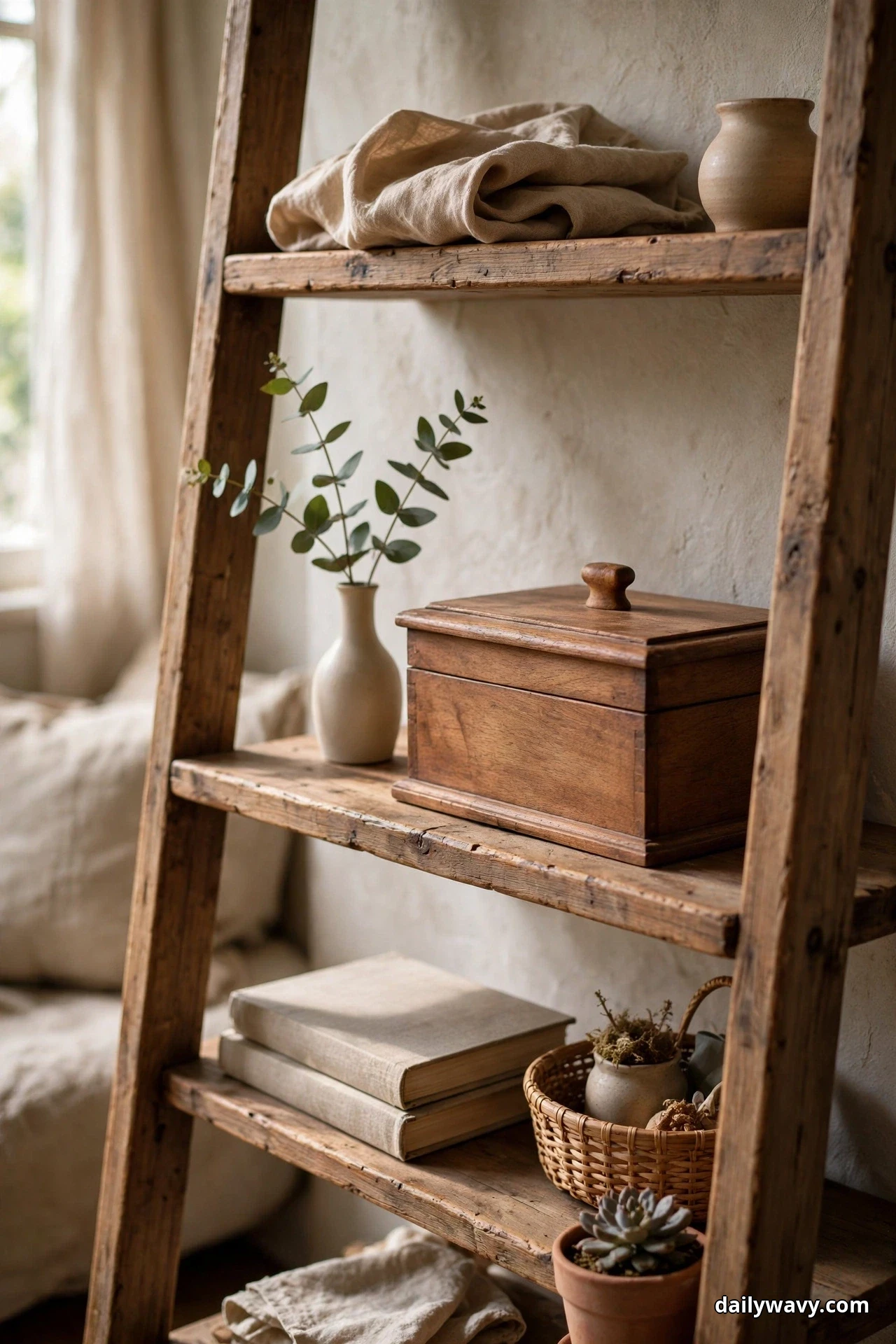
A lidded box hides the unglamorous stuff, batteries, chargers, spare keys, and one perfect flower stem in a bud vase beside it makes the whole thing look like a still life. The contrast is the point: closed storage next to a single living detail.
Choose a box with a lid that fits well and a finish you like looking at, since it will be visible. Wood, lacquered, or fabric-covered boxes all work. Size it to the shelf. A box that fills half a shelf looks substantial. A tiny box on a wide shelf looks lost.
The flower stem can be real or excellent faux. If real, a single stem in a bud vase needs only an inch of water and lasts several days. Eucalyptus, a single rose, or a branch of cherry blossom all carry a whole vignette on their own. Swap the stem weekly and the shelf never looks stale.
8. A Small Clock Between Two Book Stacks
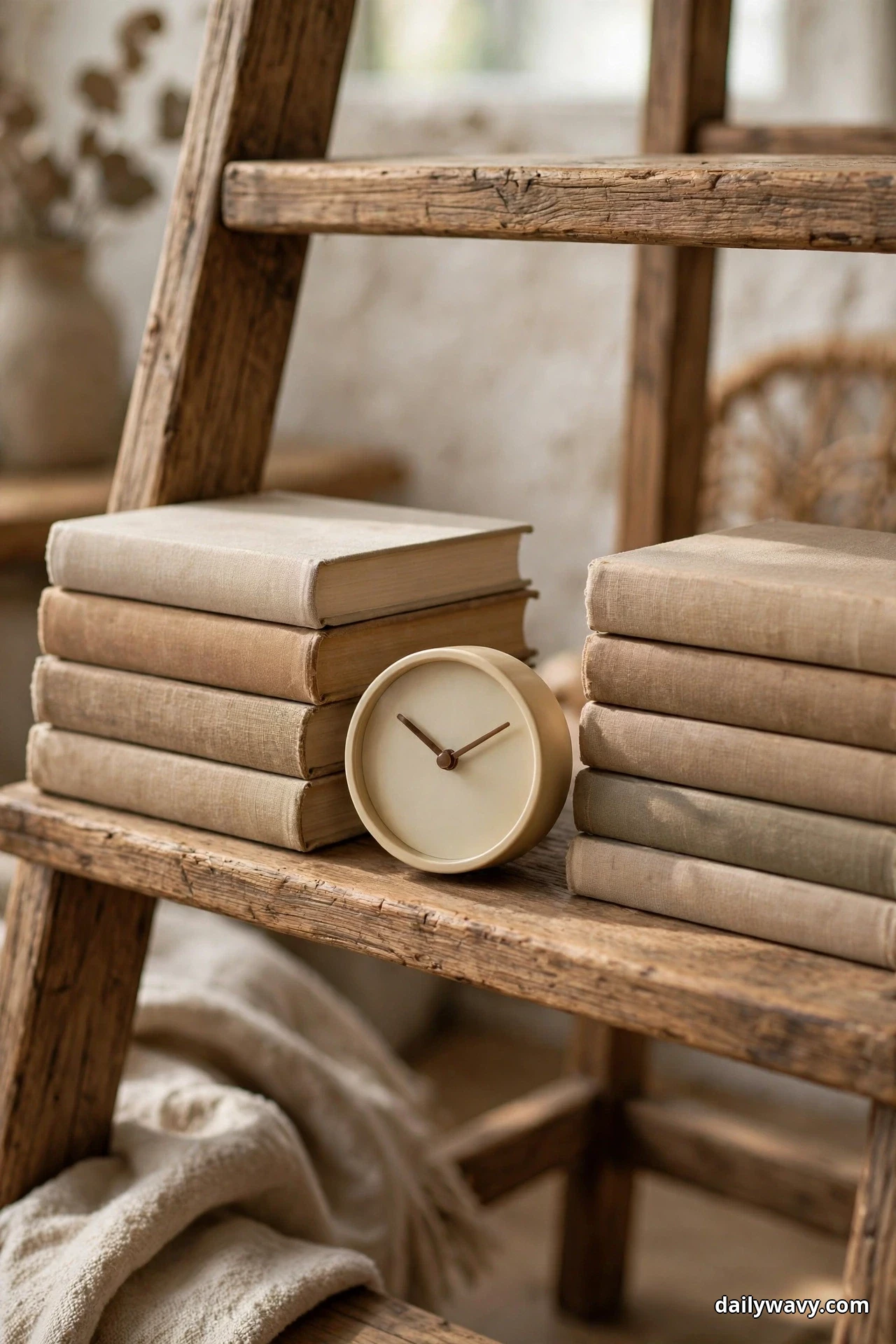
Flank a small clock with two low stacks of books and you get symmetry with a pulse. The clock becomes the centerpiece, the books become the architecture. It works on any shelf deep enough for the clock’s base plus the book stacks, usually a lower or middle shelf.
Keep the book stacks low, three to five books each, so the clock face stays visible above them. Match the stacks loosely in height but not obsessively. A half-inch difference looks natural. Choose an analog clock with a quiet movement if the shelf is near a bedroom or desk. Nothing ruins a calm room like an audible tick.
This arrangement is also genuinely functional. A clock on an open shelf is easier to glance at than one buried behind objects, and the book stacks keep it from sliding. If the shelf is in a home office, this is the vignette that makes the room feel finished.
9. A Vintage Camera As A Collected Object

A vintage film camera is sculpture that happens to have a shutter button. Set one on a shelf, lens facing slightly outward, and it instantly gives the shelf a collected, personal feeling that new decor cannot fake. Flea markets and thrift stores are full of them for very little money.
Give the camera its own space. It reads best with a few inches of clearance on all sides, on a shelf where it can be seen from across the room. A mid-level shelf at eye height is ideal. Keep the lens cap on to protect the glass, and dust it with a soft brush rather than a damp cloth.
If you do not own a vintage camera, any well-designed object with a story works the same way: a brass compass, an old telephone, a film projector. The rule is that it should be something you chose, not something you bought to fill a shelf. One meaningful object beats five generic ones every time.
10. A Ceramic Pitcher Used For Stems
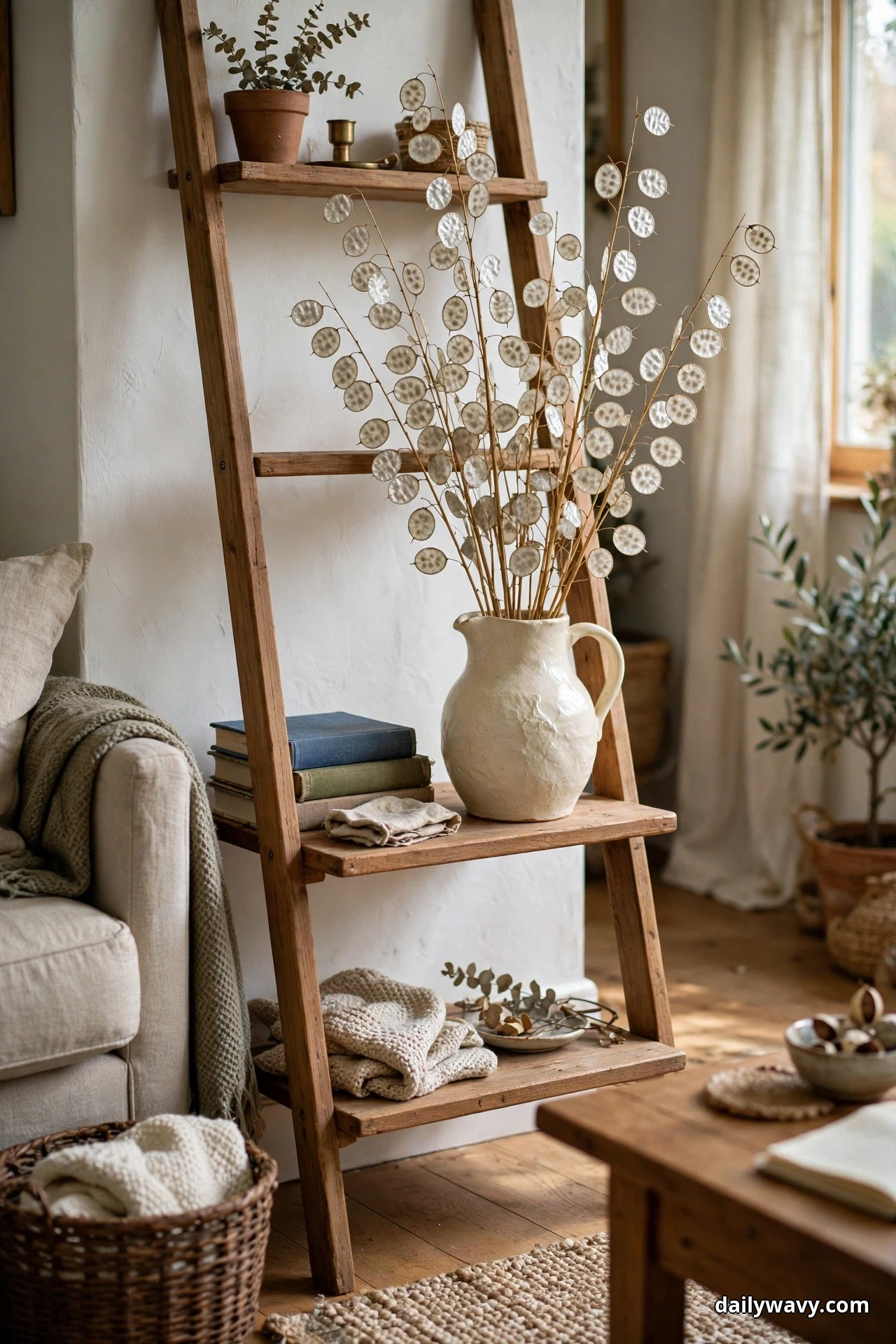
A ceramic pitcher holding a few tall stems is the workhorse of shelf styling. It adds height, it adds a handmade texture, and it holds branches that would flop over in a low vase. Eucalyptus, dried lunaria, or pussy willow last for months and ask for nothing.
Scale matters. The pitcher should be roughly one-third the height of the shelf opening it sits in. Too small and it disappears. Too tall and it crowds the shelf above. Fill it only a third full of water for fresh stems, and change the water when it clouds. For dried stems, no water at all, and the arrangement lasts indefinitely.
A white or cream pitcher works in almost any palette and lets the stems provide the color. A colored or patterned pitcher becomes the focal point itself, so keep everything around it quiet. Either way, this is one of the fastest ways to make a ladder shelf look styled: pitcher, stems, done.
11. A Pair Of Layered Frames
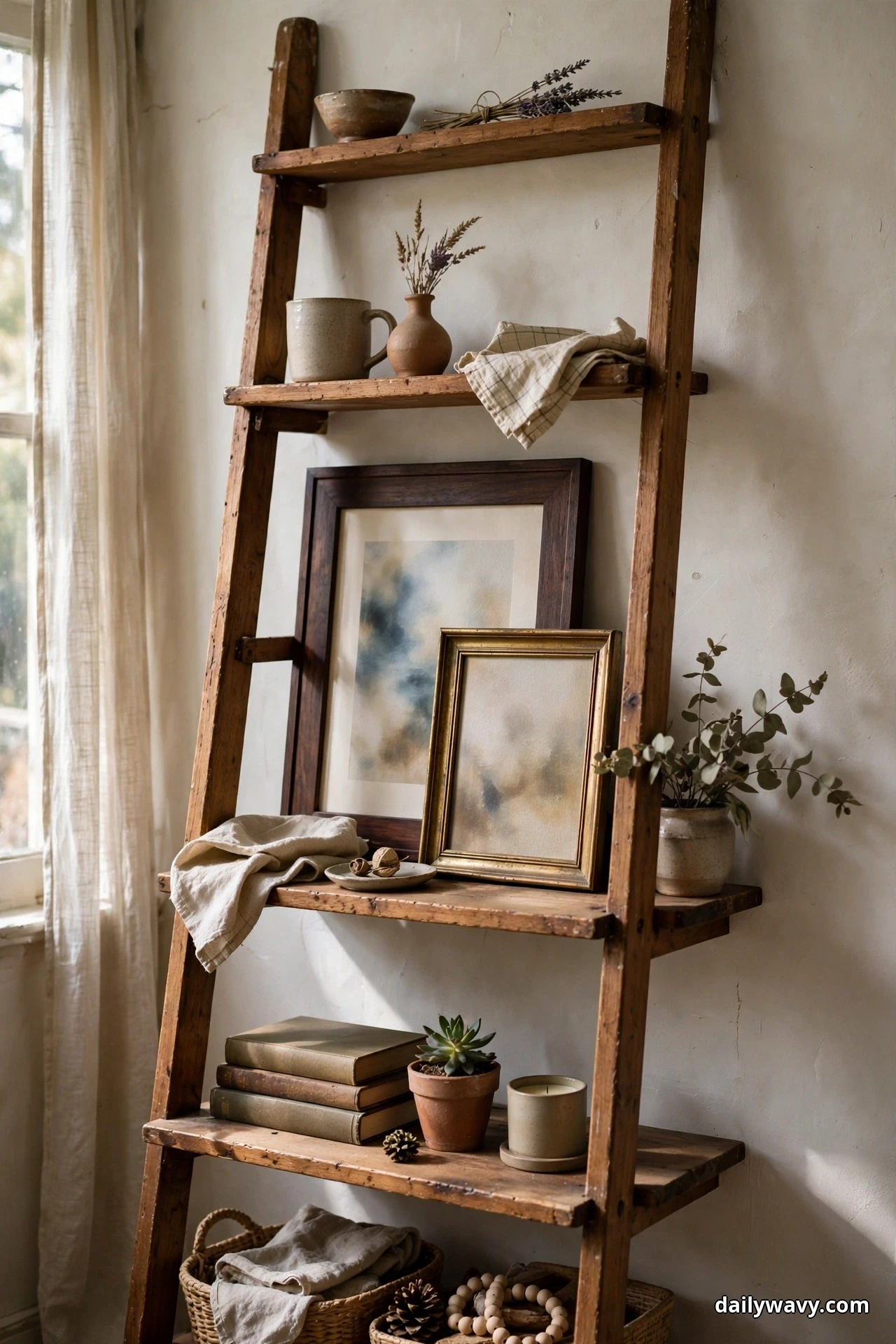
Lean two frames against the wall, one slightly in front of the other, and you get instant depth. The layering is what makes it look styled rather than simply placed. A larger frame in back, a smaller one in front and to one side, both resting securely on the shelf.
Mix the frame finishes for interest, but keep them in the same family: two woods, or black and brass, not every finish you own. The art inside can be photographs, prints, or even a simple mat with nothing in it for a minimalist moment. Keep the glass clean. Smudged glass on a leaning frame catches the light in the worst way.
Make sure both frames are stable before you step back. The back frame leans on the wall. The front frame leans on the back frame. If either wobbles, a small adhesive bumper behind the back frame fixes it. In a narrow room, this vertical layering draws the eye up and makes the ceiling feel higher, a trick that also helps in the layouts from our narrow living room ideas.
12. Horizontal Book Stacks With A Ceramic Bowl
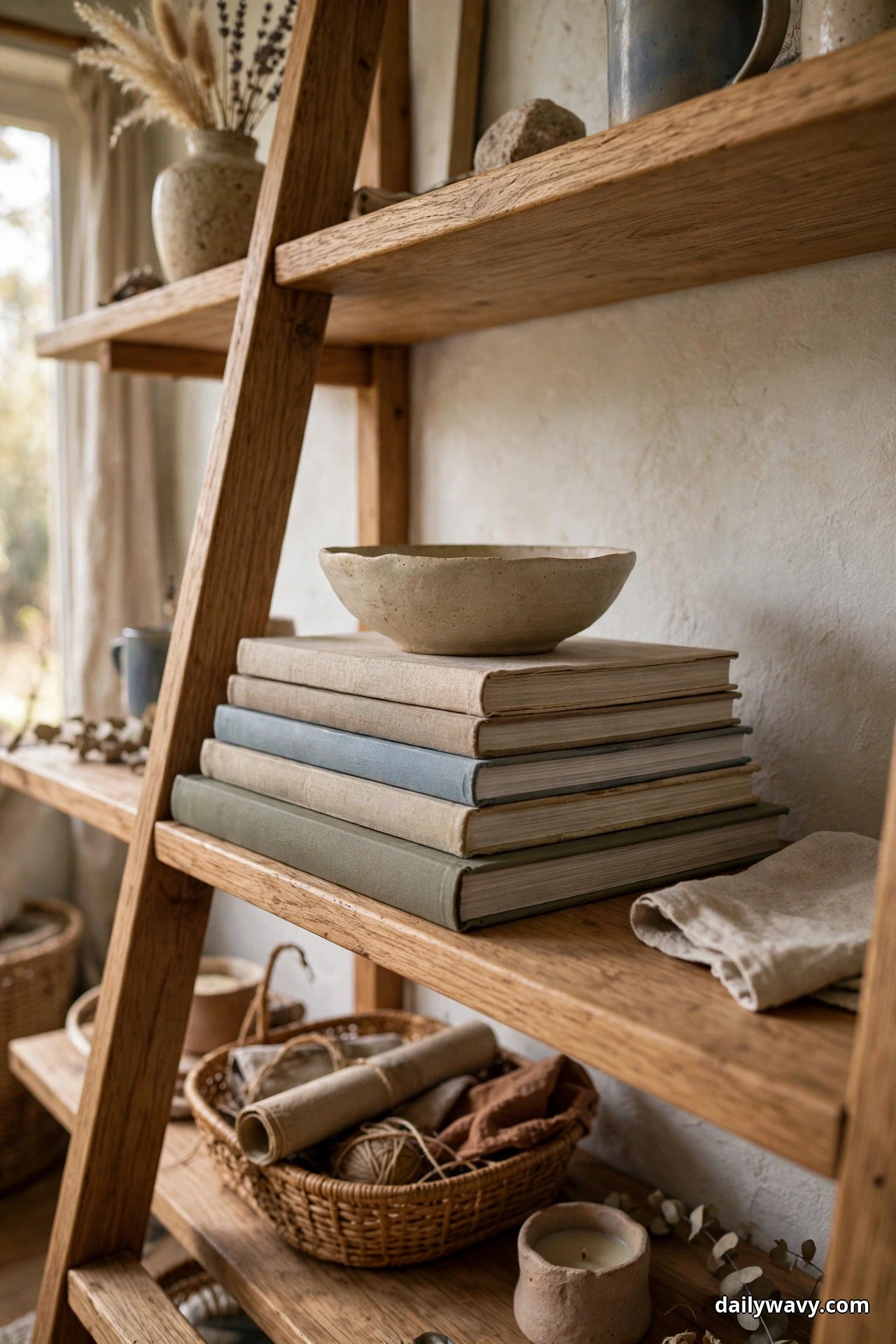
Horizontal stacks break up the vertical rhythm of upright books and give you a pedestal for something beautiful. Stack four to six books flat, largest on the bottom, and top the stack with a ceramic bowl. The bowl can hold nothing at all and still look perfect, or it can corral keys, wrapped candies, or potpourri.
This is the ideal use for books with attractive covers that you do not reach for often. Coffee table books, art books, and travel guides are the usual candidates. Keep the stack slightly off-center on the shelf and leave the other side open or minimally styled.
The bowl on top should be shallow and stable. A wide, low bowl will not tip. A tall, narrow one might. If the shelf is in a high-traffic spot, choose an unbreakable option or keep this vignette on a higher shelf. The whole arrangement takes about two minutes to build and looks like you hired someone.
13. One Framed Photograph Beside A Plant
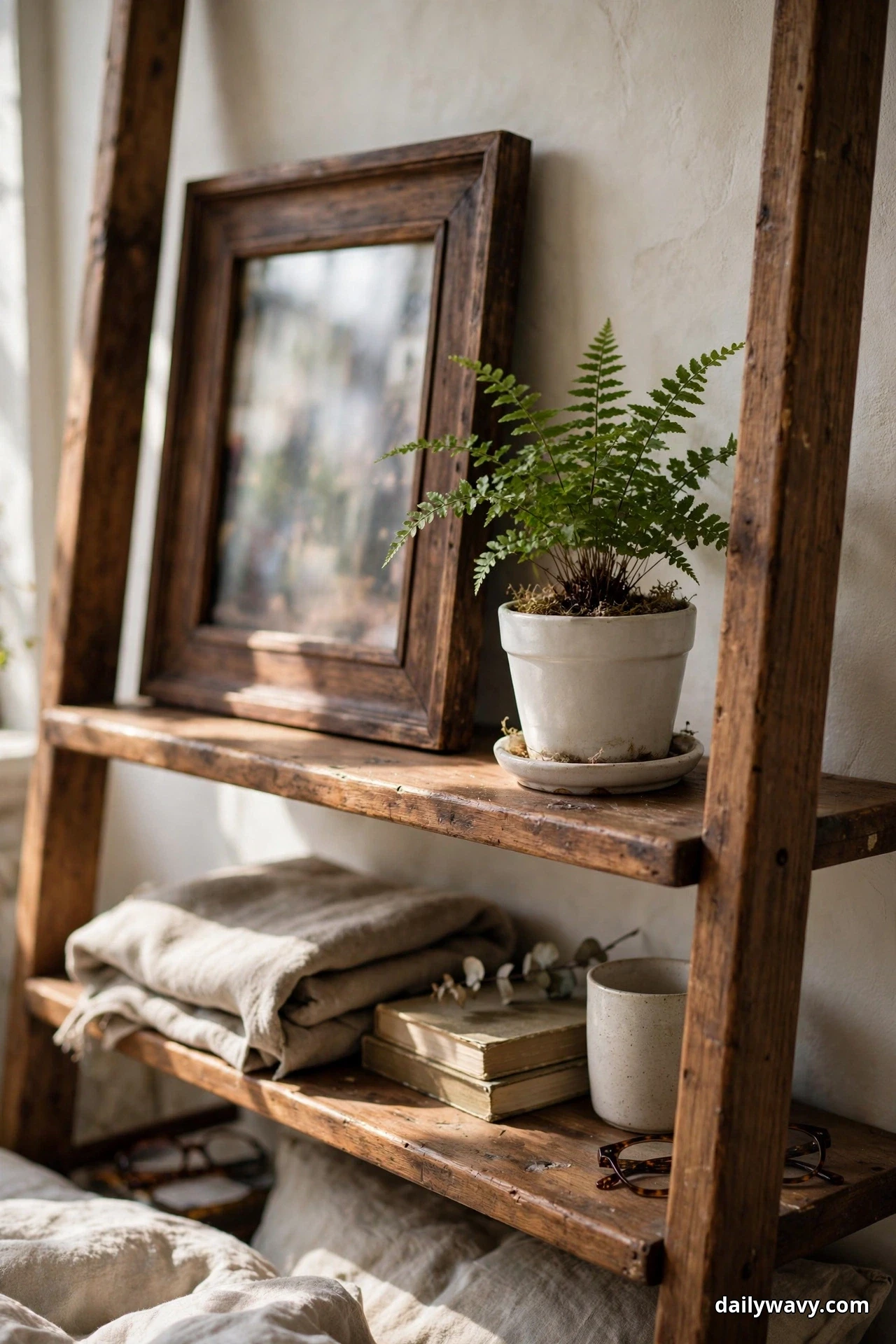
A single framed photograph next to a small plant is the most personal vignette on this list, and the easiest. The plant softens the frame’s hard edges. The photograph gives the shelf a heartbeat. Together they take up less than a foot of shelf space.
Print the photograph at a real size, 5×7 or 8×10, and put it in a frame with substance. A thin drugstore frame undermines a good photo. Choose a plant that will not outgrow the arrangement: a small succulent, a young fern, or a 4-inch pothos. Keep the plant in a pot with drainage and a saucer to protect the shelf.
Place this pairing where you will see it daily. A ladder shelf in a bedroom or home office is the natural home for personal photographs. If the shelf is in a bathroom, use a moisture-tolerant frame, sealed wood or metal, and a plant that tolerates humidity, like a fern or a pothos.
14. A Low Basket Concealing Small Objects
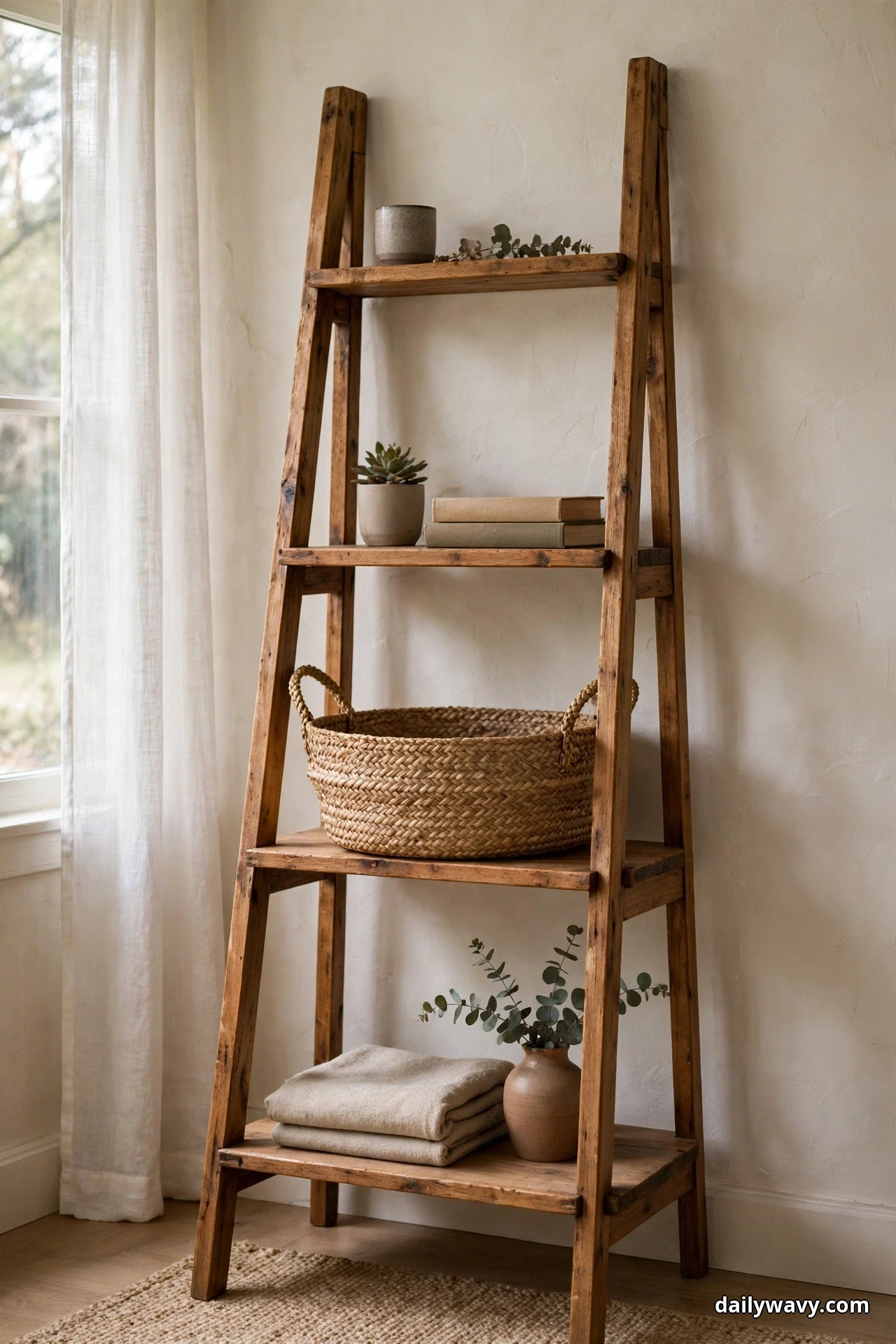
Every open shelf needs at least one closed container, and a low, wide basket is the prettiest way to do it. It swallows remote controls, chargers, reading glasses, and all the other small necessities that make open shelving look messy, while adding natural texture to the shelf.
Size the basket to the shelf opening. It should fill the space comfortably without wedging in. Seagrass, water hyacinth, and woven cotton all suit the casual feel of a ladder shelf. Look for a basket with handles if you will pull it out often.
One basket per shelf is plenty. Two baskets on the same shelf start to look like storage rather than styling, unless they match exactly, in which case they read as intentional. Label the basket discreetly if it helps the household, a small tag on the handle keeps everyone putting things back where they belong.
15. A Tall Vase Balanced By A Short Stack
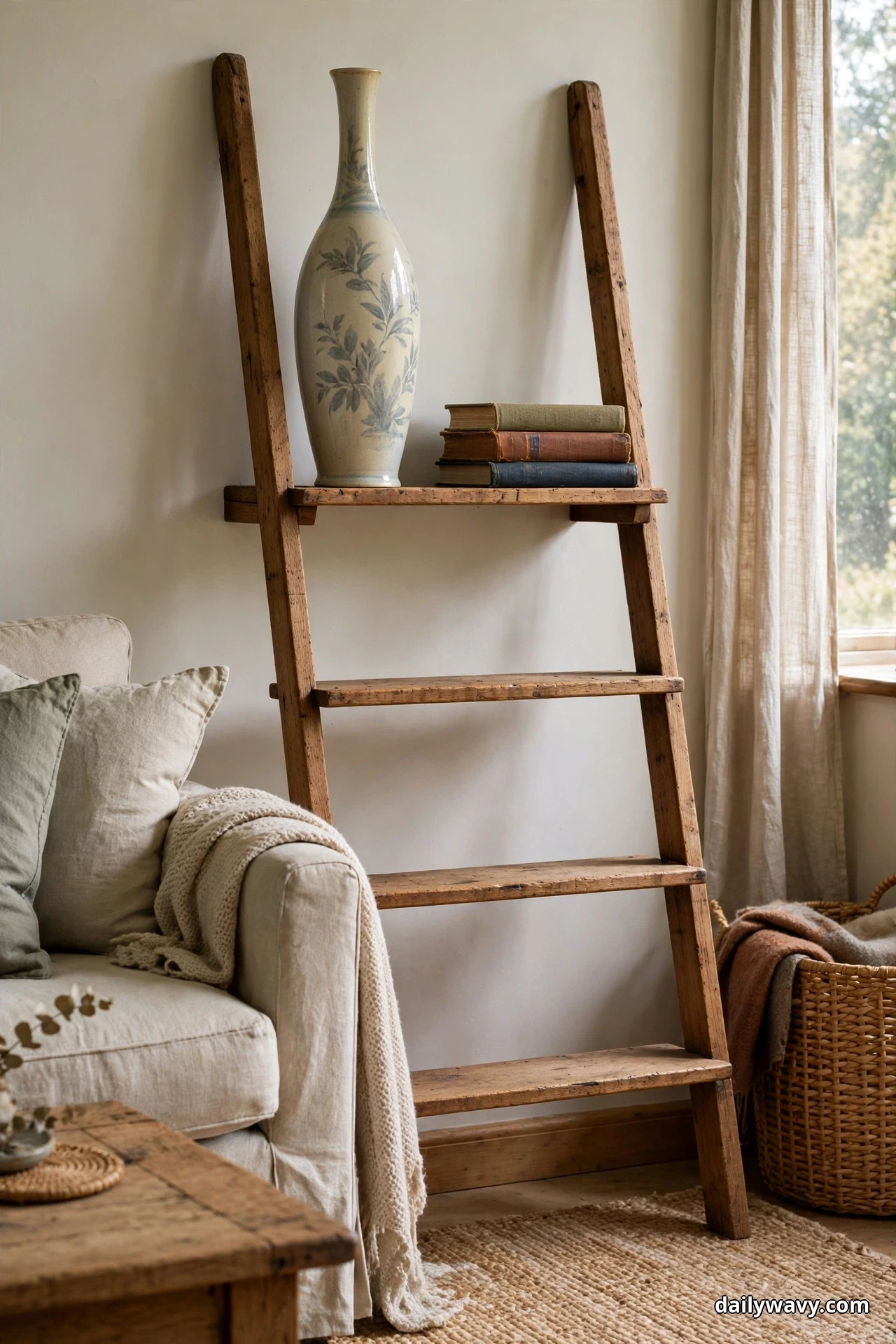
Height contrast is the fastest route to a styled-looking shelf. Place a tall vase on one side of a shelf and a short stack of books or boxes on the other. The eye travels between the two heights and the shelf feels composed, even though you have only placed two things.
The tall vase can hold stems or stand empty. An empty vase with a beautiful shape is a legitimate decor object. Keep it on a deeper lower shelf if it is top-heavy, and never place a tall, narrow vase where it can be bumped by foot traffic or a swinging door.
The short stack beside it should be genuinely short, two to four inches. A stack of coasters, a small pile of books, or two nested boxes. The height difference between the vase and the stack should be obvious, at least double. Subtle differences look accidental. Bold differences look deliberate.
16. A Pair Of Matching Boxes

Two matching boxes, side by side or stacked, bring order to any shelf. They hide clutter, add a block of consistent color or texture, and give the eye a place to rest among more detailed objects. Decorative boxes are the punctuation marks of shelf styling.
Match them exactly or coordinate closely: same box in two sizes, or two boxes in the same material and color. Place them on a shelf that needs visual weight, often a middle shelf that sits at eye level. Inside, store whatever the room generates: stationery in a living room, sewing supplies in a bedroom, spare batteries and bulbs in a hallway.
If the boxes are decorative enough to be the feature, let them be. A pair of lacquered boxes or linen-covered boxes needs no accompaniment. If they are plain storage boxes, dress the shelf around them with one of the livelier ideas above, a trailing plant or a framed photograph keeps the shelf from feeling like an office supply closet.
Ladder Shelf Styling FAQ
How do I keep a ladder shelf from tipping over?
Lean it at the angle the manufacturer designed, which is usually built into the frame, and anchor the top to a wall stud with an anti-tip strap or furniture anchor. Keep the heaviest items on the lowest shelves. Never climb a ladder shelf, even a sturdy-looking one, since it is not designed to hold body weight.
What should go on the bottom shelf of a ladder shelf?
The heaviest and most-used items. Books, baskets, large storage boxes, and anything you reach for daily. The bottom shelf is also the deepest on most ladder units, so it handles larger objects comfortably. Save the top shelves for light, decorative pieces.
How do I style open shelves without them looking cluttered?
Leave empty space. Aim for roughly a third of each shelf to be clear, and group objects in small clusters, often in odd numbers, with room around each group. Step back and squint. If you cannot pick out individual groups, remove something. Editing is the whole skill.
Can I put a ladder shelf in a bathroom?
Yes, with moisture-tolerant materials. Choose a shelf in sealed wood, powder-coated metal, or another humidity-friendly finish, and style it with glass, glazed ceramic, and plants that like steam. Keep paper goods, raw wood objects, and anything that can rust off the shelf or in closed containers.
How do I stop books from sliding on the slanted shelves?
Most ladder shelves have a small lip or rail at the front of each shelf, which handles normal use. For extra security, add a bookend at the end of each row, keep rows full enough that books support each other, and avoid overloading the narrower upper shelves with heavy hardcovers.
How deep should ladder shelf shelves be for styling?
For styling flexibility, look for a bottom shelf around 10 to 12 inches deep and a top shelf no shallower than 4 inches. That range holds books and baskets low and frames and small objects high. Anything shallower than 4 inches at the top limits you to very small decor.
A Shelf That Works As Hard As It Looks
A ladder shelf earns its place when it holds real life beautifully: the books you reread, the plant you water, the jars you open daily. Start with the anchor and the weight rule, then build one vignette at a time from the ideas above. Leave the empty space. Edit ruthlessly. The goal was never a perfect shelf. It was a shelf that looks like you, on your best day, every day.
If you are working with tight square footage overall, a ladder shelf is one of the smartest pieces you can choose, and it pairs well with the strategies in our small bedroom with a queen bed ideas and small pantry organization ideas. For the whole room around the shelf, browse the Home and Decor archive for more ideas in the same spirit.