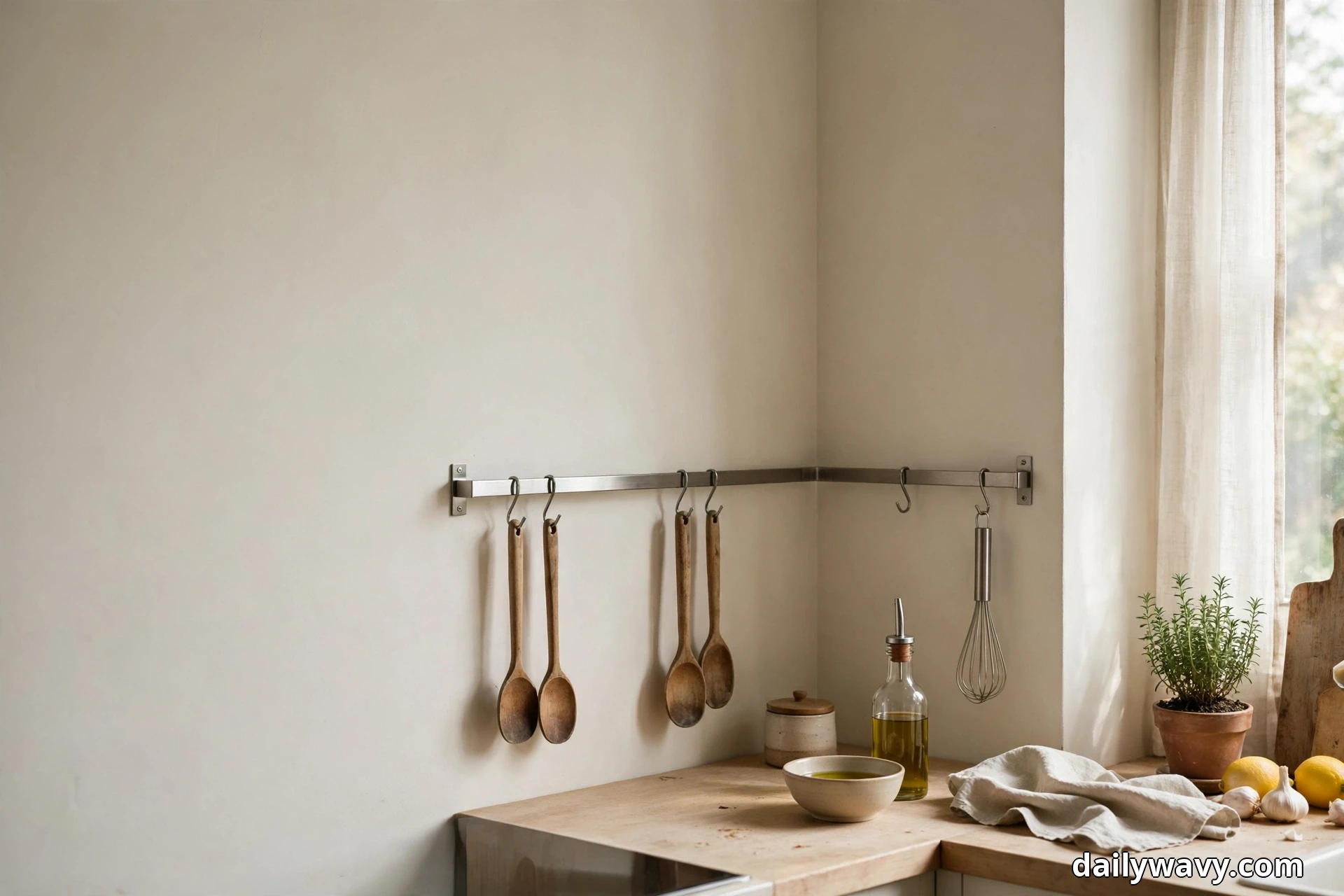
18 Kitchen Corner Counter Styling Ideas for an Organized Everyday Kitchen
The corner of a kitchen counter is where clutter goes to live. It sits out of the main work path,…
The corner of a kitchen counter is where clutter goes to live. It sits out of the main work path, just far enough from the sink to collect things, and deep enough that once something lands there, it stays. But that same corner can also be the hardest-working, best-looking spot in your kitchen when you treat it like a station instead of a shelf. These eighteen ideas do exactly that: each one gives the corner a job and a clear boundary, so the space looks calm even on busy cooking days. Pick the ideas that match how your kitchen gets used, and you will end up with a corner that stays styled without daily fussing.
In This Guide:
- A Narrow Rail For Light Utensils
- A Single Decorative Vase
- A Labeled Canister Grouping
- A Towel Hook Close To The Work Zone
- A Portable Caddy That Clears The Surface
- A Small Lamp Only In A Dry Safe Area
- A Closed Box For Visual Clutter
- An Empty Landing Area Beside The Essentials
- A Shallow Tray Grouping Everyday Essentials
- A Ceramic Crock Beside One Useful Tool
- A Small Plant Near Natural Light
- A Wood Board Stored Upright
- A Simple Glass Jar Grouping
- A Low Bowl For Fresh Produce
- A Washable Mat Under Frequently Used Items
- A Small Framed Print Set Safely Back
- A Slim Basket For Packets Or Cloths
- A Lidded Container With A Clean Silhouette
The Kitchen Corner Counter Rules Before You Start
Before you buy a single container, measure the corner. Kitchen counters run a standard 24 to 25 inches deep, and a corner gives you 12 to 20 inches of usable width on each wall, depending on the layout. Work inside those numbers, and keep one rule above all the others: never let styling block the work. The main prep zone, the area around the stove, and any appliance vents need a clear 12 inches of open space on every side. Anything you place in the corner should be easy to lift with one hand, easy to wipe down, and far from the stove’s heat and the sink’s splash zone. Decor belongs toward the back corner; tools belong toward the front edge where your hand reaches naturally. Plan with those two zones in mind and everything else gets easier.
1. A Narrow Rail For Light Utensils
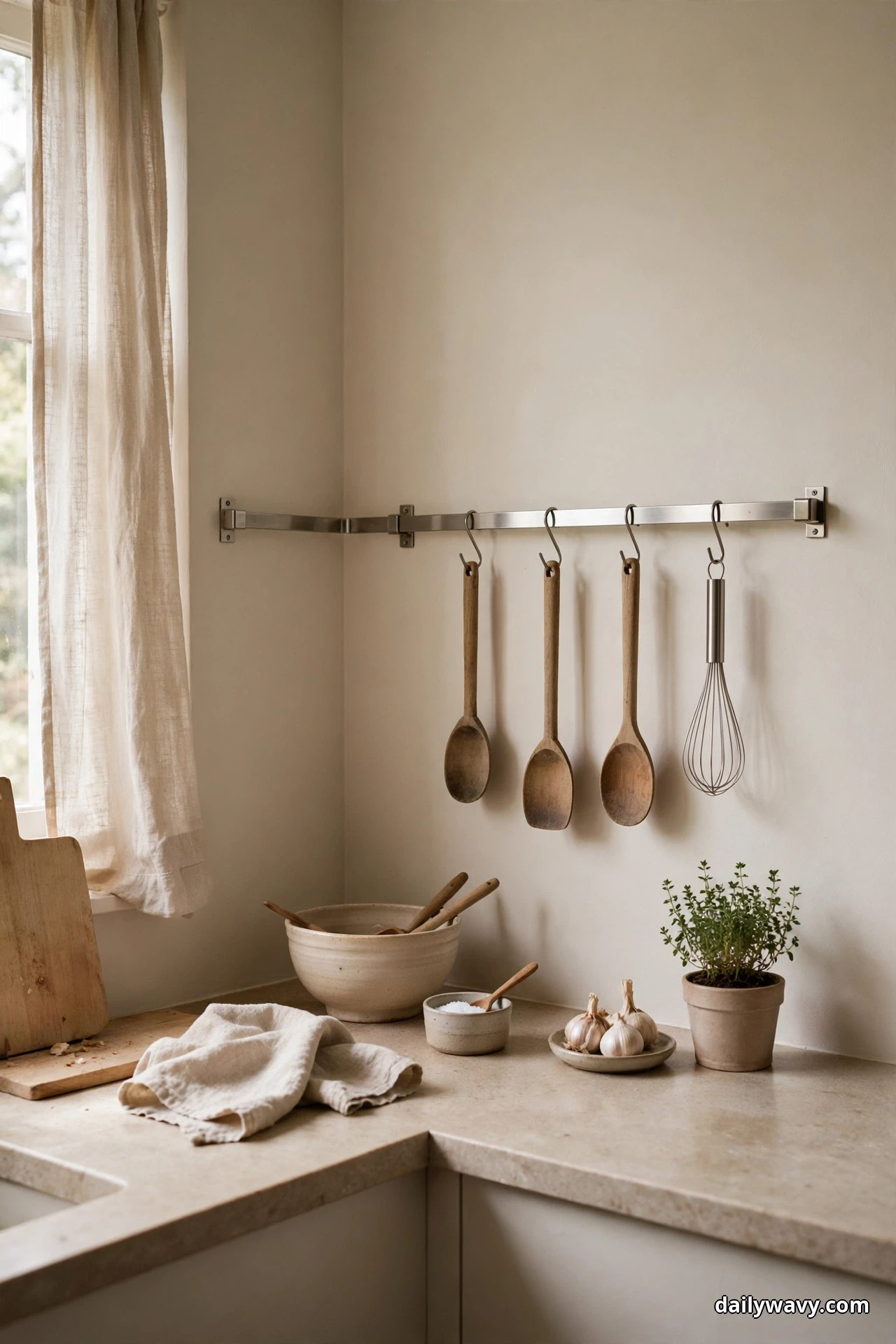
A slim rail with hooks, mounted on the wall or the underside of an upper cabinet above the corner, turns dead air into storage. Choose a rail no more than 12 to 16 inches long, mount it at least 8 inches above the counter, and hang only light items: wooden spoons, a whisk, a couple of spatulas. The beauty of a rail is that it clears the counter surface while keeping the tools you reach for mid-recipe right where the corner meets the wall.
Installation is a ten-minute job with two screws and a level. Stainless rails cost around $10 to $25, and S-hooks run a few dollars for a pack. Keep heavier tools in a drawer; a rail loaded with cast iron looks cluttered and stresses the mount. Wipe the rail down monthly, because cooking grease floats and lands exactly where you mounted it. If your corner sits under a cabinet, mounting underneath keeps the rail invisible from across the room, which suits minimalist kitchens.
The Landing-Station Trick
Here is the habit that makes corner styling stick: decide that the corner is a station with a job, not a shelf for overflow. Give every object in the corner a container or a hook, and give the station one clear purpose, whether that is “everyday tools,” “coffee supplies,” or “fresh produce and trays.” When everything in the corner belongs to one job, nothing random accumulates there. Anything that does not serve that job goes somewhere else immediately. Corners collect clutter only when they have no identity. Give yours one and it starts working for you.
2. A Single Decorative Vase

One vase, placed at the very back of the corner, softens the hardest angle in the kitchen without stealing work space. Pick a vase 8 to 12 inches tall with a stable base, fill it with dried stems or a few fresh branches, and push it as far into the corner as the base allows. The single-object rule matters here: a lone vase reads as intentional, while three vases read as clutter.
Ceramic or stoneware in warm neutrals works in almost any kitchen. Dried grasses, eucalyptus, or pampas stems need no water and last for months; fresh branches get changed weekly when they fade. Keep the vase at least 12 inches from the stove and well back from the sink splash line. Dust the stems monthly with a damp cloth. A vase this simple costs $15 to $40 and does more for the look of the corner than almost any other single object.
3. A Labeled Canister Grouping
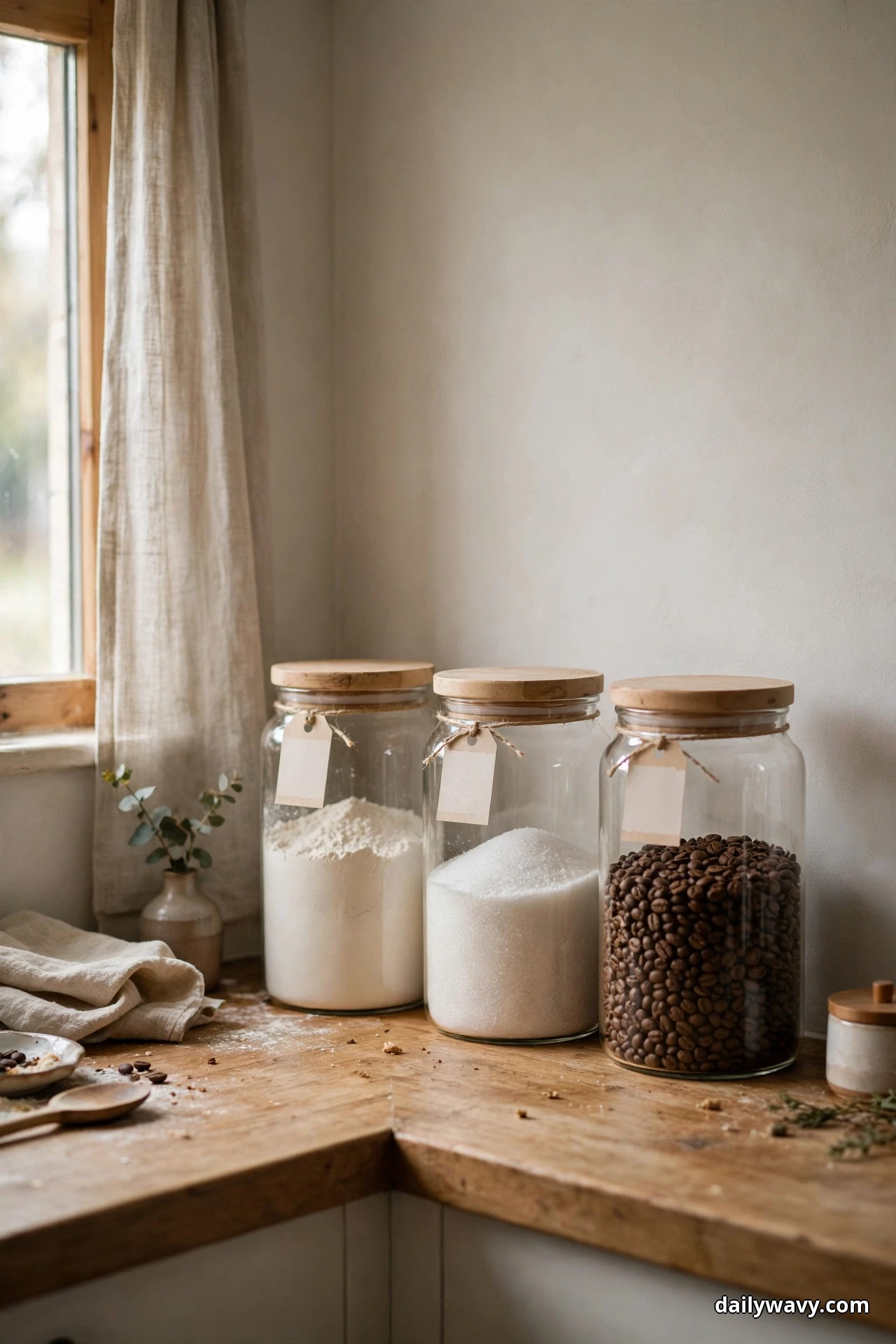
Three matching canisters for flour, sugar, and coffee (or rice, pasta, and oats, depending on your cooking) bring order to a corner in one move. Choose airtight canisters 6 to 8 inches tall with a narrow footprint, line them up along the back wall of the corner, and add simple labels you can read from a few feet away. Uniform canisters turn three bulky bags into one tidy row.
Label with a chalk marker, a label maker, or printed tags; the method matters less than legibility. Fill each canister only two-thirds full so scoops fit easily. Wash canisters between refills, and keep sugar and flour away from the stove’s warmth. A set of three glass or ceramic canisters typically runs $25 to $50. If counter space is tight, choose stackable square canisters and group just two at the corner, leaving the rest in the pantry.
4. A Towel Hook Close To The Work Zone
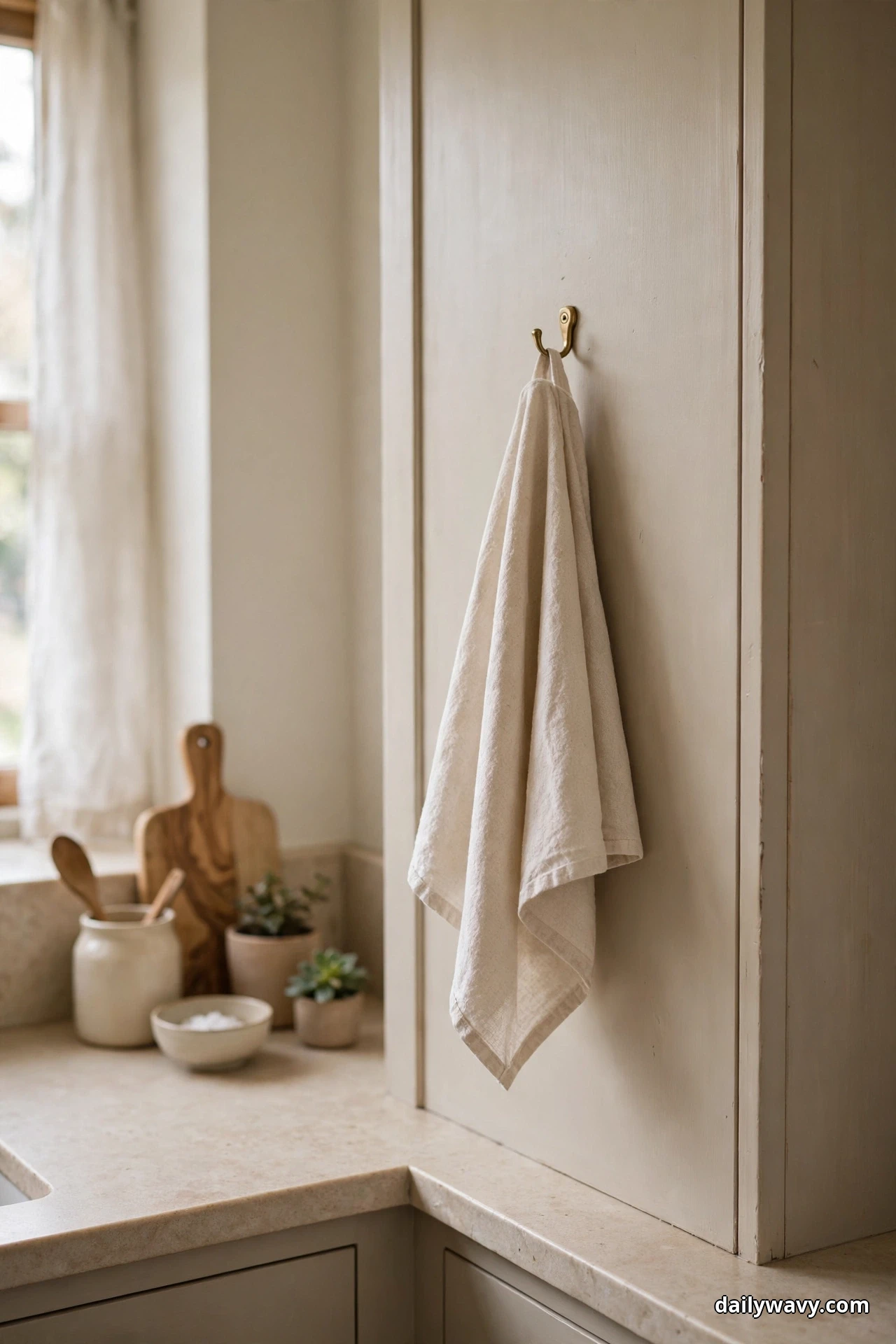
A towel hook on the side of an upper cabinet or the wall just beside the corner keeps a hand towel off the counter entirely. Mount a single hook 6 to 8 inches below the cabinet bottom (or at a comfortable reach height on the wall), hang one everyday towel, and the corner gains a whole towel’s worth of freed surface. It sounds small; it feels enormous in a tight kitchen.
Pick a hook rated for damp weight, stainless or coated metal so it resists rust. Hang only one towel per hook, and swap it for a fresh one every day or two, because a damp towel near food prep is a hygiene issue, not a convenience. The hook costs $5 to $15 and installs with two screws. Mount it where you naturally reach while standing at the corner, and keep it clear of cabinet doors that swing.
5. A Portable Caddy That Clears The Surface
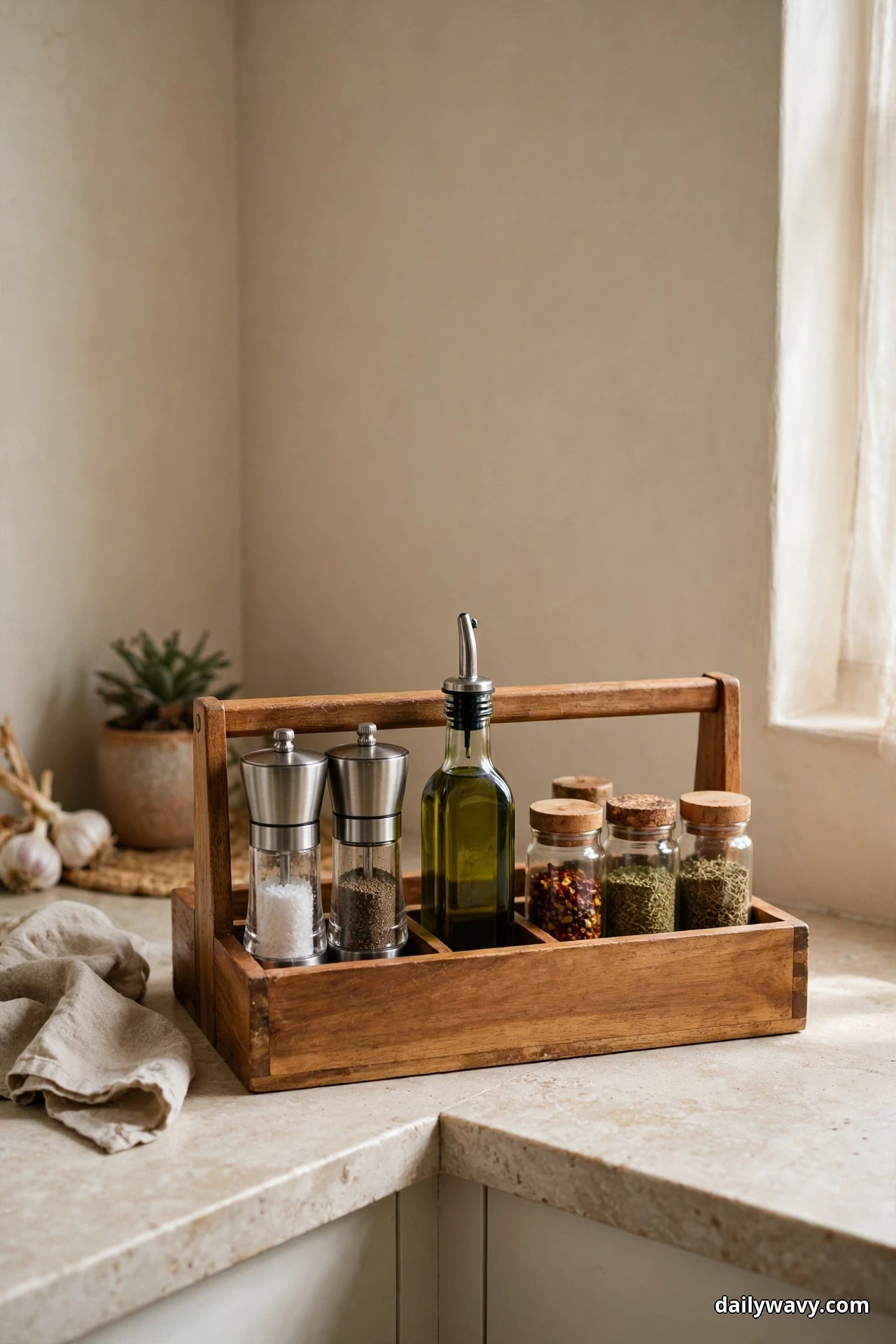
A small caddy with a handle, holding salt, pepper, oil, and your most-used seasonings, turns the whole corner into a grab-and-go station. Set the caddy, roughly 8 by 10 inches, in the corner; when you need the counter clear for big prep, lift the whole thing and move it in one motion. The caddy’s real job is portability, so choose one light enough to carry with one hand even when full.
Wood, bamboo, or washable plastic all work; line the bottom with a washable mat so spills wipe out easily. Refill the oil and salt weekly so the caddy never runs empty mid-recipe. Wipe it down every time you wipe the counters, because crumbs collect under the items you lift out least. A simple caddy costs $10 to $25. Label nothing on it; the point is speed, and you already know what is inside.
6. A Small Lamp Only In A Dry Safe Area
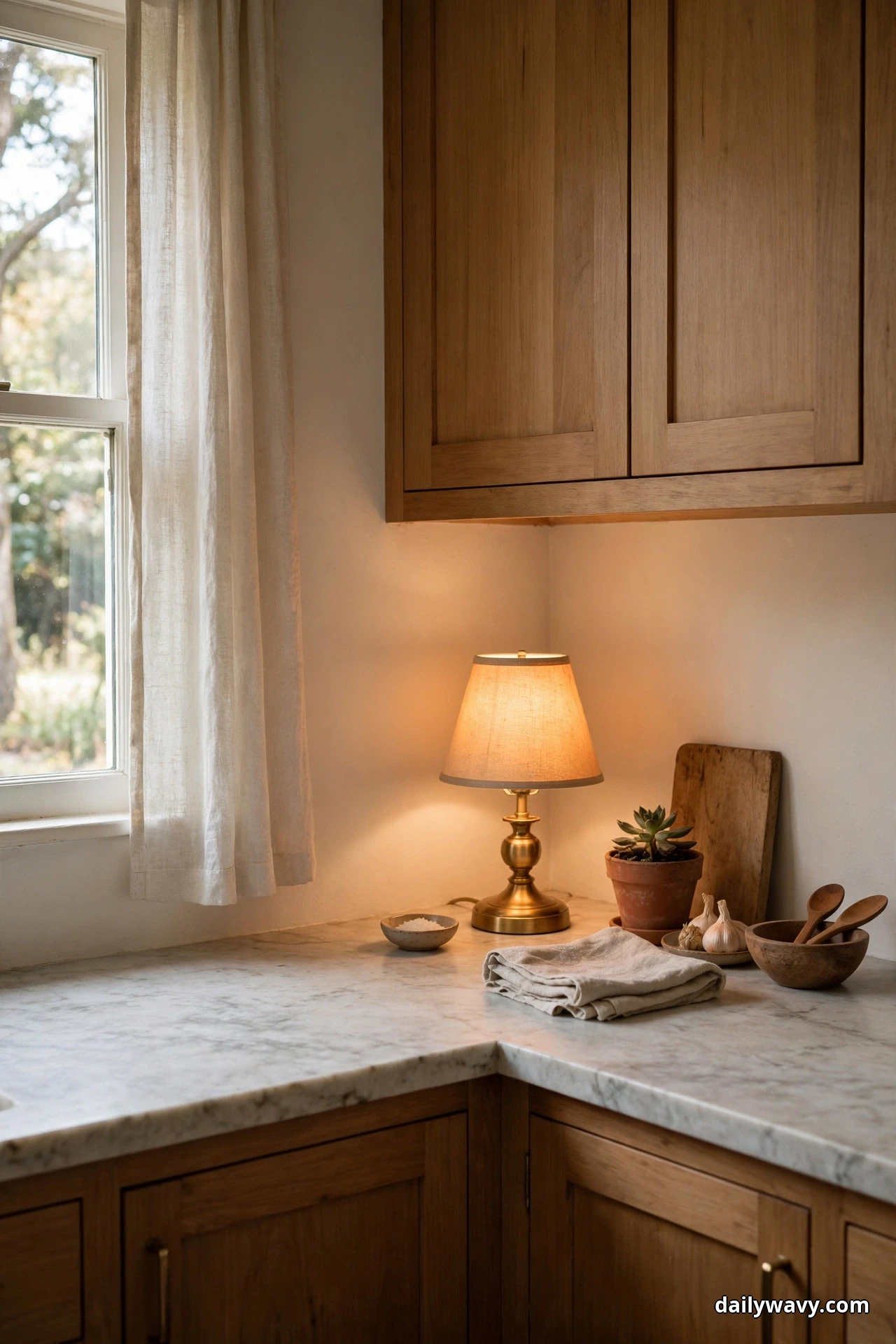
A small lamp, 10 to 14 inches tall with a warm LED bulb, makes the corner feel finished and gives you task light after dark. This one comes with a firm safety rule: the lamp lives only in the dry part of the corner, at least 18 inches from the sink and far from the stove, on a stable base where it cannot be knocked into water. A lamp that respects the water and heat lines is a lovely addition; one that does not is a hazard.
Use an LED bulb that stays cool to the touch, and plug the lamp into a grounded outlet with a short cord routed along the wall, never across the counter. Unplug it when you clean around it. Small kitchen-safe lamps run $20 to $45. The payoff is real: warm light in the evening corner makes the whole kitchen feel calmer, and it doubles as a nightlight for late water runs.
7. A Closed Box For Visual Clutter
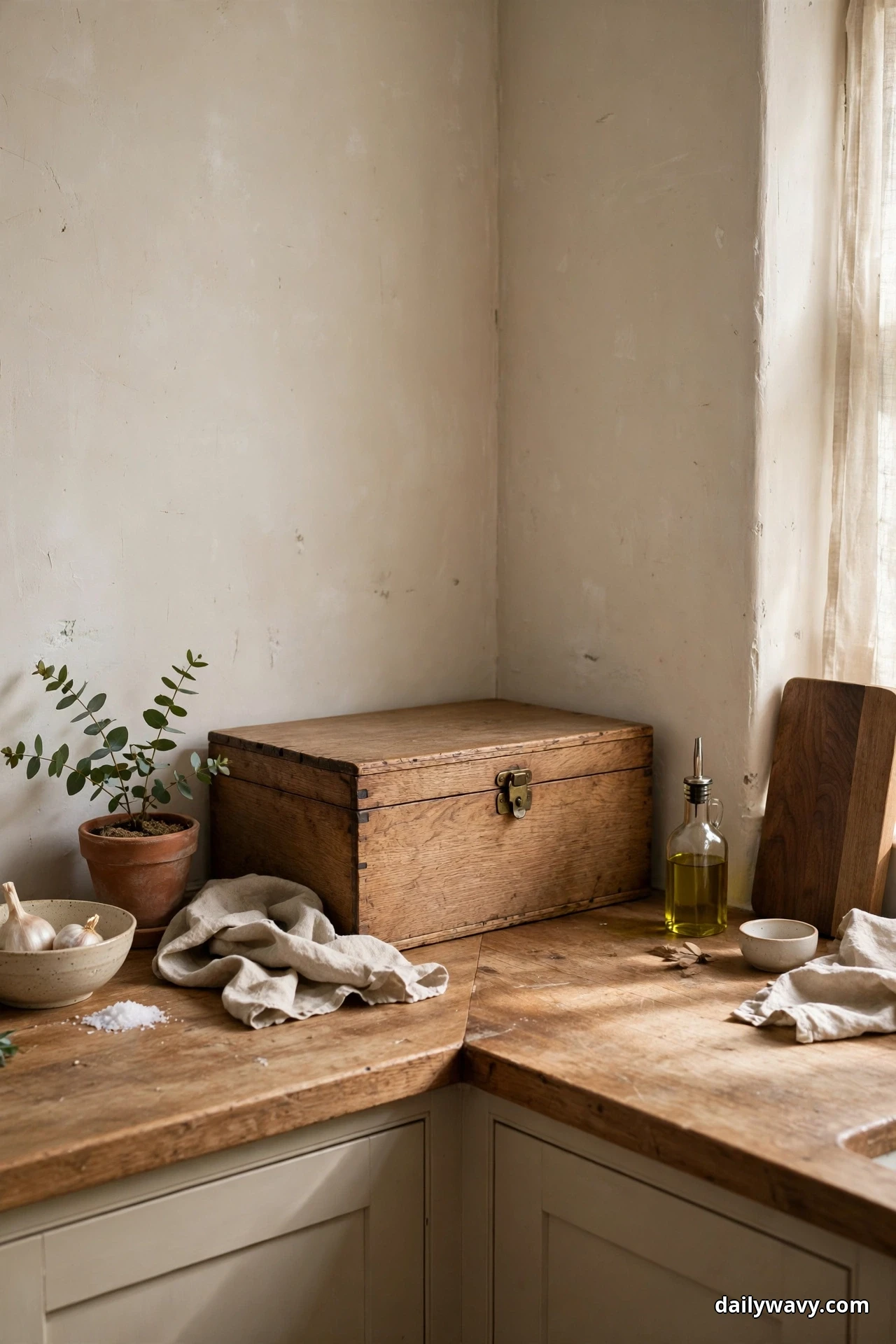
Every kitchen has a category of small things with nowhere to go: spare batteries for the scale, the probe thermometer, twist ties, the phone charger that lives in the kitchen. A single closed box, 8 to 10 inches long, swallows all of it. The box goes at the back of the corner; the clutter disappears; the counter reads clean.
Choose a box with a fitted lid, easy to open with one hand, and wipeable inside. Wood, lacquered fiberboard, or coated tin all work in a kitchen. Review the contents every month or two and clear out what migrated in that no longer belongs. This is the one idea on this list that solves clutter rather than styling it, which is exactly why it belongs here. A good box costs $12 to $30, and it earns its place on day one.
8. An Empty Landing Area Beside The Essentials
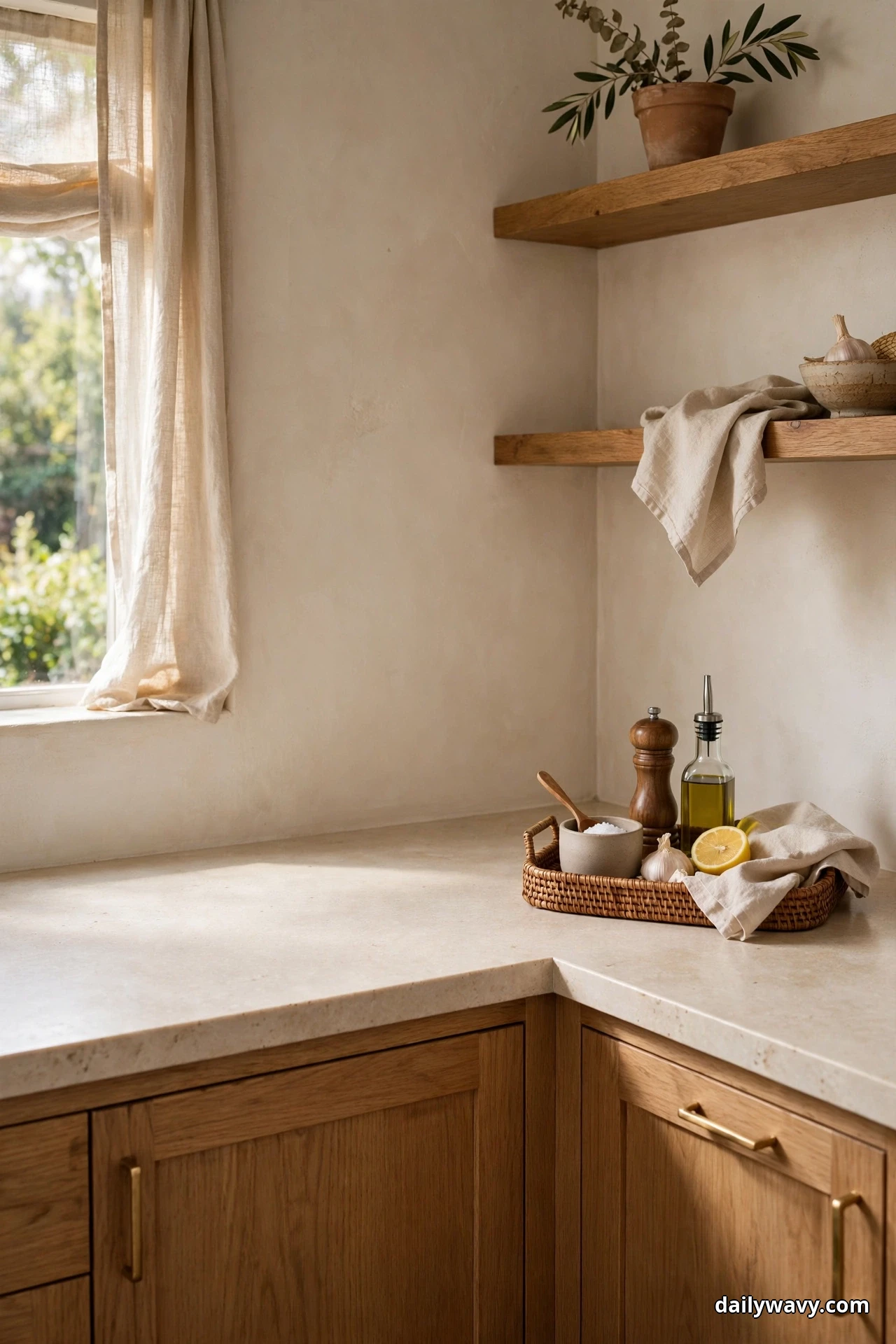
The bravest corner move is leaving part of it empty. Carve out a landing strip, roughly 12 by 12 inches, right at the front of the corner where your hands work. Groceries get set down there. Hot pans rest there for a second. The cutting board slides in when prep gets going. An empty corner zone is not wasted space; it is the working clearance that makes every other idea on this list function.
Defend the landing area by giving everything else a container or a hook, per idea 7. Wipe it down as part of your normal counter routine, and keep nothing stored there permanently. It costs nothing, it needs no purchase, and it is the single change that makes a styled corner feel usable instead of precious. If you only adopt one idea from this list, make it this one.
9. A Shallow Tray Grouping Everyday Essentials
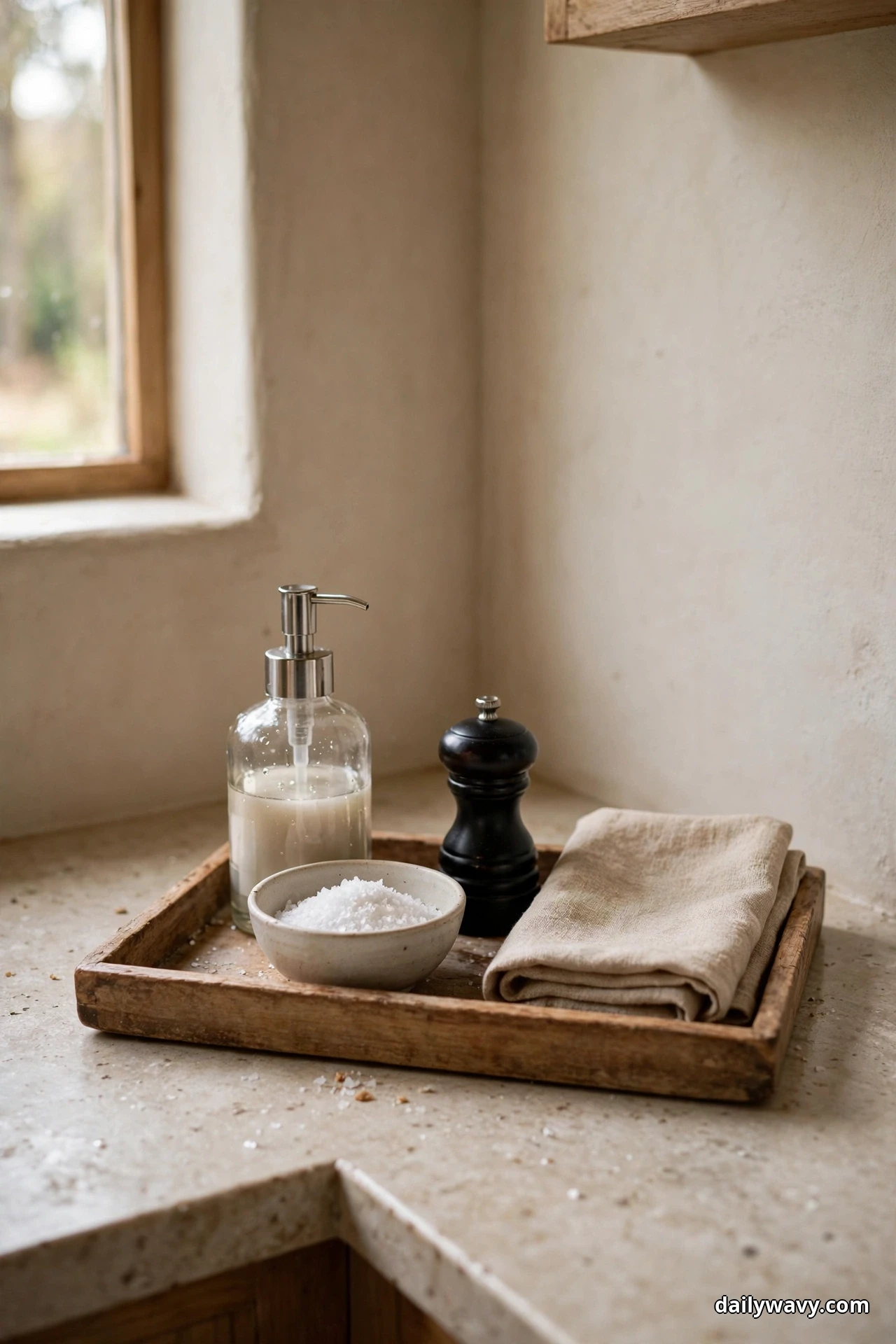
A shallow tray, about 12 by 16 inches with a low rim, turns five loose items into one deliberate grouping. Set the soap dispenser, a small sponge holder, your go-to salt and pepper, and a folded cloth inside the tray, and the whole set reads as one styled object instead of five scattered ones. The tray is the container that makes grouping legitimate.
Choose a tray with raised edges at least an inch high so items do not slide off, in a material you can wash: lacquered wood, stoneware, or metal. Lift the tray and wipe underneath weekly; trays hide exactly the grime you need to see. This works best for items you use daily but do not want visually scattered. Expect to spend $15 to $35 on a tray worth keeping. Group by frequency of use, not by category, and the tray stays relevant year round.
10. A Ceramic Crock Beside One Useful Tool
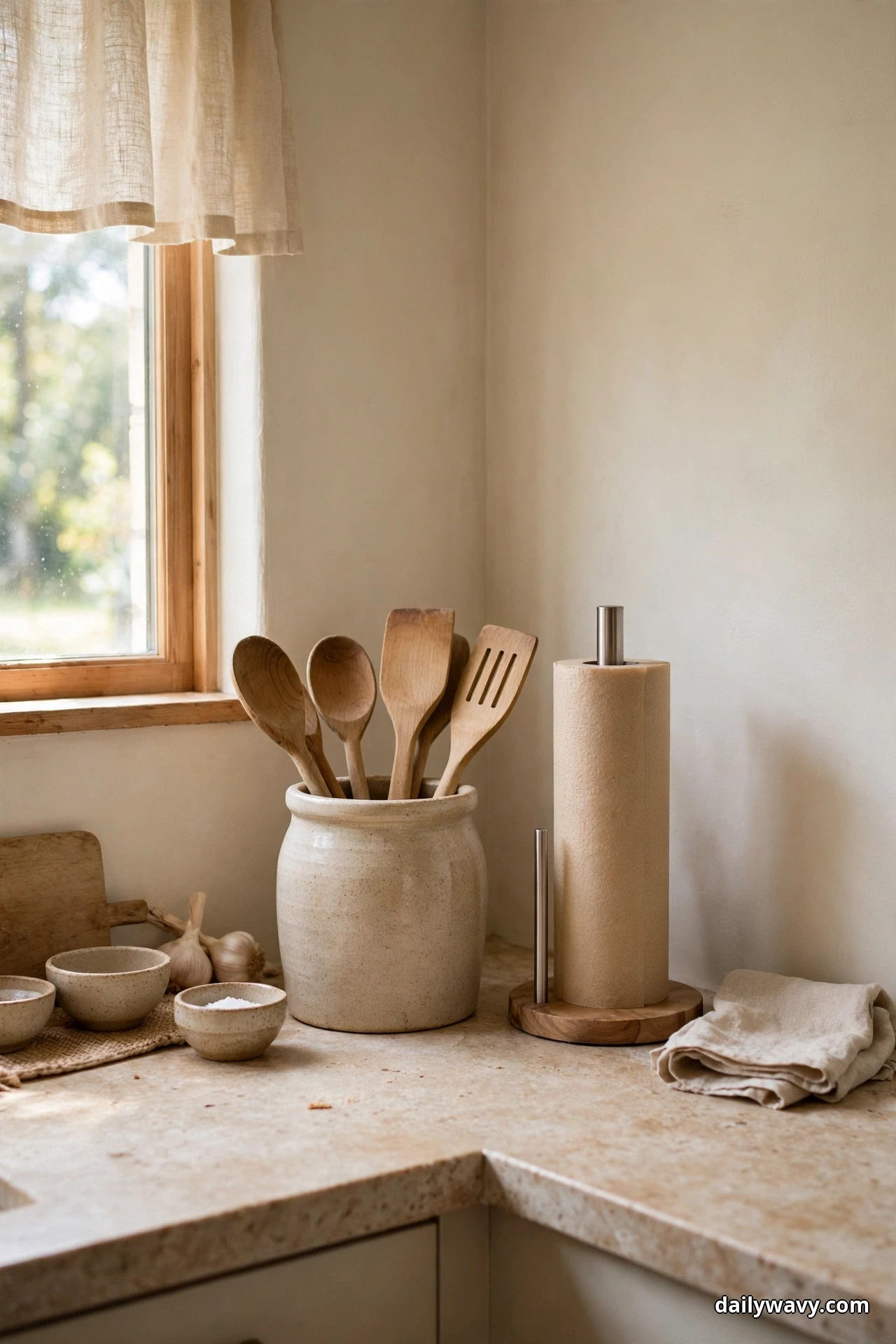
A ceramic crock holding wooden spoons and spatulas, placed next to exactly one more useful tool (a paper towel holder, say, or the knife block), gives the corner a composed, cooking-ready look. The crock should be 5 to 6 inches wide and 6 to 7 inches tall, heavy enough not to tip when you grab a spoon. The “one more tool” rule keeps the corner from becoming a tool museum: crock plus one, not crock plus five.
Fill the crock only with tools you use weekly; the fondue forks and the melon baller live in a drawer. Wash the crock monthly, since dust settles into it from above. Stoneware crocks run $15 to $30. Place the crock toward the front of the corner where your hand reaches it naturally, with the second tool behind it, so the taller item anchors the back and the crock anchors the front.
11. A Small Plant Near Natural Light
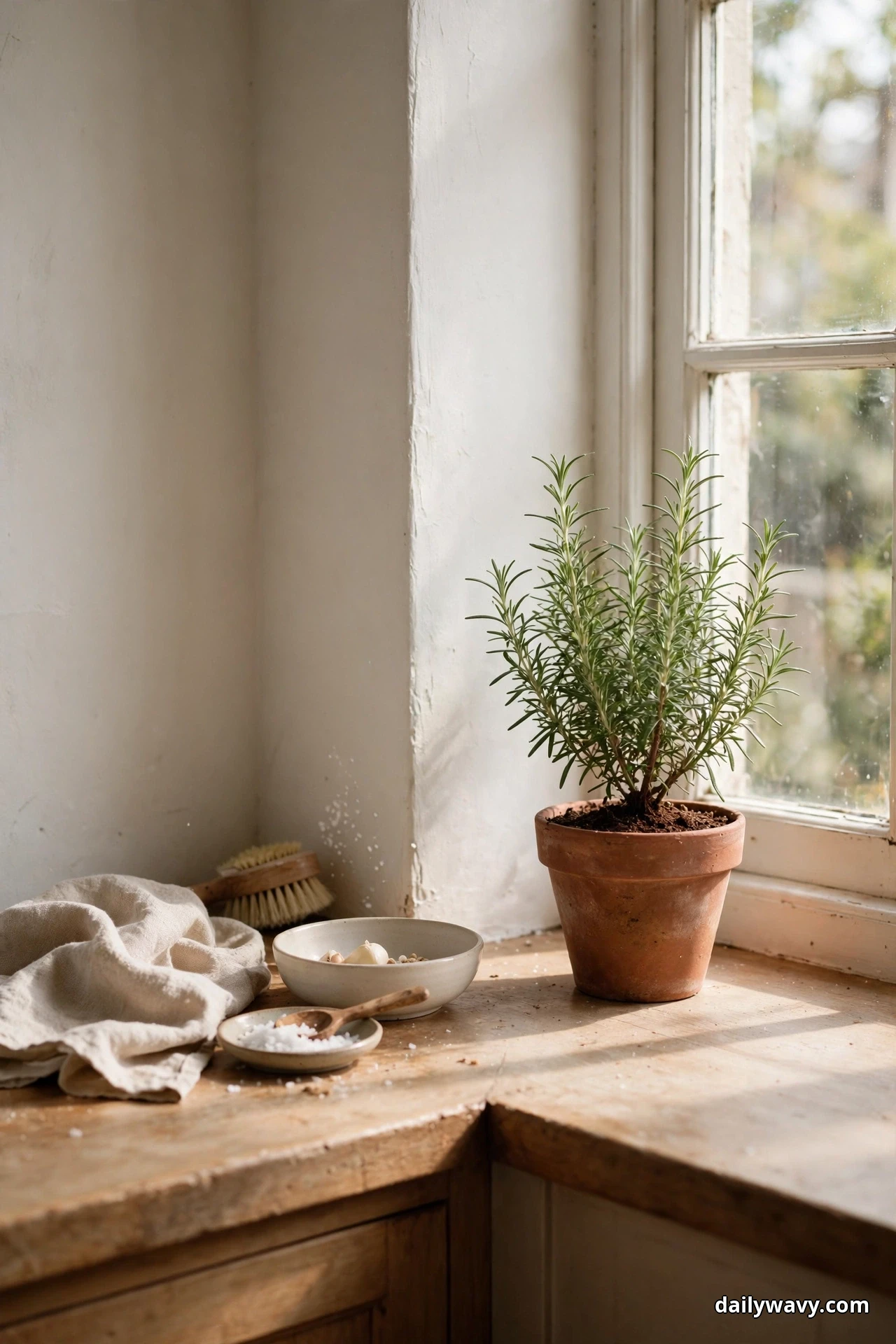
A small plant in a 4- to 6-inch pot, set where the corner catches natural light, adds life to the hardest angle in the kitchen. Herbs like rosemary or thyme do double duty near a window; a pothos or small snake plant survives the spots with less light. The pot goes toward the back of the corner, clear of the work zone, on a saucer or in a cache pot so water never touches the counter.
Water on a schedule the plant actually needs, not on a calendar guess, and check the saucer after watering so standing water does not stain the stone. Keep the plant at least 12 inches from the stove, because heat and cooking grease are hard on leaves. A healthy small plant costs $8 to $25 with the pot. If the corner gets no direct light at all, a good faux stem in the vase from idea 2 is the honest alternative.
12. A Wood Board Stored Upright
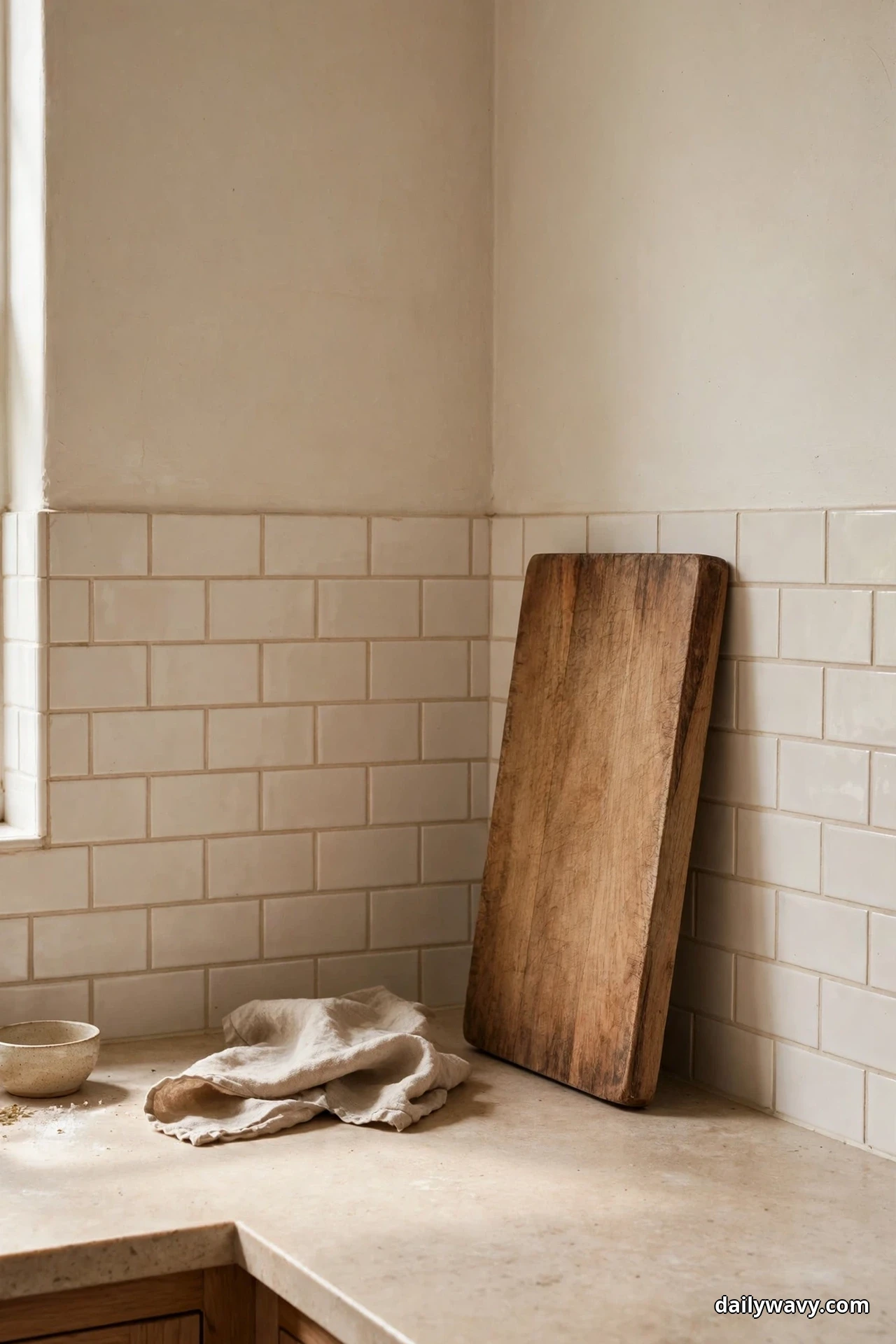
A beautiful wood cutting board, stored upright against the backsplash at the back of the corner, is decor you can cook with. Lean a 12- to 16-inch board at a slight angle, face out, and it adds warmth and texture to the corner while staying within arm’s reach. Boards with visible grain do this best; they read as intentional even before they are used.
Use the board regularly and oil it with food-safe mineral oil monthly so it stays beautiful. Stand it on its long edge, leaning against the wall, never flat on the counter where it traps moisture. Keep it clear of the stove’s direct heat. A solid wood board runs $20 to $45 and lasts for years with basic care. This is one of the few styling objects that improves the corner’s look and its function at the same time.
13. A Simple Glass Jar Grouping
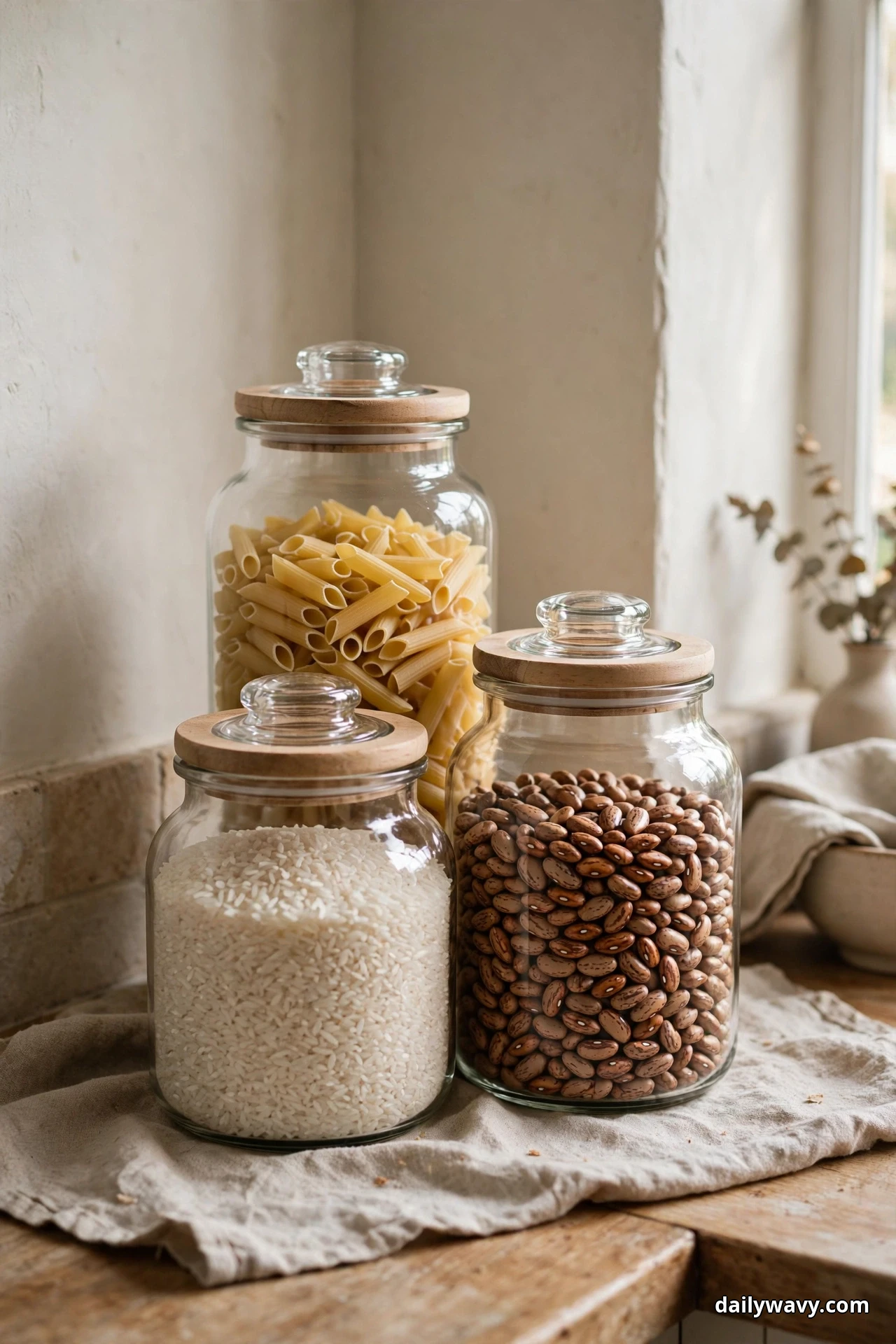
Three glass jars of different heights, holding pasta, rice, and dried beans (or whatever your kitchen actually stocks), turn the corner into a pantry display. Choose jars 6 to 10 inches tall with airtight lids, fill them two-thirds full so the contents read clearly, and group them in a tight triangle at the back of the corner. The height variation is what makes the grouping look styled rather than stored.
Wash and fully dry jars between refills, and keep them out of direct sun so contents do not fade or degrade. Airtight lids matter; open jars in a kitchen corner collect grease dust. A set of three good jars costs $20 to $40. If you buy in bulk, decant only what you will use within a month and keep the rest sealed in the pantry.
14. A Low Bowl For Fresh Produce
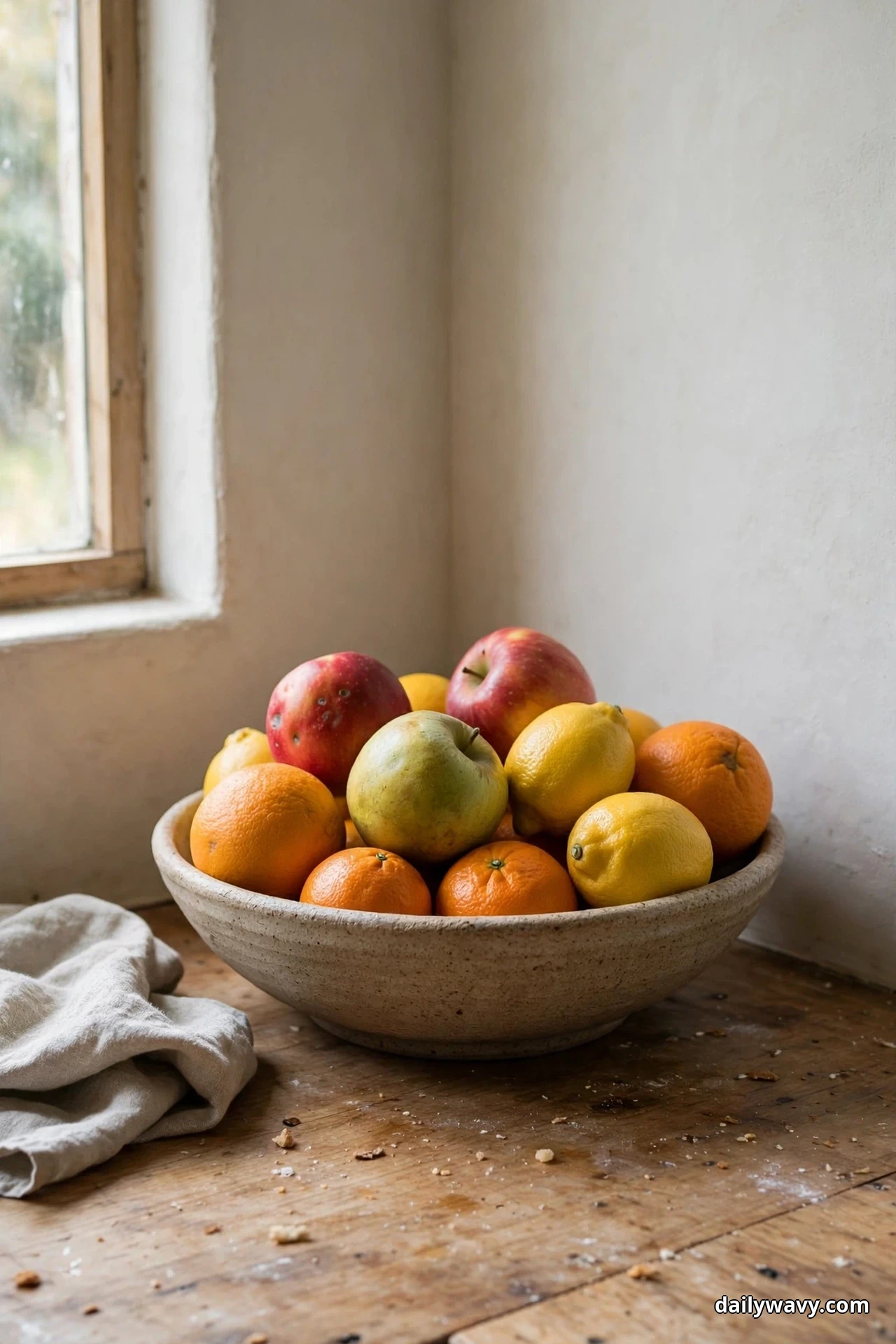
A low, wide bowl, 10 to 12 inches across and 3 to 4 inches deep, holding the produce that does not need refrigeration, gives the corner color and a daily-use job. Apples, citrus, avocados, and onions all live happily at room temperature; tomatoes and bananas do too. Keep the bowl toward the front of the corner where you see it, because visible fruit gets eaten and hidden fruit gets forgotten.
Empty and wipe the bowl weekly; one forgotten piece of fruit ruins the batch underneath it. Never mix produce with strong odors, like onions, into the same bowl as delicate fruit if you plan to eat the fruit raw. A stoneware or wood bowl costs $15 to $35. This idea doubles as a shopping reminder: when the bowl empties, the corner tells you it is time for the market.
15. A Washable Mat Under Frequently Used Items
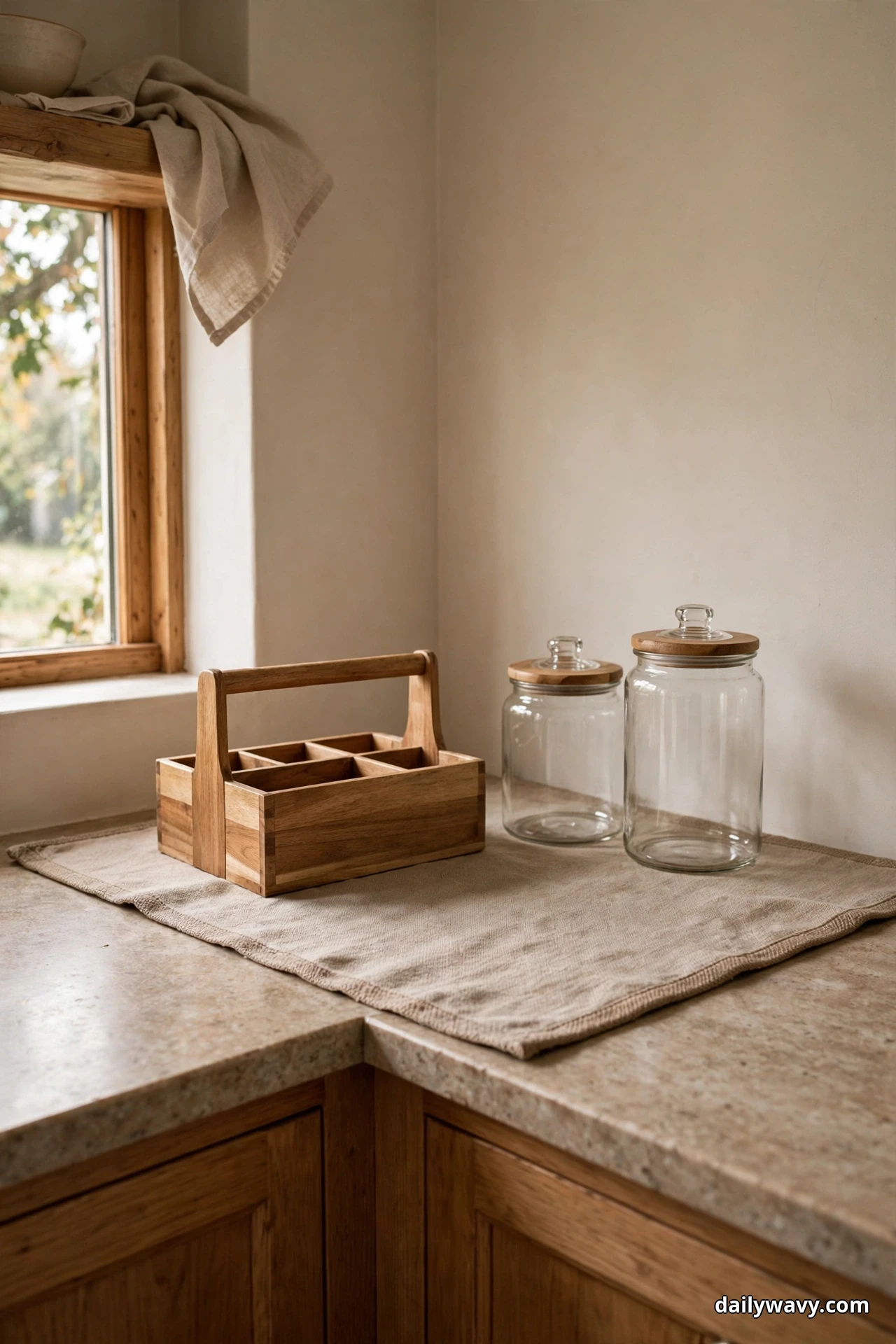
A washable mat, cut or bought to fit under the corner’s most-used items (the caddy, the canisters, the tray), protects the counter and makes cleanup a single lift instead of a scrub. Choose a mat in a quiet color, non-slip on the bottom, and sized to the grouping it sits under, usually 12 by 16 inches. The mat disappears visually and shows up functionally.
Machine-wash the mat weekly, or wipe it down daily if it sits under oily items. Replace it when the non-slip backing wears out, because a sliding mat under glass jars is worse than no mat. Expect to spend $8 to $20. This is the least glamorous idea on the list and one of the most practical; it is the reason styled corners stay clean instead of just looking clean for a day.
16. A Small Framed Print Set Safely Back
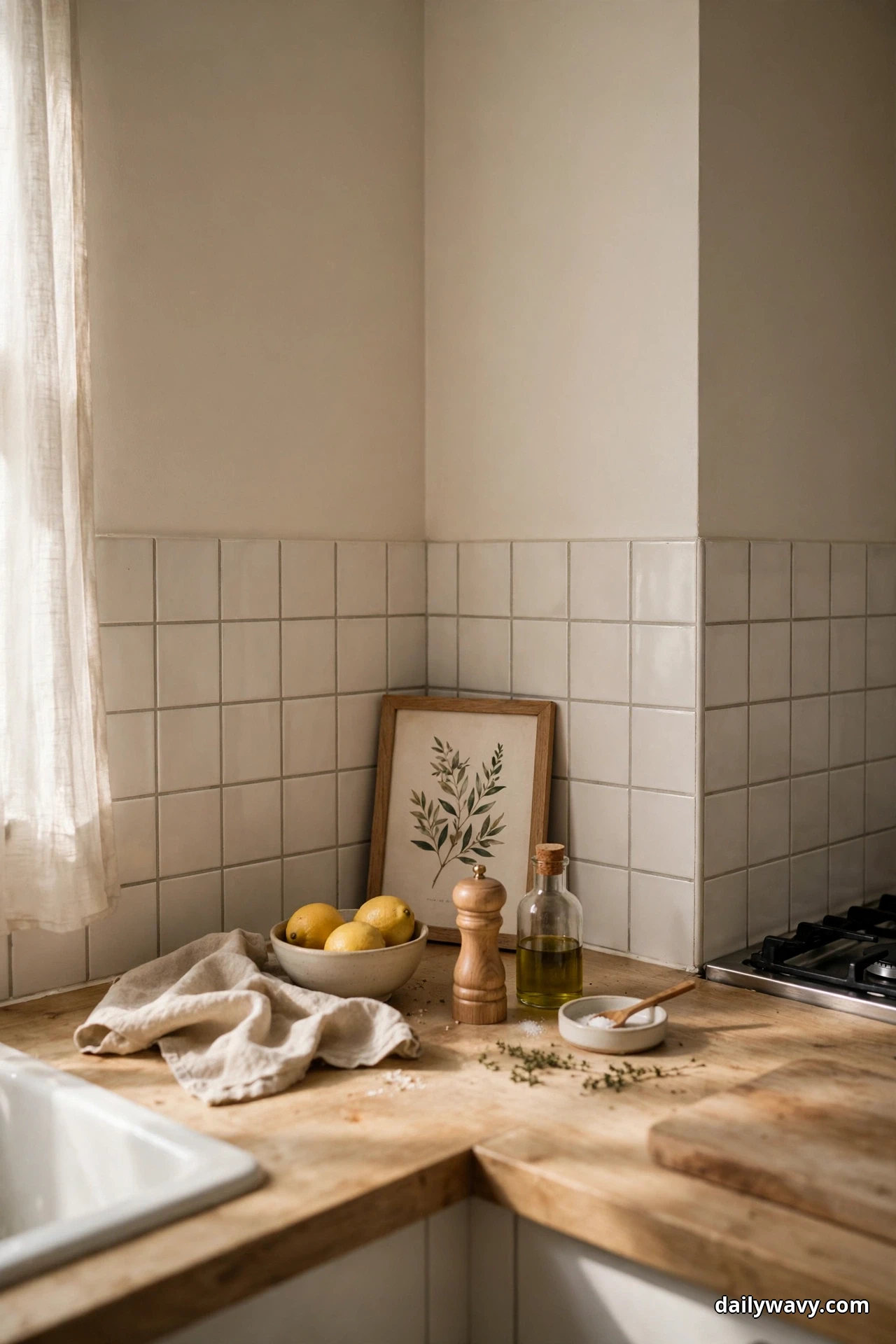
A small framed print, 5 by 7 or 8 by 10 inches, leaning against the backsplash at the very back of the corner, adds personality without taking up work space. Lean it, do not hang it, so you can move it for cleaning; a small easel or a plate stand works as a prop. Food prints, vintage labels, or simple botanical art suit kitchens best.
Keep the frame at least 18 inches from the stove and out of the sink splash zone, because heat and steam warp paper and damage frames. Wipe the glass monthly; kitchen air leaves a film on everything vertical. A print and frame together run $15 to $40. One small frame reads as a finishing touch. Two starts to look like a gallery wall in a spot where you need counter, not gallery.
17. A Slim Basket For Packets Or Cloths
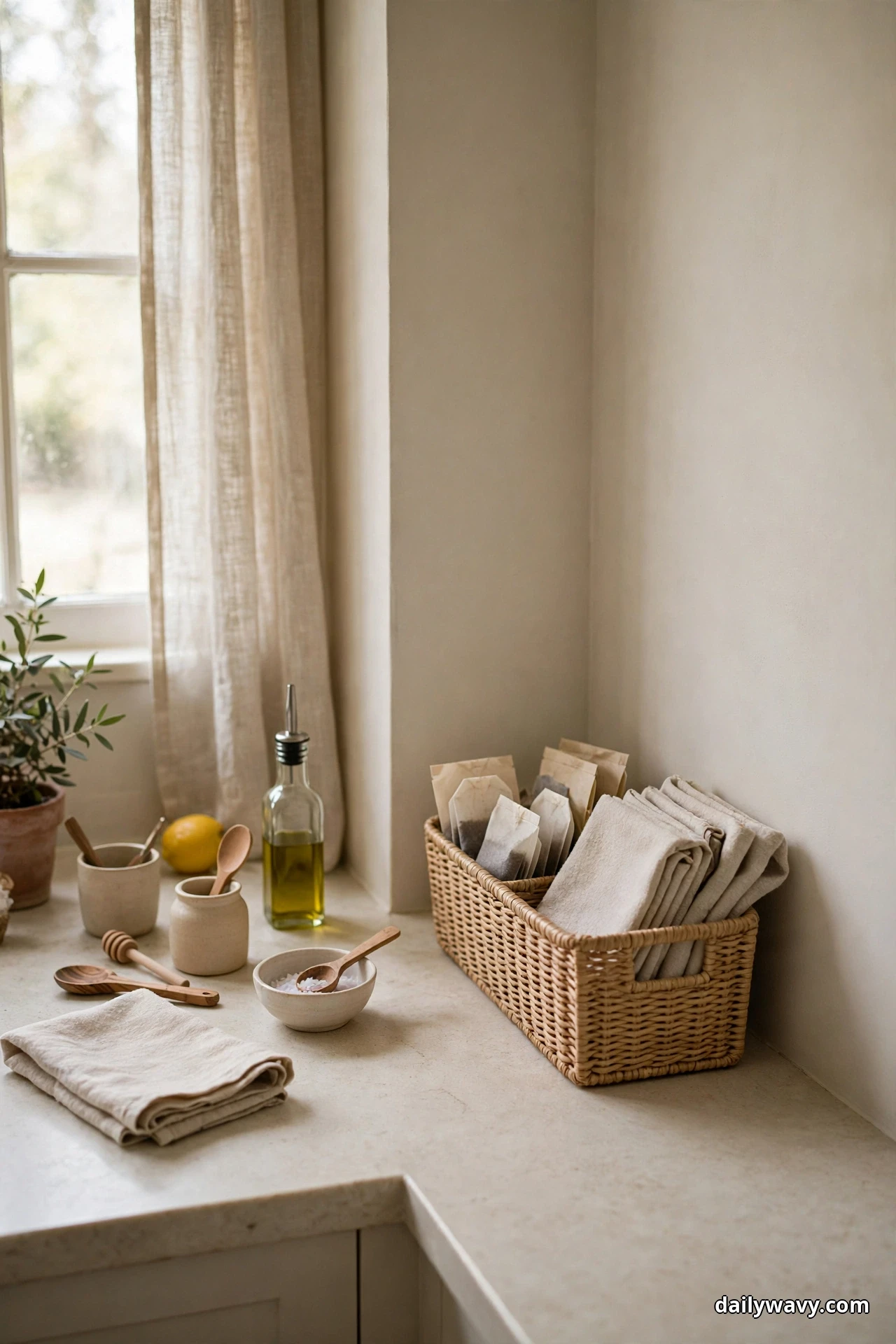
A slim basket, 4 to 6 inches wide and 8 to 10 inches long, corrals the flat clutter that defeats every other system: sauce packets, tea bags, spare cloths, the manuals for the small appliances. Stand the basket upright at the side of the corner, sort its contents into the basket instead of onto the counter, and the corner’s most stubborn mess category finally has a home.
Choose a basket with straight sides and a wipeable finish; woven natural baskets stain in kitchens. Empty and re-sort the basket monthly, because packets breed. This costs $8 to $18 and solves a problem every kitchen has. The slim shape is the whole point: it fits the narrow strip at the corner’s edge where nothing else fits.
18. A Lidded Container With A Clean Silhouette
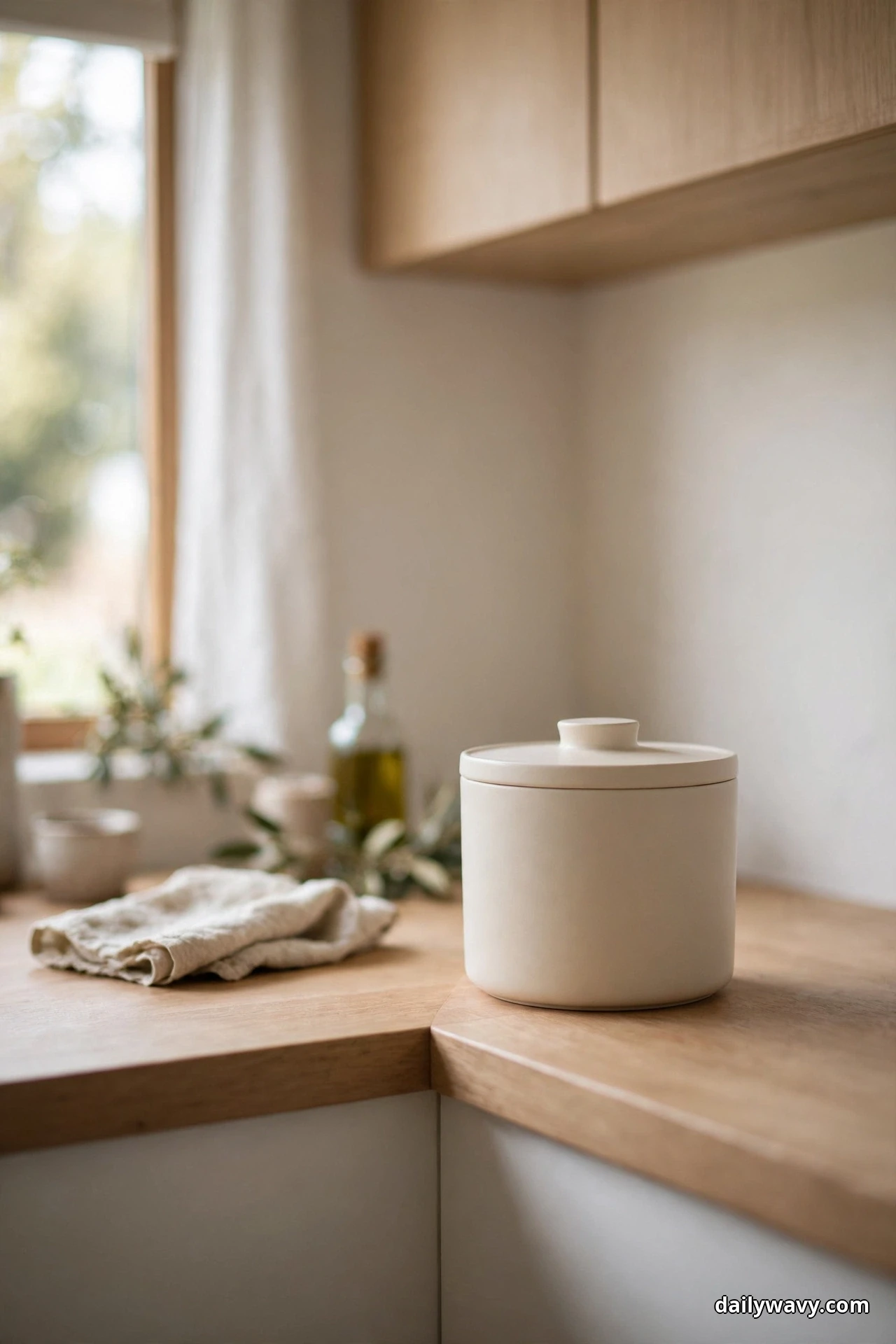
One lidded container with a simple, clean shape, holding whatever the household reaches for most (snacks, tea, the coffee that did not fit the canister row), finishes the corner with a single confident object. Choose a container 6 to 8 inches tall with a tight lid and no fussy detailing; the clean silhouette is what lets it sit beside a styled grouping without competing. Set it at the back of the corner where its lid is easy to lift.
Pick a material that suits the contents: airtight for snacks and coffee, simple ceramic for tea. Wash it between refills and keep the lid’s seal clean so it keeps working. A good lidded container costs $15 to $35. This is the period at the end of the corner’s sentence: one object, one job, no visual noise.
Frequently Asked Questions
How do I keep my kitchen corner counter from getting cluttered again?
Give the corner one job and one container system, then enforce the boundary. Everything in the corner belongs to its station; anything else goes back where it came from the same day. The closed box from idea 7 and the landing area from idea 8 do most of the long-term work. A two-minute nightly reset, putting the corner’s items back in their containers, keeps it styled permanently.
Is it safe to put decor near the stove?
Keep all decor at least 12 inches from the stove’s edge and further from any open flame or gas burner. Paper, dried plants, and fabric have no place near heat. The lamp in idea 6 and the framed print in idea 16 both specify safe placement for this reason. When in doubt, keep decor in the dry back corner and tools in the work zone.
What if my corner has no natural light?
Choose the ideas that do not depend on light: the rail, the caddy, the tray, the closed box, the washable mat. Skip the live plant in idea 11 and use dried stems in the vase from idea 2 instead. The small lamp in idea 6 can add warmth in a dark corner, as long as it sits in the dry, heat-safe zone.
How deep is a standard kitchen corner counter?
A standard kitchen counter is 24 to 25 inches deep, and a corner offers 12 to 20 inches of usable width along each wall. Measure yours before buying containers. The deep back of a corner is still hard to reach, so keep daily items toward the front and use the back only for decor or rarely moved containers.
Can I style a corner if I have almost no counter space?
Yes, but choose vertical and portable ideas only. The wall rail (idea 1), the towel hook (idea 4), and the upright board (idea 12) use wall space, not counter space. The portable caddy (idea 5) gives you a station you can move aside when you need the surface. Skip the tray groupings and canister rows until you have more room.
Should the corner match the rest of the kitchen?
It should coordinate, not match. Repeat one or two materials from the kitchen, like the same wood tone or the same metal finish, and keep the palette in the same family. Exact matching makes the corner look staged; coordination makes it look like part of the room. Warm neutrals bridge almost any kitchen style.
The Takeaway
A kitchen corner counter stays organized when it has a job, a boundary, and a container for everything in it. Start with the empty landing area, because clearance makes every other idea usable. Add one storage move (the rail, the caddy, the tray) and one visual move (the vase, the board, the bowl), and stop there before the corner gets precious. Live with it for a week. The ideas that survive real cooking are the keepers; the ones that get in the way get moved out. That is how a corner stops being where clutter lives and starts being the most quietly useful spot in your kitchen.
For more kitchen organization, our small pantry organization guide extends the same container-and-boundary thinking to the whole pantry, and the Home & Decor collection has the full room-by-room library. If your entryway needs the same treatment, small entryway decor applies the landing-zone idea to the front of the house.