20 Dining Bench Styling Ideas for Meals and Gatherings
A dining bench changes the whole feeling of a table. Chairs keep their distance, but a bench invites people to…
A dining bench changes the whole feeling of a table. Chairs keep their distance, but a bench invites people to slide in close, shoulder to shoulder, the way meals actually feel good. It tucks under the table when the day is done, seats three where two chairs would crowd, and gives the room a relaxed, gathered look. The trick is styling it with intention: the right scale, textiles and surrounding details, plus practical touches like pull-back room, clear sightlines and washable surfaces. These twenty ideas cover it all, from what goes on the bench to what hangs above it.
In This Guide:
- An Asymmetrical Arrangement On Storage Furniture
- A Small Gallery Group On One Wall
- A Contrast Chair At The Head Of The Table
- A Shallow Tray Grouping Serving Items
- A Bench Cushion With A Washable Cover
- A Repeated Accent Color In Textiles
- A Narrow Cabinet For Table Linens
- A Simple Woven Shade At The Window
- A Low Centerpiece With Clear Sightlines
- A Natural-Texture Runner
- A Simple Pendant Aligned To The Table
- A Framed Artwork At Comfortable Eye Level
- A Pair Of Lamps On A Sideboard
- A Washable Rug Scaled To Chair Movement
- A Small Plant In A Quiet Corner
- A Wood Bowl On A Console
- A Restrained Chair-Cushion Palette
- A Mirror Reflecting Natural Light
- A Ceramic Pitcher With Seasonal Stems
- A Linen Tablecloth With Plain Dishes
The Dining Bench Rules Before You Start
Get the measurements right and the styling almost takes care of itself. A bench should sit about 6 to 12 inches shorter than the table length so it tucks in cleanly without poking past the table ends. Standard dining tables stand 28 to 30 inches high, and a bench seat at 17 to 19 inches keeps diners comfortable with enough knee clearance underneath. Plan on roughly 24 inches of bench length per adult, which means a 60-inch bench seats three comfortably and squeezes four for a casual gathering.
Leave 18 to 24 inches of open floor between the bench edge and the wall or any furniture behind it so people can slide in and out without a shuffle. Walkways around the table need a full 36 inches if you want guests to pass behind seated diners. Keep table centerpieces under 12 to 14 inches tall so conversation flows across the table without anyone leaning sideways. A pendant light belongs centered over the table, hanging 30 to 34 inches above the surface; if it needs hardwiring, that is a job for a licensed electrician, not a weekend guess. Choose washable covers and wipeable finishes anywhere food lands, and scale your rug generously: it should extend at least 24 inches past the table edge on every side so the bench and chairs stay fully on the rug.
1. An Asymmetrical Arrangement On Storage Furniture
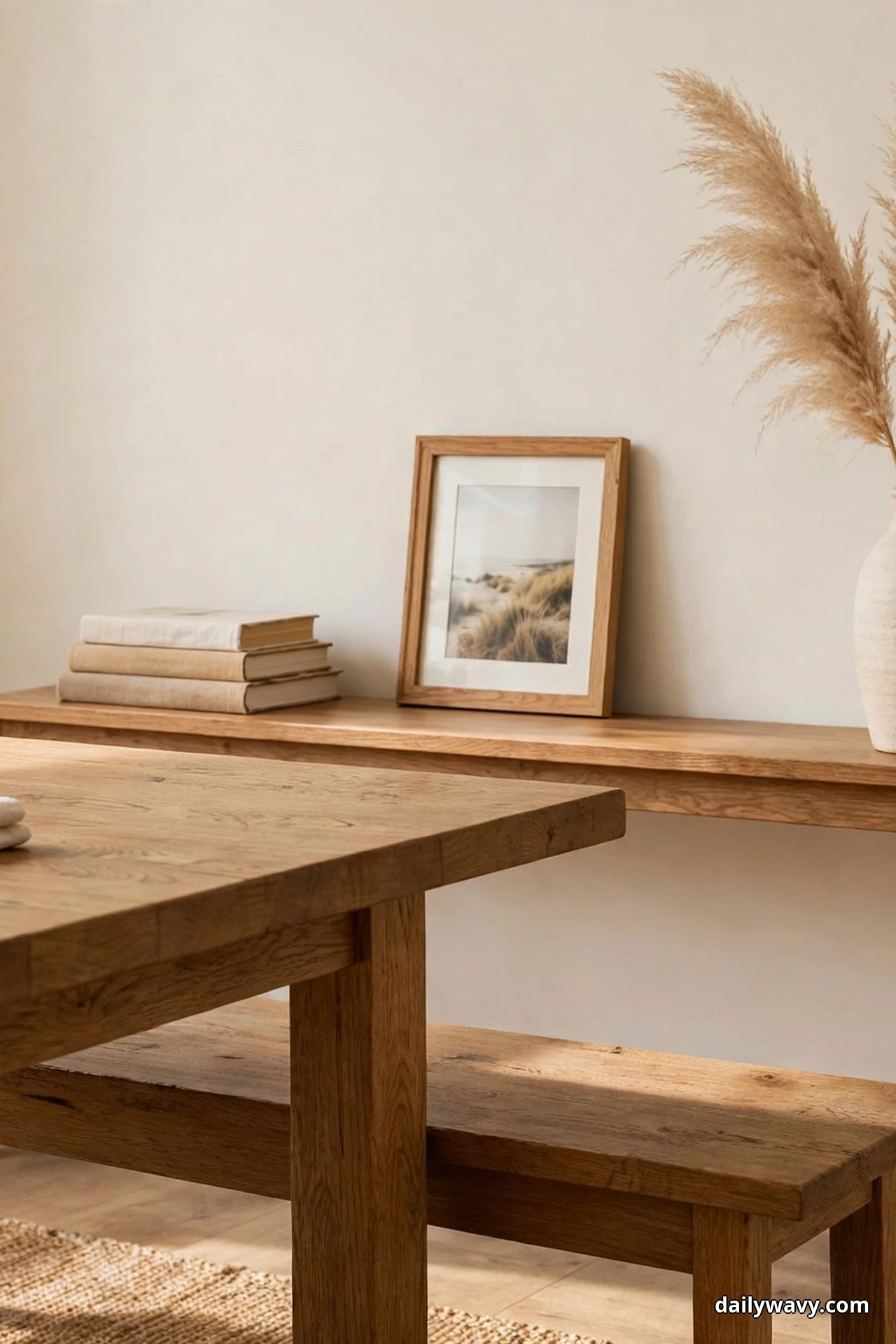
Symmetry feels formal; a slightly off-center arrangement feels like someone with taste lives here. Place a low storage console or sideboard behind the bench side of the table, then style its top in three loose zones instead of mirroring everything. Stack three or four books on the left, set a tall ceramic vase with dried grasses on the right, and tuck a small framed photograph between them, slightly forward. The uneven heights draw the eye across the whole wall and keep the bench area from looking staged.
Measure the console first: it should be narrower than the table length and no deeper than 16 to 18 inches, or it will crowd the slide-in space behind the bench. Keep a clear 18 inches between the console front and the bench edge. Materials matter more than quantity here: one wood tone, one ceramic, one paper or textile texture. A weekend afternoon and whatever you already own are enough; the effort is in editing, not buying. When the arrangement starts to feel busy, remove one object instead of adding another.
2. A Small Gallery Group On One Wall
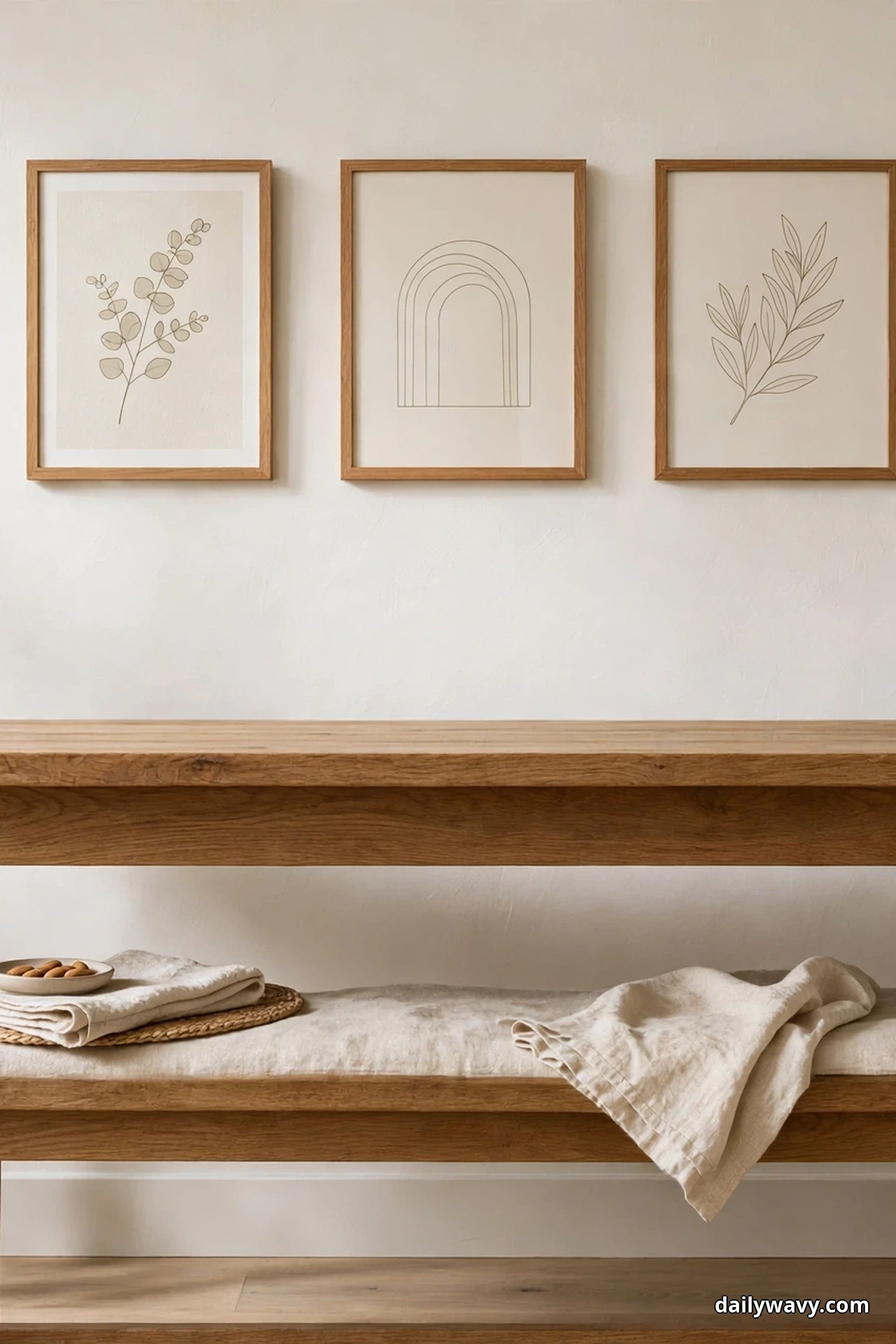
A dining bench under a blank wall looks like it is waiting for something, and a small gallery group is exactly what it is waiting for. Three to five framed prints in slim matching frames fill the space above the bench without overwhelming it. Keep the palette quiet: line drawings, botanical prints or simple landscapes in warm neutrals echo the wood of the bench and let the room breathe.
Hang the group so its center sits at comfortable eye level, about 57 to 60 inches from the floor, which usually means the bottom frame clears the bench back by 6 to 8 inches. Lay the arrangement on the floor first and photograph it from standing height before you commit to nails. Use paper templates taped to the wall to check spacing; two to three inches between frames keeps a tight group feeling cohesive. A small level, a hammer and an hour are the whole project. If the bench sits under a window instead, move the gallery to the nearest solid wall so art and window light never compete.
3. A Contrast Chair At The Head Of The Table
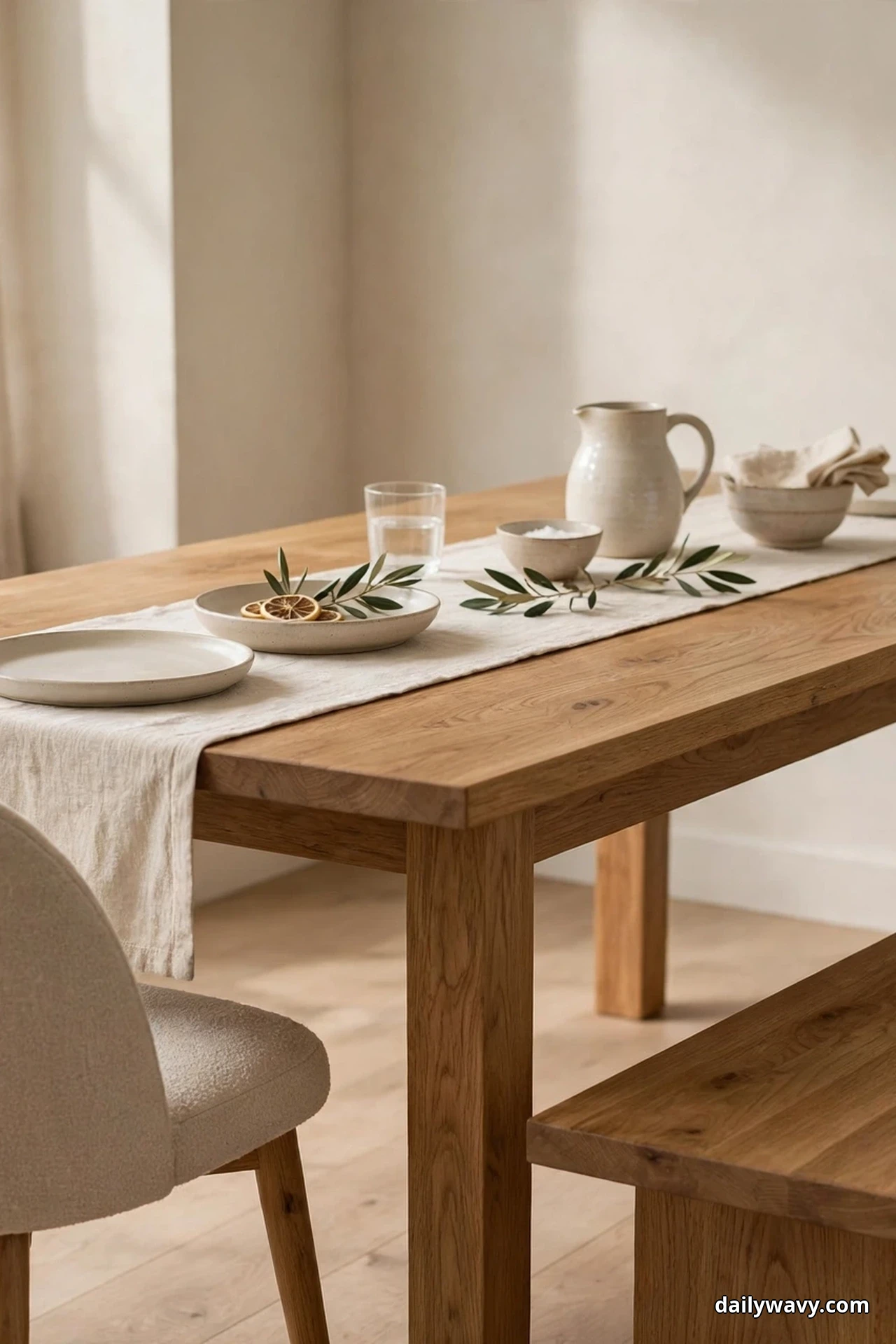
One chair that refuses to match is the oldest styling trick in the book, and it works beautifully with a bench. Keep the bench along one long side, line up two or three simple chairs on the other, then place a single upholstered chair in a contrasting fabric or color at the head of the table. It gives the table a host’s seat, breaks the visual repetition of the bench, and adds a soft texture that wood alone cannot provide.
Match the seat height of the chair to the bench, within an inch or two, so the table line stays level and no one feels perched or sunken. Check the pull-back room: the head chair needs a full 24 inches behind it to slide out comfortably, just like any dining chair. An oatmeal or greige upholstery keeps the contrast gentle against a warm neutral room; save bold patterns for the cushion on the bench instead. This is a one-purchase idea if you thrift or reupholster, and it instantly makes the whole table look designed rather than assembled.
4. A Shallow Tray Grouping Serving Items
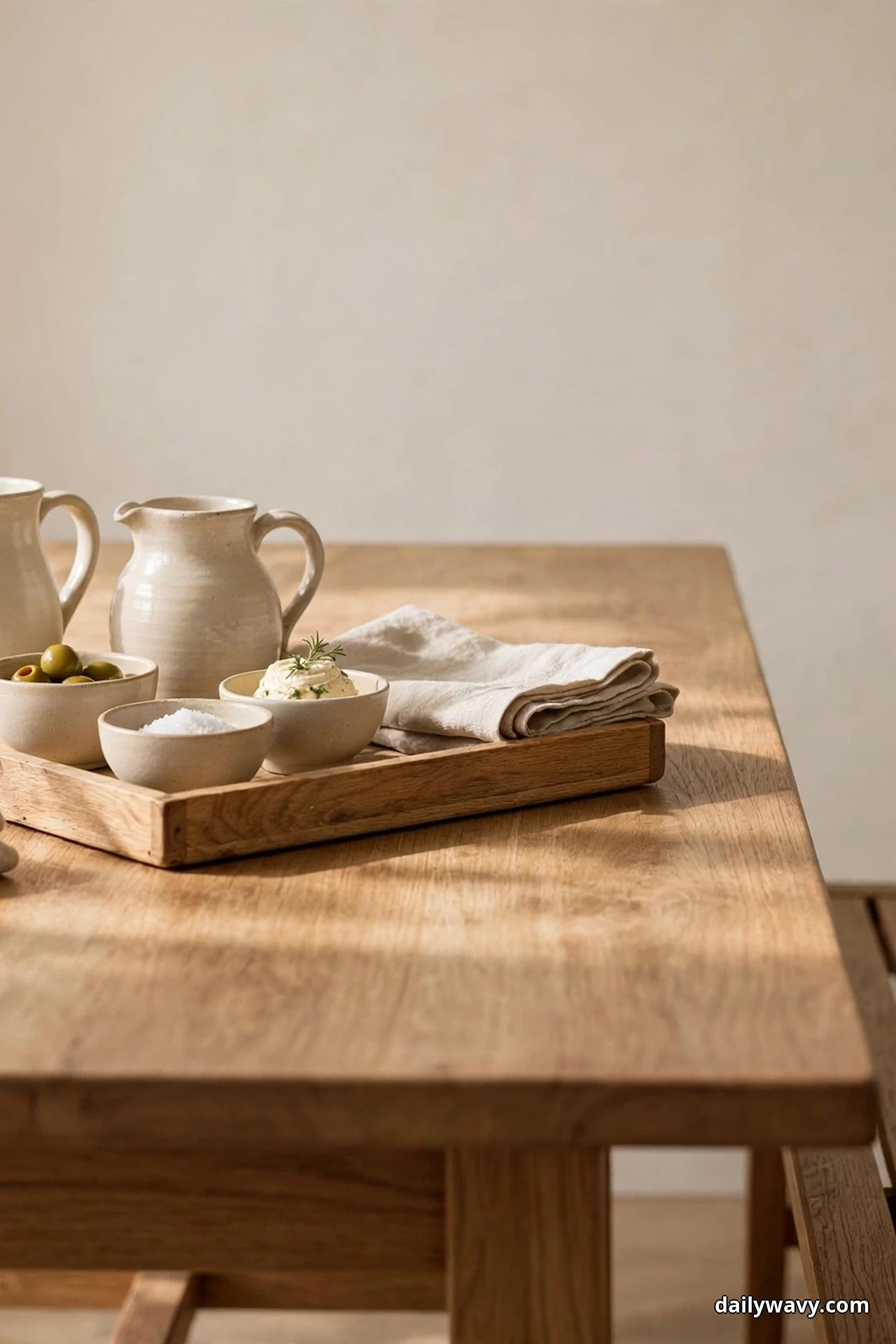
A shallow tray turns the serving pieces you actually use into part of the styling. Set a low wooden or woven tray on the table near the bench side and gather a ceramic pitcher, a small stack of bowls and a folded set of linen napkins inside it. Everything stays corralled instead of scattered, and when it is time to eat, the whole tray lifts off in one move, clearing the table in seconds.
Size the tray to the table: it should cover no more than a third of the table length so place settings still have room. Keep the tallest item under 10 inches so sightlines across the table stay open. Choose a tray with a wipeable surface, because pitchers sweat and bowls drip, and line it with a folded tea towel if you want extra protection. This is styling that works hardest in houses where the dining table doubles as a homework station or work surface; the tray makes the daily reset genuinely fast.
5. A Bench Cushion With A Washable Cover
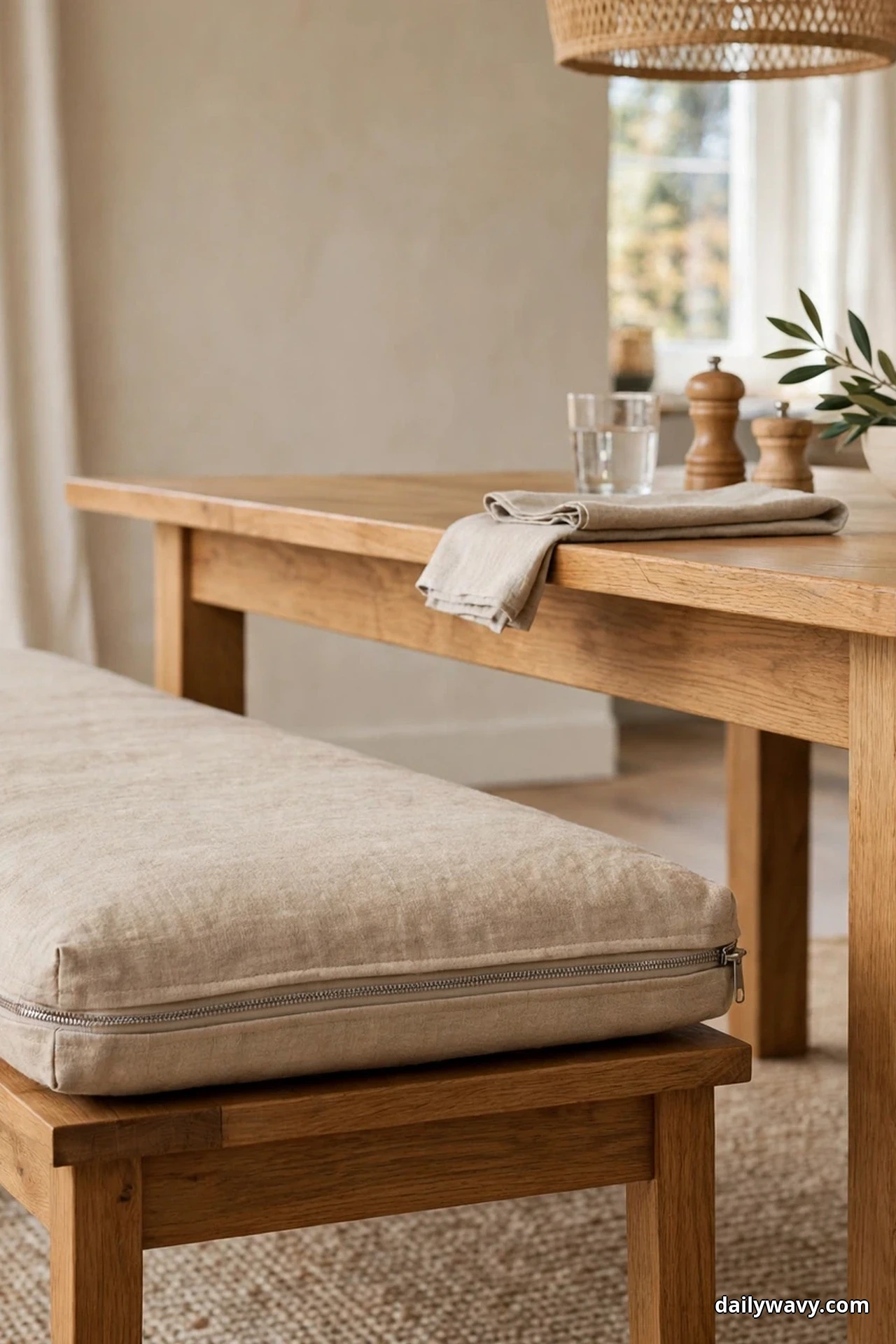
Nobody lingers at a table when the seat is hard. A bench cushion with a washable, removable cover is the single most practical styling upgrade you can make: it adds two inches of comfort, introduces a textile layer, and survives spaghetti night because the cover unzips and goes straight in the machine. Choose a tailored slipcover in natural linen or cotton canvas rather than a loose throw, which slides around and looks messy by dessert.
Measure the bench top and order the cushion a half inch short on each side so the cover does not overhang and catch on clothing. Look for a zipper closure along the back edge and a foam insert wrapped in batting, which holds its shape far better than loose fill. Machine-washable covers in medium tones hide everyday wear between washes; keep a spare cover and the bench never has to look tired. This is an afternoon project with an outsized payoff, because comfort is what turns a quick dinner into a long evening.
6. A Repeated Accent Color In Textiles
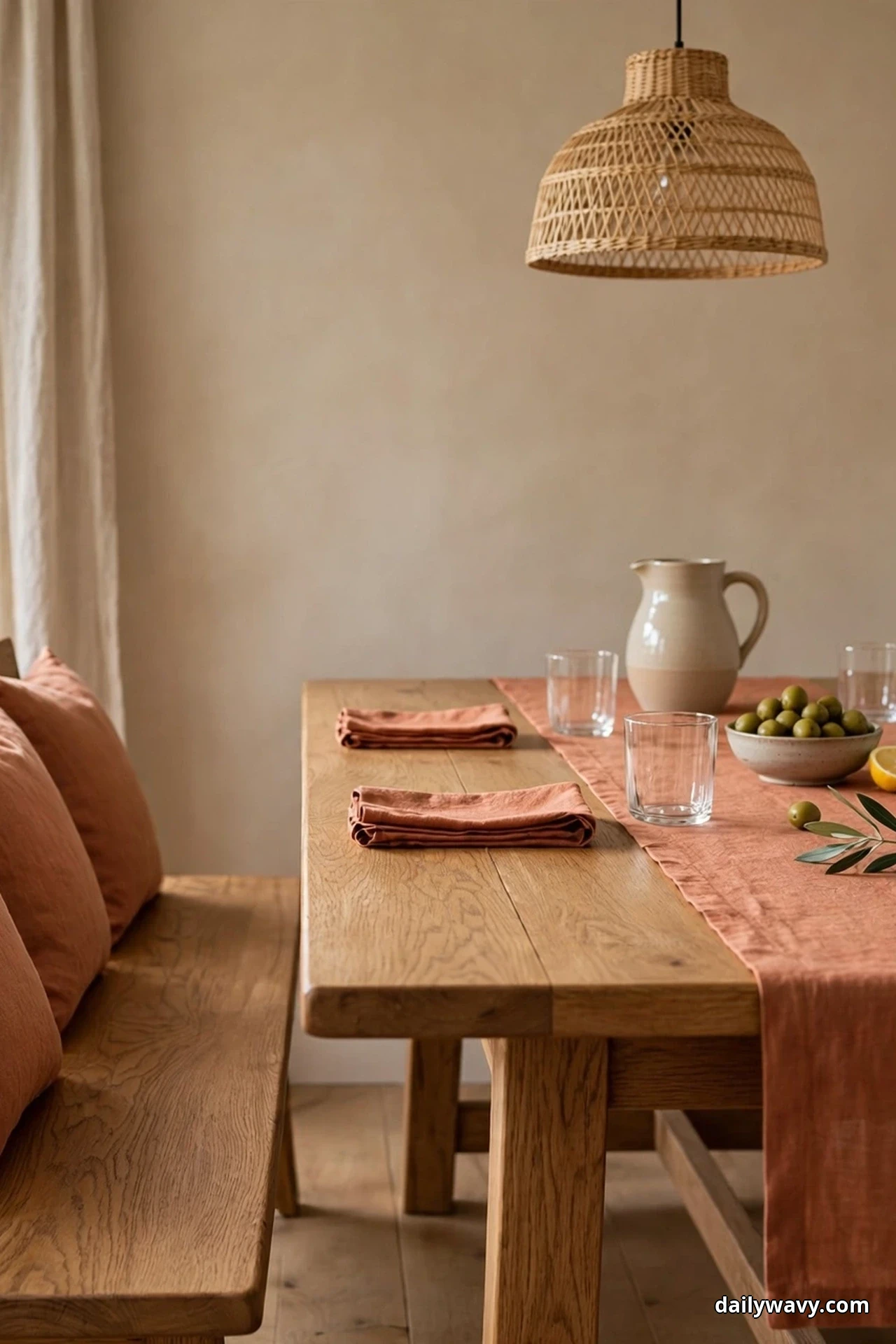
Pick one accent color and repeat it three times in textiles, and the whole dining area suddenly looks pulled together. Rust, olive, dusty blue or warm terracotta all work against a neutral room: put the color on the bench cushions, repeat it in the table runner, and echo it once more in folded napkins or a throw draped over the bench end. The repetition is what makes it feel intentional instead of accidental.
Keep the three textiles in different textures, a nubby linen cushion, a smooth cotton runner, a gauzy napkin, so the repeated color reads as layered rather than flat. Start with the cushion, since it is the largest color block, and let it set the exact shade; then match the smaller pieces to it rather than to a memory of the color. This is a low-cost refresh, often under the price of one new chair, and it is the fastest way to make a bench feel styled for a season without touching the furniture.
7. A Narrow Cabinet For Table Linens
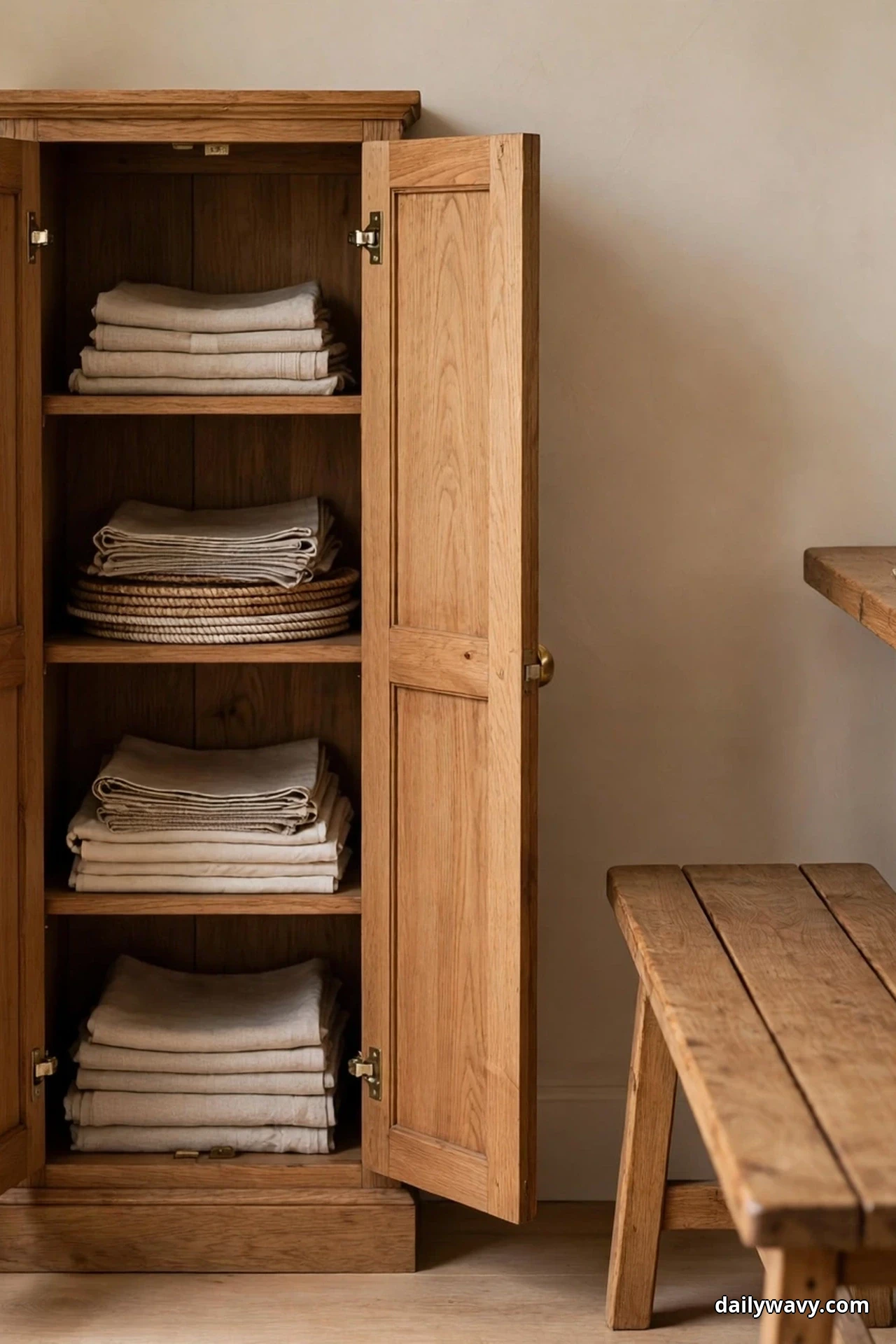
Table linens live closest to where they are used, and a narrow cabinet beside the dining area keeps them there without stealing floor space. A slim cabinet, 12 to 15 inches deep and about 30 inches wide, fits against the wall at the end of the table or in the gap between the bench side and the nearest wall. Folded tablecloths, runners, napkins and placemats stack inside on two or three shelves, and the top becomes bonus styling surface.
Before you buy, measure the gap and confirm the cabinet doors can open fully without hitting the bench or a chair; sliding or open-front storage works better in tight clearances. Keep everyday linens at waist height and relegate the holiday tablecloth to the top shelf. A cabinet with adjustable shelves adapts as your collection grows. This is a one-weekend addition that ends the ritual of fetching napkins from another room mid-meal.
8. A Simple Woven Shade At The Window
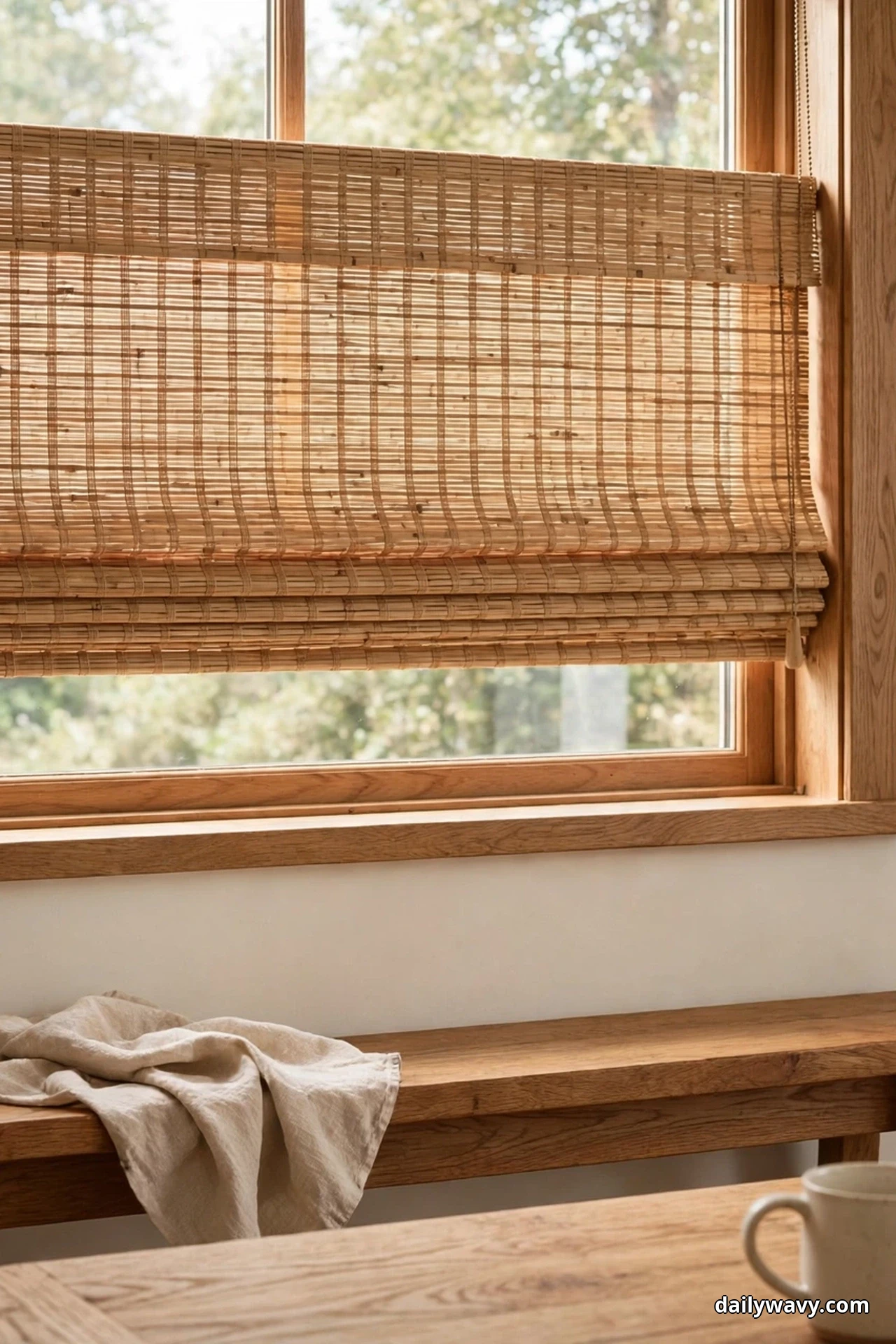
A woven wood shade filters the light over a dining bench the way no curtain quite can: it softens glare on the table, adds a warm natural texture to the wall, and keeps the sightline to the outdoors open. Hang it inside the window frame above the bench side of the table so the bench benefits from the diffused light during daytime meals.
Measure the window opening in three places, top, middle and bottom, and order to the smallest width so the shade fits without forcing. An inside mount keeps the profile clean; a cordless lift is worth the small premium in a dining space where cords dangle near food and elbows. Woven shades pair well with the wood of a bench because they share the same material language. Installation takes about thirty minutes per window with a drill and a level, and the change in afternoon light quality is immediate.
9. A Low Centerpiece With Clear Sightlines
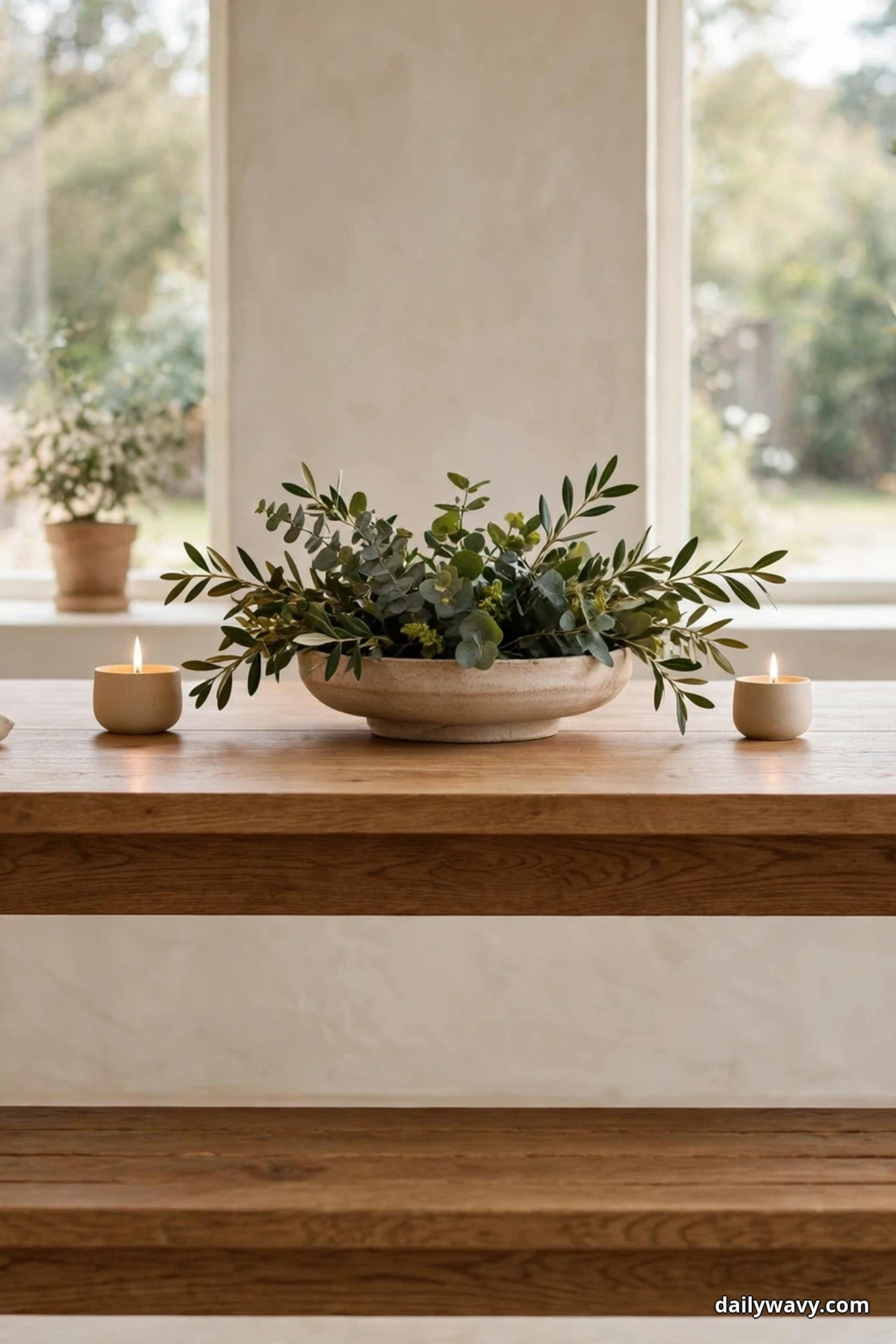
The rule for a bench-side table is simple: if you cannot see the person across from you, the centerpiece is too tall. Build it low and horizontal instead: a shallow ceramic bowl with greenery or seasonal fruit, flanked by two short candles or a pair of small bud vases. Everything sits under 12 inches, so conversation travels straight across the table and the bench side never feels walled off.
Use an odd number of objects and vary their heights slightly within that low band; three items almost always look better than two. Keep the centerpiece narrow, no wider than a third of the table width, so place settings and serving dishes still fit. A low arrangement also photographs better from a seated eye level, which matters more than people admit. Refresh the contents with the season: citrus in winter, herbs in spring, stone fruit in summer. The bowl and candles stay; only the fill changes.
10. A Natural-Texture Runner
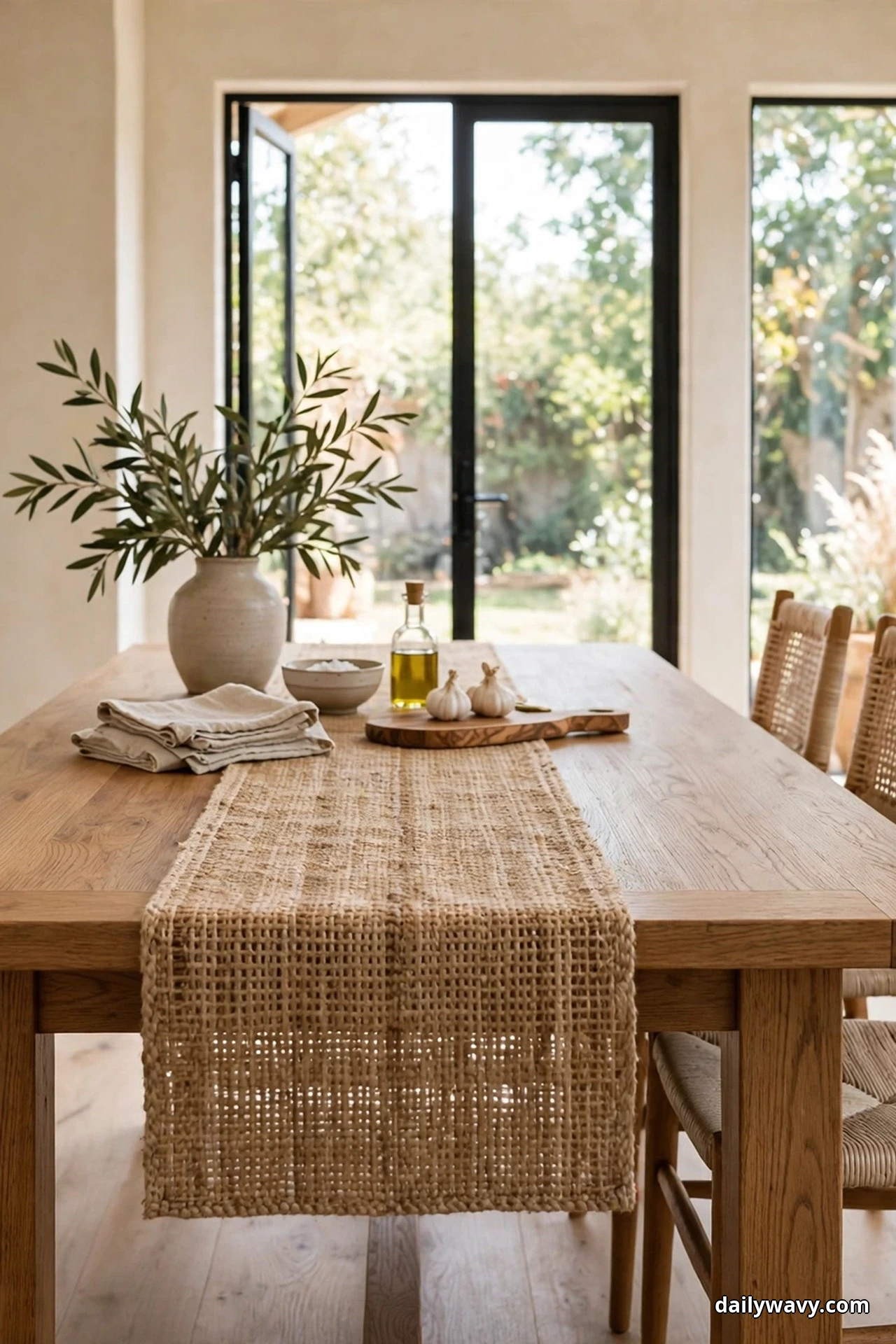
A runner in jute, sisal or rough linen does three jobs at once: it protects the table, adds texture, and visually anchors the bench to the table so the two read as a set. Lay it down the center of the table with 6 to 12 inches of overhang at each end. The natural fiber picks up the wood tones of the bench and keeps a neutral room from feeling flat.
Choose a runner 12 to 16 inches wide for a standard 36 to 40-inch-wide table; wider tables can take an 18-inch runner. Natural fibers shed a little at first, so shake the runner outside before its first use and expect the texture to soften with time. For washability, look for a cotton-jute blend rather than pure jute, which does not love the washing machine. This is a ten-minute change with the impact of a much bigger project, and runners store flat in the narrow cabinet from idea 7.
11. A Simple Pendant Aligned To The Table
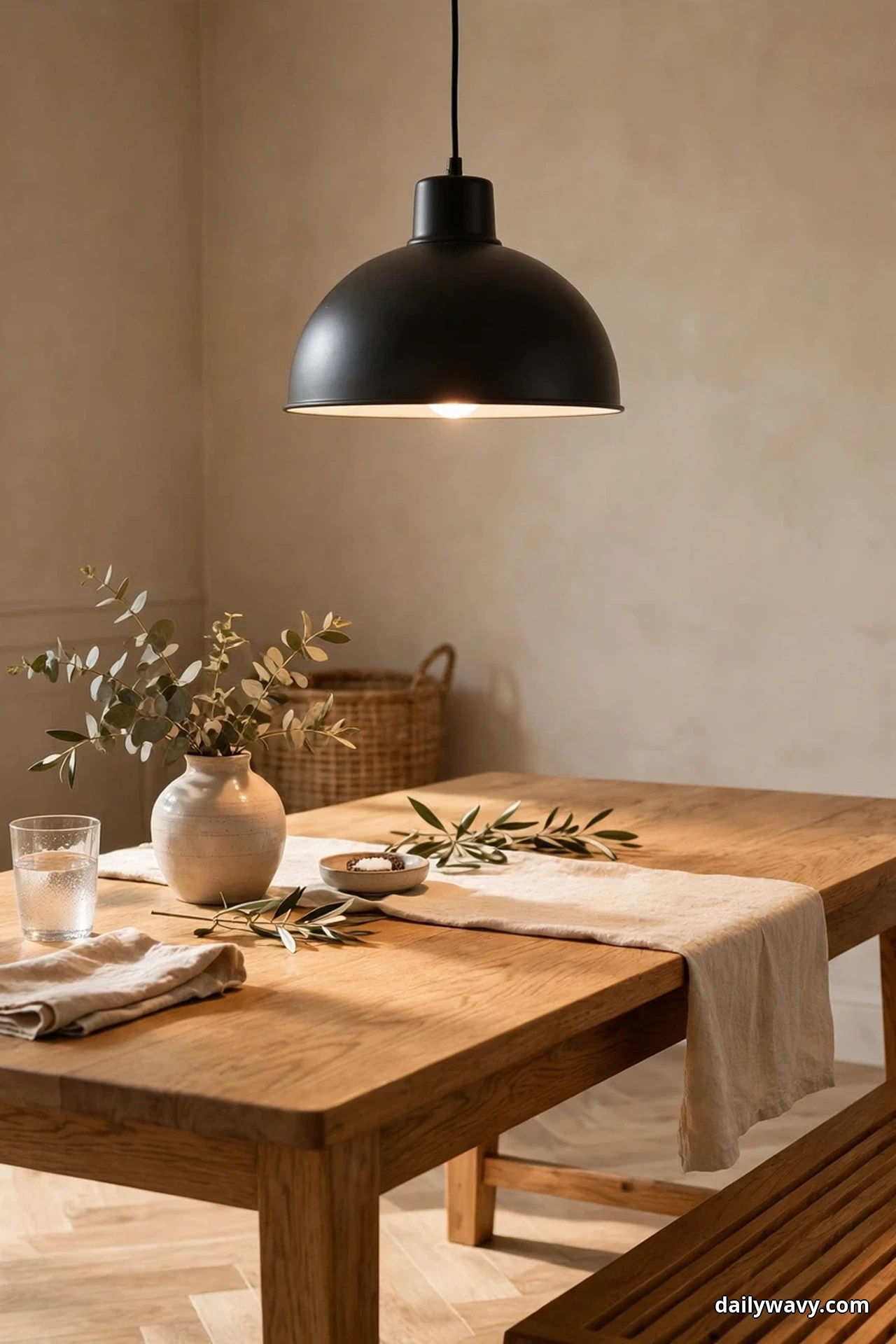
Nothing centers a dining bench like a pendant hung exactly over the table’s midpoint. A simple dome, drum or woven pendant in a quiet finish draws the eye down to the table and gives the bench side of the room a clear focal point. The alignment matters more than the fixture’s price: a modest pendant hung dead center looks better than an expensive one hung off-axis.
Hang the bottom of the shade 30 to 34 inches above the table surface so it lights faces without blocking sightlines. For tables longer than 72 inches, two smaller pendants spaced evenly beat one large one. If the fixture needs hardwiring or a new junction box, hire a licensed electrician; swapping a shade onto an existing box is a safe DIY job, but new wiring is not. A dimmer switch is the finishing touch, letting the same pendant handle homework hour and dinner parties.
12. A Framed Artwork At Comfortable Eye Level
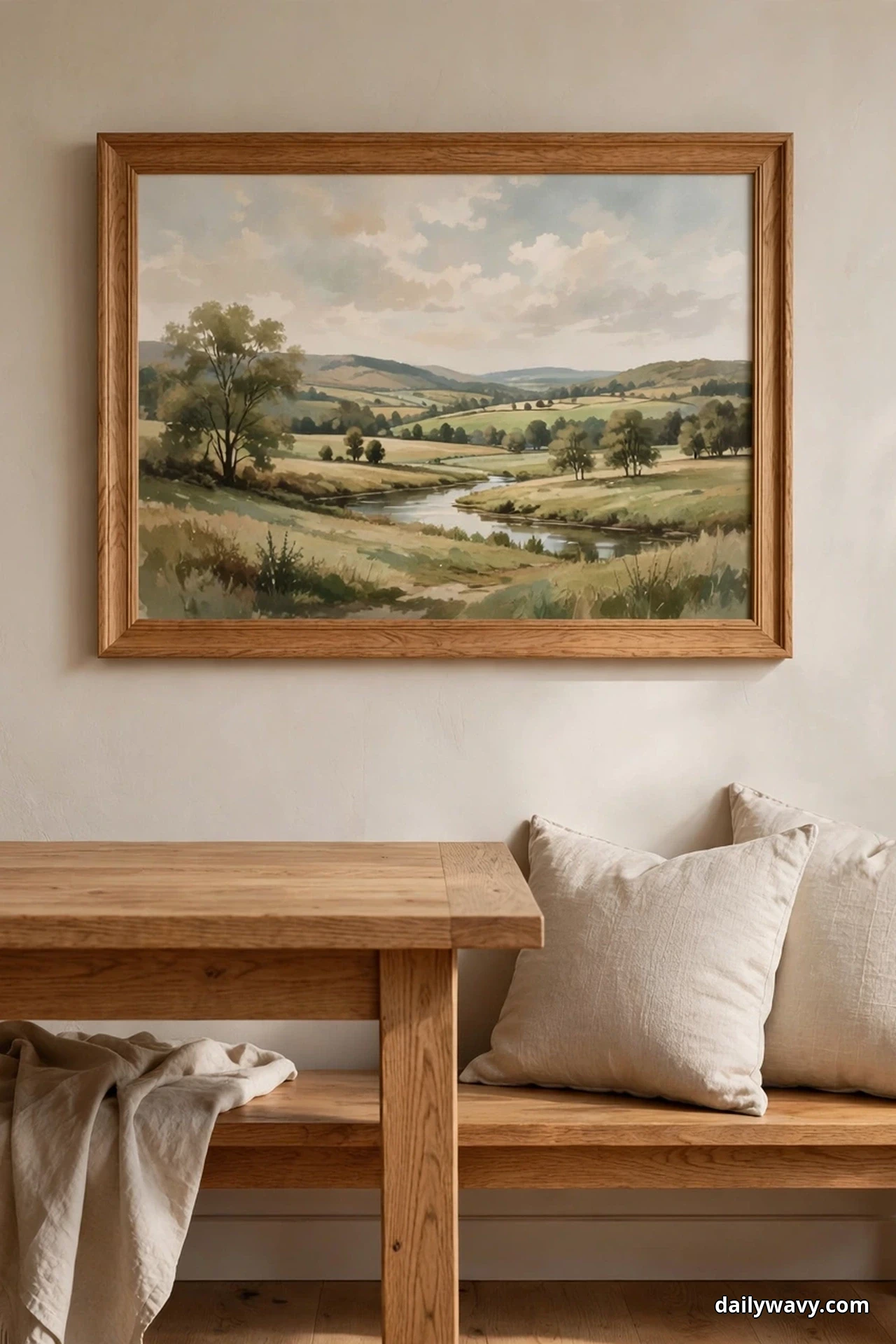
One well-placed frame above the bench does more than a whole wall of small ones. Choose a single landscape, abstract or botanical print in a frame that spans roughly two-thirds the bench length, and hang it so the center of the art sits 57 to 60 inches from the floor. That puts it at comfortable eye level for a standing viewer and keeps it clearly above seated heads.
Leave 6 to 8 inches of breathing room between the top of the bench and the bottom of the frame; any tighter and the art feels like it is sitting on the bench. A frame with a wide mat gives the artwork presence without needing a huge print, which keeps costs down. Hang it with two hooks rather than one so it never tilts. This is the lowest-effort, highest-impact idea on this list: one frame, one hour, and the bench wall looks finished.
13. A Pair Of Lamps On A Sideboard
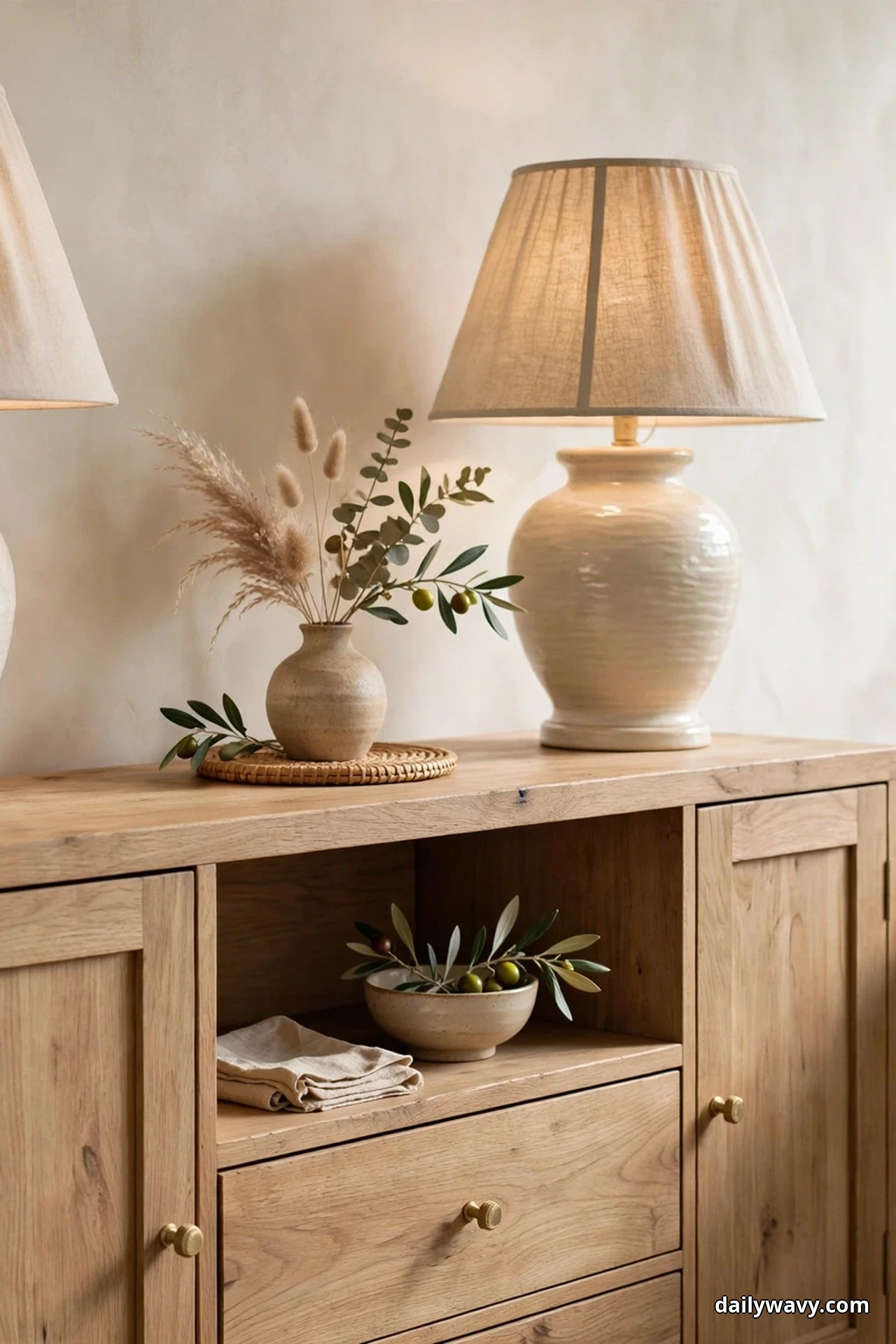
Overhead light is for eating; lamplight is for lingering. A matching pair of table lamps on the sideboard or console behind the bench side of the table adds the warm, low light that makes evening meals feel special. The symmetry of the pair also balances the long horizontal line of the bench, giving the wall behind it a calm rhythm.
Choose lamps 24 to 30 inches tall with linen or fabric shades, which diffuse light softly; the shade bottom should sit just below eye level when you are seated so the bulb never glares. Place them toward the outer thirds of the sideboard top, leaving the center for a small stack of books or a bowl. Use warm-white bulbs around 2700K for that candlelit feel. Plug both into one switched outlet or a smart plug so a single tap sets the mood. Two lamps, one evening, and dinner instantly feels like an occasion.
14. A Washable Rug Scaled To Chair Movement
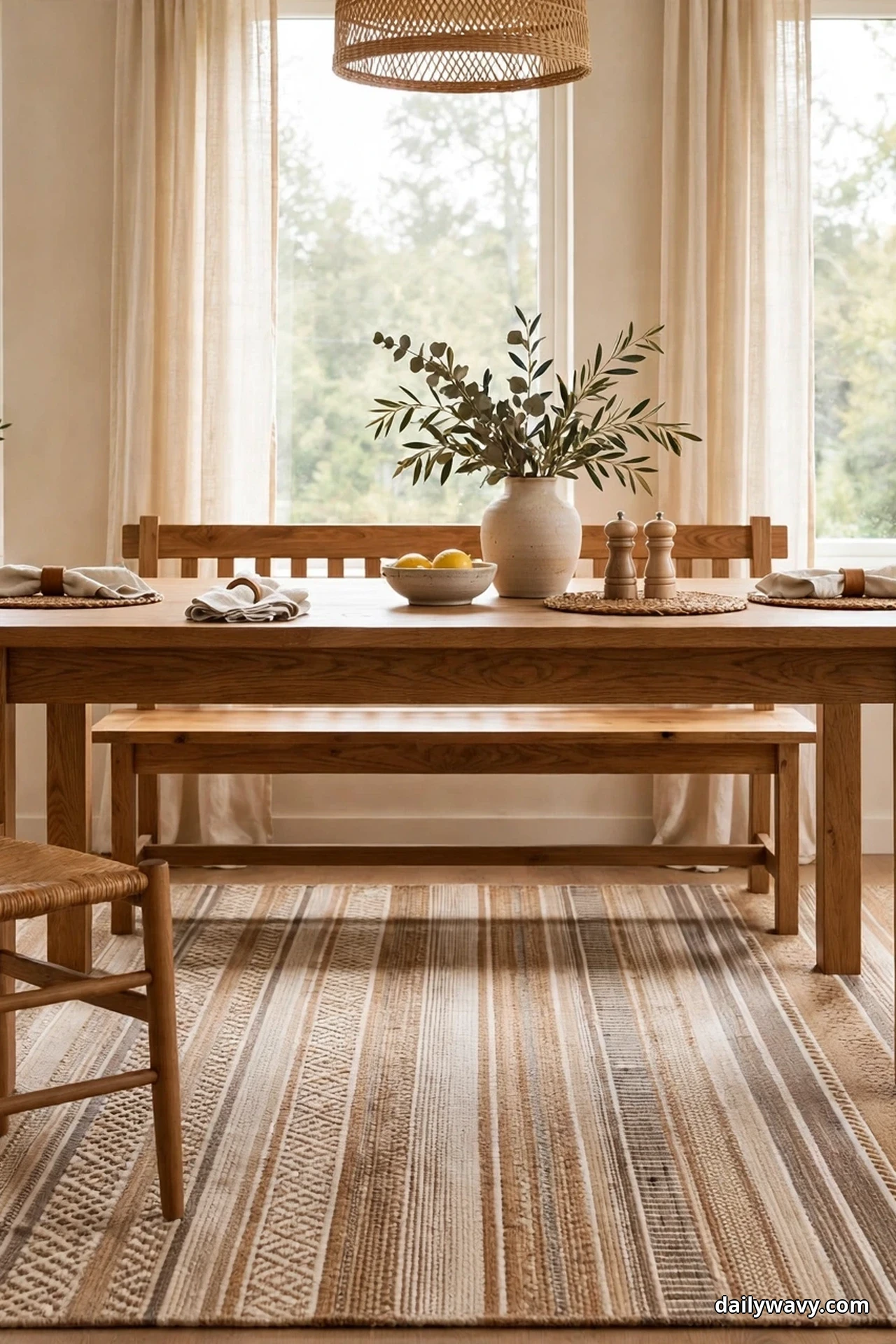
A rug under a dining table has to survive chairs scraping back and crumbs falling down, which is why washable matters more than plush here. Choose a low-pile, machine-washable rug and scale it generously: it should extend at least 24 inches beyond the table edge on every side, so the bench and any chairs stay fully on the rug even when pulled out. A rug that is too small looks like a postage stamp and catches chair legs on its edge.
Measure the table, add 48 inches to both length and width, and shop that size; for a 72 by 40-inch table, that means roughly a 10 by 7.5-foot rug. Flatweave or low-loop constructions clean easiest and let the bench slide without snagging. Medium patterns and warm neutrals hide the inevitable crumbs between cleanings. Check that exterior doors clear the rug pile before you commit. This is the priciest idea on the list, but it also transforms the acoustics and warmth of the whole room.
15. A Small Plant In A Quiet Corner
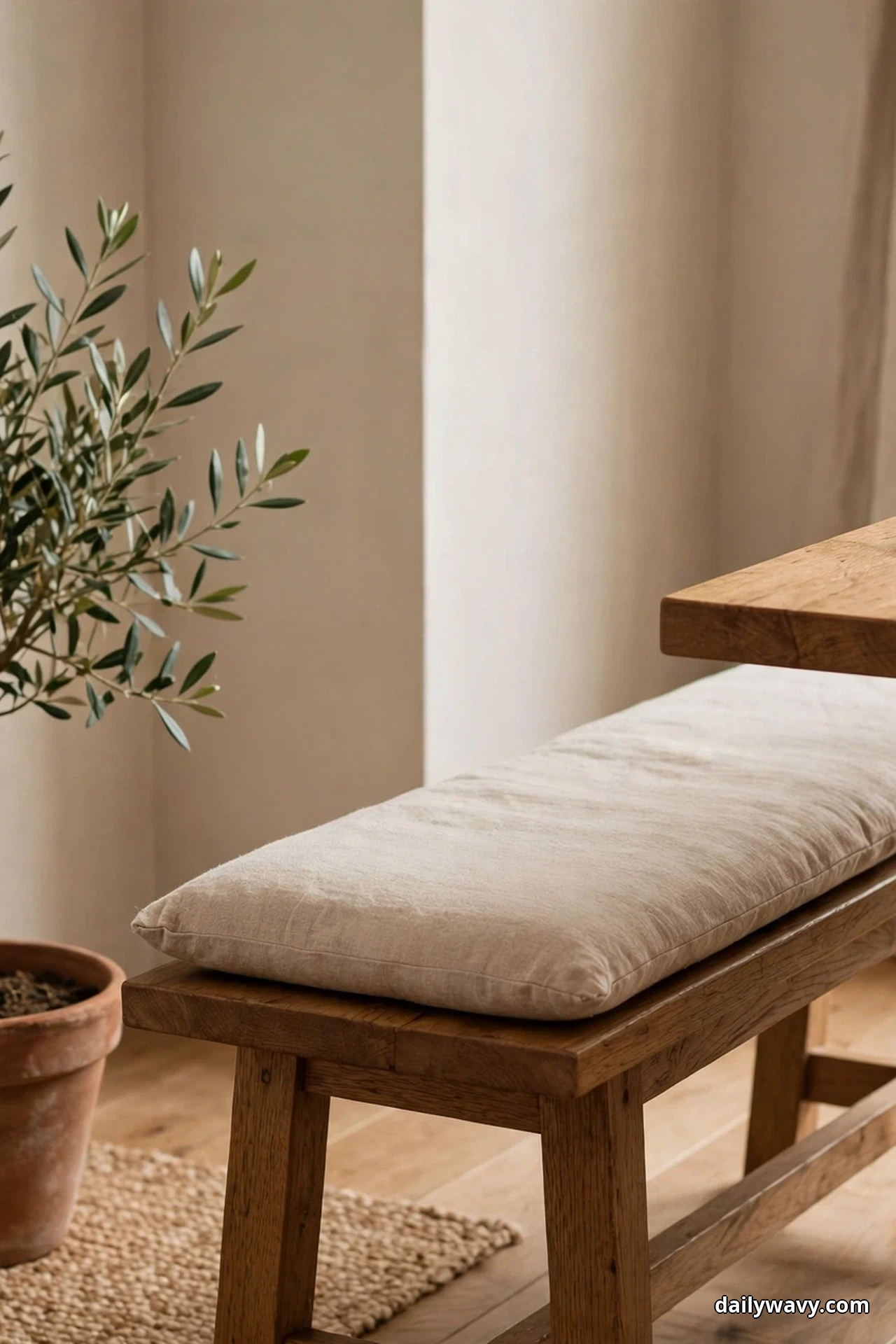
Every dining area has a quiet corner that collects nothing, and a small plant is exactly what belongs there. An olive tree, fiddle-leaf fig or snake plant in a terracotta or ceramic pot adds height and life beside the bench end without demanding table space. The green breaks up all the wood and linen and makes the room feel cared for.
Match the plant to your light: a corner near the window suits an olive tree or fig, while a darker corner wants a snake plant or ZZ plant that tolerates low light. Keep the pot footprint under 14 inches wide so it never narrows the walkway, and set it on a small stand or tray to protect the floor. Water on a schedule the plant actually needs, not the one you wish it needed; most indoor plants die of kindness. One plant, one corner, and the bench area feels finished.
16. A Wood Bowl On A Console
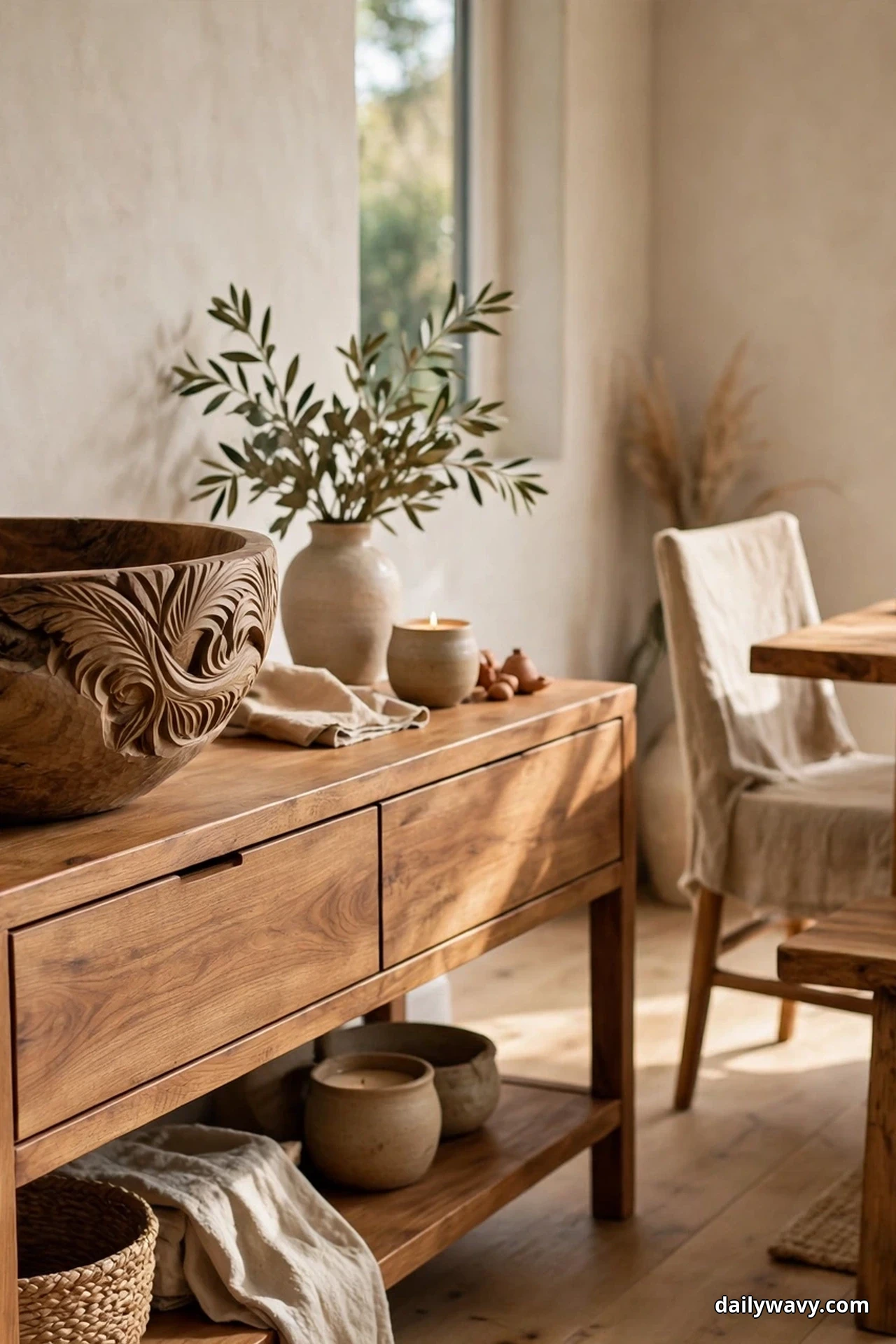
A single hand-carved wood bowl on the console behind the bench is styling at its most restrained: one object, one material, endless usefulness. It holds whatever the week brings, keys, fruit, the napkins you forgot to put away, and its turned wood grain echoes the bench without matching it exactly. The slight imperfection of a handmade bowl keeps the arrangement feeling human.
Size it generously: a bowl 12 to 16 inches across reads intentional on a console top, while a small one disappears. Set it slightly off-center, about a third of the way along the console, which feels more natural than dead middle. Leave it empty sometimes; an empty beautiful bowl is a calmer statement than a full cluttered one. Oil the wood once or twice a year with food-safe mineral oil if it holds fruit. This is a one-object idea that works in any style of dining room.
17. A Restrained Chair-Cushion Palette
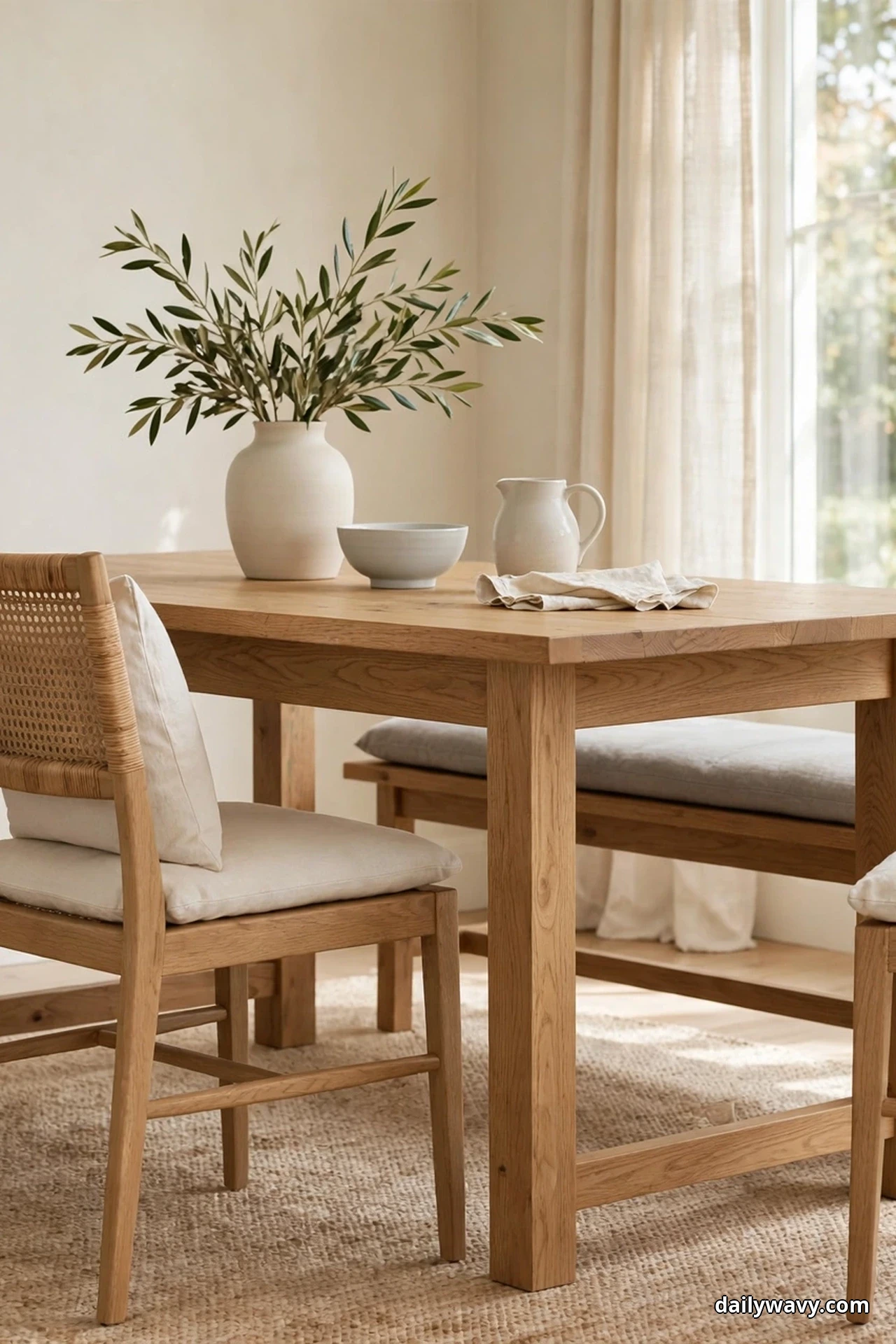
When the bench and the chairs share one quiet palette, the whole table looks calm. Limit cushions to three neutrals at most: oatmeal, cream and soft gray, or sand, ivory and warm taupe. Mix the textures instead of the colors, a linen bench cushion, a woven chair pad, a smooth cotton lumbar, so the restraint reads as texture rather than blandness.
Keep the bench cushion the lightest or the darkest of the three tones so it anchors the composition instead of vanishing into the chairs. If every cushion matches exactly, the table looks like a showroom; two or three close tones look collected. Washable covers matter here more than anywhere, since light neutrals show everything. This palette-first approach costs nothing if you already own the cushions; it is purely an editing exercise, and it makes mixed secondhand chairs look deliberate.
18. A Mirror Reflecting Natural Light
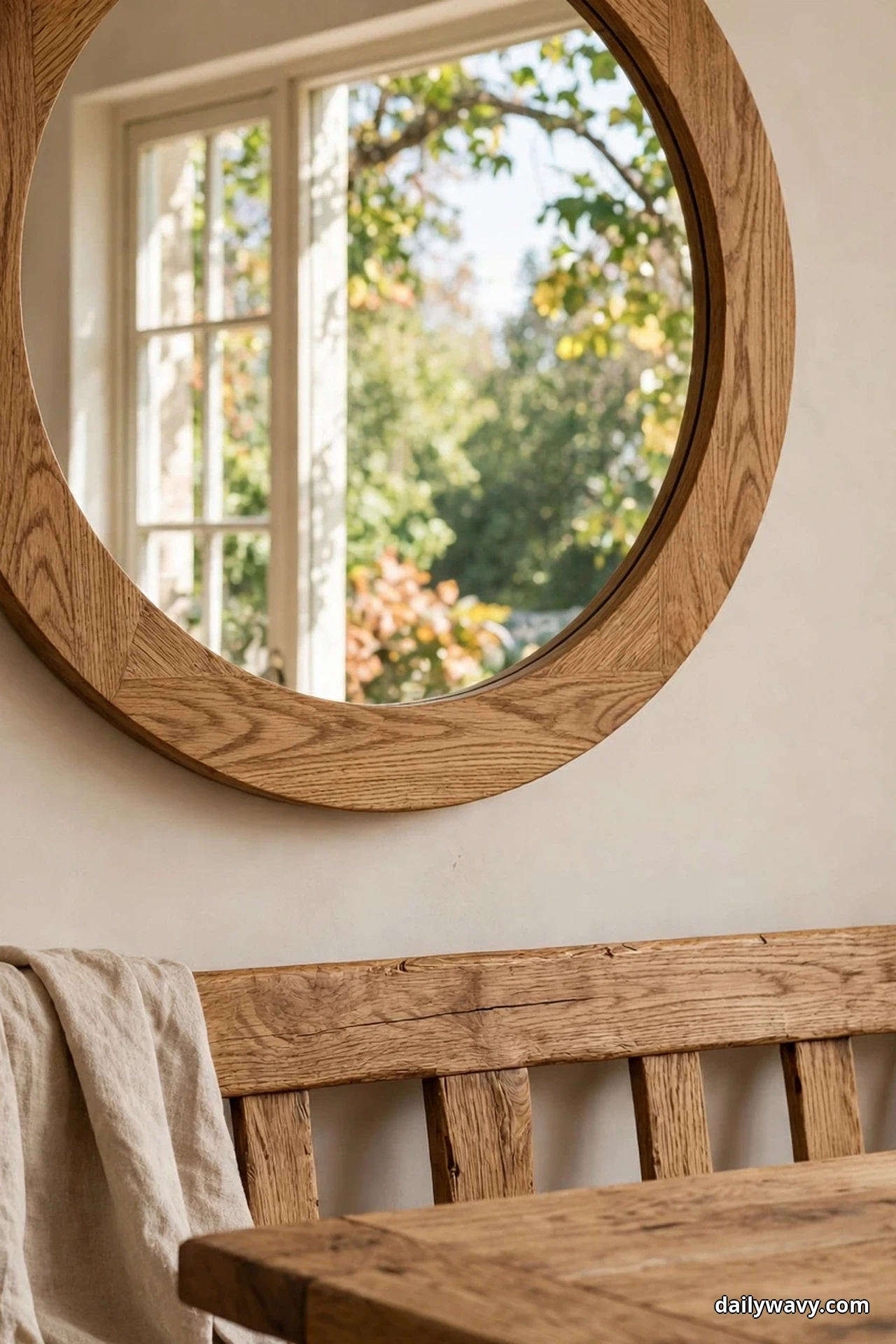
A mirror near the dining bench borrows light from the window and doubles it. Hang a round or arched mirror on the wall adjacent to the window, not opposite the table where diners catch their own reflection mid-bite, and it will bounce daylight deep into the room and make a small dining area feel twice its size. The bench below it gets the glow without the glare.
Size the mirror to the wall: 24 to 36 inches across suits most dining walls, and the frame should echo another material in the room, oak, brass or black metal. Hang it with the center at 57 to 60 inches, like artwork. Check the reflection from the bench seat before you finalize the spot; you want window and greenery in the glass, not the ceiling fan. A mirror also lets the host see the room behind them, which is a quiet practical bonus. One mirror, one wall, and the whole corner brightens.
19. A Ceramic Pitcher With Seasonal Stems
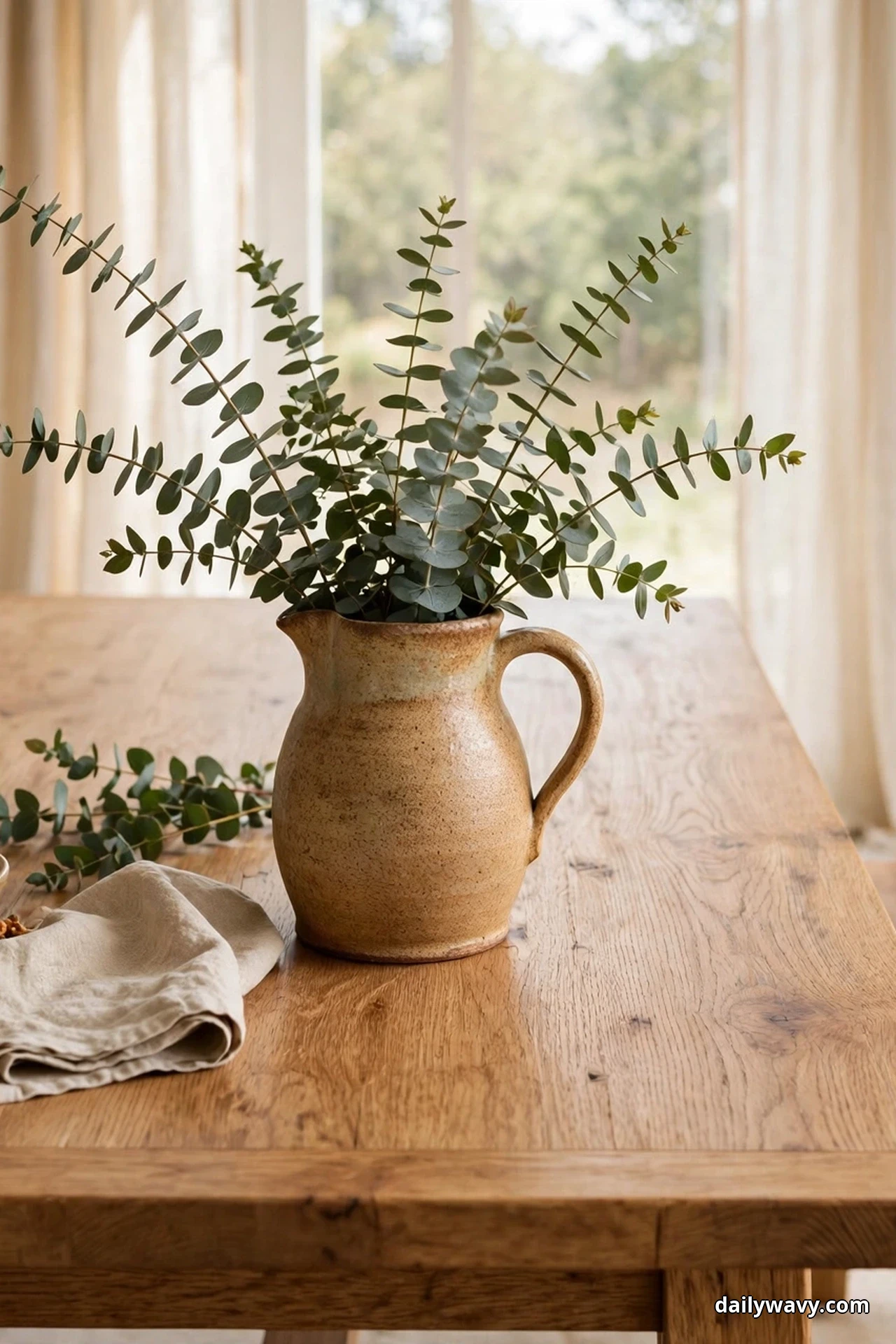
A handmade ceramic pitcher with whatever is in season is the centerpiece that never looks try-hard. Eucalyptus in winter, flowering branches in spring, garden herbs in summer, dried grasses in fall: the pitcher stays, the stems rotate, and the table always looks current. Set it slightly off-center on the table so it does not block the sightline down the middle.
Choose a pitcher 8 to 12 inches tall; taller vessels start to interfere with conversation across a bench-height table. Keep the stems loose and airy rather than dense, and trim them so the arrangement is wider than it is tall. A pitcher with a narrow neck holds branches upright without a frog or foam. Rinse it weekly if it holds water, or use dried stems for a zero-maintenance version. This is the rare styling idea that costs almost nothing and never goes stale.
20. A Linen Tablecloth With Plain Dishes
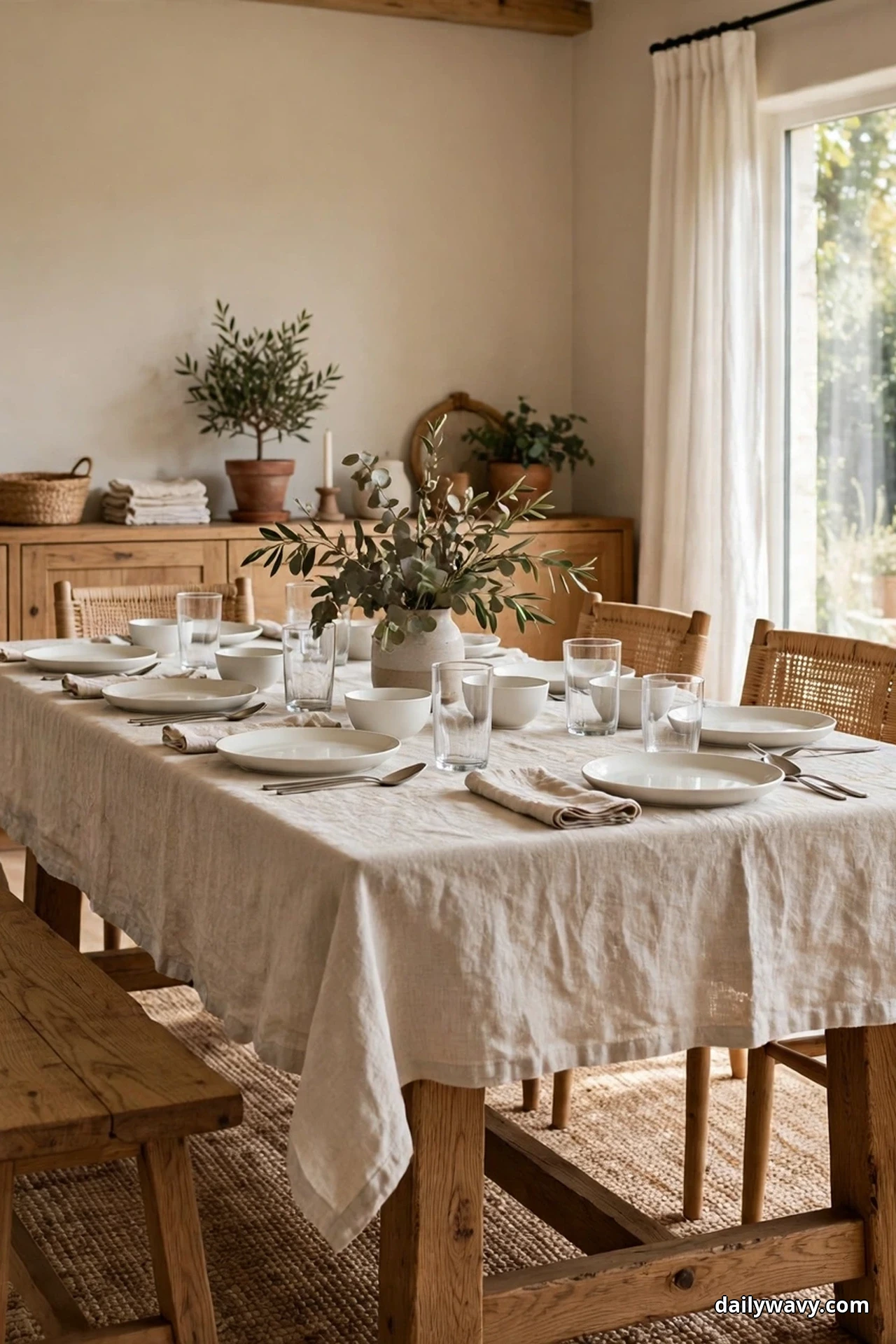
For gatherings, dress the whole table in washed linen and set it with plain white dishes, and the bench suddenly looks like the smartest seat in the house. The linen softens the table’s hard edges, the white dishes keep the table from competing with the food, and the bench’s casual comfort matches the relaxed elegance of the cloth. It is the easiest way to make a weeknight table feel like a dinner party.
Let the tablecloth puddle just slightly: it should hang 8 to 12 inches past the table edge on each side, pooling a touch at the bench side is fine and looks generous. Wash the linen before its first use to soften it, and embrace the wrinkles; pressed linen at a family table looks nervous. Plain stoneware or porcelain in white or cream stacks neatly and never clashes with the food. Fold the napkins simply and skip the rings. When the meal is over, the whole cloth goes in the wash and the table is reset in minutes.
Frequently Asked Questions
How long should a dining bench be?
Match it to your table: 6 to 12 inches shorter than the table length is the sweet spot. Allow about 24 inches of bench per adult. A 48-inch bench seats two comfortably, a 60-inch bench seats three, and a 72-inch bench seats three with elbow room or four for a casual gathering.
Can a bench really replace dining chairs?
For the long side of the table, absolutely, and many families prefer it. Benches seat more people in less visual space and tuck fully under the table when not in use. Keep at least one or two chairs for the opposite side and the table ends so older guests and anyone who needs back support has the option.
Are dining benches comfortable for long dinners?
They are with a cushion. A two-inch foam cushion with a washable cover transforms a bench from perching to lingering. Backless benches suit shorter meals just fine, while a bench placed against a wall lets diners lean back with a pillow behind them for long evenings.
How do I clean around a dining bench?
Choose washable cushion covers and a wipeable bench finish, and the daily cleanup is quick. A bench actually makes floor cleaning easier than chairs do: slide it fully under the table and you have one clear zone to sweep or vacuum instead of chair legs everywhere.
Should the bench go against the wall or float?
Against the wall saves the most floor space and gives diners something to lean against, which makes it the best choice for small dining areas. A floating bench with chairs on both long sides suits larger rooms and lets the table work from every angle. Either way, keep 18 to 24 inches of slide-in room on the open side.
What if my dining room is very small?
A bench is one of the best small-space moves you can make. It seats more people per inch than chairs, disappears under the table between meals, and keeps sightlines open because of its low profile. Our narrow living room layout guide covers the same space-stretching logic for adjoining rooms, and the Home and Decor collection has more small-space ideas.
The Takeaway
A dining bench earns its place by doing two things at once: seating more people and making the room feel more relaxed. Style it the way you would any good seat, with comfort first, honest materials and details scaled to real life. Start with the cushion and the measurements, then add the layers that suit your room: art at eye level, light at the right height, textiles that repeat, surfaces you can actually clean. If you want to keep going, our round dining table styling ideas are a natural next read, and our small entryway decor and small bedroom with a queen bed ideas carry the same warm-neutral approach into the rest of the house. Pick three ideas from this list, live with them for a week, and let the bench do what it does best: gather people close.