
14 Bedroom Bedside Lighting Ideas with Form and Function in Mind
The lamp on your nightstand does two jobs at once. It shapes the mood of your whole bedroom, and it…
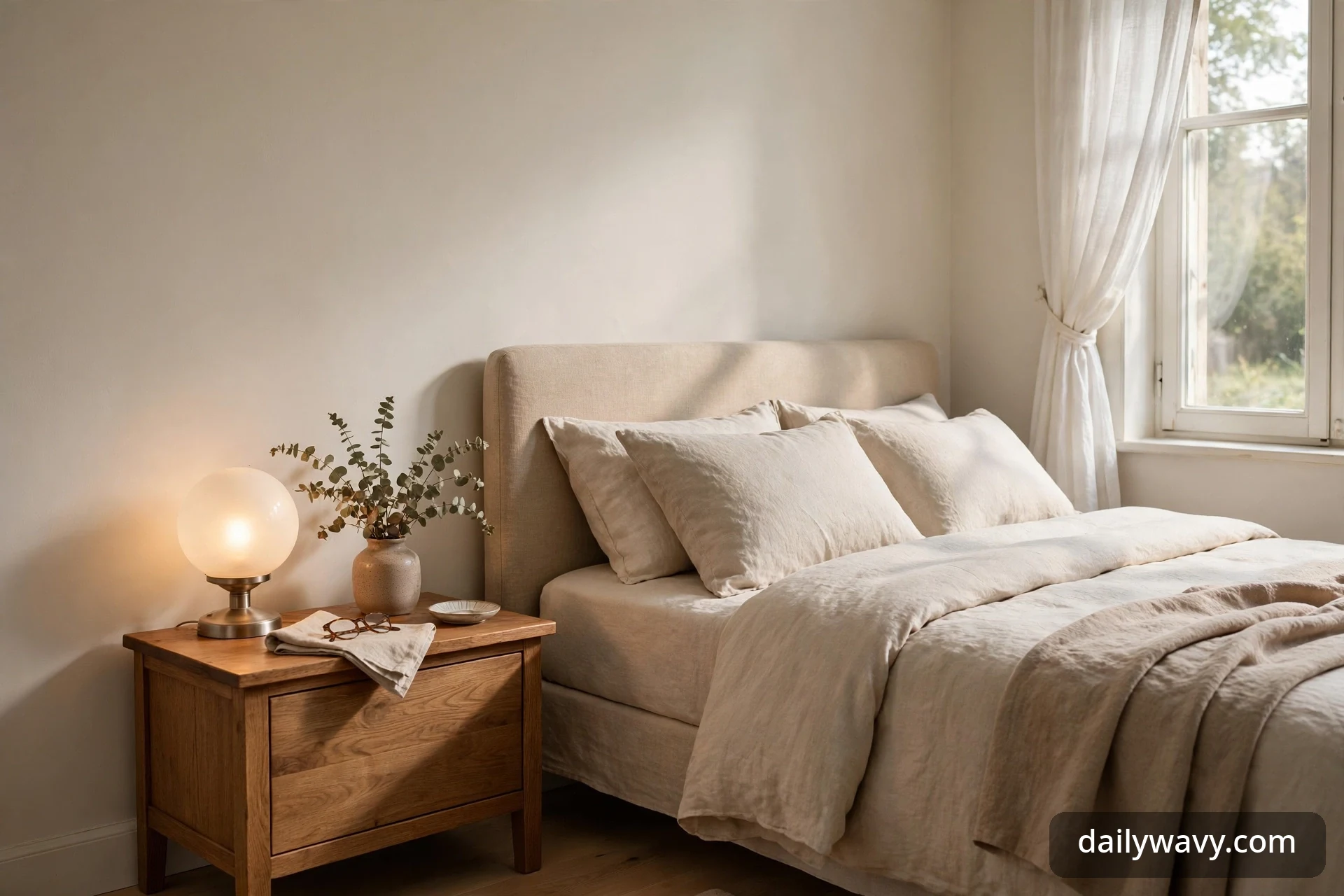
The lamp on your nightstand does two jobs at once. It shapes the mood of your whole bedroom, and it has to work hard in a very small zone: reading without glare, finding your phone without waking anyone, making the room feel finished instead of bare. It is easy to buy a fixture for the shape alone, then spend years squinting past a too-bright bulb or fumbling across a shadowed tabletop. This guide pairs form with function in fourteen bedside lighting ideas. Each one explains what to measure, what to buy, where to place it, and how much effort it takes, plus a realistic budget alternative, so you can recreate the exact look in your own room.
Jump to an idea
- A diffused globe-style form
- A narrow fixture in a tight space
- A pair with balanced placement
- A textured shade with gentle light
- A low-glare light aimed at the task
- A small accent highlighting artwork
- A subtle contrast against the wall
- A vintage-inspired silhouette
- A contemporary cylindrical form
- An adjustable head for practical use
- A dimmable option where compatible
- A rounded shape softening straight lines
- A ceramic or wood accent on the base
- A restrained dark fixture in a light room
One safety note before you start: any fixture that needs new wiring, a new switch leg, or a junction box change calls for work that meets local electrical requirements. If you are unsure, hire a licensed electrician. Lamp-based ideas in this guide plug into an existing outlet, so you can handle them yourself.
1. A diffused globe-style form
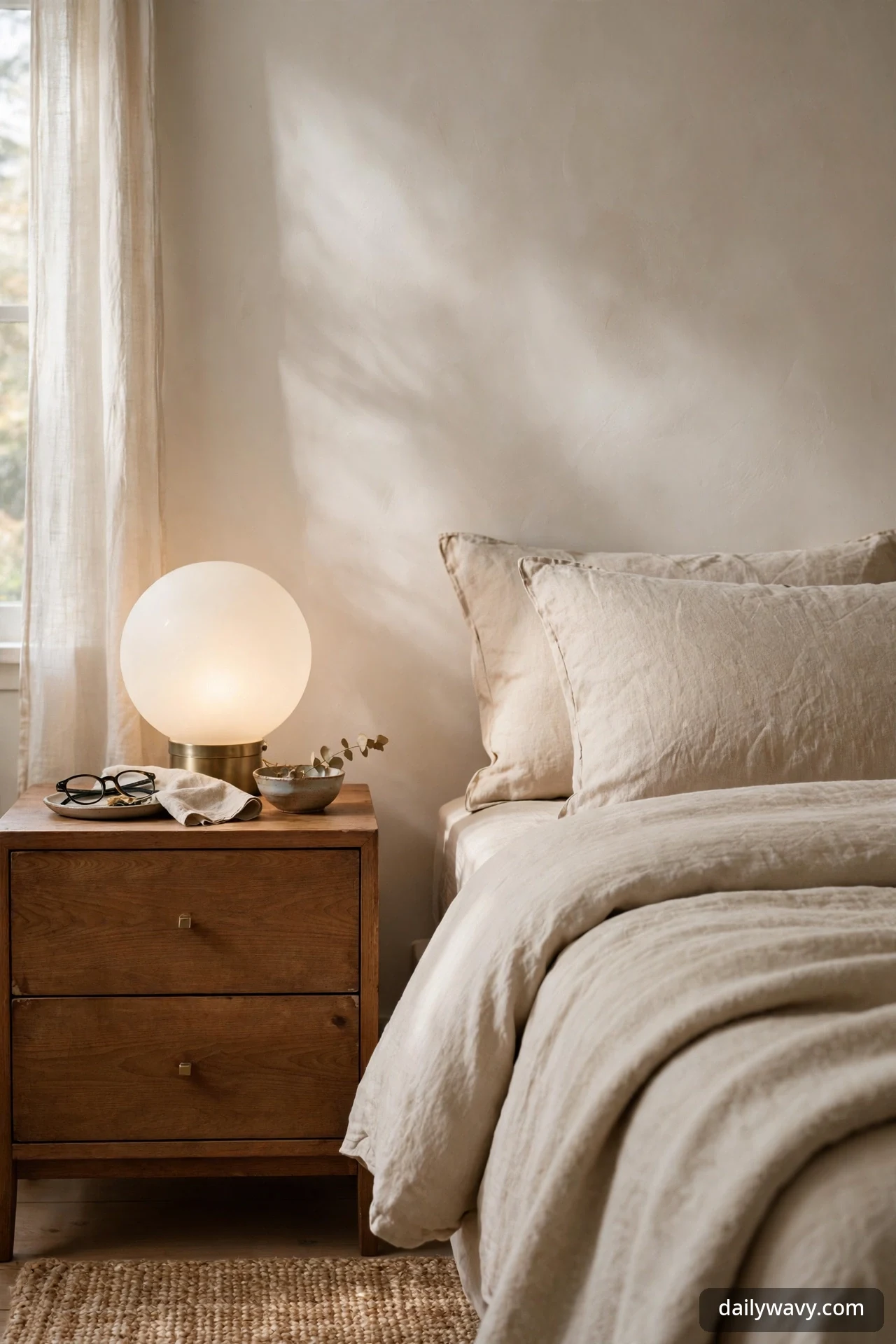
There is a reason the glowing orb keeps showing up in design magazines: it throws light in every direction at once, so the whole corner feels bright without a single hard shadow. In a bedroom that softness matters. You get enough light to see your nightstand, and the spill across the wall makes the room feel a touch larger after dark.
What to measure: Look for a globe 10 to 14 inches across for a standard nightstand. Smaller than 10 inches and it reads as a toy; larger than 14 and it crowds a 20-inch-deep table. Check that the bulb sits roughly 24 to 28 inches above the tabletop, which puts it near shoulder height when you sit up, so the light reaches your lap.
Materials: A milk-glass or frosted acrylic globe, a weighted base in ceramic or metal, and a warm LED bulb around 2700K. Frosted surfaces matter more than the base material for the final look.
Placement: Center the globe two-thirds toward the back of the nightstand, leaving the front third clear for a glass of water and a book. On a wide headboard wall, pull the table 4 inches from the wall so the cord can drop straight down behind it.
Effort: Low. Buy the lamp, screw in the bulb, place it. Ten minutes, plus cord management with a self-adhesive clip.
Lower-cost alternative: A frosted glass globe shade (sold separately in the lighting aisle) on a thrift-store lamp base with the same footprint. The glow looks identical once the bulb is on.
2. A narrow fixture in a tight space
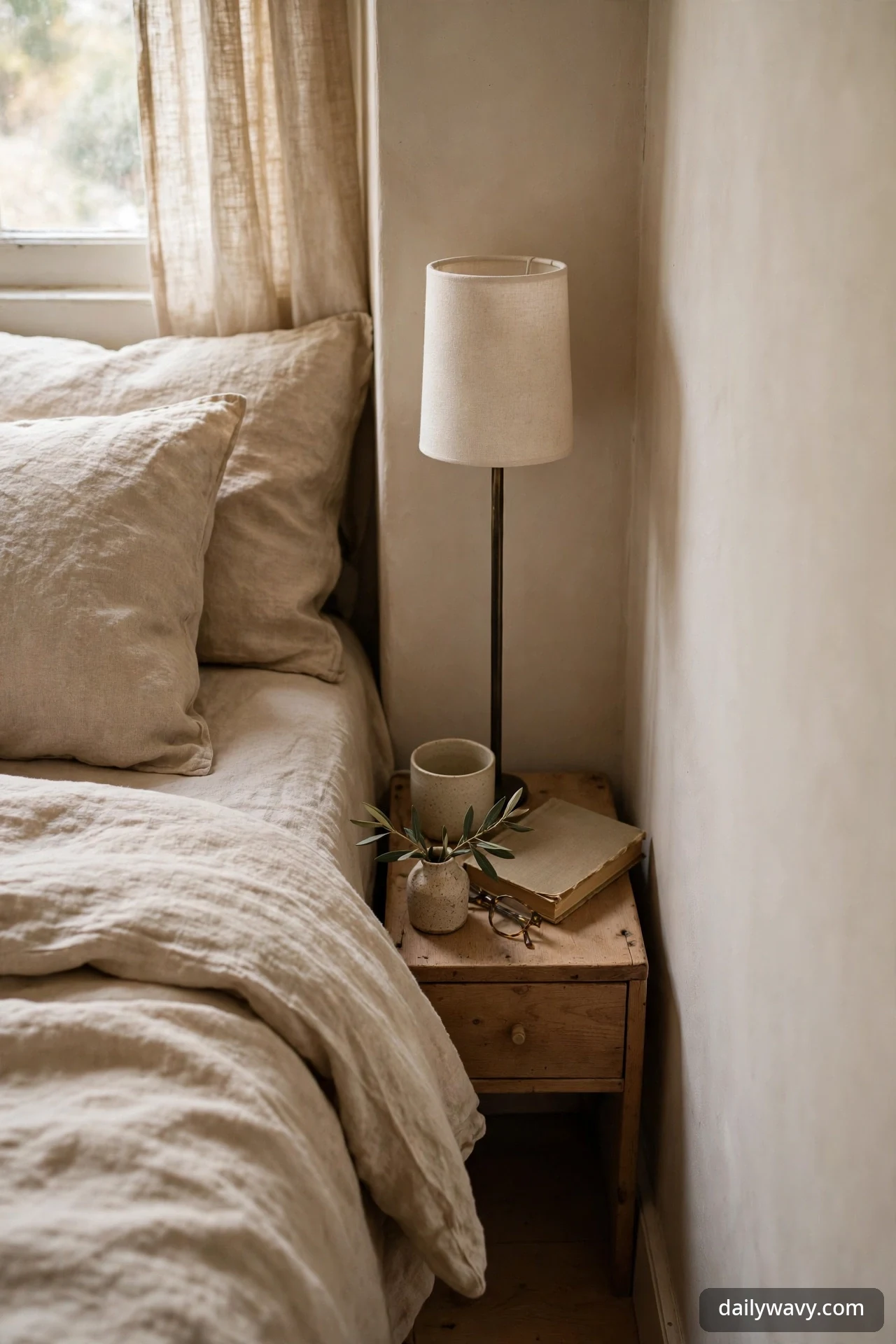
When the nightstand barely holds a book, a full-size lamp is out of the question. A narrow fixture, under 6 inches at its widest point, earns its spot by going vertical instead of wide. It reads slim and modern, and it leaves real surface space for the things you actually use at night.
What to measure: Map the footprint first. A nightstand 14 inches square can hold a fixture with a base no wider than 8 inches, keeping 3 inches clear on each side. Overall height should stay between 18 and 24 inches, so the light source lands near your shoulder when you sit up in bed.
Materials: A slim metal stem, a narrow drum or tube shade in linen, and a warm LED bulb. Linen warms the light slightly, which suits a bedroom better than a bare metal shade.
Placement: Push the fixture to the back corner of the nightstand on the side farthest from your sleeping position. That frees the near corner for a water carafe and keeps the shade from crowding your pillow.
Effort: Low. Fifteen minutes to place and aim. If the fixture is a plug-in wall lamp rather than a table lamp, mounting takes a screwdriver and a drywall anchor, about half an hour.
Lower-cost alternative: A narrow battery-operated LED tube light tucked behind the nightstand, or a slim candlestick lamp from a big-box store under $30. The effect is similar; the materials are simpler.
3. A pair with balanced placement

Two matching lamps flanking a bed do something no single fixture can: they anchor the headboard and make the whole wall feel intentional. The eye reads the symmetry and relaxes. This is the classic approach, and it works because the math is easy. Two identical light sources, equal distance from the center of the bed, equal height.
What to measure: Each nightstand should sit 2 to 4 inches from the bed frame. The lamps should match in height within an inch, and each shade should sit roughly 20 to 24 inches above the mattress top. Measure from the mattress surface, not the floor, since bed heights vary a lot.
Materials: A matched pair of table lamps, 24 to 30 inches tall overall, with opaque shades that push light up and down rather than sideways. Warm LEDs around 2700K keep both sides reading the same color of light.
Placement: Center each lamp on its nightstand, pulled 2 inches from the back edge. If the headboard is wide, align the outer edge of each shade with the outer edge of the headboard posts for a tidy frame.
Effort: Low. The work is all in measuring so the pair reads as a pair. Budget an hour if you are replacing existing fixtures, including adjusting shade heights to match.
Lower-cost alternative: Two identical clearance lamps in different colors can be unified with a coat of spray paint, or buy one lamp and a second matching shade for a lamp you already own.
4. A textured shade with gentle light
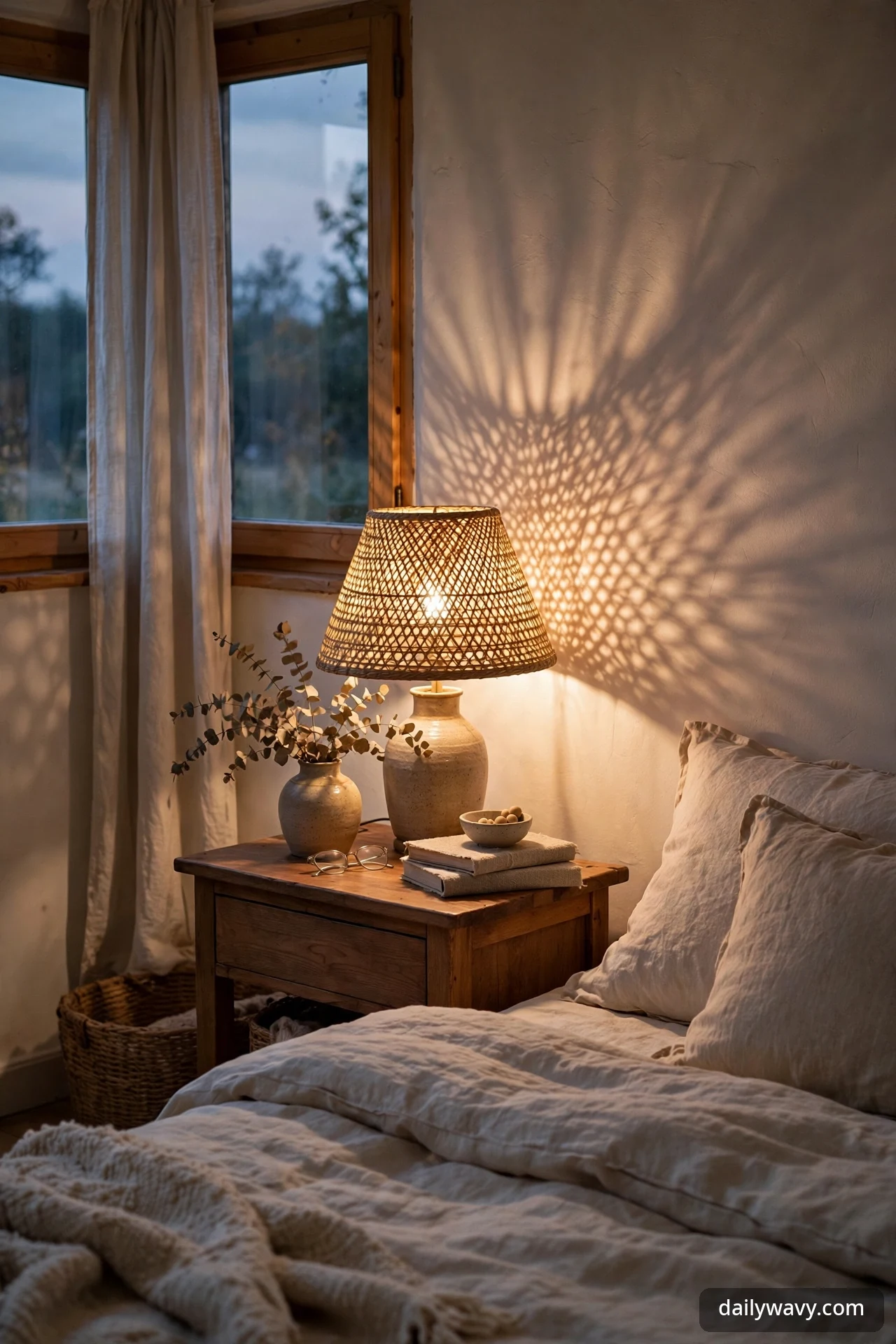
A plain white shade does its job and disappears. A textured shade, rattan, woven seagrass, pleated linen, does its job and adds something to look at with the lights on and off. During the day it brings a handmade quality to the nightstand; at night the texture throws a soft dappled pattern across the wall that feels calm rather than busy.
What to measure: Choose a shade 12 to 16 inches tall with a bottom opening wide enough to hide the bulb from a standing eye line, usually 10 to 12 inches across. The bottom of the shade should sit roughly at shoulder height when you sit up, usually 20 to 24 inches above the mattress top, so reading light reaches your book without the bulb showing.
Materials: A woven rattan, bamboo, or pleated-linen shade on a simple metal or wood base. Check that the weave is tight enough that the bare bulb is not visible through it; you want texture, not glare.
Placement: Angle the nightstand lamp so the textured face catches the most wall space. In a corner bed, aim the open side of the shade toward the room, not the wall behind it.
Effort: Low. Twenty minutes including testing the bulb brightness. If you are swapping just the shade, make sure the harp and fitter size match, which takes five minutes in the store.
Lower-cost alternative: A pleated paper lantern-style shade fits many existing lamp harps and costs a fraction of a woven shade. The pattern is different but the gentle glow is very close.
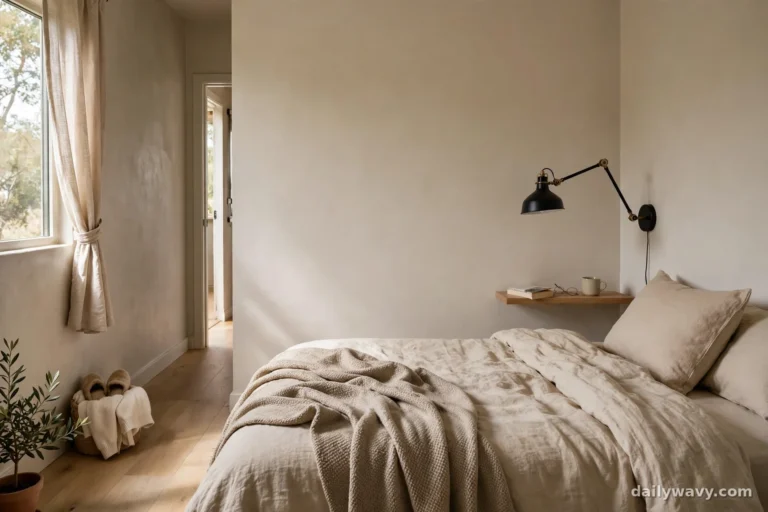
5. A low-glare light aimed at the task

Reading in bed fails for one reason: the bulb sits where your eyes can see it. A low-glare fixture solves this by hiding the source and aiming the beam at the page. Swing-arm sconces and shaded reading lights do this best. The shade cups the bulb, the arm angles the light down, and your pupils never catch the raw source.
What to measure: Mount a wall fixture so the shade sits 30 to 36 inches above the mattress and 12 to 18 inches out from the headboard. For a table reading lamp, choose a shade with a bottom opening no wider than 8 inches; a tight opening keeps the light pool small and focused.
Materials: A metal swing-arm sconce or a table lamp with an opaque drum shade, plus a warm LED bulb with at least 450 lumens for reading. A swing arm needs a mounting plate, screws, and a drywall anchor.
Placement: Aim the beam at the page, not the room. If the fixture has a cord, route it along the headboard edge with adhesive cord clips so nothing dangles behind your pillow.
Effort: Medium for wall mounting, about 45 minutes including patching old holes. A plug-in table version is a ten-minute job.
Lower-cost alternative: A clip-on book light aimed at the nightstand surface gives the same directed beam for under $20, though it will not light the room.
6. A small accent highlighting artwork

Bedrooms collect framed prints and photographs, and most of them sit unlit above the nightstand. A small picture light or mini spotlight fixes that and doubles as gentle ambient light. The artwork becomes a focal point after dark, and the whole bedside area gains depth without a big fixture.
What to measure: Size the picture light to about two-thirds the width of the frame, usually 12 to 20 inches wide. Mount it 6 to 8 inches above the top of the frame so the beam washes evenly without hot spots.
Materials: A slim LED picture light, battery-operated or plug-in, with a warm color temperature around 2700K. Battery versions avoid cords entirely; plug-in versions stay brighter and never need charging.
Placement: Center the light over the artwork, not the nightstand. Check the beam at night before final mounting; LED glare looks harsher after dark than in the showroom.
Effort: Low for battery versions (five minutes with adhesive or screws). Plug-in versions need a cord routed down to the nightstand outlet, about twenty minutes.
Lower-cost alternative: A battery-operated puck light centered above a small frame gives a similar wash of light for a few dollars, though the coverage is narrower.
7. A subtle contrast against the wall
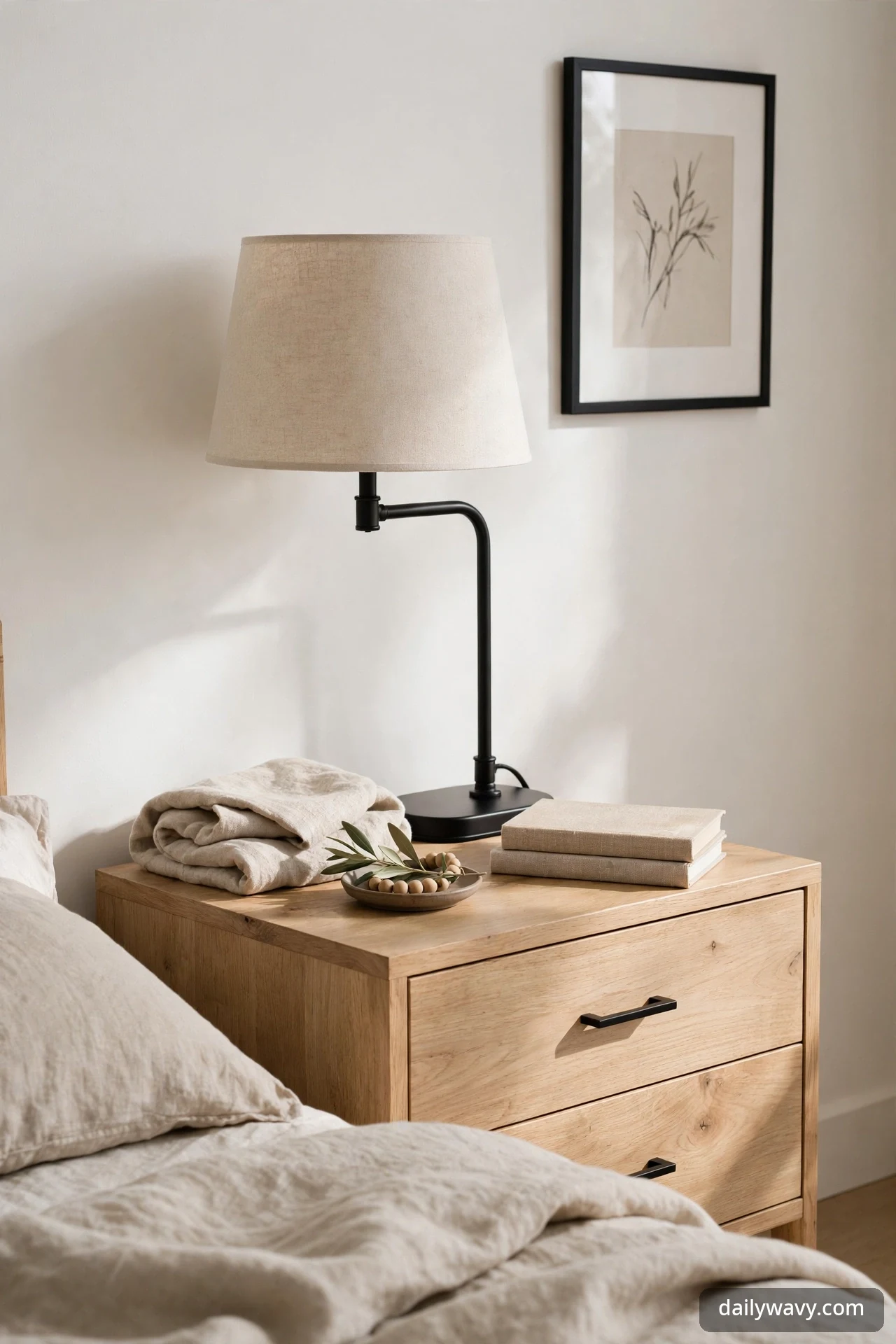
In a light, neutral bedroom, a dark lamp base works like punctuation. It gives the eye one quiet anchor and keeps the room from floating into beige nothingness. The trick is restraint: matte finishes, simple shapes, and a dark color that repeats somewhere else in the room, a frame, a throw, a rug border.
What to measure: The base should occupy no more than one-third of the nightstand surface. A base 6 to 8 inches across on a 20-inch table leaves room for everything else. Keep the total lamp height between 24 and 28 inches so the shade clears the sight line from the bed.
Materials: A matte black or deep bronze metal base, a neutral linen or cream shade. Matte finishes absorb light instead of reflecting it, which keeps the contrast soft rather than sharp.
Placement: Pair the dark base with at least one other dark note in the room, a thin black frame or a charcoal throw, so the lamp looks chosen, not accidental. Place it toward the back of the nightstand for stability.
Effort: Low. This is a styling decision, not a project. Ten minutes to place, then adjust the other dark notes in the room.
Lower-cost alternative: Spray-paint an existing lamp base matte black for a few dollars. Light sanding and two thin coats beat one thick coat every time.
8. A vintage-inspired silhouette
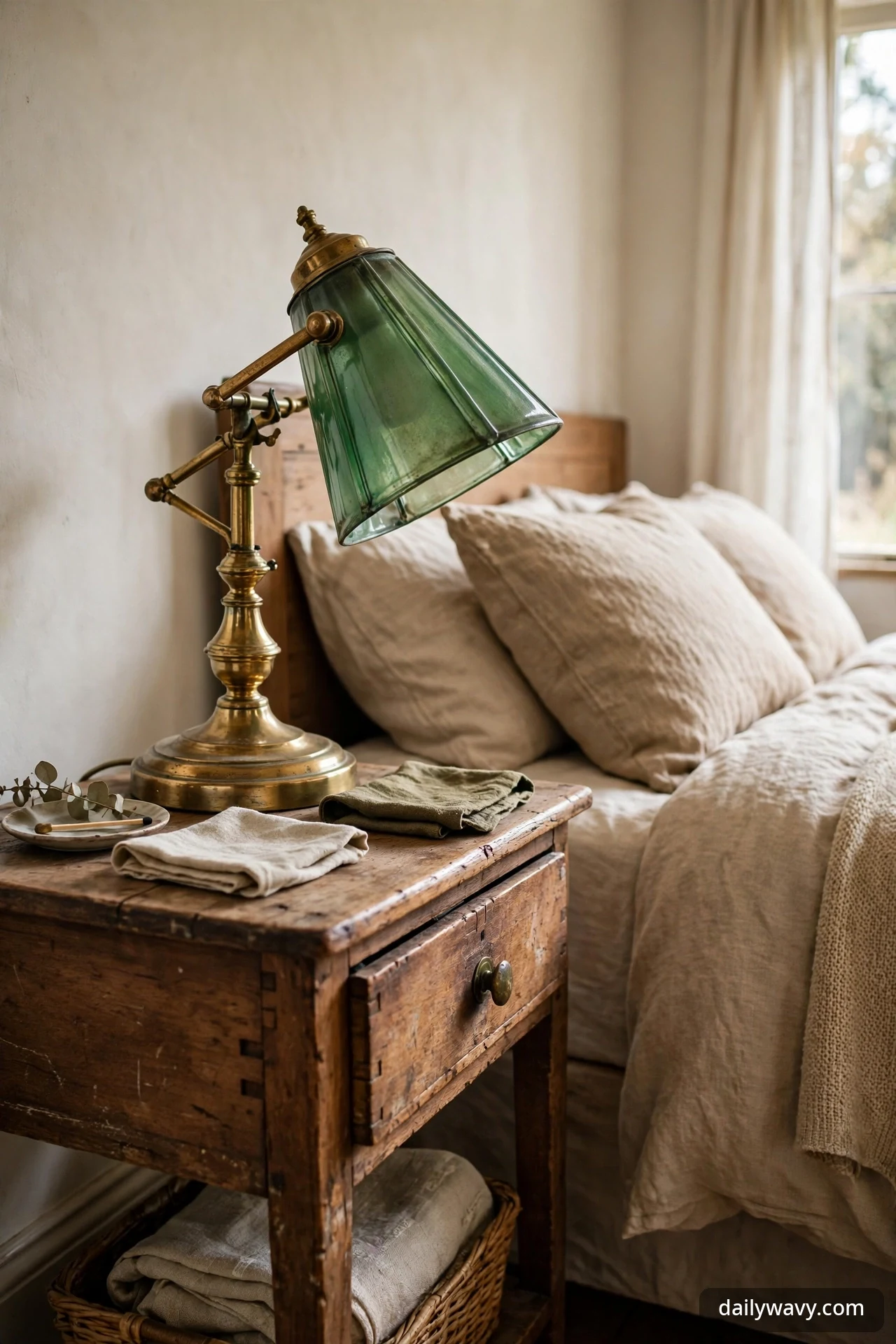
Banker lamps, pharmacy lamps, and tapered schoolhouse shades carry a quiet history that flatters both traditional and modern bedrooms. The shapes are familiar, which makes them easy to place, and the directional shades were originally designed for reading, so they perform the bedside job well.
What to measure: Vintage-style desk lamps usually stand 14 to 20 inches tall. Because these lamps are shorter than a standard bedside lamp, the shade sits lower, roughly 8 to 12 inches above the nightstand surface. Aim the shade so the beam lands on your page, and check it at night before settling the spot. Check the shade width against your nightstand: 7 to 9 inches across suits most tables.
Materials: A brass, bronze, or painted-metal base with a directional metal or glass shade. Modern reproductions use the same proportions with safer wiring, which is worth choosing over a genuine antique with unknown electrics.
Placement: These lamps suit smaller nightstands because the narrow profile leaves surface space. Push the lamp to the back corner and let the shade tilt toward the bed.
Effort: Low. Place and plug in. If you buy a genuine vintage lamp, have the wiring checked before use; rewiring by an electrician is a separate, worthwhile cost.
Lower-cost alternative: Reproduction pharmacy lamps start around $40 at big-box stores. The proportions match the originals and the wiring is new.
9. A contemporary cylindrical form
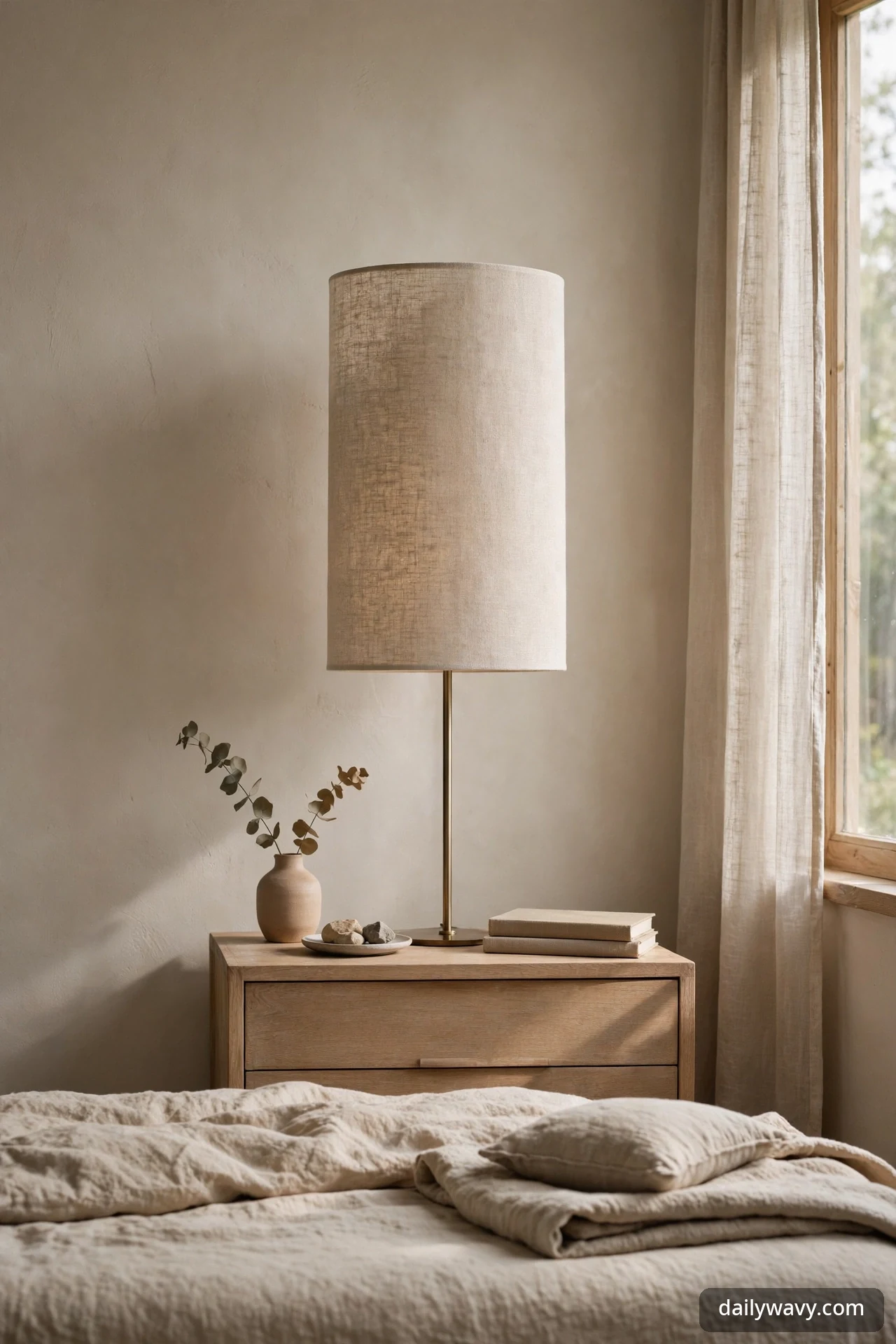
The cylinder is the quiet achiever of lamp shapes. No taper, no flare, just a clean column of fabric that sends light up and down in equal measure. It suits modern and transitional bedrooms because it refuses to argue with anything else in the room. The light falloff is smooth and even, which flatters both the wall behind it and the surface below.
What to measure: A cylinder 8 to 10 inches in diameter and 10 to 14 inches tall fits most nightstands. The total lamp height should land between 24 and 30 inches; taller than 30 and the shade looms over the bed, shorter than 24 and the light pool shrinks.
Materials: A linen or cotton cylinder shade on a slim stem base. Fabric diffuses the light evenly, while paper cylinders show every seam at night, so fabric is the better pick for a bedroom.
Placement: Center the cylinder on the nightstand. Because the light spreads evenly in all directions, avoid pushing it hard against the wall or one side will go noticeably dim.
Effort: Low. Fifteen minutes to assemble and place, mostly spent centering it and leveling the shade on the harp.
Lower-cost alternative: Cylinder shades are sold separately and fit standard harps, so upgrading the shade on a lamp you already own runs $25 to $40 and changes the whole look.
10. An adjustable head for practical use

Couples with different sleep habits need one lamp to do two things: aim at the reader, then aim away from the sleeper. An adjustable head makes that possible. Pivot the head toward your book when you read, and swing it back or tilt it down when you are done. No other bedside fixture adapts this fast.
What to measure: Choose a fixture with an arm reach of 10 to 16 inches so the head can travel from the nightstand to over the bed. The pivot should hold its position without drifting; test this in the store by tilting the head and letting go.
Materials: A metal task lamp with a ball-joint or friction-pivot head, and a warm LED bulb. Springs wear out faster than friction joints on bedside lamps that get adjusted nightly, so prefer a simple pivot.
Placement: Set the base at the back corner of the nightstand on the outer side, away from the bed center, so the arm reaches over the mattress rather than crossing your pillow. Keep the cord behind the headboard.
Effort: Low for a table version. A wall-mounted adjustable arm takes about 45 minutes and two drywall anchors.
Lower-cost alternative: An architect-style desk lamp repurposed as a bedside lamp costs far less than a purpose-built bedroom fixture and adjusts further.
11. A dimmable option where compatible
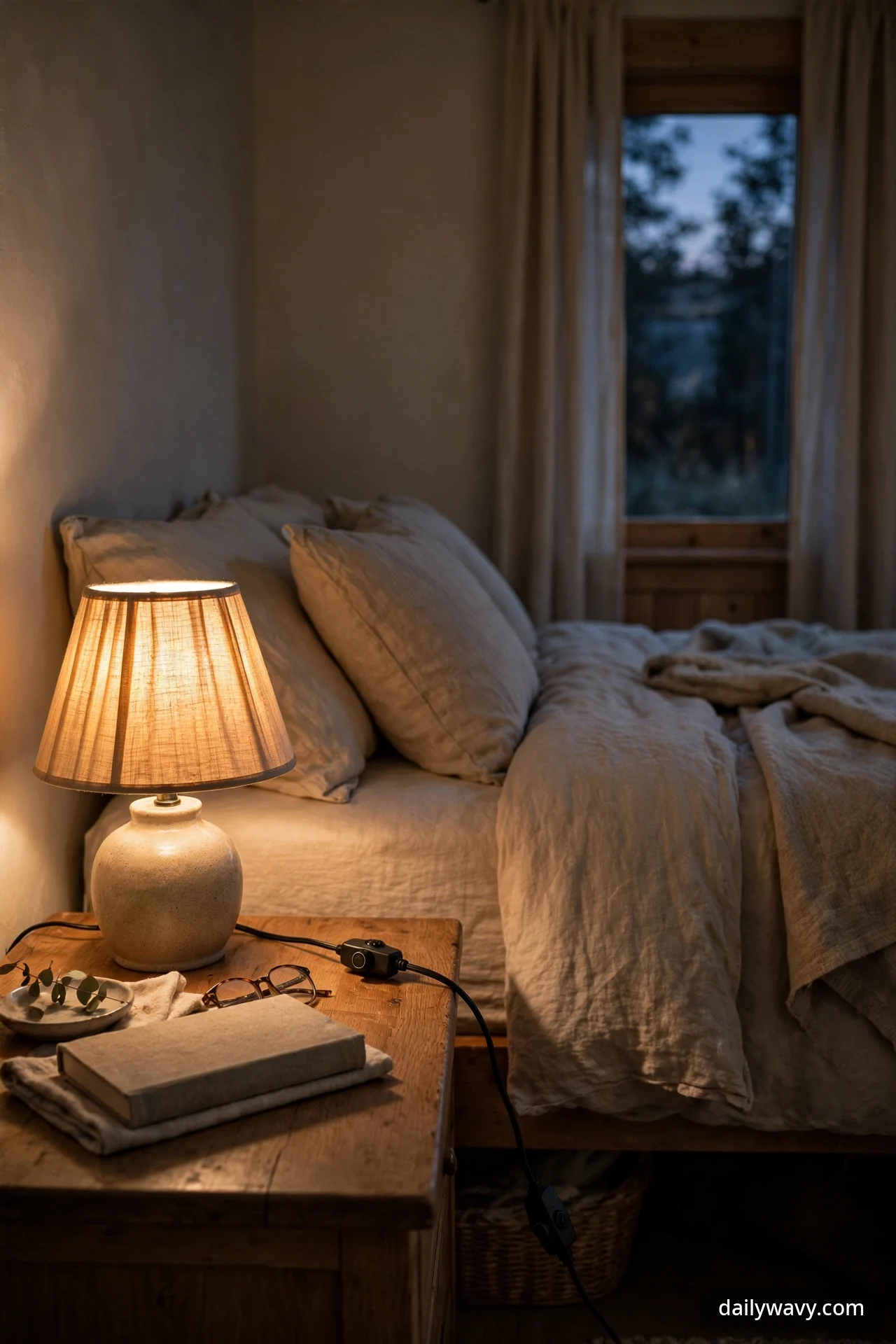
Brightness needs change through the evening. Full brightness for reading, a soft pool for winding down, a faint glow for middle-of-the-night wakeups. A dimmable bedside lamp covers all three without swapping fixtures. The key word in the brief is “where compatible”: the lamp, the dimmer, and the bulb must all agree, or you get flicker.
What to measure: Confirm three things before buying: the bulb is marked dimmable, the dimmer type matches the bulb (many dimmable LED bulbs work with standard TRIAC dimmers; some need an LED-rated model), and the dimmer’s minimum load is below your bulb’s wattage. A 9-watt LED under a dimmer built for 60-watt minimums will flicker.
Materials: A dimmable warm LED bulb, a compatible plug-in or wall dimmer, and any bedside lamp you like. Touch-dimmable table lamps fold the dimmer into the fixture and skip the compatibility puzzle.
Placement: Put the dimmer control within arm’s reach of the bed. Inline cord dimmers clip to the cord near the nightstand; touch lamps dim from the base itself.
Effort: Low to medium. A plug-in cord dimmer takes five minutes. Replacing a wall switch with a dimmer involves electrical work and should follow local requirements, which usually means hiring an electrician.
Lower-cost alternative: An inline cord dimmer on an existing lamp costs under $15 and delivers the full experience with no rewiring.
12. A rounded shape softening straight lines
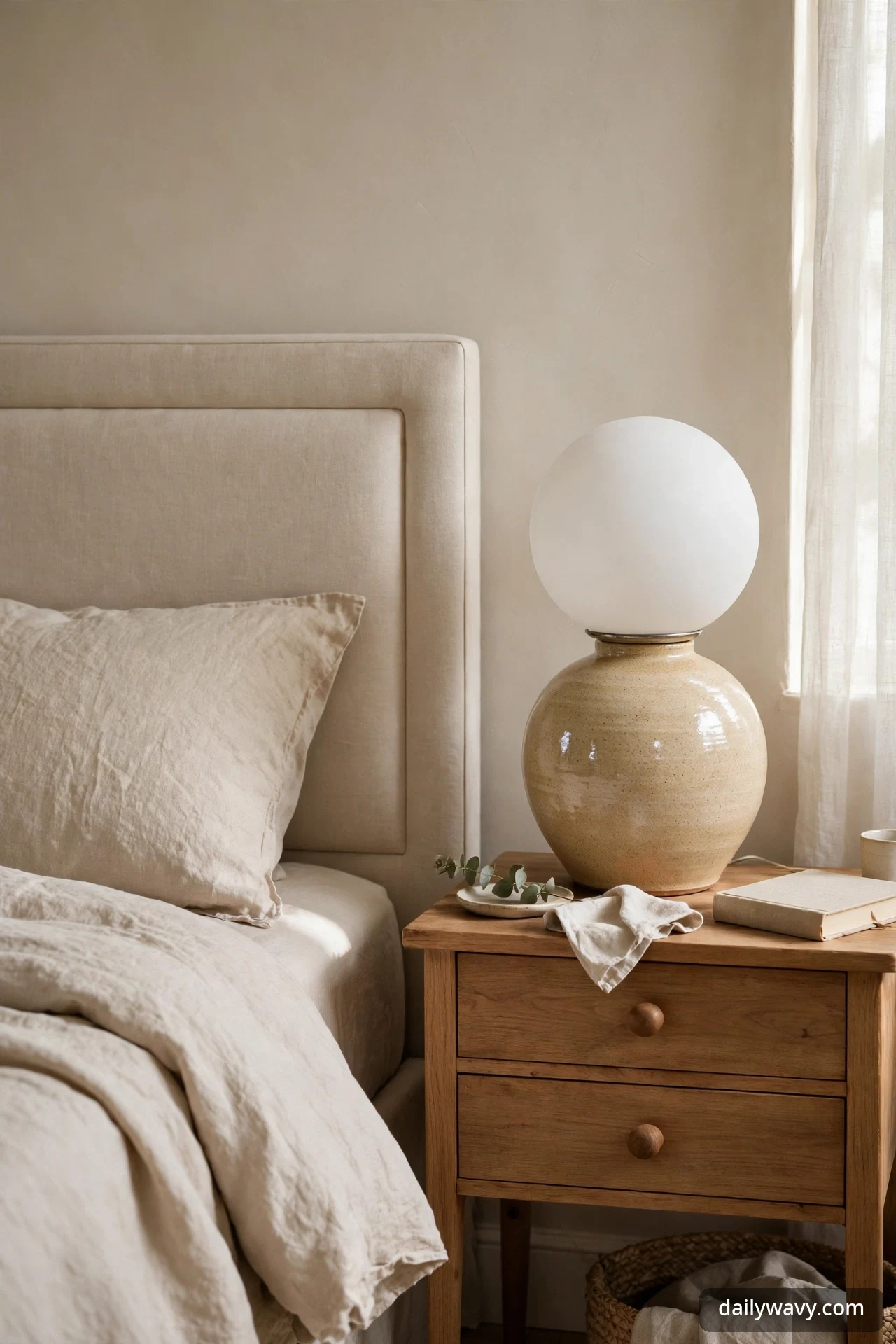
Bedrooms are full of rectangles: the bed, the headboard, the nightstand, the door. A round lamp base or a spherical shade breaks that geometry and keeps the room from feeling like a box. It is a small move with a noticeable effect on how soft the room feels, especially in modern bedrooms with lots of hard edges.
What to measure: Round bases run 8 to 12 inches across. On a 20-inch nightstand, a 10-inch base leaves a usable front strip; a 12-inch base starts to dominate. Keep total height between 22 and 28 inches so the round form reads clearly above the bedside clutter.
Materials: Glazed ceramic, hand-thrown stoneware, or a molded resin sphere. Ceramic shows fingerprints less than polished metal and carries the warm-neutral palette well.
Placement: Offset the round lamp slightly toward the outer corner of the nightstand. The asymmetry reads as deliberate and leaves the inner corner open for glasses or a book.
Effort: Low. Ten minutes to place. The visual work happens when you check it against the room’s other rectangles from the doorway.
Lower-cost alternative: A ceramic table lamp from a home-discount store gives the same soft geometry for $30 to $50. Shape matters more than brand here.
13. A ceramic or wood accent on the base

A handmade-looking base gives the nightstand a crafted anchor that factory finishes cannot match. Ceramic glaze pools and wood grain both catch light in small ways that make the lamp feel alive. This idea is about material honesty: the base is the star, so keep the shade quiet and let the texture talk.
What to measure: Hand-thrown bases vary, so check the footprint in person or read the listing dimensions: 7 to 9 inches across is the sweet spot. Weigh it too; a base under 3 pounds tips easily when you yank a cord at night.
Materials: A glazed stoneware or solid wood base with a plain linen shade. Wood bases need a felt pad underneath to protect the nightstand; ceramic bases usually come with one built in.
Placement: Let the base sit near the front edge where its texture gets noticed, but keep it 4 inches back from the edge so a bump does not send it off the table. Pair it with a simple white or cream shade so nothing competes with the material.
Effort: Low. Place and enjoy. If the base is wood, wipe it with a dry cloth monthly; glazed ceramic needs nothing.
Lower-cost alternative: A textured ceramic-look base from a big-box store mimics the handmade feel for a fraction of the price. The glaze will be more uniform, but from across the room the difference is small.
14. A restrained dark fixture in a light room

Idea 7 used a black base as punctuation; this one goes further and lets a dark fixture carry real presence in a light room. Bronze, espresso, or matte black against white bedding and pale walls creates a gallery-like calm. The dark shape reads as art by day and as a warm pool of light by night, when the shade glows from inside.
What to measure: A dark fixture absorbs visual weight, so it can run slightly larger than a light one: 10 to 12 inches across at the base, 26 to 32 inches tall overall. Keep at least 18 inches of pale wall or headboard visible around it so the contrast has breathing room.
Materials: A bronze or matte-black metal fixture with a warm-tone shade, cream or amber rather than stark white. A white shade on a black base looks crisp; an amber shade looks warmer and more vintage.
Placement: Give the dark fixture the best-lit spot in the room. In morning light, the dark silhouette against a bright wall is the whole point. Avoid placing it in a shadowed corner, where it will simply disappear.
Effort: Low. The discipline is in the rest of the room: keep surrounding clutter pale and minimal so the fixture holds its presence.
Lower-cost alternative: A dark bronze floor lamp standing beside the bed delivers the same light-dark contrast for free while you shop for the real thing.
Frequently asked questions
How bright should a bedside lamp be?
For reading, aim for a bulb around 450 to 800 lumens, which is roughly what a 40 to 60 watt old-style bulb produced. For a faint night glow, 100 lumens or less is plenty. If you are buying one lamp for both jobs, pick a dimmable setup so you are not locked into one level.
Should the two bedside lamps match?
They do not have to, but matching pairs are the easiest way to make the wall feel balanced. If you prefer mixed lamps, keep the heights within 2 inches of each other and repeat one material or color between them so they read as a pair.
How high should the shade sit above the mattress?
The bottom of the shade should sit roughly at your shoulder height when you sit up in bed, usually 20 to 24 inches above the mattress top. Lower than that and the bulb glares; higher and the light misses your book.
Can I use a wall sconce instead of a table lamp?
Yes, and it frees the entire nightstand surface. Mount it 30 to 36 inches above the mattress with a swing arm if you read. Remember that hardwired installation involves electrical work that follows local requirements, while plug-in sconces avoid that entirely.
What color light is best for the bedroom?
Warm light around 2700K suits a bedroom best. It reads as cozy and candle-like after dark. Cooler bulbs above 4000K feel clinical and make bedding look harsh, so save those for workspaces.
How do I hide the lamp cord?
Route it behind the headboard with adhesive cord clips, then down to the outlet along the back of the nightstand leg. A 6-foot cord is usually enough for one side; measure before buying an extension.
Good bedside lighting is the rare home decision where small measurements make a big difference. Shade height, arm reach, bulb warmth, and cord routing are all five-minute jobs that pay off every single night. Pick the idea that fits your space, measure your nightstand before you shop, and let the fixture earn its spot by doing real work, not just looking good in the morning light.
If you are rethinking the whole sleep space, the guide to a small bedroom with a queen bed shows how to plan a tight layout with the same measure-first thinking, and the narrow living room layout ideas apply that thinking to narrow rooms. For more inspiration across the house, browse the full Home & Decor collection. For the same thinking in another room, the living room floor lamp ideas guide carries it into the living room.

2 Comments