
18 Round Dining Table Styling Ideas for Meals and Gatherings
A round dining table is the friendliest shape a dining room can have. Nobody sits at the awkward end, and…
A round dining table is the friendliest shape a dining room can have. Nobody sits at the awkward end, and conversations carry across easily. The catch is that styling a round table takes a different eye. A centerpiece that works on a long table can swallow a round one, and the room around it needs as much thought as the tabletop itself. This guide walks through eighteen ideas you can actually recreate, from bouncing light with a mirror to scaling a rug for real chair movement. Each one includes what to measure, what to buy, and how much effort it takes. Pick the one your room is missing and start there.
In This Guide
- A Mirror Reflecting Natural Light
- A Ceramic Pitcher With Seasonal Stems
- A Linen Tablecloth With Plain Dishes
- An Asymmetrical Arrangement On Storage Furniture
- A Small Gallery Group On One Wall
- A Contrast Chair At The Head Of The Table
- A Shallow Tray Grouping Serving Items
- A Bench Cushion With A Washable Cover
- A Repeated Accent Color In Textiles
- A Narrow Cabinet For Table Linens
- A Simple Woven Shade At The Window
- A Low Centerpiece With Clear Sightlines
- A Natural-Texture Runner
- A Simple Pendant Aligned To The Table
- A Framed Artwork At Comfortable Eye Level
- A Pair Of Lamps On A Sideboard
- A Washable Rug Scaled To Chair Movement
- A Small Plant In A Quiet Corner
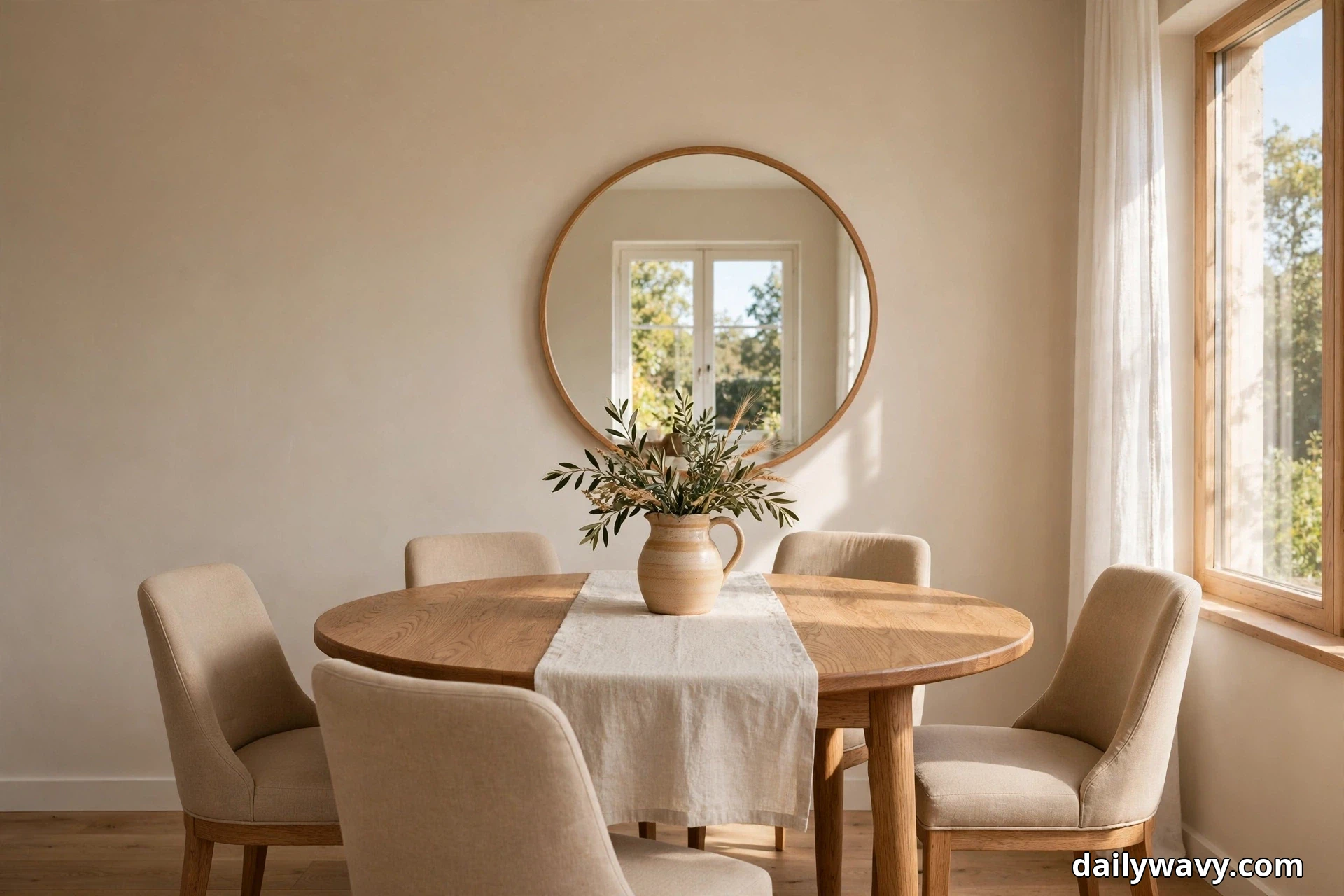
The Round Table Rules Before You Style Anything
Before a single object lands on the table, get five things right. First, chair pull-back: leave at least 24 inches between the table edge and the wall or nearest furniture so chairs slide out without scraping. In a tight corner, 18 inches is the honest minimum. Second, sightlines: seated eye level is roughly 42 to 48 inches, so keep anything tall off the table center and put visual interest on the walls instead. Third, surface scale: decor should cover no more than one third of a round tabletop, leaving the rest genuinely usable for plates, serving dishes, and elbows. Fourth, cleaning: choose tabletop pieces you can lift in one motion, because a styled table that is hard to wipe down will not stay styled. Fifth, lighting: any change that involves wiring, like moving a pendant or adding a new junction box, needs appropriate installation by a qualified electrician. Swapping a shade or a bulb is a weekend task. Moving the fixture is not.
1. A Mirror Reflecting Natural Light

A round table in a dim corner feels smaller than it is, and the cheapest fix is not a new light but a mirror that borrows daylight from the window you already have. Hang a round mirror, 24 to 36 inches across, on the wall opposite or adjacent to the nearest window so it catches the light and throws it back across the table. The reflection doubles the sense of space and makes the whole setting glow at breakfast and lunch without a single watt.
What to measure: stand where the mirror will hang and check the sightline from the table. You want sky or greenery in the reflection, not a blank wall. Hang the center of the mirror at about 57 to 60 inches from the floor. Materials: a wood or thin metal frame mirror, two wall anchors rated for its weight, and a level. Placement: opposite the window is brightest, adjacent to it is softer. Approximate effort: under an hour, including finding the stud. Lower-cost alternative: a thrifted mirror with a dated frame, sprayed matte black or brushed brass, gives the same light for a fraction of the price.
2. A Ceramic Pitcher With Seasonal Stems
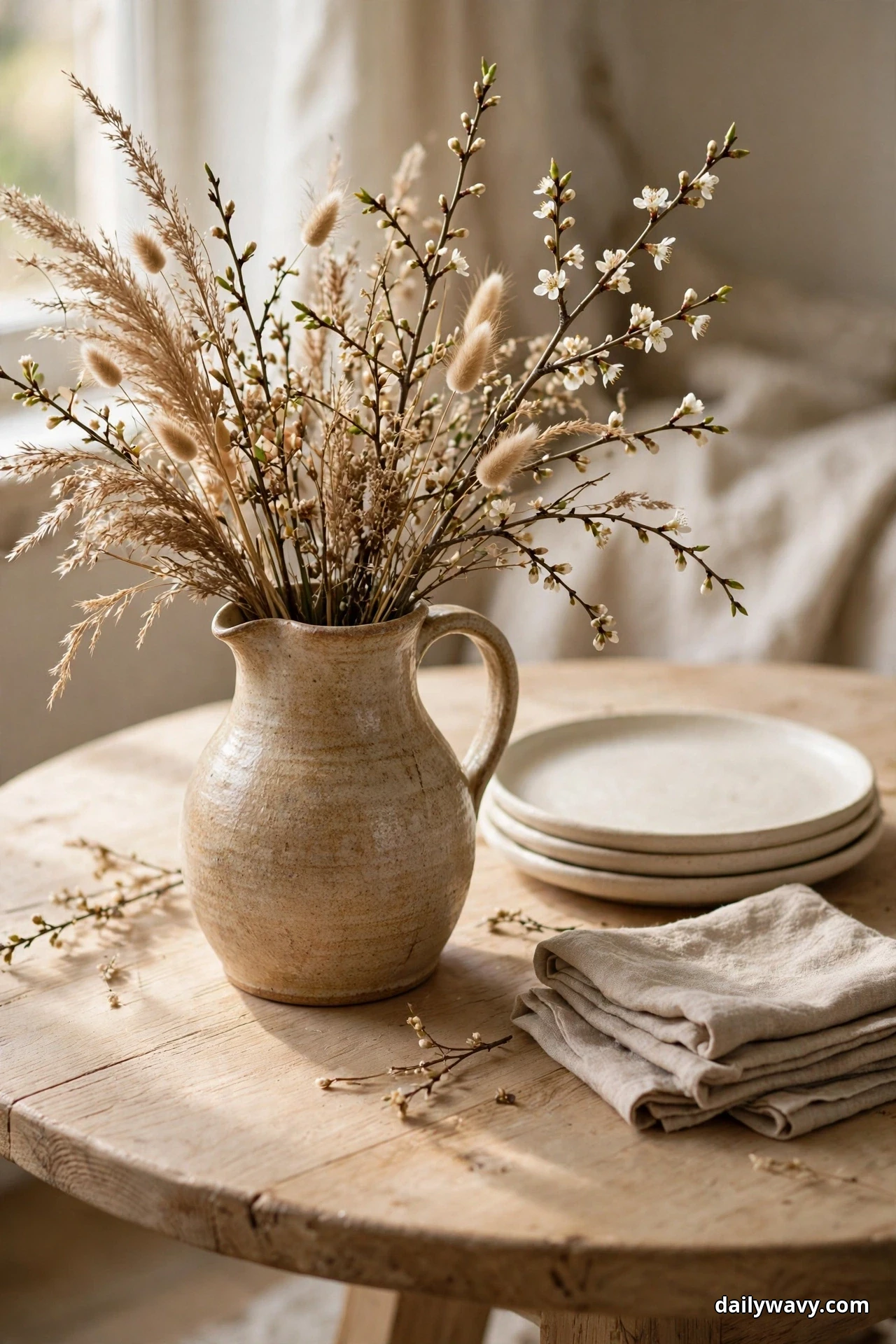
Every round table needs one living thing at its center, and a ceramic pitcher of seasonal stems is the most forgiving option there is. Unlike a fussy bouquet, stems look intentional for weeks. Dried grasses in late summer, bare branches in winter, flowering quince in early spring. The pitcher itself does half the styling work, so choose one with a handmade feel: visible throwing rings, a matte glaze, a comfortable handle.
What to measure: keep the whole arrangement under 14 inches tall so it never blocks a face across the table. Materials: one pitcher roughly 8 to 10 inches tall, a small flower frog or a ball of chicken wire for the neck, and three to seven stems. Placement: dead center of the table, always. That is the one spot a round table owns. Approximate effort: ten minutes at a flower market or a roadside stand. Lower-cost alternative: a clean glass bottle and stems cut from your own yard work just as well while you hunt for the perfect pitcher.
3. A Linen Tablecloth With Plain Dishes
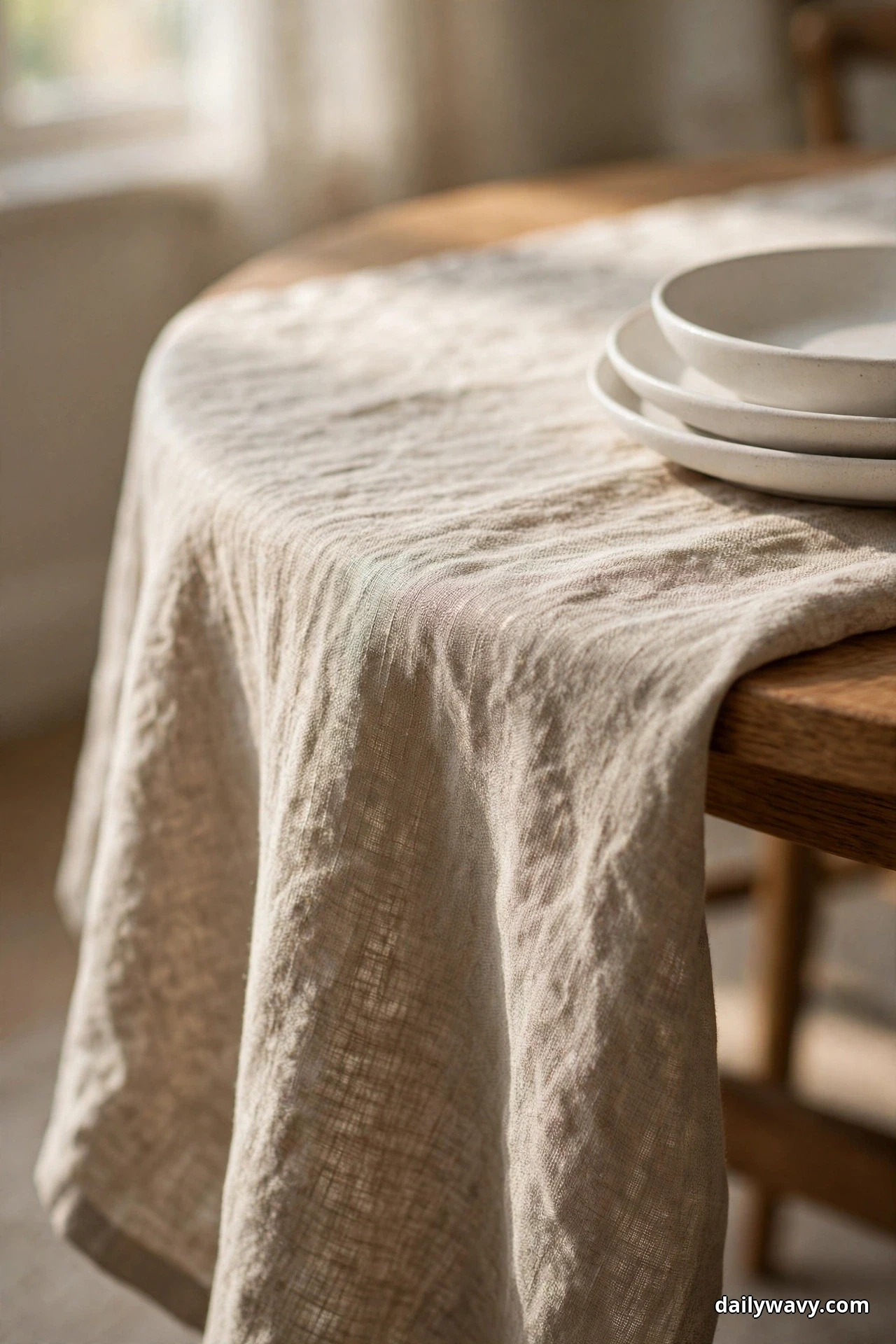
A round table in natural linen with plain dishes on top is the quiet luxury of dining styling. The softness of the cloth plays against the curve of the table, and plain stoneware lets the food be the pattern. Choose a cloth 12 to 15 inches larger in diameter than your table so it drops gracefully without pooling on chair seats. Stonewashed linen hides wrinkles, which matters because nobody irons a tablecloth.
What to measure: table diameter plus the drop you want. A 48-inch table takes a 60 to 63-inch round cloth. Materials: one stonewashed linen or linen-blend round cloth, plain cream or white stoneware plates. Placement: center the cloth so the drop is even all around, then set places directly on the linen. Approximate effort: one laundry cycle and five minutes of setting. Lower-cost alternative: a cotton-blend cloth reads nearly as soft after two washes and costs far less than pure linen.
4. An Asymmetrical Arrangement On Storage Furniture
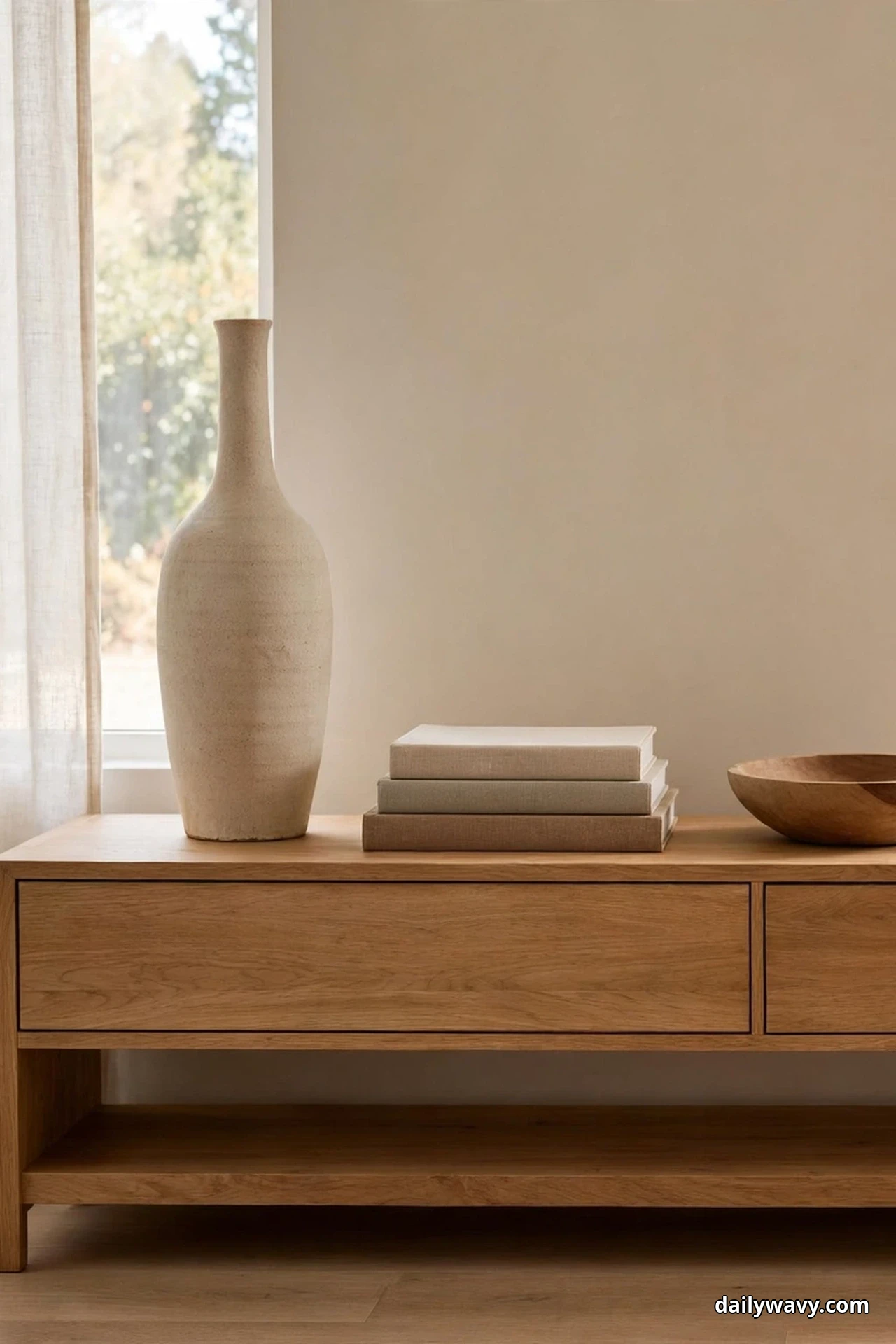
The sideboard next to your round table deserves styling too, and the trick is deliberate asymmetry. Group objects off-center: something tall at one end, something low and horizontal at the other, and breathing room in the middle. A tall vase, a stack of two or three art books, a low wooden bowl. The eye moves across the arrangement instead of landing dead center, which makes the whole wall feel designed rather than decorated.
What to measure: keep the total arrangement within the middle two-thirds of the sideboard top so the ends stay clear for serving dishes during gatherings. Materials: one tall vessel 16 to 24 inches high, one low bowl, a short stack of books. Placement: anchor the tall piece about a third of the way in from one end. Approximate effort: twenty minutes of moving things around until it clicks. Lower-cost alternative: shop your own home first. The tall vase might be a bottle, the books might be cookbooks, and the bowl might already be in your kitchen.
5. A Small Gallery Group On One Wall
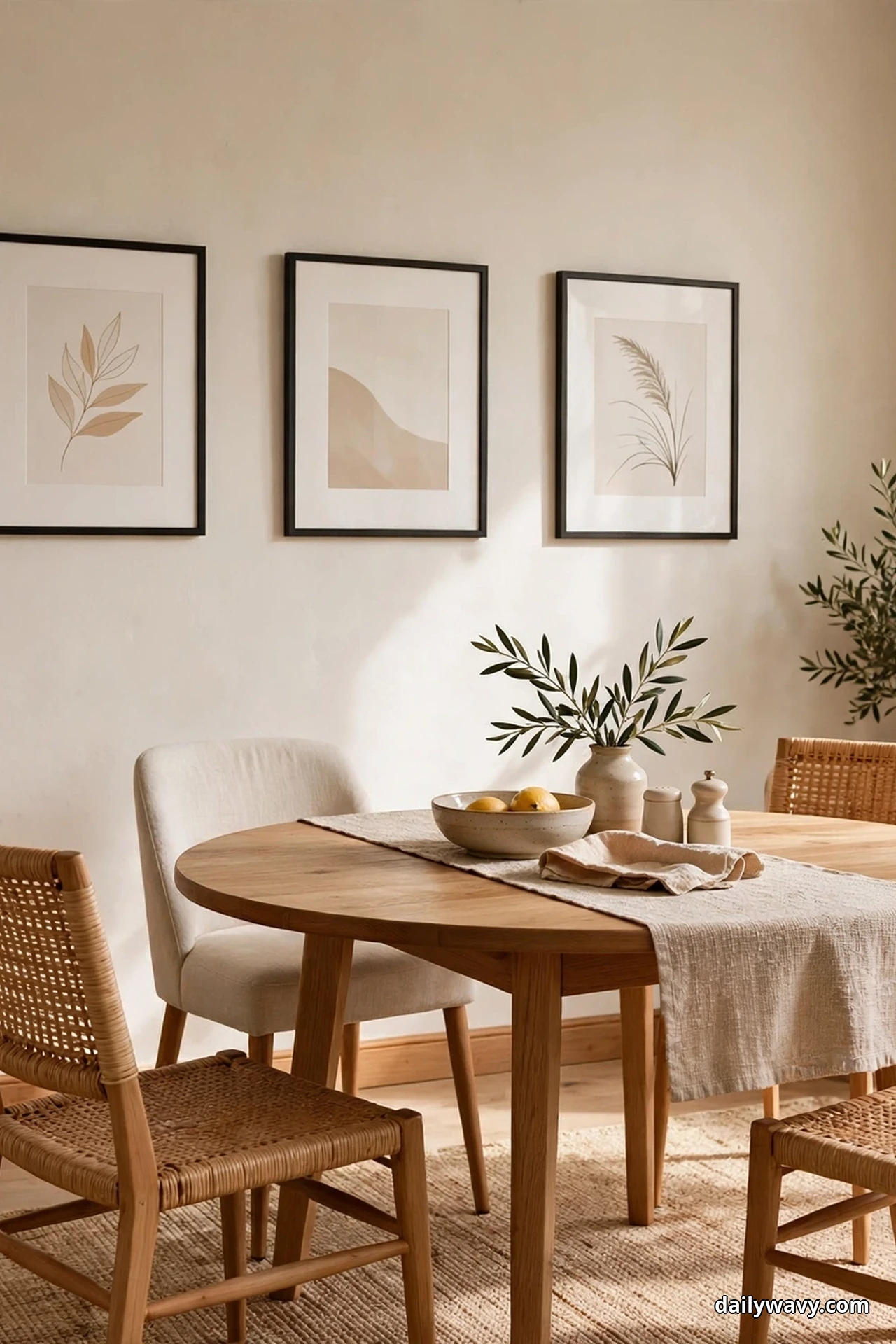
One wall of small framed pieces turns a plain dining corner into a room with a point of view. Three to five frames, hung close together in a loose grid or a salon cluster, work better beside a round table than one large piece, because the small scale echoes the table’s friendly proportions. Keep the palette tight: black frames with white mats, or natural wood frames with warm-toned art.
What to measure: the bottom of the lowest frame should sit 6 to 8 inches above the back of the tallest chair, and the group should span roughly two-thirds the width of the table. Materials: three to five frames, paper templates and painter’s tape for planning, picture-hanging hooks. Placement: on the most visible wall, usually the one you face when entering the room. Approximate effort: an afternoon including the tape planning, which is the step that saves you from extra holes. Lower-cost alternative: print free high-resolution botanical or abstract art at a copy shop and frame it in ready-made frames. If your dining corner sits inside a small living room, the same scale rules in our narrow living room layout guide help keep the gallery from overwhelming the space.
6. A Contrast Chair At The Head Of The Table
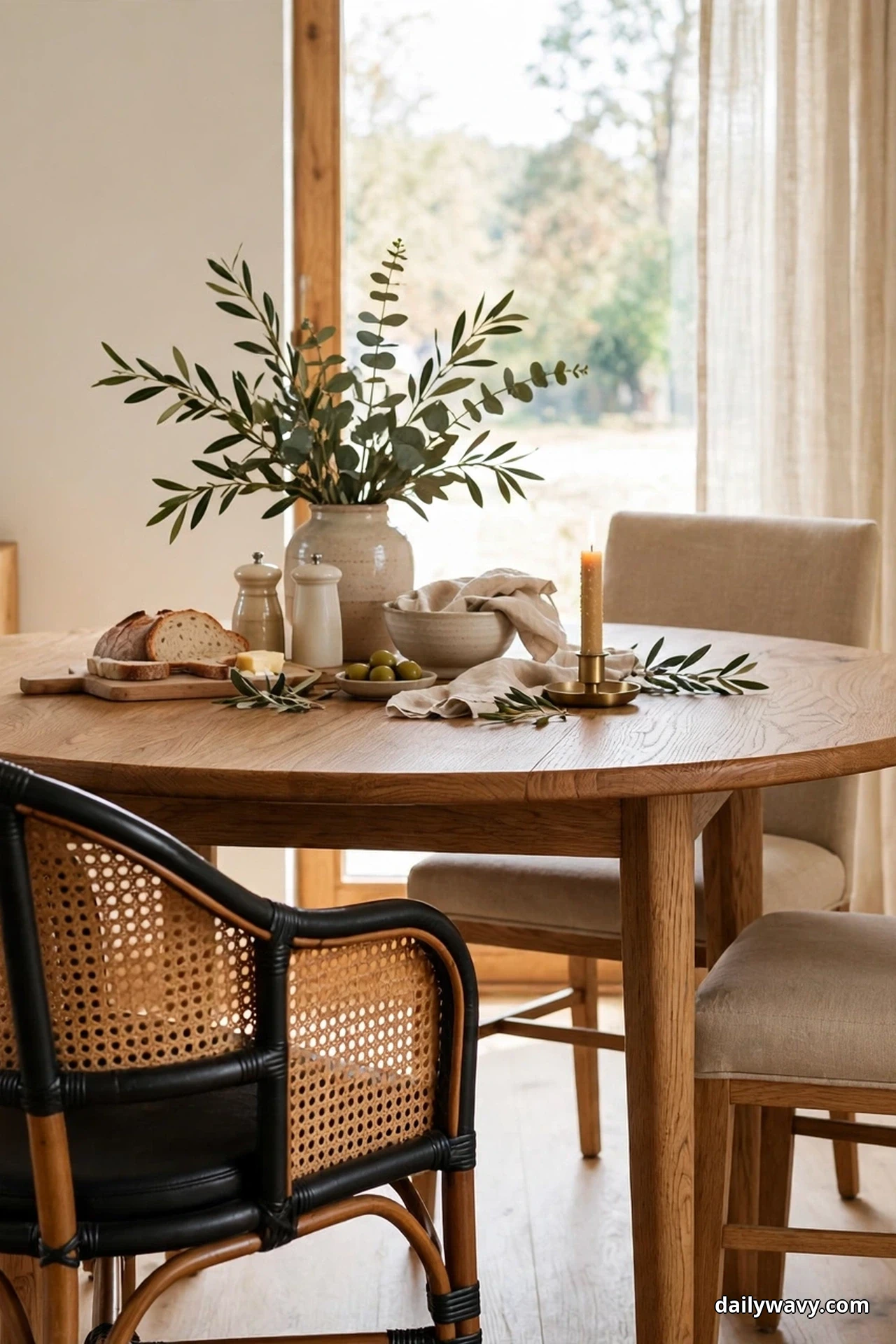
Round tables have no head, which is exactly why adding one contrasting chair works. Pick the seat nearest the kitchen or the room entrance, and make it different: a black leather chair among oak ones, a rattan armchair among upholstered ones, a vintage find among new pieces. It reads as the host’s seat, gives the arrangement a focal point, and is the easiest way to introduce a material or color you love without committing to a full set.
What to measure: the contrast chair must match the seat height of the others within an inch, or the table will feel lopsided. Standard dining seat height is 18 inches. Materials: one chair in a contrasting material or finish. Placement: the position closest to where you enter with food, so the host sits nearest the kitchen. Approximate effort: one shopping trip, or one afternoon refinishing a thrifted chair. Lower-cost alternative: slipcover one existing chair in a contrasting fabric, or simply swap in a chair borrowed from another room to test the look before you buy.
7. A Shallow Tray Grouping Serving Items
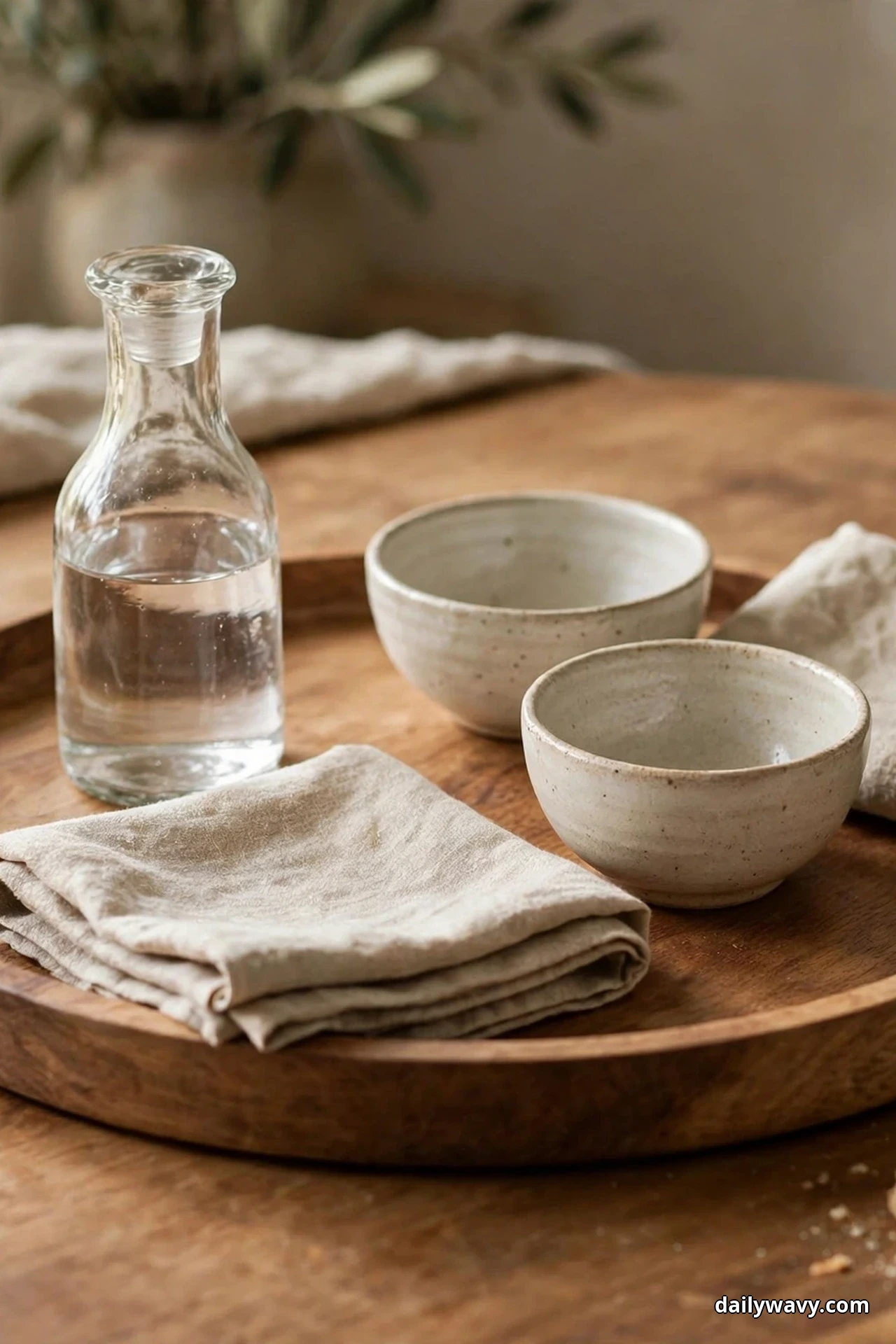
A shallow tray is the secret to a styled table that still works for dinner. Corral the pretty-but-practical items, a carafe, salt and pepper, a small candle, folded napkins, onto one tray, and the whole group lifts off in a single motion when it is time to serve. The tray turns clutter into a composition and makes resetting the table after a gathering take seconds instead of minutes.
What to measure: choose a tray 14 to 18 inches across for a 48-inch table, so it holds the essentials without claiming the center. Materials: one shallow tray with a lip, wood, rattan, or lacquered, plus the serving pieces you already own. Placement: centered when the table is styled, shifted to the sideboard when dinner is served. Approximate effort: ten minutes of gathering and arranging. Lower-cost alternative: a rimmed baking sheet lined with a linen napkin works as a tray in a pinch and costs nothing.
8. A Bench Cushion With A Washable Cover
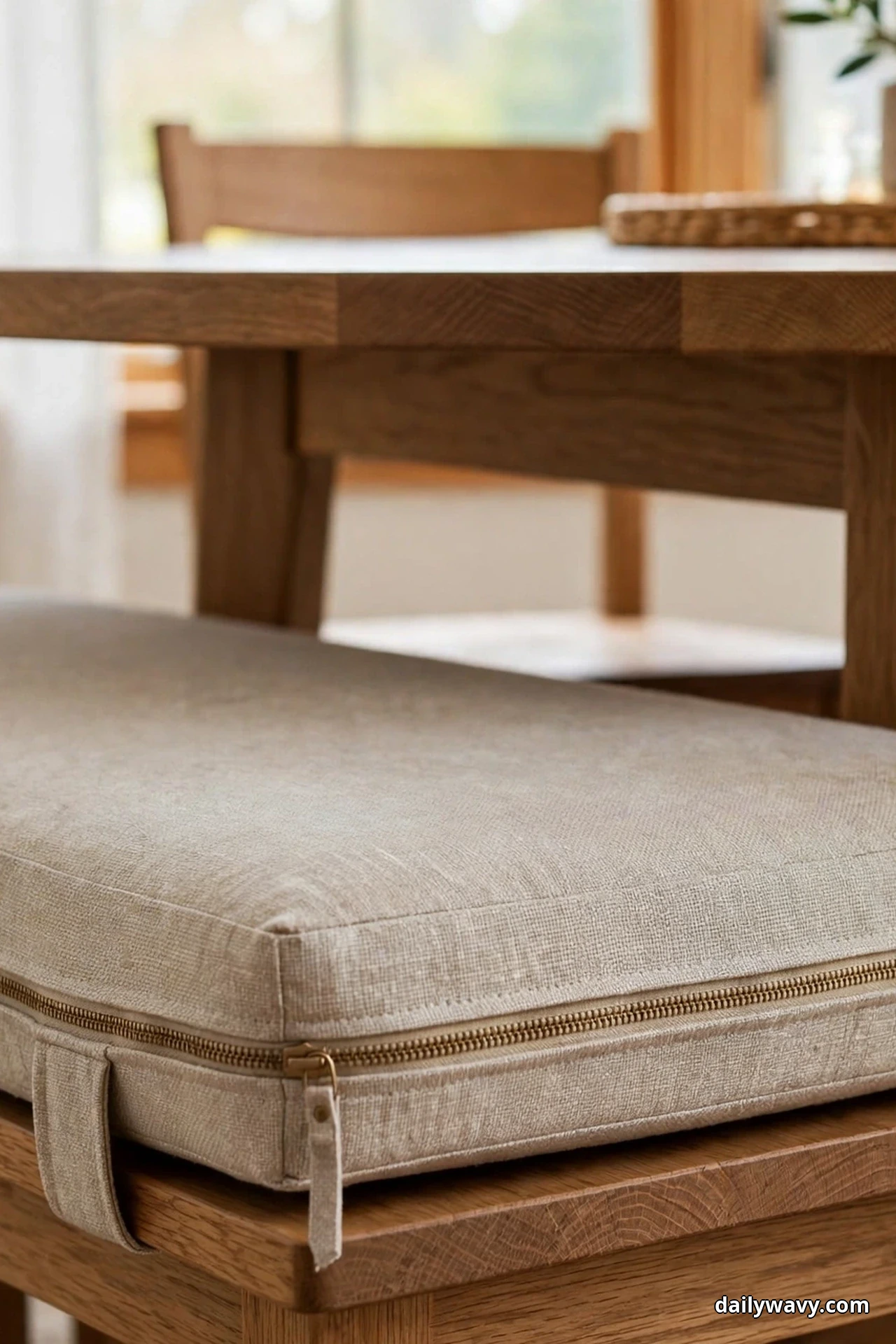
Sliding a bench along one side of a round table seats an extra person without the visual weight of another chair, and a tailored cushion makes it genuinely comfortable. The non-negotiable detail is a washable cover. Dining benches take spills, and a cushion with a zippered slipcover you can throw in the wash will look good years longer than one you have to spot-clean.
What to measure: the cushion should be 2 inches shorter than the bench on each end and at least 2 inches thick. Bench seat height should match your chairs at 18 inches. Materials: a foam cushion cut to size, a zippered slipcover in a washable fabric like cotton canvas or performance linen. Placement: bench on the side of the table with the most open floor space, since people need room to slide in. Approximate effort: an afternoon if you are sewing the cover, under an hour if you buy one ready-made. Lower-cost alternative: a folded quilt or a thick throw layered on the bench works for casual meals and washes easily.
9. A Repeated Accent Color In Textiles
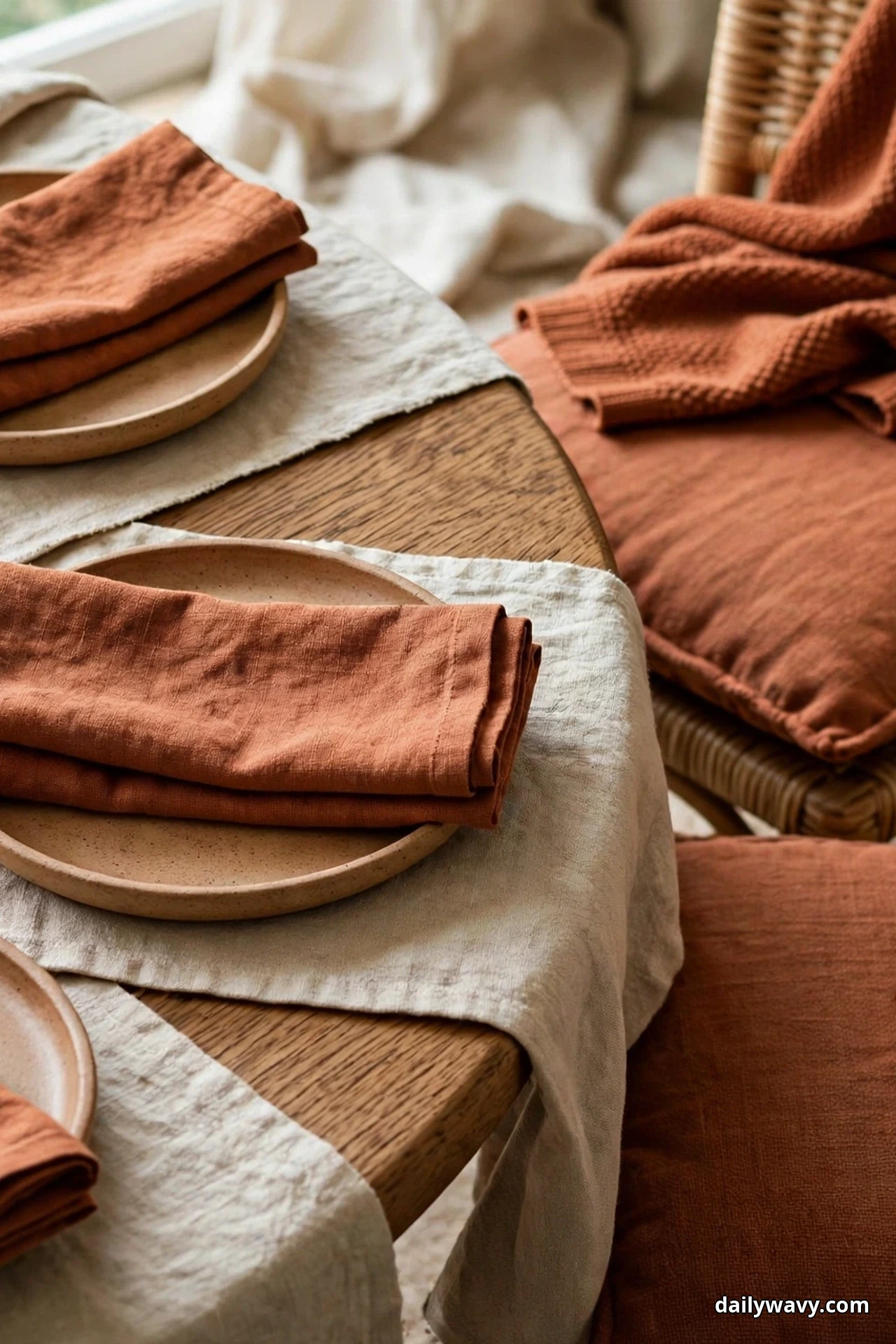
The difference between a table that looks styled and one that looks like a collection of nice things is repetition. Pick one accent color, rust, sage, dusty blue, and repeat it in three textile spots: napkins on the table, a cushion on a chair, a throw on a nearby seat. Three touches are enough for the eye to register intention. Five is plenty. The base stays neutral so the accent never shouts.
What to measure: no measuring here, just counting. Three repetitions minimum, in three different textile types. Materials: napkins, one chair cushion or pad, one small throw, all in the same color family but not necessarily the same fabric. Placement: spread the three touches around the room, not clustered together, so the color travels. Approximate effort: one shopping trip or one dig through the linen closet. Lower-cost alternative: dye is cheap. A box of fiber-reactive dye can turn white napkins, a cushion cover, and a throw into a matched set for the price of lunch.
10. A Narrow Cabinet For Table Linens

Table linens multiply quietly. Runners, cloths, napkin sets, seasonal pieces. A narrow cabinet near the dining table keeps them folded, visible, and actually used instead of crushed in a distant closet. Look for a piece 12 to 16 inches deep so it hugs the wall without eating floor space, with open shelves or glass doors so you can see what you have.
What to measure: the wall space available, minus 24 inches of chair pull-back clearance from the table edge. Standard reach: shelves no higher than 72 inches for everyday linens. Materials: a narrow bookcase, hutch top, or repurposed cabinet, plus shelf dividers or small baskets for napkin sets. Placement: on the wall nearest the table but clear of chair swing. Approximate effort: an afternoon of assembly and folding. Lower-cost alternative: a simple wall-mounted shelf pair with folded linens stacked in neat piles does the same job for very little. The same decant-and-label thinking that keeps a small pantry organized applies here: visible, grouped, and labeled beats hidden and heaped.
11. A Simple Woven Shade At The Window
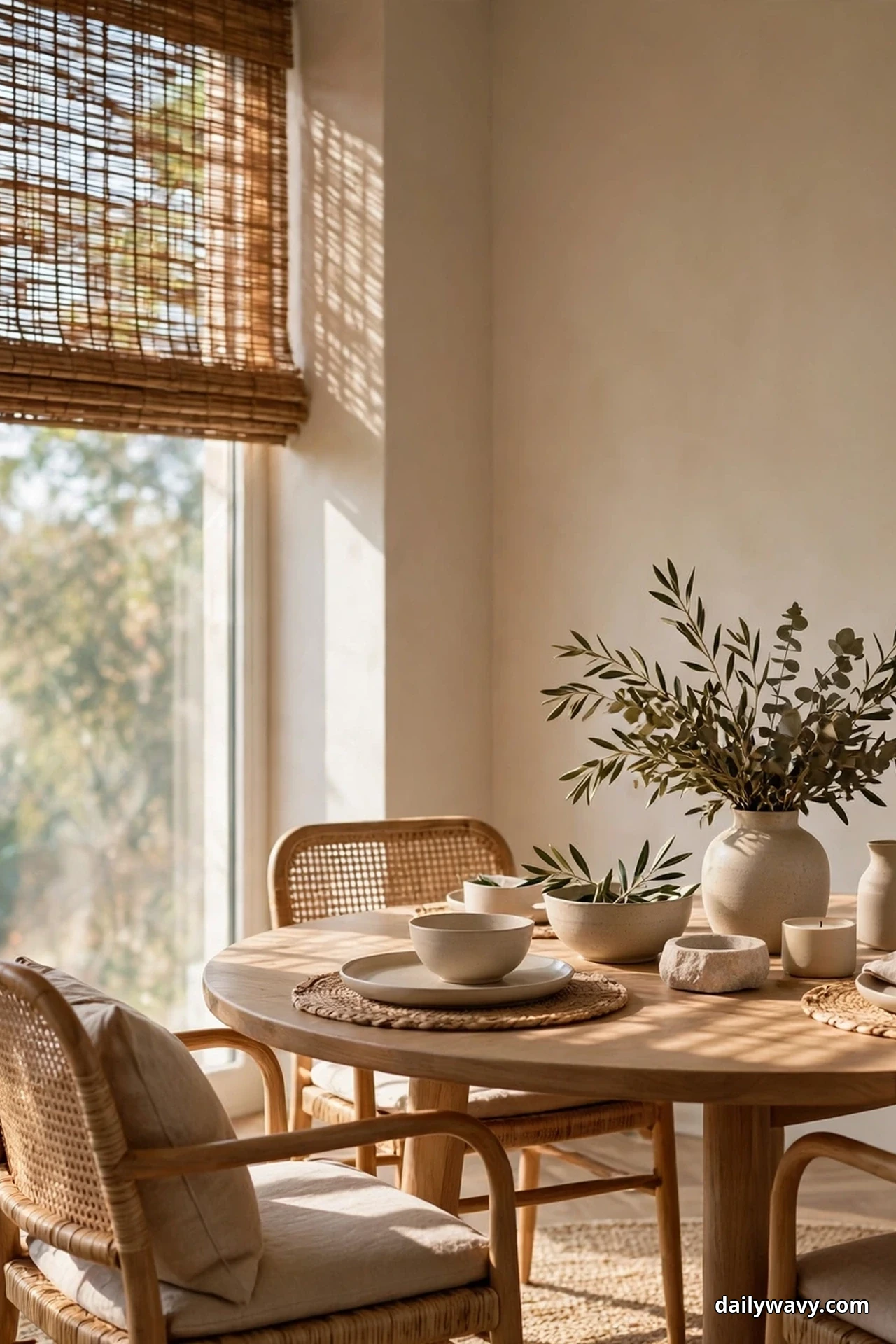
The window beside a dining table sets the mood for every meal, and a simple woven wood shade filters light the way a dimmer never can. The natural weave softens harsh afternoon sun into a warm glow, adds texture at the window without pattern competing with the table, and rolls up completely when you want the full view. It is one of the few window treatments that looks right in both rustic and modern dining rooms.
What to measure: inside-mount shades need the window recess depth, usually at least 2 inches. Measure width in three places and use the narrowest. Materials: one woven wood or bamboo Roman shade, mounting hardware, and a cord cleat if you have small children. Placement: inside the window frame for a clean look, outside for the illusion of a larger window. Approximate effort: about thirty minutes per window with a drill. Lower-cost alternative: a simple linen cafe curtain on a tension rod gives soft filtered light for a fraction of the cost.
12. A Low Centerpiece With Clear Sightlines

The golden rule of round-table centerpieces: keep it low. Anything above 14 inches starts blocking faces, and a round table’s whole charm is that everyone can see everyone. A low bowl of seasonal fruit, a trio of small bud vases, a shallow dish of floating candles. The centerpiece should invite the eye across the table, not stop it.
What to measure: total height under 14 inches including stems or candles. Width no more than one third of the table diameter. Materials: one low vessel, seasonal fruit, a few short stems, or a set of three bud vases. Placement: exact center, always. Approximate effort: five minutes, plus whatever is in season. Lower-cost alternative: a bowl of lemons, apples, or whatever fruit is cheapest this week is a classic for a reason. It looks abundant, smells good, and gets eaten.
13. A Natural-Texture Runner
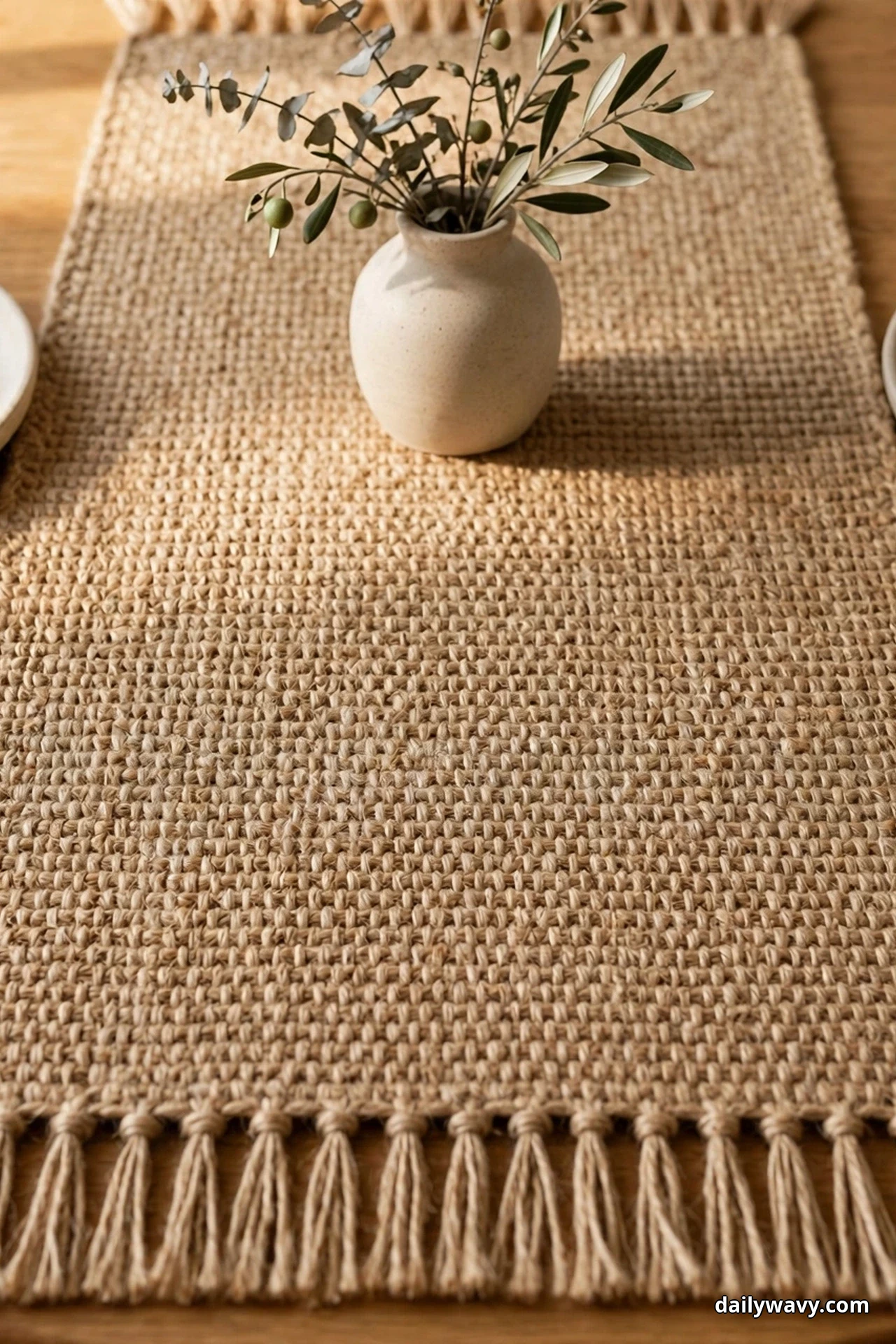
A runner on a round table should follow the table’s logic, not fight it. Lay a natural-texture runner, jute, woven cotton, or a flatweave wool, straight across the center so both ends hang evenly. The texture adds warmth without pattern, and because it is narrow, the table still reads as round. It also protects the finish where serving dishes land, which is doing real work disguised as decoration.
What to measure: runner length should be the table diameter plus 12 to 24 inches of total drop. For a 48-inch table, a 60 to 72-inch runner. Materials: one natural-fiber runner 12 to 16 inches wide. Placement: centered across the middle, ends even. Approximate effort: two minutes to lay and straighten. Lower-cost alternative: a length of burlap or drop cloth, hemmed or fringed by hand, gives the same texture for almost nothing.
14. A Simple Pendant Aligned To The Table

Nothing anchors a round table like a pendant hung exactly over its center. The fixture draws an invisible line from ceiling to tabletop and tells the eye where the room’s heart is. Choose a simple shape, a linen drum, a single glass globe, a woven rattan shade, and hang it so the bottom sits 30 to 36 inches above the table surface. That height lights faces warmly without blocking sightlines.
What to measure: ceiling height minus table height minus 30 to 36 inches gives you the drop. Confirm the junction box sits over the table center; a few inches off is visible on a round table. Materials: one pendant fixture, a dimmer switch, and the right bulbs, warm white at 2700K. Placement: dead center over the table. Approximate effort: an hour for a straightforward swap, longer if the box must move. Lighting changes that involve new wiring need appropriate installation by a qualified electrician, so budget for that rather than improvising. Lower-cost alternative: a plug-in pendant with a swag hook lets you center the light over the table without touching the wiring at all.
15. A Framed Artwork At Comfortable Eye Level

A single framed piece at the right height can finish a dining corner the way a signature finishes a letter. The key is eye level, which means the center of the frame at 57 to 60 inches from the floor, roughly where your gaze lands when you glance up from the table. One confident piece beats three hesitant ones. Choose art with some warmth, a landscape, a botanical print, an abstract in your accent color.
What to measure: center of frame at 57 to 60 inches. The frame width should be about two-thirds the width of the furniture below it, or the table diameter if it hangs above open wall. Materials: one framed piece, a picture hook rated for its weight. Placement: on the wall you face most often from the table. Approximate effort: twenty minutes with a tape measure and a level. Lower-cost alternative: frame a beautiful calendar page, a vintage map, or a child’s drawing. The frame is what makes it art.
16. A Pair Of Lamps On A Sideboard
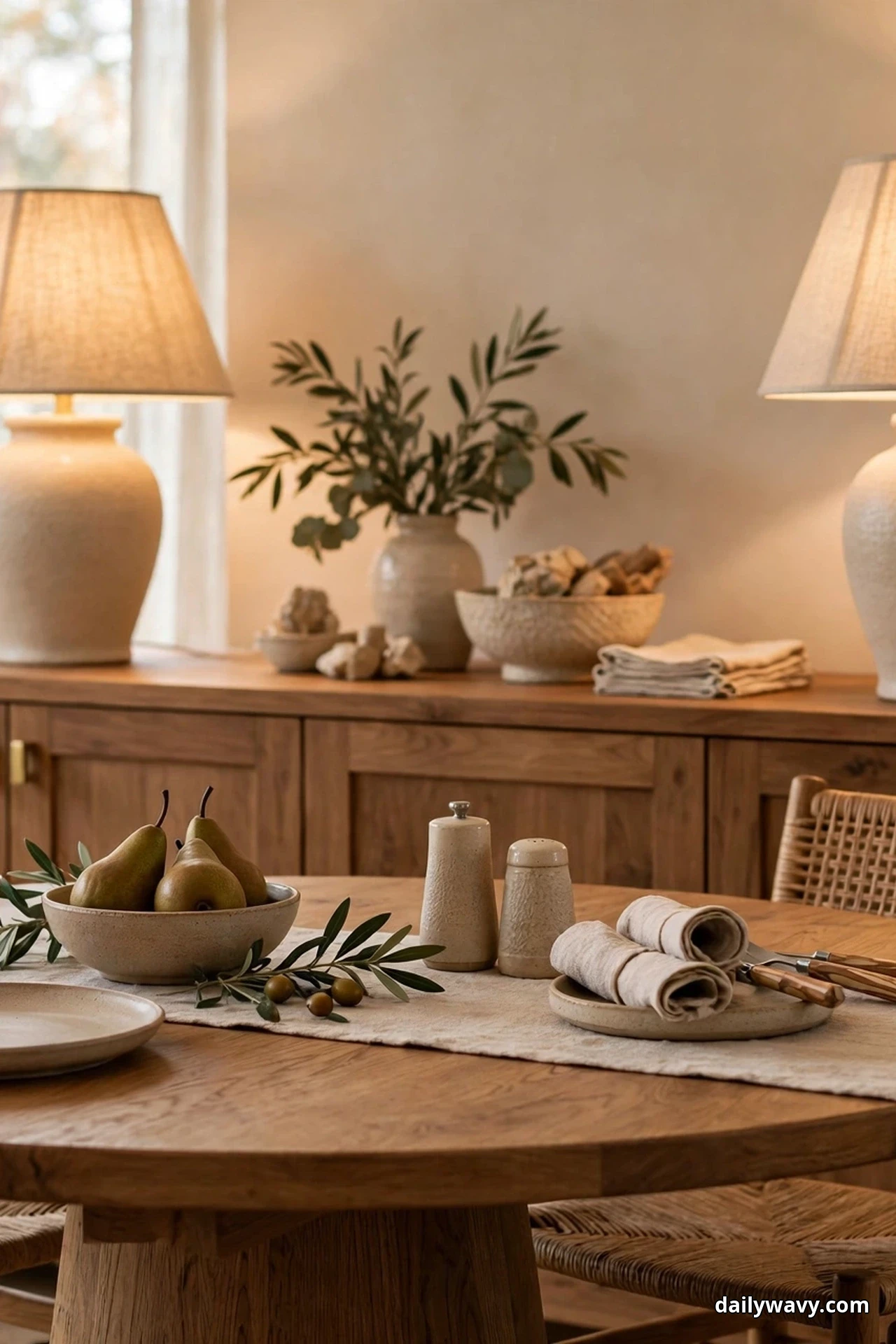
Overhead light is for cooking. Lamps are for lingering. A matching pair of table lamps on the sideboard behind your round table adds symmetry, warm pools of light at face height, and the kind of glow that makes weeknight dinners feel like occasions. Choose shades that throw light up and down, not just down, so the wall behind gets a soft wash.
What to measure: lamp plus shade should total 24 to 30 inches so the light lands near seated eye level. Shades 12 to 14 inches across suit most sideboards. Materials: two matching lamps, warm-white bulbs at 2700K. Placement: one near each end of the sideboard, equidistant from the center. Approximate effort: ten minutes to place and plug in. Lower-cost alternative: thrift two matching lamp bases and add new shades. Matching shades unify even mismatched bases.
17. A Washable Rug Scaled To Chair Movement

A rug under a round dining table grounds the whole arrangement, but only if it is big enough. The rule: all four chair legs must stay on the rug even when the chairs are pulled back for sitting. For a 48-inch table with chairs, that means a rug at least 8 feet across, round or square. And in a dining room, washable is not a luxury. Choose a machine-washable flatweave or a low-pile rug you can hose down, because food will land on it.
What to measure: table diameter plus 48 inches, which gives 24 inches of rug beyond the table on every side. Materials: one washable rug, round or square, plus a low-profile rug pad to stop slipping. Placement: centered under the table, checked by pulling each chair back. Approximate effort: an afternoon of rug shopping, ten minutes of laying. Lower-cost alternative: a large washable flatweave costs far less than wool and handles dining life better.
18. A Small Plant In A Quiet Corner
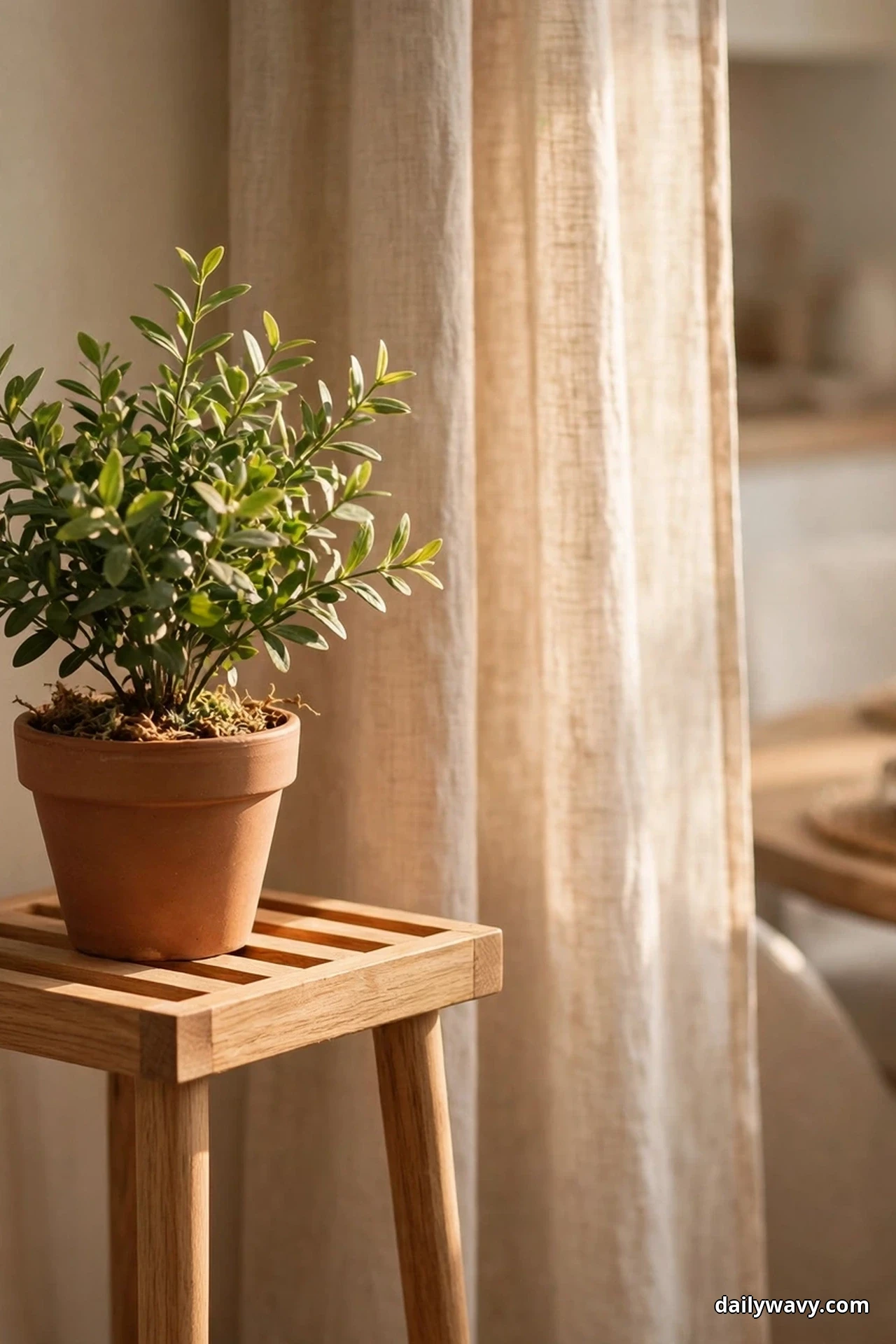
Every dining room has a quiet corner, the spot by the window or beside the sideboard where nothing happens, and a small plant is exactly what it needs. One healthy green plant softens the corner, cleans the sightline, and adds life without demanding attention. A snake plant, a pothos on a stand, a small olive tree. Pick something that tolerates the light you actually have.
What to measure: the corner footprint, usually 12 to 18 inches square, and the ceiling height if you want something tall. Materials: one plant in a pot with drainage, a saucer or cachepot, a simple stand if it sits on the floor. Placement: the underused corner, where it will not block chair movement or the walkway. Approximate effort: one nursery trip and five minutes of placing. Lower-cost alternative: propagate a pothos cutting from a friend. In six months it will be the plant.
Frequently Asked Questions
What size rug goes under a round dining table?
Add 48 inches to your table diameter. A 48-inch table needs at least an 8-foot rug so chairs stay on it when pulled back. Round rugs echo the table shape, but a square rug works just as well and is easier to find in large sizes.
How high should a pendant hang over a round dining table?
The bottom of the fixture should sit 30 to 36 inches above the tabletop. Lower feels intimate but blocks sightlines. Higher loses the anchoring effect. Always use a dimmer so one fixture can handle both homework and candlelight.
How do I keep a styled table usable every day?
Corral daily items on a single tray that lifts off in one motion, keep decor to one third of the surface, and choose pieces you can move with one hand. If clearing the table for dinner takes more than a minute, simplify.
Can I mix chair styles around a round table?
Yes, and round tables handle it better than rectangles. Keep seat heights within an inch of each other and repeat at least one element, wood tone, upholstery color, or leg style, across the mixed chairs so it reads as intentional.
What is the two-thirds rule in styling?
Decor on any surface should span roughly two-thirds of its width, leaving the ends clear. On a sideboard it leaves room for serving dishes. On a wall it keeps art proportional to the furniture below. It is a guideline, not a law, but it rarely steers you wrong.
How do I clean a jute or natural-fiber runner?
Vacuum without a beater bar, blot spills immediately with a dry cloth, and never machine wash jute. For dining use, a washable cotton runner in a natural texture gives you the look with far less worry.
Bringing It All Together
A well-styled round table is not about buying eighteen things. It is about choosing the two or three ideas your room is actually missing. Most dining corners need better light, which the mirror and the pendant solve. Most tabletops need restraint, which the low centerpiece and the tray enforce. And every dining room benefits from something living, whether that is stems in a pitcher or a plant in the quiet corner. Start with the idea that fixes your biggest annoyance, measure twice, and let the rest follow one weekend at a time.
For more ways to make a small dining space work harder, see our small entryway decor ideas for styling continuity from the front door to the table. And when you are ready to keep going, browse the full Home and Decor collection for the next room on your list.

One Comment