18 Coastal Bedroom Ideas for a Thoughtful Room Refresh
There is a particular kind of calm that lives in a well-done coastal bedroom. It is not about anchors or…
There is a particular kind of calm that lives in a well-done coastal bedroom. It is not about anchors or seashells. It is about light, the way soft blue against warm white slows a room down, and how light wood and natural fibers make even a small bedroom feel like it can breathe. These eighteen ideas are all about that calm, each one a single thoughtful move you can make in your own bedroom, with real measurements and honest effort so you know exactly what you are getting into. Find the one that fits your space and start there.
Jump to an idea
- Curtains hung to frame the window
- One large artwork above the headboard
- A small reading chair in a corner
- A woven basket beside the wardrobe
- A tonal rug extending beside the bed
- A simple pair of bedside lights
- A dresser with a low ceramic display
- A textured headboard as the focal point
- A narrow shelf with books and a small vase
- An understated wall color behind the bed
- A soft throw folded across the bed
- A vintage mirror beside a dresser
- A plant near natural light
- A small writing desk doubling as a vanity
- A storage ottoman at the bed foot
- An accent pillow in a contrasting material
- A quiet gallery arrangement on a side wall
- Layered bedding with a textured throw
How coastal style actually works in a bedroom
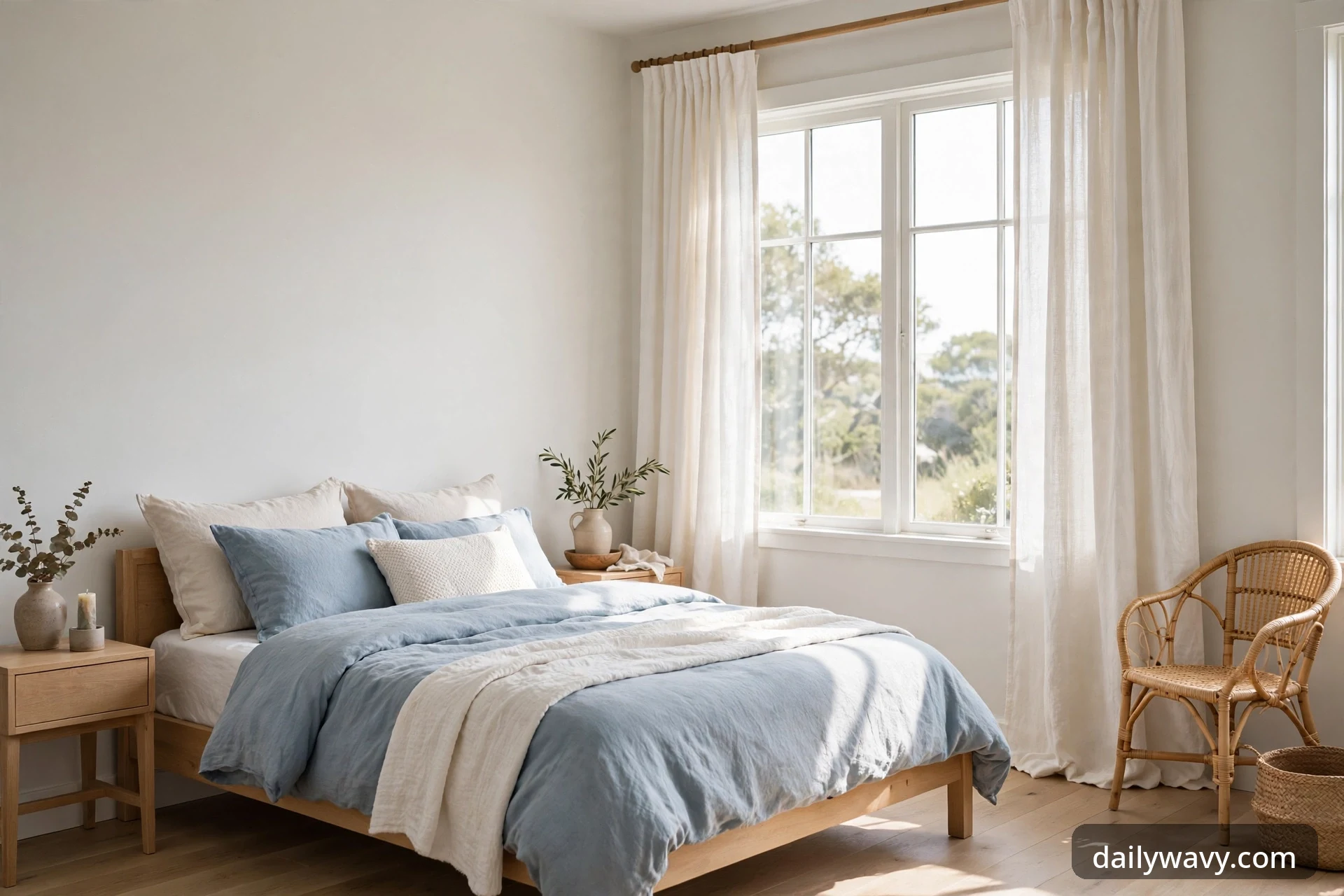
Coastal style earns its calm from restraint, not from decoration. The palette does most of the work: soft blues pulled from water and sky, warm whites that lean toward ivory rather than gray, and light woods like white oak or ash that keep the room from going cold. Natural fibers do the rest. Linen, cotton, jute, and rattan bring the texture that stops pale rooms from feeling flat, and they do it without a single novelty prop. If your small bedroom with a queen bed already has good bones, most of the ideas below are changes you can make in an afternoon.
A few practical ground rules help everything land. Keep window light as the hero of the room and dress it simply rather than blocking it. Repeat your soft blue two or three times around the room so it reads as a choice rather than an accident. Let one piece carry most of the texture, like a woven headboard or a chunky throw, and keep the rest quieter. And give the room honest negative space. A little empty surface on a dresser or a stretch of bare wall is what makes a coastal bedroom feel breathable instead of busy. With that in mind, here are eighteen single moves, each one complete on its own.
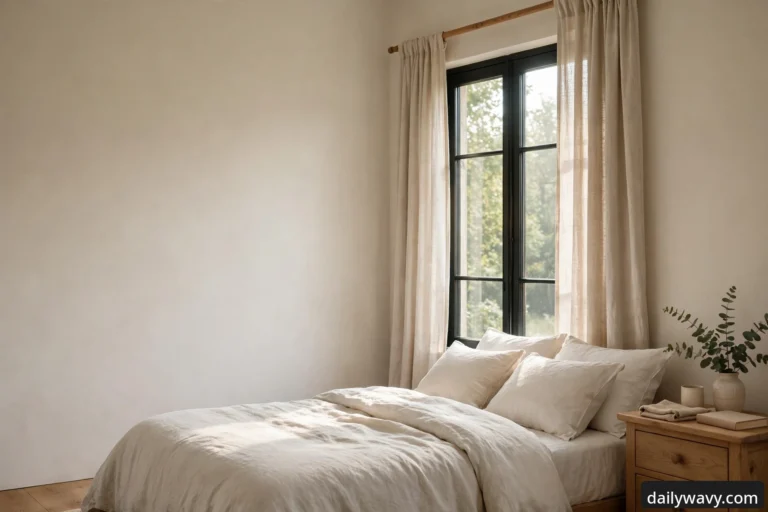
1. Curtains hung to frame the window

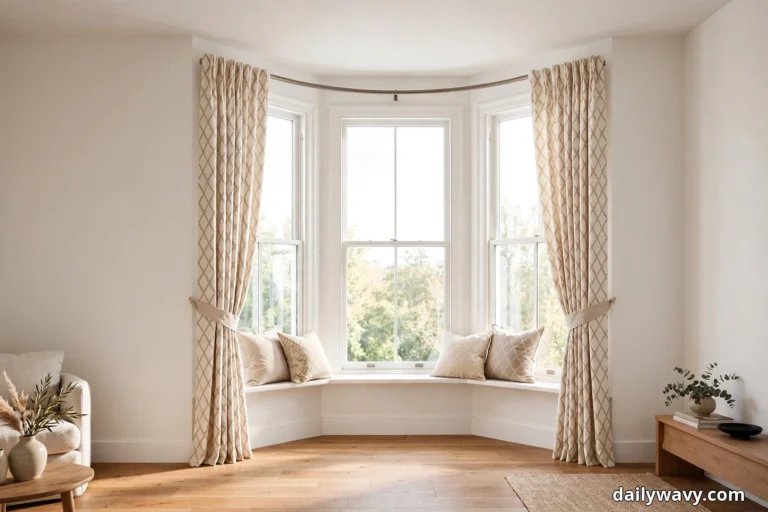
A fast, low-cost way to make a bedroom feel coastal is to hang the curtains wide and high so the window looks bigger than it is. When linen panels stack back against the wall instead of covering glass, daylight floods in unfiltered and the whole room lifts. It reads airy the way beach houses do, because covering windows works against the light that defines the style.
The practical decision here is width and height, not fabric. Measure the window trim, then add 4 to 6 inches of height above it for the rod, and extend the rod 8 to 12 inches past the trim on each side. Panels should be long enough to just kiss the floor, roughly 96 inches for an 8-foot ceiling. Use light-filtering linen or cotton in warm white so light glows through without glare. Plan on about 2 hours of effort including patching old holes, plus the cost of the rod and two panels.
The lower-cost version skips new panels entirely. Raise your existing rod as high as it will go while looking intentional, slide the brackets outward, and let your current curtains stack wider. Even tired cotton reads refreshed when it frames more glass.
2. One large artwork above the headboard
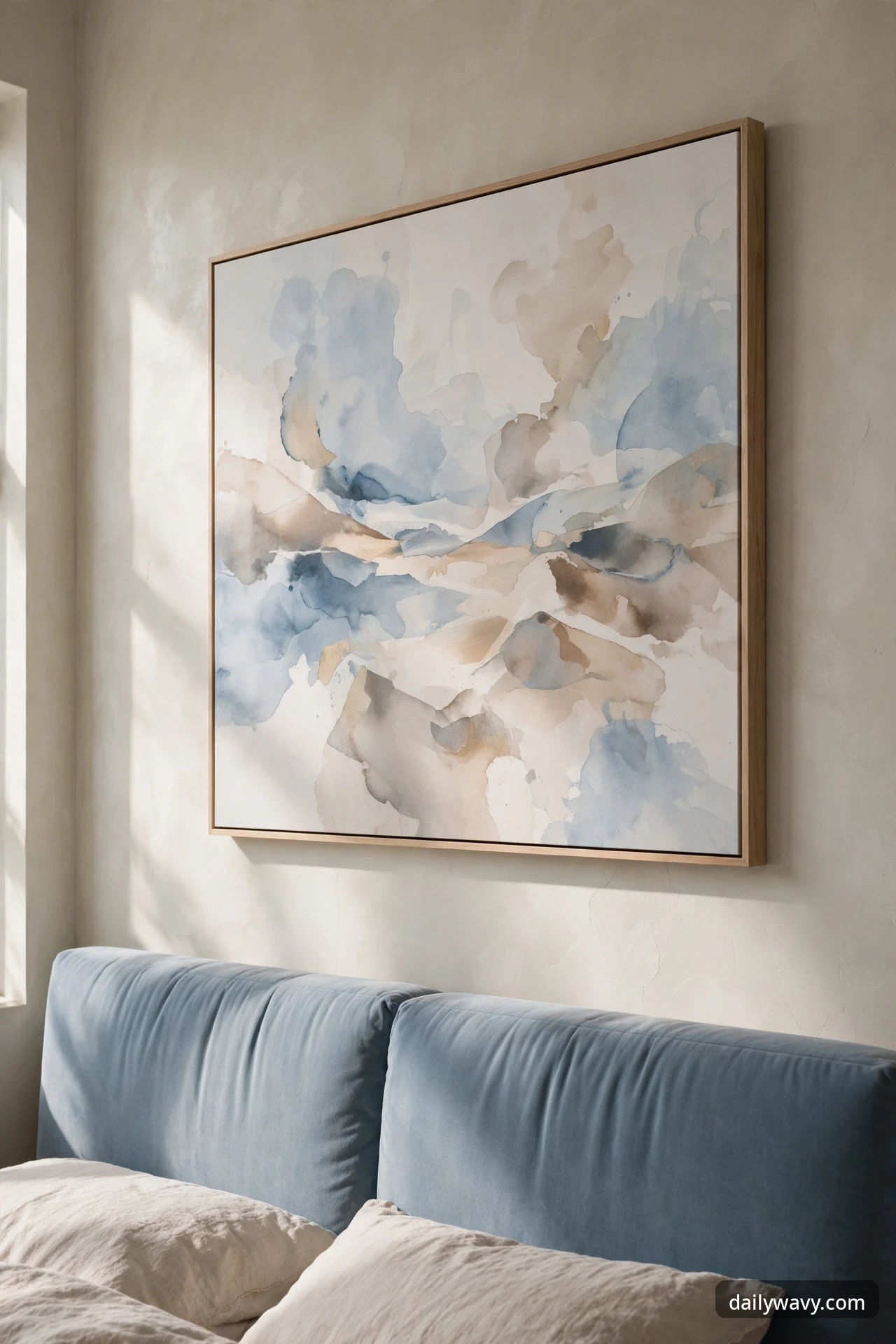
A single generous piece of art above the bed changes the room’s whole proportion. Where three small prints chatter, one large canvas goes quiet and confident, and that quiet is exactly the coastal mood. Soft blues and warm neutrals in the art echo the bedding, and the room reads as designed rather than decorated.
Measure the width of your bed, then choose art that spans about two-thirds of it. For a queen bed at 60 inches wide, look for a piece around 38 to 42 inches across. Hang the center of the art at roughly 57 inches from the floor, which keeps it in conversation with the headboard instead of floating toward the ceiling. Use a hook and wall anchor rated for the frame’s weight, and hang into a stud when the piece is heavy. A canvas print in a thin light-wood frame is the classic coastal choice because the frame disappears and the image does the talking. Budget 1 to 2 hours and the price of the print.
The lower-cost version is a stretch of textured fabric on a simple wooden stretcher frame. Choose a linen in a soft blue stripe or a watercolor-style pattern, staple it around the stretcher, and hang it like art. At distance it reads every bit as considered.
3. A small reading chair in a corner

Every calm bedroom deserves one spot that is not the bed. A small reading chair in an unused corner gives the room a second purpose and, more importantly, gives the eye somewhere to rest that is not a pile of pillows. A light-wood or rattan chair with a simple cushion reads coastal without shouting, and a corner that was holding a laundry pile suddenly becomes the nicest seat in the house.
What to measure is the corner itself. Most comfortable small chairs need about 30 inches of width and 30 inches of depth, plus room to swing in from the side. Before buying, tape out the footprint on the floor and walk past it a few times. Placement matters more than the chair: angle it slightly toward the window, add a floor pillow or folded throw, and keep a small side table or a stack of two books within arm’s reach for a drink. Effort is an afternoon of arranging, and the chair itself is the main cost.
The lower-cost version rethinks a chair you already own. Move a dining chair into the corner, drape it with a linen throw, and set a small basket of books beside it. Angle and purpose do more than the furniture ever will.
4. A woven basket beside the wardrobe

Texture is the coastal style’s favorite language, and a woven basket speaks it fluently. Set beside the wardrobe, it turns dead floor space into something warm and useful. Throw blankets, spare pillows, or the clothes you intend to wear twice all live somewhere, and a basket keeps them looking intentional instead of scattered.
Measure the gap beside the wardrobe first. Baskets come in every size, but you want one with a footprint roughly 14 to 18 inches across and tall enough to hold folded blankets without them spilling, usually 18 to 24 inches high. Seagrass, rattan, or water hyacinth are the classic coastal weaves, and a lined basket keeps delicate throws from snagging. This is a 10-minute change once the basket is home.
The lower-cost version repurposes what you have. Any sturdy tote bag, hamper, or even a paper shopping bag with good proportions can hold a folded throw beside the wardrobe. The effect comes from containment and texture, and a lined market tote gives you both for free.
5. A tonal rug extending beside the bed
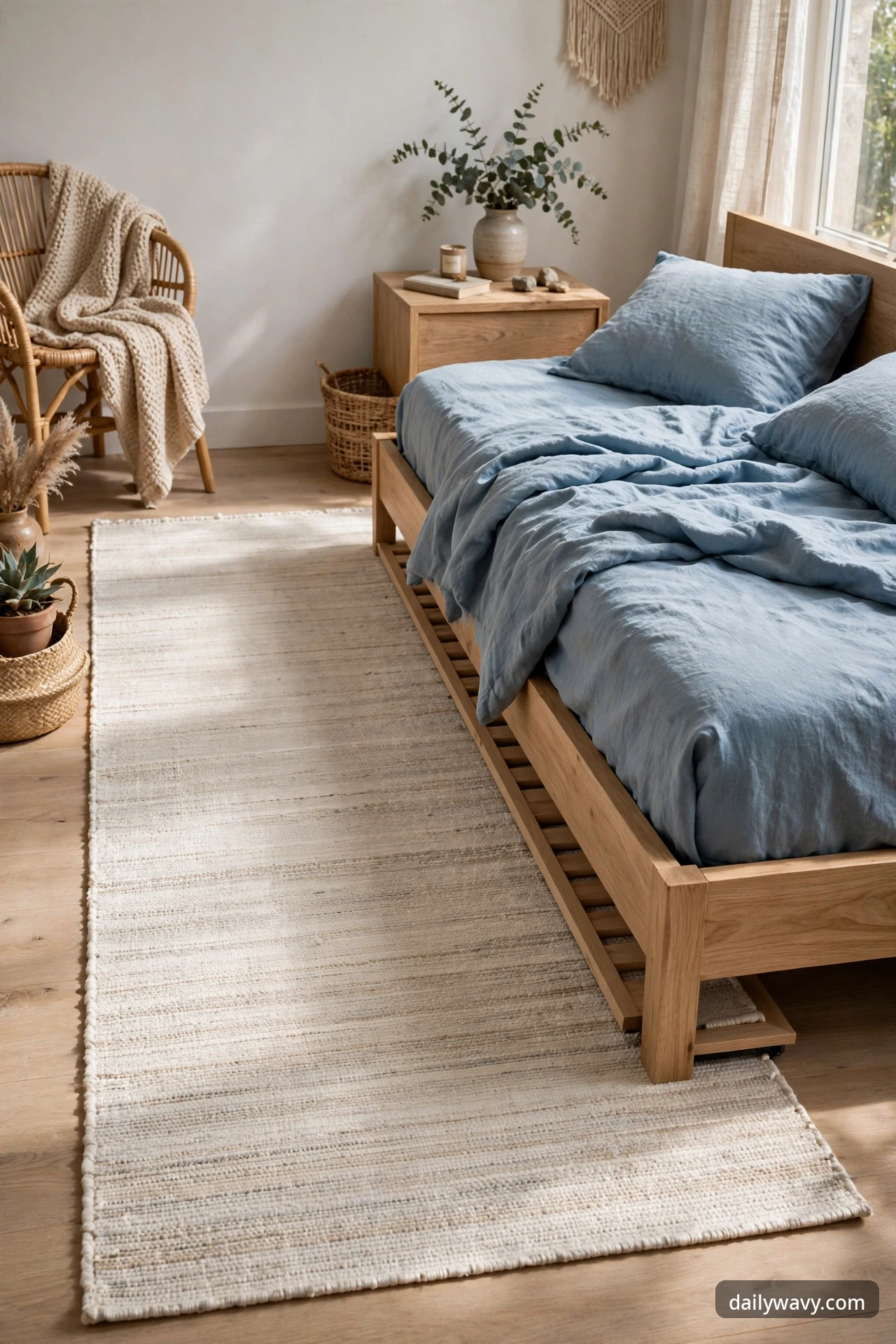
Bare floors are cold, and cold is the enemy of a restful bedroom. A tonal rug, one in a color close to the bedding rather than a contrast to it, extends the bed’s softness out to where your feet land each morning. Because it does not introduce a new color, it reads as quiet luxury instead of another pattern fighting for attention.
Measure the bed’s side, then choose a rug long enough to run from the nightstand to the foot of the bed. For a queen, a runner around 30 inches wide and 90 to 110 inches long is a good starting point. Place it so at least a third of its width slides under the bed; rugs that float beside furniture always look apologetic. Flat-weave cotton or a low-pile wool in warm white or pale sand is easy underfoot and easy to clean. Effort is about an hour including shifting furniture.
The lower-cost version layers two smaller rugs you already own end to end, as long as the pile heights match. Even a bath-mat-sized rug at the exact spot your feet land gives you the morning softness for nothing.
6. A simple pair of bedside lights

Symmetry can feel calming, and matching lamps on matching nightstands deliver it quickly. A simple pair of bedside lights frames the bed the way bookends frame books, and two warm pools of light at dusk make the whole room feel finished. Coastal style favors shades over bare bulbs here: light through linen or paper reads soft and golden, while exposed filament bulbs read industrial and break the spell.
The decision is proportion. For nightstands around 24 to 28 inches high, lamps of 24 to 30 inches total height look right, with shades wide enough to soften the glow, around 12 to 15 inches across. Match the lamps exactly, including shade height, so the symmetry holds. Place them toward the back outer corner of each nightstand so books and water glasses fit in front. Budget an hour for assembly and placement.
The lower-cost version keeps the lamp bodies and replaces only the shades with simple drum shades in warm white. If even that is too much, matching the bulbs themselves to the same warm color temperature, 2700K, and the same wattage does more for cohesion than most people expect. Sleep-friendly lighting starts with warmth and dimming, and this move gives you both without claiming anything it cannot.
7. A dresser with a low ceramic display

Dresser tops tend to collect clutter, and clutter is the fastest way to lose the coastal feeling. A low display of two or three ceramic pieces in warm whites and soft blues turns that surface into a deliberate still life. Ceramics catch light beautifully, and their handmade look brings the human touch that glossy, mass-produced decor never quite manages.
What to measure is the display zone rather than the dresser. Clear a stretch about 24 to 30 inches wide and keep everything below 10 inches tall so the composition reads low and calm against the wall above. An odd number of pieces works best: a small vase, a bowl, and a lidded jar, for example, each within a few inches of the others so they read as a group. Matte and satin finishes tend to photograph better in daylight than high gloss. This is a styling change, so effort is whatever a quiet hour of arranging takes.
The lower-cost version raids your own cabinets. A white cereal bowl, a blue mug, and a small plate leaned against the wall make a perfectly good coastal display. Most guests will not guess their original jobs.
8. A textured headboard as the focal point
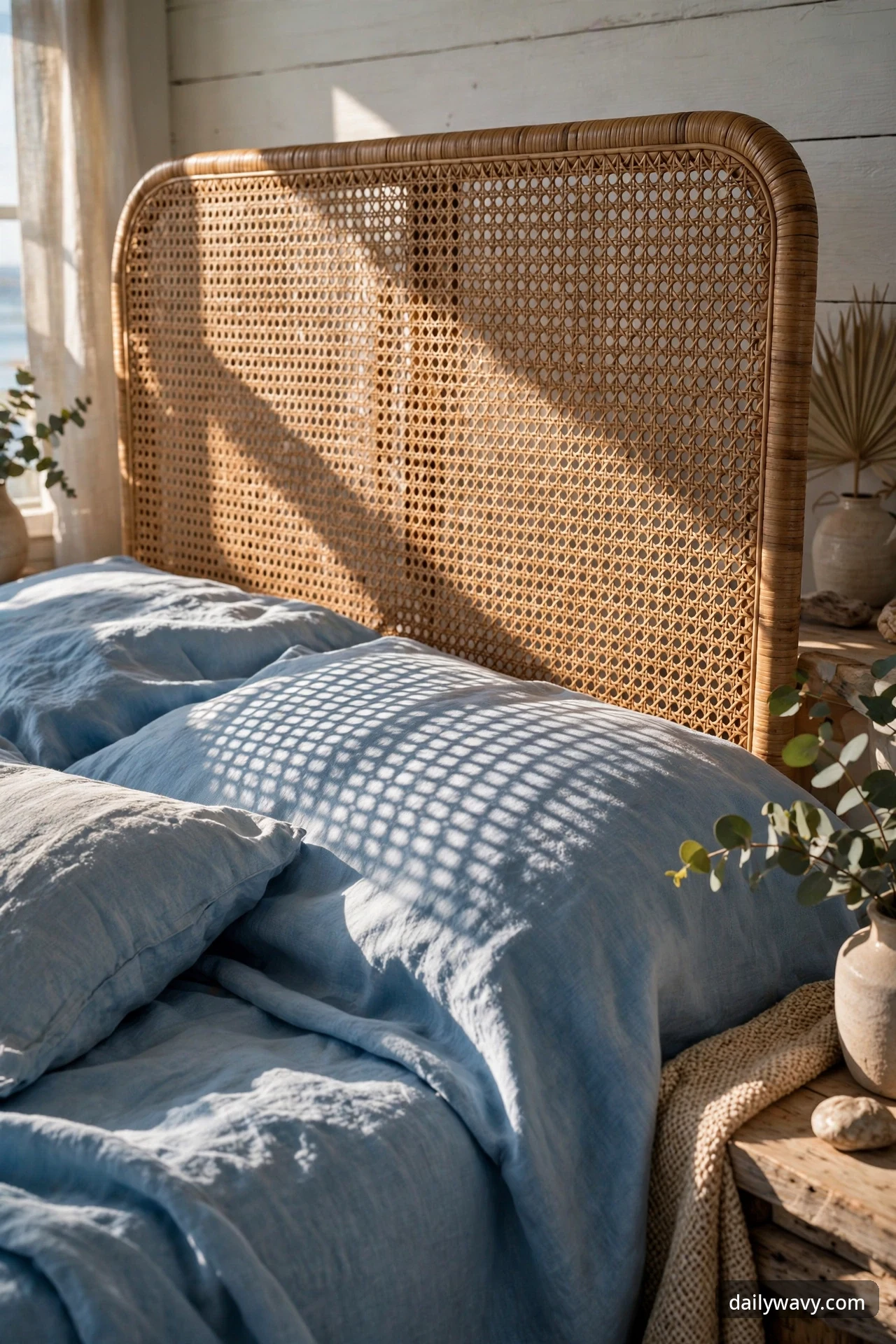
If your bedroom has one place to invest texture, it is the headboard. A textured headboard, rattan cane webbing, woven seagrass panels, or even a simple upholstered board in nubby linen, sets the coastal tone before you notice anything else in the room. It catches raking morning light and throws tiny shadows, which is the kind of depth paint and smooth wood struggle to match.
Measure your bed’s width and your mattress setup first. A headboard should run roughly the width of the mattress, about 60 inches for a queen, and sit 48 to 54 inches tall overall so pillows cover the lower third. Rattan cane panels and upholstered boards in performance linen are the two workhorse choices: the first reads breezy, the second reads soft. Anchor it with proper wall mounting or bed-frame bolts, since a wobbly headboard undoes the calm. Budget a weekend for shopping plus a couple of hours for installation.
The lower-cost version is a slipcover for the headboard you already have. A twin flat sheet in textured linen, tucked and stapled around the back of a wooden or upholstered board, reads as an intentional fabric headboard for the price of a sheet.
9. A narrow shelf with books and a small vase
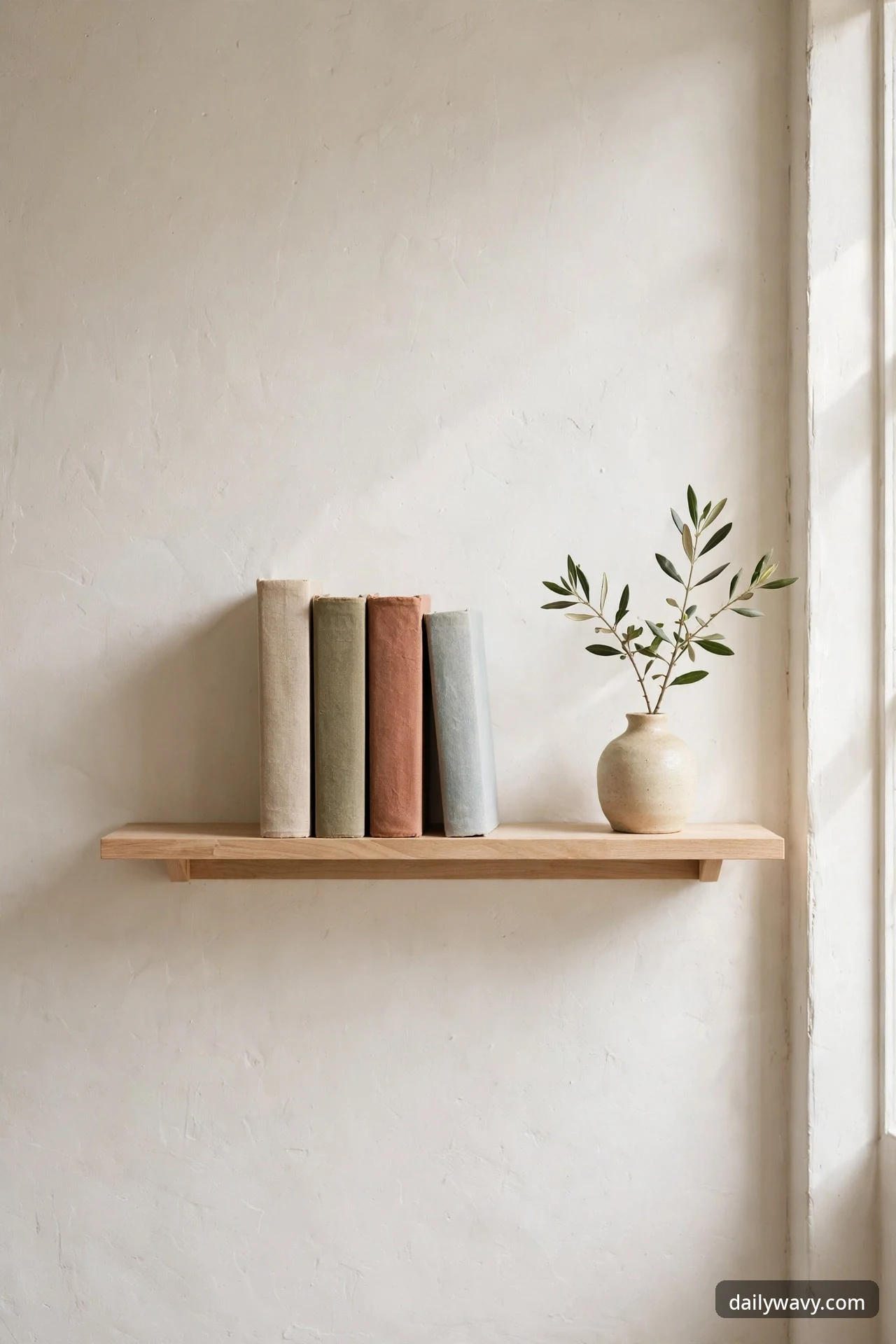
A narrow shelf is a useful coastal trick because it adds personality without adding furniture. Hung on an otherwise empty wall, a single shelf with a short row of books and one small vase gives the room a lived-in rhythm. It reads as a personal choice rather than a catalog choice, which is exactly what keeps coastal style from going sterile.
Measure the wall and keep the shelf modest, 24 to 36 inches wide and 5 to 7 inches deep, mounted 60 to 66 inches from the floor so it sits above sightline clutter but below awkward reach. A light wood shelf on simple brass or black brackets keeps the coastal warmth without going rustic. Style it sparsely: a stack of three to five books, one small vase with a single stem or none at all, and nothing else. Resist filling it. Effort is an afternoon including finding a stud, and keep the load well within the shelf and anchor ratings.
The lower-cost version is a picture ledge from a discount store, which is functionally the same thing. Style it with books you already own and a vase borrowed from the living room, and it will look like you planned it all along.
10. An understated wall color behind the bed
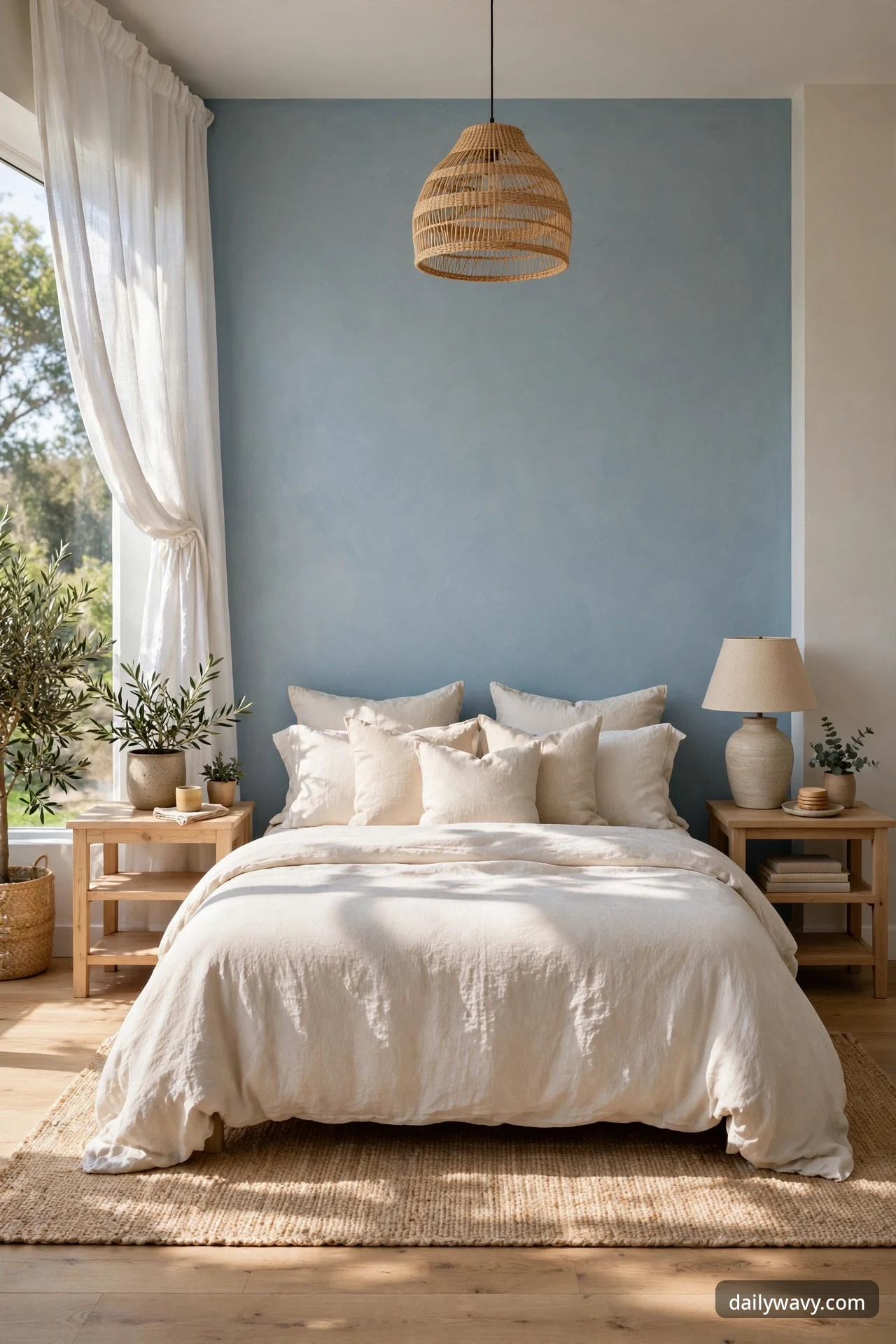
Paint is one of the highest-impact changes in the room, and a coastal bedroom asks very little of it. One understated wall color behind the bed, a whisper of blue or the warmest white you can find, gives the bed a backdrop without painting you into a theme. It deepens the headboard wall just enough that everything in front of it reads crisper.
The decision is undertone, not darkness. Test samples at different times of day, because soft blues can go icy under northern light and warm whites can go yellow under warm bulbs. A good rule is to choose a color one shade deeper than you think; walls dry lighter than they look wet, and pale colors wash out more than expected. One gallon covers a typical bedroom feature wall with two coats. Plan a weekend including prep and drying.
The lower-cost version is no paint at all. Deep-clean your current wall, hang the artwork or mirror closer to it, and let the existing color read more intentional against fresh styling. Clean walls in soft daylight often look like a new paint job.
11. A soft throw folded across the bed
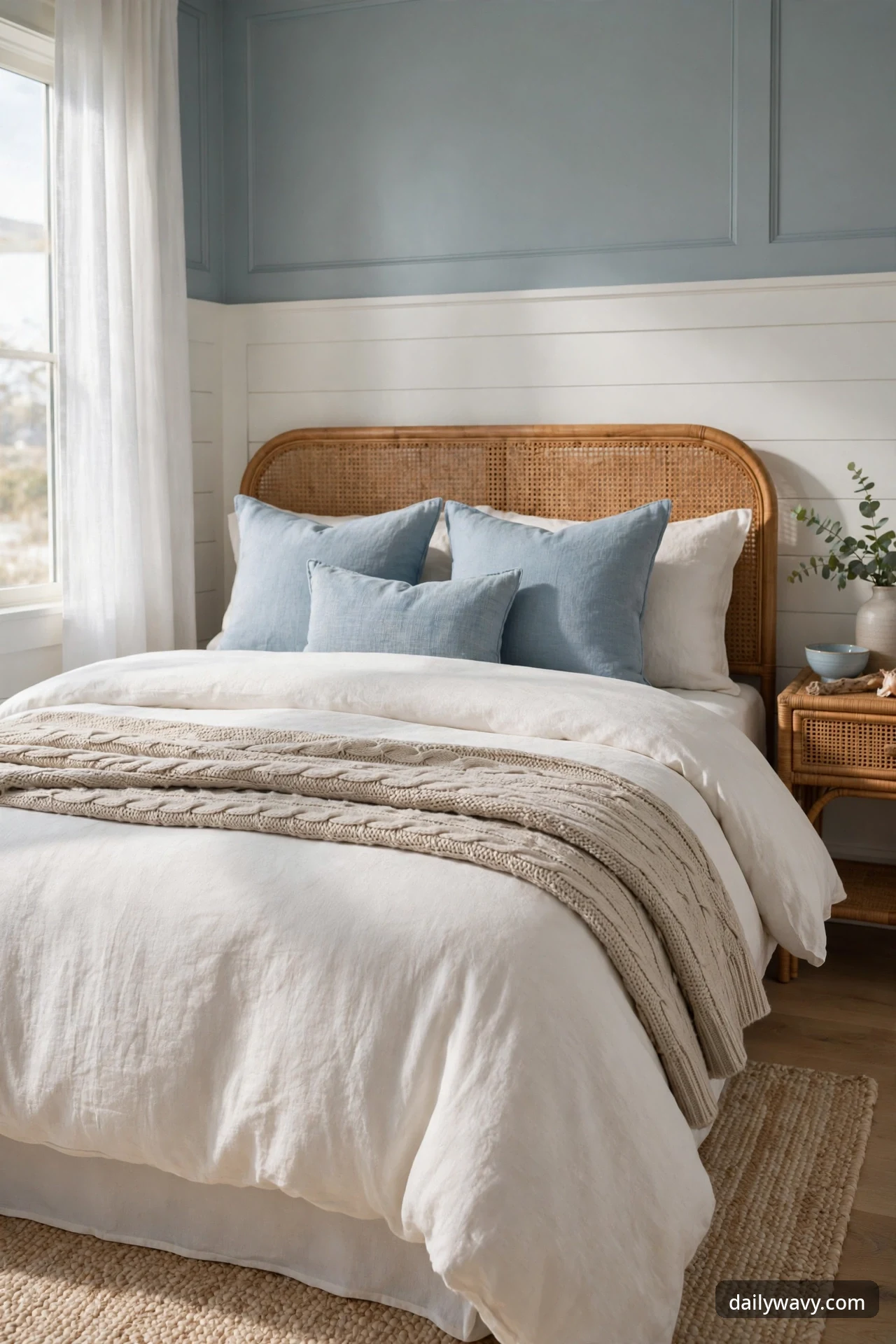
Bedding does not need replacing to look refreshed. A soft throw folded across the foot of the bed adds one layer of texture and one considered color, and the whole bed suddenly looks like a stylist made it. Coastal throws favor nubby knits, waffle weaves, or gauzy cotton, anything with surface interest that contrasts with the smoothness of sheets.
Fold the throw in thirds lengthwise, then lay it across the bottom third of the bed with the fold facing the head. It should reach past the sides of the mattress by a few inches but not puddle on the floor. Choose a throw in a soft blue or natural oatmeal that sits one step away from your duvet color, close enough to harmonize, different enough to notice. This is a five-minute change with one purchase or one repositioned blanket.
The lower-cost version is a throw you already own, refolded with intention. The fold is doing all the work here. A sloppy throw reads like laundry; the same throw folded in thirds reads like styling.
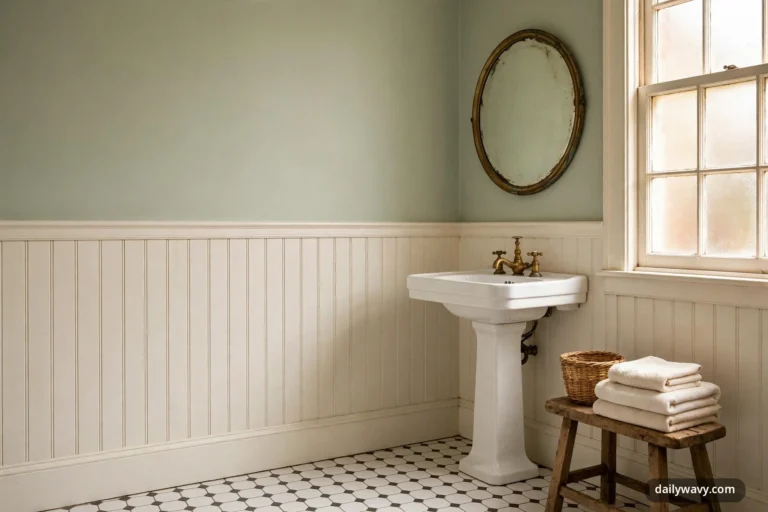
12. A vintage mirror beside a dresser
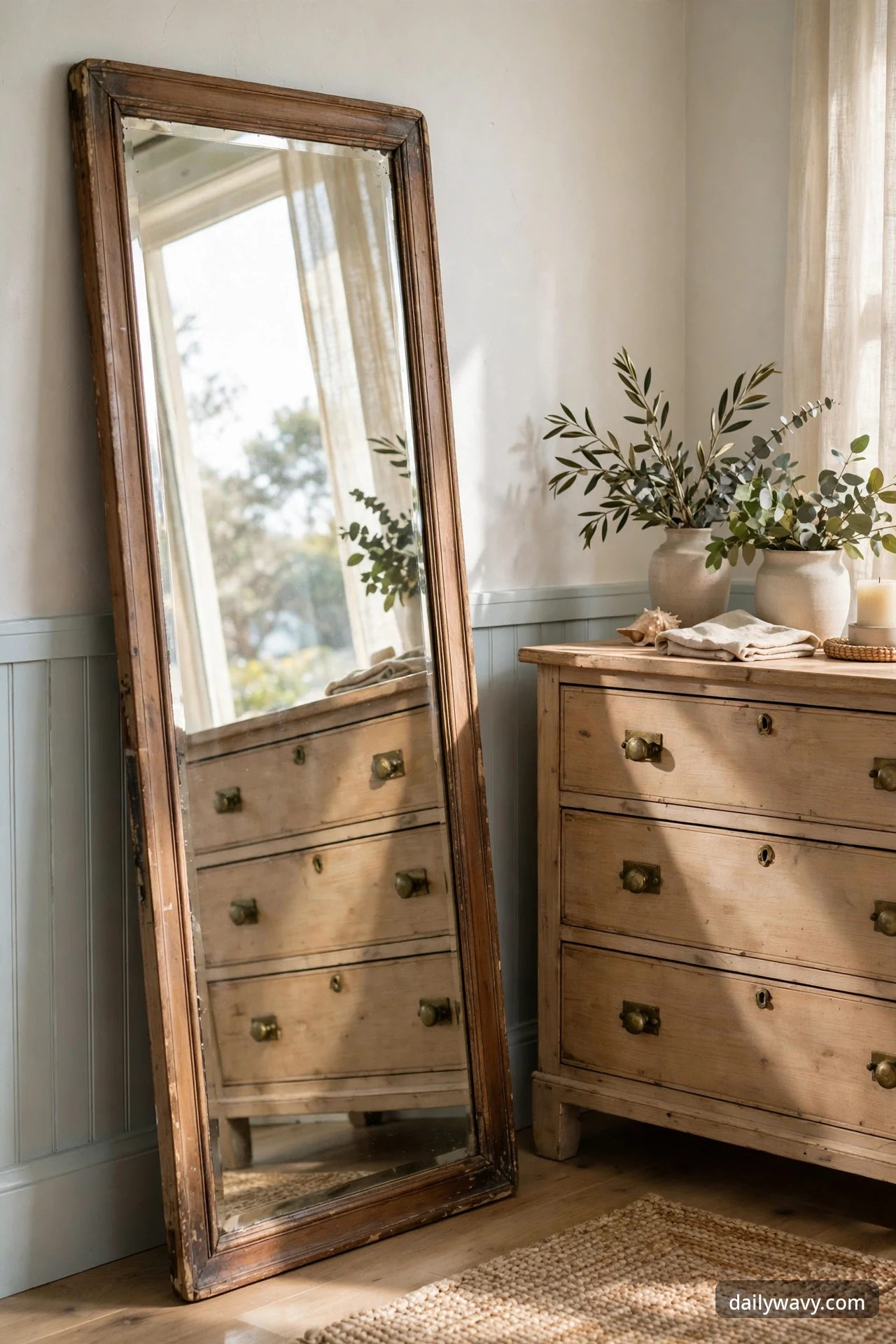
Mirrors do double duty in small bedrooms: they bounce daylight around and make walls read farther apart than they are. A vintage mirror with a slightly worn frame beside the dresser adds all of that light plus a layer of history, and history is what keeps coastal rooms from feeling like showrooms. The patina of an old frame pairs naturally with new linens.
Measure the wall space beside the dresser and choose a mirror that leaves at least 6 inches of breathing room on each side. Lean tall mirrors rather than hanging them; a 48-to-60-inch floor mirror leaned at a slight angle looks more relaxed. Secure a leaning mirror to the wall with anti-tip hardware so it cannot slide or tip, and keep it out of the main walking path. Vintage brass, worn wood, and painted frames all work with the palette, and slightly aged glass with foxing reads as character rather than damage. Budget a thrifting afternoon and an hour for safe placement.
The lower-cost version is the mirror you already own, moved. Most bedrooms have a mirror hiding behind a door or inside a closet. Bring it beside the dresser, lean it with intention, and clean the glass properly. Light does the rest.
13. A plant near natural light
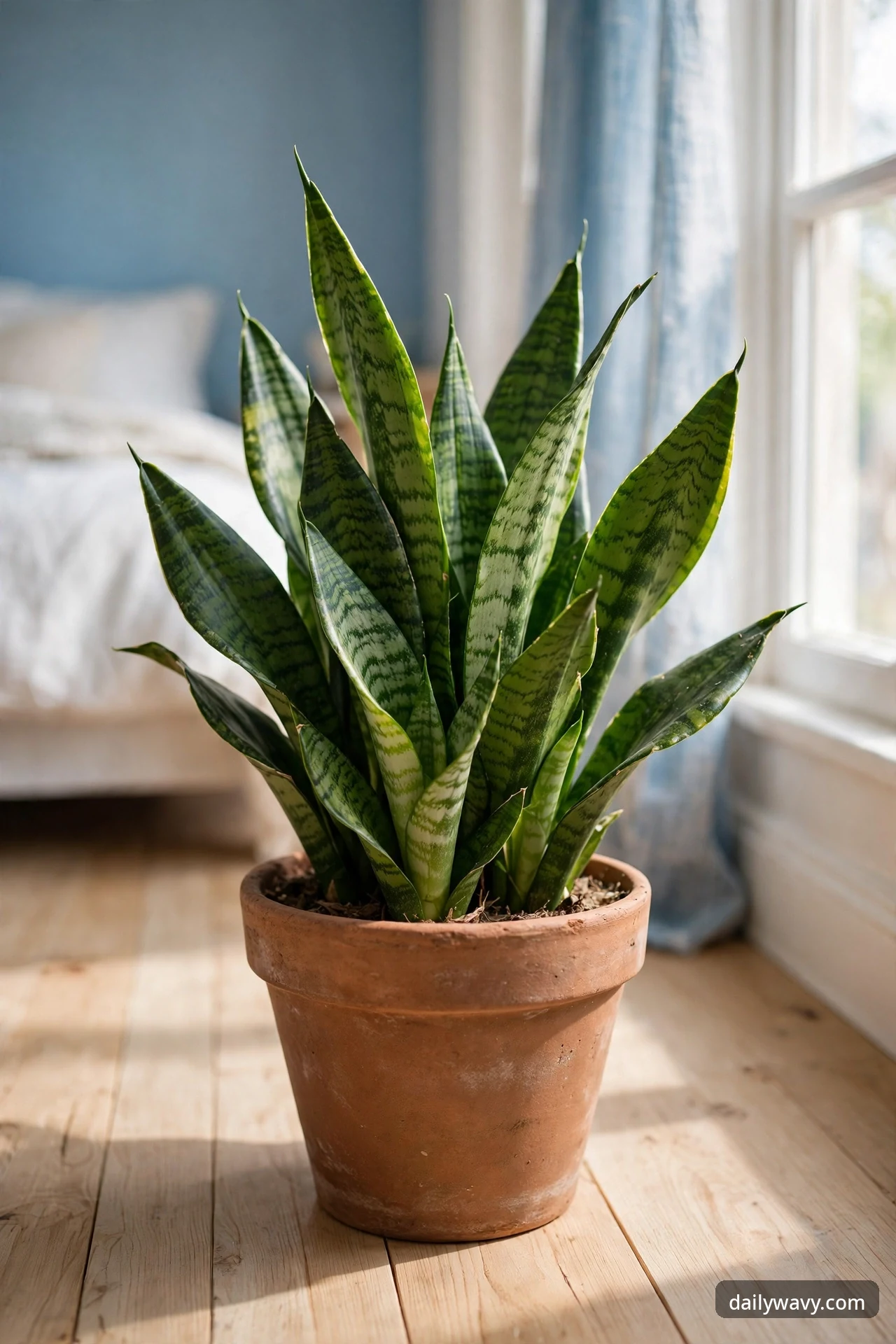
A coastal bedroom without something living feels one ingredient short. One plant near the window softens the hardest corner of the room, cleans the visual air, and brings a shade of green that makes every blue in the room look bluer. One plant is enough; a jungle reads as a different style entirely.
Choose for your actual light, not your fantasy light. A snake plant or ZZ plant tolerates a dim corner a few feet from the window, while an olive tree or fiddle-leaf fig wants to be within 3 to 4 feet of bright, indirect glass. Measure the floor space and pick a pot proportional to it: a 10-to-12-inch pot suits a plant 3 to 4 feet tall, which is the sweet spot for beside-dresser placement. Terra cotta and woven basket covers are the coastal defaults, both letting soil breathe. Effort is a shopping trip plus honest self-knowledge about your watering habits.
The lower-cost version is a cutting from a friend’s plant or a grocery-store herb in a nicer pot. Rosemary and lavender in small pots look coastal immediately, smell wonderful, and cost almost nothing.
14. A small writing desk doubling as a vanity
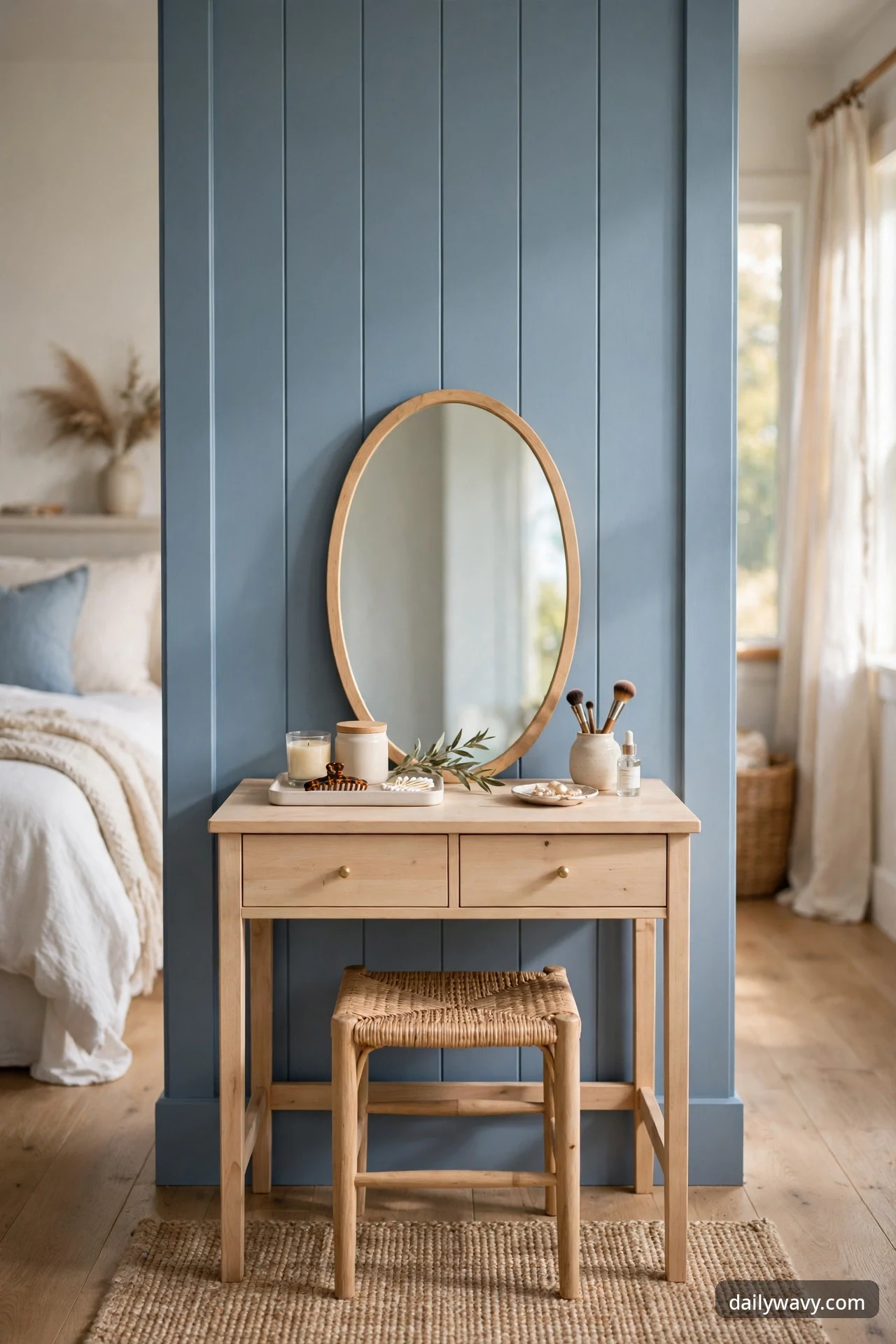
Most bedrooms have a chair’s worth of unused wall, and a small writing desk turns it into a morning ritual station. By day it holds a laptop or letters; by evening it becomes a vanity with a mirror leaned behind it and a small tray for the few things you reach for. One piece doing two jobs is the essence of a thoughtful refresh.
Measure for a footprint no deeper than 18 to 20 inches, which leaves walkways comfortable even in tight rooms. A 36-to-42-inch-wide top holds a lamp, a tray, and a work surface without crowding. Look for light wood with clean lines and a single drawer if you can find it; the drawer hides the clutter that ruins the double-duty illusion. Sit the chair under it fully to check real clearance. Budget an afternoon for shopping and setup.
The lower-cost version repurposes a console table or a wide windowsill. Add a small tray, lean a mirror behind it, and tuck a stool underneath. The ritual is what matters, not the furniture’s original label.
15. A storage ottoman at the bed foot
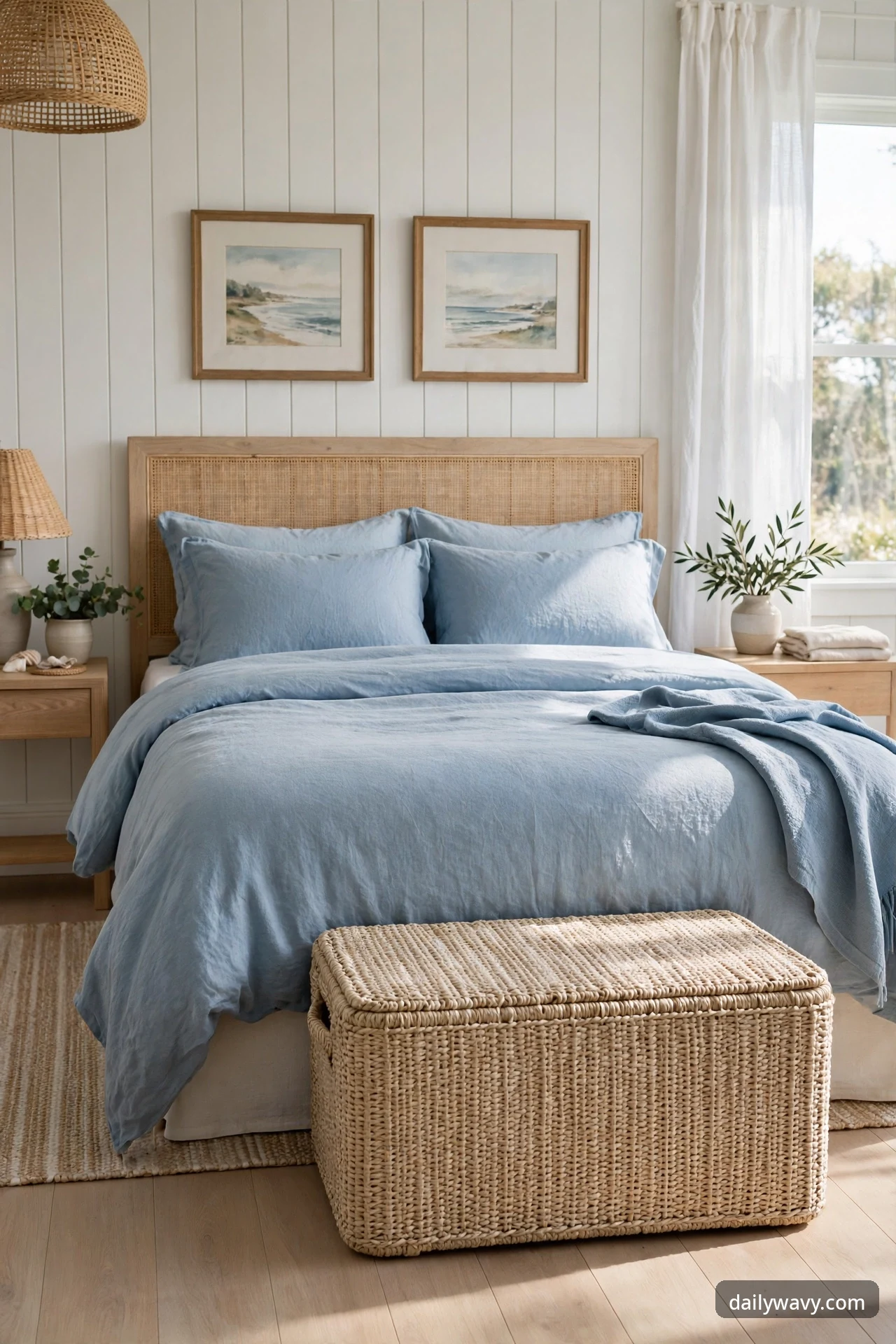
The foot of the bed is where extra bedding, off-season clothes, and the throw you are not using this month all need somewhere to go. A storage ottoman gives them a home and gives you a seat for putting on shoes, which is the kind of small daily pleasure a thoughtful bedroom delivers. In a coastal palette, woven or linen upholstery keeps it light instead of heavy.
Measure the foot of the bed first. The ottoman should be 6 to 8 inches shorter than the bed’s width so it nests visually, and 15 to 18 inches tall so it doubles as a comfortable seat. For a queen bed, that means roughly 52 to 54 inches wide. Hinged lids with soft-close hardware are worth seeking out; slamming lids at bedtime are the opposite of calm. Upholstery in oatmeal linen or natural weave hides wear better than white. Budget an afternoon of shopping.
The lower-cost version is a blanket chest or even a sturdy lidded box you already own, recovered with a linen throw. Storage plus a soft top is all anyone needs; the label on the box never shows.
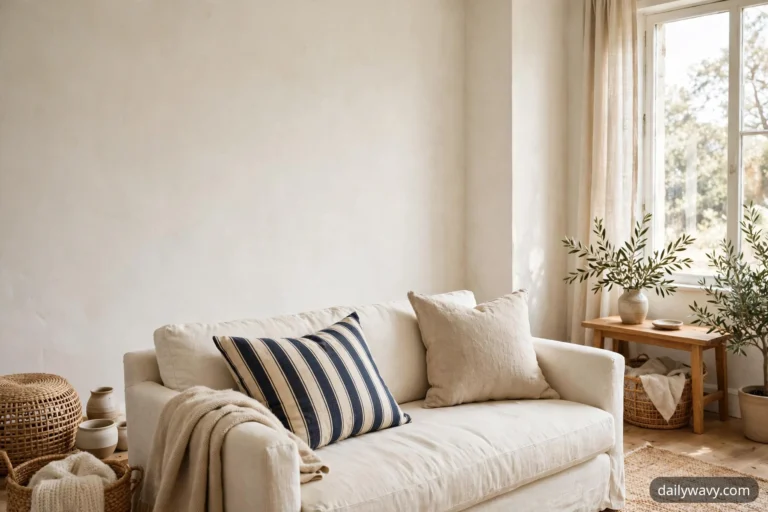
16. An accent pillow in a contrasting material

When everything in a room is soft and pale, one pillow in a contrasting material wakes the whole composition up. A single lumbar pillow in chunky jute, washed canvas, or even worn leather against linen bedding adds the one note of tension that makes the calm around it feel deliberate. It is the smallest move on this list and one of the most effective.
The decision is contrast, not color. Keep the color in the family, a deeper blue or natural tan, and let the material do the talking. A 12-by-20-inch lumbar pillow sits well in front of two sleeping pillows without fighting the headboard. Feather-blend inserts look better than polyfill because they take a karate-chop dent and hold it; for the classic casual look, that matters. This is a ten-minute change.
The lower-cost version recovers a pillow you already have. A yard of burlap or canvas from a fabric store, wrapped and pinned around an existing insert, reads as a deliberate material statement for very little money.
17. A quiet gallery arrangement on a side wall

A gallery wall sounds busy, but a quiet one is anything but. Three to five small frames in a loose horizontal row on a side wall add personality at the room’s edge, where it can be enjoyed without demanding attention. Keep the palette tight, soft blues, warm whites, and light wood frames, and the arrangement reads as calm collection rather than clutter.
Measure the side wall and tape out the arrangement before hanging. A good starting point is five frames spanning 48 to 60 inches wide total, with 2 to 3 inches between frames, centered at about 57 inches high. Mix two frame sizes for rhythm but keep all the frames the same finish; consistency is what keeps a gallery quiet. Use paper templates and painter’s tape to test the layout for a day before committing nails, and use a hook and wall anchor rated for each frame’s weight. Budget a weekend for collecting frames and an afternoon for hanging.
The lower-cost version prints photos at home on matte paper and frames them in matching discount frames. A tight palette and consistent frames make inexpensive prints look curated, because curation is a matter of restraint, not price.
18. Layered bedding with a textured throw

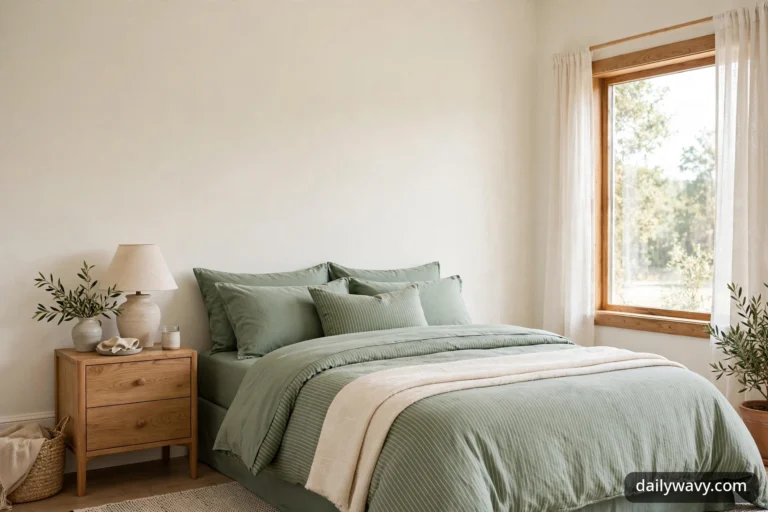
The final layer is the one you touch every night. Layered bedding with a textured throw on top turns the bed into a small landscape: smooth sheets, a light duvet or coverlet, and one throw with real surface interest folded at the foot. Each layer should differ in texture more than in color, because coastal calm comes from tone-on-tone depth rather than contrast.
Build from the skin outward. Sheets in washed cotton or linen, a coverlet or lightweight duvet in warm white, then a throw in a nubby knit or waffle weave in soft blue or oatmeal. Fold each layer back at a different depth so all three show, roughly 12 inches of sheet cuff, then the coverlet, then the throw at the foot. Sizes matter less than texture here, but a throw around 50 by 60 inches covers a queen foot nicely. This is a one-hour remake of the bed you already have.
The lower-cost version skips buying new bedding and simply rearranges what exists. Pull the flat sheet up as a cuff, fold the duvet down lower than usual, and add any textured blanket as the final layer. The eye reads layers, not labels, and three visible textures are what make a bed look professionally made.
Frequently asked questions
What colors make a bedroom feel coastal without looking like a beach shop?
Stick to a tight palette: soft blue, warm white, and light wood, with natural fibers for texture. Novelty props like anchors and rope knots are what tip a room into theme-park territory. Materials do the coastal talking here, not symbols.
Can I do coastal style in a small bedroom?
Yes, and it suits small rooms especially well because the palette is light and the rules favor restraint. If you are working with tight quarters, our ideas for a small bedroom with a queen bed pair well with everything above, since both approaches start from breathing room.
How do I keep a pale bedroom from feeling cold?
Warmth comes from three things: warm-white paint undertones rather than blue-gray ones, wood with visible grain rather than painted white furniture, and texture in textiles. If a room feels chilly, the answer is often a warmer bulb and one more natural fiber, not more color.
What is the cheapest coastal bedroom change that actually shows?
Raising and widening your curtain rod costs almost nothing if you reuse your panels, and it changes how much daylight the room gets. After that, refolding the bedding in visible layers and clearing one surface completely are both free.
How much blue is too much blue?
When blue appears in more than three places, it starts reading as a theme instead of an accent. Aim for the bedding or the art, one textile like a throw or rug, and one small accent like a vase or book spine. The warm whites and woods should still dominate.
Do I need to replace my furniture for a coastal refresh?
No. Almost every idea here works with furniture you already own through repositioning, slipcovers, and restyling. The headboard, the desk, and the reading chair are the only pieces that ask for furniture, and all three have honest lower-cost versions built in.
A thoughtful room refresh does not ask for a renovation, just a few decisions made with care. Start with the curtains and the bedding, since light and the bed shape everything else, then add one textured piece at a time until the room holds its breath the way you want it to. And if your layout needs more room to breathe first, these narrow living room layout ideas cover furniture placement for narrow rooms with the same measured approach. Find more room ideas in our Home & Decor collection.