
14 Floating Shelf Styling Ideas with Useful Styling Details
A bare floating shelf is one of the simplest blank canvases in your home. No doors, no drawers, just a…
A bare floating shelf is one of the simplest blank canvases in your home. No doors, no drawers, just a clean board hanging on the wall, waiting to look intentional or like a forgotten ledge. The difference comes down to small decisions: the height of one vase, the gap between groups, the single object that gets the spotlight. This guide walks through fourteen styling ideas, each with the materials, spacing, and construction details that make it work. You will learn how much weight a shelf can carry, how far apart to hang two shelves, and which arrangements suit kitchens, bathrooms, and living rooms. Ready to turn that empty board into a corner that looks intentional?
Jump to an idea
- A tall vase balanced by a short stack
- A pair of matching boxes
- An open space between object groups
- A small lamp with a framed print
- A single sculptural object
- A wood bowl and textured vessel
- A restrained color-coded book section
- A trailing plant along one edge
- A set of useful jars or containers
- A plate displayed upright
- A trio of small collectibles
- A leaning mirror on a secure ledge
- A lidded box and one flower stem
- A small clock between two book stacks
Before you style: the construction that holds it all
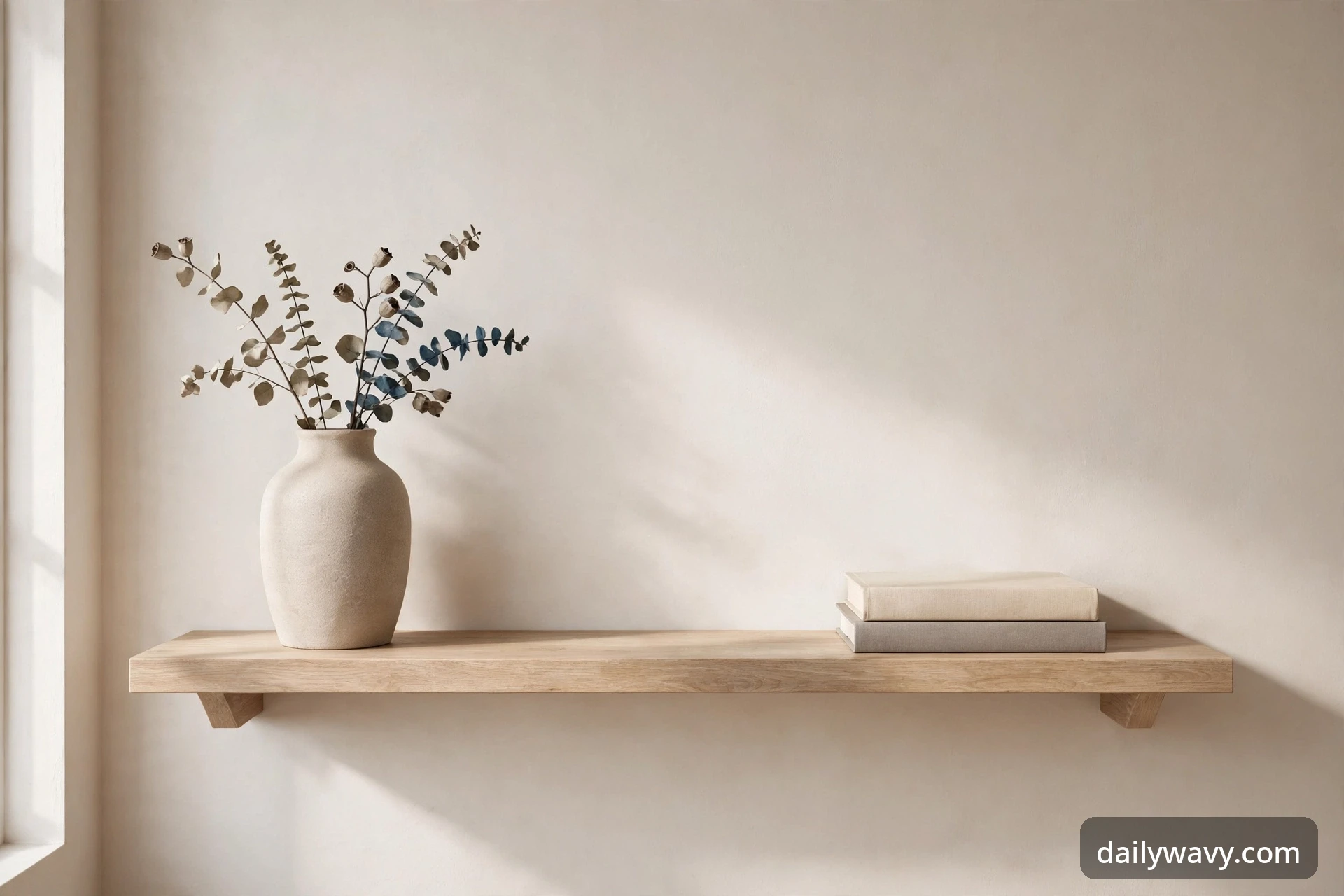
A floating shelf looks like it floats, but it hangs on serious hardware. Most concealed-bracket shelves hold 15 to 25 pounds per stud, and a 36-inch shelf mounted into two studs with a rated bracket system can safely carry 30 to 50 pounds of books and decor. That is plenty for styling, but only if you anchor into studs or use proper wall anchors rated for the load. Drywall alone will not do it.
Depth matters. Shelves that are 6 to 8 inches deep suit frames, small plants, and stacked books. Shelves 10 to 12 inches deep handle dinner plates, large vases, and layered groups without anything feeling perched on the edge. When you hang two shelves, leave 10 to 14 inches between them for decor; give books 12 to 14 inches so you can actually pull one out. Hang a single shelf at eye level or a little above, roughly 54 to 60 inches from the floor in a living room, higher in a kitchen where counter work happens below.
A good rule of thumb: if the object is heavy, beautiful, and above waist height, it belongs on a shelf screwed into a stud. Keep a few inches of clearance behind tall pieces so they cannot rock forward, and put a small rubber bumper under anything that slides. Style the shelf like you plan to dust it, because you will, and leave enough room to lift objects without knocking their neighbors.
1. A tall vase balanced by a short stack
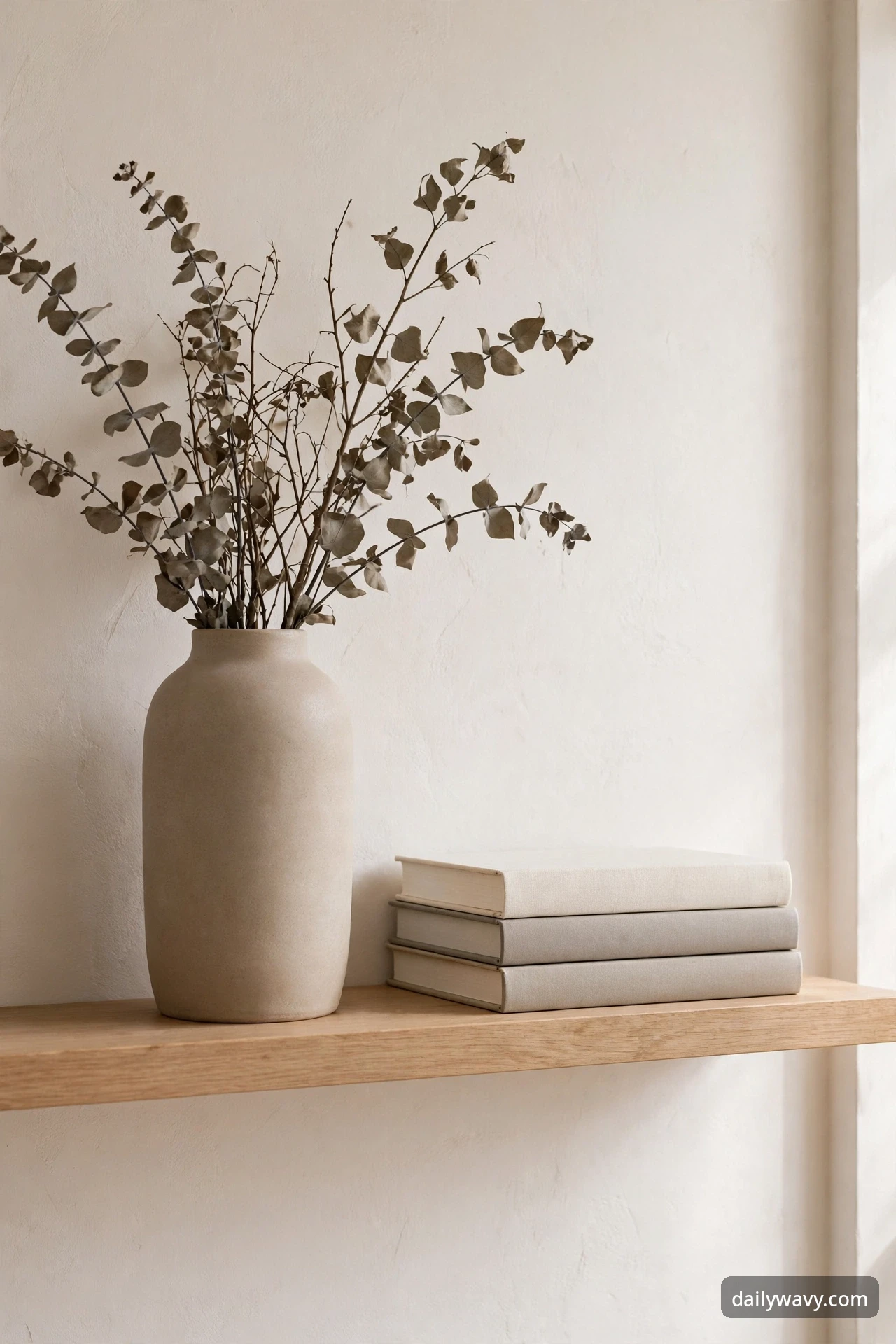
Contrast in height is one of the quickest ways to wake up a floating shelf. A tall, narrow vase on one side and a low stack of two or three books on the other create the diagonal line your eye follows, and the shelf suddenly looks composed instead of scattered. This is a classic contrast arrangement, and it works in almost any room.
Choose a vase 12 to 18 inches tall with a narrow footprint, no more than 4 inches wide at the base. Stoneware, matte ceramic, or smoked glass all read well against a painted wall. On the other side, stack two or three hardcover books of similar size, spines facing forward, and top the stack with nothing at all or a single small stone. The height difference between the vase and the stack should be at least 6 inches to make the contrast visible.
Mount the shelf so the top of the vase sits 6 to 8 inches below anything above it, which means 24 to 26 inches from the shelf to anything above it for an 18-inch vase. In a bathroom, swap the books for a stack of folded washcloths or a lidded jar, since paper and humidity do not mix. A trailing sprig or two of dried stems in the vase adds softness without maintenance, and it never needs watering.
Troubleshooting tip: If the vase looks lonely instead of striking, slide it off-center, about one third of the way from the shelf end. Objects placed dead center read as stiff; the off-center placement feels natural.
2. A pair of matching boxes

Symmetry is a shortcut to calm, and a pair of matching boxes delivers it instantly. Two identical lidded boxes set side by side, or stacked with a small gap, give the shelf a tailored look while hiding the clutter nobody wants to see: remotes, chargers, keys, spare batteries. Pretty and practical at once.
Look for boxes 6 to 10 inches wide in materials like rattan, lacquered wood, or linen-covered cardboard. Keep both boxes the same size and finish; near-matches look like a mistake, while true twins look like a decision. Place them centered or slightly left of center, and leave at least 4 inches of clear shelf on each side so the pair reads as one composition rather than two lonely objects.
This idea earns its place in bedrooms and living rooms, where small clutter multiplies. Inside, sort contents by use: one box for charging cables, one for TV remotes. For load, boxes filled with small electronics and cables rarely exceed 5 pounds, well within any properly mounted shelf. In a home office, use one box for notepads and one for loose desk tools, and label the bottoms so you remember what lives where.
Troubleshooting tip: If matching boxes feel too formal, add a small, different object beside them, like a tiny brass bowl or a single candle. The pair provides order; the small wild card keeps it human.
3. An open space between object groups
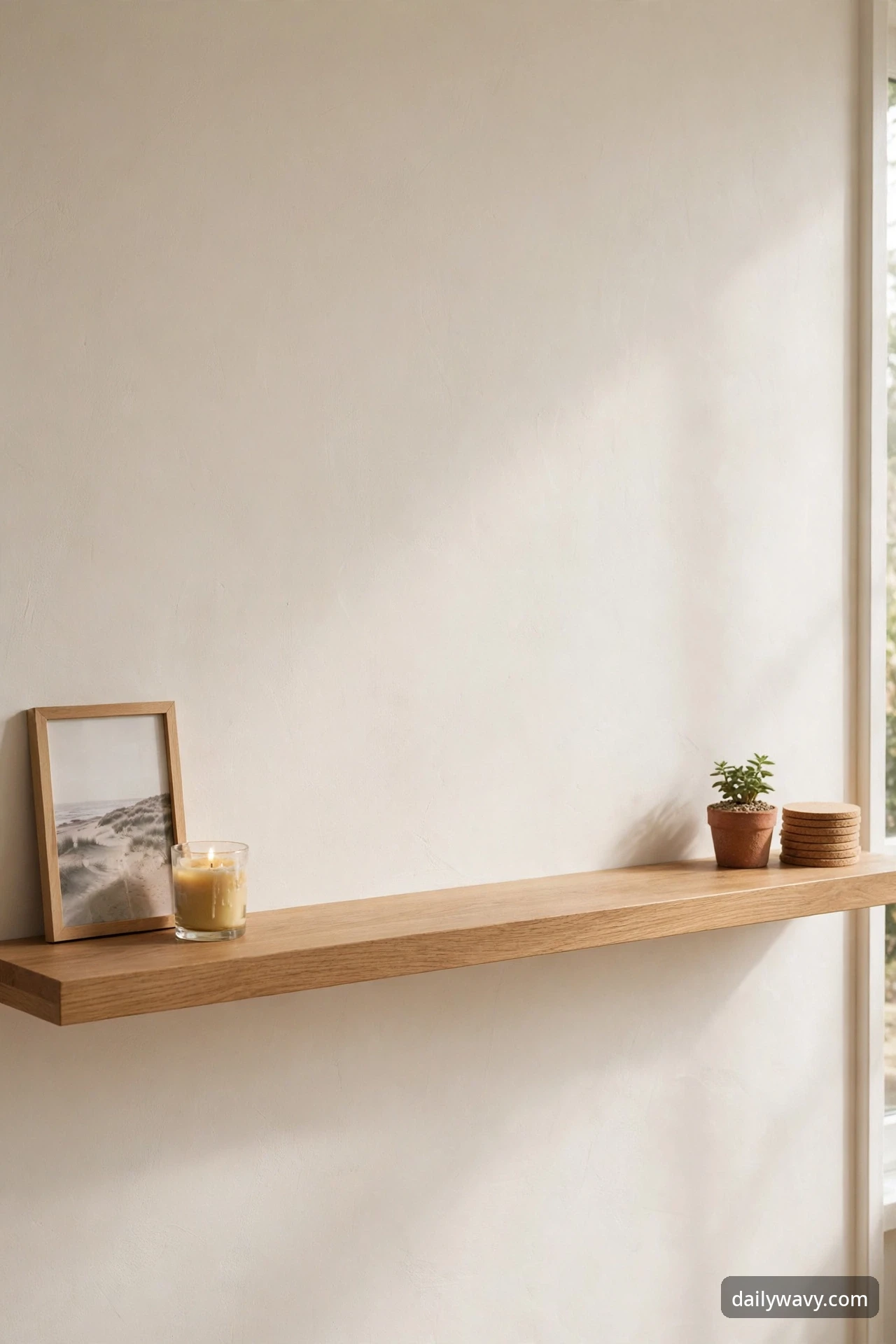
One of the simplest styling moves is leaving part of the shelf empty. An open gap of 8 to 12 inches between two object groups acts like a deep breath in the middle of the composition. It separates a busy corner from a quiet one, gives each group room to be seen, and makes the whole shelf feel larger than it is. Designers call this negative space, and it is the difference between styled and crowded.
Set up two small groups on a 36 to 48-inch shelf: a cluster of three on the left, a cluster of two on the right, with 8 to 12 inches of bare shelf between them. The gap should be wide enough to look deliberate, at least the width of a dinner plate. Do not fill it later with a stray object; the emptiness is the design.
This trick works anywhere, but it matters most in small rooms where shelves can feel heavy. In a narrow hallway, one gap between a framed photo and a small plant keeps the ledge from closing in on the space. The shelf load stays light here by definition, which is a bonus above a desk or beside a bed. Think of the gap as one more object in your arrangement, and give it the same respect.
Troubleshooting tip: If the empty space starts collecting random items, it has failed. Move one of your groups a couple of inches toward the center to shrink the gap slightly, making it too narrow to tempt a dumping ground but wide enough to breathe.
4. A small lamp with a framed print
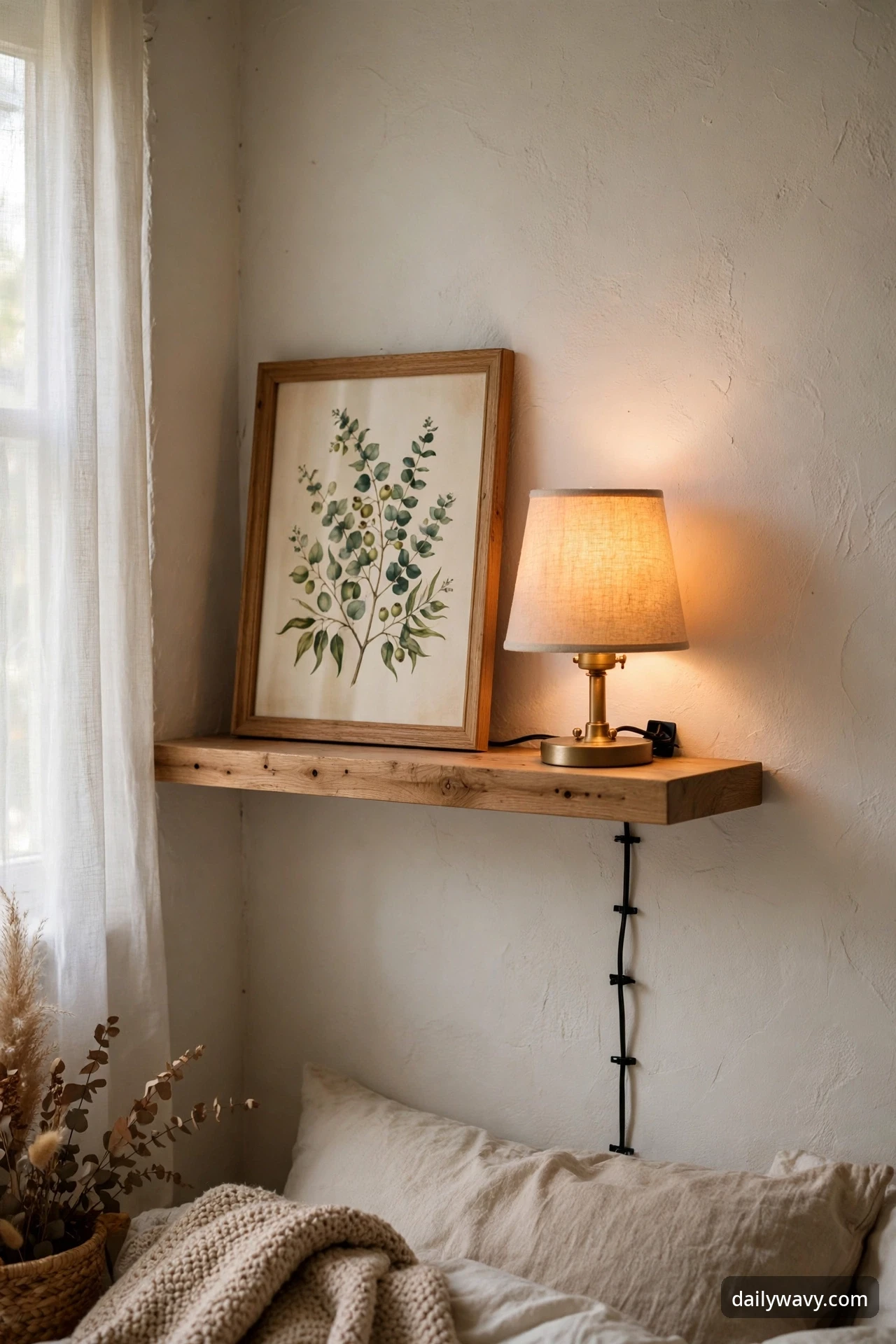
A lamp on a shelf turns the shelf into a moment, especially after dark. A small table lamp beside a framed print creates a little gallery vignette, and the warm light makes the print and everything near it glow. This is the setup for a bedroom shelf or a living room corner that needs evening atmosphere without a floor lamp taking up space.
Pick a lamp 10 to 14 inches tall with a shade no wider than 8 inches, so it fits the shelf depth and leaves the print visible. The framed print should be 8×10 or 11×14 inches, leaned or stood against the wall behind or beside the lamp, never hanging above it in a way that competes. Set the lamp to one side of the print with 2 to 3 inches between them, close enough to read as a pair.
Plan for the cord. Most floating shelves have no outlet nearby, so use a battery-powered LED lamp or run a slim cord down the wall behind the shelf, secured with small clear clips. Battery lamps now run for weeks between charges and many have warm dimmable settings that flatter art. For load, a small lamp and frame together weigh under 8 pounds. Keep lampshades at least 6 inches from any tall object so nothing crowds the shade or leans against it.
Troubleshooting tip: If the print washes out under the lamp, tilt the shade slightly downward or move the lamp an inch or two forward. The goal is a pool of light on the print’s lower half, not a blast across the glass.
5. A single sculptural object
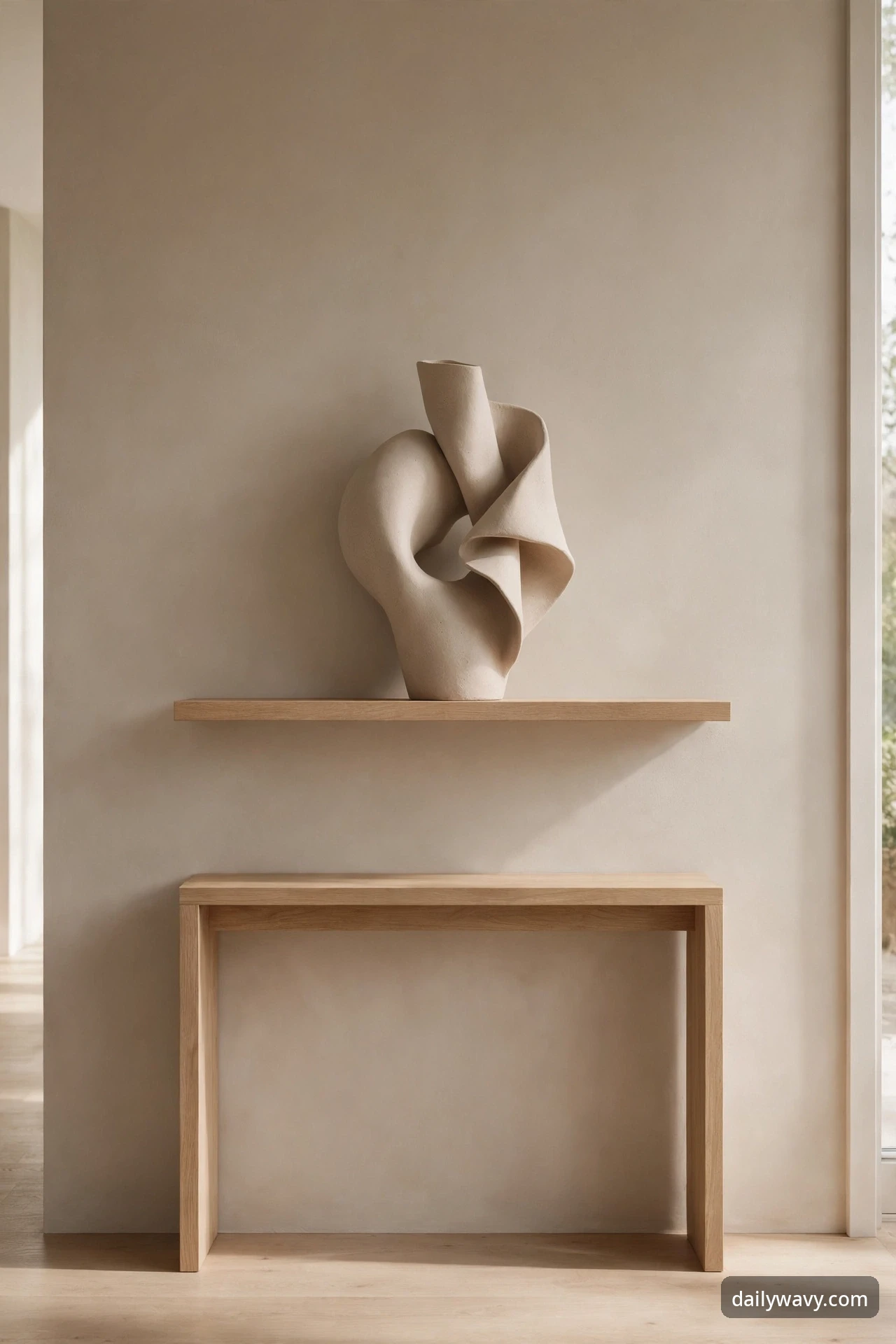
One strong object can carry an entire shelf. A sculptural piece, an abstract ceramic form, a carved wood figure, a large knot of driftwood, earns the full stage when it stands alone with generous empty space around it. This is minimalism with a single focal point: not emptiness for its own sake, but one confident choice that draws the eye and holds it.
Choose an object 8 to 14 inches tall with an interesting silhouette from every angle, since people will see it from across the room. Matte textures photograph and read better than glossy ones under daylight. Center it on the shelf or place it just off-center, and leave at least 10 inches of clear space on each side. The emptiness is what makes the object look important.
Check the weight before you commit. Stone and solid wood sculptures can weigh 10 to 15 pounds, so confirm the shelf is stud-mounted and keep the piece low and centered over the brackets rather than near the shelf ends. This idea suits entryways and living rooms where you want one memorable note rather than a busy display. Rotate the object with the seasons if you like, but never add a companion piece; the single object is the whole point.
Troubleshooting tip: If one object looks lost on a long shelf, the shelf is too long for this idea, not the object too small. Move it to a shorter 24-inch shelf where the proportions work, or flank it with nothing and let the room’s negative space do the talking.
6. A wood bowl and textured vessel
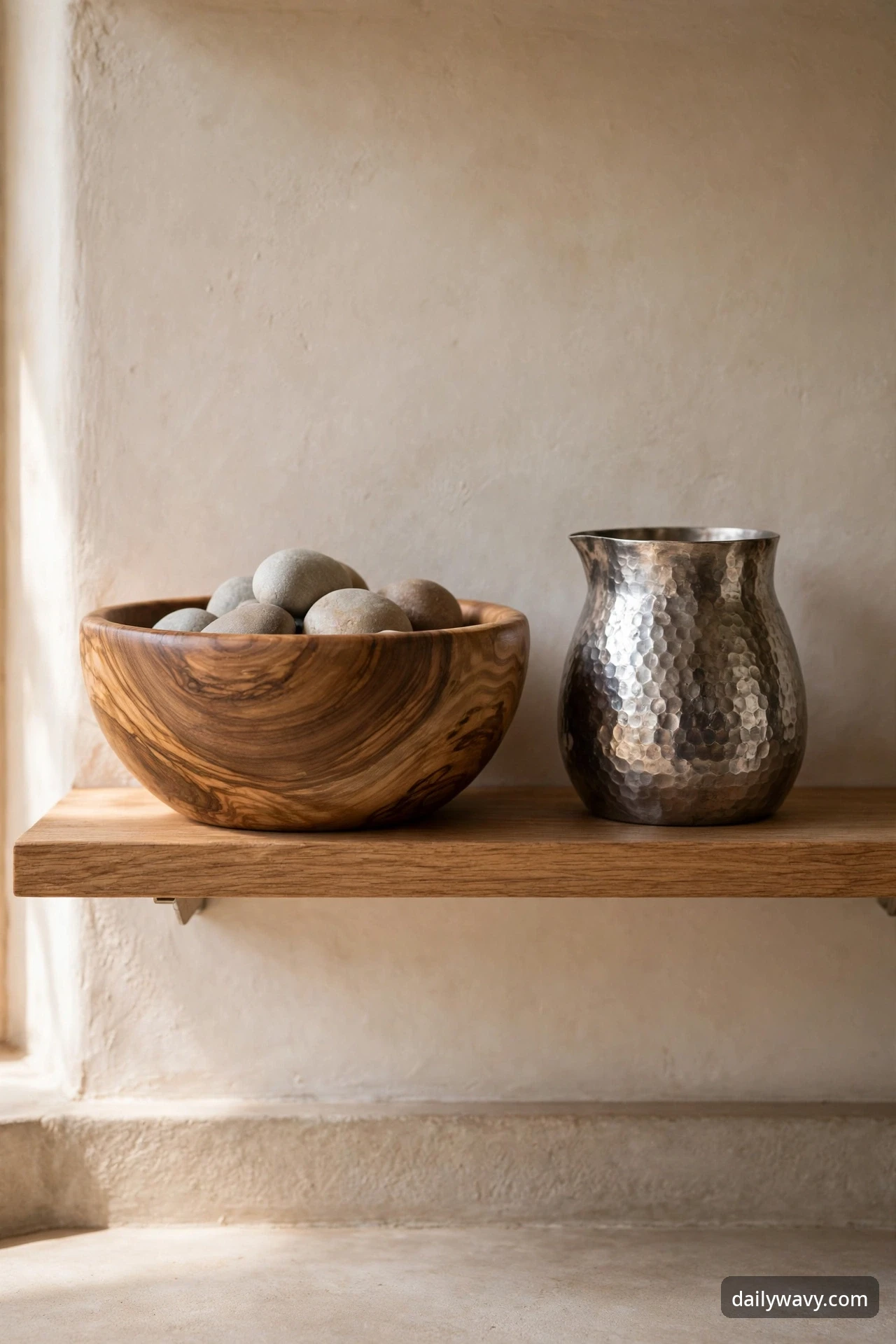
Natural materials make a shelf feel warm and touchable. A hand-turned wood bowl beside a textured vessel, think hammered metal, ribbed clay, or woven grass, brings organic variety that painted walls and flat screens cannot. The two pieces talk to each other through material contrast, and the pairing feels collected rather than decorated.
Pick a bowl 8 to 12 inches in diameter with a visible grain, acacia and mango wood both age beautifully. Pair it with a vessel 6 to 10 inches tall in a contrasting texture: rough where the bowl is smooth, matte where the bowl is oiled. Set them 3 to 4 inches apart so each reads clearly but the pairing is obvious. A few air plants or a handful of smooth stones inside the bowl adds life without adding weight.
In a kitchen, this pairing becomes genuinely useful: the bowl holds fruit, the vessel holds wooden spoons or cooking utensils. Keep wooden pieces out of direct stove steam and wipe them down monthly with food-safe oil to prevent drying. For load, a fruit-filled bowl can reach 8 pounds, so confirm your brackets and center the weight over a stud. In bathrooms, swap wood for sealed stone or glazed ceramic, which tolerate steam without warping.
Troubleshooting tip: If the pairing looks flat, raise one piece. Set the vessel on a small stack of coasters or a low wooden riser, 2 inches of extra height creates a stepped profile that reads as intentional.
7. A restrained color-coded book section
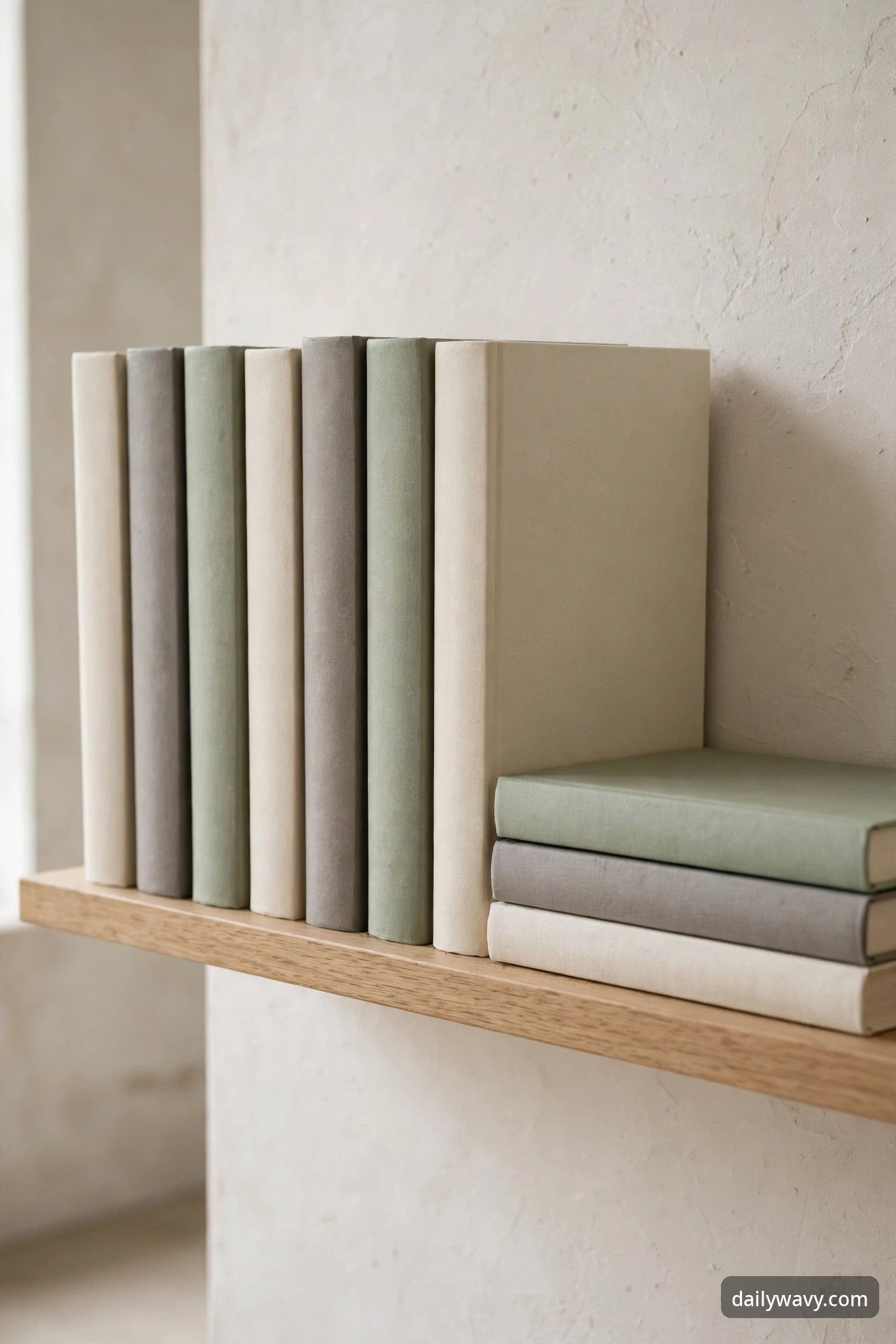
Books are a natural fit for a shelf, and a small, color-disciplined row of them looks pulled together without any extra props. The key word is restrained: group 8 to 12 books by two or three muted tones, creams, warm grays, soft greens, and skip the rainbow effect that can make a shelf look like a toy aisle.
Pull the books forward so their spines sit nearly flush with the shelf edge, about half an inch back. Align the tops or the bottoms for a clean line, and mix one horizontal stack of three books among the vertical row to break the rhythm. Keep the whole section to one third of the shelf length, leaving room for a different idea beside it. A single bookend or a heavy stone on the loose end keeps everything upright.
Mind the weight. Books are the heaviest common shelf cargo: a foot of hardcovers can weigh 15 to 20 pounds. Keep book sections over the brackets or studs, never cantilevered near the shelf ends, and stay within your bracket rating. In a child’s room, keep this section low and light, paperbacks rather than art books, and anchor the shelf with particular care. This idea belongs in living rooms, bedrooms, and home offices where the books are real and reached for.
Troubleshooting tip: If the color grouping feels stiff, turn one or two books spine-in. The plain page edges add a soft neutral band that breaks the pattern without breaking the palette.
8. A trailing plant along one edge

A trailing plant softens the hard lines of a shelf. Set a pothos, philodendron, or string-of-pearls near one end of the shelf and let the vines spill over the edge, and the hard straight lines of the shelf turn gentle. The plant adds movement, color, and a bit of life to rooms that otherwise read all angles and rectangles.
Use a pot 5 to 7 inches wide with a saucer, or a cachepot with no drainage hole, since water must never reach the shelf surface. Place the plant at one end, not the center, so the trailing side drapes over the edge while the other side holds a small companion like a framed photo or a candle. Let vines hang 12 to 24 inches; trim them when they reach furniture below or start tangling with cords.
Water with a small can over the sink, then return the pot once it stops dripping, and wipe the shelf after watering day. In kitchens, herbs like trailing thyme or oregano work and stay useful. In low-light bathrooms, choose a pothos or ZZ plant, which tolerate steam and dim corners. A watered plant weighs 3 to 6 pounds, so keep it over a bracket and use a waterproof mat under the pot to protect the shelf finish.
Troubleshooting tip: If the plant’s vines grow only on one side and look lopsided, rotate the pot a quarter turn every two weeks. Even growth follows even light, and the rotation takes five seconds.
9. A set of useful jars or containers
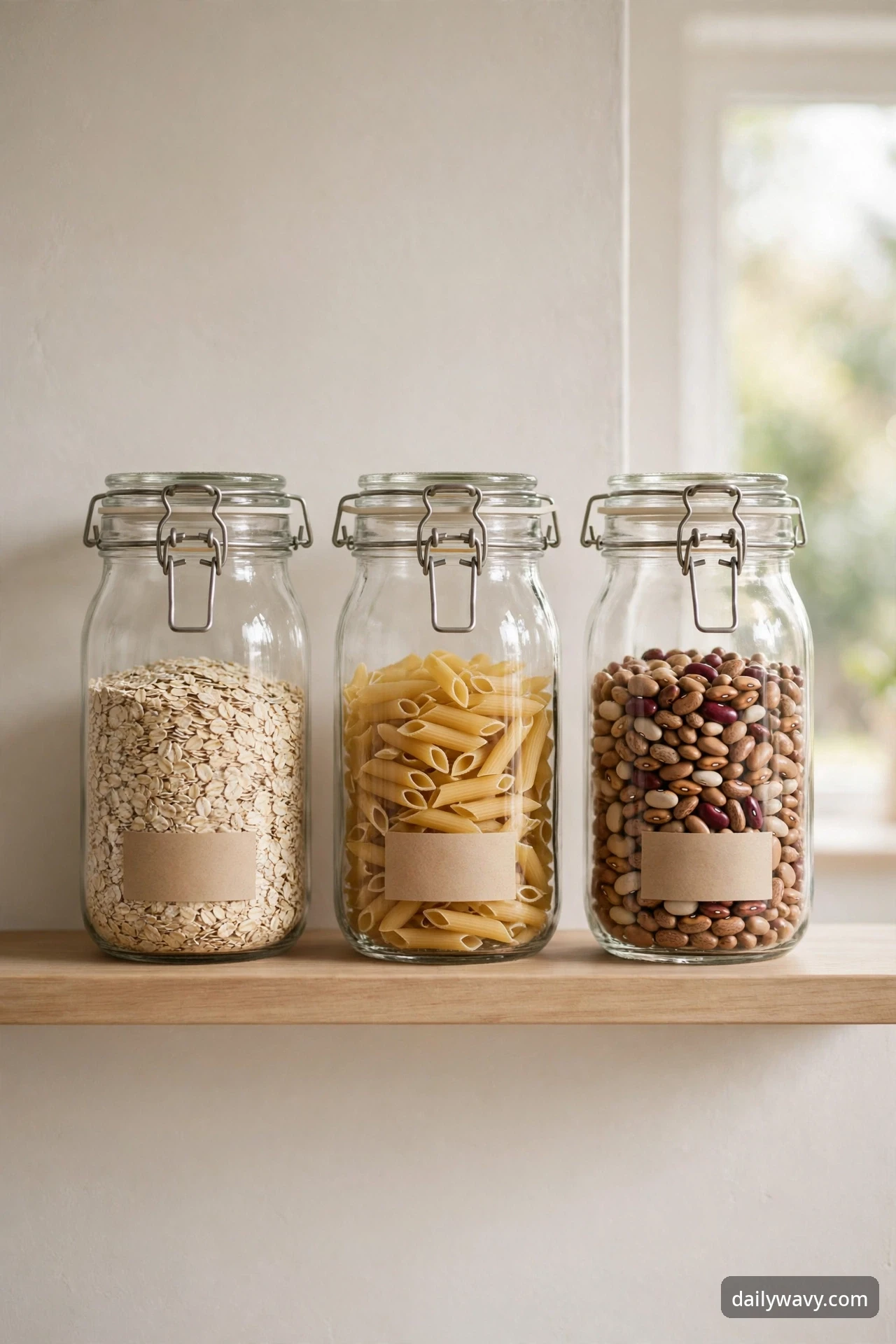
In a hardworking room, a useful shelf earns its place. A matched set of glass or ceramic jars holding everyday supplies turns storage into display: coffee beans and sugar in the kitchen, cotton balls and bath salts in the bathroom, paper clips and washi tape in a craft corner. When the containers are beautiful, you stop hiding them in cabinets.
Choose jars 4 to 8 inches tall with airtight lids, and keep the set to three or four pieces in one material family. Clear glass shows contents, which looks great with layered dry goods like oats, pasta, or colorful bath salts. Label the fronts with small, neat tags if the contents are not obvious. Line them up with half an inch between each, tallest in the middle or at the back if the shelf is deep enough for two rows.
In bathrooms, moisture tolerance rules everything: use glazed ceramic, glass, or sealed stainless steel, and avoid raw wood lids that swell in steam. Keep anything you use daily within easy reach, and reserve the shelf for the pretty version of supplies you actually touch. A set of filled jars can weigh 10 to 15 pounds, so distribute the weight across the shelf and over the brackets, and confirm the mounting before loading up.
Troubleshooting tip: If the jars look cluttered instead of curated, remove one. Three matching jars read as a set; five start to read as a collection, and the line between them is thinner than you think.
10. A plate displayed upright
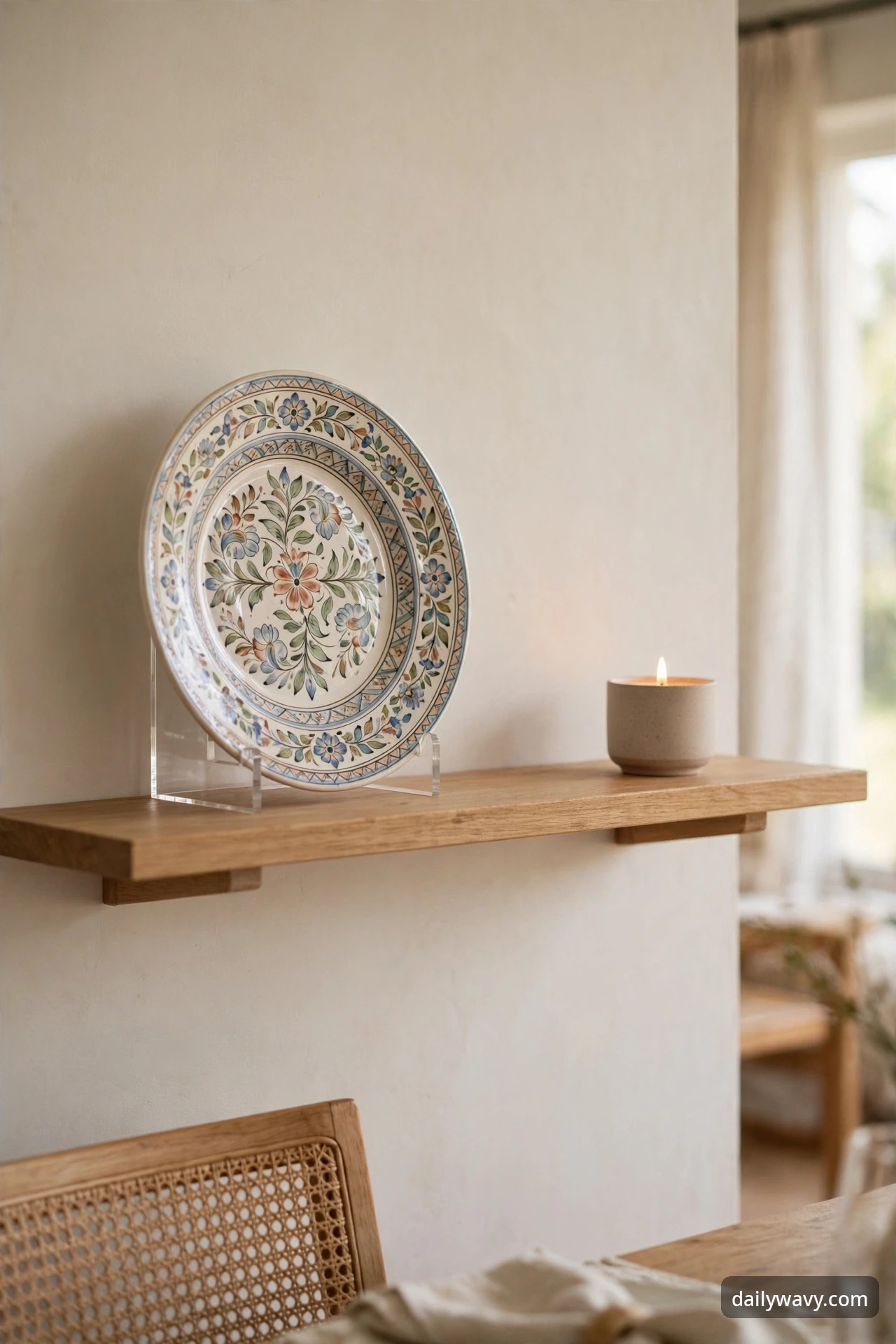
A single beautiful plate, stood upright like art, gives a shelf a gallery feel. Decorative plates with hand-painted patterns, interesting glazes, or vintage transferware deserve to be seen face-on, and a shelf is the perfect low-commitment gallery wall. No nails in a pattern, no heavy frames, just one plate catching the light.
Use a plate 8 to 12 inches in diameter and a proper plate stand or a small easel rated for its weight, not a leaning-against-the-wall gamble. Wire stands disappear visually; clear acrylic stands look modern. Place the plate toward one end of the shelf with a small object, a candle or a tiny plant, on the other end for balance. Keep the plate at least 2 inches from the shelf edge and out of high-traffic bump zones like hallway corners.
In kitchens, this is the place for the heirloom platter or the handmade ceramic piece you actually love; keep everyday dishes in cabinets. A large ceramic plate weighs 2 to 4 pounds, light enough for any solid mounting. For extra security in homes with kids or pets, add a small museum-gel dot under the stand. Dust the plate monthly with a soft dry cloth, since upright pieces collect dust on their upper edges faster than flat ones.
Troubleshooting tip: If the plate slides or the stand wobbles, the shelf surface may be too slick. A small circle of museum putty under the stand solves it invisibly and keeps the plate put through door slams and passing feet.
11. A trio of small collectibles
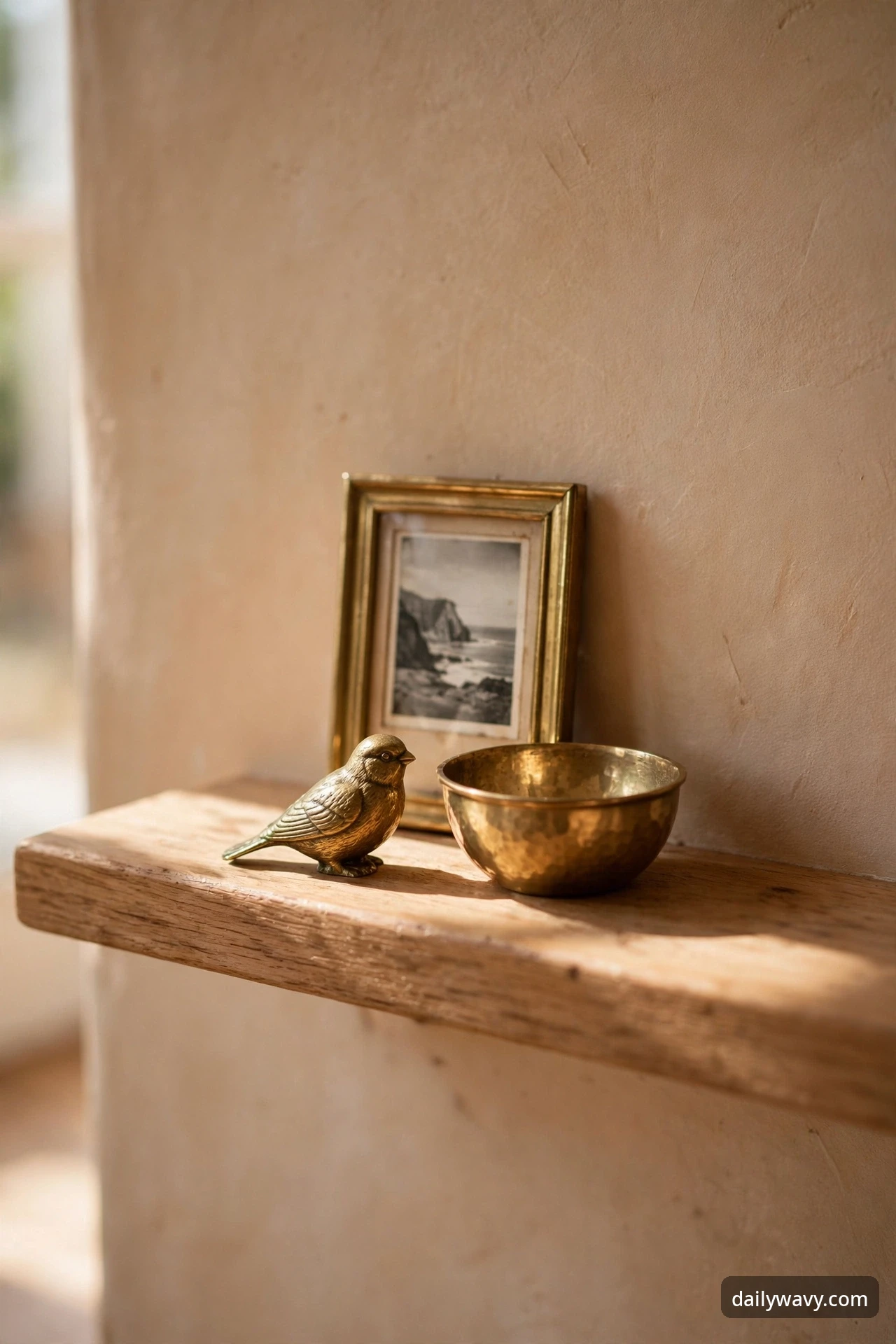
Three small objects of different heights, grouped tightly, form the classic styling triangle. A trio of collectibles, vintage cameras, small brass animals, ceramic birds, tiny framed miniatures, looks intentional in a way that two or four rarely do. Odd numbers please the eye, and three is the easiest odd number to get right.
Gather three pieces between 3 and 8 inches tall with something in common: same material, same color family, or same theme. Arrange them in a tight cluster with 1 to 2 inches between each, tallest at the back or center, shortest in front. The group should occupy no more than 10 inches of shelf width, keeping the composition compact enough to read as one unit from across the room.
This is the idea for the objects you already own and love but never knew where to put. In a living room, it might be travel souvenirs; in a bedroom, perfume bottles or small framed photos. Keep the total weight under 10 pounds and the group centered over a bracket. Dust trios with a soft brush rather than a cloth, since cloths snag on small detailed pieces. If you add a fourth object later, remove one first; the magic number is three.
Troubleshooting tip: If the trio looks scattered, push the pieces closer together until they nearly touch. Tight grouping reads as a collection; loose spacing reads as three unrelated objects that happen to share a shelf.
12. A leaning mirror on a secure ledge
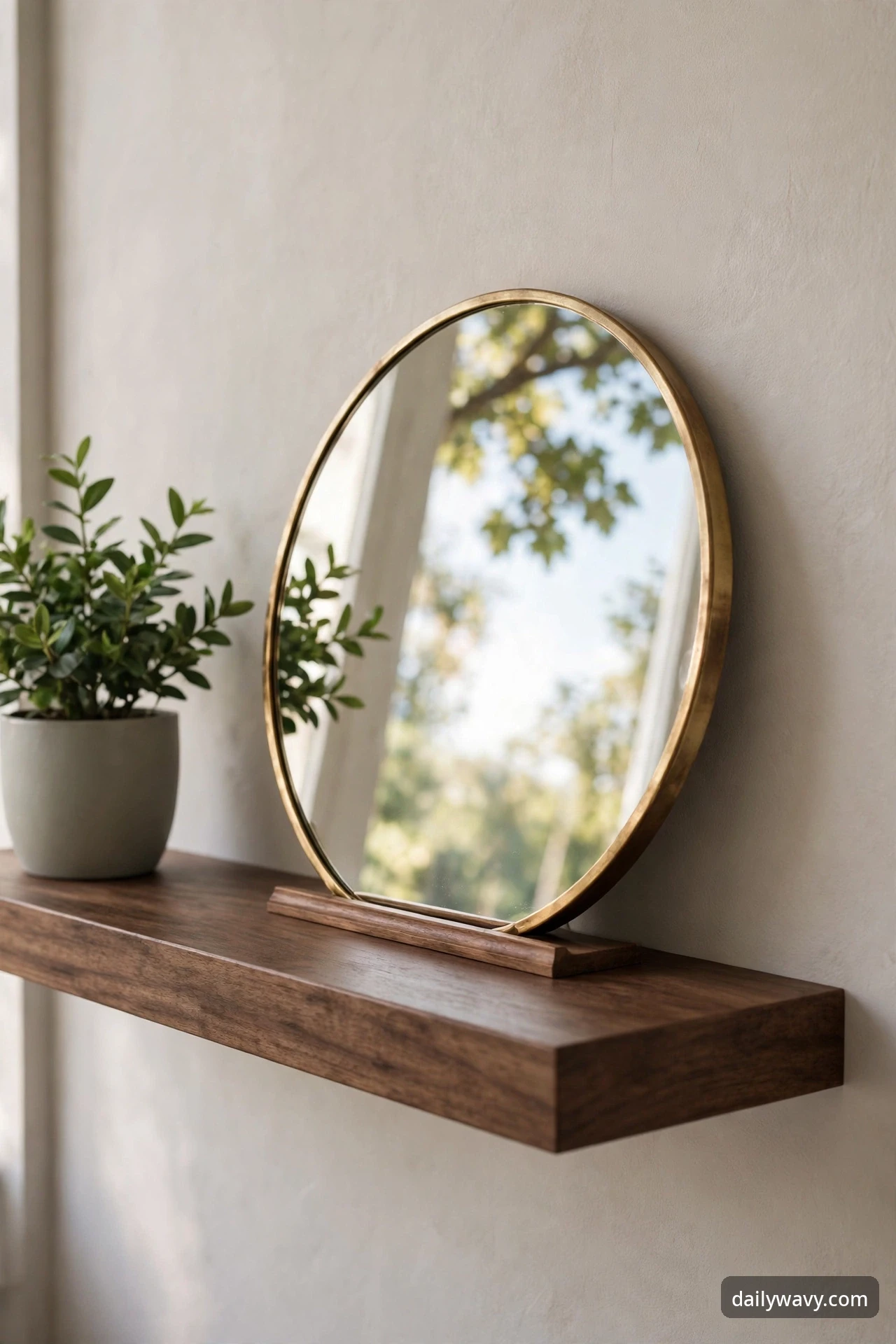
A leaning mirror makes a small corner feel brighter and adds depth to the display. A small to medium mirror rested against the wall on a deep floating shelf bounces daylight around the room and makes the shelf display feel fuller, since you see the arrangement and its reflection. It is a classic decorator trick for small, dark corners.
Choose a mirror 12 to 20 inches tall with a frame that suits the room, thin brass for modern spaces, distressed wood for farmhouse rooms. Lean it at a slight angle, about 5 to 10 degrees off vertical, with the bottom edge 2 to 3 inches from the wall. The shelf must be at least 8 inches deep so the mirror sits securely, and the mirror needs a small lip, a guard rail, or a strip of museum putty at its base so it cannot slide forward.
Safety first: never lean a heavy mirror on a shelf mounted only with drywall anchors. Stud-mount the shelf, keep the mirror’s weight under half the shelf’s rated load, and position it away from spots where children or pets bump the wall. In a bedroom, a leaning mirror above a dresser-height shelf doubles as a last-look check. In an entryway, it makes a narrow space feel wider. Clean it with a microfiber cloth and a spritz of glass cleaner, wiped in an S-pattern to avoid streaks.
Troubleshooting tip: If the mirror reflects an ugly ceiling or a blank wall, tilt it down a few degrees by pulling the top slightly forward. A small angle change completely changes the reflection, so adjust until it catches the window or the prettiest part of the room.
13. A lidded box and one flower stem

Restraint is a style, and nothing proves it like a lidded box with a single flower stem. One beautiful box, one stem in a slim bud vase beside it, and the shelf looks calm and considered. This idea works because it refuses to try hard, and the simplicity makes both objects look more expensive than they are.
Pick a box 6 to 9 inches wide in lacquer, marble, or woven texture, and a bud vase no taller than 8 inches. A single stem, a eucalyptus sprig, a ranunculus, a dried palm spear, goes in the vase with just enough water to cover the cut end. Set the two pieces 3 to 4 inches apart, slightly off-center on the shelf, with plenty of empty space around them. The emptiness is doing half the work.
This is the perfect bedroom or bathroom shelf, calm and uncluttered where you start and end your day. In a bathroom, choose a sealed box and a faux or dried stem so steam never becomes a problem. Refresh real stems weekly and wipe the vase to prevent water rings on the shelf. The whole arrangement weighs under 5 pounds, making it safe for any properly mounted shelf, and it takes thirty seconds to reset when life gets messy.
Troubleshooting tip: If one stem looks sparse, resist adding a second. Instead, choose a stem with more presence: a branching eucalyptus sprig or a stem with an oversized bloom fills the same visual space that two thin stems would.
14. A small clock between two book stacks
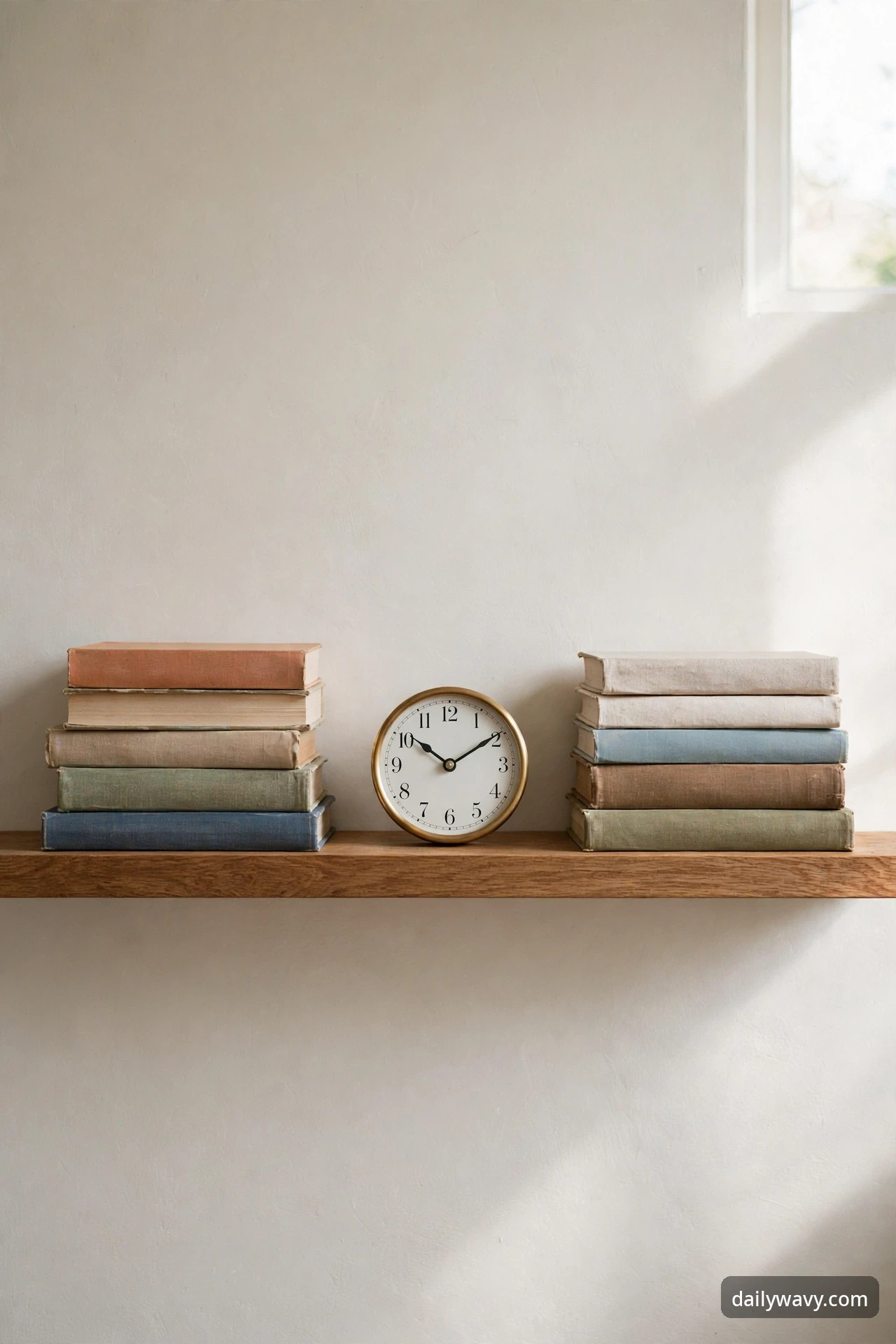
A clock gives a shelf a job. Flanked by two low stacks of books, a small analog clock becomes the centerpiece of a tidy, symmetrical composition that also happens to tell time. It suits home offices, kitchens, and bedrooms, anywhere a glance at the time feels natural and the symmetry feels calming.
Choose a clock 5 to 8 inches in diameter with a readable face, and stack three to four books on each side, each stack 4 to 6 inches tall. The stacks should be similar in height, within an inch of each other, so the clock sits in a balanced valley between them. Keep the whole arrangement centered on the shelf with 4 to 6 inches of clear space on each end.
Books plus a clock can reach 15 to 20 pounds, so center the full arrangement over the brackets and confirm stud mounting. In a kitchen, keep this shelf away from stove steam and use wipeable book covers or decorative boxes that look like books. Set the clock a minute fast if you like the old trick, and change the battery when daylight saving time rolls around so the shelf never tells the wrong story. A ticking clock adds gentle life to a quiet room; choose a silent-sweep movement for bedrooms.
Troubleshooting tip: If the clock face is hard to read from your usual seat, tilt it back slightly on a small wedge or choose a clock with a built-in stand angle. A clock you cannot read is just a decoration, and this one should earn its place.
Floating shelf styling FAQ
How much weight can a floating shelf actually hold?
A concealed-bracket shelf mounted into two wall studs typically holds 30 to 50 pounds, depending on the bracket system and shelf length. Shelves mounted only with drywall anchors hold far less, often under 15 pounds. Always check the manufacturer’s rating, mount heavy arrangements into studs, and center the weight over the brackets rather than near the shelf ends.
How far apart should two floating shelves be?
Leave 10 to 14 inches between shelves used for decor, which fits vases, frames, and small plants with breathing room. For bookshelves, allow 12 to 14 inches so books can be removed easily. Measure your tallest planned object first, then add 2 to 3 inches of clearance above it before fixing the upper shelf position.
What should I put on floating shelves in a bathroom?
Choose moisture-tolerant materials: glazed ceramic, glass, sealed stone, and stainless steel. Avoid raw wood, paper, and anything with iron that can rust. Rolled towels, lidded jars with bath supplies, and a small humidity-loving plant like a pothos all thrive. Wipe the shelf monthly, since steam leaves a film that dulls finishes over time.
How do I keep kitchen floating shelves useful instead of just pretty?
Store what you reach for daily: glasses, everyday bowls, cooking oils, and spices in matching containers. Keep the prettiest versions of useful things, not decorative items that gather grease. Wipe shelves weekly in kitchens, and avoid open paper or fabric near the stove where cooking residue settles fastest.
Why does my styled shelf still look cluttered?
Three fixes solve most clutter: remove one object, widen the gaps between groups to at least 6 inches, and check that everything shares a limited palette of two or three colors plus neutrals. If every object is a different color and height with no breathing room, the eye has nowhere to rest. Edit ruthlessly; the shelf should look good with less, not more.
Are floating shelves safe above a desk or a bed?
Yes, when they are mounted into studs with rated hardware and loaded within the weight limit. Keep heavy items like books centered over the brackets, avoid placing breakable objects directly above where someone sleeps or works, and check the mounting yearly by giving the shelf a firm tug. If it moves at all, unload it and remount before restyling.
A shelf worth looking at
Fourteen ideas, one shared secret: a floating shelf works when it is styled with intention and built with care. Pick the arrangement that fits your room, mount the shelf like you mean it, and leave a little empty space for the eye to rest. The result is a shelf that looks intentional and stays useful. For more small-space thinking, see our guides to small pantry organization and small entryway decor, and browse the full Home & Decor collection for ideas in every room.



2 Comments