15 Kitchen Windowsill Decor Ideas for an Organized Everyday Kitchen
The kitchen windowsill collects chaos by default: dish soap, a sponge, a tangle of chargers, a souvenir mug. It sits…
The kitchen windowsill collects chaos by default: dish soap, a sponge, a tangle of chargers, a souvenir mug. It sits in your line of sight all day, so even a little clutter there feels loud. Styled with intention, though, the same narrow ledge becomes the hardest-working surface in the kitchen. It catches daylight, holds the things you actually reach for, and never takes a square inch off the counter.
Below are 15 ideas for that hardworking little ledge, each with real measurements, materials, and placement guidance. Nothing here blocks ventilation or crowds your prep space, and every idea suits kitchens that get splashed and wiped down daily, except the lamp, which is labeled for dry spots only.
Jump to an idea
- 1. A Washable Mat Under Frequently Used Items
- 2. A Small Framed Print Set Safely Back
- 3. A Slim Basket For Packets Or Cloths
- 4. A Lidded Container With A Clean Silhouette
- 5. A Compact Tiered Shelf
- 6. A Pitcher Paired With A Low Bowl
- 7. A Narrow Rail For Light Utensils
- 8. A Single Decorative Vase
- 9. A Labeled Canister Grouping
- 10. A Towel Hook Close To The Work Zone
- 11. A Portable Caddy That Clears The Surface
- 12. A Small Lamp Only In A Dry Safe Area
- 13. A Closed Box For Visual Clutter
- 14. An Empty Landing Area Beside The Essentials
- 15. A Shallow Tray Grouping Everyday Essentials

Read your windowsill before you buy anything
Before anything lands on the sill, take two minutes to measure it. Most kitchen windowsills are 4 to 8 inches deep and 24 to 60 inches wide, but yours might be narrower or deeper. Measure depth from the window frame to the front edge, and width inside the trim. Anything you place should sit at least an inch back from the front edge so a bumped elbow does not send it into the sink.
Also note what lives behind the sill. If the window opens inward, keep the bottom third clear so the sash clears your items. If the sill sits above a sink, assume daily splashes and steam, and choose materials that survive water. And check the sunlight: a south-facing sill that bakes all afternoon will fade paper art and scorch delicate plants, while a north-facing one stays gentle. With those three facts (depth, clearances, light) in hand, every idea below is easy to adapt.
1. A Washable Mat Under Frequently Used Items
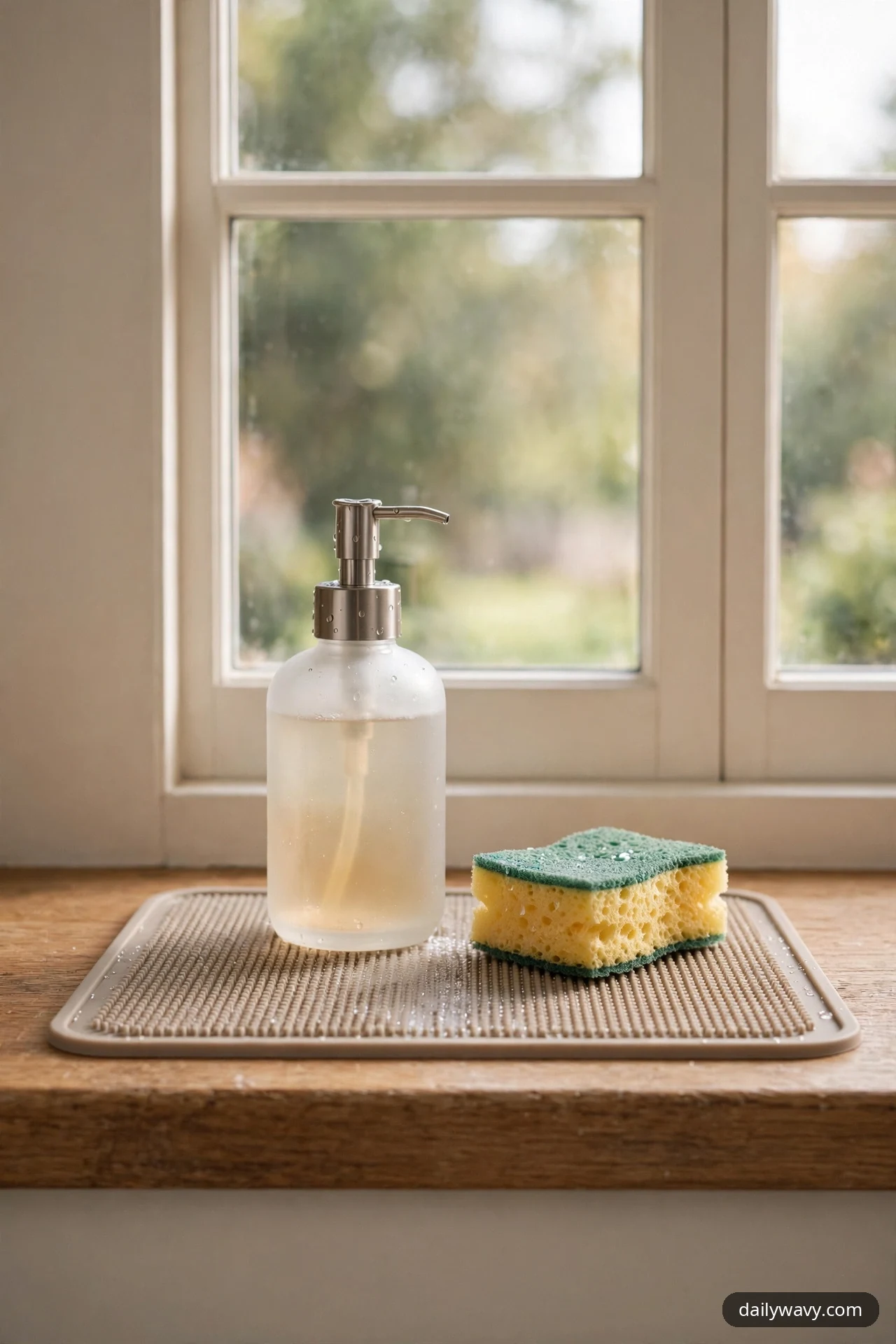
A washable mat is the single smartest upgrade a kitchen sill can get. Dish soap, hand lotion, and a sponge sit on the sill all day, and every drip lands on paint or wood that eventually spots and swells. A mat turns that into a quick cleanup.
What to measure: Cut or buy the mat to cover the item zone, keeping it 1 inch back from the front edge so water runs off the mat edge rather than pooling under it.
Materials: A silicone or microfiber dish-drying mat, 1/4 inch thick, in a neutral color. Silicone rinses clean and dries fast; microfiber absorbs and machine-washes. Avoid fabric mats without a waterproof backing above a sink.
Placement: Center it under the soap dispenser and sponge, back against the window frame. Keep it flat, never curled at the edges.
Approximate effort: Ten minutes including a wipe-down of the sill first.
Lower-cost alternative: A flat sheet pan or a folded cotton tea towel works for a week or two while you decide on a mat.
2. A Small Framed Print Set Safely Back
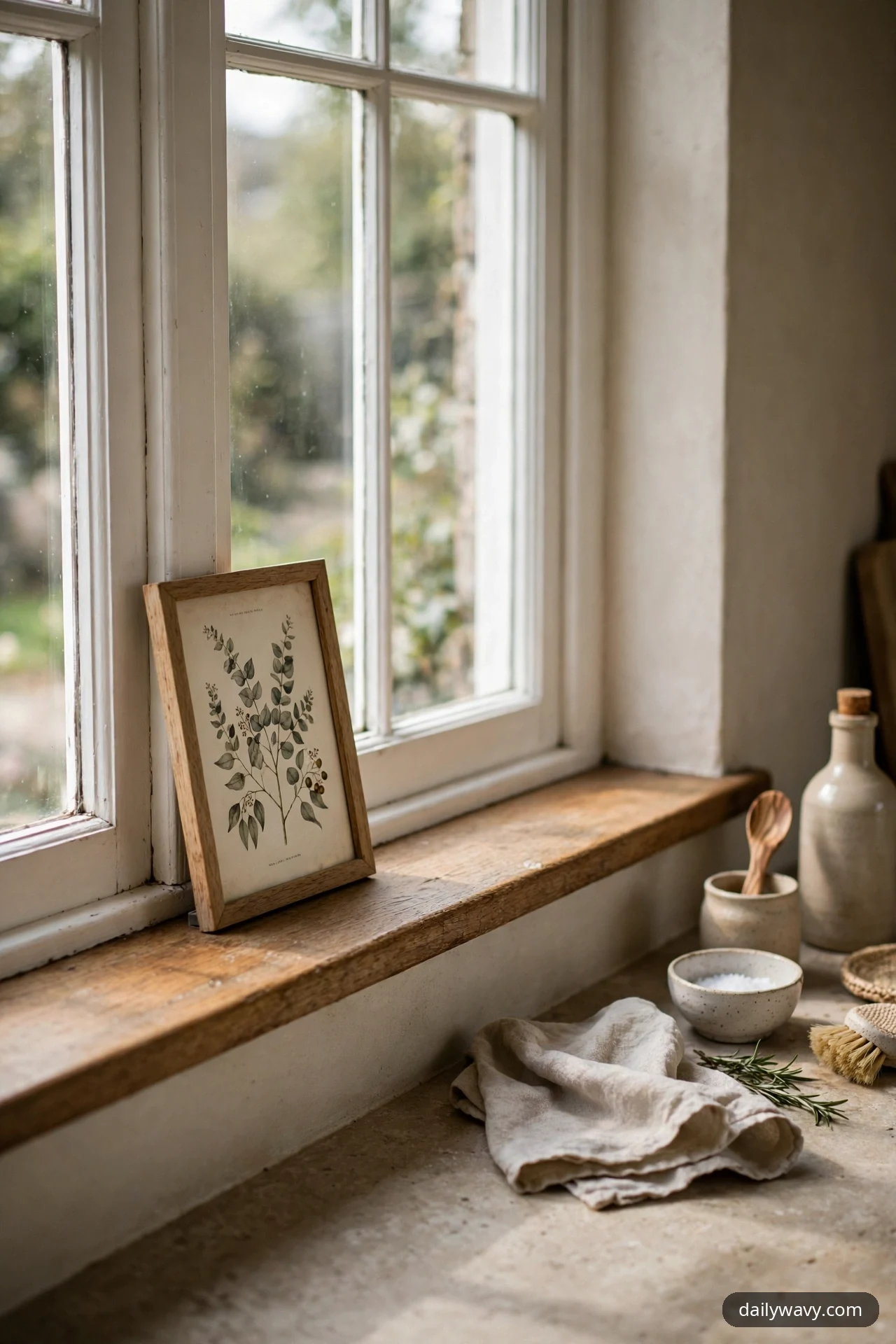
A small framed print turns a workhorse sill into something you actually enjoy looking at. A vintage botanical, a hand-lettered market sign, a black-and-white photo of your grandmother’s kitchen, all of them belong here if you treat moisture as the enemy and frame accordingly.
What to measure: Keep the frame 5 inches wide or less and check your sill depth first; the frame’s back edge should sit against the window frame and its face at least 1 inch from the sill’s front edge.
Materials: A small wood or metal frame with glass or acrylic glazing. Glass reads better and wipes clean. Skip open-backed canvas above a sink, since steam warps it over time.
Placement: Set it at the far end of the sill, away from the faucet, angled slightly toward the room. If the sill is above a range, skip this idea entirely and save the print for a calmer spot.
Approximate effort: A few minutes to place everything, which is the whole point.
Lower-cost alternative: Prop a postcard or a recipe card in a plate stand you already own.
3. A Slim Basket For Packets Or Cloths

Tea packets, sauce sachets, seasoning envelopes, and the lint roller of the kitchen (that one cleaning cloth) all migrate to the windowsill. A slim basket gives them one home and makes the difference between “collected” and “strewn.”
What to measure: Look for a basket 3 to 4 inches wide and 6 to 10 inches long, no taller than 5 inches, so it stays below the window sightline.
Materials: Woven seagrass, rattan, or a lined wire basket. Sealed or lacquered weaves wipe clean. Unsealed rattan above a sink absorbs moisture, so keep it at the dry end of the sill.
Placement: Line packets upright like files, labels facing out. Place the basket at one end of the sill to create a bookend for the rest of the arrangement.
Approximate effort: About fifteen minutes to sort, toss the expired packets, and load the basket.
Lower-cost alternative: A clean, empty soup can with the label removed, or a small paper bag folded down to size.
4. A Lidded Container With A Clean Silhouette
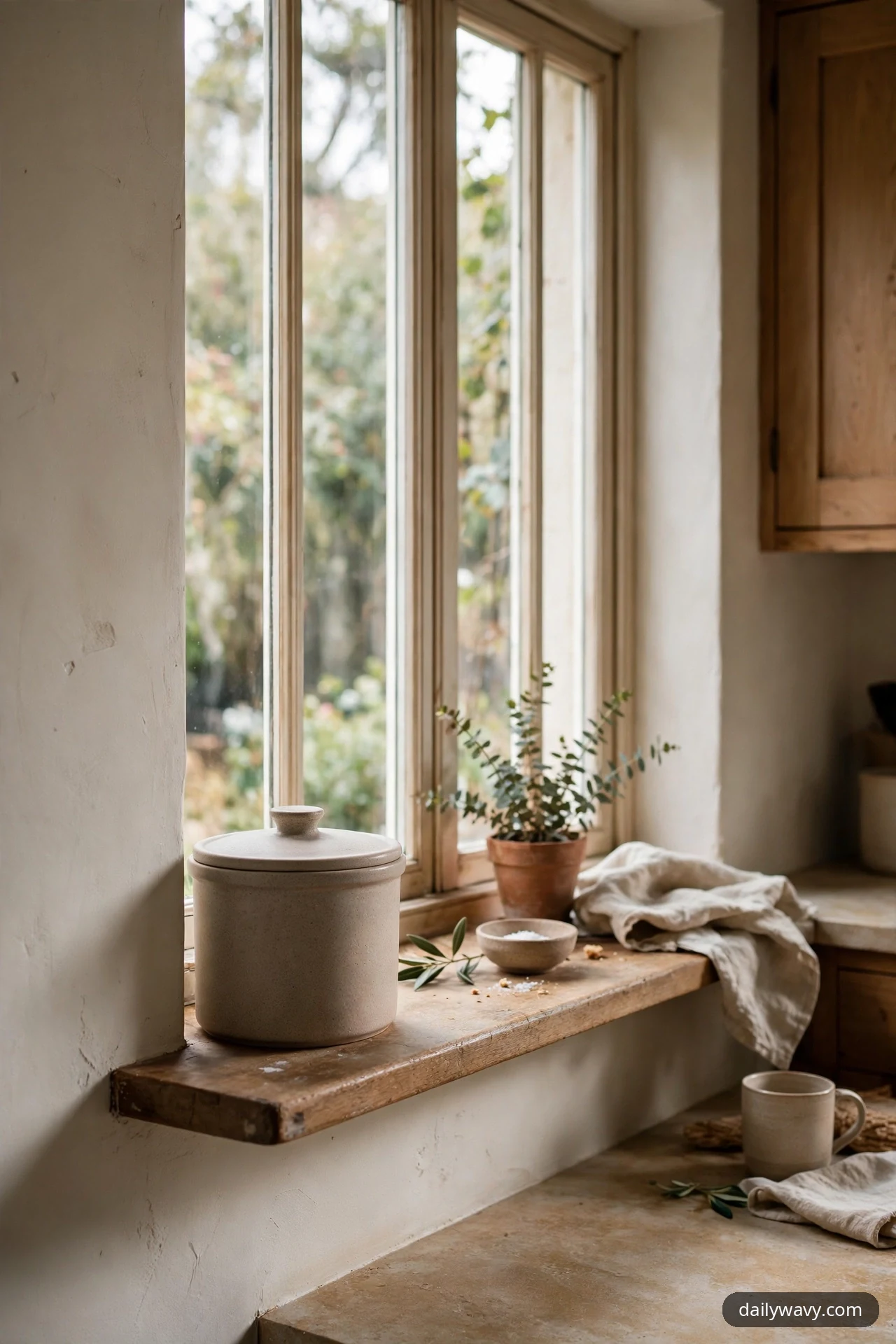
Every kitchen has those small things that need to live near the sink but look terrible doing it: the garbage disposal tool, dishwasher tablets, the spare sink stopper. A lidded container with a clean silhouette swallows them all and reads as decor.
What to measure: Choose a container 4 to 6 inches tall and wide enough for your sill depth minus 2 inches, so the lid clears the window trim above.
Materials: Stoneware, enameled steel, or matte ceramic with a fitted lid. These materials rinse clean and do not absorb odors. Avoid unfinished wood near water.
Placement: Center it as the anchor of one end of the sill. If you open it daily, leave 3 inches of clearance above for your hand.
Approximate effort: About ten minutes to decant the clutter into it and wipe the sill.
Lower-cost alternative: Any clean glass jar with a tight lid, like a large pickle jar, grouped with one smaller jar.
5. A Compact Tiered Shelf
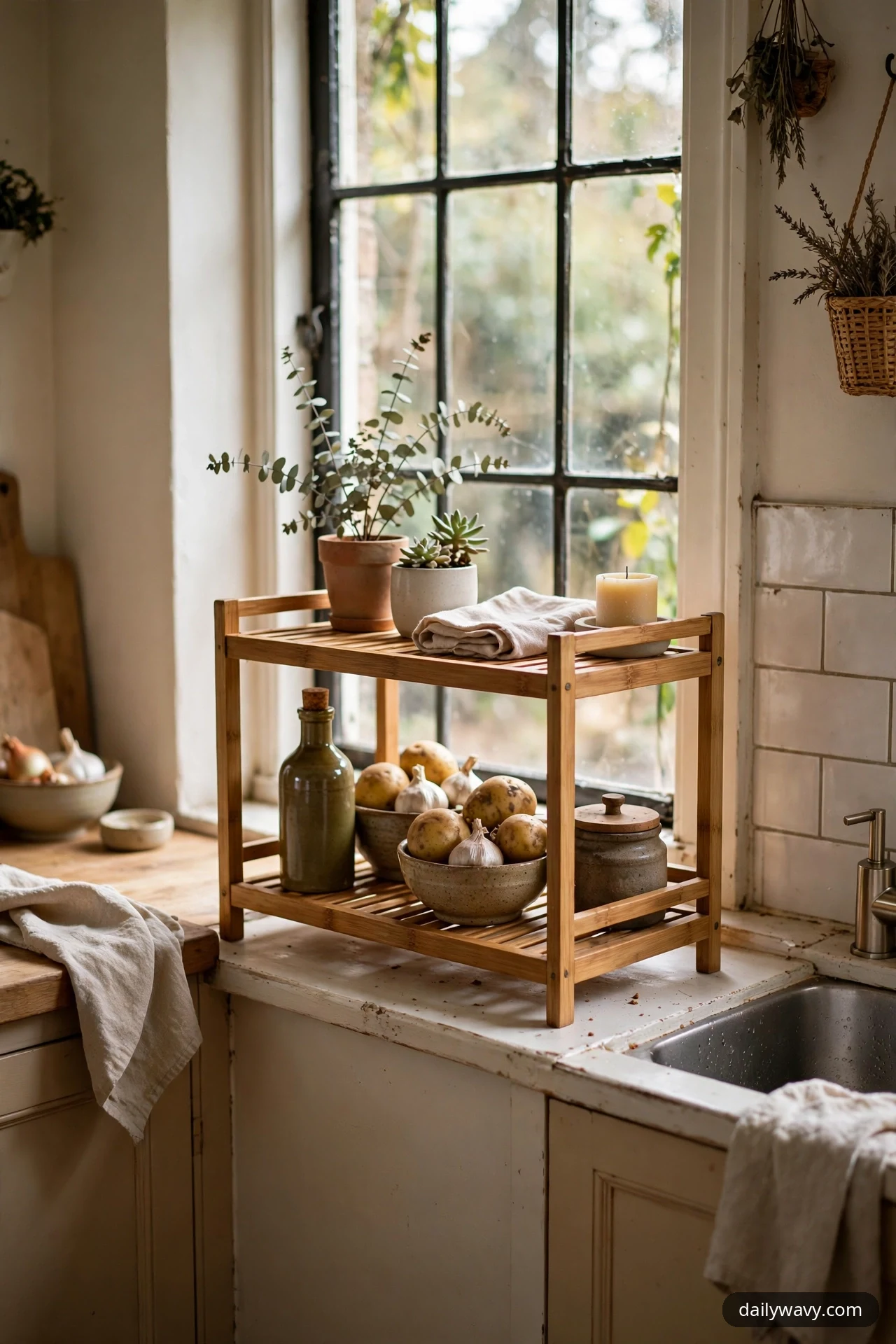
A compact two-tier shelf doubles the sill’s usable space without widening its footprint. It is the classic solution for narrow sills where you want both decor and function in the same 6 inches of depth.
What to measure: Look for a shelf 4 to 5 inches deep, 10 to 14 inches wide, with 6 to 7 inches between tiers. Measure your window trim height too; the shelf must clear it with room to lift items out.
Materials: Bamboo, powder-coated metal, or sealed wood. Open wire frames let light through and dry fast. Solid boards collect dust underneath.
Placement: Set it back against the window frame. Put heavier items (a small plant pot, the soap) on the bottom tier and lighter, prettier things (a candle, a small frame) up top.
Approximate effort: About five minutes to assemble most folding designs, plus a few more to style.
Lower-cost alternative: A sturdy book turned on its side or a small wooden crate flipped upside down creates one raised level for free.
6. A Pitcher Paired With A Low Bowl
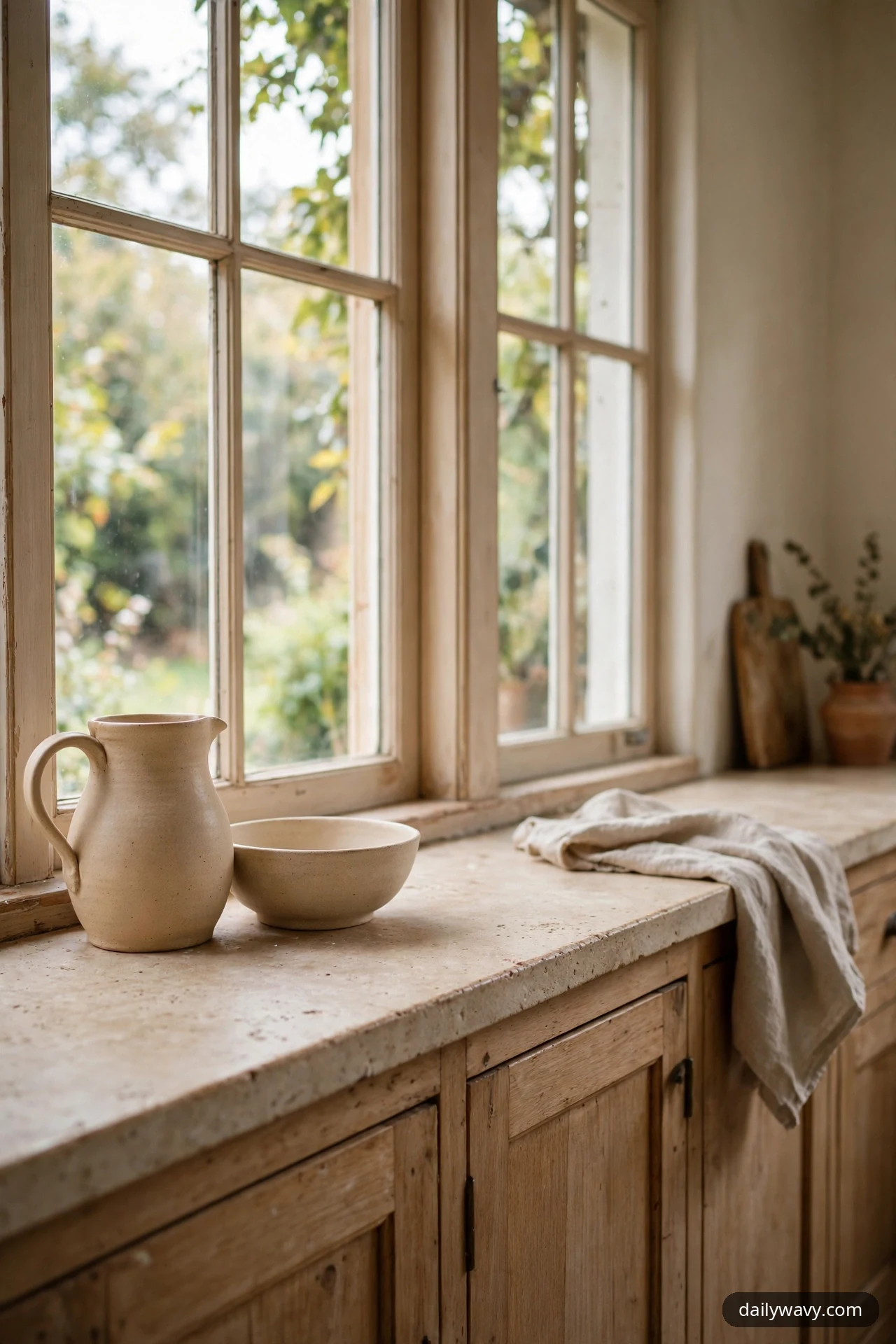
A pitcher with a low bowl beside it is the windowsill’s version of a still life, and it earns its place twice over. The pitcher can hold water for the table or a bunch of herbs, and the bowl catches keys, loose tea bags, or the odd lemon half.
What to measure: Keep the combined width under half your sill length, and check that the pitcher handle clears the window when you lift it.
Materials: Ceramic, stoneware, or glass. A matte glaze hides hard-water spots better than glossy. The bowl should be 2 to 3 inches deep, wide enough to catch what you actually toss in.
Placement: Group them touching or nearly touching at one end of the sill, pitcher behind and bowl in front, so the pair reads as one shape.
Approximate effort: No assembly. A few minutes of trial arrangement.
Lower-cost alternative: A mason jar and a cereal bowl you already own, in the same color family.
7. A Narrow Rail For Light Utensils
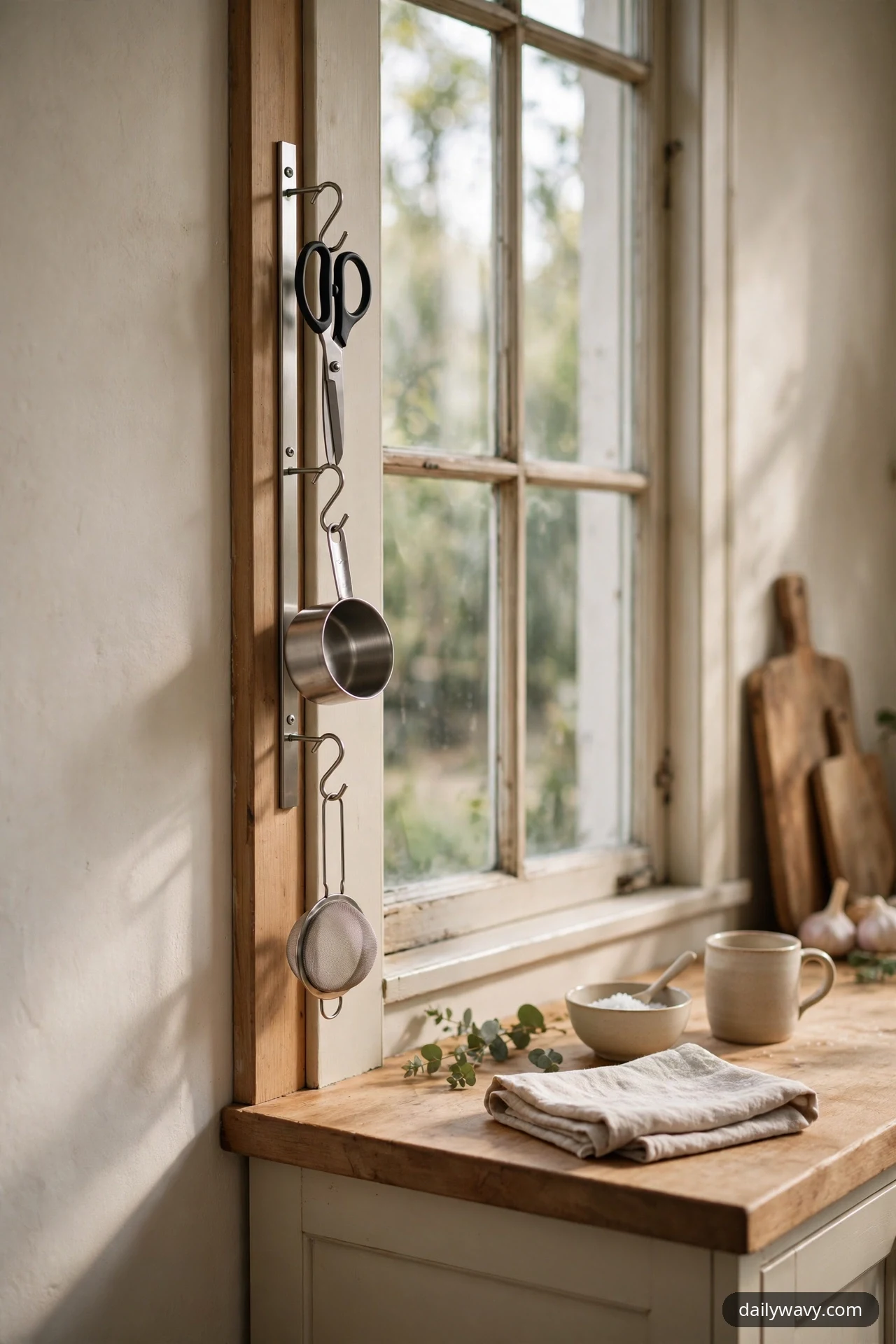
If your sill sits near a prep zone, a narrow rail mounted on the window frame or the wall just under the sill keeps light utensils, scissors, and measuring cups within reach and off the counter. It is the one idea here that genuinely adds storage.
What to measure: A rail 8 to 12 inches long with S-hooks holds 4 to 6 light items. Mount it on the side window trim or the wall below the sill, never on glass.
Materials: A stainless or brass rail with matching S-hooks, rated for a few pounds. For renters, a strong adhesive-mounted rail on the side trim avoids drilling.
Placement: Hang only light utensils: scissors, a measuring cup, a tea strainer. Keep the swing zone clear of the faucet and the window latch.
Approximate effort: About twenty minutes with a drill, or a few minutes with adhesive mounts rated for the load.
Lower-cost alternative: A strip of twine strung between two small adhesive hooks holds one or two light items.
8. A Single Decorative Vase
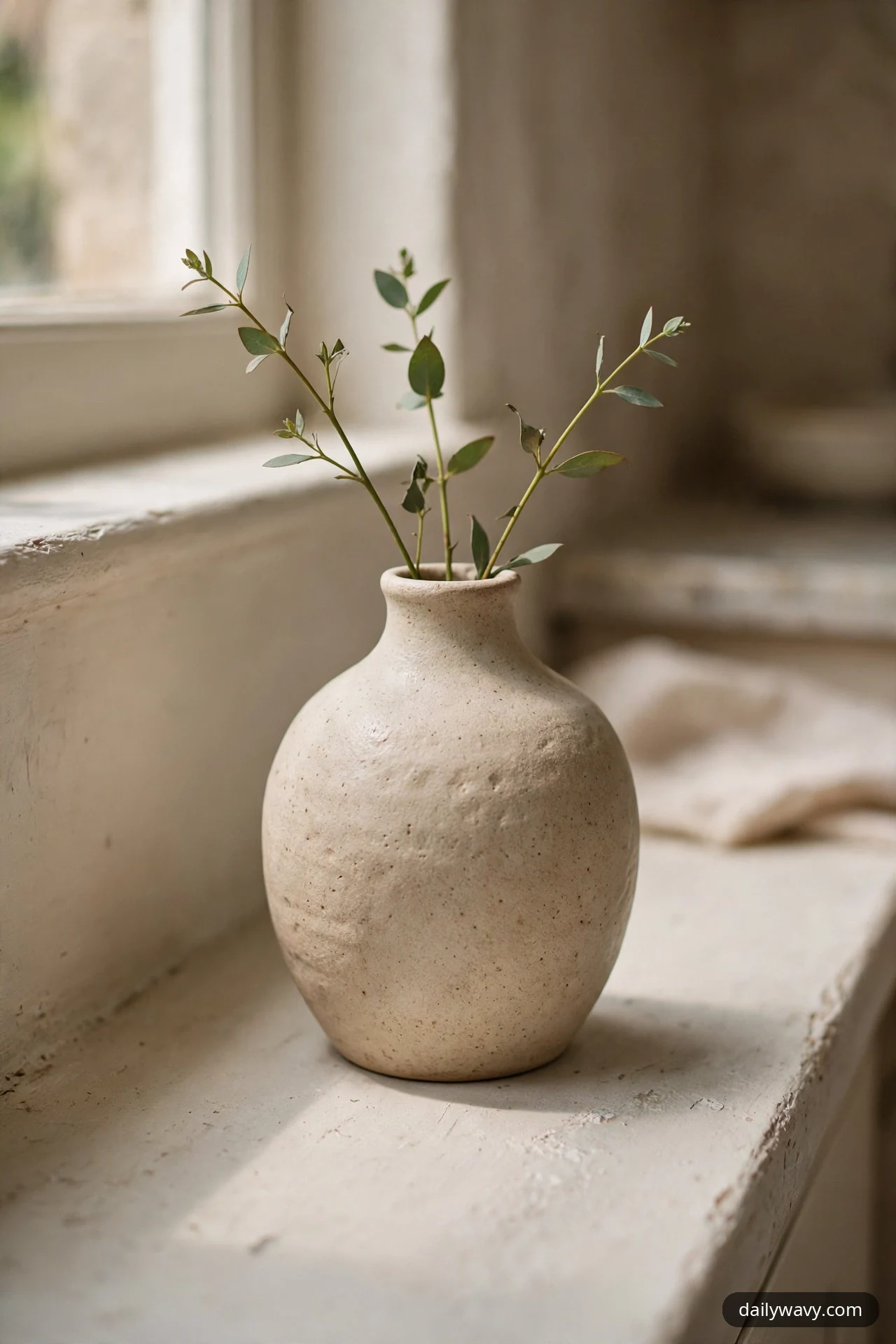
One vase, one statement. A single decorative vase on the sill adds height, color, and personality without a single extra object competing with it. Fresh herbs, a few stems from the garden, or nothing at all, all three work.
What to measure: The vase should be 6 to 10 inches tall, with a base no wider than half your sill depth. Taller than 10 inches risks tipping when the window is opened.
Materials: Ceramic, glass, or stoneware in a color that repeats something else in the kitchen, like the dish towels or a cabinet color.
Placement: Off-center, at one end of the sill, with nothing else within 4 inches. The empty space around it is what makes it look deliberate.
Approximate effort: A few minutes, most of it spent choosing which vase.
Lower-cost alternative: An empty wine bottle or a clean olive oil bottle with the label soaked off.
9. A Labeled Canister Grouping
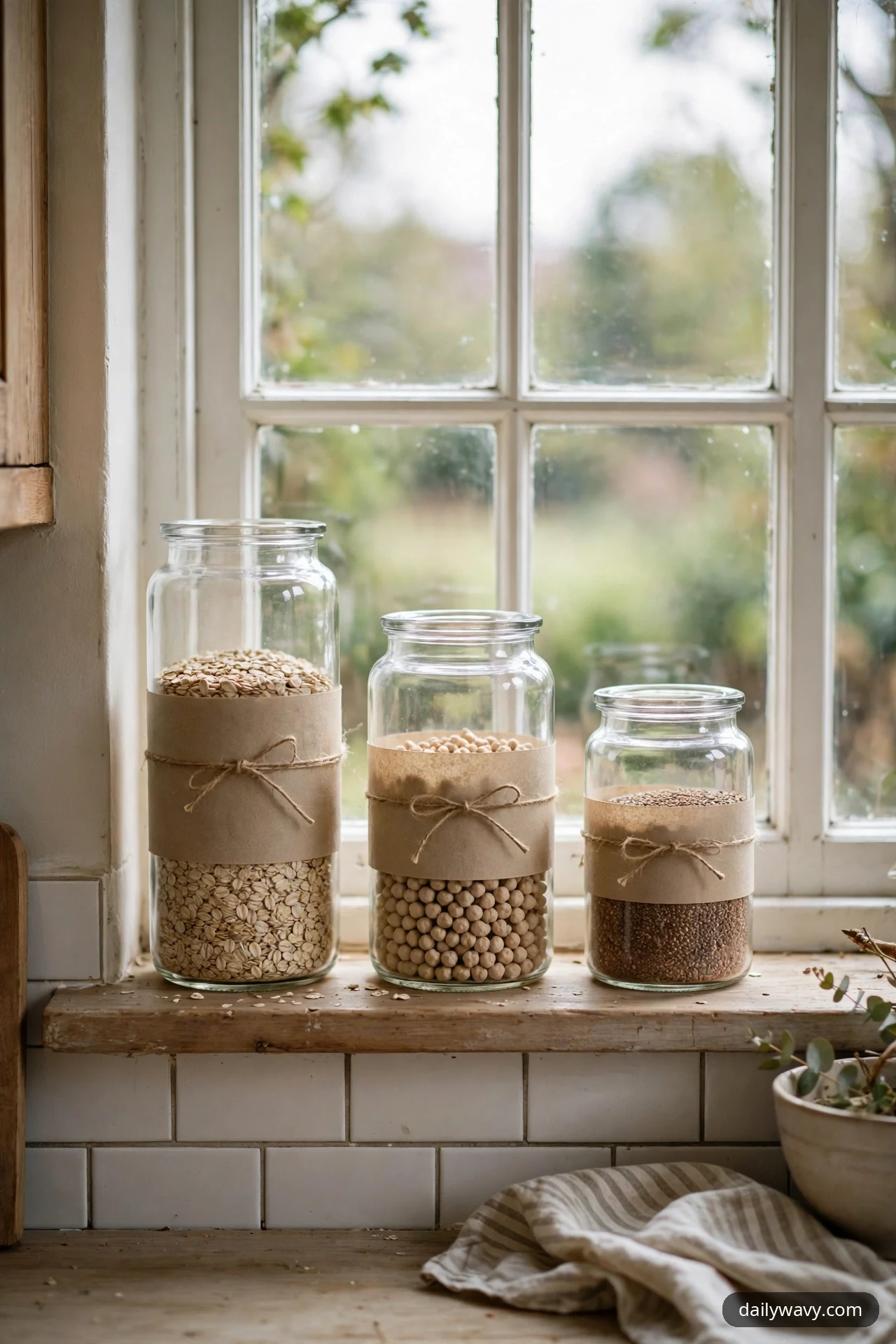
Flour, sugar, coffee, tea, the ingredients you grab every day deserve better than torn bags. A small grouping of labeled canisters on the sill keeps them sealed, visible, and genuinely pretty.
What to measure: Three canisters 4 to 5 inches in diameter fit a 24-inch sill with breathing room. Check the window clearance above for lids you lift straight up.
Materials: Glass with airtight lids for anything that goes stale (coffee, flour), ceramic for sugar and tea. Chalk or printed labels on the front, readable from 6 feet.
Placement: Line them in a row, tallest at one end stepping down, labels facing the room. Keep them at the end of the sill farthest from direct steam.
Approximate effort: About twenty minutes to decant, label, and wipe everything down.
Lower-cost alternative: Three matching glass jars with masking-tape labels written in your best handwriting.
If the canister habit outgrows the sill, the same decant-and-label approach scales up in our deep pantry shelf organization ideas, which use clear airtight containers for everyday dry goods.
10. A Towel Hook Close To The Work Zone
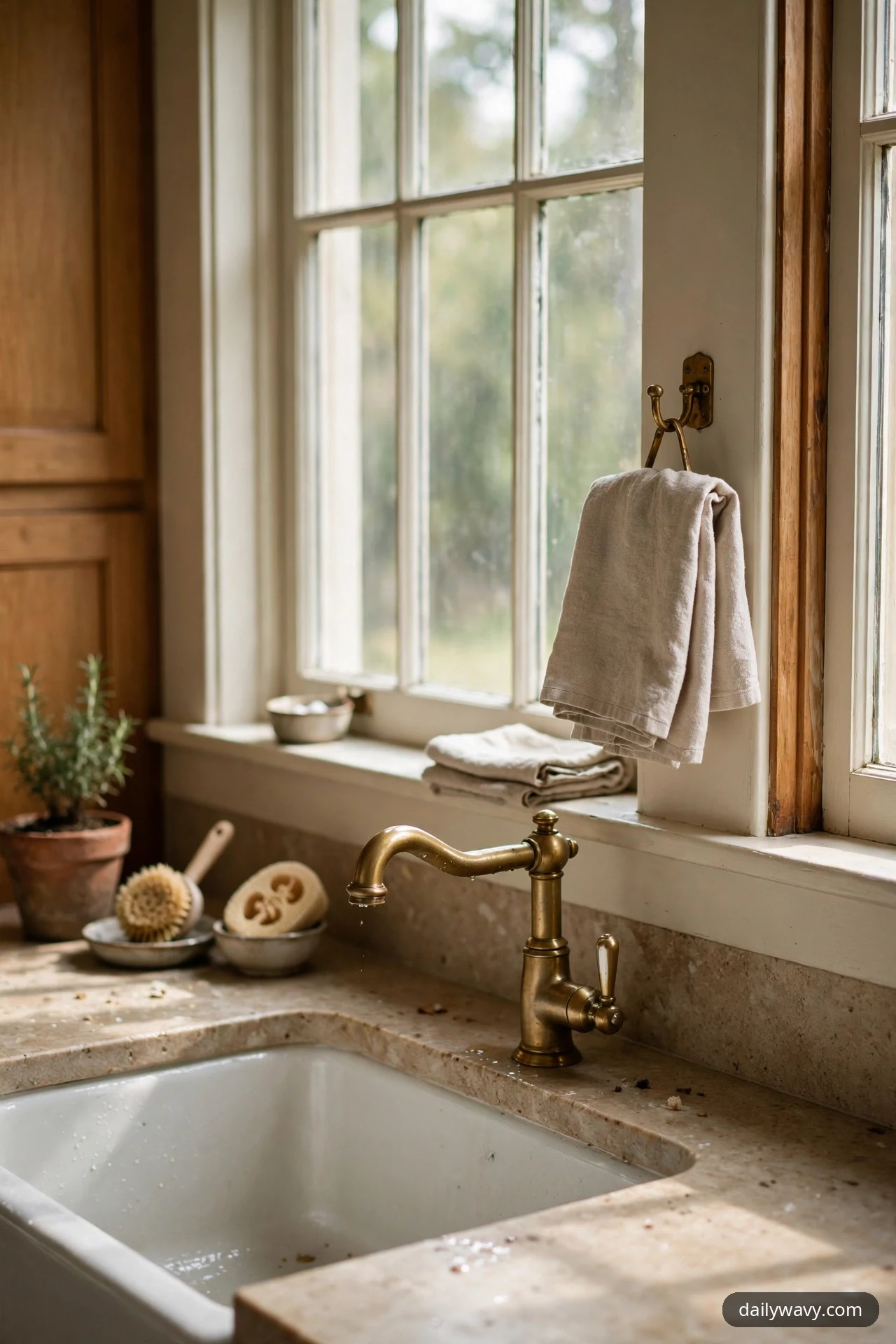
The sill above the sink is exactly where your hands drip, so a towel hook close to the work zone is pure function wearing a decor costume. A small brass or wood hook on the side trim holds the hand towel right where it gets used.
What to measure: A single hook needs a 2-inch square of flat trim or wall. Hang it so the towel’s bottom clears the counter by at least 4 inches.
Materials: Solid brass, matte black metal, or sealed wood. Avoid raw iron, which rusts in the damp zone. Adhesive hooks work for renters if rated for wet towels.
Placement: On the side window trim, not the sill itself, within arm’s reach of the faucet. One hook, one towel. A second towel goes on the oven handle.
Approximate effort: About ten minutes with a screwdriver, or a couple of minutes with an adhesive mount.
Lower-cost alternative: A suction-cup hook on the window glass, kept well away from the sash.
11. A Portable Caddy That Clears The Surface

A portable caddy is the windowsill’s reset button. Dish brush, sponge, soap, and the scrub pad live in the caddy during the day; when you need the whole sill for drying or a project, you lift the caddy and the surface is clear in one motion.
What to measure: A caddy 6 to 8 inches long, 4 inches deep, with a handle. Make sure it fits your sill depth with the handle clearing the window.
Materials: Powder-coated wire, plastic with drainage holes, or sealed bamboo. Drainage matters above a sink; a solid-bottom caddy turns into a puddle.
Placement: Dead center of the working zone, back against the frame. Everything you reach for while washing goes inside.
Approximate effort: A few minutes to load it from the scattered items it replaces.
Lower-cost alternative: A plastic shower caddy or a handled cleaning bucket you already own.
12. A Small Lamp Only In A Dry Safe Area

This idea comes with a hard rule, and it is in the name: a small lamp belongs on the sill only in a dry, safe area. Above a sink or next to a range, skip it. On a sill beside a dining nook or above a dry counter, a small lamp adds the warmest evening glow a kitchen can have.
What to measure: A lamp 8 to 12 inches tall with a base under 5 inches wide. Check the cord route first; it must reach an outlet without crossing the sink.
Materials: A ceramic or metal base with a fabric shade, LED bulb only (they run cool). Battery-operated LED lamps remove the cord question entirely.
Placement: At the far end of the sill, at least 24 inches from any faucet and away from steam. The shade’s bottom edge should sit above the sightline from the counter.
Approximate effort: A few minutes, plus deciding on the bulb warmth (2700K reads coziest).
Lower-cost alternative: A battery-operated candle in a glass hurricane, grouped with nothing else.
13. A Closed Box For Visual Clutter

Vitamins, spare batteries for the kitchen scale, the dog’s medication, the takeout menus you will absolutely sort tomorrow. A closed box on the sill hides the visual clutter that no amount of arranging can make pretty.
What to measure: A box 6 to 10 inches long, 4 to 5 inches deep, 3 to 4 inches tall. Low enough to sit under the window sightline.
Materials: Woven seagrass, lacquered wood, or matte metal with a fitted lid. If it lives near water, choose something that wipes clean.
Placement: At one end of the sill as a visual full stop. Inside, one small tray or divider keeps the box from becoming a second junk drawer.
Approximate effort: About fifteen minutes to gather the strays and assign them their box.
Lower-cost alternative: A shoebox wrapped in kraft paper or covered with a linen napkin.
14. An Empty Landing Area Beside The Essentials

The most radical idea on this list costs nothing: leave part of the sill empty. An empty landing area beside the essentials is where the just-washed produce drains, where the grocery bag gets set down, where the recipe book rests open. Every styled surface needs one blank zone to function.
What to measure: Reserve 8 to 12 inches of clear sill, roughly a third of a smaller window’s width. Protect it with nothing at all.
Materials: None. This is the idea that saves you money.
Placement: Between the working zone (soap, sponge) and the decorative end. Treat it as sacred; when it fills up, it is your signal to reset the whole sill.
Approximate effort: The discipline of putting things away, which is ongoing but free.
Lower-cost alternative: There is none cheaper than this, which is rather the point.
15. A Shallow Tray Grouping Everyday Essentials
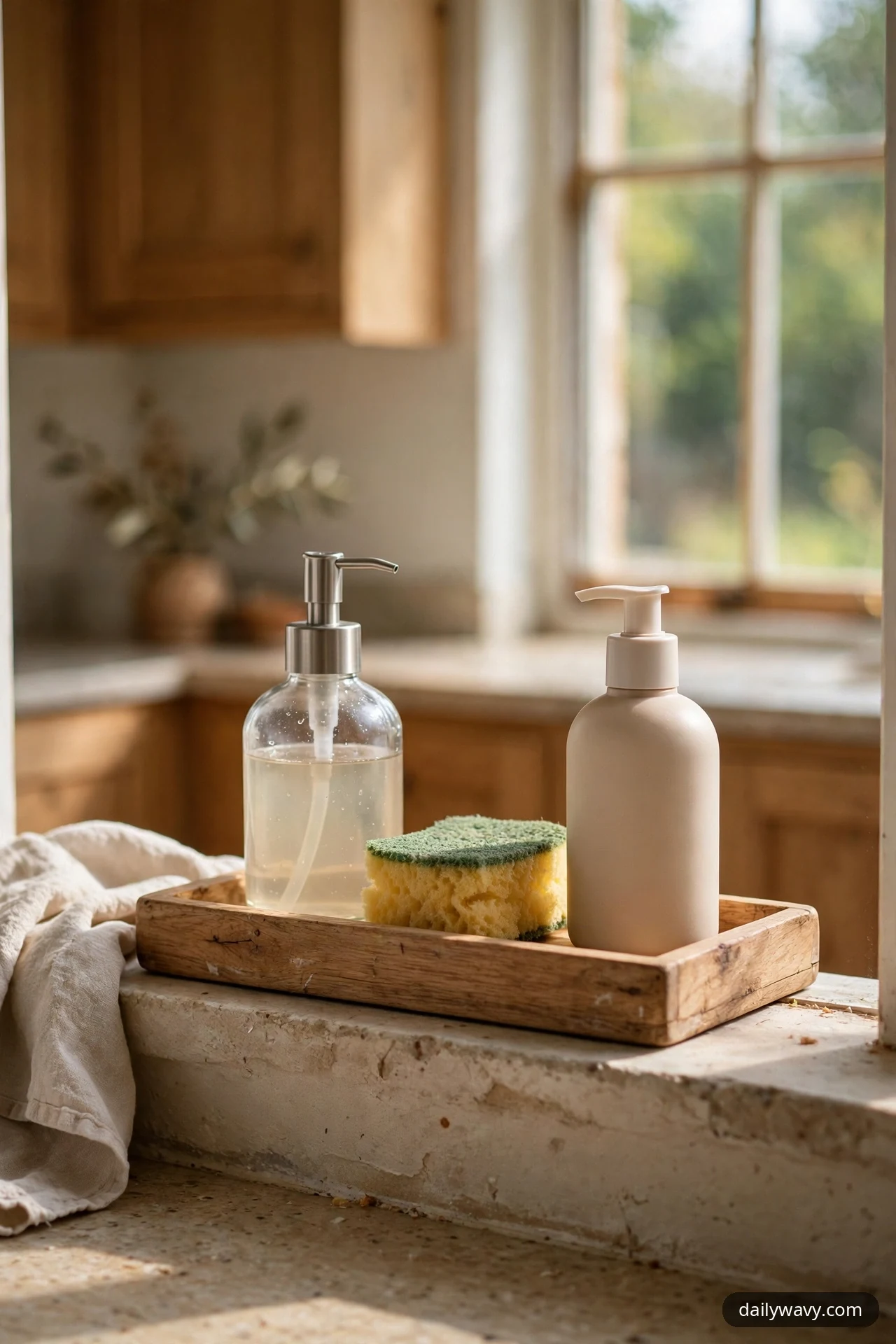
A shallow tray is the sill’s version of a drawer organizer. It corrals the soap, the sponge, and the lotion into one neat rectangle, and when the tray gets grimy you wash the tray instead of scrubbing the sill.
What to measure: A tray 8 to 12 inches long, 4 to 6 inches deep, with a 1 to 2 inch lip. Low lips make items easy to grab; high lips hide them.
Materials: Wood with a sealed finish, marble, or melamine. Unsealed wood stains above a sink; marble handles it beautifully but weighs more.
Placement: Center of the working zone, everything inside it, nothing beside it. If it overflows, the tray is too small, not the idea.
Approximate effort: A few minutes to gather the essentials into their new home.
Lower-cost alternative: A rimmed baking sheet or the lid of a storage box, lined with a tea towel.
Kitchen windowsill questions, answered
How deep should a windowsill be to decorate it?
Anything 4 inches or deeper works. Below 4 inches, stick to a single flat mat and wall-mounted hooks on the trim rather than objects that can be knocked off.
What should I never put on a kitchen windowsill?
Unsealed paper, open food, anything electrical near the sink, and heavy objects on a shallow sill. Keep the window’s opening path clear, and never block appliance ventilation with decor.
How do I keep the sill from getting grimy?
Wipe it weekly with a damp cloth, and use washable mats or trays under anything wet. That one habit does more than any product.
Will plants survive on a kitchen windowsill?
Herbs like basil and mint love a sunny sill, but they need watering on schedule and pots with drainage on a tray. If you forget plants, choose decor that forgives neglect instead.
I rent. What can I do without drilling?
Almost everything above: mats, trays, baskets, caddies, adhesive hooks, and suction hooks. Skip the mounted rail and screw-in towel hook, or ask your landlord first.
How often should I reset the sill?
Once a season is plenty. Pull everything off, wipe the sill, toss what migrated there, and put back only what earned its spot. About ten minutes, four times a year.
Style it once, enjoy it daily
The best kitchen windowsill is not a display shelf. It is a working ledge that happens to look good, because every object on it has a job and a measured home. Start with one idea from this list, the washable mat or the shallow tray are the fastest wins, and live with it for a week before adding the next. Your sill will never be the clutter magnet it used to be.
Small, intentional changes like these compound across the whole kitchen. If the windowsill project has you eyeing the rest of the room, our small pantry organization guide uses the same measure-first approach for tight spaces, and the small entryway decor ideas show how one styled surface can change how a whole room feels. For more room-by-room thinking, browse the Home & Decor collection.