18 Floating Nightstand Styling Ideas with Space for Your Essentials
A floating nightstand is one of the smartest small changes you can make beside your bed. It holds everything you…
A floating nightstand is one of the smartest small changes you can make beside your bed. It holds everything you reach for at night, water, a book, your phone, and it frees the floor underneath so the room feels lighter and cleaning takes less time. The trick is styling it well, because a wall-mounted shelf shows everything you put on it. Below are 18 complete styling ideas, each built around one clear move. Every idea tells you what to measure, what to buy, how to place it, and how much effort it takes, so you can recreate the look in an afternoon.
Jump to an idea
- A Leaning Frame Secured Against Slipping
- A Woven Basket Below The Surface
- A Tiny Plant Beside A Reading Light
- A Textured Runner Under A Lamp
- A Simple Glass Carafe On A Tray
- A Catchall Bowl In Matching Tones
- A Single Sculptural Accent
- A Framed Photograph With A Short Vase
- A Charging Area With Tidy Cable Routing
- A Tray Holding A Notebook And Pen
- A Pair Of Balanced Objects Of Different Heights
- A Soft Fabric Mat Beneath Essentials
- A Small Mirror With A Ceramic Vessel
- A Narrow Upright Book Arrangement
- A Shaded Lamp Beside A Small Tray
- One Flower Stem In A Low Vase
- A Stack Of Two Books
- A Lidded Box For Everyday Objects
Floating nightstand basics: measure before you style
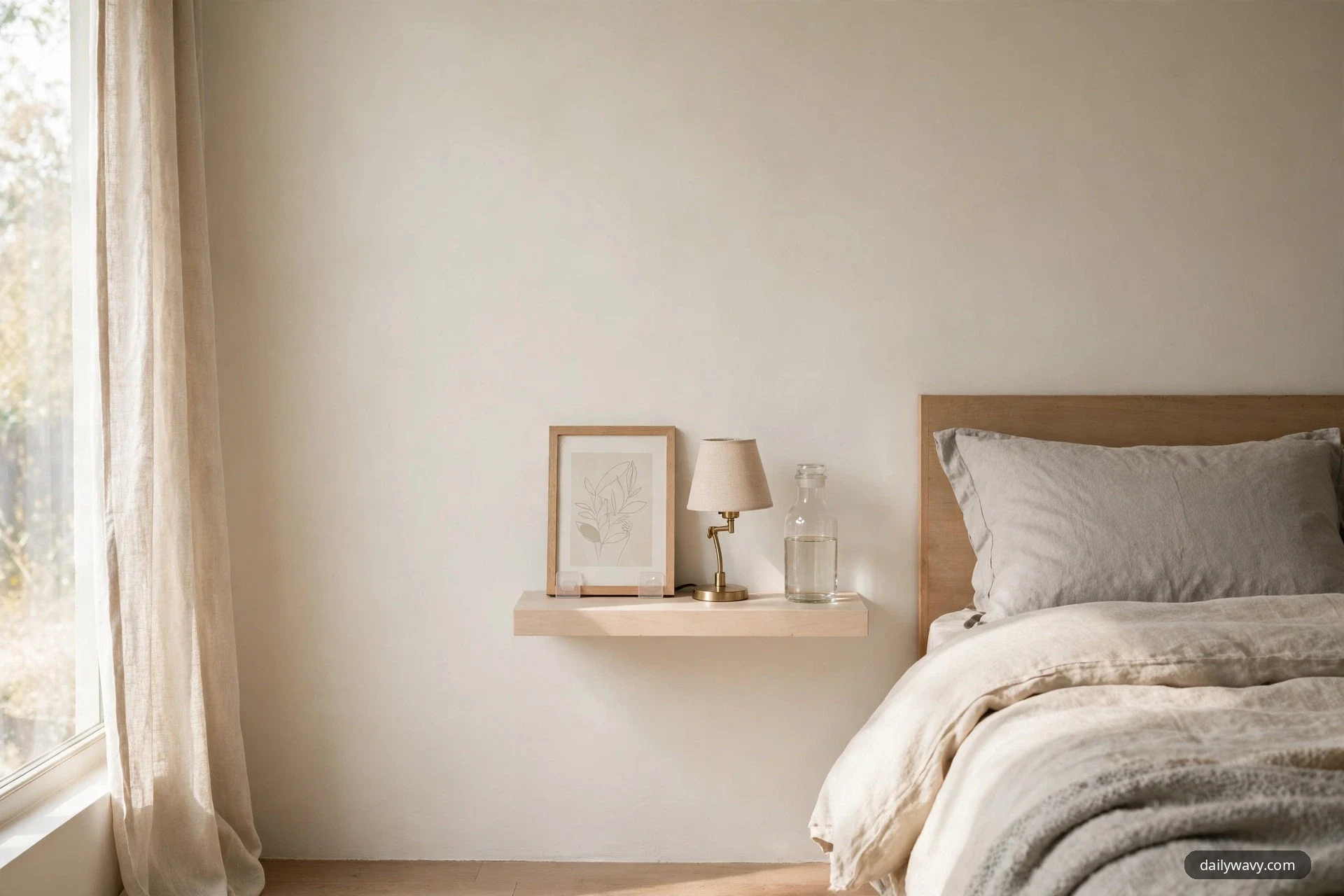
A floating nightstand works best when it is sized and hung for the way you actually use it. Start with the shelf itself. Most wall-mounted bedside shelves are 12 to 20 inches wide and 8 to 12 inches deep. Measure your mattress height, then hang the shelf so its top surface sits 4 to 6 inches above the mattress. That puts your phone and water within easy reach when you are half asleep, and nothing feels like a stretch.
Check the wall before you drill. A shelf that holds a lamp, books, and a water carafe can weigh 15 pounds or more, so it needs to anchor into a wall stud or into proper hollow-wall anchors rated for at least 25 pounds. If you are renting, look for a floating shelf with a French cleat or a no-drill adhesive mount rated for the load, and keep the styling light.
Leave the surface about one third empty. A nightstand crammed edge to edge looks cluttered and knocks things over in the dark. Pick two or three essentials, add one decorative piece, and stop. If you need the same kind of measured calm in the rest of the room, the ideas in our small bedroom with a queen bed guide pair well with everything here, and the balance principles from our narrow living room layout guide translate surprisingly well to bedside styling.
1. A Leaning Frame Secured Against Slipping
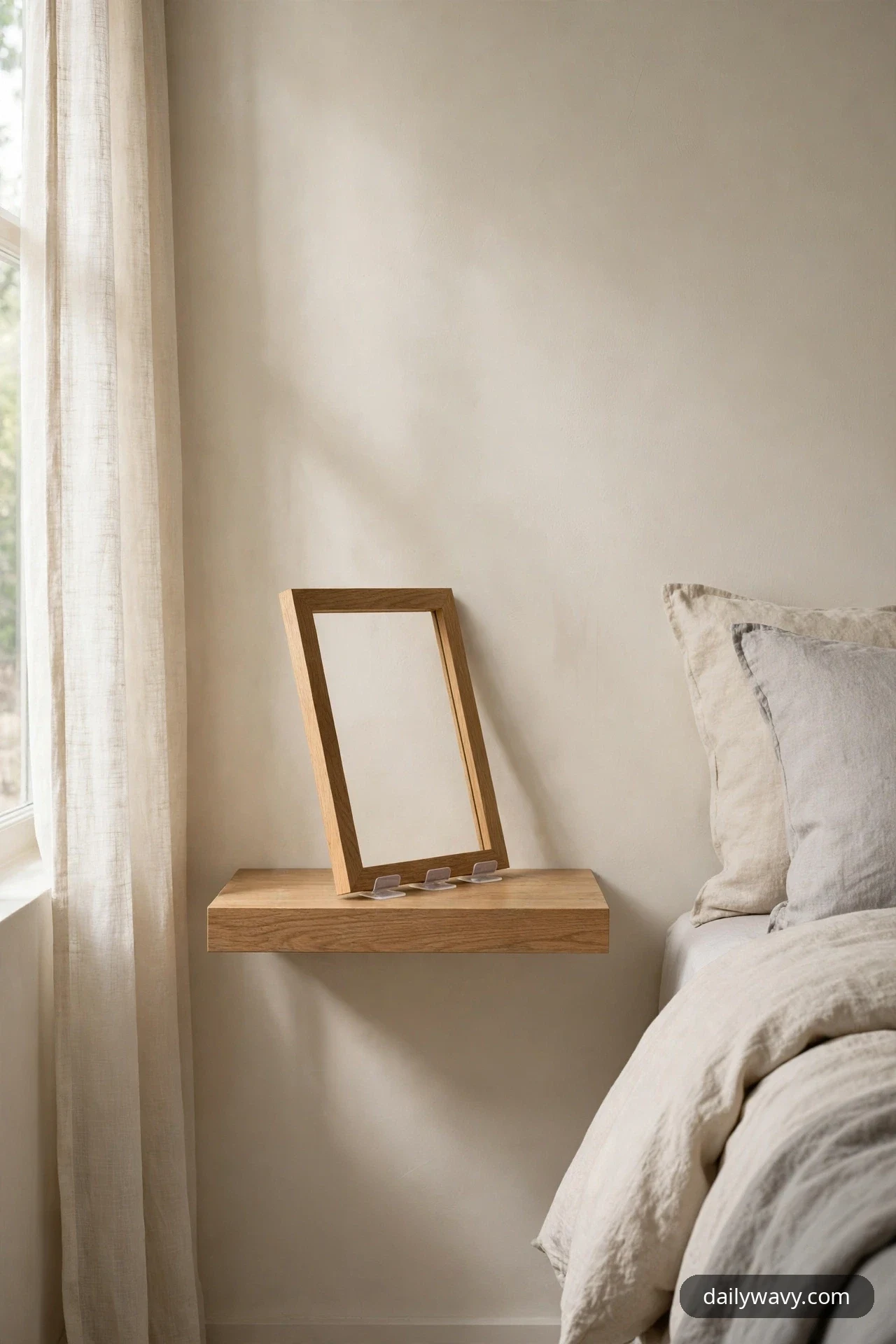
A leaning frame brings instant personality to a floating shelf, and it is some of the easiest art you can hang. Choose a frame no taller than 10 inches and lean it against the wall at a slight angle, with its base about 2 inches out from the wall. To keep it from sliding forward at night, press two small clear anti-slip pads (the rubbery bumper kind) under the front edge of the frame. They grip the shelf and the frame without marking either surface.
Measure your shelf depth first. If the shelf is only 8 inches deep, the frame plus pads will use most of it, so skip other tall objects in this arrangement. Materials are simple: one framed print or photograph, and a pack of anti-slip pads. Placement matters for safety. Keep the frame behind your water glass, never in front of it, so a sleepy reach for water does not send the frame tumbling. This takes about ten minutes. A realistic lower-cost alternative is a greeting card or postcard clipped to a small wooden stand. For accessibility, keep the frame low and stable rather than tall and wobbly, since a toppling frame at night is a hazard anyone would rather avoid.
2. A Woven Basket Below The Surface
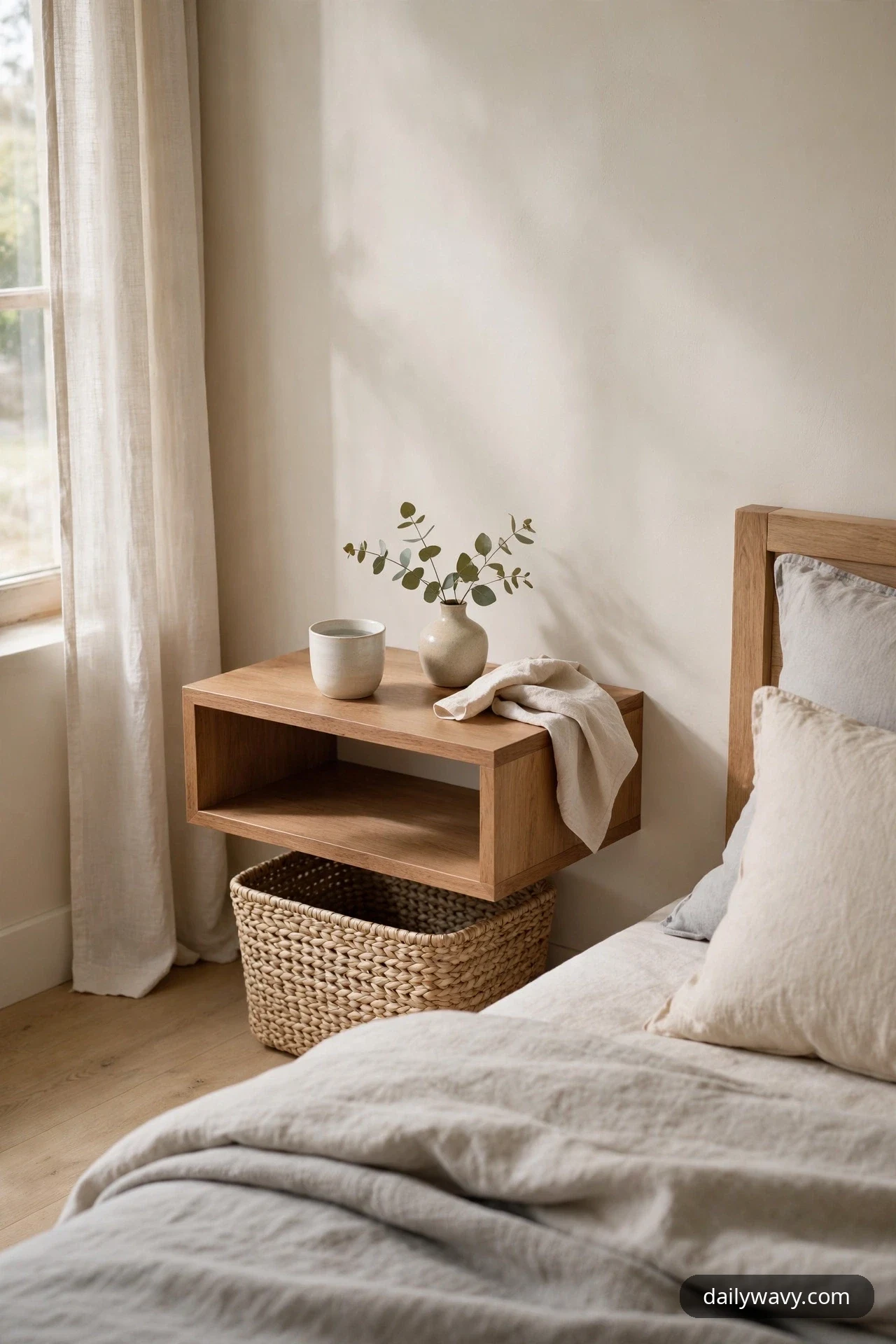
The space under a floating shelf is not empty. It is storage waiting to happen. A woven basket tucked beneath the surface holds the things that do not deserve shelf space: charging cables, a paperback you are not reading yet, reading glasses, lip balm. Because the basket sits on the floor, it adds no weight to the shelf anchors, which is a genuine safety plus.
Measure the clearance between the shelf underside and the floor. You need a basket at least 2 inches shorter than that gap so it slides in and out without scraping. A rectangular seagrass or water-hyacinth basket around 12 inches wide and 8 inches tall works in most bedrooms. Place it flush against the wall under the shelf, slightly to one side so it does not block the cleaning path. Effort is minimal: carry it in and fill it. The lower-cost alternative is any sturdy box you already own, dressed up with a fabric liner. For easy nighttime access, leave the basket open or use a lid you can flip with one hand.
3. A Tiny Plant Beside A Reading Light
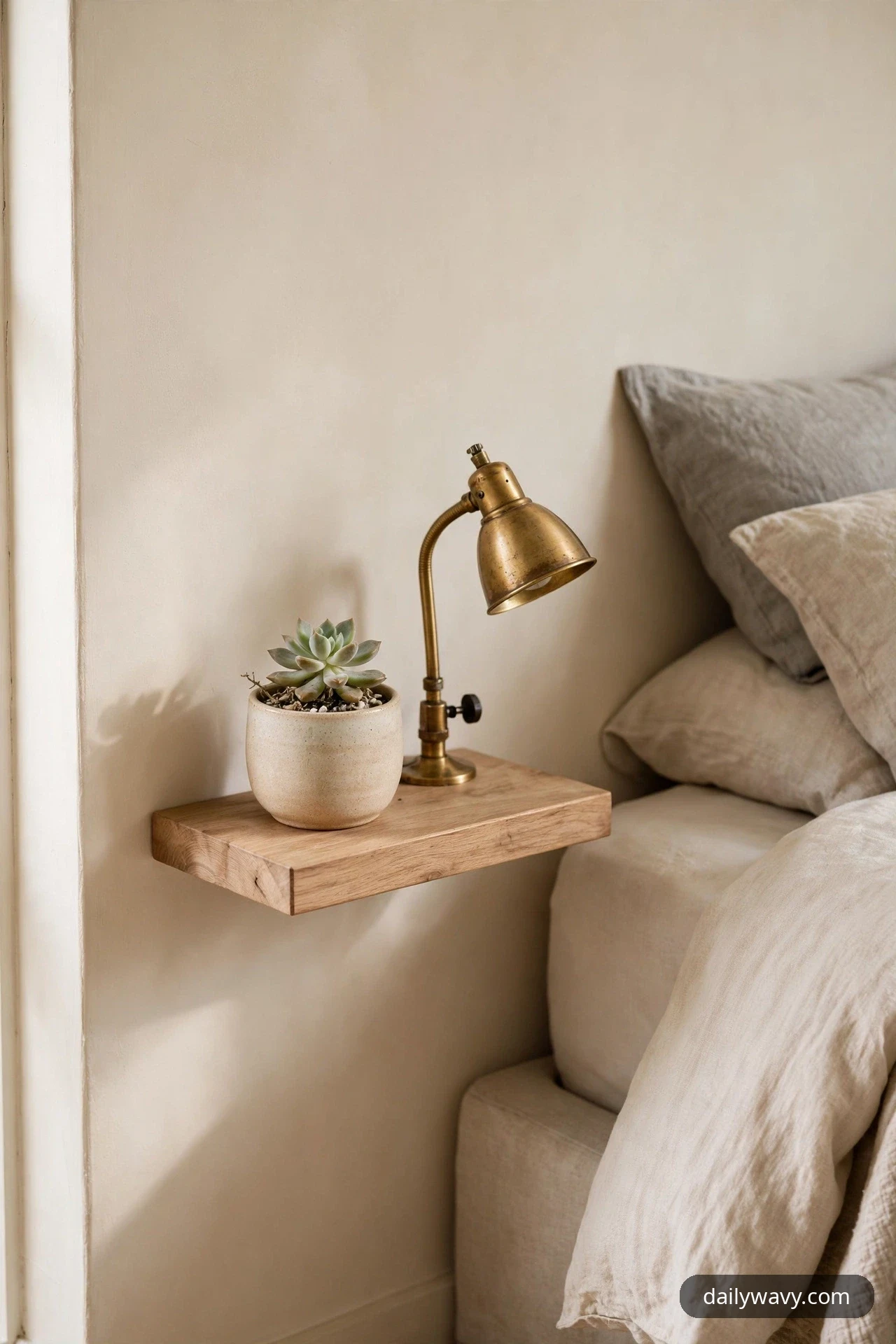
A small plant beside a reading light is the classic bedside pairing. The plant softens the hard edge of the lamp, and the lamp makes the plant look intentional instead of forgotten. Keep the plant truly tiny, a 3-inch pot of pothos, a small succulent, or a sprig of dried eucalyptus. Anything bigger steals the surface.
Measure the lamp base before you buy the plant. You want at least 4 inches of clear shelf between the lamp and the plant so the pot does not sit in the lamp’s heat. Materials: one small pot with a saucer (the saucer protects the shelf from water rings), and your lamp. Place the plant on the side away from your pillow, so you never knock soil into the bed. This takes about fifteen minutes including repotting. If pets chew plants, keep pothos and eucalyptus out of their reach, since both can upset cats and dogs if eaten. A lower-cost alternative is a cutting in a water glass, which costs very little and lasts weeks. One honest note: live plants need the occasional drink, and a saucer plus a finger test of the soil keeps watering from becoming a chore.
4. A Textured Runner Under A Lamp
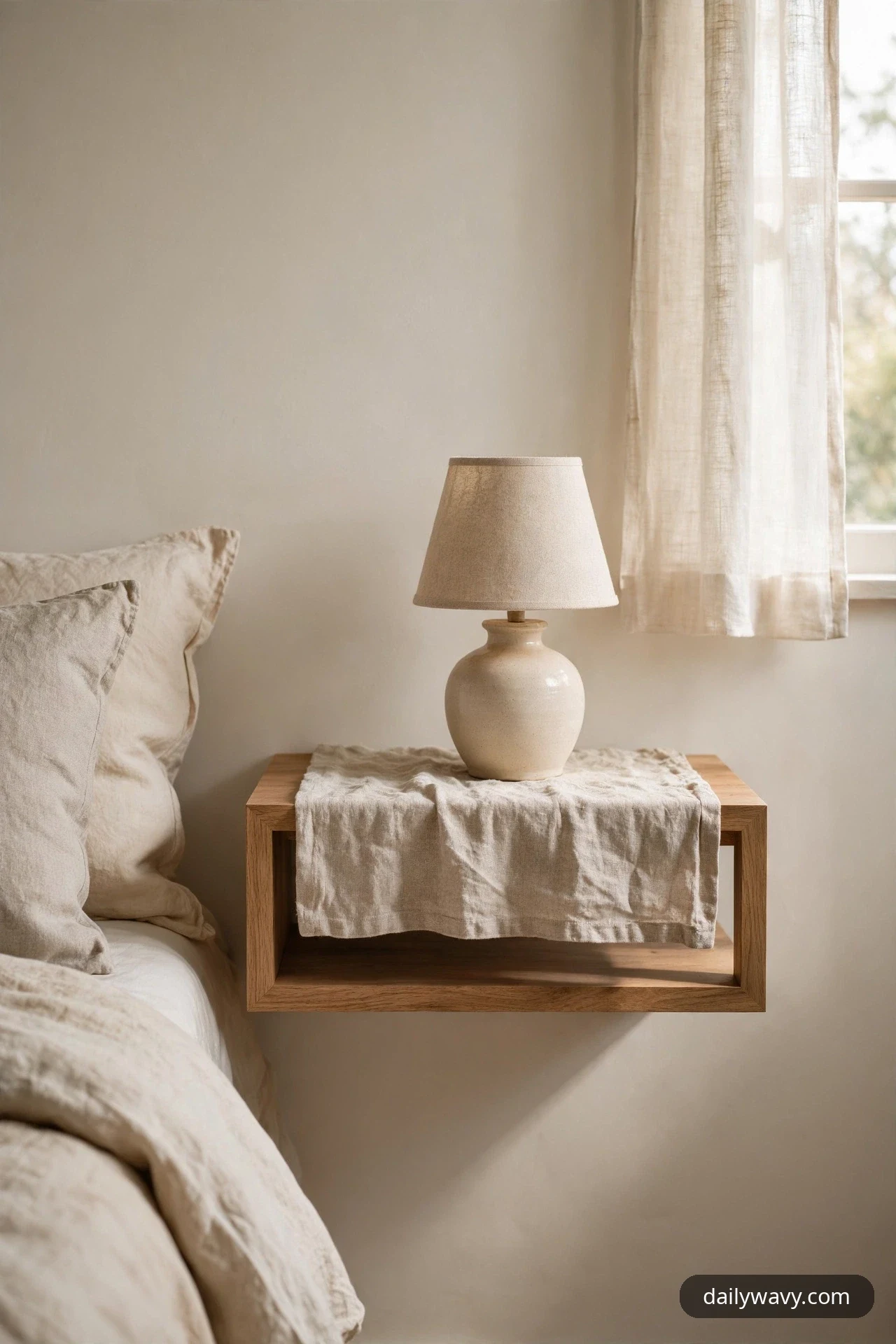
A textured runner, a narrow cloth laid across the shelf, does three jobs at once. It protects the shelf from scratches, it visually groups your objects into one styled arrangement, and it adds the fabric softness a wall-mounted shelf can lack. Linen, cotton, or a low-pile woven runner all work.
Measure the shelf and cut or fold the runner so it overhangs the front edge by no more than 1 inch. More overhang snags on bedding. The runner should be 2 to 3 inches narrower than the shelf width so the wood still shows at the sides. Place the lamp on the runner toward the back, and let the front of the runner sit empty as a landing zone for your phone. Effort is low: fold, place, style. A realistic lower-cost alternative is a folded linen napkin or a strip cut from an old cotton throw. For households with cats, choose a tight weave that resists claws and shake the runner out weekly.
5. A Simple Glass Carafe On A Tray

Waking up thirsty is universal, and a glass carafe with a tumbler is the most civilized answer. The tray underneath is what makes this idea work on a floating shelf: it catches drips, it corrals the two pieces into one neat unit, and it protects the shelf finish from water rings.
Measure before you commit. A carafe plus tumbler needs a tray at least 8 inches across, and the whole set needs roughly 10 inches of shelf width. Choose a tray with a small lip so the tumbler cannot slide off in the dark. Materials: a glass carafe (about 1 liter), a matching tumbler, and a wood or stone tray. Place the set on the outer half of the shelf, closest to your pillow, so you can reach it without sitting up. Refilling takes only a moment each morning. The lower-cost alternative is a covered mason jar and a small plate. Safety note: keep the carafe away from the shelf edge, at least 2 inches in, because glass and floors are an expensive combination.
6. A Catchall Bowl In Matching Tones
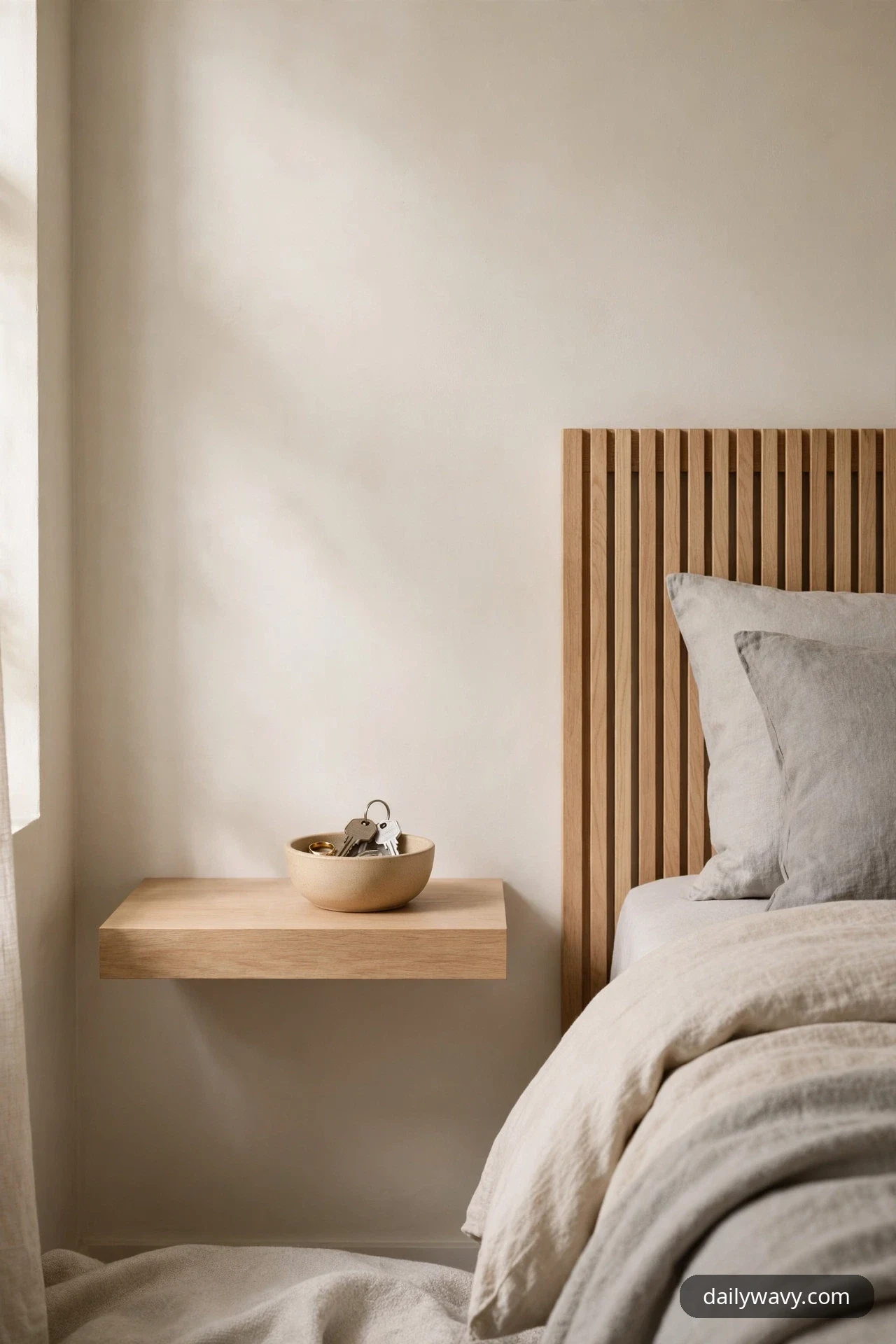
A catchall bowl is where the day’s small things go to rest: a ring, earbuds, a hair tie, the earring you took off while reading. Matching the bowl’s tone to the shelf or the wall keeps it from looking like clutter. A matte ceramic bowl in warm beige on a pale wood shelf reads as one calm object rather than a pile of stuff.
Choose a bowl 4 to 5 inches across and at least 2 inches deep, shallow enough to see inside, deep enough that nothing bounces out. Measure your shelf depth and keep the bowl in the back third, behind your water glass. Materials: one ceramic or stoneware bowl. Placement is the whole trick here. Put it exactly where your hand lands when you take off jewelry, usually the inner corner nearest the bed. Effort is nearly zero. The lower-cost alternative is a small ramekin or a thrifted saucer. For anyone who wears a wedding ring to bed and takes it off to read, this one bowl protects a very expensive habit.
7. A Single Sculptural Accent
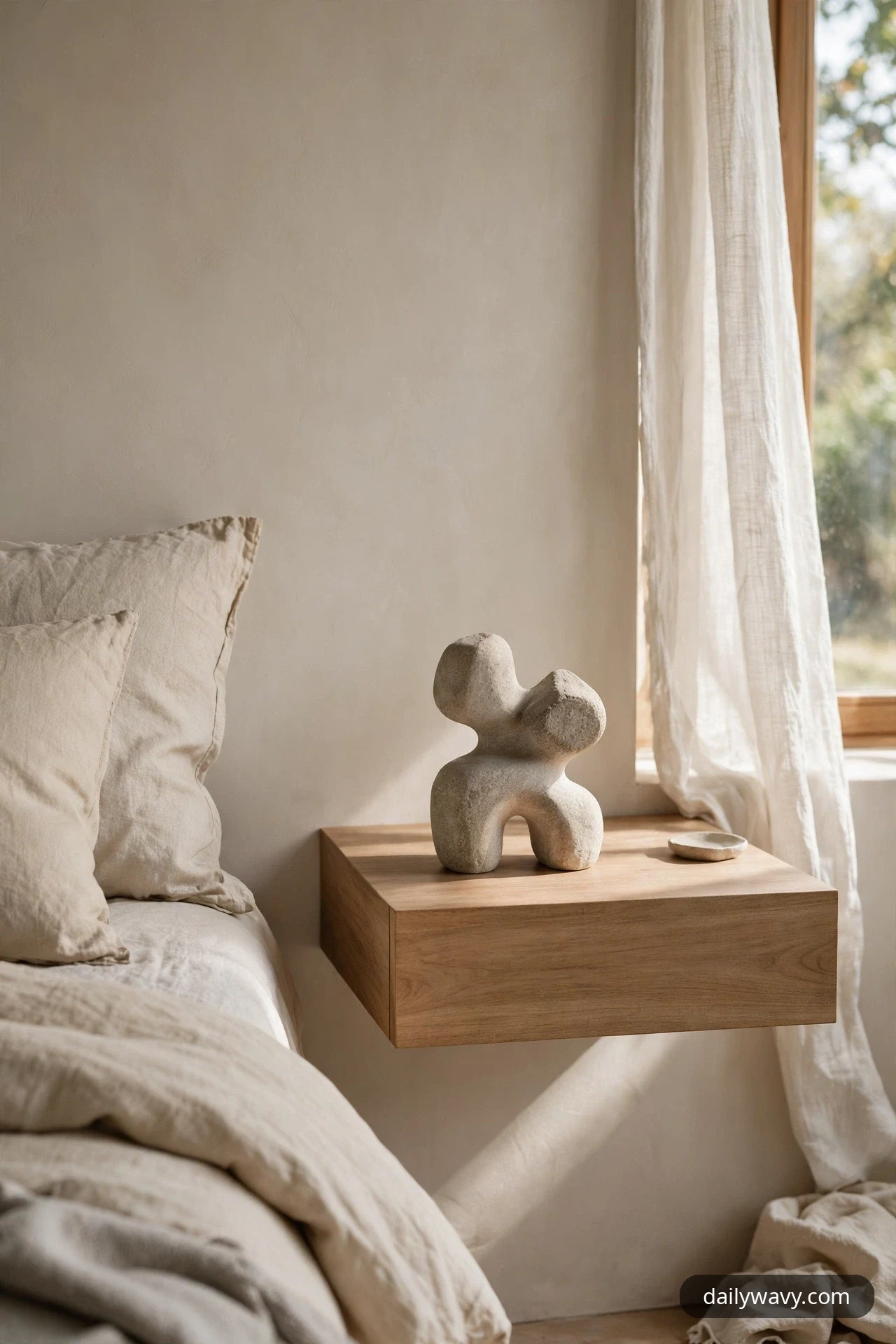
One sculptural accent gives a floating nightstand its finished, designed look. This is the object with no job except to be beautiful: a small abstract stone form, a carved wooden sphere, a hand-thrown ceramic knot. Because it is the only purely decorative piece, it carries the whole style statement.
Keep it small and stable. A piece 4 to 6 inches tall with a solid base is ideal. Measure the shelf and give the object a clear 6-inch zone so it reads as intentional, not crowded. Materials: one object you genuinely like looking at. Place it on the side opposite your essentials, usually the outer end of the shelf, where it can be admired without being reached past at night. Effort is just the choosing, which is the fun part. The lower-cost alternative is a found object, a smooth stone from a walk, a pinecone, a piece of driftwood, displayed with the same respect you would give a gallery piece. Accessibility tip: avoid anything fragile or sharp-edged at bedside height if kids climb into your bed.
8. A Framed Photograph With A Short Vase
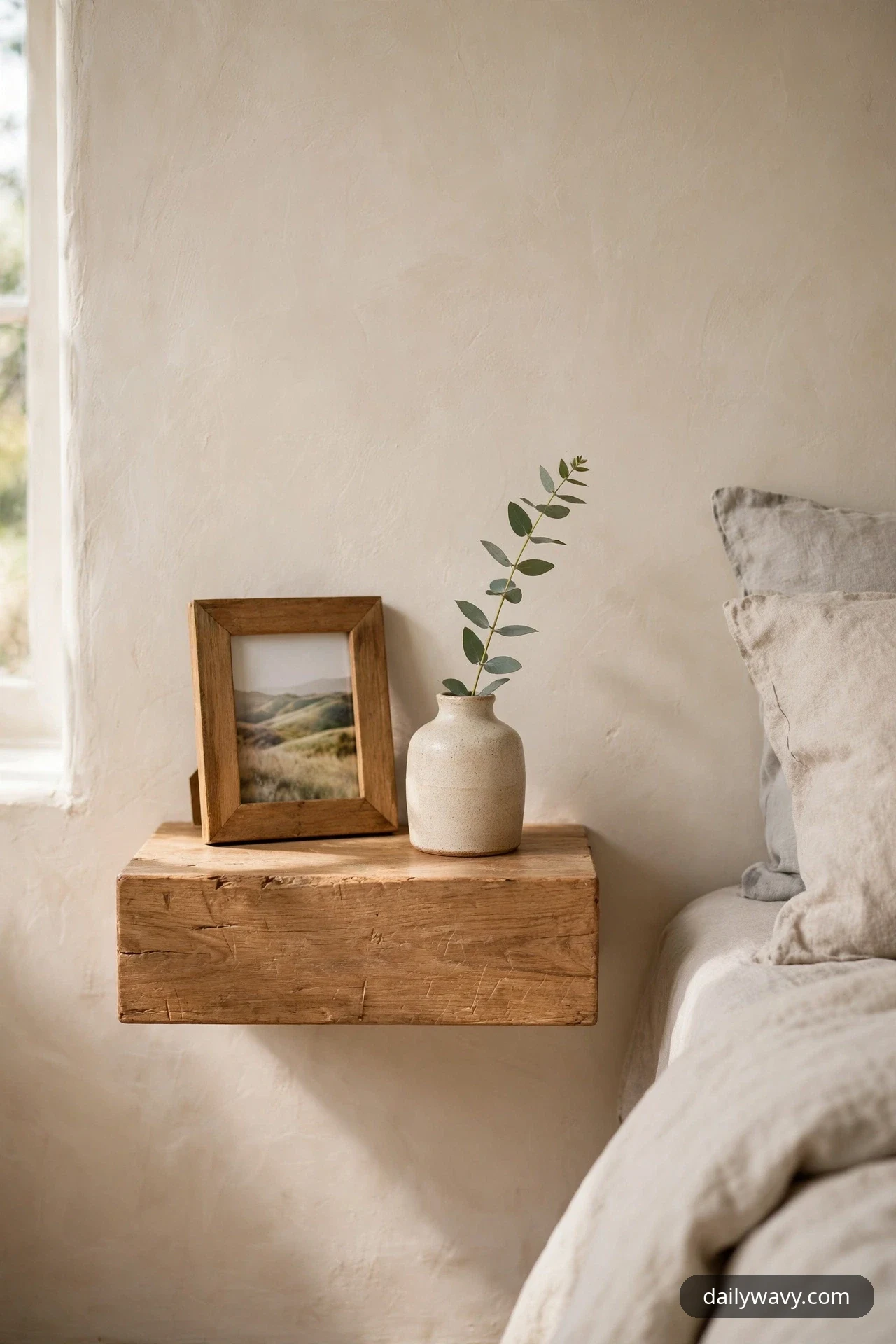
A framed photograph with a short vase is the most personal arrangement on this list. The photo anchors the shelf to your life, and the vase adds height and softness beside it. Keep the frame small, 5 by 7 inches at most, and pair it with a vase no taller than 6 inches so the two feel like one unit.
Measure the pair together and plan for about 10 inches of shelf width. Lean the frame against the wall at the back, and set the vase slightly forward and to the side, about 3 inches from the frame. Materials: one framed photo, one short ceramic vase, one stem. Fresh flowers are lovely but need water changes; a dried stem or a single eucalyptus sprig lasts for weeks with no care. This takes about twenty minutes to arrange. The lower-cost alternative is a printed photo in a simple document frame and a jam jar as the vase. Keep water levels low in the vase, a half-full 6-inch vase spills far less than a full one if it tips.
9. A Charging Area With Tidy Cable Routing
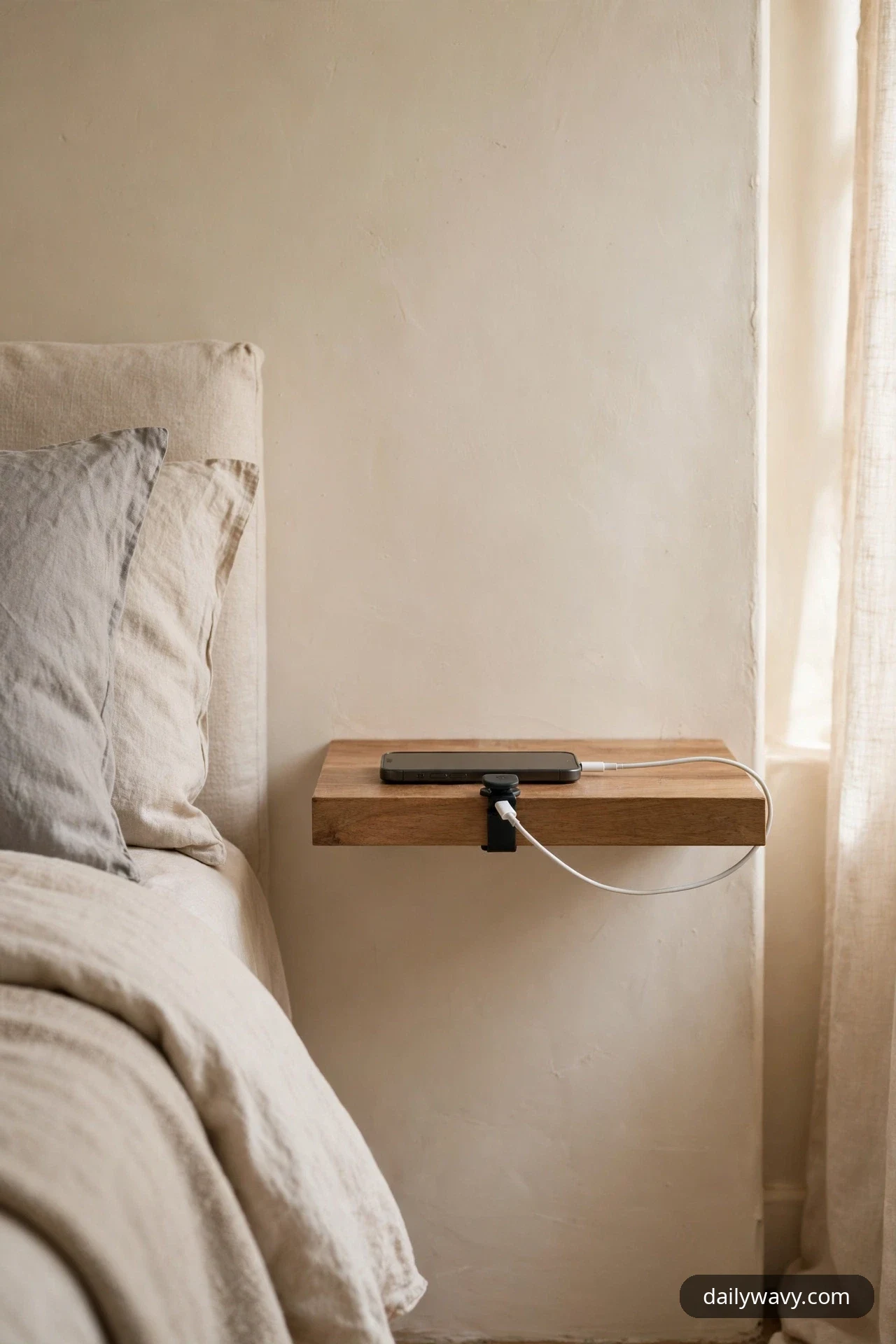
Phones charge beside the bed. That is a fact of modern life, and fighting it just creates a tangle. A deliberate charging area with tidy cable routing turns the mess into a designed zone. The key is routing: a small adhesive cable clip or a weighted cable holder keeps the cord end on the shelf instead of sliding behind the bed.
Measure your phone’s resting spot and place the cable clip within 6 inches of the outlet or power strip below. Run the cable up the wall in a straight vertical line, secured with two small clear clips, so it looks intentional. Materials: one short charging cable (a 3-foot cable instead of a 6-foot one eliminates most of the tangle), one or two adhesive cable clips, and a small tray or dish for the phone itself. Place the phone tray on the front of the shelf for easy reach. Effort is about fifteen minutes. The lower-cost alternative is a binder clip clamped to the shelf edge as a cable stop, which works surprisingly well. Safety note: never trap a charging cable under a heavy object, and keep cables away from water glasses.
10. A Tray Holding A Notebook And Pen

A notebook and pen on the nightstand catch the thoughts that arrive at 2 a.m. and the lists that surface while you are falling asleep. The tray is what keeps this habit from looking like paperwork spilled in the bedroom. It says the notebook lives here on purpose.
Choose a notebook no larger than 6 by 8 inches and a tray about 10 inches across, with a small raised edge. Measure your shelf width first; notebook plus tray will use most of a standard floating shelf. Materials: one tray, one notebook, one pen that writes reliably (a pen that skips at midnight will be thrown). Place the tray toward the back of the shelf and keep the pen on top of the notebook so it never rolls. Refilling the notebook takes months, which is the point. The lower-cost alternative is a legal pad on a thrifted tray. For accessibility, a pen with a soft grip and a notebook that opens flat makes late-night writing genuinely easier.
11. A Pair Of Balanced Objects Of Different Heights
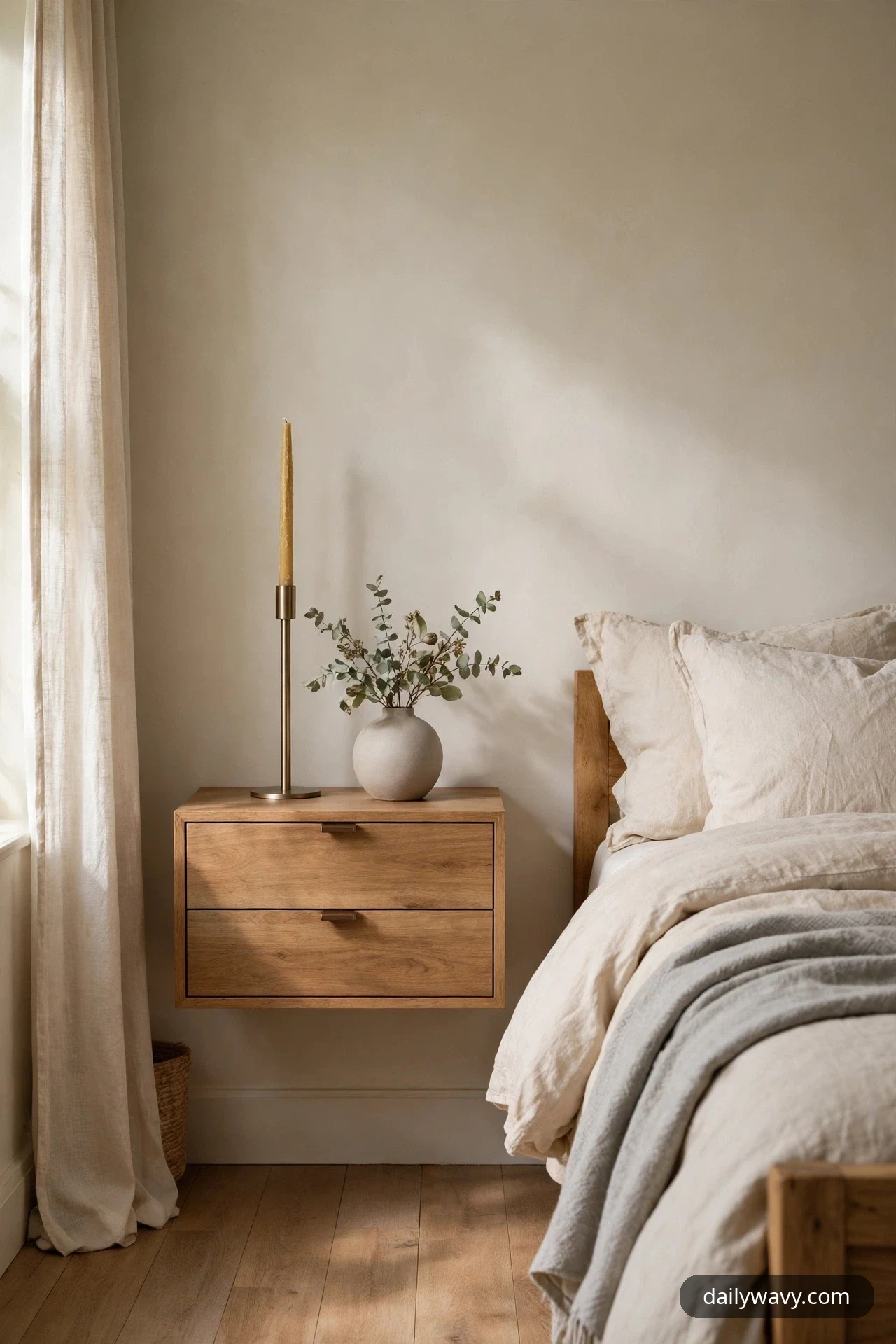
Designers reach for pairs of different heights because the contrast creates rhythm the eye enjoys. A tall slim candle holder beside a small round vase, a slender bud vase beside a low bowl, the tall one draws the eye up and the short one grounds the arrangement. The same balance principle that makes a narrow living room layout feel calm works at bedside scale too.
The rule of thumb: make one object roughly twice the height of the other. Measure the pair against your wall. The tall piece should stay at least 4 inches below any shelf or art above, and the whole arrangement should sit at least 6 inches from the shelf edge. Materials: any two objects with contrasting heights and a shared color or material. Place the tall object toward the back and the short one slightly forward, about 4 inches apart, so each has breathing room. Effort is about ten minutes of arranging. The lower-cost alternative is a tall bottle and a short jar from your recycling bin, cleaned and grouped with intent. Keep candles unlit at the bedside or use LED versions; an open flame next to bedding is never worth the mood.
12. A Soft Fabric Mat Beneath Essentials
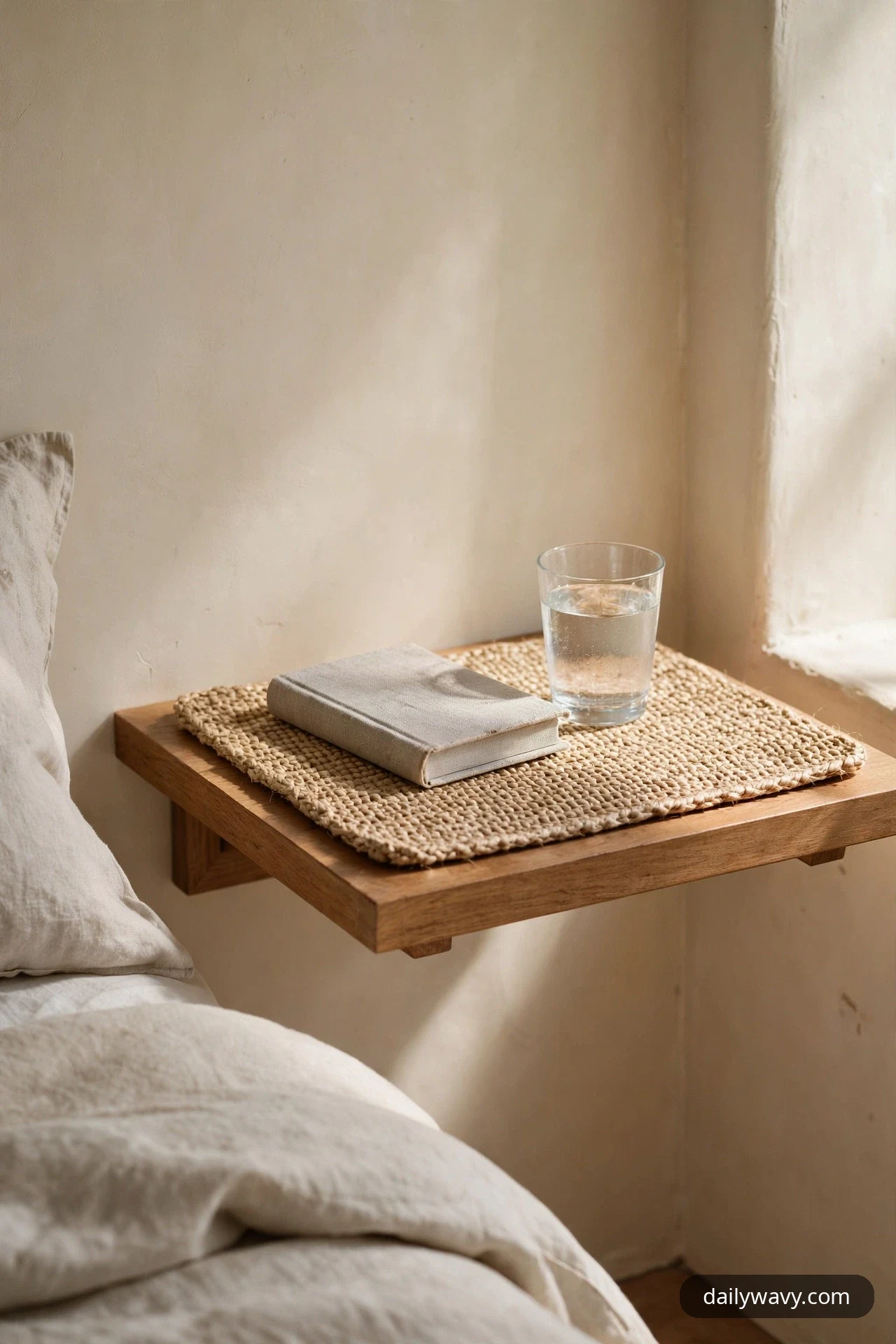
A soft fabric mat under your essentials is the quietest idea here and one of the most practical. It muffles the clink of a water glass set down at night, it protects the shelf from scratches, and it marks a clear zone: this is where the working objects live.
Cut or choose a mat about 8 by 10 inches in a washable fabric, cotton or a low-pile wool felt. Measure your shelf and center the mat on the half nearest your pillow, leaving the decorative half bare wood. Materials: one fabric mat. Place your water glass, phone, and any nightly essentials on the mat each evening; the mat trains the habit. Washing takes only a few minutes in the machine. The lower-cost alternative is a folded hand towel in a color you like, which does the same job for free. For anyone sensitive to noise, the difference between glass on wood and glass on felt at midnight is genuinely meaningful.
13. A Small Mirror With A Ceramic Vessel

A small mirror at the bedside bounces morning light around the room and makes a floating shelf feel deeper than it is. Paired with a handmade ceramic vessel, it becomes a little still life you get to wake up to. Keep the mirror modest, an 8-inch round leaning mirror is plenty.
Measure the shelf depth and choose a mirror with a stable easel back or lean it securely against the wall, never balanced on its edge. Place the mirror at the back of the shelf and the ceramic vessel slightly forward and to one side, so the mirror reflects the vessel and doubles its presence. Materials: one small leaning mirror, one ceramic vessel. This takes about fifteen minutes to arrange. The lower-cost alternative is a hand mirror stood in a small plate stand and any ceramic cup. One honest caution: angle the mirror so it does not catch direct morning sun and throw a bright spot onto your pillow, a quick check at setup time prevents weeks of squinting.
14. A Narrow Upright Book Arrangement
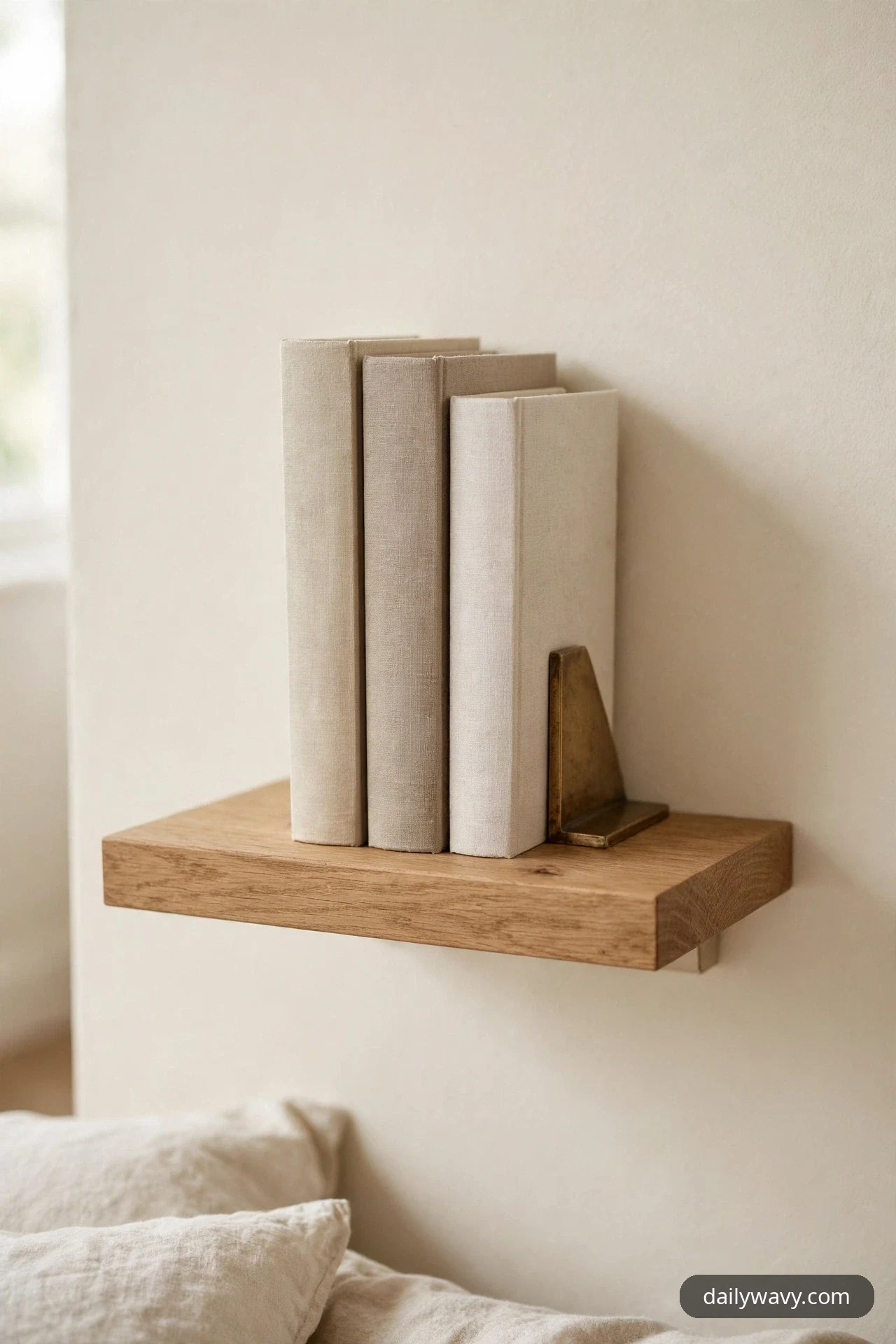
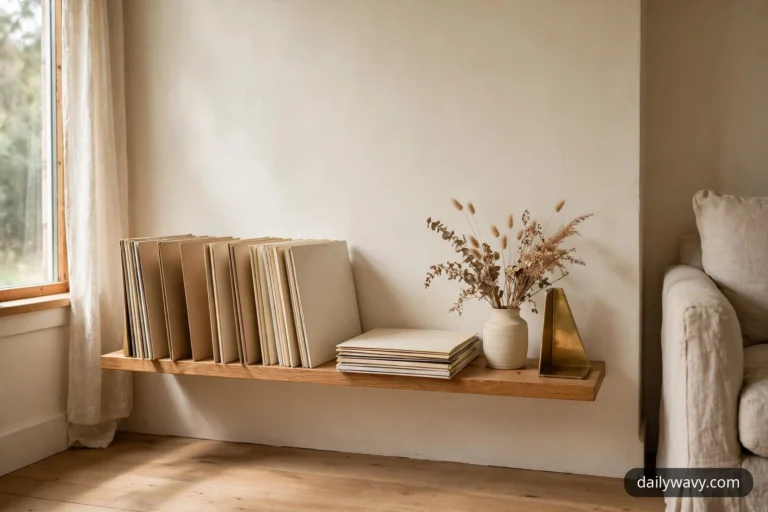
A narrow row of upright books turns a floating nightstand into a tiny library. Three to five books, held by one small bookend, signal that this is a reading household without taking over the shelf. The narrowness is the point: it leaves most of the surface free.
Measure carefully. Books need shelf depth at least equal to the book’s cover width, so a row of 6-by-9-inch books needs the shelf to be at least 6 inches deep, plus 2 inches for the bookend. Choose books you are actually reading or love, with spines in roughly coordinating colors. Materials: three to five books, one bookend. Place the row at the back of the shelf, spines facing out, with the bookend on the outer side. Effort is about ten minutes. The lower-cost alternative is a heavy stone or a brick wrapped in fabric as the bookend. Accessibility note: keep the current read on top or at the front of the row, because digging through a tight row of books in the dark is a losing game.
15. A Shaded Lamp Beside A Small Tray
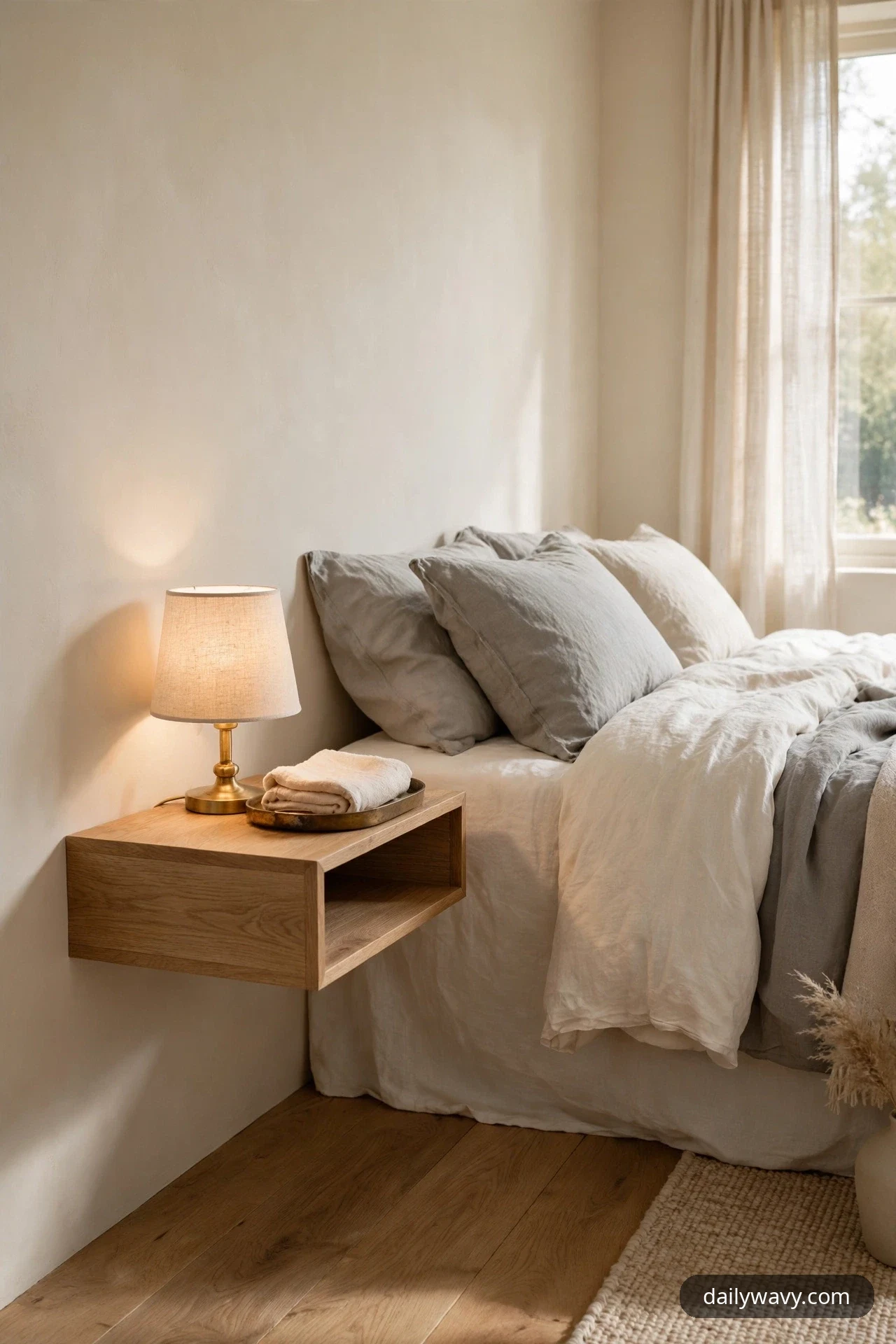
A shaded lamp is the workhorse of bedside lighting, and pairing it with a small tray makes the arrangement complete. The lamp handles reading light; the tray handles everything else. Together they divide the shelf into two clear zones, light and life.
Measure the lamp base and choose a tray that fits in the remaining space. On a 16-inch-wide shelf, a lamp with a 6-inch base leaves room for a 7-inch tray with 3 inches to spare. Choose a shade in white or cream linen, which throws warm, even light. Materials: one small table lamp with shade, one tray. Place the lamp toward the back inner corner, with the tray in front of it holding your phone, lip balm, and water glass. Wiring takes about twenty minutes if you are routing the cord neatly down the wall. The lower-cost alternative is a thrifted lamp with a new shade, which often costs less than a new lamp alone. Choose an LED bulb in warm white (2700K) for light that flatters the room and does not fight sleep.
16. One Flower Stem In A Low Vase

One flower stem in a low vase is the minimalist’s answer to bedside flowers. A single stem, ranunculus, a garden rose, one eucalyptus branch, has more presence than a crowded bouquet, and a low vase keeps it stable on a shallow shelf.
Choose a vase no taller than 5 inches with a wide base; stability matters more than style here. Measure your shelf and give the vase a clear 6-inch zone, away from the edge. Materials: one low vase, one fresh or dried stem. Place it on the outer half of the shelf where you will see it from the bed. A fresh stem lasts a week with a water change halfway through; a dried stem lasts months. Effort is a few minutes plus a weekly water change. The lower-cost alternative is a stem snipped from the garden in a juice glass. Keep the water level at half the vase height. A full tall vase and a floating shelf are a spill waiting for a restless sleeper.
17. A Stack Of Two Books
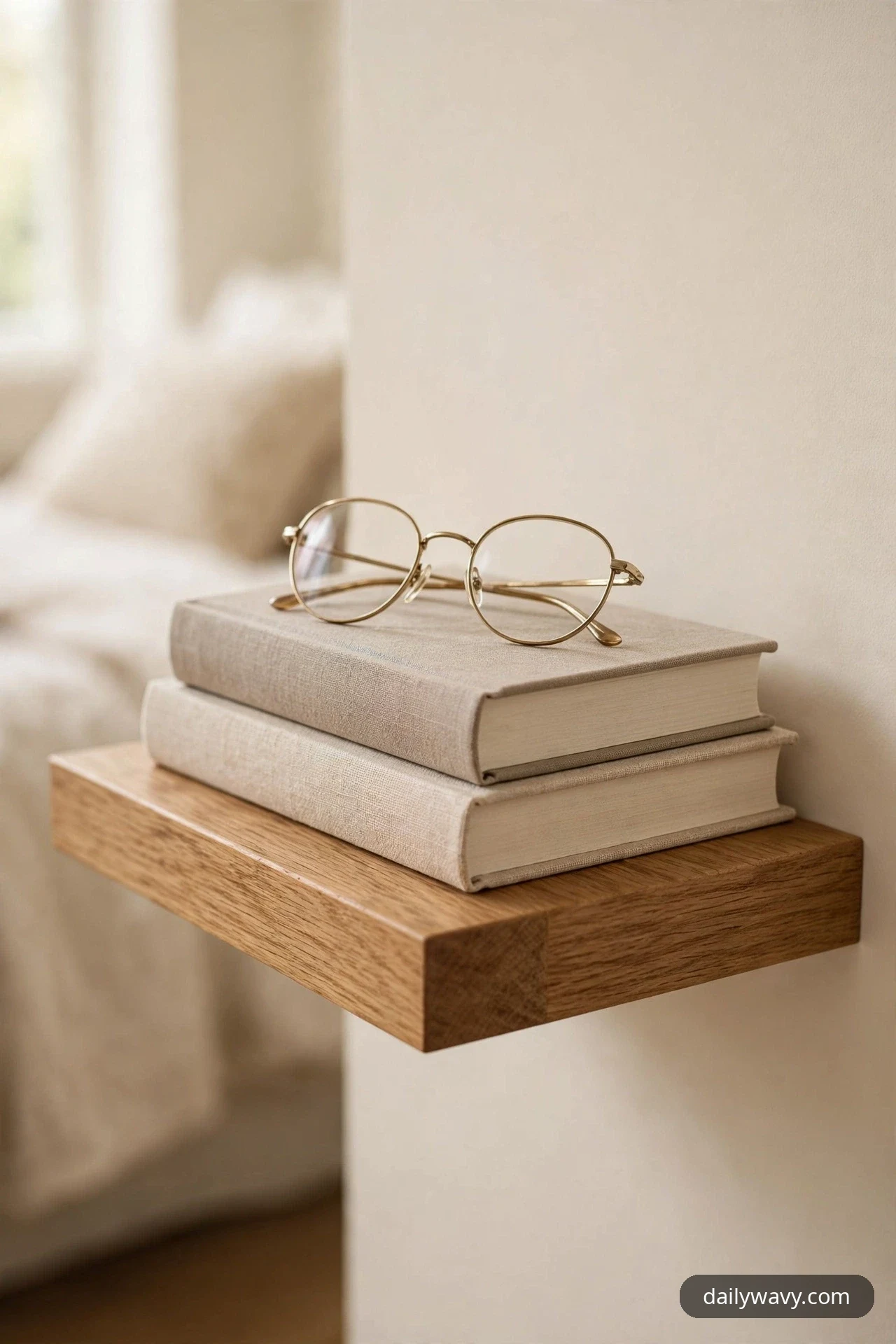
A stack of two books is the simplest styling move on this list, and it works because it is honest. The current read on top, the next read below, and suddenly the shelf has a story. Two books, not five, is the magic number: enough to look intentional, few enough to stay stable.
Choose hardcovers or thick paperbacks around 8 inches tall; thin mass-market paperbacks slide. Stack them with the largest on the bottom, aligned at the front edge, and place reading glasses or a bookmark on top as the finishing touch. Measure the stack’s footprint, about 6 by 9 inches, and center it on your half of the shelf. Materials: two books you actually intend to read. Effort is a couple of minutes. The lower-cost alternative is books borrowed from the library, which cost nothing and rotate regularly. Keep the stack away from the water glass by at least 4 inches; a ring-stained book is a sad book.
18. A Lidded Box For Everyday Objects

A lidded box is the secret weapon of a tidy nightstand. Medications, earplugs, a sleep mask, the remote, everything you need but do not want to look at, disappears inside. With the lid on, the shelf reads as styled; with the lid off, everything is at hand.
Choose a box 8 to 10 inches long, 5 to 6 inches wide, and 3 to 4 inches tall, in linen, wood, or lacquer that matches your room. Measure your shelf and place the box at the back, since you will open it less often than you reach for water. Materials: one lidded box. Opening it once to arrange the contents takes about ten minutes; after that it maintains itself. The lower-cost alternative is a shoebox wrapped in fabric or kraft paper, which looks surprisingly good. For households with kids, a box with a simple latch keeps small curious hands out of medications and other grown-up essentials.
Floating nightstand questions, answered
How much weight can a floating nightstand hold?
Most wall-mounted shelves are rated for 15 to 25 pounds when anchored into studs. Add up your lamp, books, and water carafe before you style. If the shelf flexes or pulls away from the wall, remove weight immediately and check the anchors.
What is the best height for a floating nightstand?
Hang it so the top surface sits 4 to 6 inches above your mattress. That keeps everything within easy reach while you are lying down, and it looks proportional from the doorway.
Can I install one if I rent?
Yes, with conditions. Look for adhesive-mounted or clamp-style floating shelves rated for at least 15 pounds, and keep the styling light: no heavy lamps, no stacks of hardcovers. Check your lease before drilling anything.
How do I hide the charging cables?
Use a short 3-foot cable, route it straight down the wall with two small adhesive clips, and park the phone on a tray. The cable becomes a tidy vertical line instead of a tangle.
What should I never put on a floating nightstand?
Anything heavy enough to strain the anchors, anything that must stay perfectly upright without a tray (open drinks), and lit candles near bedding. If it would hurt falling from 3 feet, reconsider.
How do I keep it from looking cluttered?
Leave one third of the surface empty, group small things on trays, and hide the rest in a lidded box or the basket below. Edit ruthlessly once a month.
Style it once, enjoy it nightly
A floating nightstand asks for less than a traditional one and gives back more: floor space, clean lines, and a bedside that actually stays tidy. Pick the two or three ideas that match how you live, measure once, and style it in an afternoon. If you are rethinking the whole room, our small pantry organization ideas use the same measure-first discipline in another small space, and you can browse more room-by-room ideas in Home & Decor. This guide stays focused on the floating shelf you are styling today.