
10 Bedroom Curtain Ideas to Frame Your Space
Bedroom curtains do more than cover a window. They decide how the room feels the moment you walk in, softening…
Bedroom curtains do more than cover a window. They decide how the room feels the moment you walk in, softening hard edges and pulling the whole space together. The right pair can make a small window feel taller, add warmth to bare walls, and help you sleep better by keeping streetlight and early morning glare out. Best of all, you do not need custom panels or a large budget to get the effect. Below are ten curtain treatments that work well in real bedrooms, from light-filtering sheers to clean simple hardware looks. Each one includes the measurements and materials you need to recreate it in your own room.
Jump to an idea
- A light-filtering treatment with clear edges
- A contrast border framing the opening
- A warm white fabric with natural texture
- A tonal pattern with plain surroundings
- A muted accent color
- A small-scale botanical motif
- A clean geometric repeat
- A darker trim against a light field
- A relaxed fabric texture
- A plain treatment with simple hardware
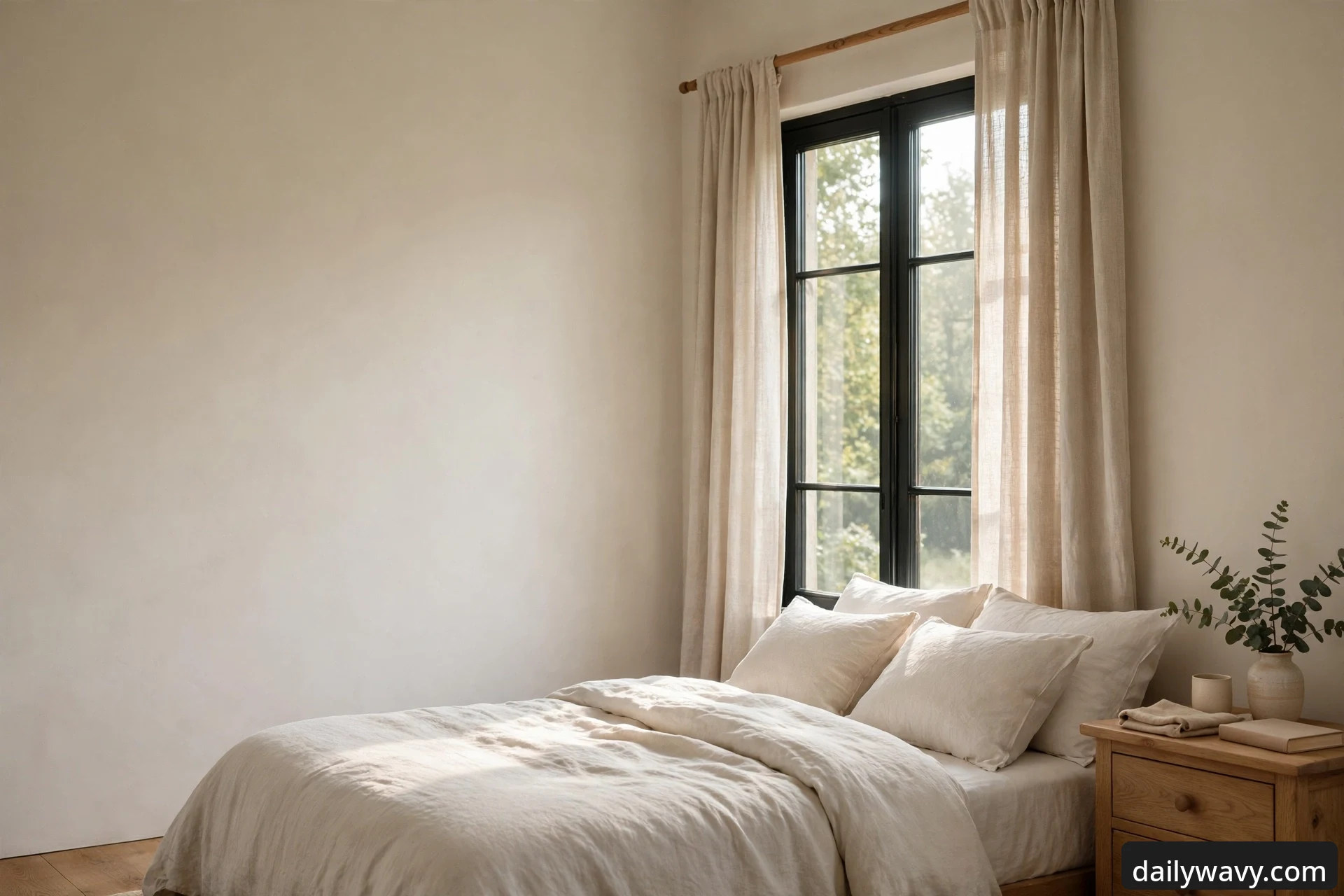
1. A light-filtering treatment with clear edges
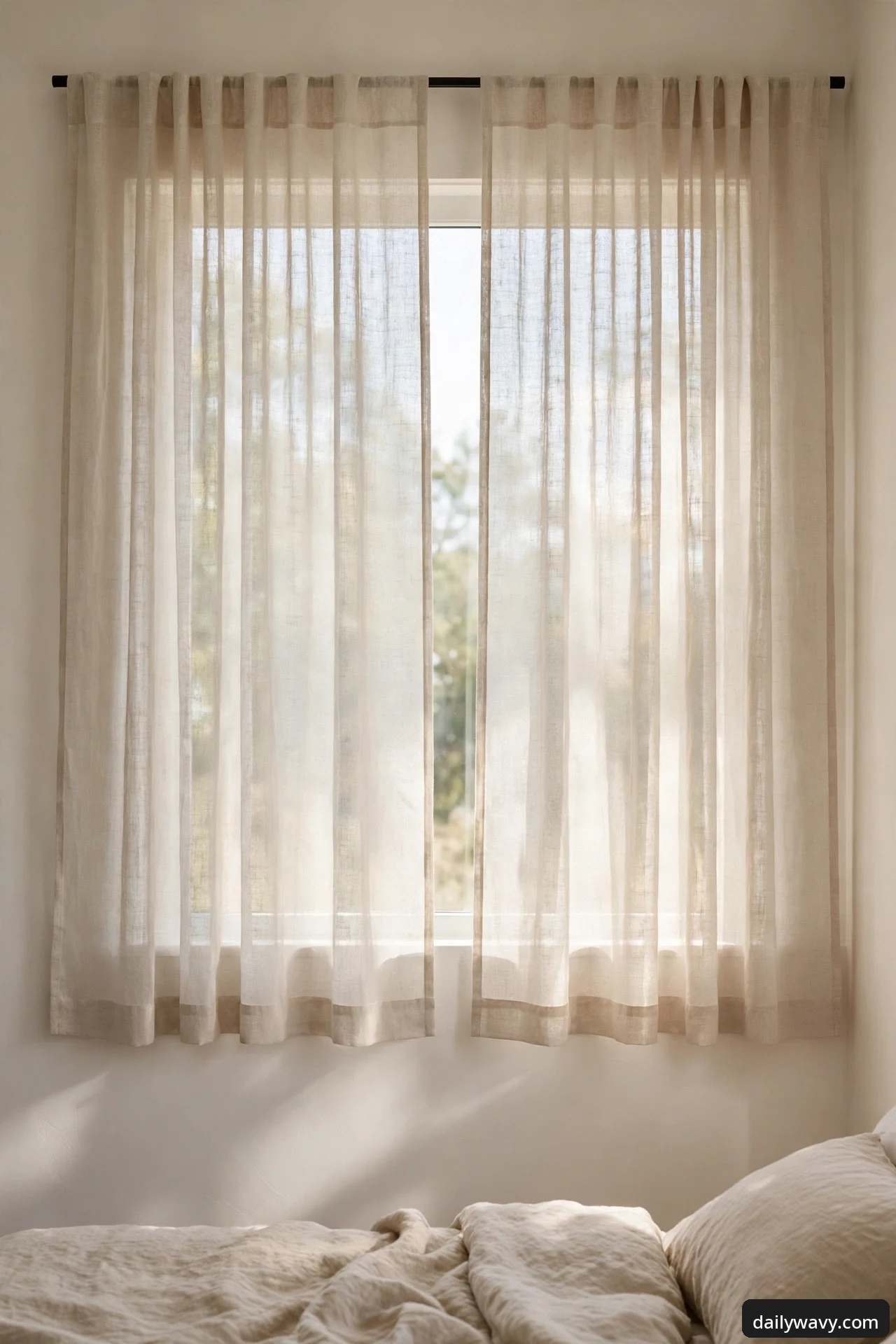
Sheer curtains get a mixed reputation, but the trick is the tailoring. A light-filtering panel with pressed, weighted edges hangs straight instead of billowing into the room, and it lets the day through in a soft glow that feels calm instead of harsh. This is the treatment for bedrooms that face east or catch bright midday sun, because it protects your privacy while keeping the room bright.
What to measure. Measure the window width, then multiply by 1.5 to 2 for the total panel width. For a 36-inch window, buy two panels that total 54 to 72 inches wide. Mount the rod 4 to 6 inches above the window frame and extend it 3 to 4 inches past the frame on each side, so the glass is fully uncovered when the curtains are open.
Materials and placement. Look for linen-blend or voile sheers labeled light-filtering. Hem the sides narrowly and add drapery weights at the corners if the fabric floats too much. Hang with back tabs or a slim rod pocket for a clean line.
Make it work. In a small bedroom, this keeps the space feeling open, since the eye travels straight to the light. If you need darkness for sleep, layer a blackout roller shade behind the sheers; you keep the soft daytime look and still get real rest. More small-room thinking lives in our small bedroom with a queen bed ideas guide.
2. A contrast border framing the opening

A band of contrasting fabric sewn along the inner edge of each panel turns a plain curtain into a designed detail. The border draws the eye around the window the way a mat frames a photograph, giving the opening definition without needing patterned wallpaper or heavy trim. Navy, charcoal, or deep olive borders against cream or ivory panels are the combinations that age best.
What to measure. The border band typically runs 3 to 5 inches wide along the leading edge. Order panels 2 inches longer than your finished length to allow for the seam. Keep the same rod mounting as a standard treatment: 4 to 6 inches above the frame, 3 to 4 inches wider on each side.
Materials and placement. You can buy panels with pre-sewn borders, or add a band to ready-made curtains with iron-on hemming tape if you prefer not to sew. Match the border to an accent already in the room, a throw pillow, a lamp base, or the headboard upholstery, so the detail feels connected rather than random.
Make it work. Tie the panels back with simple cord ties to show off the border when you want the light, and let them fall straight for privacy at night. This is also a good place to remember cord safety: in a room children use, choose a wand or cordless opener, or mount a cord cleat at least 5 feet from the floor so loops stay out of reach.
3. A warm white fabric with natural texture
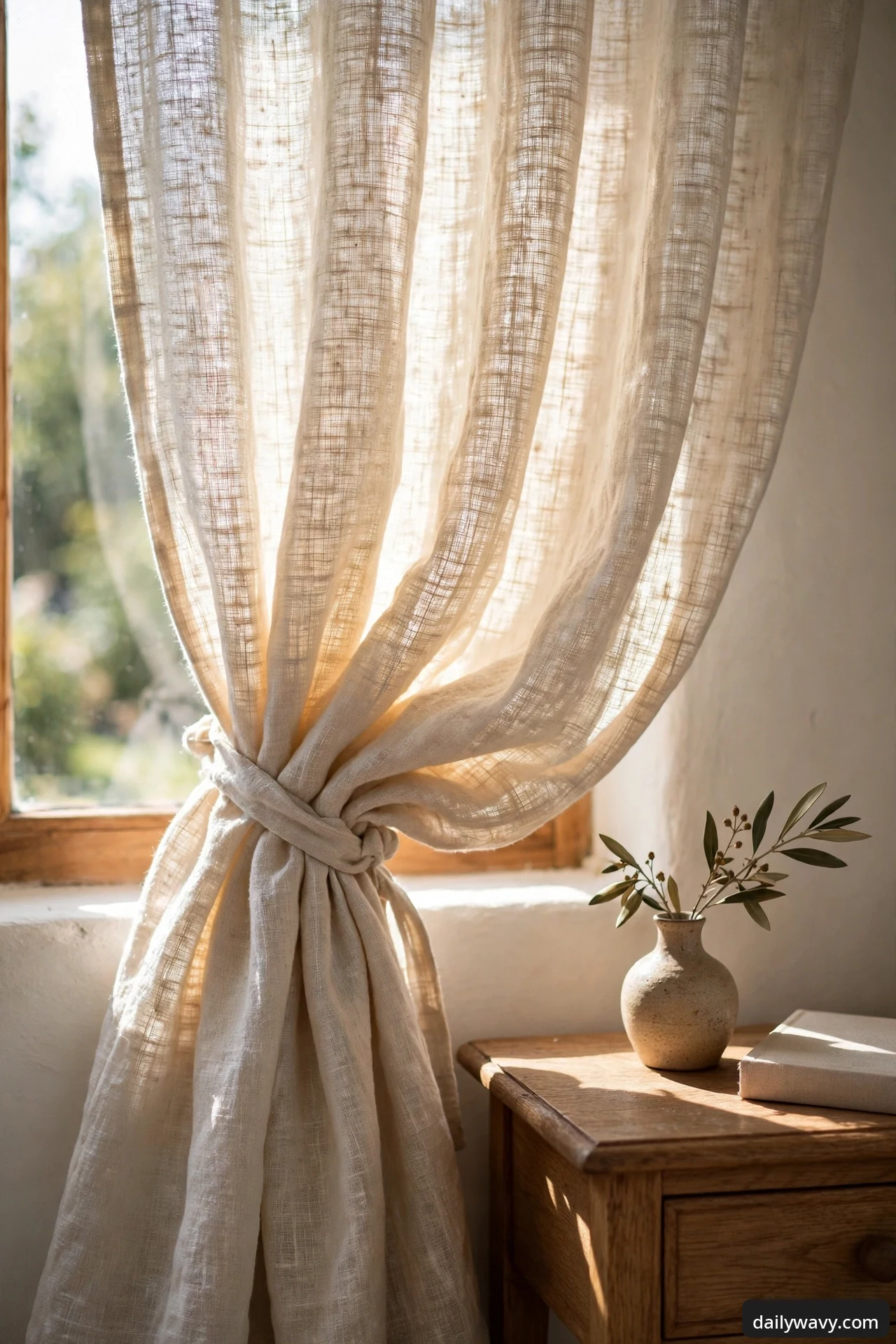
Cool bright white can look stark against a bedroom’s softer elements. Warm white, the color of unbleached linen or cotton canvas, has a gentle cream undertone that plays nicely with wood furniture and warm bedding. When the fabric has a visible slub or weave, it adds a layer of interest that flat polyester never manages, and it catches the morning light with a subtle glow.
What to measure. For a textured natural fabric, plan on 2 times fullness: two 50-inch panels for a 50-inch window width. Length should just kiss the floor, which is called a break of zero to half an inch, or puddle slightly with 2 to 3 inches of extra length for a romantic look. Skip the puddle if you have a robot vacuum or pets.
Materials and placement. Pure linen wrinkles, which is part of its charm, but a linen and cotton blend gives you the texture with less ironing. Wash and dry the fabric before hemming, because natural fibers shrink. Choose a matte rod in brushed brass or matte black to complement the organic feel.
Make it work. Warm white pairs beautifully with sage, terracotta, and oak tones, so it suits most bedroom palettes without a second thought. Steam the panels once after hanging and they will settle into soft folds within a day or two.
4. A tonal pattern with plain surroundings
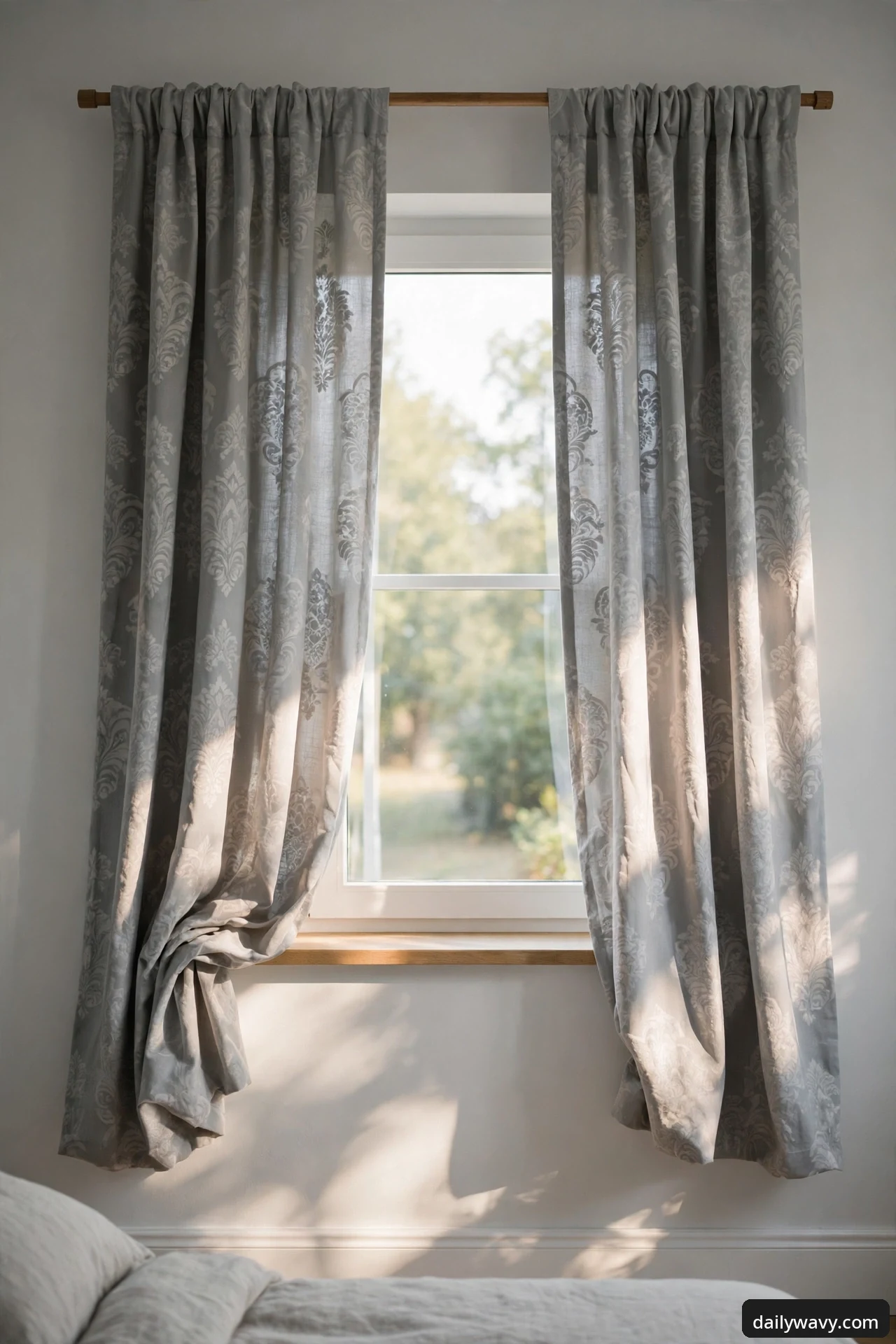
A tonal pattern means the print and the background share one color family, like ivory damask on cream or soft gray stripes on light gray. From across the room it reads as texture rather than pattern, which is exactly why it works so well in bedrooms. You get the richness of a print without the visual noise that makes a small room feel busy, especially against plain walls.
What to measure. Because tonal patterns are forgiving, you can use the standard 1.5 to 2 times fullness rule. Center any large motif on each panel before hemming: lay panels side by side and shift the cut so the pattern mirrors at the middle. Rod height 4 to 6 inches above the frame keeps the line clean.
Materials and placement. Look for cotton jacquard or printed linen in a single-tone design. Hang the curtains so the pattern repeats line up across the two panels when closed; a quick pin fitting before the final hem saves regret.
Make it work. Keep bedding and walls quieter than the curtains when you use this idea. A solid duvet in the background color of the fabric ties everything together, and one small patterned pillow is enough. If the rest of your walls are already busy, this might not be your treatment; let the curtains be the only pattern in the room.
5. A muted accent color
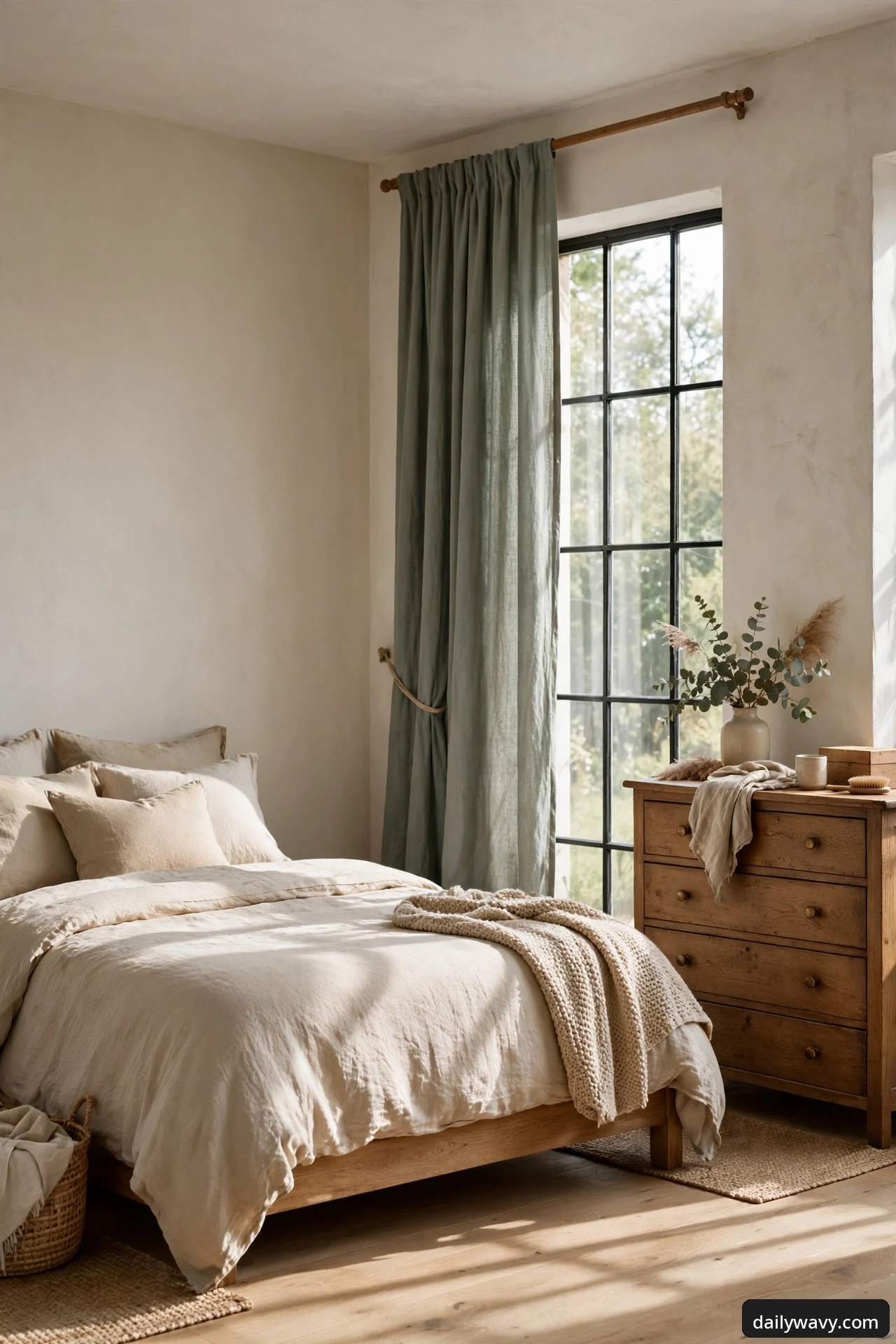
Colored curtains can feel risky, but muted tones remove the gamble. Dusty sage, soft clay, faded indigo, and warm greige bring color into the room without shouting. Because the saturation stays low, these curtains behave like neutrals: they work with wood, white bedding, and most rug colors, while adding the depth that all-white rooms sometimes lack.
What to measure. Use the full 2 times fullness rule for accent colors so the color reads rich and even: two 50-inch panels for a 50-inch window. Mount 4 to 6 inches above the frame and 3 to 4 inches past each side. Floor length with a slight break, half an inch, looks tailored.
Materials and placement. Cotton duck, linen blends, and cotton velvet all take muted dyes beautifully. If you are unsure which shade suits the room, order swatches first and tape them to the wall for two or three days to see them in morning and evening light. A shade that looks perfect at noon can turn muddy under warm bulbs.
Make it work. Pick up the curtain color once more in the room, a lumbar pillow, the edge of a throw, or artwork, so the accent feels intentional. Two repeats are enough; five starts to feel like a theme.
6. A small-scale botanical motif
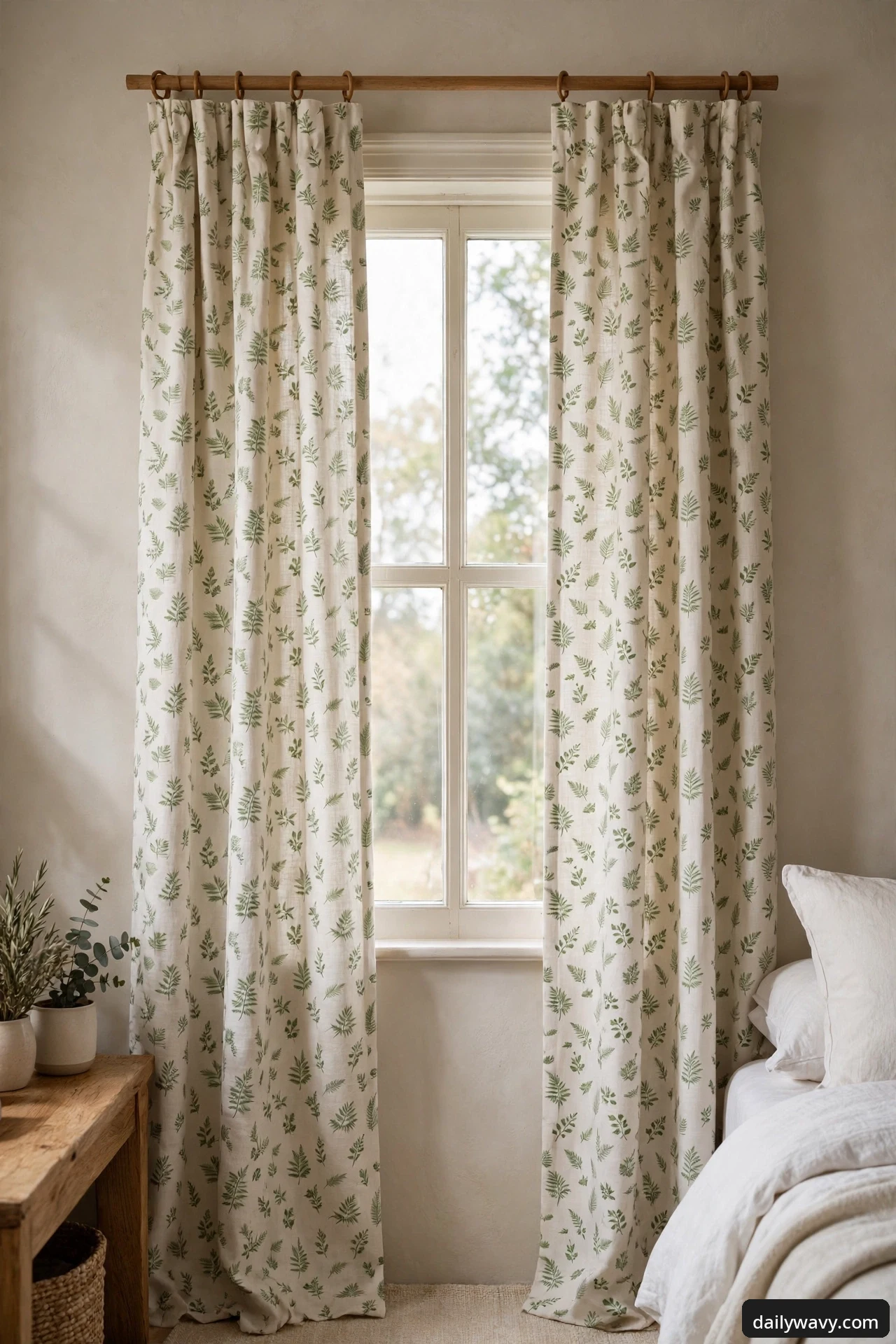
Tiny botanical prints are the quiet achievers of curtain patterns. Small leaves, sprigs, and ferns at a scale of 1 to 2 inches read as a gentle texture from the doorway and reveal their detail only up close. This makes them ideal for bedrooms where you want a hint of nature without the boldness of a large tropical print.
What to measure. Small prints forgive cutting mistakes, but still allow 10 percent extra fabric if you are hemming from yardage, so motifs can be centered. Use 1.5 to 2 times fullness. Rod placement follows the standard: 4 to 6 inches above the frame, 3 to 4 inches beyond each side.
Materials and placement. Cotton percale or a cotton and linen blend holds a crisp small print well. Match the background color of the print to your wall color for a seamless look, or let it contrast gently with white walls for a cottage feel.
Make it work. Botanical curtains pair naturally with one real plant in the room, but keep it simple: the curtains are the garden, so you only need a small potted fern or eucalyptus sprig on the nightstand. In humid climates, choose a washable cotton you can launder twice a year to keep the print fresh.
7. A clean geometric repeat
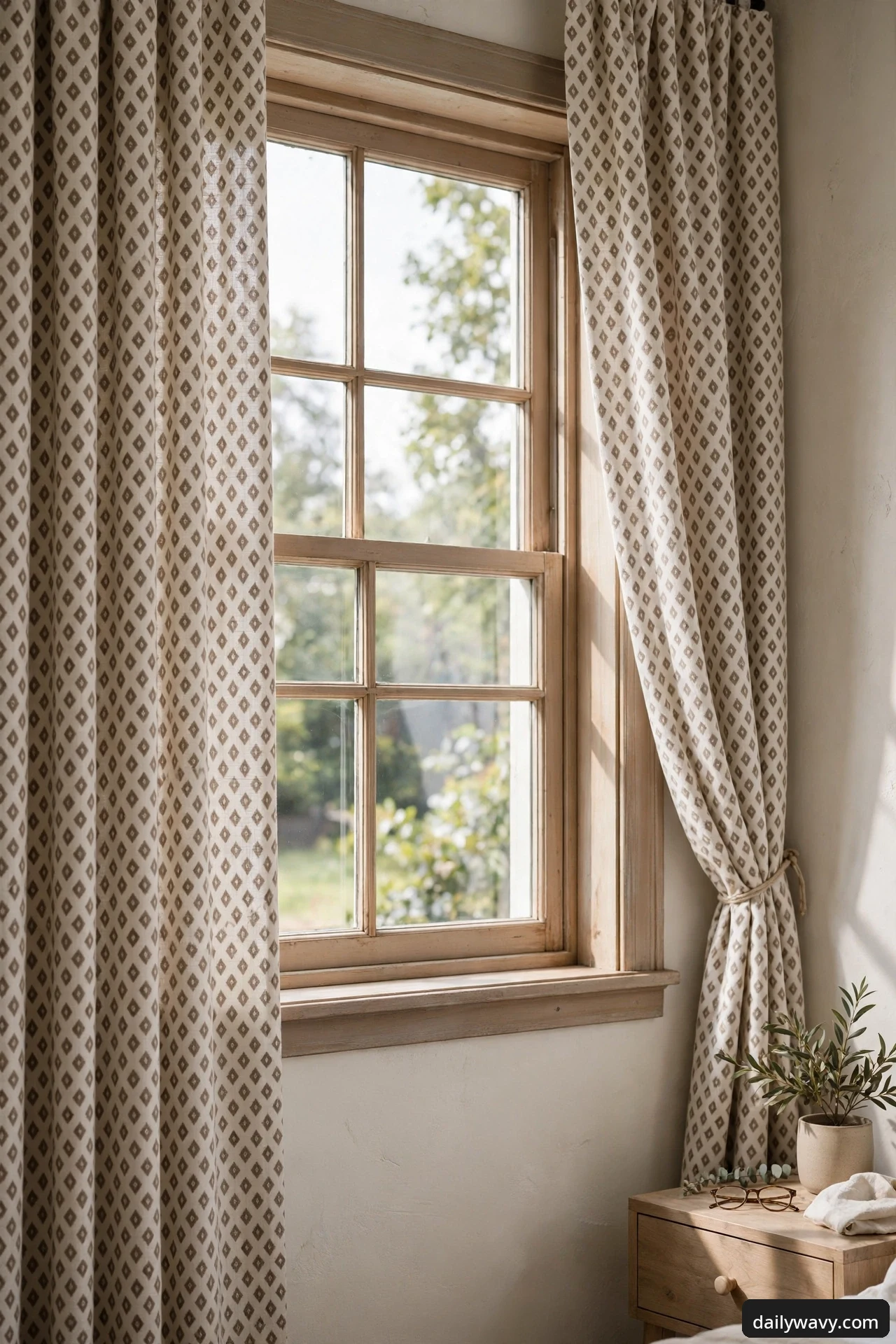
Geometric repeats, small diamonds, dots, or linear grids, bring order to a bedroom. The regularity of the pattern can feel calming, in the same way tidy shelves can feel restful. At a small scale and in a limited palette, a geometric curtain works in modern, transitional, and even Scandinavian-style bedrooms.
What to measure. Pattern matching matters here: buy panels from the same dye lot and check that the repeat aligns at the center seam when the curtains are closed. Allow 1.5 times fullness at minimum; 2 times looks plusher. Standard rod height and extension apply.
Materials and placement. Printed cotton or a tight-weave polyester blend keeps geometric lines crisp through washing. Iron or steam along the fold lines so the pattern does not distort at the pleats. A rod with simple finials keeps the focus on the pattern.
Make it work. Balance is the whole game with geometrics. Pair them with solid bedding and a plain rug, and let one other straight-lined element in the room, a framed print or a bench, echo the geometry. If your duvet is already patterned, choose the plainest geometric you can find or switch to a different idea on this list.
8. A darker trim against a light field
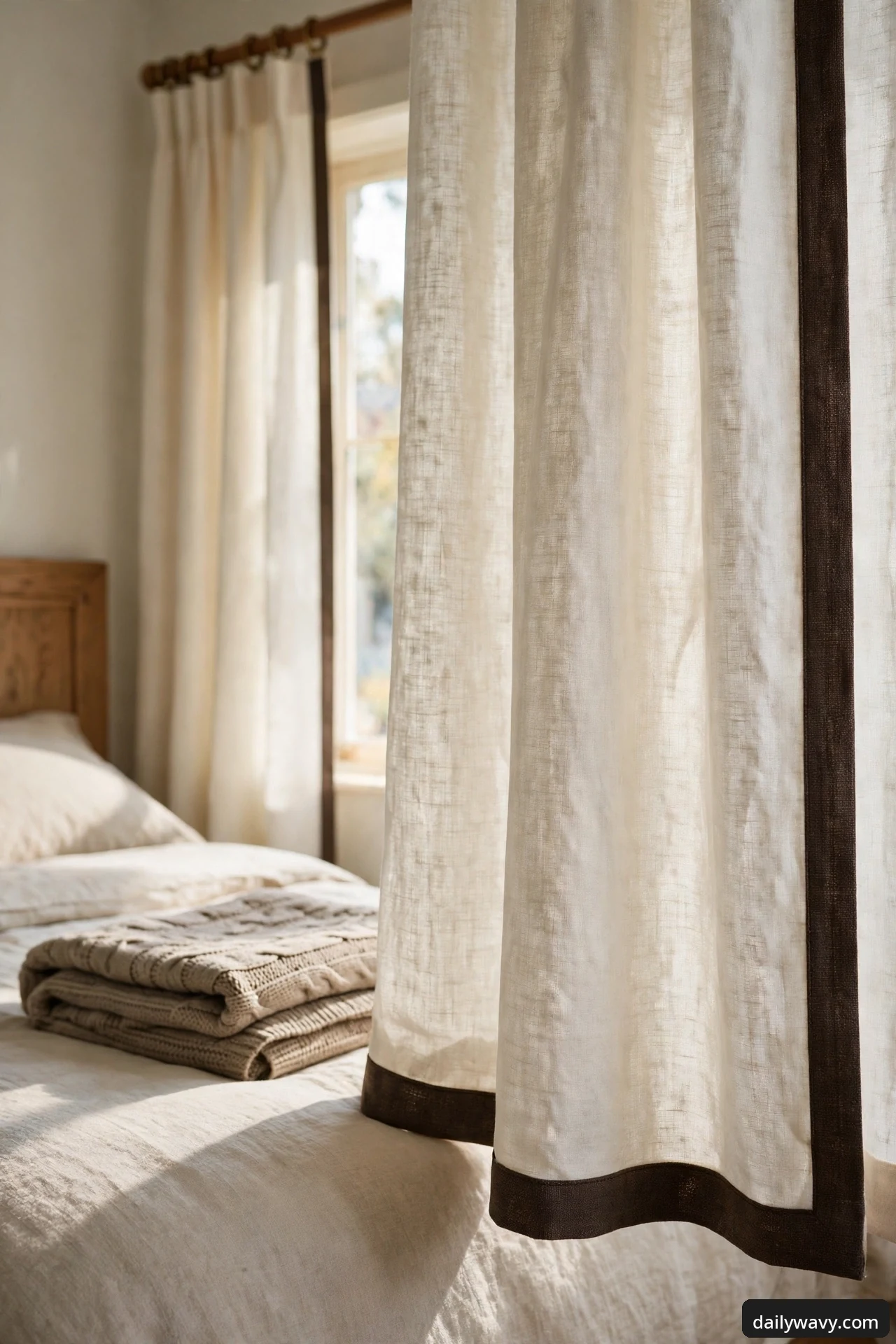
Where the contrast border runs along the leading edge, this treatment puts a darker band along the bottom hem, or along both the hem and the leading edge, against a light fabric. The effect is grounding: the eye travels down the pale curtain and lands on a deliberate finish, like the baseboard of a well-dressed wall. It is a small detail that makes ready-made curtains look custom.
What to measure. A bottom trim band of 4 to 6 inches suits standard 84-inch panels. If you are adding trim yourself, hem the curtain first, then attach the band with a half-inch seam allowance. Keep fullness at 1.5 to 2 times.
Materials and placement. Grosgrain ribbon, linen tape, or a strip of contrasting fabric all work as trim. Choose a trim color pulled from the room: the headboard fabric, a picture frame, or the darkest tone in the rug. Attach with fusible web for a no-sew option, or topstitch for durability through washing.
Make it work. This detail shines on curtains that stay closed at night, since the trim shows in full. During the day, tie-backs at the middle of the panel let the band peek out in a neat fold. Wash the trim fabric first if it is a different fiber than the curtain, so nothing shrinks unevenly later.
9. A relaxed fabric texture
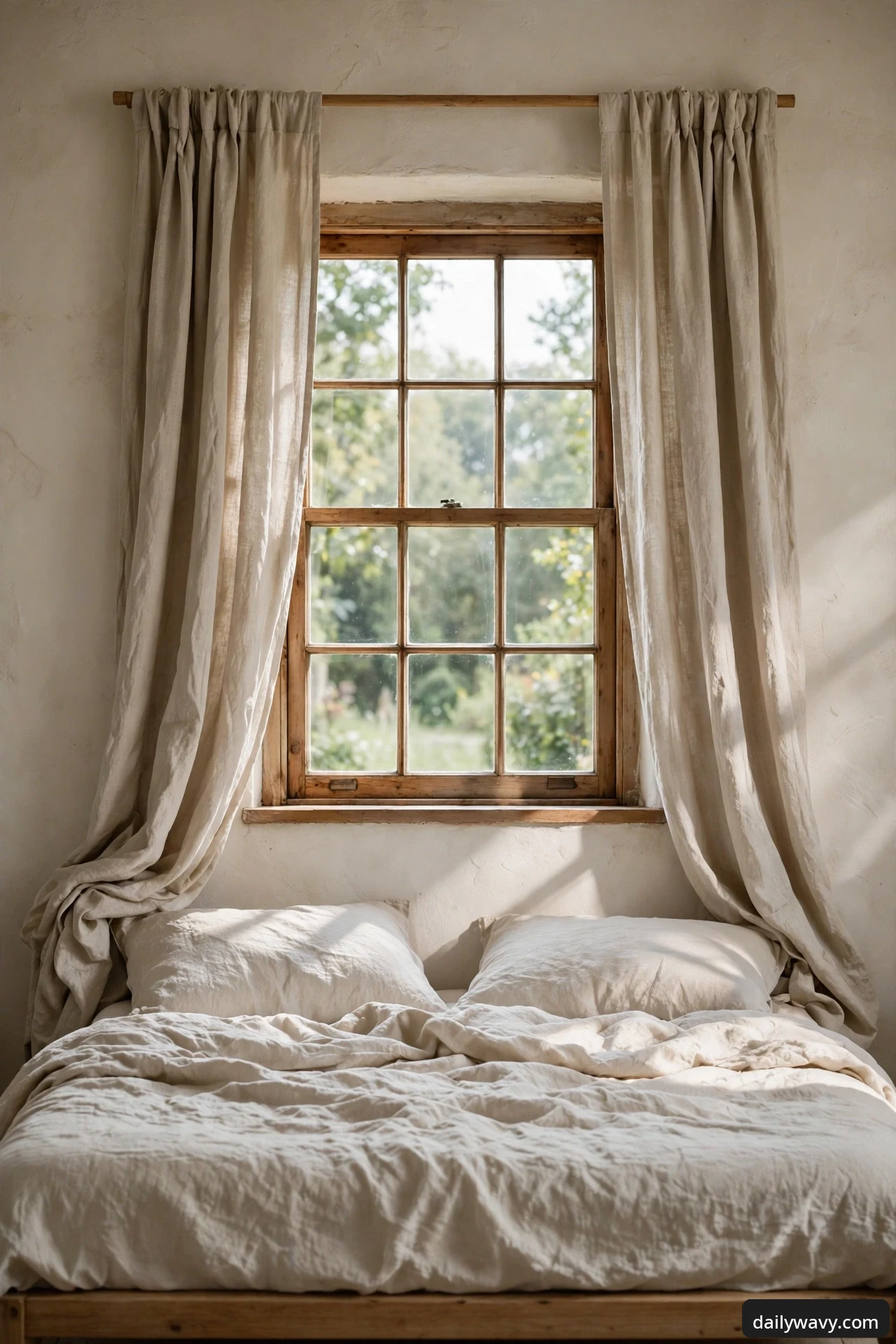
Not every bedroom wants crisp tailoring. Washed linen, crinkled cotton gauze, and slubbed voile bring a soft, lived-in ease that suits relaxed, coastal, and bohemian bedrooms. These fabrics are forgiving: wrinkles are the point, so you never iron, and the casual drape makes even a basic rod look intentional.
What to measure. Relaxed fabrics need generous fullness to drape well: 2 to 2.5 times the window width. Length can break softly on the floor with 1 to 2 inches of extra fabric. Because these fabrics are often narrower, plan on three panels for a wide window instead of two.
Materials and placement. Look for garments-washed or stonewashed linen, or cotton gauze with a crinkle finish. Pre-wash in cold water and line dry to lock in the texture before hemming. Hang on clip rings or a simple wooden rod; fussy hardware fights the casual mood.
Make it work. Keep the rest of the window simple: no valance, no heavy tie-backs. A single relaxed panel per side, pushed casually to the frame, is the whole look. These fabrics filter light gently but do not darken a room, so pair with a blackout shade behind them if you are a light sleeper.
10. A plain treatment with simple hardware
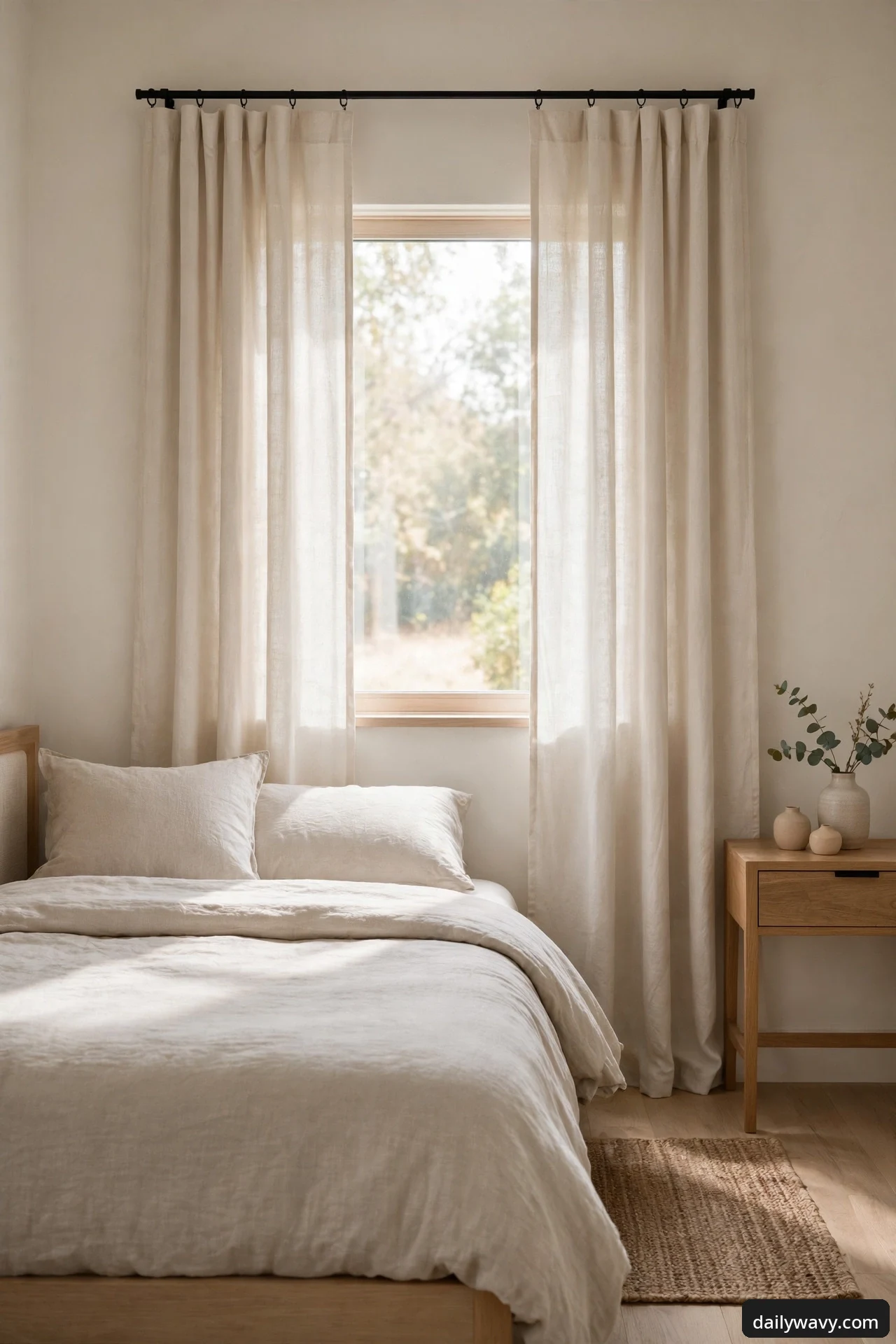
Sometimes the strongest choice is the quietest one. Plain curtains in a solid neutral on a slim, simple rod let the window, the light, and the rest of the room do the talking. This is the treatment for bedrooms where the view is the feature, or where bedding and art already carry plenty of interest. It is also one of the most budget-friendly ideas on this list, since plain panels usually cost less than patterned ones.
What to measure. A 1-inch diameter rod in matte black, brushed nickel, or natural wood suits most bedrooms. Mount 4 to 6 inches above the frame and extend 3 to 4 inches past each side. Panels at 1.5 times fullness in a medium-weight cotton or linen blend hang cleanly on clip rings or back tabs.
Materials and placement. Choose a solid in the room’s main neutral: warm white, greige, or soft gray. Hang the rod level and double-check with a measuring tape from the floor on both ends, because a crooked rod ruins a plain treatment faster than anything. Keep finials small and simple.
Make it work. With plain curtains, the details that show are the ones that matter: straight hems, even folds, and hardware that matches the room’s metals. Steam the panels after hanging and train the folds with loose ties for the first day so they fall in even pleats. Our narrow living room layout ideas use the same keep-it-simple logic for long walls, if you want to carry the calm through the rest of the house.
Frequently asked questions
How high should I hang bedroom curtains?
Mount the rod 4 to 6 inches above the window frame, or closer to the ceiling in rooms with low ceilings to make the window feel taller. The panels should end at the floor, at the sill for short treatments, or puddle slightly if you like a soft look.
How wide should curtain panels be?
Aim for 1.5 to 2 times the window width in total panel width. Sheers and relaxed fabrics usually look best at 2 to 2.5 times, though light-filtering sheers work well at 1.5 to 2 times. Too little fullness makes curtains look skimpy when closed.
Do bedroom curtains need to block light?
Only if light disturbs your sleep. Light-filtering fabrics give privacy with a bright feel during the day. If you need darkness, add a blackout roller shade or lining behind any of the treatments above rather than giving up the look you love.
Are curtain cords safe in a kids’ bedroom?
Looped cords can be a strangulation hazard for small children. Use cordless or wand-operated treatments in any room a child sleeps or plays in. If you keep cords, install a cord cleat at least 5 feet high and wrap cords tightly after every use.
How do I keep curtains off a radiator?
Never let fabric rest against a hot radiator or heater. Keep curtains away from open flames such as candles too. Choose sill-length panels that end above the unit, or mount the rod so panels hang at least 3 inches clear of it. For baseboard heaters, a short cafe-style curtain above the unit is the safer pick.
How often should I wash bedroom curtains?
Washable cotton and linen panels do well with a gentle wash two to four times a year, more often in dusty or humid climates. Sheers may need it quarterly since they show dust faster. Always check the care label, and re-steam after hanging.
Curtains are one of the quickest ways to change how a bedroom feels, and as you have seen, the best results come from getting the basics right: the right fullness, the right height, and a fabric that suits the way you live. If you are refreshing more than the windows, browse our Home & Decor ideas for matching inspiration across every room. And if you are deciding between treatments for different rooms, our living room curtain ideas use the same measurements-first approach for a bigger shared space.



One Comment