
16 Tv Wall With A Console Ideas for a More Considered Setup
A television does not have to be the thing you apologize for when guests walk in. With a console underneath…
A television does not have to be the thing you apologize for when guests walk in. With a console underneath and a little intention on the wall around it, the screen can sit inside a setup that looks planned rather than parked. The trick is treating the whole arrangement as one piece: the TV, the console, the wall behind them, and the objects around them all answering to each other. These sixteen ideas each change one element of that arrangement. Start with whichever one bothers you most about your current setup, and the rest will feel easier from there.
Jump to an idea
- A shallow ledge below the screen
- A single sculptural lamp beside the TV
- Woven baskets at floor level
- A long plant trailing beside the console
- A tonal frame around the screen
- A low row of books on the console
- A decorative box hiding loose accessories
- A pair of small ceramic vessels
- A wood finish that repeats in the room
- Soft side lighting instead of glare
- A generous blank border around the screen
- A monochrome grouping of decor objects
- A slim vertical artwork beside the TV
- A textured backing surface
- A low floral arrangement under the screen
- A recessed visual niche around the screen
The measured approach that makes every idea below work
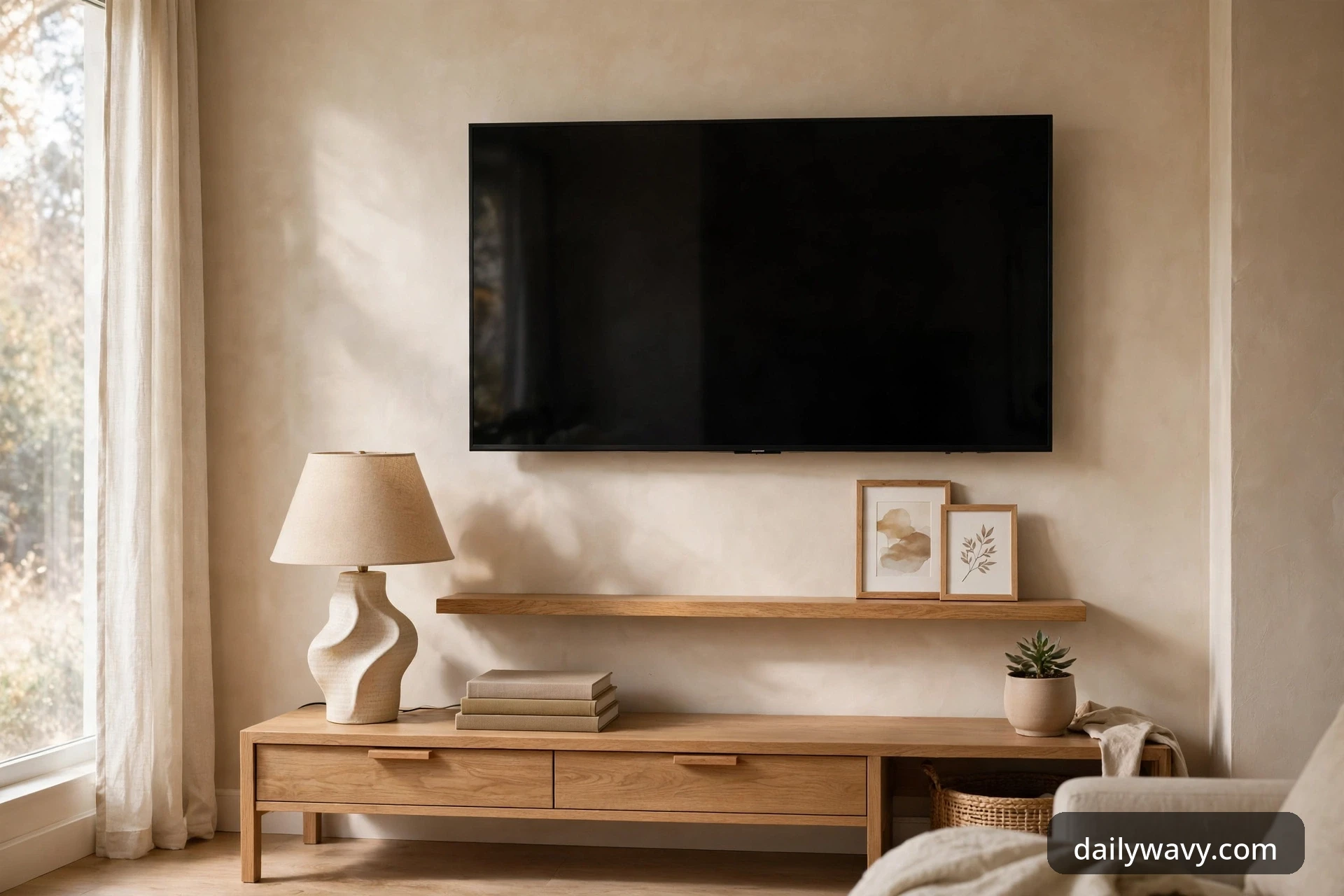
Before the styling comes the math, and it is simpler than it looks. Mount the screen so its center sits at your seated eye level, which for most sofas lands around 42 inches from the floor to the middle of the TV. Use a mount rated for your TV’s weight and size, anchored into studs. If the TV stands on the console instead of the wall, choose a stand height that gets you close to that same number. The console itself should be at least as wide as the screen, and a few inches wider on each side looks more deliberate than a perfect match. Leave a breathing gap between a wall-mounted screen and the console top, roughly 6 to 10 inches, so the soundbar and the first layer of styling have room without crowding the picture. Run cables behind the console or through a slim raceway painted the wall color, because a tangle of cords can undo a considered setup fast. With those proportions set, every idea below is decoration on a solid foundation.
1. A shallow ledge below the screen
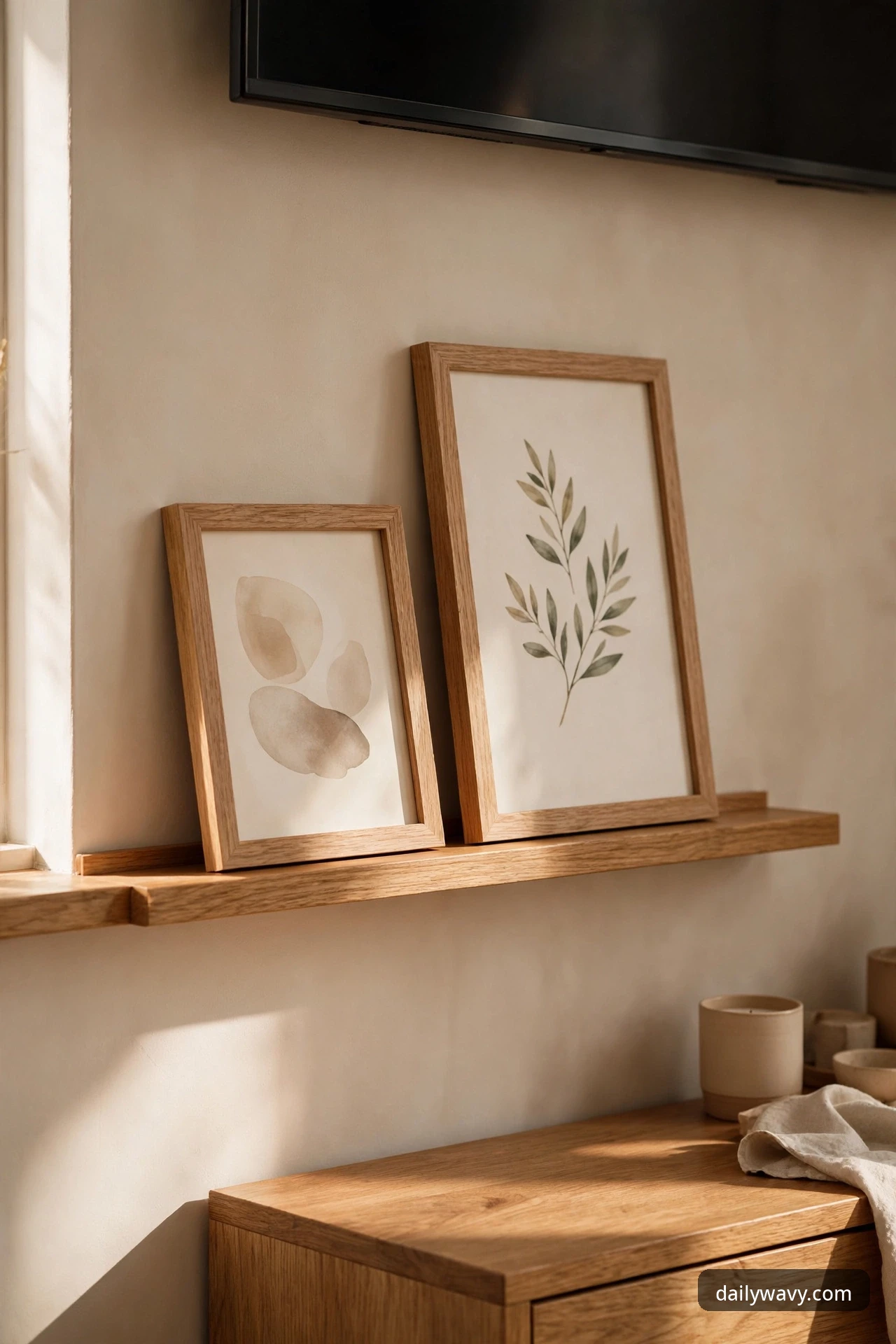
A narrow picture ledge mounted between the screen and the console turns the dead gap into a display shelf. Keep it shallow, four to six inches deep, so it reads as a line rather than a shelf. Style it with two or three small framed prints or postcards leaning against the wall, varying the heights so the line has a rhythm. The ledge works best when the frames stay below the bottom edge of the TV, so nothing competes with the screen for attention. Mount it into studs with two brackets, and test it with the heaviest frame before you finish styling. When you want a change, you swap the prints without a single new hole in the wall.
Try this: Choose frames in one material, like all oak or all black metal, so a rotating display still looks calm.
2. A single sculptural lamp beside the TV
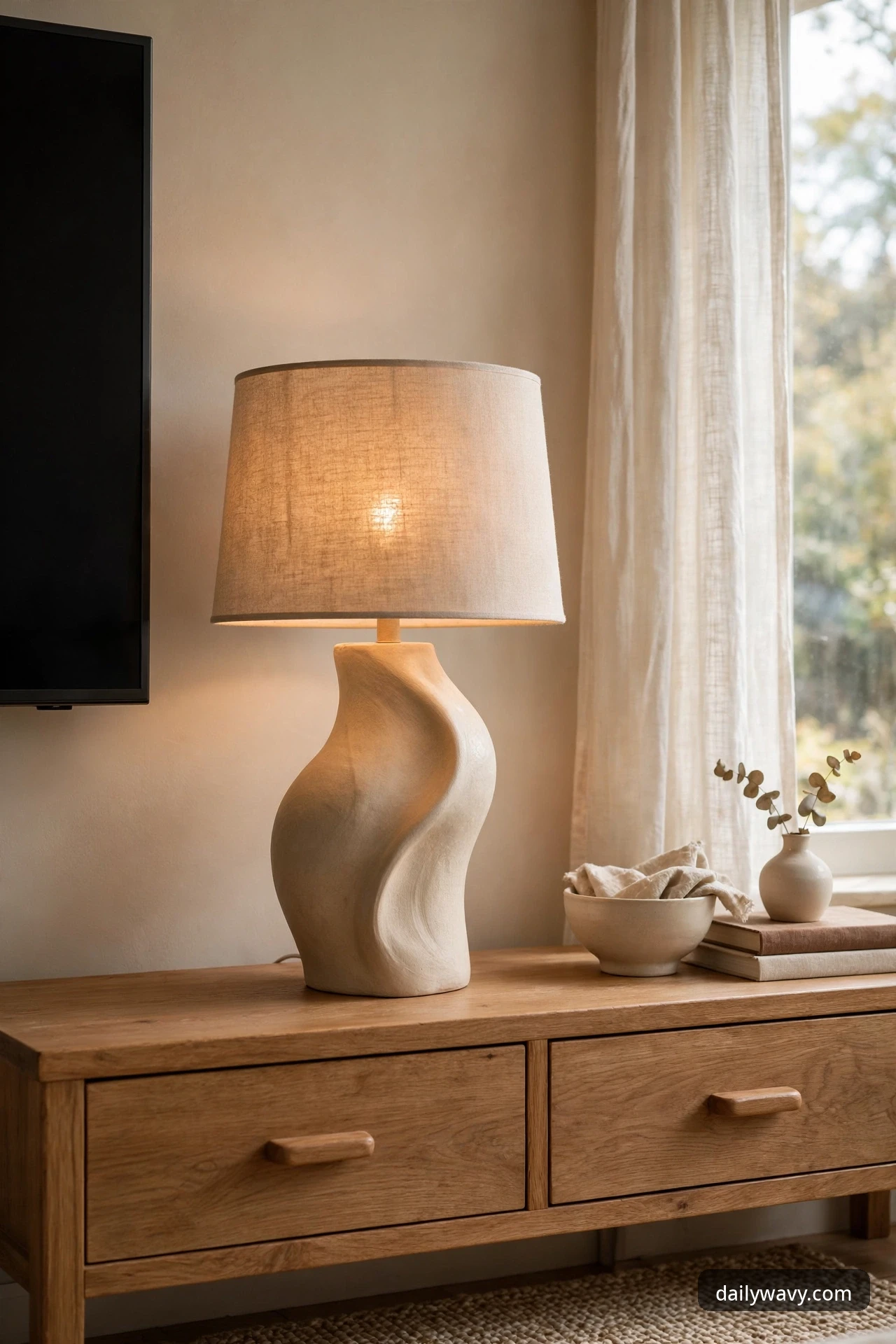
One interesting lamp can work better than a pair of matching ones beside a screen. Pick a shape with some personality, a ceramic gourd base, a paper lantern column, a brass arc, and place it on one end of the console so the arrangement stays asymmetrical. The lamp does double duty: it balances the rectangle of the TV and gives you soft light for evening viewing without overhead glare. Keep the shade top below the TV’s bottom edge so the bulb never peeks into your eyeline from the sofa. A warm bulb, around 2700K, keeps the whole wall cozy after dark.
Try this: Put the lamp on a dimmer plug so you can drop it low during movies and raise it for reading.
3. Woven baskets at floor level
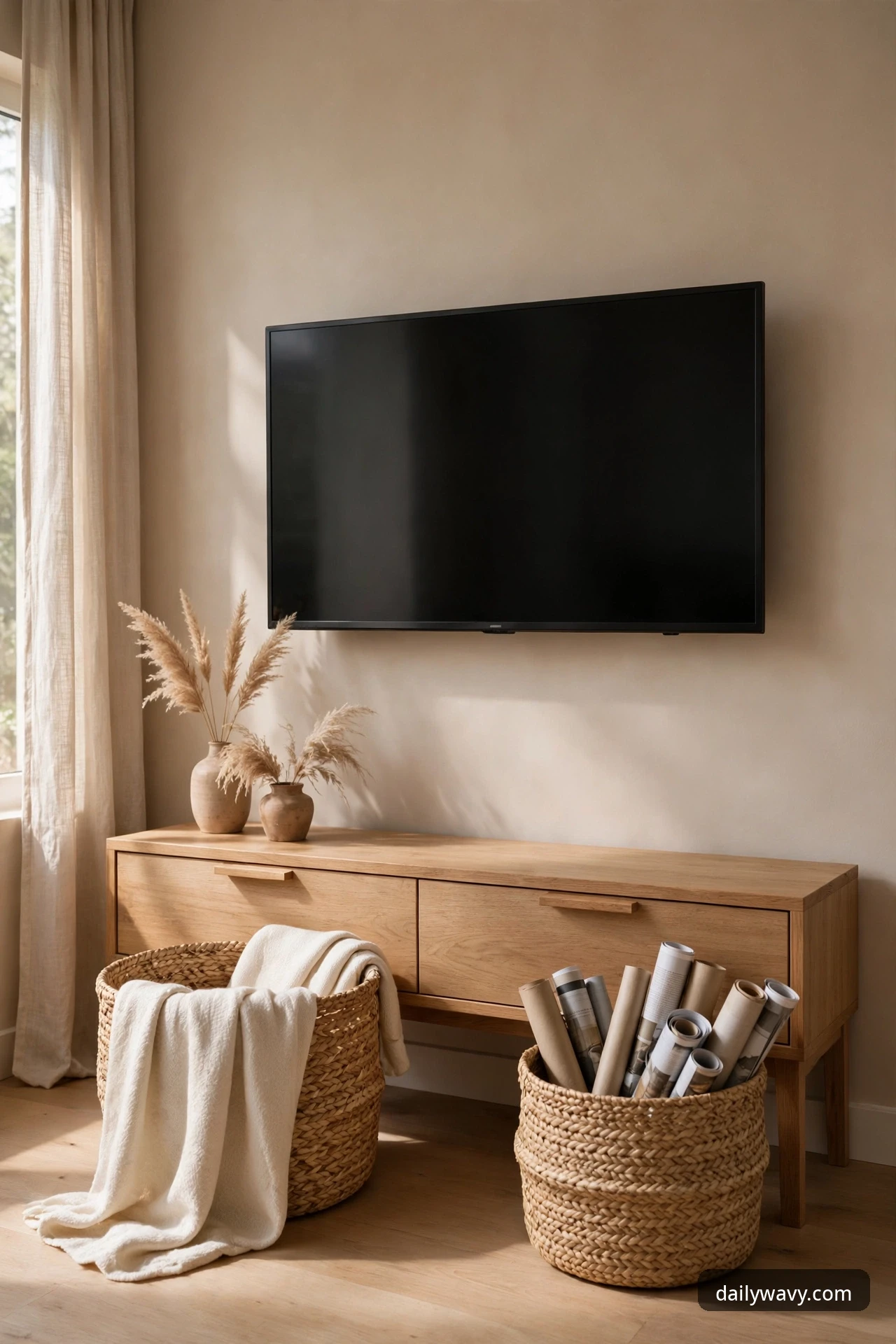
The space under and beside a floating console often goes unused, and it is the perfect home for woven baskets. A basket with a throw blanket draped over the rim, another holding magazines or game controllers, and suddenly the bottom of the arrangement has weight. Choose baskets in natural seagrass or rattan for warmth, and keep their tops at or below the console line so the silhouette stays clean. Round baskets soften the hard rectangle of the TV; rectangular ones echo it. Either works; keeping to one shape looks calmer.
Try this: Line one basket with a fabric tote inside so small items like batteries and chargers stay contained but invisible.
4. A long plant trailing beside the console
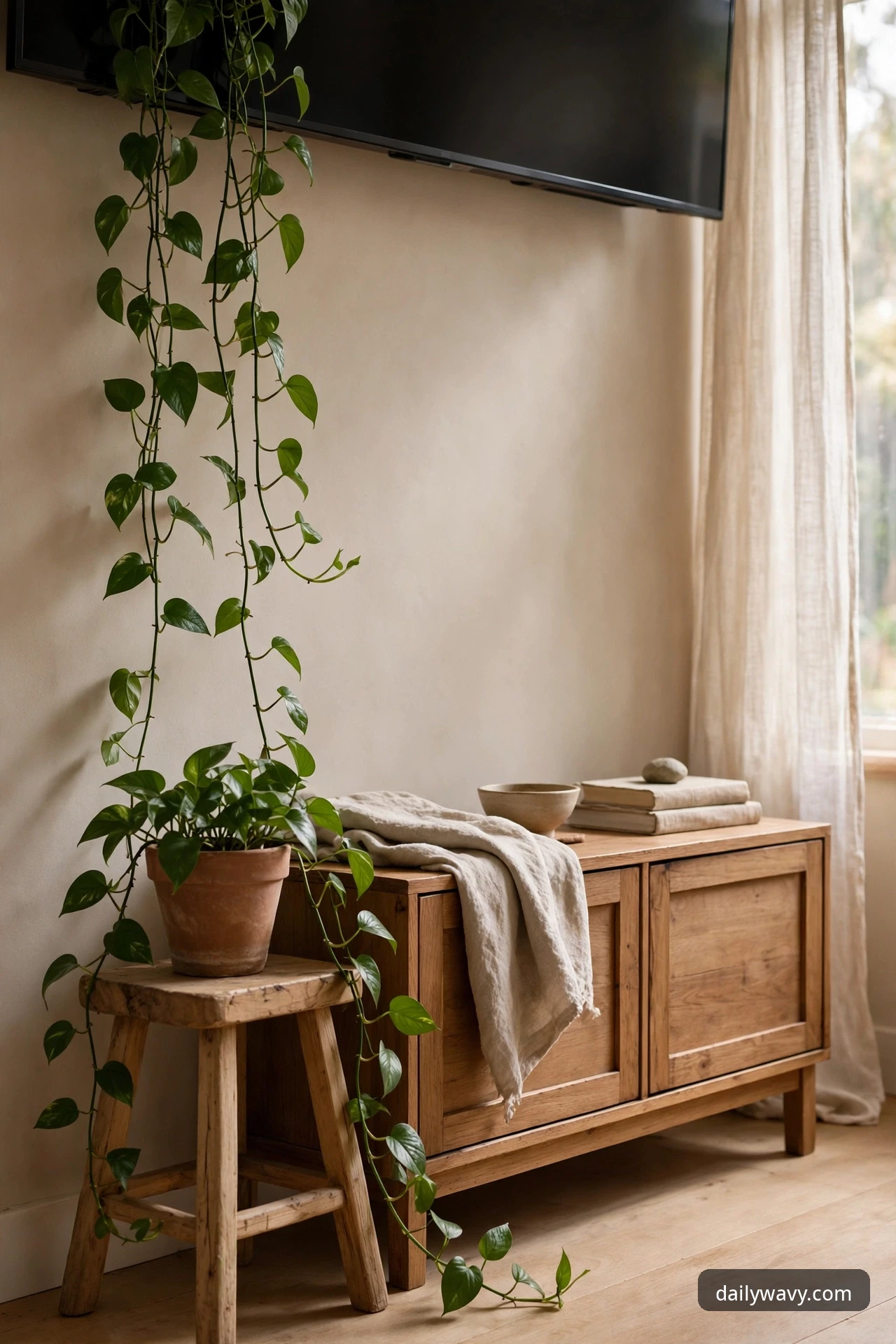
A trailing plant pulls the eye downward and softens the technology in a way nothing else does. A pothos or philodendron in a simple pot on the floor beside the console, with vines long enough to spill, adds life to a wall that can otherwise feel all rectangles and cables. Keep the pot to one side rather than centering it, and let the plant cascade away from the screen so leaves never drift in front of the picture. A plant on a small stool gains height without blocking sightlines. Watering needs stay minimal for pothos, which tolerates the lower light beside most TV walls.
Try this: If your wall gets little natural light, a high-quality faux trailing plant in a real ceramic pot still gives the softness.
5. A tonal frame around the screen
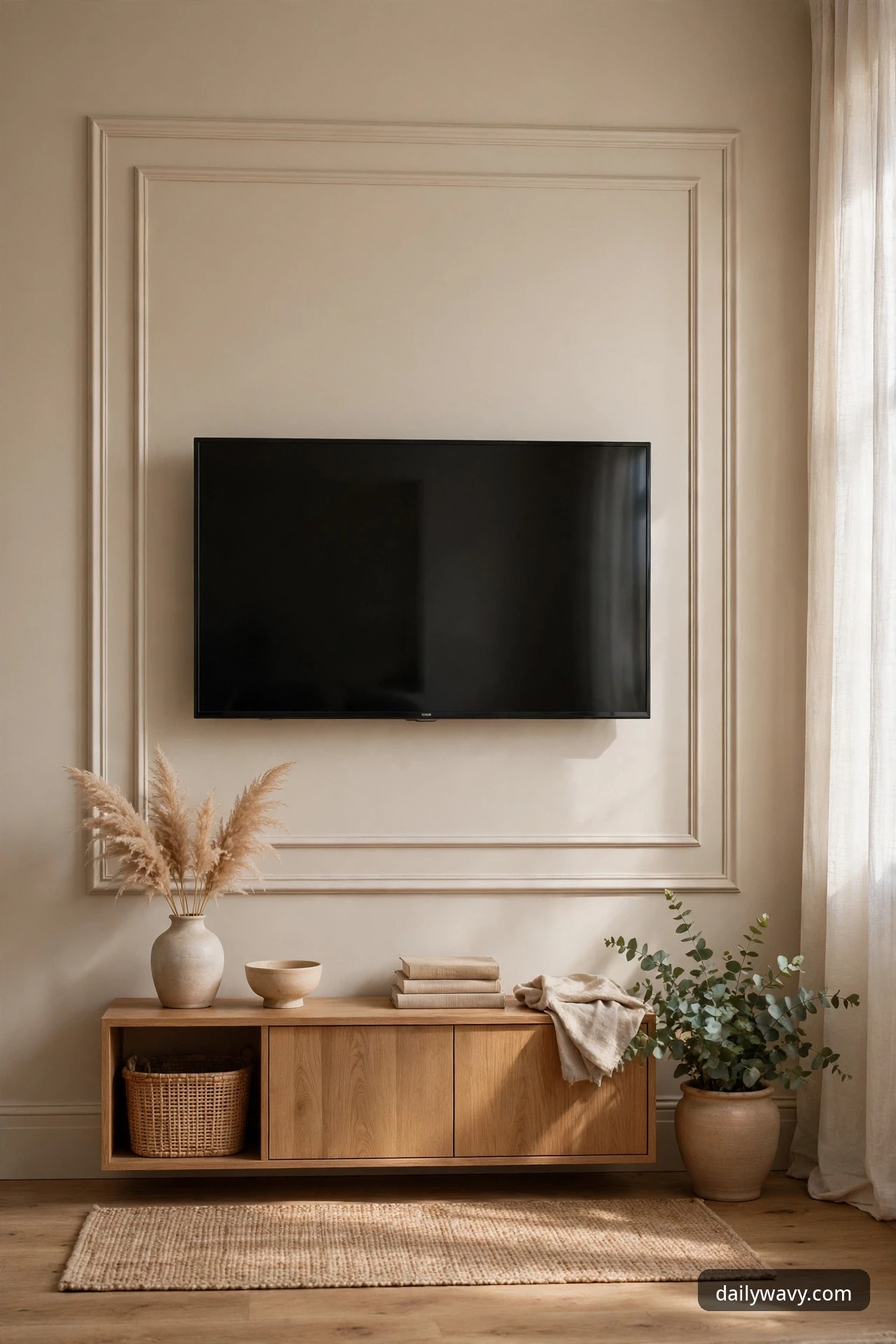
Paint the wall area around the TV in the same color family as the rest of the wall, but go a shade or two deeper, and the screen gains an invisible frame. This works especially well with molding strips arranged in a rectangle around the TV, painted the exact wall color. The molding adds architectural interest in daylight and disappears at night, leaving the picture to float. A quart of matching paint and a few lengths of trim can often keep the whole project under $60. Keep the rectangle generous, at least a foot of border on every side, so it reads as an intentional panel rather than a tight outline.
Try this: Run the molding rectangle slightly off-center toward the seating side if the wall has a door or window on one end.
6. A low row of books on the console
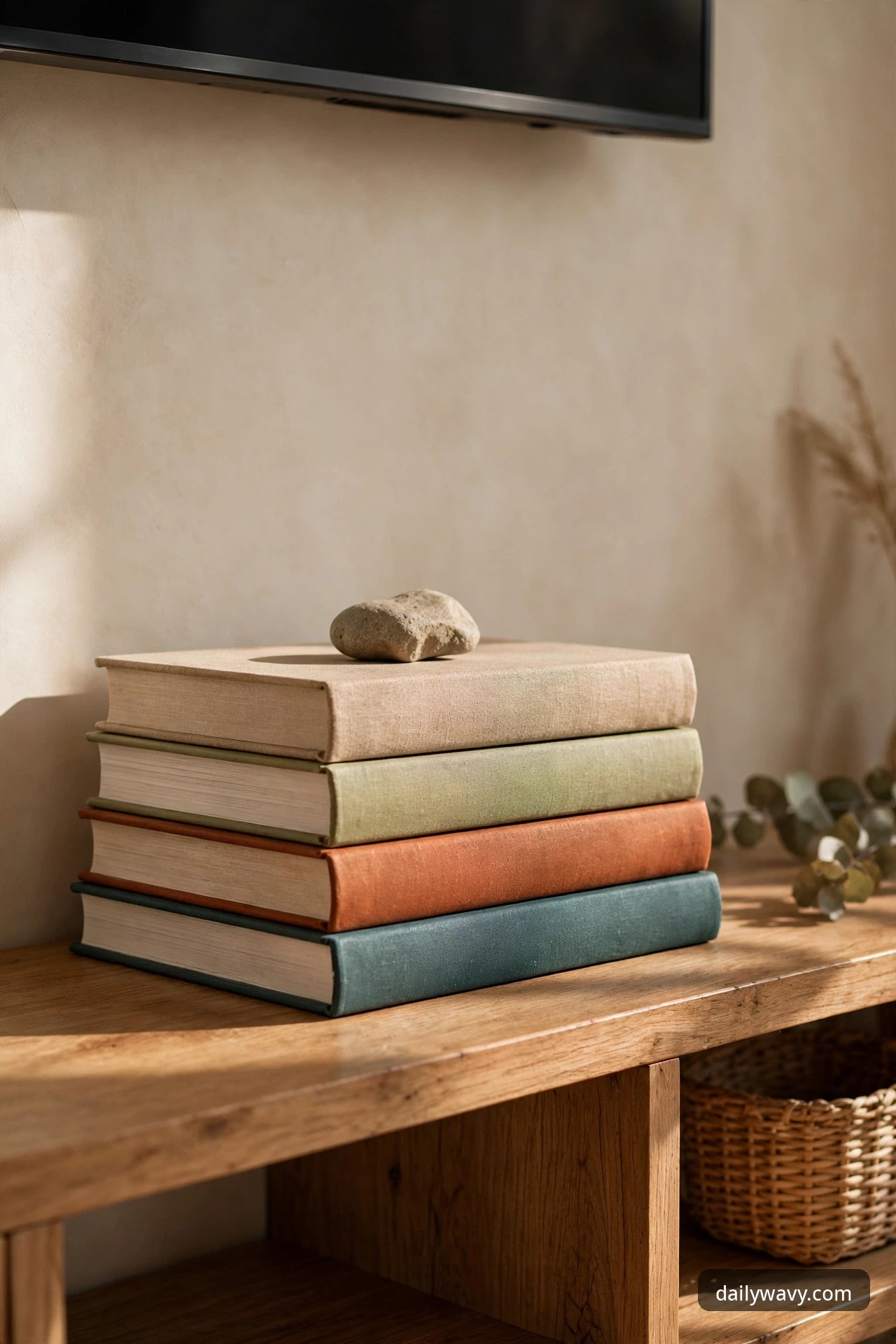
Stacking art and photography books horizontally on the console gives the setup substance without height. Three to five books in a low pile read as one solid block, and their varied spine colors add a quiet stripe of interest. Keep the stack under six inches tall so it stays well below the screen, and top it with one small object, a candle, a tiny dish, a stone, to finish it. A row of two or three such stacks across a wide console creates rhythm. Leave one section of the console surface empty for the remote and everyday items.
Try this: Sort the pile with the largest book at the bottom and align all spines on one edge for a tailored look.
7. A decorative box hiding loose accessories
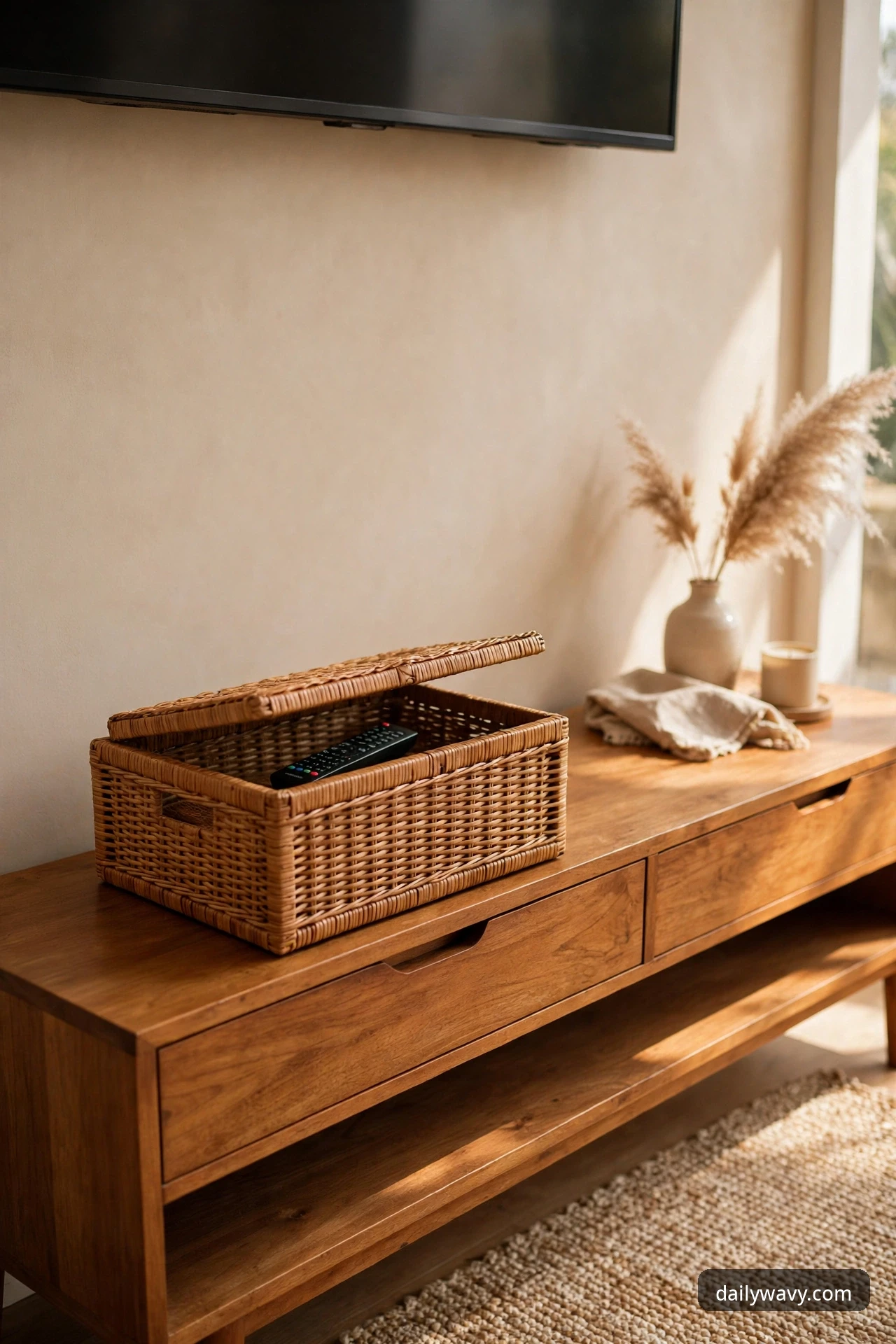
Every TV wall accumulates clutter: remotes, streaming sticks, charging cables, the game controller you swear you will put away. A handsome lidded box on the console swallows all of it. Choose a box large enough for two remotes and a coiled charger, roughly 10 by 6 inches, in a material that echoes the room, lacquered, woven, or wood. The closed lid turns chaos into a single clean shape. Place it at one end of the console, slightly angled, so it looks styled rather than stored.
Try this: Drop a small piece of felt inside the lid so remotes land softly and the box stays quiet.
8. A pair of small ceramic vessels
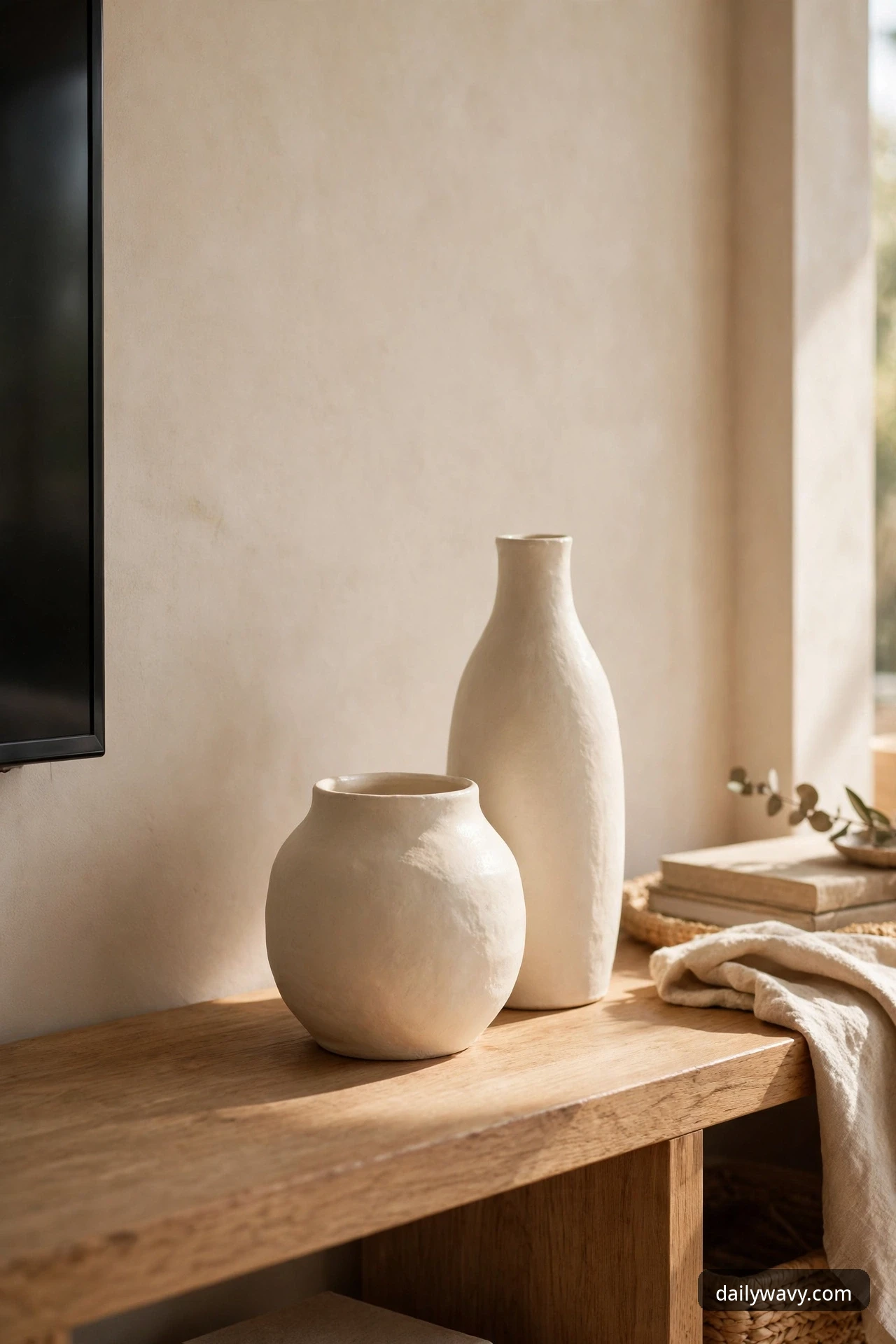
Pairs are a classic styling trick for a reason: two objects together look deliberate where one looks lonely and three look busy. Set two small ceramic vessels, different heights but the same glaze, on the console off to one side of the screen. The height difference keeps the pair from looking static. Handmade stoneware in a matte finish plays well against the glass of the TV. Keep them clear of the center so the screen keeps its breathing room, and resist adding water and flowers unless the vase shape suits it; the vessels are enough on their own.
Try this: If the console is wide, repeat the pair at the opposite end in a different glaze for a mirror rhythm.
9. A wood finish that repeats in the room
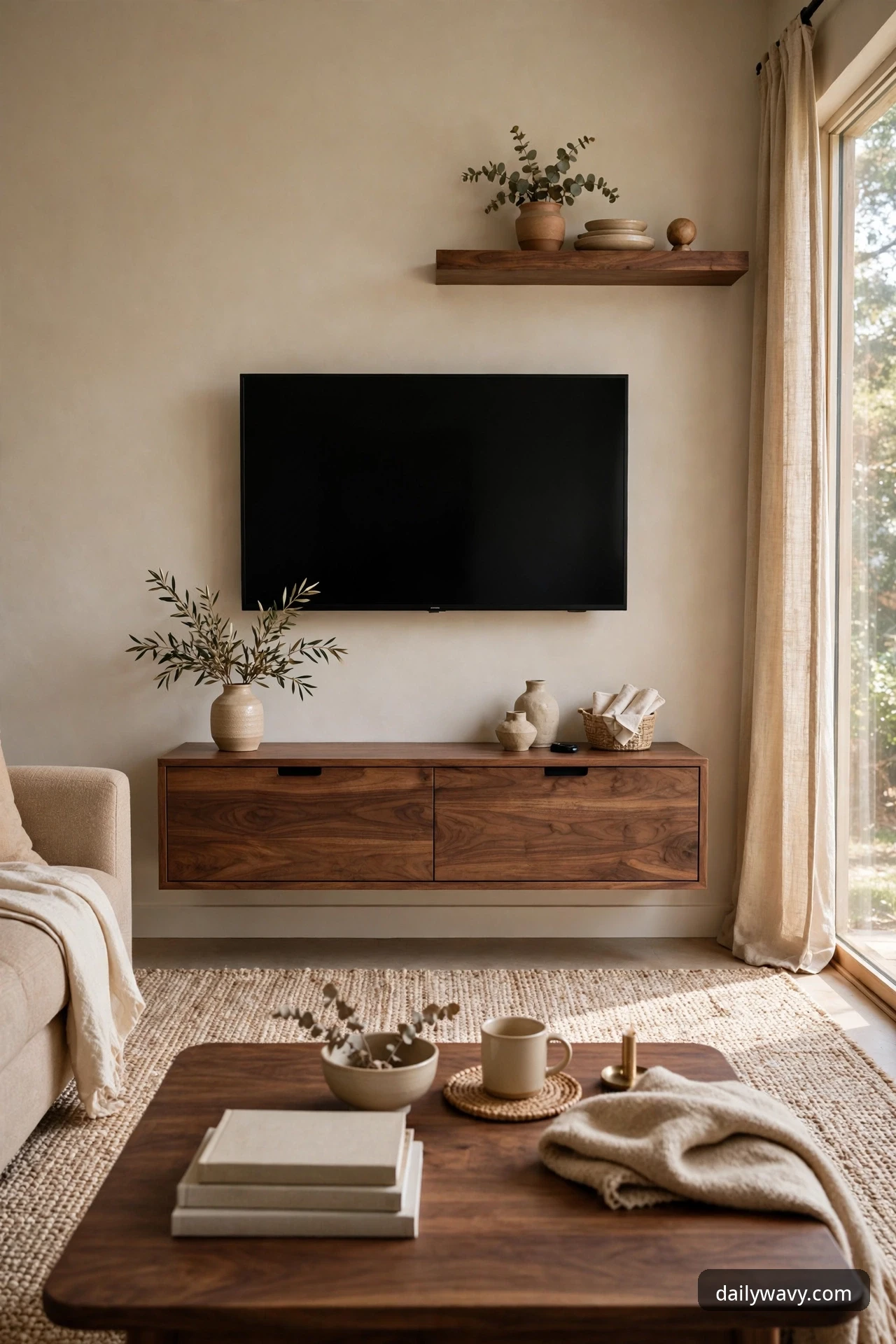
A console in the same wood tone as your coffee table or shelving ties the whole room together without any matching set. Oak with oak, walnut with walnut, and the TV wall stops feeling like a separate installation. If your existing pieces are different tones, a console in a mid-tone wood acts as a bridge. When buying, look for real wood veneer over solid edges rather than a printed finish; it looks and feels more substantial than a printed finish. The console top can stay mostly clear because the material itself is doing the decorating.
Try this: Carry the same finish onto one small accent, like a picture frame or a tray, so the repetition feels intentional.
10. Soft side lighting instead of glare
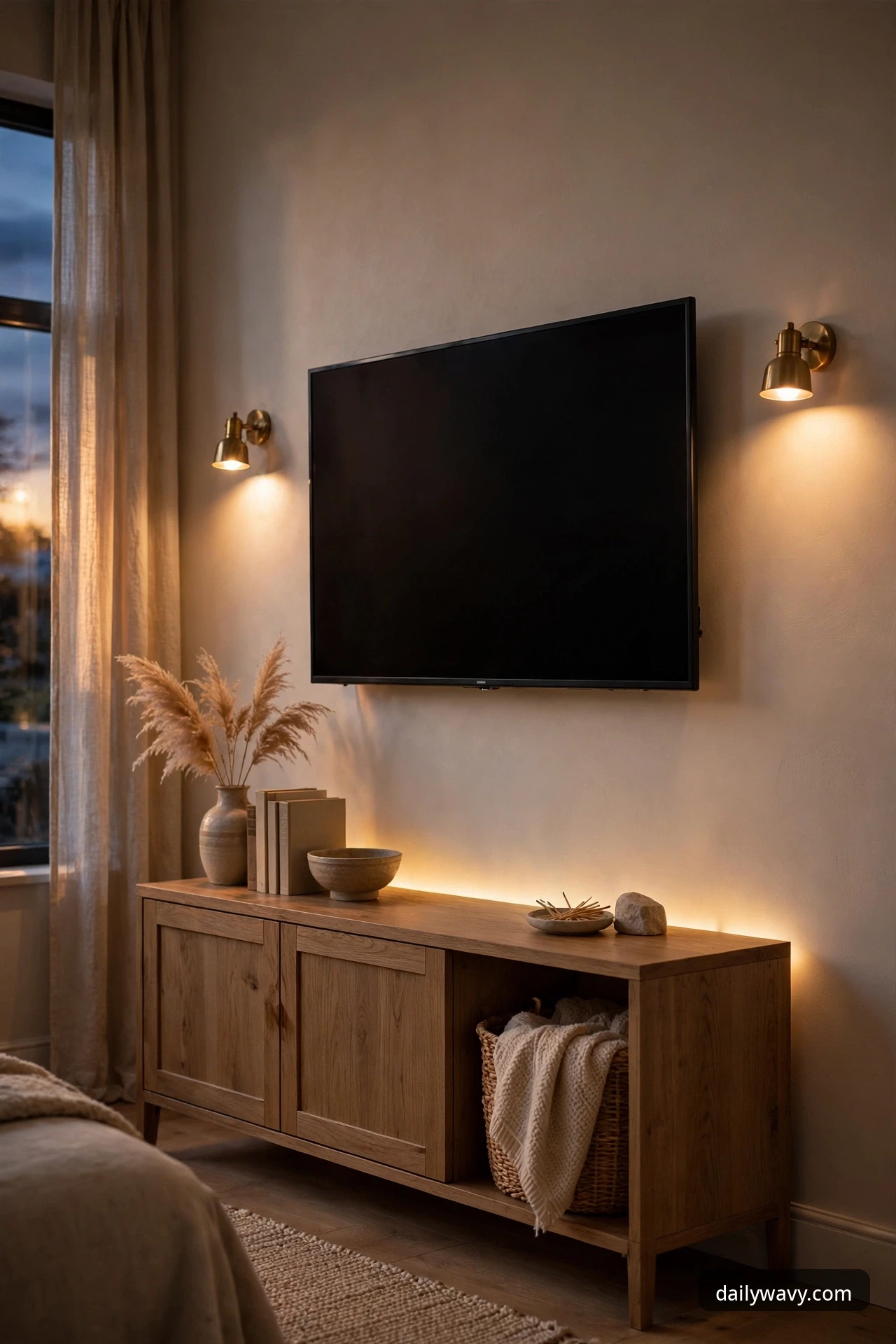
The best TV lighting comes from the sides, never from above the screen where it reflects. A pair of small picture lights on the wall beside the console, or LED strips hidden behind it washing the wall, gives the room depth without a single hotspot on the glass. Warm light around 2700K keeps the mood relaxed. If you use a bias light behind the TV itself, keep the glow subtle; it should lift the screen off the wall, not outline it in neon. Put everything on one smart plug or a single dimmer so movie mode is one tap.
Try this: Angle side lights toward the wall rather than the room for a gallery-like wash that flatters everything on the console.
11. A generous blank border around the screen
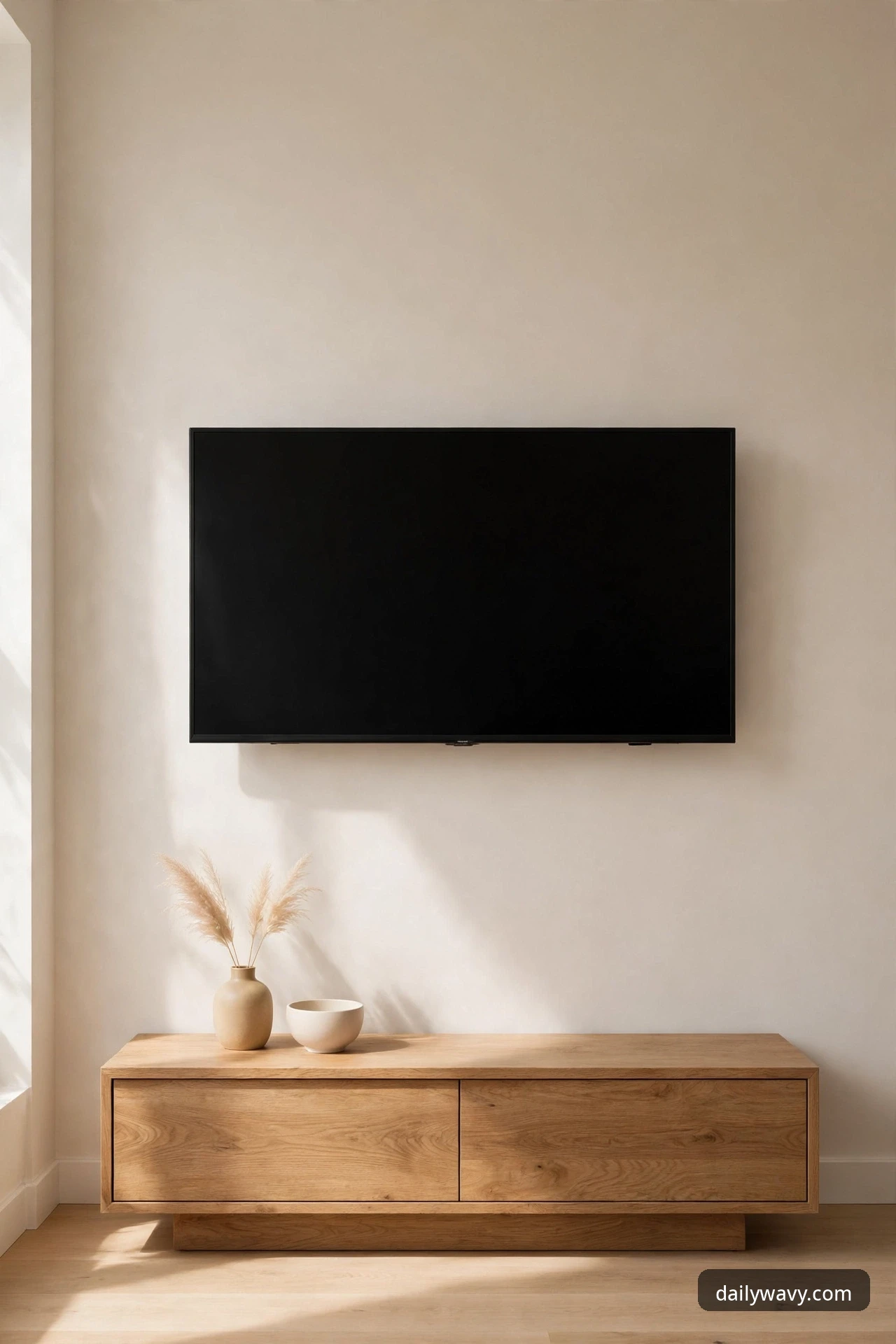
The most considered setups are often the emptiest. Giving the TV a wide, uncluttered border of plain wall, at least a foot on every side, lets the screen read as a single composed element instead of one more rectangle in a collage. This can be the hardest idea on this list because it asks you to remove things, not add them. Take down the small frames that crept up around the TV, move the clock to another wall, and let the console hold only two or three styled objects. The blank space is the design. It makes the room feel calmer and the screen feel more cinematic.
Try this: Photograph the wall, then delete objects in the photo mentally until the composition feels settled before you touch anything.
12. A monochrome grouping of decor objects
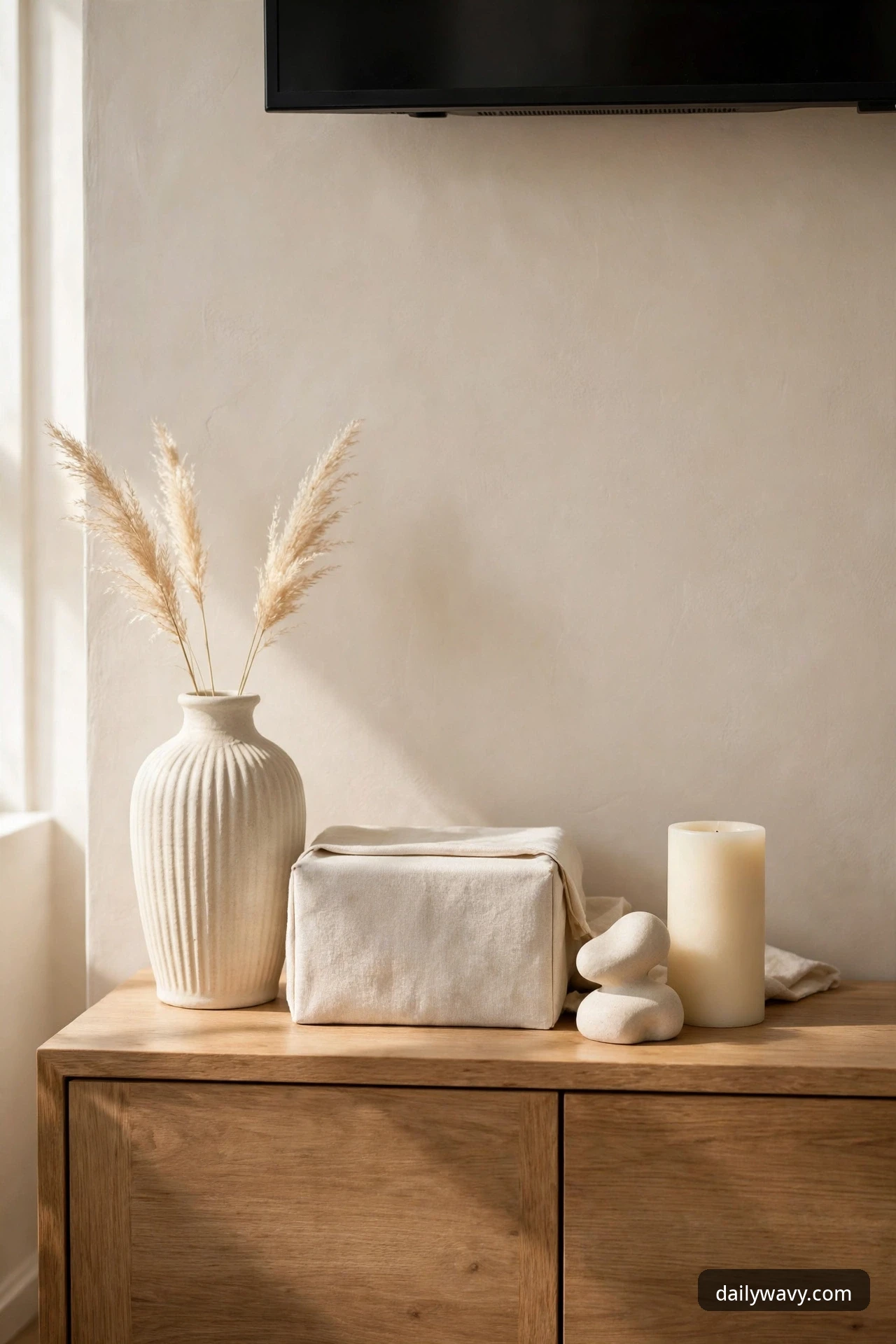
Gather the objects on the console into one color family, all warm whites, all soft blacks, all sandy neutrals, and the whole surface looks curated. A monochrome grouping works because it removes color competition; the eye reads shapes and textures instead. Mix materials within the single color: ceramic, linen, stone, and glass in the same tone keep the group from going flat. Five to seven objects of varied heights make a full arrangement. This is a fast way to make a random collection of items look like a set.
Try this: Borrow objects from other rooms for a day to test the grouping before buying anything new.
13. A slim vertical artwork beside the TV
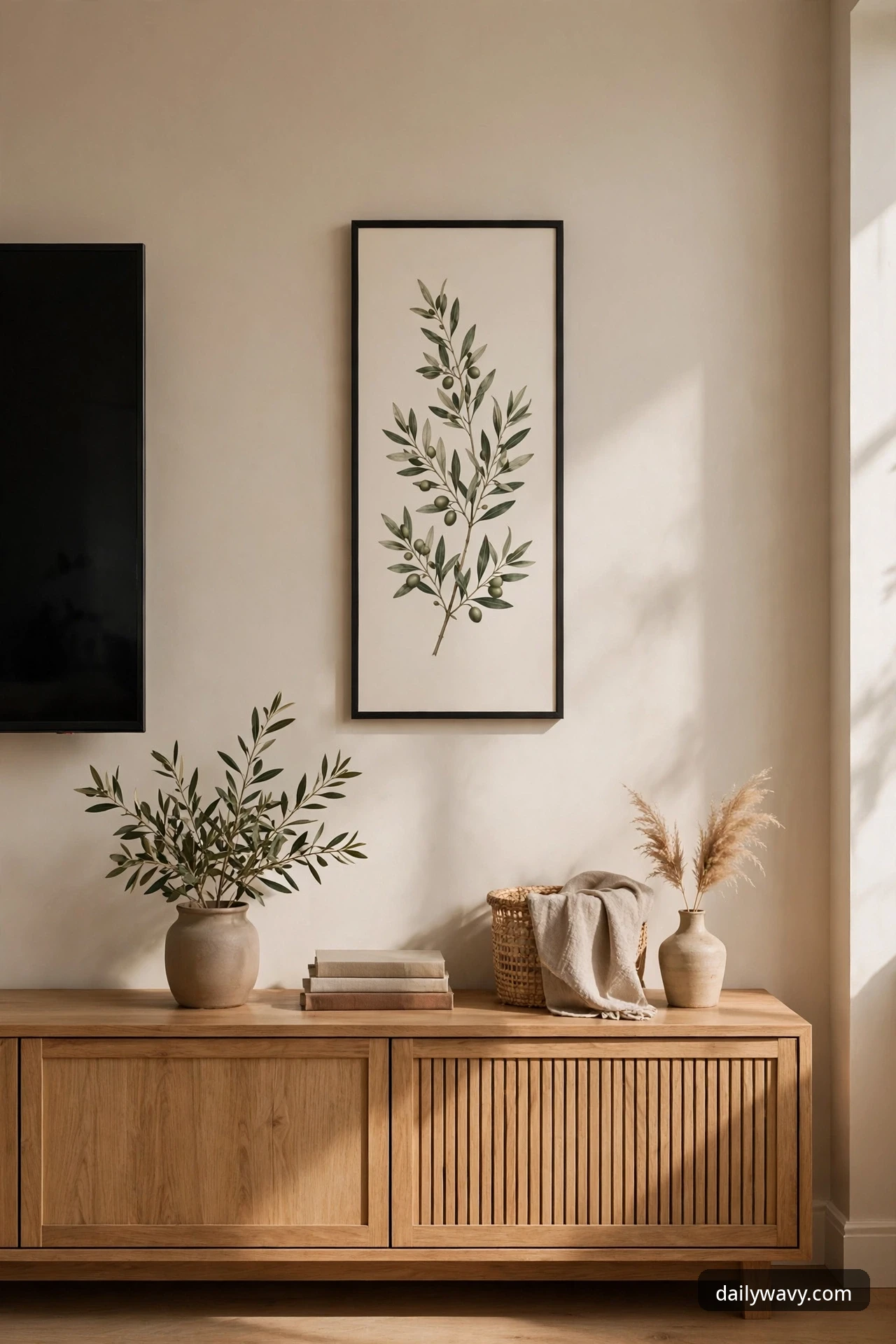
A tall, narrow piece of art on one side of the TV fixes a common proportion problem: a wide screen with nothing vertical to answer it. Choose a piece roughly two-thirds the height of the screen, in a slim frame, and hang it so its center sits level with the TV’s center. Use a hook and wall anchor rated for the frame’s weight. Abstract prints, botanical studies, and simple line drawings all work; the narrow format matters more than the subject. One piece is usually enough; a pair can crowd the wall, and a second artwork belongs on an adjacent wall instead.
Try this: Lean the artwork on the console against the wall first and live with it for a week before committing to a nail.
14. A textured backing surface
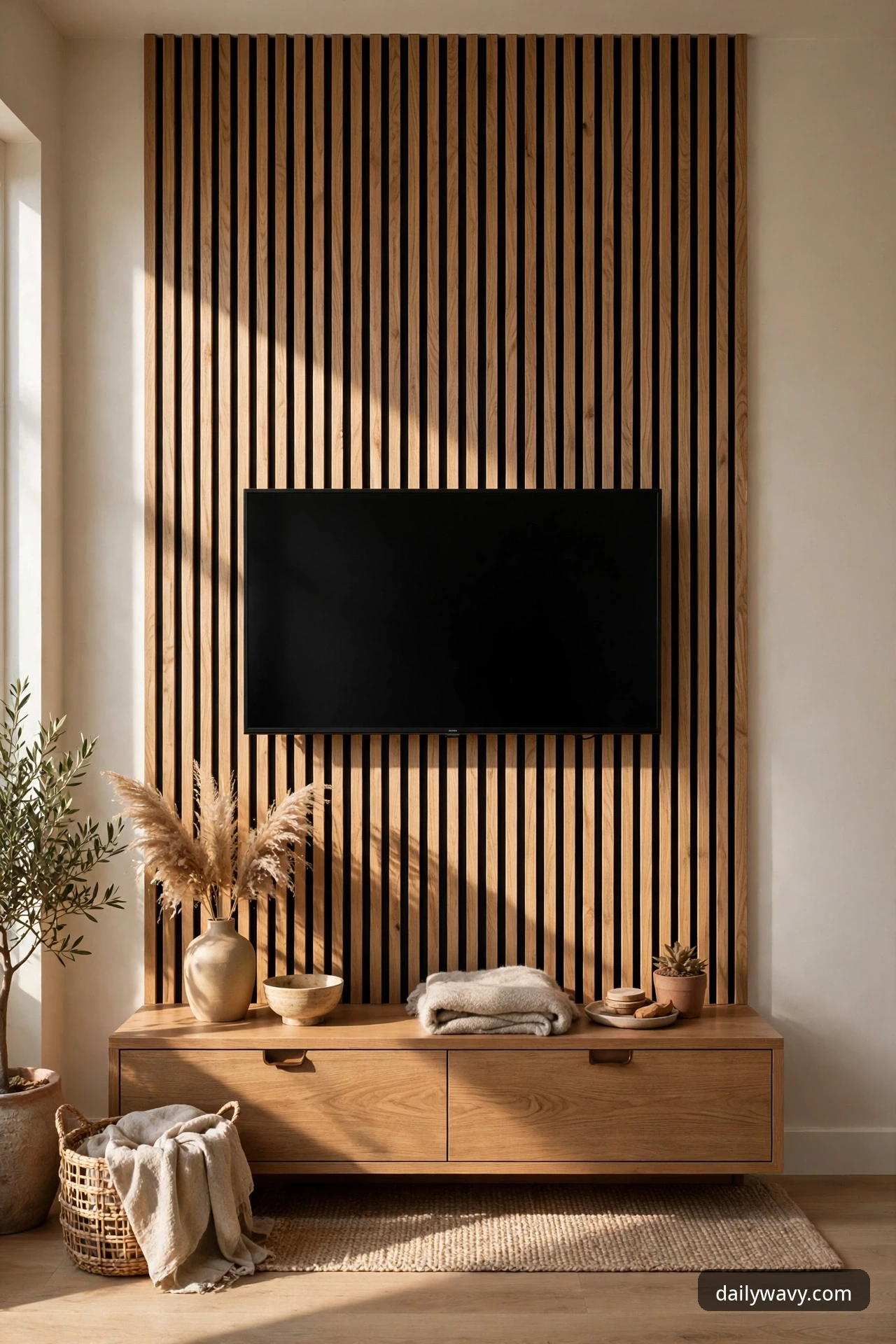
A wall with texture behind the TV, limewash, vertical wood slats, or simple board-and-batten painted one color, gives the screen a backdrop that looks built-in. Texture catches light through the day, so the wall stays interesting even when the TV is off. Wood slats add the most warmth; space them with narrow gaps over a dark backing so the rhythm reads clearly. Limewash is the renter-friendlier route: two coats over existing paint, no demolition, and it dries with soft movement that flat paint rarely gives. Keep the textured area to the TV wall only so it stays a feature, not a theme.
Try this: Stop the slats or panels a few inches short of the ceiling for a shadow line that makes the feature look custom.
15. A low floral arrangement under the screen
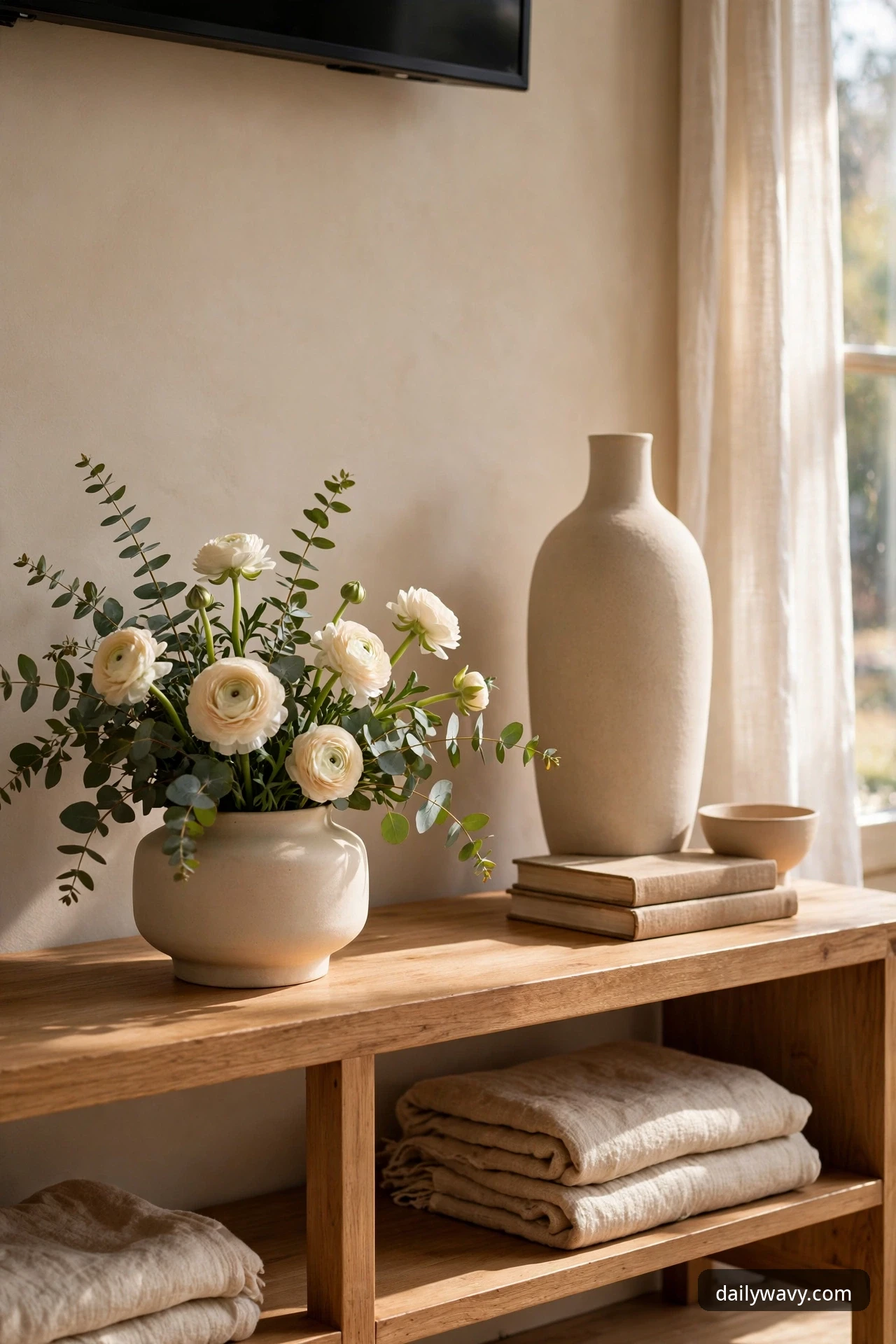
Fresh stems on the console bring a living-room wall to life in a way permanent decor cannot. Keep the arrangement low, under ten inches tall, in a squat vase so it never blocks the picture. A handful of grocery-store stems, eucalyptus, ranunculus, or simple greenery, trimmed short and grouped loosely, is plenty. The arrangement sits best at one end of the console, balanced by a taller object at the other end. Refresh the water every couple of days to help the stems last longer. When the flowers fade, the vase stays as decor on its own.
Try this: A branch cut from the yard in a heavy vase gives the same effect for free and can last longer.
16. A recessed visual niche around the screen
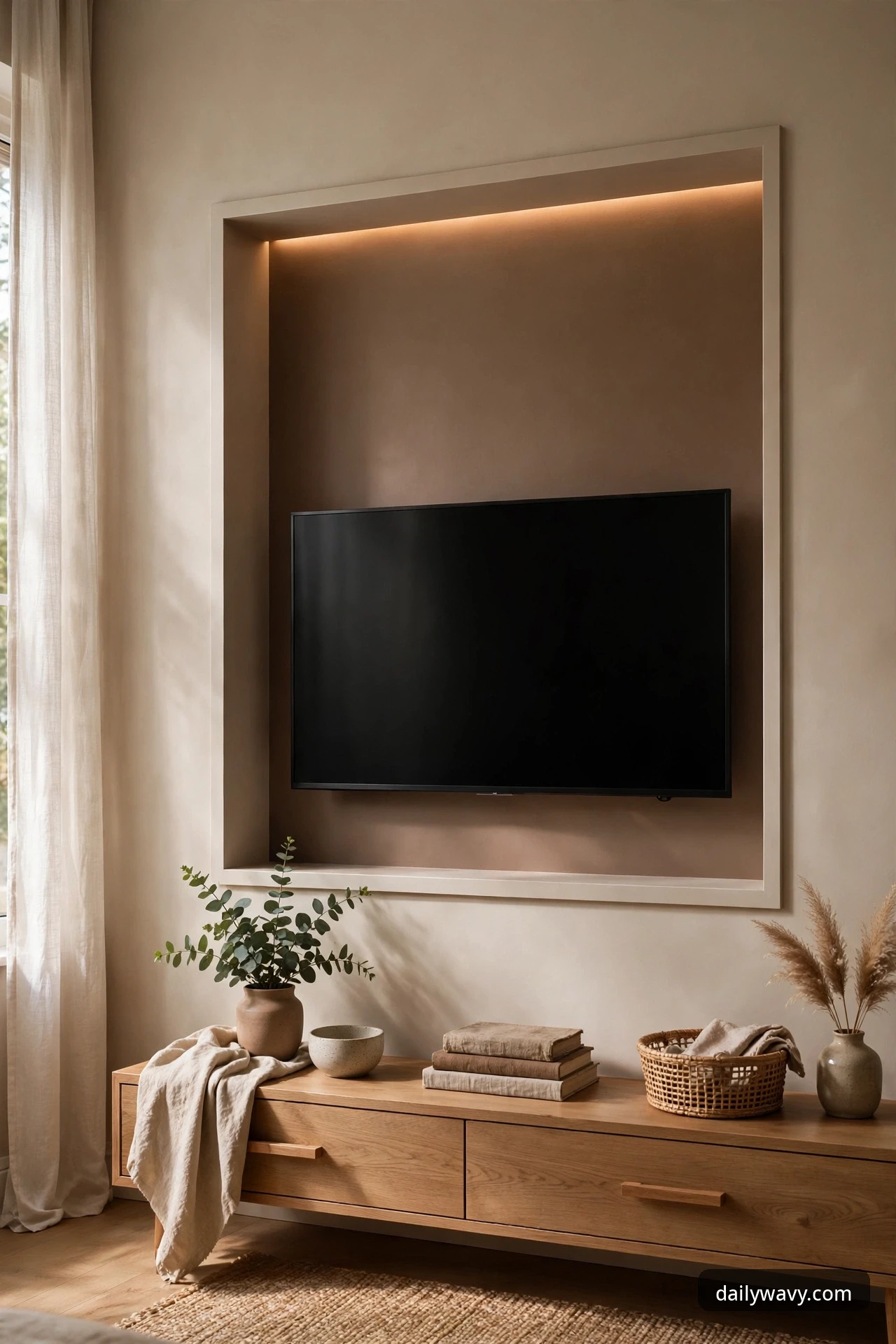
A shallow recessed niche, even a visual one, makes the TV look installed rather than hung. True recesses need construction, but a convincing version comes from building a slim frame of painted trim around the screen, set a few inches proud of the wall, with the TV sitting inside the frame. The trim reads as the edge of a niche. Paint the inside of the frame a shade darker than the wall for depth. This is a weekend project with trim, paint, and a level: measure the screen, add two inches per side, and let the carpenter at the hardware store cut the pieces to length.
Try this: Add a slim LED strip inside the top of the frame for a soft glow that deepens the niche effect at night.
Frequently asked questions
How high should I mount the TV above the console?
Aim for the center of the screen at your seated eye level, which is usually around 42 inches from the floor for a standard sofa. The gap between the console top and the bottom of the screen typically lands between 6 and 10 inches. That leaves room for a soundbar and a low row of styling without crowding the picture. If the TV sits on its stand on the console instead, the console height does most of the work, so choose a lower console to keep the screen from riding too high.
How wide should the console be compared to the TV?
At minimum, match the width of the screen; a few inches wider on each side looks more settled. A console that is narrower than the TV makes the screen look top-heavy and leaves no surface for styling. On very wide walls, a console up to twice the screen width works, with the extra surface styled as its own zone. Measure the wall too, leaving at least a foot of breathing room on each end of the console.
What is the simplest way to hide the cables?
Bundle the cables with reusable ties, then run them down the back of the console or through a paintable raceway on the wall. Raceways come in slim profiles that nearly disappear once painted the wall color. For wall-mounted TVs with the console below, drop the bundle straight behind the console where the furniture hides it. A power strip mounted under the console top keeps plugs off the floor and out of sight.
Will decor on the console distract from watching?
Not if you keep it low and to the sides. Anything under the bottom edge of the screen and outside its width stays in your peripheral vision, which your brain happily ignores during a show. Avoid anything reflective or brightly colored directly beside the screen at eye level. Matte finishes and muted tones on the console are a safe choice, and the blank border idea above is the extreme version of this rule.
Can I put a plant next to the TV without hurting either one?
Yes, with two precautions. Keep the plant a foot or more from the screen so leaves never brush the glass, and water it away from the console, over the sink, so drips do not reach electronics. Trailing plants on a stand beside the console are ideal because the foliage spills away from the screen. Low-light tolerant plants like pothos suit the dimmer conditions beside most TV walls.
Is a gallery wall around the TV a good idea?
It can work, but it is the busiest option on this list. If you love the look, keep every frame at least a few inches from the screen edge and use matching frames so the wall reads as one composition. The tonal frame idea gives a similar tailored feeling with far less visual noise. Whichever you choose, leave the wall below the screen calm; a busy gallery plus a styled console is usually one element too many.
A wall that earns its place in the room
The difference between a TV wall and a considered setup is never the television. It is the console holding its weight, the lighting washing the wall instead of glaring on the glass, and the few objects that make the arrangement feel finished. Pick the one idea that addresses your biggest frustration and try it this weekend. If the whole room still feels unresolved, our narrow living room layout ideas take the same measured thinking to the full space, and the small entryway decor ideas show how a first impression sets the tone. For rooms where the sleeping space doubles as the living space, the small bedroom with a queen bed ideas keep every inch working. Browse more in the Home & Decor collection whenever the next corner of the house asks for attention.


One Comment