
13 Rectangular Coffee Table Decor Ideas with Room for Everyday Use
A rectangular coffee table is one of the trickier shapes to style well, because its long surface invites clutter while…
A rectangular coffee table is one of the trickier shapes to style well, because its long surface invites clutter while its center sits exactly where your feet want to be. The trick is not buying more things. It is choosing fewer things with intention, then leaving real room for the life that happens around them. These thirteen ideas all work on a standard rectangular table, and each one leaves space for the everyday: a laptop at the end, a tea tray, a board game, the remote. Start with the one that matches your living room, and give it a week before you change a thing.
Jump to an idea
- A small plant with a sculptural object
- A shallow bowl filled with seasonal fruit
- A dark tray with clear glass bud vases
- A single wide floral arrangement
- Three varied-height vessels on one side
- A wooden box beside a folded textile
- A lantern with a flameless candle
- A plate of collected stones and a book
- A pair of mismatched ceramic bowls
- A small framed photograph beside a vase
- A lidded basket for remotes
- An asymmetric arrangement leaving serving space
- A textured mat beneath a tray
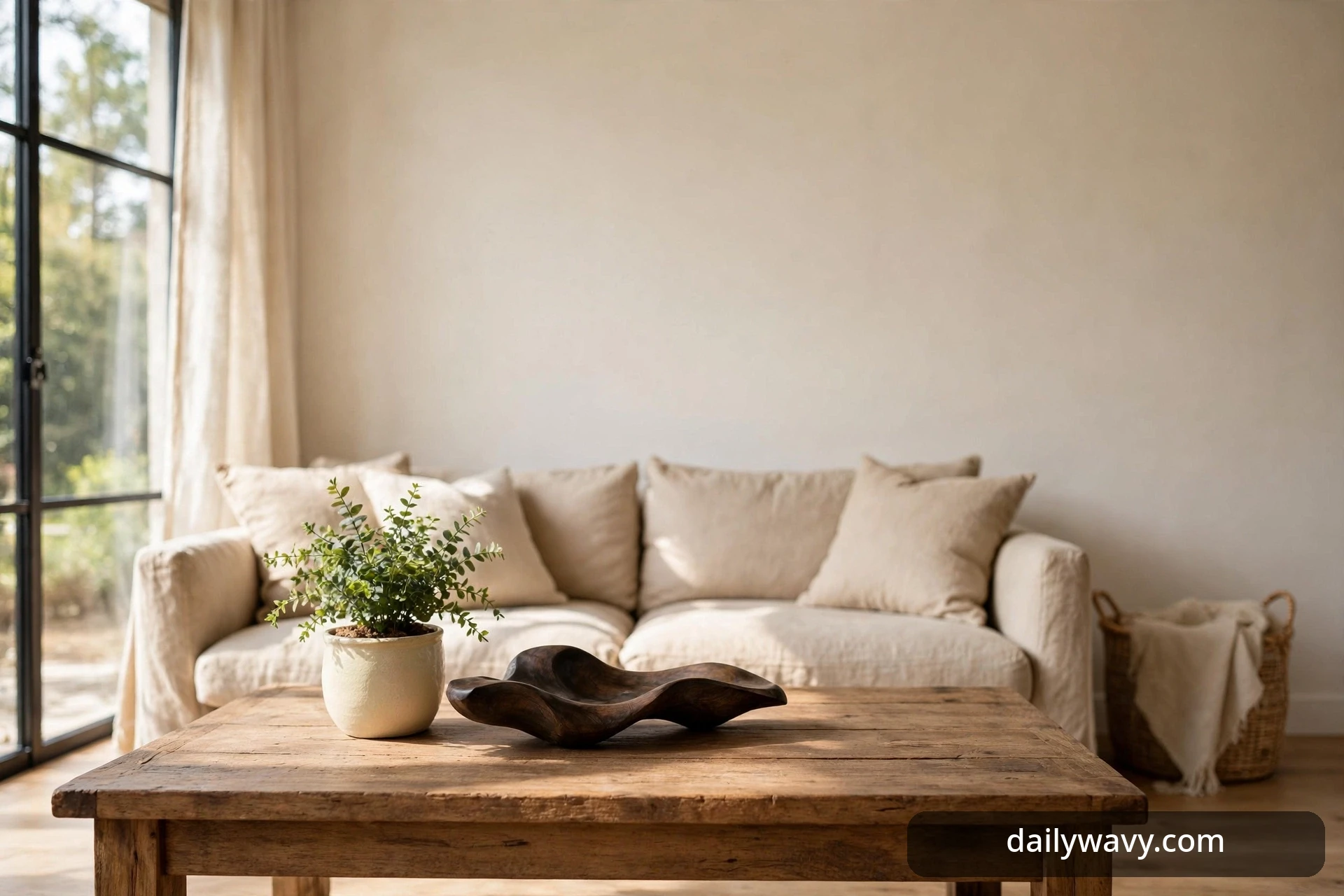
The proportions that make it work
Before you place a single object, know your measurements. A standard rectangular coffee table runs about 48 inches long and 24 inches deep, with a surface height of 14 to 18 inches. Treat the middle third of the tabletop as your styling zone. That gives you roughly a 16 to 20 inch wide band to decorate, while the two ends stay clear for drinks, books, and feet up. A few ideas below move the styling to one end or run a little wider, and each one still leaves clear space for everyday use.
Height matters more than width. Keep your tallest object under 14 inches so it never blocks the view across the table when you sit. The sweet spot for a coffee table grouping is three objects (or three clusters) with heights in a roughly 1-2-3 rhythm: one low, one medium, one tall. A 6 inch bowl, a 9 inch stack, and a 12 inch stem or vase sit together naturally. Anything taller starts to feel like a dining table centerpiece, and anything lower disappears into the surface.
If your table sits in front of a long sofa, anchor the styling to the middle of the sofa, not the middle of the table. Sofas and tables are rarely perfectly centered, and the eye reads the whole seating arrangement as one scene. Step back to the doorway and look. That doorway view is the one your guests see first, so make the arrangement read clearly from there.
1. A small plant with a sculptural object
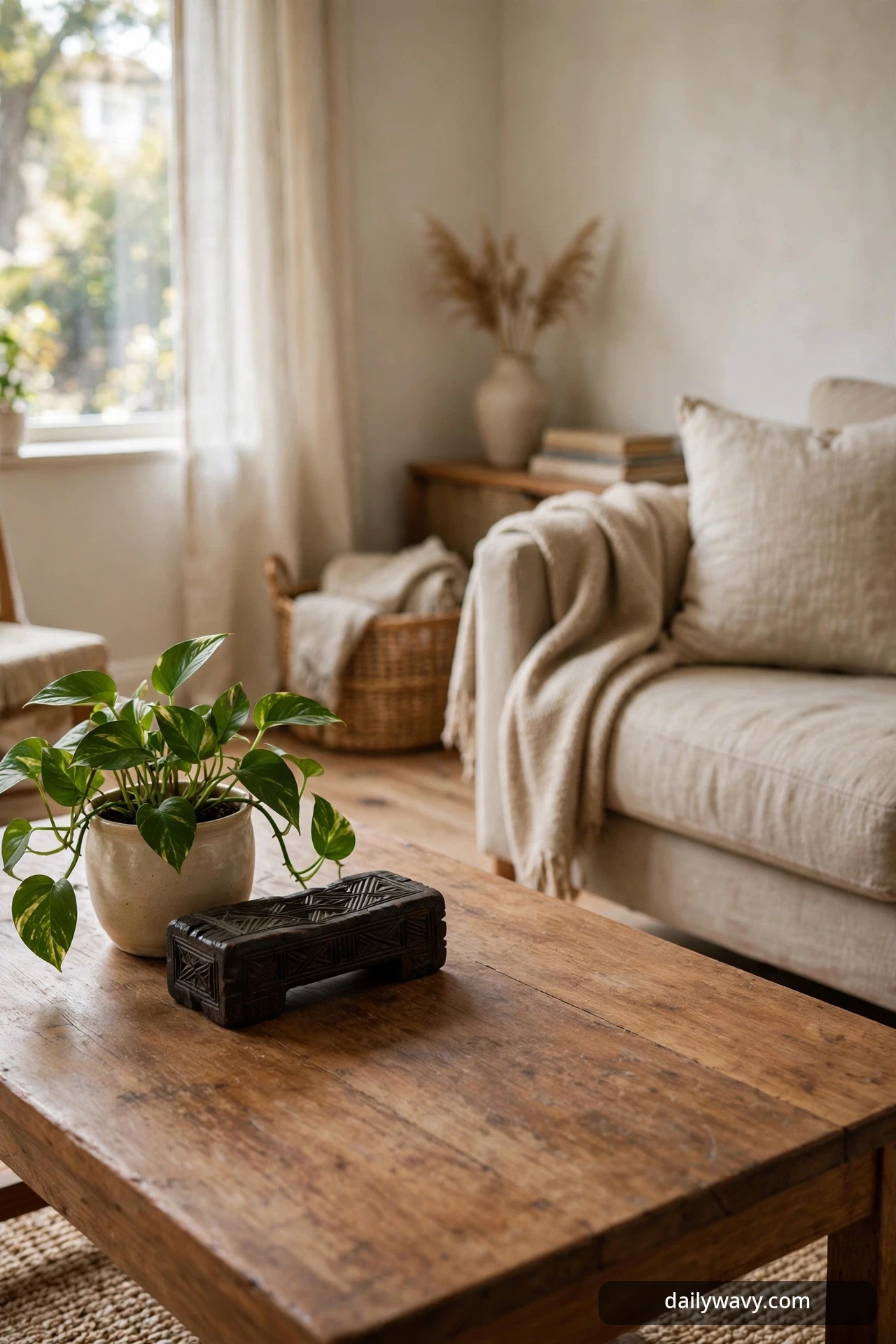
A little green wakes up a long table. A small potted plant paired with one sculptural object, a carved wood figure, a stone shape, a ceramic abstract, gives you contrast in the best way: something alive next to something made. Keep the plant in a simple pot, 4 to 5 inches across, so the greenery reads as the soft part and the sculpture reads as the solid part.
Set them close together on one side of the middle third, not centered. A pothos in a cream ceramic pot with a low, dark wood sculpture works in many rooms because the palette stays quiet and the shapes do the talking. Water the plant over the sink, not over the table, and wipe the saucer weekly. Wood tables and standing water are not friends.
What to measure: leave at least 6 inches between the grouping and the table edge, and confirm the tallest point stays under 14 inches. A 5 inch pot beside a 9 inch sculpture fits comfortably.
2. A shallow bowl filled with seasonal fruit
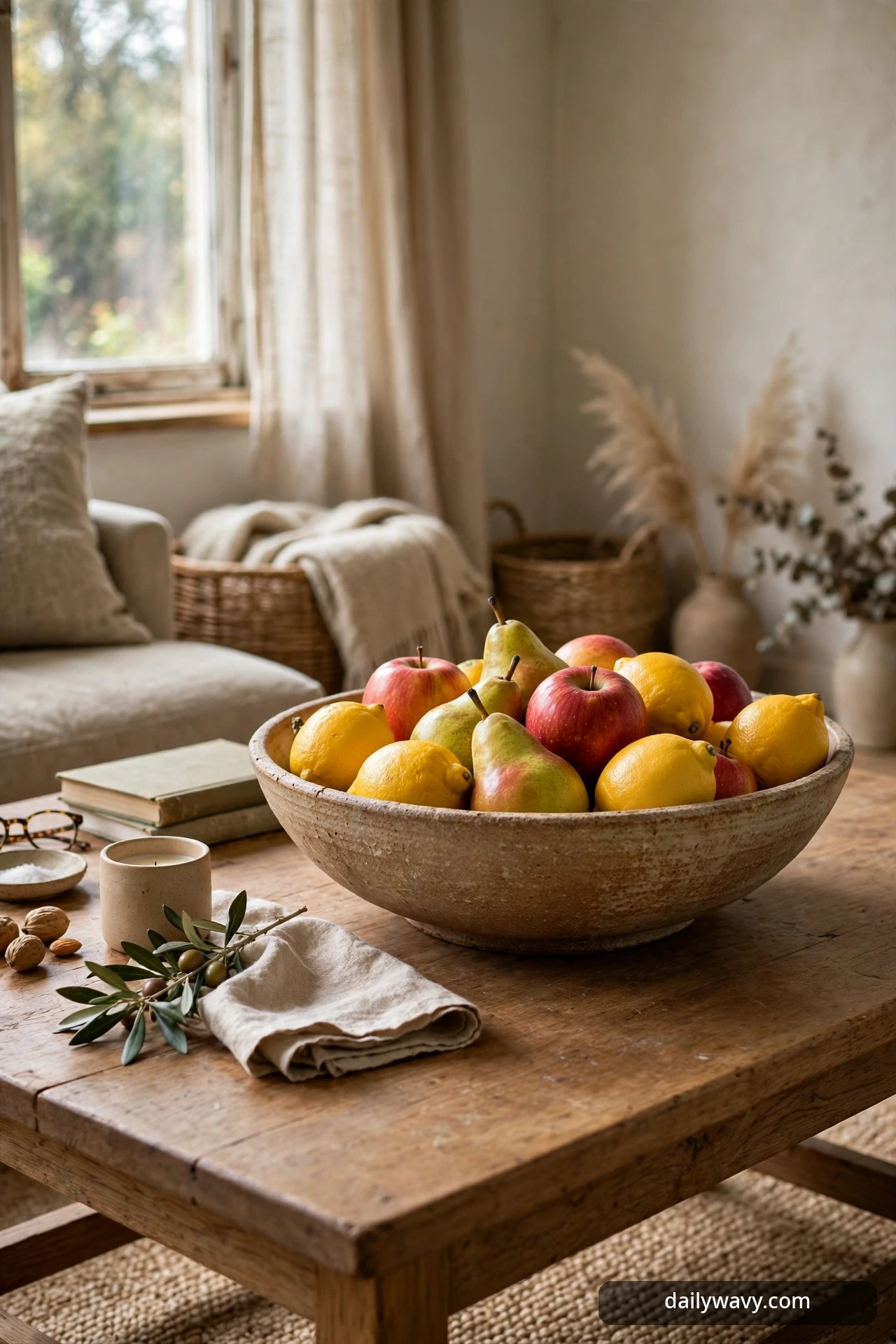
A shallow bowl of fruit is decoration you can eat, which makes it a hard-working idea on this list. Choose a wide, low bowl, 10 to 12 inches across and no more than 3 inches deep, in ceramic, wood, or stone. Fill it with whatever is in season: lemons and limes in winter, stone fruit in summer, apples and pears in fall. Three to five pieces are plenty; you are styling, not stocking the pantry.
Place the bowl slightly off center in the middle third. The curve of a round bowl on a rectangular table softens the straight lines, and the color of the fruit pulls the eye. Line the bottom with a folded cloth napkin if the bowl tends to roll, and rotate the fruit every few days so the display stays fresh. This is also an idea that holds up well with toddlers, since everything in it is meant to be touched.
What to measure: the bowl should take up no more than half the width of your styling zone, so you still have room beside it for a cup of tea.
3. A dark tray with clear glass bud vases
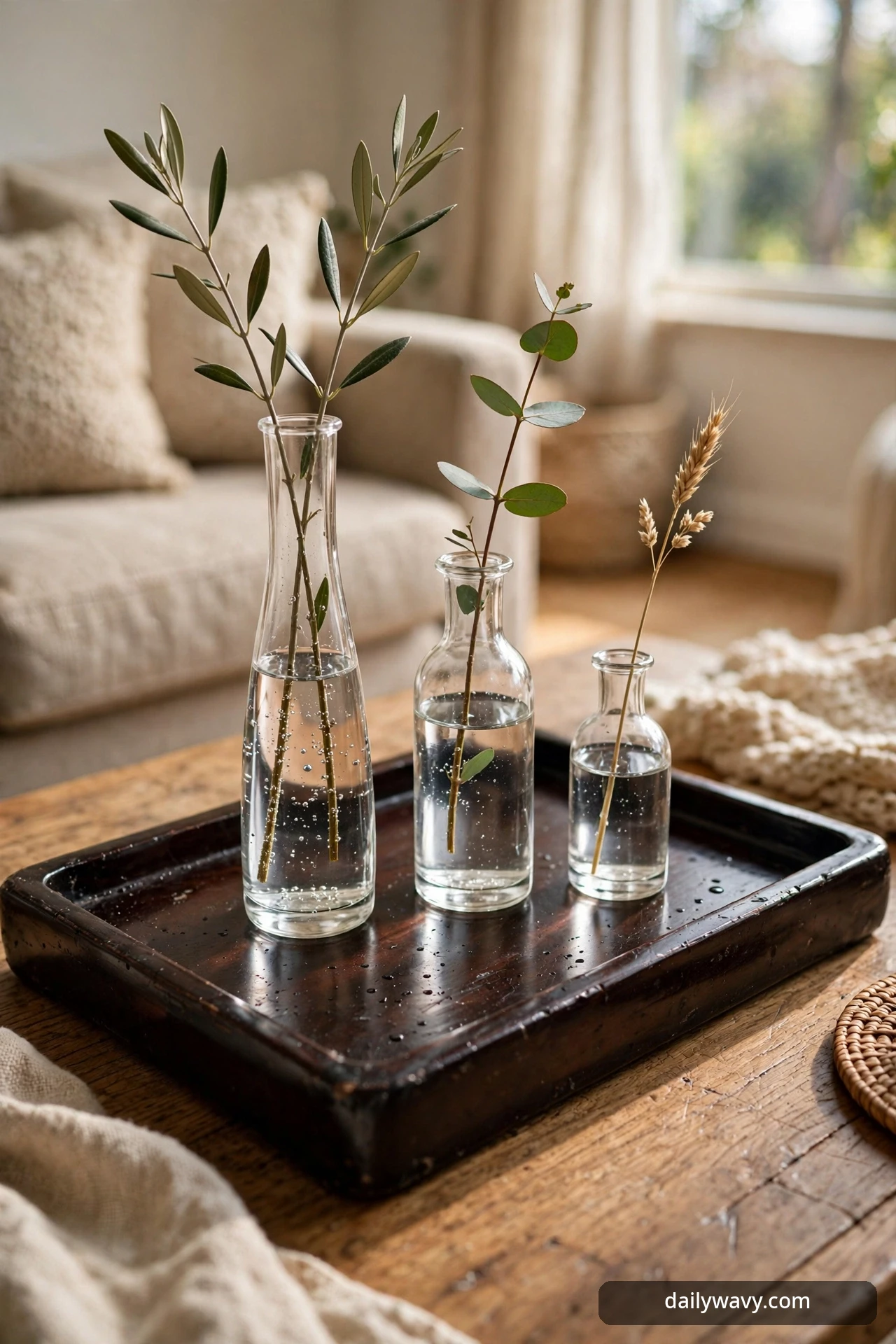
A tray works like a reset button for a coffee table. It corrals small things into one tidy island, and you can lift the whole island away when you need the full surface. Start with a dark tray, black lacquered wood or espresso-stained oak, about 18 to 20 inches long and 10 to 12 inches wide. On it, set two or three clear glass bud vases, each 4 to 6 inches tall, with one or two stems in each.
The dark tray against clear glass and pale stems is the whole trick. It looks composed without any effort, and because bud vases hold so little, you can refresh the stems with a single flower, a sprig from the garden, even a leafy branch. Keep a small piece of floral foam or a frog pin inside each vase if stems slip. Change the water every three days so the glass stays clear, because cloudy water shows in clear vases.
What to measure: the tray should leave clear table on each side. On a 48 inch table, a 20 inch tray leaves 14 inches of clear table on each side.
4. A single wide floral arrangement
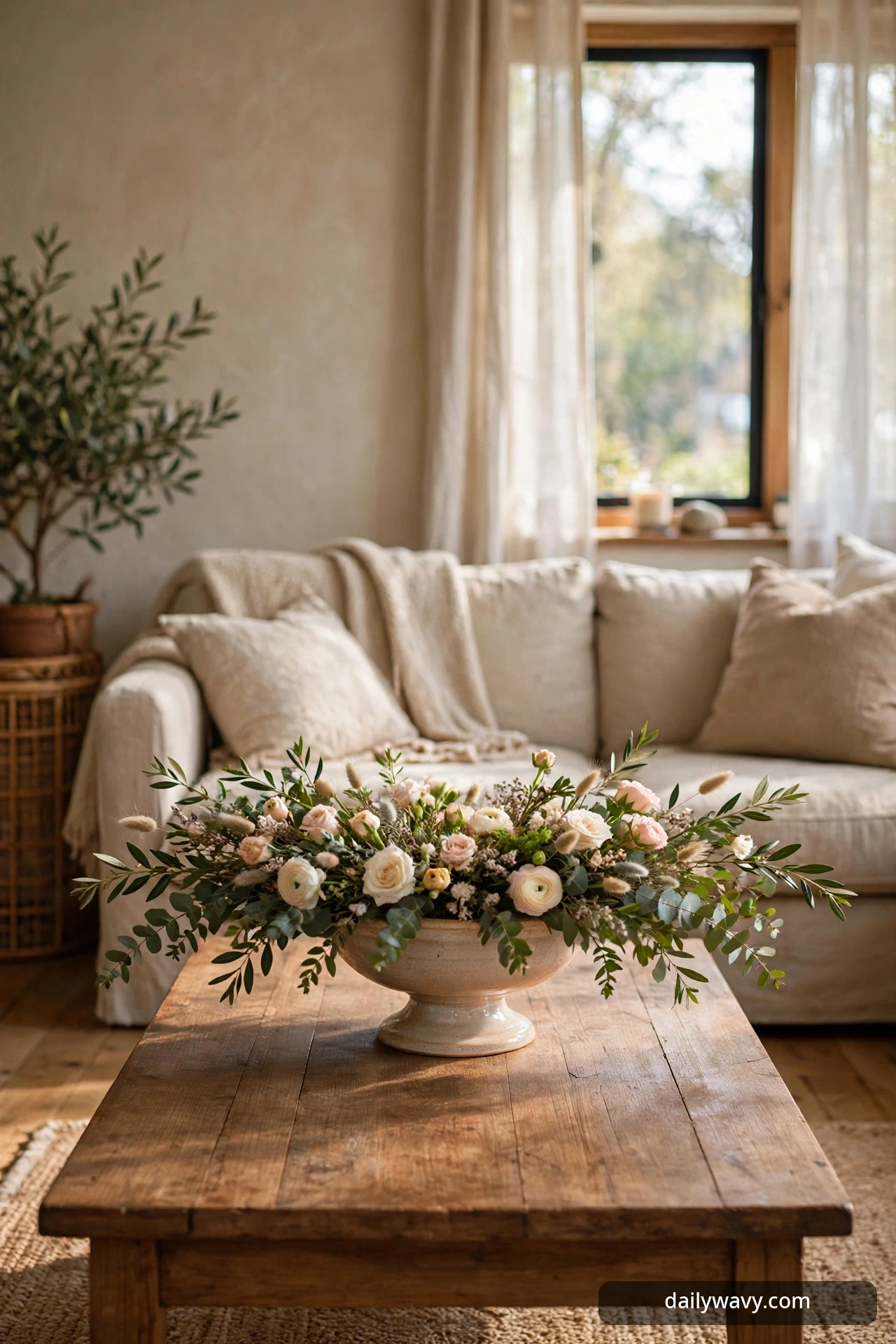
On a rectangular table, one wide arrangement often looks calmer than three fussy ones. Choose a low, wide vessel, a footed bowl or a low trough about 12 to 14 inches long, and build the arrangement horizontally so it follows the shape of the table. Use stems of varying lengths, with the tallest in the middle at no more than 10 inches above the tabletop, so sightlines stay open.
An easy version uses grocery store flowers. Split one large bouquet into three: keep the fullest blooms for the center, use the filler greens at the edges, and trim everything to follow the low dome shape. A floral frog or chicken wire ball inside the vessel holds stems in place well and can be reused. Cut stems at an angle, change the water every two days, and pull anything wilting before it affects the rest. When the flowers are done, the vessel itself becomes the decor until next time.
What to measure: the arrangement should span no more than two thirds of the table length. Leave one end fully clear for everyday use.
5. Three varied-height vessels on one side
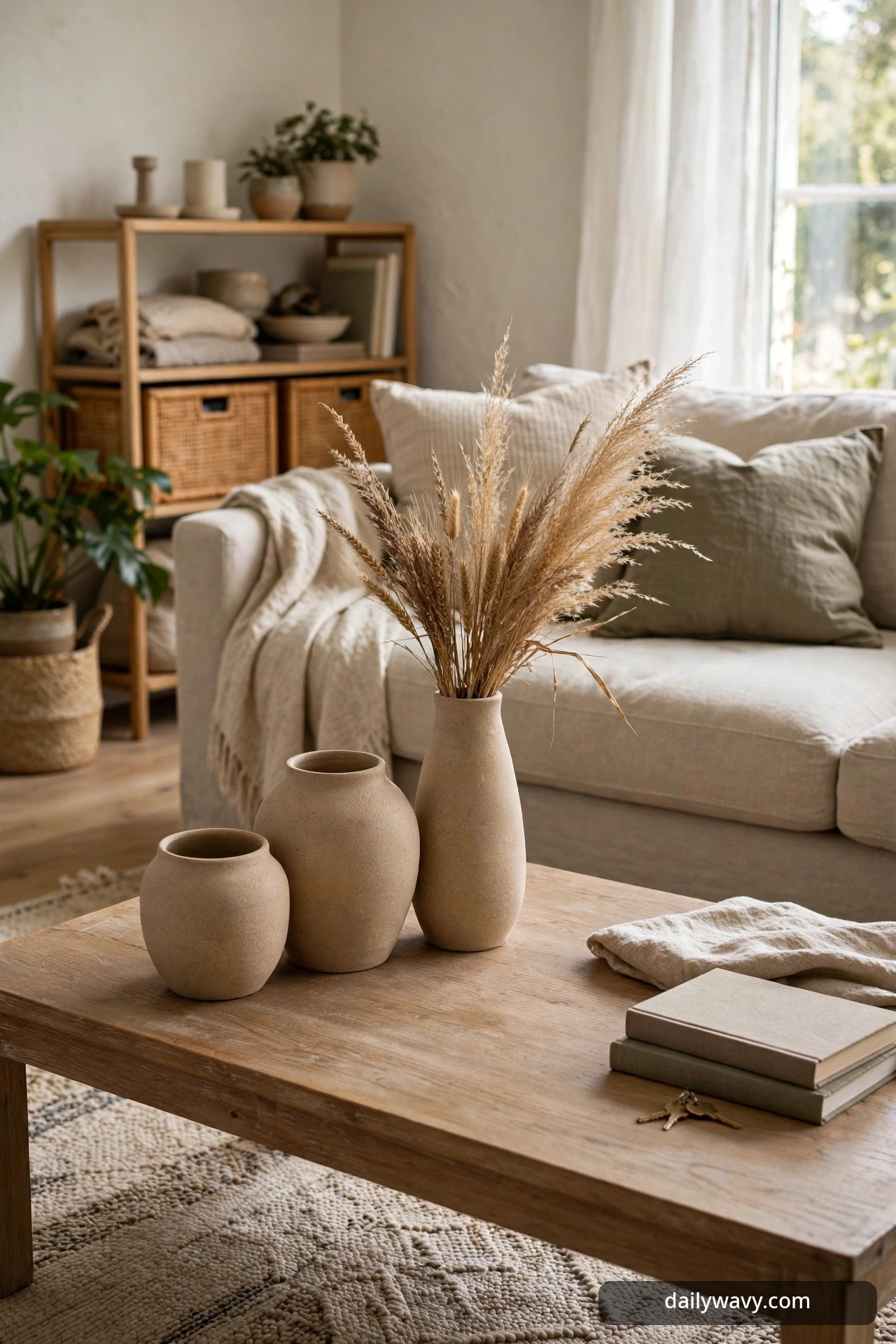
Grouping all your styling on one side of the table is a deliberate move, and it works beautifully when the other side serves as daily landing space. Choose three vessels in the same material family, ceramic, glass, or stone, with heights of roughly 6, 9, and 12 inches. Cluster them tight, almost touching, at one end of the middle third.
The varied heights create the rhythm that keeps a grouping from looking like clutter. One vessel can hold stems, one can hold nothing, and the third can hold something unexpected like dried grasses or a single branch. Empty vessels are allowed; they read as sculpture. Keep the mouths of the vessels narrow if you have cats or curious kids, and felt the bottoms so heavy stone pieces never scratch the table.
What to measure: the whole cluster should fit inside a 14 inch circle. If it spreads wider, you have lost the one-side effect.
6. A wooden box beside a folded textile
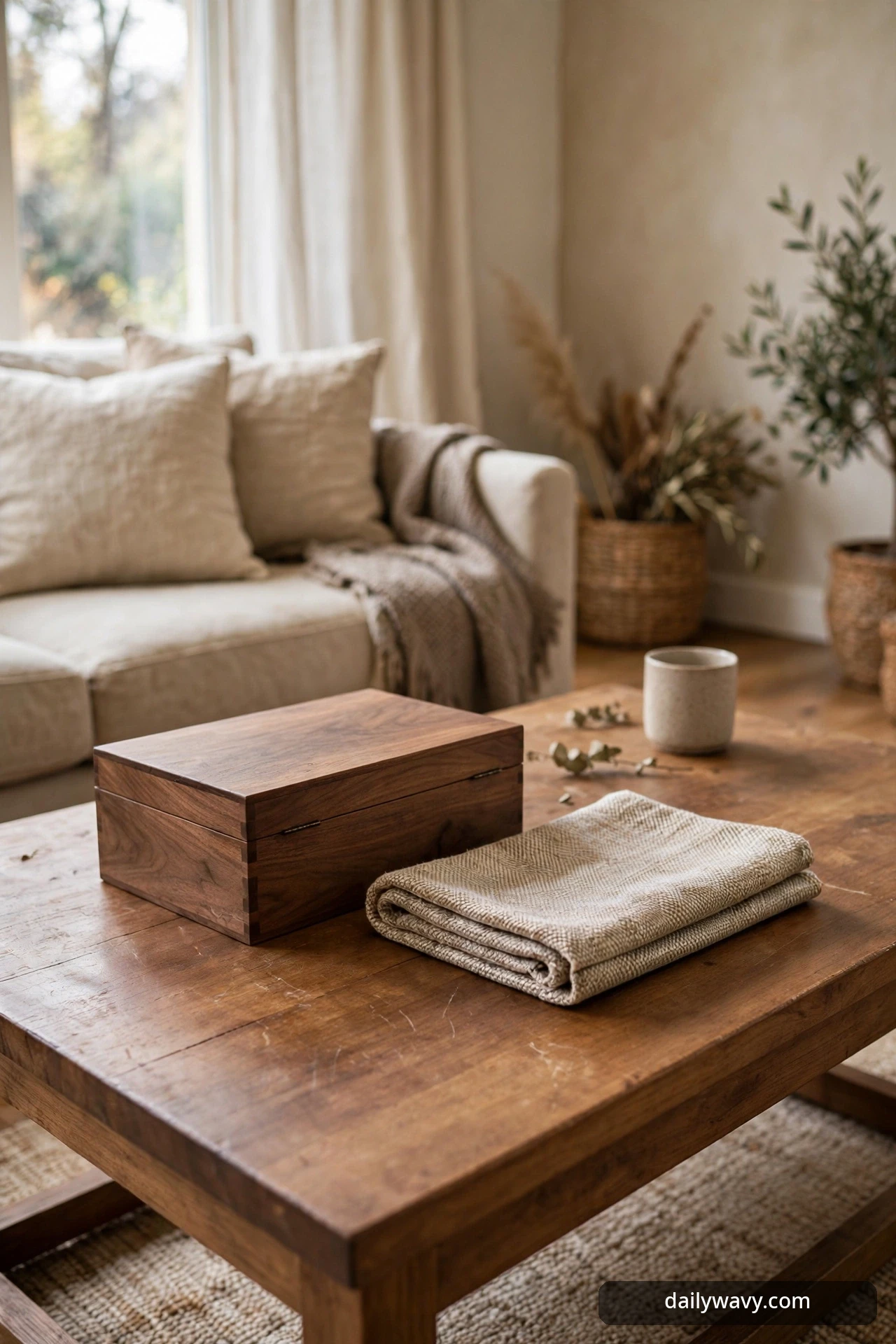
Some of the most useful coffee table decor is secretly storage. A lidded wooden box, 10 to 14 inches long, hides the coasters, the reading glasses, the TV remote, while looking like an intentional object. Beside it, fold a textile, a runner, a flat-woven throw, a stack of cloth napkins, into a neat rectangle about half the size of the box.
The pairing of hard box and soft textile is what makes this arrangement interesting. Oak, walnut, or a painted box all work; the textile should pick up a color from the room, a cushion, a curtain, the rug. Fold the textile into thirds so the edges line up cleanly, and rest the box half on and half off the textile if you want a looser feel. This is the idea to choose if your table currently collects random small things, because it gives those things a home.
What to measure: box plus textile together should occupy no more than the middle third. Leave both table ends clear for mugs and books.
7. A lantern with a flameless candle
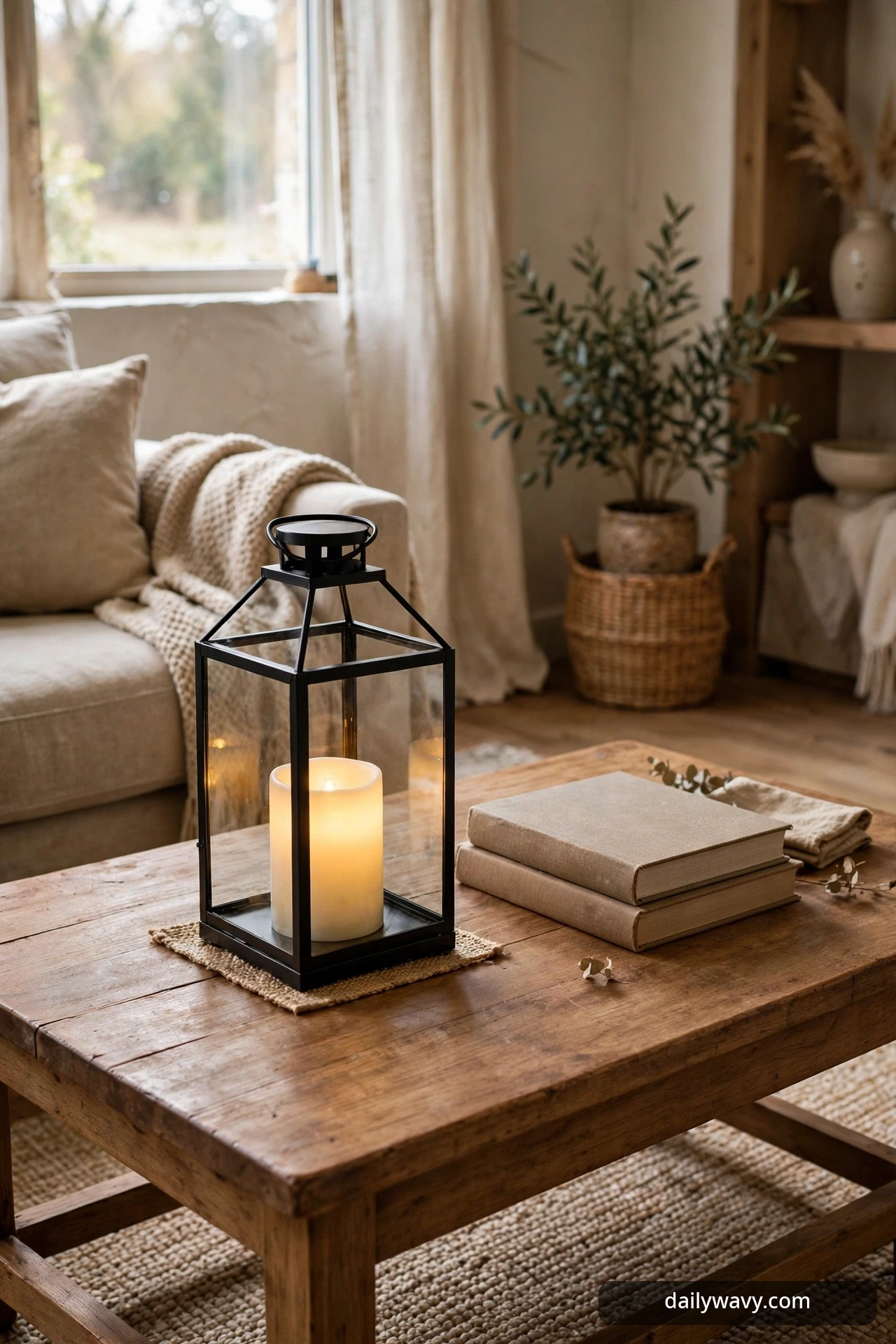
Evening light changes a living room completely, and a lantern is a safer way to get it. Choose a glass and metal lantern, 8 to 12 inches tall, with an LED flameless candle inside. Real candles on a coffee table sit at blanket and sleeve height, so flameless is the practical choice here, and many LED candles include a flicker mode.
Style the lantern with one small companion, a low stack of two books or a small dish, so it does not sit alone. Place it toward the back of the styling zone so the glow reaches the seating rather than blinding it. Many flameless candles come with timers; set yours to come on at dusk and the table dresses itself every evening. Keep the glass panels clean, because dust shows in the light.
What to measure: a 10 inch lantern plus a 2 inch book stack keeps you under the 14 inch sightline rule with room to spare.
8. A plate of collected stones and a book
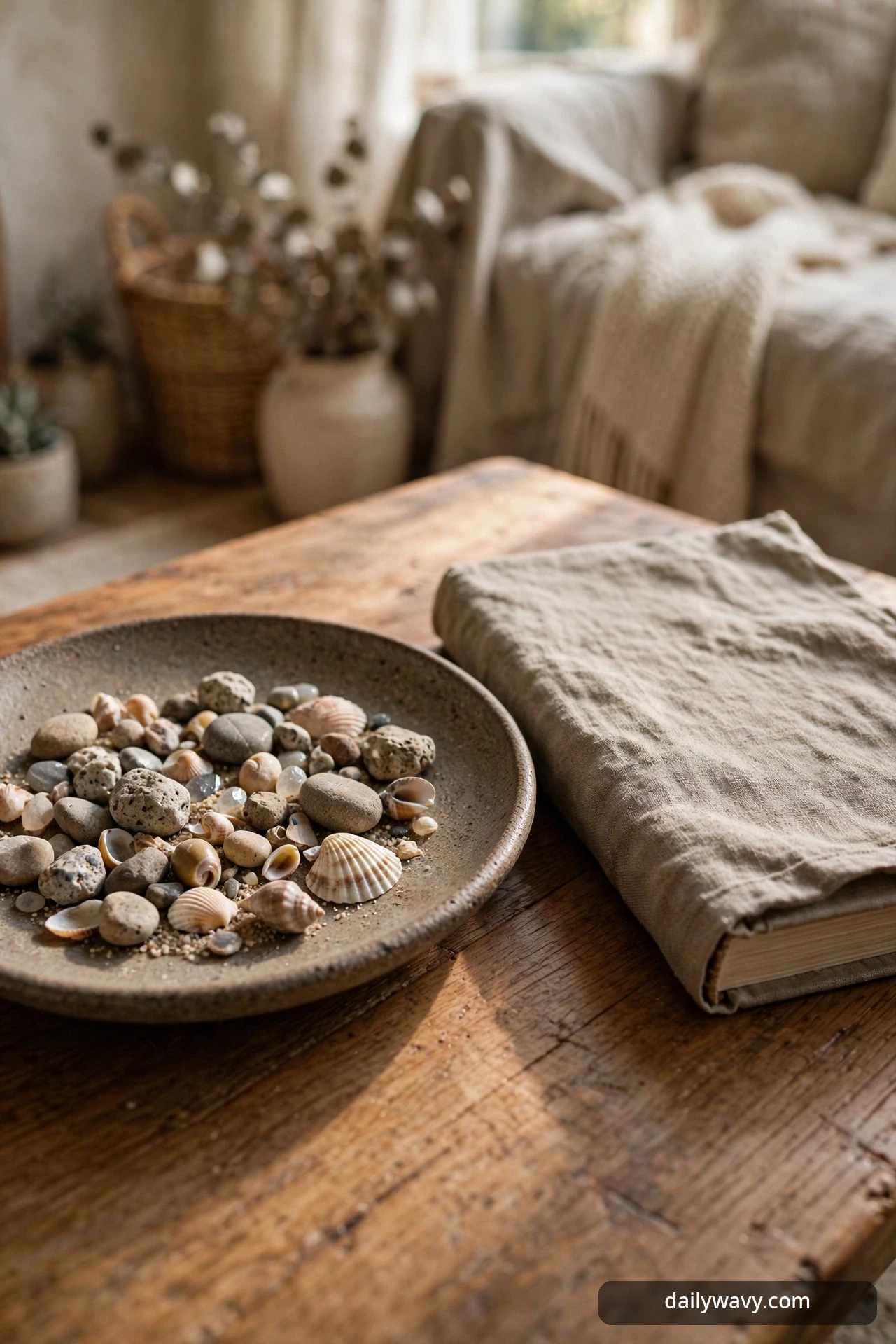
This is a very personal idea on the list, and it costs almost nothing. Take a plate or shallow dish you already own, 8 to 10 inches across, and fill it with stones, shells, or small objects collected on walks, trips, or beach days. Set a good-looking book beside it, something with a cloth cover and a title you actually like.
The collected objects give guests something to pick up and ask about, which is one of the things good coffee table styling does. Keep the collection small and contained: twelve objects maximum, all in the dish, nothing scattered. If the stones are dusty from the garden, wash and dry them first, then rub a tiny drop of mineral oil on for a richer color. Rotate the collection seasonally and the table never feels stale.
What to measure: plate plus book together should fit in the middle third with at least 4 inches of clear table in front, so the plate never feels close to the edge.
9. A pair of mismatched ceramic bowls
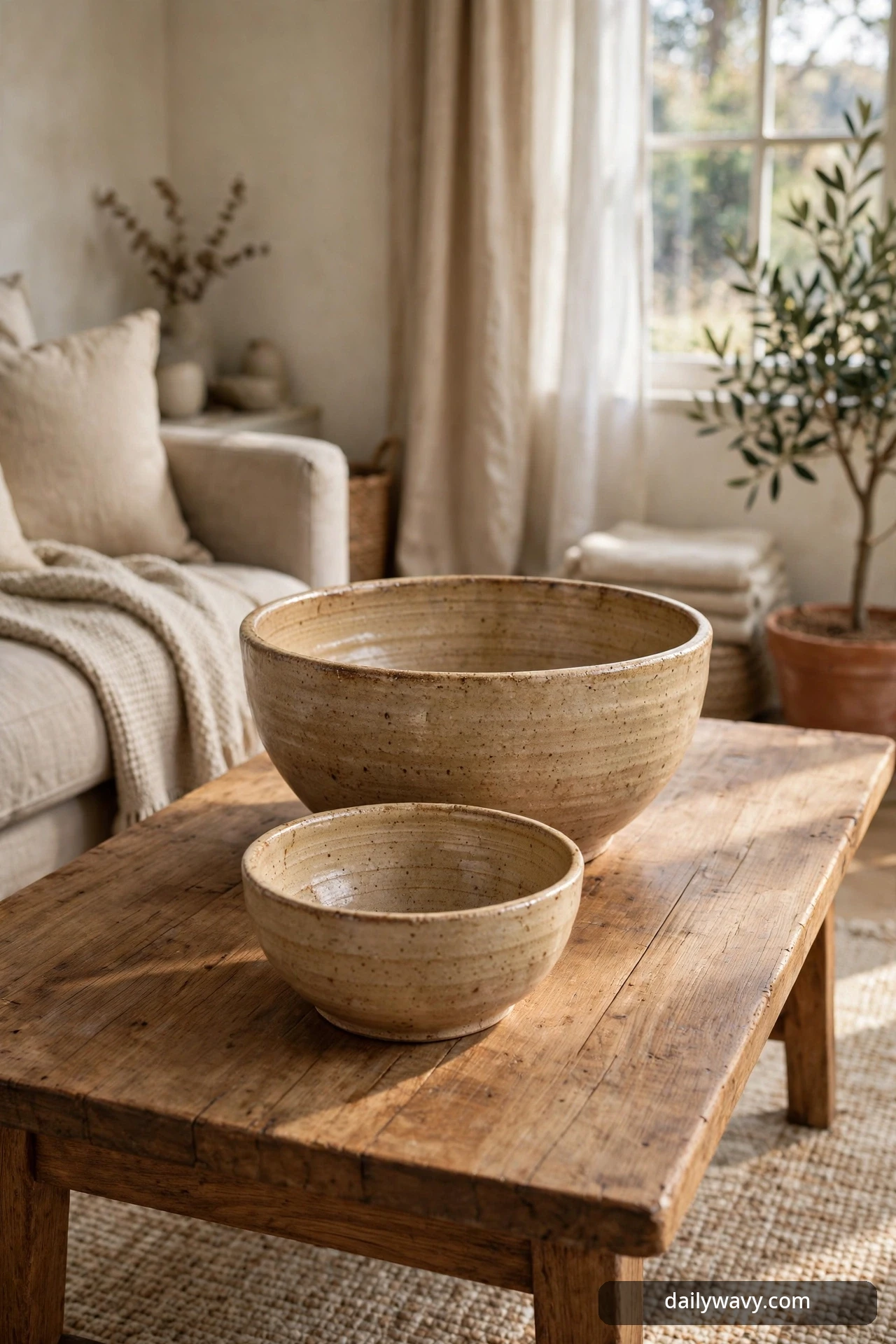
Mismatched on purpose looks curated; mismatched by accident looks cluttered. The difference is intention. Choose two handmade-style ceramic bowls, different shapes or glazes but in the same color family, one about 6 inches across and one about 4. Set the smaller slightly in front of the larger, close but not touching.
Use the larger bowl as a catchall for keys, lip balm, the things that migrate to the living room. Leave the smaller empty, or put one thing in it, a single pinecone, a candle, nothing at all. The handmade texture, visible throwing rings, speckled glaze, soft matte finish, gives the table a crafted feeling that store-bought decor rarely manages. Check the bottoms for unglazed rings that can scratch; felt dots solve it.
What to measure: the pair together should read as one cluster about 10 inches wide. If they drift apart, they read as clutter.
10. A small framed photograph beside a vase
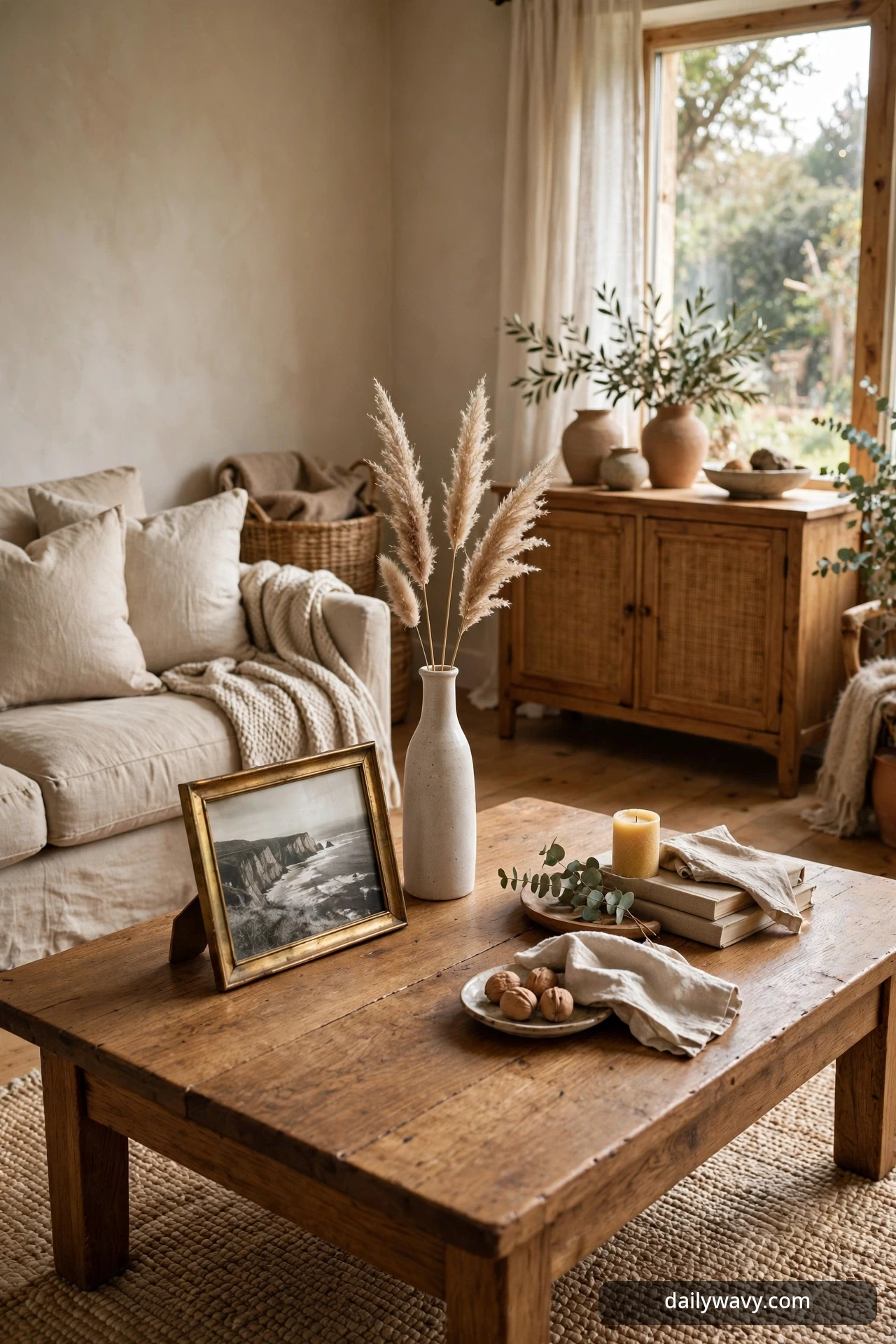
A framed photograph makes a coffee table feel like it belongs to someone. Choose a frame no larger than 5 by 7 inches, in wood, brass, or black metal, with a photograph that means something to you. Lean it or stand it at a slight angle beside a simple vase, 8 to 10 inches tall, with stems or nothing.
The key is scale. A small frame beside a taller vase creates the height contrast that keeps the pairing interesting, and the photograph gives the arrangement a focal point the eye returns to. Use museum glass or keep the frame out of direct sun to avoid glare and fading. Stand the frame so it faces the main seat, not the room, because it is for the people sitting closest. A black and white photograph works in many rooms if you are unsure about color.
What to measure: the frame plus vase together should sit inside a 12 inch footprint, placed toward one end of the middle third rather than dead center.
11. A lidded basket for remotes
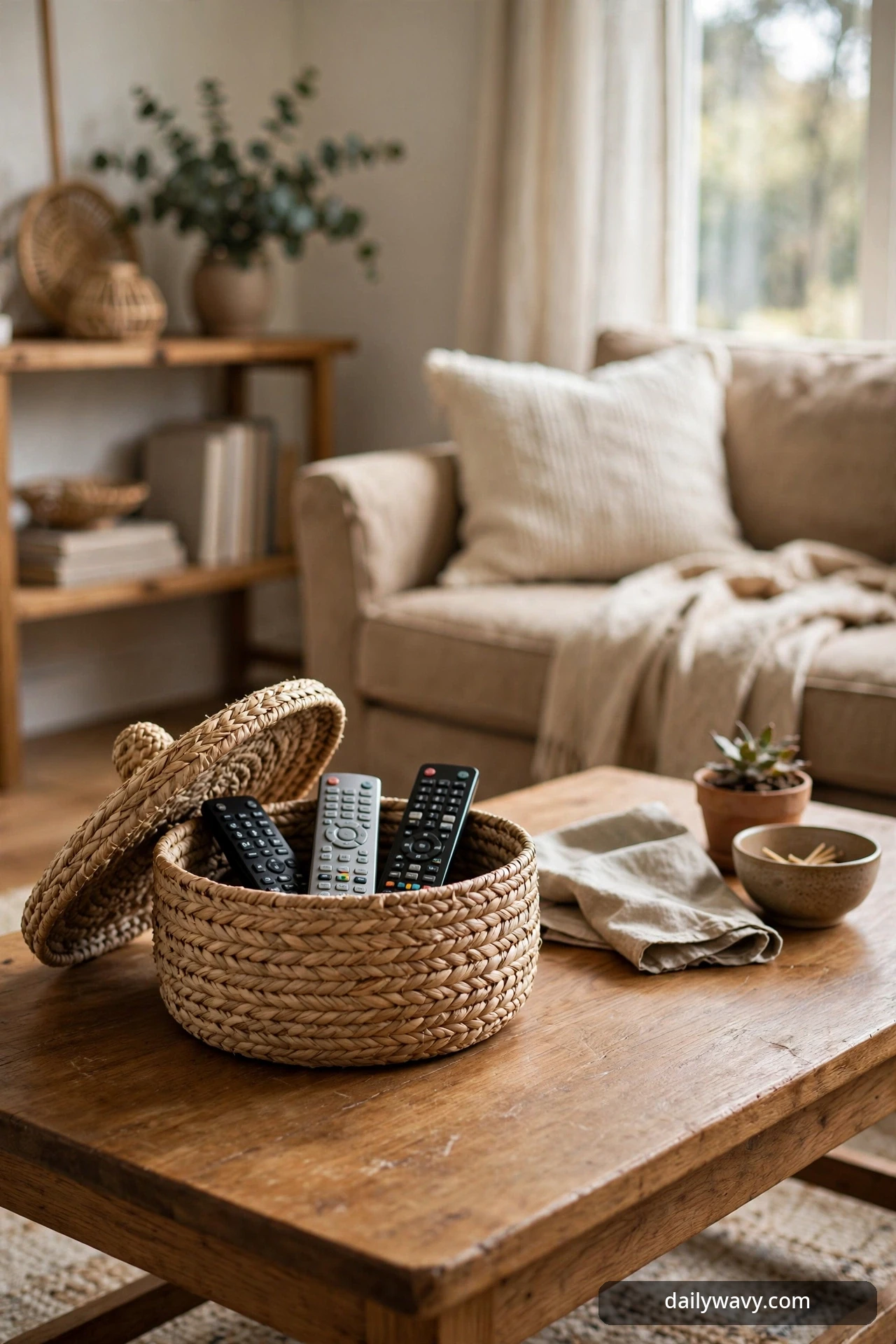
Most living rooms have remotes, and they often end up with no good home. A lidded basket solves it. Choose a basket with a lid, 10 to 12 inches long, in seagrass, woven paper, or rattan. It holds two or three remotes plus reading glasses, and the lid keeps the whole thing looking like decor instead of storage.
This idea pairs well with the rest of this list. Set the basket at one end of the table as the anchor, then style the middle third with a lighter idea like the bud vases or the fruit bowl. The natural texture of the basket adds warmth that balances glass and ceramic elsewhere on the table. Check that the lid lifts easily with one hand; if it is stiff, you will stop using it.
What to measure: the basket should be shorter than the table depth by at least 8 inches, so it never overhangs the front edge when someone reaches for a remote.
12. An asymmetric arrangement leaving serving space
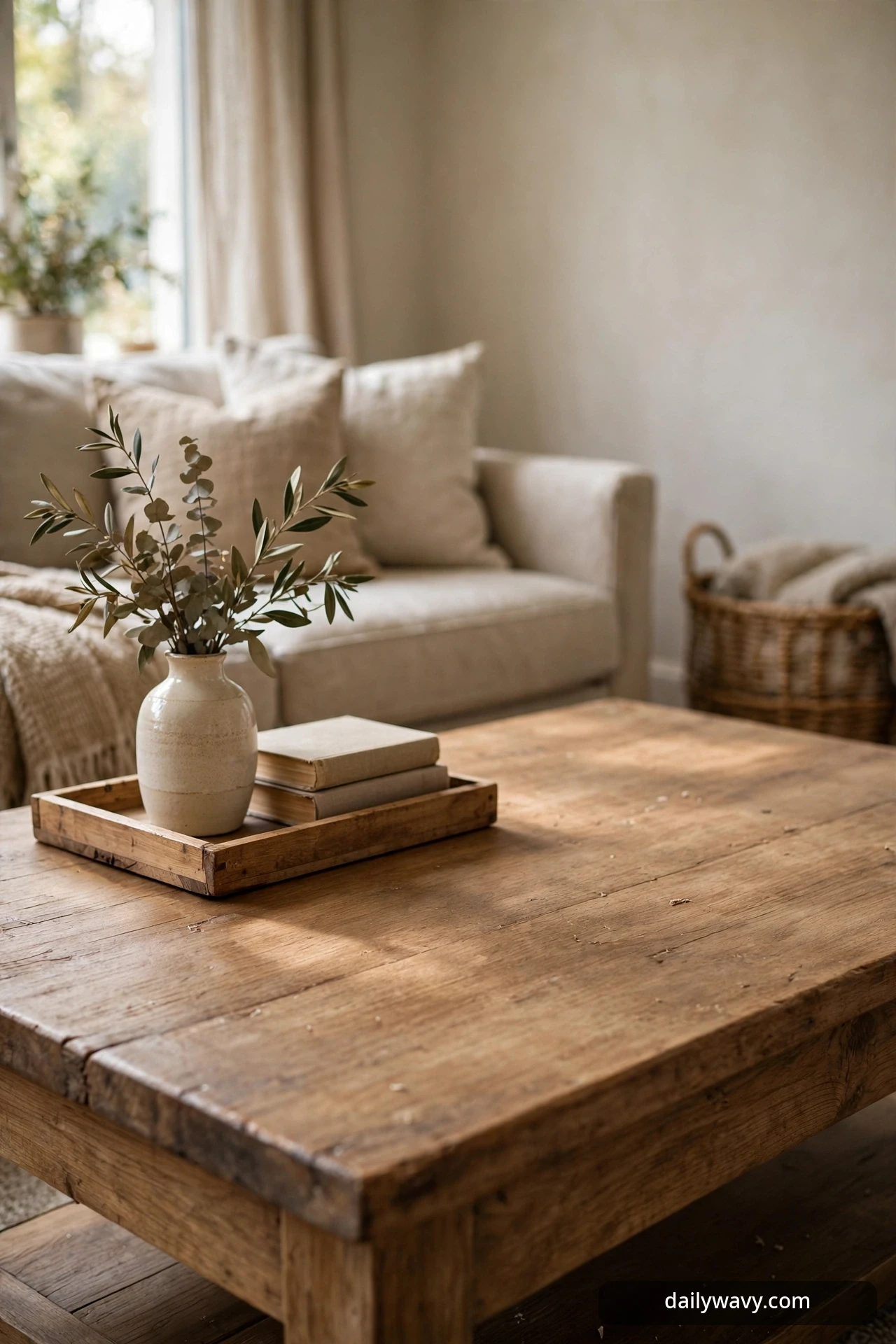
Asymmetry is one way a styled table still works for real life. Push everything, a tray, a vase, a stack of books, to one end of the table, covering only about a third of the surface. Leave the remaining two thirds completely clear. That clear zone is your serving space: tea trays, cheese boards, laptops, game night, all fit without moving anything.
The styling should sit slightly toward the back edge so the front of the clear zone stays usable. Choose objects with different heights so the clustered end has shape: a 10 inch vase, a 6 inch stack, a 4 inch dish. This arrangement also photographs well, because the empty space gives the eye somewhere to rest. If the clear zone starts collecting clutter, the room may need more storage elsewhere, not more decoration on the table.
What to measure: mark the boundary mentally at one third of the table length. On a 48 inch table, the styled third is 16 inches and the serving zone is 32 inches.
13. A textured mat beneath a tray
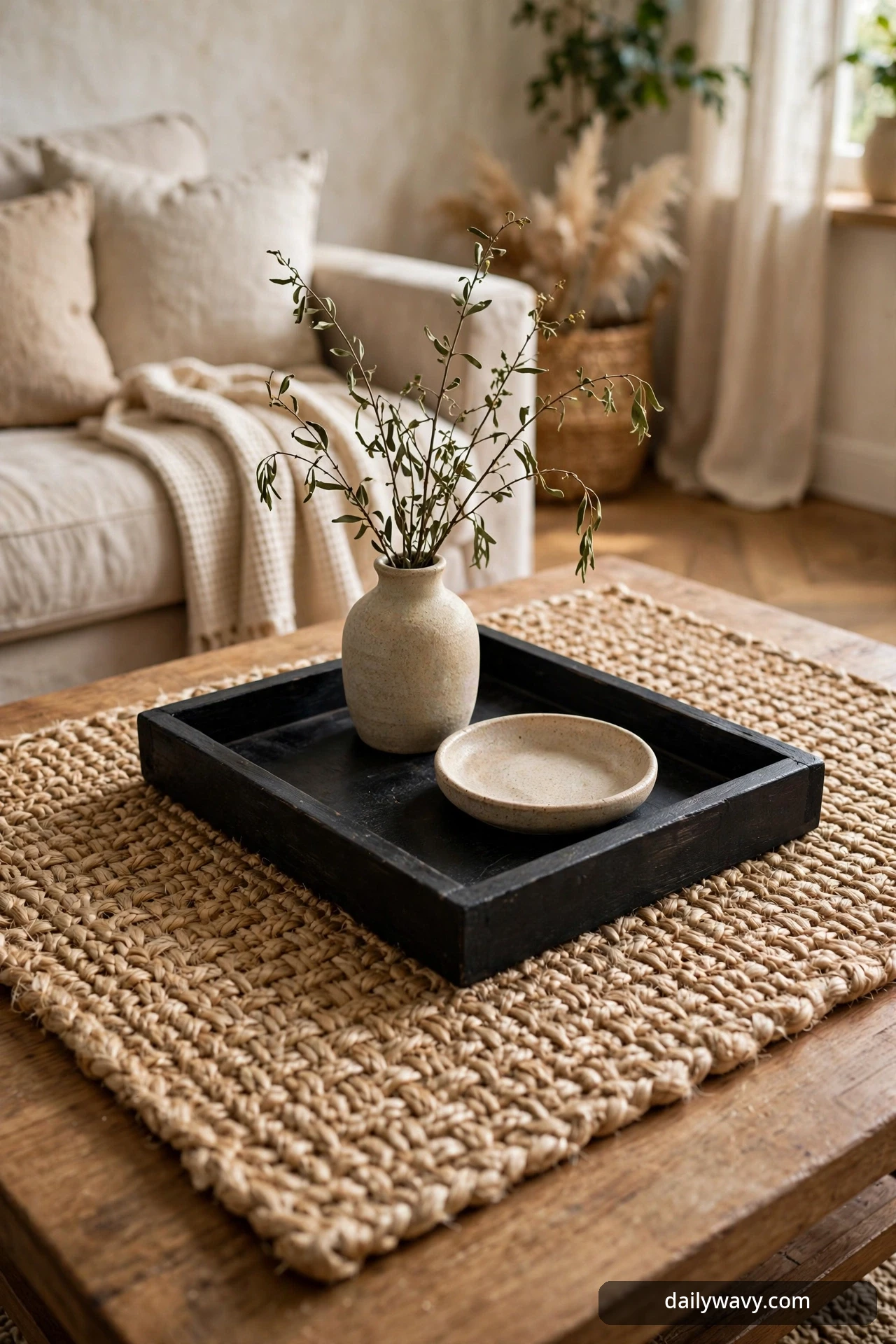
Layers make a tabletop feel finished, and a textured mat under a tray is an easy layer. Choose a flat mat, woven jute, a felted wool pad, or a thin kilim piece, about 24 by 14 inches, slightly larger than the tray that sits on it. Center the mat in the middle third, then place your tray, about 18 by 10 inches, on top.
The mat does three jobs at once: it protects the table from scratches and rings, it visually defines the styling zone, and the texture adds a material the tabletop alone cannot provide. Choose a mat thin enough, under a quarter inch, that the tray sits stable. Vacuum it or shake it out monthly; crumbs love texture. In a rental or on a table you are protecting, this idea also helps protect the table.
What to measure: the mat should extend 2 to 3 inches beyond the tray on all sides. Any wider and it starts to read as a tablecloth.
Frequently asked questions
How do I keep my coffee table from looking cluttered?
Limit yourself to three objects or three clusters, keep the tallest under 14 inches, and leave at least half the surface empty. Clutter is often a quantity problem more than a taste problem. If you want to learn how to handle small-space storage in general, our guide to small bathroom storage uses the same measure-first approach.
What size should decor be for a rectangular coffee table?
Style the middle third of the table for most ideas, roughly 16 to 20 inches of a standard 48 inch table. The wide arrangement in idea 4, the one-end arrangement in idea 12, and the flat mat layer in idea 13 are the exceptions, and each still leaves clear space for everyday use. Keep the tallest object under 14 inches so sightlines stay open across the sofa, and keep each cluster inside a 12 to 14 inch footprint.
How do I decorate a coffee table I actually use every day?
Use trays and lidded baskets so your styling lifts away in one motion, and always leave one end of the table clear as serving space. Idea 12 above is built for exactly this. If your whole living room is tight, our narrow living room layout ideas show how the table fits into the bigger picture.
Can I mix wood, glass, and ceramic on one table?
Yes, and you should. Mixed materials keep a rectangular table from looking flat. Aim for three materials maximum: one warm (wood, basket, textile), one cool (glass, metal), and one in between (ceramic, stone). Repeat at least one material twice so the mix feels intentional.
How often should I change coffee table decor?
Seasonally is plenty for most people: swap the fruit bowl contents, change the bud vase stems, and rotate one or two objects. If you find yourself restyling more than twice a year, the arrangement may not suit how you actually use the table. For more living room inspiration anytime, browse our Home & Decor ideas.
What if my coffee table is round or square instead?
The principles here still apply, style the center, keep heights under 14 inches, leave serving space, but the shapes want their own layouts. Round tables suit a single central cluster, and square tables suit a symmetrical four-corner or quadrant layout.
Our small entryway decor ideas use the same measure-first thinking for a different surface, if you want to carry the look through the house.


2 Comments