12 Green Velvet Sofa Styling Ideas with Colors and Textures That Work Together
A green velvet sofa is a commitment in the best possible way. The color brings depth to a room, the…
A green velvet sofa is a commitment in the best possible way. The color brings depth to a room, the nap catches the light as you walk past, and suddenly every neutral in the space has something to play against. The trick is not to fight that richness but to give it calm company. Pair it with warm woods, washed linens, and a few honest textures, and the room feels collected rather than decorated. These twelve ideas work one at a time, so you can start with whichever corner bothers you most and build from there.
In This Guide
- A Soft Ottoman With A Serving Tray
- A Framed Art Pair Centered Above Seating
- A Narrow Console Behind The Sofa
- A Reading Lamp Beside One Arm
- A Washable Rug With A Subtle Pattern
- A Linen Curtain Backdrop
- A Vintage Trunk Used As A Table
- A Single Sculptural Vase On A Nearby Shelf
- An Upholstered Bench Facing The Sofa
- A Tall Plant Beside The Arm
- A Rug Layered Over A Plain Natural-Fiber Rug
- Textured Cushions With A Plain Throw
Green Velvet Rules Before You Start
Before you move a single piece of furniture, learn how velvet behaves. The nap, the direction the fibers lie, shifts the color as light hits it. Vacuum it with an upholstery attachment once a month so dust does not settle into the pile, and brush it gently in one direction every few weeks to keep the sheen even. Blot spills immediately with a clean dry cloth and never rub, because rubbing crushes the pile.
Color-wise, green velvet wants warmth around it. Cool grays and stark whites can make the green read cold and flat. Warm whites, creams, camels, cognacs, and natural woods let the green stay rich without shouting. Pick one dark accent for contrast, something like walnut or blackened steel, and let everything else stay in the mid and light range. One more rule: give the sofa breathing room. A velvet sofa pushed against three other statement pieces looks busy. Let each idea below earn its own patch of calm.
1. A Soft Ottoman With A Serving Tray
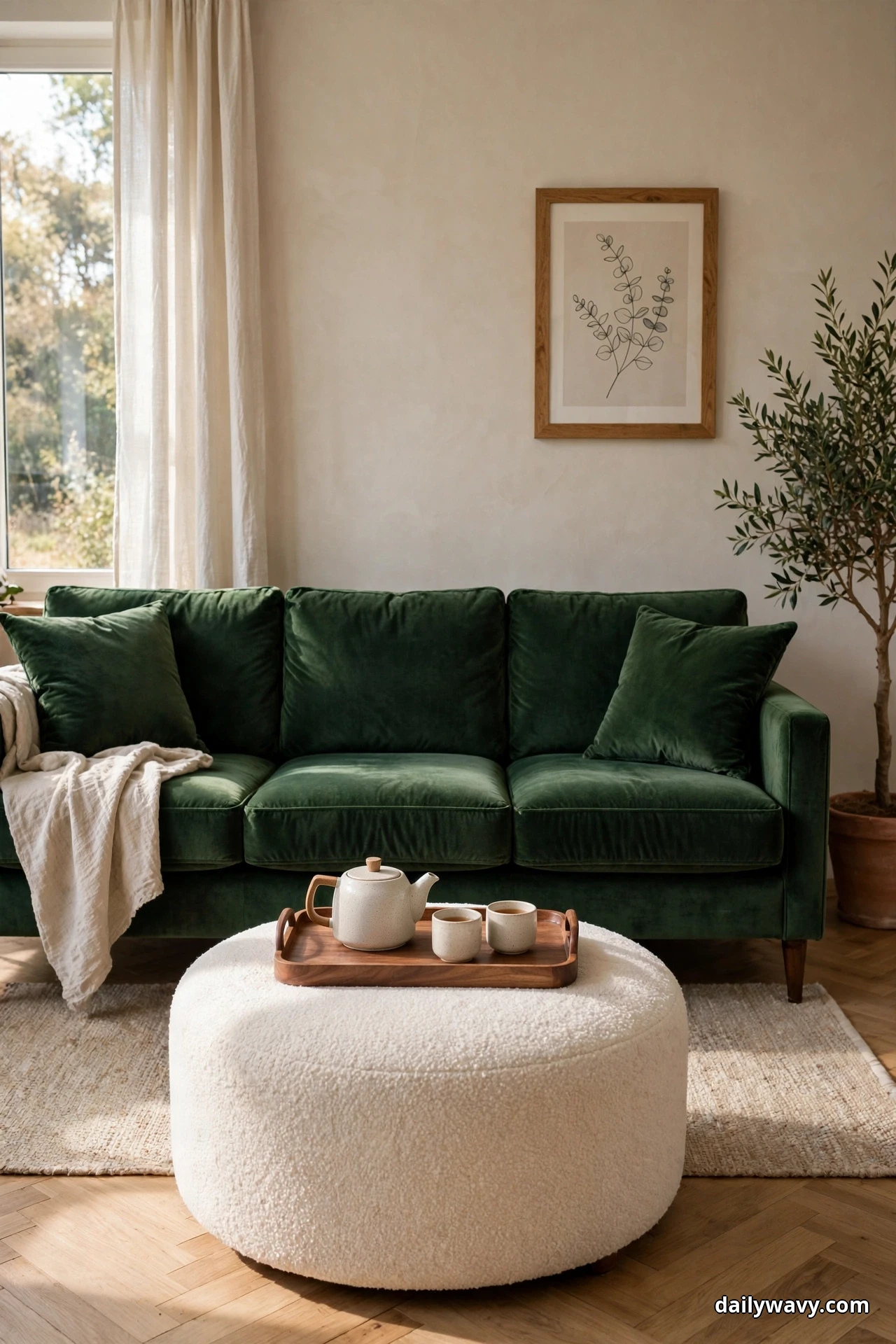
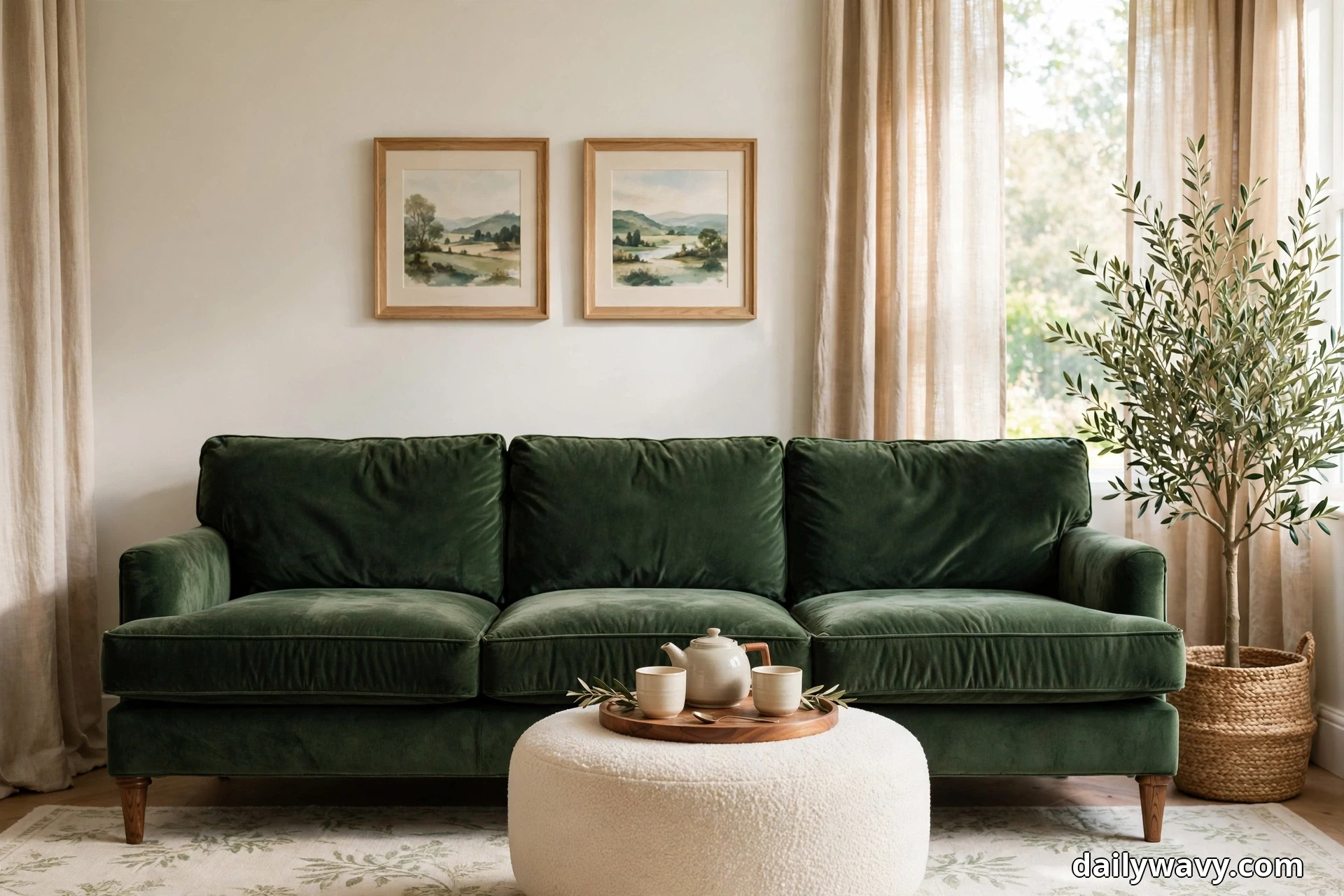
There is something deeply welcoming about a sofa that comes with its own footrest. A soft ottoman in front of a green velvet sofa turns the seat into a lounge, a reading nook, and a casual dinner spot all at once. The serving tray on top is what makes it practical instead of just pretty.
The pairing: choose the ottoman in cream boucle or a natural linen slipcover. The nubby texture plays beautifully against the smooth velvet, and the light color lifts the weight of the dark green. For the tray, go with warm wood, acacia or walnut, which echoes the wooden legs or frame details you will find on most velvet sofas. Brass tray handles add a small flash of shine.
How to do it: measure your sofa seat height and pick an ottoman within two inches of it, so it reads as a chaise extension rather than a stool. Leave 14 to 18 inches between the ottoman edge and the sofa front, the same leg room you would give a coffee table. Round ottomans suit a three-seat sofa; rectangular ones work better against a loveseat. Setup takes an afternoon of shopping and one delivery window.
Lower-cost swap: a firm round pouf from a big-box store does the same job, and a thrifted wooden cutting board stands in for the tray until you find the real thing.
2. A Framed Art Pair Centered Above Seating
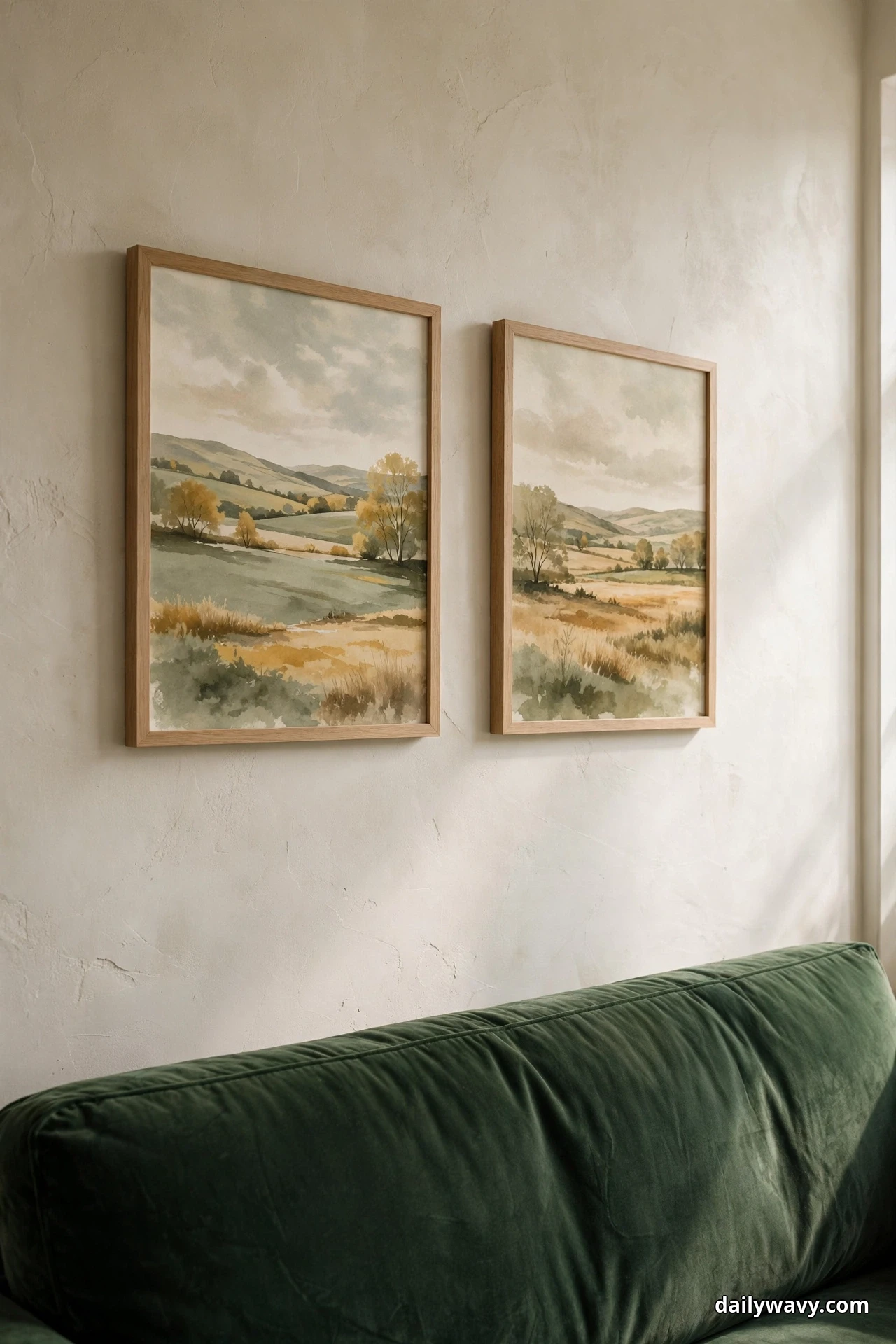
A green velvet sofa holds the room so strongly that the wall above it needs an answer. A single large print can feel bossy, but a pair of framed pieces feels conversational. Two works side by side give the eye a gentle rhythm and keep the composition from going stiff.
The pairing: pick art with warm landscape tones, sage greens, ochre fields, hazy skies. It does not have to match the sofa exactly; it should belong to the same color family. Light oak or natural ash frames keep things warm. Matte frames beat glossy ones here, because glassy frames compete with the velvet sheen.
How to do it: measure the sofa width and keep the pair centered on it, with the combined width landing at roughly two thirds of the sofa. Hang so the bottom of the frames sits about eight inches above the sofa back. Use a paper template taped to the wall first. This is a one-evening project once the frames are in hand.
Lower-cost swap: print two high-resolution landscape photos at a copy shop and frame them in ready-made oak-look frames.
3. A Narrow Console Behind The Sofa

When a sofa floats in the middle of a room, the back of it can look unfinished, like the set of a play where the audience sees behind the curtain. A narrow console table fixes that instantly. It gives the sofa a backrest for the room itself and adds a surface for the little things that make a living room feel finished.
The pairing: walnut or smoked oak brings the warmth green velvet loves. Style the top with restraint: a small stack of books, one trailing plant in a clay pot, and a single candle or object with some heft. The small entryway decor playbook works here too, since consoles behave the same way in both spots.
How to do it: measure the sofa length and choose a console about two thirds of it. The height should sit one to four inches below the sofa back, so it disappears from the front view. Leave three to four inches between the console and the sofa back for airflow and cleaning. Shopping and styling is a weekend job.
Lower-cost swap: a simple pine console from a secondhand marketplace, stained with one coat of dark walnut wood stain.
4. A Reading Lamp Beside One Arm
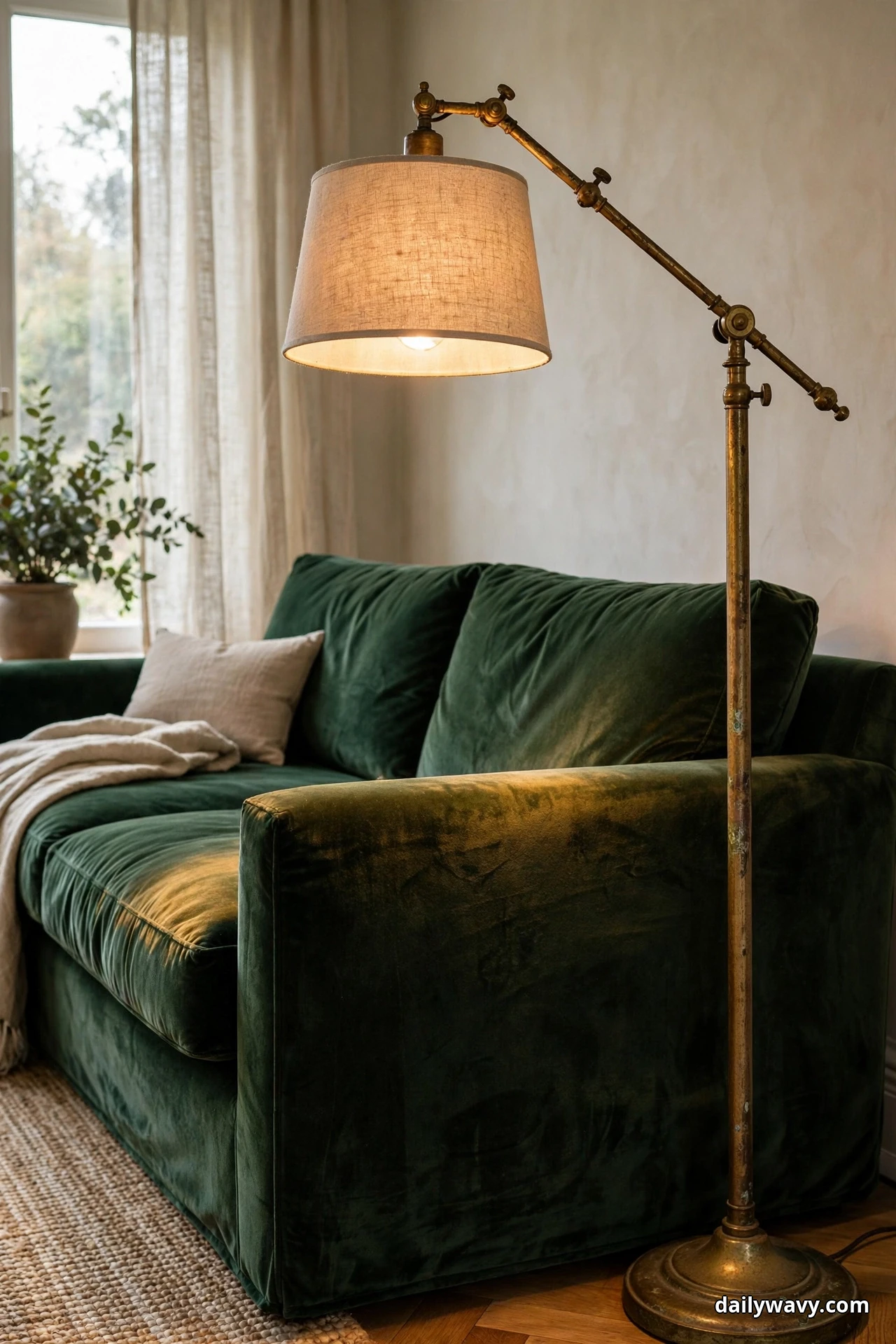
Every green velvet sofa deserves a reading corner, even if the corner is just one arm and a lamp. A well-placed reading lamp does two jobs: it gives you task light for books and screens, and it puts a warm pool of light next to the deepest color in the room, which makes the velvet glow after dark.
The pairing: aged brass or bronze with a linen drum shade. The metallic finish picks up the sheen in the velvet, and the fabric shade softens the light so it never glares. Warm white bulbs, around 2700K, keep the green from going cold at night.
How to do it: measure from your seat. The bottom of the shade should sit at about your shoulder height when you are seated, roughly 40 to 45 inches from the floor for most floor lamps. Push the lamp base behind the sofa arm slightly so the light falls over your reading spot, not behind your head. This is a one-hour project including bulb shopping.
Lower-cost swap: a pharmacy-style floor lamp in a dark bronze finish from a home store, which gives the same adjustable-arm look for a fraction of the price.
5. A Washable Rug With A Subtle Pattern
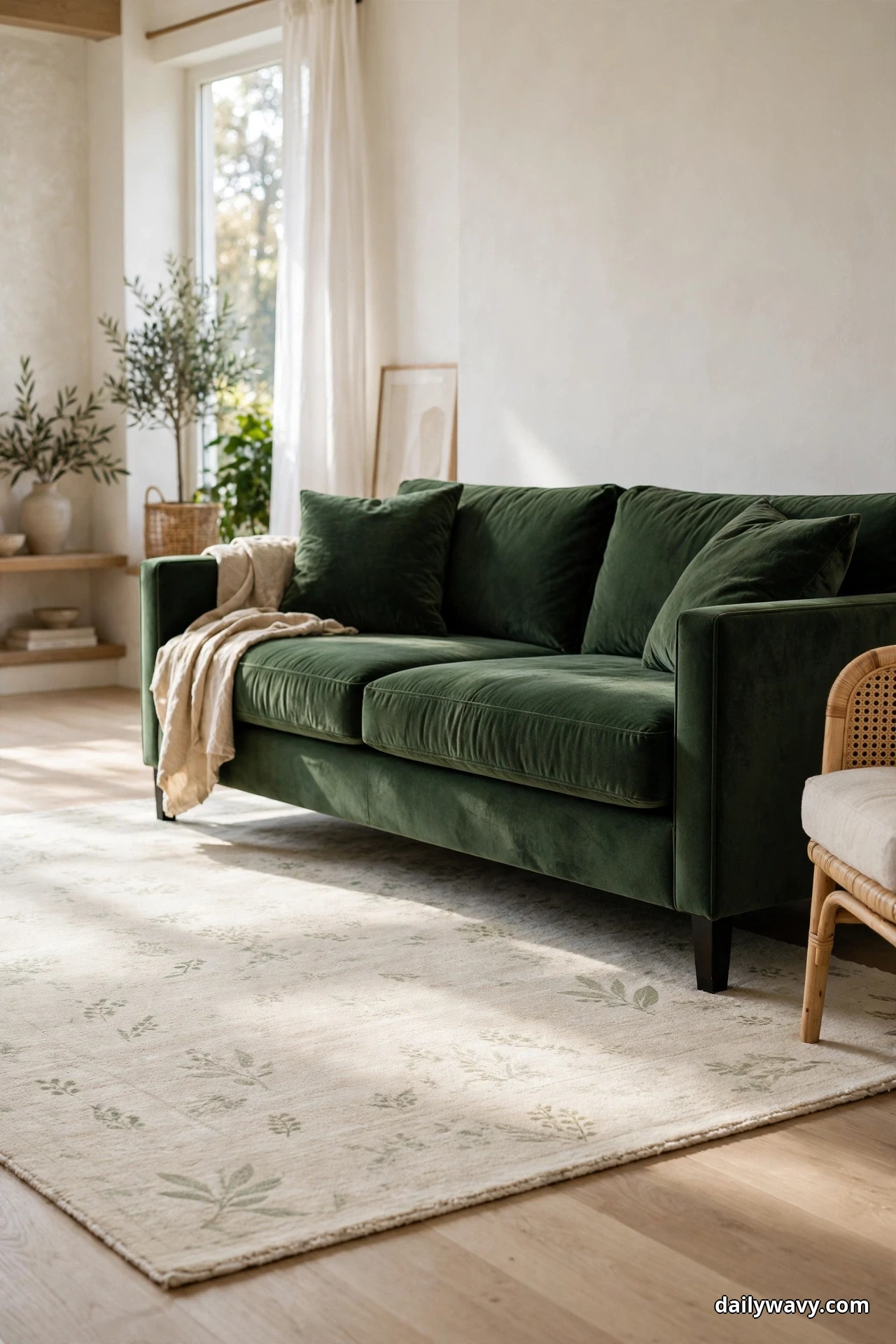
Green velvet anchors a room with confidence, and the rug underneath it decides whether the floor helps or fights. A washable rug with a soft, low-contrast pattern is the practical answer, especially if pets, kids, or muddy boots are part of your life. It grounds the seating area and makes the sofa look intentional instead of dropped in.
The pairing: cream or warm ivory with a faint sage or taupe motif. Keep the pattern at least three shades lighter than the sofa so the green stays the star. Low-pile textures work best here; anything shaggy under a velvet sofa starts a texture war.
How to do it: measure your seating zone and size the rug so the front legs of the sofa and all other seating sit on it. For a standard three-seat sofa and one chair, that usually means 8 by 10 feet. Lay it out, live with it for a day, then adjust. Washable rugs go straight in the machine, so effort stays minimal.
Lower-cost swap: a flat-weave cotton dhurrie in cream, which reads similarly and costs far less than a patterned washable rug.
6. A Linen Curtain Backdrop
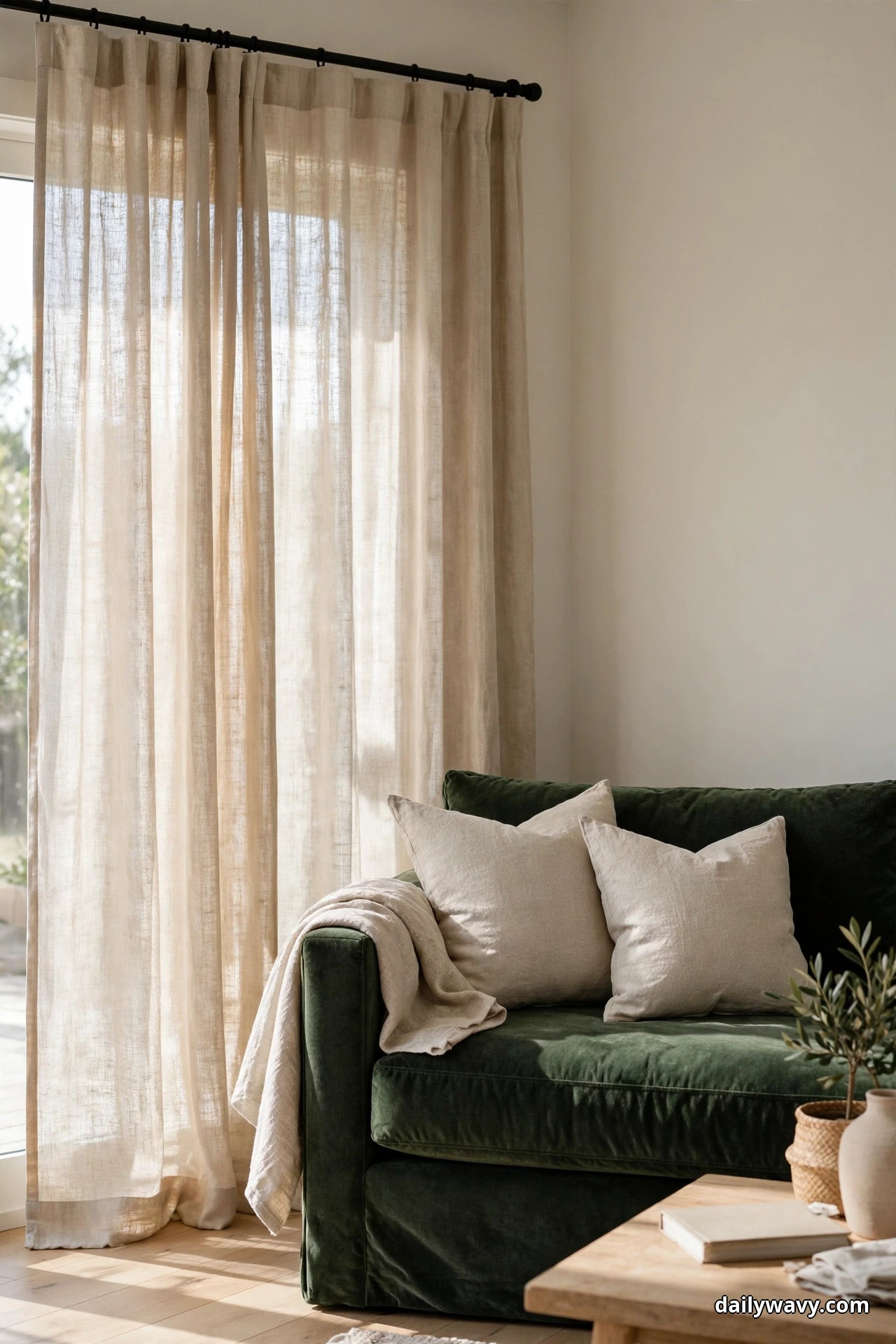
The window wall behind or beside a green velvet sofa sets the tone for the whole room. Bare windows make velvet look formal and a little stiff. Washed linen curtains soften the architecture, filter the light, and give the green something relaxed to sit against. They are the difference between a showroom and a home.
The pairing: natural flax or oatmeal linen, unlined or lightly lined so daylight glows through. The warm beige tones sit comfortably next to forest or emerald green. Matte black or brushed brass rods both work; pick whichever repeats elsewhere in the room.
How to do it: measure from just below the ceiling molding to about one inch above the floor, and hang the rod four to six inches wider than the window frame on each side. Buy panels at least twice the window width for real fullness. This is an afternoon with a drill and a level.
Lower-cost swap: cotton-linen blend panels from a big-box store, which look nearly identical from three feet away.
7. A Vintage Trunk Used As A Table

A coffee table does not have to come from a furniture catalog. A vintage steamer trunk in front of a green velvet sofa brings history, storage, and a patina that no new piece can fake. The worn leather straps and brass corners look like they have stories, and they give the room the layered feeling that makes guests want to stay.
The pairing: cognac or tobacco-brown leather with dark wood banding. Those warm ambers sit beautifully next to deep green. Inside, the trunk hides throws, games, and the remotes nobody wants on display. Top it with a linen runner or nothing at all; the trunk surface is already interesting enough.
How to do it: measure your sofa height and pick a trunk that lands within two inches of the seat, typically 16 to 18 inches tall. Leave 14 to 18 inches of leg room between the trunk and the sofa front. Check that the lid opens flat or lifts cleanly before you buy, and line the interior with cedar blocks for a fresh scent. A weekend of hunting, then done.
Lower-cost swap: a modern storage ottoman in faux cognac leather gives the storage and the look for a modest budget.
8. A Single Sculptural Vase On A Nearby Shelf
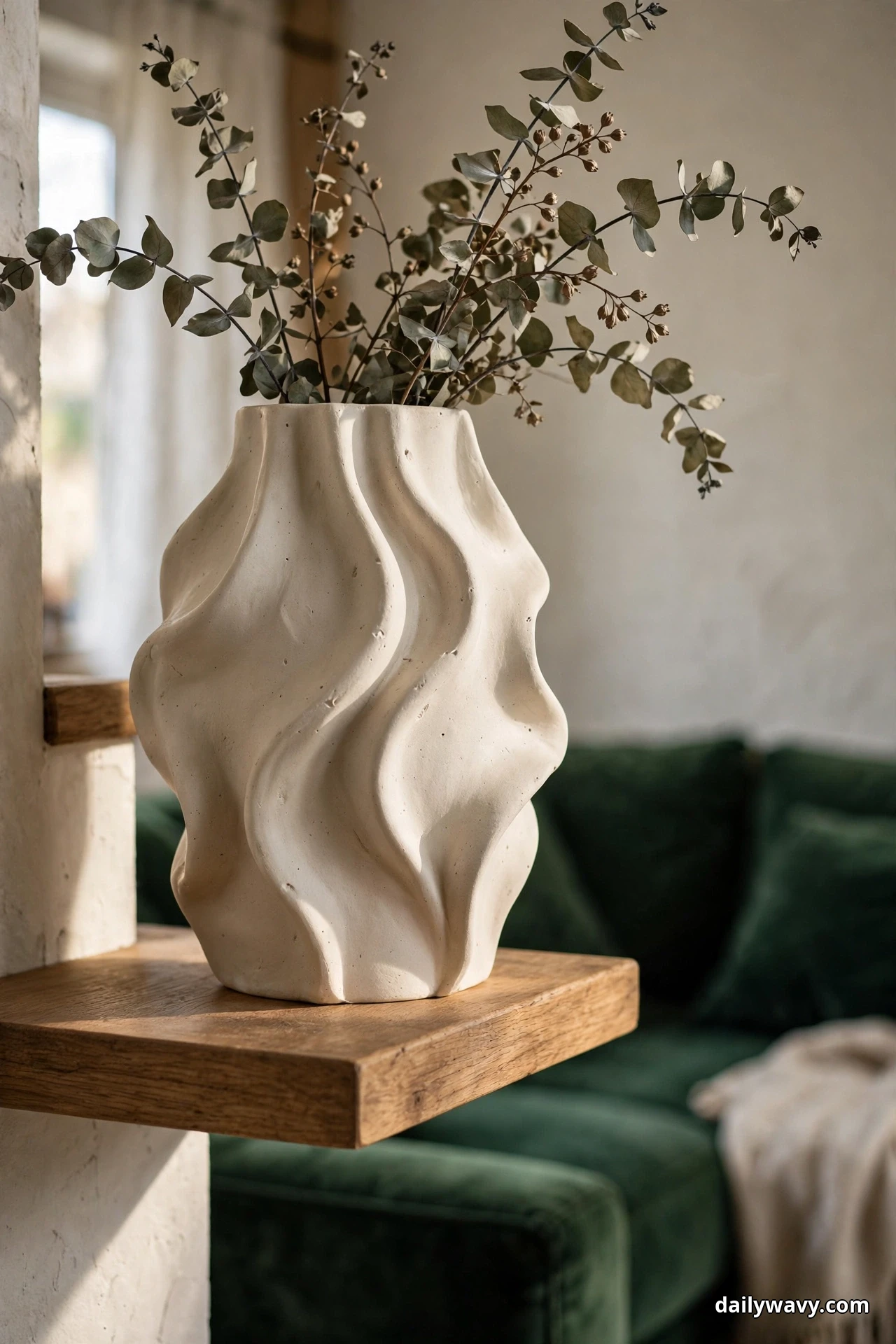
Small moves matter. One sculptural vase on a nearby shelf or sideboard, holding nothing or a few dried stems, tells the eye that the room was styled on purpose. It is the period at the end of the sentence that is your green velvet sofa.
The pairing: matte ceramic in cream, stone, or warm sand. An organic, slightly irregular shape contrasts with the sofa’s tailored lines. Fill it with dried pampas grass, eucalyptus, or bleached ruscus, or leave it empty and let the silhouette do the work.
How to do it: choose a vase between 10 and 16 inches tall for a standard shelf. Place it where it catches natural light if possible, because matte ceramic shows its form best in side light. One rule: resist the urge to add two more. A single piece has confidence. This is a thirty-minute styling win.
Lower-cost swap: a handmade-look ceramic vase from a craft fair or home store, which costs little and often looks better than the expensive versions.
9. An Upholstered Bench Facing The Sofa

Conversation areas work better when people face each other. An upholstered bench across from a green velvet sofa completes the seating group without the bulk of a second sofa or the formality of two matching chairs. It keeps the room open and flexible, and it doubles as extra seating when friends drop by.
The pairing: ivory or natural boucle, which mirrors the soft ottoman from idea one and keeps the palette light around the dark green. A slim oak or walnut base ties it to the other wood tones in the room. The narrow living room layout approach to traffic flow applies here: keep the path around the bench clear.
How to do it: measure the sofa and choose a bench about two thirds its length. Sit it 30 to 36 inches across from the sofa front, which leaves comfortable leg room on both sides. The bench seat should land within two inches of the sofa seat height. Shopping and placement is a weekend project.
Lower-cost swap: a simple upholstered storage bench from a big-box store in a light neutral fabric.
10. A Tall Plant Beside The Arm
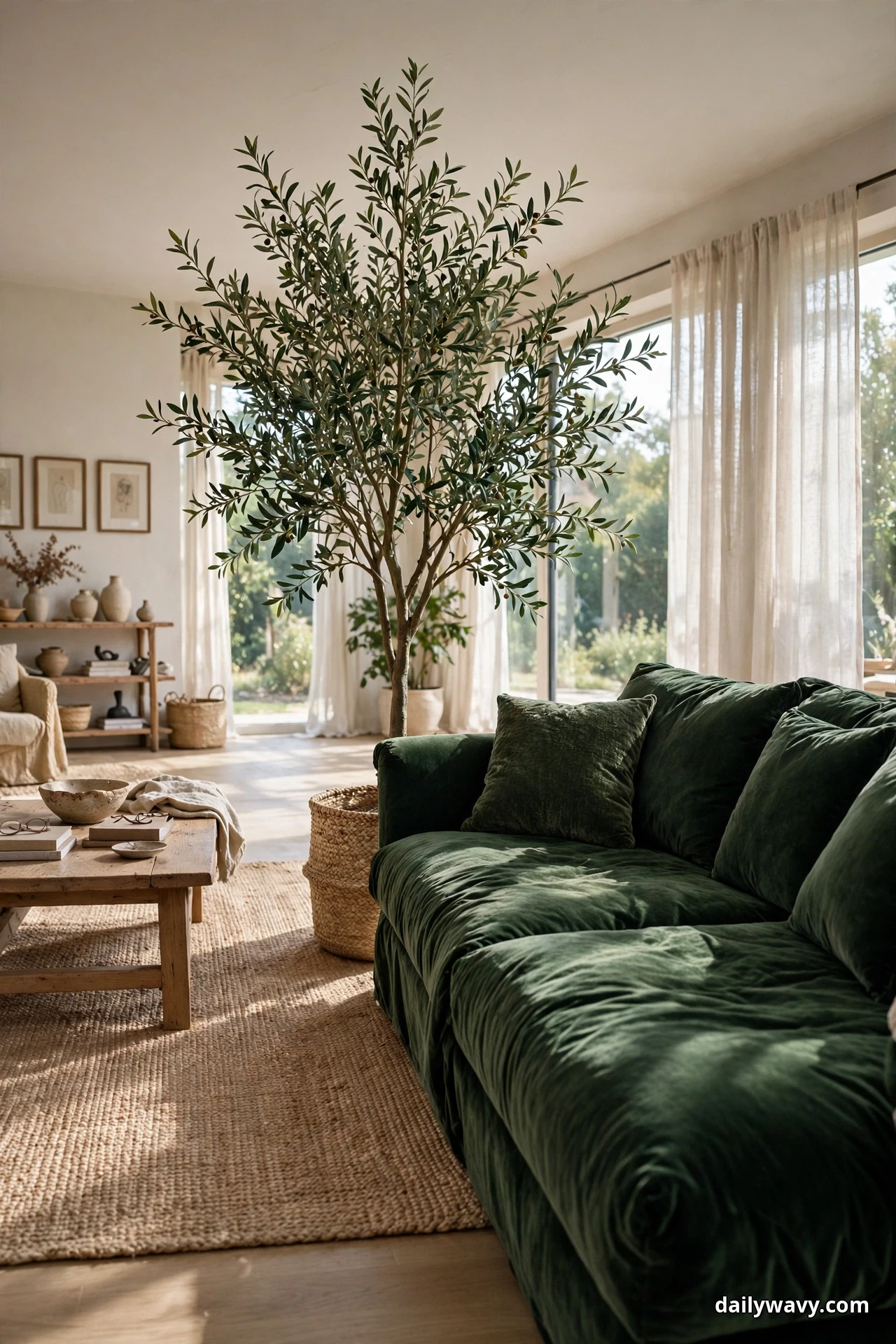
Green velvet and living green are a natural match. A tall plant beside one sofa arm brings height, life, and a texture no fabric can imitate. The leaves catch the light differently than the velvet, so the two greens play off each other instead of blending into a blob.
The pairing: an olive tree, fiddle-leaf fig, or a tall snake plant in a woven seagrass basket. The basket’s warm natural fiber grounds the plant and repeats the earthy tones elsewhere in the room. Terracotta pots work too, adding a small hit of rust that flatters deep green.
How to do it: choose a plant that will reach 4 to 6 feet, roughly two thirds of your ceiling height. Set it 6 to 12 inches from the sofa arm, close enough to feel grouped, far enough that leaves do not brush the velvet. Check your light: most statement plants want bright indirect sun. Picking the plant and pot is a single afternoon.
Lower-cost swap: a tall faux olive tree in a basket. Modern faux plants read convincingly from a few feet away and cost far less than a mature real one.
11. A Rug Layered Over A Plain Natural-Fiber Rug
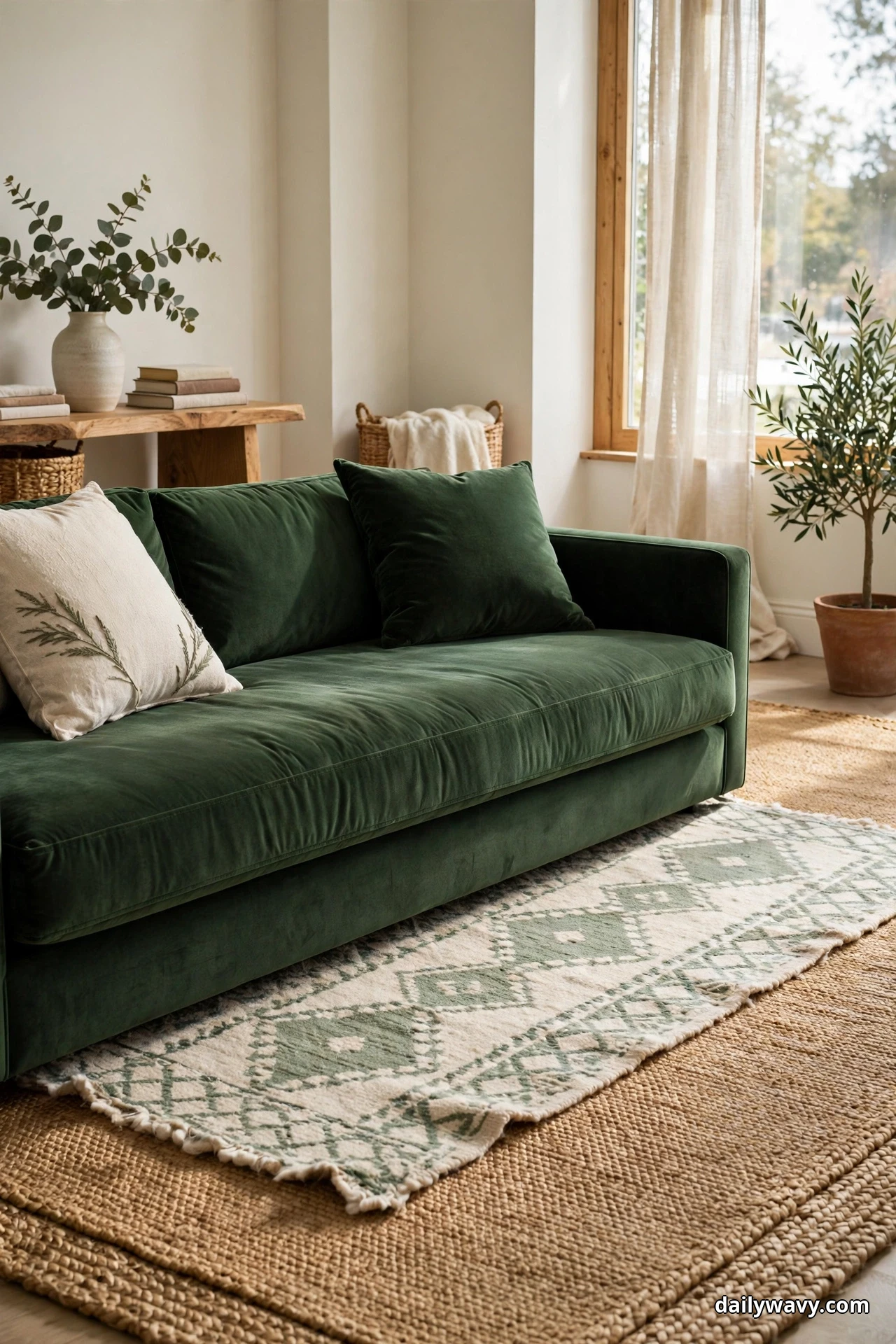
Layering rugs is the stylist trick that makes a room look instantly considered. A large plain jute or sisal rug sets a warm, honest base, and a smaller patterned rug on top adds the personality. Under a green velvet sofa, this combo gives you texture, pattern, and warmth in one move.
The pairing: a natural jute rug in its plain golden tone, with a smaller wool or cotton rug in cream and sage on top. The jute brings raw texture, the top rug brings softness underfoot. The palette stays warm and light, which is exactly what green velvet asks for.
How to do it: size the base rug to cover the full seating zone, usually 8 by 10 or 9 by 12 feet. The top rug should be at least two feet narrower on all sides so the jute border shows. Center the top rug under the coffee table or ottoman. This is a one-hour styling job once both rugs are home.
Lower-cost swap: a plain jute rug alone, styled with a folded throw blanket as the “second layer” until the budget stretches.
12. Textured Cushions With A Plain Throw
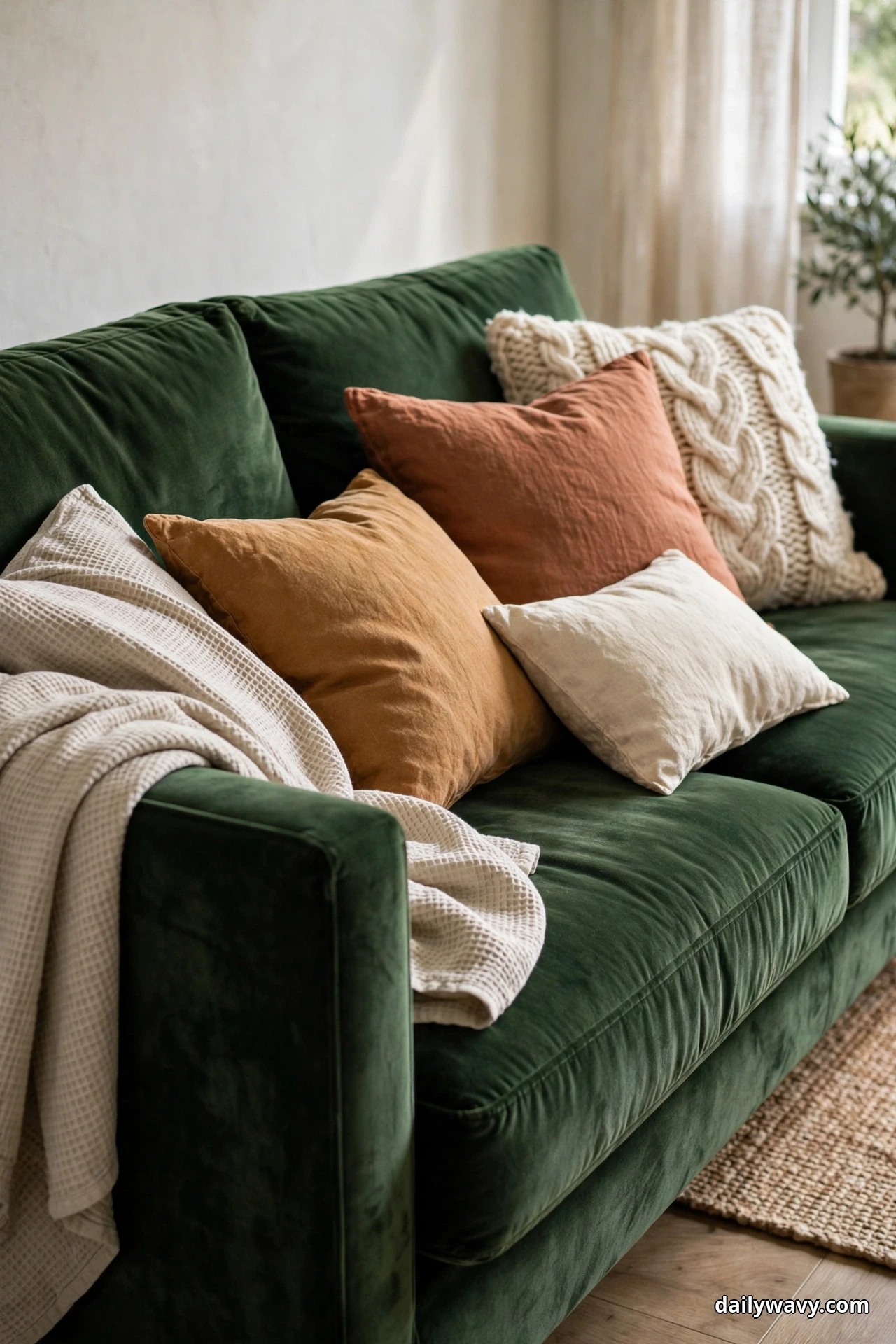
The fastest way to change how a green velvet sofa feels is right on the seat itself. Textured cushions in creams, caramels, and one warm rust break up the solid green expanse and invite people to sit. A plain throw draped over one arm finishes the look with a casual, lived-in touch.
The pairing: mix a chunky knit, a washed linen, and a small lumbar in a muted rust or clay. Keep every cushion in the warm family. The throw should be plain, cream or oatmeal, in a waffle or loose weave that contrasts with the velvet pile.
How to do it: count your cushions before you shop. A three-seat sofa wants five to seven: two large squares at the corners, two mediums, one lumbar in the middle. Odd numbers look more relaxed than even ones. Drape the throw over one arm, not folded in a perfect rectangle, so it looks used. A single shopping trip covers this.
Lower-cost swap: buy cushion covers only and reuse your existing inserts; quality covers transform the look for very little.
Green Velvet Sofa Styling FAQ
Will a green velvet sofa clash with my wood floors?
Warm wood floors are the ideal partner for green velvet. Medium oak, walnut, and honey tones all sit comfortably next to deep green. Very orange or red-toned floors can fight it, so if yours run orange, keep the rug large enough to cover most of the visible floor.
How do I keep velvet looking new with kids or pets?
Choose a performance velvet if you are buying new, since it resists crushing better than cotton velvet. Keep a lint roller nearby, brush the nap regularly, and use washable throws on the seats pets claim. Blot spills fast and you will be fine.
What wall color goes with a green velvet sofa?
Warm whites, soft creams, and pale warm grays let the sofa be the star. If you want drama, a deep warm taupe or mushroom tone wraps the room in coziness. Avoid cool blue-grays, which make green velvet look muddy.
Can I mix green velvet with patterned curtains?
Yes, but keep the pattern quiet. A small-scale botanical or a subtle stripe in cream and sage works. Large bold patterns compete with the sofa for attention, and the sofa should win.
Is velvet too formal for a casual living room?
Not at all. Velvet reads formal only when everything around it is formal. Pair it with jute, linen, worn wood, and plants, as these ideas show, and it feels relaxed and inviting.
How much should I budget to style around the sofa?
You can start with one idea for under fifty dollars, like the cushions or the vase. A full room refresh with a rug, curtains, and a bench typically lands between five hundred and fifteen hundred dollars if you mix new and secondhand pieces.
Let The Sofa Do The Heavy Lifting
A green velvet sofa does the heavy lifting in any living room. It brings the color, the texture, and the personality, so everything around it can afford to be calm. Start with one idea that solves your biggest annoyance, whether that is the bare wall, the empty floor, or the missing reading light, and let the rest follow. For more small-space seating ideas, see the small bedroom with a queen bed layout notes, and browse the Home and Decor ideas for the full collection.