15 Glass Coffee Table Decor Ideas with Room for Everyday Use
A glass coffee table is one of the trickiest surfaces to style. Leave it bare and the room feels unfinished….
A glass coffee table is one of the trickiest surfaces to style. Leave it bare and the room feels unfinished. Overfill it and the table turns into a display case you cannot use. The sweet spot is a surface that looks considered but still holds a mug, a book, and a remote without everything needing to be cleared first. These fifteen ideas are built around that balance, with styling you can recreate in an afternoon and proportions that respect how a living room actually gets used.
In This Guide
- A Lantern With A Flameless Candle
- A Plate Of Collected Stones And A Book
- A Pair Of Mismatched Ceramic Bowls
- A Small Framed Photograph Beside A Vase
- A Lidded Basket For Remotes
- An Asymmetric Arrangement Leaving Serving Space
- A Textured Mat Beneath A Tray
- A Low Arrangement Of Dried Stems
- A Glass Pitcher Used As A Vase
- A Terracotta Pot And Brass Object
- A Compact Game Box With A Flower Stem
- Low Vase With One Branch And A Book Stack
- Woven Tray With A Candle And Coasters
- Ceramic Bowl Beside Two Oversized Books
- A Small Plant With A Sculptural Object

The Glass Coffee Table Rules Before You Start
A glass top changes the rules. Because the surface is transparent, everything reads from two angles at once, the top of the table and the lower shelf or rug below it. Measure your table first. Most rectangular glass coffee tables run 36 to 48 inches long and 18 to 24 inches wide, and the styling rule that works across all of them is the two-thirds rule: fill roughly two-thirds of the surface with decor and leave one-third open for daily life. That open third is where a tray for drinks or a lap-top setup goes without disturbing the arrangement.
Height matters more on glass than on wood. Anything taller than about 12 inches starts to block sightlines between people sitting across from each other. Keep the tallest piece toward one end, and keep the center low so conversation flows over the table instead of around it. Weight is worth thinking about too. Glass is strong but not invincible, so choose trays and mats that cushion heavy objects, and keep very heavy stone or metal pieces near the frame edges where the glass is strongest.
A final honest note: glass shows dust. A quick weekly wipe with a microfiber cloth is the whole maintenance plan. None of the ideas below need seasonal props or fussy rearrangements, which is the point. Style it once, live with it daily, and only touch things up when company is coming. For more ways to shape the space around the table, our guide to small entryway decor and narrow living room layout ideas cover how small rooms earn their keep.
1. A Lantern With A Flameless Candle
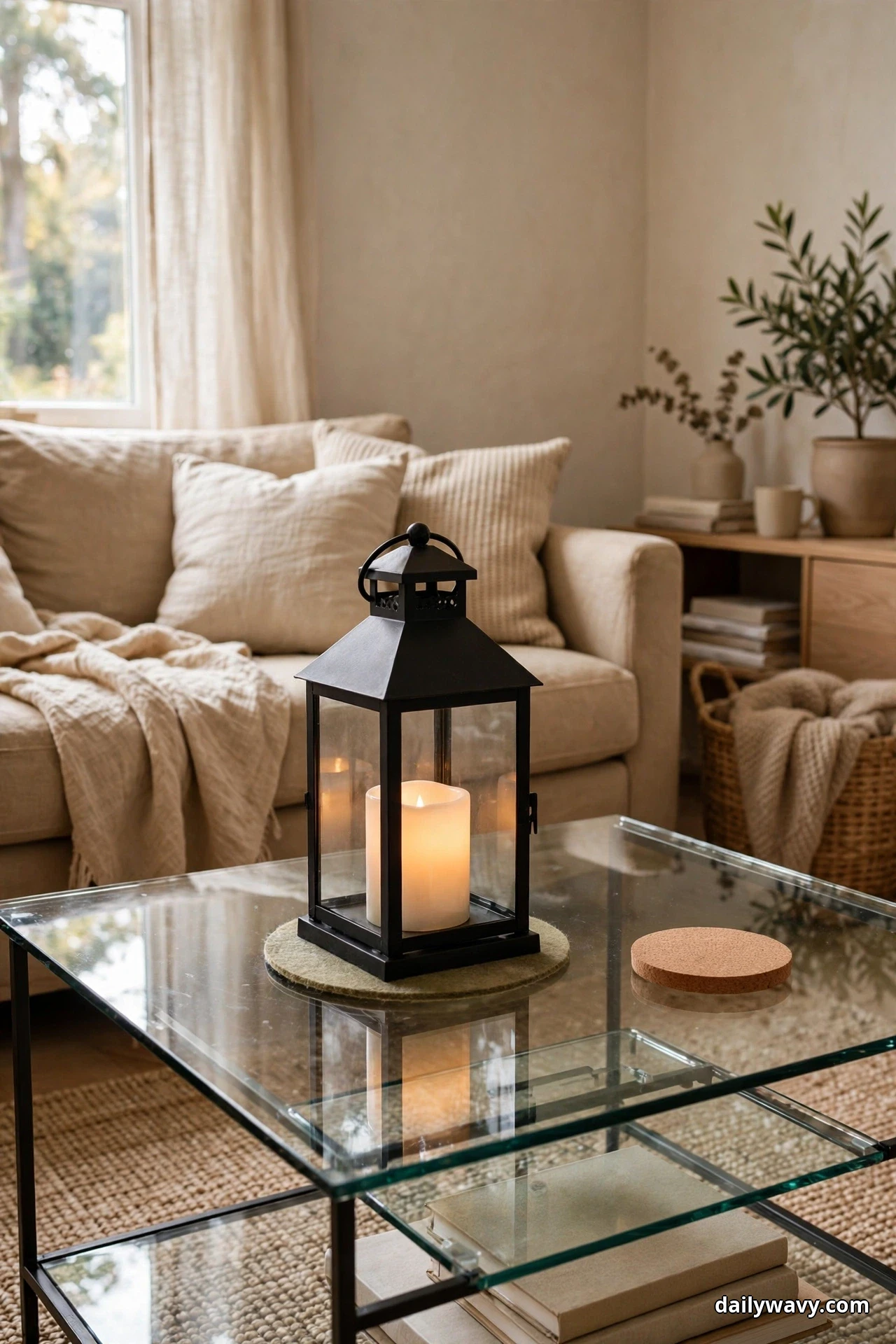
There is a reason this is the classic: a lantern gives a glass table the one thing transparency cannot, a soft point of visual weight. Choose a lantern about 9 to 12 inches tall with open or glass sides, and set a flameless candle inside rather than a real flame. Real candles drip wax onto glass, which is miserable to scrape off, and a flickering LED pillar reads just as warm in the evening.
Place the lantern off-center, about a third of the way down the table, and leave the opposite two-thirds open. The lantern should sit on a cork or felt pad so the metal base does not scratch the glass when you bump it. Most lanterns and a pair of flameless pillars cost $20 to $40 total, and a simple glass lantern from a craft store keeps it under $20 if you skip the brand markup.
The real advantage is that a lantern works on the lower shelf too. If your table has one, a second small lantern below doubles the glow in the evening and gives the transparent top something interesting to show through to.
2. A Plate Of Collected Stones And A Book

Stones you collected yourself beat anything from a gift shop, and a shallow plate of them on a glass table feels personal in a way a store-bought bowl never does. Use a ceramic or wooden plate about 10 inches across, arrange the stones in a loose pile, and set a paperback or small hardcover leaning against one edge. The book keeps the plate from looking like a museum display and gives guests something to pick up.
This costs nothing if the stones come from your own walks. If you need to source them, a bag of river rocks from a garden center runs under $10 and a single plate from a thrift store is about $3. Keep the pile shallow, one stone deep, so nothing wobbles when the table gets bumped during a movie night.
3. A Pair Of Mismatched Ceramic Bowls
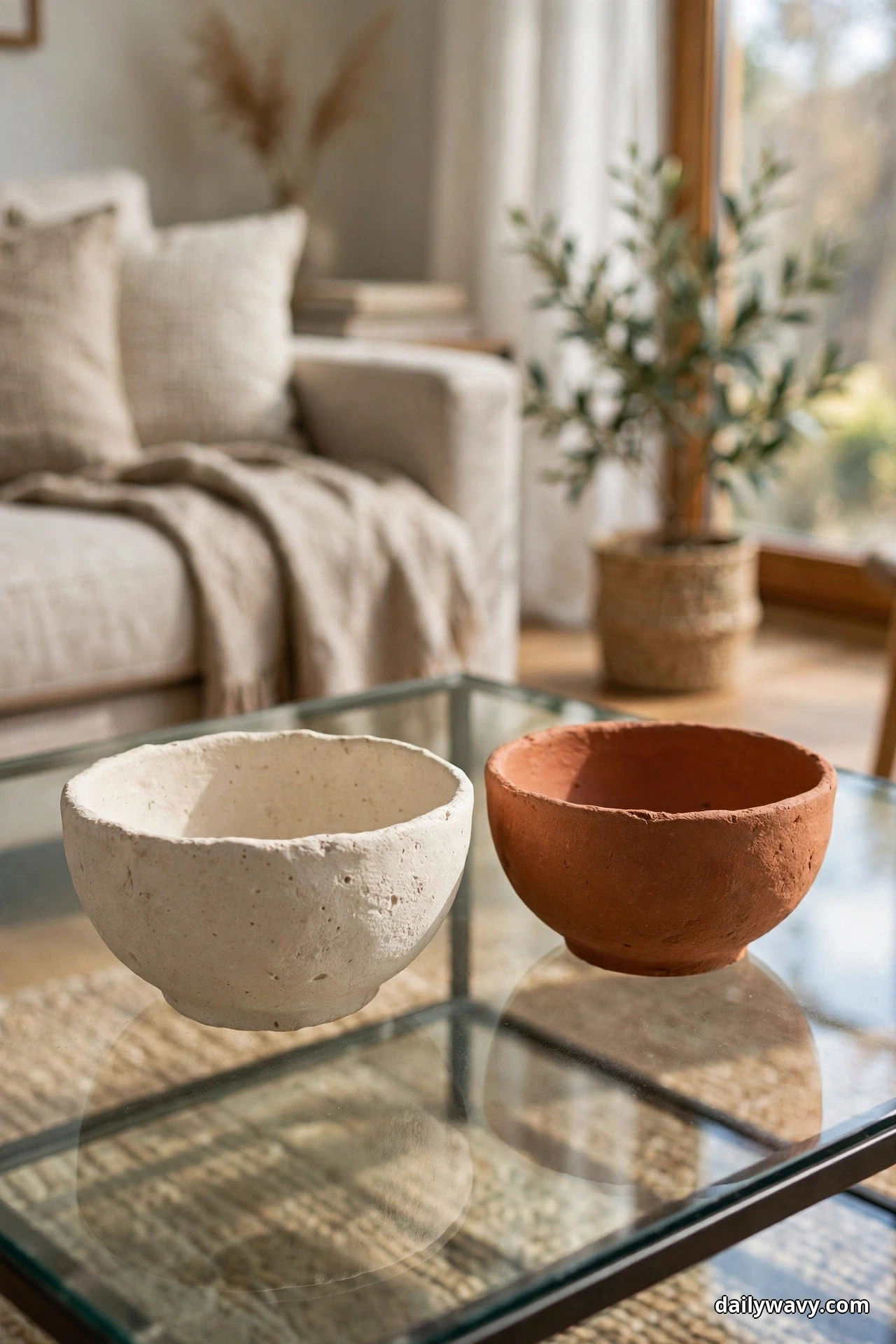
Two ceramic bowls that do not match but agree with each other, same warm tone family, different shapes, are one of the easiest wins on a glass table. One bowl catches keys, the other catches nothing and just looks good. Set them close together but not touching, slightly off-center, so the pair reads as one deliberate moment.
Because the glass is transparent, the bowls cast interesting soft shapes through the table onto whatever sits below. Stick to bowls under 5 inches wide so they stay in proportion. A pair of handmade-look bowls from a home store costs roughly $15 to $30, and mismatched thrift finds are usually under $10 together. If your room already leans toward warm neutrals, unglazed stoneware in cream and terracotta tones works beautifully.
4. A Small Framed Photograph Beside A Vase
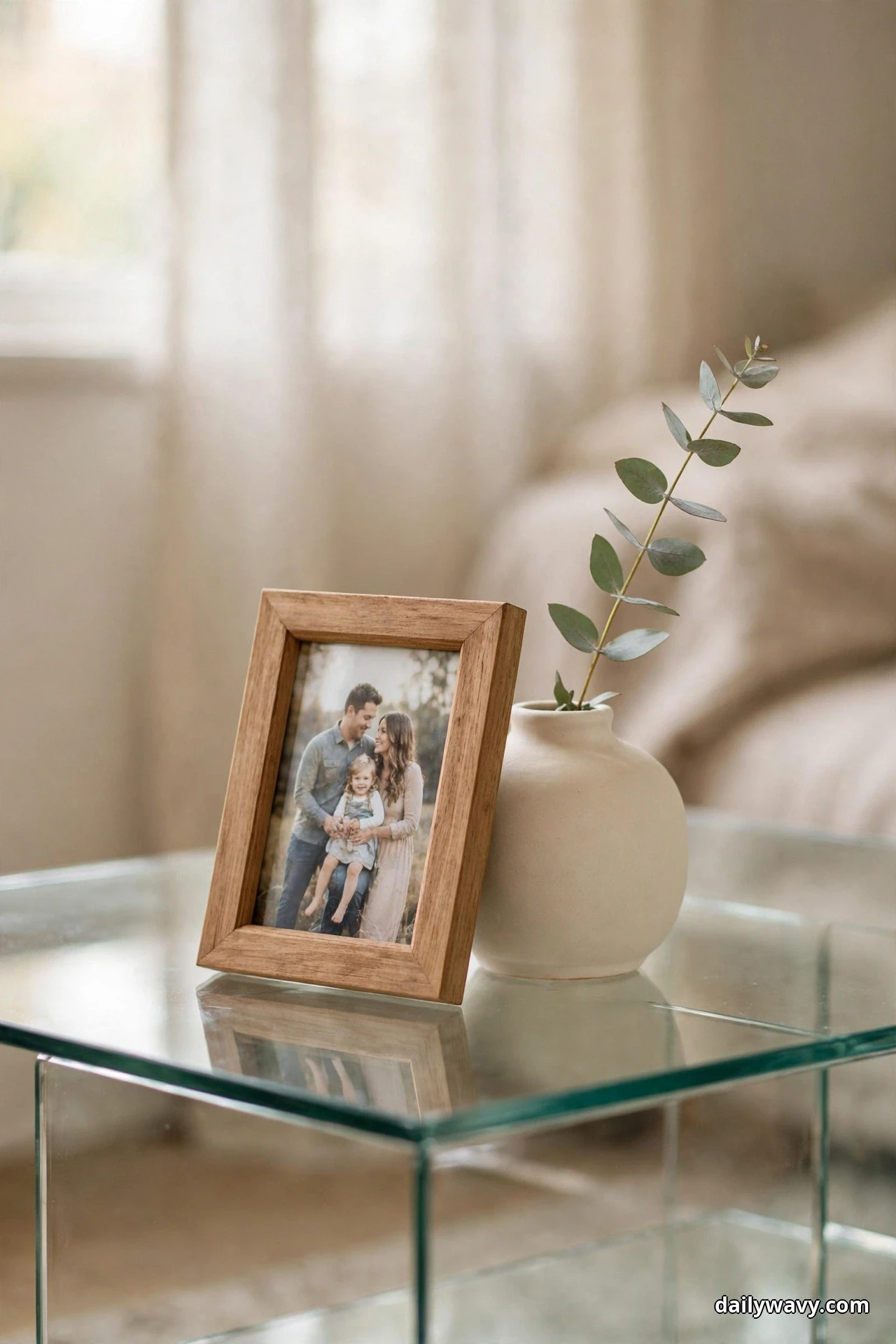
A small framed photograph makes a glass table feel like it belongs to a real household instead of a catalog. Choose a frame 4×6 or 5×7 inches, lean it against a low vase rather than laying it flat, and let the vase hold a single stem or stay empty. The photograph leans at a slight angle, which catches light in a way a flat frame never does.
Keep the frame low, under 8 inches tall, so it never blocks conversation. A simple wood or brass frame costs $8 to $15, and you already own the photograph. This pairing works best on one end of the table with the rest of the surface open, which fits the two-thirds rule from the primer. Pair it with the narrow-room guidance in our small living room layout ideas if your seating is tight.
5. A Lidded Basket For Remotes
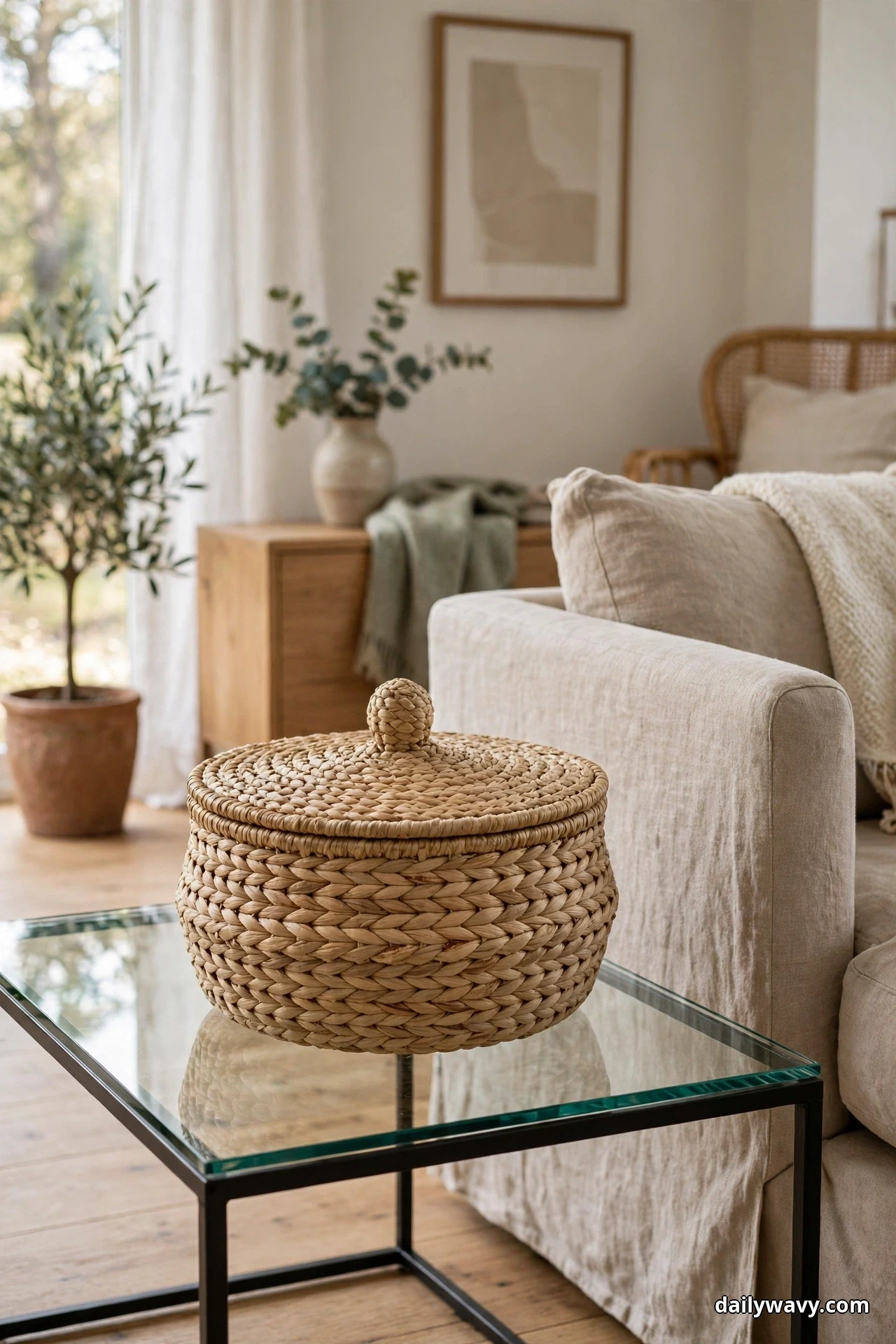
Remotes are the enemy of a styled table, and a lidded basket is the truce. A woven basket about 10 by 6 inches with a fitted lid swallows two or three remotes, a phone charger, and the coasters you never put away. Set it on one end of the table with the lid on, and the surface instantly looks deliberate.
Measure your remotes first. The longest one sets the basket length, plus an inch for fingers. Seagrass and lidded cane baskets in this size run $15 to $25 at home stores. The basket also protects the glass: remotes and their sharp buttons sit on weave instead of sliding across glass. Tuck it within arm’s reach of the main sofa seat, not the far end, or nobody will bother opening it.
6. An Asymmetric Arrangement Leaving Serving Space
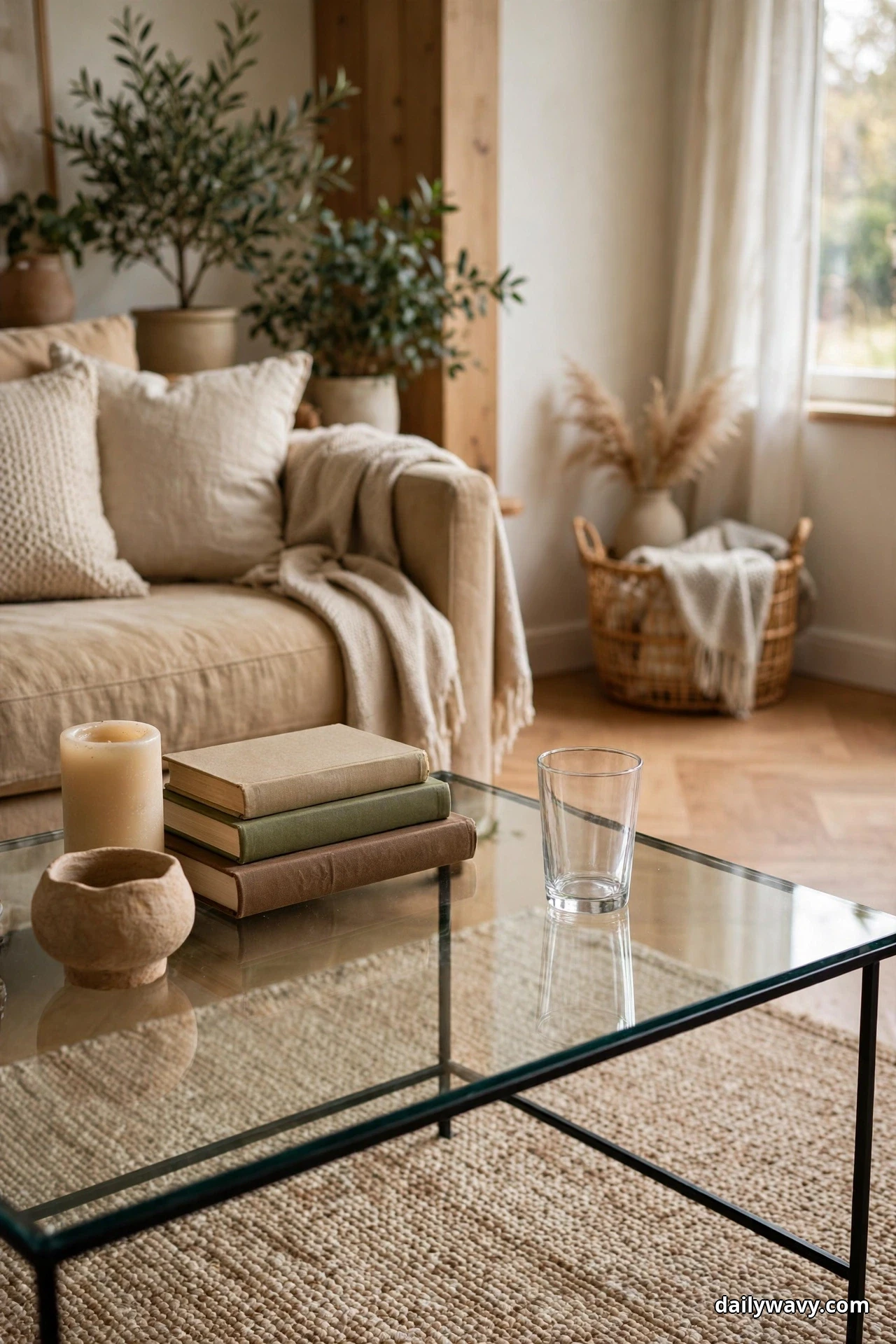
Symmetry looks stiff on a glass table because the transparency makes every mirrored pair feel doubled. Instead, cluster your decor on one half of the table and leave the other half genuinely empty. A small stack of books, a candle, and one object on the left; open glass on the right for a tray of drinks when friends come over.
This is the cheapest idea on the list because it uses things you already own. The trick is committing to the empty half. Resist the urge to scatter a small thing on the open side, because one coaster there turns the whole composition from intentional to accidental. If you host often, keep a serving tray stored nearby so the empty half becomes functional in seconds.
7. A Textured Mat Beneath A Tray
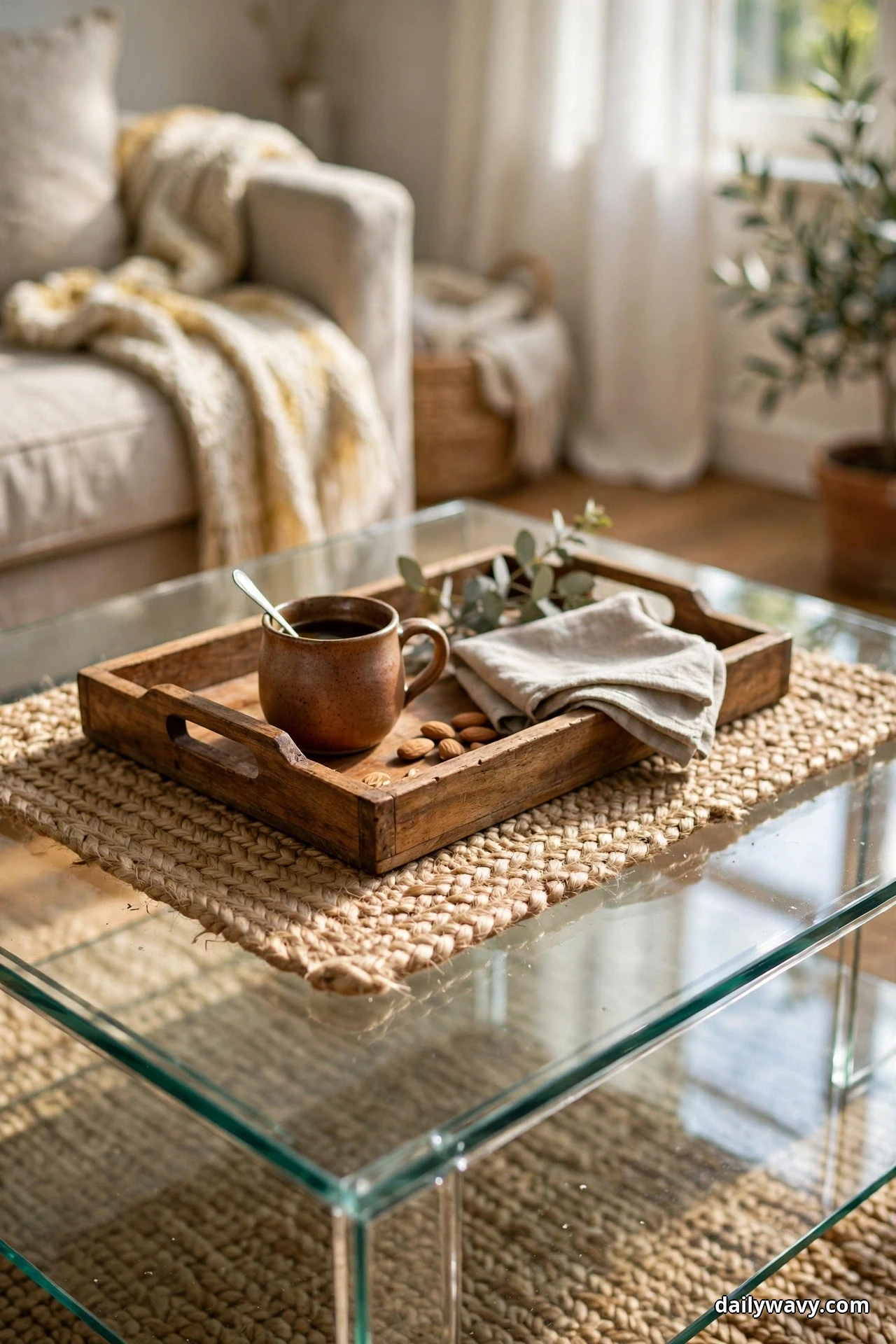
A textured mat under a tray solves two glass-table problems at once: it cushions the glass against a heavy tray, and it gives the eye a place to rest. Cut or buy a woven or felt mat about 2 inches larger than your tray on every side, lay it flat, and center the tray on top. Jute, felt, or woven cotton all work, and the texture contrast with the smooth glass is the whole point.
The mat should be thin, under a quarter inch, so the tray sits level. A 14-inch round felt mat costs roughly $10, and a woven jute one is about the same. This layering also makes the tray easier to lift when you need the whole table for a puzzle or a board game, which is exactly the everyday use the table should keep room for.
8. A Low Arrangement Of Dried Stems
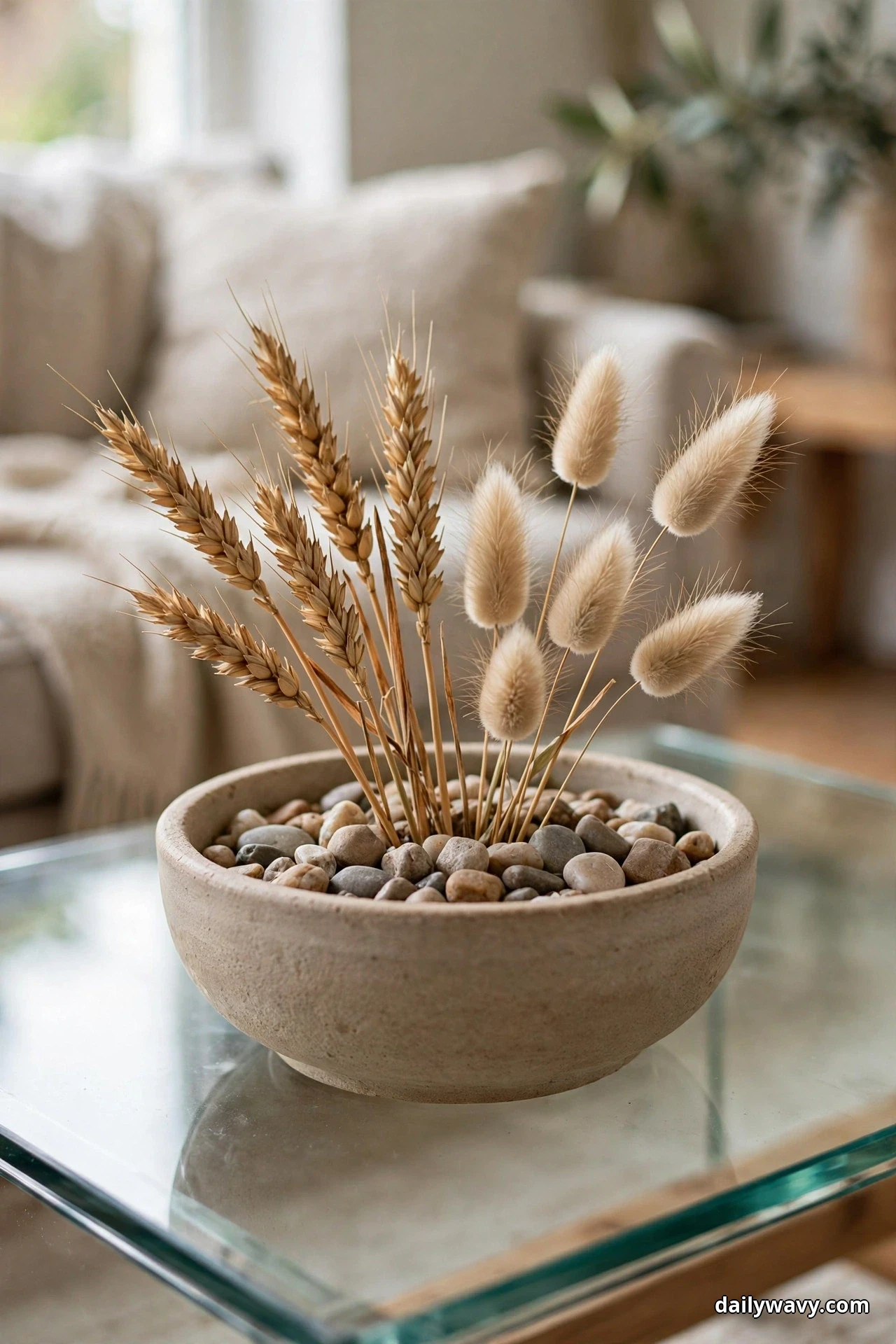
Fresh flowers on a glass coffee table are a maintenance project. Dried stems are not. A low, wide vessel with wheat, bunny tails, or dried eucalyptus gives you height without blocking sightlines and lasts for months without water. Keep the arrangement under 12 inches so it clears the conversation zone.
Use a low bowl or squat vase rather than a tall one, and cut the stems short enough that nothing flops sideways. A bundle of dried stems costs $8 to $15 at craft stores, and the vessel is often something you already own. Because dried stems are light, put a few pebbles in the vessel base so a stray elbow does not topple the whole thing onto the glass.
9. A Glass Pitcher Used As A Vase

Using a glass pitcher as a vase is a quiet double trick: glass on glass reads as one material, so the table looks less cluttered than it is. Fill a clear pitcher halfway with water and add three to five stems, or use it dry for dried branches. A pitcher with a handle also gives guests a visual cue not to bump it.
Keep the pitcher under 10 inches tall and set it toward one end, never dead center. A simple glass pitcher costs $12 to $20, and vintage ones from thrift stores are often under $8. If the pitcher has a pattern, let it be the one patterned object on the table and keep everything else plain. This pairs well with the texture ideas in our small bathroom storage ideas if your home leans into mixed materials.
10. A Terracotta Pot And Brass Object
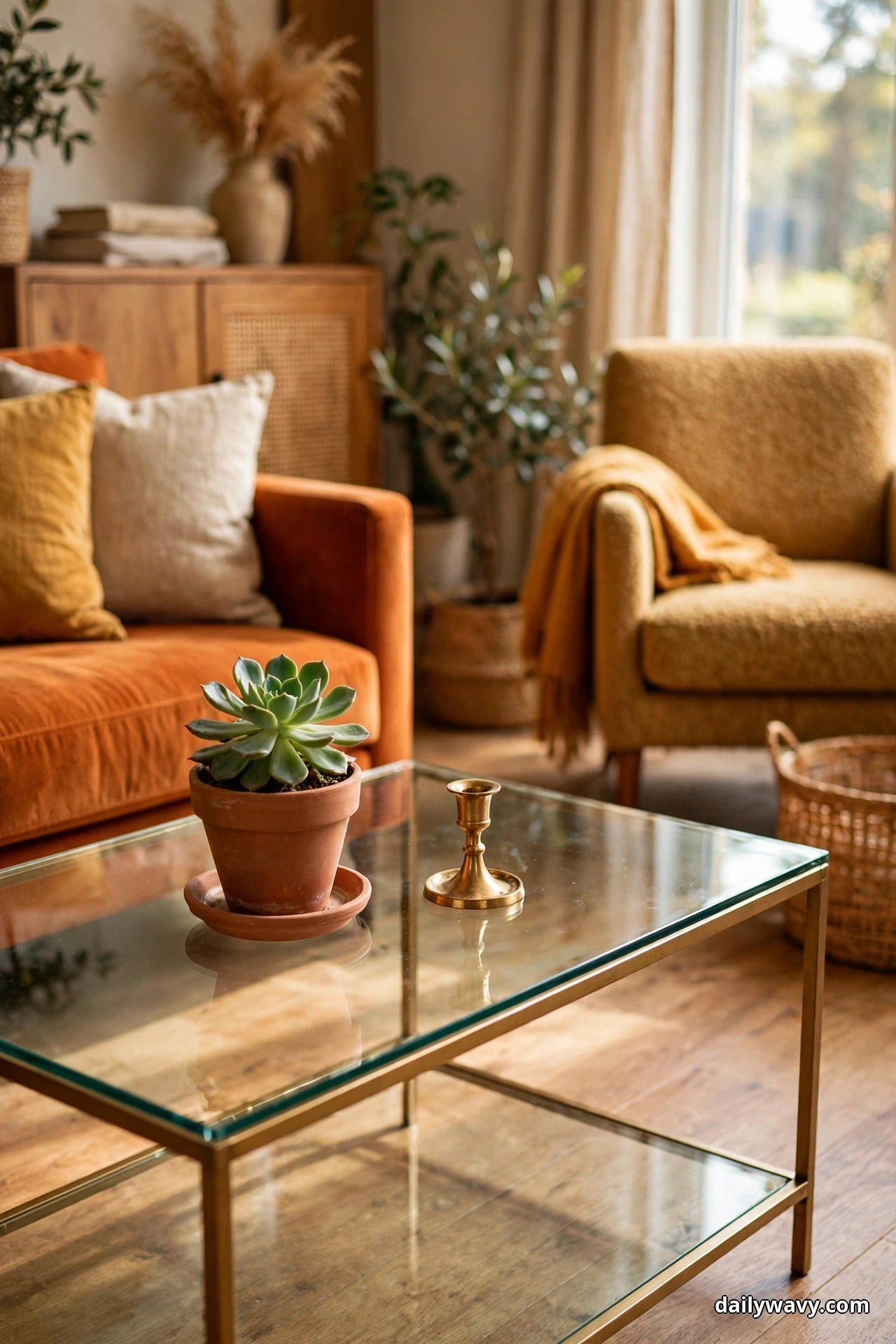
Terracotta and brass is a warm pairing that keeps a glass table from feeling cold. A small terracotta pot, four inches or so, with a succulent or dried grass, sits next to a brass candlestick or small brass bowl. The two materials echo each other, orange and gold, and both look richer against clear glass than they do on wood.
The pot needs a saucer or a felt pad underneath, because terracotta can leave damp rings and brass can scratch. A small pot is $5 to $10, a succulent is a few dollars more, and small brass objects from thrift or home stores run $8 to $15. Place the pair near one end so the center of the table stays usable.
11. A Compact Game Box With A Flower Stem
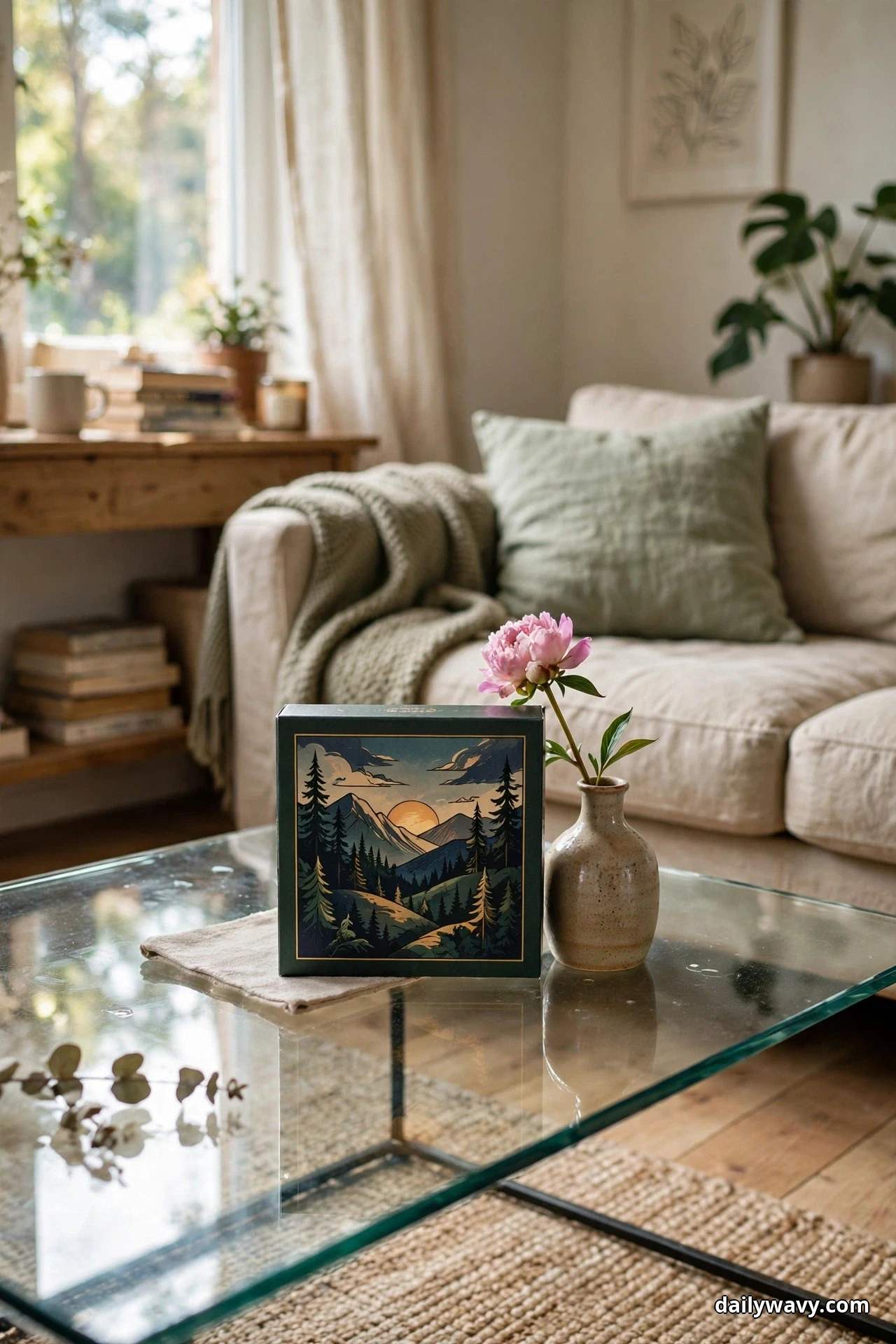
A small card game or puzzle box on the coffee table is decoration that does something. Pick a box with a handsome cover, about 8 by 5 inches, and lean a single flower stem or bud vase against it. Guests pick the game up, which is the best possible outcome for decor.
This costs whatever a deck of cards or small game costs, $5 to $15, plus a dollar for a single stem. Keep the box closed and tidy, because an open box with pieces everywhere reads as mess, not styling. A small vase with one stem keeps it looking intentional between game nights.
12. Low Vase With One Branch And A Book Stack
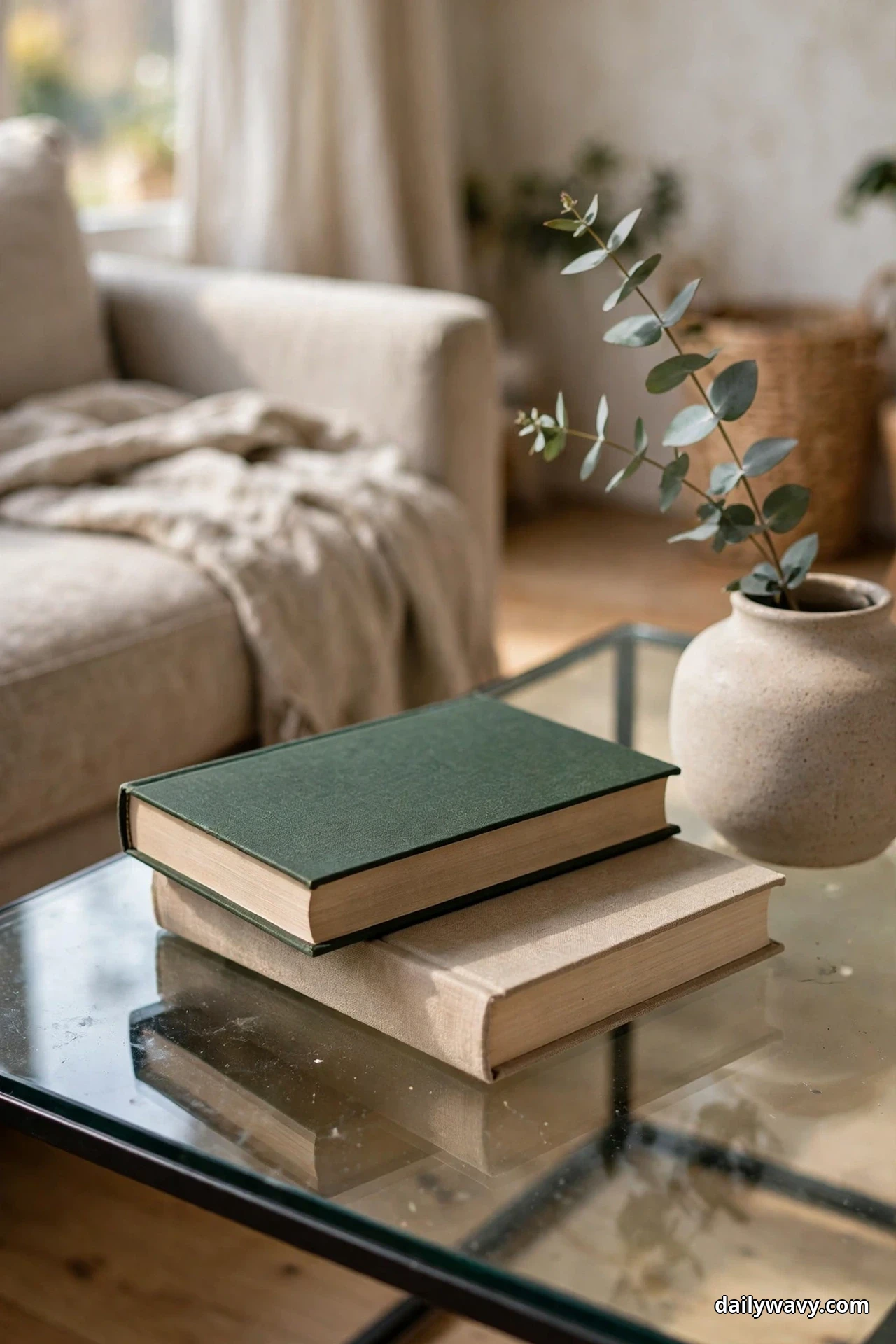
Two books and one branch is a composition that has never failed. Stack two hardcovers, slightly askew, set a low vase on top or beside them, and add a single branch, eucalyptus, cherry, or olive. One branch looks sculptural; three branches look busy.
The books should be books you would actually open, not decorative boxes pretending to be books. The stack, vase included, should stay under 14 inches. Books you own cost nothing, a single branch from a florist is a few dollars, and a low vase is $10 to $18. Put the heavier book on the bottom so the stack is stable on smooth glass, and offset the two books by an inch so the stack feels relaxed instead of rigid.
13. Woven Tray With A Candle And Coasters
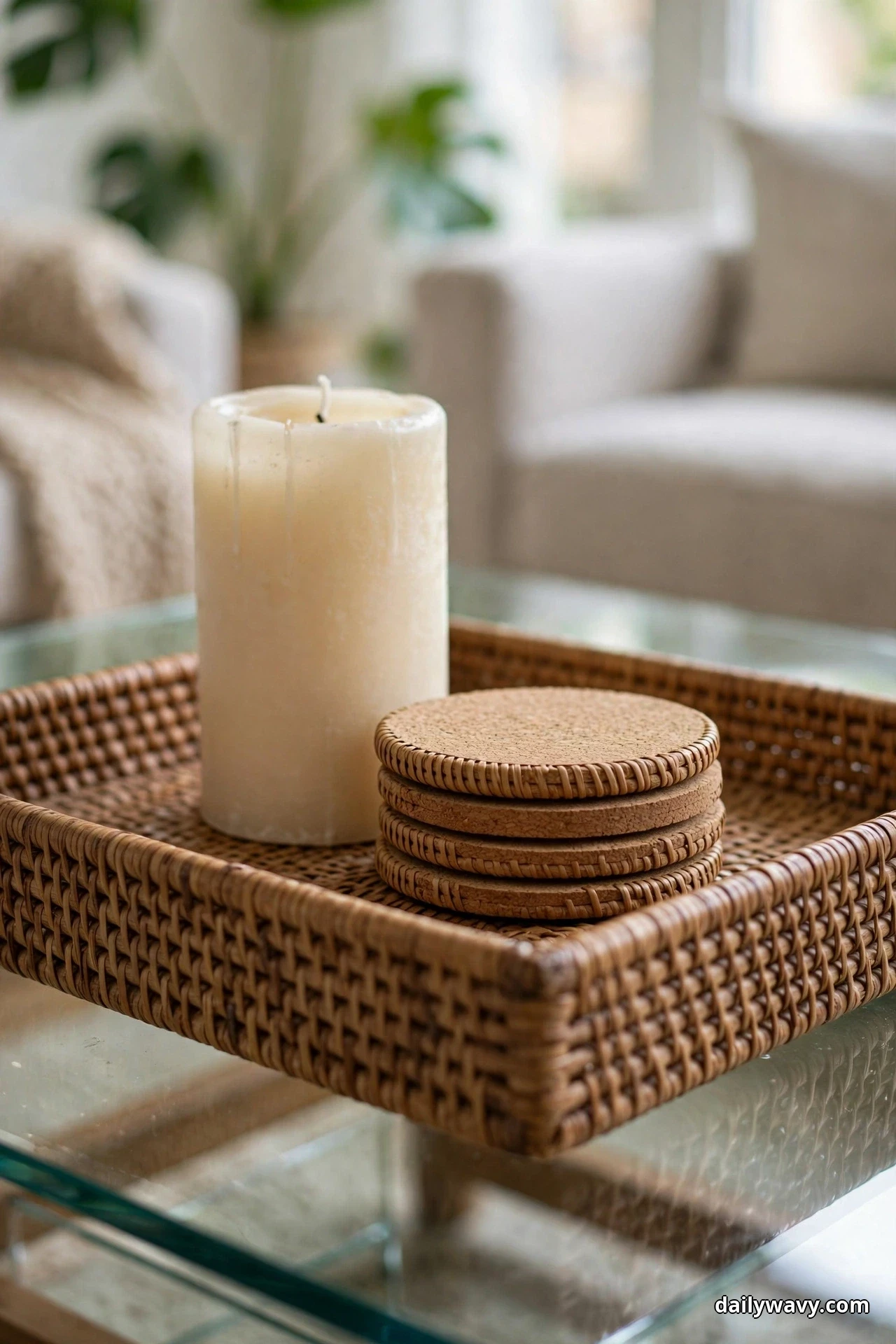
A woven tray that holds a candle and a stack of coasters is the hardest-working idea on this list. The tray corrals three functions, light, drink protection, and a surface that is easy to lift, into one movable unit. Choose a tray 14 to 18 inches long with low sides so items do not topple when you carry it.
Set a pillar candle or small lantern in one corner of the tray and stack four to six coasters in another. A seagrass or rattan tray costs $18 to $30. When guests arrive, you lift the whole tray onto a side table and the coffee table is instantly clear for serving, which is exactly the everyday flexibility a glass table needs.
14. Ceramic Bowl Beside Two Oversized Books

Oversized art or photography books give a glass table presence without clutter, and a ceramic bowl beside them keeps the composition from feeling like a waiting room. Lay two large books stacked with a slight rotation between them, and set one ceramic bowl, empty or holding a few shells, next to the stack.
Keep the whole footprint to one end of the table, about 18 inches wide at most. Coffee table books you already own are free; secondhand oversized books run $10 to $20. The bowl should contrast the books, a matte glaze against glossy covers, or a dark bowl against light books. For more on styling surfaces in tight spaces, see our small bedroom with a queen bed ideas for similar proportion tricks.
15. A Small Plant With A Sculptural Object

Finish with the simplest idea: one small plant and one object with an interesting shape. A pothos or small fern in a ceramic pot, four to five inches, sits next to a stone sphere, a carved wood form, or a small abstract figure. Two things, that is the whole arrangement, and the restraint is what makes it work on glass.
The plant needs a watertight saucer because water on a glass table spreads everywhere and seeps into the frame. A small plant costs $8 to $15, the pot another $8 to $12, and the sculptural object can be anything from $5 at a thrift store. Keep both pieces on one side, leave the rest open, and you have a table that looks styled in the morning and still fits your feet up in the evening.
Frequently Asked Questions
How much of a glass coffee table should be covered?
Aim for about two-thirds decorated and one-third open. The open third is your working space for drinks, books, and the things daily life drops on a table. On a table 48 inches long, that means roughly 30 inches of styling and 16 inches of breathing room.
Will heavy decor damage a glass coffee table?
Most tempered glass tops handle reasonable weight, but protect the surface anyway. Use felt pads, cork, or woven mats under anything heavy or metal, and keep the heaviest pieces near the frame edges where the glass is strongest. Avoid dragging objects across the surface.
How do I keep a glass table from looking cluttered?
Fewer, larger groupings beat many small items. Corral small things onto trays, repeat a limited color palette, and leave real empty space. Because the table is transparent, the lower shelf and rug show through, so style or clear the lower level too.
What is the best height for coffee table decor?
Keep the tallest piece under 12 to 14 inches so it does not block sightlines between seated people. One medium-height piece toward one end and low pieces everywhere else is the safest formula.
How often do I need to clean a glass coffee table?
A weekly wipe with a microfiber cloth handles dust and fingerprints. Lift the decor off, wipe, and set everything back. If you have kids or pets, a quick midweek wipe keeps nose prints and smudges under control.
Can I put candles on a glass coffee table?
Flameless candles are the easy answer, since real wax drips onto glass and is tedious to remove. If you use real candles, keep them on trays or in lanterns, never directly on the glass, and keep them away from anything flammable.
Style It Once, Live With It Daily
A glass coffee table earns its place when it looks styled and still works like a table. Pick two or three of these ideas, keep the two-thirds rule in mind, and protect the glass under anything heavy. Style it once, live with it daily, and let the open space do as much work as the decor. For more living-room thinking, browse our home decor category for layouts, storage, and styling ideas that fit real rooms.