20 English Cottage Bedroom Ideas for a Thoughtful Room Refresh
An English cottage bedroom never looks rushed. It builds slowly, with painted wood that has seen a few good mornings,…
An English cottage bedroom never looks rushed. It builds slowly, with painted wood that has seen a few good mornings, small botanical prints in simple frames, aged brass that glows softly in daylight, and cotton bedding you can sink into. The style is less about matching sets and more about pieces that get along. Below you will find twenty small, buildable ideas, each one a single move you can make in a weekend. Every idea names the materials to use, what to measure before you buy, and a simpler way to get the look. Start with the one that solves your biggest annoyance, then add the next.
Jump to an idea
- 1. Woven Basket beside the Wardrobe
- 2. Tonal Rug beside the Bed
- 3. A Simple Pair of Bedside Lights
- 4. Dresser with a Low Ceramic Display
- 5. Textured Headboard as the Focal Point
- 6. Narrow Shelf with Books and a Small Vase
- 7. Understated Wall Color behind the Bed
- 8. Soft Throw Folded across the Bed
- 9. Vintage Mirror beside a Dresser
- 10. A Plant near Natural Light
- 11. Small Writing Desk Doubling as a Vanity
- 12. Storage Ottoman at the Bed Foot
- 13. Accent Pillow in a Contrasting Material
- 14. Quiet Gallery Arrangement on a Side Wall
- 15. Layered Bedding with a Textured Throw
- 16. Low Bench at the Bed Foot
- 17. Wood Nightstand with a Shaded Lamp
- 18. Curtains Hung to Frame the Window
- 19. One Large Artwork above the Headboard
- 20. Small Reading Chair in a Corner
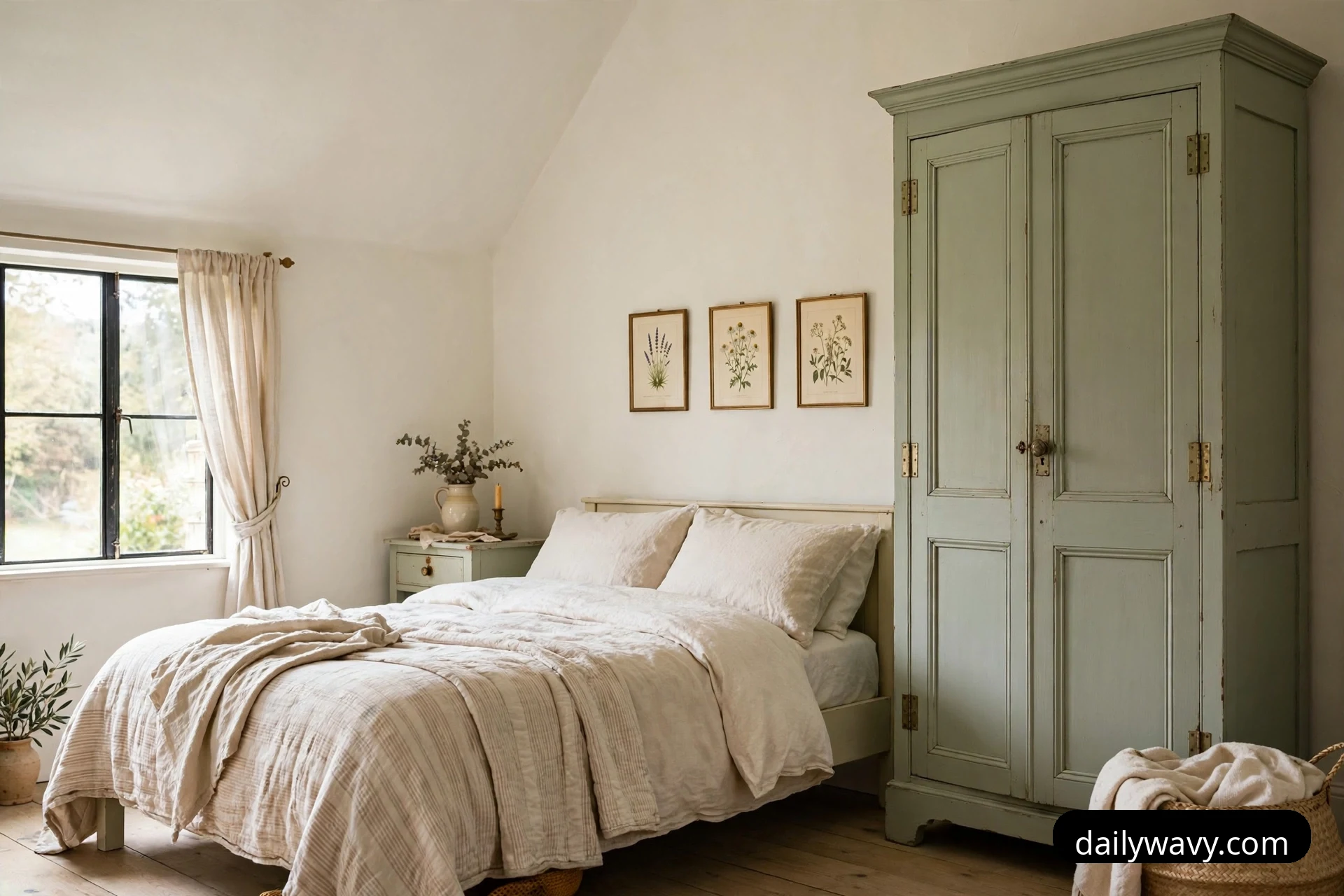
What makes a bedroom read as English cottage
Forget the souvenir version with thatched roofs and teapots. The bedrooms people actually save and recreate share a quiet formula. First, the palette stays calm: warm whites, soft stone, pale sage, and one or two gentle accents drawn from nature. Second, the materials feel honest: painted wood with a little wear, woven fibers, cotton and linen you can wash, aged brass instead of polished chrome. Third, the room looks collected rather than decorated, as if pieces arrived over time and found their places. Nothing here needs a renovation. Each of the twenty ideas below is furniture, fabric, paint, or placement. Measure twice, buy once, and let the room grow the way a cottage does.
1. A Woven Basket beside the Wardrobe
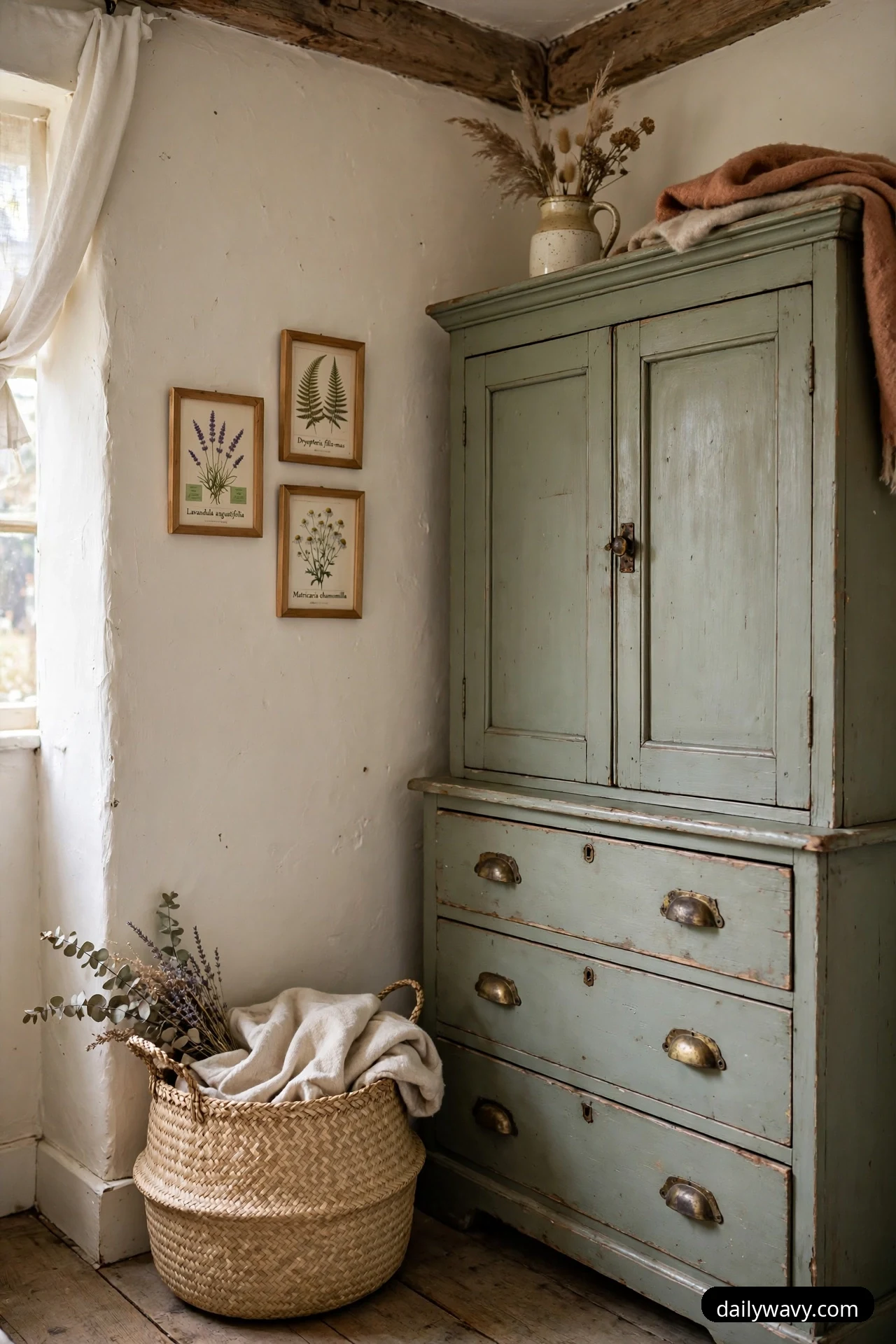
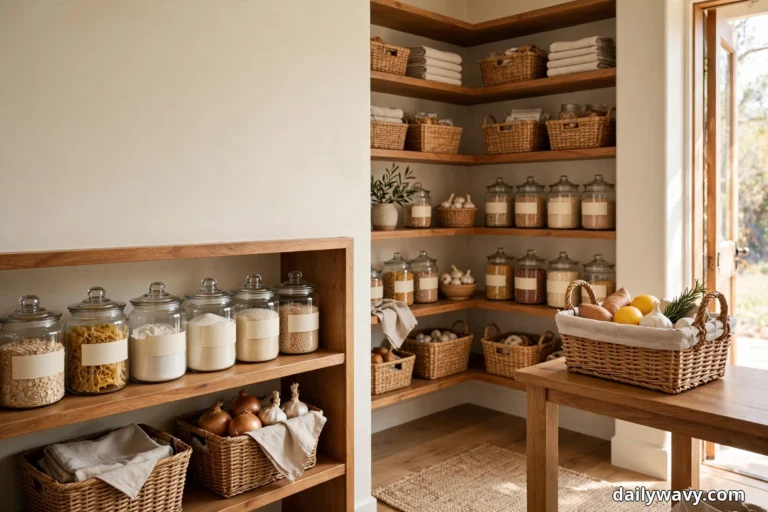
A hardworking basket is one of the simplest cottage bedroom moves, and the spot beside the wardrobe is where it earns its keep. Use it for the throw you reach for at night, for slippers, or for the laundry that never quite makes it to the hamper. Choose seagrass or wicker in a natural finish, roughly 16 to 20 inches tall and 14 inches wide, so it tucks against the wardrobe without blocking the doors. Before you buy, measure the gap between the wardrobe side and the wall, and leave at least 2 inches of clearance so the basket slides in without scraping paint. A lidded basket hides clutter better, while an open one invites you to actually use it.
Simpler way: pull a basket you already own from another room and try the spot for a week before spending anything.
2. A Tonal Rug Extending beside the Bed
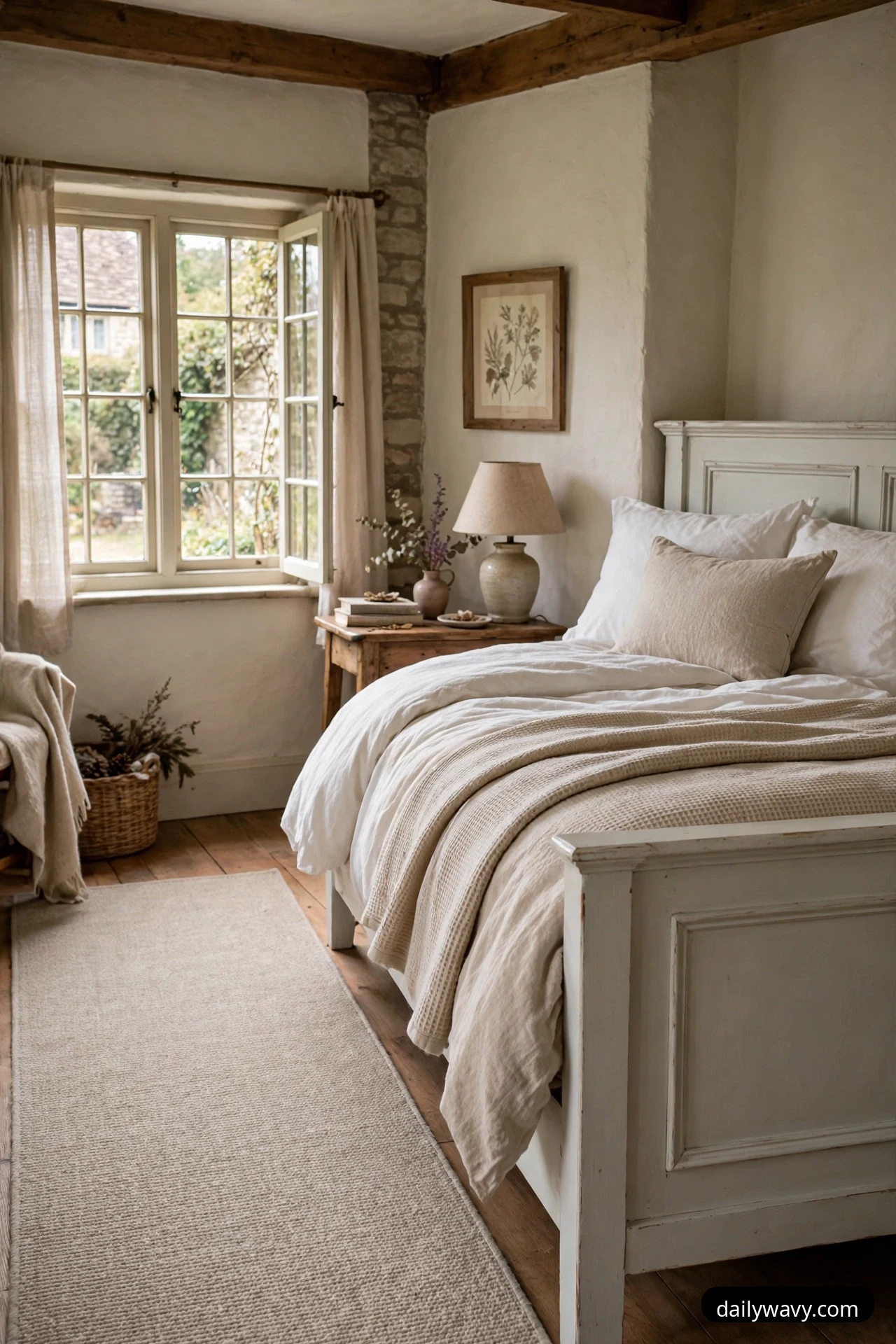
Cold floors undo a cozy bedroom faster than anything. A tonal rug, one that sits close to your bedding color rather than shouting against it, warms the first step of the morning and visually widens the room. For a queen bed, a 3 by 5 foot rug laid lengthwise beside the bed works; in a larger room, an 8 by 10 under the lower two thirds of the bed anchors everything. Keep the pile low, half an inch or less, so doors clear it and the vacuum does not fight you. Cotton flatweave and low wool pile both suit the cottage look and wash or clean more easily than shag. Measure from the bedside to the wall and choose a rug that leaves 18 to 24 inches of bare floor at the edges, which keeps the room feeling generous rather than carpeted.
Simpler way: layer a small flatweave rug you own over existing flooring just on your side of the bed.
3. A Simple Pair of Bedside Lights
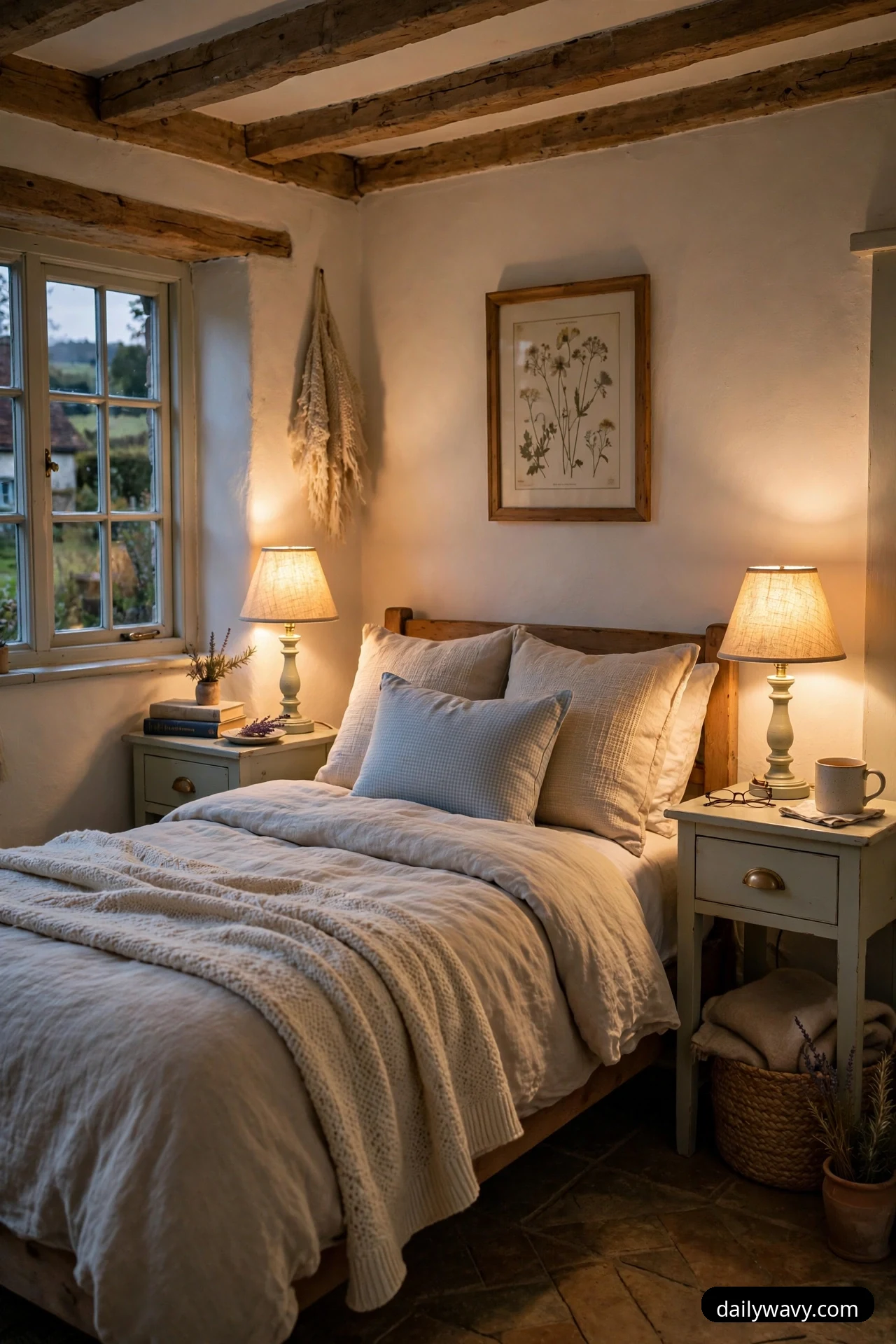
Matching bedside lights are one of the cheapest ways to make a bedroom feel finished. Symmetry tells the eye that the room was considered, even when everything else is happily mismatched. Choose small lamps, 12 to 15 inches tall including the shade, with linen or cotton drum shades that throw a warm pool of light for reading. Pair them with 2700K warm white bulbs at 40 to 60 watt equivalent, which flatters skin and bedding far better than cool daylight bulbs. Place each lamp toward the back corner of its nightstand so there is still room at the front for a book and a glass of water. If outlets are scarce, plug both lamps into a single surge-protected strip tucked behind one nightstand and run the cord along the baseboard. Never daisy-chain strips, never run a cord under a rug or bedding, and keep the strip clear of fabric.
Simpler way: buy two identical shades and fit them onto lamps you already own.
4. A Dresser with a Low Ceramic Display
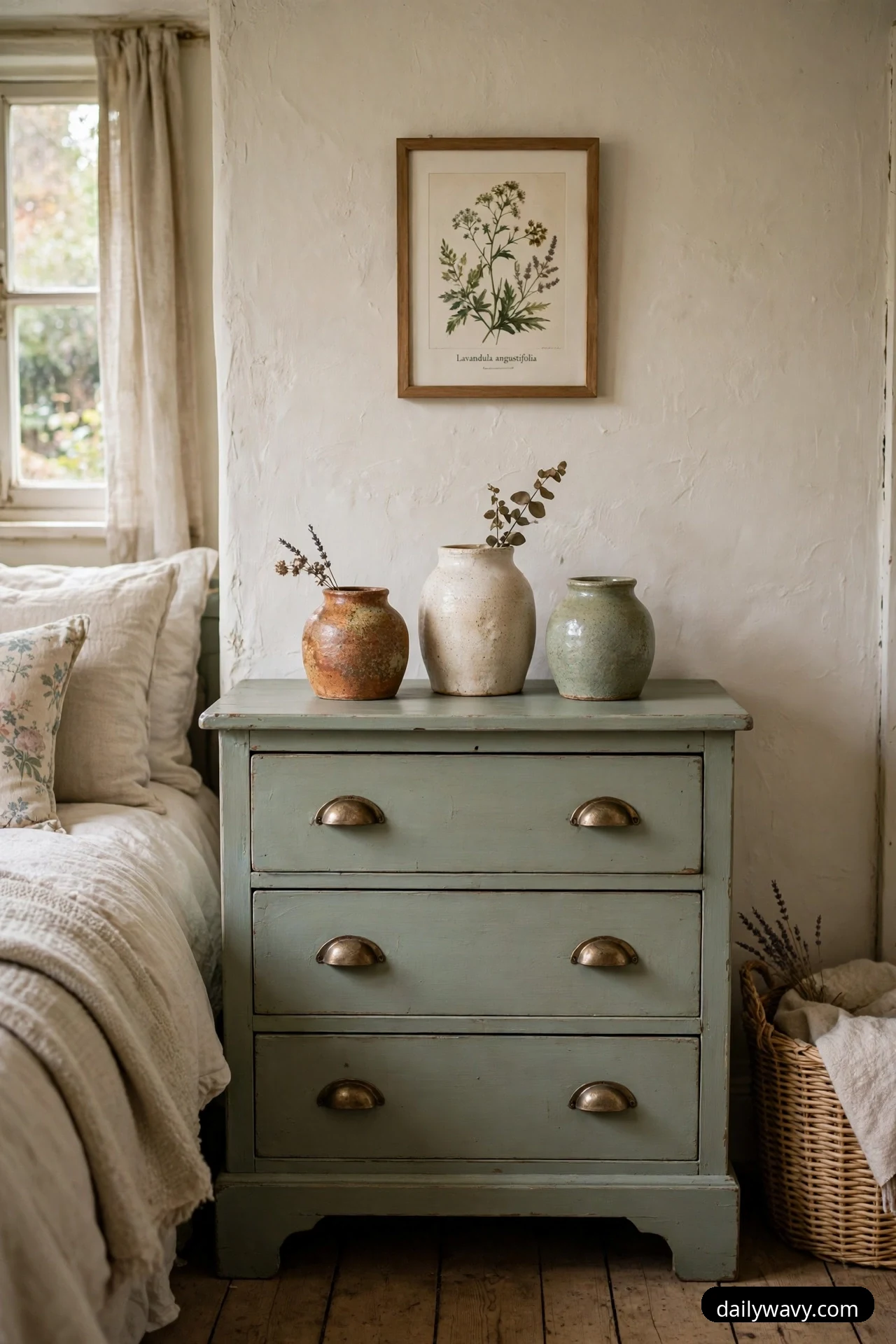
A dresser top can easily become a lost landscape of chargers, keys, and half-read mail. Give it a job instead: a low ceramic display that stays put while the rest of the surface works around it. Group three pieces of handmade looking pottery, a bud vase, a small bowl, a lidded jar, in the same glaze family, and keep every piece under 8 inches tall so the arrangement reads as one calm line rather than a crowd. Set the group to one side of the dresser, not dead center, which leaves the other half clear for daily use and looks more natural. Before styling, wipe the dresser top and lay down a small folded runner or tray if the wood is worn; it protects the surface and gives the ceramics a stage.
Simpler way: gather three mugs or small bowls you already own in similar tones and group them on a folded tea towel.
5. A Textured Headboard as the Focal Point
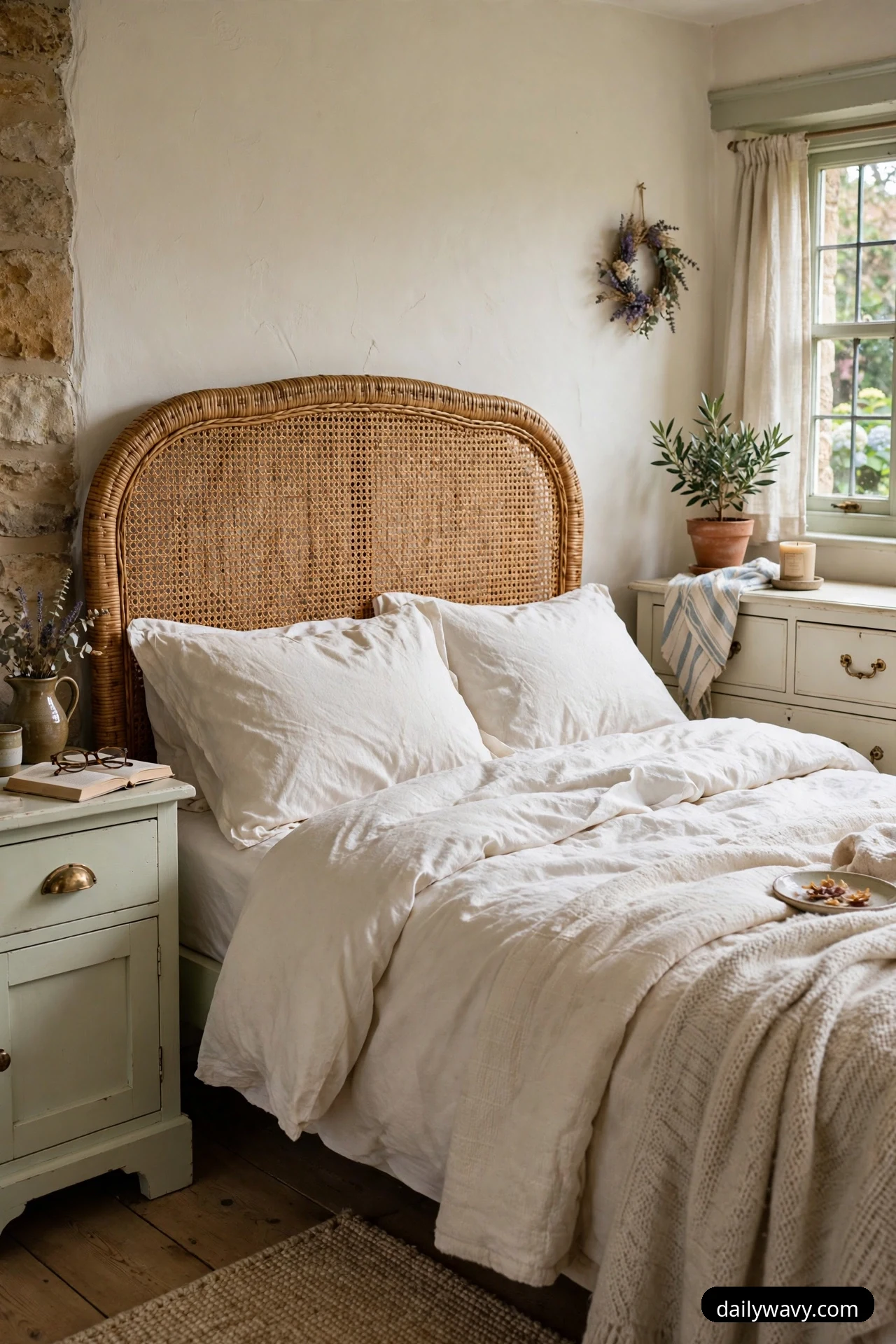
If your bedroom has no clear focal point, the eye wanders and the room feels unfinished. A textured headboard fixes that in an afternoon. Natural rattan, buttoned linen, or reclaimed wood boards each bring the cottage texture this style runs on, and each one forgives the plain walls around it. For a queen bed, look for a headboard 60 to 64 inches wide and 48 to 54 inches tall, so it rises a good 24 inches above the mattress. Measure your mattress top to the floor before ordering, since a headboard that disappears behind pillows misses the point. Freestanding headboards that bolt to the bed frame suit renters, while wall mounted ones sit flatter and work well in narrow rooms.
Simpler way: hang a flatwoven textile or a large piece of linen behind the bed as a soft headboard alternative.
6. A Narrow Shelf with Books and a Small Vase
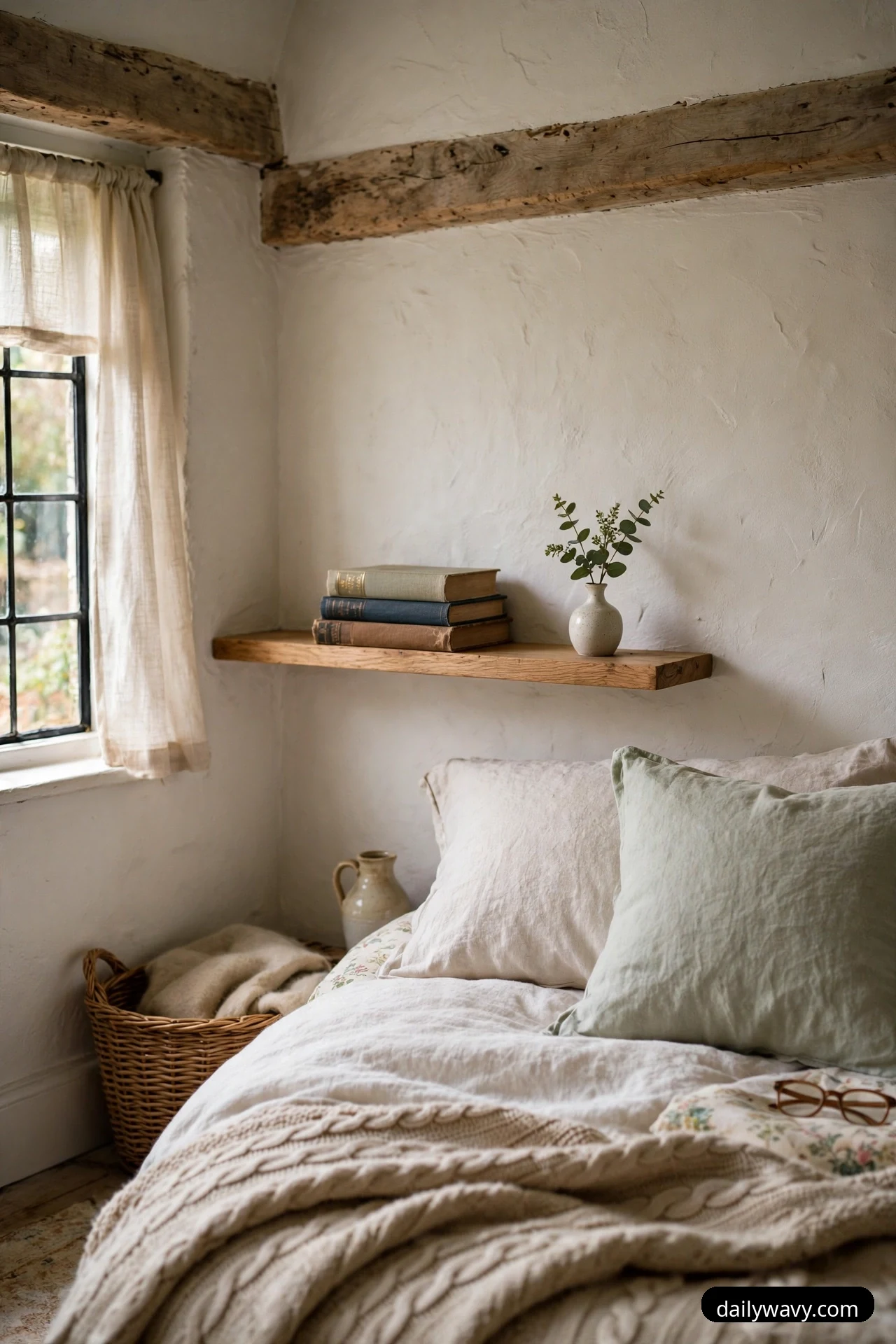
Bedrooms need a little personality, and a narrow shelf delivers it without demanding floor space. A single floating shelf, 24 to 36 inches long and 6 to 8 inches deep, mounted at about 60 inches from the floor, holds the books you are actually reading and one small vase with a stem of greenery. Keep the styling sparse: books stacked horizontally in two short piles, the vase off to one side, nothing else. The shelf reads as intentional rather than cluttered when at least a third of its length stays empty. Mount into studs or use proper wall anchors rated for 20 pounds, since books get heavy fast. In a cottage bedroom this small moment does a lot of work, adding height and a personal note above a dresser or beside a window.
Simpler way: clear one existing shelf and restyle it with books from your nightstand stack plus a jar with a garden stem.
7. An Understated Wall Color behind the Bed
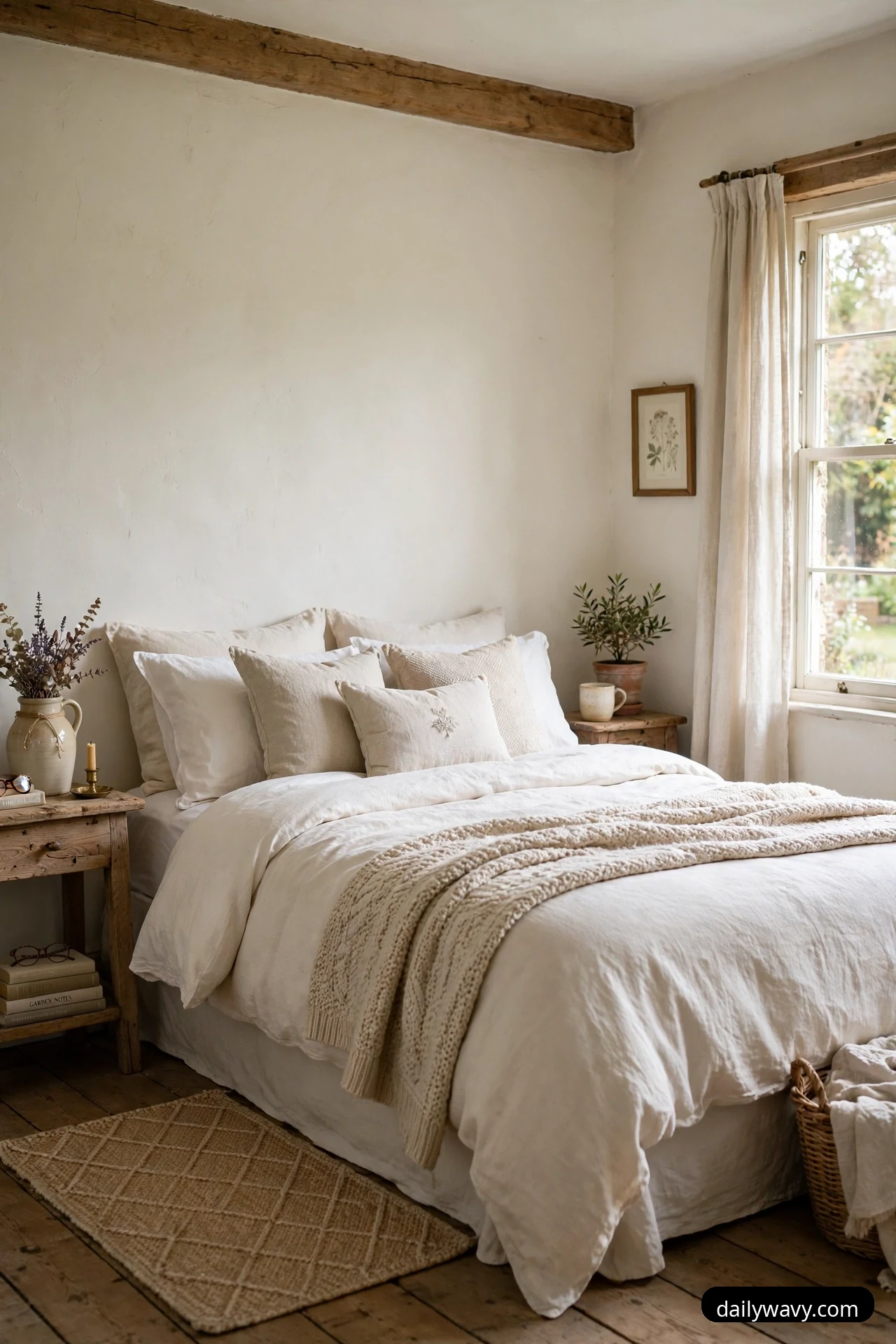
The wall behind the bed sets the temperature of the whole room, and in an English cottage bedroom it should stay quiet. Think warm white with a creamy undertone, pale sage, soft stone, or a whisper of putty. These colors let painted wood furniture and botanical prints do the talking while making small rooms feel larger and north-facing rooms feel warmer. Before committing, buy sample pots and paint two large test boards, then live with them for three days, checking morning and evening light. Paint the wall behind the bed first and sit with it a week; you may find the rest of the room suddenly makes sense. If you rent, a large piece of fabric or a painted folding screen in the same tone gives the effect without touching the walls.
Simpler way: repaint just the headboard wall and leave the other three as they are.
8. A Soft Throw Folded across the Bed
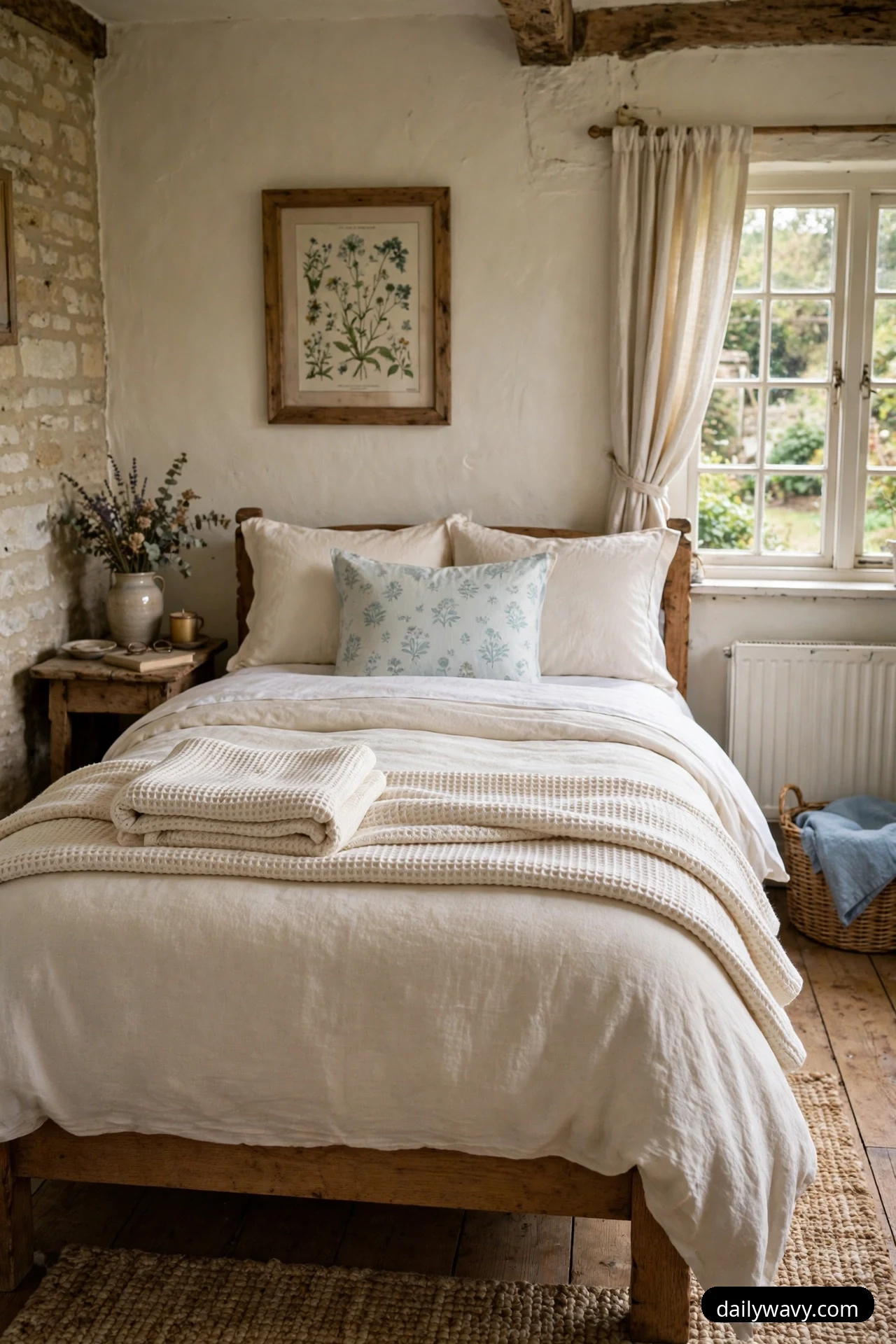
A throw folded across the foot of the bed is the cottage bedroom signature, and it takes only a moment. It adds a layer of color and texture, gives you something to pull up on chilly evenings, and makes an unmade bed look halfway intentional. Choose cotton waffle weave, washed linen, or a light wool in a tone that sits next to your bedding rather than matching it exactly. A 50 by 60 inch throw suits a queen; fold it in thirds lengthwise so it spans the width of the bed in a neat band about 16 inches deep. Lay it across the lower third of the bed, not dead center, and let one end drape a few inches longer for that unstudied look.
Simpler way: fold the top of your existing duvet back 12 inches to create the layered effect with what you own.
9. A Vintage Mirror beside a Dresser
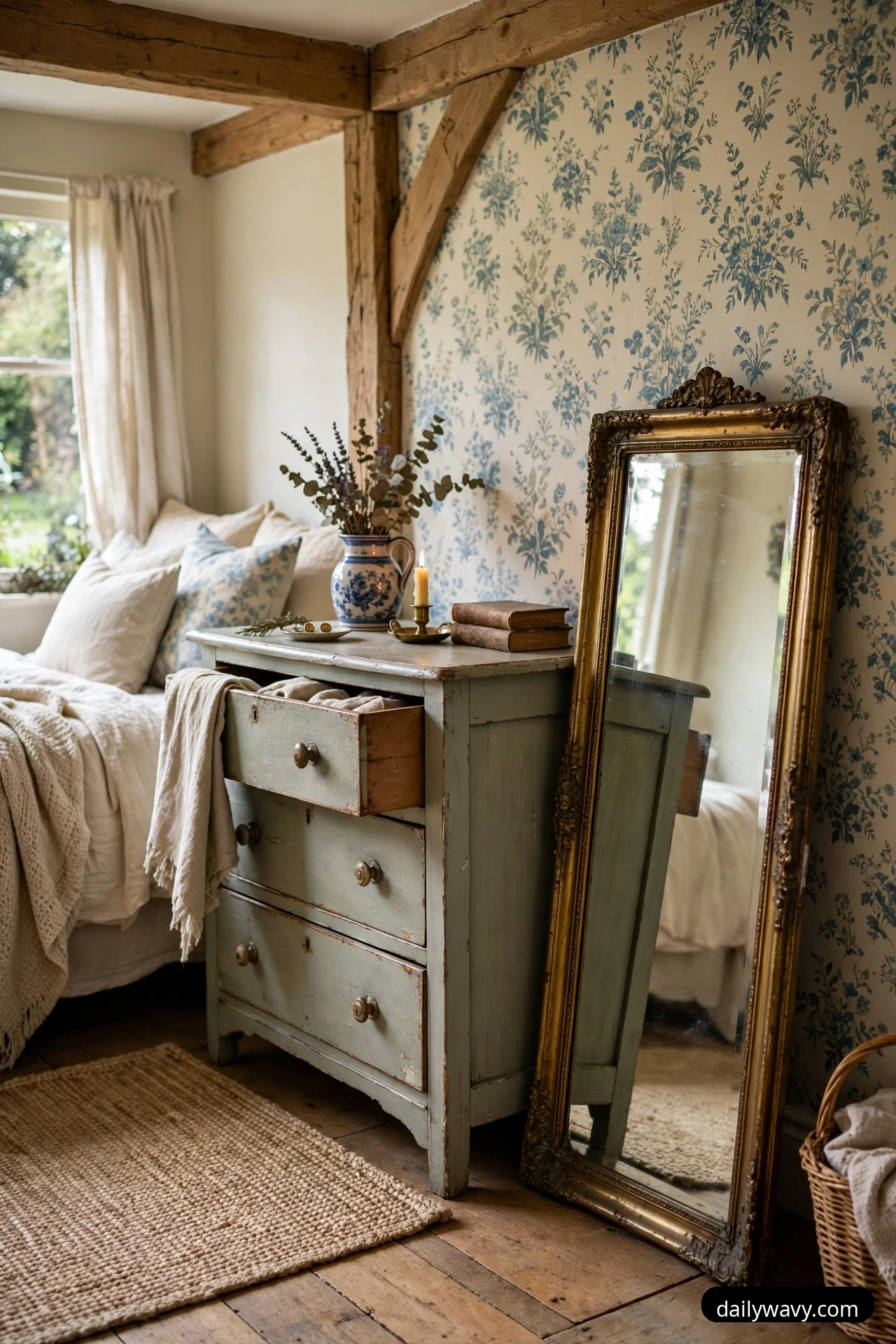
A vintage mirror leaning beside a dresser bounces daylight around the room and adds the aged patina this style loves. Look for brass, wood, or painted frames with a little wear at the edges, 24 to 36 inches tall, and lean it against the wall on the dresser top or on the floor beside it rather than hanging it. Leaning reads as collected and casual. Secure a leaning mirror to the wall with a strap or anti-tip hardware so it cannot topple forward, especially in a home with children or pets. Keep the glass clean and the frame as found; over restoring a vintage mirror strips away exactly the character you bought it for. Position it where it catches window light and reflects it toward the bed, which quietly brightens the whole room. Check flea markets and secondhand shops first, where interesting frames cost a fraction of new ones.
Simpler way: move a mirror you already own from the hallway and lean it on your dresser for a week to test the effect.
10. A Plant near Natural Light
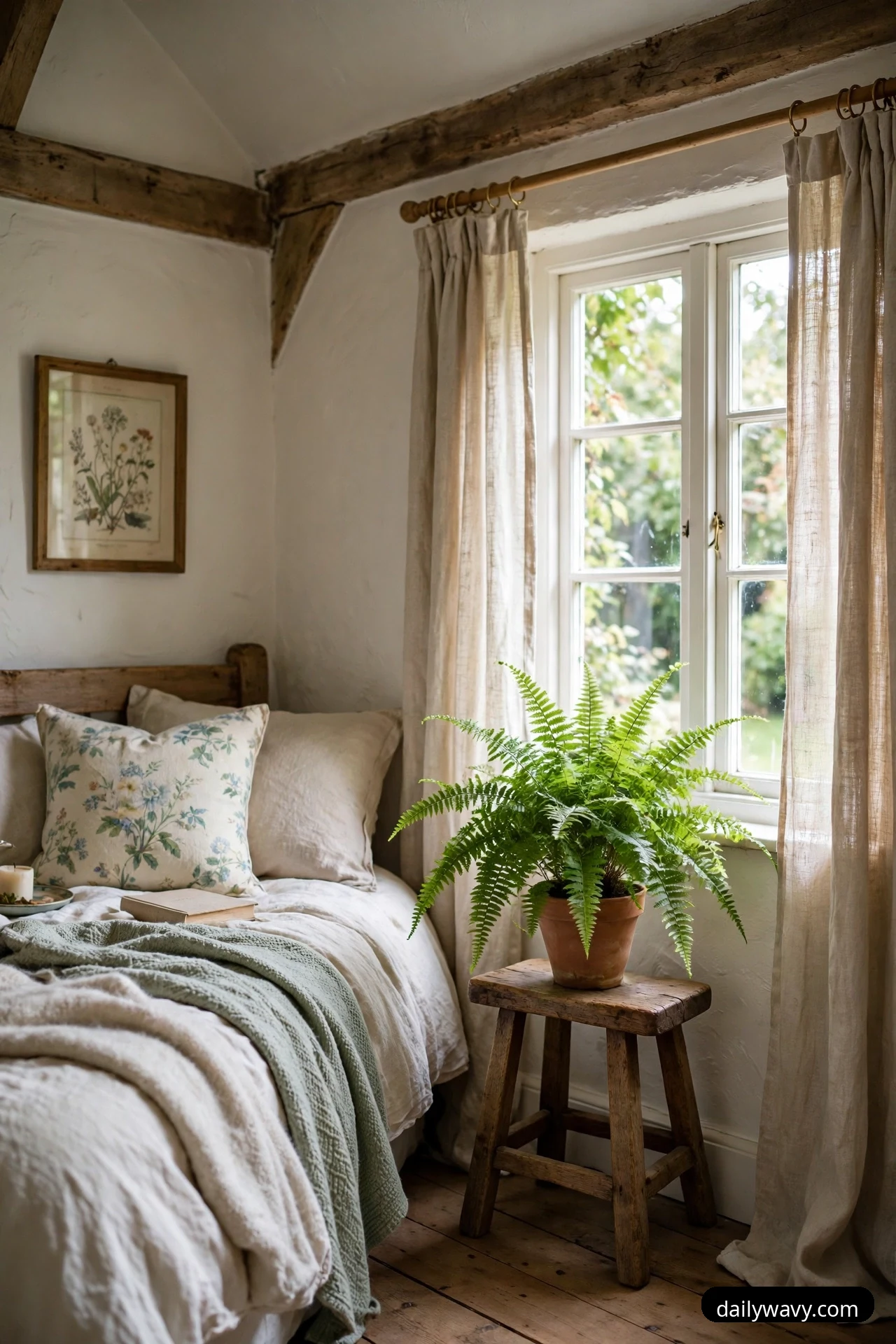
Nothing softens a bedroom like something alive. A plant near the window brings movement and color that no textile can, and it asks for very little in return. Pothos, ferns, and peace lilies all tolerate the indirect light of a typical bedroom window and forgive the occasional forgotten watering. Place the pot within 3 feet of the window, on a small stool or the floor, and always use a saucer to protect wood floors and painted furniture. Choose a simple terracotta or glazed ceramic pot in a quiet tone so the plant, not the container, holds the attention. Start with one; a single healthy plant beats a struggling collection every time. If pets share the bedroom, keep pothos and peace lilies out of their reach: both are toxic to cats and dogs if chewed. A Boston fern is a pet-safer choice for a low stool.
Simpler way: take a cutting from a friend's pothos, root it in water, and pot it up in a jar you already own.
11. A Small Writing Desk Doubling as a Vanity
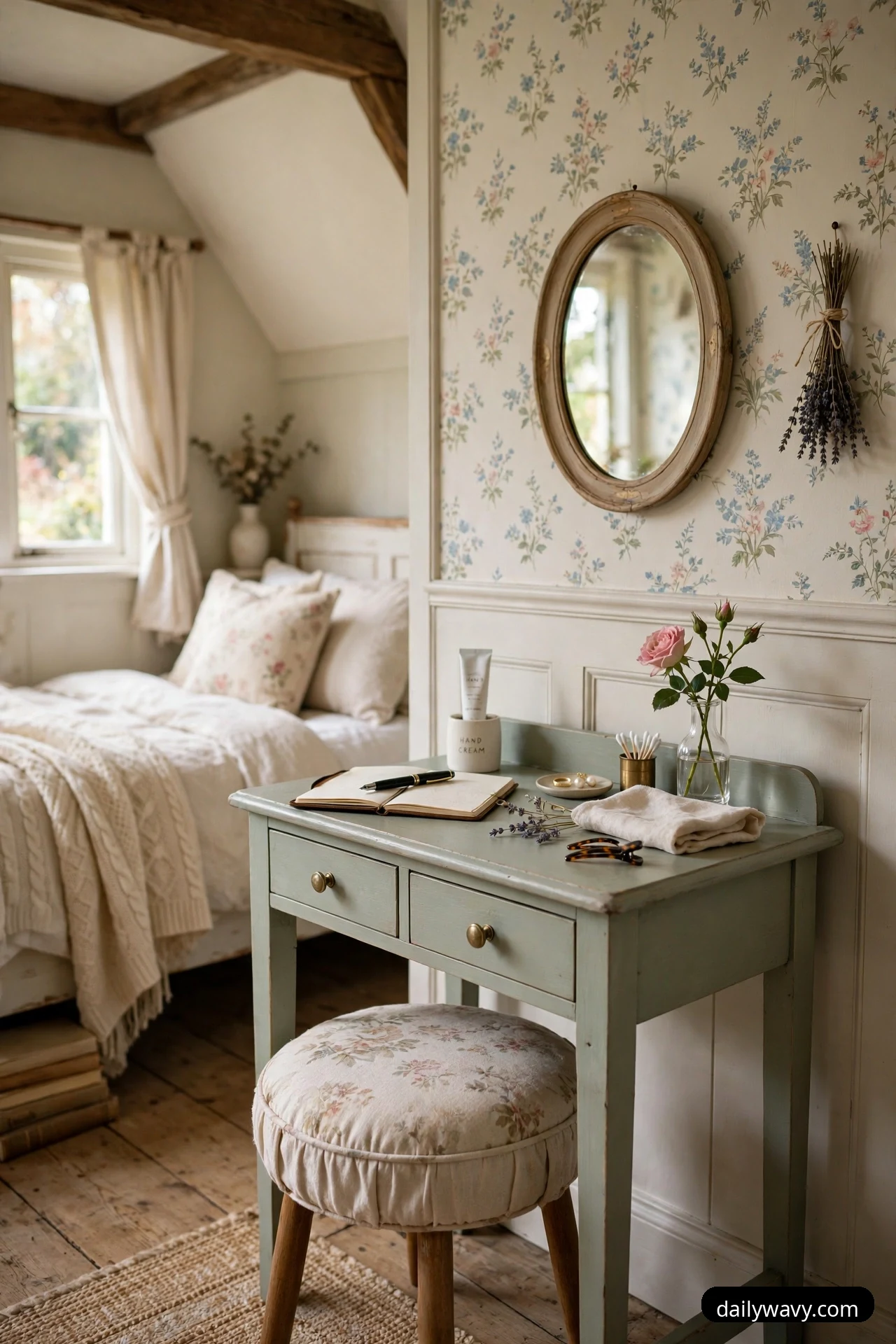
Spare bedrooms and corners often sit half used, and a small desk that doubles as a vanity puts the space to work twice. A painted wood desk 36 to 42 inches wide fits a laptop by day and a mirror and makeup tray by morning; a cushioned stool tucks fully underneath when not in use. Mount a small oval or round mirror on the wall above at eye level when seated, roughly 48 inches from the floor to the mirror center. Keep the desktop styled the way you would a vanity: a bud vase, a lidded jar for bits and bobs, and a lamp small enough to leave writing room. The trick is choosing pieces that look like bedroom furniture, not office furniture, so the corner never feels like a cubicle.
Simpler way: clear your existing desk, add a mirror above it, and swap the office chair for a cushioned stool.
12. A Storage Ottoman at the Bed Foot
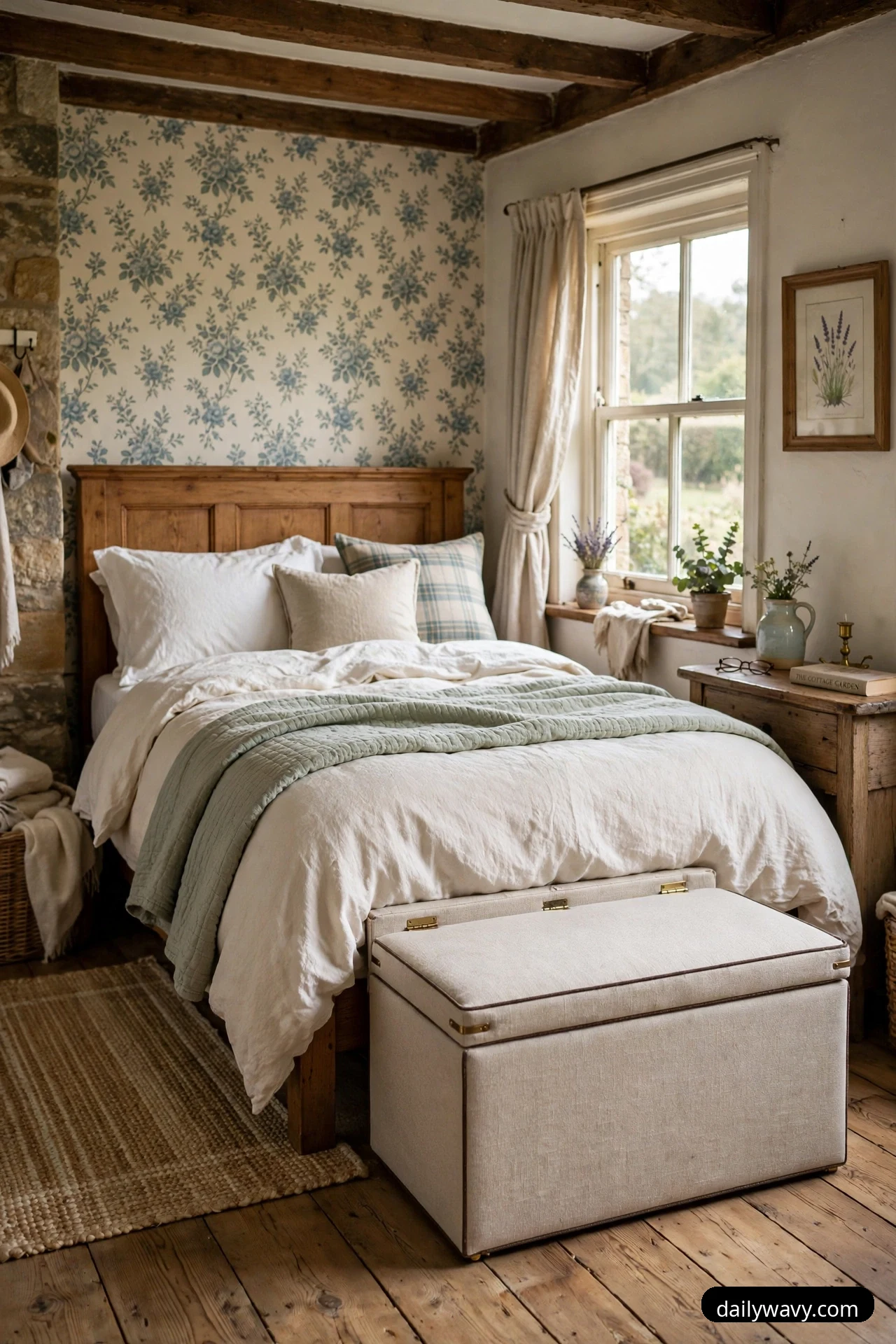
The foot of the bed collects things: the throw you kicked off, tomorrow's clothes, the book you will finish someday. A storage ottoman swallows all of it and gives you somewhere to sit while tying shoes. Choose one with a hinged top, about 48 inches wide for a queen bed and 16 to 18 inches tall, so it sits just below mattress height and does not block the view of the bedding. Inside, stash spare blankets, off season clothes, or wrapping paper; the lift top keeps it all invisible. Upholstered in linen or cotton ticking, it reads as soft furnishing rather than storage, which is exactly the point. Leave 24 inches of walkway between the ottoman and the wall so the room still moves easily.
Simpler way: use a lidded trunk or large lidded basket you already own at the bed foot.
13. An Accent Pillow in a Contrasting Material
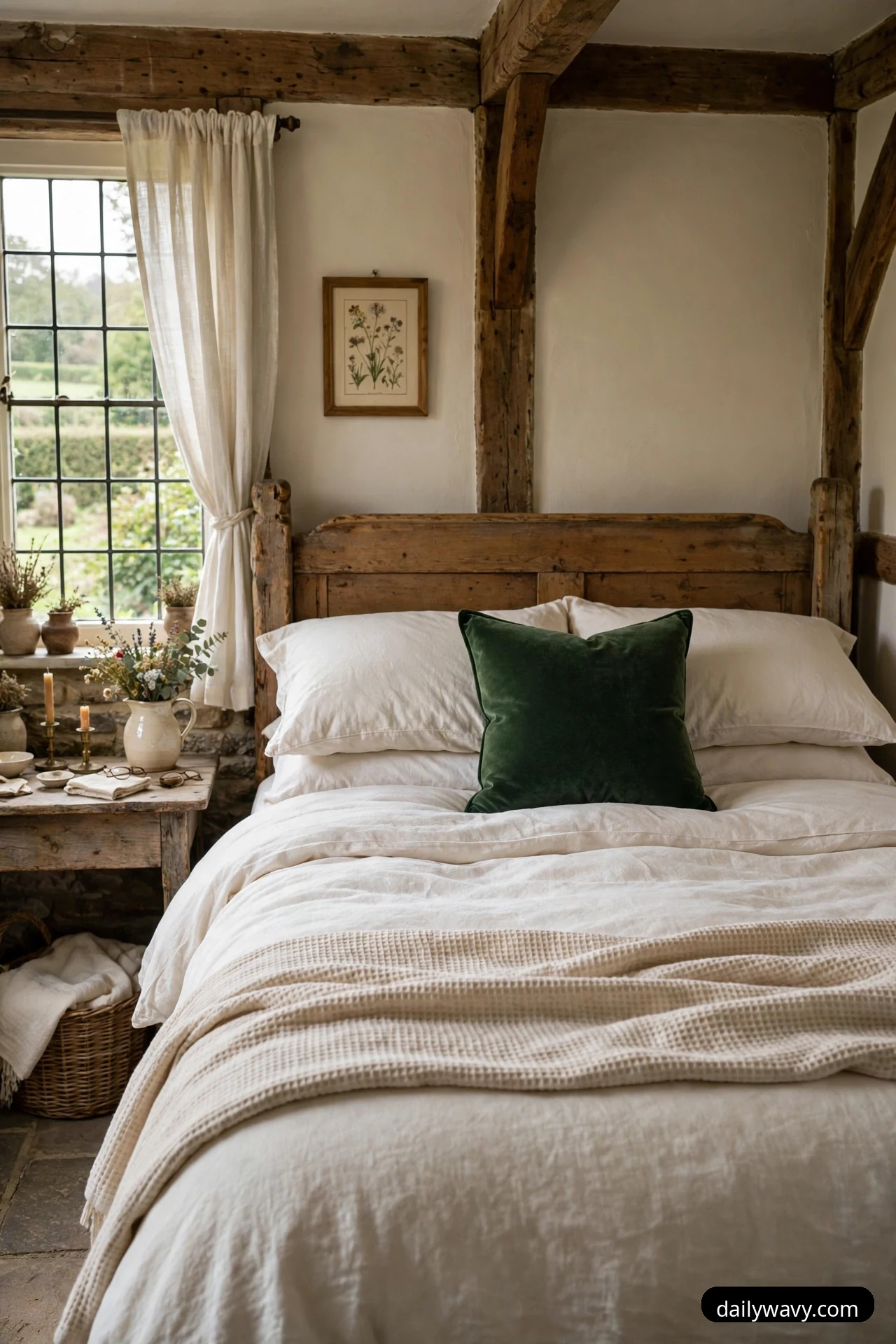
When bedding is all cotton, one pillow in a contrasting material wakes the whole bed up. Velvet against washed cotton, nubby wool against smooth linen, or even a small leather lumbar against a quilt: the contrast is about touch as much as color. Keep it to one or two pillows, 18 by 18 inches or a 14 by 24 lumbar, placed in front of your sleeping pillows. The accent should pick up a tone already in the room, the green of the plant, the brass of the mirror frame, rather than introducing a brand new color. Because it is a single piece, this is also an inexpensive place to experiment; if the velvet feels wrong, it moves to the reading chair without a ripple.
Simpler way: recover a pillow insert you own with half a yard of velvet or wool from a fabric remnant bin.
14. A Quiet Gallery Arrangement on a Side Wall
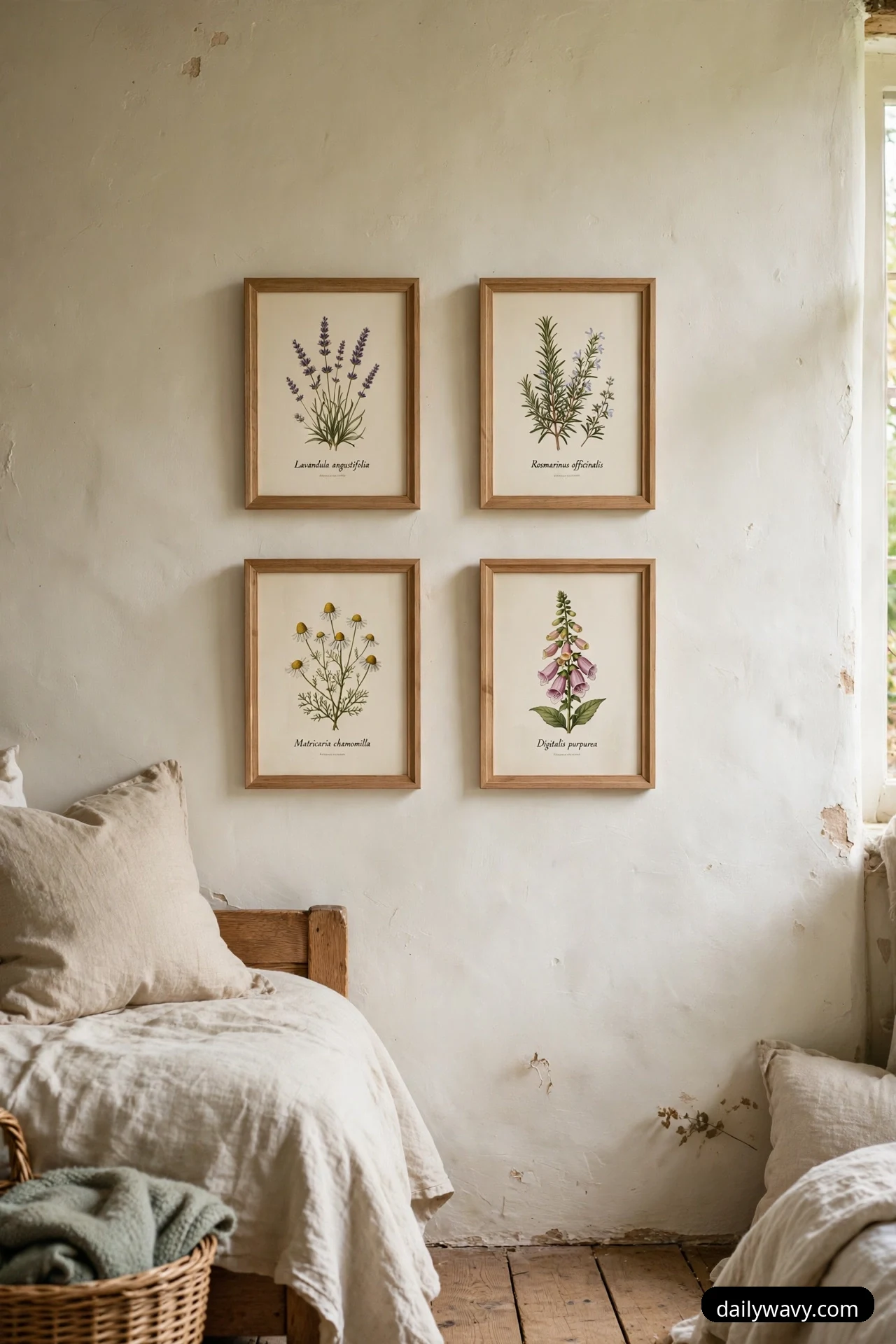
A gallery wall suits the cottage style best when it whispers. Instead of a sprawling salon hang, choose three to five small botanical prints in matching simple wood frames and arrange them in a tidy grid or a straight horizontal line on a side wall. Keep each print 8 by 10 inches or smaller and space the frames 2 to 3 inches apart; the restraint is what makes it feel calm rather than busy. Hang the center of the arrangement at 57 to 60 inches from the floor, which is gallery standard eye level. Botanical prints are the natural subject here, ferns, seed heads, garden herbs, and they tie directly to the plant by the window and the stems on the shelf. Use a paper template taped to the wall to plan the layout before a single nail goes in.
Simpler way: frame pages from an old botanical book or seed catalog in matching secondhand frames.
15. Layered Bedding with a Textured Throw
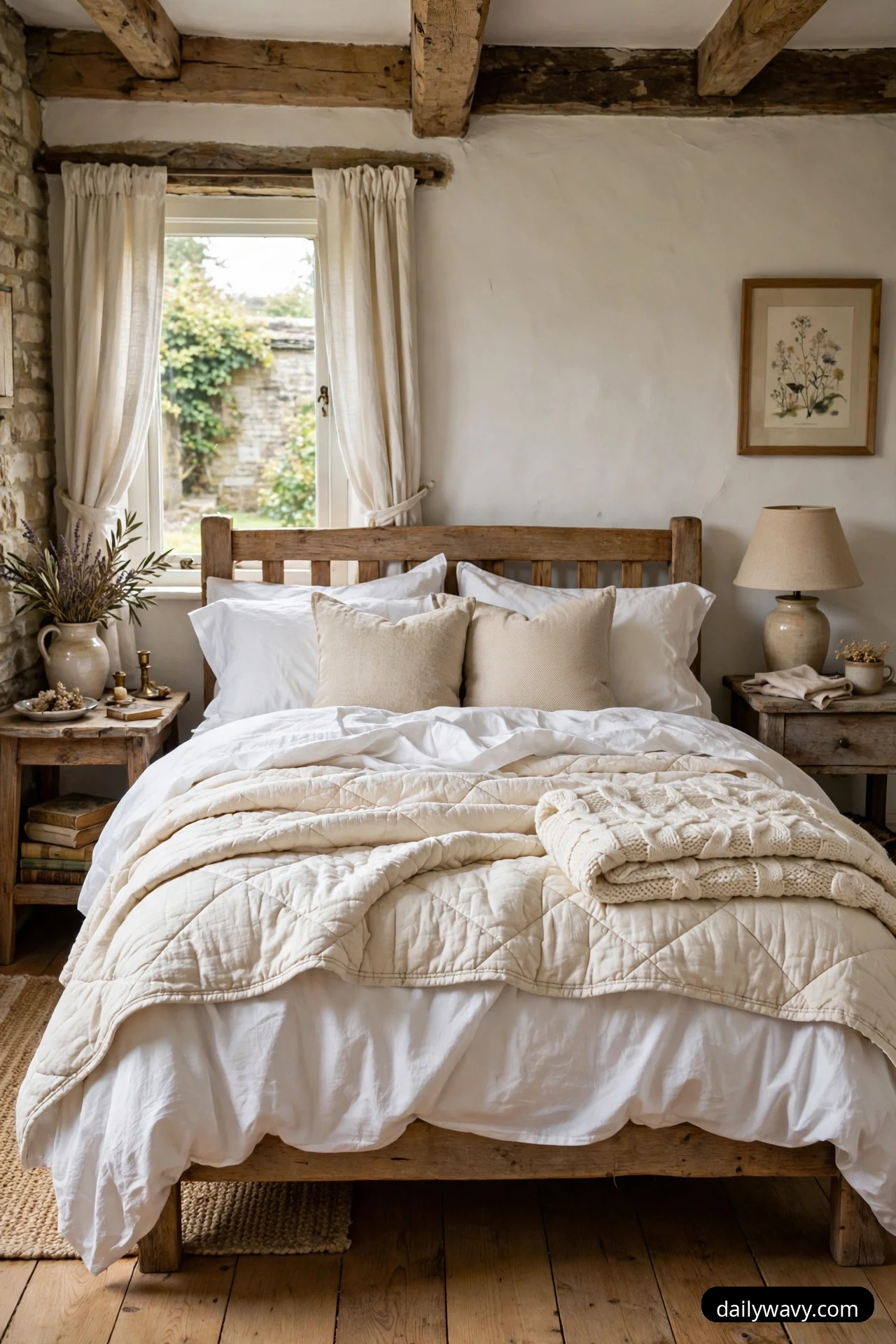
Cottage bedding is built in layers, and each layer earns its place. Start with washed cotton or linen sheets, add a duvet in a solid or tiny print, fold a quilt across the middle third, and finish with the textured throw from idea 8 at the foot. The trick is holding the palette to two or three related tones, warm white, oat, and one soft accent, so the layers read as depth rather than clutter. Mix textures deliberately: smooth percale against nubby quilt stitching against chunky knit. In summer, the quilt alone may be enough; in winter, all four layers come out. Wash everything in the same load with a gentle detergent so the whites stay matched, and skip the iron: a little rumple is the whole point.
Simpler way: add one quilt from a linen closet or thrift shop over your current bedding and see how the room changes.
16. A Low Bench at the Bed Foot
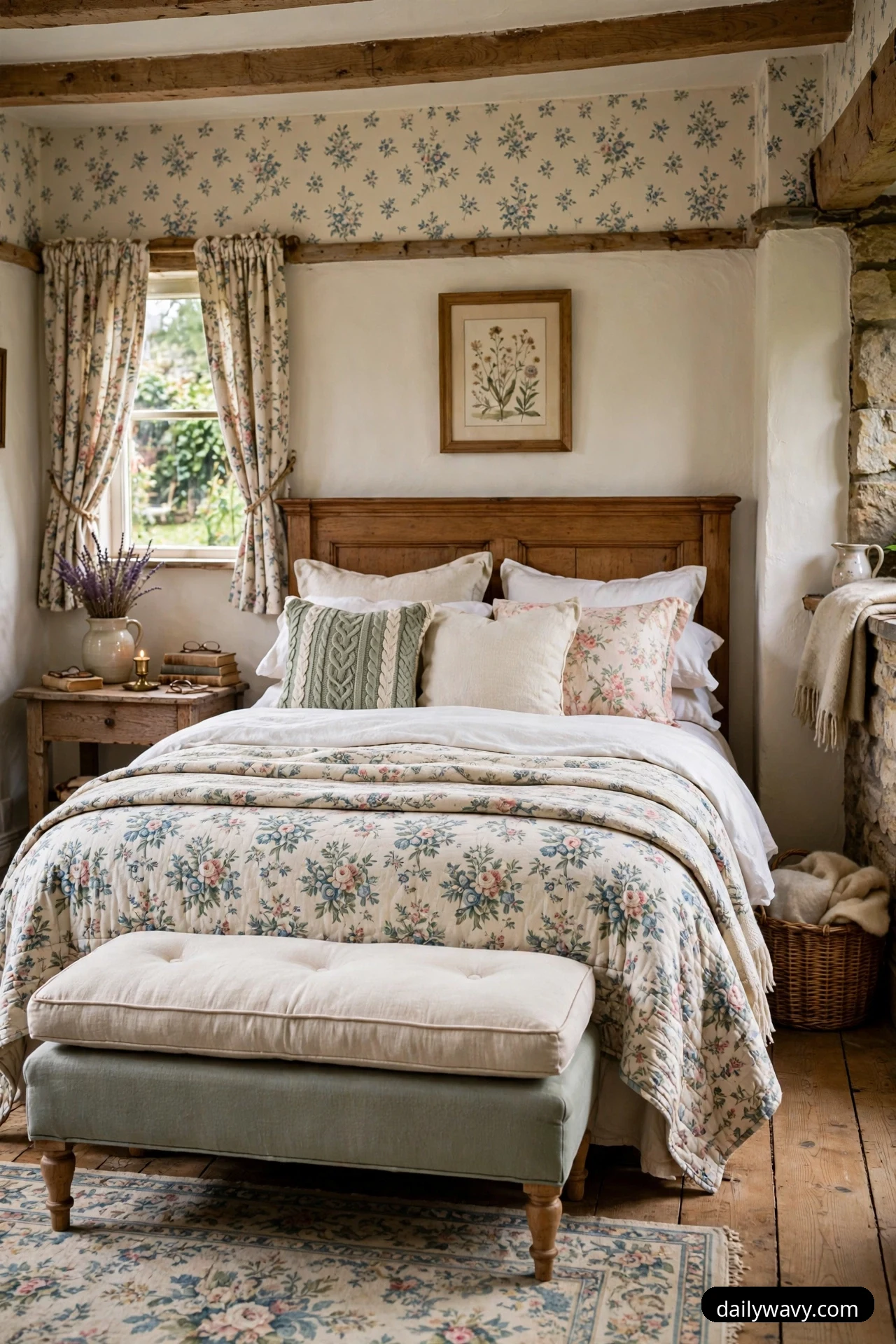
If a storage ottoman feels too bulky, a low open bench at the bed foot does similar work with a lighter footprint. At 16 to 18 inches high, it sits below the mattress line and holds the folded throw, tomorrow's outfit, or a tray with a carafe of water. Choose painted wood or a simple upholstered top in a washable fabric, and keep the length 6 to 8 inches narrower than the bed width so it looks tucked in rather than sprawling. The open space beneath keeps the floor visible, which matters in small rooms where every sightline counts. Before placing it, walk the route you take around the bed each morning; if you clip the bench, it is too deep and a narrower one will serve better.
Simpler way: pull a piano bench or small hallway bench into the bedroom and try it for a week.
17. A Wood Nightstand with a Shaded Lamp
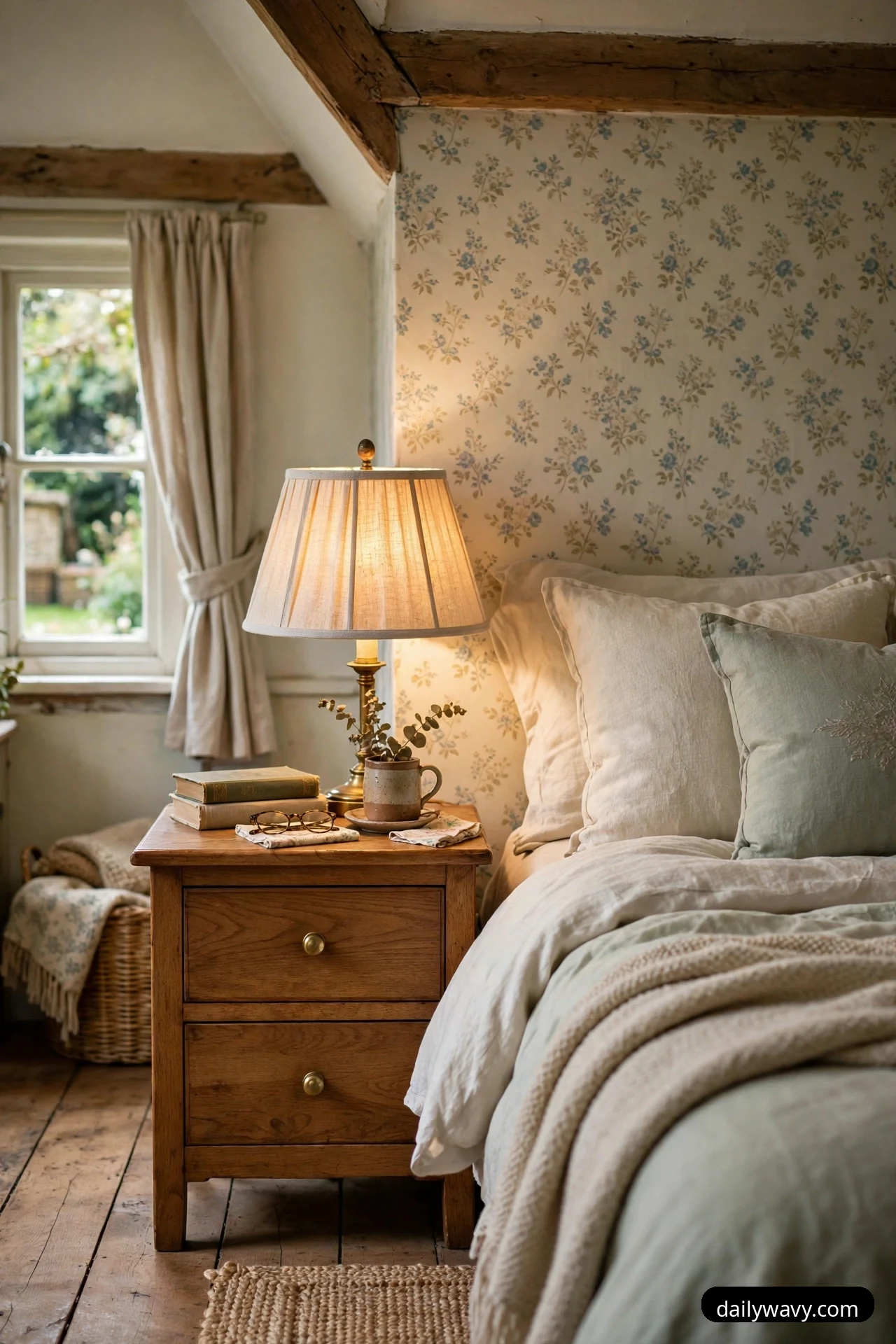
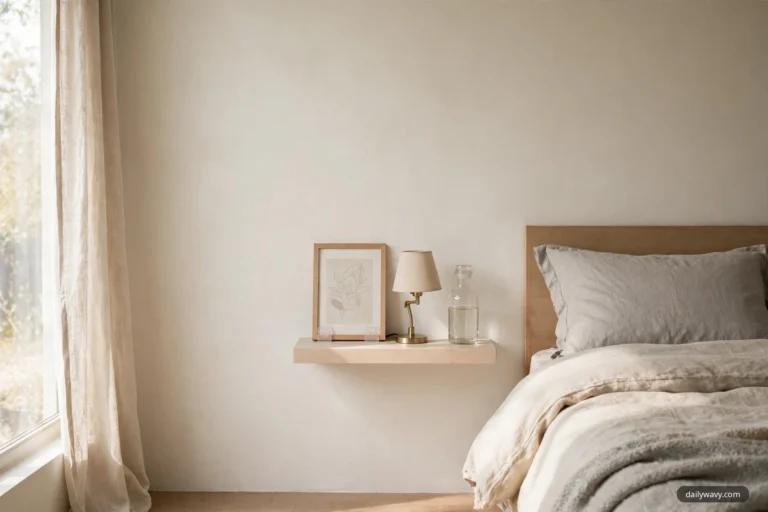
The nightstand is the hardest working piece of furniture in the bedroom, and wood with a shaded lamp is the cottage answer. Choose a nightstand 24 to 28 inches tall, roughly level with the top of your mattress, so the lamp light falls where you read and the surface is easy to reach from the pillow. A single drawer hides the clutter while an open shelf below holds the current book stack. Top it with a lamp in aged brass or painted wood and a linen drum shade 10 to 12 inches across; the shade diffuses light softly instead of throwing a hard cone. Keep the styling to lamp, book, and water glass. If the nightstand wobbles on uneven floors, a felt pad under one leg fixes it quickly.
Simpler way: repaint a dated nightstand in warm white and swap its shade for a linen drum.
18. Curtains Hung to Frame the Window
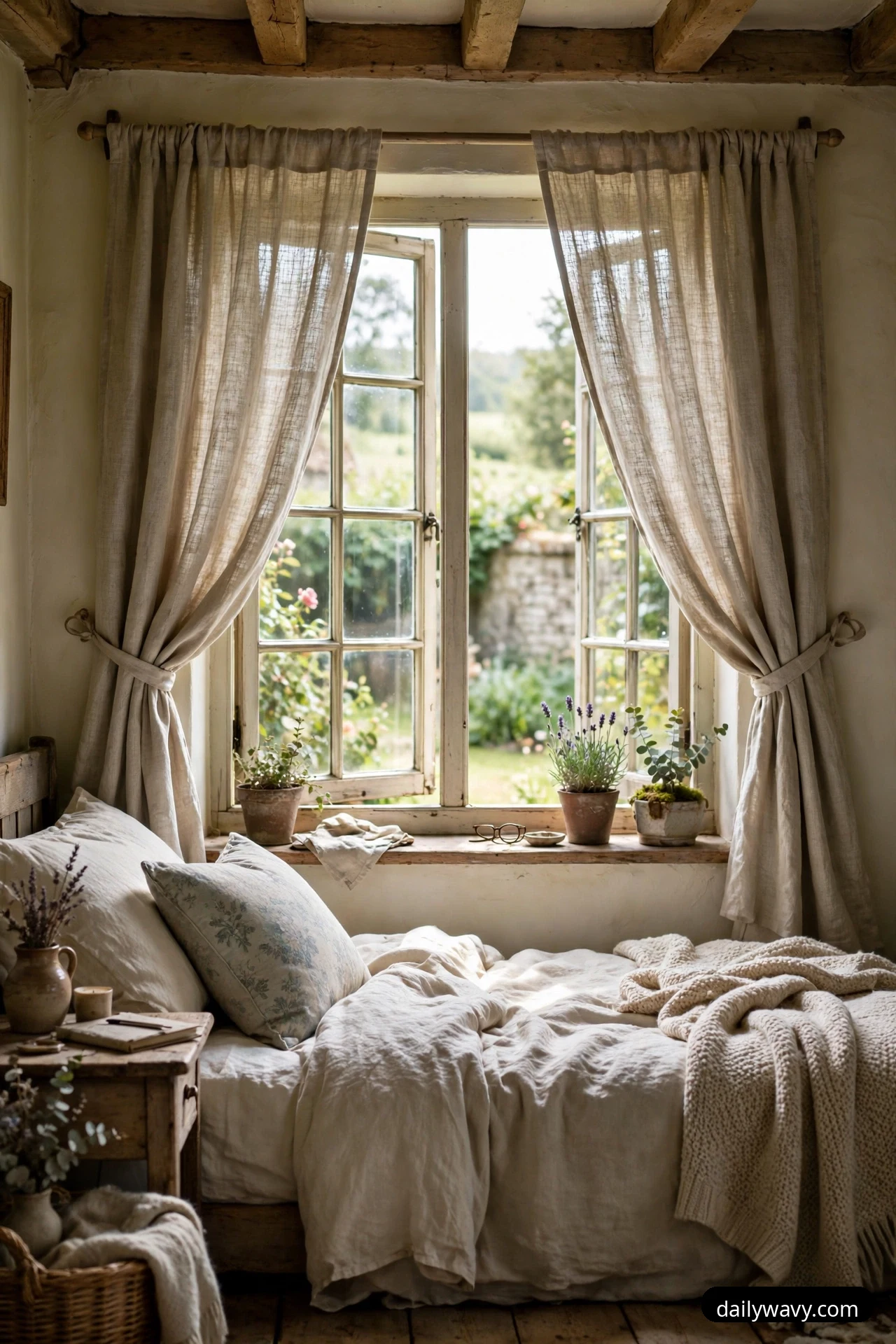
Curtains change a bedroom more than almost any other single move, but only when they are hung to frame the window rather than cover it. Mount the rod 4 to 6 inches above the window frame and extend it 4 to 6 inches beyond each side, so the panels stack on the wall and the full glass stays visible. Choose natural linen or cotton in warm white or unbleached flax, and let the panels just brush the floor or puddle an inch for softness. Two panels per window look fuller than one, even on narrow windows. This placement makes the window look larger and lets in the maximum daylight, which is exactly what a cottage bedroom wants. Measure the rod width before buying panels so you get the gathered fullness right.
Simpler way: move your existing panels to a wider, higher rod and watch the window double in presence.
19. One Large Artwork above the Headboard
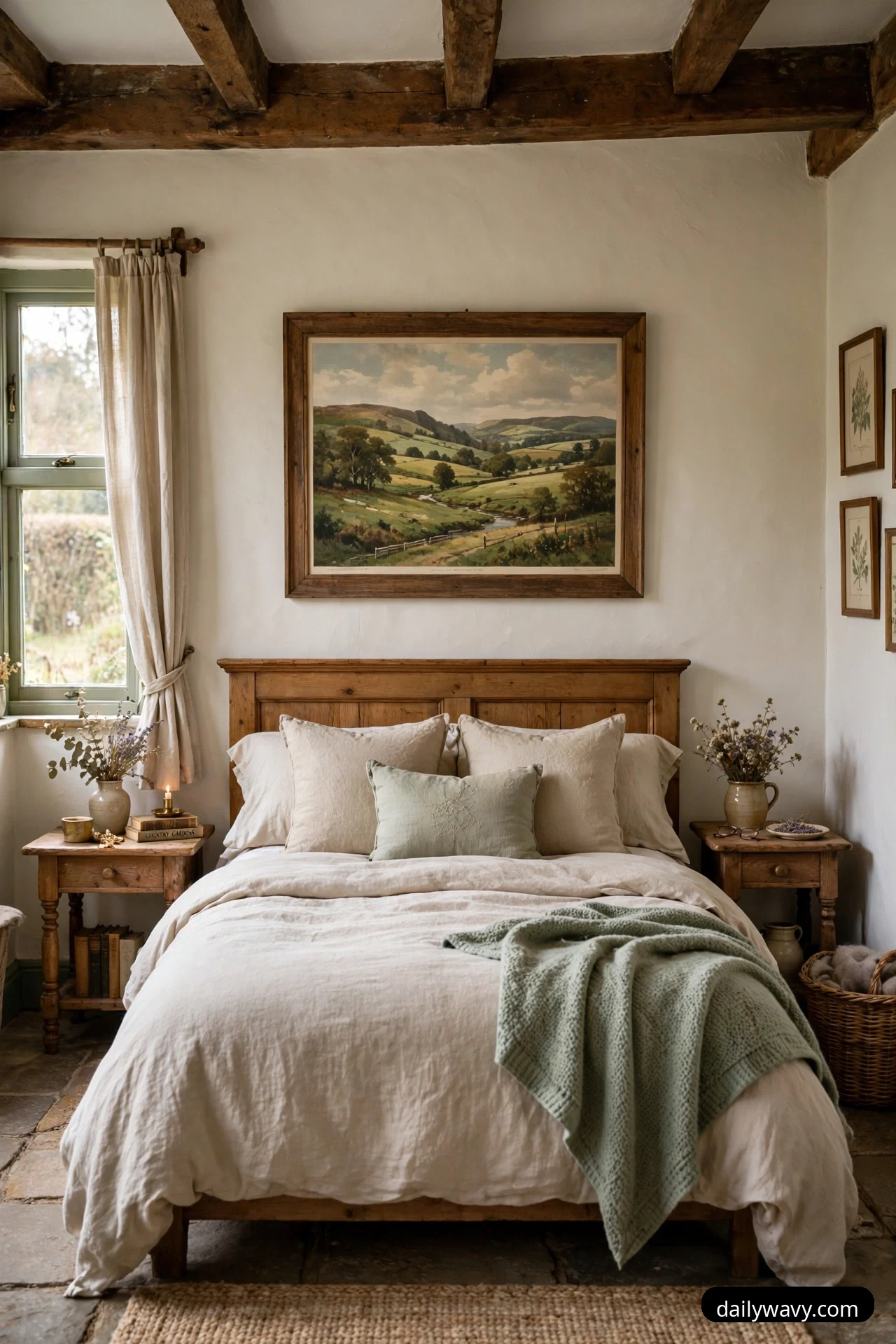
Where a gallery wall whispers, one large artwork above the headboard speaks clearly. A single landscape, botanical study, or abstract in soft tones, roughly two thirds the width of the bed, anchors the whole sleeping wall and gives the headboard something to answer to. Hang it so the bottom of the frame sits 6 to 8 inches above the headboard top; any higher and the two pieces stop relating to each other. A simple wood or thin brass frame keeps the focus on the image. In a cottage bedroom the subject matters less than the mood: misty, gentle, and quiet beats bold and graphic. If you love a piece that is slightly too small, mount it on a larger mat inside a bigger frame to give it presence.
Simpler way: hang the largest framed print you own above the bed and live with the scale for a week before buying.
20. A Small Reading Chair in a Corner
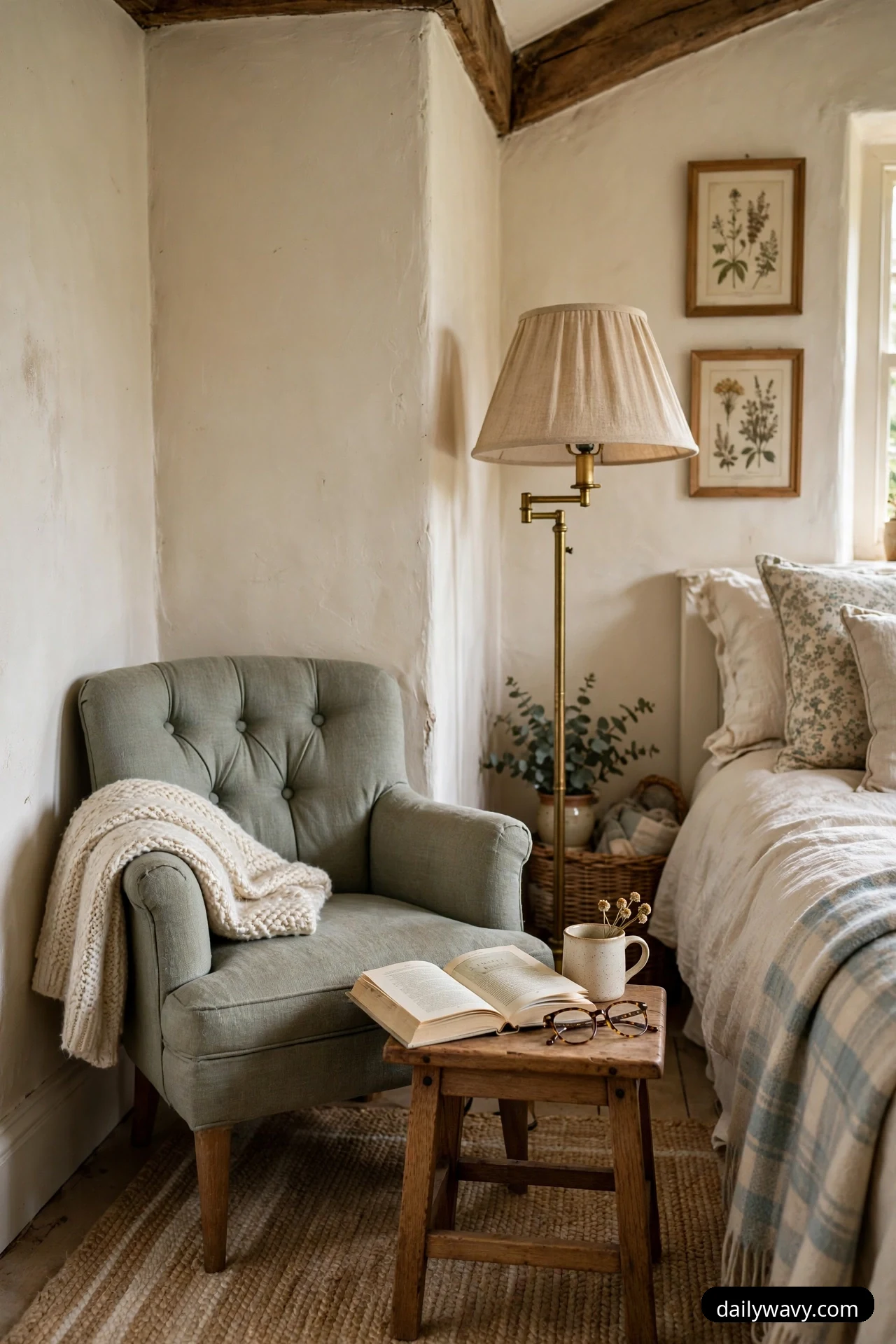
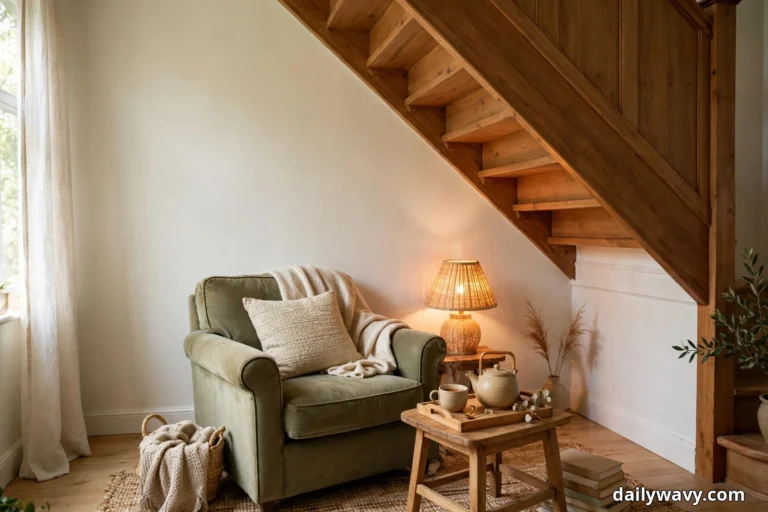
Every bedroom deserves one corner that is not about sleeping. A small upholstered chair, a tiny side table for tea and a book, and a floor lamp with a warm bulb turn dead space into the spot you will actually use. The chair need not be large; a 28 inch wide armchair fits a corner about 4 feet square, with room for the table and lamp, and still feels generous. Angle it toward the window or the room rather than flat against the wall, which makes the corner feel arranged instead of stuffed. A floor lamp behind the chair at about 60 inches tall puts reading light over your shoulder. This is also the perfect landing spot for the accent pillow if you ever tire of it on the bed.
Simpler way: move an armchair from the living room into the bedroom corner for a weekend trial.
English cottage bedroom questions, answered
What colors define an English cottage bedroom?
Warm white, soft stone, pale sage, and putty form the base, with accents drawn from the garden: botanical green, faded floral tones, and natural wood. Keep the overall palette to three or four related colors so the room stays calm.
How do I get the look on a small budget?
Paint is the biggest lever for the least money, followed by textiles. A painted nightstand, a thrifted quilt, and linen curtains from a remnant bin change a room for very little. Shop secondhand for baskets, mirrors, and frames, where cottage style pieces are plentiful.
Can I mix English cottage with modern furniture?
Yes, and it often looks better. One clean lined modern piece, a simple bed frame or a minimal lamp, keeps the cottage elements from tipping into costume. Let the modern piece be quiet and let the textures carry the style.
What bedding works best?
Washed cotton or linen in solid warm white or a tiny print, layered with a quilt and a textured throw. Natural fibers wrinkle gracefully and wash well, which is the whole point. Avoid high sheen sateen, which fights the matte cottage mood.
How do I keep it from looking cluttered?
Give every surface a job and a limit. The dresser gets one low display, the shelf gets books plus one vase, the nightstand gets lamp plus book plus glass. When a surface holds only what it was assigned, the room reads as collected, not crowded. If a small bedroom is your starting point, the same discipline applies in our guide to small bedroom with a queen bed.
What lighting suits the style?
Warm, low, and layered. A pair of shaded bedside lamps, a floor lamp in the reading corner, and daylight through linen curtains cover nearly every need. Stick to 2700K warm white bulbs throughout so the room glows the same at every hour.
Start with one corner and let it grow
A thoughtful room refresh does not happen in a single shopping trip. Pick the idea that fixes what bothers you most, the cold floor, the bare wall, the chairless corner, and live with it for a week before adding the next. Cottage style rewards patience; the rooms that feel most right are the ones that accumulated slowly. For more small space thinking, see our narrow living room layout ideas, and browse the full Home & Decor collection for what to try next.