10 Blue Bedding Styling Ideas with Layers and Texture
Blue bedding has a way of making a bedroom feel calm without making it feel cold. The color carries the…
Blue bedding has a way of making a bedroom feel calm without making it feel cold. The color carries the quiet of early morning, and when you layer it the way stylists do, with different textures at different depths, a plain bed starts to look collected instead of plain. The ten ideas below each focus on one small, doable change. Every one tells you what to buy or pull from your linen closet, how to place it, and what it costs in effort, so you can pick the ones that fit your room and actually finish them.
Jump to an idea
- A Single Lumbar Cushion
- A Blanket Draped Over One Corner
- A Duvet Turned Back To Show The Sheets
- A Tonal Pillow Arrangement
- A Woven Bed-Foot Basket With A Spare Throw
- A Darker Fitted Sheet Peeking Beneath
- A Light Waffle Blanket At The Foot
- A Vintage Quilt Used As An Accent
- A Pair Of Different-Size Cushions
- A Small-Scale Print With A Plain Duvet
Blue bedding basics: get these right first
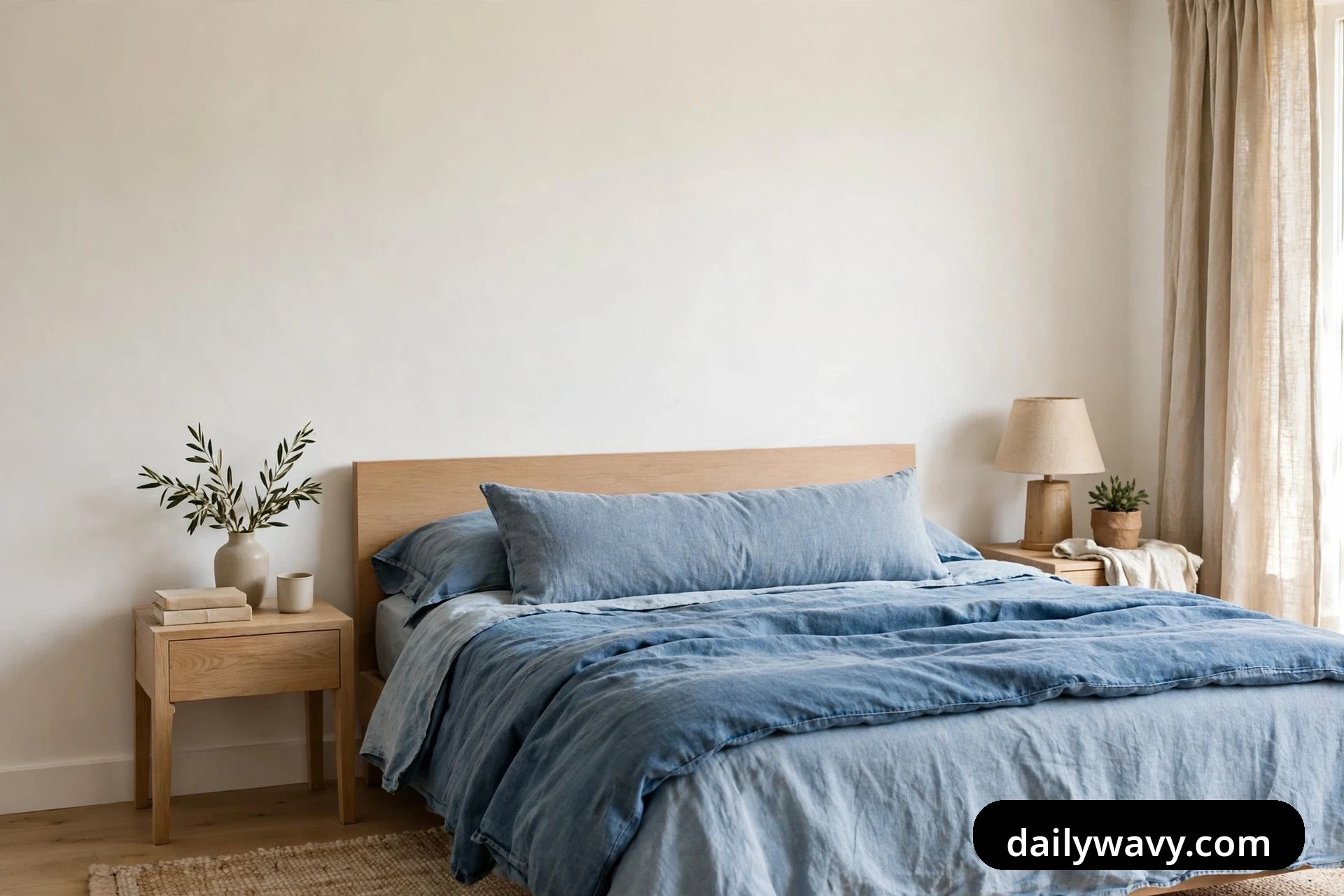
Before you buy anything new, sort out the foundation, because blue only looks layered and rich when the base pieces are the right size. Measure your mattress: a queen is 60 by 80 inches and a king is 76 by 80, and your duvet insert should be at least as wide as the mattress plus 15 to 20 inches on each side so it drapes instead of sitting flat like a lid. If you are still planning the room around a queen, our small bedroom with a queen bed ideas guide helps the whole layout feel balanced before you dress the bed.
Pick three blues, not five. A medium denim or chambray blue as your main color plus one lighter sky tone and one darker navy is enough range. More than that and the bed starts to look busy instead of layered. Then give each blue a different texture: washed cotton, linen, waffle weave, a knit throw. Texture is what the eye reads as “styled” from across the room. Keep everything else in the room warm and quiet, white or ivory walls, light wood, one warm metal like brass, so the blue has something soft to sit against. Finally, wash new bedding once before styling day. Fresh-from-the-package stiffness photographs and drapes badly, and one wash cycle is the difference between crisp and cozy.
1. A Single Lumbar Cushion
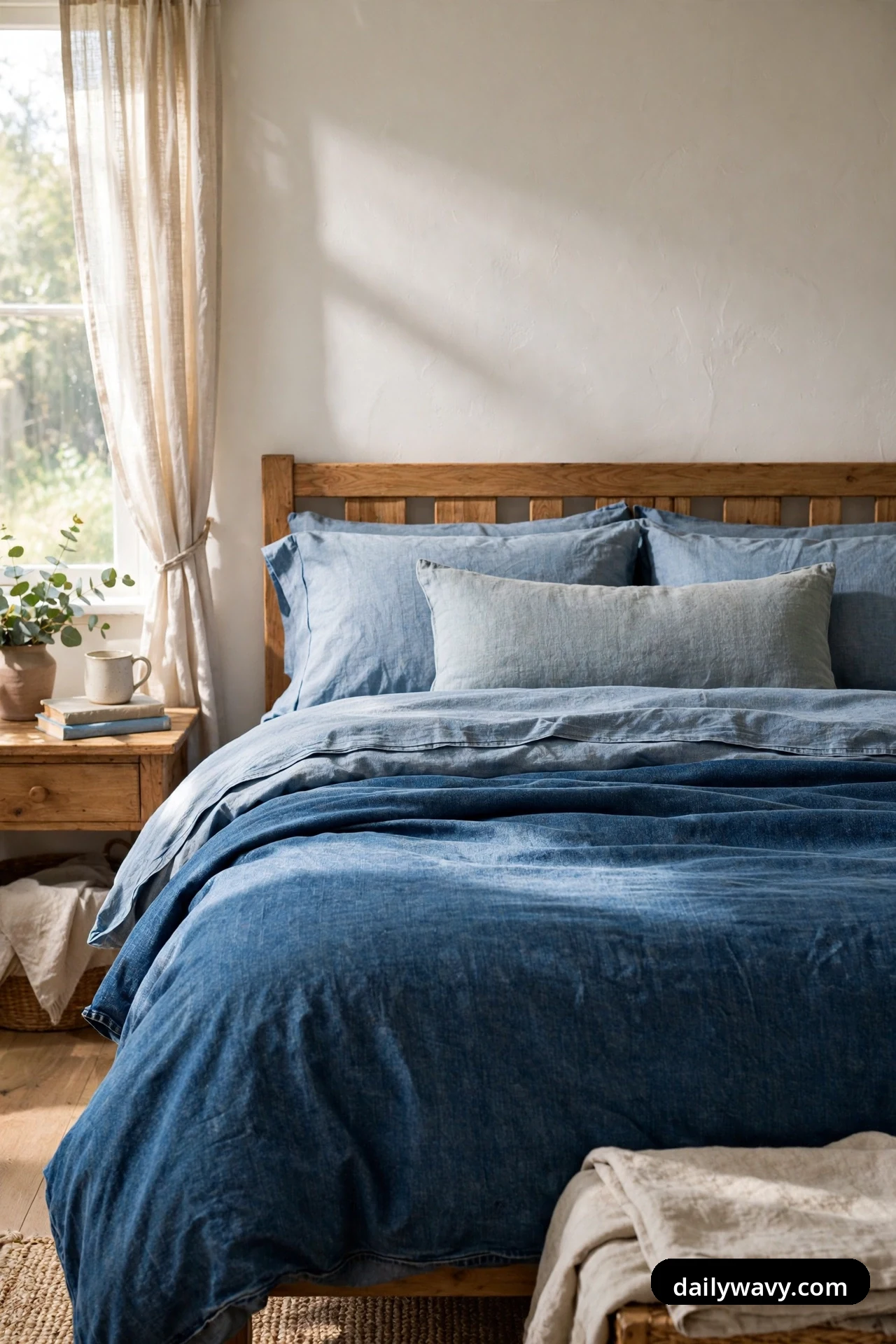
A lumbar cushion is one of the quickest styling wins on this list, because one long cushion laid across the front of your pillows instantly makes the bed look finished. It works like a period at the end of a sentence: the eye travels across the pillows and stops on the lumbar, and the bed reads as intentional. Choose a lumbar around 12 by 20 inches or 14 by 36 inches, depending on your bed width. A queen takes the smaller size; a king can carry the longer one. The fabric matters more than the pattern. A washed linen or a nubby cotton in a blue that is one shade deeper than your duvet gives you depth without competing.
What to measure: the width of your sleeping pillows lined up. Your lumbar should span roughly two-thirds of that width, never the full width. If it overhangs the pillows, it looks like a mistake.
Materials: one lumbar cushion with a removable cover, washed linen or cotton, in a mid blue. Down-alternative insert so it holds a soft shape.
Placement: center it across the front of your stacked sleeping pillows, low enough that it overlaps the top edge of the duvet. Give it one karate chop in the middle for that relaxed dent.
Approximate effort: ten minutes, including fluffing.
Lower-cost alternative: fold a standard pillowcase-wrapped throw pillow in half and slip it into a 12 by 20 inch pillowcase you already own. Nobody will know.
2. A Blanket Draped Over One Corner

A throw that looks casually tossed takes a minute or two of deliberate fussing, and the corner drape is the most forgiving version. Instead of folding a blanket into a perfect rectangle across the foot, which can look stiff, you let one corner fall diagonally over the duvet so the texture and the blue underneath both show. This is the trick that makes hotel beds look effortless, and it works because the asymmetry gives the eye somewhere to land. Pick a throw in a contrasting texture to your duvet: if the duvet is smooth washed cotton, choose a chunky knit, a waffle weave, or a fringed cotton throw. Ivory, oatmeal, or warm white keeps the blue as the star.
What to measure: your throw should be at least 50 by 60 inches. Anything smaller looks like a scarf on a queen or king.
Materials: one textured throw in a warm neutral. Cotton or cotton-blend knits drape best; avoid anything slippery like satin, which slides off by morning.
Placement: stand at the foot corner of the bed, fold the throw loosely in half lengthwise, and lay it so the fold sits about a third of the way across the bed with one corner hanging over the edge. Tug one corner down a little further. Done.
Approximate effort: five minutes, most of it deciding which corner.
Lower-cost alternative: use the top sheet from a spare sheet set as a draped layer. A white or ivory flat sheet folded in thirds reads exactly like a lightweight summer throw.
3. A Duvet Turned Back To Show The Sheets

Turning the duvet back is free, takes only a moment, and adds a whole second color to the bed without buying anything. When you fold the top of the duvet down about twelve inches, the sheet underneath shows as a band across the pillows, and if that sheet is a lighter blue or a soft white, you get an instant two-tone effect. Stylists do this because a single flat color across the whole bed looks heavy, while one crisp horizontal line of contrast makes the bed feel tailored. The trick is the fold: it should be loose and a little uneven, like the bed was just made by someone who cares, not pressed by a machine.
What to measure: nothing to buy, but check that your flat sheet is long enough to show. On a queen you want a flat sheet at least 90 inches long so the turned-back band still covers the pillows.
Materials: a flat sheet in a lighter tone than your duvet. White, pale sky blue, or a thin blue-and-white stripe all work.
Placement: pull the duvet and the sheet down together, then fold just the duvet back on itself in a wide cuff, roughly twelve inches deep. Let the sheet lie flat beneath it. Smooth the cuff with your hands but leave the edge soft.
Approximate effort: two minutes every morning.
Lower-cost alternative: this one is already free. If your sheets are the same color as the duvet, flip the flat sheet so the slightly faded side faces up for a subtle tone shift.
4. A Tonal Pillow Arrangement
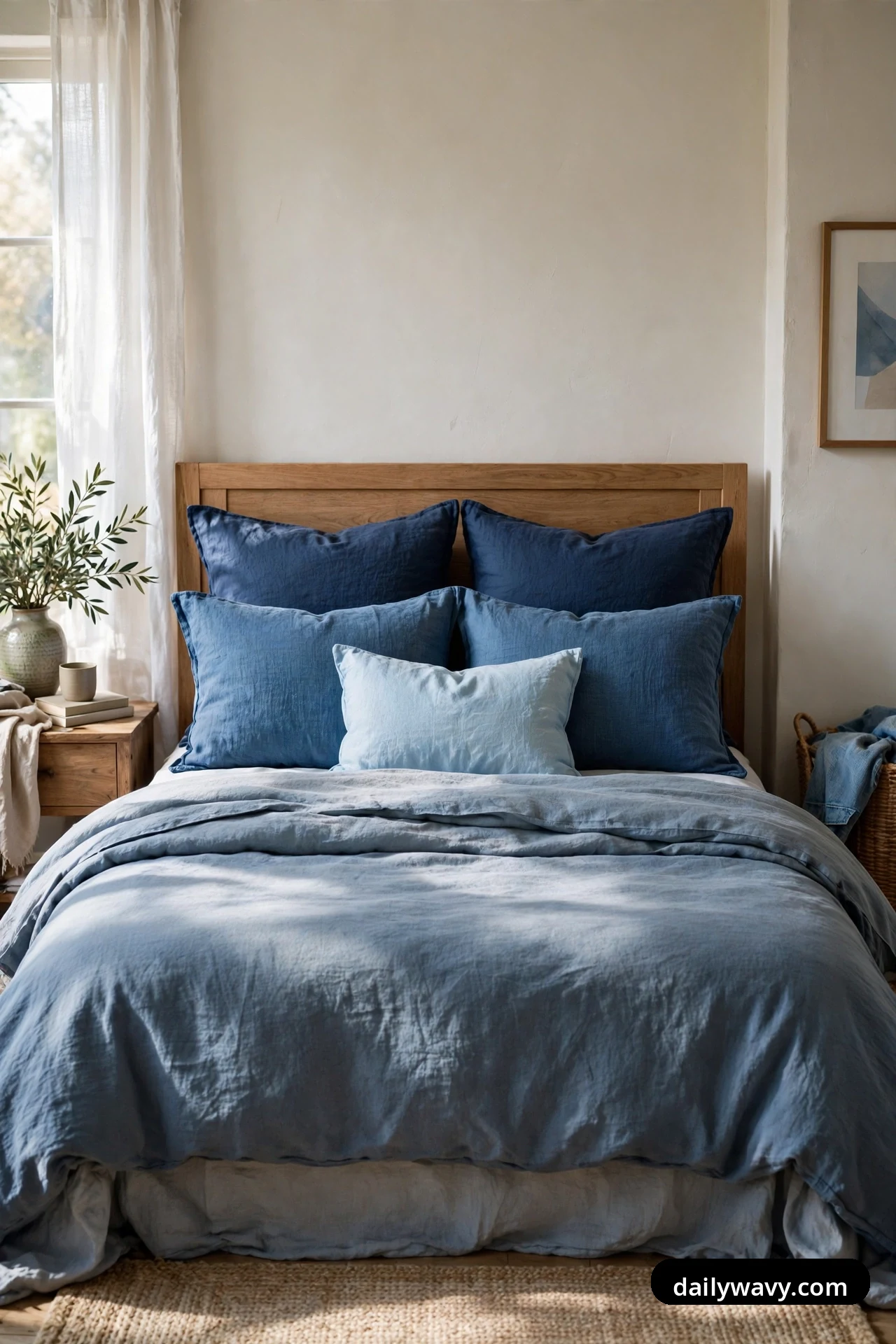
Tonal means staying inside one color family and letting shade do the talking, and it is a reliable way to make blue bedding look polished. The formula is simple: dark at the back, medium in the middle, light in front. Start with your sleeping pillows in their shams against the headboard, then add two standard pillows in a mid blue, then finish with one smaller accent pillow in the palest blue you have. Three depths of the same color create a gradient the eye finds restful, and because nothing clashes, the arrangement survives even if you are not precise about it. This is also the arrangement that hides a multitude of sins, since tonal layers forgive wrinkles and uneven fluffing.
What to measure: count your pillow widths. You want the back row (sleeping pillows) to fill the headboard edge to edge, and each front layer to step in by a few inches on each side.
Materials: sleeping pillows with shams, two standard pillows in mid-blue cases, one 16 or 18 inch accent pillow in pale blue. All washable cotton or linen.
Placement: shams upright against the headboard, mid-blue standards leaning in front of them, accent pillow centered and slightly tilted in front. Fluff each by grabbing two opposite corners and shaking.
Approximate effort: fifteen minutes the first time, five once you know the order.
Lower-cost alternative: for a budget front layer, a single pale blue pillowcase from a discount bin does the same job without dyeing anything.
5. A Woven Bed-Foot Basket With A Spare Throw

A basket at the foot of the bed solves two problems at once: it gives the spare throw a home that is not the floor, and it adds a natural material that keeps all that blue from feeling flat. Woven seagrass or rattan brings in the warm, organic texture that blue needs as a partner. The basket also earns its keep every night, because the throw you styled with in the morning goes in the basket at bedtime instead of ending up in a heap. Choose a basket wide enough to look intentional, at least 20 inches across, with low enough sides that the folded throw peeks over the rim.
What to measure: the foot of your bed and the floor space in front of it. Leave at least 18 inches of walking room between the basket and the wall or dresser.
Materials: one woven basket (seagrass, water hyacinth, or rattan) and one spare throw folded in thirds. A lid is optional; open baskets look more relaxed.
Placement: center the basket at the foot of the bed, a few inches out from the frame. Fold the throw in thirds lengthwise and lay it over the rim so one end hangs inside and one end hangs outside.
Approximate effort: ten minutes to position and fold.
Lower-cost alternative: any large tote, laundry basket, or storage bin you already own works while you hunt for the right woven one. Drape the throw over the rim and the effect is the same from across the room.
6. A Darker Fitted Sheet Peeking Beneath
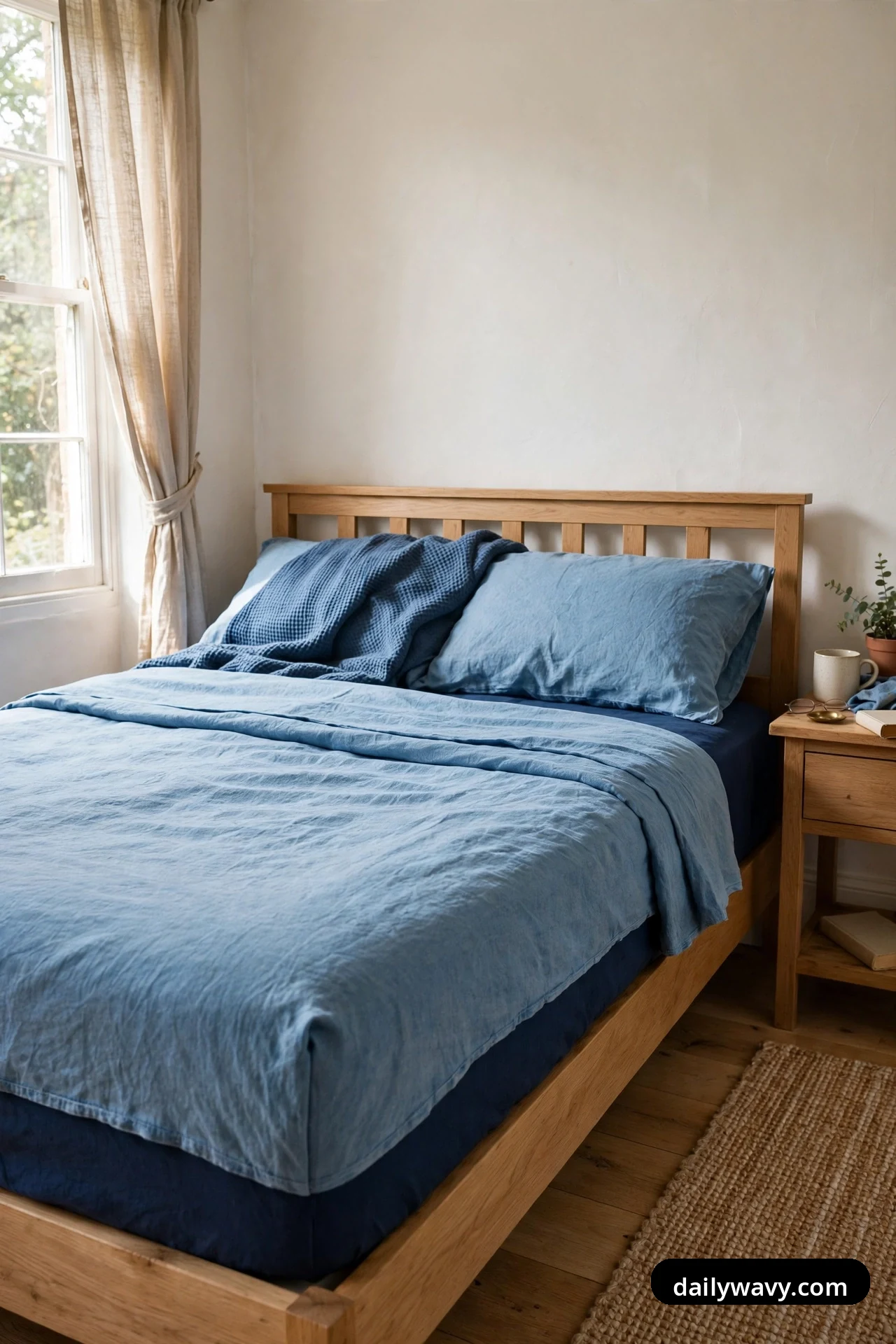
This is the quietest idea on the list and one of the most effective. When the fitted sheet is a shade darker than everything above it, a thin line of deep color shows at the mattress edge between the sheet and the duvet. It works like eyeliner for the bed: a dark line that sharpens the whole shape and makes the lighter blues above it look brighter. All it requires is buying your next fitted sheet in navy instead of white. Because only a couple of inches show, the sheet does not need to be beautiful, just dark and fitted properly so the line stays crisp.
What to measure: your mattress depth. Standard fitted sheets fit mattresses up to 14 inches deep; if yours is thicker, buy deep-pocket sheets so the corners stay smooth and the visible line stays even.
Materials: one fitted sheet in navy or deep indigo, cotton or cotton blend. It does not need to match anything else.
Placement: put the bed together as usual, then pull the duvet and top layers up just enough that an inch or two of the fitted sheet shows along the sides. Smooth the sheet flat against the mattress edge with your hand.
Approximate effort: three minutes during your normal sheet change.
Lower-cost alternative: if you own a dark flat sheet, tuck it tightly around the mattress like a fitted sheet for the same peek of color. Hospital corners hold it in place.
7. A Light Waffle Blanket At The Foot
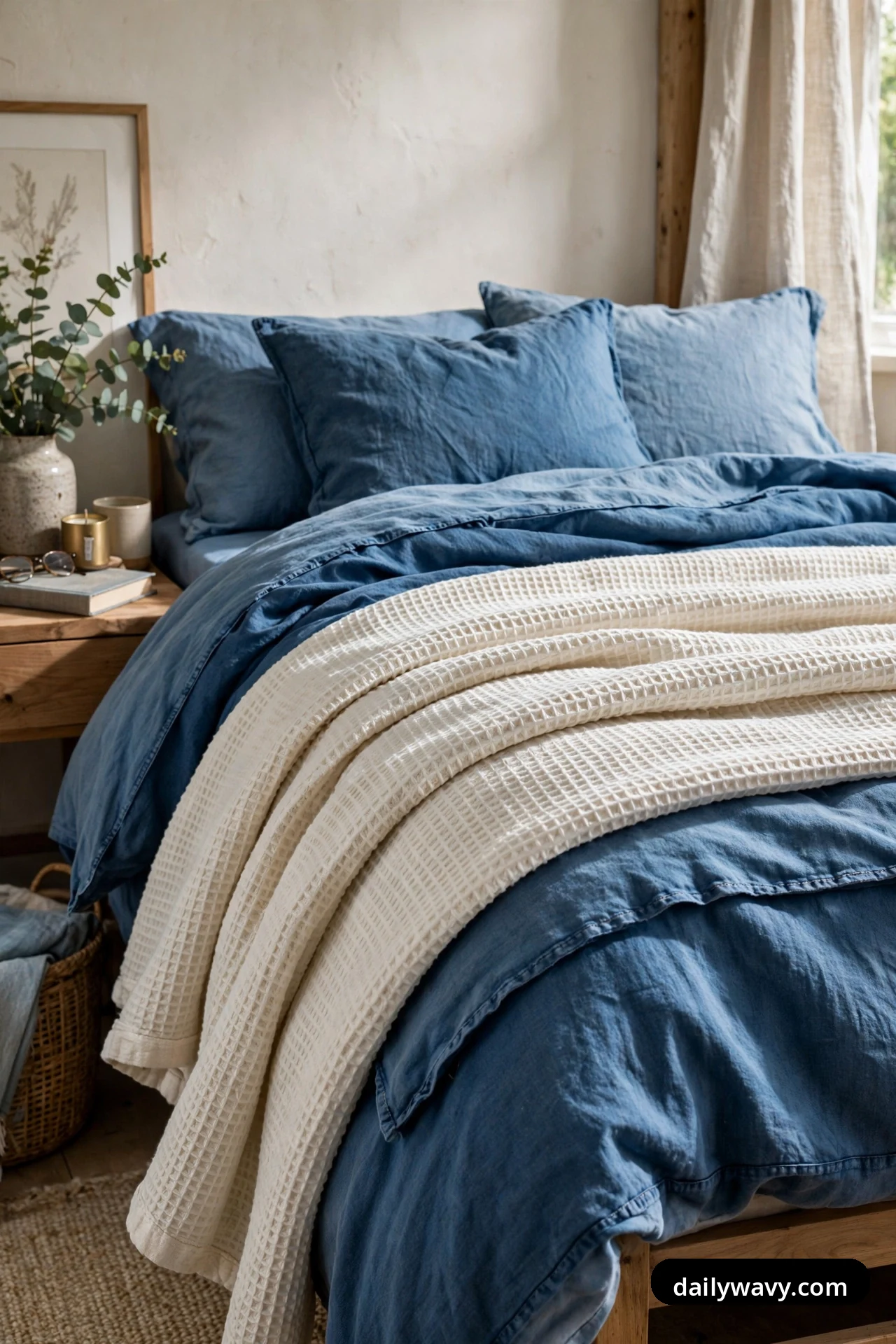
Waffle weave is the texture that makes blue bedding feel touchable. The little honeycomb squares catch light and shadow, so even a plain ivory waffle blanket adds more visual interest than a flat cotton throw. Folded across the foot of the bed in a wide band, it gives the bed a clear horizontal layer that balances all the pillows stacked at the head. This is the layer guests often touch first, so it is worth choosing one that feels as good as it looks. Cotton waffle is breathable enough for summer and layers well under a duvet in winter.
What to measure: the width of your bed. The folded blanket should span the full width and hang six to eight inches over each side.
Materials: one waffle-weave blanket, twin or full size depending on your bed, in ivory, oatmeal, or pale sky blue. One hundred percent cotton washes best.
Placement: fold the blanket in thirds lengthwise and lay the band across the foot of the bed, about a quarter of the way up from the bottom edge. Let the ends fall naturally over the sides.
Approximate effort: five minutes.
Lower-cost alternative: check discount home stores for waffle-weave throws, which often cost very little.
8. A Vintage Quilt Used As An Accent
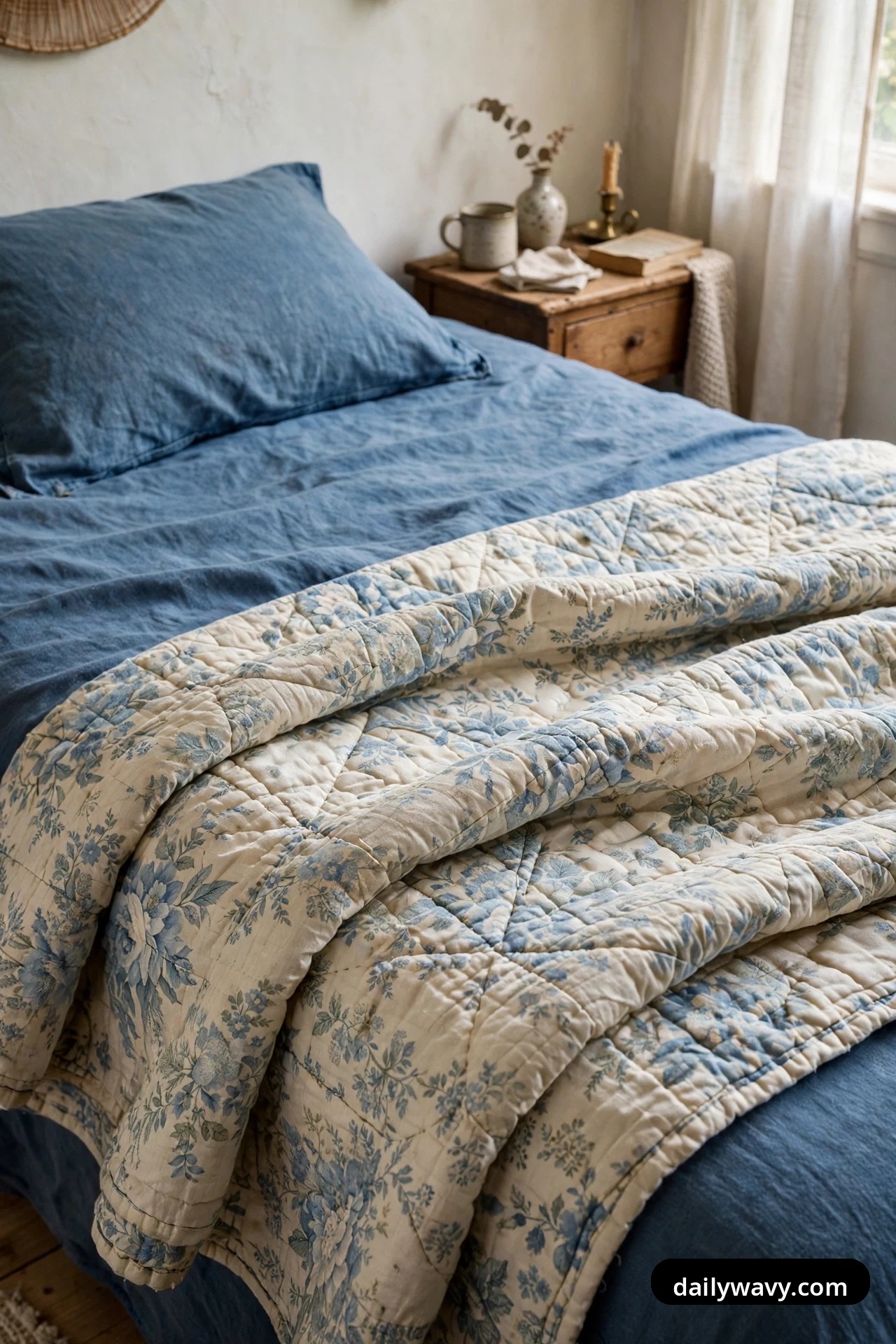
One vintage quilt, folded across the lower half of the bed, brings in pattern, history, and a handmade feel that new bedding cannot fake. The key is restraint: the quilt is an accent, not the main event, so it should cover no more than the bottom third of the bed and the blue bedding should still dominate. Look for quilts with blue in them, faded florals, feedsack prints, or simple patchwork with indigo squares, so the accent feels related instead of random. Thrift stores, estate sales, and flea markets are full of them, and small imperfections like gentle fading are part of the charm.
What to measure: the quilt should be at least as wide as your bed. A quilt that is too narrow looks like a runner; one that drapes over the sides looks generous.
Materials: one vintage or vintage-style quilt with blue tones. Wash it gently before first use, and check for weak seams.
Placement: fold the quilt in half or thirds and lay it across the foot of the bed over the duvet, smoothing it flat. If it has a particularly pretty section, position that part facing the door.
Approximate effort: ten minutes, plus the fun of the hunt.
Lower-cost alternative: a quilted throw or coverlet from a discount home store gives the stitched texture for much less than a true vintage quilt. Choose one with visible quilting, not printed fake stitching.
9. A Pair Of Different-Size Cushions
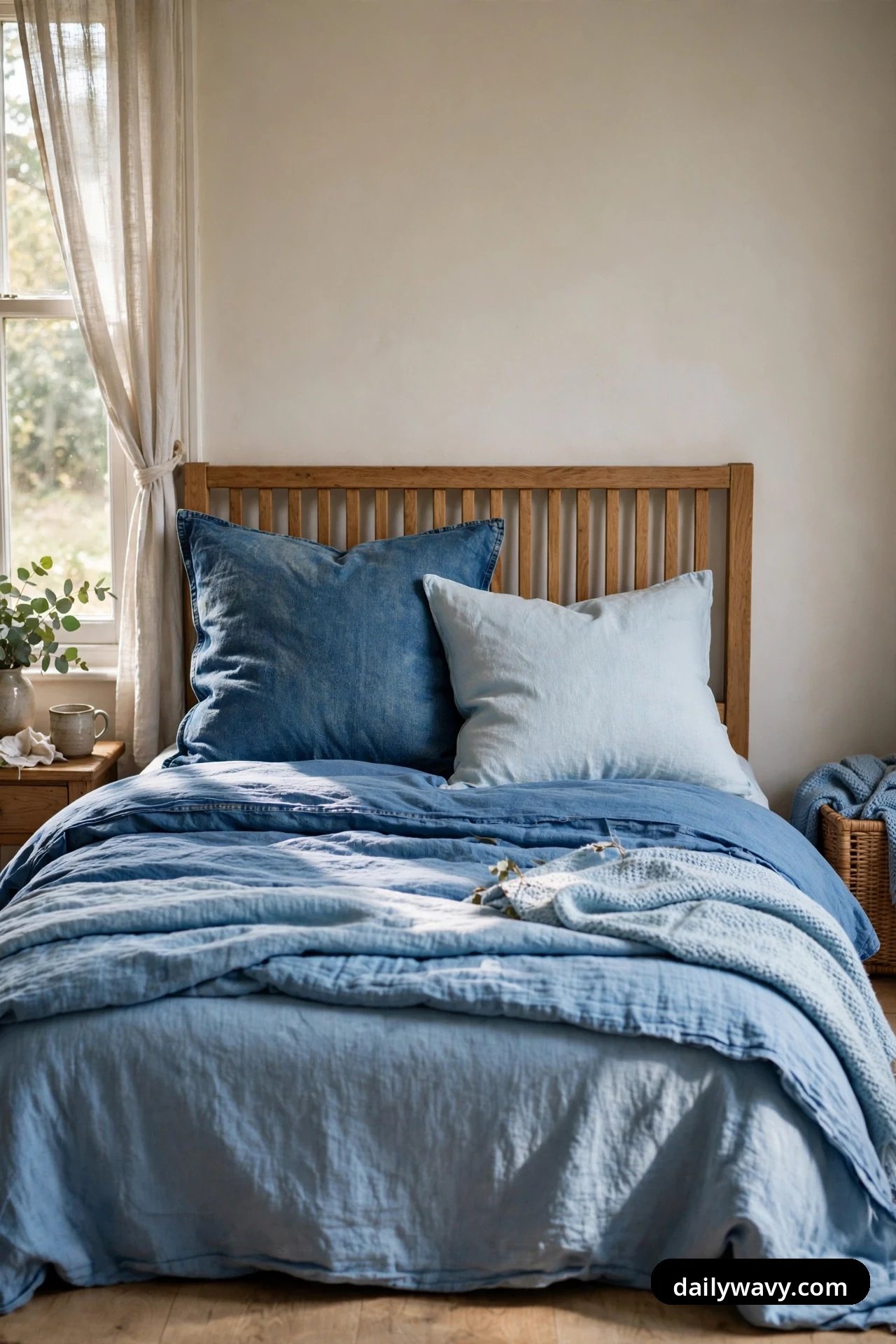
Two cushions of clearly different sizes leaning together look more designed than a matched pair, because the size contrast creates a little composition instead of a mirror image. Try one large 20 inch square in a washed denim blue with one small 12 inch square in pale sky linen, both leaning against the headboard at a slight angle to each other. The big one anchors, the small one accents, and the gap between their sizes keeps the arrangement from looking like a hotel. This is a low-commitment way to test whether you like pattern or texture, because two small cushions are cheap to swap.
What to measure: your headboard height. The large cushion should sit about two-thirds up the headboard; if it disappears behind the headboard, size up.
Materials: one 20 inch square cushion and one 12 inch square cushion, in two different blue tones or one blue and one neutral. Feather or down-alternative inserts.
Placement: lean the large cushion against the headboard slightly off center, then tuck the small cushion in front of it at the opposite angle so they lean on each other. One karate chop on the large one, none on the small.
Approximate effort: five minutes.
Lower-cost alternative: buy two cushion covers in the right sizes and stuff them with the bed pillows you already own while you shop for inserts.
10. A Small-Scale Print With A Plain Duvet
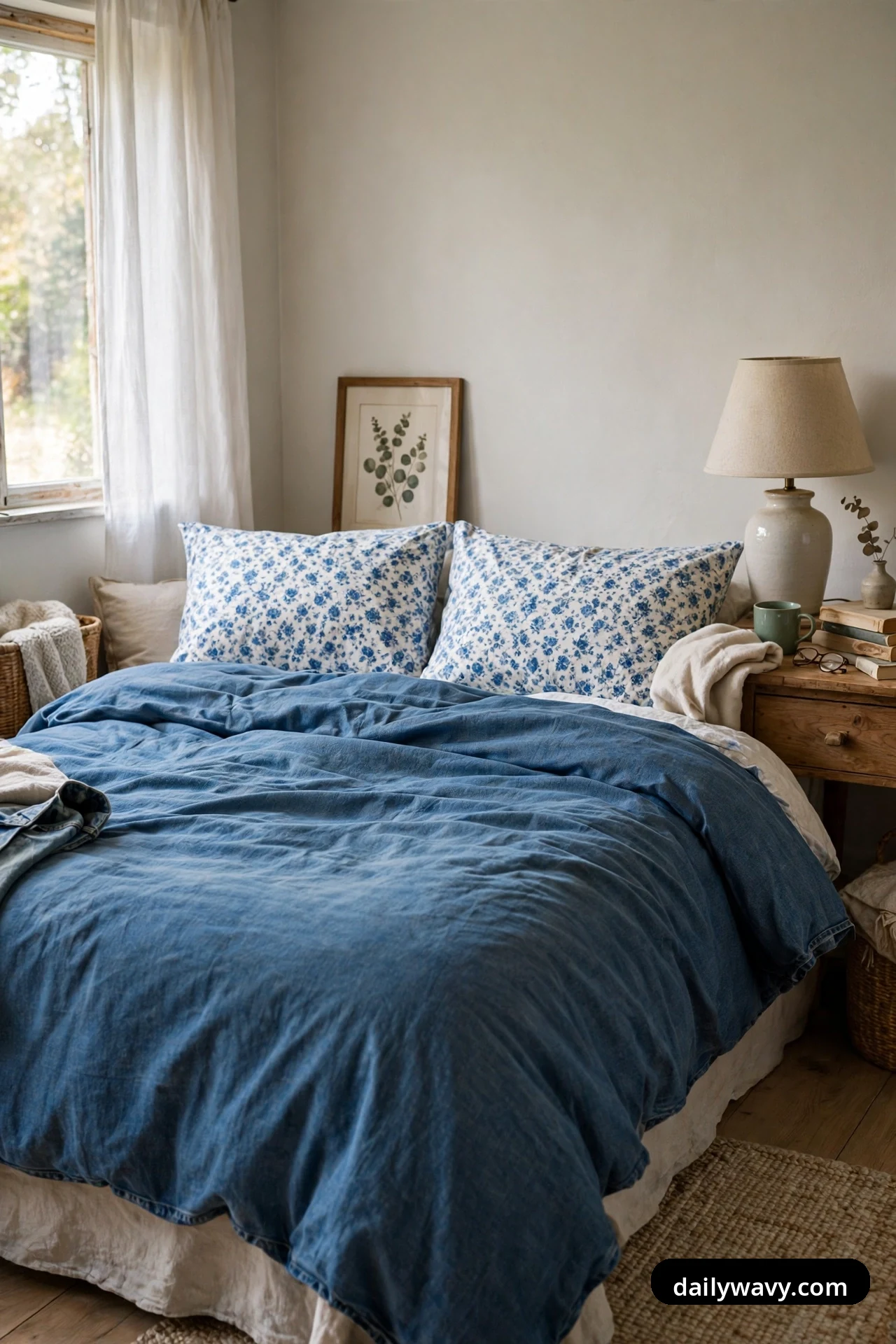
A small-scale print, tiny florals, mini checks, or a ditsy dot, on the shams lets you have pattern without the commitment of a patterned duvet. From the doorway the bed still reads as calm blue, and only up close does the print reveal itself, which is exactly the kind of detail that makes a room feel considered. Keep the duvet itself plain and let the shams do the talking, and repeat the print nowhere else in the room. One pattern, contained to the pillows, is the rule that keeps this from tipping into busy.
What to measure: your sham size. Standard shams are 20 by 26 inches and king shams are 20 by 36; buy the print in the size that matches the shams you own.
Materials: two shams in a small-scale blue-and-white print. Cotton percale keeps small prints crisp.
Placement: put the printed shams on your sleeping pillows and stand them upright against the headboard. Layer your plain blue accent pillows in front so the print peeks out around them.
Approximate effort: ten minutes during a pillowcase change.
Lower-cost alternative: a blue-and-white bandana or two, folded and tucked behind plain shams, gives a flash of small-scale print for very little while you decide on real shams.
Blue bedding questions, answered
Will blue bedding make my bedroom feel cold?
It can, if every blue is cool-toned and every surface is smooth. The fix is warmth in the partners, not in the blue itself: warm white walls, light wood furniture, a woven basket, brass or warm-toned lamps. Texture also warms blue up. A nubby knit throw or a waffle blanket makes the same blue read cozy instead of chilly.
How many pillows is too many?
For a bed you actually sleep in, stop at what you are willing to move every night. Sleeping pillows plus two to three decorative cushions is the sweet spot for a queen; a king can carry one more. If making the bed starts to feel like a chore, you have too many, and the bed may end up stripped bare.
Can I mix blue bedding with other colors?
Yes, and you should. Blue loves warm neutrals like ivory, oatmeal, camel, and light wood tones. It also pairs well with soft green, warm gray, and small amounts of brass or rattan. What it does not love is competing brights. Keep any second color muted and let blue stay in charge.
What if my room is small? Will all these layers overwhelm it?
Layers add depth, which actually helps small rooms feel considered rather than cramped, as long as the palette stays tight. Stick to your two or three blues plus one neutral, keep patterns small, and leave some breathing room at the foot of the bed. For more ideas on keeping compact spaces calm, our narrow living room layout ideas show how a few inches of breathing room keep a tight space feeling open.
How do I keep white or light layers from looking dingy next to blue?
Wash light layers separately from the blues, and add half a cup of baking soda to the wash occasionally to keep whites bright without bleach. Storing a spare set of light pillowcases means you can rotate them out the moment one starts to look tired.
Do I need to buy everything at once?
No. Start with the free ideas, the turned-back duvet and the corner drape, then add one purchased piece a month. Bedding is one of the few rooms where building slowly looks better than buying a matched set, because the layers collect character as they accumulate.
Make it yours
Blue bedding styling is not about following a formula; it is about building a bed that looks like someone with taste sleeps in it. Pick the two or three ideas that made you want to touch the photos, start with the free ones, and let the rest join over time. A lumbar cushion this month, a waffle blanket next month, a vintage quilt when you find the right one at the right price. Each layer makes the blue richer and the room calmer, and none of them require a renovation.
For more ways to carry the calm through the rest of your home, browse our Home & Decor ideas or steal the layering mindset for your small entryway decor, where trays and baskets do the same layering work in a much smaller footprint.