13 Neutral Linen Bedding Styling Ideas with Layers and Texture
There is a particular kind of calm that walks into a room before you do. It lives in bedrooms dressed…
There is a particular kind of calm that walks into a room before you do. It lives in bedrooms dressed in neutral linen: warm whites, soft oat, pale stone, nothing shouting, everything breathing. Linen wrinkles in the most forgiving way, catches daylight like no other fabric, and somehow looks better the less perfect it is. These thirteen ideas show how to layer neutral linen bedding so the bed feels considered rather than plain, with real materials, honest measurements, and styling moves that work in ordinary bedrooms, not just magazine shoots.
In This Guide:
- A Light Waffle Blanket at the Foot
- A Vintage Quilt Used as an Accent
- A Pair of Different-Size Cushions
- A Small-Scale Print with a Plain Duvet
- A Warm Wood Bedside Surface Nearby
- A Smooth Bedspread with One Textured Pillow
- A Subtle Contrast Piping Detail
- A Breathable Sheet Set with a Light Cover
- A Folded Quilt Across the Lower Third
- Two Sleeping Pillows Behind Smaller Cushions
- A Plain Throw in a Contrasting Texture
- A Subtle Stripe Mixed with a Solid Fabric
- A Softly Rumpled Linen Top Layer
The Neutral Linen Bedding Rules Before You Start
Neutral does not mean one flat beige. The palette that works best runs from warm white through ivory, oat, flax, natural, and soft stone gray. Pick three tones that sit close together and let texture do the talking. When every layer is a different weave, waffle, slub, knit, percale, the bed reads as rich even when the colors barely change.
Layer in this order, bottom to top: fitted sheet, flat sheet, duvet or coverlet, folded accent layer at the foot, pillows back to front. A duvet cover should hang about 12 to 16 inches past the mattress on each side so it drapes instead of clinging. For a queen bed, that usually means a 90 by 90 inch duvet cover over a 60 by 80 inch mattress.
Wash new linen before styling it. European flax linen softens dramatically in the first three washes, and the relaxed drape is half the look. Use a gentle cycle with mild detergent, skip the fabric softener, and line dry or tumble on low. Pull pieces out slightly damp and smooth them by hand for that softly rumpled finish without ironing a thing.
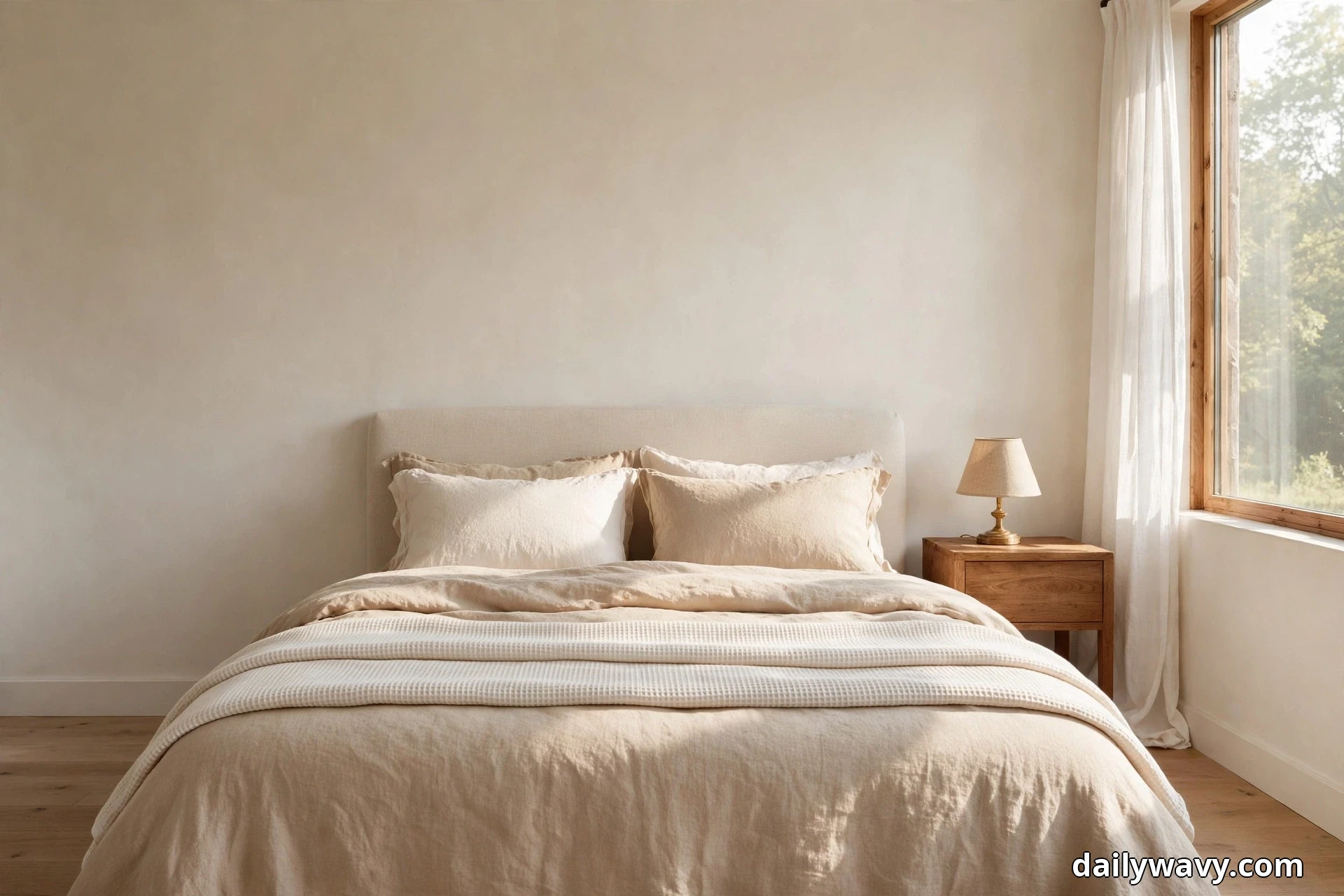
Set a budget before you shop. A full neutral linen set, duvet cover, sheet set, two shams, from a mid-range maker typically runs $250 to $450 for a queen. Build it in stages if needed: start with the duvet cover and sheets, add the accent layers over time. The bed below shows every layer working together, and each idea that follows can be added one at a time.
1. A Light Waffle Blanket at the Foot
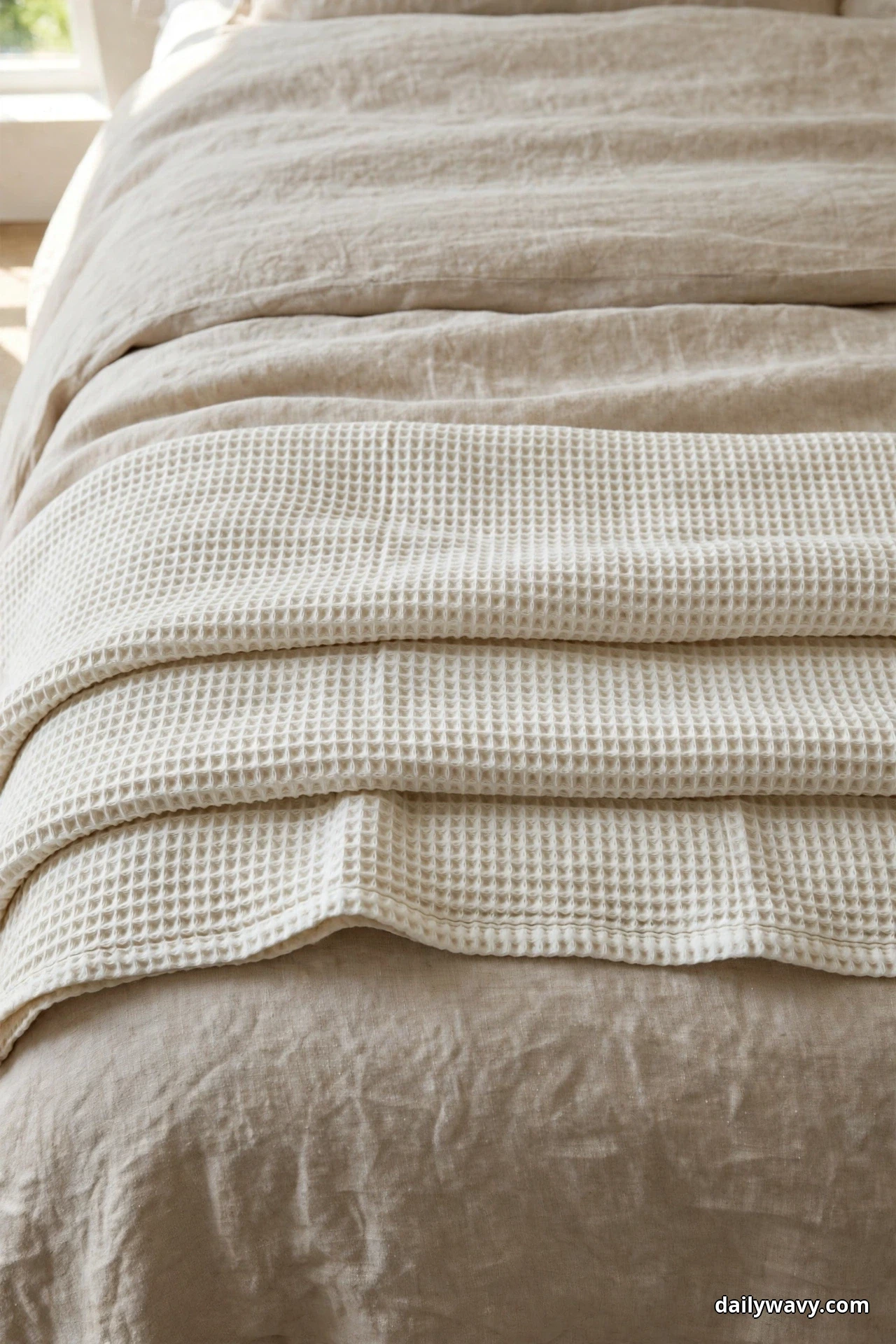
A waffle blanket folded across the foot of the bed is the fastest way to add texture without adding color. The honeycomb weave catches light and shadow, so even an ivory blanket on an ivory duvet reads as a deliberate layer rather than more of the same. Fold it in thirds lengthwise, then lay it so it covers the bottom third of the bed, letting one folded edge show.
Choose a blanket that contrasts in weave, not tone. If the duvet is smooth washed linen in natural flax, pick a waffle in warm white or pale oat. Cotton waffle blankets run $40 to $90 for a throw size, and linen waffle costs a bit more but drapes better. In summer, the blanket alone over the sheet is often enough; in winter it becomes the middle layer under the duvet. Shake it out rather than smoothing it flat. The slight unevenness is the point, and it photographs beautifully in morning light.
2. A Vintage Quilt Used as an Accent
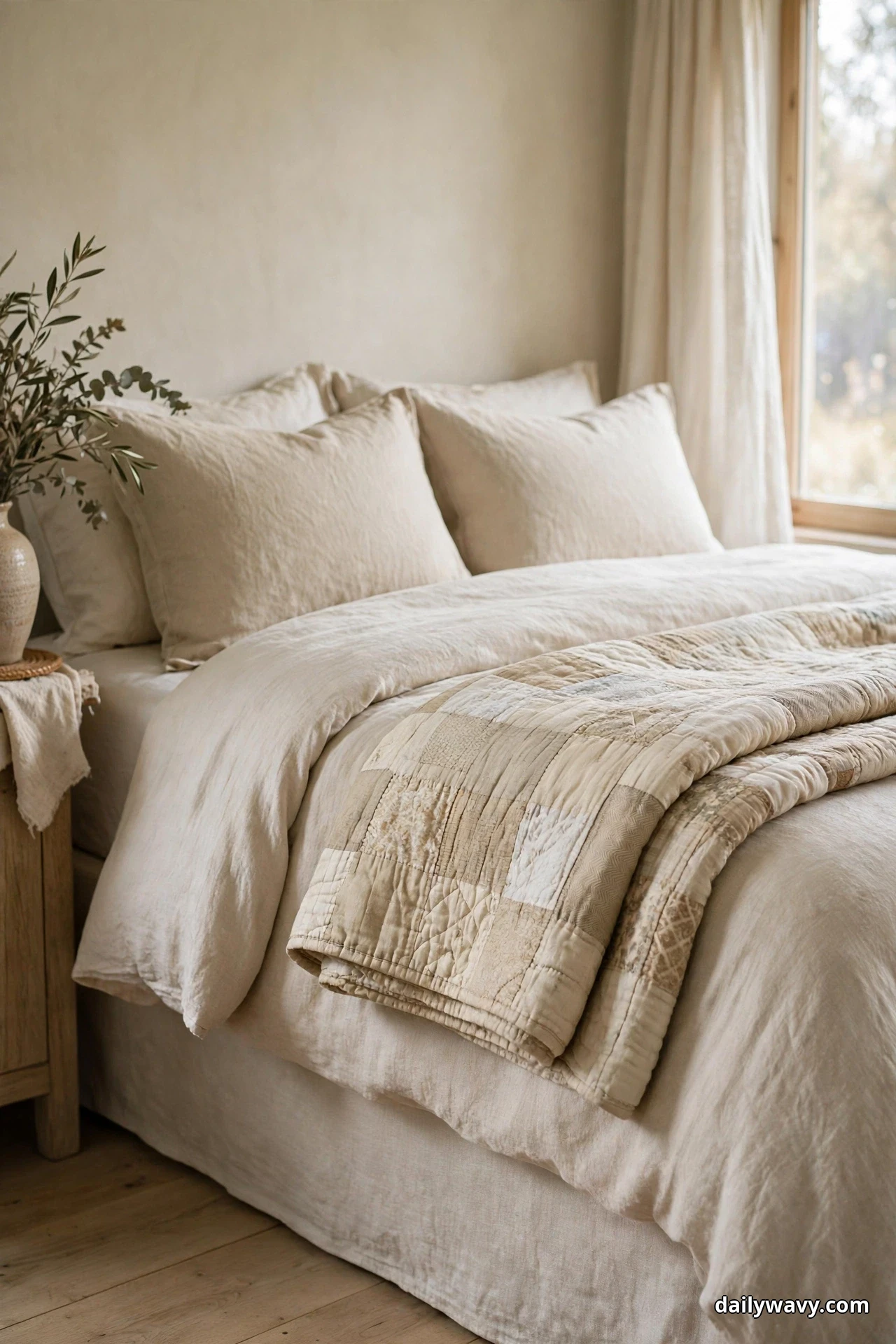
A vintage or vintage-style quilt brings history into a neutral bed without breaking the palette. Look for quilts in faded creams, soft taupes, or washed-out florals in beige and white. The patchwork pattern adds visual interest that plain linen cannot, and the slightly thinner profile folds crisply at the foot of the bed.
Fold the quilt in half or thirds and lay it across the lower third of the bed, offset slightly so it does not look too staged. The key is proportion: the quilt should read as an accent, not a second duvet. Real vintage quilts in good condition run $80 to $200 at flea markets and estate sales, but new quilts made to look vintage cost $60 to $120 and hold up better to regular washing. If the quilt has one bolder color, echo it once more in the room, a book spine on the nightstand or a single stem in a vase, so it feels intentional rather than accidental.
3. A Pair of Different-Size Cushions
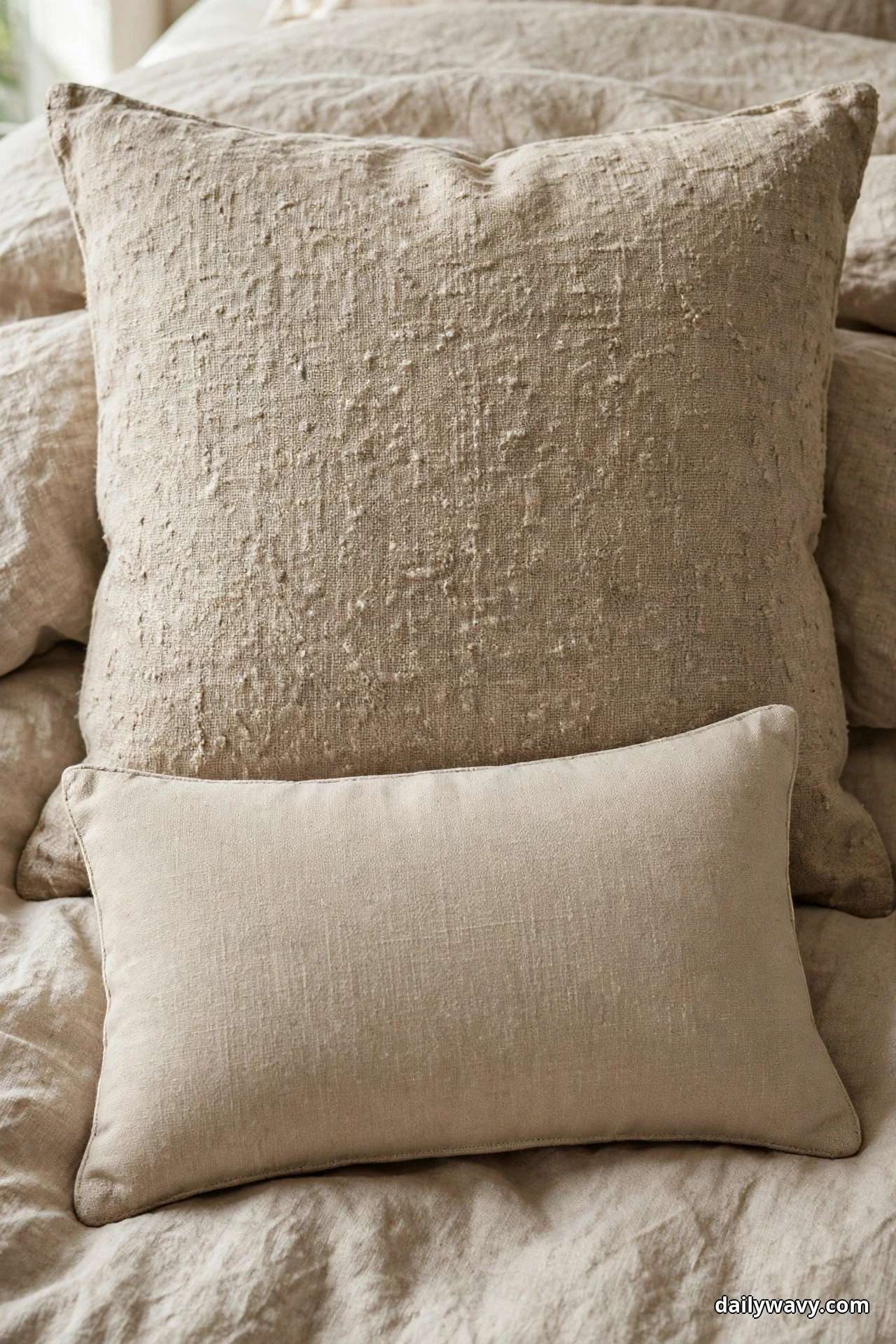
Cushions are where neutral bedding gets its shape. Use two sizes: a 20 by 20 inch square in front of the sleeping pillows, and a 14 by 20 inch lumbar in front of that. The size step-down creates depth, and the lumbar’s horizontal line balances the vertical stack behind it. Odd numbers look more relaxed than even ones, so two cushions plus the pillows behind reads just right.
Keep the fabrics in the neutral family but vary the texture. A slubby linen square paired with a smooth lumbar in the same oat tone gives contrast without color. Feather or feather-blend inserts are worth the extra $15 to $25 each because they hold a soft, lived-in shape that foam inserts never quite manage. Fluff them daily with a quick shake and a light chop down the center if you like the tailored dent, or leave them plump for a softer look. Rotate which cushion sits in front every few weeks so wear stays even.
4. A Small-Scale Print with a Plain Duvet
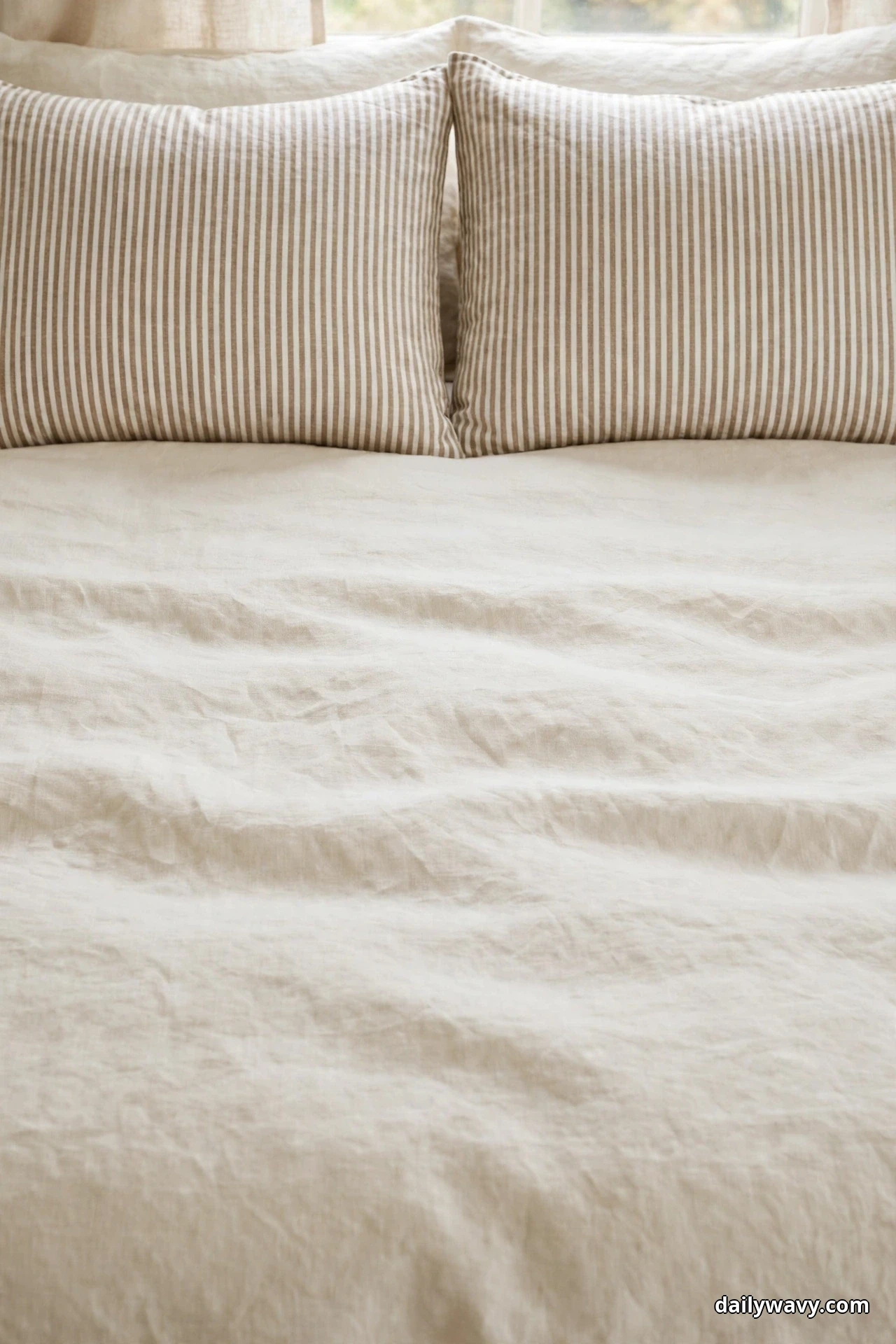
A plain duvet cover can feel flat on its own, and a small-scale print is the gentlest fix. Ticking stripes, mini checks, or tiny dot patterns in tone-on-tone neutrals add pattern at a whisper. Use the print on the shams only, keeping the duvet solid. That way the pattern frames the bed instead of covering it.
Scale matters more than motif. A stripe under half an inch wide or a check under an inch reads as texture from across the room and only reveals itself as pattern up close. Pair a striped sham with a solid lumbar in one of the stripe’s tones to tie the two together. This is also the easiest idea to test on a budget: two printed shams cost $30 to $60, and if you tire of the pattern, the plain duvet underneath still works on its own. Wash printed linen inside out to keep the pattern crisp.
5. A Warm Wood Bedside Surface Nearby
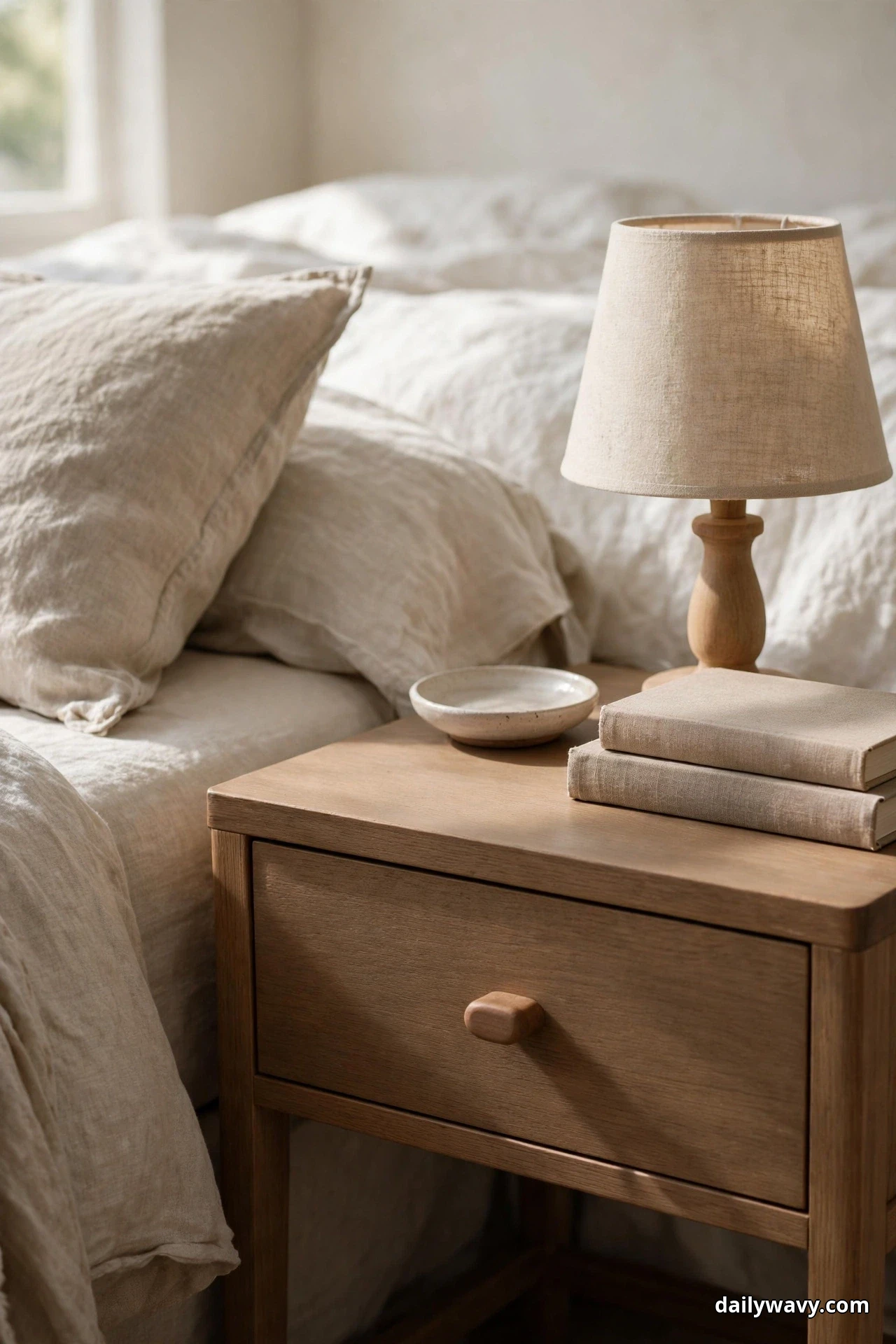
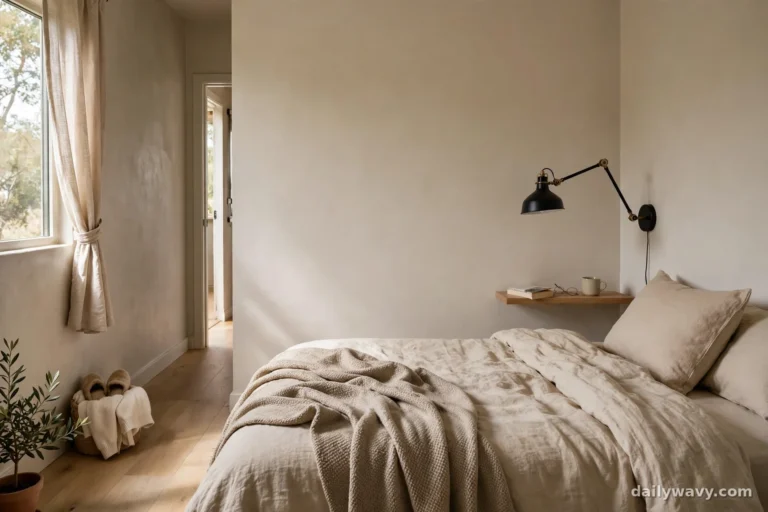
Bedding does not end at the mattress edge. A warm wood nightstand beside a neutral linen bed completes the picture because the wood’s honey tones echo the warm undertones in flax and oat linen. Oak, ash, and walnut all work; the finish should be matte or satin, never high gloss, to stay in the same relaxed register as the bedding.
Style the surface with restraint: a small lamp with a linen shade, one stack of two or three books, and a single small object like a ceramic dish or a bud vase. Leave at least a third of the surface empty so it breathes. The nightstand top should sit roughly level with the top of the mattress, usually 24 to 28 inches high, so a lamp is easy to reach and the proportions feel right. If you are working with a small bedroom with a queen bed, a floating shelf in warm wood gives you the same material note without the footprint.
6. A Smooth Bedspread with One Textured Pillow
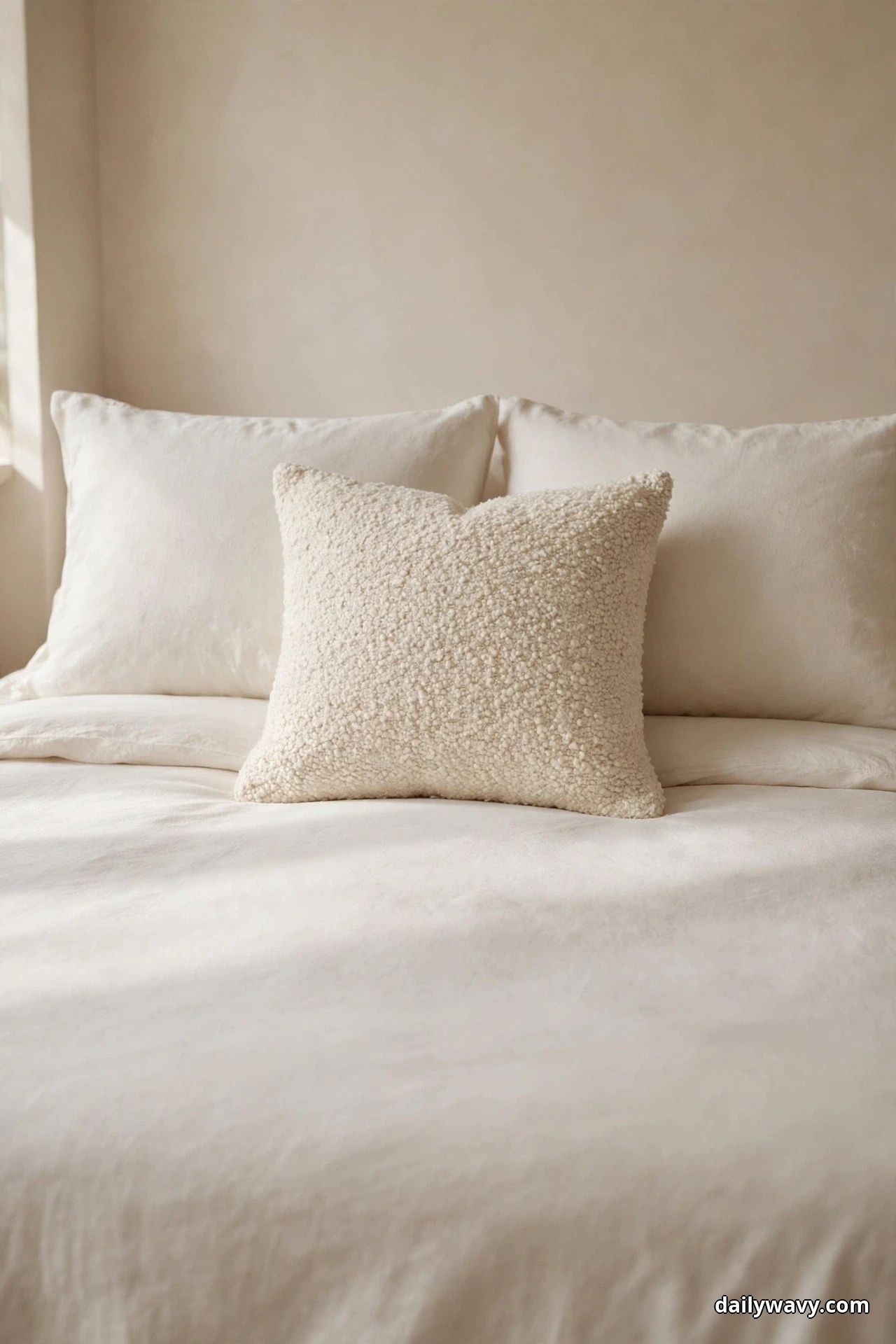
Restraint is a styling choice, and this idea proves it. Start with a smooth, simple bedspread in a single neutral, washed cotton percale or plain-weave linen in warm white. Then add exactly one textured pillow: nubby bouclé, a chunky knit, or a pillow with a raised dobby weave. One strong texture against a calm background draws the eye the way a single piece of art does on a blank wall.
Place the textured pillow centered in front of the sleeping pillows, or slightly off-center for a more casual feel. The pillow should be a different scale than everything else, a 20-inch square works when the sleeping pillows are standard, or a lumbar when the bed already has square shams. This approach suits people who dislike fussy beds: the daily routine is pull up the spread, plump one pillow, done. The single texture also makes seasonal swaps cheap. Change just that one pillow cover in autumn and the whole bed feels new.
7. A Subtle Contrast Piping Detail
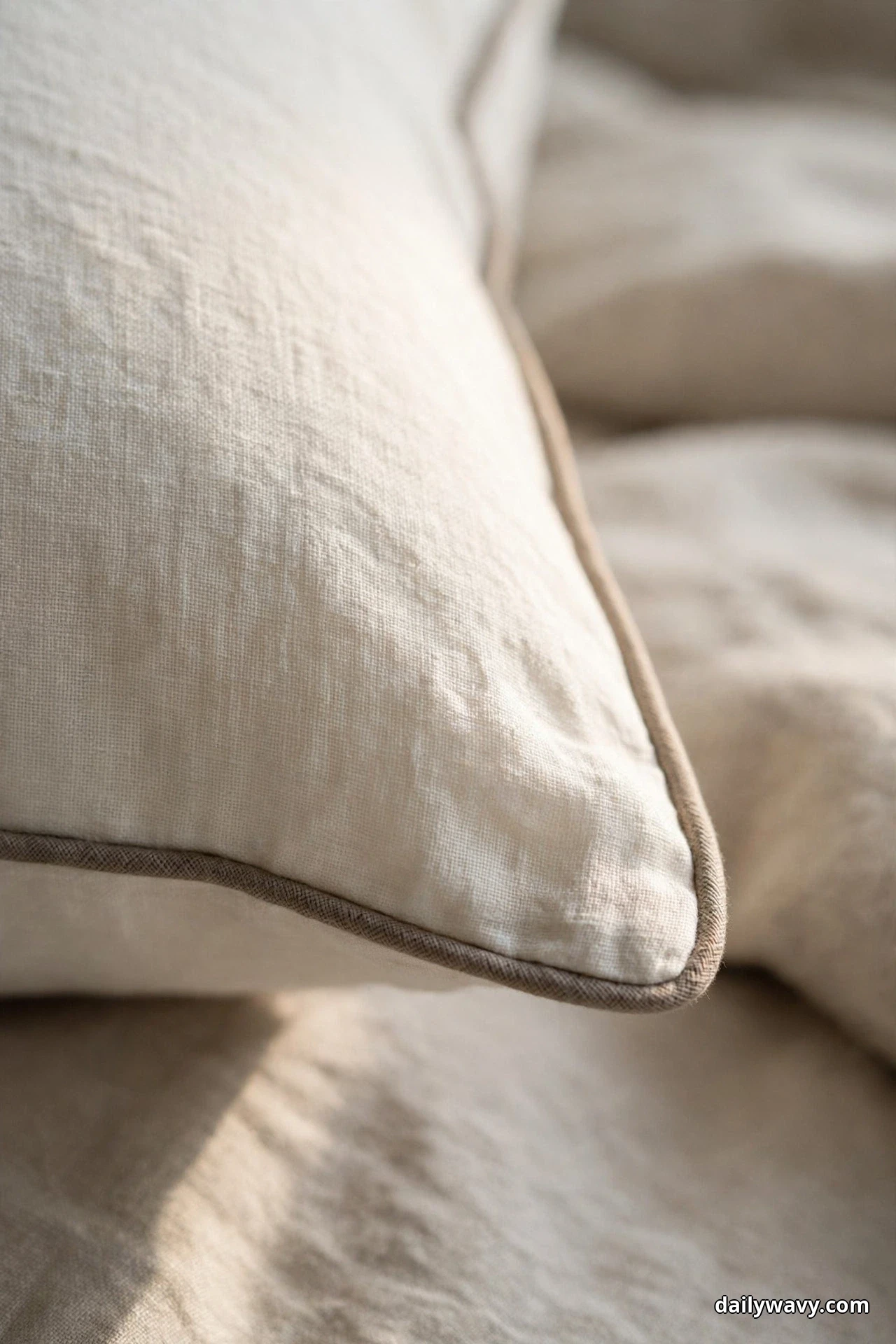
Piping is tailoring for bedding. A thin cord edge in a slightly darker tone, charcoal on ivory, taupe on warm white, espresso on oat, outlines each sham and gives the bed a finished, custom look. The contrast should be subtle enough that you notice the shape it creates rather than the color itself.
This detail works hardest on shams and cushions, where the piped edge catches light along the border. If you are buying new, look for “contrast flange” or “piped edge” in the product description; expect to pay $10 to $20 more per sham than a plain knife-edge version. If you sew, adding piping to existing shams is a genuinely simple project: packaged piping cord, a zipper foot, and an afternoon. Keep the piping tone within the neutral family. A black cord can look sharp against white linen, but against warm neutrals it tends to read as harsh rather than tailored.
8. A Breathable Sheet Set with a Light Cover
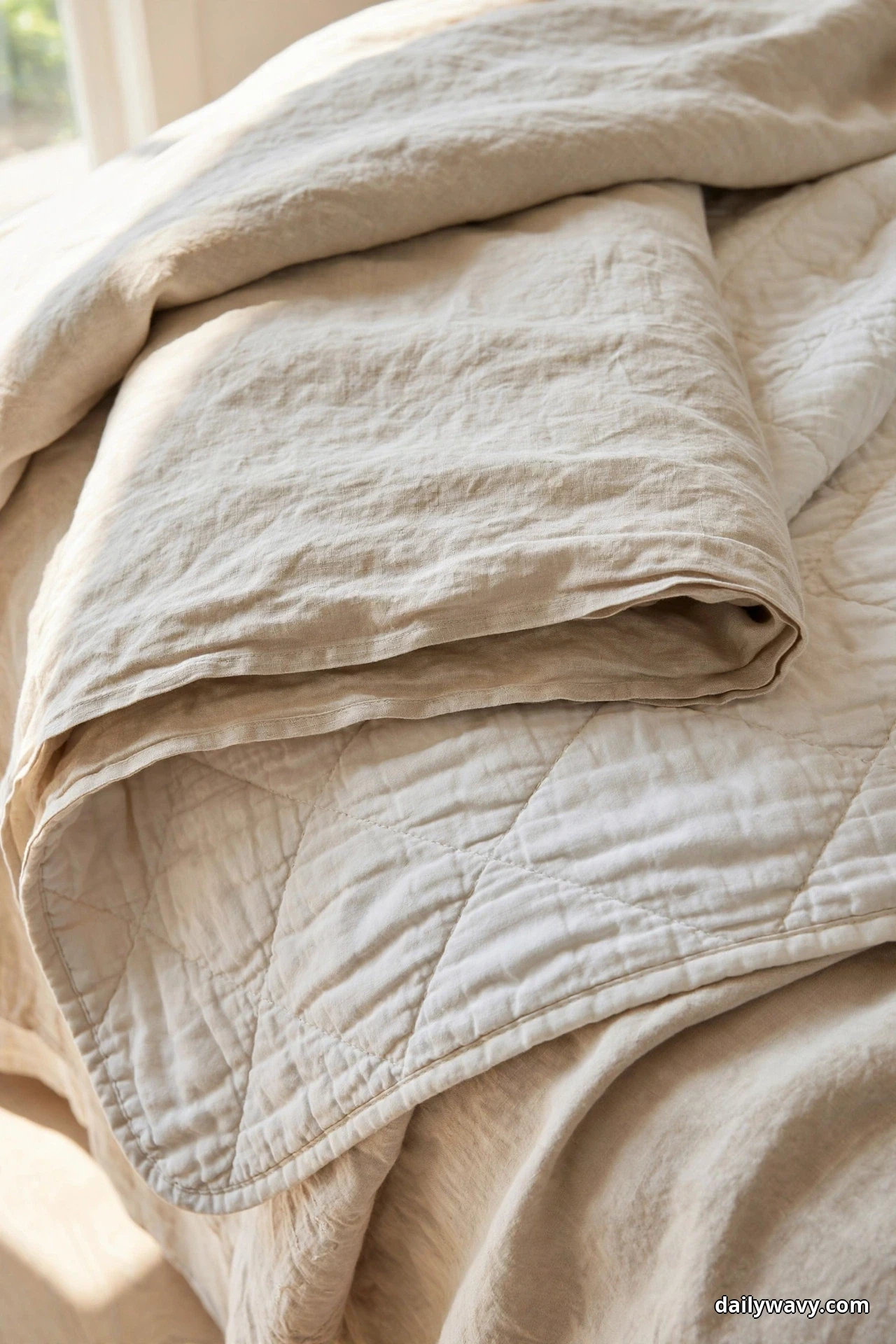
In warm months, heavy duvets get retired and the sheet set becomes the star. Washed linen sheets in a pale neutral, folded back over a light coverlet, look effortlessly inviting. The trick is the fold: turn the top sheet and coverlet back together about 12 to 18 inches to reveal the sheet underneath, creating a band of slightly different tone and texture across the bed.
Linen sheets sleep cooler than cotton because the fibers wick moisture and allow airflow, which is why they feel comfortable even on warm nights. A queen linen sheet set runs $150 to $300; buy the best you can afford since sheets touch skin every night. Wash them weekly in cool water and expect them to soften for months. The light cover, a cotton matelassé or thin linen coverlet, adds just enough weight for cool evenings and gives the bed a finished top edge when the duvet is in storage.
9. A Folded Quilt Across the Lower Third
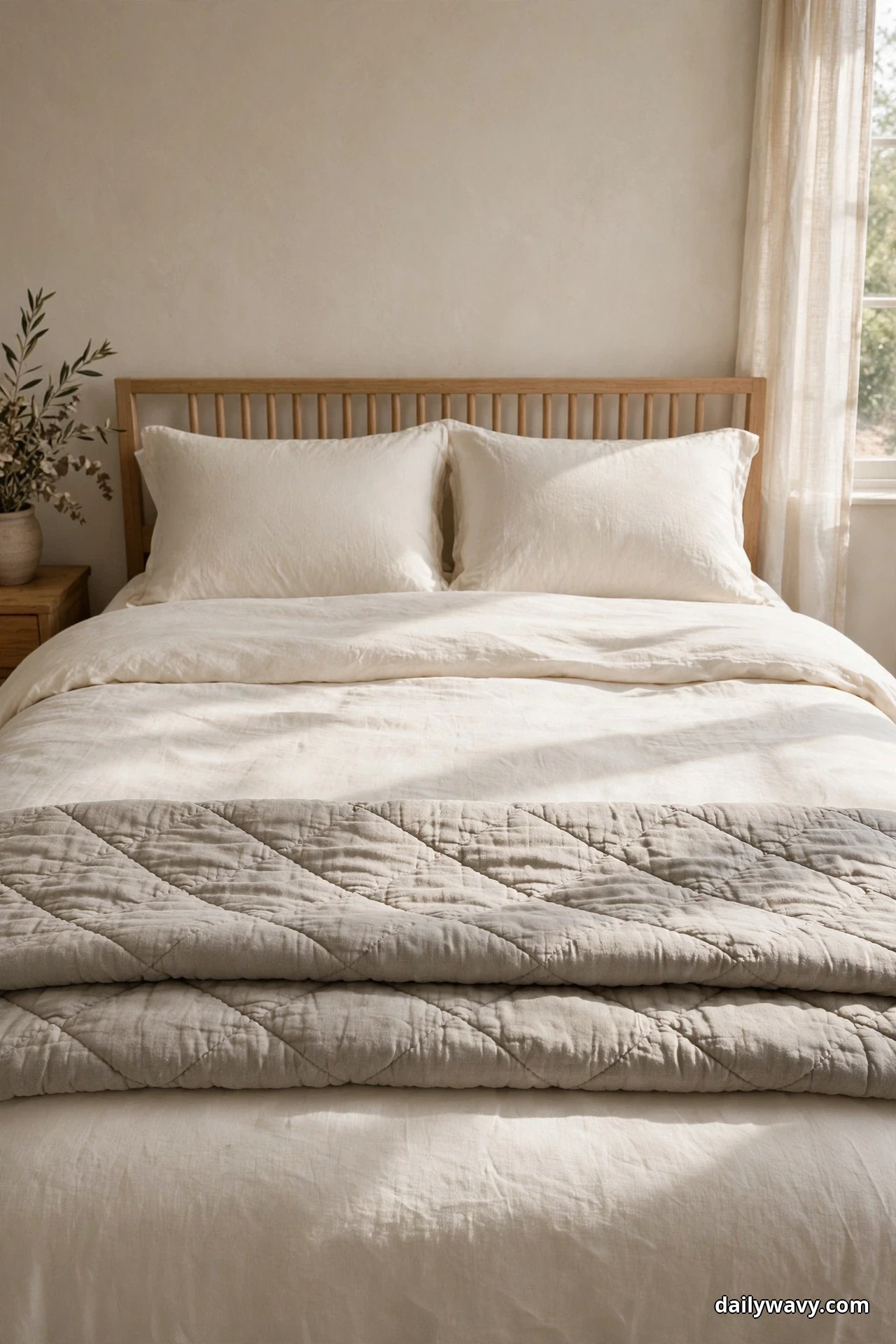
There is a classic hotel move that works just as well at home: fold a quilt or coverlet across the lower third of the bed. Fold it in half lengthwise, then lay it so its top edge lands about two-thirds of the way down the mattress. The doubled layer adds visible weight and a clean horizontal line that anchors the whole composition.
This works best with a quilt that differs slightly from the duvet, a shade deeper or lighter, or with a different weave. A stone-colored quilt over an ivory duvet, or a waffle coverlet over smooth linen, gives you the layered look in one motion. Each morning, making the bed means pulling up the duvet and laying the folded quilt back in place, a thirty-second routine. For households where the bed gets used as a daytime sofa, this folded layer also takes the brunt of the wear, protecting the duvet underneath and washing more easily than a full duvet cover.
10. Two Sleeping Pillows Behind Smaller Cushions
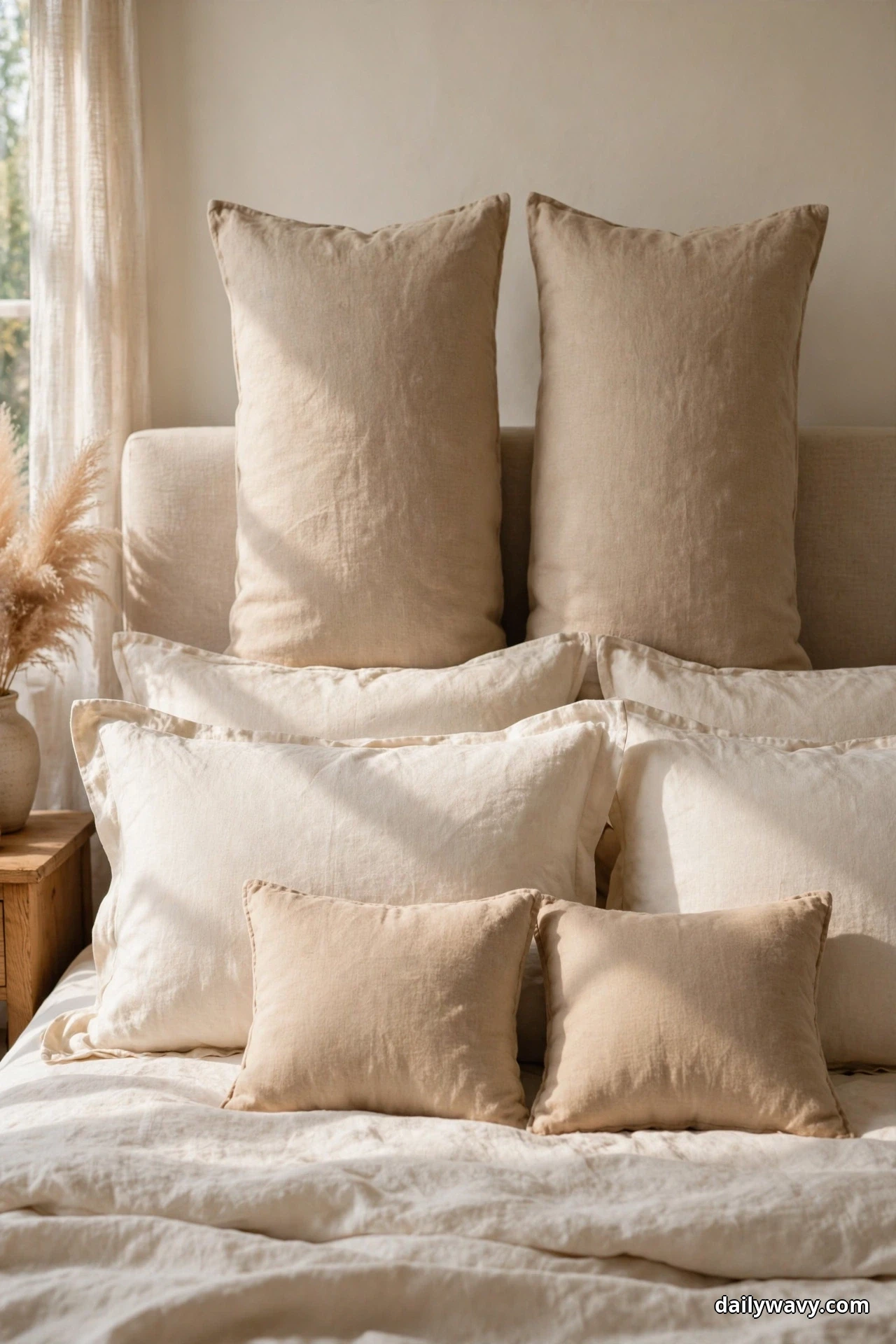
Pillow layering has a simple order that always works: sleeping pillows upright against the headboard, then Euro shams or standard shams, then smaller cushions in front. The back-to-front size step-down, large to small, creates the depth that makes a styled bed look plush rather than flat. Two sleeping pillows form the back row on a queen or king; on a twin, one is enough.
Stand the sleeping pillows upright rather than laying them flat. They should lean at a slight angle, propped by the pillows in front of them, with their top edges roughly even. Pillow protectors under the shams keep everything cleaner longer and add a bit of loft. This arrangement takes under a minute each morning: stack, lean, place cushions. If the bed sits against a wall with no headboard, the upright back row still gives the visual height a headboard would, especially when the pillowcases are a crisp warm white against softer neutral layers.
11. A Plain Throw in a Contrasting Texture
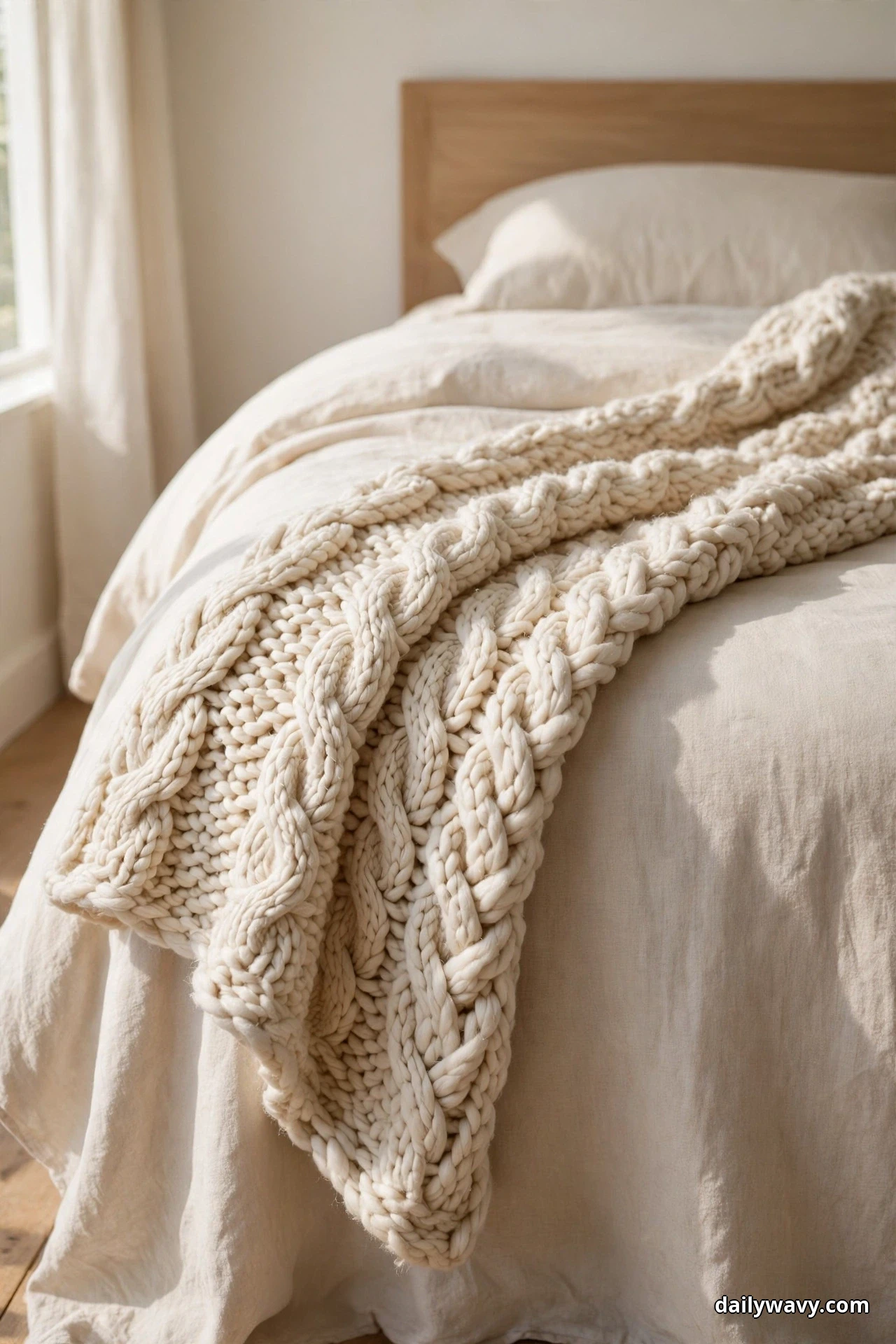
When every layer is smooth linen, one contrasting texture wakes the bed up. A chunky knit throw in cream or oatmeal, draped diagonally across one corner, adds the kind of tactile contrast that makes people want to touch the bed. The diagonal drape matters: a throw laid straight across the foot looks placed, while one tossed at an angle looks lived in.
Choose a throw with real weight, at least 3 to 4 pounds for a proper drape. Merino and wool-blend knits drape best but need gentle care; cotton chunky knits are washable and cost $50 to $100. Drape it so about a third hangs over the side of the bed, letting the fringe or edge show. This is also the layer guests actually use on chilly evenings, so keep it within easy reach rather than folded decoratively out of the way. One contrasting throw is enough; two starts to look like a textile shop display.
12. A Subtle Stripe Mixed with a Solid Fabric
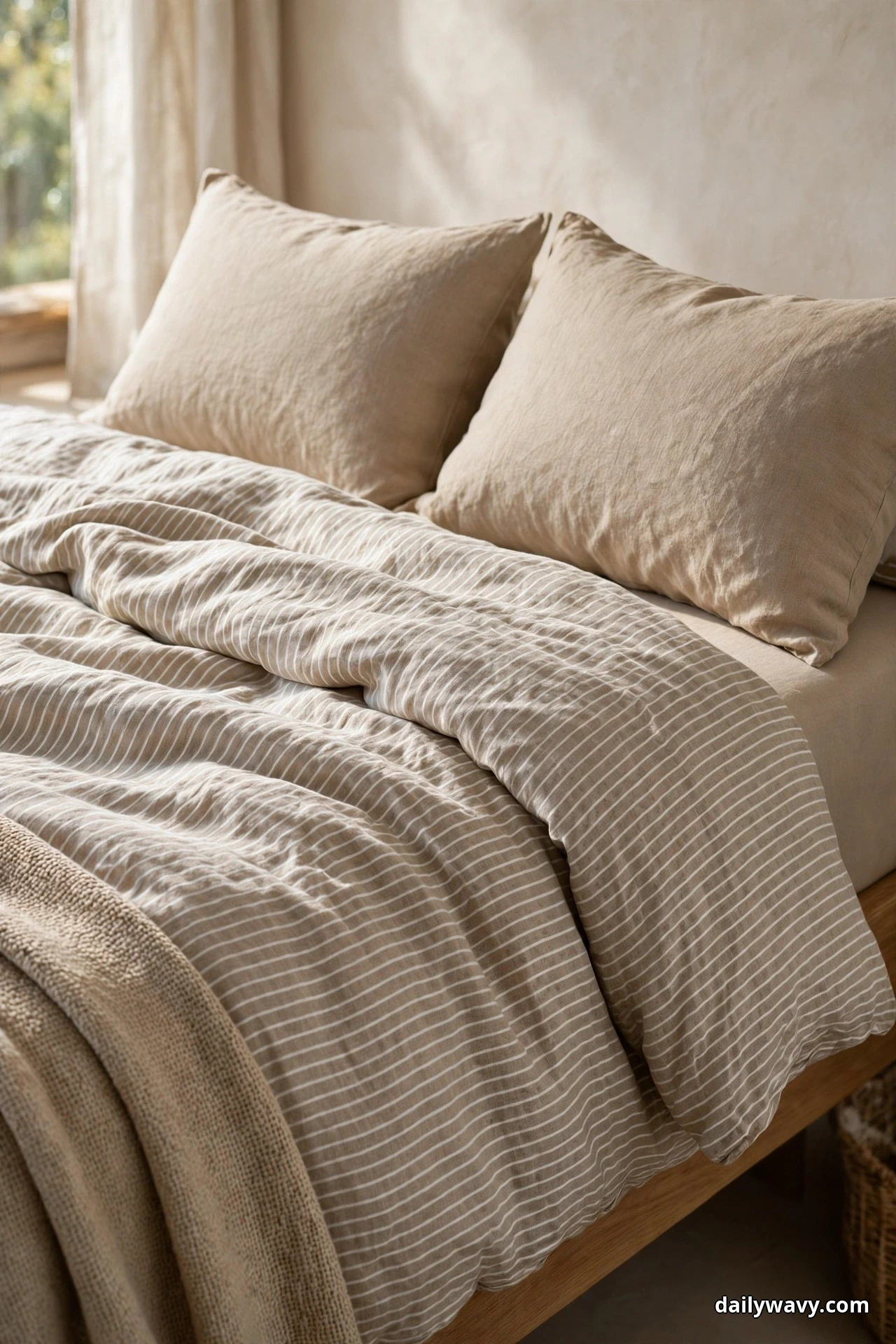
Mixing pattern with solid is easier than mixing two patterns, and a subtle stripe is the safest pattern to start with. A narrow ticking stripe or pinstripe duvet cover in natural and white, paired with solid shams in one of the stripe’s tones, gives the bed movement without busyness. The stripe reads as texture from a distance and reveals itself only on closer look.
The rule for scale mixing: pair one small-scale pattern with solids, never two competing patterns. If the duvet is striped, keep shams, cushions, and throws solid. Pull one tone from the stripe for the solid pieces, usually the darker thread color, so everything connects. Striped linen duvet covers run $120 to $220 for a queen. Because the pattern is woven rather than printed, it will not fade in the wash, and the stripes actually help hide the wrinkles that are part of linen’s charm.
13. A Softly Rumpled Linen Top Layer
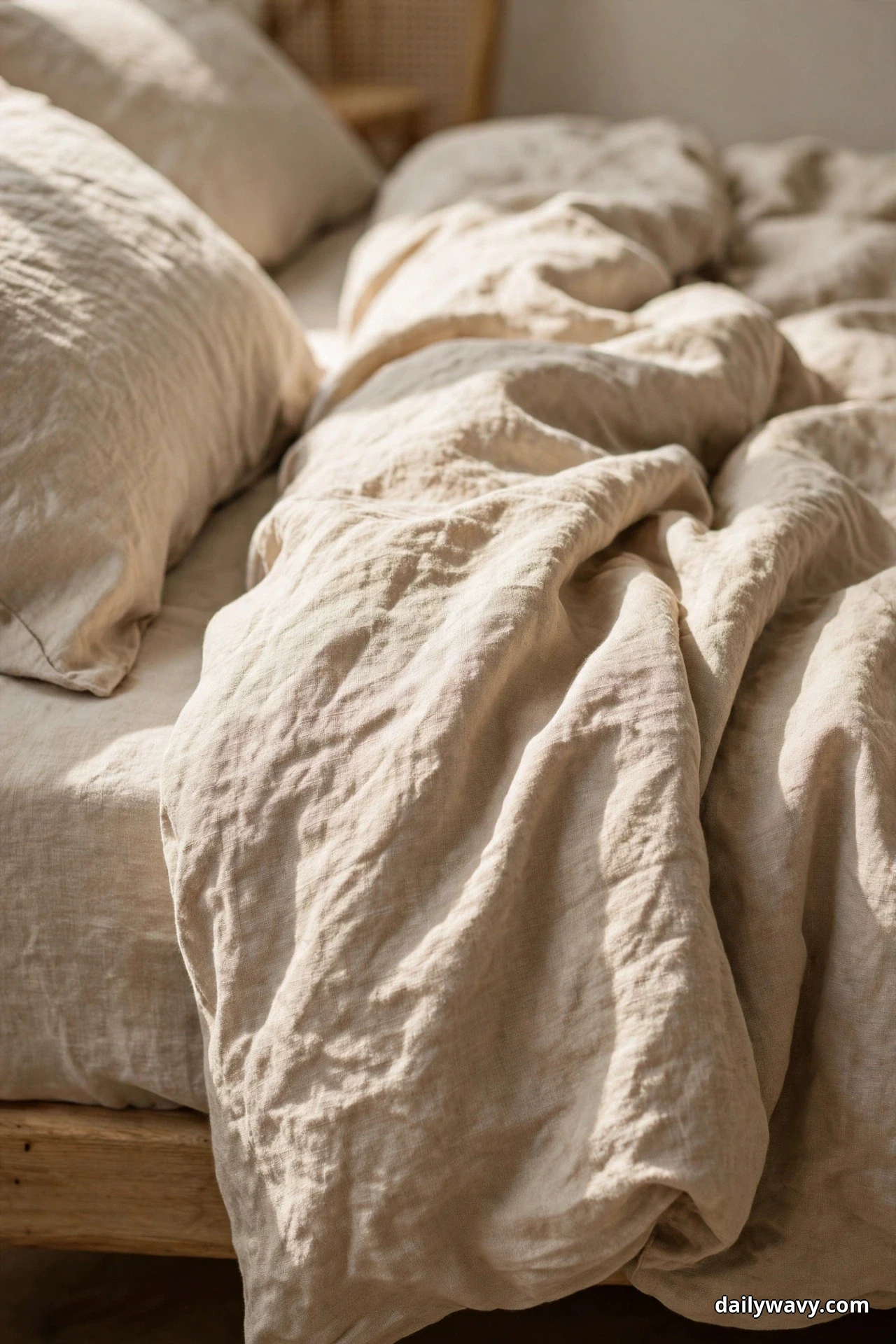
The final idea is less a styling move than permission: let the linen rumple. Perfectly smooth linen looks wrong, like a starched shirt at a picnic. The softly wrinkled top layer is the whole point of choosing linen, and trying to press it flat fights the fabric’s nature and your own time.
Get the look honestly. Wash the duvet cover and shams, tumble on low until just damp, then put them on the bed and smooth them with your hands. Sleep in it. Sit on it with coffee. The lived-in creases that develop over a few days are the finish no iron can fake. If guests are coming and you want a touch more polish, a handheld steamer on the shams takes two minutes and keeps the relaxed character. This approach also saves real effort: a bed styled to look softly rumpled takes half the time of one styled to look crisp, and it looks better for it.
Linen Bedding Questions, Answered
How do I keep neutral bedding from looking boring?
Vary texture, not color. When the palette stays in warm whites and oats, the eye reads weave differences, waffle against slub, knit against percale, as richness. Add one natural material nearby, warm wood or a jute rug, so the neutrals have something to play against. A bed with five textures in three close tones never looks boring.
Is linen bedding worth the higher price?
For most people, yes, if you buy once and keep it for years. Good European flax linen can last for many years with regular washing, while cotton bedding typically wears thin and needs replacing much sooner. Divide a $300 linen duvet cover over years of use and it costs less per year than replacing cheaper covers. It also softens with every wash instead of wearing thin.
How often should I wash linen bedding?
Sheets weekly, duvet covers every two to four weeks, shams monthly unless they show soil. Linen releases dirt more easily than cotton, so it washes clean in cool water with mild detergent. Skip bleach and fabric softener; both break down flax fibers over time. Line drying in sunlight naturally brightens whites, though it can fade darker neutrals slightly.
My bedroom is small. Will all these layers overwhelm it?
Not if you keep the palette light. Pale neutrals recede visually, so a layered ivory bed actually makes a small room feel larger than a single dark coverlet would. Choose two or three ideas rather than all thirteen: the folded quilt at the foot, the layered pillows, and the rumpled top layer give you the look without bulk. Our guide to small bedroom with a queen bed has more space-specific tricks.
Can I mix linen with cotton bedding?
Absolutely, and most beautiful neutral beds do. Linen duvet covers pair well with cotton percale sheets, which feel crisper against skin, and cotton quilts layer neatly over linen. Keep the tones in the same warm family so the different fibers read as intentional texture rather than a mismatch. Wash mixed-fiber beds in cool water to protect the cotton.
What about pets on a linen bed?
Linen hides pet hair better than most fabrics because the slubby texture disguises it, and hair shakes off washed linen easily. Keep a washable throw where pets actually sleep to protect the duvet, and choose darker neutrals like natural flax or stone for the top layer if shedding is heavy. A lint roller by the nightstand handles the daily reality.
The Takeaway
Neutral linen bedding works because it asks so little and gives so much. Pick three close tones, vary the textures, layer back to front, and let the fabric do what it wants to do. Start with the duvet cover and sheets, add one accent layer at a time, and stop when the bed makes you exhale. That exhale is the whole test.
If the bedroom around the bed needs the same calm treatment, the Home and Decor collection has the full library, and small-space ideas like small entryway decor and narrow living room layouts carry the same warm-neutral thinking into the rest of the house. Pin the ideas you love, try one this weekend, and let the wrinkles be.