10 Laundry Closet Organization Ideas for a More Useful Laundry Space
Laundry closets ask a lot from a small space. Two humming appliances, a bag of detergent, the hamper that always…
Laundry closets ask a lot from a small space. Two humming appliances, a bag of detergent, the hamper that always seems full, and stray socks from every load all land in a few square feet. This guide walks through ten organization ideas that make a laundry closet easier to use, each with real measurements, materials, and steps you can actually build or buy this weekend. Everything respects the things that matter in a laundry space: full appliance door swing, service clearances, ventilation, and safe storage for detergent. Pick the ideas that fit your closet, and laundry day gets noticeably smoother.
Jump to an idea
- A fold-flat drying solution
- A narrow rolling caddy
- A washable runner clear of doors
- A wall hook for light tools
- A compact folding surface
- A lidded hamper with ventilation
- A small jar for loose pocket items
- A closed container for detergent
- A shelf above a reachable work zone
- A vertical organizer on an unused wall
Read your closet before you buy anything
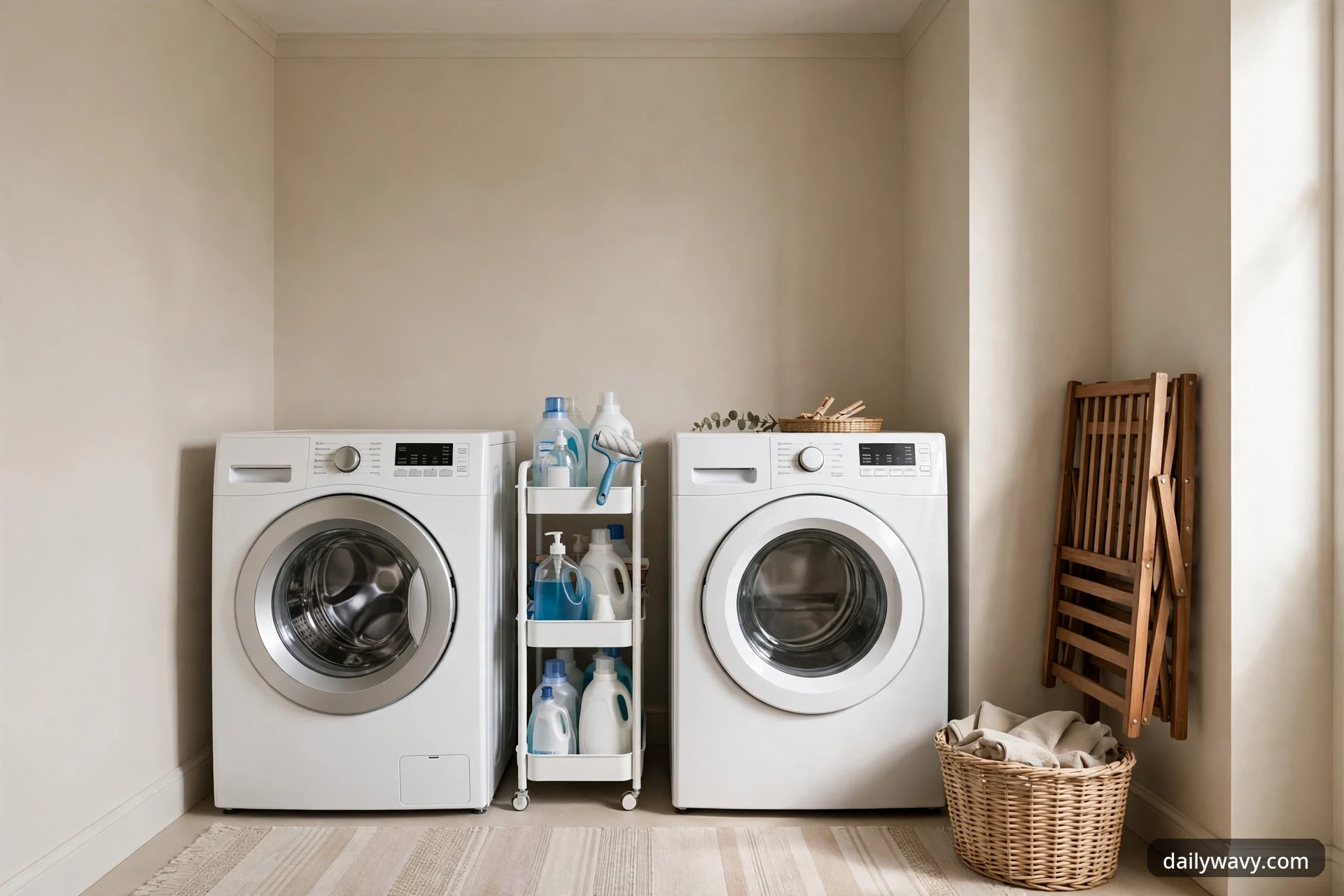
Before any of these ideas go in, spend ten minutes measuring. Open both appliance doors fully and mark how far they swing into the room; every placement below stays clear of that arc. Note the gap between the washer and the side wall, the width of the wall above the machines, and the depth of the floor space in front of the closet. Leave at least 1 inch of side clearance and 4 to 6 inches behind each appliance for hoses and ventilation, and never block a dryer vent or wall vent with storage. If you organize the way we suggest in our small pantry organization guide, the same principle applies here: measure the space first, then choose containers that fit it, not the other way around.
1. A fold-flat drying solution

Delicates and hand-wash items need a place to air dry, and a laundry closet usually has exactly one usable wall for it. An accordion-style wall-mounted drying rack solves this by folding completely flat against the wall when you are done, taking up about 3 inches of depth instead of the 18 inches a freestanding rack needs.
What to measure: a wall section at least 24 inches wide and 24 inches tall, on the closet side wall or the back wall above the machines, with clearance so the open rack does not hit an open appliance door. Materials: a wood or bamboo accordion rack (24 by 24 inches is standard), two mounting screws, and wall anchors if you cannot hit a stud. Placement: mount it at about 48 inches from the floor, high enough for shirts to hang without touching anything below but low enough to reach without a step stool. Approximate effort: 30 minutes with a level and drill. A realistic lower-cost alternative: hang a sturdy over-the-door drying rack on the back of the closet door and skip the wall mounting entirely, which also keeps this renter friendly.
2. A narrow rolling caddy

Many laundry closets have a dead gap of 4 to 6 inches between the washer and the wall. A slim rolling caddy turns that dead space into three tiers of storage for detergent bottles, stain spray, dryer sheets, and clothespins.
What to measure: the width of the gap (most slim carts fit 5 to 6 inches, so gaps under 5 inches suit the bin alternative below instead), the depth from front to back so the cart does not stick out past the appliance front, and the height of the space if you are sliding it under a shelf. Materials: a 3-tier plastic or metal slim rolling cart, roughly 40 inches tall. Placement: roll it into the gap with the handle facing front so it pulls straight out; keep the heaviest bottles on the bottom tier for stability. Approximate effort: 10 minutes of assembly. A realistic lower-cost alternative: line up two stackable open bins on the floor of the gap instead, which achieves the same reach without the cart.
3. A washable runner clear of doors

A laundry closet floor takes abuse: damp socks, drips from the detergent jug, and dust from the dryer vent. A low-pile washable runner protects the floor and feels better underfoot, but only if it stays completely clear of the door swing so it never bunches or jams.
What to measure: the floor area in front of the machines, minus the door swing arc. For a standard bifold door that arc is roughly 24 inches; mark it with painter’s tape before measuring the rug zone. Materials: a low-pile machine-washable runner (common sizes are 2 by 6 feet) plus a thin rug pad to keep it from sliding on hard floors. Placement: center the runner in front of the machines, pulled 2 inches clear of the door track, with no part of it extending under an open appliance door. Approximate effort: 5 minutes. A realistic lower-cost alternative: lay two matching bath mats side by side, which wash easily and cost very little.
4. A wall hook for light tools

Lint rollers, a small handheld steamer, a dustpan, and the bag of clothespins all vanish into the clutter of a laundry closet. A row of adhesive wall hooks on the interior side wall gives each light tool a visible home, and everything comes off without a mark when your lease ends.
What to measure: a strip of side wall at least 18 inches wide at a comfortable reach height, 48 to 60 inches from the floor. Check that hooks do not sit where an open door would strike them. Materials: three or four adhesive hooks rated for at least 3 pounds each; use two hooks per heavier item like a steamer. Placement: space hooks 6 inches apart along the wall, and let adhesive strips cure for 24 hours before hanging anything heavy. Approximate effort: 10 minutes. A realistic lower-cost alternative: an over-the-door hook rail that hooks over the top of the closet door with no adhesive at all.
5. A compact folding surface

Folding laundry on top of a running washer works until the spin cycle walks your shirt pile off the edge. A fold-down wall shelf above the machines gives you a dedicated, stable folding surface that disappears when you need the space for moving baskets through.
What to measure: the wall width between the side walls or cabinets above the machines, and a folded-down surface height around 36 to 38 inches for comfortable folding, clear of the machine tops. The shelf should be 12 to 14 inches deep: deep enough for a folded shirt stack, shallow enough to clear your head when standing close. Materials: a fold-down bracket shelf kit (30 by 14 inches is common), screws into studs or heavy-duty wall anchors, and a small level. Placement: center it on the back wall above the machines, leaving enough clearance to load and unload freely, and confirming it clears the washer lid and door swing before you drill. Approximate effort: about 1 hour. A realistic lower-cost alternative: keep a small folding tray table in the corner and set it up only on laundry day.
6. A lidded hamper with ventilation

An open pile of dirty laundry in a small closet goes stale fast. A lidded hamper with mesh or slatted ventilation keeps odors contained while letting air circulate, which matters in a warm closet next to a dryer.
What to measure: a floor footprint of about 18 by 24 inches beside the machines, with at least 2 inches of clearance from the appliance door swing. Measure the lid height too, so it fits under your shelf if you have one above. Materials: a canvas or bamboo hamper with mesh side panels and a lid, roughly 20 gallons. Placement: set it on the side opposite the dryer vent and away from any wall vent; never stack anything on top of the lid that would block airflow. Approximate effort: 5 minutes out of the box. A realistic lower-cost alternative: two collapsible laundry baskets, one for lights and one for darks, which you can hang on the wall empty when not in use.
7. A small jar for loose pocket items
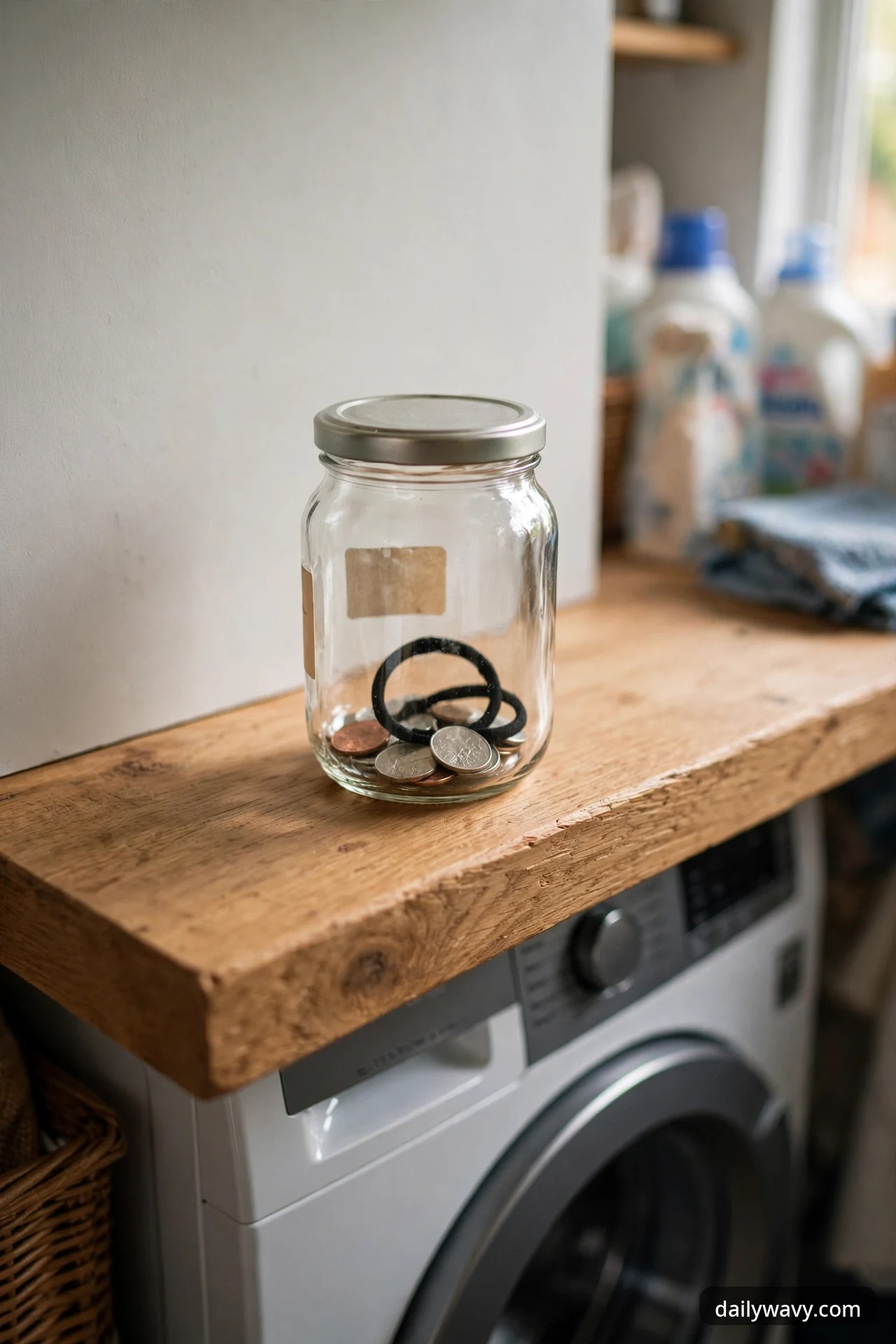
Every laundry day surfaces the same treasures: coins, hair ties, lip balm, a single toy brick, someone’s earbud. A small lidded jar on the shelf above the machines collects these pocket items in one place, and checking the jar becomes a quick habit instead of a lost-and-found hunt.
What to measure: a stable spot at least 4 inches deep on your shelf or folding surface, within arm’s reach of where you empty pockets. Materials: a wide-mouth glass jar with a lid, 16 to 32 ounces, and a small label reading “pocket jar” so the whole household knows the rule. Placement: keep it near the front edge of the shelf where you will see it, and empty it once a month into a drawer or the trash. Approximate effort: 5 minutes. A realistic lower-cost alternative: a repurposed mason jar or a clean jam jar, which costs nothing and works just as well.
8. A closed container for detergent

Detergent jugs are bulky, and open bags of pods spill if they tip. A closed container keeps supplies tidy, dry, and out of reach of kids and pets. The safety rule here is simple and non-negotiable: detergent stays in its original packaging, or in a container that carries the original label information. Never transfer detergent into an unlabeled jar.
What to measure: the height of your detergent jug with its pump or cap, plus 2 inches of finger clearance above it. If you store it on a high shelf, make sure you can lift a full jug to that height comfortably. Materials: a lidded bin or open-front storage tote large enough to hold the jug and a box of pods, sized roughly 14 by 10 by 12 inches. Placement: on a high shelf or the top of a cabinet, out of reach of small children, away from the dryer’s heat. Keep a small measuring cup or the jug’s own cap beside it so you never guess at doses. Approximate effort: 10 minutes. A realistic lower-cost alternative: skip the bin and keep the original jug as-is, adding only a small basket for pod bags and dryer sheets beside it.
9. A shelf above a reachable work zone

The wall above the washer and dryer is usually one of the largest unused surfaces in a laundry closet. One solid wood shelf there holds folded towels, the detergent container, and the pocket jar, putting everyday supplies at eye level instead of on the floor.
What to measure: the full width between the side walls, and a mounting height where the bottom edge of the shelf sits 54 to 58 inches from the floor. That keeps supplies reachable for most adults while leaving room to load the washer below. Check that the shelf depth, 12 to 16 inches, does not interfere with the washer lid or door swing below. Materials: a 1-by-14 pine board cut to width (about 13 inches deep, inside the recommended range), two metal shelf brackets, screws into wall studs, or heavy-duty toggle bolts if no stud is available. Placement: across the back wall above the machines, centered, level it precisely so bottles do not slide. Approximate effort: 1 to 2 hours. A realistic lower-cost alternative: a pre-finished floating shelf board with hidden bracket hardware, which installs in about 20 minutes and holds lighter items well.
10. A vertical organizer on an unused wall

Most laundry closets have one wall strip, often 12 to 18 inches wide on a side wall, that holds nothing. A slim vertical organizer turns it into a home for spray bottles, folded rags, the iron, and spare hangers without taking up floor space.
What to measure: the width of the unused wall strip, the floor-to-ceiling height available, and whether the strip sits clear of the appliance door swing. Materials: a hanging fabric organizer with sturdy hooks, or a slim 8-inch-deep wall-mounted shelving unit with three to four tiers. Placement: hang or mount it so the bottom tier sits 4 inches above the floor for easy mopping underneath, and keep the heaviest items, like the iron, on the lowest tier, and let the iron cool and unplug it before you store it. For renters, choose a hanging version that hooks over the top of the closet door or uses adhesive hooks, so everything comes down without wall damage. Approximate effort: 30 minutes. A realistic lower-cost alternative: an over-the-door shoe organizer with clear pockets, repurposed for stain sticks, dryer sheets, and sewing kit.
Frequently asked questions
Will a shelf above the machines interfere with the washer lid?
Only if it is mounted too low or too deep. Keep the bottom of the shelf at least 54 inches from the floor and no deeper than 16 inches, and open the washer lid fully after installation to confirm it clears. Front-loaders avoid this problem entirely.
What can I use if my landlord forbids drilling?
Stick to the renter-reversible ideas here: the over-the-door drying rack, adhesive wall hooks, the rolling caddy, the washable runner, and a hanging organizer that hooks over the door. Every one of them comes down cleanly at move-out.
How do I keep ventilation clear with all this storage?
Treat vents as permanent no-storage zones. Keep at least 4 to 6 inches of clear space behind the appliances, never cover a wall vent or the dryer duct with bins or curtains, and choose ventilated hampers rather than sealed tubs so air keeps moving through the closet.
Is it safe to store detergent in a decorative container?
Only if the container carries the original label information. The safest approach is to keep detergent in its original jug or bag inside a larger closed bin, so the bin looks tidy while the original packaging, with its ingredients and warnings, stays intact.
What fits in a standard reach-in laundry closet?
Most reach-in closets are 5 to 6 feet wide with a bifold door. In that footprint, the narrow caddy, the shelf above the machines, the wall hooks, and the vertical organizer usually all fit together, while the fold-down drying surface and folding shelf compete for the same back wall, so pick one.
How much does it cost to organize a laundry closet this way?
If you buy the core pieces new, a slim cart, a shelf kit, hooks, a hamper, and a washable runner typically land between $80 and $150 total in USD. Using the lower-cost alternatives throughout can bring the total closer to $40, since jars, bath mats, and an over-the-door rack cost very little.
A closet that works harder than it looks
None of these ideas is complicated, and that is the point. A laundry closet works best when every item has a home that respects the machines around it: doors that swing fully open, vents that breathe, and detergent that stays safely contained. If you enjoyed this, our small bathroom storage guide applies the same measure-first approach to another tight space, and the Home & Decor category has more room-by-room ideas, including our small laundry room decor ideas for a full-sized room.
Start with the one idea that annoys you most. If it is the damp pile of delicates, mount the drying rack. If it is the cluttered floor, roll in the caddy. Ten ideas is a menu, not a mandate, and even two or three of them will make your next laundry day feel like the closet was designed for you.