20 Sage Green Bedding Styling Ideas with Layers and Texture
Sage green bedding has a way of calming a bedroom the moment you walk in. It is soft without being…
Sage green bedding has a way of calming a bedroom the moment you walk in. It is soft without being sweet, quiet without being dull, and it gets along with wood, white, brass, and almost every neutral you already own. The real trick is not the color itself but how you layer it: mixing fabrics, weights, and small pattern details so the bed looks considered but still invites you to climb in. This roundup gives you twenty complete styling ideas built around sage green, each with real layer sizes, fabric notes, and the small decision that makes the combination work.
Jump to an idea
- A subtle stripe mixed with a solid fabric
- A softly rumpled linen top layer
- A textured coverlet over smooth sheets
- A single lumbar cushion
- A blanket draped over one corner
- A duvet turned back to show the sheets
- A tonal pillow arrangement
- A woven bed-foot basket with a spare throw
- A darker fitted sheet peeking beneath
- A light waffle blanket at the foot
- A vintage quilt used as an accent
- A pair of different-size cushions
- A small-scale print with a plain duvet
- A warm wood bedside surface nearby
- A smooth bedspread with one textured pillow
- A subtle contrast piping detail
- A breathable sheet set with a light cover
- A folded quilt across the lower third
- Two sleeping pillows behind smaller cushions
- A plain throw in a contrasting texture
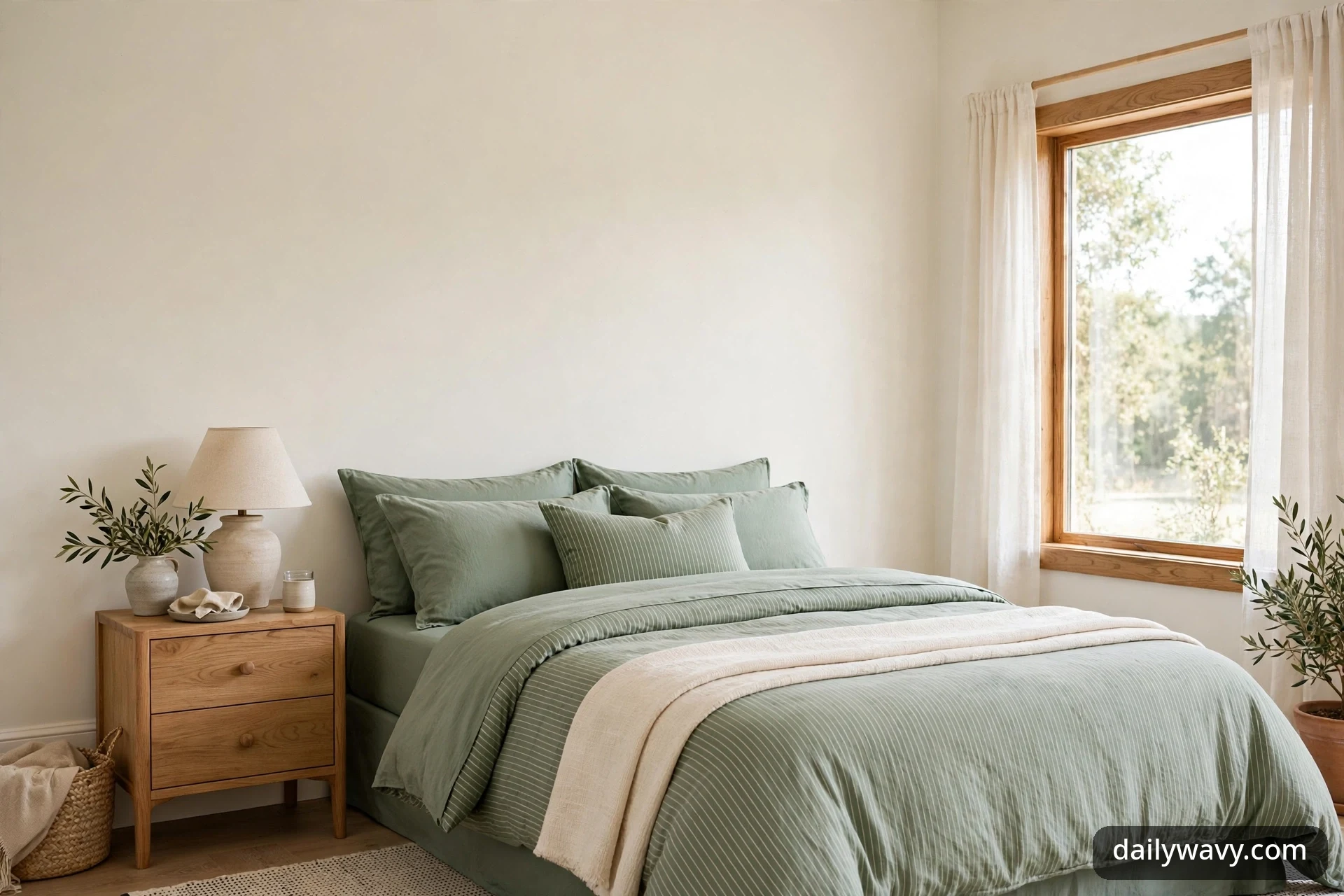
1. A subtle stripe mixed with a solid fabric
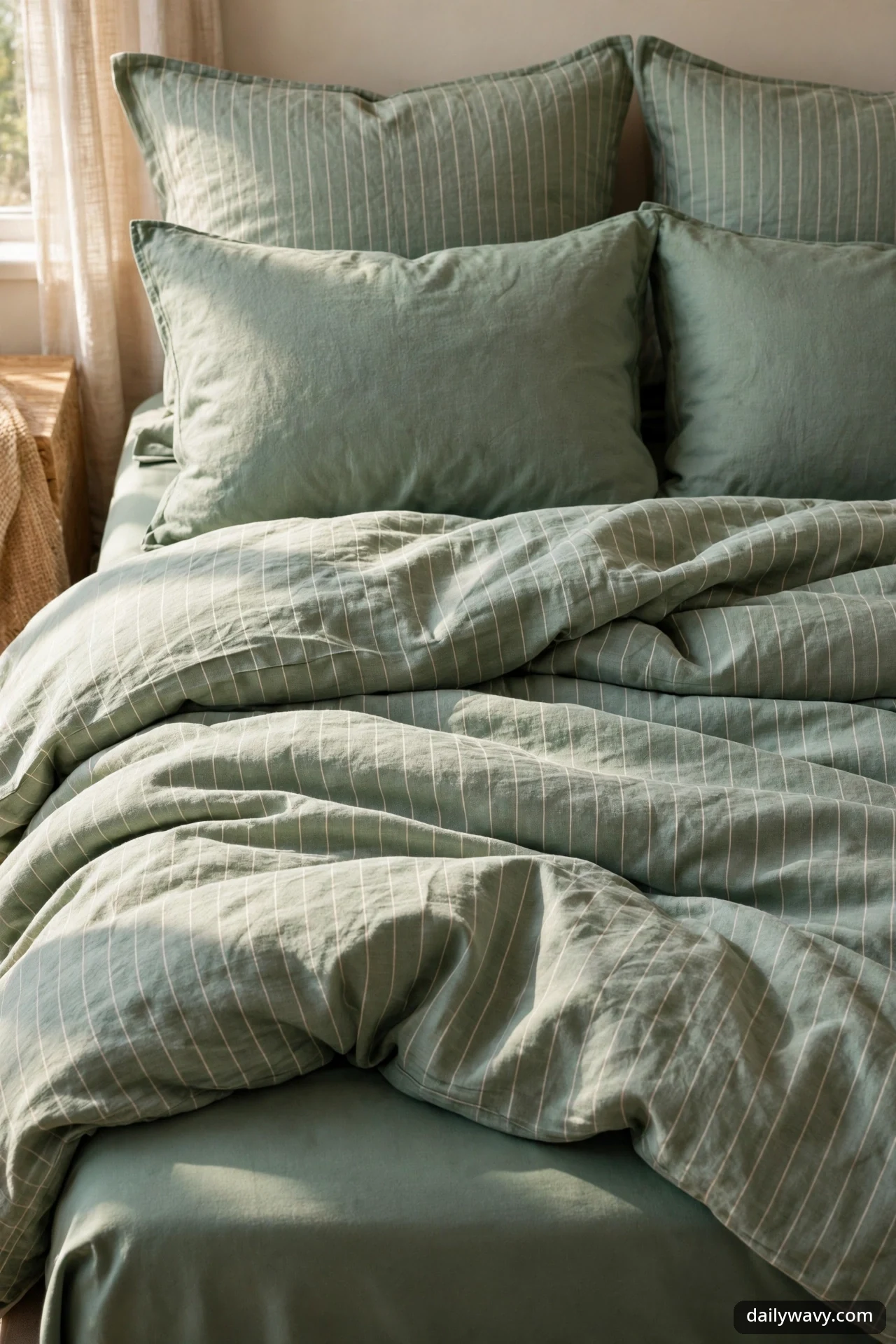
A thin stripe is the gentlest way to add pattern to a sage green bed. Pair a striped duvet cover with solid sage sheets and the bed gains movement without losing its calm. Choose a duvet cover in a soft cotton percale with stripes no wider than a pencil line, in white or warm ivory over the sage base. The solid fabric should be a shade deeper than the stripes so the pattern reads as texture from the doorway.
For a queen bed, use a duvet cover around 90 x 90 inches and standard shams (20 x 26 inches) in the matching stripe, then add two solid sage sleeping pillows behind them. Keep the stripe to the duvet and shams only. Everything else stays solid so the pattern has room to breathe.
This works best when the stripes are small. A wide ticking stripe can make the bed feel busy and pull attention away from the rest of the room. Wash the percale in cool water and skip the fabric softener if you want the stripes to stay crisp season after season.
2. A softly rumpled linen top layer
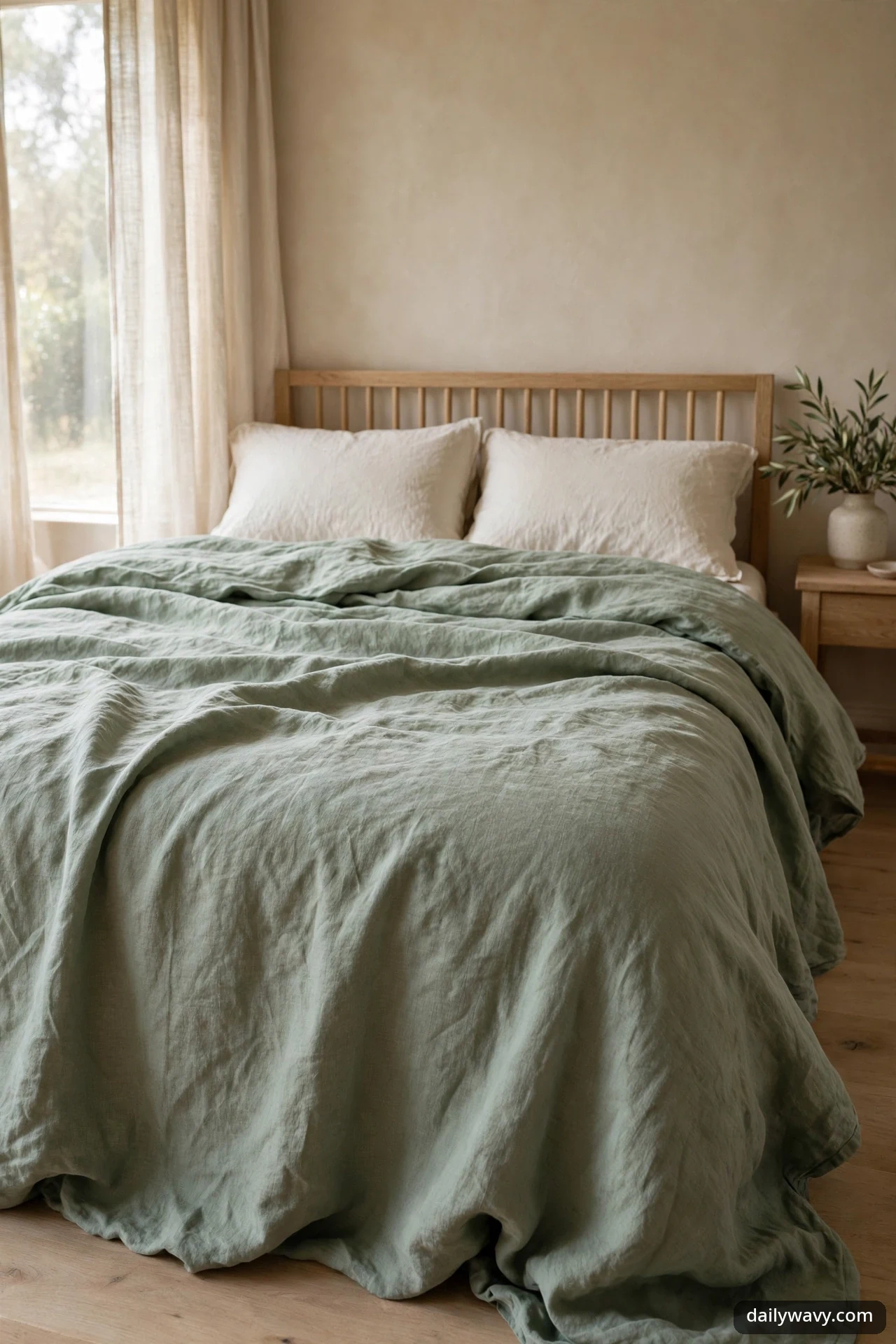
Rumpled linen is what makes a styled bed feel like a real bedroom instead of a showroom. A washed linen duvet cover in sage, left slightly wrinkled, gives the bed an easy lived-in look that actually gets better with washing. Linen is a natural fiber woven loosely, so it breathes well and feels cool against the skin, which makes it a strong pick for warm sleepers.
Buy the duvet cover one size up from your duvet insert if you like a relaxed, slightly oversized drape. On a queen bed, a king-size linen cover folded loosely will pool at the corners in a way that looks intentional rather than sloppy. Pull the cover down about a third of the way and let the top edge fold back on itself.
Do not iron it. The whole point is the soft creases. Shake the cover out of the dryer while it is still slightly damp, put it back on the bed, and smooth it by hand. The wrinkles will settle into a pattern that looks effortless, and each wash softens the fabric a little more.
3. A textured coverlet over smooth sheets
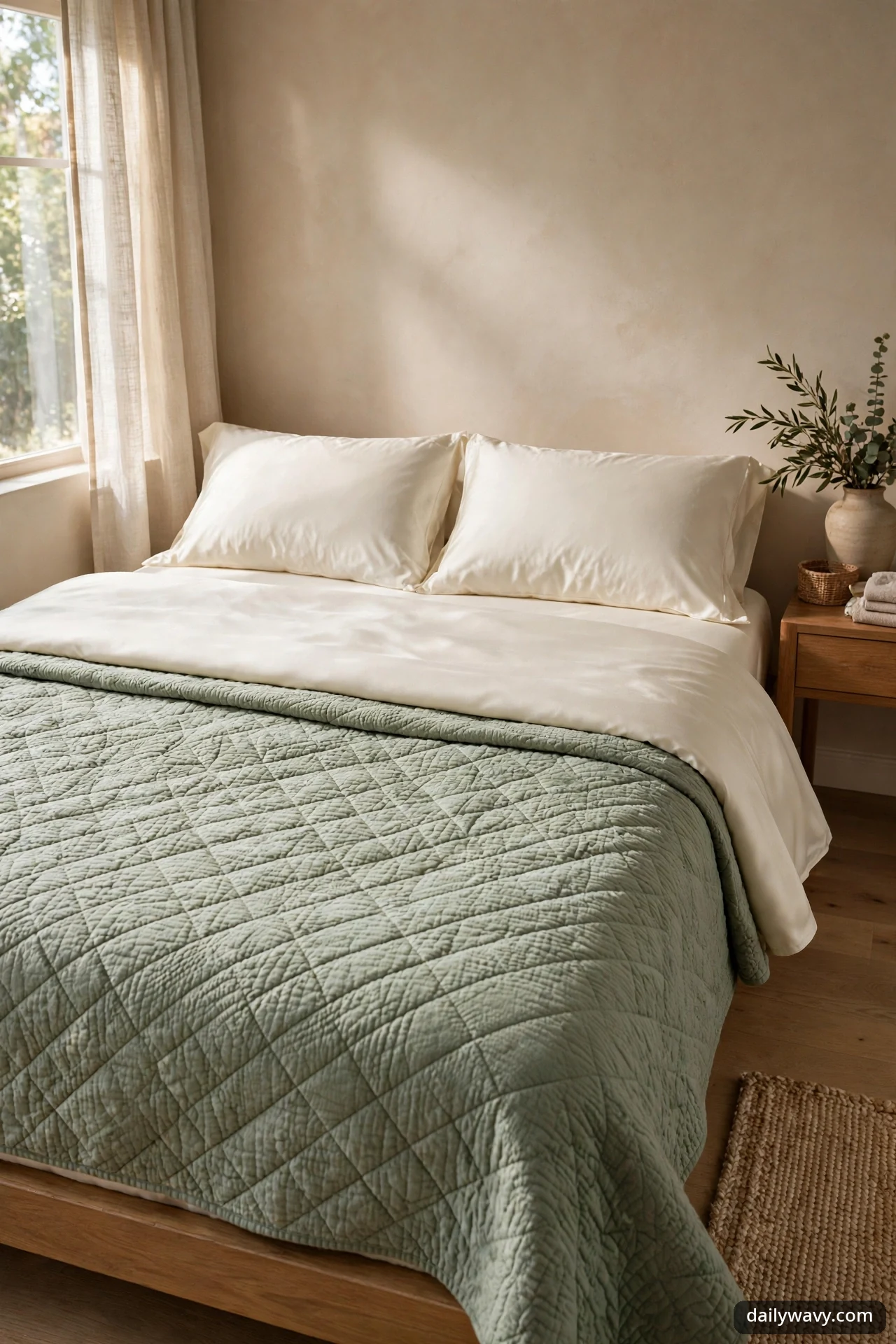
Contrast is a fast route to a bed that looks layered without much effort. A nubby or matelasse coverlet in sage over smooth sateen sheets gives you two textures that play off each other every time the light hits the bed. The coverlet sits at the top of the bed like a frame, and the smooth sheets show at the turndown.
Use a coverlet sized for your bed plus a generous drop: for a queen, look for roughly 96 x 106 inches so it covers the top and hangs evenly on both sides. The sheets underneath should be a lighter tone, ivory or pale sage, so the turndown creates a visible band of contrast about 12 inches deep.
This combination suits all seasons. In summer the coverlet alone is enough weight for most sleepers, and in winter it layers over a duvet without adding bulk. Keep the coverlet pulled up to the pillows each morning and the bed looks made in under a minute.
4. A single lumbar cushion
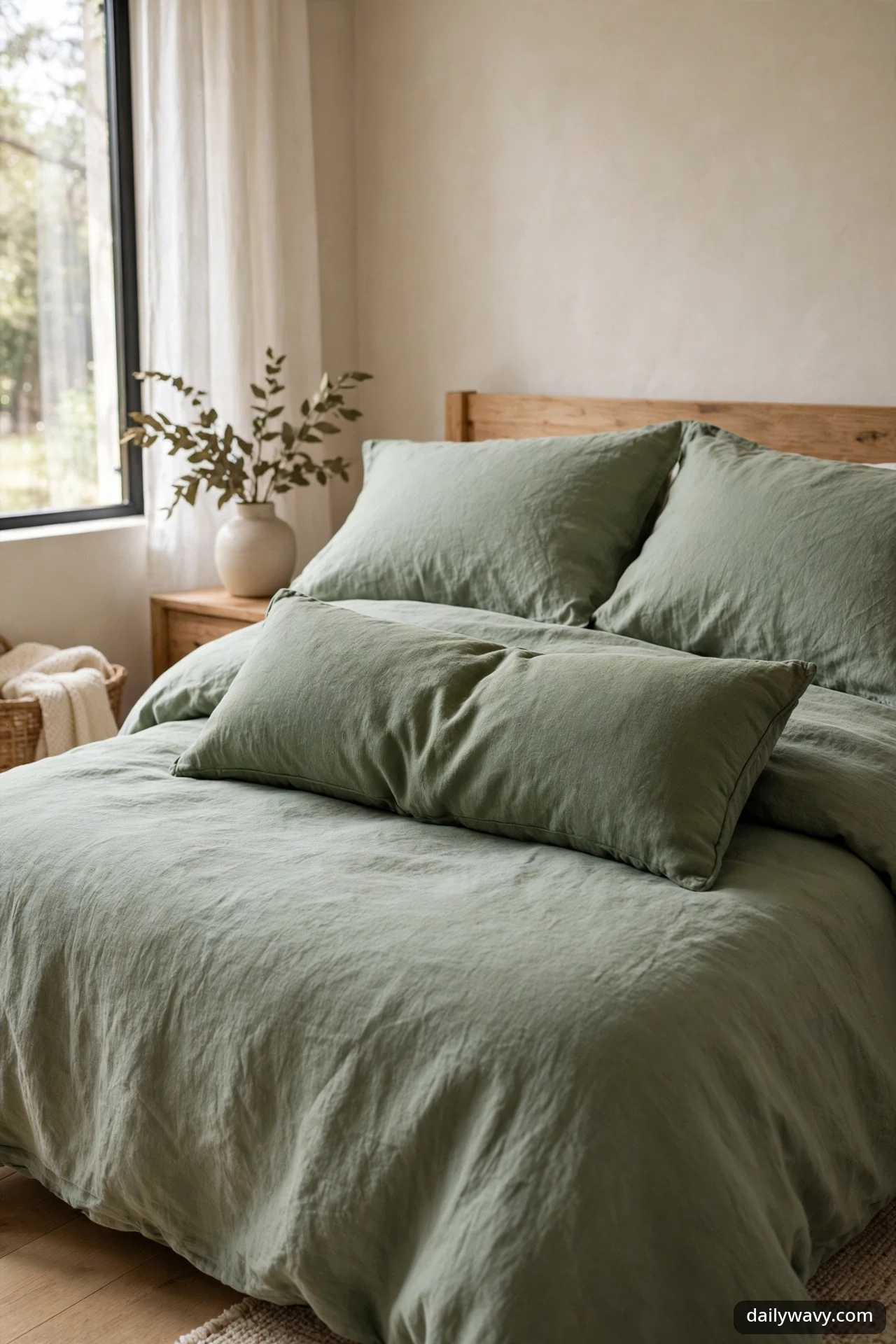
One lumbar cushion, about 12 x 24 inches, is a small change with a big visual payoff. Placed horizontally in front of your sleeping pillows, it adds a horizontal line that grounds the whole pillow arrangement and gives the sage bedding a focal point. Choose the lumbar in a slightly deeper or lighter sage than the duvet so it stands out without clashing.
The insert matters more than the cover here. A down or down-alternative insert keeps the cushion plump and lets you do the classic karate-chop crease down the middle, which reads as styled rather than stiff. A flat polyester insert will look deflated by comparison.
Resist the urge to add a second one. A single lumbar reads as a deliberate accent; two start to look like a formula. If the rest of your pillows are solid, this is also the spot for a small texture, like a slub weave or a woven stripe.
5. A blanket draped over one corner
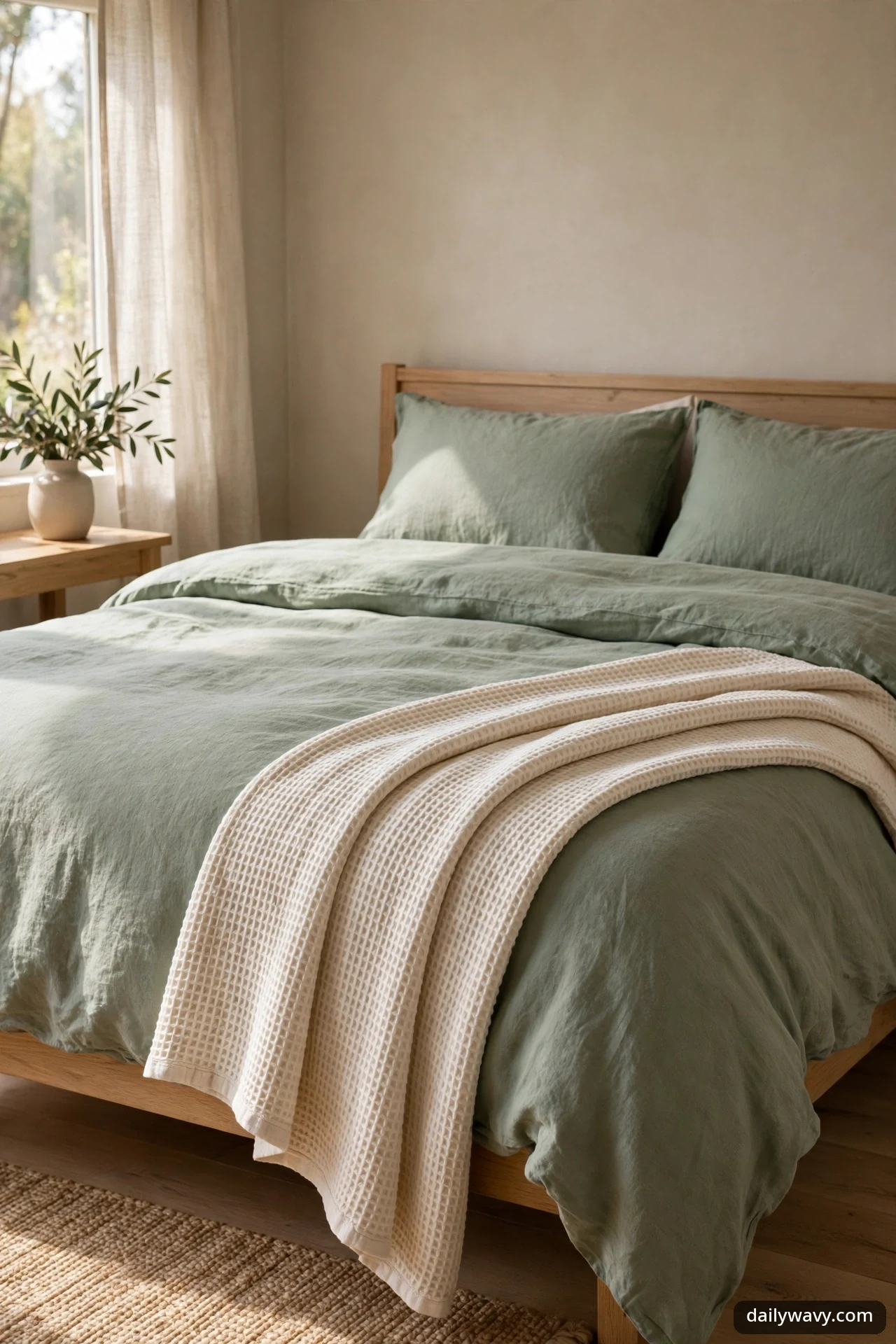
An asymmetrical drape is what separates a styled bed from a made bed. Take a throw blanket around 50 x 60 inches, fold it in thirds lengthwise, and lay it diagonally across one bottom corner of the bed so it falls over the edge. The diagonal line breaks up the rectangle of the bed and adds a casual, unstudied feel.
The blanket should differ from the duvet in either color or texture. A cream waffle throw over sage bedding, or a sage throw with a chunkier knit than the duvet, gives the corner visual weight. Let one end hang longer than the other. Symmetry would undo the effect.
This is also a very practical styling move. The throw is right there for chilly evenings, and because it is only dressing one corner, remaking the bed takes seconds. Straighten it, give it a shake, and drop it back in place.
6. A duvet turned back to show the sheets
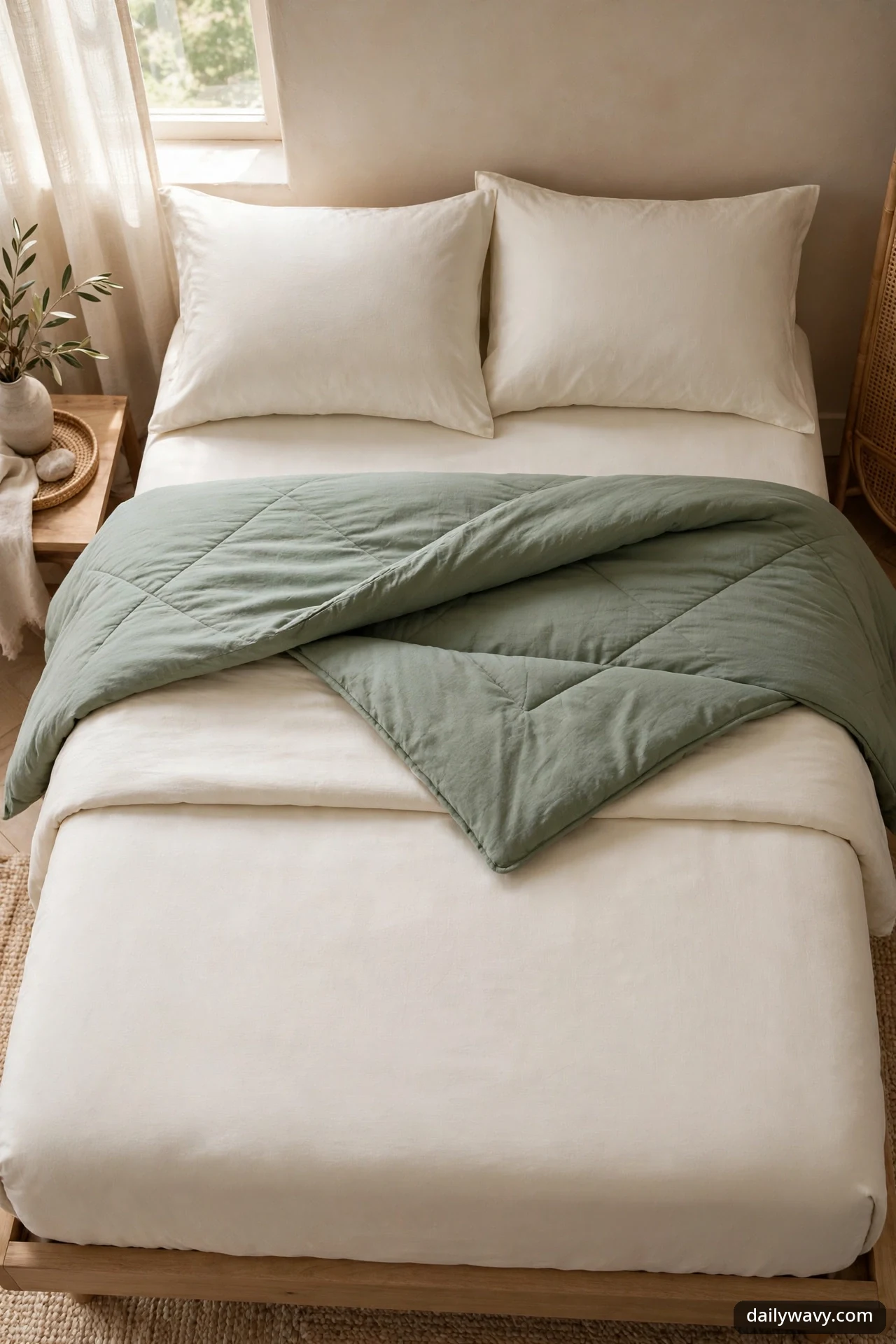
The turndown is a classic styling trick from hospitality, and it works just as well at home. Fold your sage duvet back about 12 to 18 inches from the top of the bed to reveal the sheets underneath. That band of lighter fabric at the top of the bed adds depth and makes the whole arrangement look finished, even when the rest is simple.
This works best when the sheets contrast gently with the duvet. Ivory or pale stone sheets under a mid-sage duvet create a soft gradient; a white sheet edge adds a crisper line. Make sure the fitted sheet and the top sheet match, or at least belong to the same set, because both will show.
Smooth the folded edge with your hand so it lies flat rather than bunching. A clean fold reads as intentional. If the duvet is thick, press the fold with your forearm to set the crease before you step back.
7. A tonal pillow arrangement
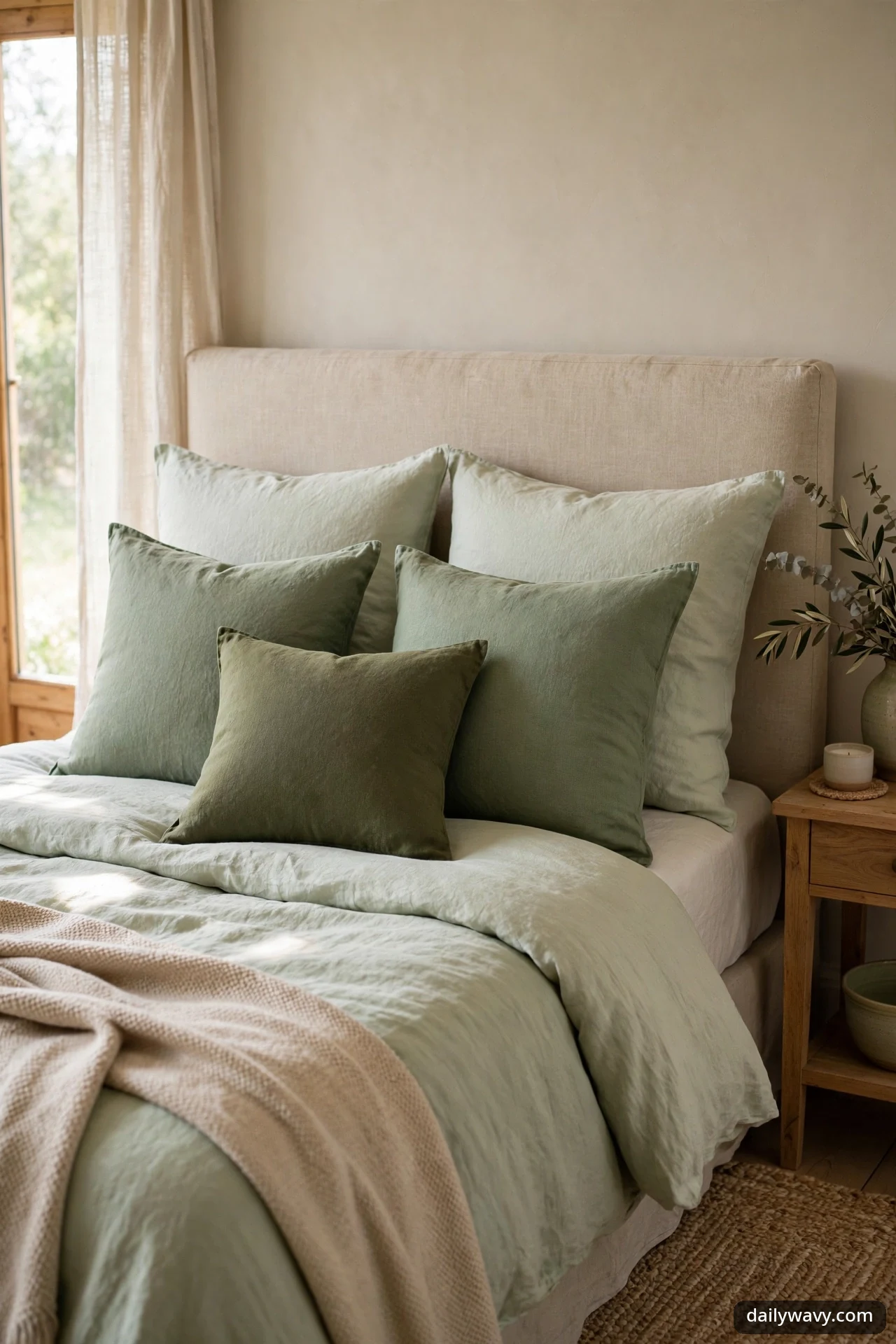
A tonal arrangement uses several shades of one color instead of mixing different colors. For sage, that means layering a pale sage, a true sage, and a deeper olive-sage across your pillows. The bed reads as one calm color story, but the subtle shifts keep it from looking flat.
Start with two sleeping pillows in the lightest shade against the headboard, add two 20 x 20 inch square cushions in the mid tone, and finish with a smaller cushion in the deepest tone at the front. Because every pillow is in the same family, you can mix fabrics freely: linen, cotton, and a washed twill can all sit together without clashing.
The key is keeping the value steps noticeable. If the shades are too close, the arrangement blurs into one block of color. Hold the pillow covers next to each other in daylight before you commit, and make sure you can clearly see three distinct depths.
8. A woven bed-foot basket with a spare throw
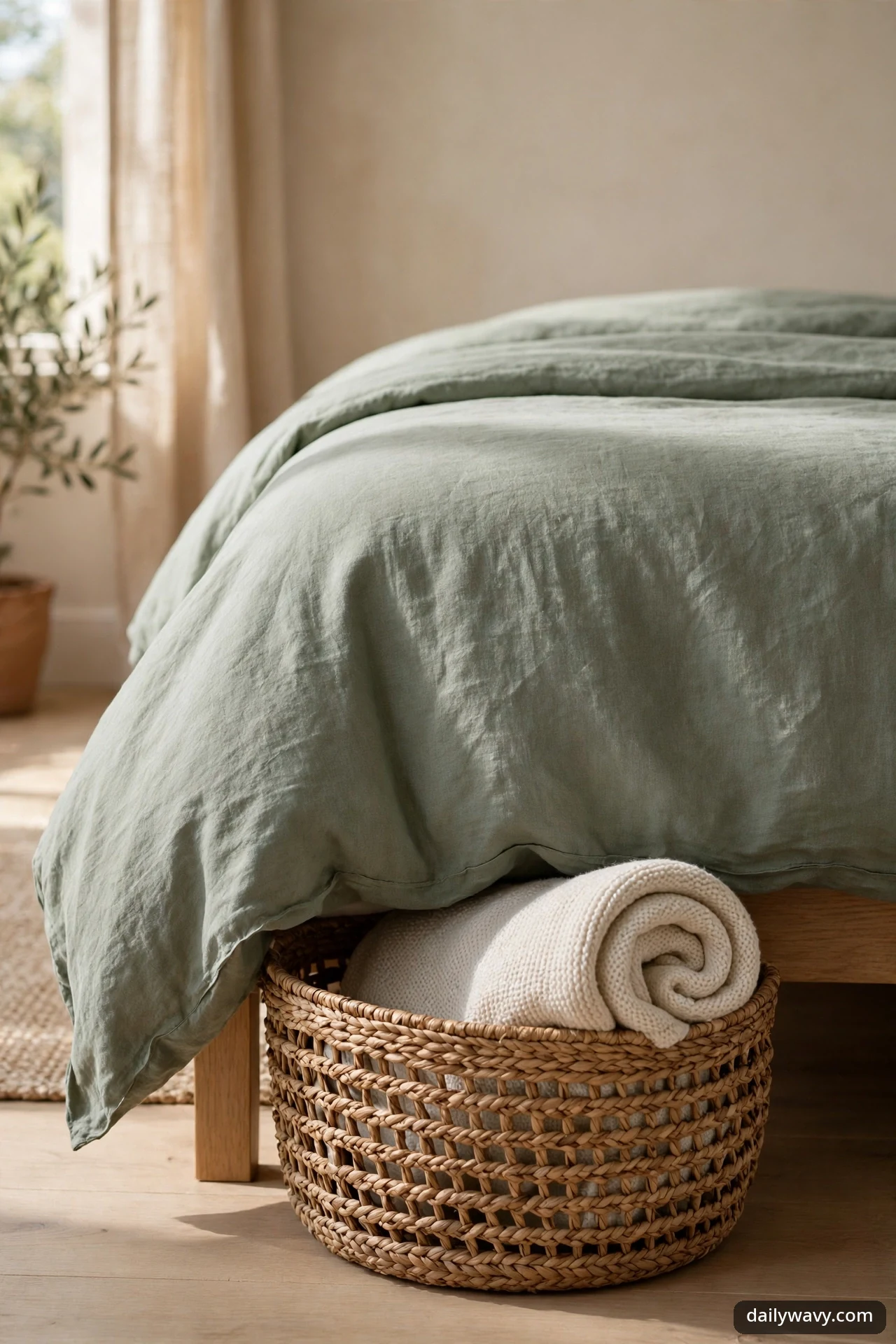
A basket at the foot of the bed solves two problems at once: it gives you somewhere to put the extra layers at night, and it adds a natural texture that keeps sage bedding from feeling too soft-edged. Choose a woven seagrass or rattan basket about 18 to 24 inches wide, low enough to tuck partly under the foot of the bed.
Roll a spare throw in a complementary tone, cream or warm oatmeal, and stand it upright in the basket so the rolled end shows. The roll reads tidier than a folded pile and makes the throw easy to grab. A second thin blanket can sit underneath for colder months.
This works in small bedrooms too, because the basket occupies floor space that would otherwise go unused at the bed’s foot. Keep the weave open rather than lined so it reads as airy, and dust it occasionally since baskets collect bedroom lint quickly.
9. A darker fitted sheet peeking beneath
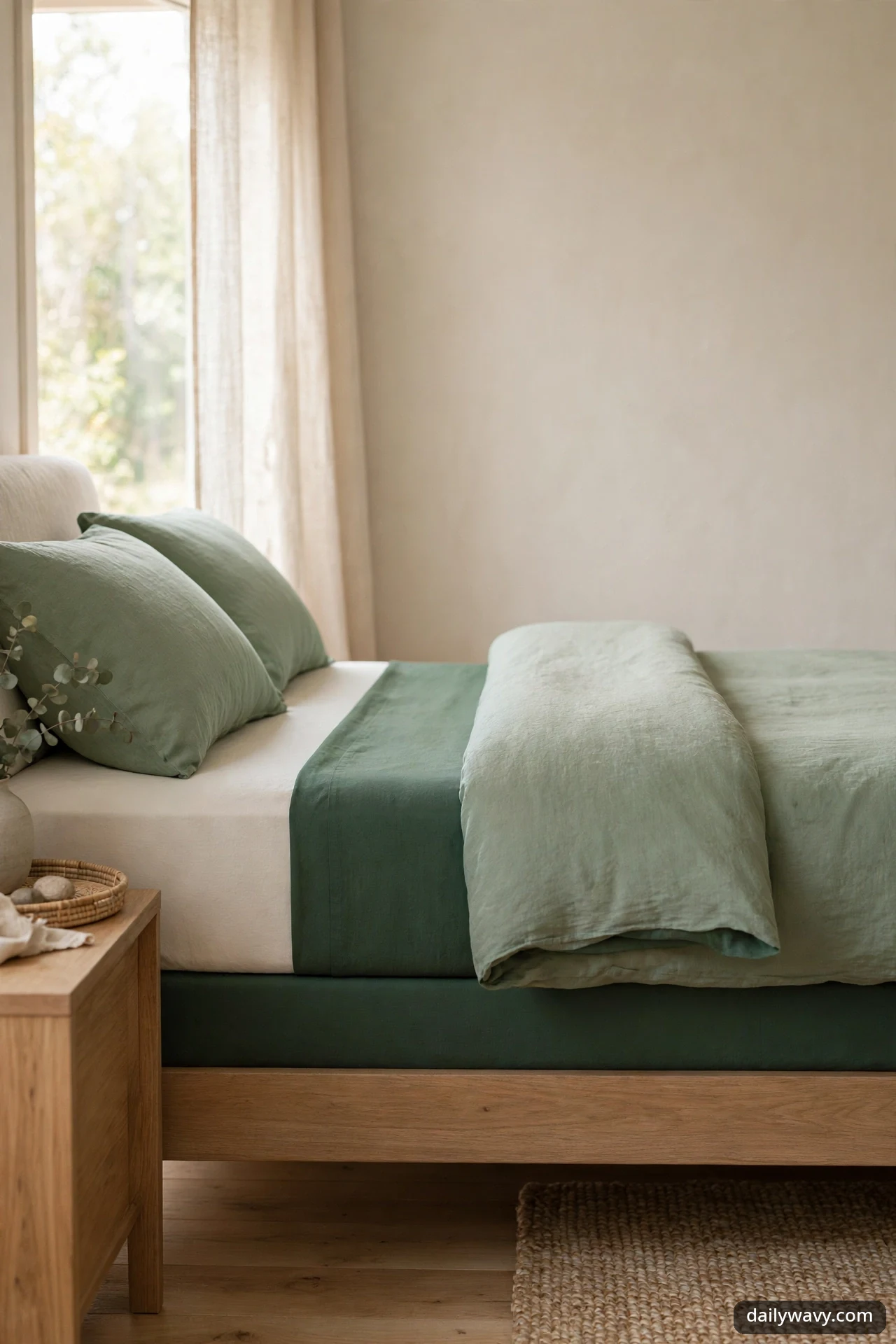
This idea borrows the turndown concept and takes it one step further. Instead of just folding the duvet back, let a darker fitted sheet show along the sides and foot of the bed where the duvet does not fully cover. A deep forest or eucalyptus fitted sheet under a mid-sage duvet creates a shadow line around the bed’s edges that adds quiet depth.
For this to work, the duvet needs to end a few inches short of the mattress edge, so size your duvet cover to your actual duvet rather than sizing up. The peeking band should be about 2 to 4 inches wide: enough to read as a color detail, not so much that the bed looks underdressed.
Keep the rest of the bedding simple when you use this trick. The darker sheet is the accent, so avoid competing details like a busy throw or patterned cushions. A solid sage duvet and one or two plain pillows are all it needs.
10. A light waffle blanket at the foot
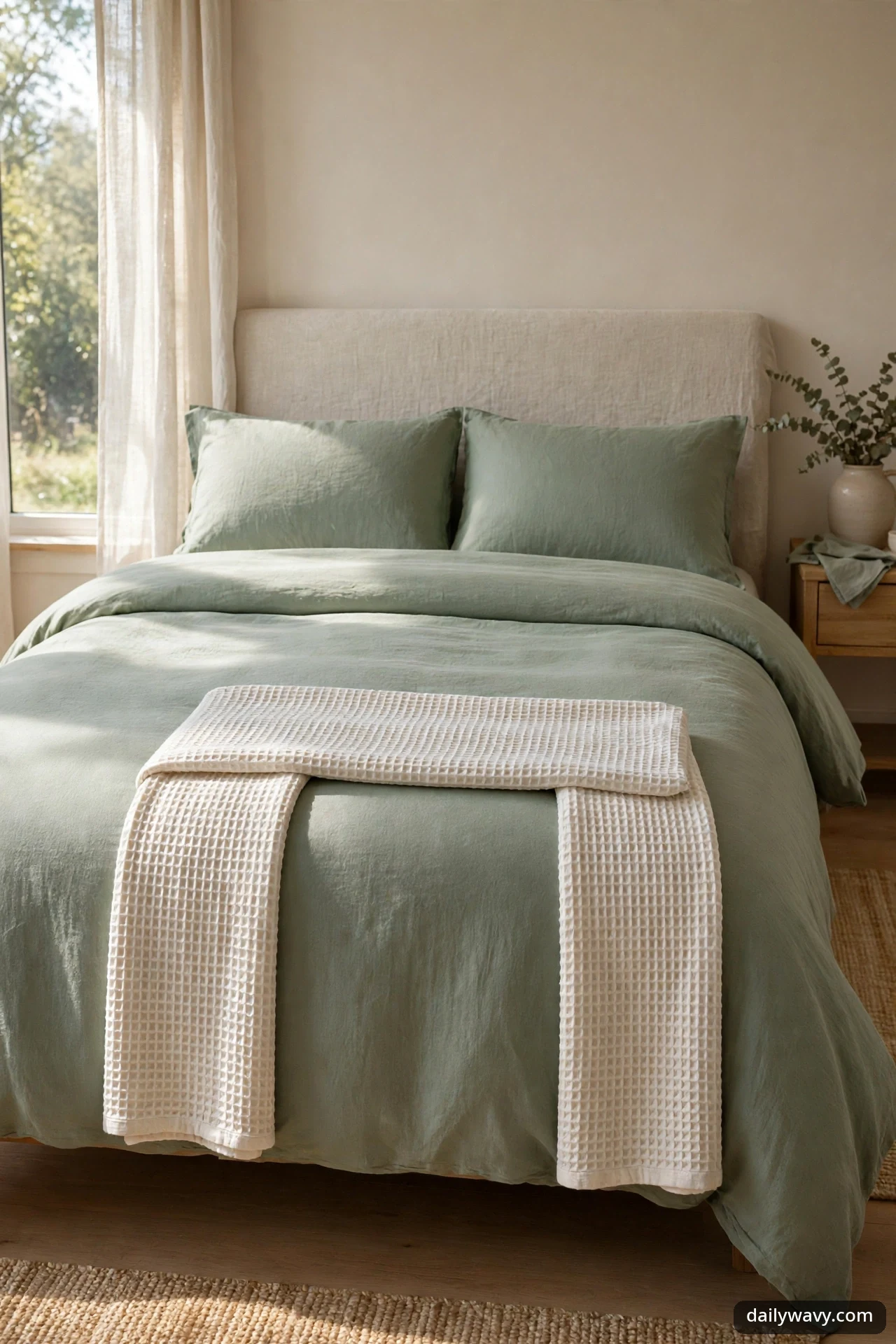
A waffle weave blanket folded across the foot of the bed adds honeycomb texture that catches the light differently from every angle. In a pale sage or ivory tone, it keeps the palette calm while giving the lower third of the bed its own moment. Fold the blanket into thirds so it forms a band about 16 to 18 inches wide, and center it on the bed’s width.
Waffle blankets are usually cotton, which makes them breathable enough for summer and easy to layer in winter. A throw-sized waffle (around 50 x 70 inches) folded works perfectly on a queen bed without overwhelming it. Let the ends hang just past the mattress edge for a relaxed finish.
Wash it in cool water and tumble dry on low so the waffle cells stay plump. Heat flattens the weave over time, and the texture is the entire reason this blanket is on the bed.
11. A vintage quilt used as an accent
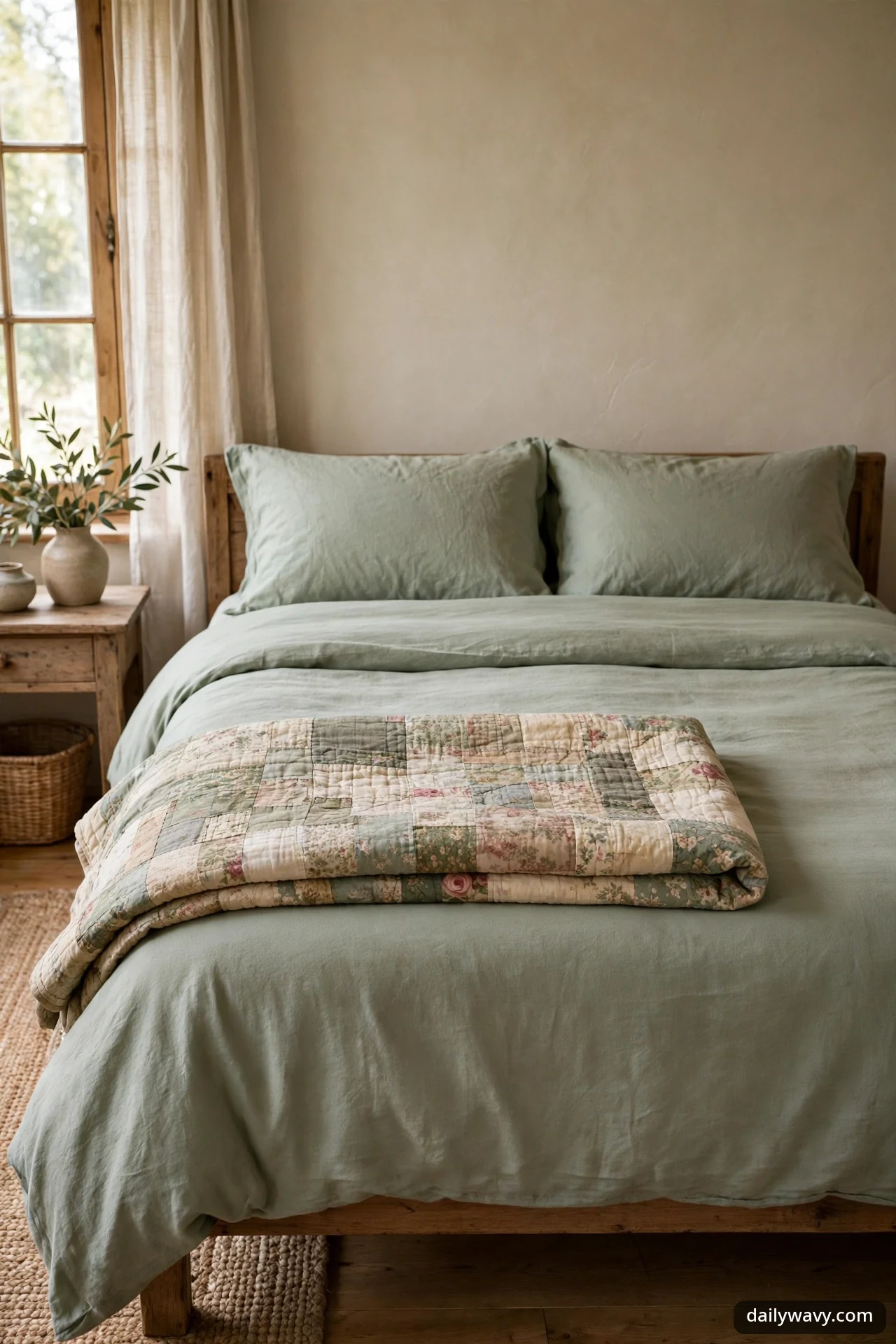
A vintage or vintage-style quilt brings pattern and character to a sage bed in a single layer. Look for quilts with small-scale florals or simple patchwork in muted tones: faded greens, soft creams, dusty rose. The aged colors sit naturally beside sage green because they share the same softened, sun-faded quality.
Use the quilt as an accent, not the main cover. Fold it in half and lay it across the lower third of the bed over your plain sage duvet, or fold it into a long band and drape it diagonally. A full-size quilt (around 78 x 87 inches) folded gives you plenty of coverage without swallowing the bed.
Check the weight before you buy. True vintage quilts are often thinner than modern ones, which makes them ideal for layering but means they will not replace your duvet in winter. If the quilt is delicate, keep it as a daytime layer and fold it to the foot of the bed at night.
12. A pair of different-size cushions

Two cushions of different sizes look more natural than a matched pair. Place a 20 x 20 inch square cushion slightly behind and a 16 x 16 inch cushion in front of it, offset to one side rather than centered. The size difference creates a little cascade that feels collected over time rather than bought as a set.
Keep both in the sage family but vary the fabric: a linen square behind a velvet smaller cushion, for example. The texture contrast is what makes this work, and two pieces are the perfect amount. Any more and the bed starts to look decorated rather than styled.
Angle the smaller cushion slightly so it does not sit perfectly straight. A small rotation, maybe 10 degrees, is enough to make the arrangement feel relaxed. This is a quick styling move that works reliably.
13. A small-scale print with a plain duvet
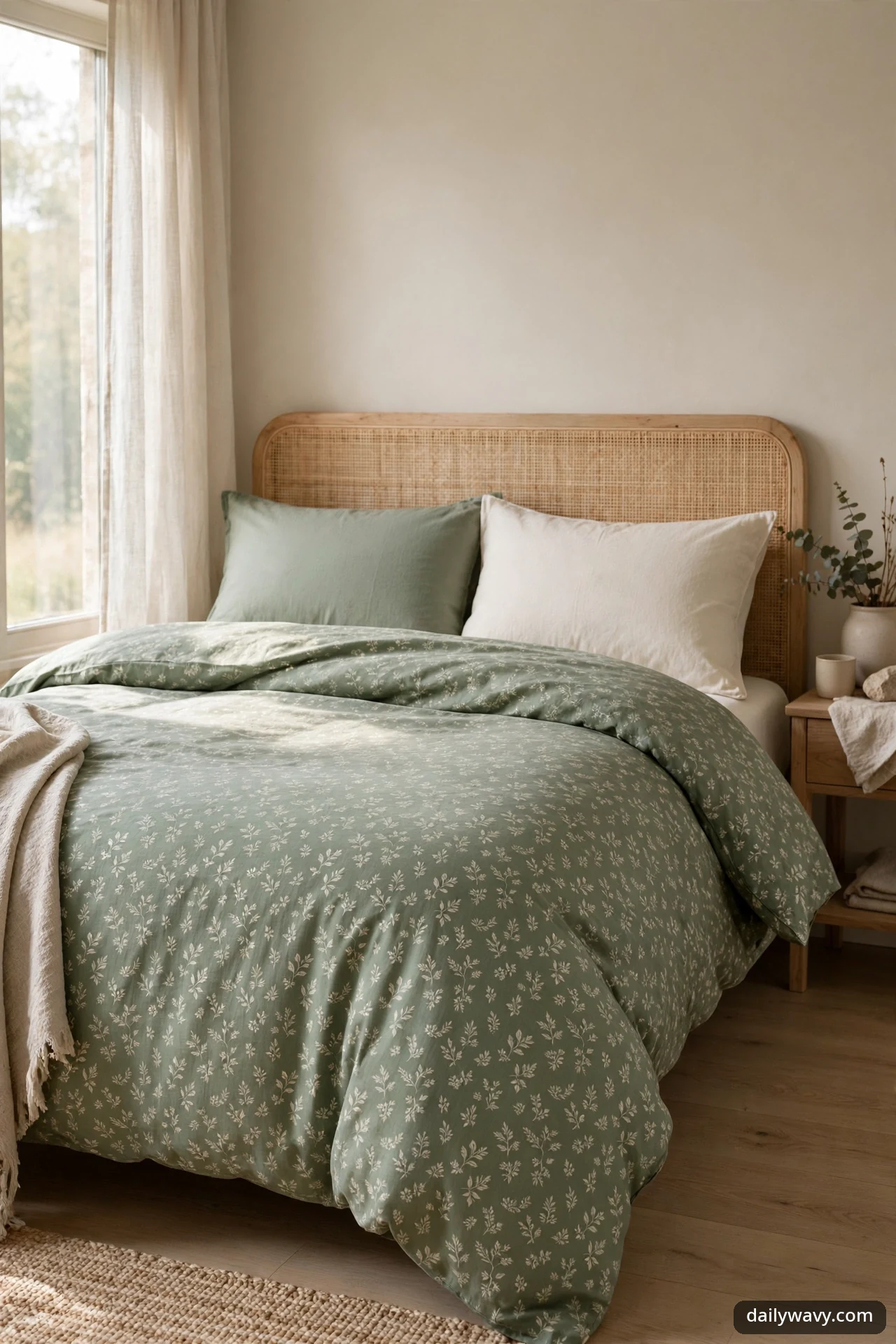
Small-scale prints are the safe way to bring pattern into a sage bedroom. A duvet cover with a tiny botanical or dot print, in sage and ivory, adds interest at close range without changing how the room reads from the doorway. The pattern should be small enough that it reads as texture from six feet away.
Pair the printed duvet with completely plain pillowcases in solid sage or ivory. The pillows act as a visual rest between the print and the eye. If you add a cushion, keep it solid too. One print per bed is the rule here, and the duvet is it.
Cotton percale takes small prints well because the tight weave keeps the pattern crisp through washing. Avoid large-scale prints on the duvet if the rest of the room already has pattern in the rug or curtains. The bed should be the calm anchor, not another voice in the mix.
14. A warm wood bedside surface nearby
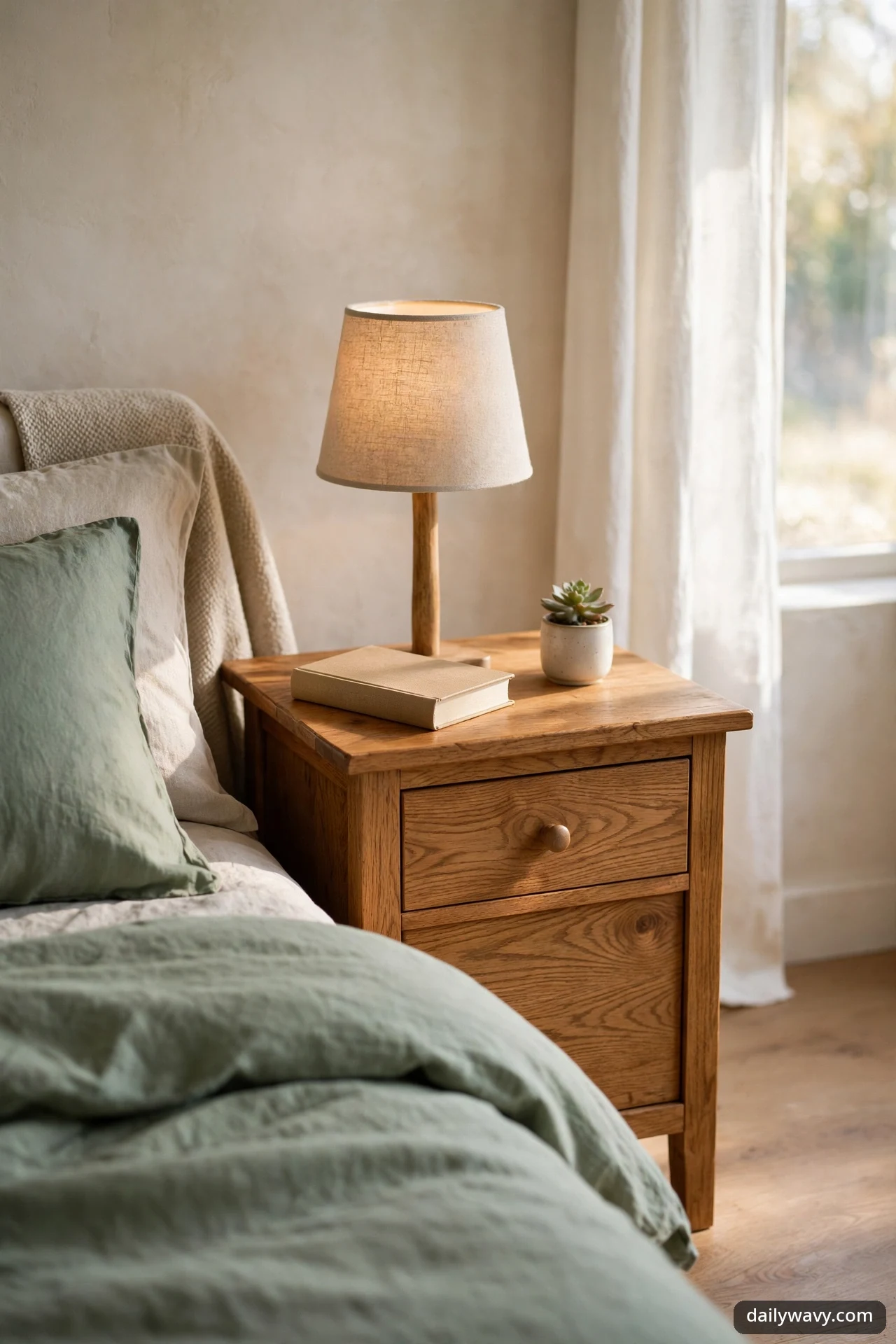
This idea is not on the bed at all, and that is the point. A warm wood nightstand beside sage bedding makes the green look richer by contrast. Wood tones like oak, walnut, or acacia add the warmth that a cool green needs, and a simple table with one drawer keeps the bedside functional without clutter.
Style the surface sparingly: a small lamp with a linen shade, one book, and maybe a tiny plant. The goal is a bedside that supports the bedding rather than competing with it. Keep the wood finish consistent with other wood in the room so the nightstand feels connected to the whole space.
If your nightstands are currently painted or white, this is the one upgrade that changes how the sage bedding reads. Even a small oak tray on top of a white table introduces the warm tone. The eye needs that warmth next to the coolness of the green.
15. A smooth bedspread with one textured pillow
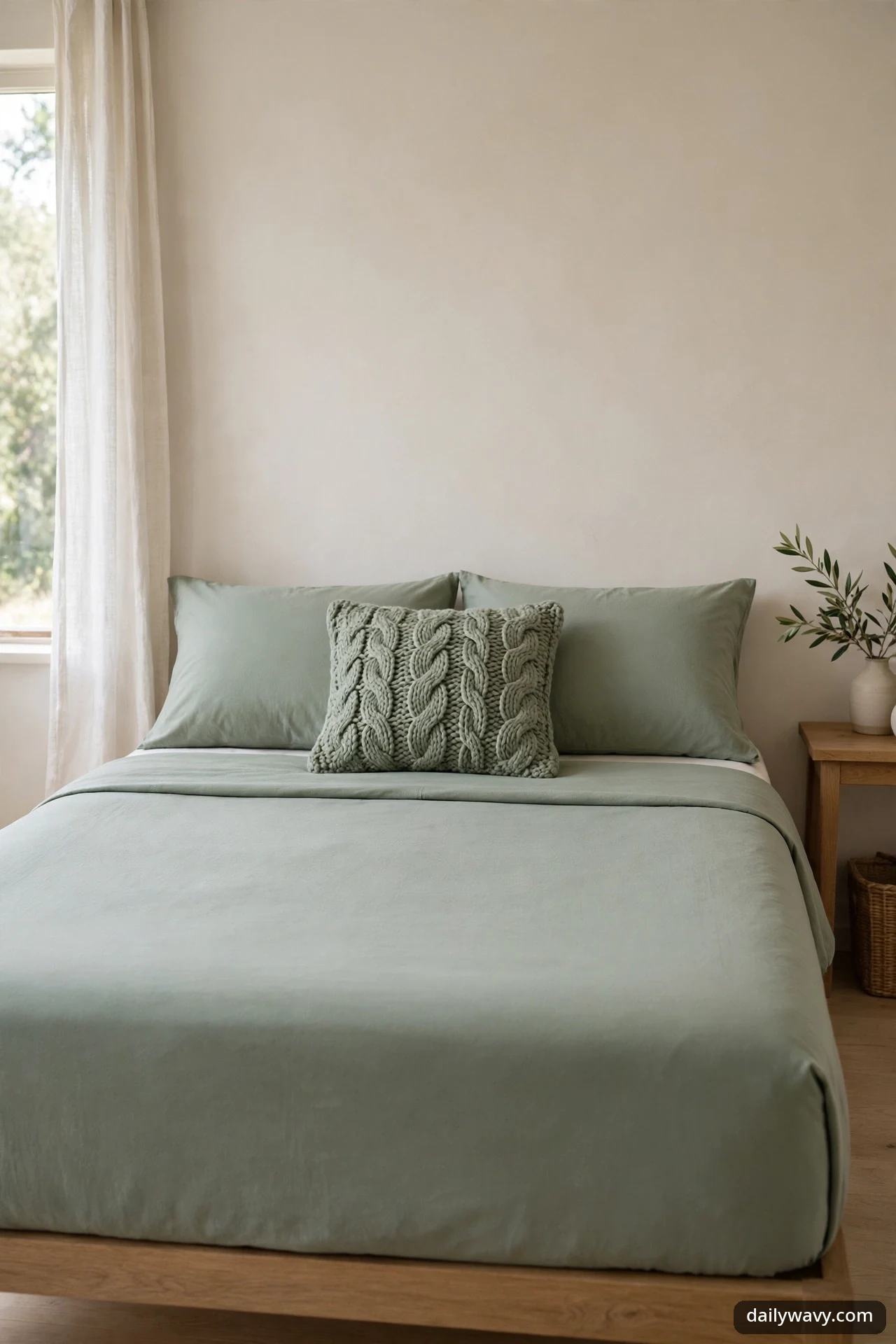
Sometimes restraint is the whole idea. A smooth cotton bedspread in sage, pulled flat and neat, with a single textured pillow at the center creates a bed that feels calm and confident. The smooth surface becomes the backdrop, and the one pillow gets all the attention.
Choose the pillow for maximum texture contrast: a chunky knit, a tufted dot, or a nubby bouclé in a tone close to the bedspread. The pillow should be around 18 x 18 inches, large enough to register but not so large it dominates. Place it dead center against the sleeping pillows.
This approach suits minimal bedrooms and anyone who dislikes fussing with layers. The bed takes thirty seconds to make: pull the spread up, smooth it, place the pillow. The single texture detail is what keeps it from looking plain.
16. A subtle contrast piping detail
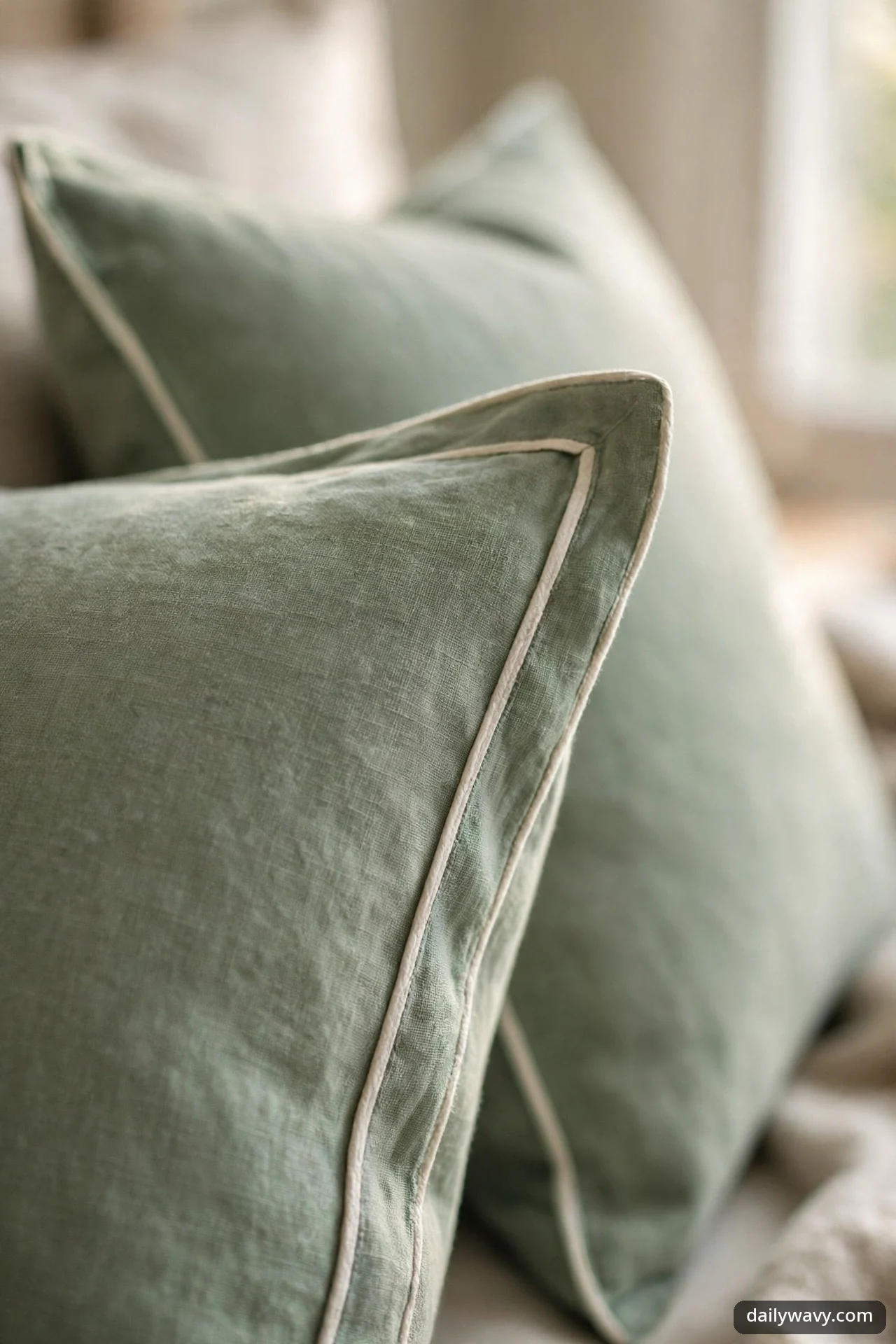
Piping is the thin cord edging on pillowcases and shams, and a contrast color turns it into a quiet design detail. Sage pillow shams with ivory or warm white piping get a tailored, finished edge that reads as custom even on ready-made bedding. The contrast should be gentle: cream against sage, not white against dark green.
This detail works best on shams, which sit at the front of the pillow arrangement where the edging shows. Euro shams (26 x 26 inches) with contrast piping frame the bed nicely against the headboard. Standard pillowcases with piping are a smaller commitment and show mostly at the turndown.
Look for piping that is sewn into the seam rather than glued on. Sewn piping survives washing and keeps its shape, while glued trim can lift after a few cycles. It is a small quality check that makes a real difference over time.
17. A breathable sheet set with a light cover
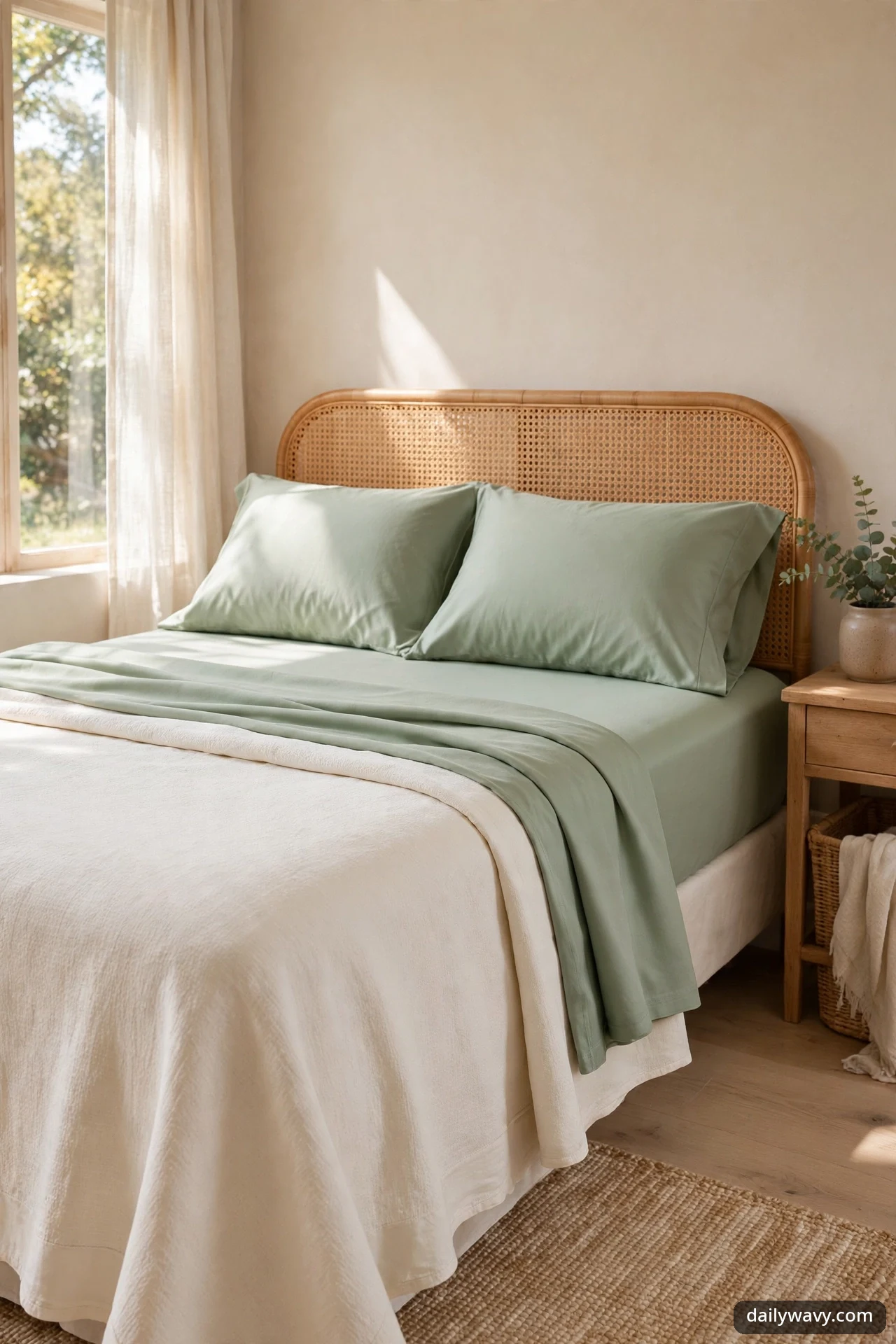
For warm sleepers and summer months, sage bedding works best when it breathes. A percale or linen sheet set in sage, topped with nothing heavier than a light cotton coverlet, keeps the bed cool without sacrificing the layered look. Percale’s crisp, matte weave and linen’s loose structure both let air move through the layers.
Skip the duvet entirely in this setup. The sheet set (fitted sheet, flat sheet, and two pillowcases) plus a coverlet around 90 x 90 inches for a queen gives you two breathable layers, which is plenty for summer nights. Fold the flat sheet back over the coverlet at the top to show the full set.
Wash this bedding in cool water and line dry when you can. Sunlight freshens natural fibers and reduces the need for high dryer heat, which wears out elastic and fades color over time. Bring the set in before it gets bone dry for the softest finish.
18. A folded quilt across the lower third
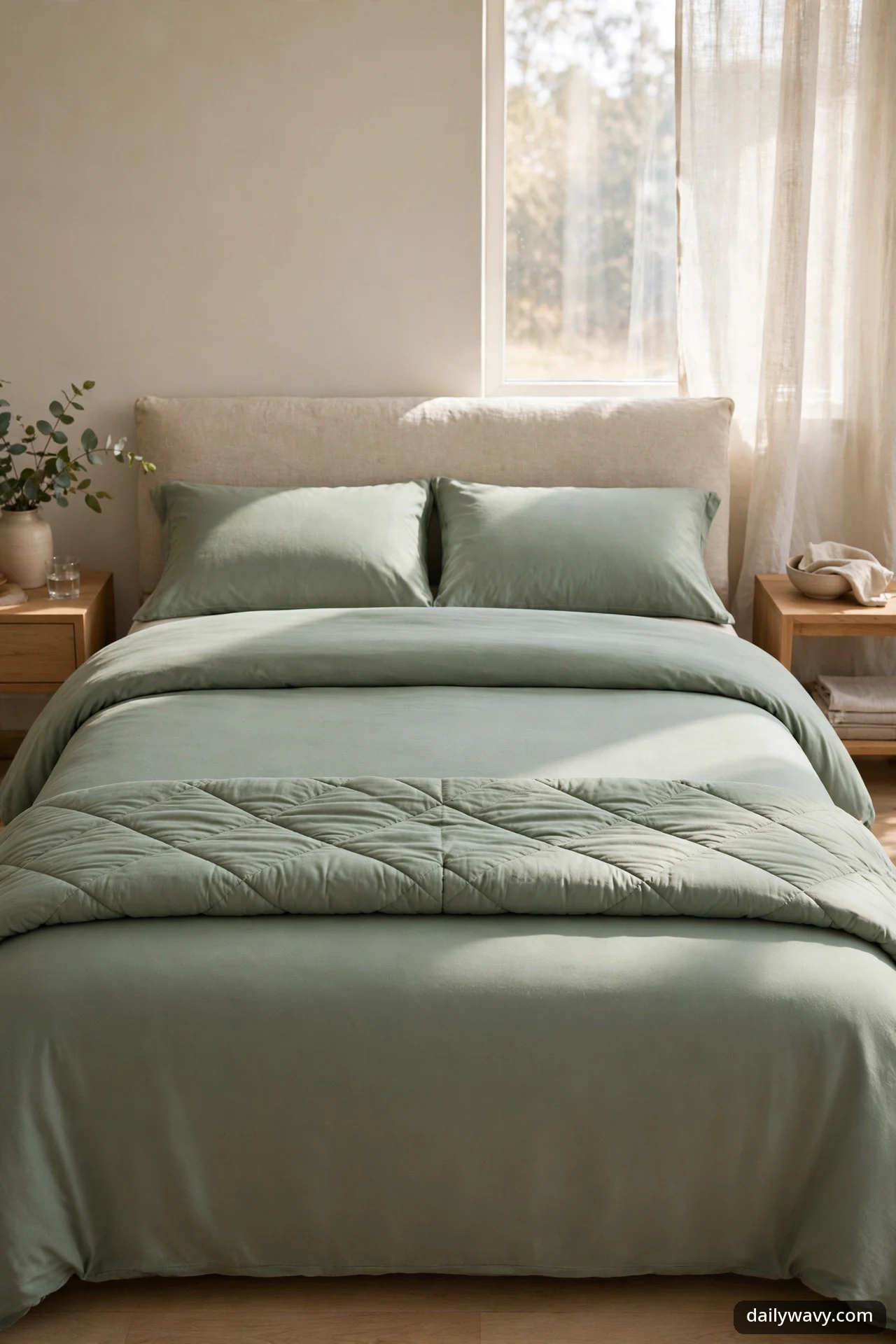
Folding a quilt across the lower third of the bed is the classic layered look, and it works beautifully in sage. Take a quilt in a tone slightly deeper or lighter than the duvet, fold it in half or thirds, and lay it horizontally so it covers roughly the bottom third of the bed. The horizontal band anchors the foot of the bed visually.
The quilt should contrast just enough to be visible. A quilted texture in the same sage as the duvet still reads as a separate layer because the stitching catches the light. If you want more definition, choose a quilt with a subtle pattern, like a small diamond stitch or a faint stripe.
Tuck the sides of the quilt under the mattress at the foot for a tailored finish, or let them drape for a softer look. Either way, keep the fold lines straight. A crooked band draws the eye for the wrong reason, so take the extra ten seconds to line it up.
19. Two sleeping pillows behind smaller cushions
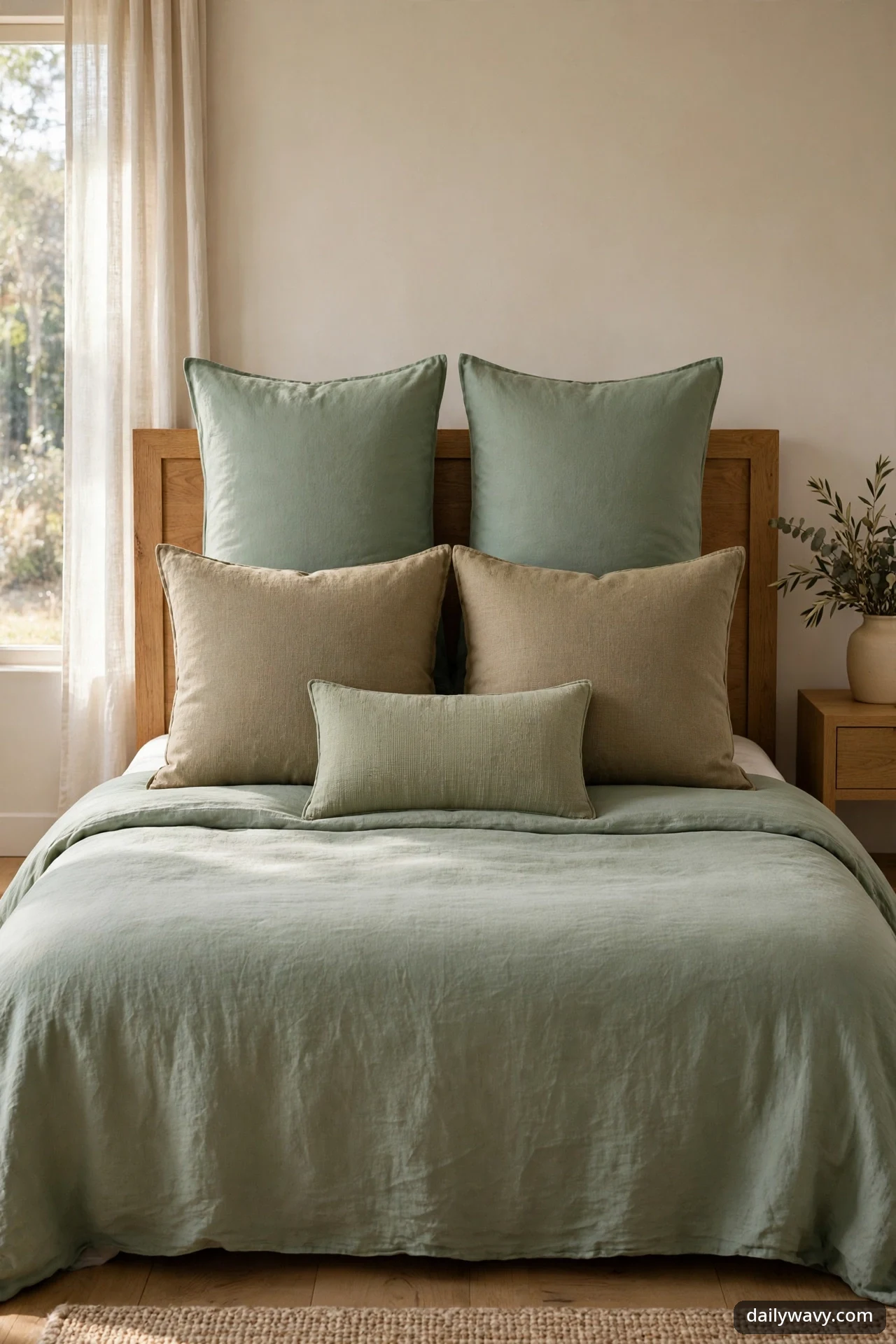
The foundation of almost every styled bed is also the simplest: two sleeping pillows standing upright against the headboard, with smaller cushions layered in front. In sage bedding, use pillowcases that match or closely echo the duvet so the back row blends into the bed rather than standing apart.
Stand the sleeping pillows up rather than laying them flat. Upright pillows create height at the head of the bed, which is what makes the whole arrangement look generous. If your headboard is low, this extra height matters even more. A slight forward lean against the headboard keeps them in place.
Layer two 20 x 20 inch cushions in front, then finish with a lumbar or small square at the very front. Three rows is the sweet spot: back, middle, front. Each row should be clearly visible above the one in front of it, so graduate the heights deliberately.
20. A plain throw in a contrasting texture
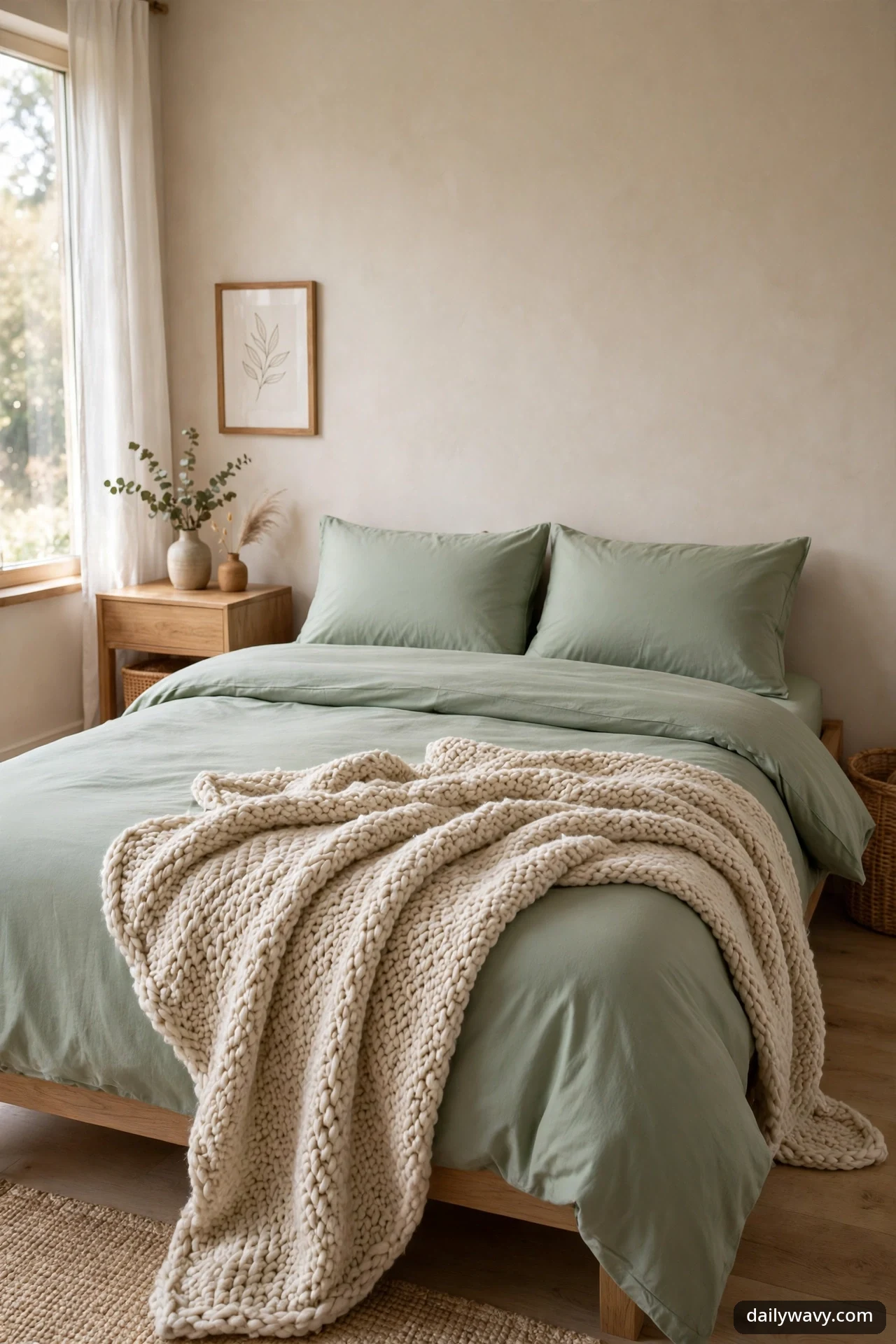
End with the simplest idea on the list: one plain throw, in a texture that contrasts with everything else on the bed. If your sage bedding is mostly smooth cotton, choose a chunky knit or a faux fur throw. If the bedding is already textured linen, choose a smooth, flat-weave throw. The contrast is what makes a single solid-color throw interesting.
Drape it, do not fold it into a perfect rectangle. Toss it across the lower half of the bed and let it land where it lands, then adjust only the worst of the bunching. A throw that looks placed rather than draped loses the relaxed quality that makes this work.
A 50 x 60 inch throw is the standard size and suits most beds. In winter, swap the light throw for a heavier wool or wool-blend version in the same contrasting texture. The color can stay in the sage family or go neutral: both work as long as the texture does the talking. Keep throws and loose layers away from space heaters, candles, and other open heat sources.
Frequently asked questions
What colors go well with sage green bedding?
Warm neutrals are the easiest partners: ivory, oatmeal, warm white, and natural wood tones. Brass and aged gold accents warm up the coolness of the green. For more contrast, try soft terracotta or muted clay in small doses, like a single cushion or throw. Avoid pairing sage with other cool pastels in large amounts, since the room can start to feel washed out.
How do I keep sage green bedding from fading?
Wash in cold water with a gentle detergent and avoid chlorine bleach, which strips color fast. Line drying in shade or tumble drying on low preserves dye better than high heat. If your bedroom gets strong afternoon sun, rotate which side of the duvet faces up, or use curtains to filter the harshest light during peak hours.
Can I mix sage green with patterns?
Yes, with one rule: keep it to one pattern per bed. A small stripe, a tiny botanical, or a subtle check all work with sage as long as the rest of the bedding stays solid. Match the pattern’s background to your sage tone so the print feels connected to the bed rather than sitting on top of it.
What is the best fabric for sage green bedding?
It depends on how you sleep. Washed linen suits warm sleepers and gives the most relaxed look. Cotton percale is crisp and breathable for year-round use. Cotton sateen has a slight sheen that makes sage look richer, and it feels smooth against the skin. For winter, layer a quilted coverlet or add a wool throw over any of these bases.
How many pillows should I use on a styled bed?
Three rows is a reliable formula: two sleeping pillows at the back, two medium cushions in the middle, and one smaller accent at the front. That is five pillows total, which looks full without making bedtime a chore. If you prefer minimalism, two sleeping pillows plus one lumbar cushion still looks styled.
Does sage green work in a small bedroom?
It works especially well. Sage is a soft, receding color that does not visually shrink a room the way dark tones can. Keep the bedding close to one color family and let the walls stay light, and the bed will feel like a calm focal point rather than a large object. If you want more ideas for compact rooms, our small bedroom with a queen bed ideas cover layouts that make every inch count.
A sage green bed is a straightforward style upgrade, because the color does so much of the work for you. Pick one or two ideas from this list, start with the layers you already own, and let the bed evolve. If you love the tonal approach here, our narrow living room layout ideas apply the same measure-first thinking to narrow rooms, or browse the full Home & Decor collection for more calm, livable rooms.