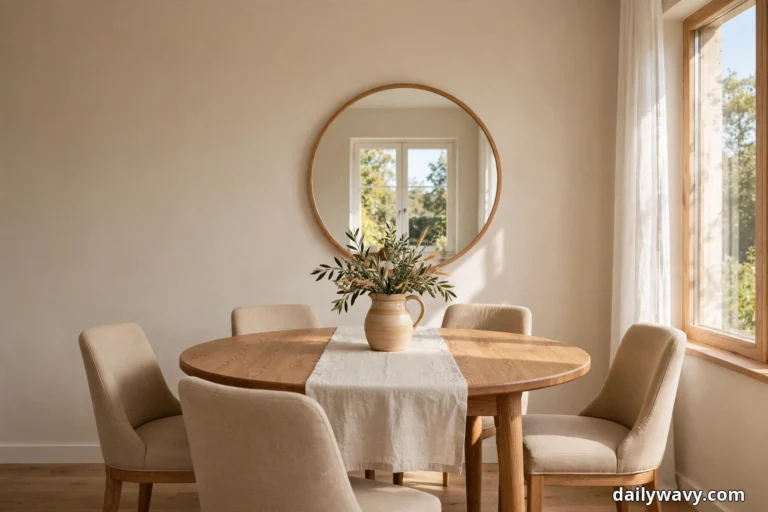

12 Renter Entryway Upgrades Ideas to Personalize Your Space
Your entryway is the first thing you see when you come home and the last thing guests notice before they…
Your entryway is the first thing you see when you come home and the last thing guests notice before they step inside. In a rental, though, the entryway often feels like a missed opportunity: blank walls you cannot paint, a floor you cannot change, and a landlord who does not want holes in anything. The good news is that an entryway responds beautifully to freestanding and removable upgrades. A few smart pieces, some warm texture, and a little planning can turn a forgotten corner into a space that feels genuinely yours, and every upgrade in it is one you can take with you when you move.
In This Guide:
- A Freestanding Mirror Secured Appropriately
- A Table-Top Display With Useful Objects
- A Fabric Panel Adding Color
- A Shelf Insert That Does Not Alter Cabinetry
- A Lightweight Divider
- A Tidy Cable-Routing Solution
- A Coordinated Container Set
- A Portable Seating Or Surface Solution
- A Freestanding Storage Piece
- A Washable Textile Accent
- A Removable Surface Treatment After A Patch Test
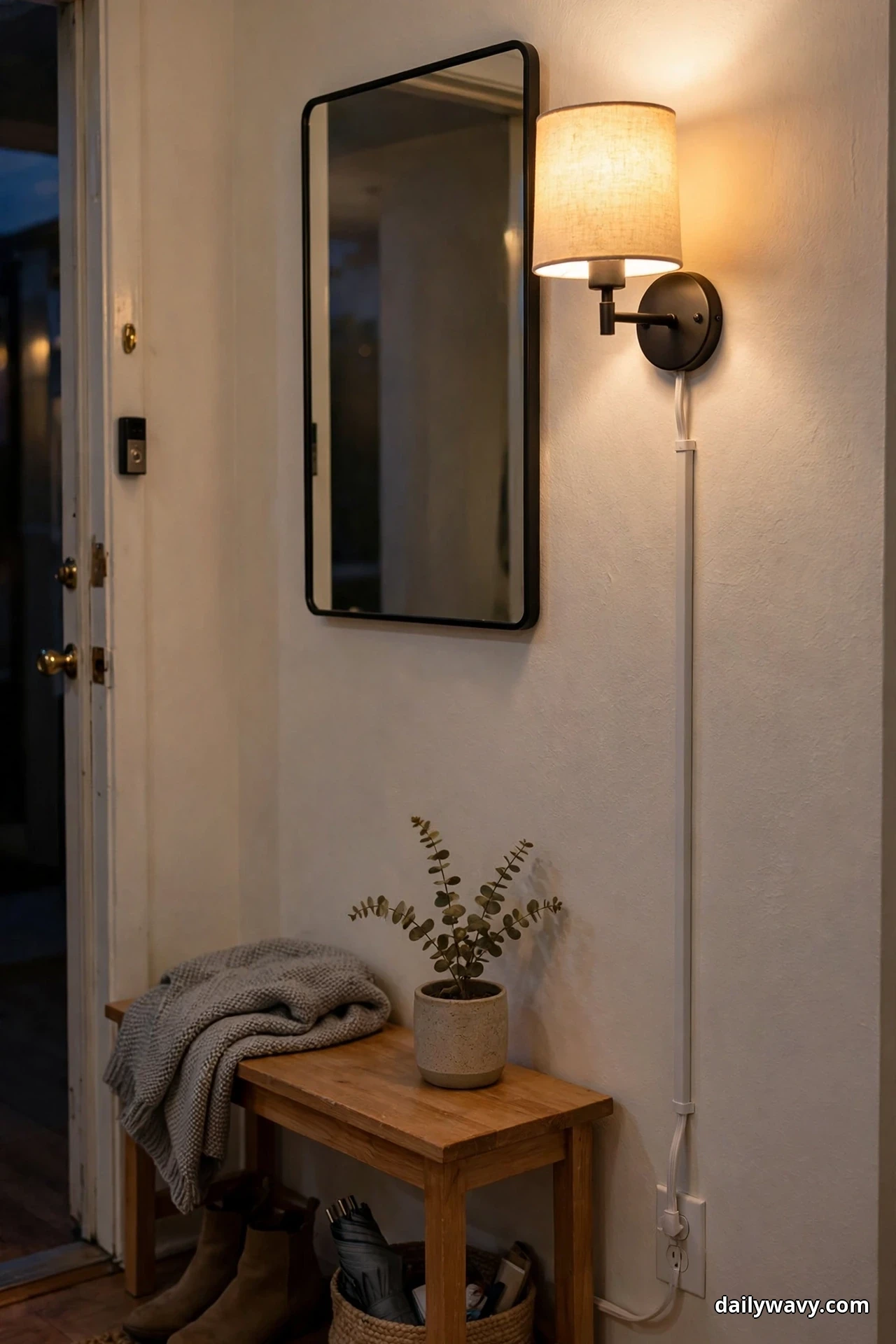
- A Compact Plug-In Light In A Suitable Dry Location
The Renter Entryway Rules Before You Start
Before you buy a single thing, walk your entryway with a tape measure. Note the wall lengths, the door swing, and how much clear walkway you have. Most rentals give you a narrow strip, so keep at least 30 inches of walkway clear so nobody brushes past furniture. Freestanding pieces are your best friend here: nothing that needs screws in the wall, nothing that marks paint. When you hang anything, use removable adhesive strips rated for the weight, and always do a patch test in a hidden spot first. Keep one more rule in mind: check your lease for any mention of wall treatments, adhesives, or fixtures. Most landlords are fine with anything that comes down cleanly, and documenting your move-in condition with photos protects you twice over. If you want more entryway inspiration beyond rental-safe ideas, our small entryway decor guide covers layouts for tight spaces.
1. A Freestanding Mirror Secured Appropriately
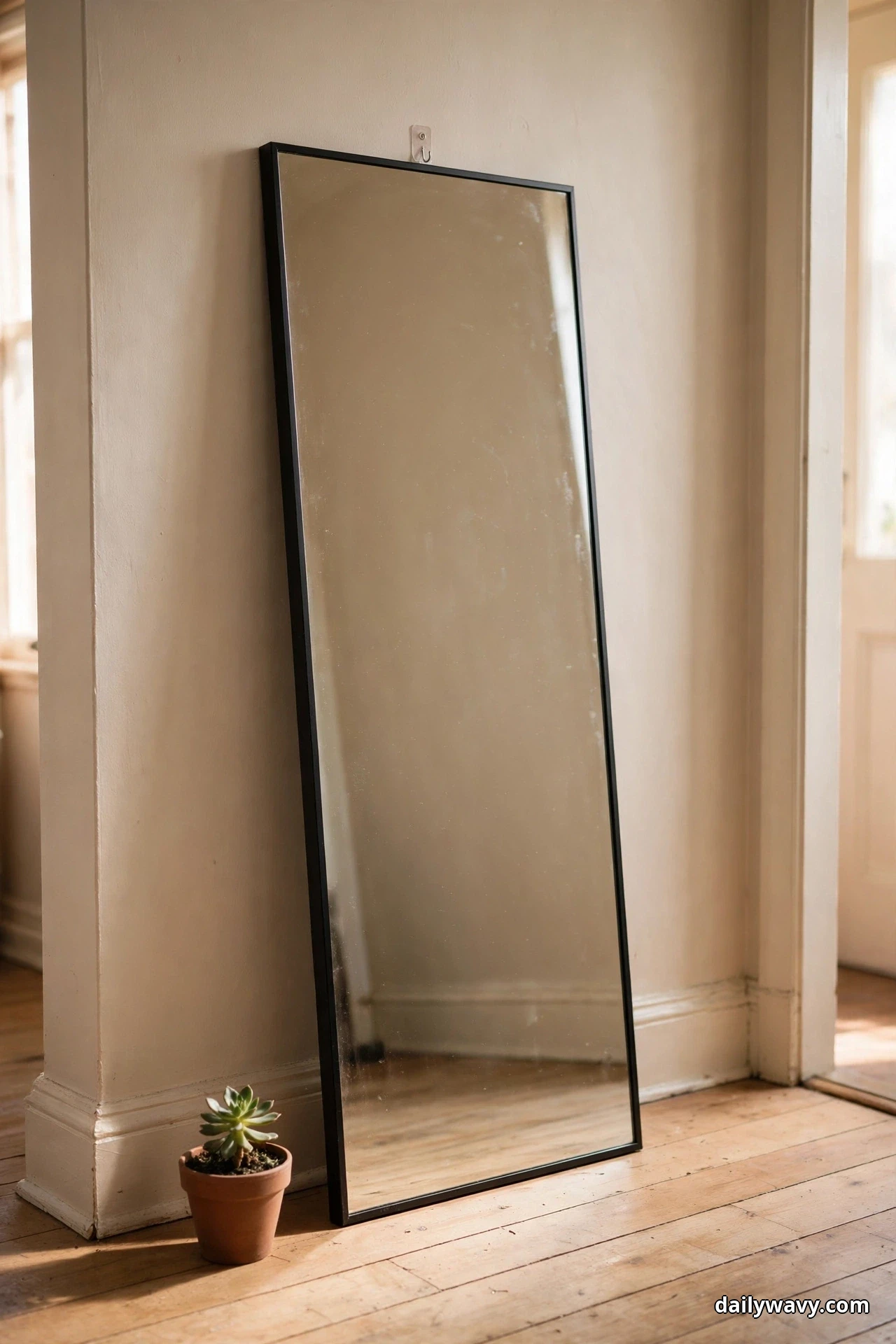
A tall mirror does three jobs at once in a rental entryway: it bounces light into a dim corner, it gives you a last look before you leave, and it makes a small space feel twice as big. The key is choosing one that stands on its own. A leaner-style full-length mirror in a 24 by 66 inch frame works in most entryways, and it needs nothing more than a wall to lean against.
Safety matters more than style here. Always anchor the top of a leaning mirror with a removable adhesive hook or a furniture strap that attaches to the frame and the wall with removable adhesive strips, following the weight rating on the package. Place it on a level floor, not on a rug that can slide, and keep the bottom edge at least 2 inches from the door swing. A mirror with a slim wood or black metal frame suits warm neutrals and disappears into almost any palette. Budget around $60 to $120 for a sturdy option, and look for one with a real glass front rather than a plastic sheet, which warps and distorts over time.
2. A Table-Top Display With Useful Objects
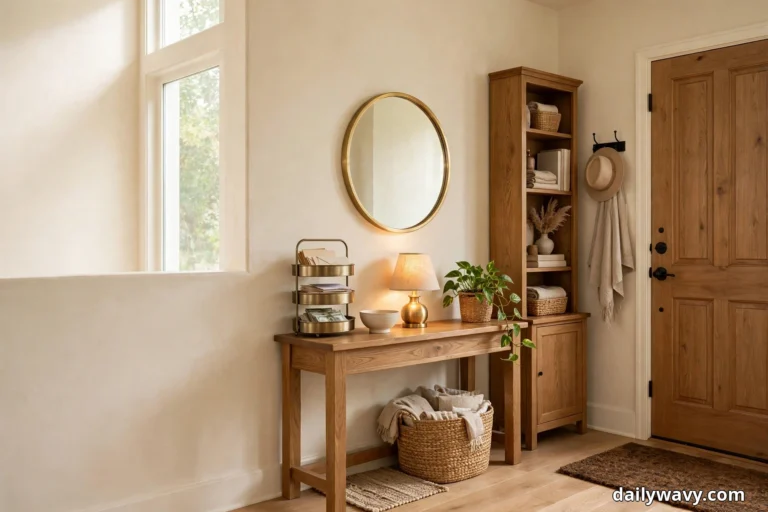
An entryway console is usually the hardest-working surface in a rental: keys, mail, sunglasses, and the bag you grab on the way out all land there. The trick is giving every object a home while keeping the top looking styled rather than cluttered. Start with a narrow console table, ideally 10 to 12 inches deep so it hugs the wall and leaves your walkway open.
Build the display in three layers. A small ceramic tray, about 8 by 5 inches, corrals keys and coins so they stop migrating. Behind it, a stack of two books or a small box holds mail out of sight. Finish with one living or natural element: a bud vase with a stem of eucalyptus, a tiny succulent, or a dried grass arrangement. Odd numbers of objects read as intentional, so aim for three or five pieces total. Keep the height under 14 inches so sightlines stay open. This costs almost nothing if you shop your own shelves, or $30 to $50 for a tray, vase, and candle.

3. A Fabric Panel Adding Color
Blank rental walls can feel cold, but a fabric panel adds color, softness, and even a little sound absorption with zero damage. A quilt, a woven wall hanging, or a simple length of linen hung from a tension rod brings warmth that paint normally provides. Choose a piece roughly 24 to 36 inches wide for a standard entryway wall.
Mounting is simple and fully removable. A spring-loaded tension rod inside a doorway or alcove holds a fabric panel with no hardware at all. On a flat wall, use two or three removable adhesive hooks rated for at least 3 pounds each, and clip the fabric with wooden clip rings so it hangs with a relaxed drape. Iron or steam the fabric first so it hangs straight. A panel in a warm rust, soft olive, or natural flax keeps the palette restrained and timeless. Cost lands between $25 and $60 for fabric or a ready-made hanging, and it moves with you to the next place.

4. A Shelf Insert That Does Not Alter Cabinetry
Many rentals come with a coat closet or a built-in nook near the door that is technically fine but functionally useless: one high shelf, one long rod, and a pile of shoes on the floor. A freestanding shelf insert turns that dead space into real storage without touching the cabinetry. Look for stackable shelf risers or a small two-tier standing shelf that fits inside the closet footprint.
Measure the interior first: width, depth, and the distance between the existing shelf and the rod. A 24-inch-wide insert in a standard 36-inch closet leaves room for coats on one side. Use the insert for shoes, bags, or storage bins, keeping daily items at waist height where you can grab them without thinking. Nothing gets screwed or glued; the insert stands on its own feet and comes out in seconds at move-out. Wire or bamboo inserts run $25 to $45, and they work just as well in a kitchen cabinet later.

5. A Lightweight Divider
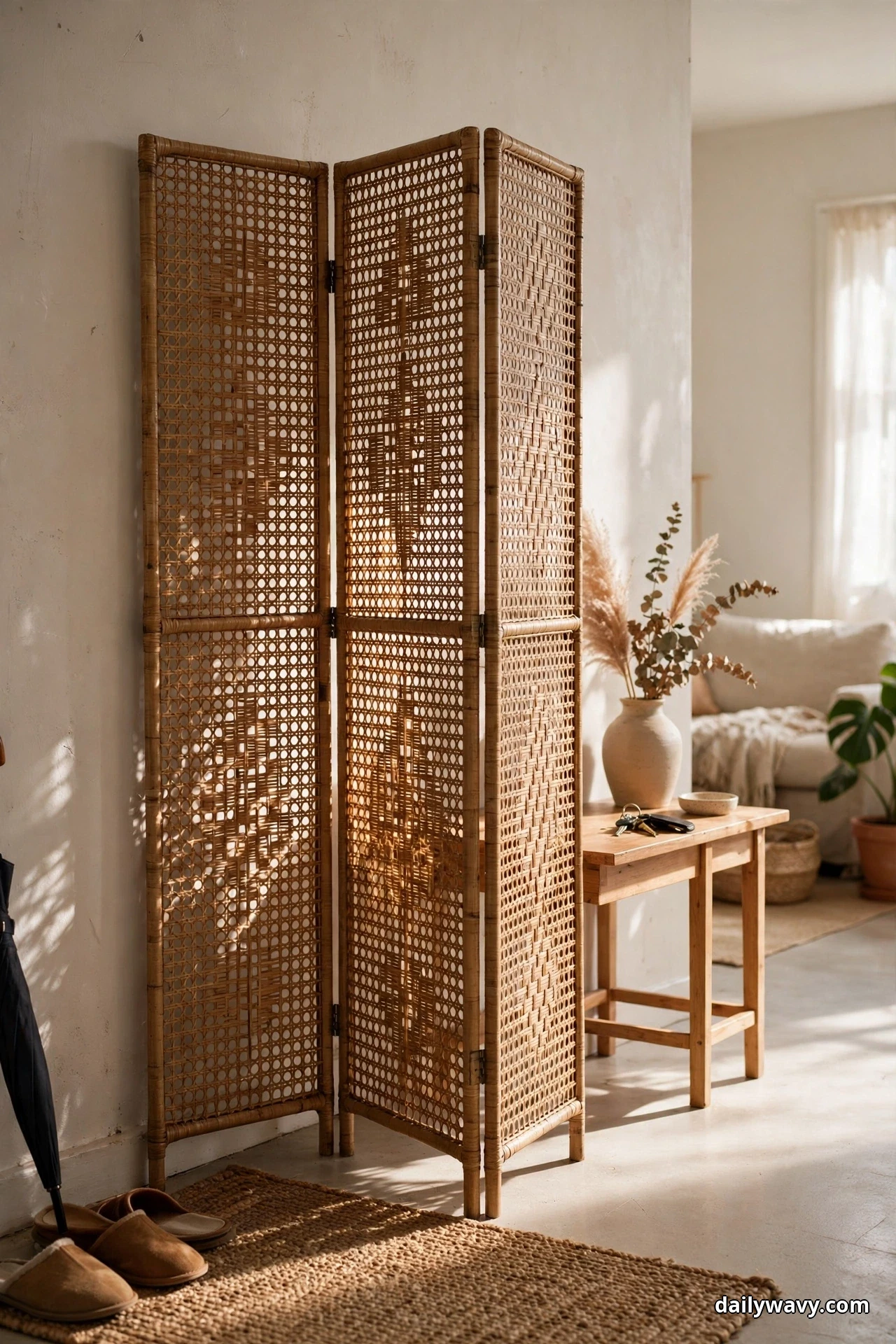
In an open-plan rental, the entryway often bleeds straight into the living room with no boundary at all. A lightweight divider draws that line gently. An open bookcase, a folding screen, or even a tall plant on a rolling stand creates a visual entry zone without a single wall anchor.
The rule of thumb is openness: choose something you can see through or over so light still travels. A three-panel folding screen at 48 to 60 inches high defines the space without darkening it, while a narrow open shelf at 30 inches wide doubles as display. Keep the divider at least 6 inches from the door swing and make sure it cannot tip: wide feet or a low center of gravity handle that. Folding screens in rattan or linen run $70 to $130, and an open cube shelf costs about the same while adding storage.
6. A Tidy Cable-Routing Solution
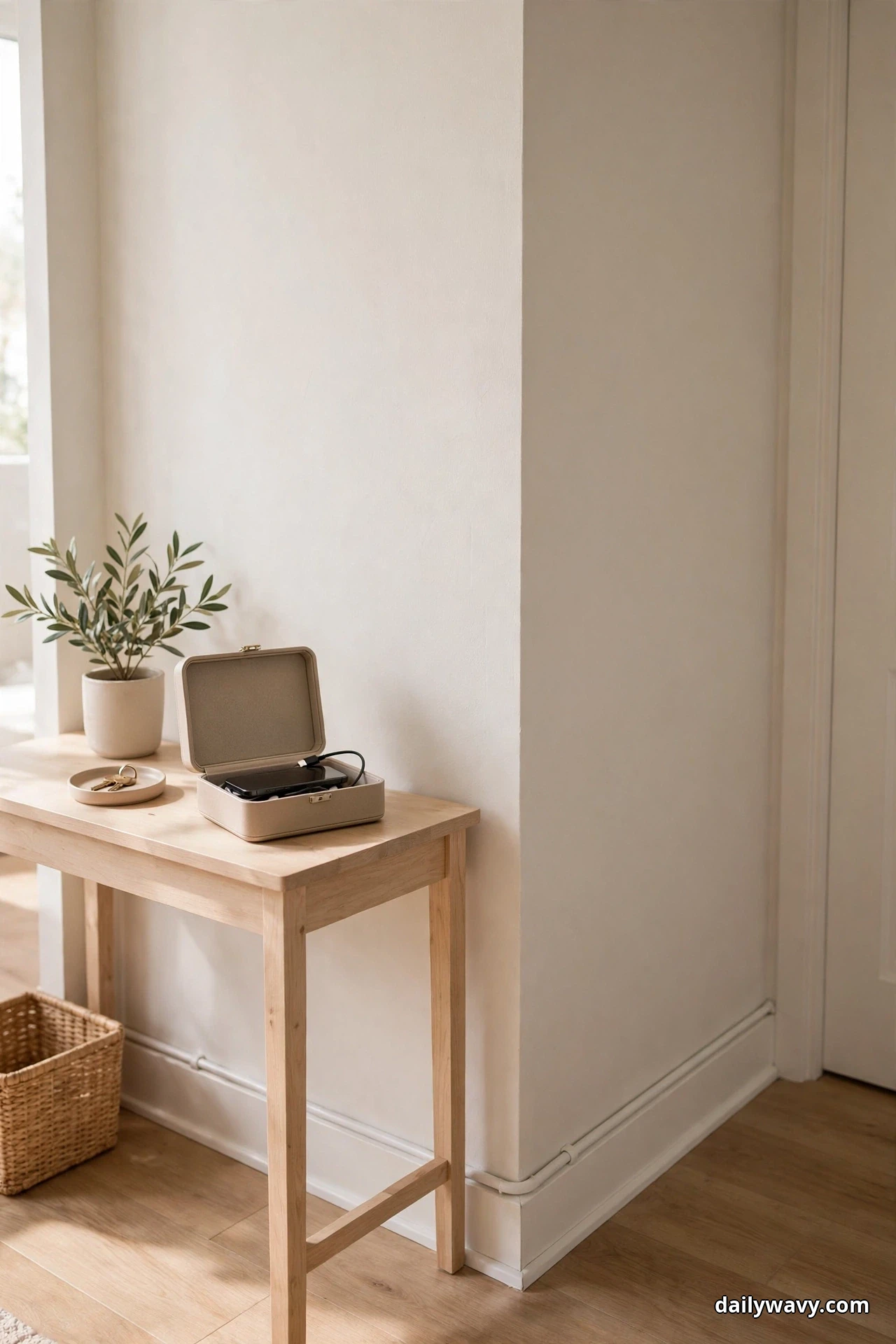
Entryways collect cables fast: a doorbell camera, a charging station, a plug-in lamp, a router tucked in the corner. A tangle of cords along the baseboard ruins the look of everything else you have done. The fix is simple and costs very little. Run cables along the baseboard in a paintable cord cover, or use adhesive-backed cable clips every 12 inches to keep a single line tight against the wall.
Start by unplugging everything and grouping cables by destination: one bundle for the charging spot, one for the lamp. A short 3-foot cord cover in white blends into most baseboards, and the adhesive backing is made to peel off at move-out. For a charging station, a small lidded box with a hole in the back hides a power strip and two phone chargers in one tidy package. Keep plugs accessible, never daisy-chain power strips, and check that nothing runs under a rug where it can overheat. The whole project costs $15 to $30 and takes about twenty minutes.
7. A Coordinated Container Set
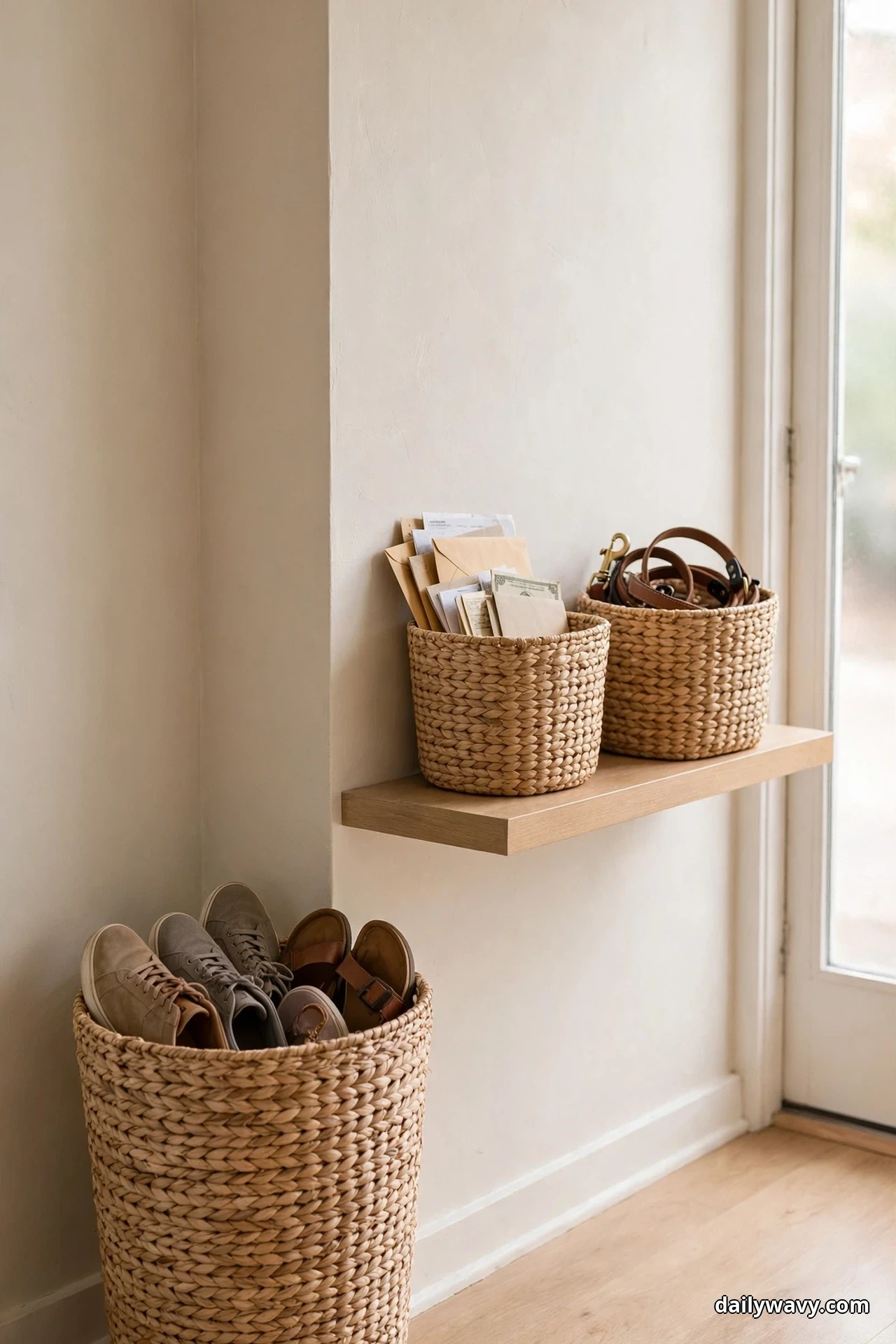
Scattered clutter is what makes rental entryways feel chaotic, and a coordinated set of containers is the fastest cure. Matching baskets, boxes, or bins in one material, like seagrass, felt, or light wood, make shoes, mail, dog leashes, and spare umbrellas look like a deliberate system instead of a pile.
Size them to the job. Two 12 by 9 inch bins on a console shelf hold mail and sunglasses. One taller basket, around 14 inches high, swallows shoes by the door. Keep the color consistent across the set and leave one container empty on purpose: it gives the system room to breathe and a place for the unexpected. Label nothing; the shapes themselves tell you what goes where. A set of three coordinating baskets costs $30 to $60, and because they are freestanding, every piece follows you to the next apartment.
8. A Portable Seating Or Surface Solution
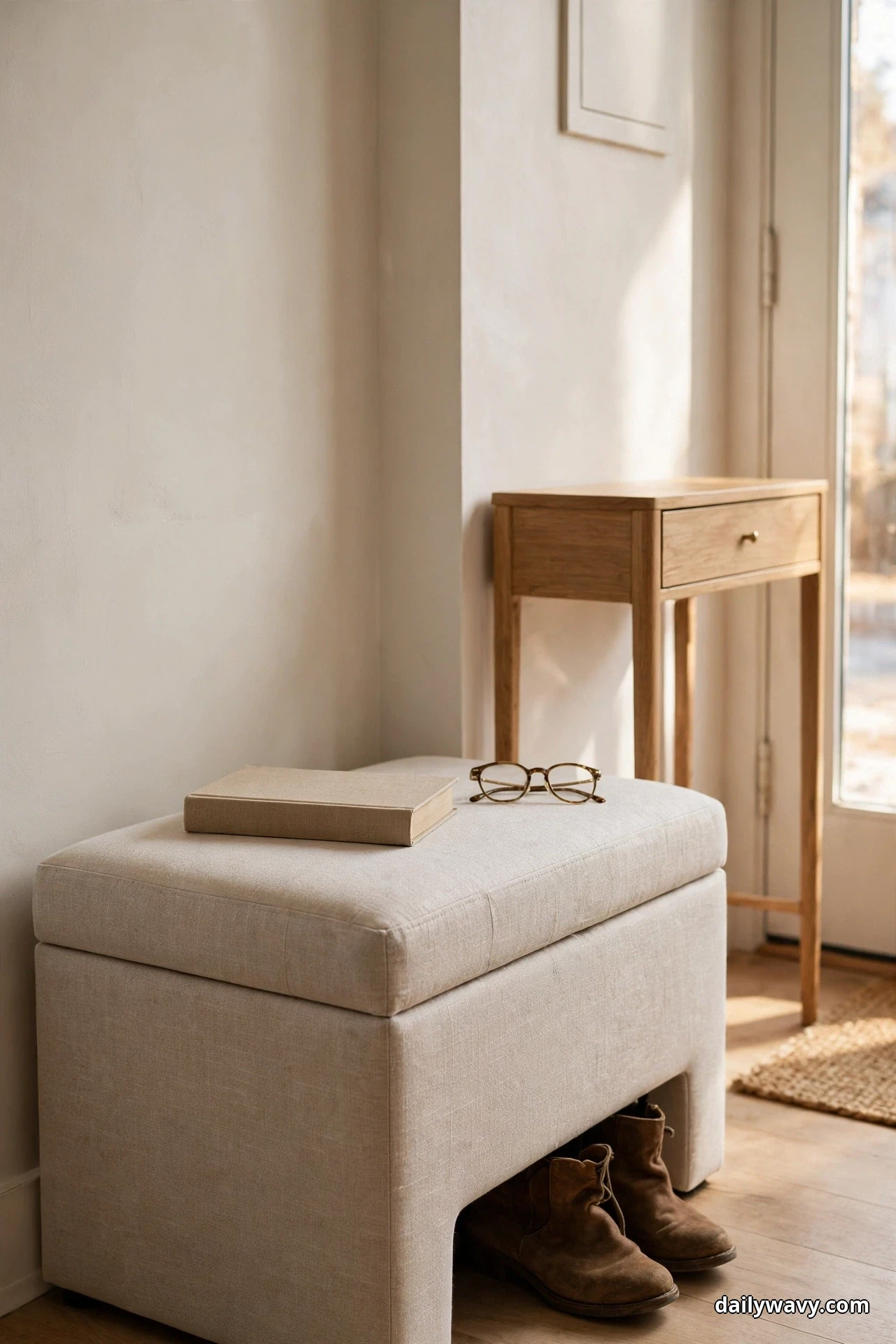
Every entryway needs a perch: somewhere to sit while pulling on boots, or a surface to set a grocery bag down. A small stool, a storage ottoman, or a folding bench delivers that without committing to the space. The footprint should stay compact, around 16 to 20 inches wide, so it tucks against the wall.
A storage ottoman is the hardest worker of the bunch: it seats one adult comfortably, holds a throw blanket and a pair of slippers inside, and can move to the living room when guests come. Look for one with a hinged lid and a weight rating of at least 200 pounds. A folding bench is lighter and stores flat behind a door if you ever need the floor space. Either way, keep the seat height near 18 inches so it feels natural to sit on. Expect $40 to $80 for a sturdy ottoman that looks good enough to keep forever.
9. A Freestanding Storage Piece
When the entryway has no closet at all, a freestanding storage piece becomes the closet. A narrow hall tree, a coat rack on a weighted base, or a slim cabinet with doors handles coats, bags, and hats in one footprint. The trick is choosing something with a small base and a tall reach: 24 inches wide and 68 to 72 inches tall stores a surprising amount while barely touching the floor.
Stability is the whole game. On hard floors, a weighted base or a wide stance prevents wobble; on carpet, adjustable feet level the piece. For a hall tree with a top-heavy coat section, add a removable furniture strap to the wall with removable adhesive strips, or simply keep the heaviest items low. A slim closed cabinet hides the visual clutter entirely and protects delicate items from dust. Good options run $80 to $150, and a solid wood piece earns its keep in a bedroom or office at your next place.

10. A Washable Textile Accent
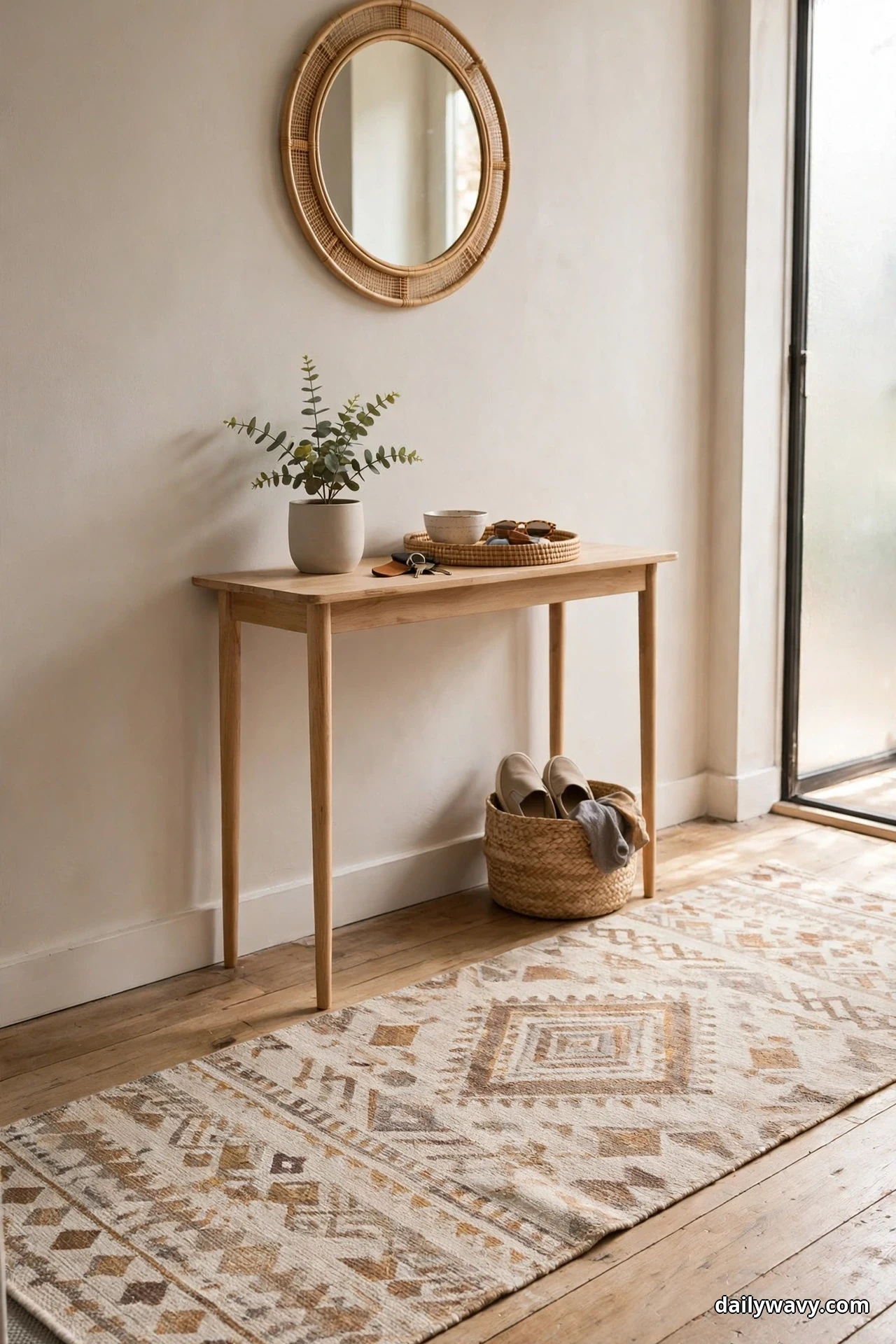
Hard rental floors, tile or vinyl, make an entryway feel cold and loud. A washable runner softens the sound, warms the look, and protects the floor underneath, which your landlord will appreciate. Machine-washable rugs have become genuinely good: low pile, real patterns, and fabrics that survive a weekly wash.
Measure your walkway and choose a runner 2 to 3 feet wide and 5 to 8 feet long, leaving at least 4 inches of floor visible on each side so the space still breathes. Lay a non-slip rug pad underneath; it keeps the runner flat, adds a little cushion, and prevents dye transfer to the floor. Stick to patterns that hide dirt, like a vintage-inspired medallion or a simple stripe, in warm neutrals. Washable runners in this size run $40 to $90, and the pad adds about $15. Shake it outside weekly and machine wash monthly to keep it fresh.
11. A Removable Surface Treatment After A Patch Test
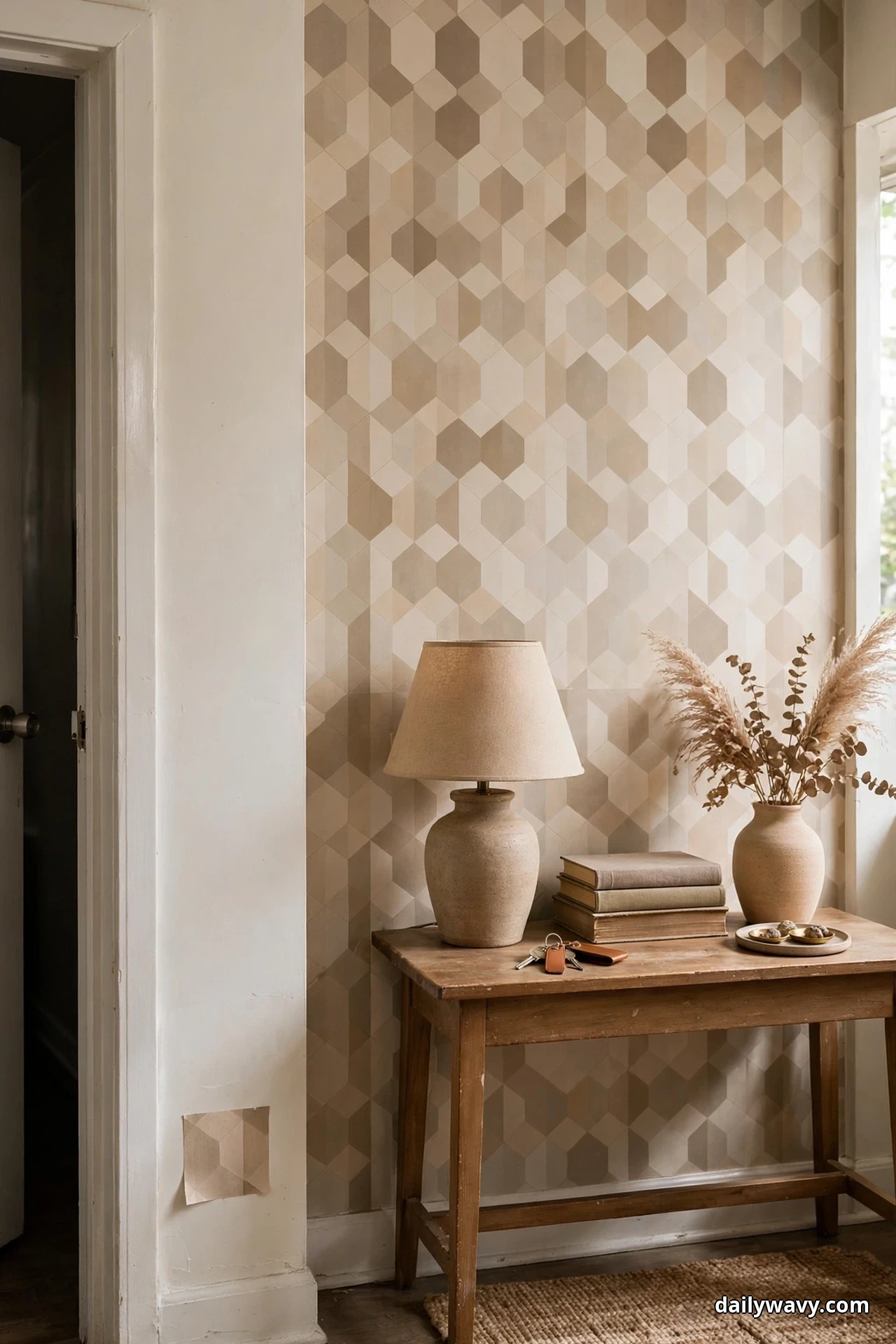
Sometimes the blank wall is the whole problem, and nothing softens it like a surface treatment: peel-and-stick wallpaper, removable wall decals, or temporary tile decals on a backsplash-style accent. Done well, one accent wall transforms the entryway completely, and it all comes down on moving day.
The patch test is non-negotiable. Apply a 6-inch square in a hidden spot, leave it for two weeks, then remove it and check the paint underneath. Only proceed if the paint comes away clean. Choose a wallpaper rated as truly removable, not just repositionable, and avoid heavily textured walls where adhesive cannot grip evenly. A grasscloth-look or soft geometric pattern in warm neutrals suits most rentals. For a 6 by 8 foot accent wall, expect $60 to $120 in material, and keep leftover rolls for touch-ups if an edge lifts.
12. A Compact Plug-In Light In A Suitable Dry Location
Rental entryways are often the darkest part of the home, with no ceiling fixture and one sad outlet. A compact plug-in light changes that without any wiring. A small table lamp on the console, a plug-in wall sconce hung with adhesive strips, or a battery-operated picture light over your mirror adds the warm layer the space is missing.
Choose the location with care: a dry spot away from the door swing and any water source, with the cord routed neatly to the outlet per the cable-routing idea above. A lamp with a warm 2700K bulb at 400 to 800 lumens gives a welcoming glow without glare. Plug-in sconces with a cord cover look surprisingly polished, and battery picture lights install in minutes for accenting art or a mirror. Keep fixtures stable and never run cords under rugs. A good plug-in lamp or sconce costs $35 to $70, and the right light makes every other upgrade look twice as good.
Frequently Asked Questions
Will my landlord really be okay with all of this?
Most of these ideas leave zero trace: freestanding furniture, washable rugs, and removable adhesives come out cleanly. The only ones worth a conversation are peel-and-stick wallpaper and anything adhered to the wall long-term. Read your lease first, ask in writing if you are unsure, and photograph everything at move-in and move-out. A quick email to your landlord costs nothing and removes all doubt.
How do I hang things without damaging rental walls?
Use removable adhesive strips or hooks, matched to the weight they will hold. Clean the wall with rubbing alcohol first, press for 30 seconds, and wait an hour before hanging. Always do a patch test in a hidden spot for anything that stays up more than a few weeks. For heavier items, lean them instead: mirrors, art, and screens all work beautifully as leaners.
What if my entryway is tiny, like barely a hallway?
Go vertical and narrow. A 10-inch-deep console, a leaning mirror, and a washable runner give you function without eating floor space. Skip the divider and the freestanding storage piece; instead use the coordinated container set on a high closet shelf. In a truly tiny space, three well-chosen pieces beat seven crowded ones.
How much should I budget for a full entryway refresh?
You can make a real difference for $150 to $250: a washable runner, a key tray, a mirror, and a container set. A fuller version with a console table, lighting, and a freestanding storage piece runs $350 to $600. Buy in stages, starting with what you touch every day: the key spot, the shoe spot, and the light.
Can I use peel-and-stick wallpaper in a humid climate?
Yes, with care. Choose a product rated for humidity and avoid placing it where it gets direct steam or splashes. The patch test matters even more in humidity, so leave the test square up for a full two weeks. If an edge starts lifting, press it back with a smoothing tool and keep the room ventilated.
What is the one upgrade I should do first?
Light and a landing spot. A plug-in lamp and a tray for your keys change how the entryway feels every single day. Everything else, the mirror, the rug, the storage, builds on that foundation. Start there and add one piece a month until the space feels finished.
The Takeaway
A rental entryway does not need permission to be beautiful; it needs pieces that respect the space and come with you when you go. Start with light and a landing spot for your keys, then add layers: a mirror that opens the space, a runner that warms it, containers that tame the clutter. Each idea here is removable, realistic, and chosen to work in real rental constraints. Pick the three or four that fit your space and budget, and let the entryway become the welcome home you actually want to come back to. For more ideas that respect small footprints, our narrow living room layout guide uses the same measure-first approach, and the Home and Decor collection has the full library waiting.