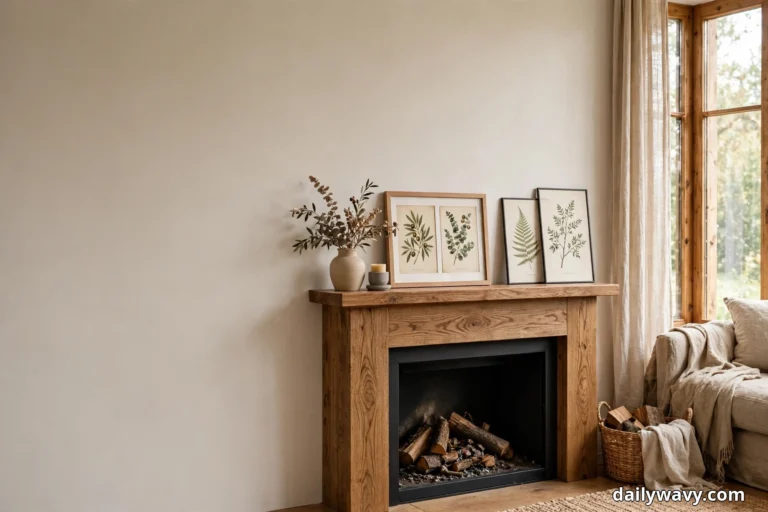
13 Blue Sofa Styling Ideas with Colors and Textures That Work Together
A blue sofa is one of the friendliest pieces of furniture you can own. Deep navy reads as calm and…
A blue sofa is one of the friendliest pieces of furniture you can own. Deep navy reads as calm and classic, while a soft dusty blue feels light and relaxed. Either way, you already have a beautiful anchor, so styling is about what goes around it. This guide gives you thirteen practical ideas for colors, textures, and companion pieces that make a blue sofa look intentional and pulled together. Every idea keeps the sofa itself exactly as it is. No slipcovers, no replacement cushions, no new sofa. Just the things that surround it, arranged with a little thought.
In This Guide
- A Reading Lamp Beside One Arm
- A Washable Rug With A Subtle Pattern
- A Linen Curtain Backdrop
- A Vintage Trunk Used As A Table
- A Single Sculptural Vase On A Nearby Shelf
- An Upholstered Bench Facing The Sofa
- A Tall Plant Beside The Arm
- A Rug Layered Over A Plain Natural-Fiber Rug
- Textured Cushions With A Plain Throw
- A Tonal Rug Anchoring The Sofa
- A Contrasting Wood Coffee Table
- A Low Ceramic Lamp On A Side Table
- One Large Artwork Above The Sofa
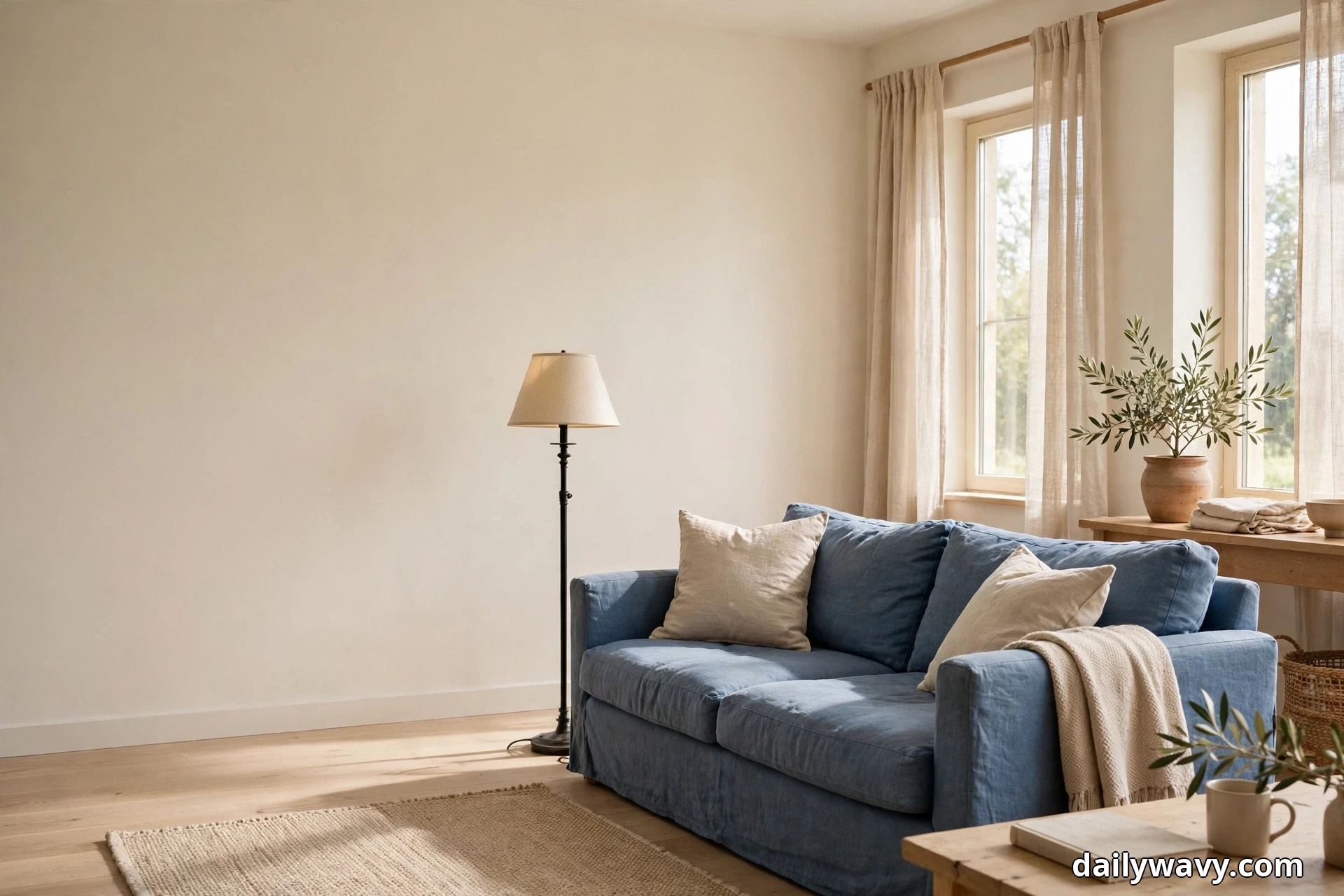
The Blue Sofa Styling Rules Before You Start
Blue is generous with color partners. It sits beautifully with warm neutrals like cream, oatmeal, camel, and warm gray, because the warmth of those tones keeps blue from feeling cold. It also loves natural wood, since grain adds organic variation that keeps a solid blue sofa from looking flat. Brasses and golds bring a little polish, black adds definition, and touches of green, especially plants, keep the whole scheme feeling alive. Where people get into trouble with blue sofas is pairing them with icy grays or stark whites in a north-facing room, which can make the blue read chilly. The fix is simple: bring warmth in through texture. A nubby throw, a woven basket, a wooden table. Texture does the warming work that color alone cannot.
Pillows and throws follow a few reliable rules. For a standard sofa, 20 by 20 inch pillows sit best on the main seats, with a 12 by 20 inch lumbar layered in front if you want a third pillow. Use an odd number of pillows total, usually three or five, so the arrangement looks relaxed rather than mirrored. Two matching pillows pushed into each corner looks stiff. One pattern, one solid, and one texture is a safe combination that always works with a blue base.
Rug scale is the detail that makes or breaks a living room. The standard guidance is simple: the front legs of the sofa should sit on the rug, with the rug extending at least 6 inches past each arm. For most sofa seating areas, an 8 by 10 foot rug hits this mark. Before buying anything, measure your room and tape the rug size on the floor with painter’s tape. Live with the tape outline for a day. It is the cheapest design tool you own, and it prevents the most common mistake in blue sofa styling: a rug that is too small and leaves the sofa floating alone on bare floor.
1. A Reading Lamp Beside One Arm
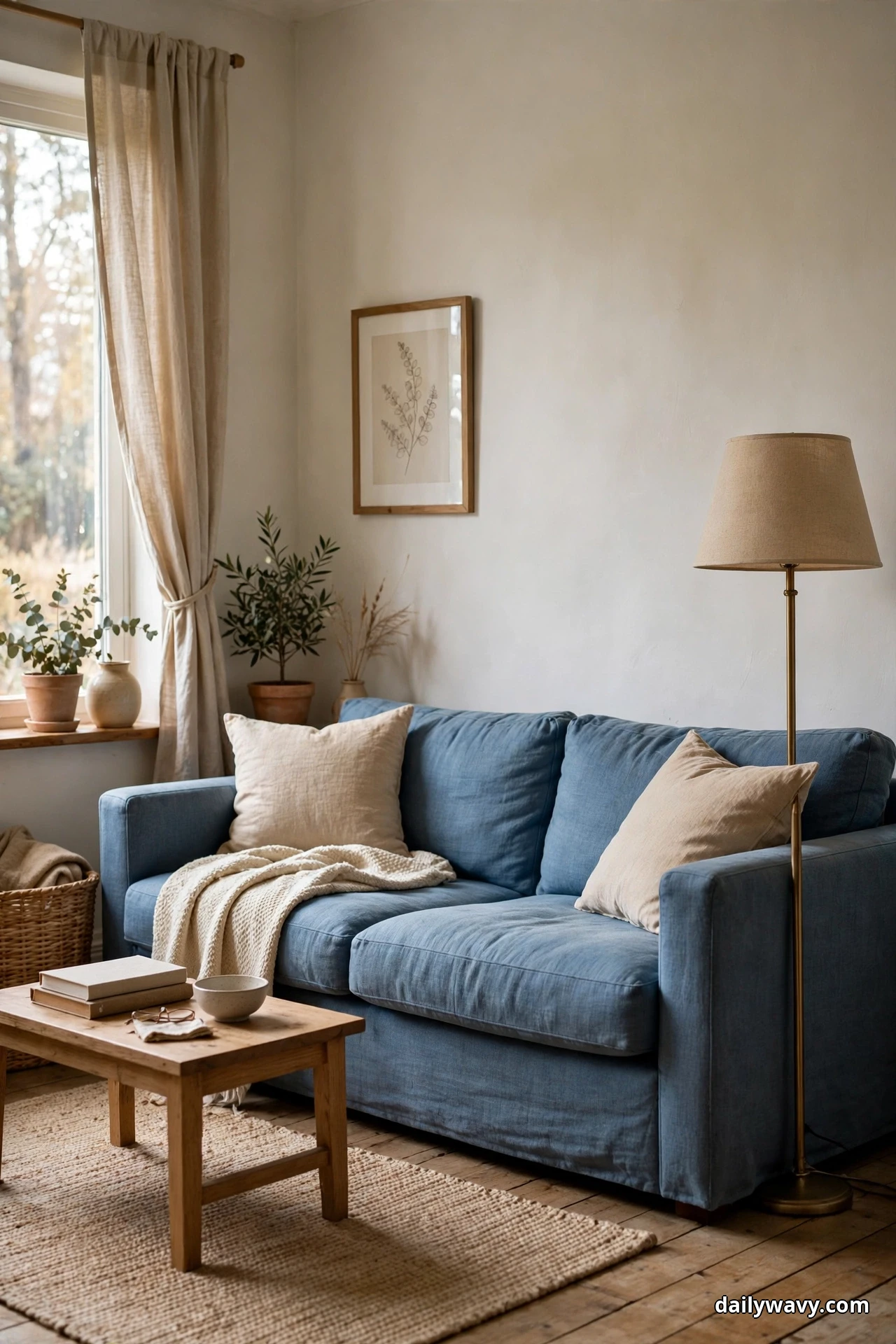
Picture this: evening, the blue sofa looking especially deep in the warm lamplight, a good book waiting on the arm. A reading lamp beside one arm of the sofa changes how the whole corner feels after dark. Overhead lighting flattens everything, but a low pool of warm light makes the blue richer and the seating area feel like a destination. It is the single fastest way to make a blue sofa look cozy instead of just blue.
This works because blue responds beautifully to warm light. Cool bulbs can make navy look almost gray, but a warm 2700K bulb brings out the depth in the color and makes nearby wood and fabric look their best. Place the lamp on a small side table beside one arm, tall enough that the light falls across the seat when someone is reading. An arc floor lamp also works if you have no side table, though it takes up more floor space. Measure the height of the sofa arm first, then look for a lamp where the shade sits 4 to 6 inches above the arm. That way the light spreads across the seat instead of blinding the reader.
A basic table lamp and shade can be found for 30 to 60 USD at large retailers, and a decent reading floor lamp starts around 50 USD. Expect about 20 minutes of effort: carry it over, plug it in, adjust the shade. The lower-cost alternative is moving a lamp you already own from another room. Lighting is the one thing where simply rearranging what you have can transform the space, so shop your house before you shop the store.
2. A Washable Rug With A Subtle Pattern
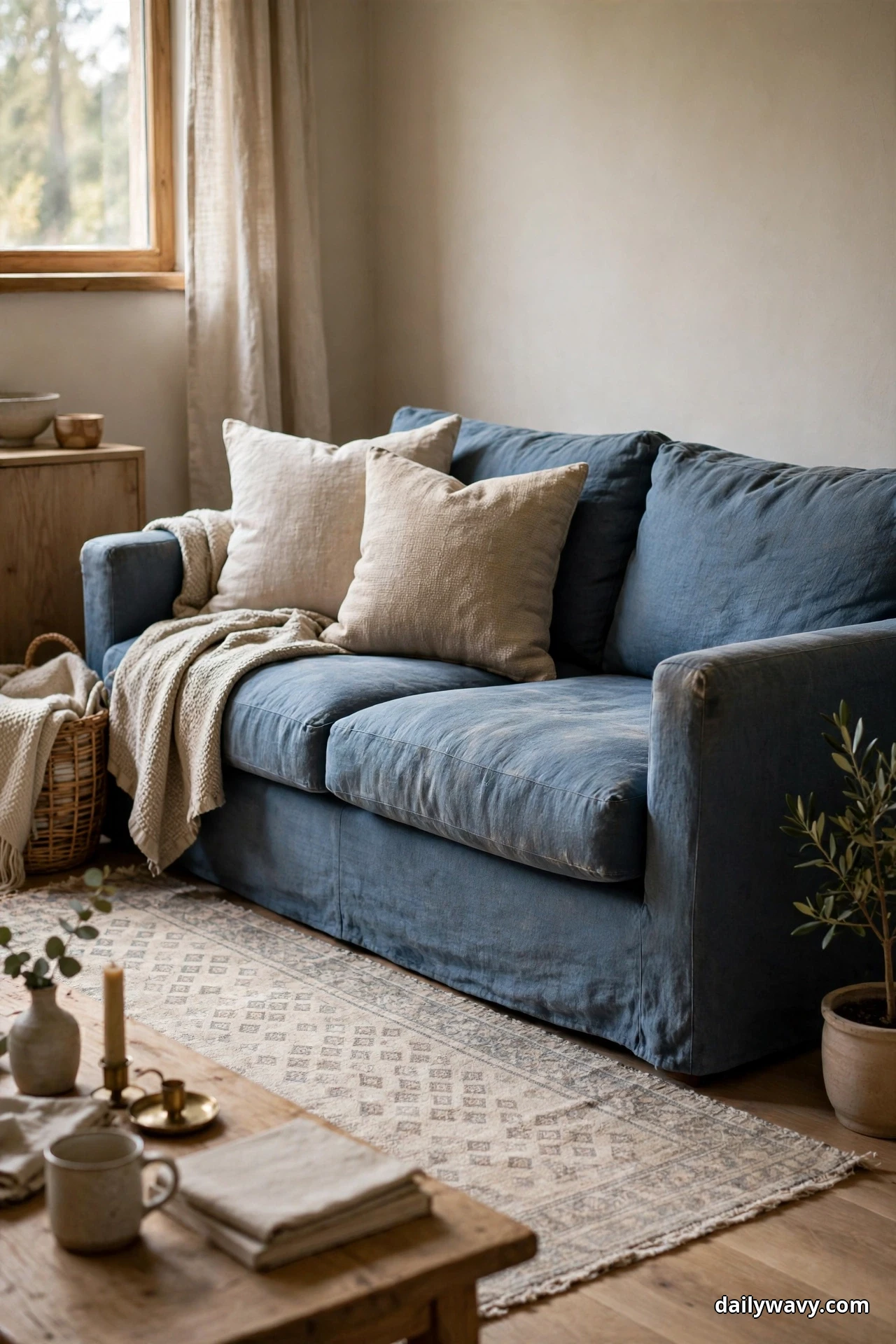
A blue sofa deserves a floor that can keep up with real life. Washable rugs have come a long way, and a subtle pattern under the sofa gives the eye something to move across while hiding crumbs, pet hair, and the occasional spill. Choose a pattern that holds a hint of blue, cream, or warm gray, and the rug will quietly tie the whole seating area together without competing with the sofa.
The why here is practical as much as visual. Blue sofas are often the darkest thing in the room, which makes them a magnet for lint and light-colored debris. A rug with a low-contrast pattern camouflages that better than a solid rug does, so the area looks tidier between cleanings. Machine-washable options mean you can actually clean it properly instead of spot-treating forever. Measure carefully before ordering: remember the front-legs rule, and for most sofas that means 8 by 10 feet. Leave at least 12 inches of bare floor between the rug edge and the wall so the room feels framed rather than carpeted.
Washable rugs in that size run 150 to 350 USD depending on the brand. Plan 30 minutes to unroll it, let the packing wrinkles relax, and tuck it under the sofa legs. The budget move is a non-washable patterned rug in the same size, which costs less upfront, though you will spend more on cleaning over time. For homes with kids or pets, washable pays for itself within the first year.
3. A Linen Curtain Backdrop
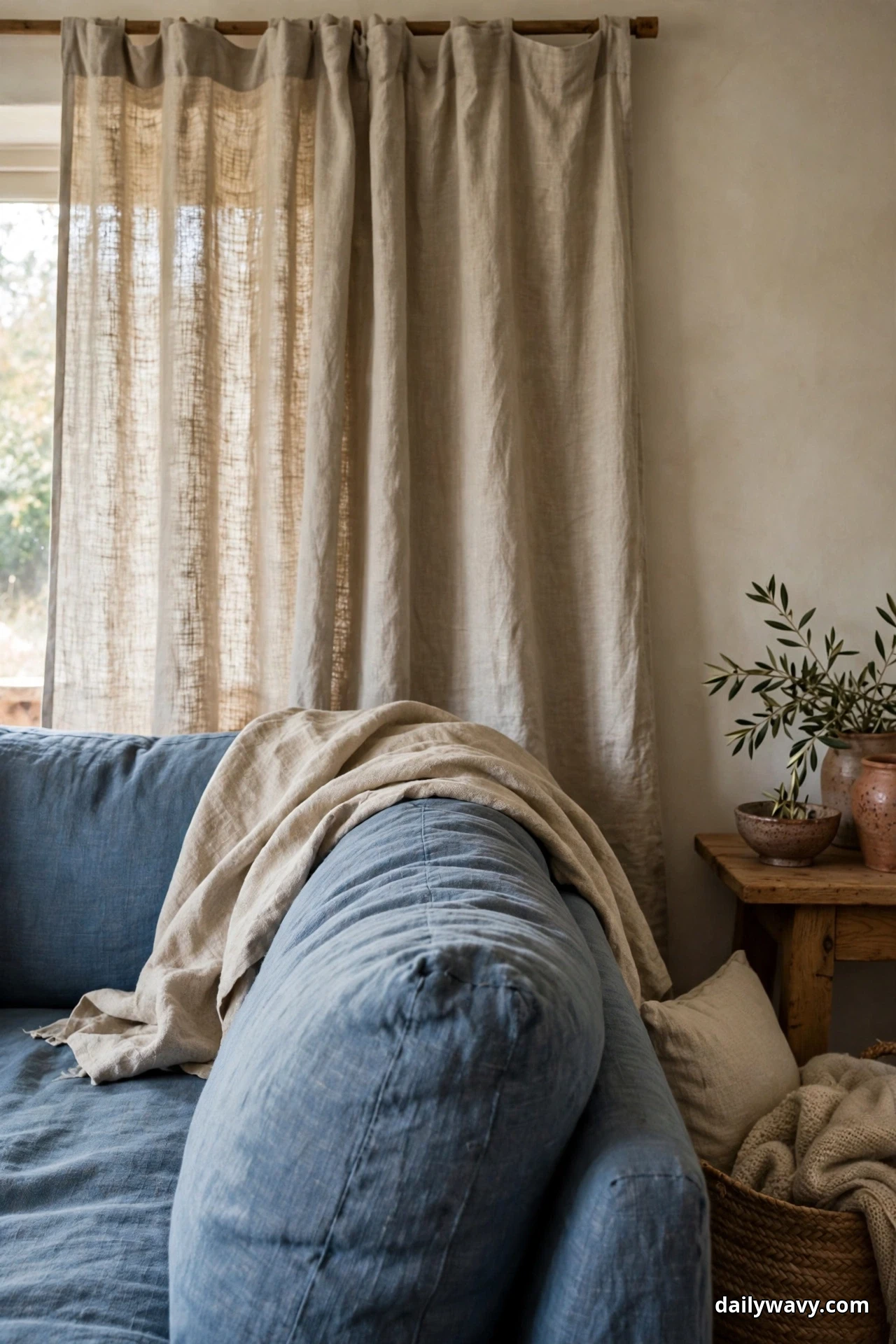
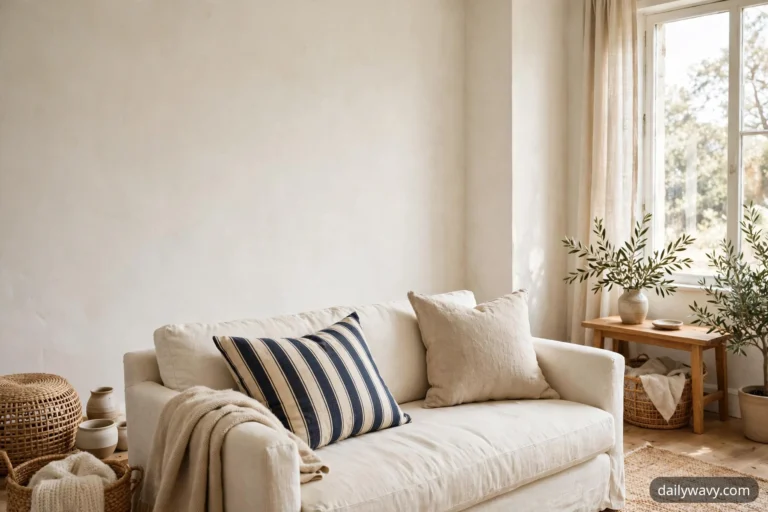
There is something about linen behind a blue sofa that just settles a room. Linen curtains have a relaxed, slightly rumpled texture that softens whatever wall is behind the sofa and filters daylight into a gentle glow. Choose ivory, oatmeal, or warm white linen panels and let them hang from just below the ceiling to just above the floor. The vertical lines draw the eye up, the texture keeps the blue from feeling flat, and suddenly the whole wall looks finished.
Blue and natural linen is one of the most dependable combinations in home styling. The warmth of the fabric balances blue’s coolness, and the weave adds the kind of texture that photographs beautifully but also just feels good in person. Hang the rod 4 to 6 inches above the window frame and extend it 6 to 10 inches past each side so the panels frame the window generously. For a standard 84 inch panel length, measure from your rod position to the floor and buy panels that end about half an inch above the floor so they do not collect dust.
A pair of linen-look curtains costs 40 to 80 USD, with true linen running higher, around 90 to 150 USD per pair. Hanging takes about an hour with a drill and a level. The low-cost alternative is a linen-blend fabric, which reads nearly the same from across the room at about half the price. If you rent, a tension rod inside the window frame keeps things landlord-friendly.
4. A Vintage Trunk Used As A Table
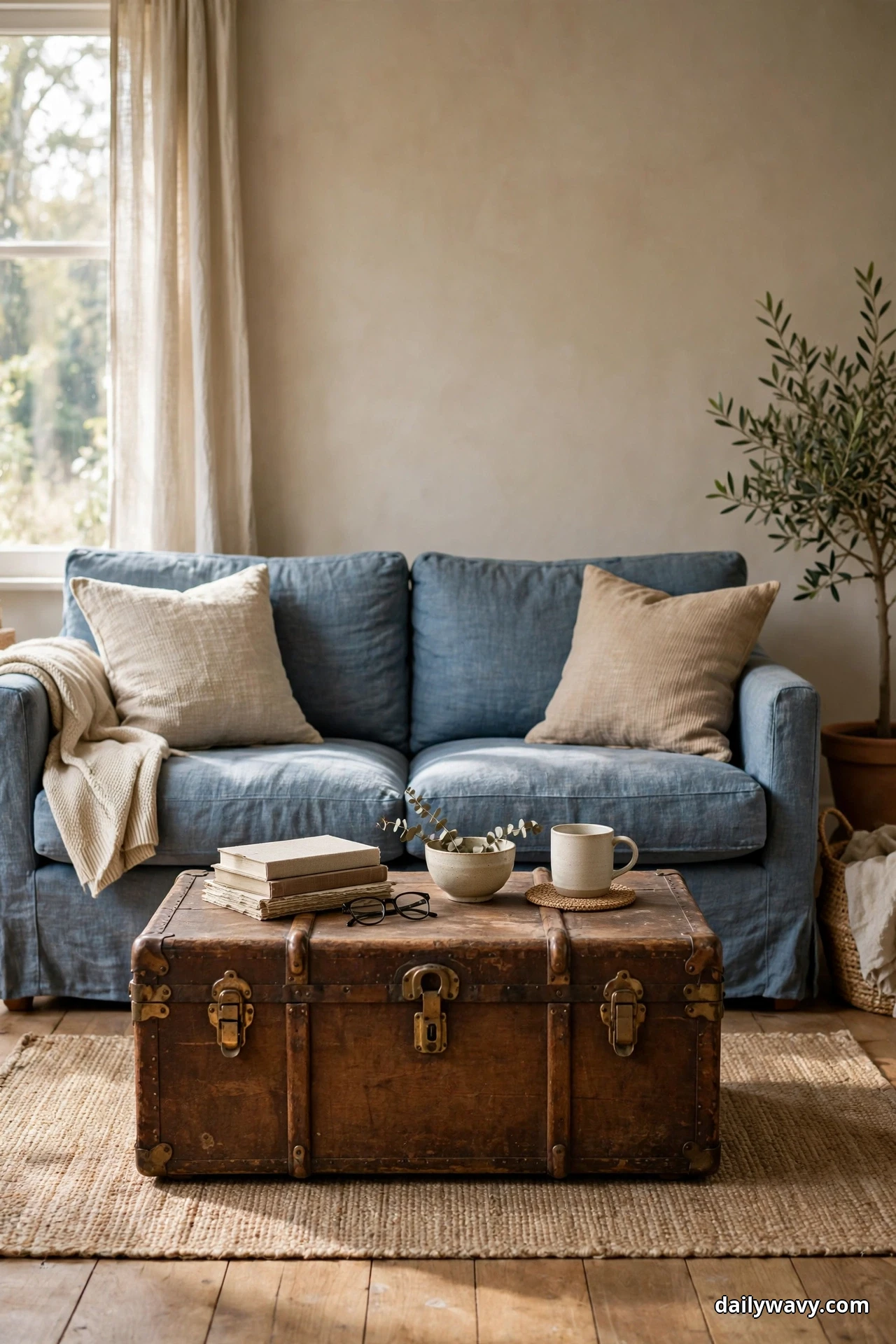
A vintage trunk in front of a blue sofa does two jobs at once: it is a coffee table with real character, and it swallows blankets, board games, or remotes that would otherwise clutter the room. The aged leather or worn metal of a trunk contrasts beautifully with the clean lines of upholstery. Where the sofa is smooth and solid, the trunk is textured and storied, and that contrast is what makes the pairing look designed rather than accidental.
Wood and leather tones both warm up blue, which is why this works so reliably. The trunk also breaks up the rectangle of the sofa with a smaller, differently shaped form. Measure your sofa seat height first, then look for a trunk between 14 and 18 inches tall so it works as a comfortable surface for feet and coffee cups. Leave 14 to 18 inches of walkway between the trunk and the sofa so people can pass and reach their drinks without gymnastics. A tray on top protects the lid from rings and gives the arrangement a finished look.
Thrift stores and flea markets are full of trunks at 40 to 120 USD, often with lovely patina already built in. Budget about an hour for cleaning and adding felt pads underneath so it does not scratch the floor. The lower-cost alternative is a woven storage ottoman, which gives you the same hidden storage and footrest function in a soft form for 50 to 80 USD new.
5. A Single Sculptural Vase On A Nearby Shelf
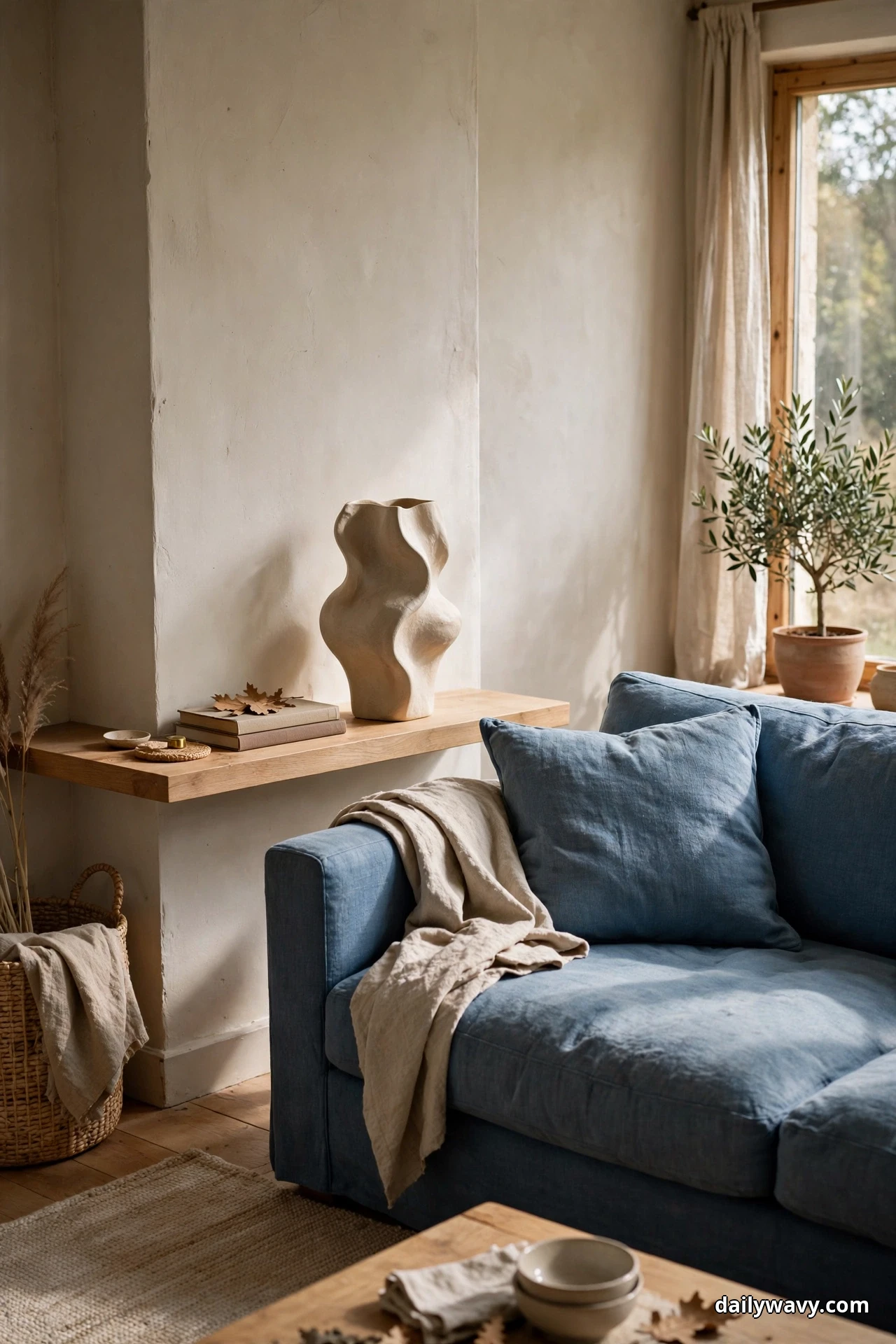
One object, placed with intention, can carry a whole side of the room. A single sculptural vase on a shelf near the sofa gives the eye a resting point and introduces a new texture, ceramic, stoneware, or even carved wood, that plays off the upholstery. Keep it solo. A row of small objects reads as clutter; one confident piece reads as style. The vase does not need flowers, though a few dried stems in fall and winter keep it feeling alive.
This works because of restraint. A blue sofa is already a strong statement, and the room around it needs breathing room, not competition. One sculptural piece adds height and texture variation without adding visual noise. Place it on a floating shelf, the mantel, or the top of a bookcase within sight of the sofa, roughly at eye level when seated so it enters the line of sight naturally. Step back across the room to check the scale: the vase should be noticeably larger than you think. Small objects on high shelves disappear; a vase 12 to 18 inches tall holds its own.
A striking ceramic or stoneware vase runs 25 to 60 USD from artisan shops and home stores. Effort is minimal: place it, step back, adjust once. The budget alternative is a thrifted ceramic vase with good proportions, which can cost under 10 USD and often has better character than something brand new. Shape matters more than price here.
6. An Upholstered Bench Facing The Sofa
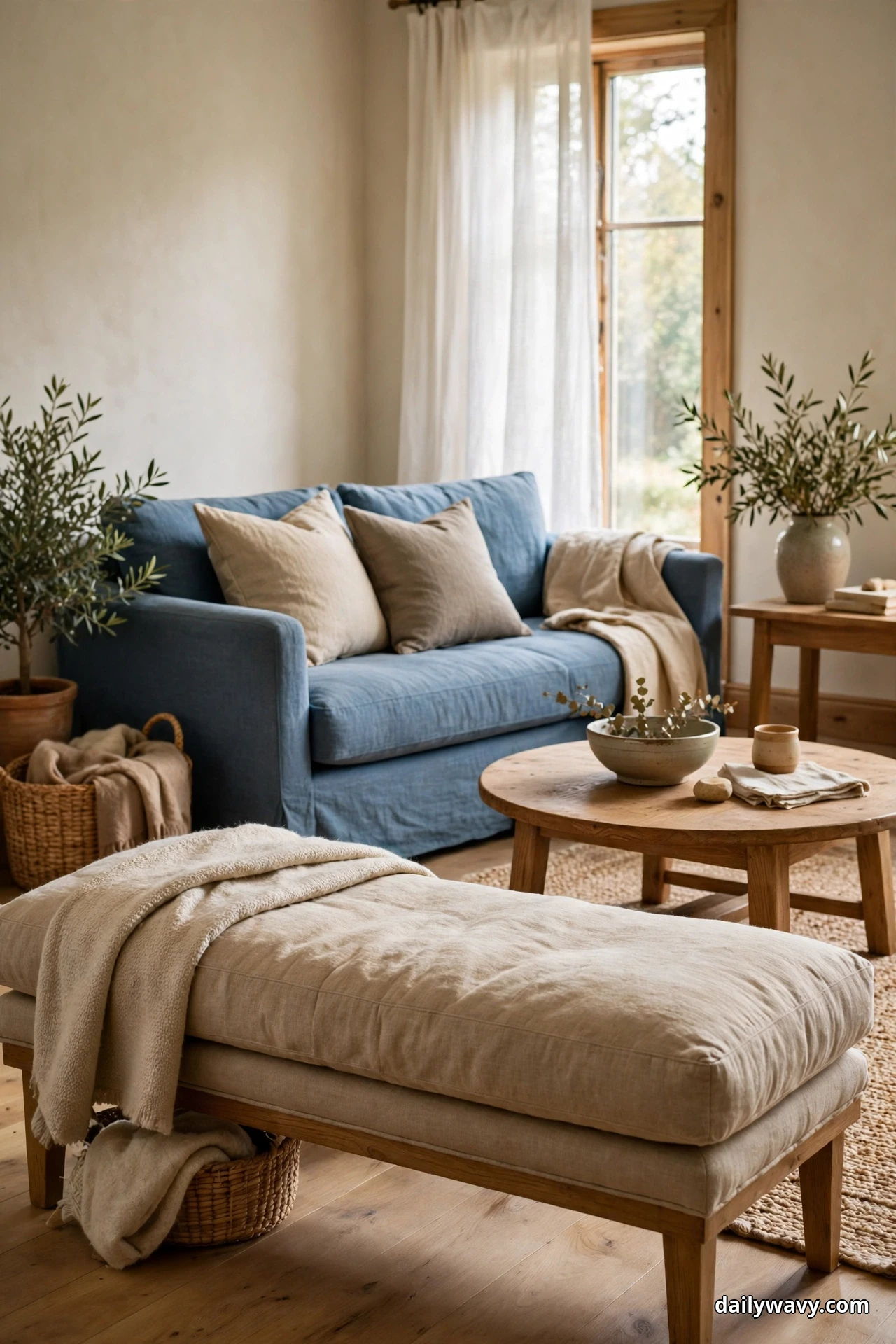
Conversation needs a partner. An upholstered bench facing the blue sofa turns a line of seating into a proper arrangement, giving people somewhere to sit that faces each other instead of the television. A bench is lighter visually than a second sofa or armchairs, and it slides away against a wall when you need the floor space. Choose one in cream, oatmeal, or warm gray upholstery so it softens the blue without matching it.
The pairing works on the color wheel logic of blue loving neutrals. A pale bench against a blue sofa creates the kind of light-dark rhythm that makes a room feel balanced, and the upholstery adds another soft texture at a different height. Measure the distance between the sofa and where the bench will sit: 30 to 36 inches apart is comfortable for conversation and foot traffic, and the bench should be roughly two-thirds the length of the sofa. Check that the bench height matches the sofa seat height within a couple of inches so both feel like they belong to the same arrangement.
A simple upholstered bench costs 80 to 200 USD depending on size and fabric. Set-up takes about 15 minutes once it is assembled. The lower-cost alternative is a storage bench, which gives you the same facing seat plus hidden storage for throws and pillows, often for 60 to 100 USD. Either way, you gain seating without the bulk and cost of another armchair.
7. A Tall Plant Beside The Arm
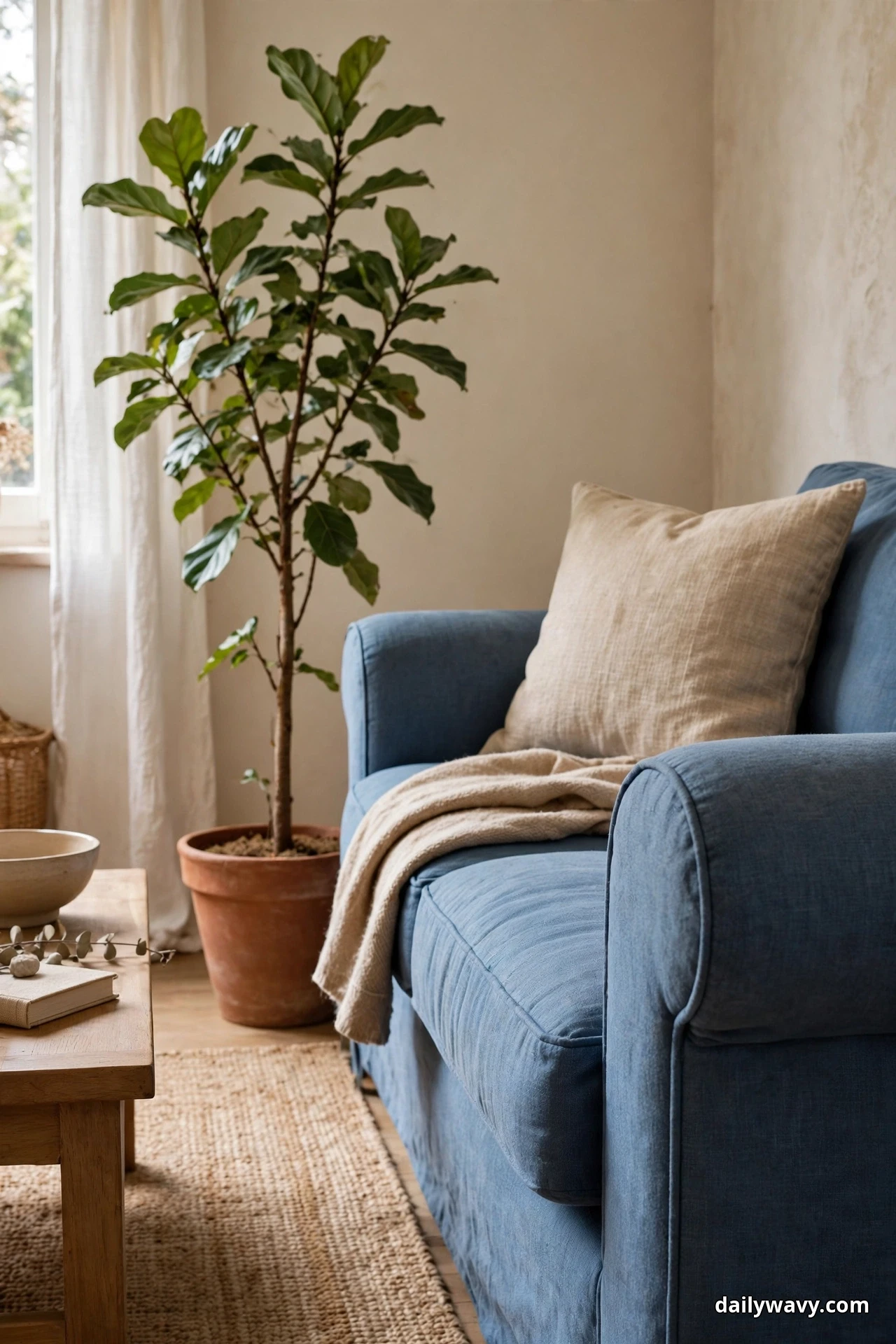
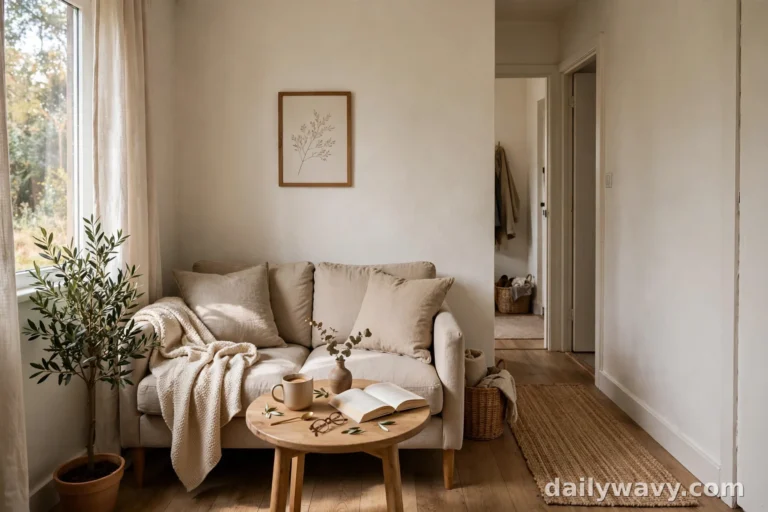
Greenery and blue are a natural pair. Think of the sea meeting a shoreline: that is the feeling a tall plant beside the arm of a blue sofa creates. A fiddle-leaf fig, olive tree, or tall snake plant adds living height at the sofa’s edge, and the green plays against the blue in a way that feels fresh rather than decorated. It also softens the hard corner where the sofa meets the wall.
Blue and green sit next to each other on the color wheel, which is why the combination feels calm instead of jarring. The plant’s organic shapes contrast with the sofa’s straight lines, and that contrast keeps the eye moving. Choose a pot in terracotta, cream ceramic, or woven seagrass to introduce a warm or natural texture at the base. Measure the space beside the arm: you want a plant that rises 1 to 3 feet above the sofa back, with a pot 12 to 16 inches wide so it has presence without crowding the walkway. Keep 6 to 8 inches of clearance between the pot and the sofa arm.
A healthy tall plant costs 40 to 120 USD depending on the variety and size, plus 20 to 40 USD for a nice pot. Ongoing effort is just weekly watering, which takes five minutes. The lower-cost alternative is a good-quality faux tree, around 50 to 80 USD, which gives the same silhouette with zero maintenance. If you choose real, pick a variety that tolerates your room’s light before falling for its looks.
8. A Rug Layered Over A Plain Natural-Fiber Rug
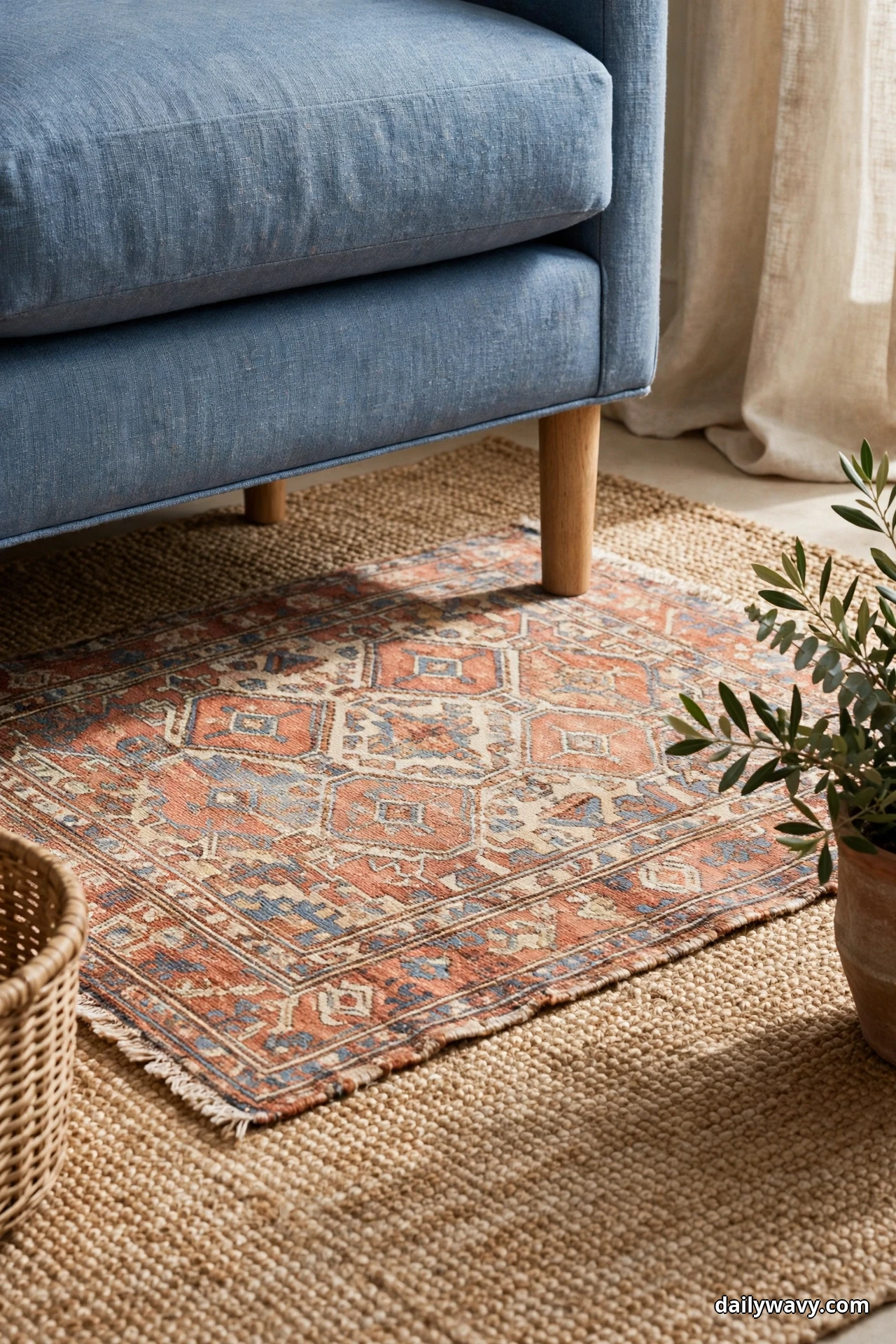
Layering a smaller patterned rug over a large plain natural-fiber rug is a designer trick that works especially well with blue sofas. Start with a big jute or sisal rug as the base layer, then float a smaller patterned rug, one with blue, cream, or warm tones, on top, slightly angled or offset. The texture of the natural fiber warms up the blue, the patterned top layer adds interest, and the combination looks far more expensive than the sum of its parts.
This works because blue sofas can dominate a room, and the layered floor gives the eye two textures to enjoy before it even reaches the sofa. The natural fiber underneath also solves the sizing problem: a large jute base covers the area the sofa needs, while the patterned layer on top only needs to look good in the central zone. The base layer should extend under the front legs of the sofa and 12 inches beyond the furniture; the top layer can be 5 by 8 or 6 by 9 feet, positioned with its edge a foot or so from the base rug’s edge. Keep the top rug from sliding by placing a rug pad between the layers.
A 8 by 10 foot jute rug runs 120 to 250 USD, and a patterned 5 by 8 on top runs 80 to 200 USD. Laying both takes about 30 minutes with a helper. The budget alternative is to skip the base layer and use the patterned rug alone at the proper size, though you lose the texture contrast that makes layering special. If you go this route, make sure the top rug has enough weight to stay flat without the base.
9. Textured Cushions With A Plain Throw

This is the classic move for a reason. Textured cushions, think boucle, nubby wool, woven cotton, or a subtle cable knit, break up the flat surface of a blue sofa, and a plain throw draped over one arm or across the back adds a soft layer without competing. Keep the throw solid in cream, oatmeal, or camel so the cushions can carry the texture story. The whole arrangement takes five minutes and transforms the sofa instantly.
Texture is the secret ingredient in blue sofa styling because a solid blue seat is a large area of one color. Without variation, it can read flat even in a good light. Cushions in mixed textures catch the light differently, creating depth that makes the blue look richer. Follow the odd-number rule: three 20 by 20 inch cushions, or five with a 12 by 20 lumbar in front, mixed across two or three textures and one simple pattern at most. Drape the throw casually over one arm, folded in thirds, rather than spreading it flat. The casual fold looks inviting; the flat spread looks like a display.
Cushion covers in good textures run 15 to 35 USD each, and a quality throw runs 30 to 70 USD. You can reuse your existing cushion inserts and just buy covers. The lower-cost alternative is buying covers from discount home stores, where decent textured options start around 8 USD each, and using a throw blanket you already own. This is the highest-impact, lowest-cost idea in the whole guide.
10. A Tonal Rug Anchoring The Sofa
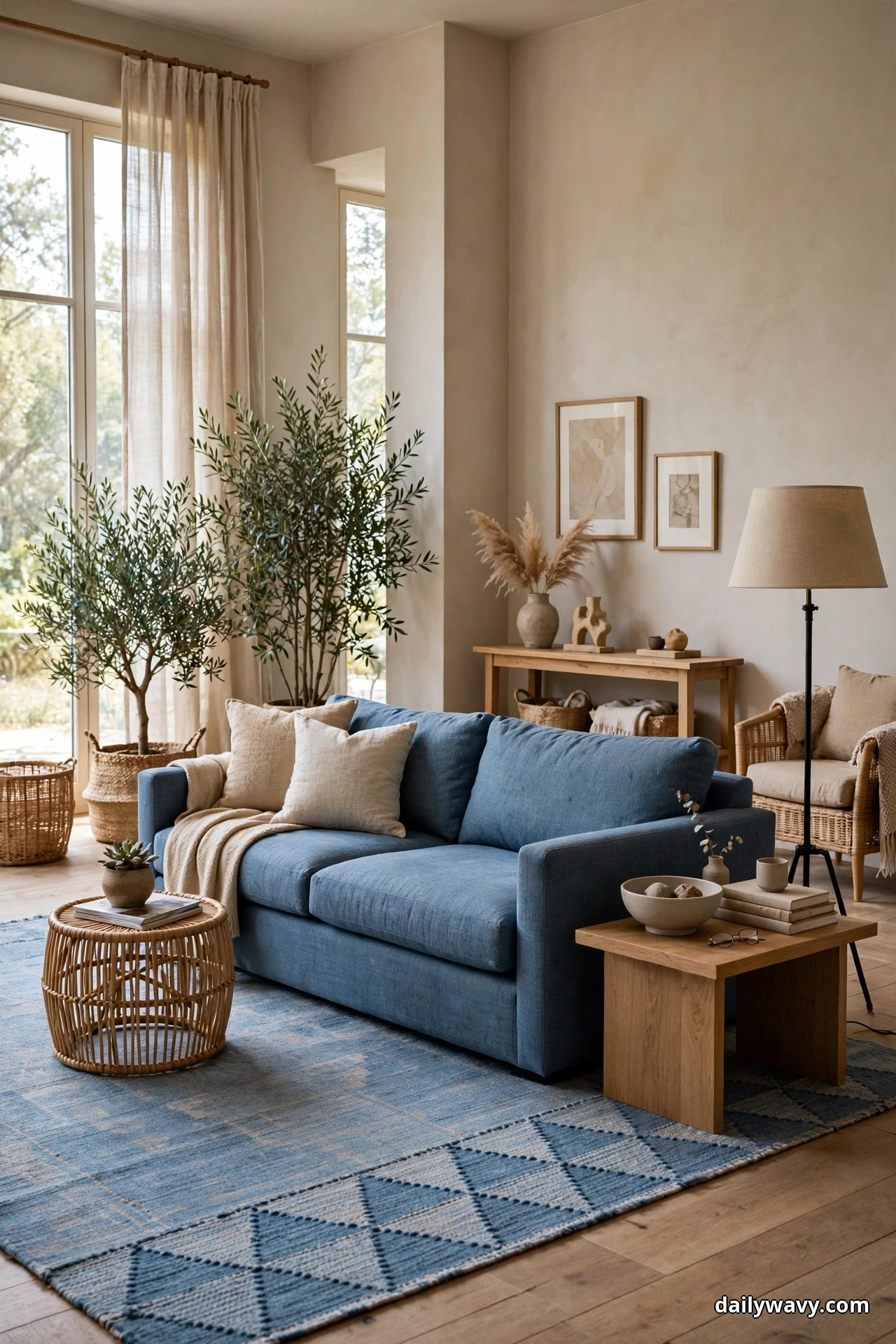
If patterned rugs feel busy to you, go tonal instead. A rug in a lighter or deeper shade of blue than your sofa creates a calm, cohesive floor that lets the sofa feel like part of a color story rather than a lone statement. A dusty blue rug under a navy sofa, or a pale washed-blue rug under a medium blue sofa, reads as intentional and serene. It is the quietest idea in this guide and one of the most effective.
Tonal layering works because staying within one color family removes visual noise, which makes small rooms feel larger and calm rooms feel calmer. The key is enough contrast between the rug and the sofa that they read as related but distinct. Hold a rug sample against the sofa in daylight: you want at least two shades of difference, lighter or darker, so the sofa does not blend into the floor. Size follows the same front-legs rule, 8 by 10 feet for most seating areas, taped out on the floor before you buy.
Tonal blue rugs in that size run 120 to 300 USD depending on material. Plan 30 minutes to unroll and position it. The budget alternative is a solid indoor-outdoor rug in a blue tone, which is often cheaper, extremely durable, and easy to hose off. Just confirm the texture is soft enough for bare feet, since some outdoor weaves feel scratchy indoors.
11. A Contrasting Wood Coffee Table
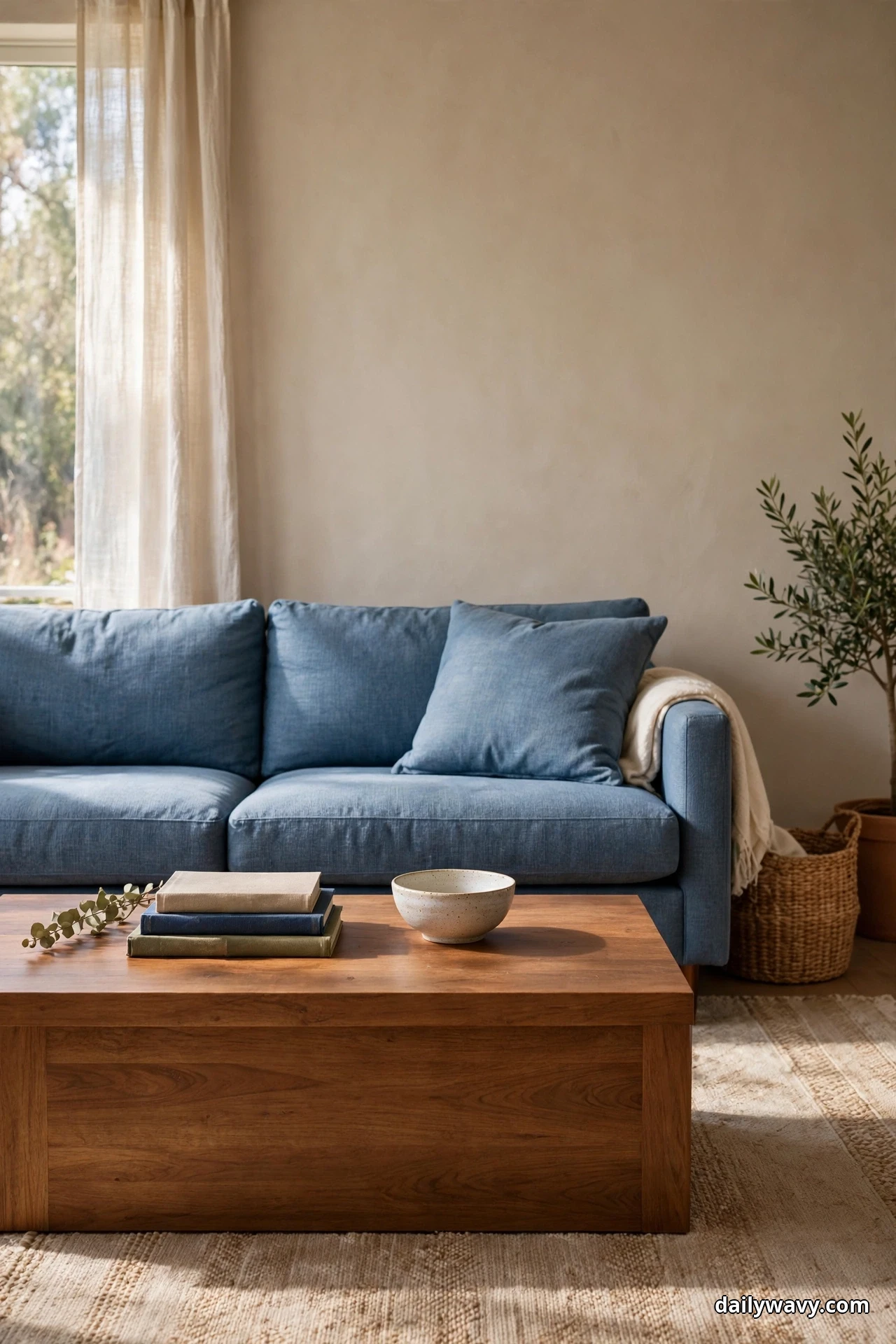
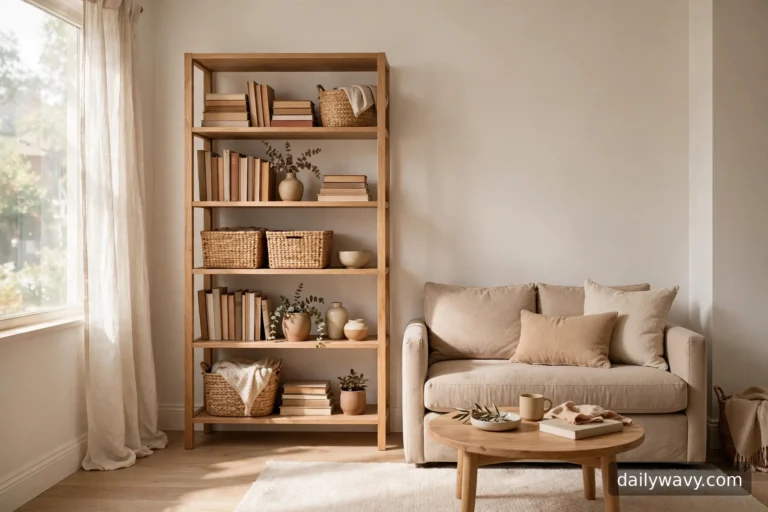
Wood is blue’s best friend in furniture form. A coffee table in a contrasting wood tone, warm walnut, honey oak, or even a whitewashed pine, sits in front of the sofa and does the warming work that keeps blue feeling inviting. The grain of the wood adds organic pattern that a solid upholstered surface cannot, and the horizontal line of the table balances the tall back of the sofa. This is the pairing that makes a blue sofa feel like it belongs in a real home instead of a showroom.
Contrast is the operative word. If your sofa is deep navy, a medium warm wood pops against it; if your sofa is a lighter blue, a darker walnut grounds it. Either way, the wood should be visibly different from anything else wooden in the room, close enough to feel related but not so matched that it looks like a set. Measure the sofa length and choose a table about half to two-thirds as long, 16 to 18 inches tall, and leave 14 to 18 inches between the table edge and the sofa so legs have room. Round tables soften a room with lots of straight lines.
A solid wood coffee table runs 120 to 400 USD depending on size and wood type. Assembly takes 30 to 60 minutes for most flat-pack versions. The lower-cost alternative is a thrifted wooden table refinished with a simple oil or stain, often 40 to 90 USD total, which gives you real wood character at a fraction of new furniture prices. Check secondhand first; good bones are everywhere.
12. A Low Ceramic Lamp On A Side Table
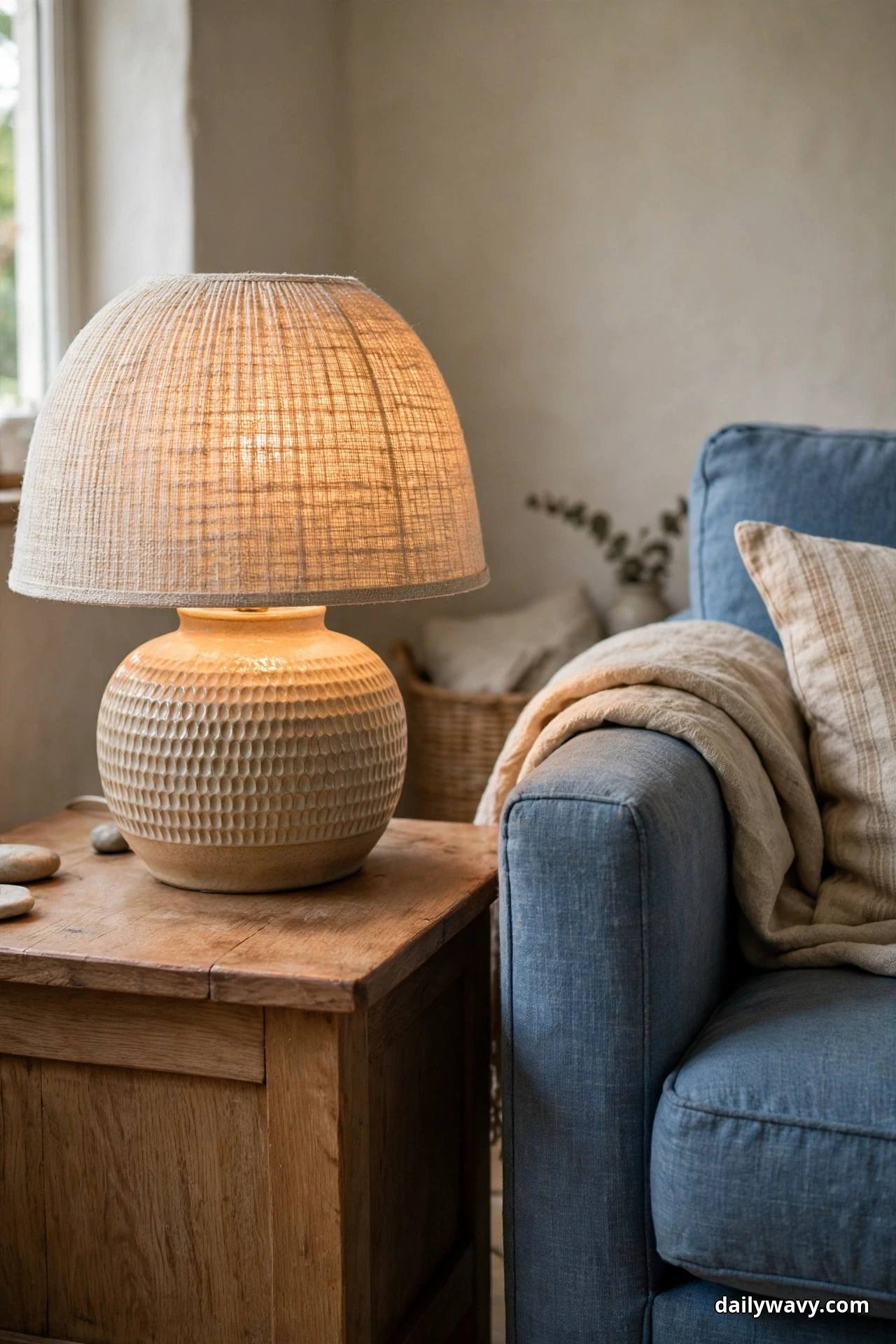
Not every lamp needs to be a reading lamp. A low ceramic lamp on a side table beside the blue sofa provides soft ambient light at sitting height, the kind of glow that makes an evening living room feel warm. Ceramic bases in cream, terracotta, or sage bring a handmade texture into the mix, and the low profile keeps sightlines open across the room. It is the lamp equivalent of a quiet background note: you notice the warmth, not the fixture.
This works on two levels. The ceramic texture contrasts with the upholstery, and the warm light it casts, especially with a linen or cotton shade, deepens the blue of the sofa in the evening instead of washing it out. Place it on a side table at the far arm from your reading lamp, or on a console behind the sofa, so the room gets light from more than one point. The lamp base should be 12 to 18 inches tall with a shade that keeps the bulb hidden from seated eye level. Measure your side table first: the lamp footprint should take up no more than a third of the tabletop so there is room for a drink and a book.
Ceramic table lamps run 40 to 90 USD. Set-up is a five-minute job. The lower-cost alternative is a thrifted ceramic base with a new shade, often under 25 USD total, since the shade is what people notice most. Use a warm 2700K bulb for the coziest effect, and consider a plug-in dimmer for about 12 USD to make the glow adjustable.
13. One Large Artwork Above The Sofa
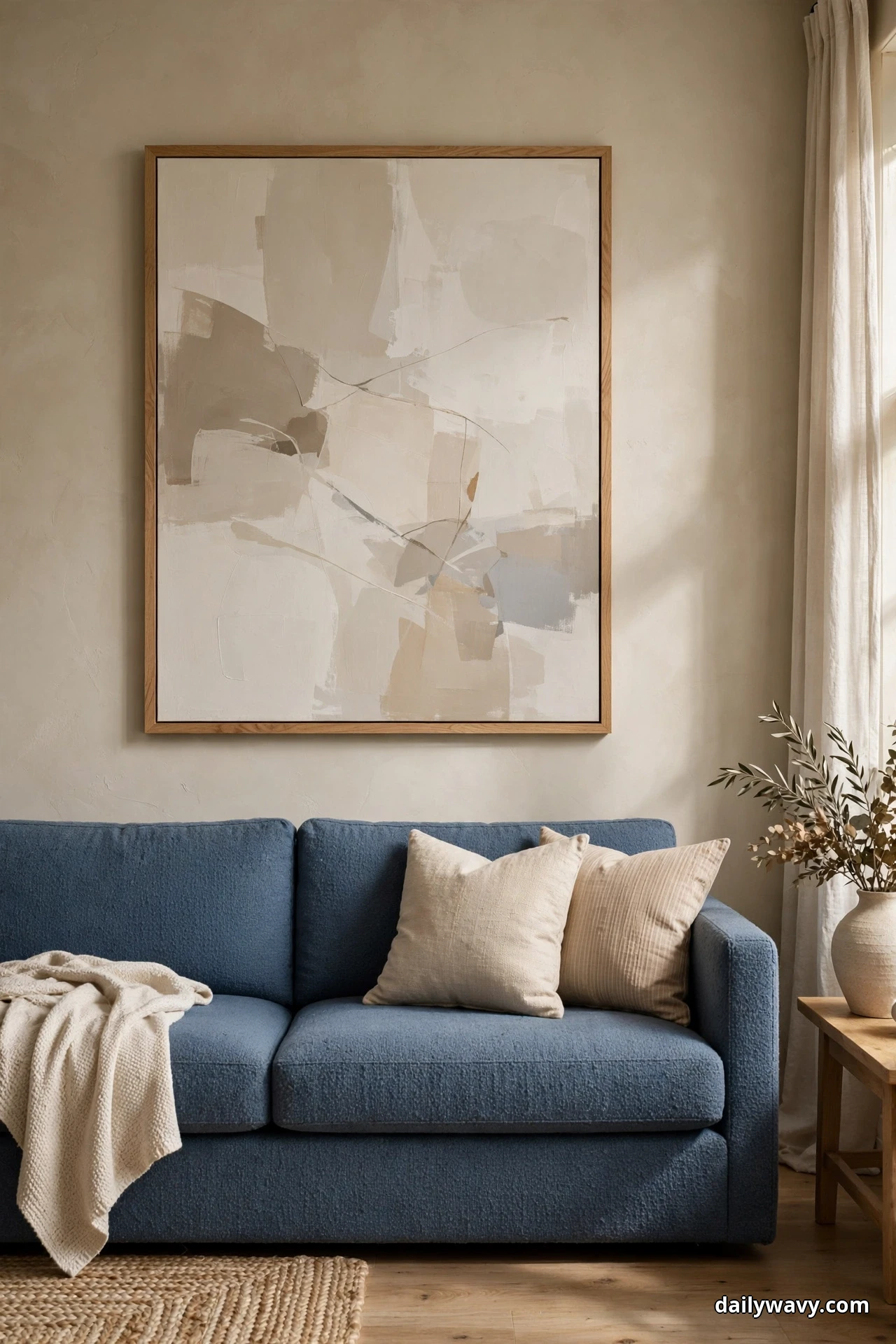
Nothing finishes a blue sofa like one large piece of art above it. A single generous canvas or framed print, wide enough to hold the wall, gives the sofa a backdrop with personality and pulls colors from the room into one composition. Look for art that includes some blue to connect with the sofa, plus the warm neutrals or wood tones you have used elsewhere. The piece does not need to be expensive; it needs to be big enough.
Scale is everything here. Art that is too small above a sofa looks timid, like the wall is swallowing it. Aim for a piece that spans roughly two-thirds the width of the sofa, hung so its center sits about 57 inches from the floor, or 6 to 8 inches above the sofa back. That spacing keeps the art and sofa reading as one composition. A landscape, abstract, or large botanical print all work; what matters is that the colors echo the room. If you have been styling with cream, wood, and green, art that holds those tones will tie every idea in this guide together.
A large framed print or canvas runs 60 to 200 USD depending on size and framing. Hanging takes 30 minutes with a level and proper wall anchors. The lower-cost alternative is printing a high-resolution image yourself and framing it in a large store-bought frame, which can bring the total under 40 USD. Check that the frame color, black, wood, or brass, echoes a finish already in the room so the art feels connected rather than random.
Frequently asked questions
What colors go best with a blue sofa?
Warm neutrals are the safest partners: cream, oatmeal, camel, and warm gray all keep blue feeling cozy. Natural wood tones add warmth through texture, and brass or gold accents bring polish. Green from plants keeps the scheme fresh. The combination to watch is blue with icy gray or stark white in a dim room, which can read cold. If your walls are cool gray, warm the room through wood, textiles, and warm lighting.
What size rug goes under a blue sofa?
The front legs of the sofa should sit on the rug, with at least 6 inches of rug extending past each arm. For most sofa seating areas that means an 8 by 10 foot rug. Smaller loveseats can work with a 6 by 9 foot rug. Tape the size on the floor with painter’s tape before buying; a rug that is too small is the most common living room mistake and it makes any sofa look lost.
Can I style a blue sofa in a small living room?
Yes, and blue actually suits small rooms because a single saturated piece reads as intentional. Keep the surrounding pieces light in color and low in profile so the room feels open. A tonal rug, a linen curtain backdrop, and a tall plant in the corner all work in tight spaces. Skip the bulky second armchair and use the upholstered bench idea instead, since it tucks away when you need floor space. Our small living room layout ideas cover more compact seating arrangements.
I rent. Which of these ideas are renter-friendly?
Almost all of them. Textured cushions and a plain throw, a washable rug, a tall plant, a vintage trunk, and a sculptural vase require zero changes to the apartment. Linen curtains can hang on a tension rod inside the window frame, and the layered rug trick needs no installation at all. Skip screwing a shelf into the wall for the vase idea and use an existing mantel, bookcase top, or console instead. Keep the command strips handy for the large artwork if your lease forbids nails.
How do I style a blue sofa on a tight budget?
Start with idea 9, textured cushions with a plain throw, which can cost under 50 USD total and changes the look immediately. Next, shop your own home: move a lamp from another room for the reading lamp idea and relocate a plant you already own. Thrift stores are goldmines for vintage trunks, ceramic lamps, and large frames. For more budget-conscious small space thinking, see our small entryway decor ideas, which use the same thrift-first approach.
How do I keep a blue sofa looking good over time?
Vacuum it weekly with an upholstery attachment to prevent dust settling into the weave, which dulls the color. Rotate and fluff the seat cushions regularly so wear stays even. Keep the sofa out of direct harsh sunlight, which will fade the blue over time; the linen curtains from idea 3 help with this. Blot spills immediately with a clean cloth rather than rubbing. A washable rug underneath catches most of the daily traffic before it ever reaches the sofa.
Bringing it all together
Thirteen ideas, and not one of them asks you to change the sofa. That is the whole point: a blue sofa is already doing its job, and everything around it just needs to support it. Start with the highest-impact, lowest-cost moves, the textured cushions and throw, the reading lamp, the rug sized right. Then add the pieces that make the room feel like yours: the trunk with its stories, the plant reaching for the light, the one big piece of art that makes you smile every time you walk in.
If you are working with a smaller space overall, our small bedroom with a queen bed ideas show how the same warm-neutral, texture-first approach works in a bedroom too. And for the full collection of room ideas, browse Home & Decor.
For the same color and texture principles applied to a different sofa tone, see our green velvet sofa styling guide.