10 Over-Toilet Storage Ideas to Keep Essentials Within Reach
The wall above the toilet is the most wasted square footage in a small bathroom. It sits there, empty and…
The wall above the toilet is the most wasted square footage in a small bathroom. It sits there, empty and awkward, while towels pile up on the counter and bottles crowd the windowsill. These ten over-toilet storage ideas turn that dead zone into the hardest-working corner of the room. Every idea below is built for real bathrooms: real plumbing clearances, real humidity, real budgets, and real reach distances. Measure first, buy second, and keep cleaners far from the things you put on your skin.
In This Guide:
- A Removable Insert For Easier Cleaning
- A Compact Rack At Reachable Height
- A Closed Box For Rarely Used Items
- A Basket Assigned To One Person
- A Return-To-Place Tray
- A Small Freestanding Storage Unit
- A Grouped Arrangement By Routine
- A Tidy Cable-Free Surface Zone
- A Narrow Basket Grouping Daily Items
- A Divider Separating Small Essentials
The Over-Toilet Storage Rules Before You Start
Measure the tank first. A standard toilet tank is about 20 to 22 inches wide and the top of the tank lid sits roughly 28 to 31 inches off the floor. Any shelf or cabinet needs about 20 inches of clear space above the tank lid so you can lift the lid off for a repair without dismantling your storage. Note where the water shut-off valve and the flush handle are, and keep both reachable, not boxed in.
Respect the humidity. Bathrooms swing between steamy and dry every day, so choose sealed or moisture-tolerant materials: powder-coated metal, sealed wood, bamboo, or wipeable plastic. Raw MDF swells, and untreated particle board will not survive a year of shower steam.
Keep the categories separate. Cleaners, bleach, and drain openers belong in a locked cabinet or high shelf, never beside your toothbrush or moisturizer. If children visit the house, medications and cleaning products need a latch or a lock, full stop.
Mind the tank lid. A freestanding unit that leans its weight on the porcelain tank lid is asking for a cracked lid. Freestanding étagère-style units should stand on the floor around the toilet with their own legs, never resting on the tank. A loaded freestanding unit is top-heavy, so anchor it to the wall with the anti-tip strap or bracket the maker supplies, fixed into a stud or a rated anchor.
Finally, think about reach. Anything you use daily should sit between about 40 and 65 inches off the floor, roughly shoulder to eye level for most adults. Put the things you touch once a month higher up.
1. A Removable Insert For Easier Cleaning
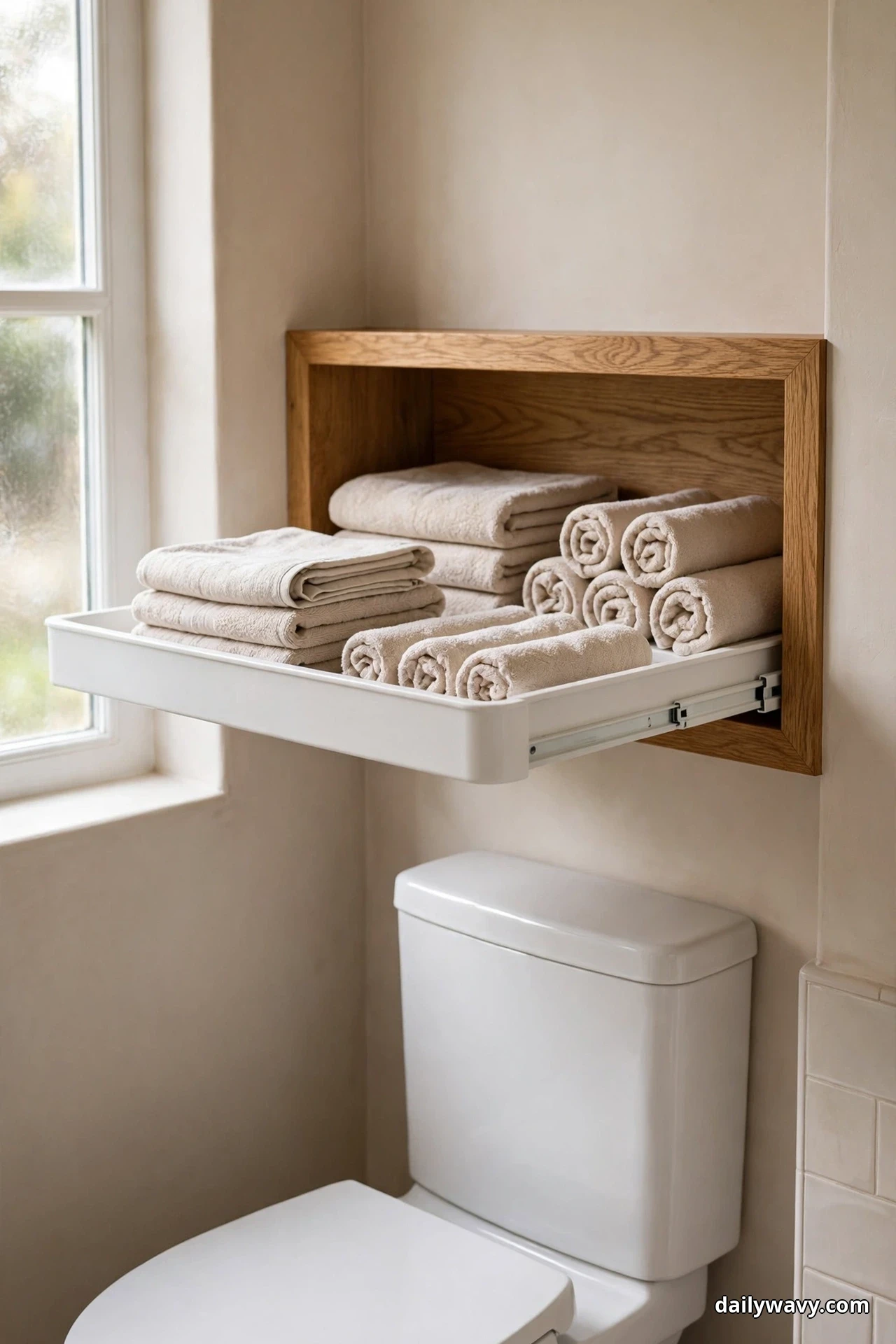
The smartest over-toilet shelf is the one you can actually clean. A removable insert, a wipeable plastic or melamine tray that lifts out of the shelf, lets you carry the whole thing to the sink, rinse off the dust and toothpaste splatter, and slide it back. No more wiping around bottles with a damp cloth while half the shelf crashes down.
Here is how to recreate it. Measure the inside width and depth of your existing over-toilet shelf, then look for a tray or shallow bin that is about half an inch narrower on each side so it slides in and out freely. A tray with a 1 to 2 inch lip keeps bottles from sliding off. White or clear trays look cleanest, and a smooth melamine or polypropylene surface wipes down with a damp cloth and mild soap.
Group the tray’s contents by weight so nothing topples when you lift it. Keep heavier bottles toward the back and center, lighter items up front. If the tray feels heavy when full, split the shelf into two smaller trays instead of one wide one.
A realistic lower-cost alternative is a dollar-store cafeteria tray or a rimmed baking sheet lined with a washable shelf liner. It will not be as pretty, but it lifts out and rinses off just the same. Expect to spend under $10 for the tray, plus whatever liner you like.
The effort here is minimal: one measuring session and one shopping trip. And the payoff is daily, because a shelf you can clean in thirty seconds stays tidy instead of slowly collecting grime behind the shampoo bottles.
2. A Compact Rack At Reachable Height
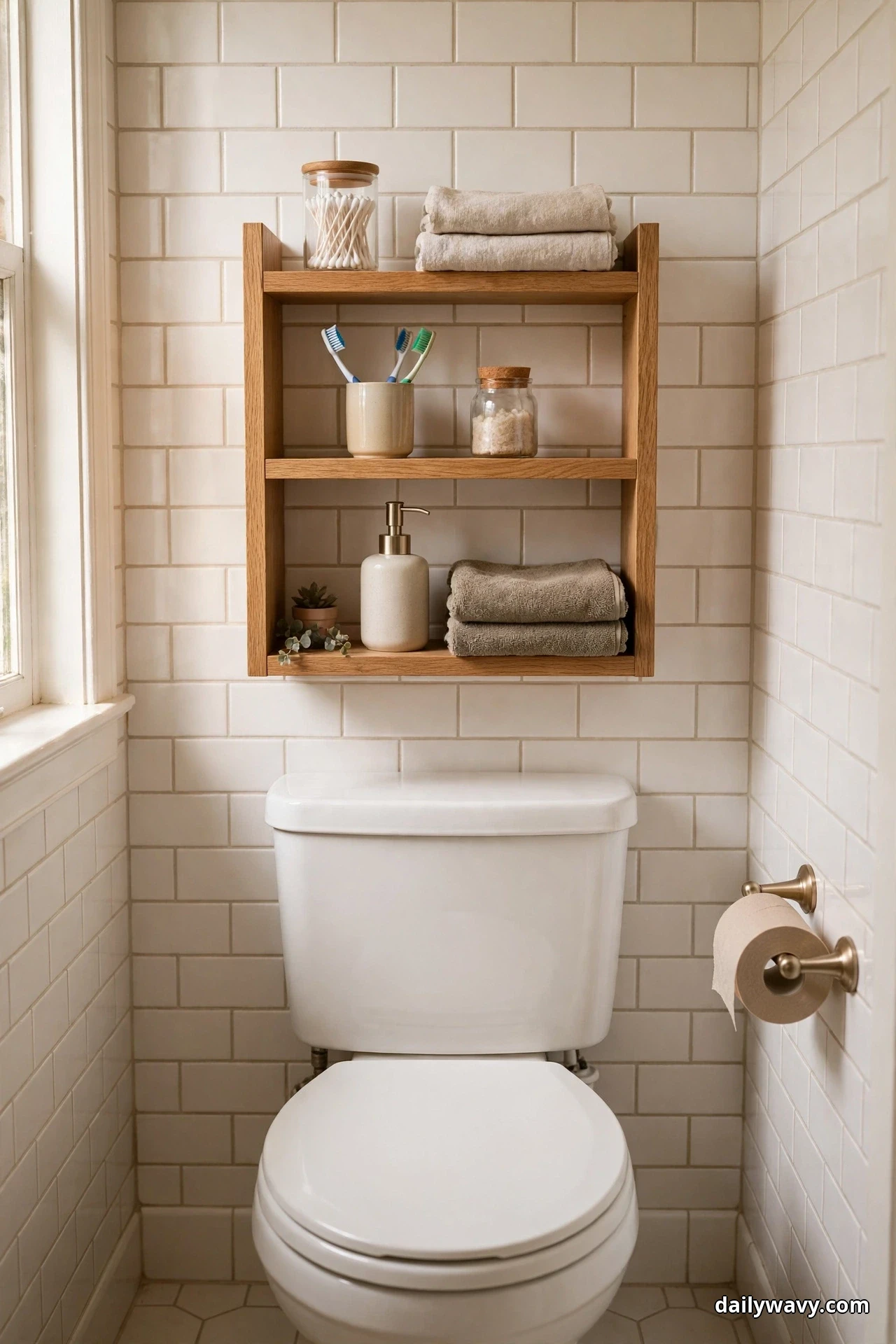
A compact open rack is the workhorse of over-toilet storage: two or three slim shelves mounted on the wall above the tank, holding only the things you reach for every single day. The trick is restraint. If every shelf is crammed, it reads as clutter. If each shelf holds five to eight items with a little breathing room, it reads as a boutique.
To recreate it, mount the bottom shelf so its surface sits about 44 to 48 inches off the floor. That puts daily items right at hand level when you stand at the sink or sit nearby, and it clears the tank lid with room to spare. Use wall anchors rated for the wall type; a fully loaded rack can weigh 15 to 25 pounds, and drywall alone will not hold it. A stud finder is worth the five minutes.
Choose a rack no wider than about 24 to 30 inches for a standard toilet so it stays centered and does not overhang into the walking path. Two-tier metal or bamboo racks from home stores typically run $25 to $60. Keep the top shelf for lighter items like folded hand towels and cotton pads, since anything heavy up high is both hard to reach and a falling hazard.
A budget version is a single pine shelf board on two L-brackets, painted or sealed for humidity. The board and brackets cost under $20, and you get exactly the width you need. Seal all sides with a water-based polyurethane so steam does not warp it.
3. A Closed Box For Rarely Used Items
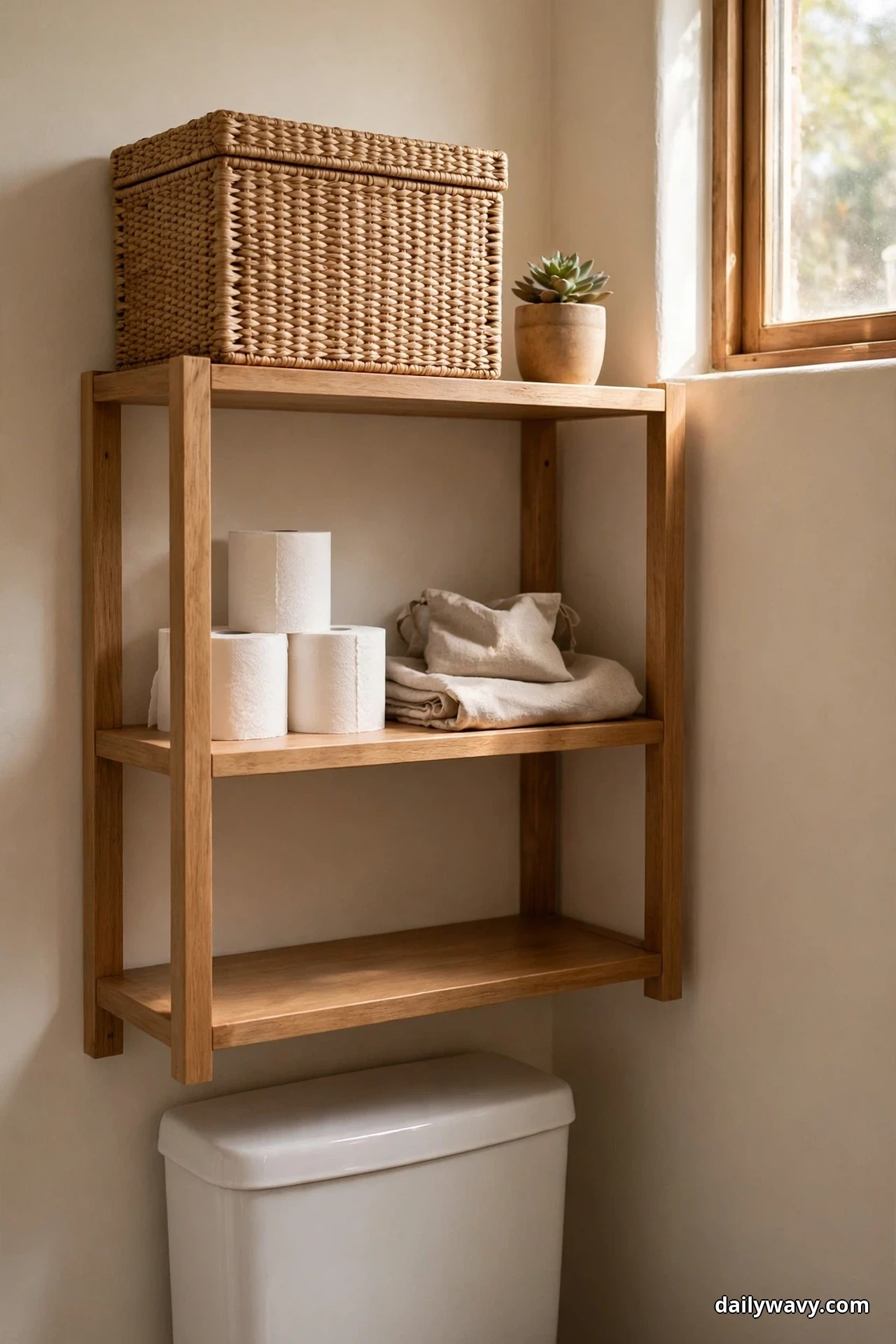
Every bathroom has a pile of things you need but rarely touch: the extra toilet paper stash, spare light bulbs, the backup contact lens solution, seasonal first-aid refills. A closed box on the top shelf swallows all of it and keeps the visual noise at zero.
The box should be sized to the shelf, not the other way around. Measure the top shelf’s width, depth, and the height to the ceiling or next shelf above, then buy a lidded box that leaves about an inch of clearance all around. Woven seagrass or water hyacinth boxes breathe a little, which matters in a humid room. Lidded fabric boxes with a wipeable surface are the cheapest reliable option.
Label the box, even if you live alone. Six months from now you will not remember which box holds the spare bulbs and which holds the beach towels. A small luggage tag tied to the handle is enough.
Keep nothing perishable or heat-sensitive in here. Sunscreen, for instance, degrades in bathroom heat and steam, so it belongs in your daily rotation, not in long-term storage. Medications too: the FDA advises storing most medications in a cool, dry place, and a steamy bathroom is neither. Use this box for paper goods, spare bulbs, unopened duplicates, and backup supplies.
A lower-cost alternative is a lidded plastic bin with a fabric cover draped over it, or a sturdy cardboard box wrapped in contact paper. Budget $15 to $40 for a good lidded box that will last.
4. A Basket Assigned To One Person
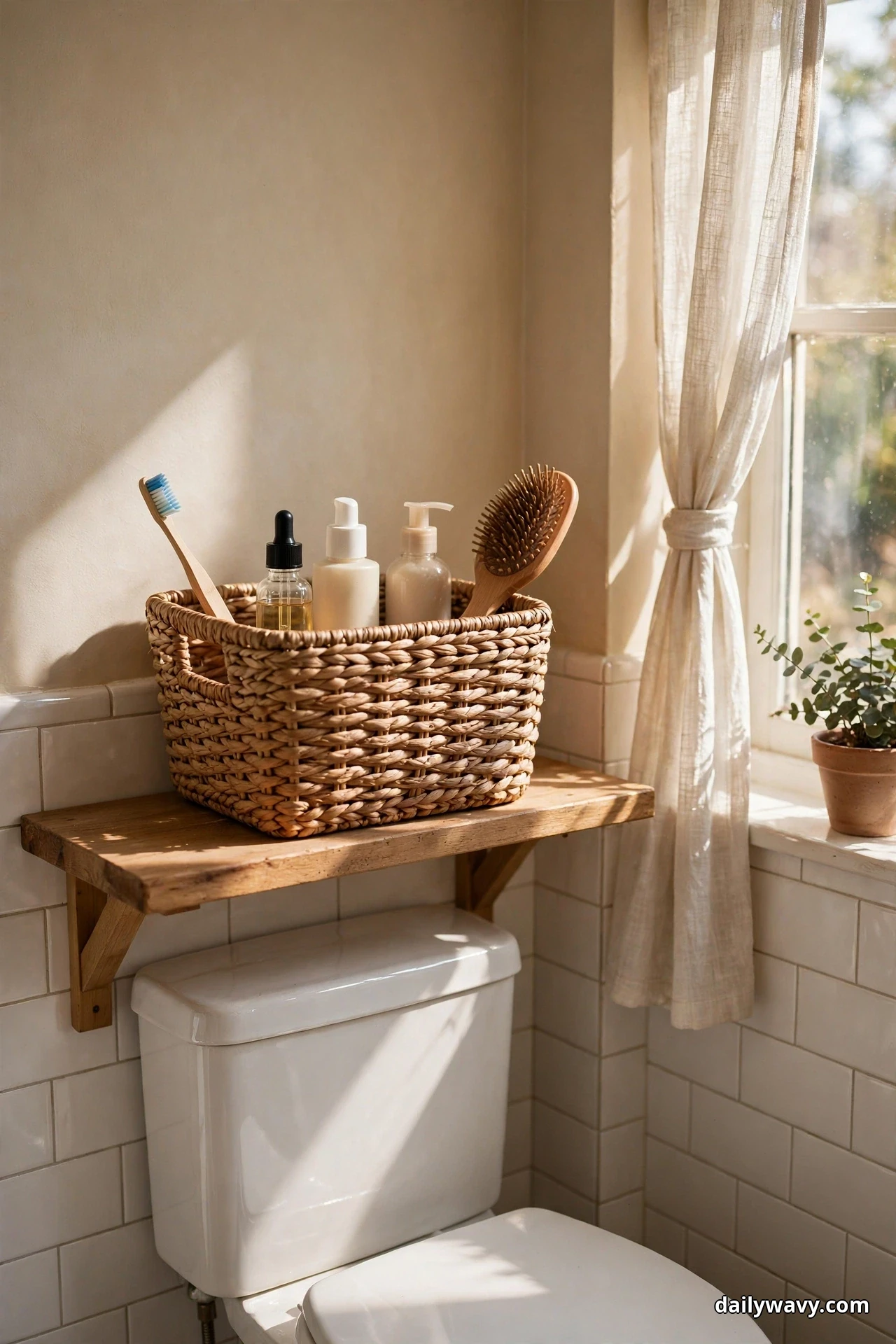
In a shared bathroom, the over-toilet shelf becomes a neutral zone where everyone’s stuff migrates into one chaotic pile. Assigning one basket per person ends that. His, hers, theirs, the guest’s: each person gets a basket, and everything personal lives inside it.
Size matters. A basket about 10 to 12 inches wide and 8 inches deep fits neatly on most over-toilet shelves and holds a toothbrush, toothpaste, deodorant, moisturizer, and a few extras. Taller bottles like mouthwash may need to stand behind the basket rather than inside it.
Pick baskets with handles so they lift off the shelf easily for cleaning underneath. Woven seagrass, cotton rope, or wipeable plastic all work. If you want to tell baskets apart without labels, choose different colors or weave patterns for each person.
The rule that makes this work is simple: if it does not fit in your basket, it does not live on the shelf. That one sentence forces everyone to edit down to what they actually use. A guest basket with a spare toothbrush, travel shampoo, and a clean washcloth earns you serious hosting points.
Budget about $8 to $20 per basket. The effort is one honest decluttering session, which is the part everyone puts off but nobody regrets.
5. A Return-To-Place Tray
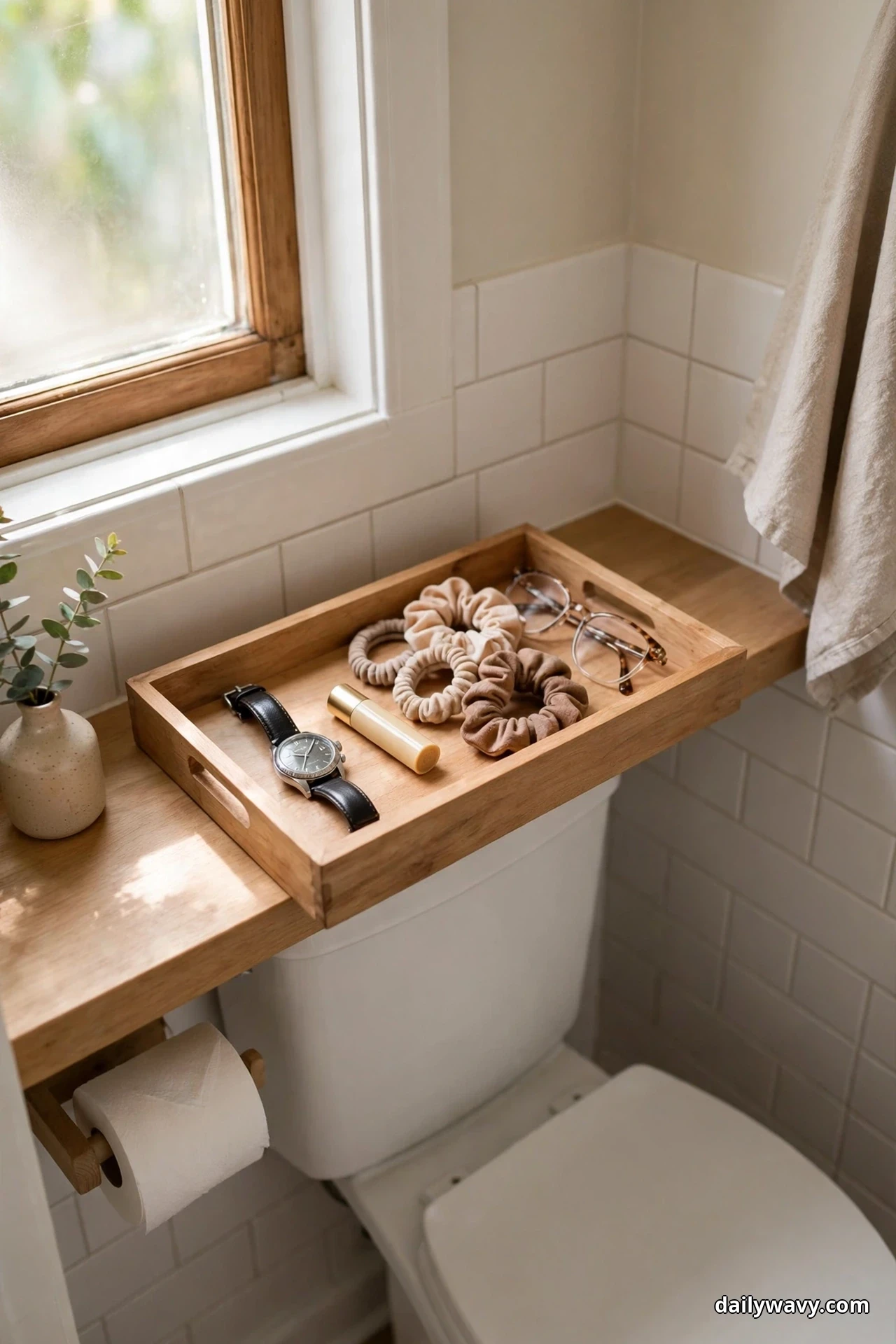
A return-to-place tray is a landing pad for the small things that otherwise scatter across every surface: the watch you take off at night, lip balm, hair ties, glasses, the ring you remove before washing your hands. Instead of chasing these items across the counter, they all go home to one tray.
Use a shallow tray, about 8 by 10 inches, with a lip of at least an inch so things stay put. Wood, bamboo, ceramic, or metal all work; just make sure the finish can handle bathroom humidity. Place it on the most reachable shelf, the one you can touch without stretching.
This idea shines because it has a built-in limit. When the tray is full, something has to leave before anything new lands. That quiet constraint keeps the collection honest in a way that an open shelf never does.
For a lower-cost version, a small ceramic plate or a thrifted wooden box lid does the job for a few dollars. A dedicated tray from a home store runs $10 to $25. Add a tiny dish inside for rings and earrings if you wear them daily, so small jewelry never ends up in the sink.
6. A Small Freestanding Storage Unit

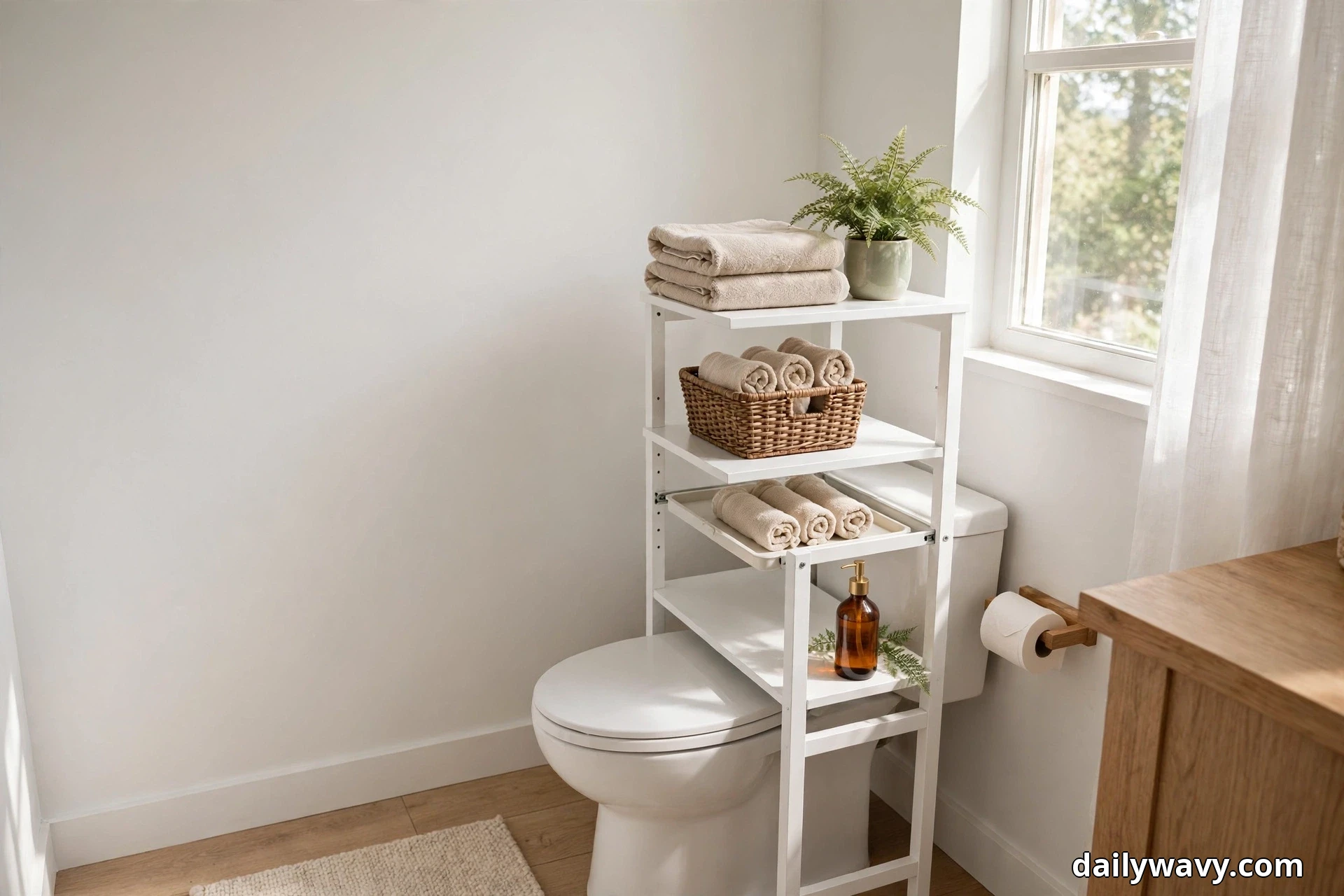
If you rent, or if you simply do not want to drill into tile, a small freestanding storage unit solves the whole problem at once. These étagère-style units have legs that stand on the floor on either side of the toilet, with shelves or a cabinet bridging over the tank. No wall anchors, no holes, and you take it with you when you move.
Measure before you buy. The legs need to clear the toilet’s footprint, which is typically about 28 inches deep and 20 inches wide, plus a few inches of clearance on each side. The bridge section should clear the tank lid by at least 20 inches so the lid can be removed for repairs. Most units are 24 to 36 inches wide and 60 to 70 inches tall.
Never rest the unit’s weight on the tank lid. The legs carry the load to the floor; the tank just happens to sit underneath the bridge. If the unit wobbles, shim the legs rather than leaning it against the tank. Then anchor the unit to the wall with the anti-tip strap or bracket most models include, screwed into a stud or a rated wall anchor: a tall unit loaded at the top is top-heavy, and that anchor is what keeps it from tipping forward.
Choose a unit with at least one closed cabinet if you store medications or cleaners, since closed doors keep them out of sight and out of children’s reach. A mix of open shelves for towels and closed storage for the private stuff is the most practical layout. These units typically cost $40 to $120 depending on material and size.
A budget alternative is a narrow rolling cart parked beside the toilet instead of over it, if the floor space allows. It holds nearly as much and costs half as much. And if the bathroom is part of a bigger small-space puzzle, our small bedroom with a queen bed guide applies the same measure-first discipline to tight bedrooms.
7. A Grouped Arrangement By Routine
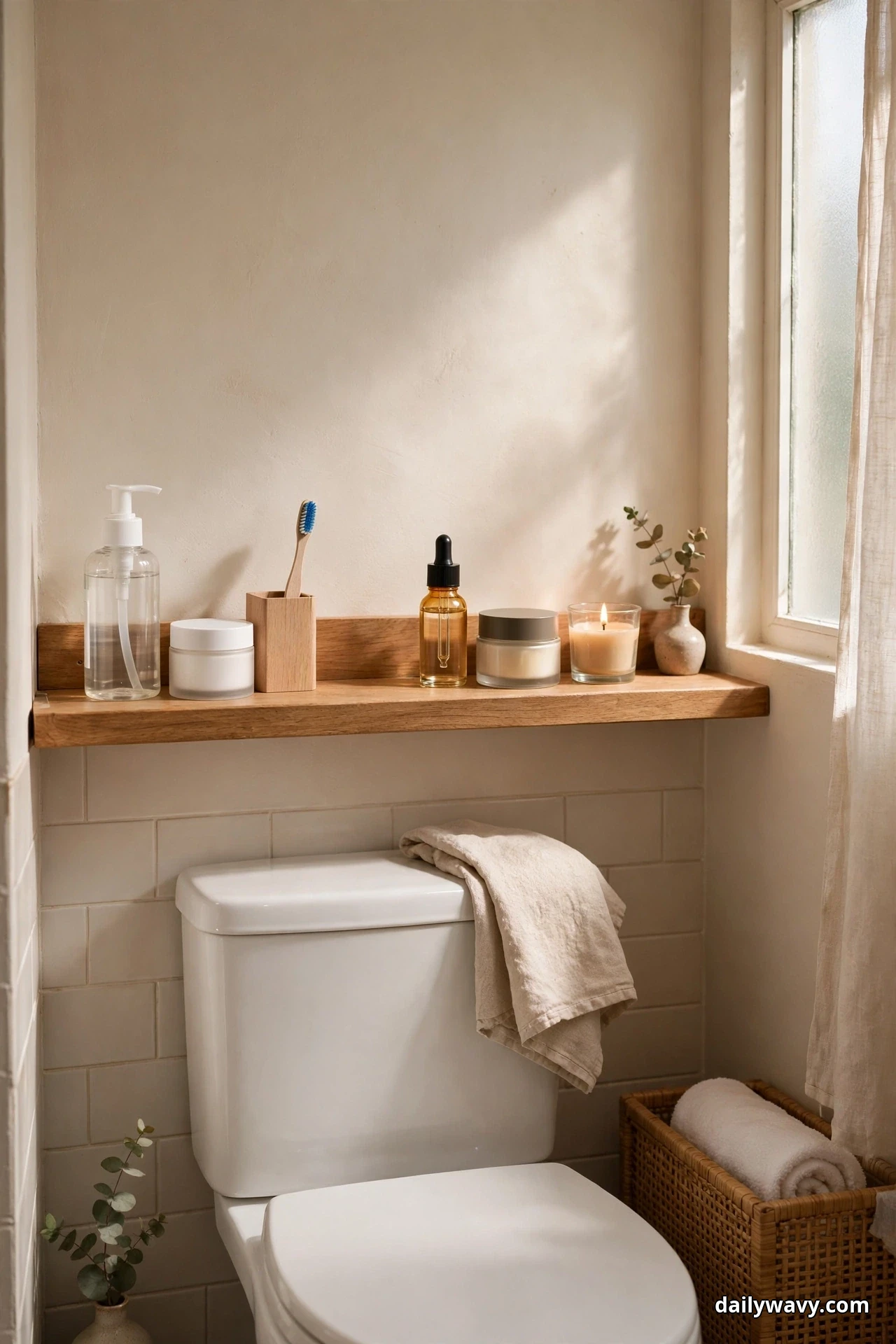
Instead of organizing by product type, organize by routine: morning items on the left, evening items on the right. Your hand learns the pattern within days, and the morning rush gets noticeably calmer when everything you need is in one zone.
A typical morning zone holds cleanser, moisturizer, sunscreen, deodorant, and a toothbrush. The evening zone holds makeup remover, serum, night cream, and maybe a small candle or a book. Keep shared items like hand soap and hand towels in the center or on a separate shelf so nobody has to reach across anyone else’s zone.
This works best on a shelf at least 24 inches wide so each zone has real elbow room. Small risers or shallow trays within each zone keep bottles upright and grouped; without them, zones drift back into one mixed pile within a week.
The cost is essentially zero if you already own a shelf. Two small trays or a pair of shelf risers run $10 to $25 total. The effort is one reorganization session where you pull everything off, wipe the shelf, and put items back in their zones.
If you share the bathroom, this arrangement doubles as a peace treaty. When each person’s routine has its own territory, the passive-aggressive bottle shoving stops. The same grouping discipline works beyond the bathroom too: our small pantry organization guide uses labeled baskets and a set position for everything to tame crowded kitchen shelves.
8. A Tidy Cable-Free Surface Zone
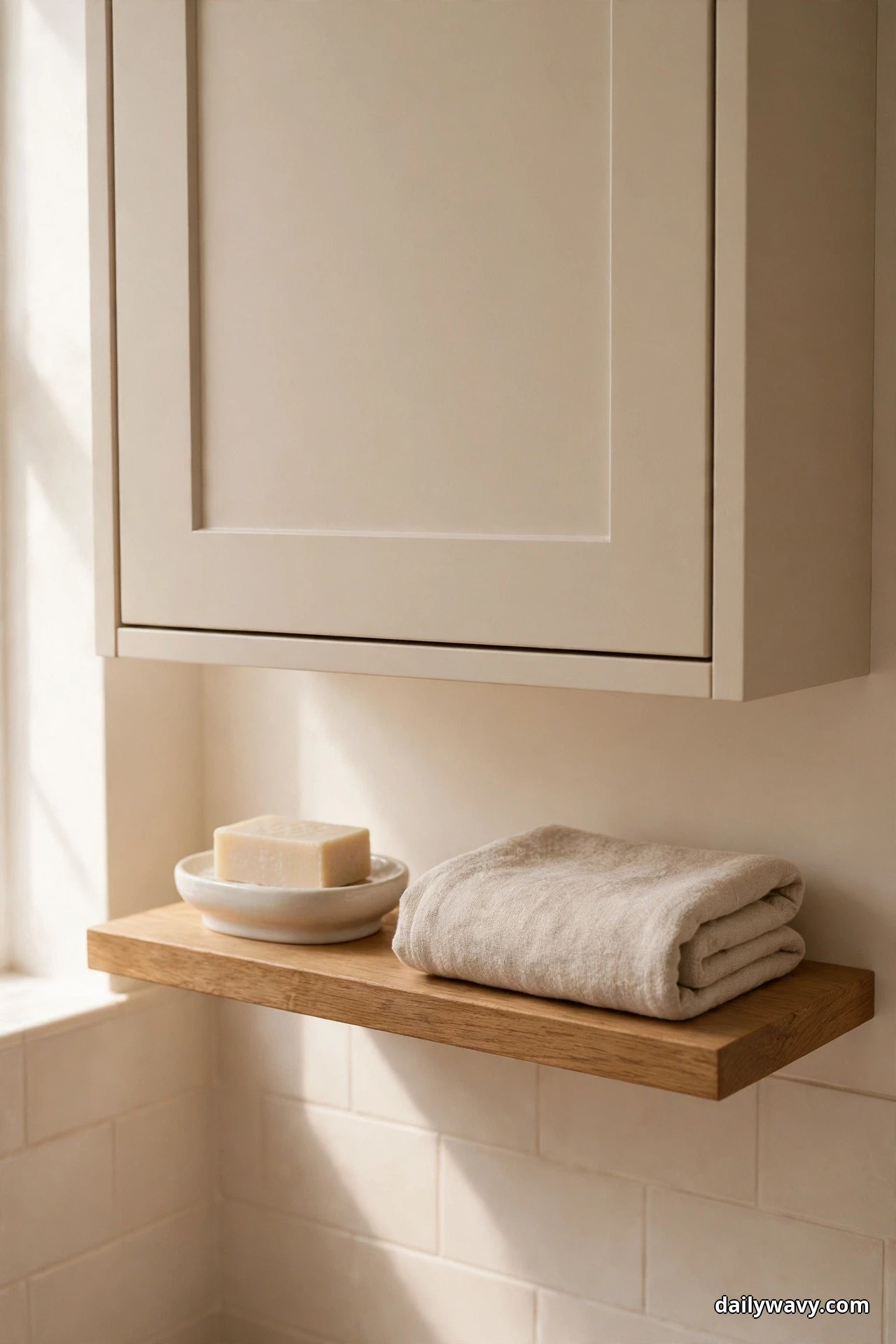
Electric toothbrushes, shavers, and hair tools all need charging, and their cords turn an over-toilet shelf into a tangle. The cable-free surface zone keeps the open shelf clean by moving everything with a cord behind closed doors or into a charging drawer, leaving the visible shelf for beautiful, cordless essentials.
The practical version: store the electric toothbrush and its charger inside a closed cabinet or a lidded box on the shelf, and charge devices overnight out of sight. Keep the open shelf for a ceramic soap dish, a folded towel, a small plant, and the two or three items you actually use with wet hands.
If you charge a toothbrush on the shelf, use a drip tray under it and keep the cord routed behind the shelf, never draped over the front where it can catch on clothing or fall into the toilet. Water and electricity deserve real respect here: never run a charging cable across a wet surface, and unplug what you are not using.
A small lidded basket or a fabric cord-management box costs $10 to $20 and hides the charging clutter completely. The visible result is a shelf that looks styled instead of wired, and a surface you can wipe down in seconds.
9. A Narrow Basket Grouping Daily Items
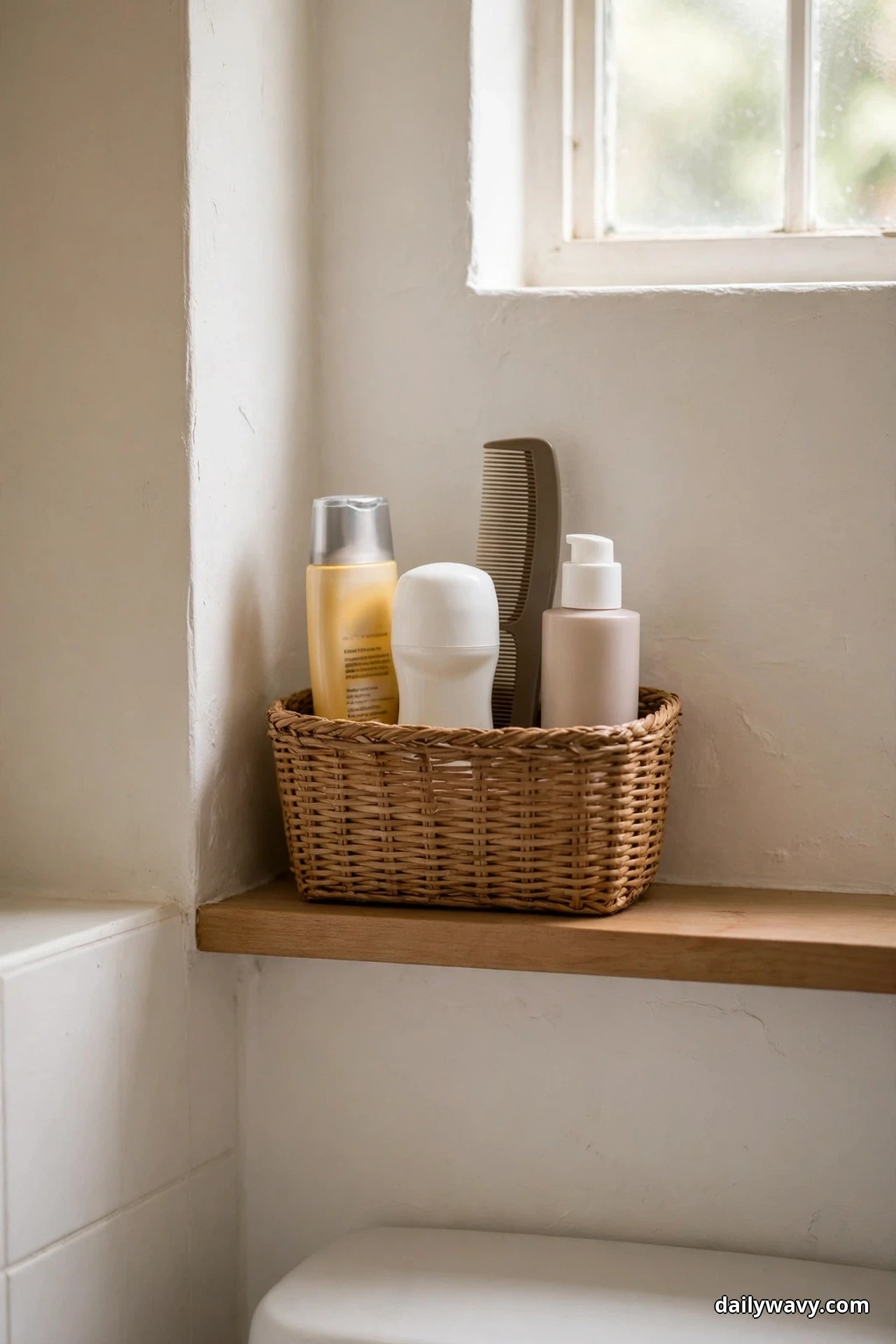
Tall, narrow baskets are the unsung heroes of over-toilet storage because they turn a deep shelf into usable vertical space. Bottles stand upright instead of lying in a jumble, and you can see every label at a glance. One narrow basket can hold a surprising amount: sunscreen, deodorant, comb, moisturizer, lip balm, and then some.
Look for baskets about 6 to 8 inches wide and at least 6 inches tall so standard bottles stand fully upright. A divided interior or a couple of small cups inside keeps slim items like tweezers and nail files from disappearing to the bottom.
This is also the best format for renters and commitment-phobes, because the whole system lifts off the shelf in one motion. Cleaning the shelf takes ten seconds, and rearranging is just sliding baskets around.
Woven, fabric, or wipeable plastic baskets all work; in a humid bathroom, wipeable wins on maintenance. Budget $8 to $18 per basket, and buy two: one for daily items, one for the weekly extras like masks and treatments. The pair keeps the daily basket lean.
10. A Divider Separating Small Essentials
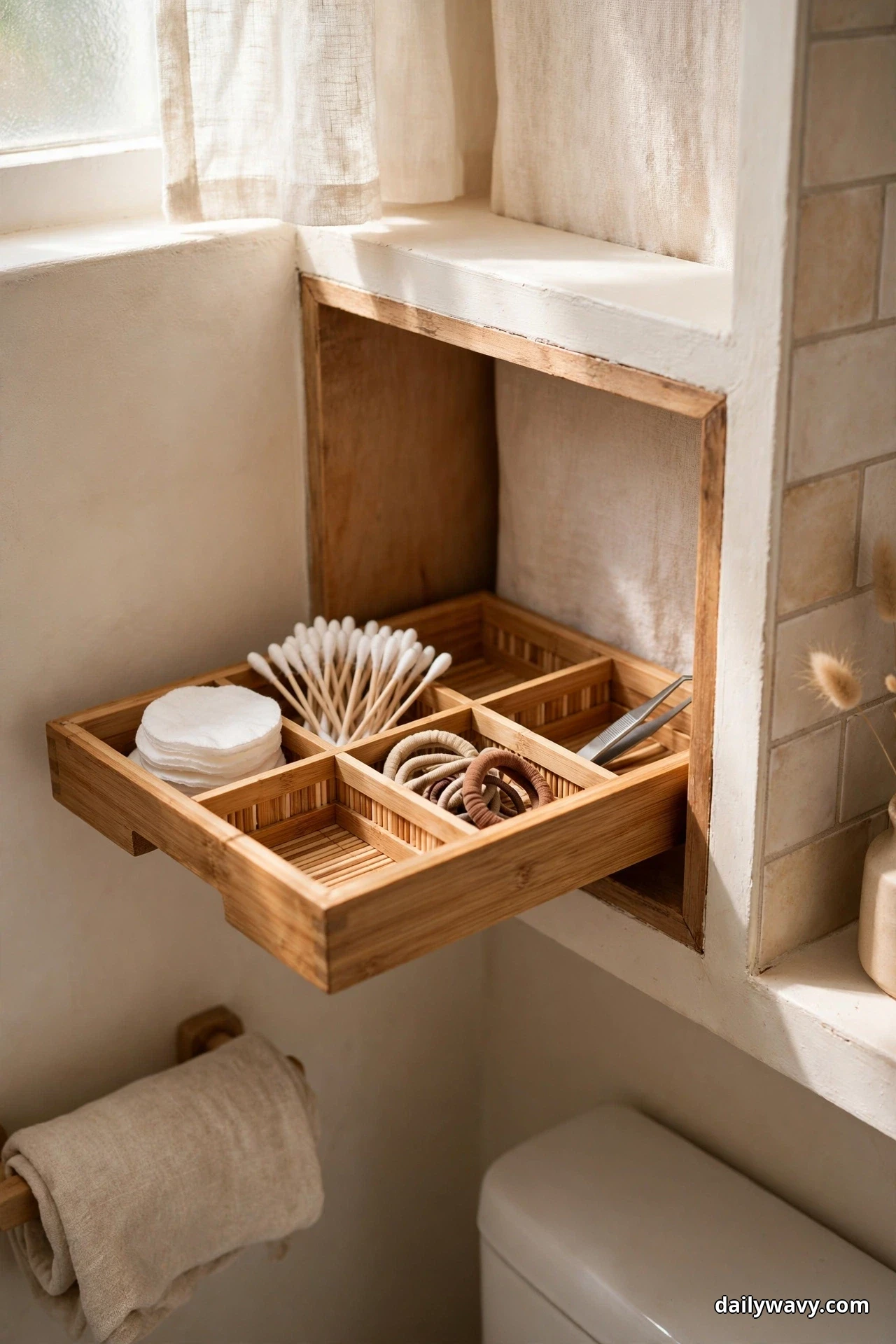
The smallest items cause the biggest mess: cotton pads, cotton swabs, hair ties, bobby pins, tweezers, spare batteries. Without a divider, they migrate into every corner of the shelf. A compartmented divider tray gives each tiny category its own home.
Bamboo or plastic drawer-style dividers sized for a shelf cubby work best. Look for compartments at least 2 inches square for cotton pads and swabs; smaller wells suit hair ties and pins. A tray about 10 by 12 inches fits most over-toilet shelf cubbies.
Refill the compartments from bulk storage kept elsewhere, like a linen closet or under-sink cabinet, so the over-toilet shelf holds only a working supply. That keeps the divider from overflowing and keeps bulk packages out of the humidity.
A bamboo divider tray costs $12 to $25 and lasts for years. A lower-cost version is a plastic ice-cube tray or a muffin tin for the very smallest items, which sounds odd but works perfectly for pins, ties, and spare earring backs. The effort is one sorting session, ideally with a trash bag nearby for the dried-out and expired.
Frequently Asked Questions
How much weight can an over-toilet shelf hold?
It depends entirely on the mounting. A shelf screwed into studs can hold 30 to 50 pounds. The same shelf on drywall anchors alone might hold 15 to 25 pounds, and adhesive-mounted shelves far less. Check the product’s rated capacity, mount into studs when you can, and keep heavy items like full detergent bottles low and close to the wall.
Is it safe to store things above the toilet?
Yes, with common sense. Keep the tank lid accessible for repairs, do not rest heavy objects on the porcelain lid, and secure tall items so they cannot topple into the bowl. Avoid storing anything directly above the tank that would be ruined by an occasional splash, and keep electronics and their cords away from water.
What should I not store over the toilet?
Medications and anything heat-sensitive, because bathroom steam and warmth degrade them. Harsh cleaners next to personal-care items, because cross-contamination and mix-ups are real risks. Anything extremely heavy or fragile on a high open shelf, because a fall into porcelain ends badly. And anything you need in a hurry during a plumbing emergency, because you do not want to unpack a shelf to reach the shut-off valve.
How do I keep over-toilet storage from looking cluttered?
Limit the visible items to one material family and one color family. Decant mismatched bottles into matching dispensers, use closed boxes for the visually noisy stuff, and leave some empty space on every shelf. Three to five visible items per shelf reads as styled; fifteen reads as storage.
Will humidity damage wood shelves?
Unsealed wood, yes, over time. Sealed wood, bamboo, powder-coated metal, and quality plastics handle bathroom humidity well. Seal any raw wood on all six sides with a water-based polyurethane, keep the bathroom fan running during and after showers, and wipe up standing water promptly.
What is the best over-toilet storage for renters?
A freestanding étagère unit that stands on the floor around the toilet, because it needs no drilling and moves with you. Second best is a tension-mounted pole shelf or an over-tank basket that hooks onto the tank itself, though these hold less weight. Removable adhesive hooks can hold a light basket if your lease forbids holes, but check their weight ratings honestly.
The Takeaway
Over-toilet storage works when it respects the room it lives in: the plumbing underneath, the steam in the air, and the hands that reach for it every day. Start with measurements, choose moisture-tolerant materials, keep cleaners and medications separate and secure, and give every item a zone it can return to. The ten ideas above are not ten shopping lists; they are ten ways to make one awkward wall earn its keep.
If this is part of a bigger bathroom refresh, our small bathroom storage guide covers the rest of the room, from under-sink cabinets to door-back hooks. And when you are ready to think beyond the bathroom, the Home and Decor collection has the full library of room-by-room ideas. Pick one idea, measure once, and enjoy the extra breathing room.
Pin these ideas for your next bathroom reset, then start with the shelf you already have. A removable tray, a basket per person, and a return-to-place tray cost less than a takeout dinner and change how the whole room feels.