13 Coastal Table Setting Ideas with Simple Styling Details
A light wood dining table is set with a natural linen runner, a torn loaf on a wooden bread board,…
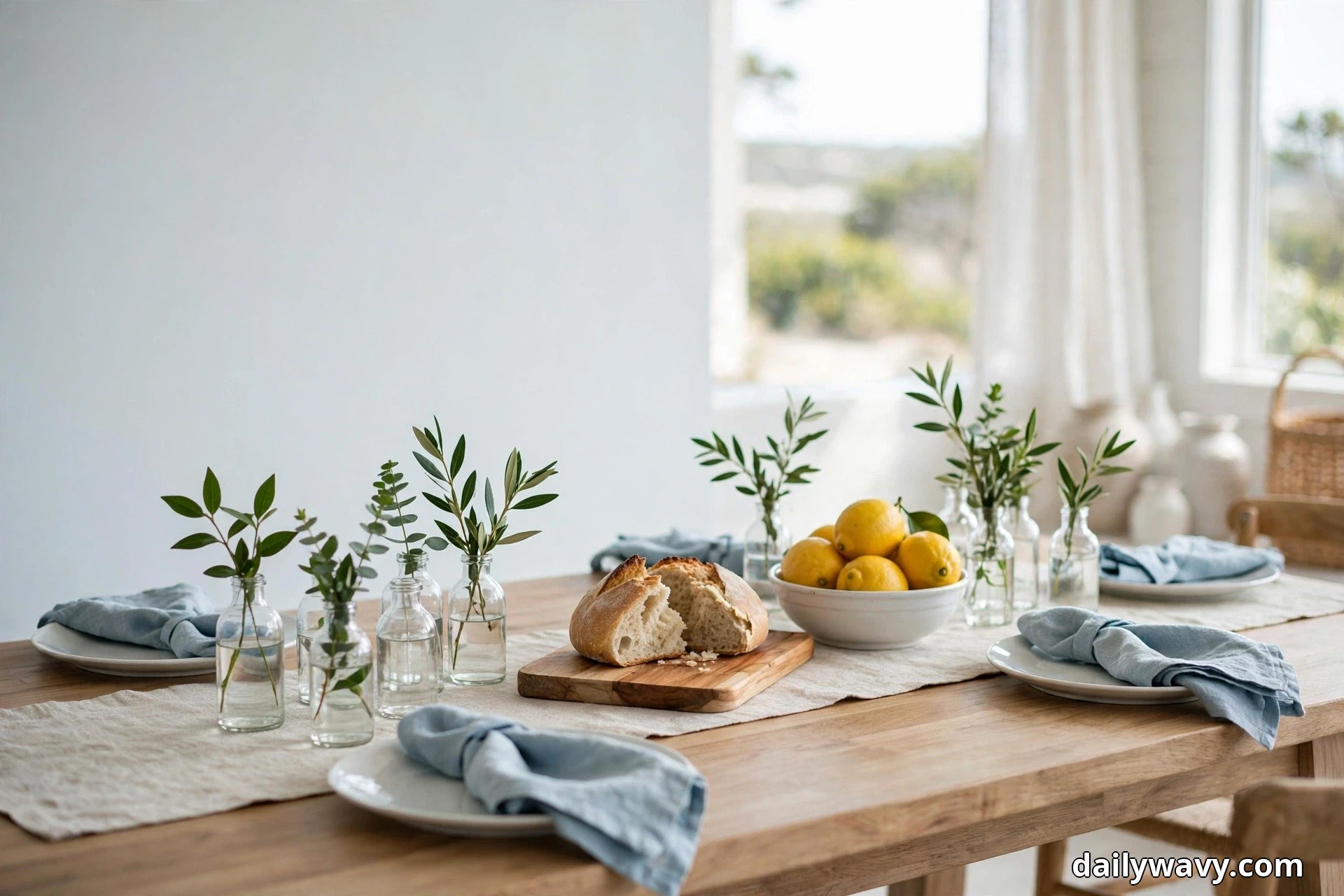
A coastal table does not need seashells glued to everything. The best ones feel like a breeze came through the room and left it prettier: soft blue against warm white, light wood under your fingertips, something green in the middle that looks like it was just cut. These thirteen ideas are built for real tables in real homes. Each one uses simple, affordable details you can repeat in any season, and none of them require a styling degree or a trip to a specialty shop. Pin the ones that make you smile, then set your own table the way the coast would want it.
In This Guide:
- A Small Bread Board as a Shared Focal Point
- Clear Bottles Holding Green Cuttings
- A Compact Dried-Stem Arrangement
- A Handwritten Place Card at Each Setting
- A Bowl of Citrus and Leaves
- A Folded Fabric Strip Beneath Each Setting
- A Low Grouping of Stoneware
- A Platter of Seasonal Produce
- Single Stems in Low Bud Vases
- A Bowl of Seasonal Fruit
- Folded Linen Napkins with Simple Rings
- A Narrow Runner and Plain Plates
- A Potted Herb Centerpiece
The Coastal Table Setting Rules Before You Start
Before you pull anything out of the cupboard, lock in the palette. Coastal works when you commit to three things: soft blue, warm white, and one natural material like light wood or jute. Two colors plus one texture keeps every table calm instead of busy. If a piece does not fit that family, it does not go on the table tonight.
Scale matters more than spending. A centerpiece should sit below eye level, roughly 12 inches tall or less, so guests can actually see each other. Measure your table first: a standard dining table is about 36 inches wide, which leaves roughly 12 inches down the middle for a centerpiece once plates are placed. Everything you add should fit inside that strip.
Repeat, do not scatter. Three small bottles look intentional. One bottle looks forgotten. Grouping the same element in odd numbers (three or five) is the oldest styling trick there is, and it works on tables every single time.
Finally, keep it practical. A table setting has a job to do: hold dinner. Leave at least 24 inches of width per place setting, keep the centerpieces low and narrow enough that serving dishes still fit, and remember that candles and greenery are lovely but food comes first.
1. A Small Bread Board as a Shared Focal Point
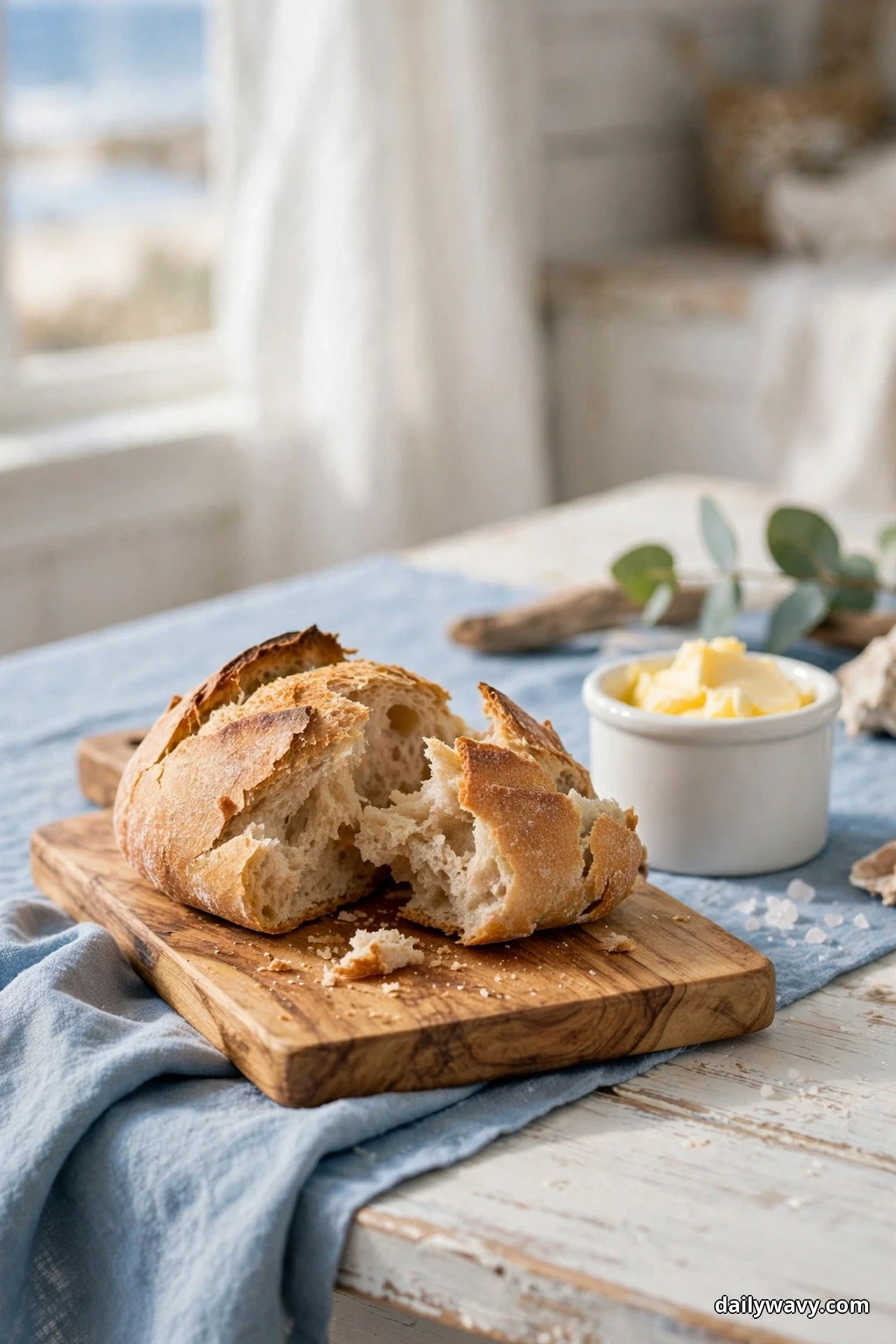
Nothing says “sit down and stay awhile” like bread already on the table. A small bread board, about 12 by 8 inches, placed in the center with a torn loaf or a few rolls turns the middle of the table into something guests actually use instead of just look at. It fills the empty middle without blocking conversation, and it gives the whole setting a reason to feel gathered around.
How to pull it together: choose a light wood board, acacia or olive wood works well, and set it dead center on the table. Add a small crock of softened butter or olive oil with a pinch of flaky salt beside it. Keep the board narrow enough that it does not crowd the serving space, about a third of the table width at most. A linen napkin tucked under one end keeps the board from sliding and adds a soft layer.
Effort and budget: five minutes and whatever board you already own. If you need one, a simple acacia board runs about $15 to $25. The bread is the real investment, and a good bakery loaf earns its place twice over.
Pro tip: warm the bread for 10 minutes at 350°F before guests arrive. The smell alone sets the mood before anyone sits down.
2. Clear Bottles Holding Green Cuttings
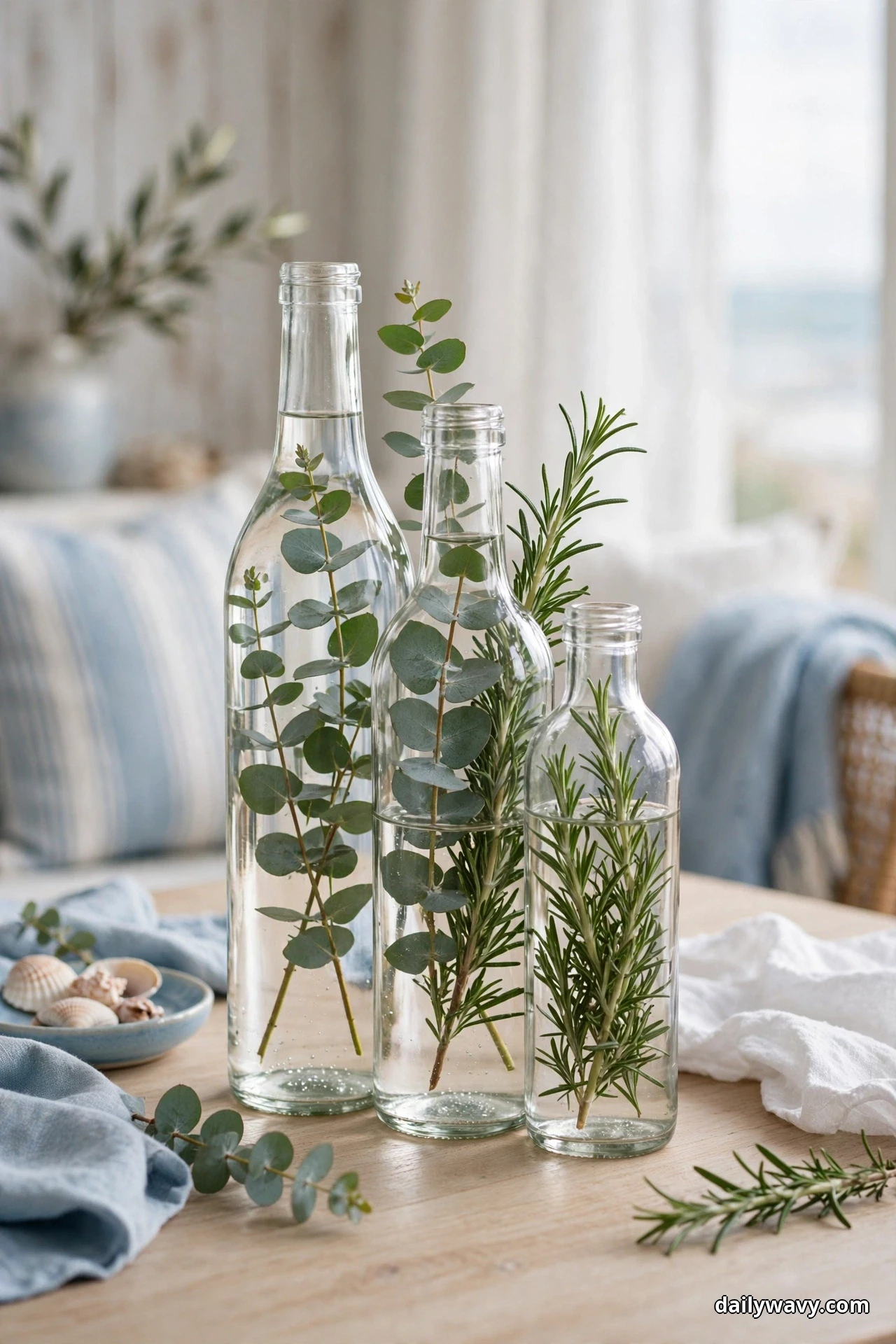
Three clear bottles with green cuttings is the single easiest coastal centerpiece that exists. The glass disappears, the green pops against the soft blue and white, and the whole thing costs almost nothing. It reads fresh and collected, like someone who knows what they are doing but did not try too hard.
How to pull it together: gather three bottles of slightly different heights, between 6 and 10 inches tall. Old olive oil bottles, small carafes, or bud vases all work. Fill each about two-thirds with water and add one or two cuttings of anything green: eucalyptus, rosemary, olive branches, or even snipped houseplant stems. Group them tightly in the center, tallest in the middle.
Effort and budget: ten minutes. If you are buying bottles, small glass bud vases run about $8 to $12 for a set of six. The cuttings are free if you snip from your own plants or a neighbor’s garden (ask first).
Pro tip: change the water every two days and recut the stems at an angle. Green cuttings can last two weeks this way, which means one styling session covers multiple dinners.
3. A Compact Dried-Stem Arrangement
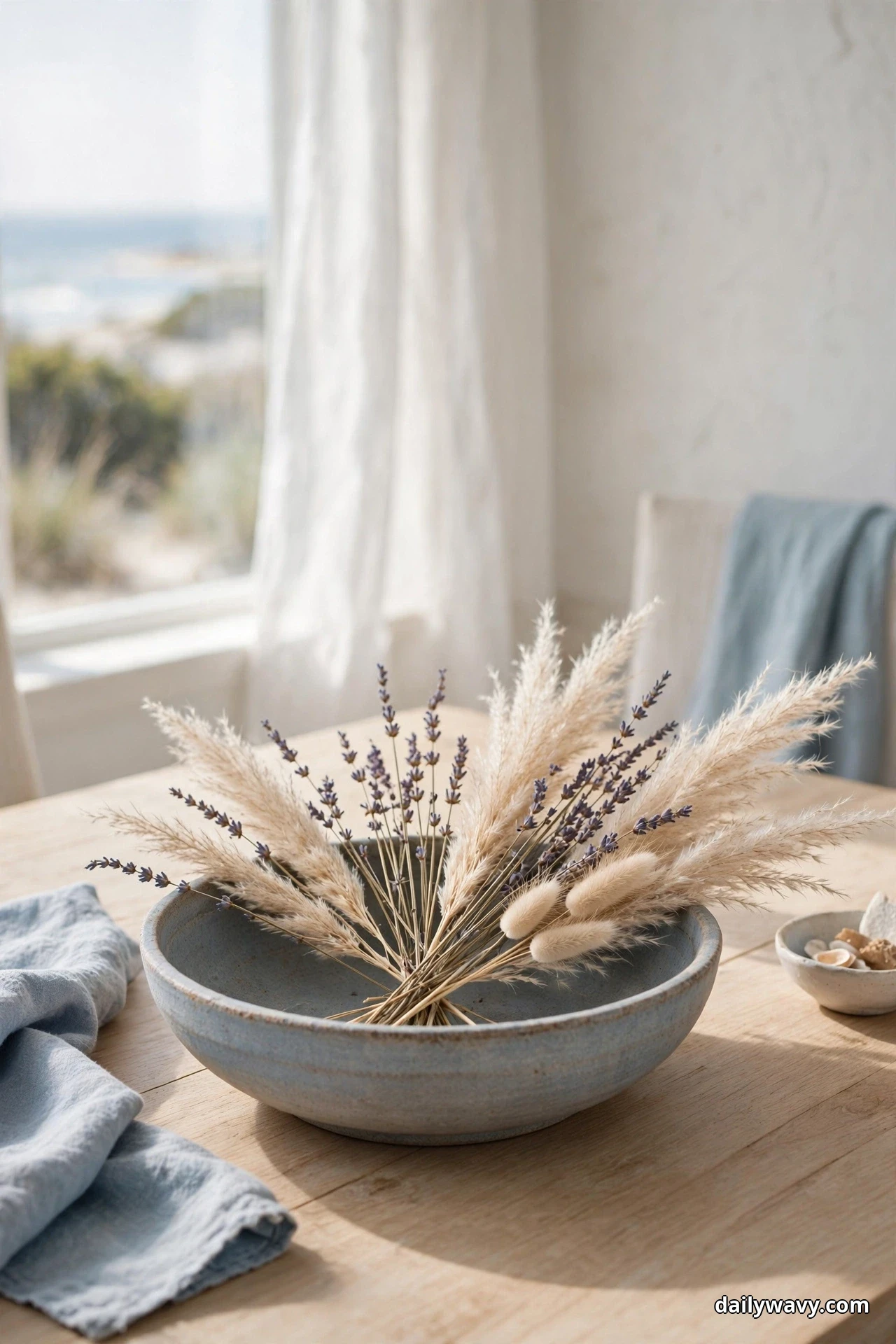
Dried stems are the low-maintenance cousin of fresh flowers. Pampas grass, dried lavender, wheat, or bunny tails hold their shape for months, need no water, and bring that soft, feathery texture that makes a coastal table feel calm. A compact arrangement, not a giant cloud, keeps it elegant instead of overwhelming.
How to pull it together: pick a low, wide vessel, a stoneware bowl or a short ceramic pot about 6 inches across. Trim a handful of dried stems to about 10 to 12 inches so the whole arrangement stays below sightlines. Fan them loosely rather than packing them tight; air between stems reads coastal, dense reads heavy. Place the vessel slightly off-center so the table does not feel rigid.
Effort and budget: ten minutes. A bundle of dried pampas or lavender runs $10 to $18 at craft stores and lasts a year or more.
Pro tip: keep dried stems away from the bread board and any candles. They are beautiful but flammable, so give them their own zone at the end of the table or in the exact center where nothing hot gets near.
4. A Handwritten Place Card at Each Setting
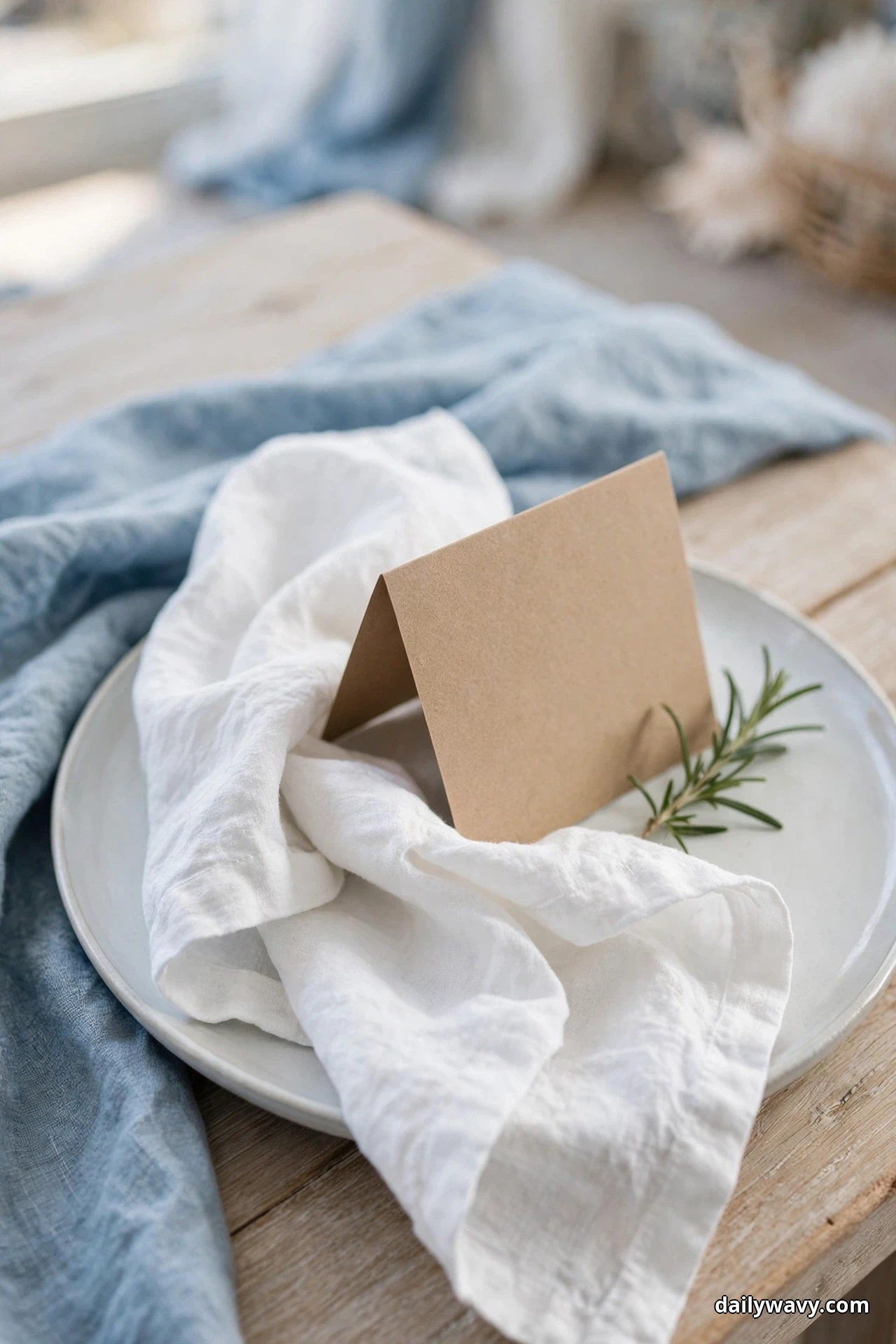
A handwritten place card is the smallest detail with the biggest payoff. It tells each guest they were expected, and it turns a Tuesday dinner into an occasion. On a coastal table, a simple kraft or white card with a sprig of greenery tucked beside it is all you need.
How to pull it together: cut heavy paper or cardstock into 2 by 3.5 inch cards and fold them into tents. Write each name in your best handwriting with a fine-tip pen or a soft pencil. Lean each card against the folded napkin or lay it flat on the plate. Tuck a small sprig of rosemary, eucalyptus, or lavender beside each card for a coastal touch that doubles as a little gift.
Effort and budget: fifteen minutes for six guests. Cardstock costs a few dollars; the pen you already own.
Pro tip: write the names the night before, not an hour before guests arrive. Ink needs time to dry, and calm handwriting beats rushed handwriting every time.
5. A Bowl of Citrus and Leaves
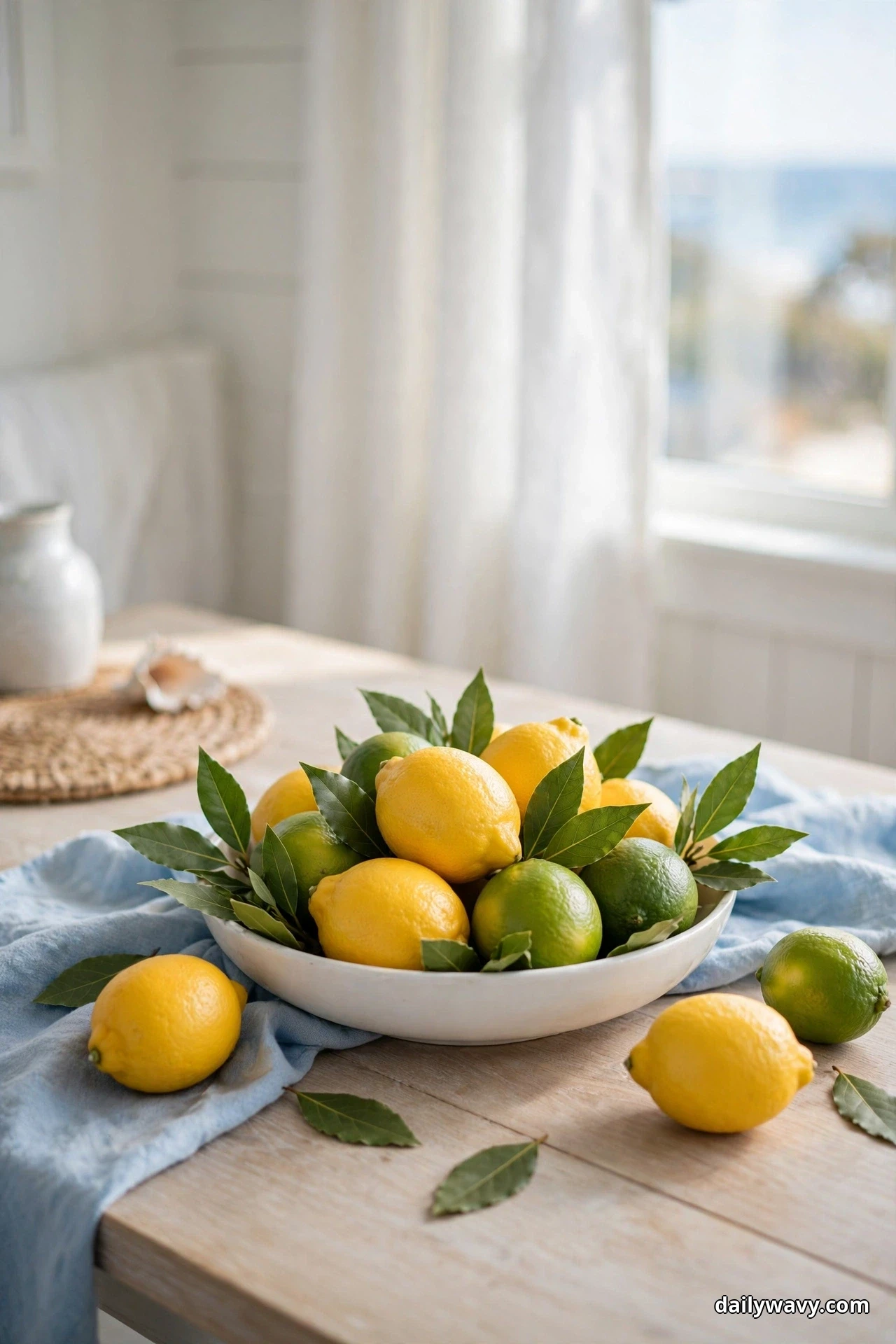
Citrus is coastal color you can eat. A low bowl of lemons, limes, or small oranges mixed with a few green leaves brings in that sunny yellow-green contrast against the soft blue and white palette, and it smells wonderful when guests lean in. Unlike flowers, it never wilts mid-dinner.
How to pull it together: choose a shallow, wide bowl, white ceramic or light wood, about 10 to 12 inches across. Fill it with a mix of citrus, five or six pieces is plenty for a standard table, and tuck in a few bay leaves between the fruit. Keep the bowl low and centered so it stays out of the way of serving dishes.
Effort and budget: five minutes plus the cost of fruit you will eat anyway. A white serving bowl you already own does the job.
Pro tip: roll each citrus firmly on the counter before placing it. It releases the oils in the skin, and the whole centerpiece smells faintly of lemon grove every time someone brushes past.
6. A Folded Fabric Strip Beneath Each Setting
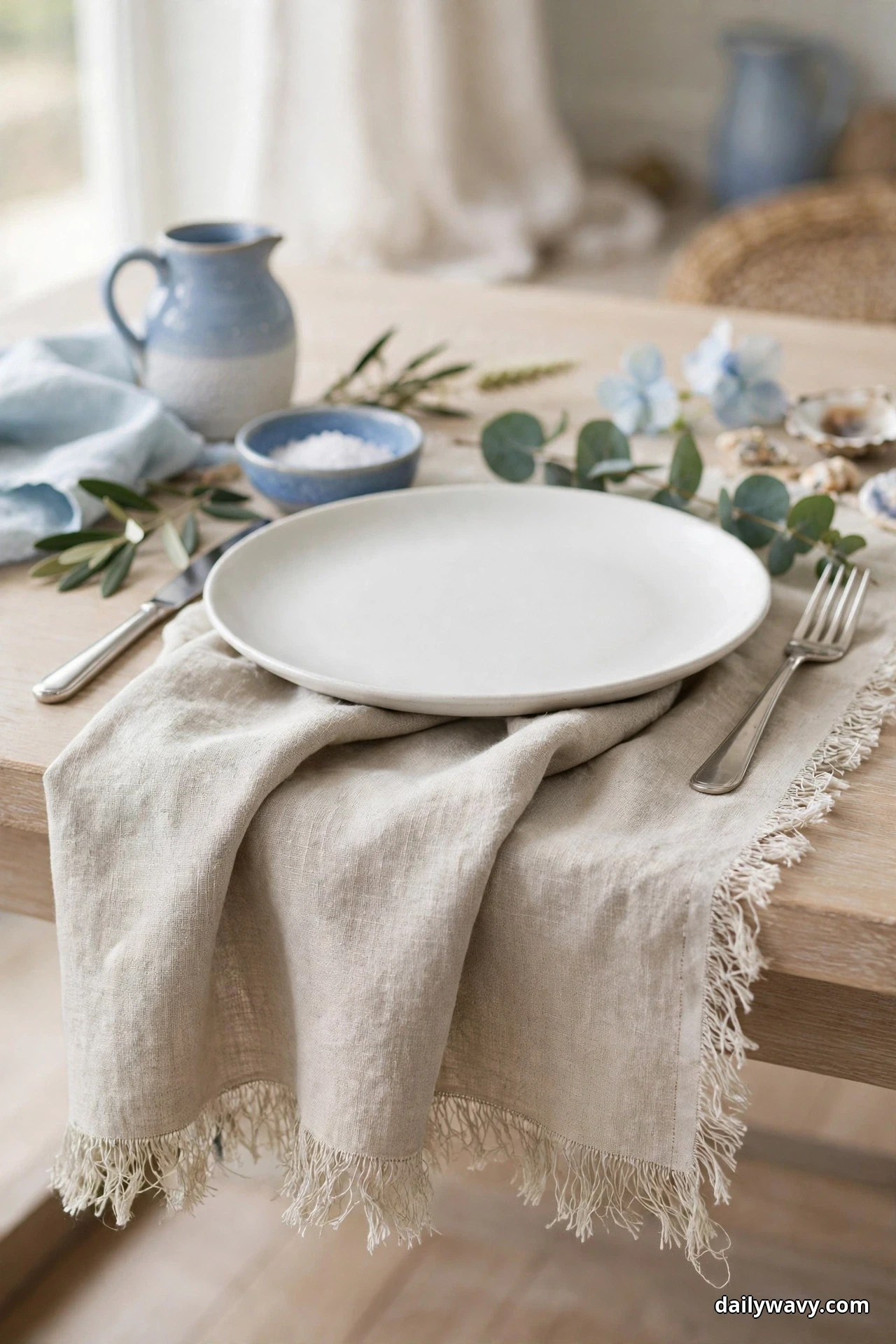
Instead of a full tablecloth, lay a folded strip of fabric under each place setting. A 12-inch-wide strip of washed linen, gauze, or even a cut piece of drop cloth runs in from the table edge at each seat and gives every guest their own soft landing zone. It is less formal than a cloth, more finished than a bare table, and deeply coastal in its relaxed feel.
How to pull it together: cut or fold fabric into strips about 12 inches wide and 24 inches long, long enough to run from the table edge to just past the plate. Lay one at each seat before the plates go down. Washed linen in white, oatmeal, or pale blue is ideal. No hemming required; a raw or fringed edge looks intentional here.
Effort and budget: twenty minutes if you are cutting fabric, five if you are using ready-made runners. A yard of washed linen runs $12 to $20 and makes about three strips.
Pro tip: wash and tumble-dry the fabric once before cutting. Pre-shrinking keeps your strips from puckering after their first real wash.
7. A Low Grouping of Stoneware
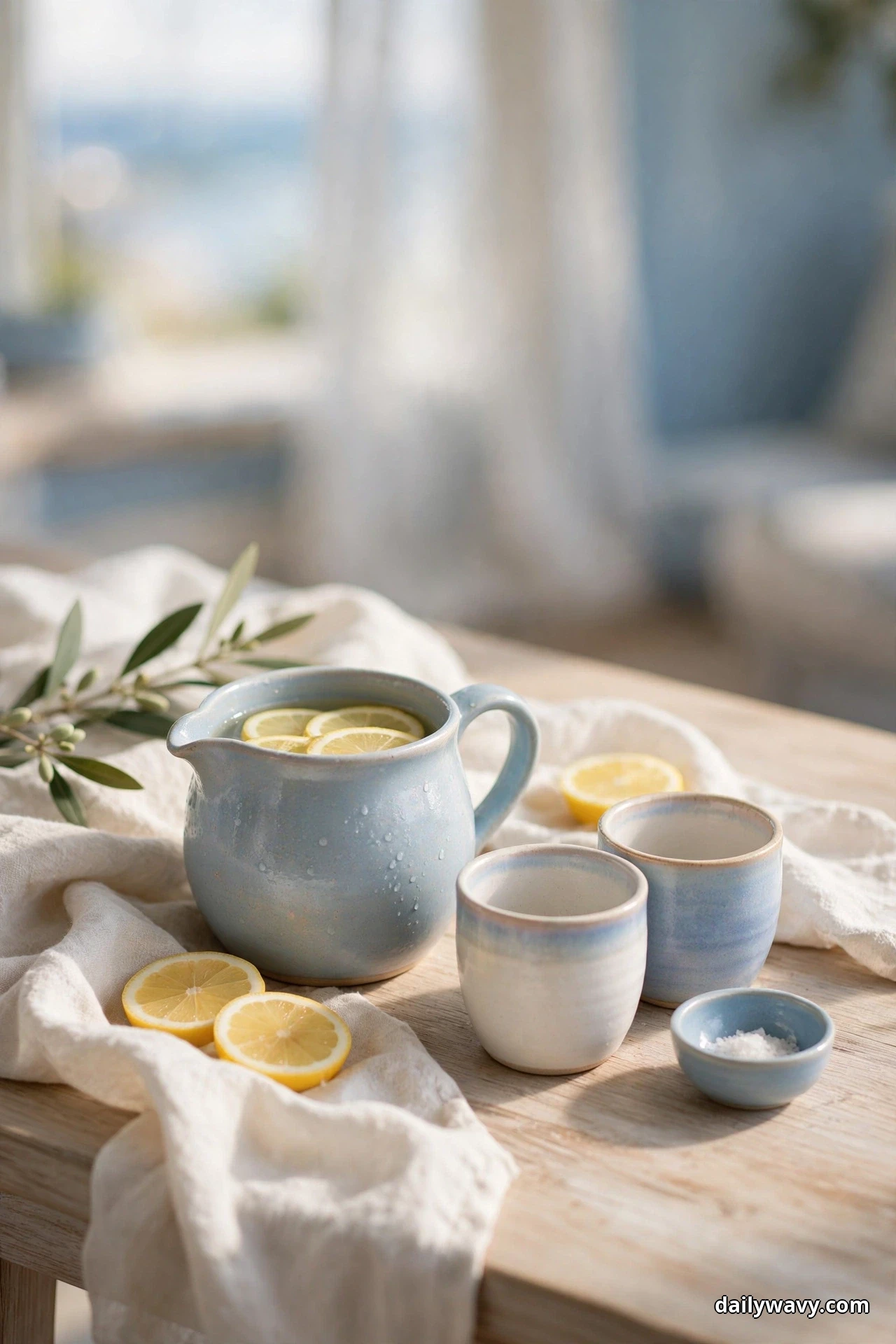
A cluster of stoneware pitchers, cups, and small bowls in white and soft blue does the work of a centerpiece while staying useful. Guests can reach for the water pitcher, the cream, or the sugar without anyone rearranging the table. Functional styling is the most coastal kind: nothing precious, everything within reach.
How to pull it together: gather three to five stoneware pieces of varying heights, all under 10 inches tall. A small pitcher, two cups, and a tiny bowl make a good group. Cluster them at one end of the table or in the center, keeping the tallest piece in the middle. Fill the pitcher with water and lemon slices so it earns its spot.
Effort and budget: five minutes with pieces you already own. If you are starting from scratch, small stoneware pitchers run $12 to $20 each at home stores.
Pro tip: stick to one glaze family. Mixed patterns fight each other on a small table; a set of plain white and soft blue stoneware reads calm and collected.
8. A Platter of Seasonal Produce
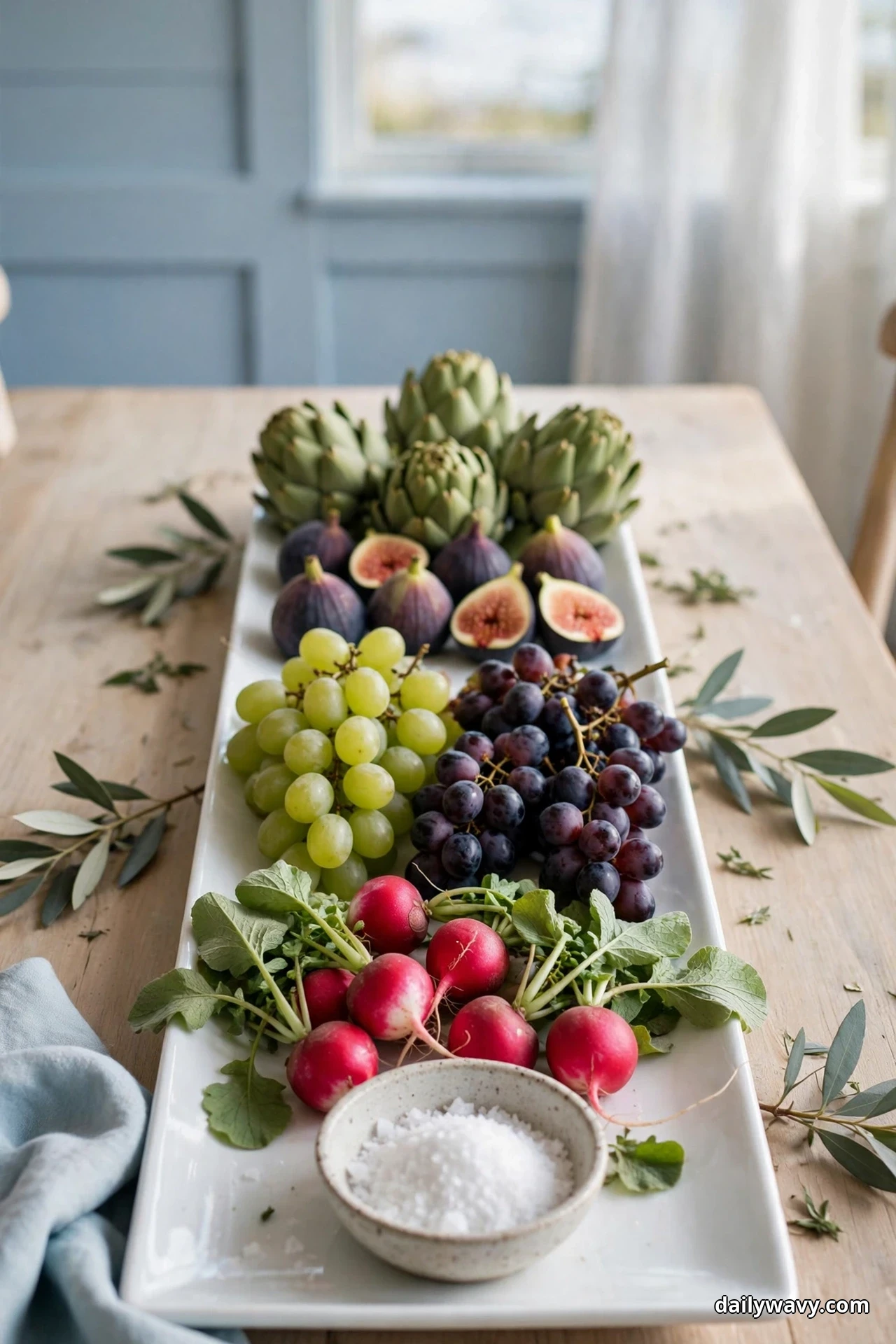
A platter of seasonal produce is a centerpiece and a first course in one. Artichokes, figs, grapes, radishes, whatever looks good at the market this week, arranged on a long platter down the center of the table, brings color and abundance that no decoration can match. It invites people to start eating before dinner is even served.
How to pull it together: choose a platter 16 to 20 inches long in white or light wood. Arrange produce in loose rows or clusters, mixing colors and heights. Add a small bowl of flaky salt or olive oil at one end. Place the platter in the center but keep one end clear enough that it does not block the main serving dishes.
Effort and budget: fifteen minutes of arranging plus whatever produce you buy. This one pays for itself because it becomes part of the meal.
Pro tip: buy produce the same day if you can. The difference between just-picked figs and three-day-old figs is visible from across the room.
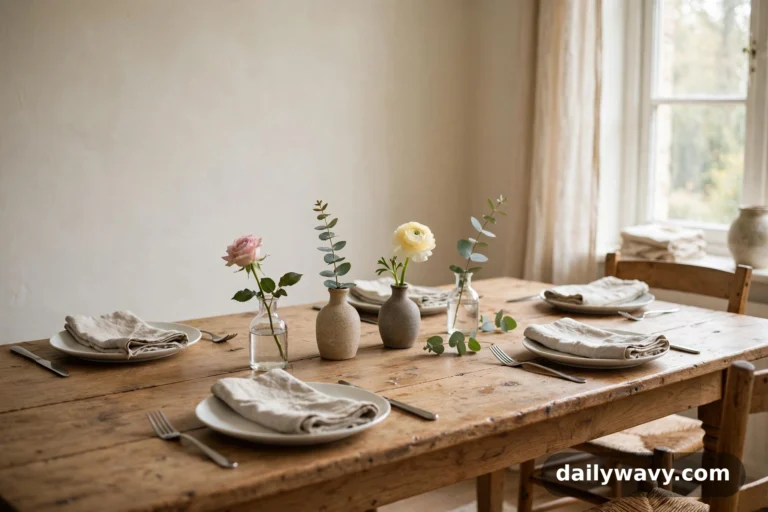
9. Single Stems in Low Bud Vases
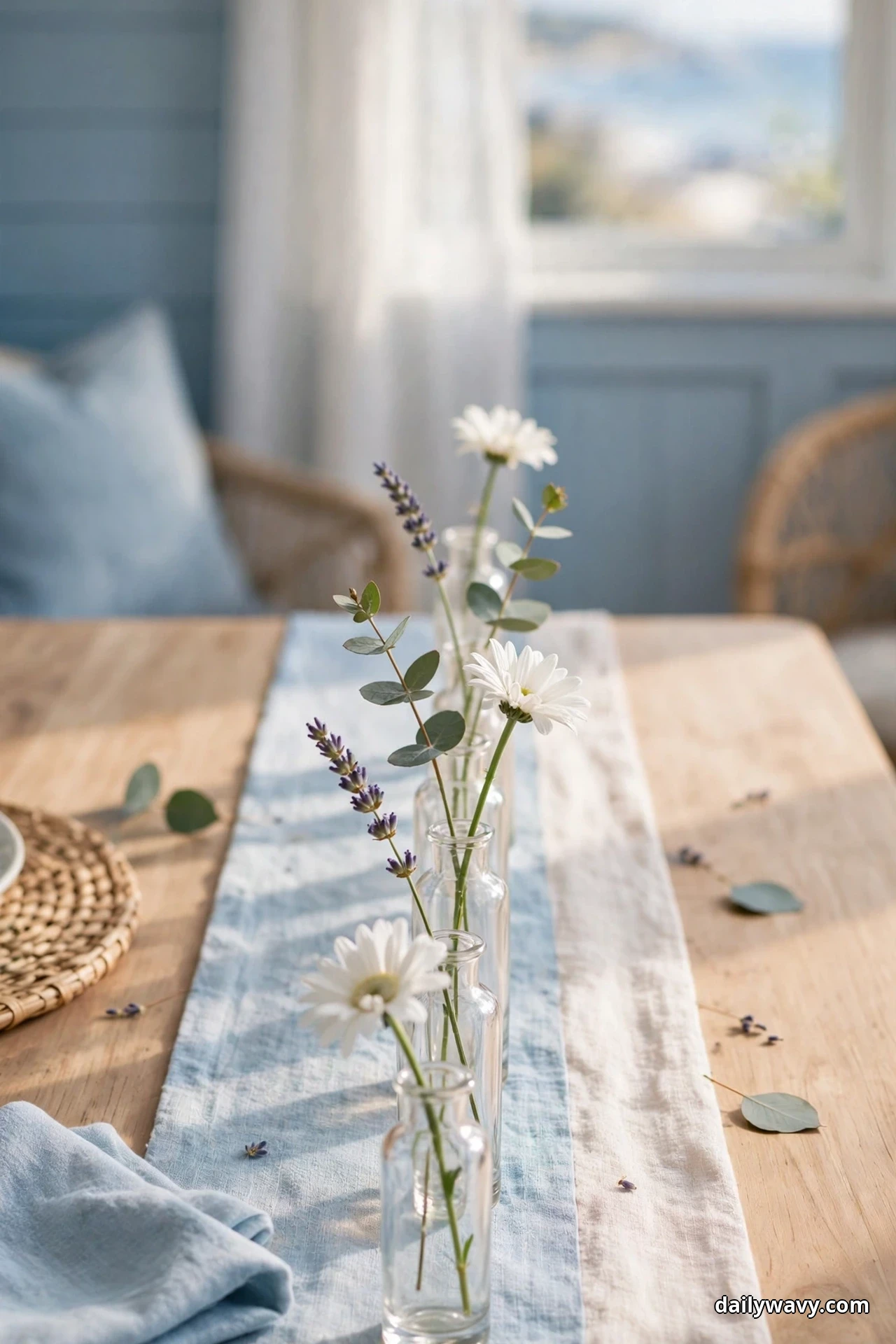
One stem per vase, repeated down the table, is minimalism done right. A row of low bud vases, each holding a single bloom or green stem, creates rhythm without clutter. It is the kind of detail that makes guests think you hired someone, when all you did was snip the garden.
How to pull it together: line up five to seven bud vases, each 3 to 5 inches tall, down the center of the table with 6 to 8 inches between them. Put one stem in each: a white daisy, a sprig of lavender, a single eucalyptus leaf, a tiny rose. Vary the stems slightly but keep the vases identical for a pulled-together look.
Effort and budget: ten minutes. A set of small bud vases costs $10 to $15, and one bunch of grocery store flowers split across seven vases goes a long way.
Pro tip: fill each vase only halfway. Full vases slosh when the table gets bumped; half-full vases stay put and still keep stems fresh for the evening.
10. A Bowl of Seasonal Fruit
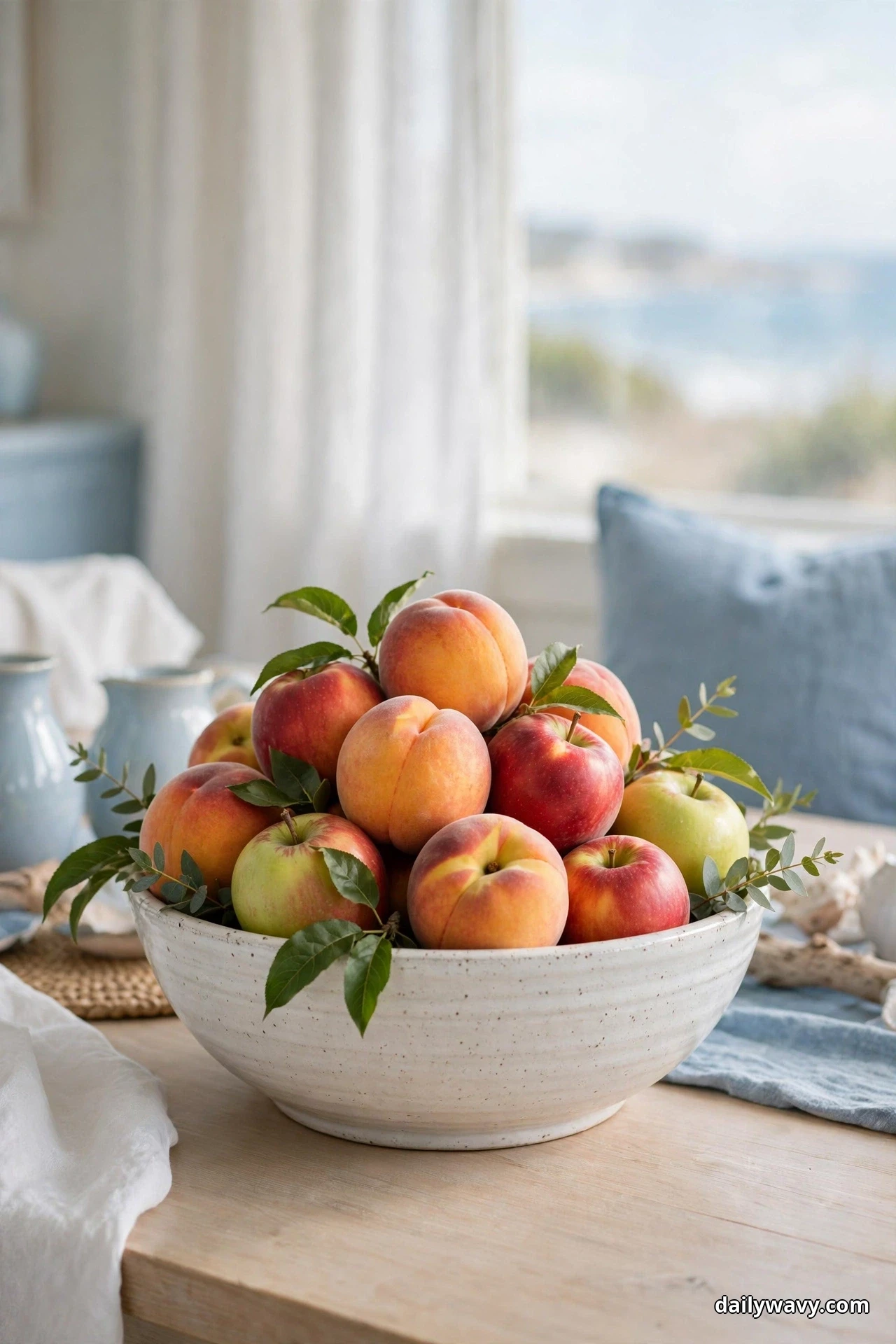
Fruit is nature’s styling. A generous bowl of whatever is in season, peaches in summer, apples in fall, clementines in winter, brings real color and shape to the table with zero arranging skill required. It is honest, abundant, and it gets eaten, which is more than you can say for most centerpieces.
How to pull it together: pick a bowl with some presence, 10 to 14 inches across, in white ceramic or natural wood. Pile the fruit generously; a half-empty bowl looks apologetic. Mix two or three types for color contrast, and tuck in a few leaves if you have them. Set it in the center where everyone can reach.
Effort and budget: five minutes. The fruit is your grocery budget doing double duty.
Pro tip: choose fruit at slightly different ripeness stages. The bowl looks better for longer, and you will not face five overripe peaches on the same day.
11. Folded Linen Napkins with Simple Rings
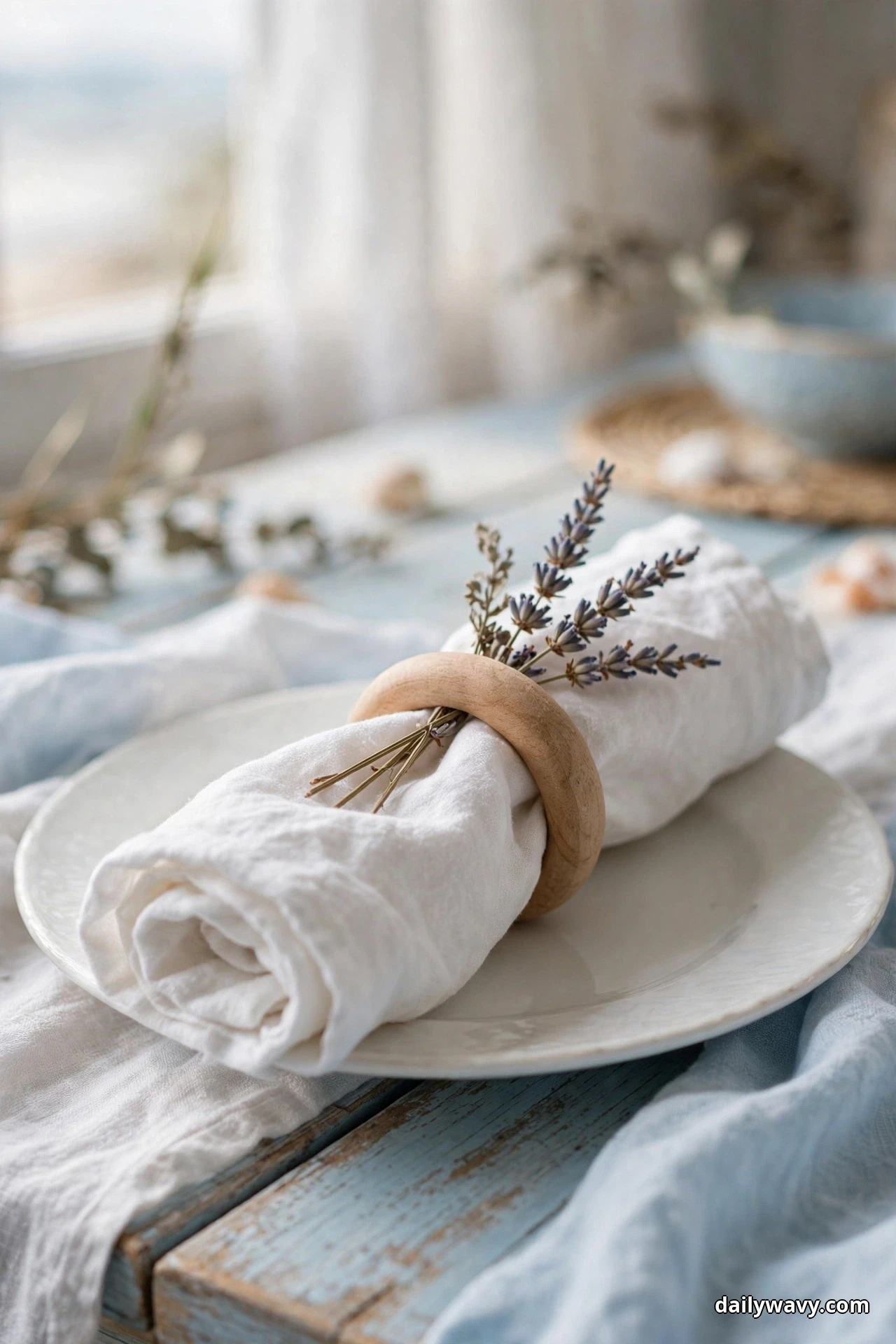
A linen napkin with a simple ring is a small luxury that costs almost nothing. The soft wrinkle of real linen, held by a plain wood or rope ring, sets the tone for the whole table before a single plate arrives. Paper napkins cannot do this. Linen can, and it washes beautifully for years.
How to pull it together: fold each napkin into a simple rectangle or a loose roll and slide a ring over the center. Wood, rattan, rope, or plain brass rings all suit the coastal palette. Lay the napkin on the plate or to the left of the fork. If you want to go further, tuck a small sprig of dried lavender or a shell-free sprig of greenery through the ring.
Effort and budget: ten minutes for a full table. Linen napkins run $3 to $6 each and last for years; simple wood rings are about $8 to $12 for a set of six.
Pro tip: do not iron linen napkins for a coastal table. The soft, lived-in wrinkle is the whole point. Pull them from the dryer while slightly damp, fold, and go.
12. A Narrow Runner and Plain Plates
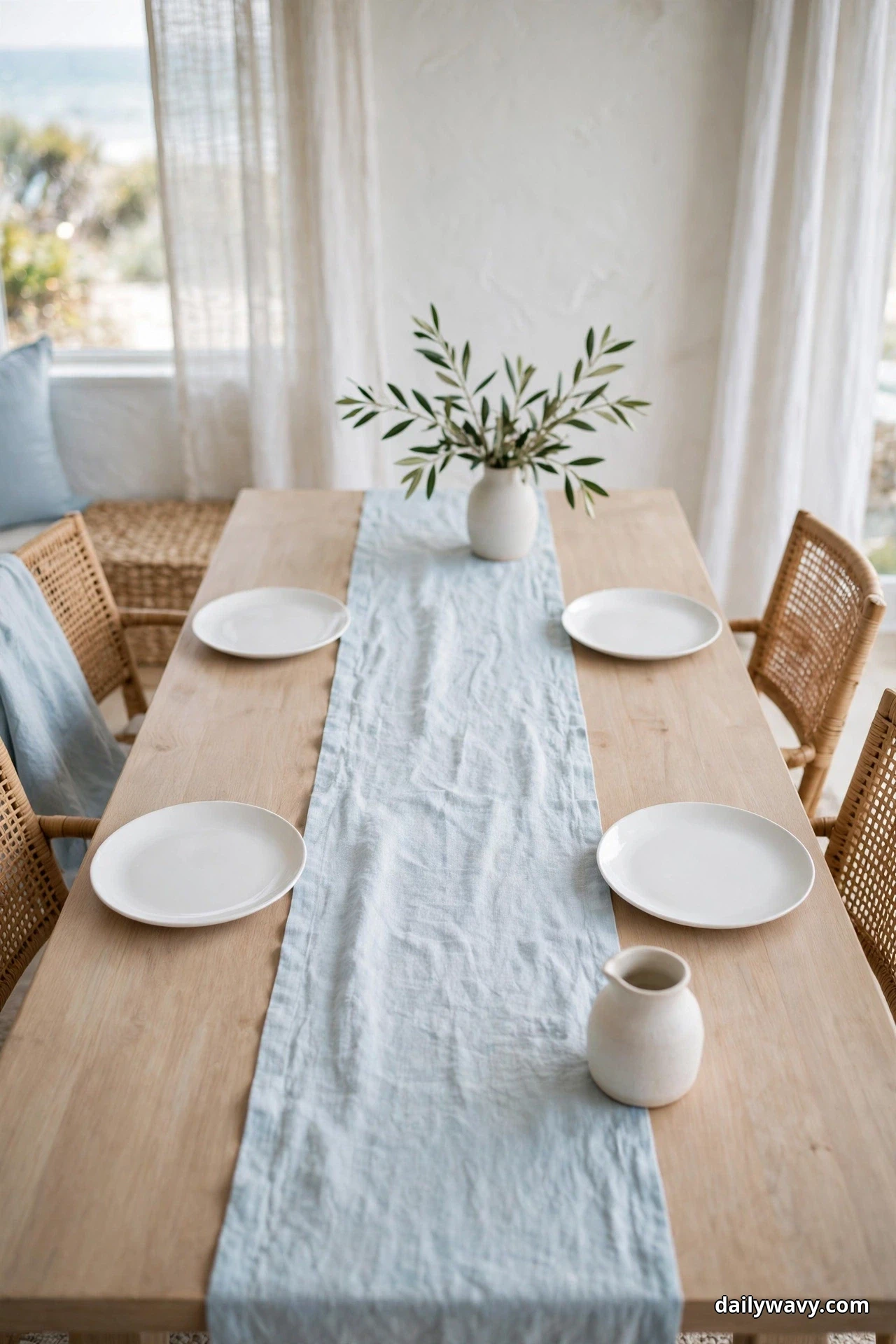
Sometimes the bravest styling choice is restraint. A narrow runner, 12 to 14 inches wide, in natural linen or pale blue down the center of the table, plus plain white plates, lets the food be the decoration. This is the foundation every other idea on this list can sit on, and on its own it is quietly perfect.
How to pull it together: lay the runner centered down the length of the table, letting 6 to 12 inches hang over each end. Set plain white or cream plates at each seat, about an inch from the table edge. That is the whole look. Add one low green element from this list if the table feels bare, or leave it clean.
Effort and budget: five minutes. A linen runner runs $15 to $30, and plain white plates are the most useful dinnerware you will ever own.
Pro tip: choose a runner with a little texture, slubbed linen or a subtle weave, rather than a flat solid. Texture keeps an all-neutral table from looking flat in photos and in person.
13. A Potted Herb Centerpiece
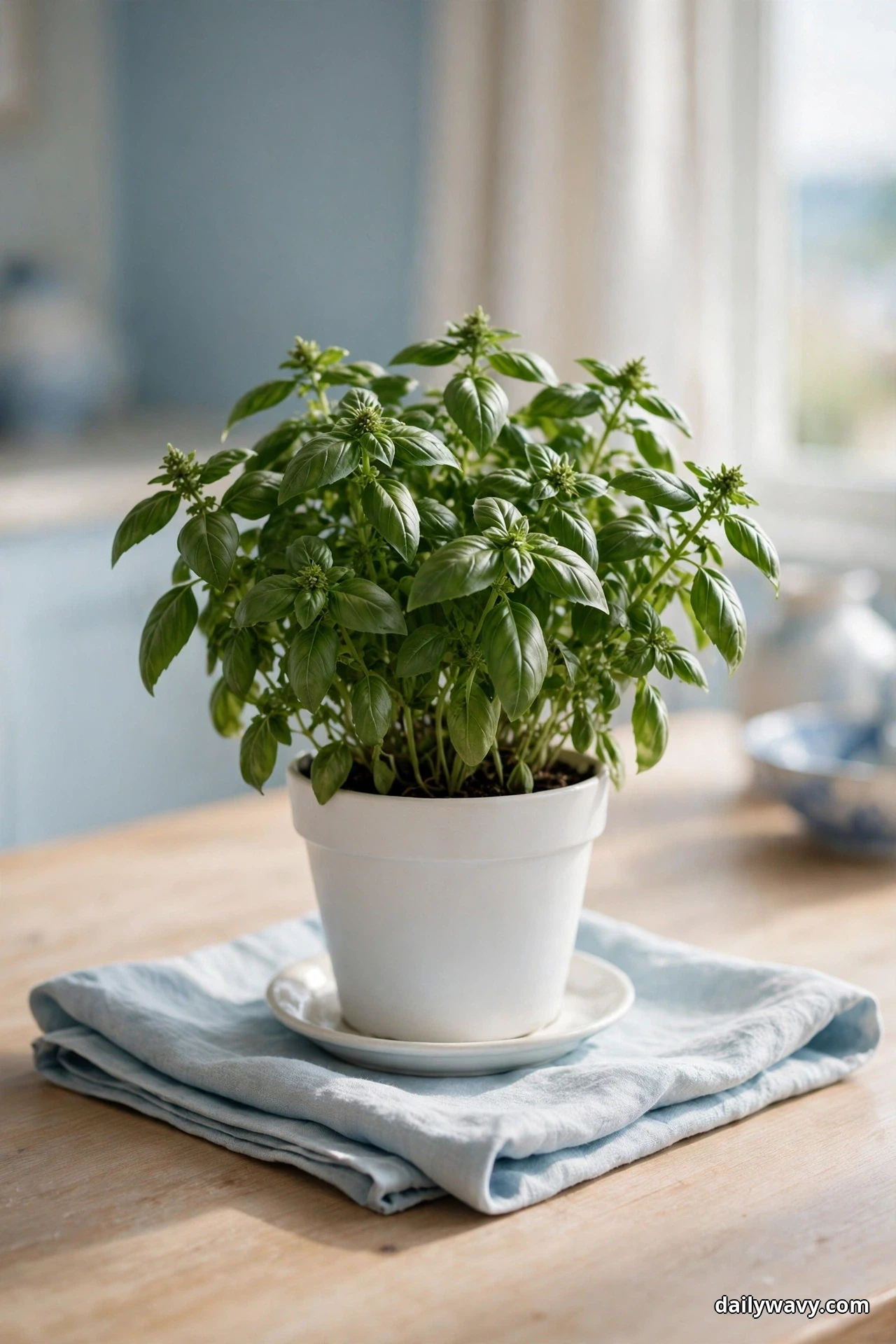
A potted herb in the middle of the table is alive in a way nothing else on this list is. Basil, rosemary, thyme, or a small olive tree in a simple terracotta or white pot brings green, scent, and a little bit of the garden indoors. After dinner, it goes back to the windowsill and keeps growing.
How to pull it together: choose a pot 6 to 8 inches across in terracotta, white ceramic, or a simple basket. A full, healthy herb plant looks better than a leggy one, so pick the bushiest plant at the nursery. Set it in the center of the table on a small saucer or folded linen square to protect the wood. Snip a few leaves for cooking and let guests do the same.
Effort and budget: five minutes plus $5 to $12 for the plant. A plant you will cook with for months is the best-value centerpiece there is.
Pro tip: water the plant the morning of, not right before guests arrive. Damp soil smells earthy in the wrong way; soil that had a few hours to settle just looks fresh.
Coastal Table Setting FAQ
How do I keep a coastal table from looking too beach-themed?
Skip the literal symbols. No shells, no anchors, no rope knots as decor. Coastal is a feeling, light, airy, natural, not a theme park. Stick to the palette (soft blue, warm white, natural materials) and let texture do the talking. If an item would look out of place in a Scandinavian home, it probably does not belong on your coastal table either.
What colors work best for a coastal table setting?
Soft blue, warm white, sandy beige, and natural wood tones. These four cover everything. Add green only through living plants or produce, which keeps the color feeling fresh instead of painted on. Avoid bright turquoise and navy in large doses; a little goes a long way and too much tips the table from coastal to nautical.
Can I mix coastal styling with my existing dinnerware?
Yes, and you should. Plain white plates are the ideal base and most people already own them. Layer in the coastal details around what you have: a linen runner, green cuttings, a bread board. The table will read coastal because of the styling, not because you replaced every dish. Save your money for the bread.
How do I style a coastal table on a budget?
Start with what is free: greenery from the yard, fruit you were already buying, a plant from the windowsill. Then add one textile, a runner or a set of linen-look napkins. Most of the ideas on this list cost under $20 total if you shop your own home first. The most expensive-looking coastal tables are usually the simplest ones.
What should I avoid putting on a coastal table?
Anything tall enough to block faces, anything that sheds (glitter, loose dried flowers near food), and scented candles near the meal. Strong fragrance fights with food. If you want candlelight, use unscented tea lights in simple glass holders, kept away from anything flammable like dried stems or fabric runners.
How far in advance can I set the table?
The non-perishable styling, runner, plates, napkins, vases, can go out the morning of or even the night before. Add fresh elements, bread, fruit, cut greenery, place cards, within a few hours of guests arriving. Citrus and hardy herbs hold up well; soft flowers and bread do not. Give yourself a simple timeline and the whole thing takes under an hour.
The Takeaway
A coastal table setting is not about buying the coast. It is about borrowing its calm: light colors, natural textures, something green, something shared. Pick three ideas from this list, not thirteen, and let them breathe. The bread board with the citrus bowl and a row of bud vases is a complete table. The runner with linen napkins and a potted herb is a complete table. Start simple, set it the way you would want to find it, and let the conversation do the rest. For more ways to make the rooms around your table feel just as welcoming, our narrow living room layout ideas solve the trickiest small spaces, and the small entryway decor guide makes a great first impression before guests ever reach the table. The full Home and Decor collection has every room covered.