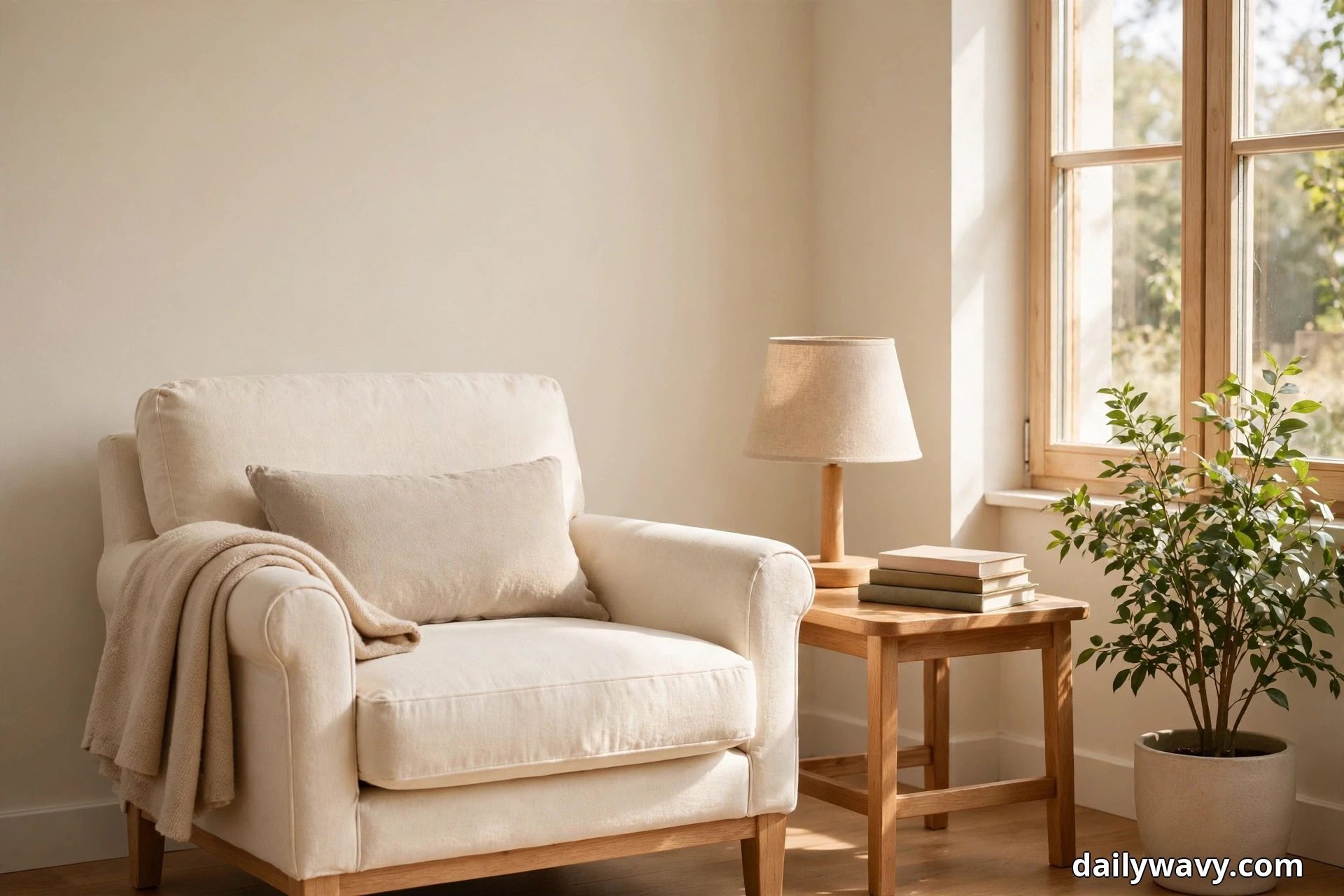
14 Living Room Reading Corner Ideas to Make Space for a Good Book
There is a particular kind of happiness that only exists in a well-built reading corner. The room hums around you,…
There is a particular kind of happiness that only exists in a well-built reading corner. The room hums around you, the kettle has done its work, and for the next hour nobody needs anything. You do not need a whole library or an extra room to get there. You need a chair that holds you up, light that reaches the page, and a surface for the cup. The fourteen ideas below are small, deliberate moves: a cushion cover you can wash, a box that swallows the clutter, a lamp that points exactly where you need it. Each one works on its own, and together they turn an overlooked patch of living room into the spot you reach for every evening.
In This Guide
- A Washable Cushion Cover
- A Lidded Box For Small Items
- A Plant Near Available Daylight
- A Compact Tray For Tea
- A Pair Of Stacked Books On A Stool
- A Soft Lumbar Cushion
- A Small Clock On A Nearby Shelf
- A Wall-Mounted Magazine Rack
- A Warm Accent Color In Textiles
- A Simple Bookend Pair
- A Low Lamp With Visible Shade Texture
- A Supportive Cushion And Soft Throw
- A Directed Reading Light
- A Small Side Surface For A Cup
The Reading Corner Rules Before You Rearrange Anything
A reading corner fails for predictable reasons, so it is worth naming them before you buy a single thing. First, the seat comes before the styling. You want a chair or chaise where your feet can rest flat or elevated, your back supported, and the seat deep enough that you do not perch on the edge. Second, light must reach the page without making you squint. Daylight is wonderful when the chair sits beside or across from a window, but every corner needs a real task light for evenings, aimed over the reading shoulder. Third, keep the walking path honest. A reading corner that blocks the way to the sofa becomes a hallway you sit in, and it will not last a week. Measure your corner, mark the chair footprint with painter’s tape, and walk around it a few times before committing. If you are planning the wider room around this spot, our narrow living room layout ideas show how to keep seating zones clear in tight rooms. And one practical boundary from experience: a reading nook only works where there is real space. Never try to carve one out of the cramped triangle beneath steep stairs, where headroom and light are both compromised.
1. A Washable Cushion Cover
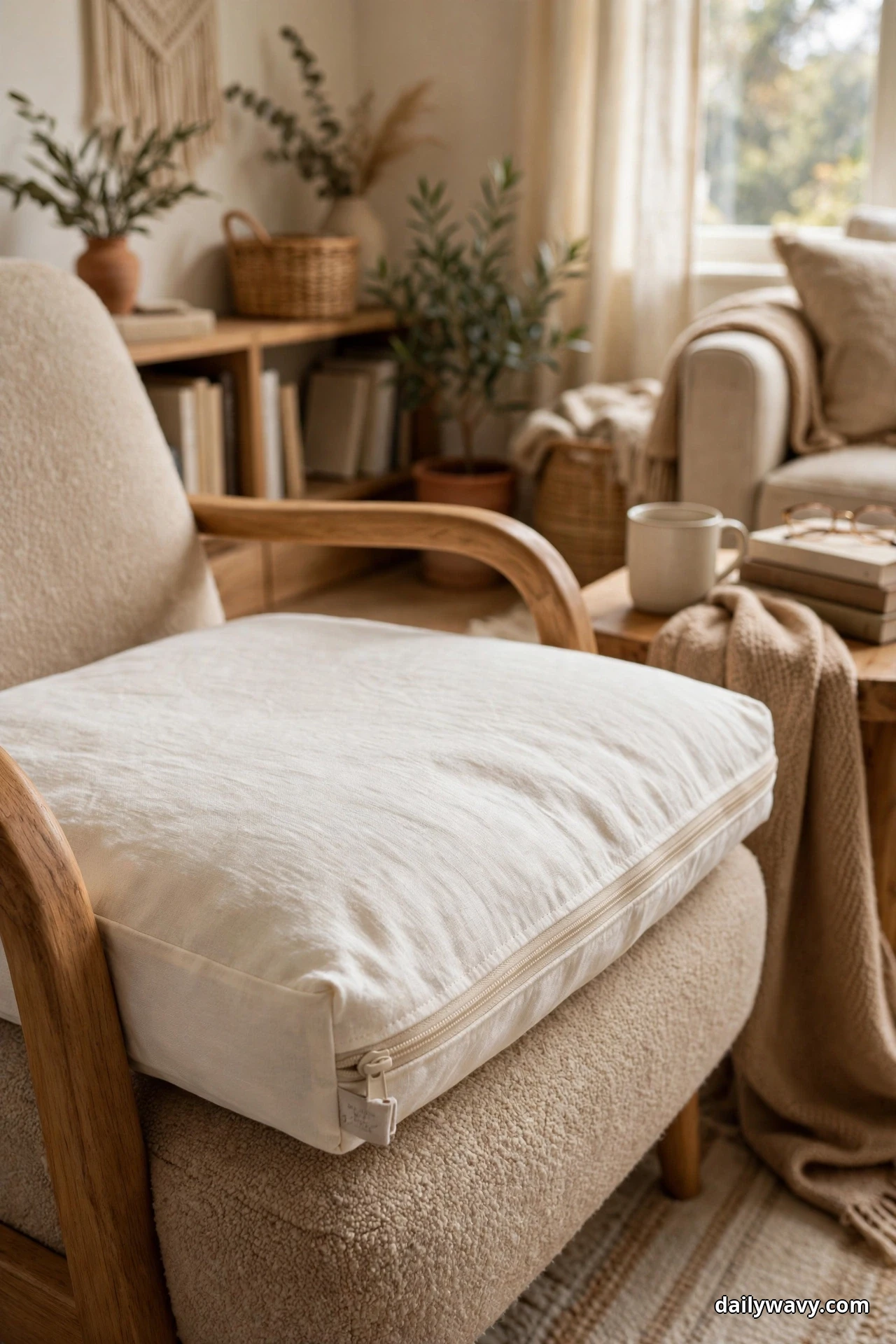
A reading chair takes a particular kind of wear: tea steam, sunscreen hands, the cat who has decided it is also her chair. A washable cushion cover means you can say yes to all of it without flinching. This is the single most practical upgrade a reading corner can get, and it takes an afternoon.
What to measure: Note the cushion’s length, width and thickness, plus the zipper placement on the cover you already own. Most chair cushions in living rooms run 18 to 24 inches square. Bring one measurement for the back cushion too, because back cushions usually differ in size from seat cushions.
Materials and placement: Choose a woven cotton or linen-blend cover with a hidden zipper; pre-wash it once so shrinkage happens before fitting. Keep the color in the warm-neutral family so it settles into the room. Slip it over the seat cushion of your reading chair and keep the original cover stored flat for resale value later.
Approximate effort: Low. Thirty minutes including the wash cycle planning. A spare cover costs less than dinner out.
Lower-cost alternative: A washable throw blanket folded over the seat cushion gives you the same protection and an extra layer of texture. It will slip around more, but a strip of shelf liner underneath stops the sliding.
Practical tip: Buy two covers if you find one you love. While one washes, the corner never looks unfinished.
2. A Lidded Box For Small Items

Bookmarks, reading glasses, the pen you use to mark margins, a lip balm: reading generates a small tide of objects, and without a home they migrate across the whole room. A lidded box corrals them into one neat container that also reads as decor.
What to measure: Check the surface you plan to put it on: side table top, shelf, or stool. A box 8 to 10 inches long and 5 to 6 inches deep holds the essentials without dominating. If the box sits on a stool beside the chair, make sure the stool is within arm’s reach of the seat.
Materials and placement: A lidded box in wood, woven seagrass or lacquered fiberboard keeps dust off reading glasses and hides the clutter of chargers. Set it on the side surface of your corner with the lid oriented so it opens toward the chair.
Approximate effort: Low. One shopping trip or one shelf of a closet rediscovered. The effort is mostly in the first tidy.
Lower-cost alternative: A clean lidded gift box or a lidded tin wrapped in a strip of kraft paper works beautifully and costs nothing. Add a small label on the lid if several people share the corner.
Practical tip: Do a two-minute reset when you finish reading: glasses in, pen in, lid on. The corner resets itself nightly.
3. A Plant Near Available Daylight

A plant does two quiet jobs in a reading corner. It fills the dead space behind or beside the chair, and it gives your eyes somewhere green to rest when you look up from the page. The trick is placing it where the light already falls, not where you wish it fell.
What to measure: Note how far the candidate spot sits from the window and whether it gets direct sun or only ambient brightness. Measure the floor footprint you can spare: a pot 10 to 12 inches wide fits most corners. Check the ceiling height if you are considering something tall.
Materials and placement: Choose a plant that tolerates your real light level. Pothos and ZZ plants handle low light; snake plants tolerate neglect; a small olive or fig wants bright indirect light. Set it in a ceramic or woven pot that matches the room’s palette, positioned so leaves never brush the reading light.
Approximate effort: Low to medium. Ten minutes to pot, a lifetime of remembering to water. A moisture meter, about ten dollars, removes the guesswork.
Lower-cost alternative: Take a cutting from a friend’s pothos or spider plant and root it in water. Free plants are the best kind, and cuttings reach display size in a few months.
Practical tip: Rotate the pot a quarter turn each month so growth stays even and the plant does not lean permanently toward the window.
4. A Compact Tray For Tea
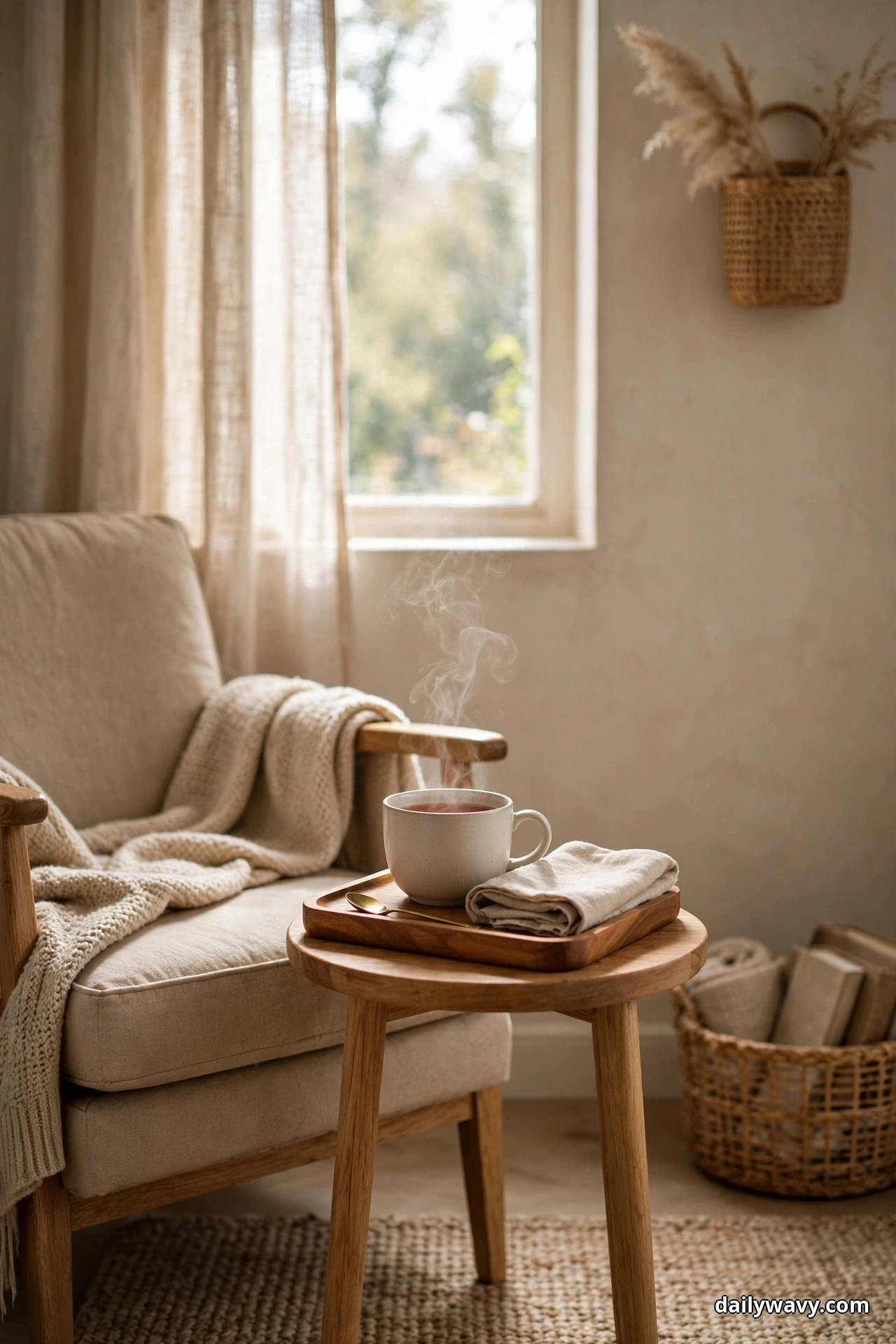
A reading session without tea is just sitting. A compact tray makes the tea ceremony part of the corner instead of a precarious balancing act, and it protects your side table from rings and spills.
What to measure: Measure your side surface. The tray should cover most of it while leaving a thumb’s width of table visible around the edges. For a 12-inch square table, a 10-inch round or rectangular tray is about right.
Materials and placement: A wood, marble or lacquered tray with a raised edge keeps cups from sliding. Keep it in warm neutrals so the tea and the book remain the stars. Place the tray with the handle side facing the chair for an easy lift.
Approximate effort: Low. The tray arrives, the tea goes on it, and you are done. Washable if it has a waterproof finish, which you will appreciate after the first over-steeped cup.
Lower-cost alternative: A sturdy cutting board with a juice groove, already in most kitchens, does the same job and carries the same raised-edge safety.
Practical tip: Keep a folded linen napkin on the tray. It catches drips, quiets the cup’s clink, and makes the whole ritual feel intentional.
5. A Pair Of Stacked Books On A Stool
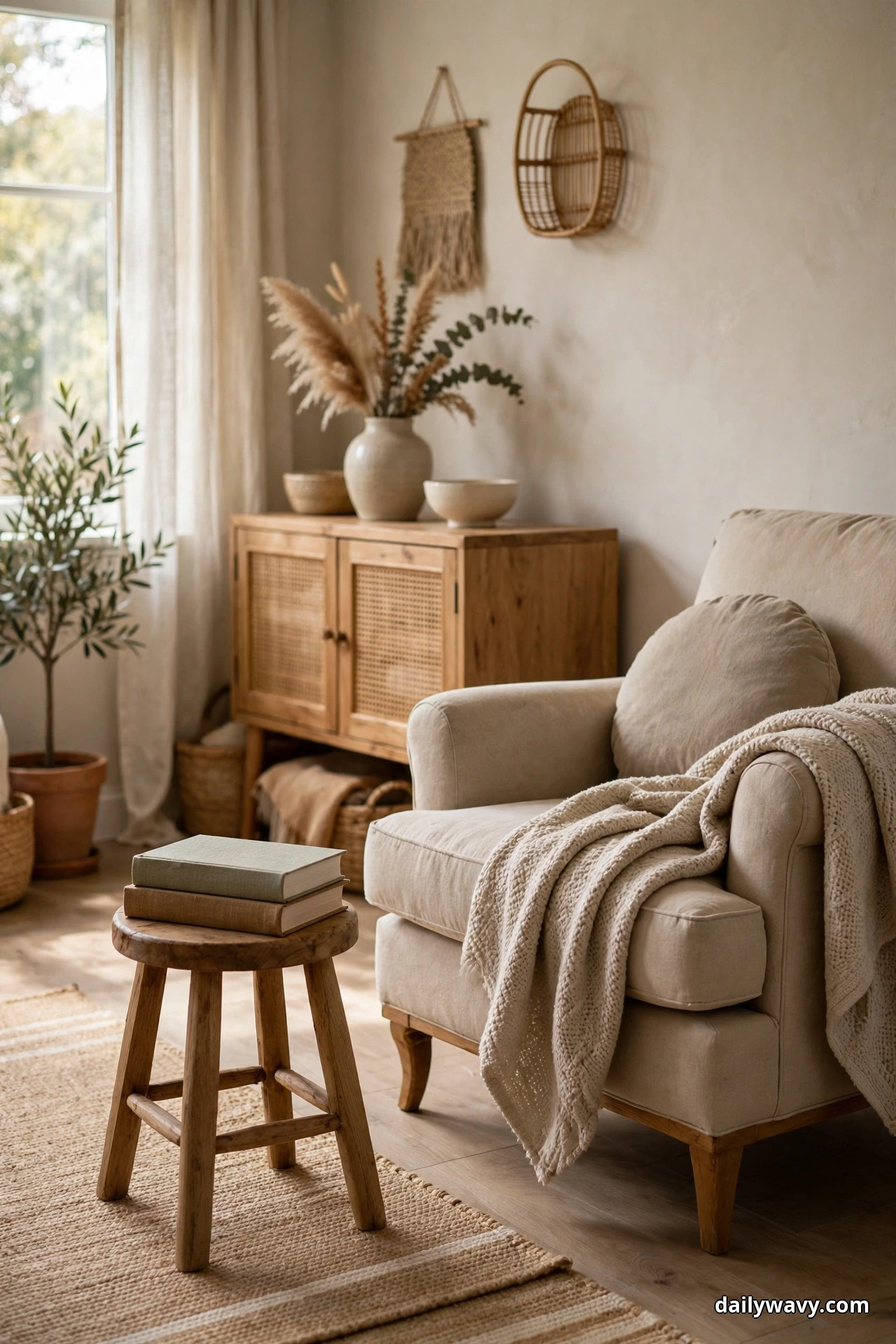
Every reading corner needs a landing pad for the book you are in and the book you are about to be in. A small stool with two stacked books on top is a side table, a footrest and a reading list all at once, and it moves wherever the light goes.
What to measure: The stool should sit 1 to 2 inches below or at your chair’s arm height so books are easy to grab. Measure the reach: with your back against the chair, you should touch the stool’s top without leaning. A 14 to 18 inch tall stool suits most armchairs.
Materials and placement: A wooden or woven stool holds weight and looks good doing it. Stack the current book on top, the next book beneath it, spines aligned. Tuck the stool against the chair’s reading side.
Approximate effort: Low. You likely own the stool already; the styling is just the stack.
Lower-cost alternative: A sturdy crate turned on its side, or a small stack of hardcover books you already own, doubles as the surface itself in a pinch.
Practical tip: Put the book you just finished on the bottom of the stack for a week before shelving it. It becomes a quiet record of what you read and when.
6. A Soft Lumbar Cushion

The difference between reading for twenty minutes and reading for two hours is usually your lower back. A soft lumbar cushion fills the gap between your spine and the chair back, letting your shoulders drop and your breathing slow. It is ergonomics disguised as comfort.
What to measure: Sit in the chair and note where your lower back curves away from the seat back. That is where the cushion goes. A lumbar roll 12 to 18 inches wide and 5 to 6 inches in diameter suits most armchairs; larger chairs take a 20-inch bolster.
Materials and placement: Look for a firm foam or buckwheat fill rather than loose fiberfill, which flattens within weeks. A washable cover matters here more than anywhere. Wedge it at the belt line and adjust until your shoulders rest against the chair back without rounding.
Approximate effort: Low. The fitting takes longer than the purchase: sit, adjust, read a chapter, adjust again.
Lower-cost alternative: A tightly rolled bath towel, secured with two hair ties or a belt, makes a surprisingly good lumbar roll for testing the concept before you buy.
Practical tip: If you read with a tablet, the same cushion behind your lower back stops the slow slide toward the edge of the seat.
7. A Small Clock On A Nearby Shelf
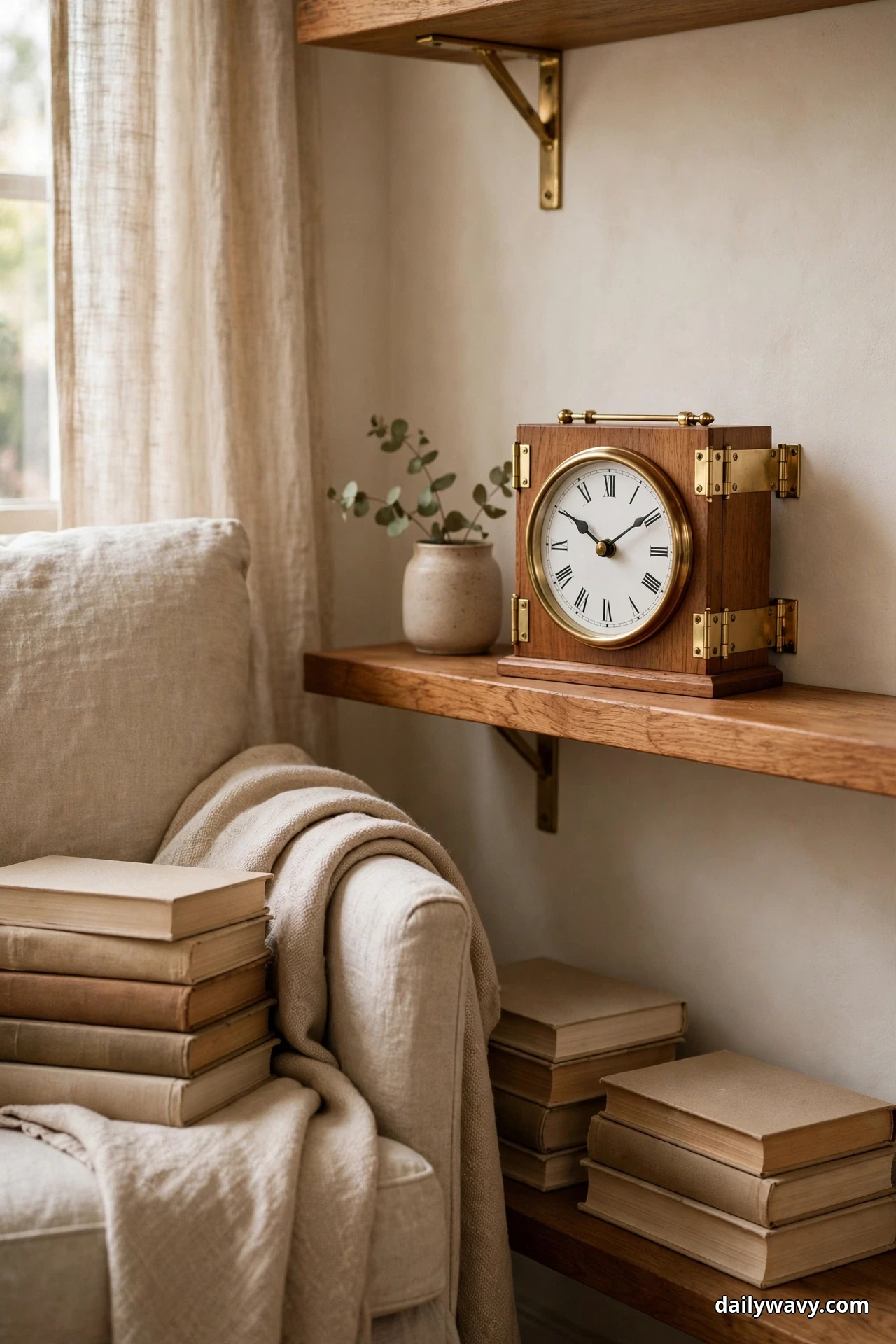
Reading time has a way of dissolving, which is lovely until dinner burns. A small clock on a nearby shelf keeps you honest without the phone’s glow pulling you into messages. Analog faces are kindest; the ticking becomes part of the corner’s atmosphere.
What to measure: Check the shelf depth and height. The clock should sit 4 to 6 inches tall with a face you can read from the chair without squinting. Note the distance from chair to shelf: under six feet, a 4-inch face reads fine; beyond that, go larger.
Materials and placement: A wood or brass analog clock keeps the corner’s warm palette and never needs a charger. Place it on a shelf at or slightly above eye level from the reading position, angled a few degrees toward the chair.
Approximate effort: Low. Hang or set, set the time, done. A single AA battery a year is the maintenance.
Lower-cost alternative: A thrifted alarm clock, stripped of its alarm function, costs a dollar or two and often has the most character.
Practical tip: Agree with yourself on a closing time before you open the book. The clock is only useful if the rule exists first.
8. A Wall-Mounted Magazine Rack
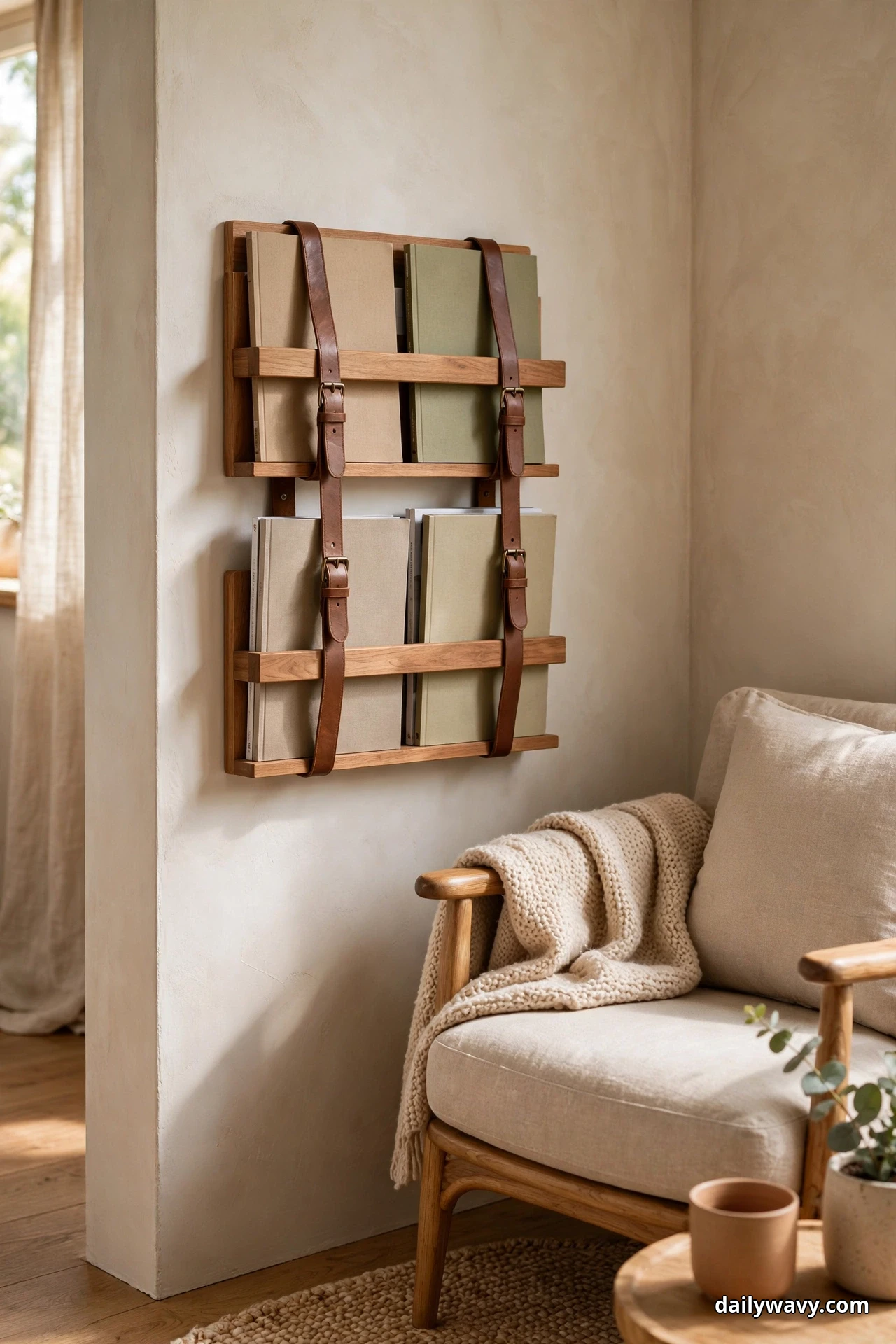
Magazines and newspapers never stack neatly; they slide, they splay, they end up under the sofa. A wall-mounted rack gives them a proper address at arm’s height, and because it floats, the floor stays clear for the plant and the lamp base.
What to measure: Measure the wall space beside the chair at sitting reach: 24 to 36 inches off the floor is the comfortable zone. Check the wall type. Drywall needs anchors; plaster needs a pilot hole and patience. The rack should hold at least four issues without sagging.
Materials and placement: A wooden, leather-strap or metal rack keeps the weight honest. Mount it on the wall nearest your reading hand, tilted so titles face you. If you rent, look for racks that hang from a single picture hook rated for the loaded weight.
Approximate effort: Medium. Thirty minutes with a level, a drill and anchors. Mark twice, drill once.
Lower-cost alternative: A fabric wall organizer with pockets, hung from a removable hook, holds the same four issues and leaves the wall untouched.
Practical tip: File the current issue in front and let finished ones migrate to the back. When the back slot is full, recycle the oldest. The rack enforces its own tidy.
9. A Warm Accent Color In Textiles
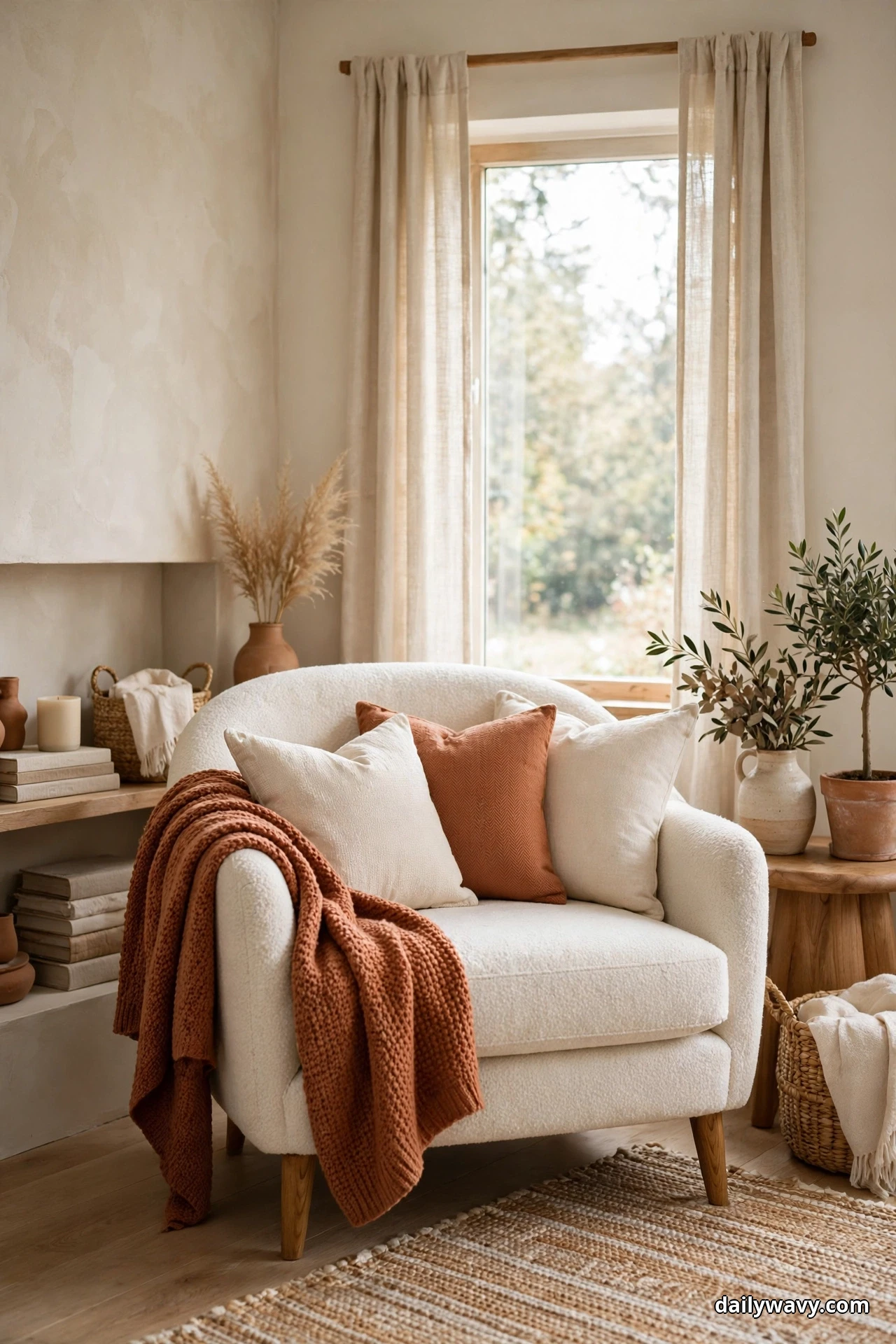
Warm neutrals are the reading corner’s natural habitat, but one warm accent color in the textiles is what makes the corner feel designed rather than assembled. Terracotta, rust, ochre or warm camel all pull the eye in and make the space feel sunlit even at night.
What to measure: This is about restraint, not measurement. One accent color, two to three textiles: a throw, a cushion cover, maybe the lumbar cushion. Note your existing neutrals so the accent harmonizes rather than fights.
Materials and placement: Linen, wool or cotton in a warm accent tone. Drape the throw over the chair arm nearest the light so the color catches it. Put the accent cushion at the front of the stack so it reads first.
Approximate effort: Low. The work is editing, not adding. Pull out anything that does not belong to the palette.
Lower-cost alternative: Dye is cheaper than new textiles. A white cotton throw in a pot of terracotta fabric dye becomes a custom accent piece for the cost of the dye packet.
Practical tip: Photograph the corner in daylight after you style it. The camera catches color clashes your eyes have already forgiven.
10. A Simple Bookend Pair
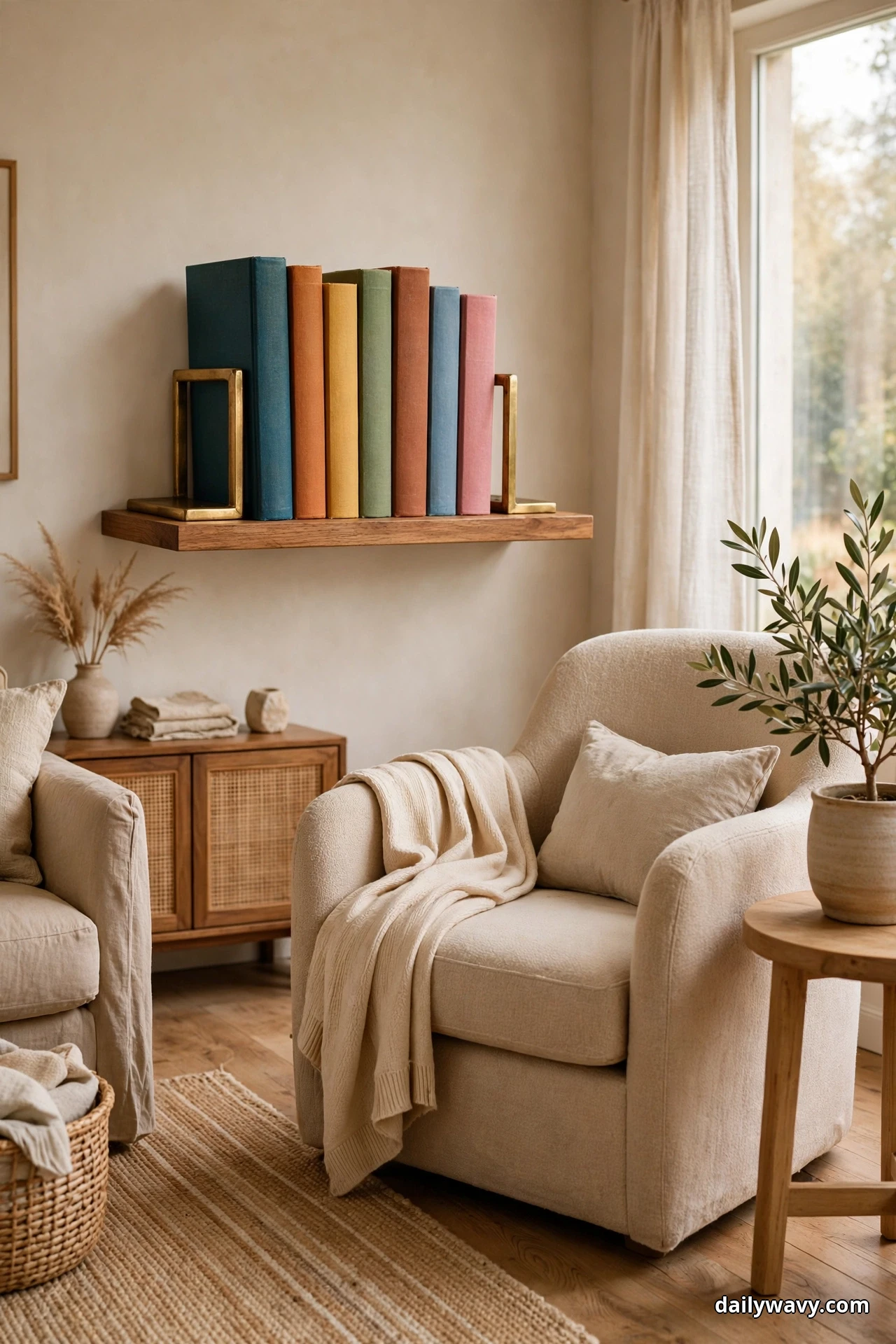
The books that live in a reading corner are the current rotation: what you are reading, what is next, what you lend. A simple bookend pair keeps that rotation upright on the nearest shelf or stool, and the bookends themselves become small sculptures in the composition.
What to measure: Count the books in your rotation and measure the shelf or surface run they will occupy. Each bookend needs a flat base at least 4 inches deep to stay put. Heavy books need heavier bookends: stone, cast metal or filled resin.
Materials and placement: Brass, stone, wood or ceramic bookends in the room’s palette. Set the pair on the shelf closest to the chair, with the current rotation between them and a finger’s width of slack so books slide in and out easily.
Approximate effort: Low. Placement is the whole job.
Lower-cost alternative: Two heavy objects you already own, a doorstop, a large candle, a paperweight, hold a small row upright just as well while you hunt the perfect pair.
Practical tip: Keep the rotation to what fits between the bookends. When a new book arrives, one must leave for the main shelves. This is the corner’s circulation system.
11. A Low Lamp With Visible Shade Texture

Overhead light is for finding your keys. Reading light should come from low and close, at roughly shoulder height beside the chair, so the page is lit and the room stays moody. A shade with visible texture, linen, burlap weave, rattan, softens the light and becomes a beautiful object in daylight too.
What to measure: The shade’s bottom edge should sit at or just below your eye level when seated, usually 36 to 42 inches from the floor on a table lamp. Measure the table or surface height, then choose a lamp whose shade lands in that band.
Materials and placement: A linen or woven shade on a ceramic, wood or brass base. Place it on the side surface at your non-dominant reading side so your hand never casts a shadow on the page. A warm bulb, 2700K, keeps the corner restful.
Approximate effort: Low to medium. Swapping a shade onto a base you own takes minutes; buying the right lamp takes one considered trip.
Lower-cost alternative: A textured shade alone, fitted to a lamp you already own, transforms the light for a fraction of the lamp’s price. Check the fitter size: most table lamps use a spider or uno fitter.
Practical tip: Plug the lamp into the outlet you can reach without standing. A reading light you have to hunt for stays off, and a dark corner does not get used.
12. A Supportive Cushion And Soft Throw

Some chairs are almost right. The seat is a touch firm, the back a touch upright, and you love the chair too much to replace it. A supportive cushion and a soft throw fix the almost: the cushion firms up the seat, the throw adds the give that upholstery lacks, and together they make a good chair a reading chair.
What to measure: Sit and notice what is missing. Seat too deep? A cushion behind your back shortens it. Seat too firm? A 3-inch seat pad changes everything. Measure the seat pan so the pad fits without overhang.
Materials and placement: A dense foam seat pad in a washable cover, plus a wool or cotton throw folded to seat width. Lay the pad flat, drape the throw over the chair back and arm so it is within reach when the room cools.
Approximate effort: Low. Fifteen minutes of sitting, adjusting and re-folding until it feels like yours.
Lower-cost alternative: A folded duvet or quilt, stored on the chair when not in use, is the original seat pad and costs nothing.
Practical tip: The throw lives on the chair, not folded on a shelf. A reading corner should look ready to be read in, not staged for a photograph.
13. A Directed Reading Light

A general lamp lights the corner; a directed reading light lights the page. An adjustable arm or gooseneck lamp that you can aim at the book is the single biggest upgrade for evening readers, because it puts full brightness exactly where your eyes are working and nowhere else.
What to measure: The light head should sit 12 to 18 inches above and slightly behind your shoulder, aimed down at the page. Measure from your seated shoulder to the mounting point, wall, floor base or clamp, to choose the right arm length.
Materials and placement: A pharmacy-style floor lamp, a clamp light on a nearby shelf, or a wall-mounted swing arm all work. Aim it over your reading shoulder, the opposite side from your page-turning hand if you annotate. A focused beam, not a flood, keeps the rest of the room calm.
Approximate effort: Medium. Floor and clamp versions need no tools; a wall-mounted arm needs anchors and a level, about forty minutes.
Lower-cost alternative: A clip-on book light, the kind that grips the book itself, delivers directed light for the price of a paperback and travels with the book.
Practical tip: Test the aim with the actual book and your actual posture before finalizing the mount. Reading light is personal; the geometry only works if it matches your body.
14. A Small Side Surface For A Cup

Every idea in this guide assumes somewhere to set the cup down, so let us make that surface deliberate. A small side surface at chair-arm height, stable, reachable and just big enough for a cup plus the current book, is the keystone of the whole corner. Without it, everything else wobbles.
What to measure: The surface should match your chair’s arm height within 2 inches, usually 22 to 26 inches, so you never reach up or down blindly. Measure the reach from your seated position: the cup should land within a relaxed arm’s length, about 18 to 24 inches from your shoulder.
Materials and placement: A wooden side table, a ceramic garden stool, or a wall-mounted fold-down shelf all work. It must not wobble: test it with a full mug before you trust it. Place it on your dominant-hand side, the tray from idea 4 sitting on top.
Approximate effort: Low to medium. A purchased side table needs only placement; a wall-mounted shelf needs anchors and a level.
Lower-cost alternative: A sturdy wooden crate, sanded smooth and sealed, makes a characterful side surface for the cost of sandpaper and an afternoon.
Practical tip: This is the surface the lidded box, the tray and the lamp all share, so size it for the full committee, not just the cup. Twelve inches square is the honest minimum.
Reading Corner Questions, Answered
How much space does a reading corner actually need?
Less than you think. A comfortable armchair needs about a 3 by 3 foot footprint, plus another 2 feet in front for legroom and a side surface. Measure a 5 by 5 foot square in your living room and you will usually find it fits, often in a spot that currently holds nothing but a plant stand.
What is the best lighting for reading in the living room?
Two layers. Daylight from a nearby window handles daytime reading, and a directed task light handles evenings. The task light should sit at or just below eye level, aimed over your reading shoulder. Warm bulbs around 2700K keep the corner relaxing; cooler daylight bulbs can feel clinical at night.
Can I build a reading corner in a small living room?
Yes, and small rooms often make the coziest corners. Choose a chair with a smaller footprint, like a slipper chair or a compact swivel, and let the side surface double as storage. A wall-mounted magazine rack and a clamp light keep the floor clear. If your whole room is tight, our narrow living room layout ideas show how to carve out zones without crowding.
How do I keep the reading corner from looking cluttered?
Give every object a home: the lidded box for small items, the magazine rack for periodicals, the bookends for the current rotation. Then enforce a one-in, one-out rule for the rotation. A corner with five books looks curated; a corner with fifteen looks like storage.
What chair works best for a reading corner?
One you can sit in for an hour without fidgeting. That usually means a seat at least 20 inches deep, a back that reaches your shoulder blades, and arms at a height where your elbows rest without shrugging. Test chairs by sitting with a book for ten minutes, not by looking at them.
Do I need to spend a lot to make a reading corner?
No. The ideas above are deliberately small: washable covers, a tray, a directed light, a thrifted stool. Most readers spend the most on the lamp and the lumbar support, because light and posture are what actually determine whether the corner gets used. Everything else can be thrifted, repurposed or made.
Make It Yours Tonight
A reading corner is not a project you finish; it is a habit you furnish. Start with the seat and the light, because those two decide whether you actually read there. Then add the small comforts one at a time: the tray, the box, the throw that lives on the chair. If your living room is still finding its shape, the narrow living room layout guide will help you place the corner where it belongs, and when the bedroom needs the same treatment our small bedroom with a queen bed ideas show how to repeat the trick. For the rest of the home, browse the home decor ideas. Then put the kettle on, open the book, and let the corner do its quiet work.