20 Tv Wall With A Fireplace Below Ideas for a More Considered Setup
A TV above the fireplace sounds like the perfect setup until you try to style it. The screen feels too…
A TV above the fireplace sounds like the perfect setup until you try to style it. The screen feels too big, the mantel collects clutter, and the whole wall reads as one loud rectangle. The fix is not to fight the arrangement. It is to treat the wall as a single composition: screen, fireplace, and the quiet space around them working together. These 20 ideas focus on small, buildable moves. A box that hides the remotes, a lamp that softens the glare, a ledge that gives the eye somewhere to rest. Almost none of them need a contractor. All of them make the wall feel considered instead of accidental.
In This Guide
- A Decorative Box Hiding Loose Accessories
- A Pair of Small Ceramic Vessels
- A Wood Finish That Repeats in the Room
- Soft Side Lighting Instead of Glare
- A Generous Blank Border Around the Screen
- A Monochrome Grouping of Decor Objects
- A Slim Vertical Artwork Beside the TV
- A Textured Backing Surface
- A Low Floral Arrangement Under the Screen
- A Recessed Visual Niche Around the Screen
- A Floor-Level Basket of Blankets
- Low Closed Storage With One Tall Vase
- Balanced Side Styling Around the Screen
- Asymmetric Art Beside the Screen
- A Shallow Ledge Below the Screen
- A Single Sculptural Lamp Beside the TV
- Woven Baskets at Floor Level
- A Long Plant Trailing Beside the Console
- A Tonal Frame Around the Screen
- A Low Row of Books on the Console
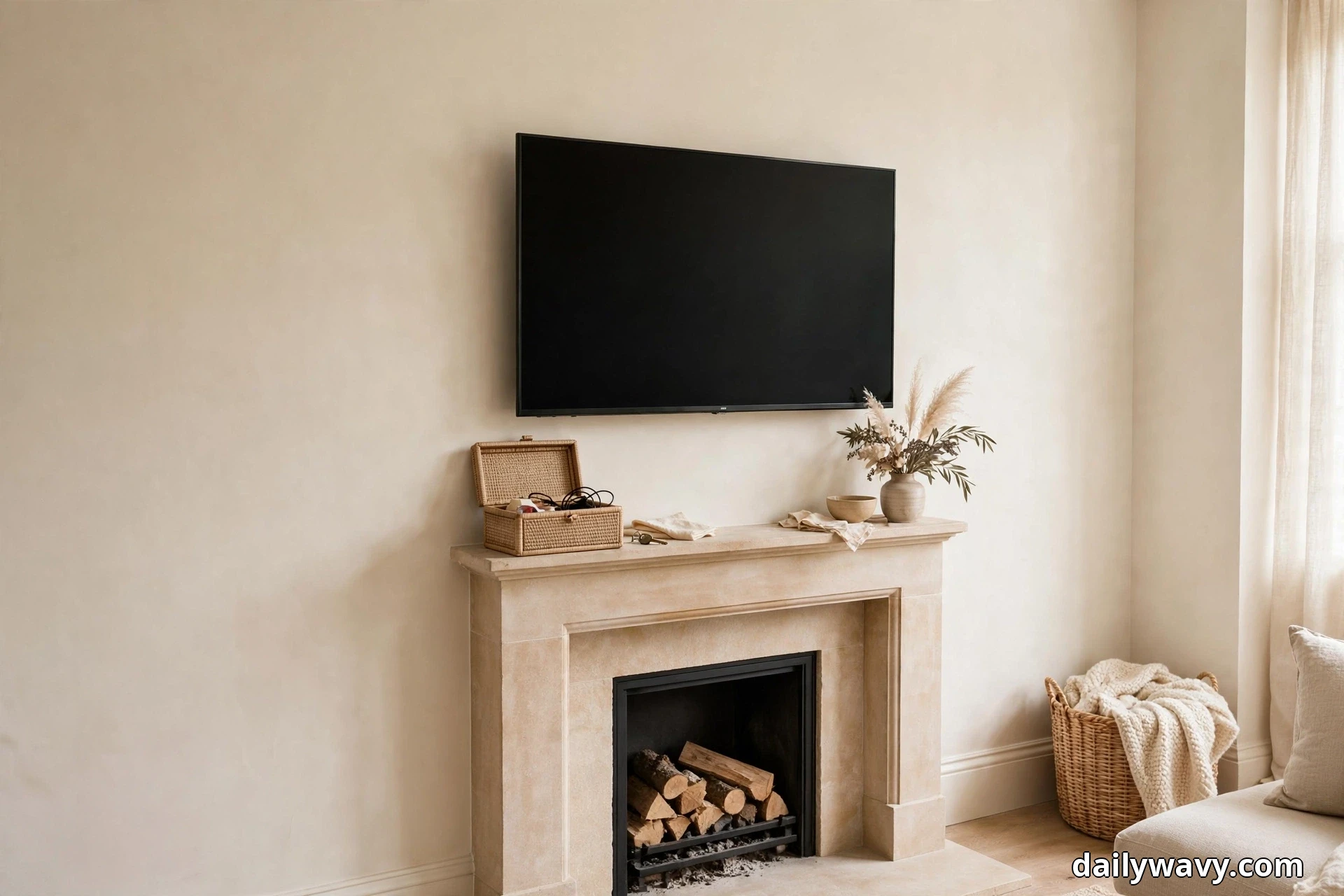
The TV-Over-Fireplace Rules Before You Start
A TV above the fireplace breaks one classic design rule, which is that the screen should sit at seated eye level, roughly 40 to 45 inches from the floor to the center of the picture. Over a mantel, most TVs end up at 55 to 65 inches. You cannot change the architecture, but you can compensate. A full-motion mount that tilts down 5 to 10 degrees brings the picture back into a comfortable viewing angle and makes the screen look like part of the wall rather than a slab hovering over it. Anchor the mount into studs, or use rated masonry anchors on a brick or stone chimney breast; a tilting mount carries leverage that drywall fixings alone cannot hold.
Heat is the second thing to respect. Most modern gas and electric fireplaces send heat forward into the room, not straight up, and a mantel shelf that projects 8 to 10 inches from the wall deflects rising warmth away from electronics. Still, check your fireplace manual for clearance requirements before you mount anything, and never place heat-sensitive items directly on the firebox trim. If the mantel gets warm to the touch after an hour of use, shift delicate objects to the sides of the wall instead.
Cables decide whether the wall looks finished or improvised. A slim surface raceway painted to match the wall, or an in-wall cable kit with code-rated CL2 or CL3 in-wall cable where local code allows, hides the power and HDMI lines running down from the screen. Cables belong in the wall cavity or the raceway, never inside the chimney or flue, and if you are unsure what your code permits, a licensed electrician is the safe call. It is a one-hour job that changes the whole read of the wall. Plan it before you style, because everything below sits on the calm the hidden cables create.
Glare is the last practical matter. A window directly opposite the TV bounces daylight onto the screen. Sheers, a slight TV tilt, or moving the brightest seating light source to the side of the room all help. Several of the ideas below are really lighting ideas in disguise.
1. A Decorative Box Hiding Loose Accessories
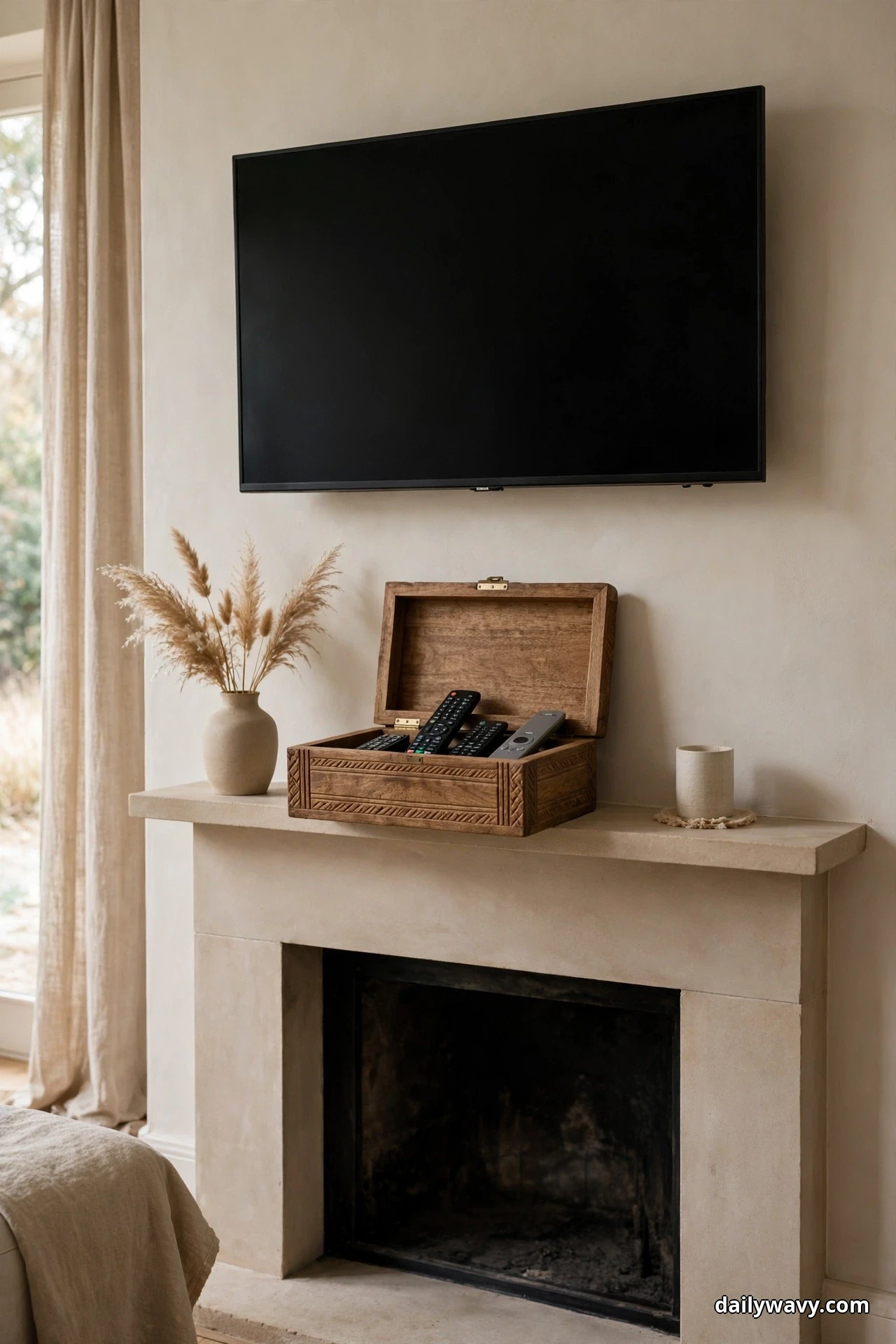
The mantel under a wall-mounted TV becomes a magnet for remotes, coasters, and whatever was in someone’s pocket. A single lidded box, roughly 12 to 14 inches long, swallows all of it. Choose something with weight to it, a lacquered wood box, a lidded ceramic jar, a woven seagrass trunk small enough for the mantel, so it reads as decor rather than storage. Keep the lid easy to lift, because a box that is annoying to open becomes a box nobody uses, and the clutter returns. Set it slightly off center, about a third of the way along the mantel, and leave the rest of the surface nearly bare. The visual point is restraint: one container, one job, zero visible small things. If the box is patterned, keep everything else on the mantel plain. If the box is plain, it can sit near one small object of a different material, like a candle or a stone.
2. A Pair of Small Ceramic Vessels
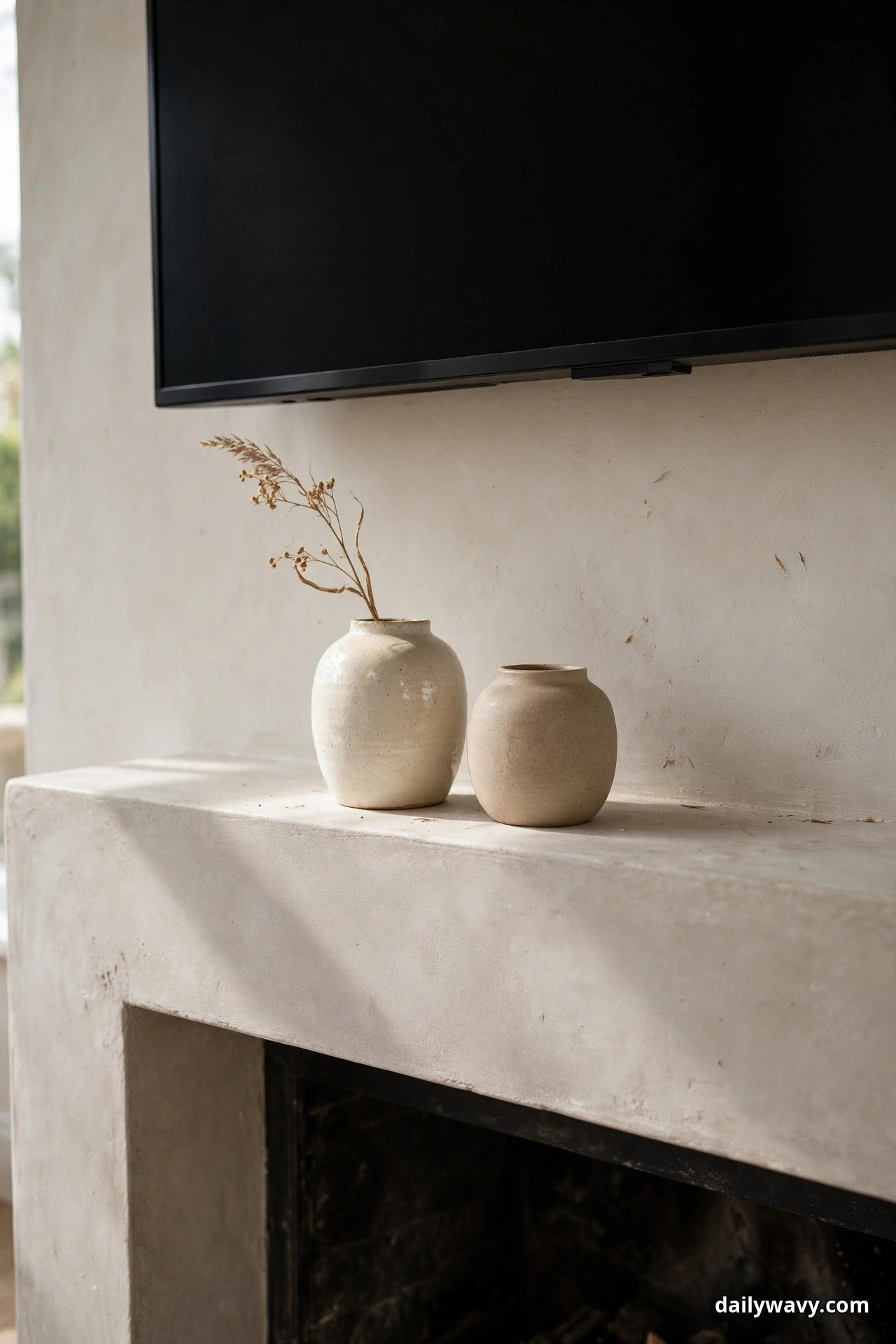
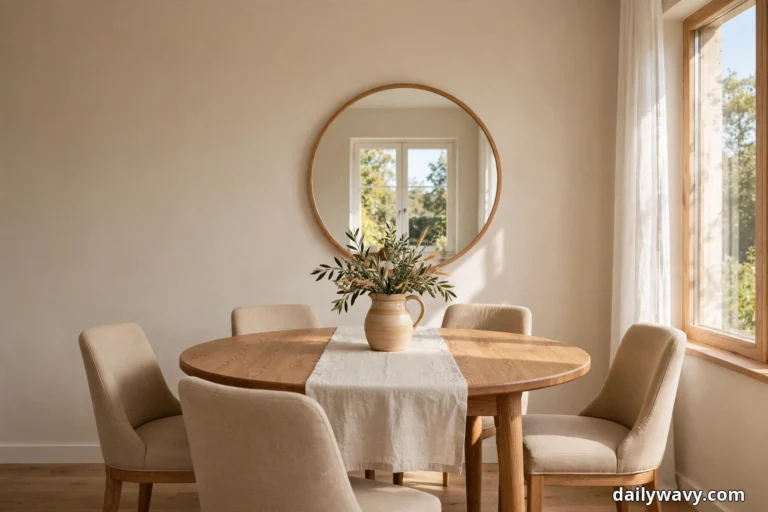
Two vessels of slightly different heights, placed close together, give the mantel a focal point without competing with the screen above. Aim for heights around 6 and 9 inches, in glazes from the same color family, cream and oat, fog and clay. The near-match matters more than the exact color. Matched pairs look staged; pieces that are clearly related but not identical look collected. Leave them empty, or put a single dried stem in the taller one. Keep them on one side of the mantel so the other side can stay open, which preserves the breathing room the blank wall idea below depends on. Ceramics also handle the ambient warmth above a fireplace better than candles or resin objects, so they are a practical choice for this particular wall. Wipe the dust off monthly with a dry cloth; glaze shows dust under side light.
3. A Wood Finish That Repeats in the Room
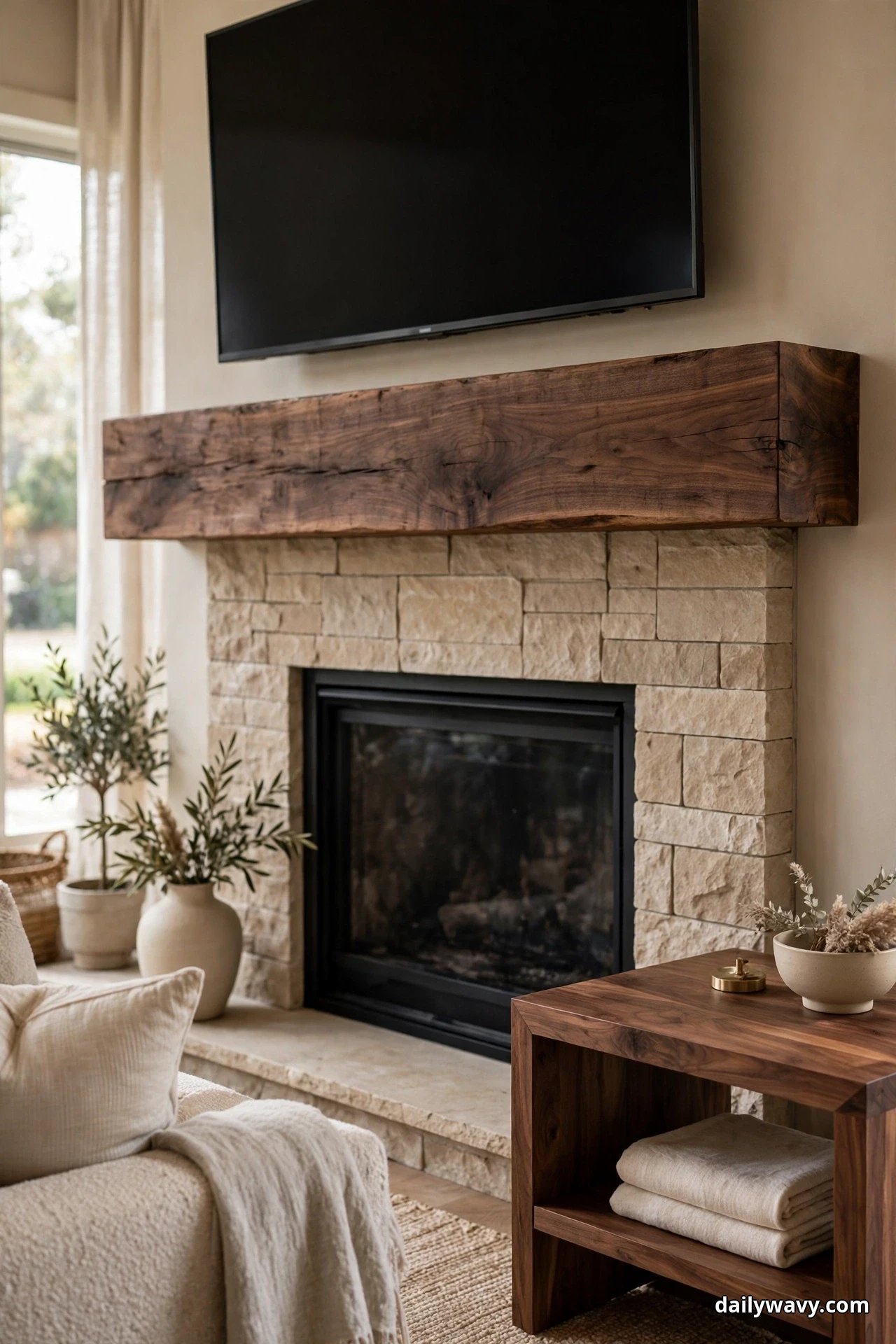
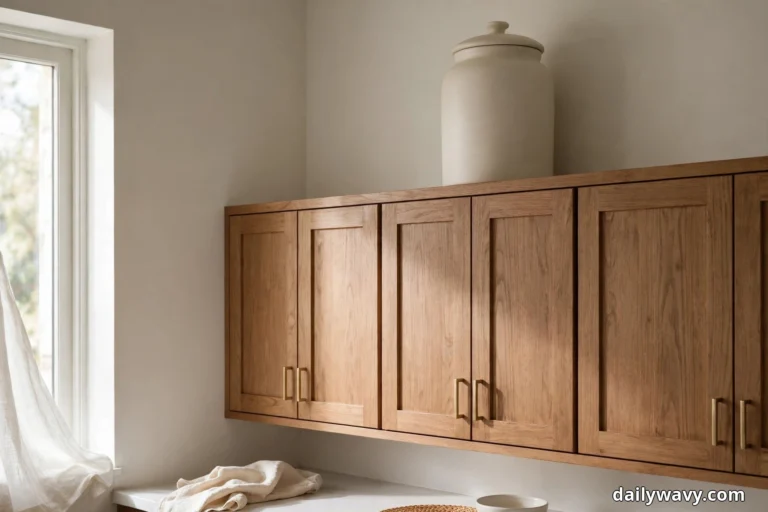
When the mantel beam, the console legs, and the side table share one wood finish, the TV wall stops feeling like a separate zone and starts feeling like the room. Walnut is the forgiving choice: dark enough to anchor the wall, warm enough to sit under a glowing screen. Oak works in lighter rooms. The rule is one dominant wood tone plus small accents, not three woods competing. If your mantel is already installed in a finish you cannot change, repeat that finish instead of fighting it. Bring in a walnut tray, an oak frame, or a set of wood-toned baskets that match the existing beam. Stain matching does not need to be exact; two pieces in the same color family read as intentional from across the room. Keep metal finishes to one as well, black or brass, so the wood stays the star of the material story.
4. Soft Side Lighting Instead of Glare
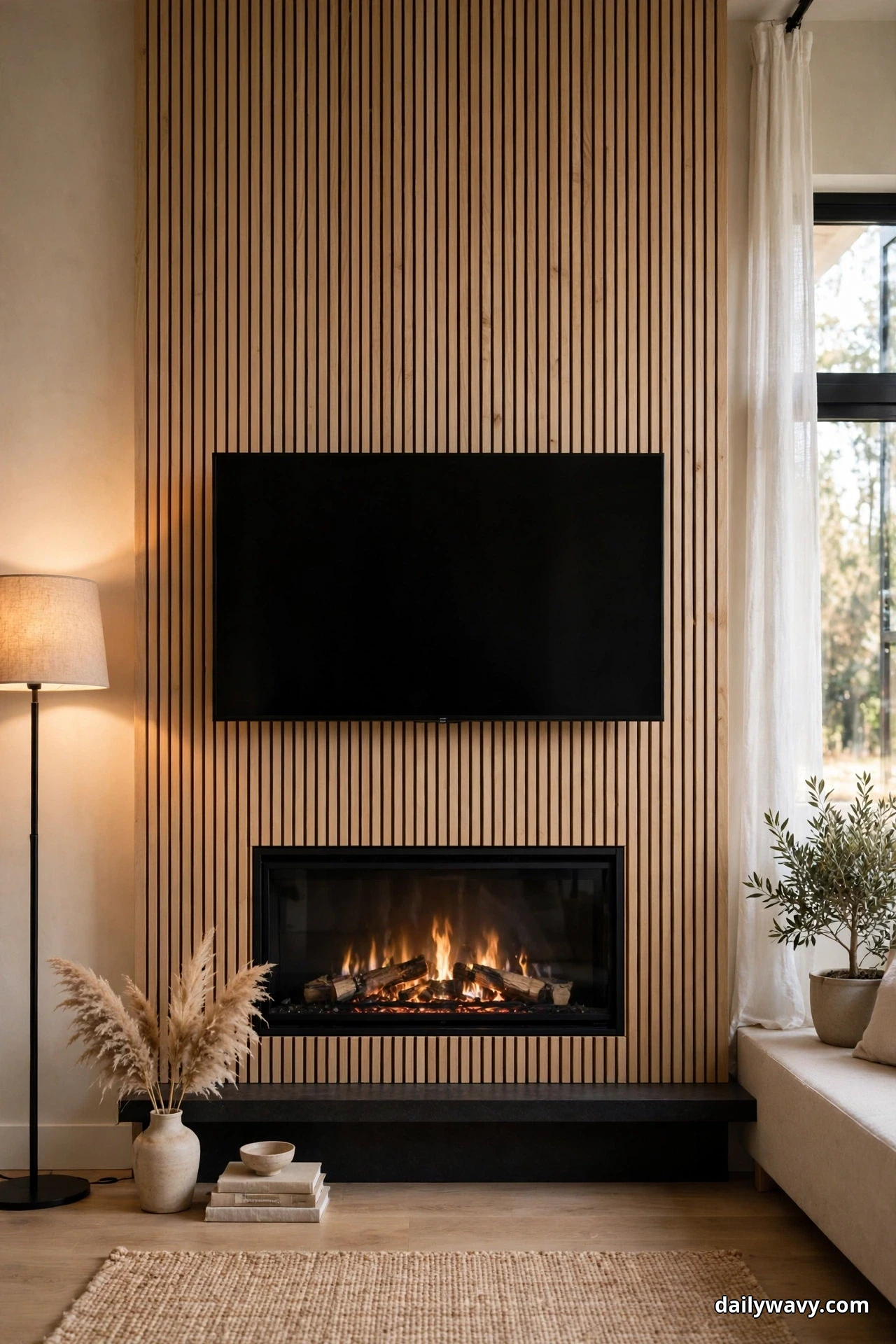
The light that makes a TV wall feel good is almost never on the wall itself. It comes from the side. A floor lamp or table lamp placed 4 to 6 feet to one side of the TV washes the wall in warm, indirect light that softens the black rectangle of the screen when it is off and kills none of the picture quality when it is on. Choose a bulb around 2700K, warm white, and a shade that directs light up and out rather than straight at the screen. This also solves the glare problem from the opposite direction: when the room’s main light comes from the side, you do not need an overhead light bouncing off the glass. If you watch a lot of evening TV, put the lamp on a dimmer or a smart plug so the brightness can drop for movies and rise for conversation. One lamp is enough; two flanking lamps can look symmetrical and formal, which fights the relaxed feel most living rooms want.
5. A Generous Blank Border Around the Screen
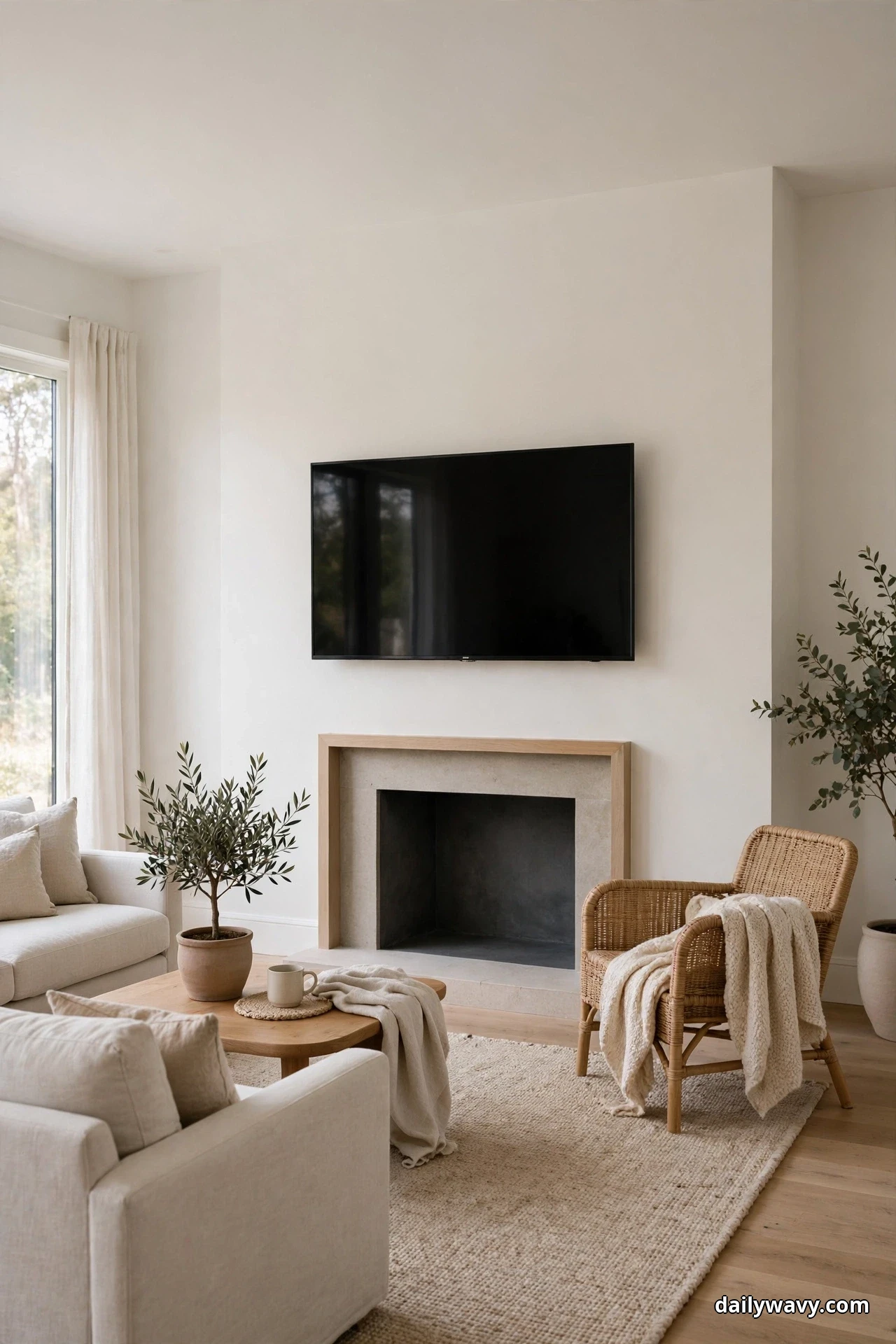
The most common mistake on this wall is filling every inch around the TV. Screens need a margin. Leave at least 8 to 12 inches of bare wall on each side of the TV and a clear band above it, and the screen reads as one considered object instead of a crowded bulletin board. This works best on a wall painted a single color, because the blank border is doing the visual work of a frame. If the wall feels too empty at first, resist the urge to add small things. Small things shrink the margin and restart the cluttered feeling. Instead, add one larger move further out, a tall plant in the corner or a wide console under the fireplace, so the emptiness around the screen feels like a choice with a frame around it. The blank border also gives the fireplace breathing room, which matters because the firebox is the second strong rectangle on the wall and it needs its own quiet zone.
6. A Monochrome Grouping of Decor Objects
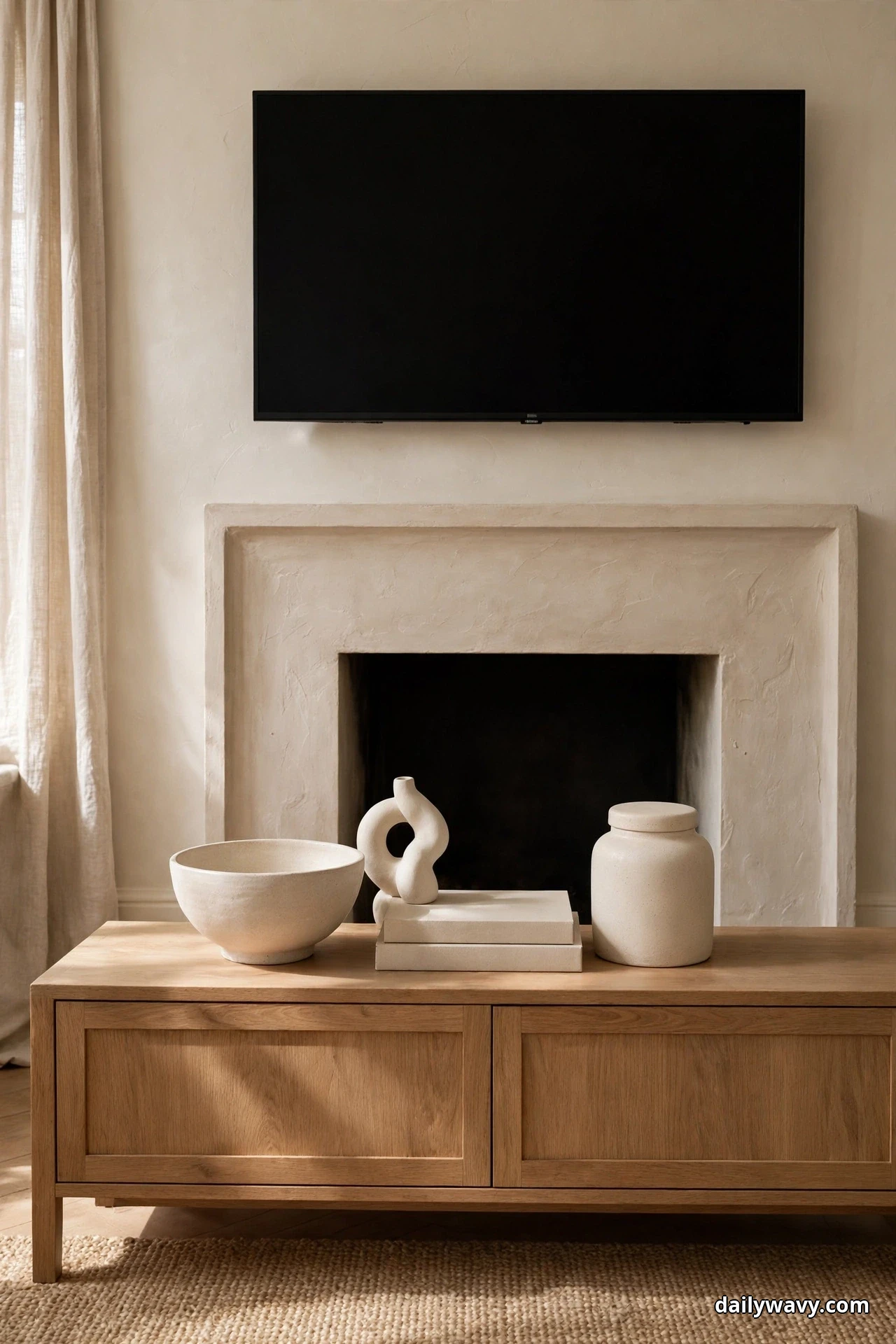
When everything on the console shares one color, the shapes get to do the talking. Gather three to five objects in shades of cream, oat, and warm white, a bowl, a small sculpture, a stack of two books with plain covers, a lidded jar, and arrange them in a loose cluster on one side of the console. The monochrome palette keeps the grouping quiet enough to live under a glowing screen, where colored objects would start arguing with the picture. Vary the heights and materials, matte ceramic against woven fiber against smooth stone, so the group has texture even though the color stays calm. Keep the cluster tight, within about 18 inches, and leave the rest of the console open. If one object starts looking like the odd one out, remove it. Monochrome groupings improve by subtraction.
7. A Slim Vertical Artwork Beside the TV
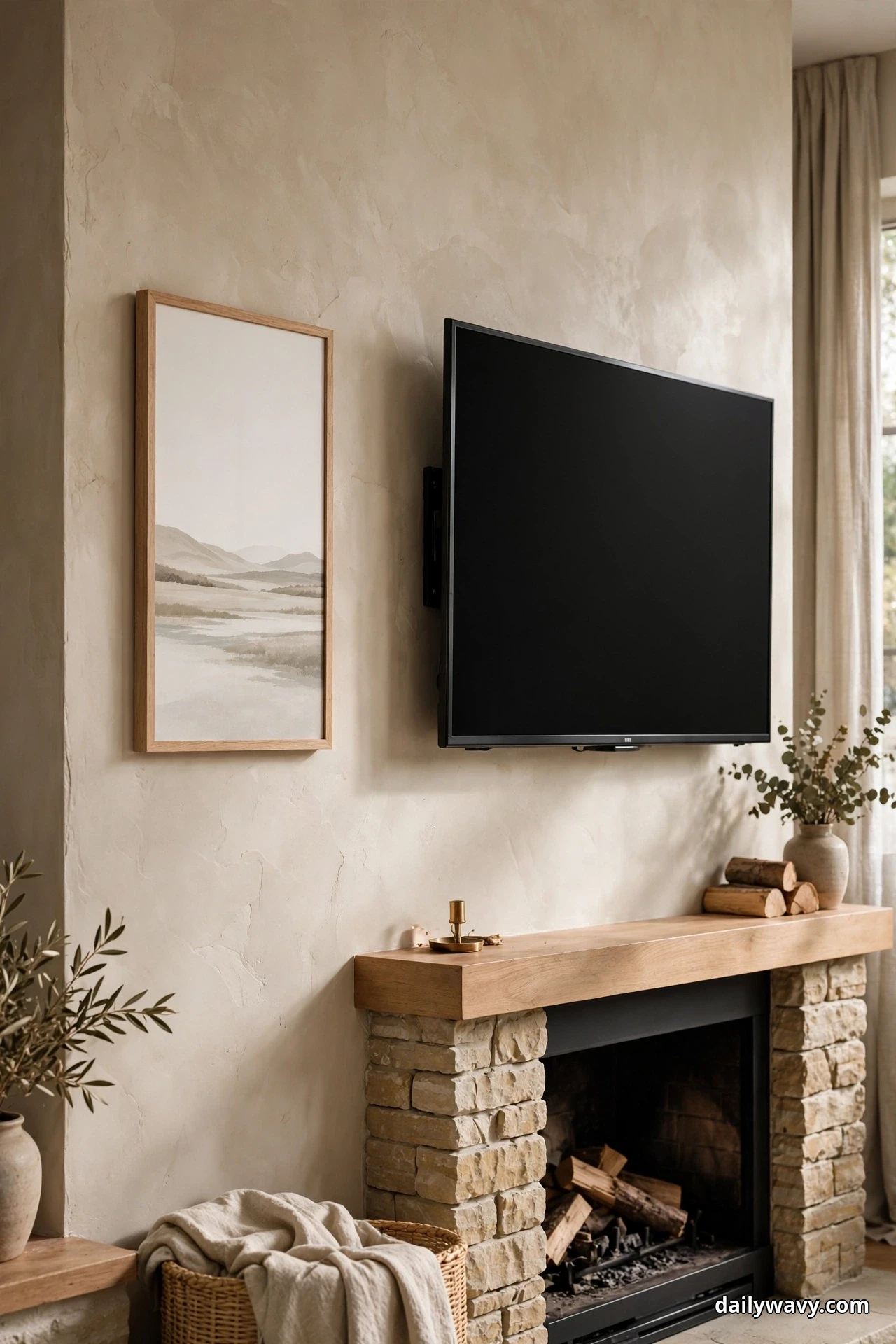
A narrow vertical frame, roughly 12 by 30 inches, hung beside the TV breaks the wall’s horizontal emphasis without stealing attention. The vertical line does two jobs: it fills the awkward gap between the TV edge and the corner, and it pulls the eye up, which makes the ceiling feel higher. Keep the art quiet, a landscape print, a textile, an abstract in the room’s neutrals, because anything loud will compete with the screen. Hang it so its center sits at about the same height as the TV’s center, or slightly lower, and leave 6 to 8 inches of wall between the frame and the TV edge. If you have the wall width, a second matching frame on the other side creates balance; if not, one frame plus a tall plant on the opposite side does the same job with less formality.
8. A Textured Backing Surface
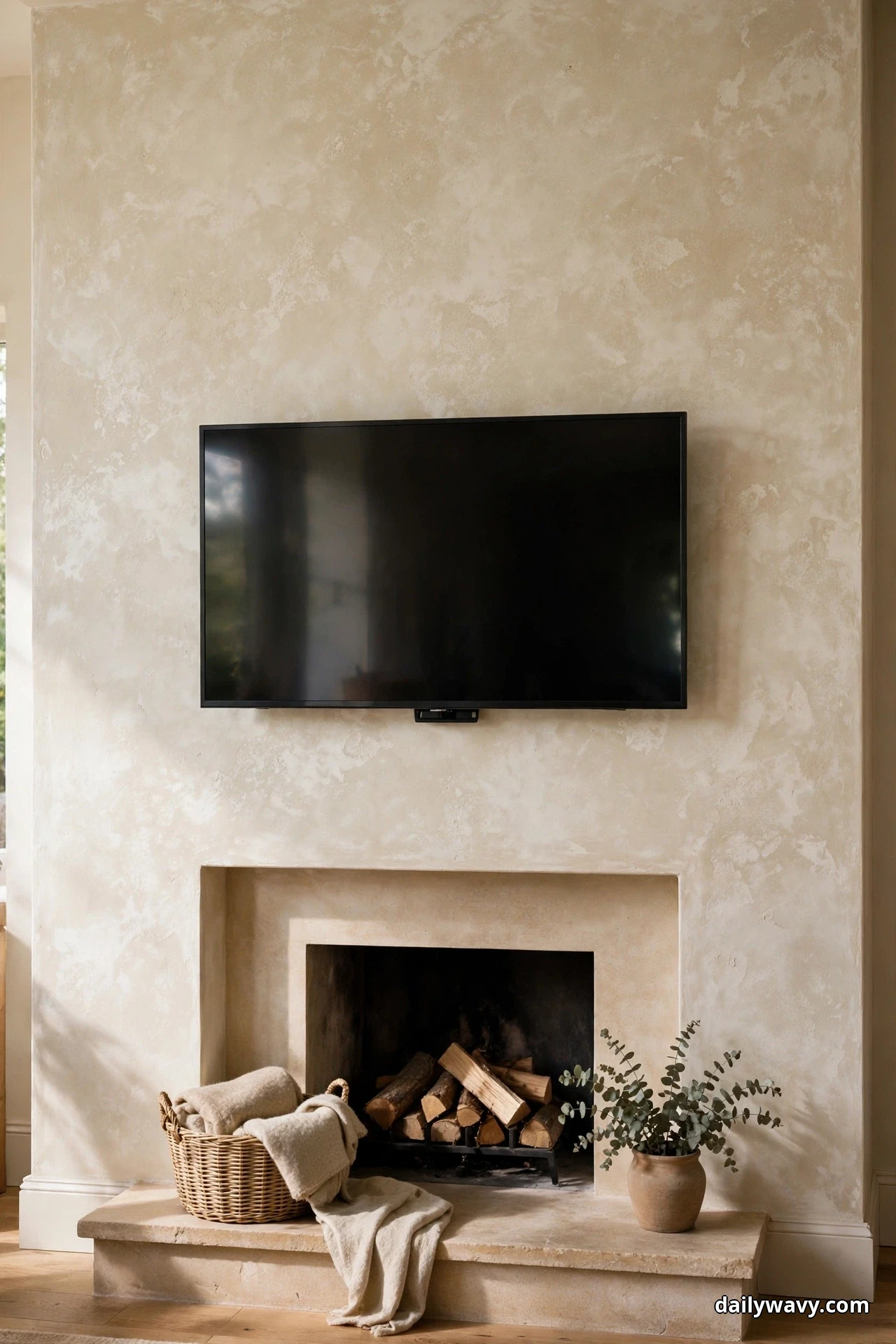
A screen mounted on a textured wall, limewash, Venetian plaster, a slatted wood panel, or even a grasscloth, looks intentional in a way flat paint never quite manages. The texture gives the wall presence when the TV is off, so the black rectangle does not float on nothing. You do not need to cover the whole room. Treating just the TV wall, floor to ceiling and about 6 to 12 inches wider than the fireplace surround on each side, defines the zone. Limewash and plaster finishes are the most forgiving for DIY, since their mottled look hides roller marks. Wood slats need straight studs and a level, but they add the wood-finish repetition from idea 3 at the same time. Keep the texture subtle in a small room; heavy texture plus a big screen plus a fireplace can overwhelm a wall under 10 feet wide.
9. A Low Floral Arrangement Under the Screen
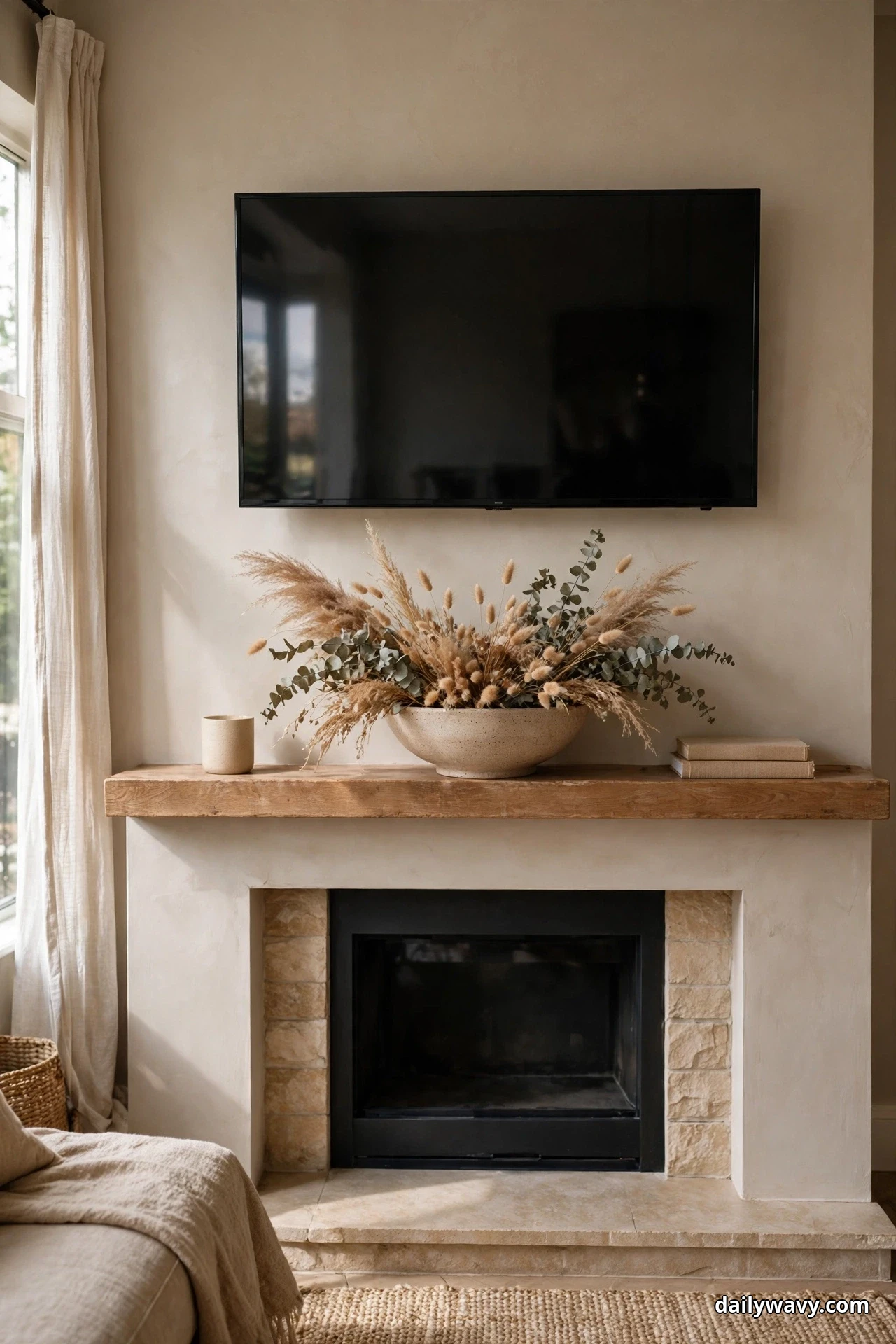
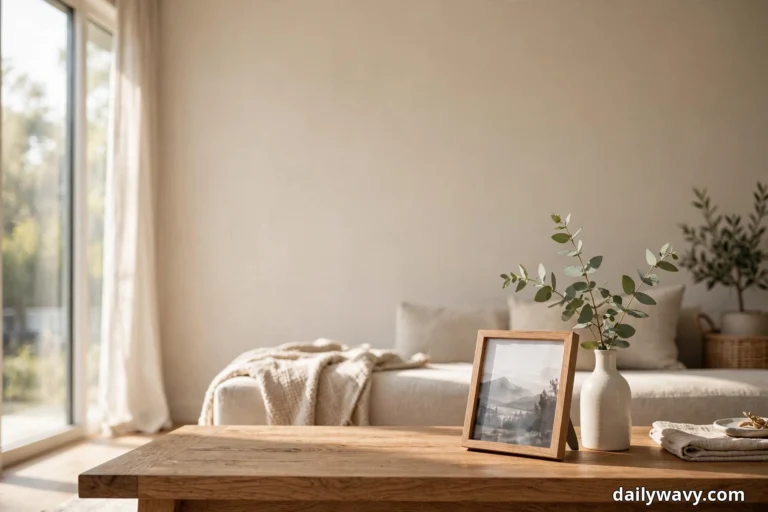
Flowers on the mantel sound risky under a TV, but the trick is keeping the arrangement low and wide instead of tall. A bowl of blooms 6 to 8 inches high and 14 to 18 inches wide sits safely below the screen’s sightline and adds the one thing this wall usually lacks: something alive. Dried grasses, preserved eucalyptus, or a low cluster of grocery-store blooms in warm neutrals all work; the palette should stay quiet so the flowers read as texture rather than a color statement. Use a heavy, stable vessel, because mantels get bumped, and keep water-filled arrangements away from the TV’s lower edge. If fresh flowers feel like too much upkeep, a low dried arrangement lasts months and still softens the hard lines of the screen and the firebox. Replace or refresh when the stems start to look tired, since a drooping arrangement undoes the calm.
10. A Recessed Visual Niche Around the Screen
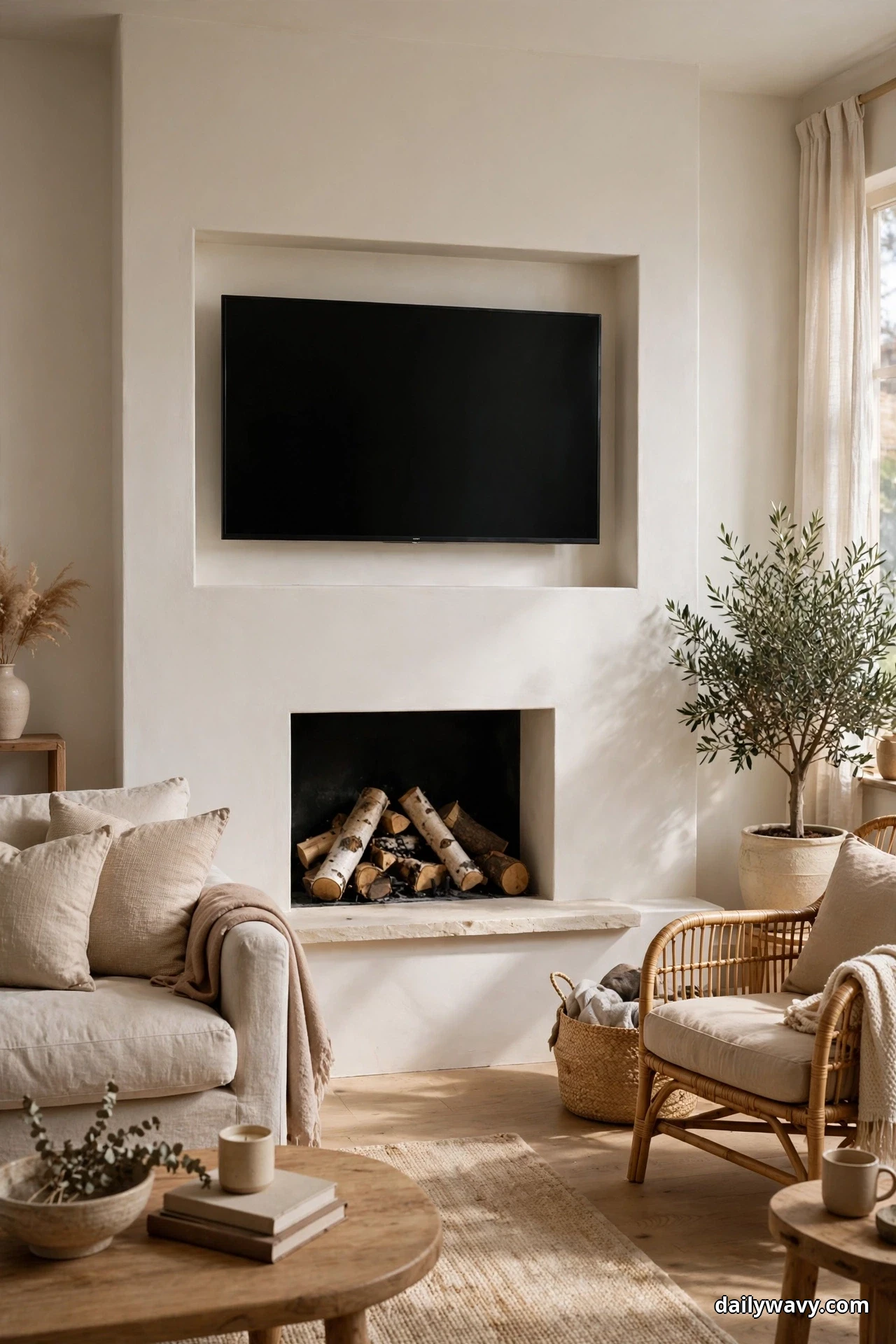
Setting the TV into a shallow recess, even just 3 to 4 inches deep, transforms it from an object on the wall to a feature in the wall. The reveal creates a shadow line that frames the screen the way a mat frames a photograph. This is a bigger project than the other ideas here, usually part of a remodel or a built-in media wall, but it is worth knowing about if you are renovating. The recess should be sized to the TV with 2 to 3 inches of clearance on each side for ventilation and cable access, and the back of the niche should be finished in the same material as the surrounding wall so the shadow line, not a material change, does the framing. Add a dimmable strip light in the recess for evening viewing; the glow behind the screen reduces eye strain and makes the whole wall feel designed after dark.
11. A Floor-Level Basket of Blankets
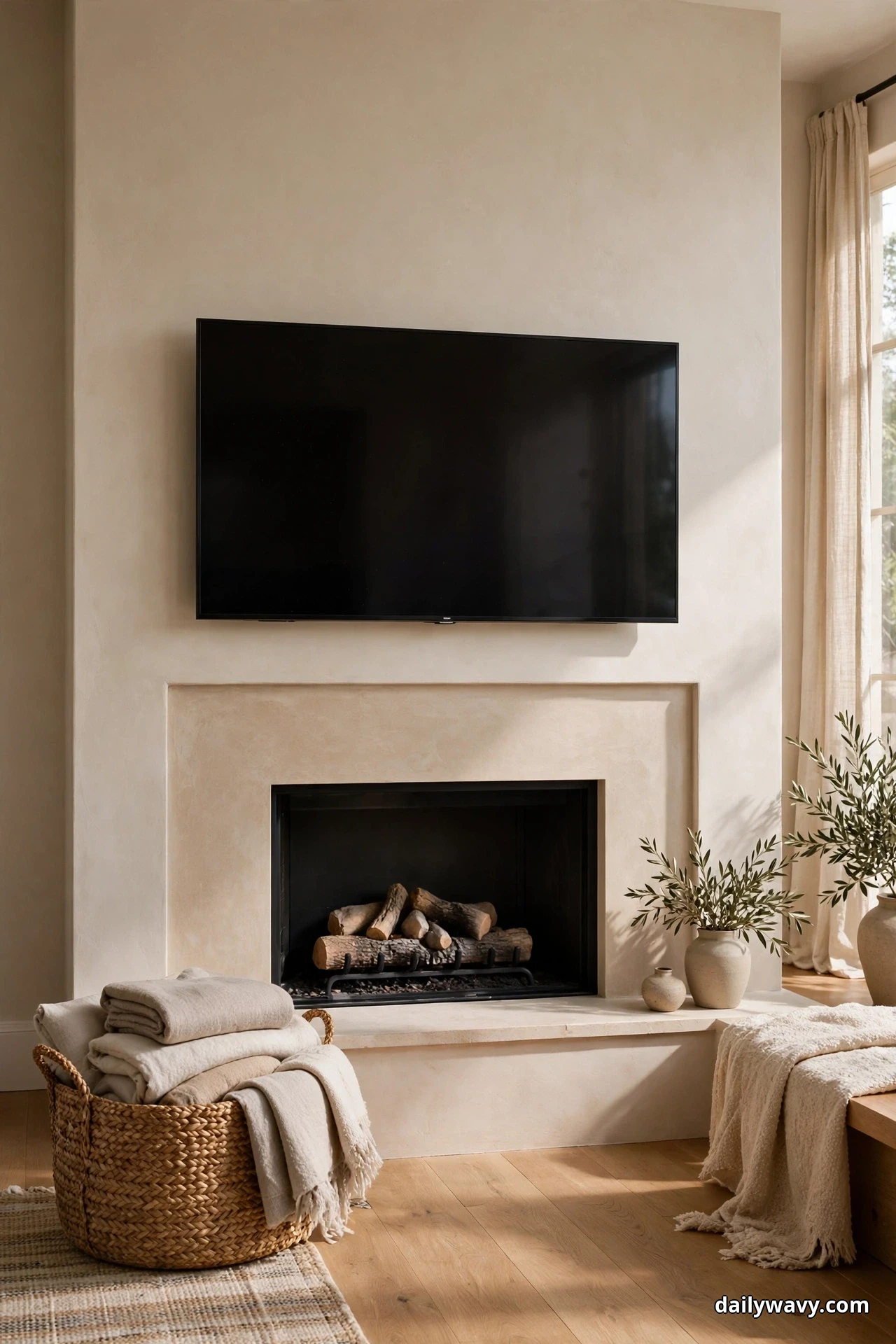
A basket of throws on the floor beside the fireplace does three quiet things: it fills the dead space at the base of the wall, it adds a soft material against all the hard rectangles, and it puts the coziest thing in the room within arm’s reach of the seating. Choose a basket 16 to 20 inches tall, woven seagrass or rattan, and fold two or three throws in the room’s neutrals so the top of the pile sits just above the rim. Roll the throws instead of folding if the basket is deep; rolls look fuller with less fabric. Keep the basket at least 3 feet from the firebox opening for safety, and use it as the room’s texture anchor by repeating the weave in a smaller basket or tray elsewhere. This is the lowest-effort idea on the list and one of the most effective, because floor-level softness balances the wall’s top-heavy arrangement.
12. Low Closed Storage With One Tall Vase
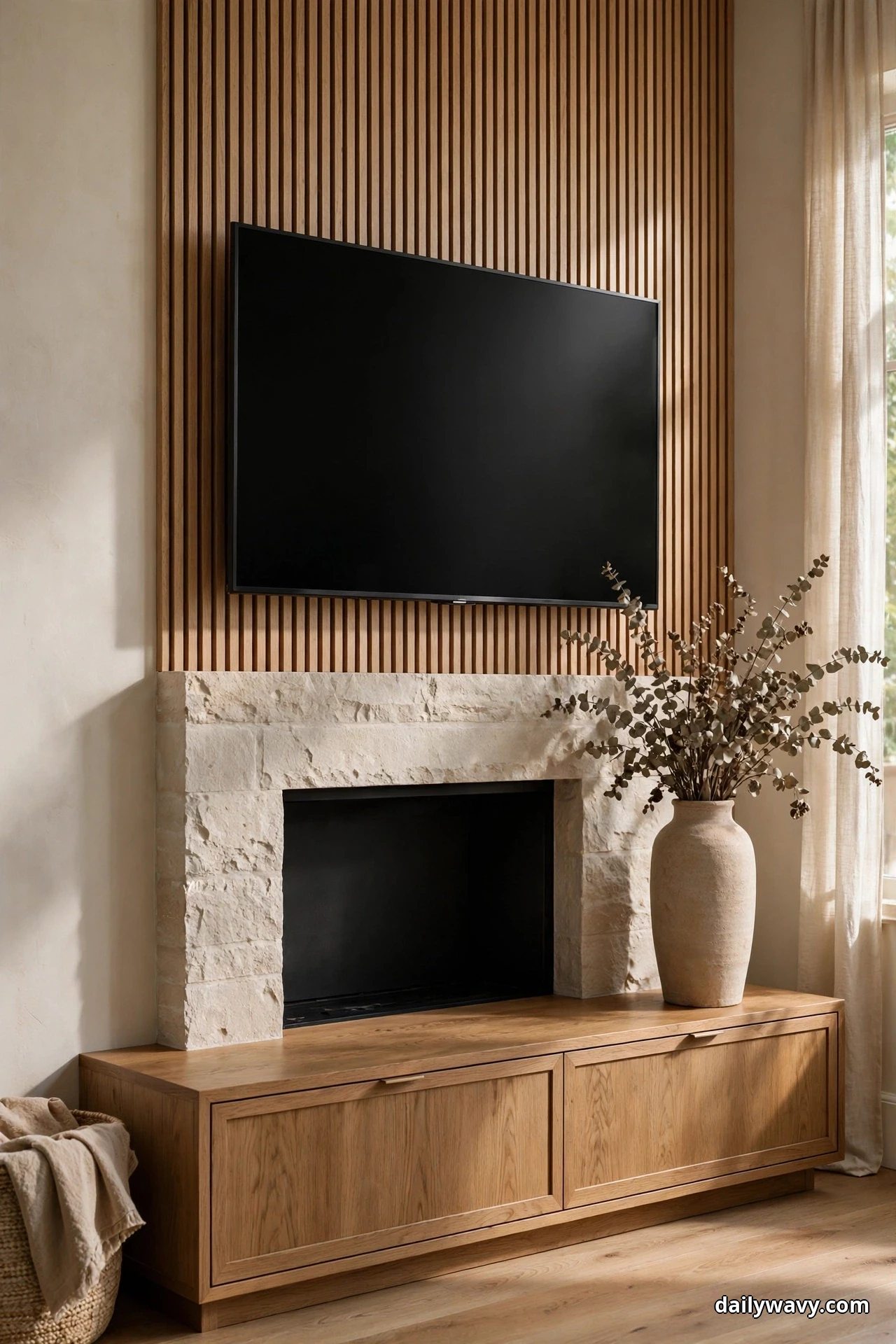
A low console with doors, 18 to 22 inches high and as wide as the fireplace surround or wider, hides the media equipment, the game controllers, and the firewood tools while giving the wall a grounded base. The closed storage is the point; open shelving under a TV collects visual noise. On top, place exactly one tall vase, 18 to 24 inches, with branches or dried stems, positioned off center. The single tall object creates the vertical lift the wall needs without the fuss of a full styling arrangement. Keep the vase empty or nearly so, and choose branches with an open structure, eucalyptus, curly willow, or pussy willow, so the silhouette stays light. Run the console’s power cables through the back panel and into the wall raceway, so the only visible technology is the screen itself.
13. Balanced Side Styling Around the Screen
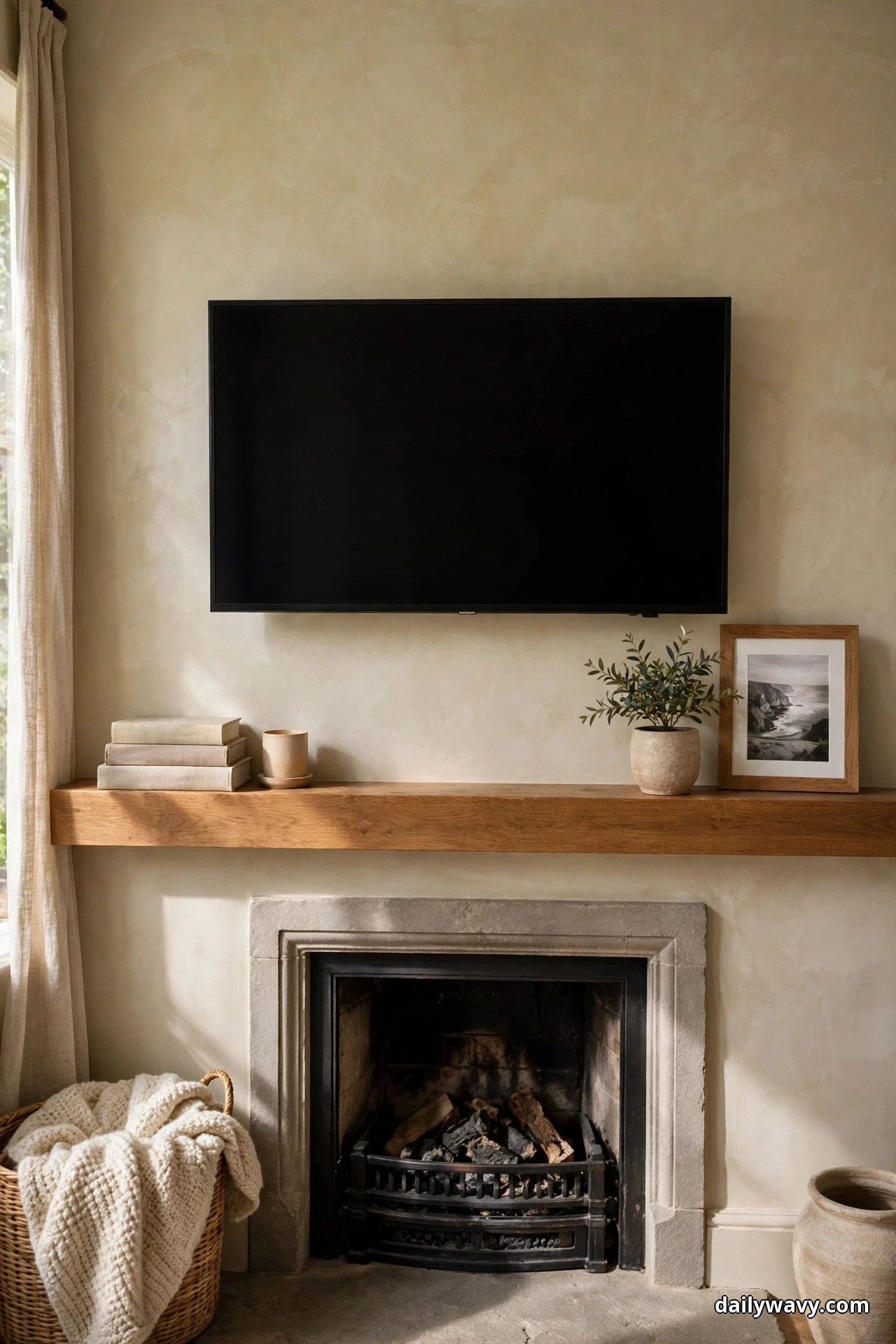
Matching arrangements on both sides of the TV, a stack of books and a candle on the left, a small plant and a framed photo on the right at similar heights, give the wall a formal, settled feeling that suits traditional rooms. The key word is similar, not identical. Mirror-image styling looks like a hotel lobby; balanced styling looks like a home. Keep both sides within the same height band, roughly the lower third of the TV, so the arrangements read as a base for the composition rather than competition for the screen. Use the same material family on both sides, wood and ceramic, glass and metal, so the two groups feel related. This approach works best with a symmetrical fireplace surround; if your firebox is off center or the wall has a corner, the asymmetric approach in idea 14 will feel more natural.
14. Asymmetric Art Beside the Screen
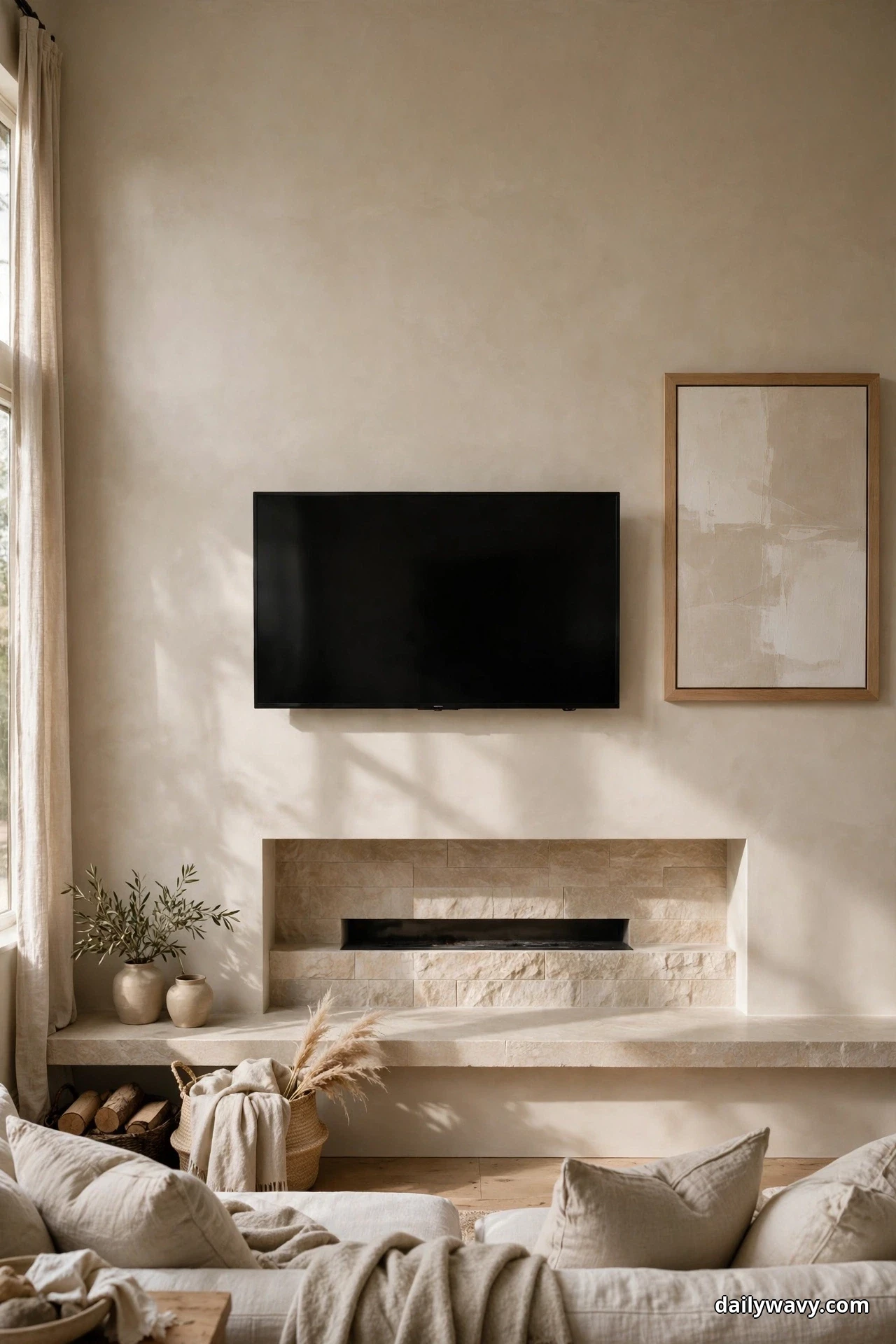
Hang one larger piece off center, or cluster two small frames at different heights on one side of the TV, and let the other side breathe. Asymmetry suits modern rooms and awkward walls, and it has a practical advantage: you can place the art where the wall actually has space instead of forcing symmetry the architecture does not support. Keep the total visual weight of the art roughly equal to the visual weight of whatever sits on the opposite side, a floor lamp, a plant, a stack of books, so the wall still feels balanced. The frames should share a finish, black, oak, or brass, and the art should stay in the room’s neutral palette. Leave the gap between the TV and the art generous, 8 inches at least, so each element keeps its own presence.
15. A Shallow Ledge Below the Screen
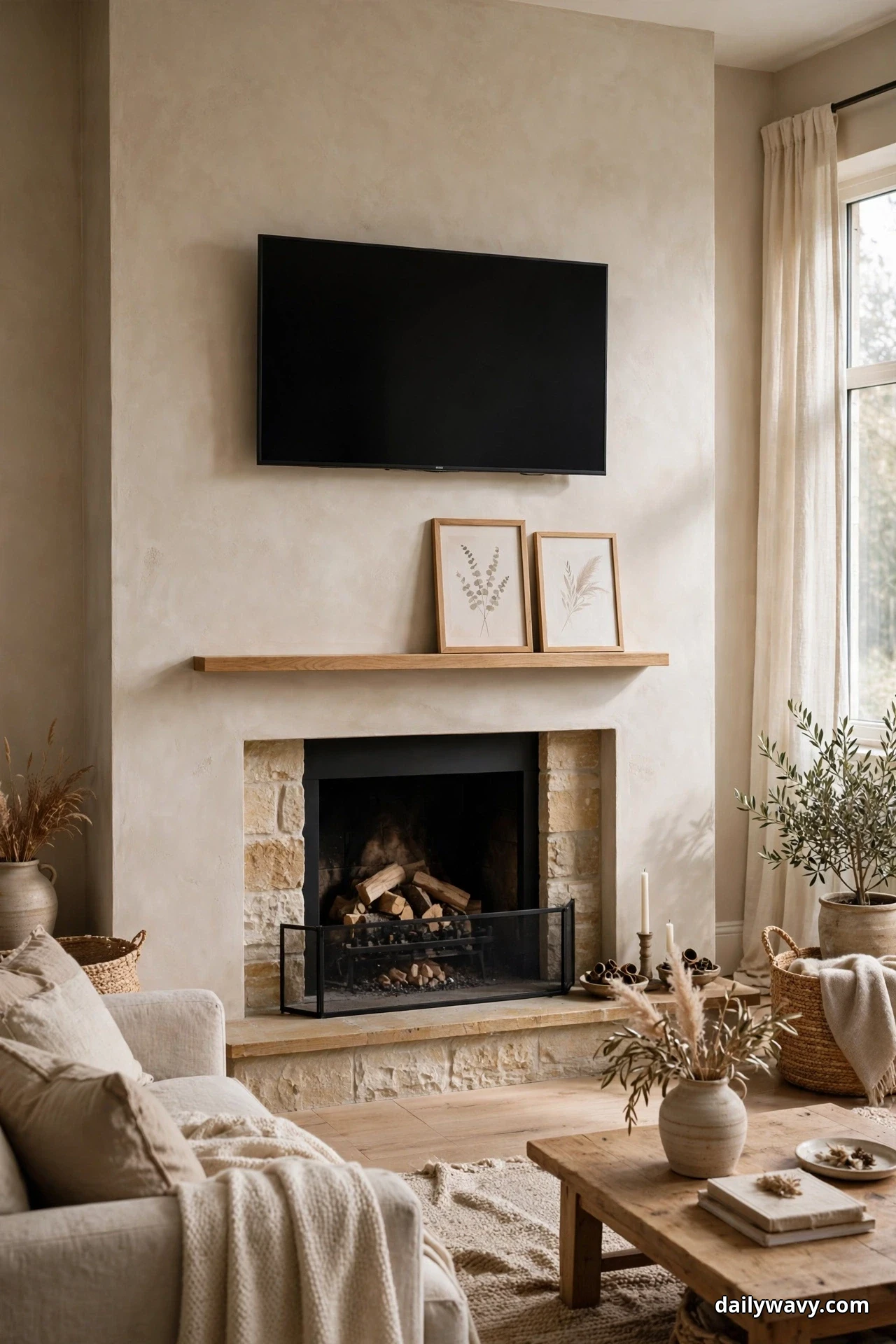
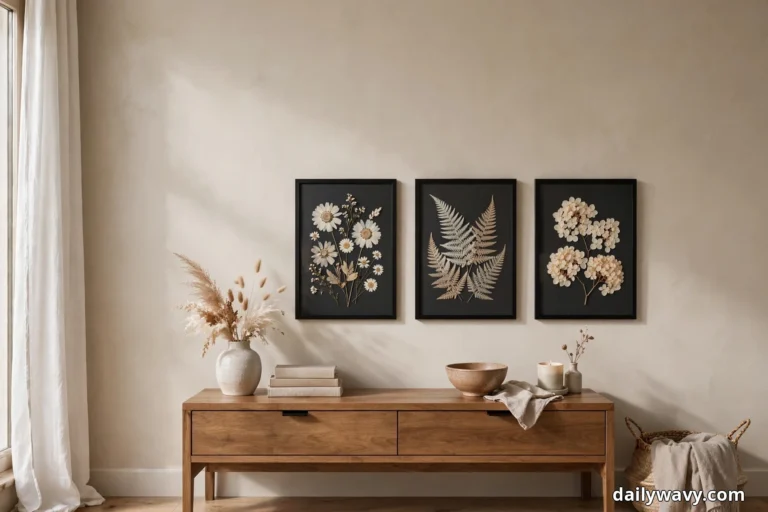
A picture ledge, 3 to 4 inches deep and 36 to 48 inches long, mounted on the wall between the TV and the mantel and fixed into studs or rated wall anchors, gives you a styling surface that takes up almost no room. Lean two or three small frames against the wall on the ledge, overlap them slightly, and you have a gallery that can change with the seasons in five minutes. The shallowness is the whole point: objects cannot accumulate into clutter when there is nowhere for clutter to hide. Keep the frames small, 5 by 7 to 8 by 10 inches, and keep the palette quiet. Anchor the ledge with the mantel below it, centering the ledge on the fireplace rather than the TV if the two are different widths. This is also the best spot in the room for rotating seasonal prints, because the ledge makes swapping art a lift-and-lean operation instead of a hammer-and-nails project.
16. A Single Sculptural Lamp Beside the TV
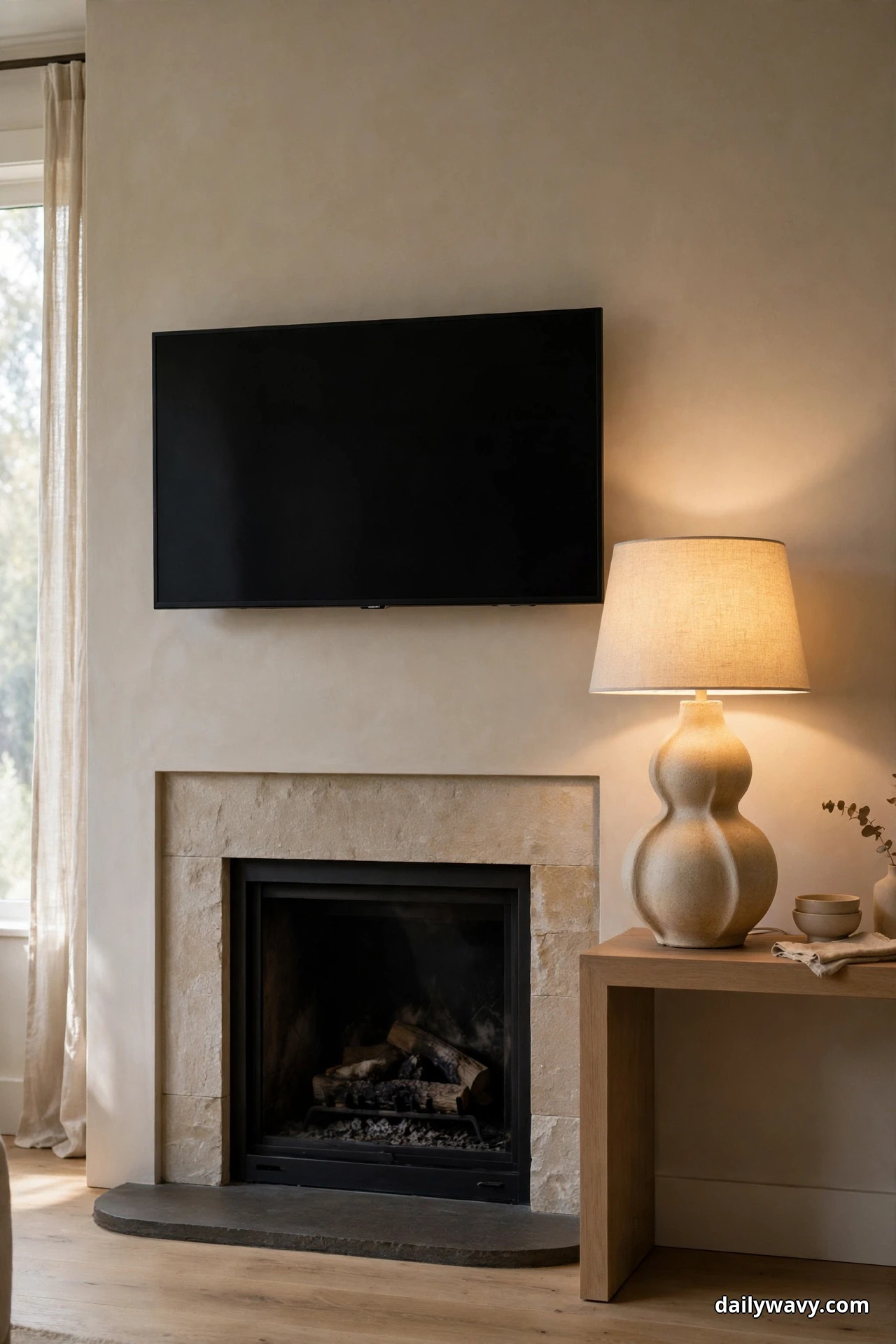
One lamp with an interesting silhouette, a ceramic gourd base, a travertine column, a sculptural paper shade, does the work of three ordinary accessories. It adds height, it adds the side lighting from idea 4, and it gives the eye a crafted object to land on when the screen is dark. Place it on the console or a side table 2 to 3 feet from the TV’s edge, and choose a shade that hides the bulb from the seating sightline so there is no bare-bulb glare. The lamp should be 24 to 30 inches tall overall; shorter gets lost next to the screen, taller starts competing with it. A 2700K bulb keeps the evening light warm. If the lamp has a distinctive shape, keep everything else on that surface plain, because the lamp is the statement and statements need quiet neighbors.
17. Woven Baskets at Floor Level
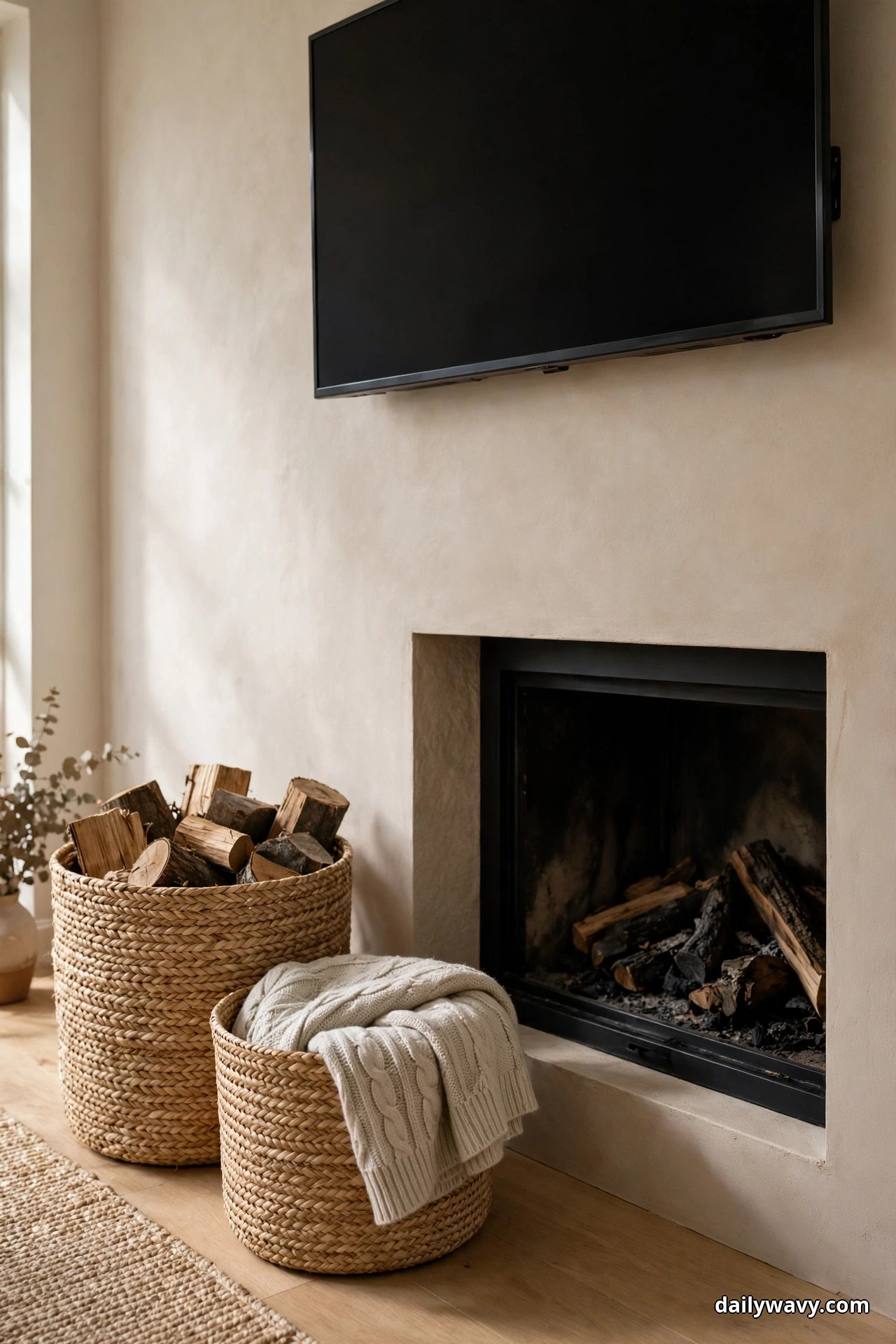
Two or three woven baskets at the base of the wall, varying in size from about 12 to 20 inches tall, ground the composition the way a rug grounds a seating area. Use them for real storage, firewood, extra throws, the kids’ board games, so they earn their footprint. The weave adds the natural texture this wall craves, and the warm fiber tones soften the transition from wall to floor. Keep the baskets on one side rather than flanking the fireplace; flanking pairs look formal, and a loose group looks collected. Match the weave loosely, all seagrass or all rattan, rather than mixing five different fibers. Leave at least 3 feet between the baskets and the firebox opening, and keep the tallest basket below the mantel line so the vertical rhythm of the wall stays calm.
18. A Long Plant Trailing Beside the Console
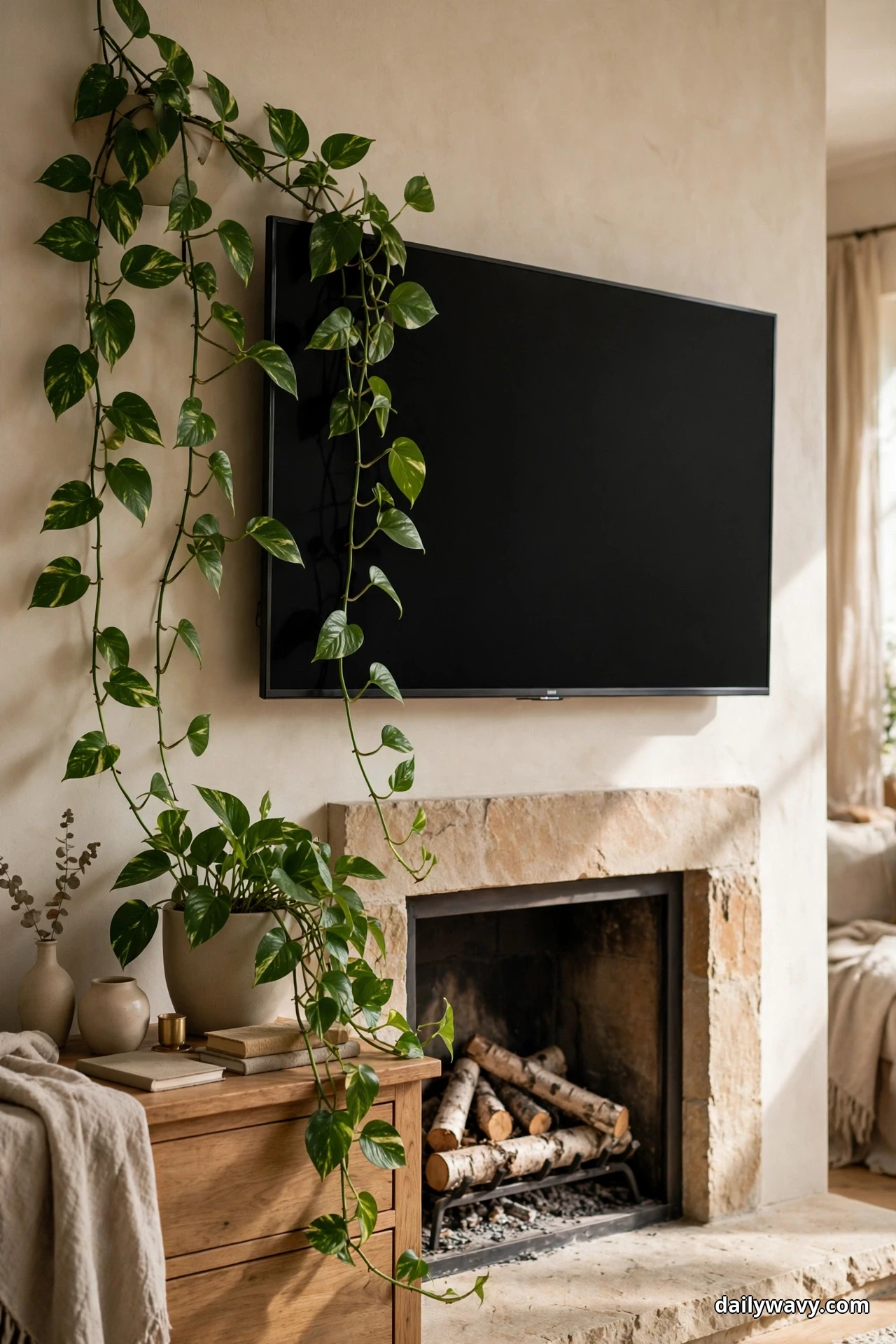
A trailing plant, pothos, philodendron, or a string of pearls in a pot on the console or a high shelf, sends green lines down the side of the TV wall and breaks every straight edge on it. The organic shapes are the antidote to the wall’s geometry: rectangles of screen, firebox, and console suddenly have something soft to lean against. Let the trails grow 2 to 3 feet long, and trim or pin them so they frame the TV rather than crossing in front of it. Keep the plant at least 3 feet from the firebox opening, because direct heat dries foliage fast, and choose a pot in the room’s neutral palette so the green is the only color event. If natural light is weak on this wall, a high-quality faux trailing plant is an honest alternative; just dust it monthly so it keeps looking real.
19. A Tonal Frame Around the Screen
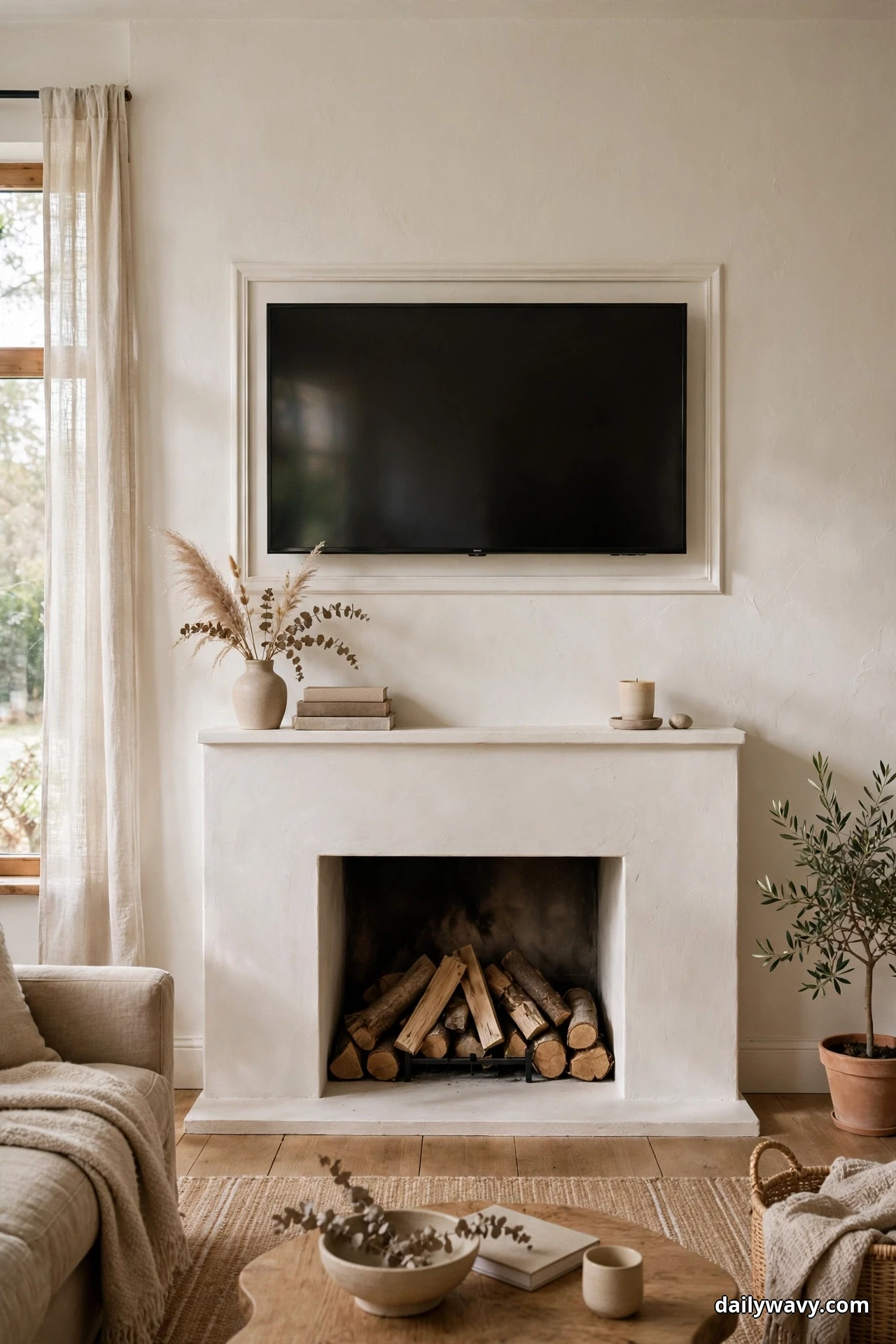
A frame built around the TV in a tone close to the wall color, painted wood trim, a plastered surround, or a ready-made frame kit, turns the screen into a picture instead of an appliance. The tonal approach is quieter than a contrasting wood frame: from across the room, the TV reads as a dark canvas in a soft surround, and the wall’s two rectangles, screen and firebox, start to feel like a deliberate pair. Size the frame to sit 1 to 2 inches proud of the screen’s edge, and paint it the wall color or one shade deeper. This pairs especially well with the textured backing in idea 8, since the frame edge catches a shadow line on the texture. Keep the frame profile slim, 2 to 3 inches wide; a chunky frame on an already large screen makes the whole wall feel heavier.
20. A Low Row of Books on the Console
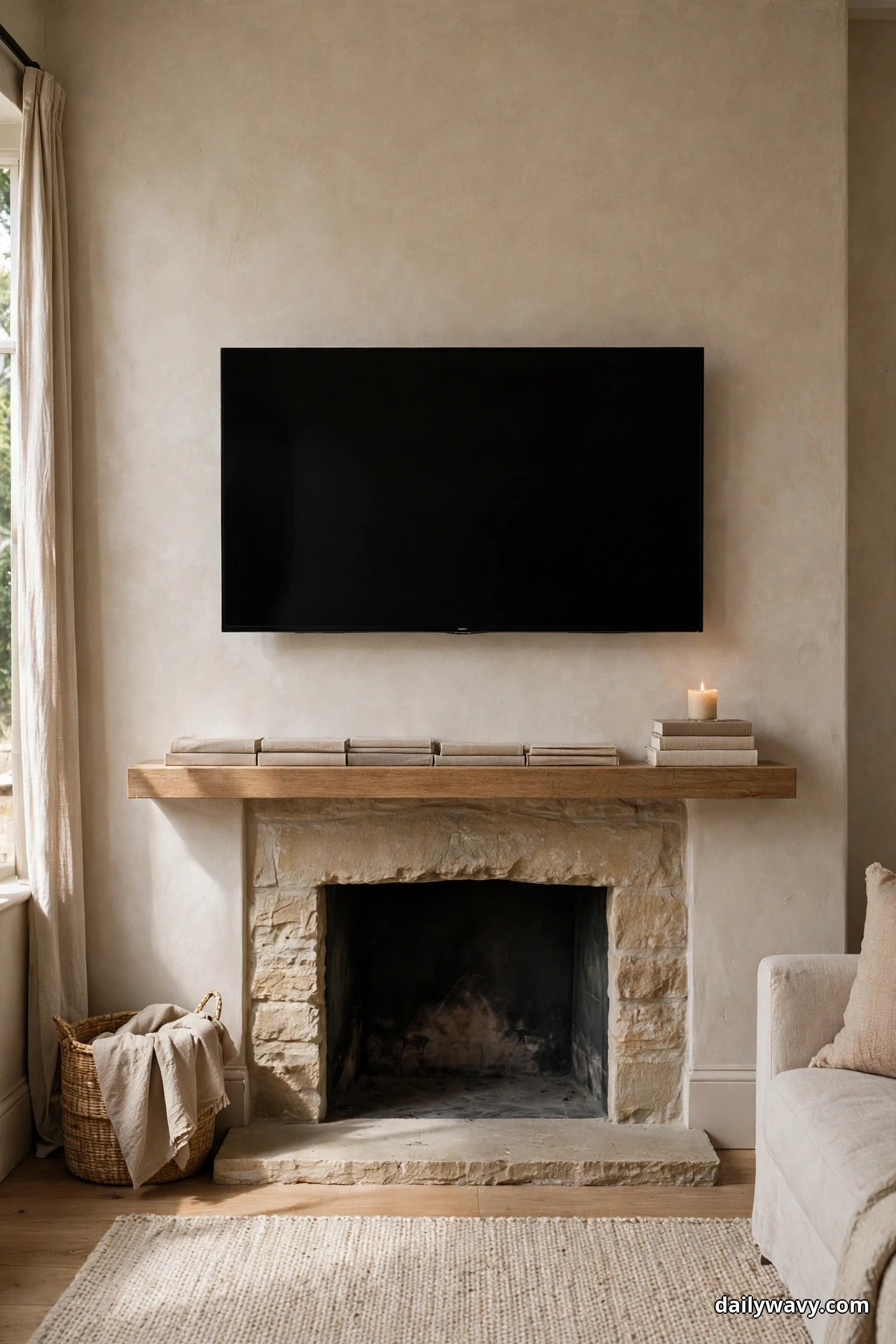
A horizontal row of books lying flat, or standing in a single low row with bookends, adds the lived-in layer this wall needs. Choose books with neutral or tonal covers, turn the loudest dust jackets around, and keep the row low, no more than 6 to 8 inches high, so it stays well below the screen. Stack two or three horizontally as a riser for one small object, a candle or a stone, and let the rest of the console stay open. The books do quiet work: they add color in a controlled band, they give the console a sense of use, and they are easy to rearrange when the styling needs a refresh. If the row starts growing into a library, edit it back. On this wall, restraint is the style, and a short, tidy row of books is restraint you can read.
Frequently Asked Questions
How high should a TV be above a fireplace?
There is no single right number, because it depends on the mantel height and the seating distance. As a practical guide, the bottom of the TV should clear the mantel by at least 4 to 6 inches so heat and decor do not crowd the screen, and a tilting mount helps a lot when the center of the screen lands above 55 inches. Sit in your usual spot and check that you can see the whole picture without craning your neck; if you cannot, a full-motion mount that pulls the TV forward and tilts down is the fix, not a new wall.
Will the heat from the fireplace damage the TV?
It can, which is why clearances matter. Most manufacturers specify a minimum distance between the firebox and anything mounted above it, so check both the fireplace manual and the TV manual before you finalize the placement. A mantel that projects 8 to 10 inches deflects rising heat effectively, and electric and modern gas fireplaces generally direct heat forward. If the wall above the mantel feels hot after an hour of use, the TV is too close or the fireplace needs its heat directed differently.
How do I hide the cables from a TV over the fireplace?
A paintable surface raceway is the simplest fix and takes about an hour to install. Run the power and HDMI cables down inside the raceway from behind the TV to the console or an outlet, then paint the raceway the wall color so it disappears. Where local electrical code allows, an in-wall kit with code-rated CL2 or CL3 cable gives a cleaner result with no visible channel at all; never route cables through the chimney or flue. Plan the cable route before you style the mantel, because the raceway looks best when it drops behind the console rather than across open wall.
What should I put on the mantel under a wall-mounted TV?
Less than you think. One lidded box for remotes, a pair of ceramic vessels, or a low floral arrangement covers most mantels, and the rest of the surface should stay open so the screen has a visual margin below it. Keep everything below the bottom edge of the TV, leave the center of the mantel relatively clear, and move heat-sensitive items like candles to the sides if the mantel gets warm during use.
How do I reduce glare on a TV above the fireplace?
Start with the room: a window directly opposite the screen is the usual culprit, and sheer curtains or repositioning the brightest lamp to the side of the room helps more than any accessory. A slight downward tilt on the mount changes the reflection angle, and a matte screen protector is a last resort if the room layout cannot change. For evening viewing, one warm side lamp instead of overhead lights keeps the room comfortable without washing out the picture.
Can I style a TV wall with a fireplace below in a small living room?
Yes, and the small room actually simplifies the choices. Keep the blank border generous, use low closed storage instead of tall bookcases, and pick floor-level moves like a single basket of blankets rather than filling the wall with art. A slim vertical frame or one trailing plant adds interest without visual weight. If the room is narrow, the layout principles for small living rooms apply here too: keep walkways clear and let the TV wall be the calm anchor, not the busy one.
A Wall That Feels Finished
A TV over the fireplace will never be the textbook setup, and that is fine. The textbook was written for a different wall. What makes this arrangement work is treating it as one composition instead of two problems stacked on each other. Pick two or three ideas from this list, the box and the lamp, the ledge and the basket, and give them a weekend. The wall will not look decorated. It will look considered, which is better. For more living-room ideas, browse the Home and Decor collection, and if the entryway needs the same calm treatment, the small entryway ideas use the same restraint-first approach. The small bedroom guide shows how these principles scale down to tighter rooms.