16 Breakfast Nook Decor Ideas for Meals and Gatherings
A breakfast nook is the corner of the house that works hardest with the least fuss. Morning coffee, weeknight homework,…
A breakfast nook is the corner of the house that works hardest with the least fuss. Morning coffee, weeknight homework, Sunday pancakes for the neighbors: it all lands here. Yet most nooks get styled like an afterthought, a table, four matching chairs, and a bare window, when a few considered moves can make the same square footage feel warm, personal, and ready for guests. These 16 ideas are built around real nook realities: chairs that pull back without hitting walls, centerpieces low enough to talk over, surfaces that wipe clean, and lighting that is safe to install. Each one lists what to measure, what you will need, and a lower-cost way to get there.
Jump to an idea
- A Small Plant In A Quiet Corner
- A Wood Bowl On A Console
- A Restrained Chair-Cushion Palette
- A Mirror Reflecting Natural Light
- A Ceramic Pitcher With Seasonal Stems
- A Linen Tablecloth With Plain Dishes
- An Asymmetrical Arrangement On Storage Furniture
- A Small Gallery Group On One Wall
- A Contrast Chair At The Head Of The Table
- A Shallow Tray Grouping Serving Items
- A Bench Cushion With A Washable Cover
- A Repeated Accent Color In Textiles
- A Narrow Cabinet For Table Linens
- A Simple Woven Shade At The Window
- A Low Centerpiece With Clear Sightlines
- A Natural-Texture Runner
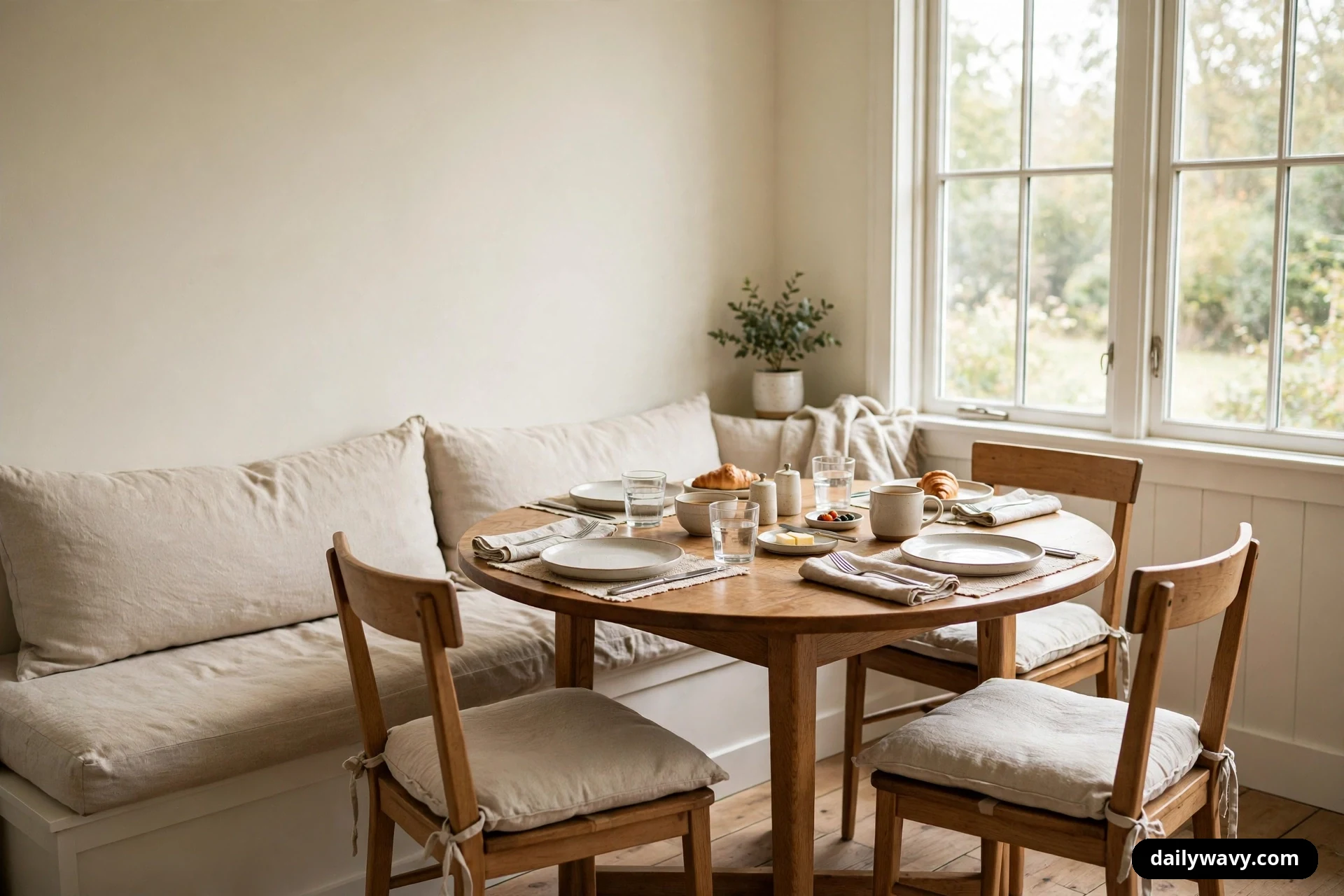
The nook rules: pull-back, sightlines, scale, and cleaning
Before any decor goes in, measure the four things that decide whether a nook actually works. First, chair pull-back: leave 24 to 30 inches from the table edge to the nearest wall so a chair can slide back without scraping. In a banquette setup, the table edge should sit 16 to 18 inches from the seat front so diners can slide in comfortably. Second, sightlines: nothing on the table should rise above 12 inches, or conversation turns into peek-a-boo across a flower arrangement. Pendants belong 30 to 36 inches above the tabletop; lower and they block faces, higher and they stop reading as part of the nook. Third, surface scale: plan roughly 24 inches of table width per diner, and let runners overhang 8 to 10 inches at each end so they drape instead of puddling. Fourth, cleaning: breakfast happens daily, so pick surfaces that wipe clean and fabrics that wash. If you are changing lighting, treat wiring as a job for a licensed electrician; plug-in sconces and swag-kit pendants exist for renters and anyone avoiding new wiring. Every idea below respects these rules.
1. A Small Plant In A Quiet Corner
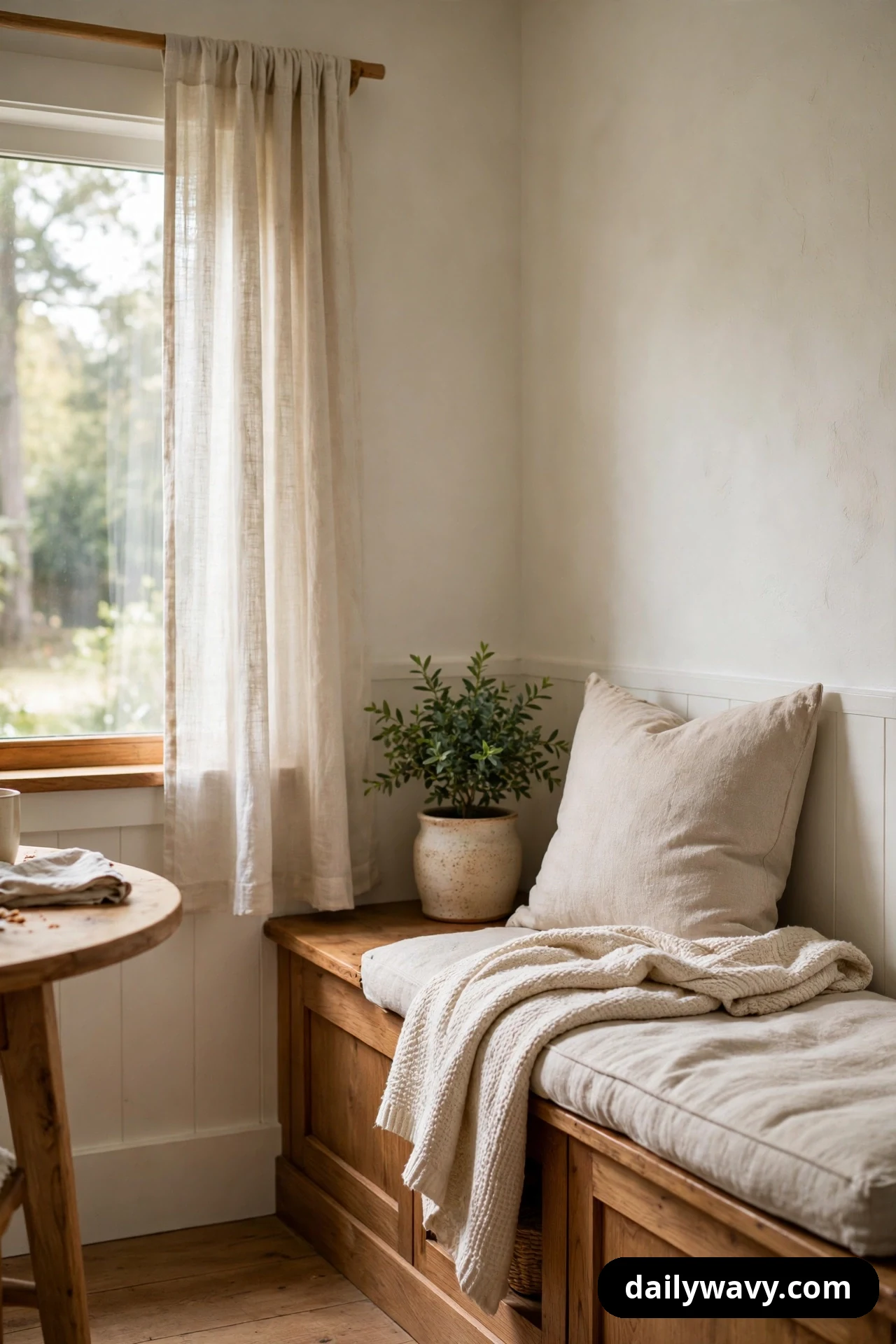
Most nooks have one corner that collects nothing: too tight for furniture, too dim for display. That is exactly where a small plant earns its keep. A single green shape in an unused corner softens the architecture, hides a cord or a wall seam, and gives the eye somewhere to rest when it is not on the table. In small nooks this reads as generosity rather than clutter, one living thing says the room is cared for.
What to measure. Measure the corner footprint you can spare: 10 to 14 inches square is plenty. Note the light there at morning and noon; low-light corners suit snake plants or pothos, bright ones welcome herbs or a small ficus. Pothos and snake plants are toxic to cats and dogs if chewed, so keep them out of reach of curious pets.
Materials and placement. A plant in a 6 to 8 inch ceramic or terracotta pot, set on the floor or on a low plant stand so its foliage starts around 24 inches high. Place it fully inside the corner, clear of chair paths and door swings.
Effort and a lower-cost alternative. One nursery trip and a few minutes of potting; expect $20 to $50. For less, propagate a pothos cutting in a jar of water and set the jar in a thrifted mug or small bowl.
2. A Wood Bowl On A Console
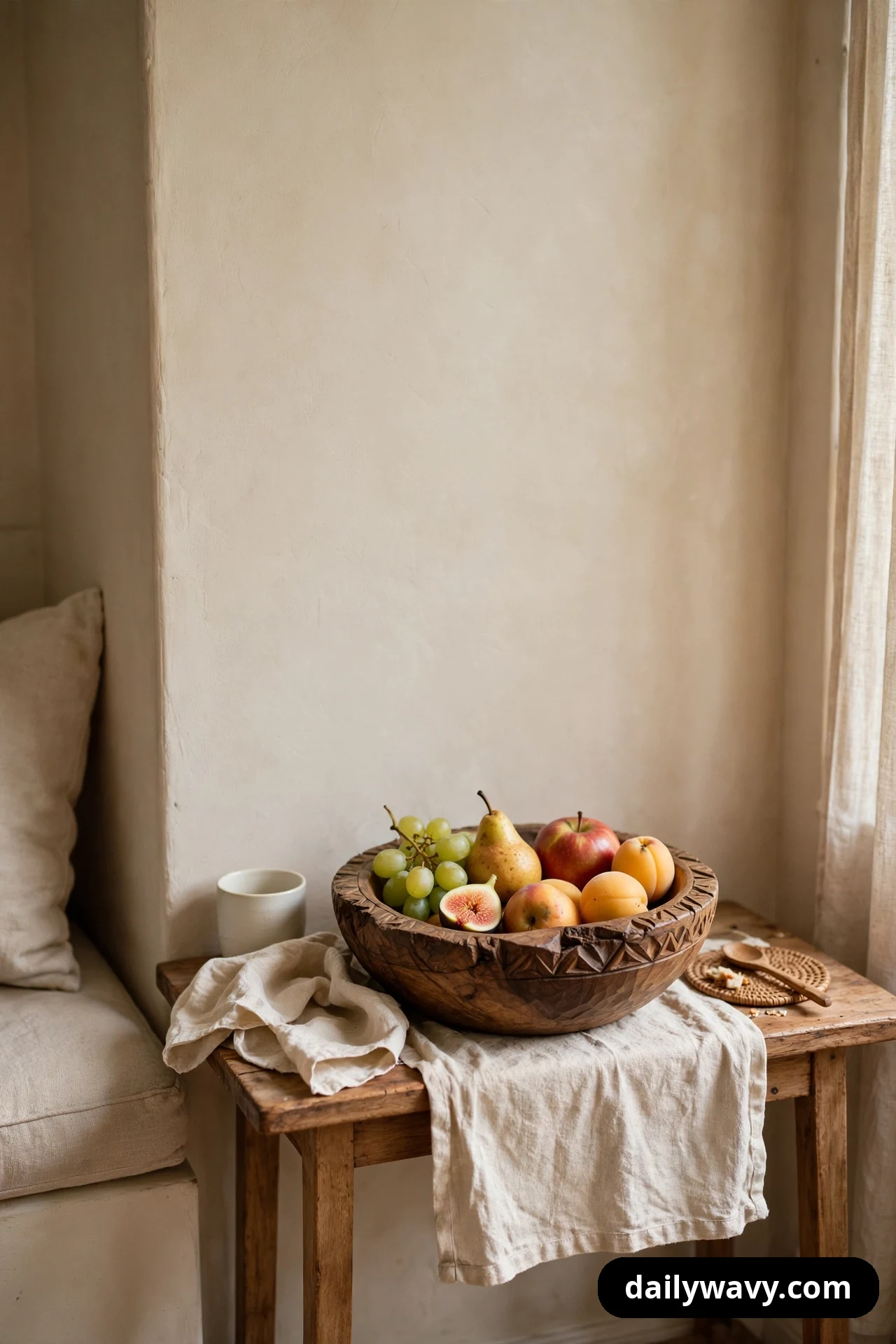
A console against the nook wall is practical surface, but bare it looks like a waiting room bench. A wood bowl on top fixes that in one move. It holds whatever the household actually eats, fruit, bread, a bowl of lemons, and it warms up painted or laminate surfaces with real grain. The bowl’s low profile keeps sightlines open from every seat, and because it lives off the table, it never has to be cleared for meals.
What to measure. Measure the console depth; most are 12 to 16 inches. The bowl should be 10 to 12 inches across, leaving clear surface on at least one side for a pitcher or mail tray.
Materials and placement. One turned-wood or carved bowl, food-safe finished if it will hold fruit. Center it on the console or shift it slightly off center for a more relaxed look. Line it with a linen napkin if you like a softer base.
Effort and a lower-cost alternative. One purchase and zero assembly; expect $25 to $70. For less, thrift a wooden salad bowl and rub it with food-safe mineral oil to refresh the finish.
3. A Restrained Chair-Cushion Palette

The fastest way to make a nook look designed instead of assembled is to narrow the chair-cushion palette to two neutrals, say oatmeal and stone, and repeat them in any order. The eye reads the repetition as calm intention, and the restraint lets the table setting, the window, or the view do the talking. It also solves a real breakfast problem: cushions in closely related shades hide crumbs and light wear better than a single pale cover shows them.
What to measure. Measure seat width and depth for each chair; cushions should cover the seat fully with 1 inch of overhang, and ties should reach the chair legs or back slats.
Materials and placement. Four to six cushions in two warm neutrals, in washable cotton or a performance weave. Mix plain and subtly textured weaves so the pairing does not look like a uniform. Tie each one snugly so cushions do not shift during meals.
Effort and a lower-cost alternative. One afternoon of shopping and tying on; expect $60 to $140 for a set. For less, sew simple envelope covers from drop cloth or thrifted linen curtains in two tones.
4. A Mirror Reflecting Natural Light

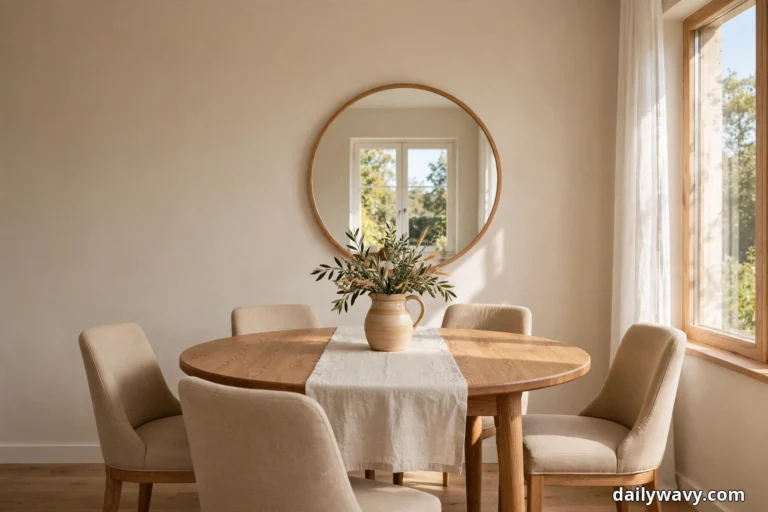
Nooks are often the brightest room in the morning and the darkest by late afternoon. A mirror hung opposite the window borrows the morning light and spreads it, making the corner feel larger and the table setting read as brighter in photos and in person. Round or arched shapes soften the boxy lines of a typical nook, and the reflection doubles whatever looks best in the room, usually the table set for a meal.
What to measure. Measure the wall opposite the window and the sightline from the table: the mirror center should sit about 60 inches from the floor so seated diners see the window reflected, not the ceiling. Size it at 24 to 30 inches across so it balances a four-person table.
Materials and placement. One mirror with a slim wood or matte metal frame. Hang it on a proper wall anchor rated for its weight, never on an adhesive hook alone. Keep it clear of chair backs that pull back into it.
Effort and a lower-cost alternative. One hanging job with a level, about 20 minutes; expect $40 to $120. For less, hang a thrifted framed mirror and spray the frame a warm neutral. If you are changing any lighting near the mirror, use a licensed electrician for hardwired work.
5. A Ceramic Pitcher With Seasonal Stems

A ceramic pitcher with stems does double duty that cut flowers cannot: it is a centerpiece and a water pitcher in one, so it never has to leave the table for a meal. Choose stems by season, bare branches in winter, garden clippings in spring, eucalyptus or dried grasses in fall, and the arrangement updates itself four times a year without a redesign. Keep eucalyptus stems out of reach of pets that chew, since eucalyptus can upset cats and dogs if eaten. The handmade surface of the ceramic adds texture that plain glass vases lack, which matters in a small room where every object is close up.
What to measure. The pitcher should stand 8 to 10 inches tall, with stems trimmed so the whole arrangement stays under 12 inches total above the table. Measure your table width to keep the pitcher base under one third of the table’s narrowest dimension.
Materials and placement. One watertight ceramic pitcher, plus stems trimmed so the arrangement’s widest point stays inside the table. Keep it at the table center or slightly toward the window side so it does not crowd serving dishes.
Effort and a lower-cost alternative. One shop visit and a few minutes of trimming; expect $30 to $80. For less, use a large mason jar or a thrifted white jug and forage stems from the yard.
6. A Linen Tablecloth With Plain Dishes
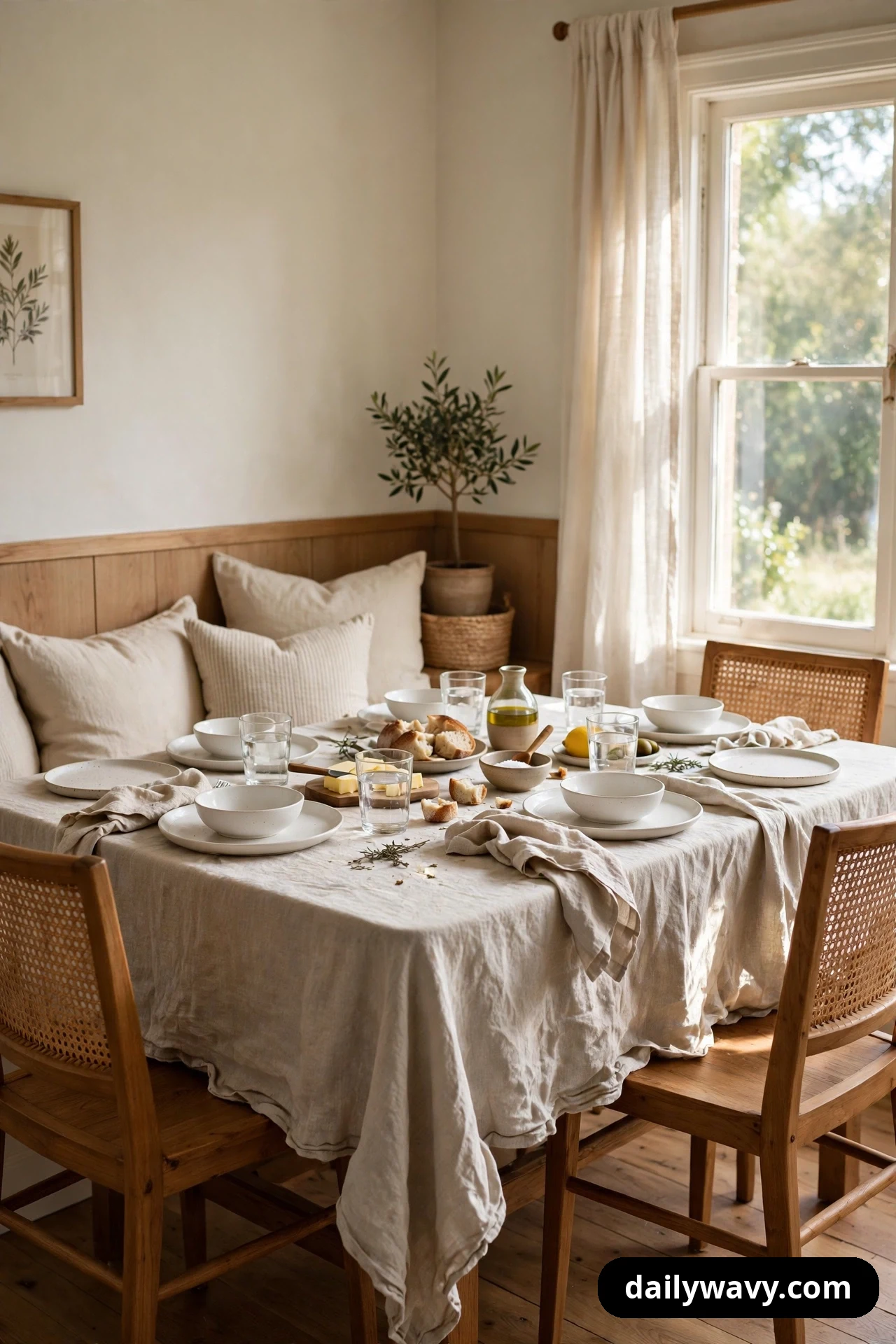
A linen tablecloth is the quickest route from weekday table to gathering table. It hides a tired tabletop, softens hard edges, and makes plain white dishes look intentional rather than default. Natural flax tones warm up the whole nook, and linen’s slight wrinkle reads as relaxed, not sloppy, which suits a room where real life happens. For cleaning, a washable cloth beats a bare wood top that needs coasters policed at every meal.
What to measure. For a 48 inch round table, a 70 to 72 inch round cloth gives an 11 to 12 inch drop, enough to cover but not tangle with knees. Rectangular tables: add 20 to 24 inches to each dimension for the same drop.
Materials and placement. One 100 percent linen or linen-blend cloth, prewashed so it does not shrink at the first wash. Center it on the table and smooth the drape; skip ironing, the soft wrinkle is the look.
Effort and a lower-cost alternative. One purchase and a wash cycle; expect $40 to $90. For less, use a linen-look cotton cloth or two yards of washed linen yardage hemmed on all sides.
7. An Asymmetrical Arrangement On Storage Furniture
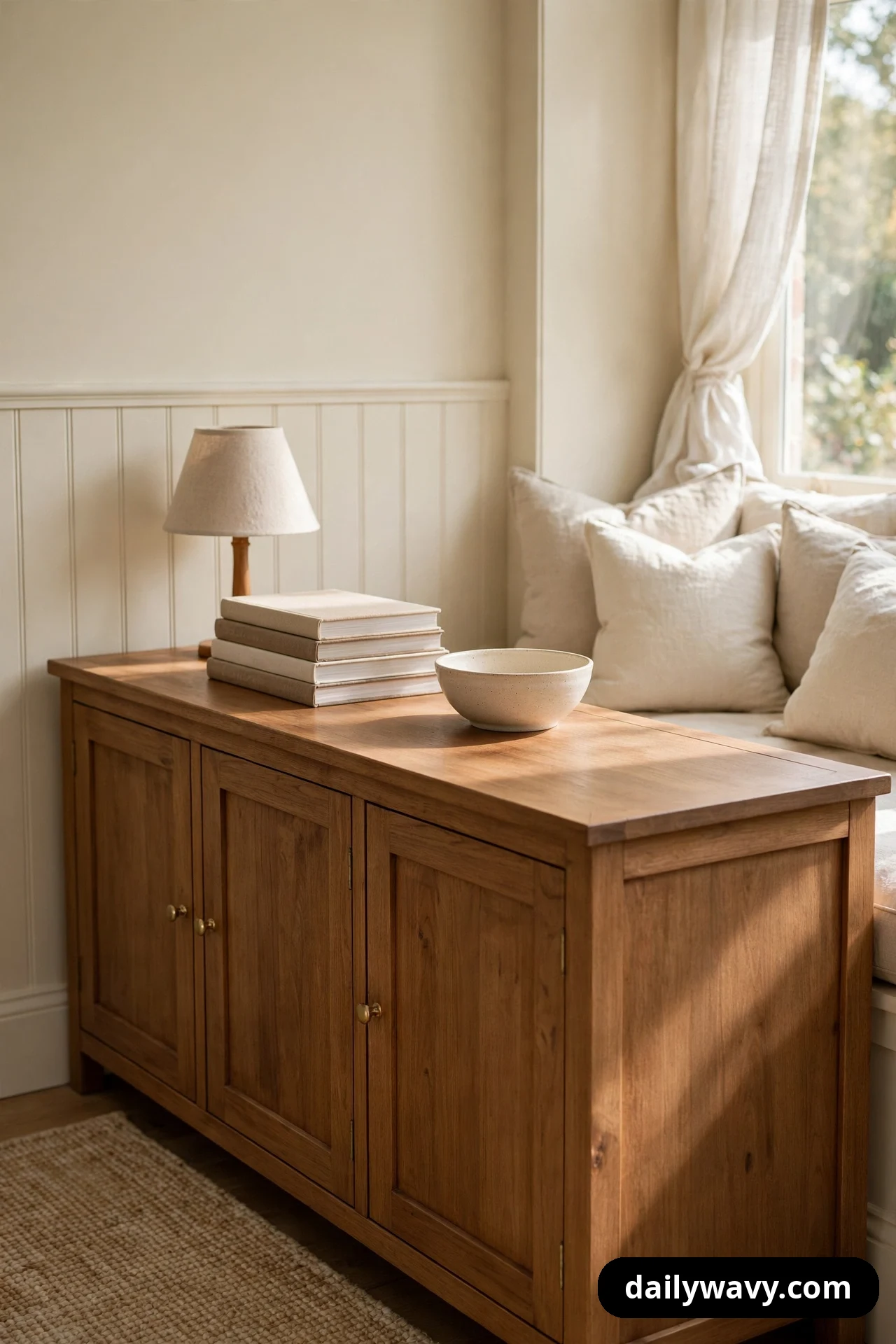
Symmetrical styling on a sideboard can look stiff in a casual room. An asymmetrical grouping, something tall at one end, a low stack of books in the middle, a small bowl at the other, feels collected and lived in, which suits a breakfast nook’s personality. It also keeps the storage furniture working: the open middle leaves landing space for a coffee pot or a stack of plates on busy mornings.
What to measure. Measure the sideboard top: plan the grouping to occupy about two thirds of the length, leaving one clear zone for daily use. The tallest object should stay under 24 inches so it does not crowd wall art above.
Materials and placement. Three to five objects of varying heights: a small lamp or tall vase, a horizontal stack of two or three books, and a low bowl or tray. Group them toward one end, tallest at the far side, and leave the rest of the surface clear.
Effort and a lower-cost alternative. One styling session with things you already own, about 30 minutes; expect $0 to $60 if you buy one new piece. For less, shop your own house first: a stack of cookbooks, a candle, and a bowl you already have will do it.
8. A Small Gallery Group On One Wall
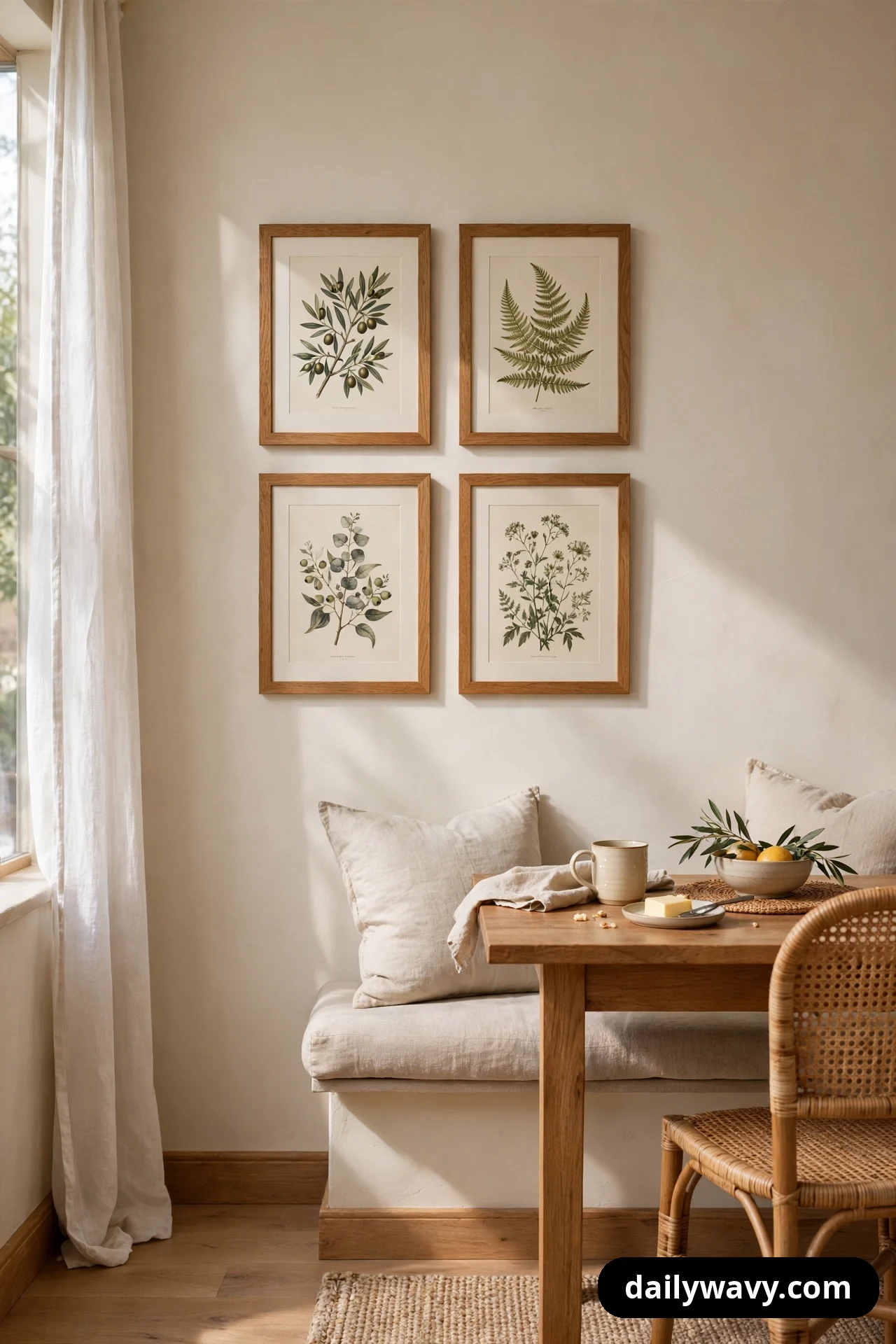
One wall with a small, tight gallery group gives the nook a point of view without committing to a full art collection. Three to five pieces hung close together read as one statement, which suits a small room better than a single large frame that competes with the window. Keep the subject matter loose and personal, botanical prints, a small landscape, a sketch, and the nook feels like it belongs to someone.
What to measure. Mark a rectangle about 24 by 30 inches on the wall, centered at 60 inches from the floor. Space frames 2 to 3 inches apart. Keep the group clear of chair backs and at least 12 inches from the window trim.
Materials and placement. Three to five frames in one finish, black, oak, or brass, with mats that share a tone. Hang the largest piece first, then build outward. Use wall anchors in drywall; nooks take a lot of vibration from sliding chairs.
Effort and a lower-cost alternative. One hanging afternoon, about an hour; expect $50 to $130 for frames. For less, use thrifted frames with free printable art, or hang unframed art prints with washi-style mounting for a renter-friendly take.
9. A Contrast Chair At The Head Of The Table
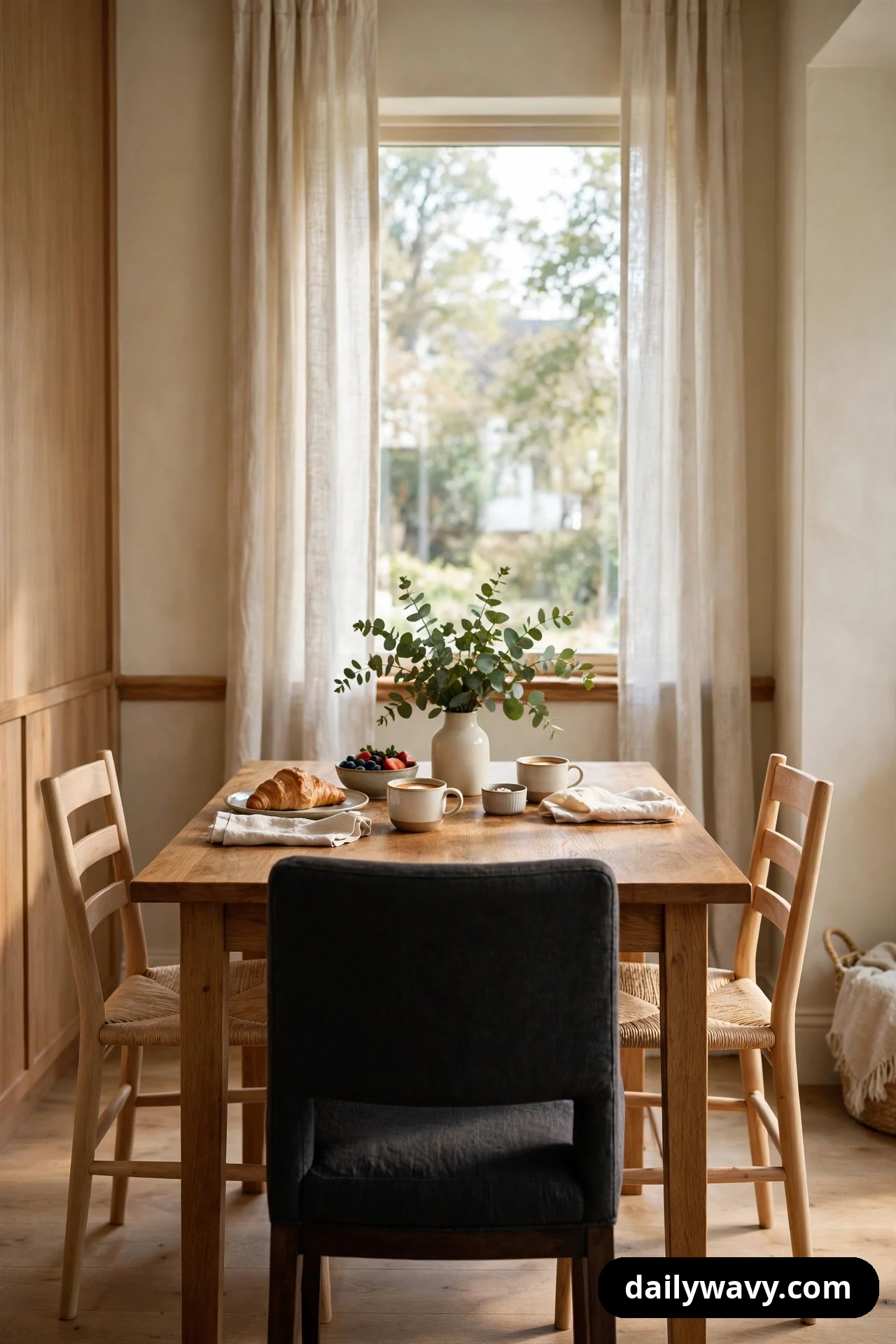
Matching chair sets are safe, and safe can be boring. Swapping the head chair for one in a different material or color, an upholstered chair among wood ones, or a black chair among white, adds the kind of designer tension that makes a nook feel finished. It also marks the host’s seat in a way guests understand instinctively, which helps gatherings settle faster.
What to measure. Check the new chair’s seat height against the others; seats should match within 1 inch or the table looks off. Confirm the chair still leaves 24 inches of pull-back room at the table head, and that its width fits the table end with a few inches to spare.
Materials and placement. One chair that contrasts in material, color, or both: upholstered versus wood, cane versus painted, dark versus light. Keep its overall scale close to the existing chairs so it reads as deliberate, not random.
Effort and a lower-cost alternative. One purchase and no assembly beyond unboxing; expect $80 to $220. For less, paint one existing chair a contrasting color or slipcover it in a contrasting fabric for $15 to $40.
10. A Shallow Tray Grouping Serving Items

A shallow tray that corrals the carafe, sugar bowl, and a few cups turns the table into a self-serve station and saves trips to the kitchen at every meal. The tray’s edge keeps things from migrating, which matters on a table that also holds plates and elbows. When guests come, the whole tray moves to a sideboard in one lift, freeing the table quickly.
What to measure. The tray should be 14 to 18 inches long and no more than 2 inches tall at the rim, so it does not block sightlines. Confirm it leaves at least 24 inches of table width per diner on both sides.
Materials and placement. One wood, rattan, or melamine tray with a wipeable surface. Arrange the carafe at the back, cups in front, and small bowls alongside. Keep it centered or shift it toward the kitchen side for easy refills.
Effort and a lower-cost alternative. One purchase and a few minutes of arranging; expect $20 to $50. For less, use a rimmed baking sheet or a thrifted serving tray lined with a tea towel.
11. A Bench Cushion With A Washable Cover
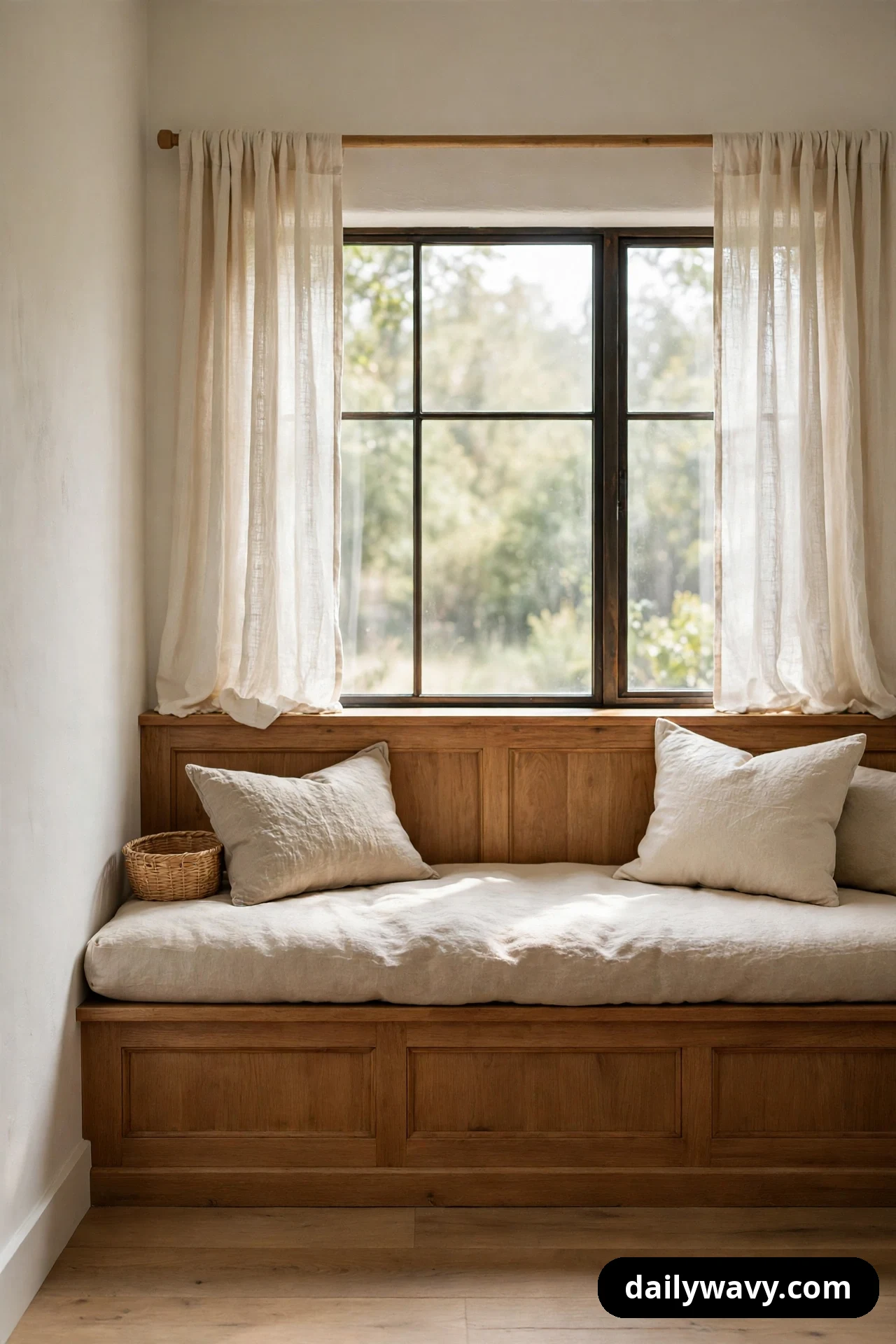
A built-in or freestanding bench is the most comfortable nook seat only if its cushion survives daily life. A cushion with a removable, machine-washable cover in a sturdy weave turns the bench from pretty to practical: syrup spills and muddy backpacks become a laundry problem, not a furniture problem. Choose a cover with a hidden zipper and a fill that bounces back, and the bench will keep looking tailored with regular washing.
What to measure. Measure the bench top: length, depth, and thickness, aiming for 3 to 4 inches of firm foam. Leave 1 inch of clearance at each end so the cover slides on and off easily for washing.
Materials and placement. One bench cushion in a washable linen, cotton duck, or performance fabric with a full-length zipper. Center it on the bench with the zipper facing the wall side. Keep a spare cover if the nook seats kids daily.
Effort and a lower-cost alternative. One purchase and no tools; expect $50 to $130 for a custom-fit cushion. For less, buy a standard-length cushion in the closest size and fill the gap with a lumbar pillow, or sew a cover from washable yardage.
12. A Repeated Accent Color In Textiles
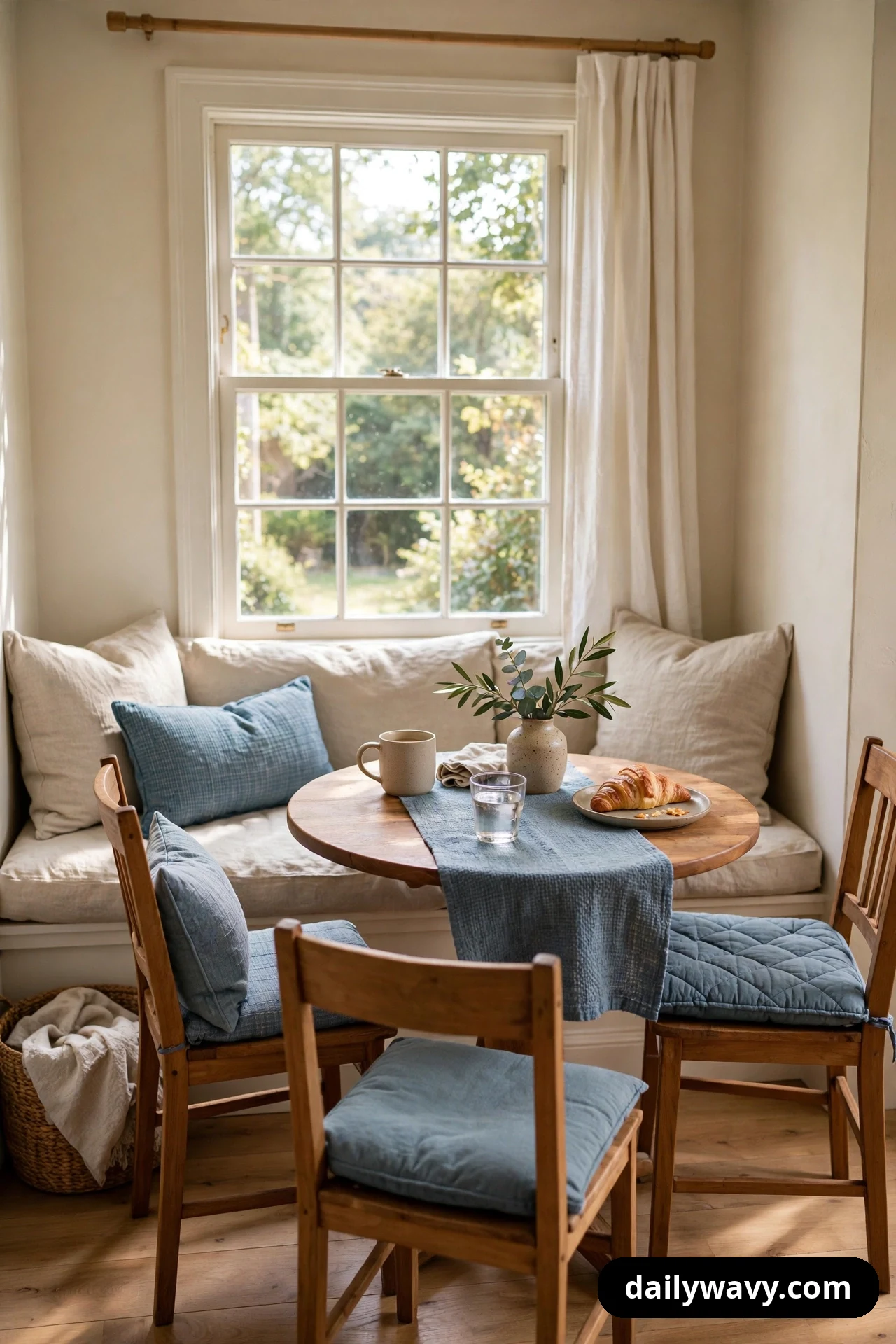
One accent color repeated three times, in the runner, on two chair cushions, on a small lumbar pillow at the bench, pulls a nook together more effectively than a whole new paint job. The repetition gives the eye a path around the room, which makes small spaces feel composed instead of scattered. Keep the accent muted, dusty blue, warm sage, soft terracotta, so it stays calm at 7 a.m.
What to measure. Identify three textile spots at different heights: table level, seat level, and bench or wall level. Measure each for runner length, cushion size, and pillow size so the three pieces share a scale relationship, not identical sizes.
Materials and placement. Three textiles in the same muted shade: a runner, two chair cushions or a bench pillow, and one small accent, such as a folded throw on the bench. Vary the textures so the color connects without looking like a set.
Effort and a lower-cost alternative. One coordinated shopping trip, about an hour; expect $60 to $150. For less, dye three existing white textiles with one box of fabric dye, or hunt thrift stores for three pieces that share a tone.
13. A Narrow Cabinet For Table Linens

Table linens stored in a distant hall closet never get used. A narrow cabinet, 12 to 14 inches deep, tucked into the nook’s dead corner keeps cloths, runners, and placemats where they belong, and its closed doors hide the stack so the room stays calm. The top doubles as a serving ledge or a home for the wood bowl from idea 2, which means this one piece of furniture earns its floor space three ways.
What to measure. Measure the corner or wall stretch: 12 to 14 inches of depth keeps it clear of chair pull-back paths, and 24 to 36 inches of width holds a full linen collection. Confirm the doors can open without hitting a chair back.
Materials and placement. One slim cabinet with adjustable shelves in painted wood or warm-toned MDF. Fold linens in thirds so stacks stay tidy, and place the most-used pieces at waist height. Anchor the cabinet to the wall if the household includes climbers.
Effort and a lower-cost alternative. One purchase and 30 to 60 minutes of assembly; expect $90 to $220. For less, use a tall narrow bookcase with fabric bins, or repurpose a small dresser with the drawers holding folded linens.
14. A Simple Woven Shade At The Window
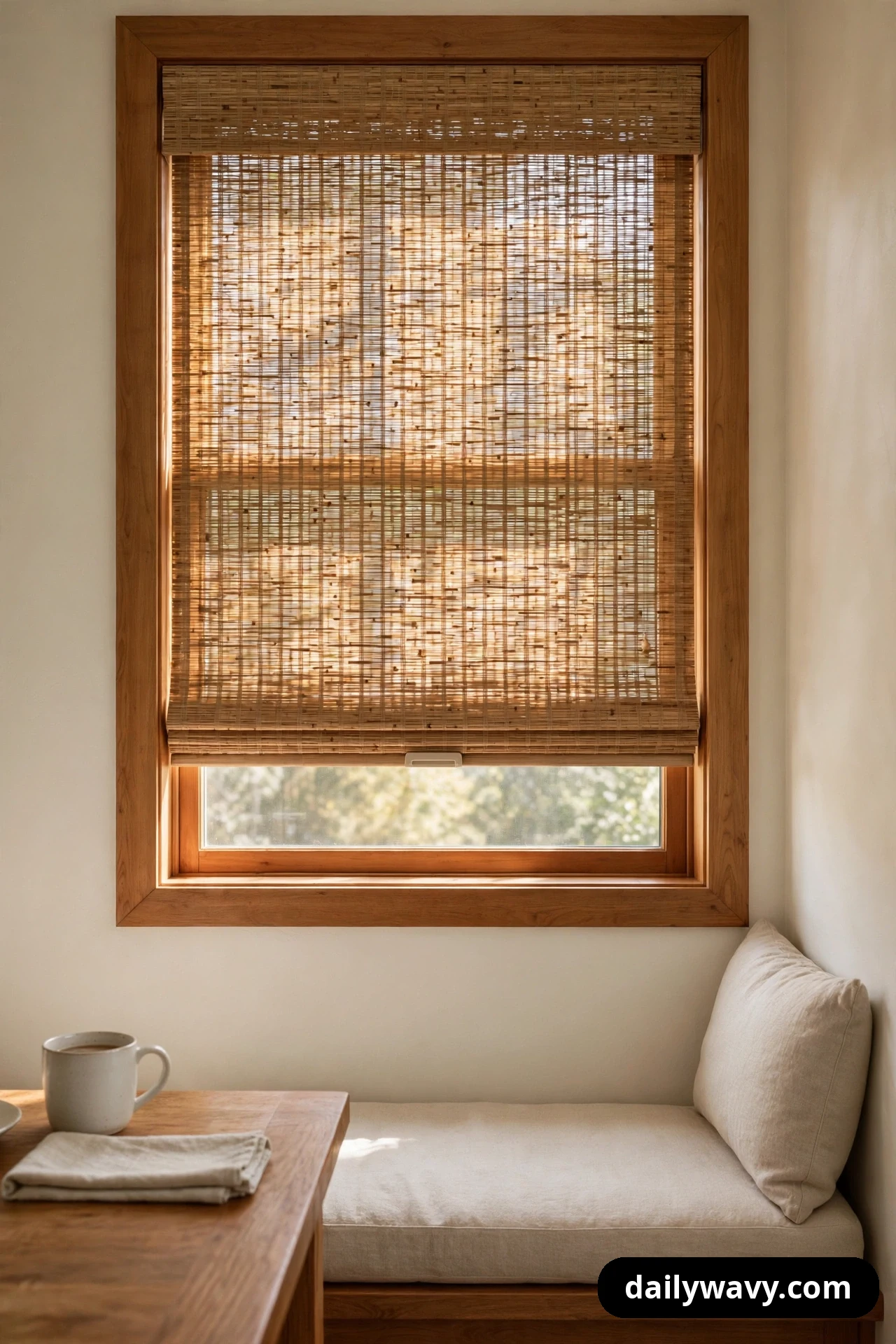
Bare glass floods a nook with glare at breakfast time; heavy curtains eat the light the room needs. A simple woven wood shade splits the difference: it filters the sun into a soft, even glow, adds natural texture the room’s neutrals welcome, and rolls up completely when you want the full view. Because the shade mounts inside the window frame, it needs zero wall space and never interferes with chair pull-back.
What to measure. Measure the window’s inside width and length at three points each and use the narrowest measurement; inside-mount shades need a 2 inch depth in the frame. The shade should stop just above the sill so it does not tangle with anything on it.
Materials and placement. One woven wood or bamboo Roman-style shade with a cordless lift, which is the safer choice around kids and pets. Mount the brackets level inside the frame, and test the lift before you finish.
Effort and a lower-cost alternative. One measuring session and about 30 minutes of mounting; expect $60 to $160 per window. For less, use a paper pleated shade trimmed to fit as a temporary fix, or a tension-rod linen panel for a soft, renter-friendly filter.
15. A Low Centerpiece With Clear Sightlines

The centerpiece is the one decor element every seated person studies for the whole meal, so it has to stay low enough to talk over. A shallow bowl with candles and a scatter of greenery sits under 12 inches, which keeps faces visible and lets the table read as styled without a tall arrangement hogging the middle. Everything in it should survive being moved: clear it to the sideboard when serving dishes arrive, and bring it back when the plates go.
What to measure. Keep the total height under 12 inches above the tabletop, and the footprint under one third of the table’s width, so serving dishes still fit. Confirm chairs on both sides can see over it from a seated eye height of about 44 inches.
Materials and placement. One shallow bowl or tray, two or three unscented candles (or flameless ones around kids), and a handful of fresh or faux greenery. Keep open flames clear of the greenery and never leave burning candles unattended. Center the group on the table, or offset it slightly if a tray (idea 10) shares the surface.
Effort and a lower-cost alternative. A few minutes of gathering and arranging; expect $20 to $60. For less, use a dinner plate as the base, tea lights you already own, and clipped greenery from the yard.
16. A Natural-Texture Runner

A natural-texture runner, jute, seagrass, or a chunky cotton weave, anchors the table the way a rug anchors a room. It protects the tabletop from daily heat and spills, gives place settings a visual starting line, and adds the one rough texture that makes all the smooth ceramics and linens around it look richer. Unlike a full cloth, a runner leaves the table’s own finish visible, which suits wood tables worth showing off.
What to measure. The runner should run the table’s length plus 16 to 20 inches, so 8 to 10 inches drape over each end, and be one third to one half the table’s width. On a 48 inch round table, a 16 inch wide runner works well.
Materials and placement. One natural-fiber runner, jute or seagrass for texture, cotton weave if you want machine washability. Center it along the table’s long axis and let the ends drape evenly.
Effort and a lower-cost alternative. One purchase and no setup; expect $25 to $70. For less, cut a length of burlap or canvas drop cloth to size and fringe the ends by pulling a few threads, no sewing needed.
Breakfast nook questions, answered
How much room do chairs need to pull back?
Leave 24 to 30 inches from the table edge to the nearest wall or furniture. In a banquette setup, allow 16 to 18 inches between the table edge and the seat front so diners can slide in.
What size table fits a breakfast nook?
Plan about 24 inches of table width per diner. A 42 to 48 inch round table seats four comfortably and fits corners better than a rectangle; a 36 by 60 inch rectangle seats six.
How high should a pendant hang over a nook table?
Hang it 30 to 36 inches above the tabletop. Lower blocks sightlines across the table, higher disconnects the light from the nook. For hardwired changes, hire a licensed electrician.
How do I keep a small nook from feeling cramped?
Keep the palette to warm neutrals, leave one wall mostly clear, use a mirror to bounce window light, and keep the centerpiece under 12 inches so sightlines stay open. Fewer, larger pieces beat many small ones.
What fabrics actually survive daily breakfast use?
Washable slipcovers, performance weaves, and outdoor-rated fabrics on seats; removable, zippered covers on bench cushions. Linen works on the table if you are willing to wash it weekly.
Can I style a breakfast nook in a rental?
Yes. Use plug-in sconces or swag-kit pendants instead of new wiring, tension-rod shades, removable wall hooks for art, and freestanding storage. Most of these 16 ideas come off the walls and out of the room at move-out, with only small anchor holes to patch.
Ready for meals and gatherings
A good breakfast nook does not need a renovation, it needs a few honest decisions: chairs that pull back freely, a centerpiece low enough to talk over, surfaces that clean up fast, and light that flatters the food. Pick the two or three ideas that fit your corner, measure once, and the nook will start pulling its weight at every meal. For the rooms around it, our small pantry organization ideas keep the kitchen side tidy, our small dining room decor ideas carry the same meals-and-gatherings thinking into a full dining room, and the small entryway decor ideas make the front door feel welcoming. You can browse the whole collection under Home & Decor.