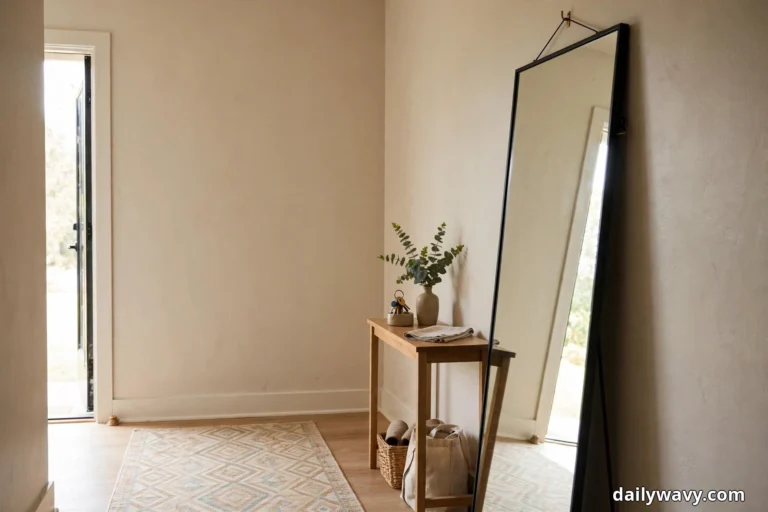
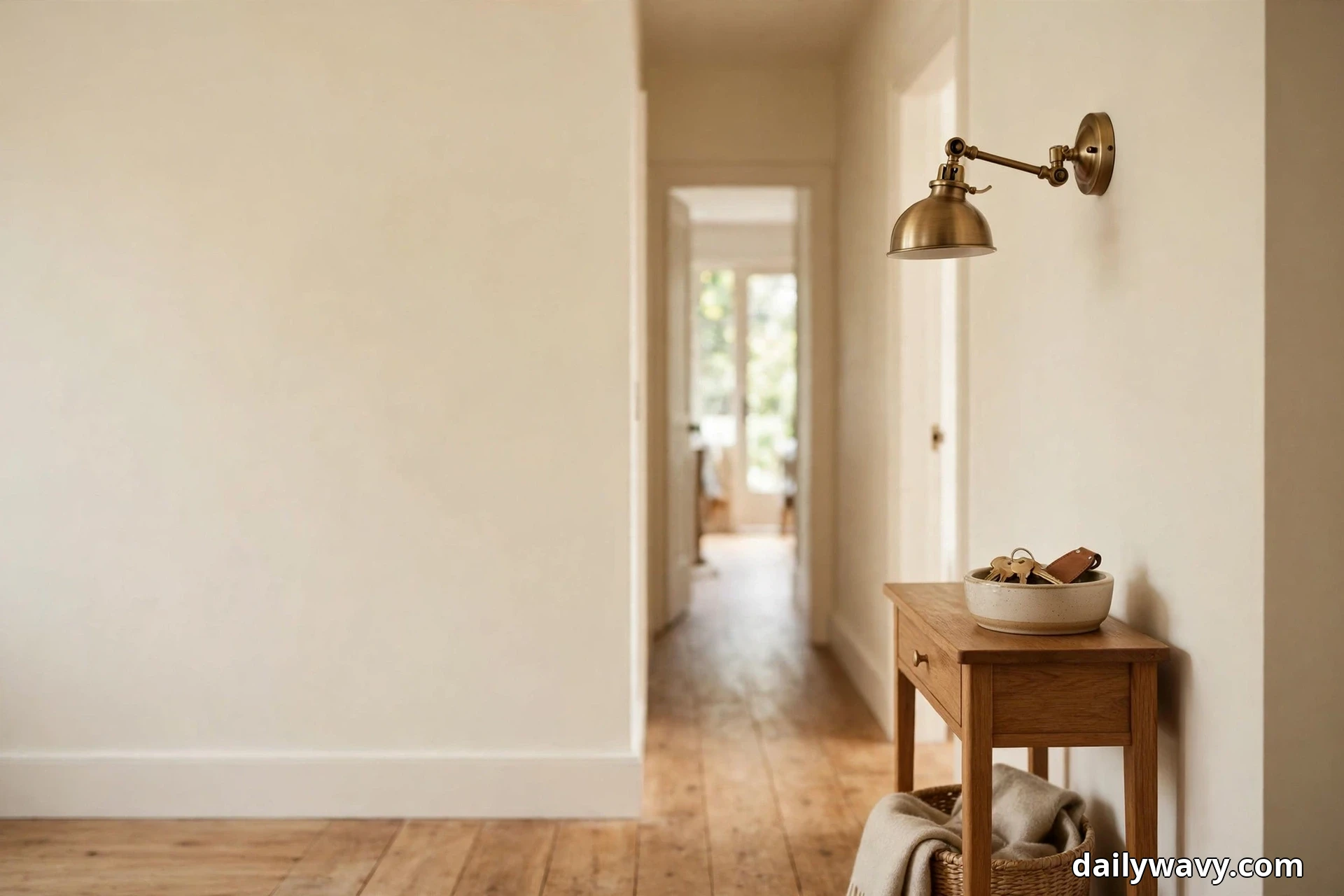
18 Hallway Lighting Ideas with Form and Function in Mind
Hallways get more use than almost any room in the house and less thought than any of them. You walk…
Hallways get more use than almost any room in the house and less thought than any of them. You walk the length of yours dozens of times a day, yet most hallways still run on a single overhead fixture and a bare ceiling. The right lighting changes that completely. It makes the space feel wider, guides your eye from one room to the next, and turns a pass-through into a place you actually notice. These eighteen ideas cover every hallway shape and budget, from one quick fixture swap to a fully layered plan. Each one tells you what to look for and how to recreate the look at home, with measurements wherever size decides whether the idea works.
In This Guide:
- An Adjustable Head For Practical Use
- A Dimmable Option Where Compatible
- A Rounded Shape Softening Straight Lines
- A Ceramic Or Wood Accent On The Base
- A Restrained Dark Fixture In A Light Room
- A Light Finish In A Dark Corner
- A Compact Design Leaving Useful Surface Space
- A Layered Arrangement At Different Heights
- A Warm Shaded Light Beside The Focal Area
- A Sculptural But Proportionate Fixture
- A Simple Metal Finish Repeated Nearby
- A Diffused Globe-Style Form
- A Narrow Fixture In A Tight Space
- A Pair With Balanced Placement
- A Textured Shade With Gentle Light
- A Low-Glare Light Aimed At The Task
- A Small Accent Highlighting Artwork
- A Subtle Contrast Against The Wall
The Hallway Lighting Rules Before You Start
Measure before you shop. Note the hallway’s length, width, and ceiling height, plus where the doorways fall. As a starting point, mount wall sconces around 60 to 66 inches from the floor, and space flush-mount or semi-flush ceiling fixtures about 8 to 10 feet apart so light overlaps evenly instead of pooling in spots.
Think in layers. Hallways work best with ambient light for overall glow plus one accent or task layer, like a picture light over art or a shaded sconce near a bench. Keep color temperature warm, around 2700 to 3000 kelvin, so the corridor feels welcoming rather than clinical. If a fixture can dim, pair it with a dimmer switch and confirm the bulbs are dimmer-compatible LEDs.
One safety note worth taking seriously: anything hardwired into the ceiling or wall box is a job for a licensed electrician, and even before the like-for-like jobs some regions allow a homeowner to do, the power goes off at the breaker and the circuit is checked dead with a voltage tester first. Plug-in sconces and battery-powered picture lights are the safe DIY route. Where a hallway runs into a staircase, a hardwired stair light belongs on three-way switches at the top and the bottom of the stairs so nobody crosses a landing in the dark to reach a switch, and that wiring is electrician work too. Now, the eighteen ideas.
1. An Adjustable Head For Practical Use
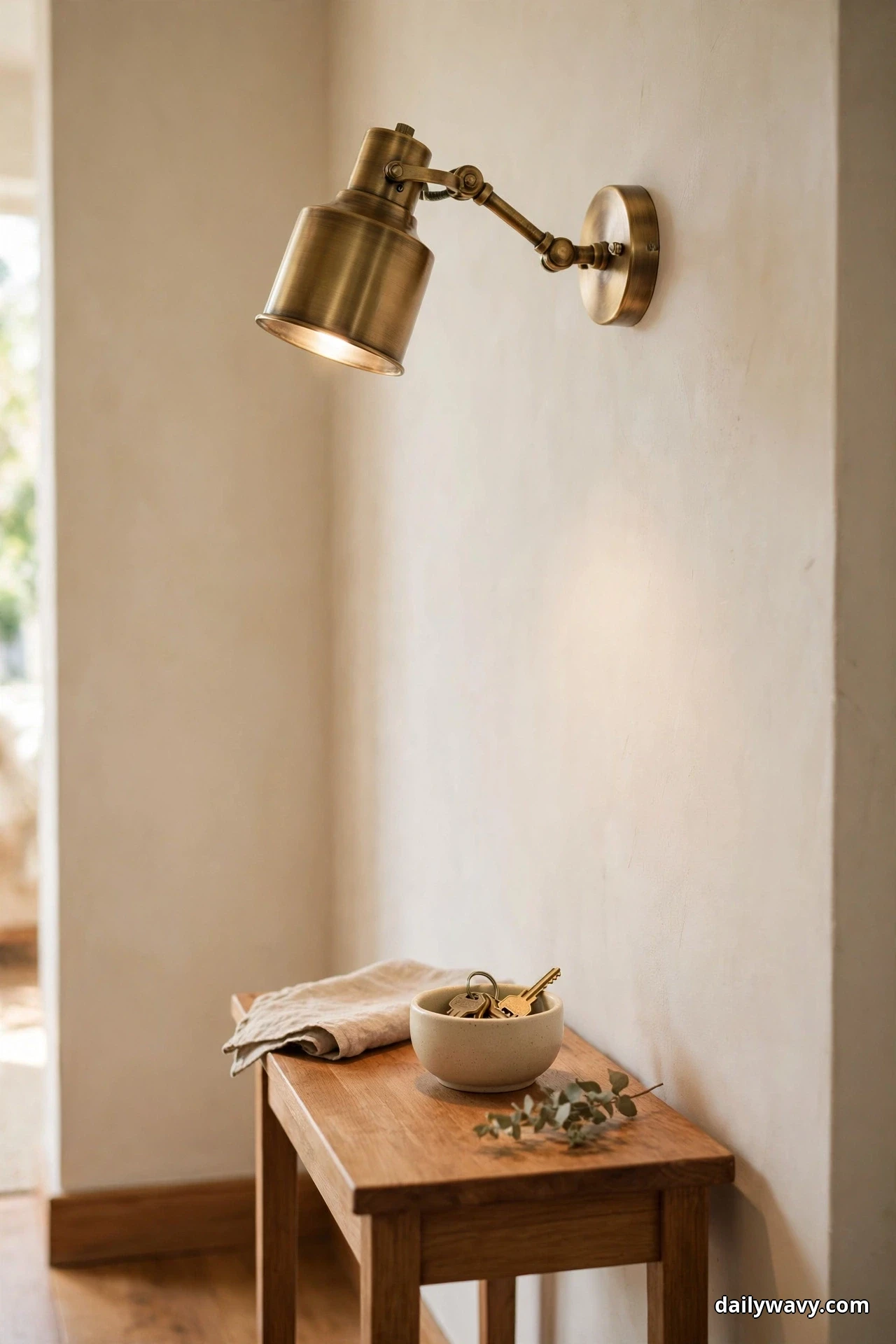
Some hallways need light that works as hard as they do. A wall sconce with an adjustable head lets you aim the beam exactly where it matters: down at a key bowl on the console, across at the lock you fumble with at night, or up at the ceiling for a soft wash of bounce light. Look for a fixture with a jointed arm or rotating shade that moves smoothly and stays where you put it.
For placement, mount it about 62 inches from the floor on the wall beside your main task spot. If you have a hallway desk or a drop zone near the front door, one adjustable sconce there beats two fixed ones elsewhere. This is the hardest-working light in the guide, and it usually costs less than a pair of decorative sconces. Budget around $60 to $150 for a good plug-in version, and always keep the cord run tidy along the baseboard.
2. A Dimmable Option Where Compatible
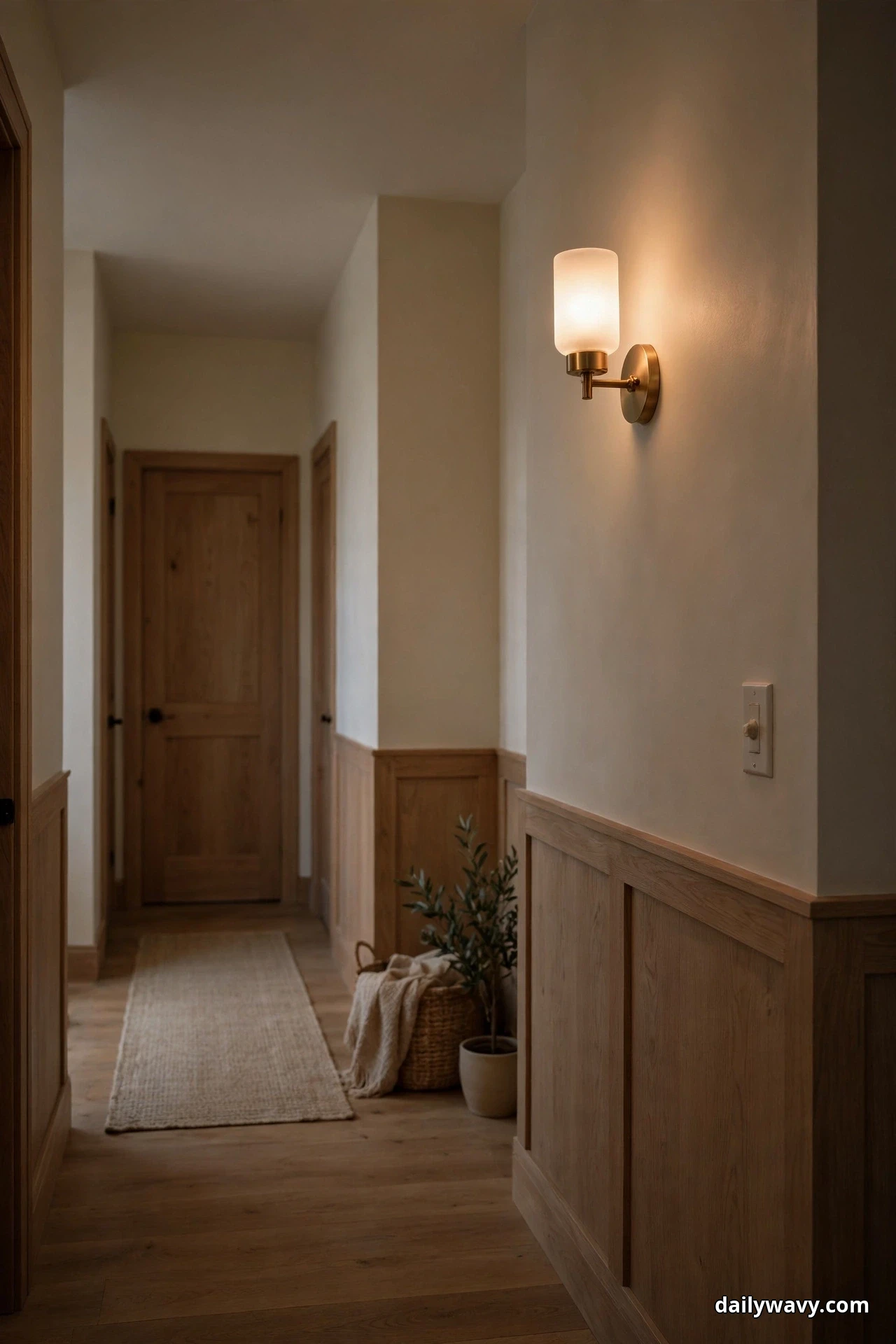
Hallways serve two masters: bright and practical by day, calm and low at night. A dimmable fixture gives you both. The key is compatibility. LEDs dim beautifully, but only when the bulb is labeled dimmable and the wall dimmer is designed for LED loads. Pairing a non-dimmable bulb with a dimmer can cause flicker or buzzing, so check both packages before you buy.
This idea suits any fixture type: flush mounts, sconces, even plug-in lamps on a hallway console. The real payoff comes at night. Dropping the brightness to a soft glow keeps the hallway usable without blasting light into open bedroom doors. If you are replacing one fixture, choose a dimmable one and add the dimmer switch at the same time. Your electrician can swap the switch in minutes during a scheduled visit, and the whole room’s mood changes for the price of a dinner out.
3. A Rounded Shape Softening Straight Lines
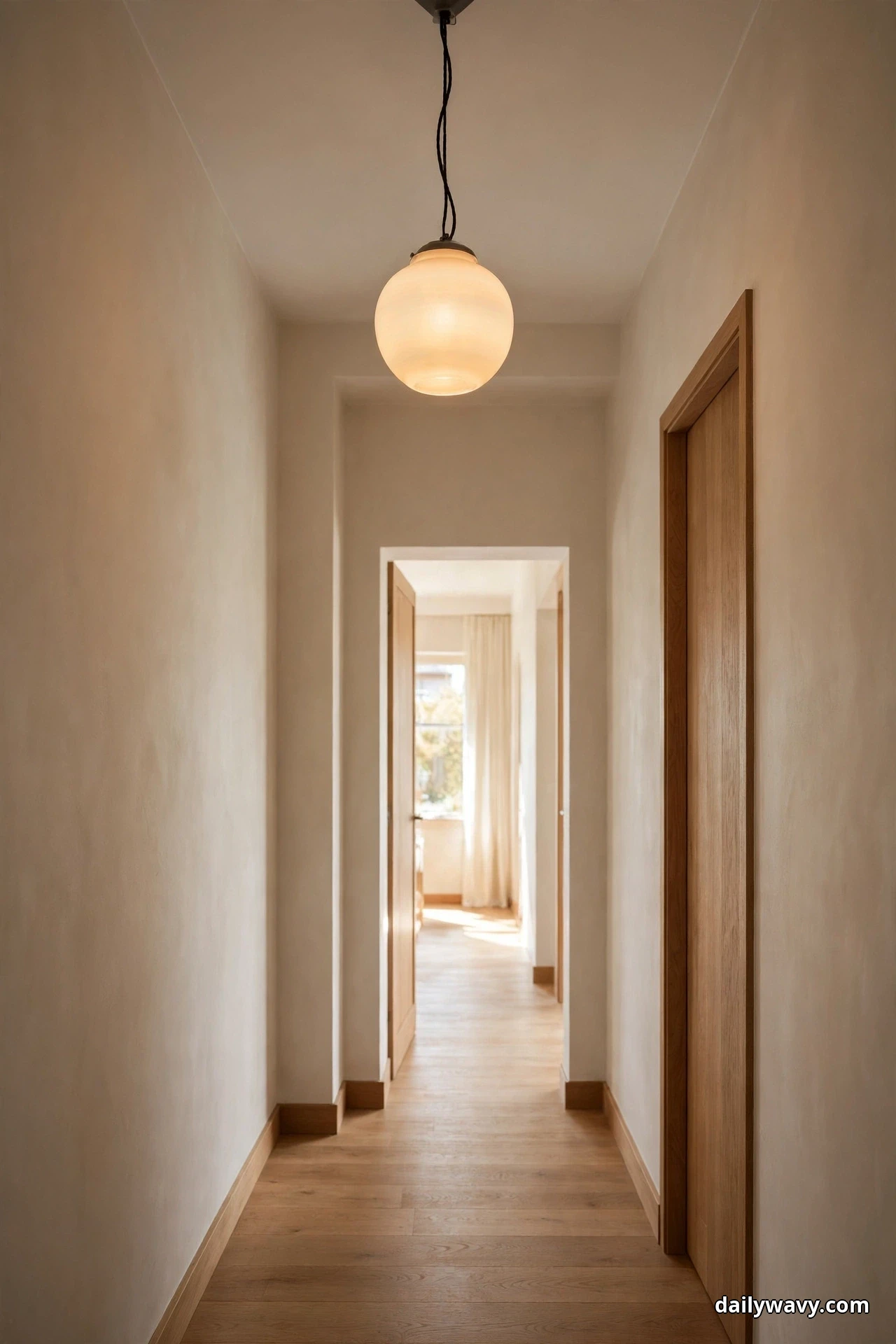
Hallways are geometry lessons: long straight walls, flat ceilings, rectangular doorways. A round fixture breaks that boxiness in the nicest way. Think opal globe pendants, arched brass sconces, or a single round flush mount in the middle of a long corridor. The curve catches the eye and gives the space a shape to rest on.
Scale matters here. In a hallway under 44 inches wide, keep pendants or flush mounts under 12 inches in diameter so they never feel intrusive. Hang pendants so the bottom sits at least 84 inches from the floor, which keeps them clear of heads in traffic. One round fixture placed at the center of a long hallway, or a rhythm of three small globes in an extra-long one, reads as intentional rather than improvised. This is a simple swap that changes the whole feel of the corridor.
4. A Ceramic Or Wood Accent On The Base
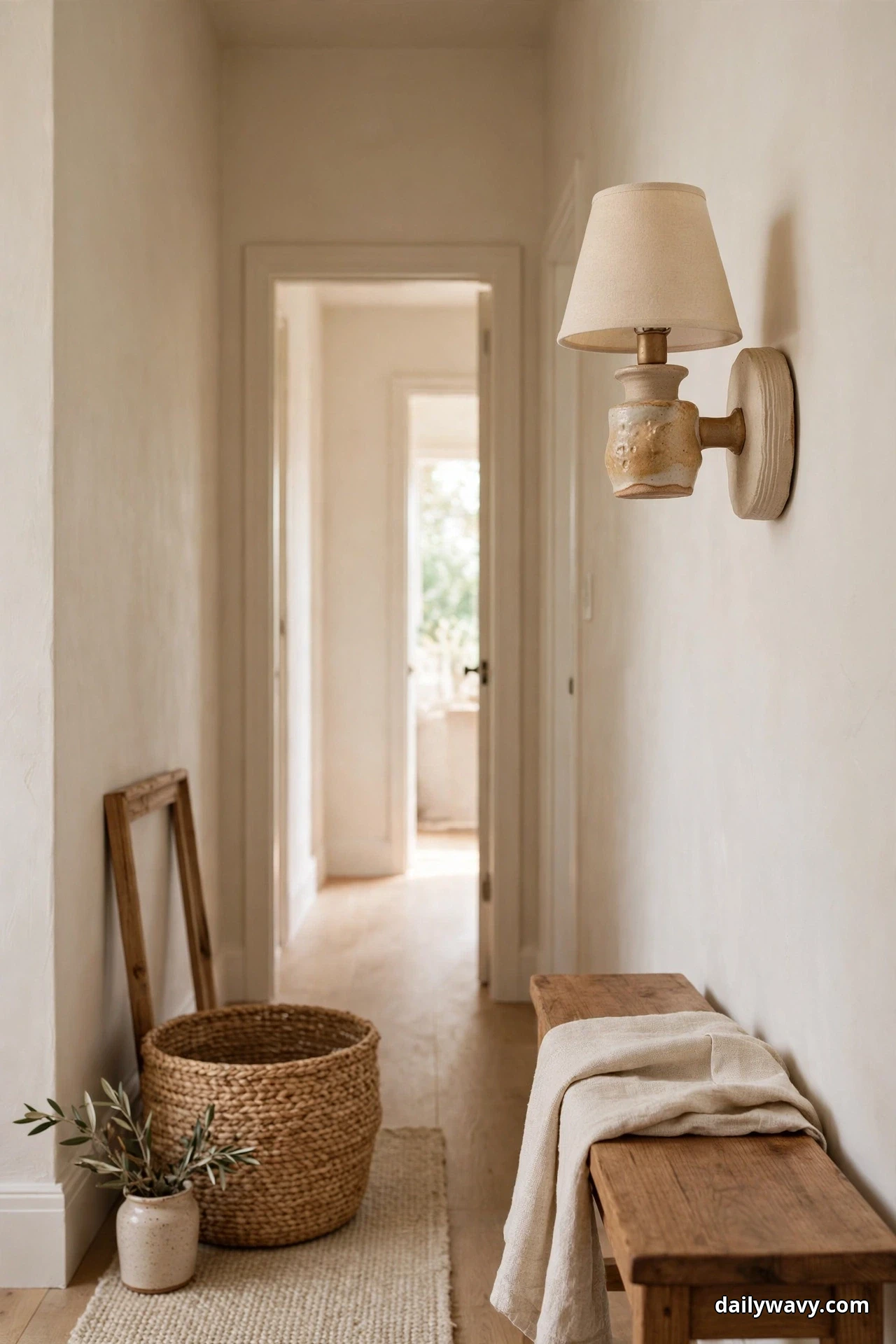
When every fixture in the house is chrome and glass, a little warmth on the base feels like a relief. Look for sconces or small pendants with a ceramic base, a turned wood backplate, or a rattan-wrapped stem. The accent piece does not have to be large. Even a three-inch ceramic collar where the shade meets the wall adds character.
This idea works especially well in hallways that already have natural materials: an oak console, a jute runner, a woven basket. Match the wood tone to something nearby rather than introducing a brand-new species, and keep ceramics in warm neutrals like cream, sand, or terracotta. One practical caution: keep ceramic and wood fixtures away from direct rain or heavy condensation, so this is an indoor-hallway idea, not one for a breezeway or covered porch entry.
5. A Restrained Dark Fixture In A Light Room
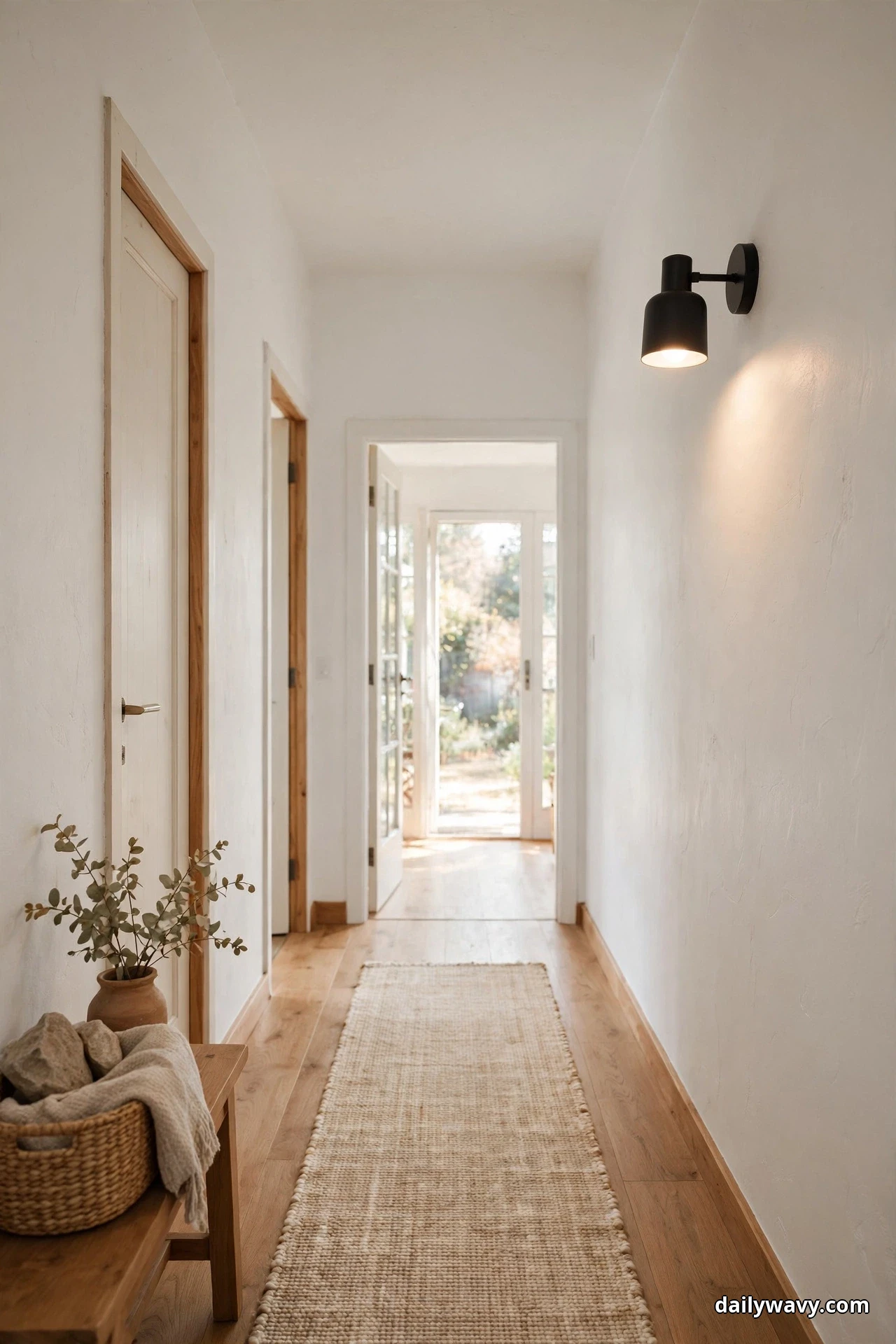
Light hallways sometimes look washed out, especially long ones painted a bright white. A single dark fixture, matte black or oil-rubbed bronze, gives the eye an anchor point. It reads as punctuation in the space: a full stop that makes everything around it feel more composed.
Restraint is the operative word. One or two dark fixtures in a row is plenty. If every piece goes dark, the anchor effect disappears and the hallway starts to feel heavy. Pair the dark fixture with a light shade or a frosted glass element so the light output stays generous. This idea costs nothing extra, since dark finishes are standard options on most fixture lines, and it works in traditional, modern, and farmhouse hallways alike.
6. A Light Finish In A Dark Corner
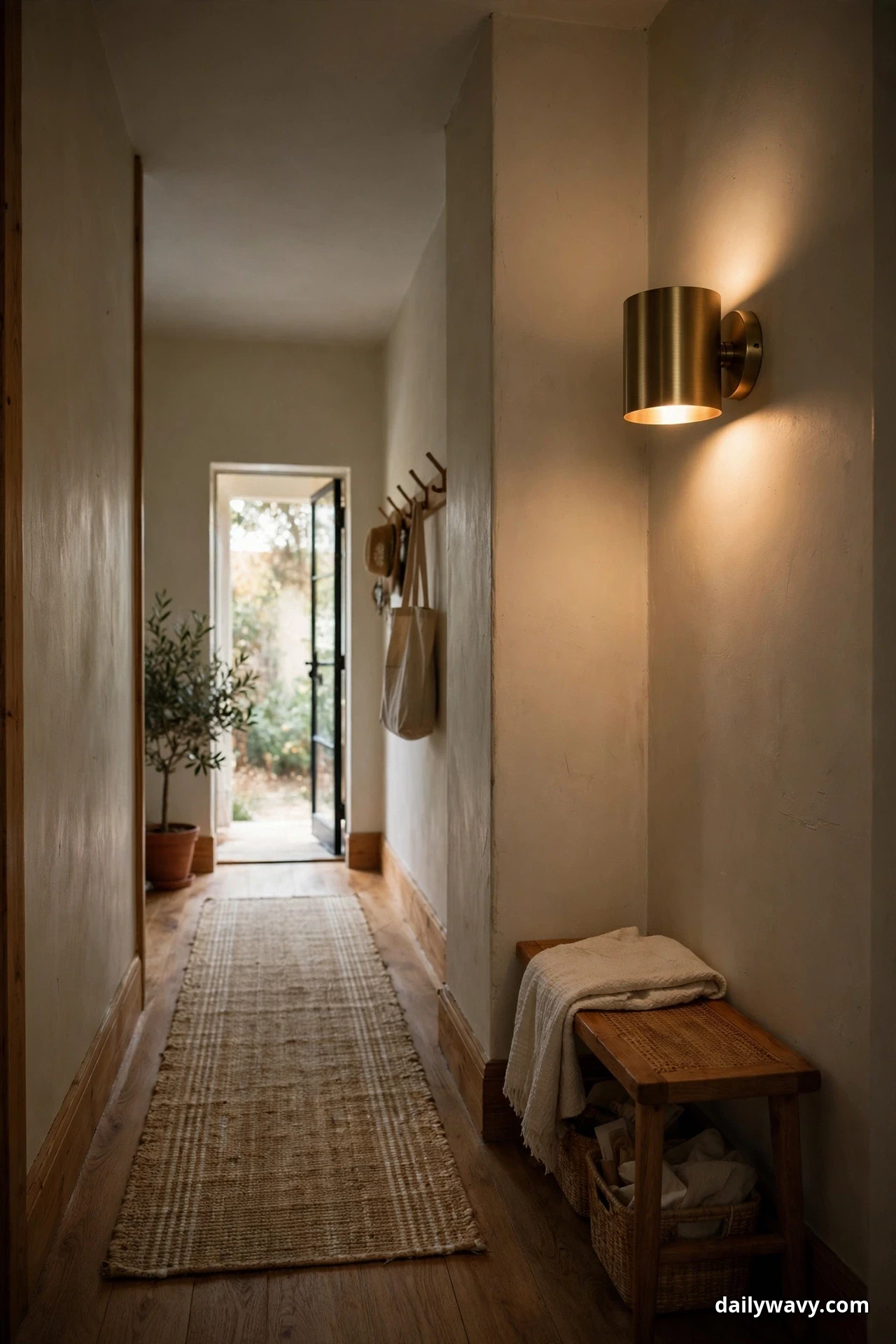
The reverse works too. If your hallway has a dark corner, a deep-colored accent wall, or very little natural light, a fixture in a light finish pushes brightness back into the room. Brushed nickel, polished brass, chalk white, or pale gold finishes all reflect more light than their dark counterparts, and that bounce matters when the sun never reaches.
Place the light fixture where the darkness starts: at the turn of an L-shaped hallway, the end of a corridor with no window, or beside a dark wood door. Pair it with the warmest bulb you are comfortable with, 2700 kelvin, so the reflected light feels golden rather than flat. In a hallway that already gets decent daylight, skip this one and save the light finish for a room that needs it more.
7. A Compact Design Leaving Useful Surface Space
Narrow hallways punish bulky fixtures. A compact sconce, one with a slim profile that sits close to the wall, lights the corridor without stealing elbow room or the top of your console. Look for fixtures with a projection under four inches. That keeps them clear of shoulders, bags, and the picture frames hanging nearby.
This is the right choice when the hallway is 36 to 42 inches wide or when a console already crowds the wall. Mount the compact sconce above the console rather than behind it, so the light washes over the surface you actually use. Small fixtures often cost less than statement ones, and you can usually find quality options between $40 and $90. Save the sculptural pieces for the foyer, where there is room to appreciate them.
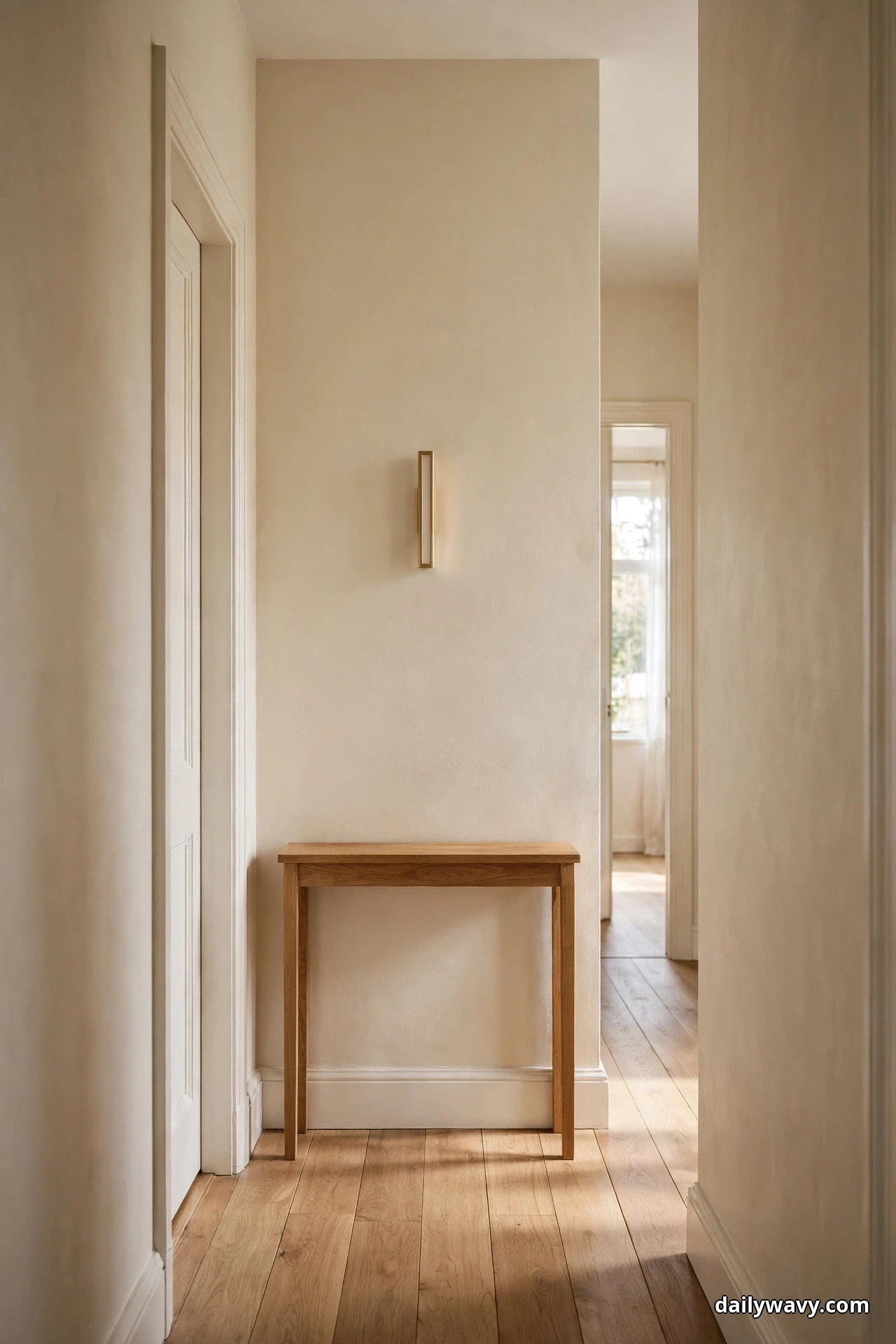
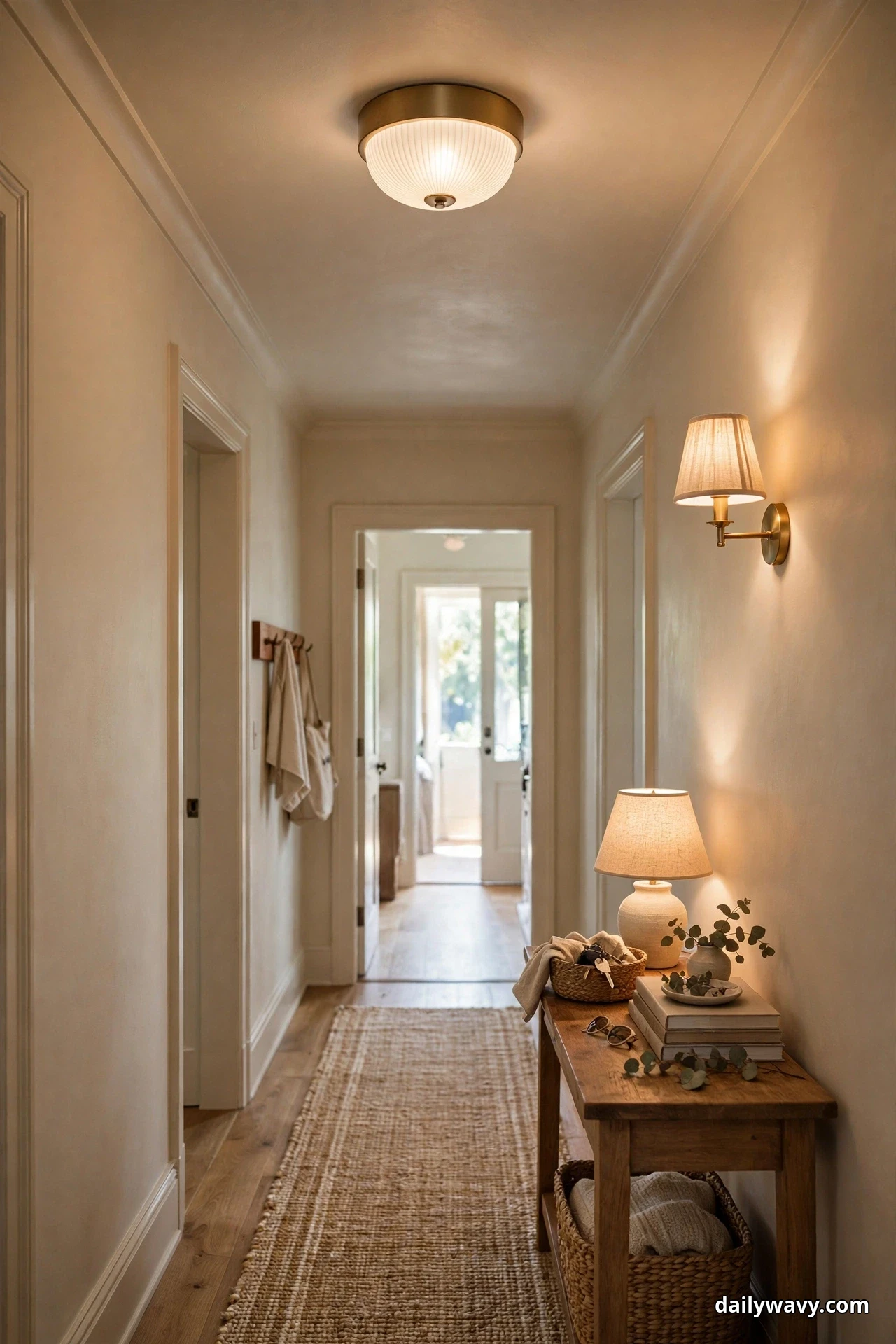
8. A Layered Arrangement At Different Heights
One overhead fixture gives you flat, top-down light. Layers give you depth. Try combining a ceiling flush mount for ambient glow with two sconces at eye level for warmth and a small table lamp on the console for the evening. Three light sources at three heights make even a plain hallway feel designed.
You do not have to buy all three at once. Start with the sconces, add the console lamp later, and let the existing ceiling fixture do the heavy lifting in the meantime. The trick is keeping the color temperatures consistent across layers. If everything sits between 2700 and 3000 kelvin, the hallway reads as one warm, coherent space. Mix a cool daylight bulb into the arrangement and the whole effect breaks apart.
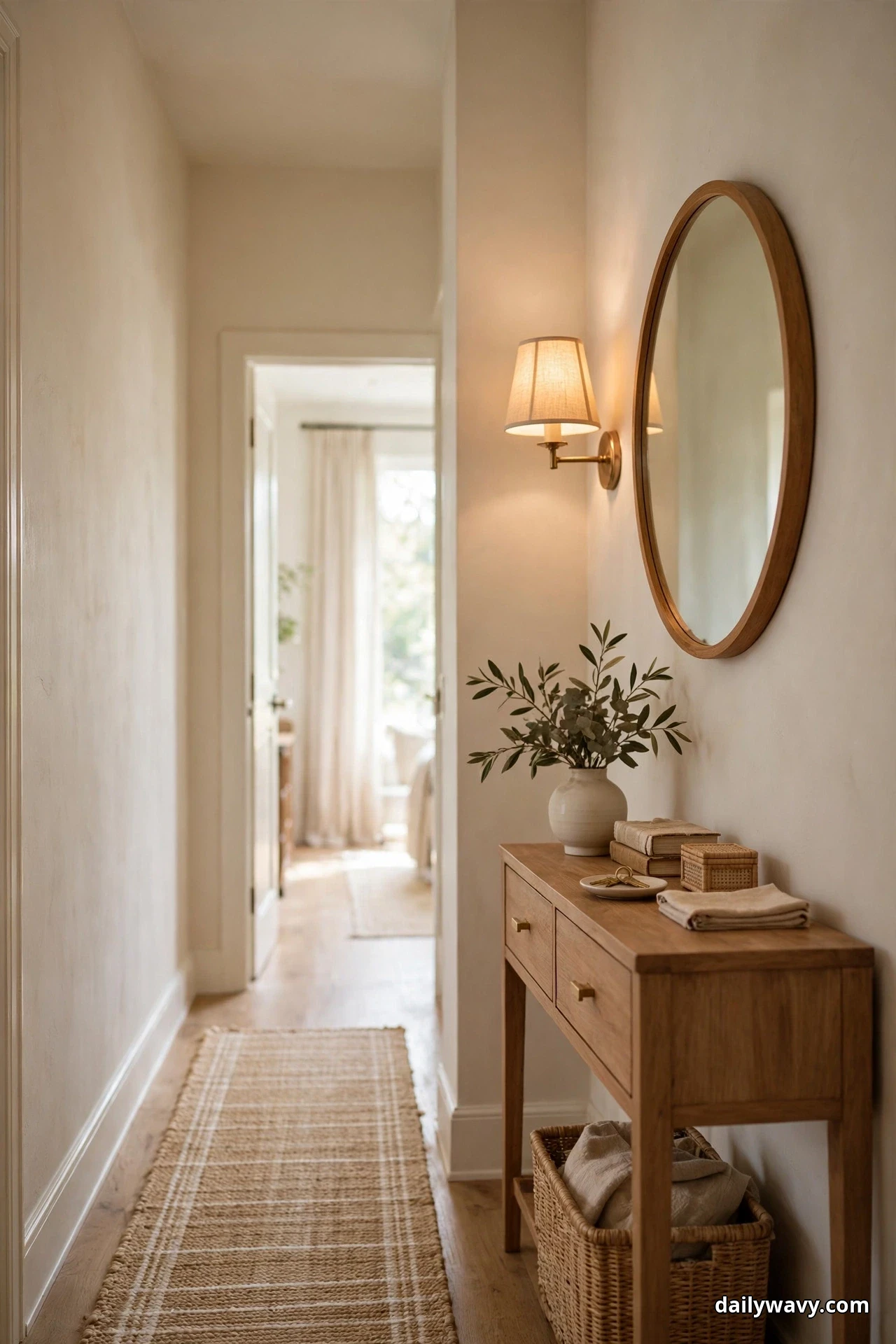
9. A Warm Shaded Light Beside The Focal Area
Every hallway has one spot that deserves more attention: the console under the mirror, the bench by the door, the gallery wall you actually curated. A warm shaded light beside that focal point pulls the eye exactly where you want it. A small fabric-shaded sconce or a picture light with a warm bulb does the job beautifully.
Mount the shade so its center sits a few inches above the focal point, not dead center on it, which lets the light graze downward in a pleasing wash. Choose a shade in cream, oatmeal, or natural linen, since white shades can look stark when lit from behind and dark shades swallow too much light. This is a low-cost idea with high impact: a single shaded sconce beside a well-styled console can make a $200 setup look like a $2,000 one.
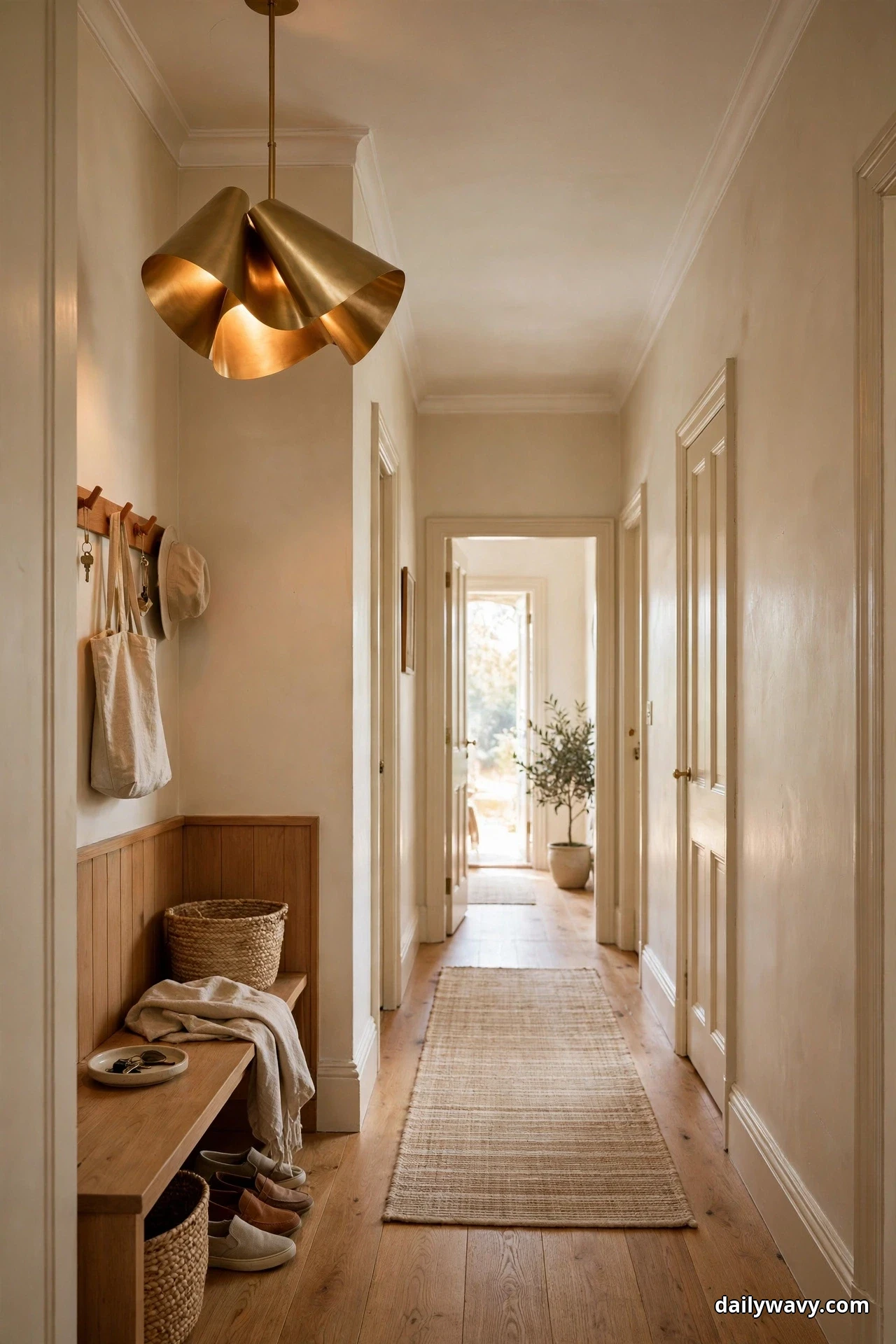
10. A Sculptural But Proportionate Fixture
A hallway can carry one moment of drama, as long as the fixture respects the space. A sculptural pendant or an artful sconce works when its size is proportionate: no wider than one-third of the hallway width, and hung high enough that traffic flows underneath without ducking. The sculpture earns its keep by giving the corridor a visual destination.
Resist the urge to place the sculptural piece in the middle of the longest, darkest stretch. It belongs where you see it coming in, near the entry or at the bend of an L. Give it breathing room: clear walls and a simple rug underneath so the fixture is the star. This is the splurge idea in the guide, and it is worth saving for the hallway you see first when you come home.
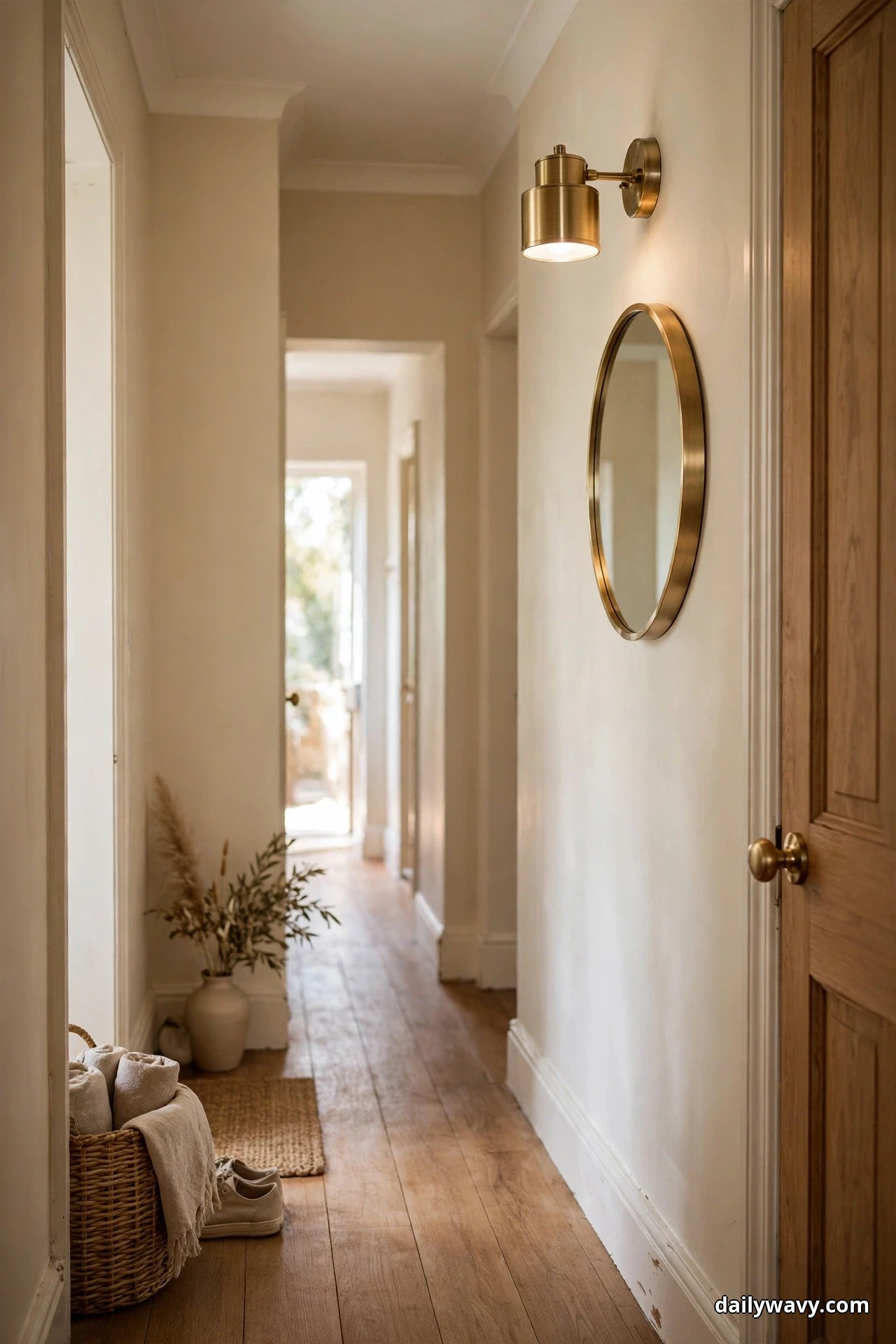
11. A Simple Metal Finish Repeated Nearby
Cohesion often comes down to repetition. Pick one metal finish for your hallway fixture, then echo it in small doses nearby: the same brass on the mirror frame and the door knobs, or the same matte black on the sconce and the console legs. Two or three repeats are enough. The eye registers the match without needing to think about it.
The hallway does not have to match the rest of the house perfectly, but it should not clash with the rooms it connects. If the kitchen is all chrome and the living room is all brass, choose the finish that sits between them, like brushed nickel, or commit to one and carry it through both doorways. Buy the fixture first and carry a small sample of the finish when you shop for the mirror or hardware.
12. A Diffused Globe-Style Form
Opal and milk-glass globes are hallway classics for a reason. The diffused form spreads light evenly in every direction, which means fewer dark patches at the ends of long corridors. A globe flush mount on the ceiling or a globe sconce on the wall gives you soft, shadow-free light that flatters everything, including the people walking through it.
Choose a globe size that fits the hallway. A 10 to 12 inch globe suits a standard corridor; anything larger belongs in a foyer with more volume. Keep the glass clean, since dust shows quickly on opal surfaces and dims the output over time. A quick wipe with a dry microfiber cloth every few months keeps the glow bright. This is one of the most forgiving fixtures you can buy, and it rarely looks wrong.

13. A Narrow Fixture In A Tight Space
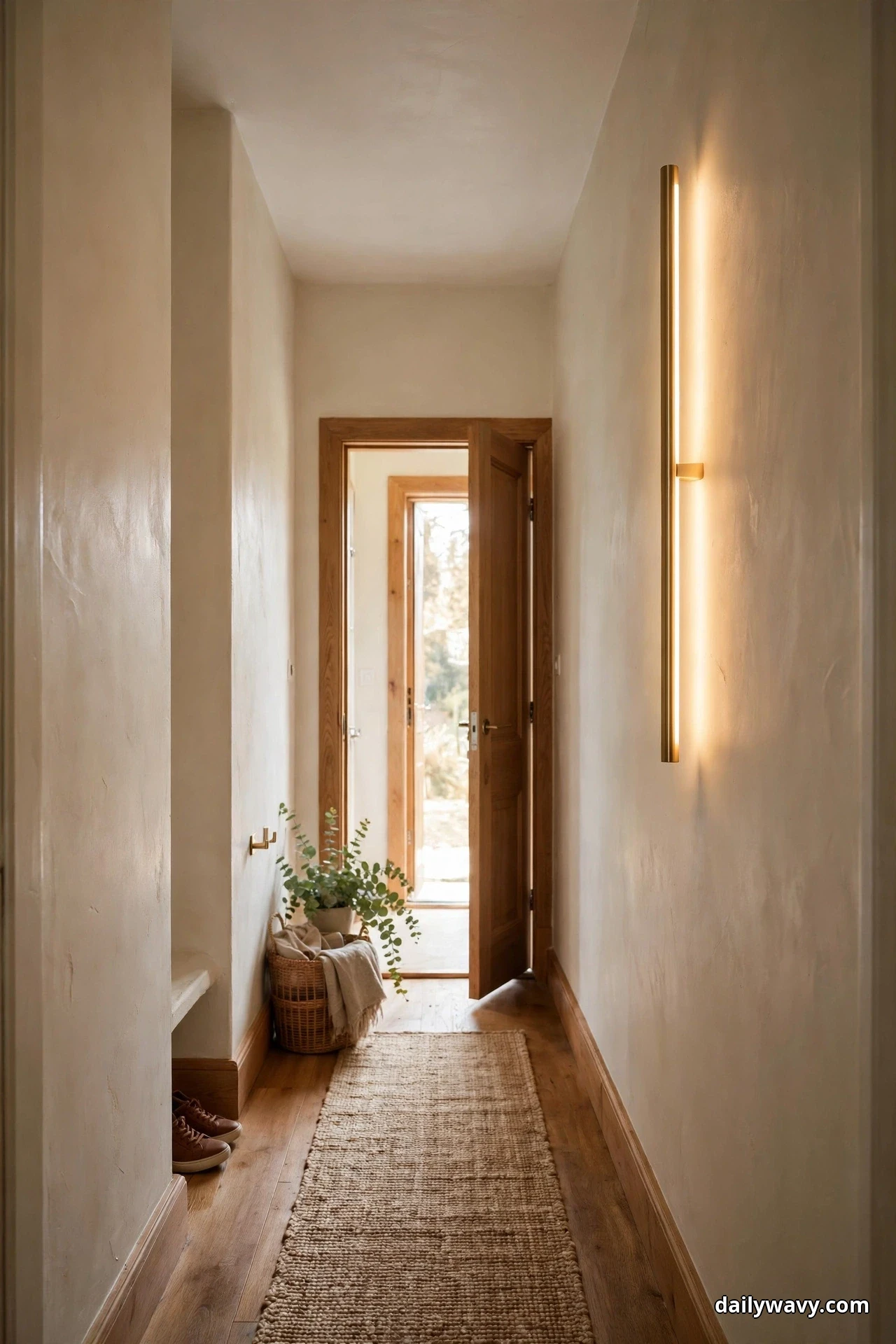
Some hallways are barely wide enough for a rug. In those tight corridors, a narrow vertical fixture is the answer. Think slim tube sconces, elongated picture-light bars, or a row of recessed slimline downlights hugging the ceiling. The vertical orientation draws the eye upward, which makes a low ceiling feel a little taller.
Measure your narrowest point before choosing. If the hallway is 36 inches wide, the fixture should project no more than three inches from the wall. Recessed options need ceiling access, so they are electrician territory, while slim plug-in tube sconces are the renter-friendly alternative. A tight space only needs one or two of these. Over-lighting a narrow corridor feels like a runway, not a home.
14. A Pair With Balanced Placement
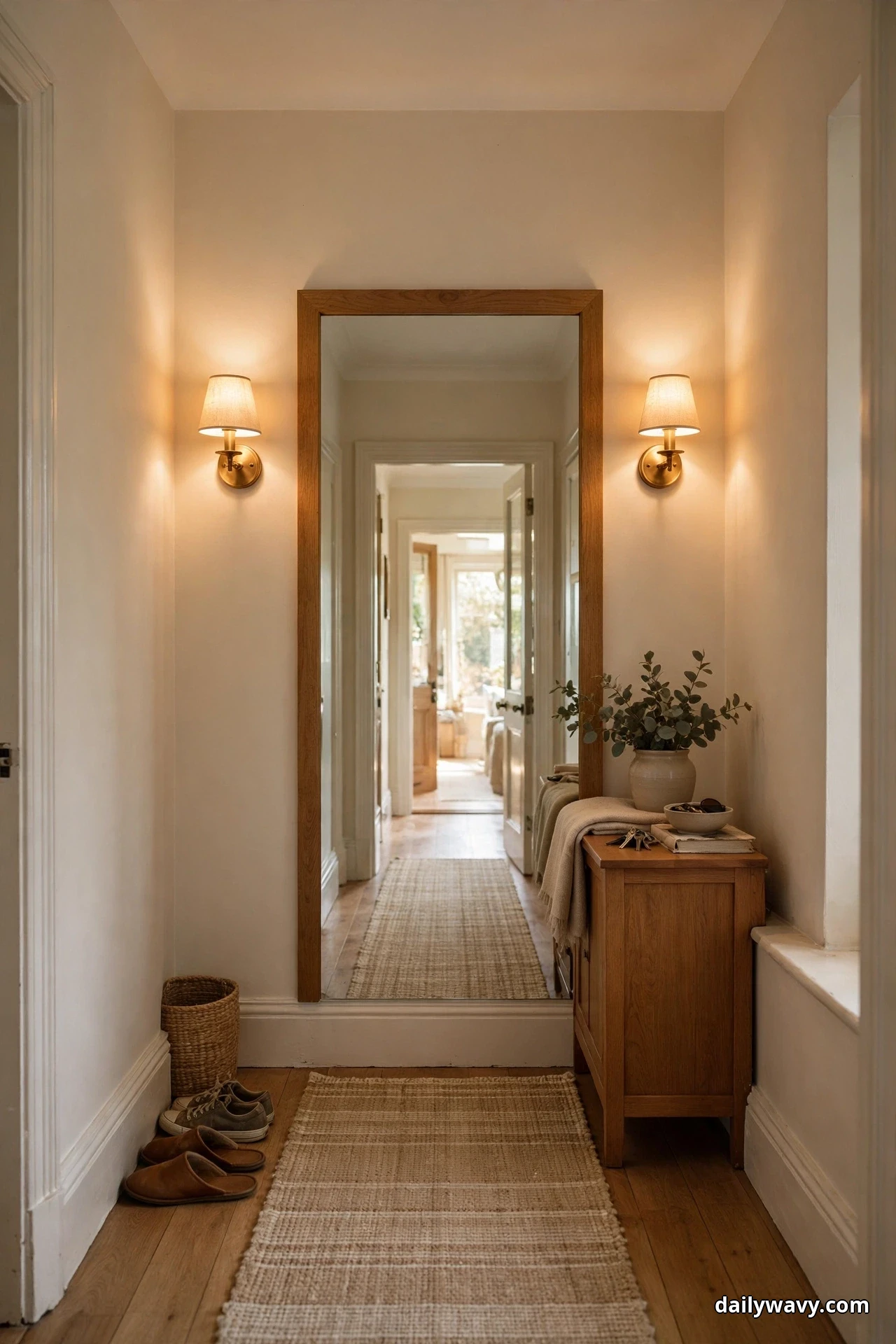
Symmetry is the fastest way to make a hallway feel finished. A pair of identical sconces, one on each side of a doorway, a mirror, or the end wall, creates balance that a single fixture cannot. Measure carefully: the pair should sit equidistant from the center of the feature they flank, and at the same height to the inch.
This idea works best on the hallway’s widest wall or at the far end where the corridor terminates. The end of the hallway is a natural focal point, and a balanced pair there gives the whole space a destination. Buy the pair together to guarantee matching finishes, and keep spare bulbs on hand so one never burns out while its twin stays lit. Nothing spoils symmetry faster than one dark fixture.
15. A Textured Shade With Gentle Light
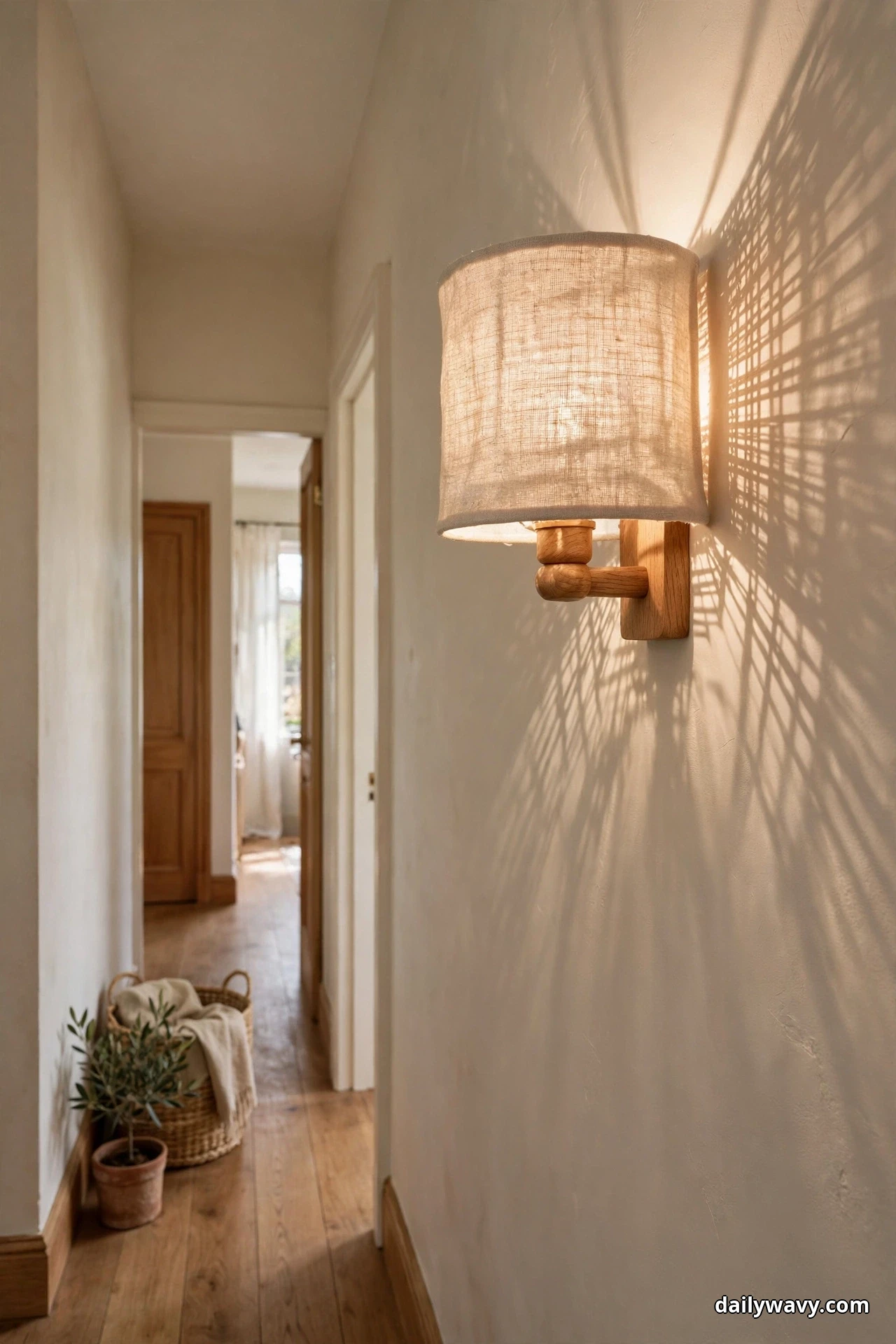
A linen, rattan, or woven-paper shade turns a simple bulb into ambient poetry. The texture breaks up the light, casting soft patterns on the wall and taking the edge off any harshness. In a hallway, where you pass close to the fixture, that softness matters. Nobody wants to squint past a bare bulb on the way to the bathroom at night.
Choose natural textures in warm neutrals and keep the shade open at the top or bottom so heat escapes and light still flows. Dust the weave gently with a soft brush every season or two, since textured shades collect dust faster than smooth ones. Pair the shade with a dimmable warm bulb and you have the coziest light in the guide, ideal for hallways that double as the path to the bedrooms.
16. A Low-Glare Light Aimed At The Task
Not all hallway light should be ambient. If there is a real task zone, a reading chair in a wide landing, a desk tucked into an alcove, a mirror where you check your coat before leaving, aim a low-glare light straight at it. A shaded downlight or an adjustable spot with a deep baffle keeps the beam on the task and out of your eyes.
Mount task lights slightly above eye level and to the side of where you stand or sit, which keeps glare out of your line of sight while the work area stays bright. In a hallway alcove, one low-glare sconce over a small desk is all it takes to make the nook genuinely usable after dark. This is the practical counterpoint to all the ambient ideas, and it is the one guests will comment on when they see it working.

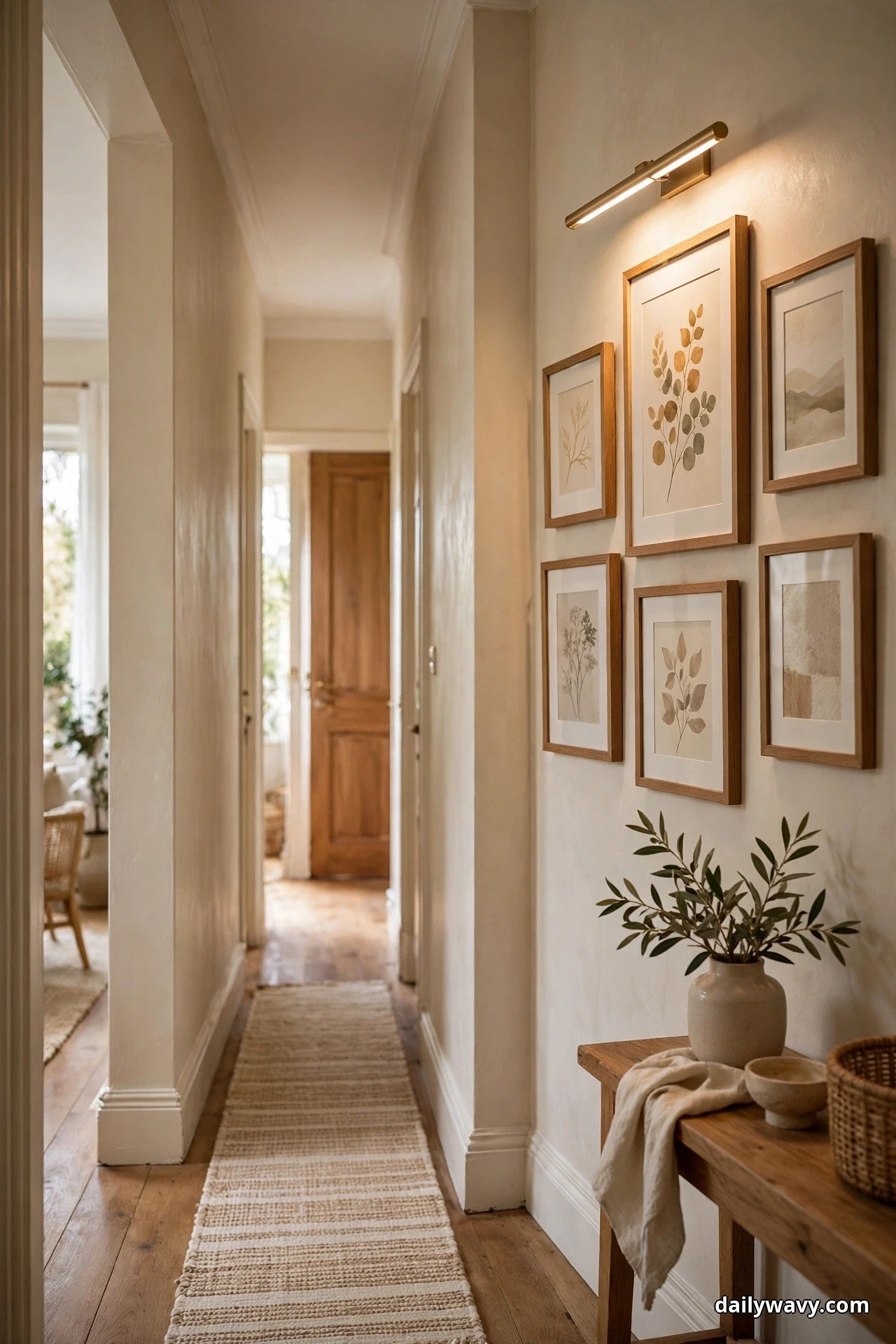
17. A Small Accent Highlighting Artwork
That gallery wall deserves better than whatever the ceiling fixture gives it. A small picture light or a slim accent bar above the art changes how the whole hallway reads. The light tells visitors that these pieces matter, and it pulls the eye down the corridor toward them, which makes the hallway feel longer and more interesting.
Size the light to the art: the fixture should span about two-thirds of the frame width. Battery-powered picture lights are the easy win here, since they need no wiring and most last months between charges with LED bulbs. Keep the beam aimed at the art, not at the viewer’s eyes. One well-lit piece beats a whole wall of dim frames, so start with your favorite and add more later if you like the effect.
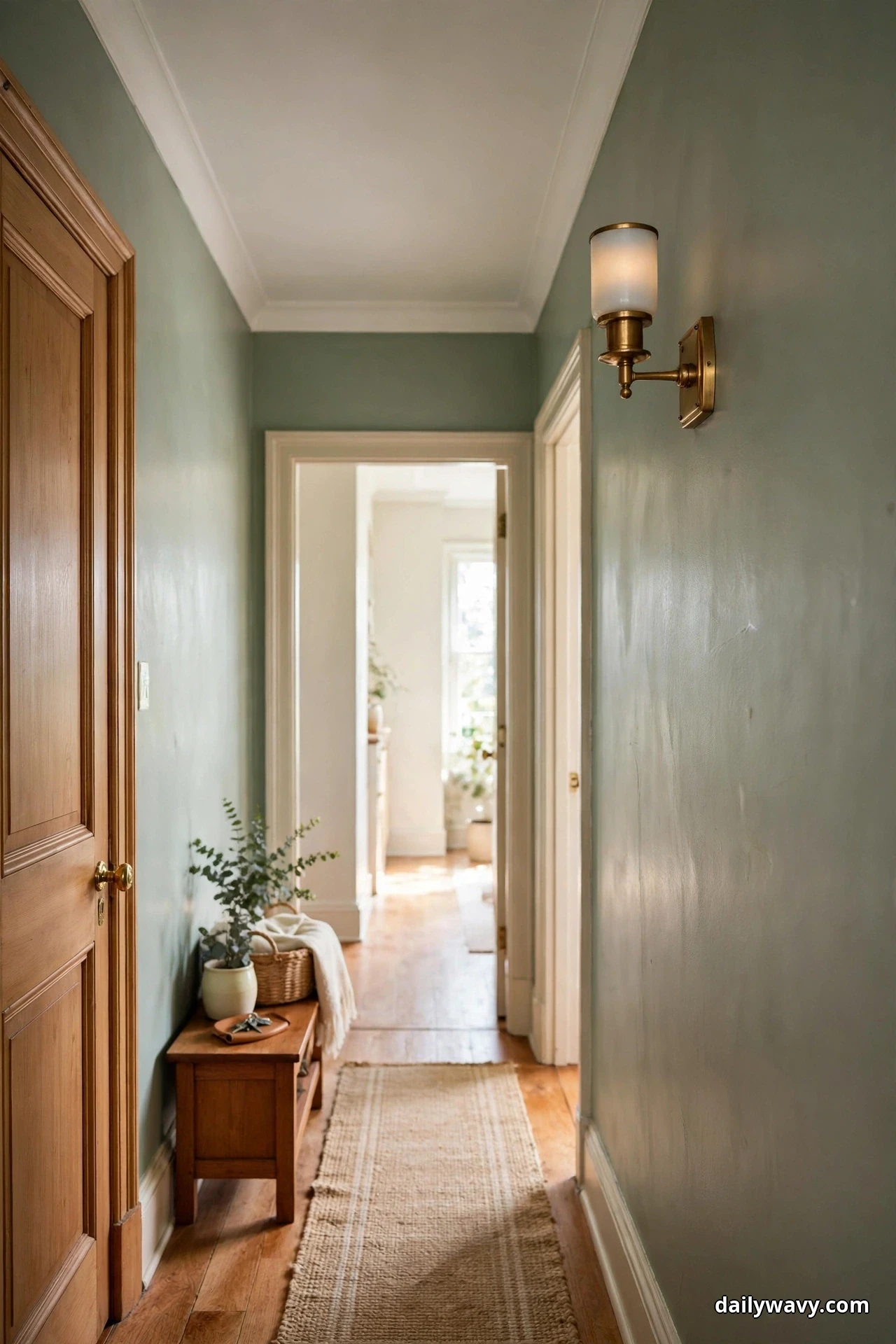
18. A Subtle Contrast Against The Wall
The final idea is the quietest one. Choose a fixture whose finish contrasts gently with the wall behind it: aged brass against sage green, matte white against warm greige, blackened bronze against pale plaster. The contrast makes the fixture visible as a design choice rather than disappearing into the paint.
Subtle is the key. You want a difference in tone, not a shout. Hold the fixture sample against the wall in daylight before you commit, since paint colors shift dramatically under artificial light. This idea costs nothing more than a thoughtful choice, and it is the detail that makes a hallway feel designed rather than defaulted. When in doubt, contrast the fixture one or two shades darker or lighter than the wall, never a full leap.
Frequently Asked Questions
How many lights does a hallway need?
A good rule of thumb is one ceiling fixture every 8 to 10 feet for ambient light, plus one accent layer, like sconces or a picture light, in the main stretch. A short hallway often needs just one well-chosen ceiling fixture and a single sconce. Longer corridors benefit from rhythm: two or three evenly spaced fixtures rather than one bright one in the middle. The same measure-first thinking runs through our narrow living room layout guide, where every piece has to earn its place in a tight room.
What color temperature works best in a hallway?
Warm white, 2700 to 3000 kelvin, suits almost every hallway. It feels welcoming, flatters wood tones and skin, and keeps the corridor from feeling like an office. Reserve cooler temperatures above 3500 kelvin for task-only spots outside the hallway run, and never mix warm and cool bulbs in the same hallway.
How high should hallway sconces be mounted?
Aim for 60 to 66 inches from the floor to the center of the fixture. That puts the light source around eye level, which spreads light evenly and keeps shades above the line of sight. If the hallway has low ceilings, stay closer to 60 inches. Always measure from the finished floor, not the subfloor, before the electrician arrives.
Can I add hallway lighting without hiring an electrician?
Yes, for plug-in and battery-powered options. Plug-in sconces, battery picture lights, and small table lamps on a console need no wiring. Anything that connects to a wall box or ceiling junction, including hardwired sconces, new ceiling fixtures, and dimmer switches, should be installed by a licensed electrician.
Are LED bulbs the right choice for hallways?
Almost always. LEDs use far less energy than incandescent or halogen bulbs, run cool to the touch, and last for years, which matters in fixtures you rarely think about. Just make sure the bulb is labeled dimmable if you plan to use a dimmer, and match the color temperature to the rest of the hallway.
My hallway is very narrow. What should I avoid?
Avoid fixtures that project more than four inches from the wall, low-hanging pendants under 84 inches of clearance, and anything wider than one-third of the hallway width. Stick with flush mounts, slim sconces, or recessed slimline downlights, and keep the finish light to bounce as much brightness as possible. The same small-space thinking runs through our small bathroom storage guide, if you want more ideas for tight rooms.
The Takeaway
A hallway does not need a renovation to feel considered. It needs light with a plan: warm color temperature, sensible spacing, one accent layer, and fixtures sized for the space they serve. Start with the idea that solves your biggest frustration, whether that is a dark corner, a bare stretch of wall, or a gallery that never gets its due. For more ideas in the same spirit, our small entryway decor guide covers the space where the hallway begins, and the Home and Decor collection has the full room-by-room library. Save the ideas you love, pin the ones to try this weekend, and walk your hallway tonight with new eyes.