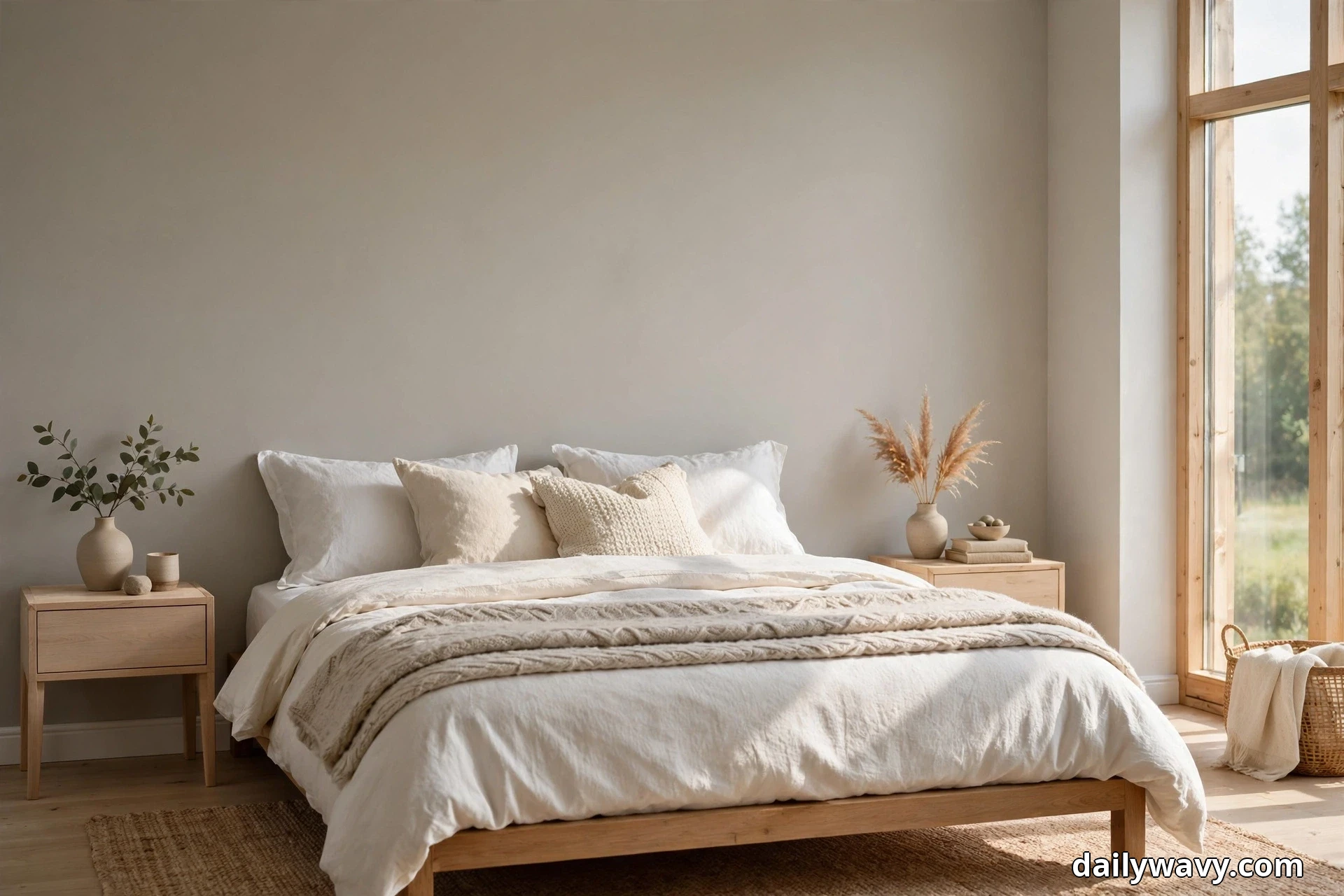
12 Scandinavian Bedroom Ideas for a Thoughtful Room Refresh
There is a reason Scandinavian bedrooms photograph so well and, more importantly, feel so restful to sleep in. The style…
There is a reason Scandinavian bedrooms photograph so well and, more importantly, feel so restful to sleep in. The style is not really about a look at all. It is about restraint used wisely: pale colors that bounce daylight around the room, honest materials like oak and wool, and furniture that earns its floor space. This guide walks through twelve ideas that capture that feeling, each one buildable in a real bedroom with real measurements. Work through them one at a time, and the room starts to feel calmer almost immediately.
In This Guide:
- An Understated Wall Color Behind The Bed
- A Soft Throw Folded Across The Bed
- A Vintage Mirror Beside A Dresser
- A Plant Near Natural Light
- A Small Writing Desk Doubling As A Vanity
- A Storage Ottoman At The Bed Foot
- An Accent Pillow In A Contrasting Material
- A Quiet Gallery Arrangement On A Side Wall
- Layered Bedding With A Textured Throw
- A Low Bench At The Bed Foot
- A Wood Nightstand With A Shaded Lamp
- Curtains Hung To Frame The Window
The Scandinavian Bedroom Rules Before You Start
Before touching a single piece of furniture, it helps to understand what makes this style work. Scandinavian rooms rest on a few practical rules, and knowing them keeps every choice easy.
Light is the main material. Northern winters are long and dark, so the style evolved to squeeze every drop out of daylight. Keep window coverings light, choose pale wall colors, and place mirrors where they catch the sky. This is also sleep-friendly lighting in reverse: the room should be bright by day and easy to darken at night with a good curtain and a warm, low lamp.
Proportion beats quantity. One correctly sized dresser looks better than two small ones pushed together. Leave breathing room around the bed, at least 24 inches on each side if the floor plan allows, so the room reads calm instead of crowded.
Layer for warmth, not bulk. The climate demands real warmth, so Scandinavian bedrooms pile on texture: linen, wool, cotton, light wood. The trick is keeping the palette quiet so the layers read as cozy rather than busy.
Function first, always. If a piece does not serve a purpose, it does not stay. A bench holds tomorrow’s clothes. An ottoman hides the spare bedding. Beauty comes from things being well made and well placed, not from decoration for its own sake.
With those rules in mind, here are the twelve ideas, each with honest guidance on how to get it right.
1. An Understated Wall Color Behind The Bed
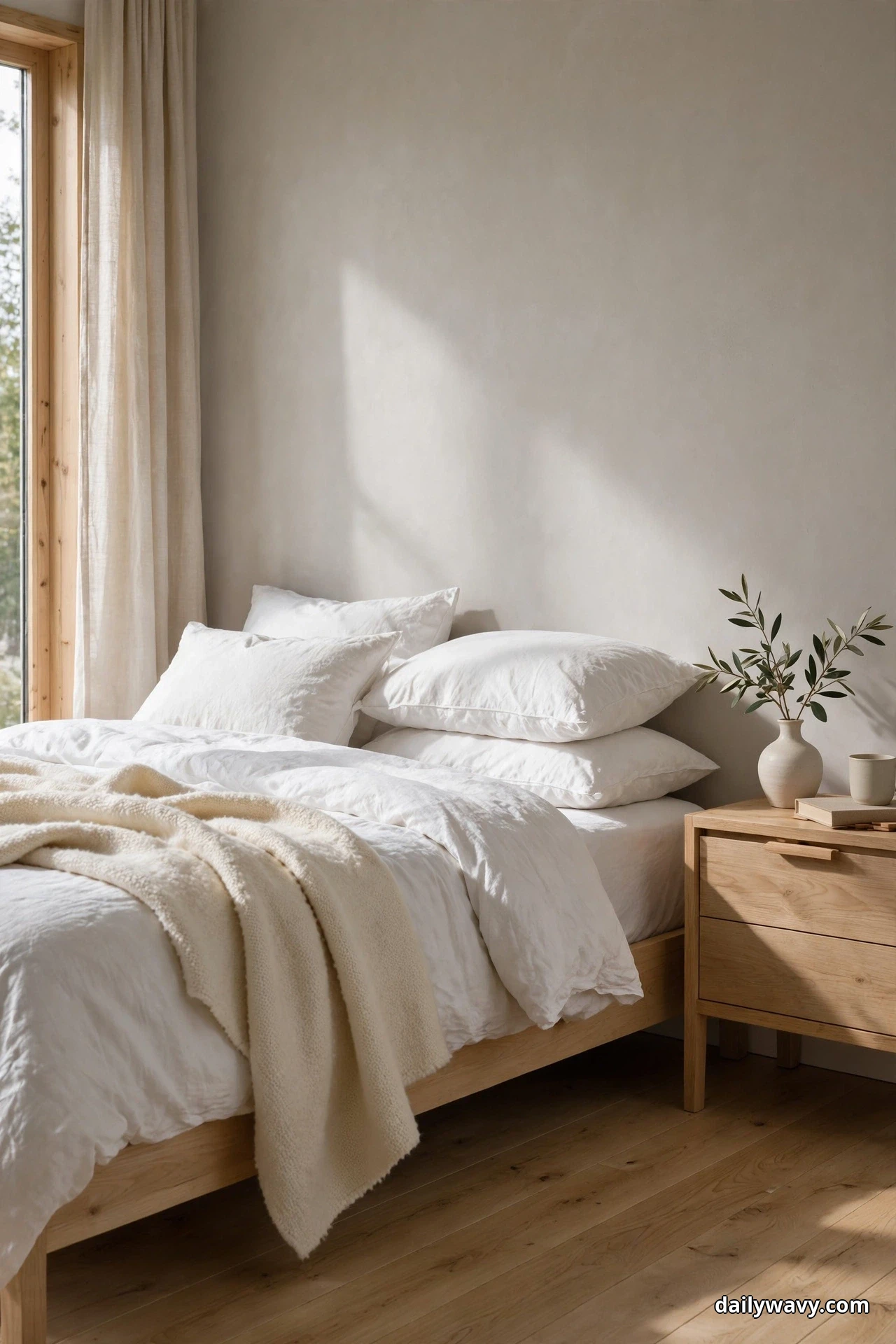
The wall behind the bed sets the tone for the entire room, and in Scandinavian design it never shouts. Warm whites, pale greiges, and the softest stone grays are the classics. They give the bed a gentle backdrop that reads as intentional without stealing attention from the textiles and wood around it.
Picking the right shade matters more than picking the right brand. Test three samples on the wall and look at them in morning light and in evening lamplight, because a gray that looks perfect at noon can turn lavender at dusk. Undertones are everything: warm grays flatter oak furniture, while cooler grays sit better with ash or pale pine. One accent wall is plenty. Paint the other three walls a clean white so the room keeps its airy feeling, and the bed wall becomes a quiet focal point instead of a closed-in box.
If painting feels like a commitment, start with the headboard wall only. A single wall is a weekend project with one gallon of paint, and it changes the room more than any new accessory could. Matte or eggshell finishes work best here. Glossy paint bounces light harshly, while flat finishes absorb it softly and look far more expensive.
Pro tip: If your room gets little natural light, choose a warm white with a hint of cream rather than a gray. Gray needs daylight to look alive. Cream stays welcoming even under lamplight.
2. A Soft Throw Folded Across The Bed
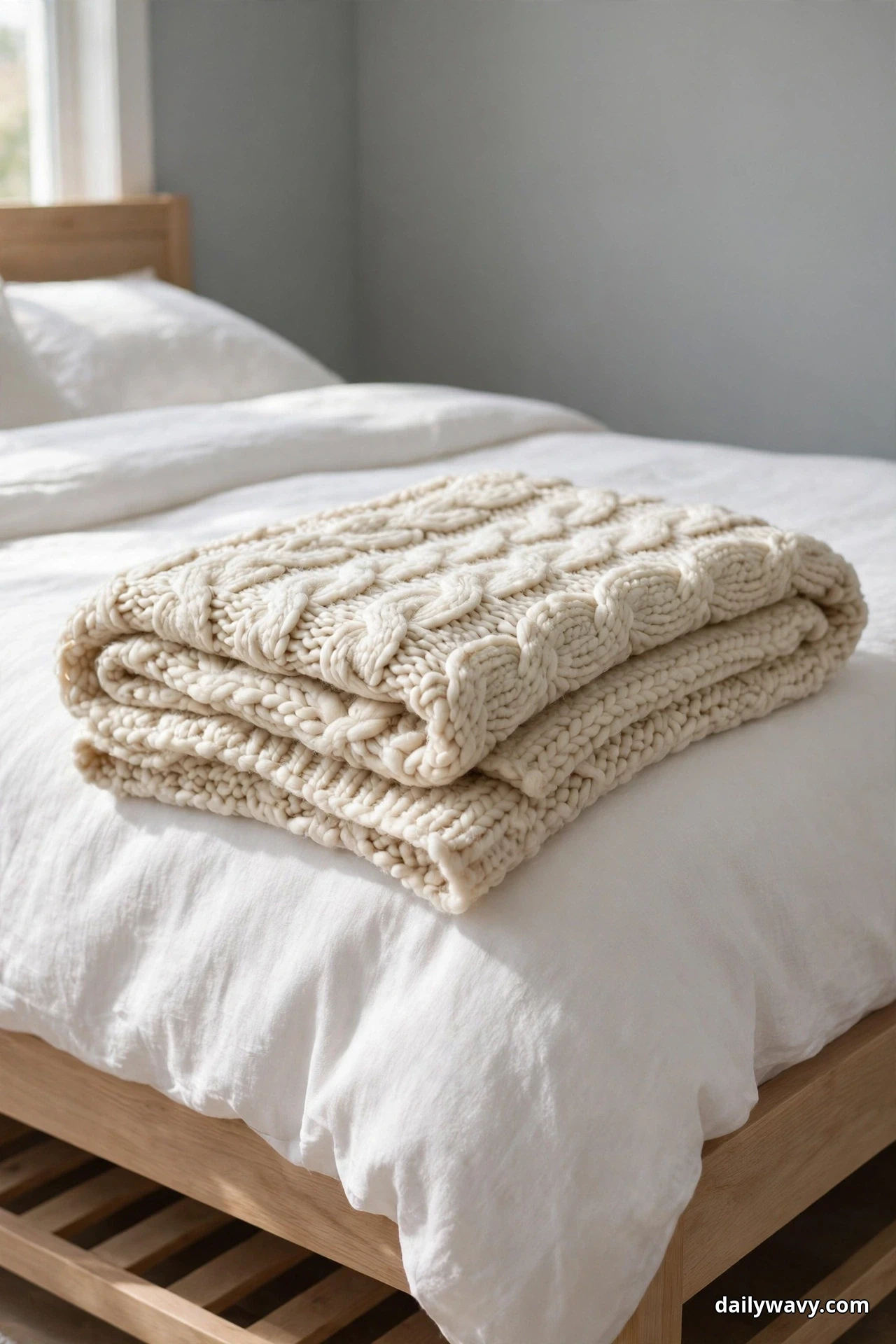
A folded throw across the foot of the bed is the fastest Scandinavian upgrade there is. It adds a band of texture and color exactly where the eye lands, and it takes about ten seconds to arrange. The folding matters: fold the throw into thirds lengthwise, then lay it across the lower third of the bed so it overlaps the duvet by about a foot.
Material is what makes this feel Scandinavian rather than generic. Look for wool, a wool blend, or a heavy washed cotton. Chunky knits read cozy in winter; lighter waffle weaves work year-round. Keep the color within the room’s palette. Cream on white, warm gray on greige, a muted sage against oatmeal. The contrast should whisper.
Size counts too. For a queen bed, a throw around 50 by 60 inches folds neatly without dragging on the floor. Anything smaller looks apologetic. And resist the urge to drape it artfully loose. Scandinavian styling is neat, not messy. A crisp fold with slightly softened edges looks intentional and stays looking good all week.
Pro tip: If the throw keeps sliding off, tuck the top edge under the mattress at the foot of the bed. It stays put and still shows the full folded band.
3. A Vintage Mirror Beside A Dresser
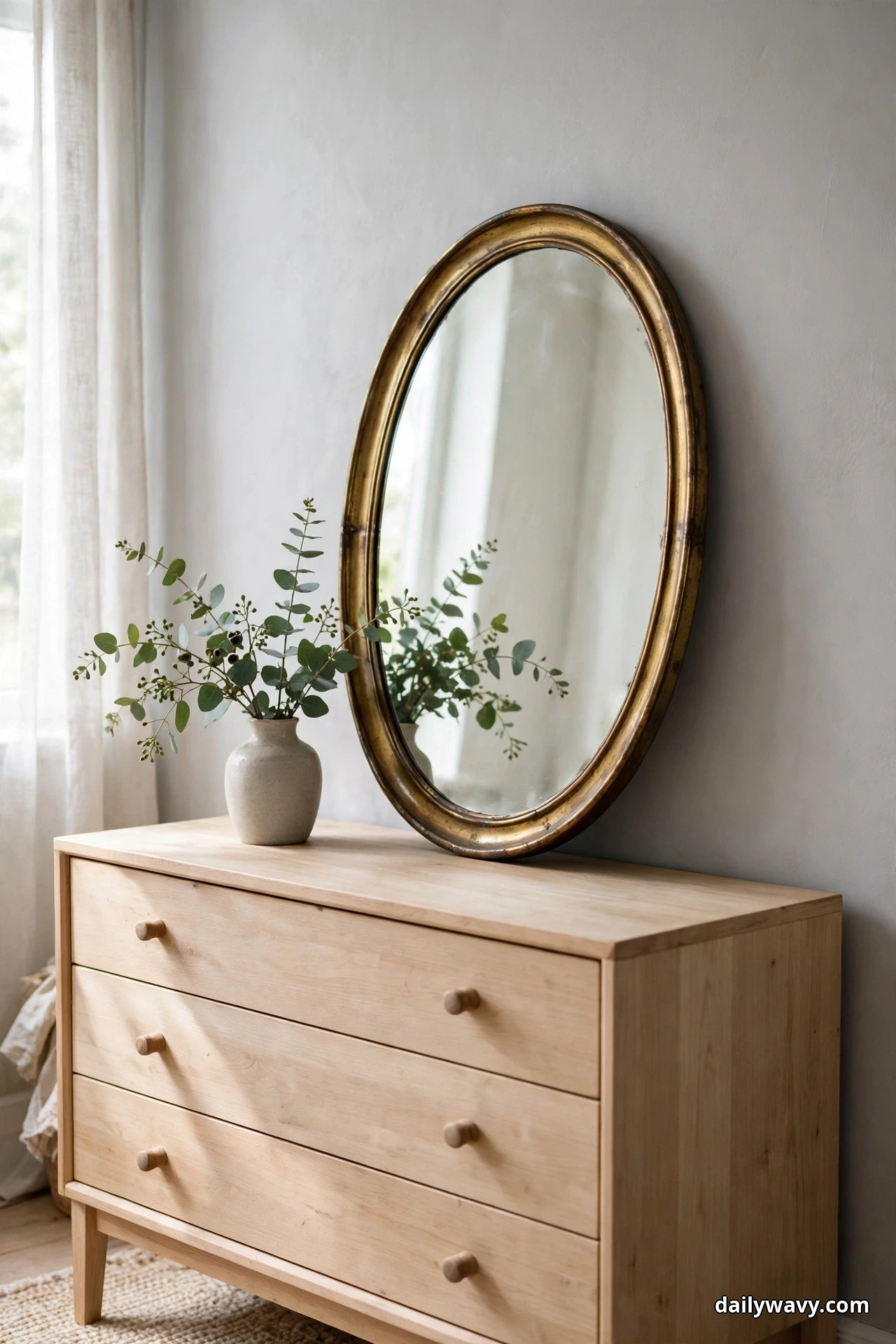
Scandinavian rooms love old things, as long as they are simple. A vintage mirror beside the dresser brings exactly the right note: a little patina, a little history, without any fussiness. Lean a medium oval or arched mirror on top of the dresser rather than hanging it. The casual lean is more relaxed, and it avoids putting holes in the wall.
Scale is the thing people get wrong. The mirror should be roughly two thirds the width of the dresser top, and tall enough that you can see your face when standing a few feet back. A 24 by 36 inch mirror suits most standard dressers. Brass or aged wood frames work beautifully against pale walls. Avoid heavy gilt or ornate carving, which fight the room’s calm.
Placement does double duty. Set the mirror where it reflects a window and it throws daylight deeper into the room, which is the whole Scandinavian lighting trick in one move. Keep the dresser top around it edited: a small vase of greenery, nothing more. The mirror is the moment.
Pro tip: Check the mirror’s reflection before you commit to the spot. Stand in the doorway and make sure it reflects light or greenery, not the closet door.
4. A Plant Near Natural Light

Every Scandinavian bedroom needs something alive. One healthy plant near the window does more for the room than a shelf of small ones scattered around. The greenery breaks up all the pale tones, and the organic shape softens the room’s straight lines in a way no furniture can.
Choose for your light, not for the photo. An olive tree or fiddle leaf fig thrives in a bright south or west window. For medium light, a snake plant or ZZ plant is nearly indestructible and its upright leaves suit the style’s clean lines. Skip fussy plants that need daily misting. A dead plant is worse than no plant, and the style is supposed to reduce stress, not add to it.
The pot matters as much as the plant. Woven seagrass baskets, simple terracotta, or matte ceramic in white or stone keep the look grounded. Size the pot to the plant: a good rule is that the pot should be about one third the total height of the arrangement. Raise it on a small wooden plant stand if the window is high, so the foliage actually catches the light.
Pro tip: Rotate the pot a quarter turn every week so the plant grows evenly instead of leaning toward the glass.
5. A Small Writing Desk Doubling As A Vanity
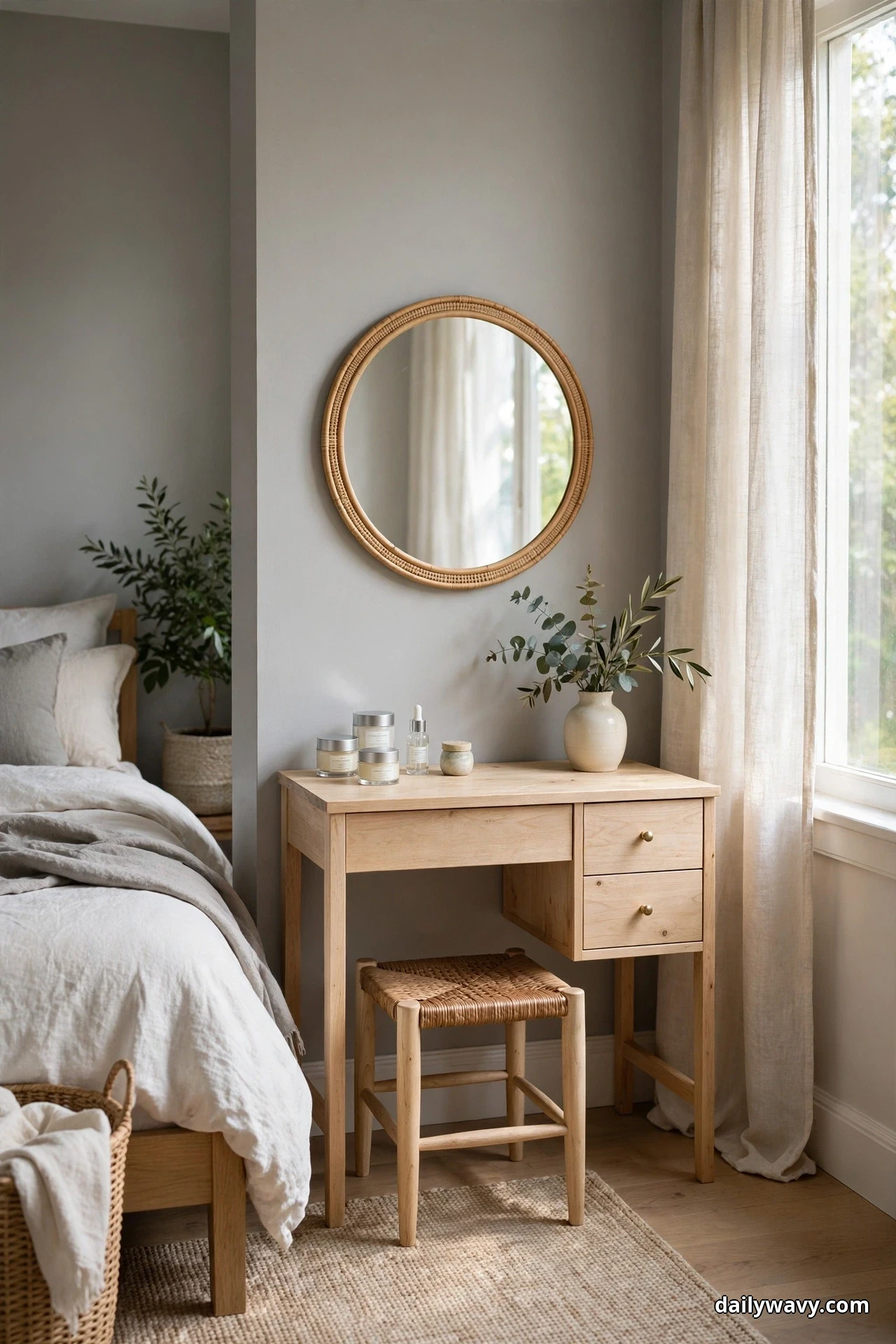
In a bedroom, every piece should justify its footprint, and a small desk that doubles as a vanity is the perfect example. By day it holds a laptop and a notebook. By evening, with a mirror propped above it and a tray for a few essentials, it becomes a getting-ready station. One piece of furniture, two full jobs.
Keep it genuinely small. A desk 36 to 42 inches wide and about 20 inches deep fits into a corner or along a short wall without crowding the room. Look for a simple light-wood design with clean legs and at most one shallow drawer. Bulky pedestal desks eat floor space and kill the airy feeling.
Styling is what makes the double duty believable. Use a round mirror, about 20 inches across, hung or leaned above the desk. Add a small tray in wood or ceramic to corral skincare or stationery so the surface never looks cluttered. A backless stool tucks completely underneath when not in use, which keeps the sightline clean. When you sit down to work or get ready, everything you need is within arm’s reach.
Pro tip: Put the desk near the window if you can. Natural light is flattering for a vanity and energizing for a workspace, and you get both benefits from one placement.
6. A Storage Ottoman At The Bed Foot
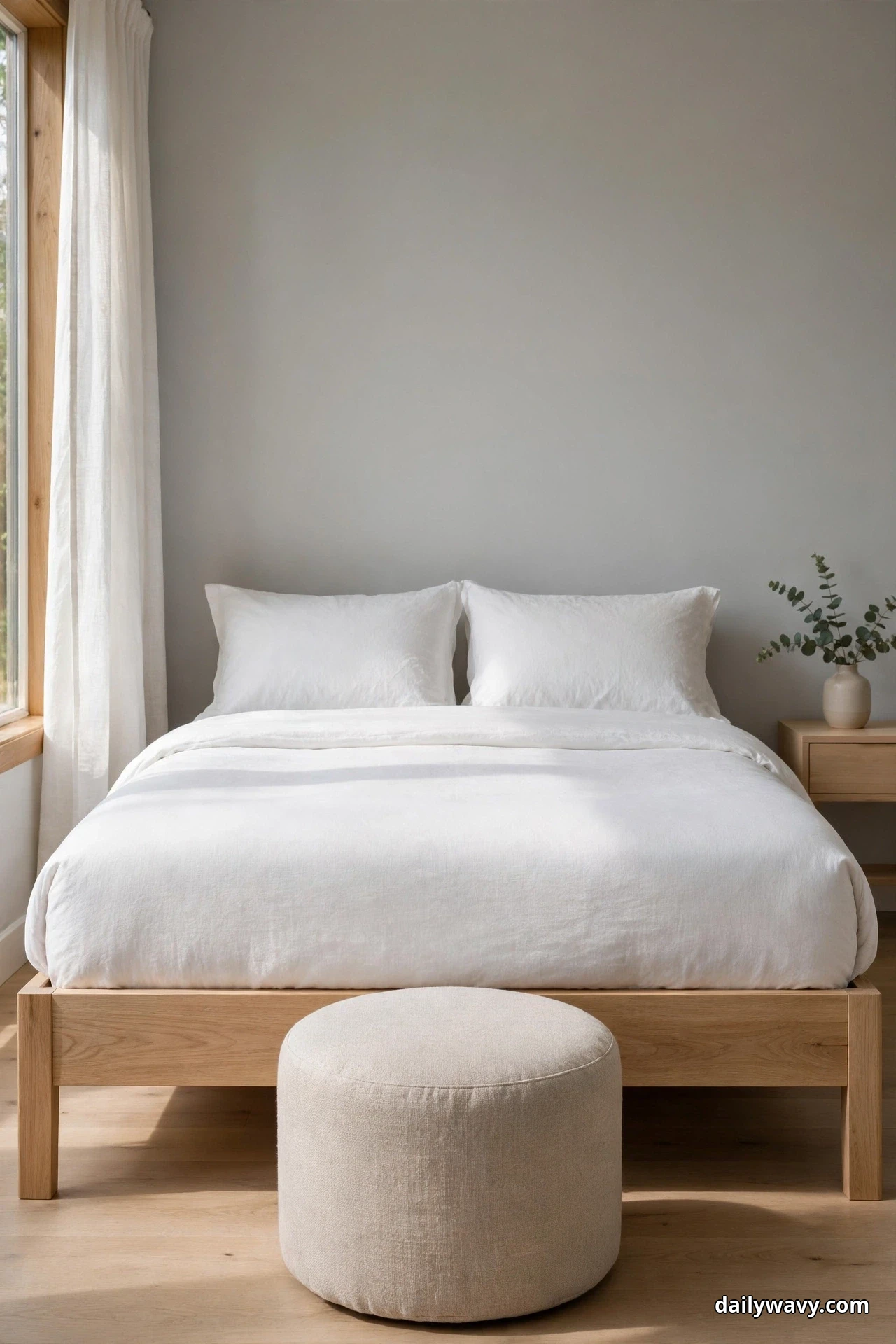
The foot of the bed is prime real estate in a Scandinavian bedroom, and a storage ottoman uses it perfectly. It gives you a place to sit while putting on shoes, a surface for the throw at night, and hidden storage for spare bedding or off-season clothes. Three functions in the space of one piece.
Choose a round or softly rectangular shape in a washable fabric. Oatmeal linen, light gray wool blends, or a pale performance fabric all suit the palette and survive daily use. Skip anything with fussy tufting, which collects dust and fights the clean look. The ottoman should be slightly lower than the mattress top, around 16 to 18 inches high, so it reads as a companion to the bed rather than a competitor.
Inside, keep it honest. This is where the spare duvet, the guest pillows, or the winter blankets live. If it is stuffed with things you never use, it is just an expensive box. Measure the bed’s width and choose an ottoman about two thirds as wide, centered on the foot. That proportion looks deliberate and leaves walking room on both sides.
Pro tip: If the ottoman will double as extra seating, check the weight rating before you buy. A sturdy frame with solid legs handles daily sitting far better than a lightweight hollow one.
7. An Accent Pillow In A Contrasting Material

Scandinavian bedding stays pale, which is exactly why one contrasting pillow works so well. A single accent pillow in a different material, think dark walnut leather, deep slate linen, or a nubby charcoal wool, gives the bed a focal point without disturbing the calm. One is enough. Two starts to look decorated.
The arrangement around it matters. Build the bed in layers: two sleeping pillows flat against the headboard, two euro shams in front of those, then the accent pillow centered or slightly off-center in front. Keep the accent pillow smaller than the shams, around 16 to 18 inches square, so it reads as an accent rather than a rival.
Material contrast is the whole point, so choose something with real texture difference. If the bedding is smooth linen, pick leather or a heavy knit. If the bedding is already textured, pick something smooth but darker. The color should still sit in the room’s family. Charcoal, espresso, and deep forest tones all read as neutrals here. Bright or saturated colors break the spell.
Pro tip: Remove the accent pillow at night and put it on the ottoman or bench. It stays looking crisp, and the bed feels less fussy when you climb in.
8. A Quiet Gallery Arrangement On A Side Wall
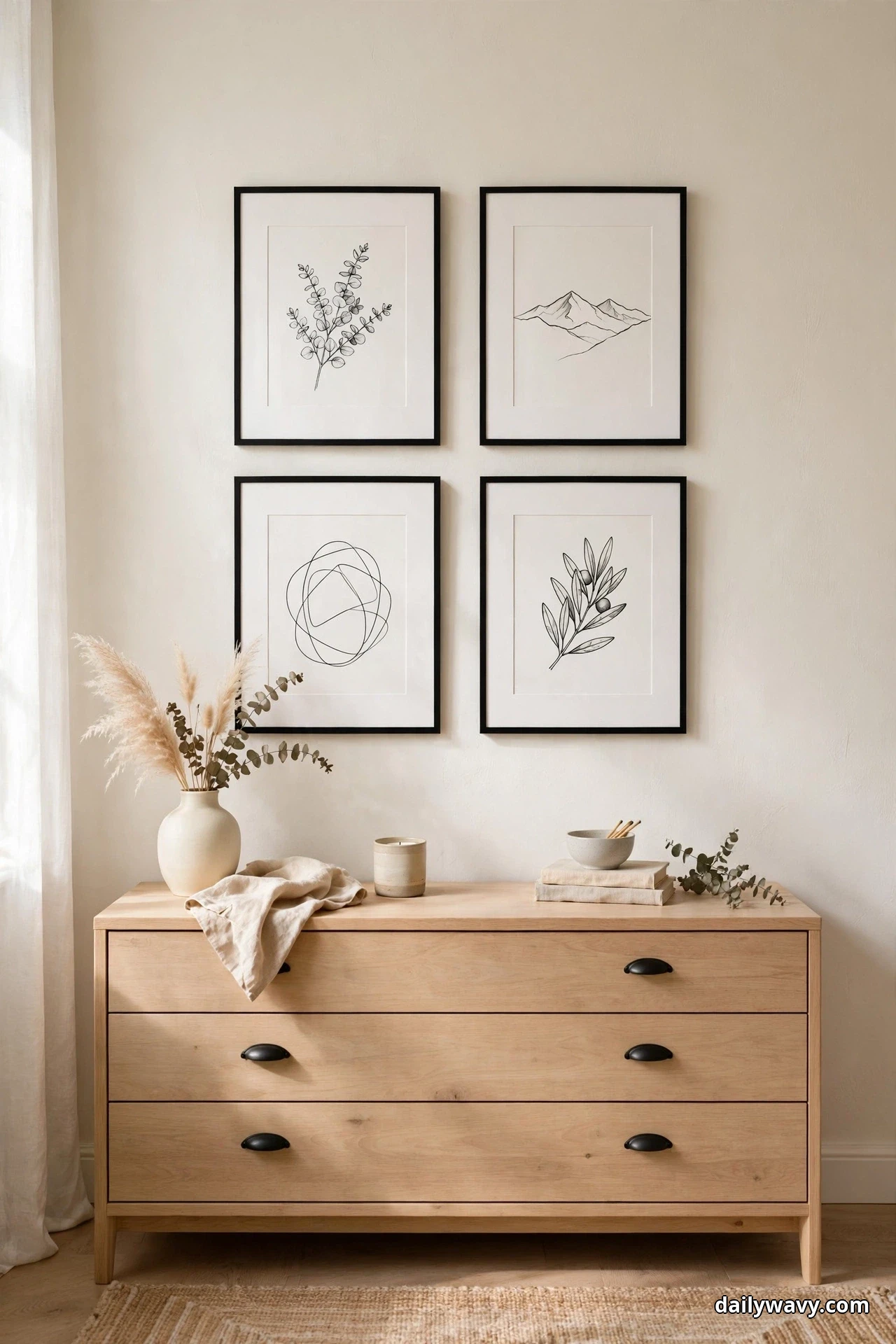
Blank walls are fine in Scandinavian rooms, but one quiet gallery arrangement adds personality without noise. The key word is quiet. Three or four simple pieces, hung with generous space between them, say more than a crowded wall ever could.
Keep the formula strict. Black and white photography or minimal line prints, all with wide white mats, all in thin black or pale wood frames. Same frame style throughout. Hang them in a loose grid or a single horizontal row above the dresser, with centers at about 57 inches from the floor, which is gallery eye level. Leave 3 to 4 inches between frames so each piece breathes.
What you hang matters less than how calm it looks, but choose images you actually like looking at. Abstract landscapes, botanical studies, and architectural details all suit the style. Avoid anything loud, busy, or sentimental in a way that fights the room’s restraint. If you are unsure, start with three prints. You can always add a fourth later, and restraint is easier to maintain than to recover.
Pro tip: Cut paper templates the size of your frames and tape them to the wall first. Live with the layout for a day before you hang anything. Moving tape is free; patching holes is not.
9. Layered Bedding With A Textured Throw
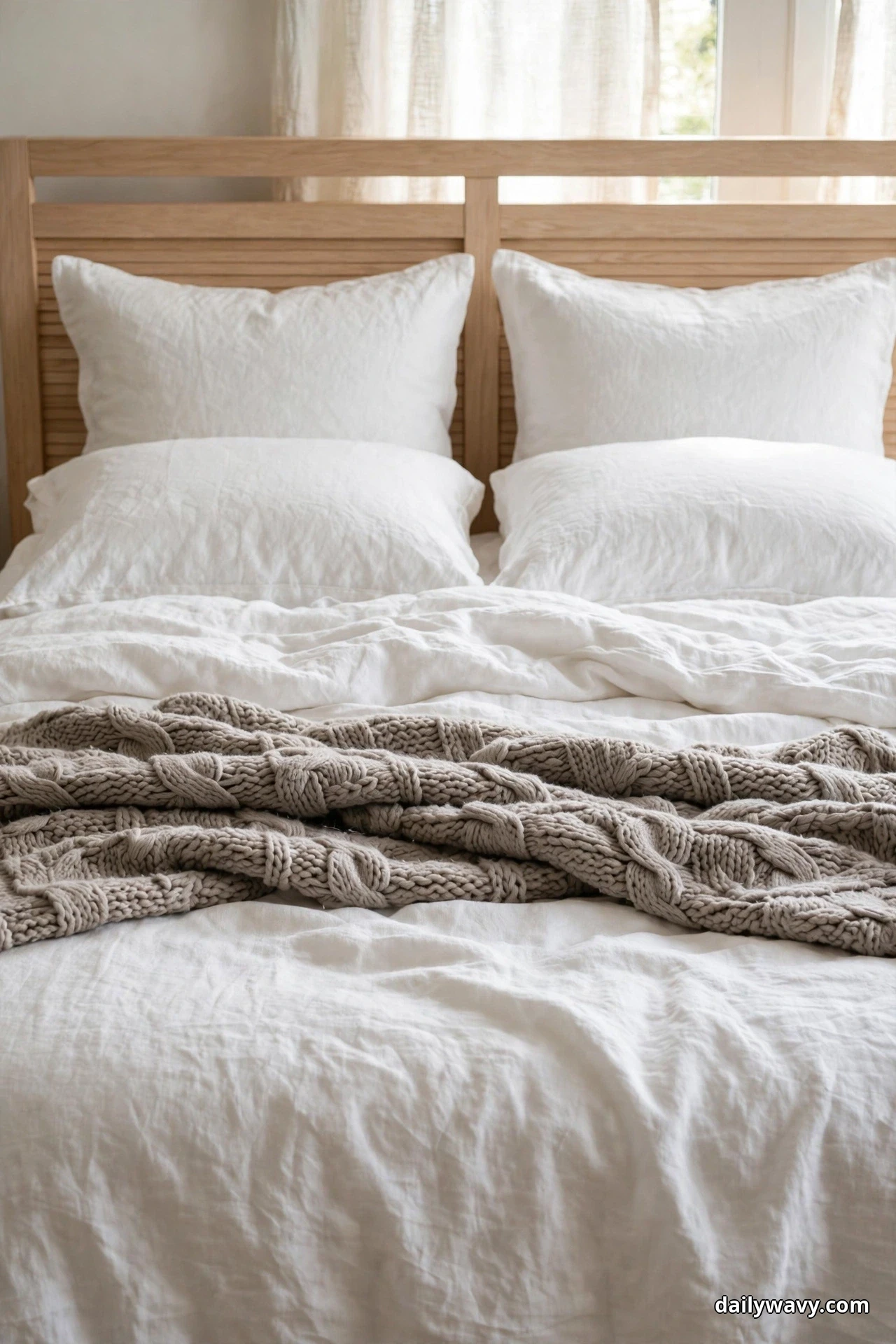
If the Scandinavian bedroom has a signature move, this is it. Layered bedding with a textured throw is what makes the bed look inviting in every photo, and it feels just as good as it looks. The layers do real work too: they let you adjust warmth through the night without wrestling a heavy duvet.
Build from the bottom up. Start with quality sheets in white or pale gray, washed linen if the budget allows. Add a duvet in a slightly different tone, cream over white or soft gray over cream, so the layers are visible. Then the throw: a chunky knit or a heavy waffle weave in a warm neutral, folded across the lower third of the bed. Each layer should be a slightly different texture. That variation is what keeps an all-neutral bed from looking flat.
Weight matters for sleep, not just looks. Keep the total bedding breathable. Wool and linen regulate temperature naturally, which is why they are Scandinavian staples. If you sleep hot, skip the top coverlet and let the throw be the visible layer. The bed still looks styled, and you will actually sleep better.
Pro tip: Wash new linen bedding two or three times before judging it. Linen softens dramatically with washing, and the slightly rumpled look it develops is exactly right for this style.
10. A Low Bench At The Bed Foot

A low bench at the foot of the bed is the Scandinavian answer to the question of where things go. Tomorrow’s clothes land here instead of on a chair. A tray with a book and a small plant turns it into a styling moment. And visually, it gives the bed a finished edge that makes the whole room feel considered.
Keep the bench low and simple. Around 16 to 18 inches high, in light oak or ash, with clean straight legs. A length about two thirds the width of the bed looks balanced. Add a single long cushion in a washable natural fabric if you want softness, but keep it thin. A thick upholstered bench starts to look like a sofa and eats the room’s lightness.
Leave the top mostly clear. One folded throw, one small tray, or nothing at all. The bench is a working piece, and a working piece needs empty surface to work on. If it fills up with clutter, it becomes a very expensive shelf. Give everything on it a reason to be there, and the bench stays beautiful by staying useful.
Pro tip: If floor space is tight, choose a bench with an open lower shelf. Shoes or a basket slide underneath, and the footprint does double duty without looking heavy.
11. A Wood Nightstand With A Shaded Lamp
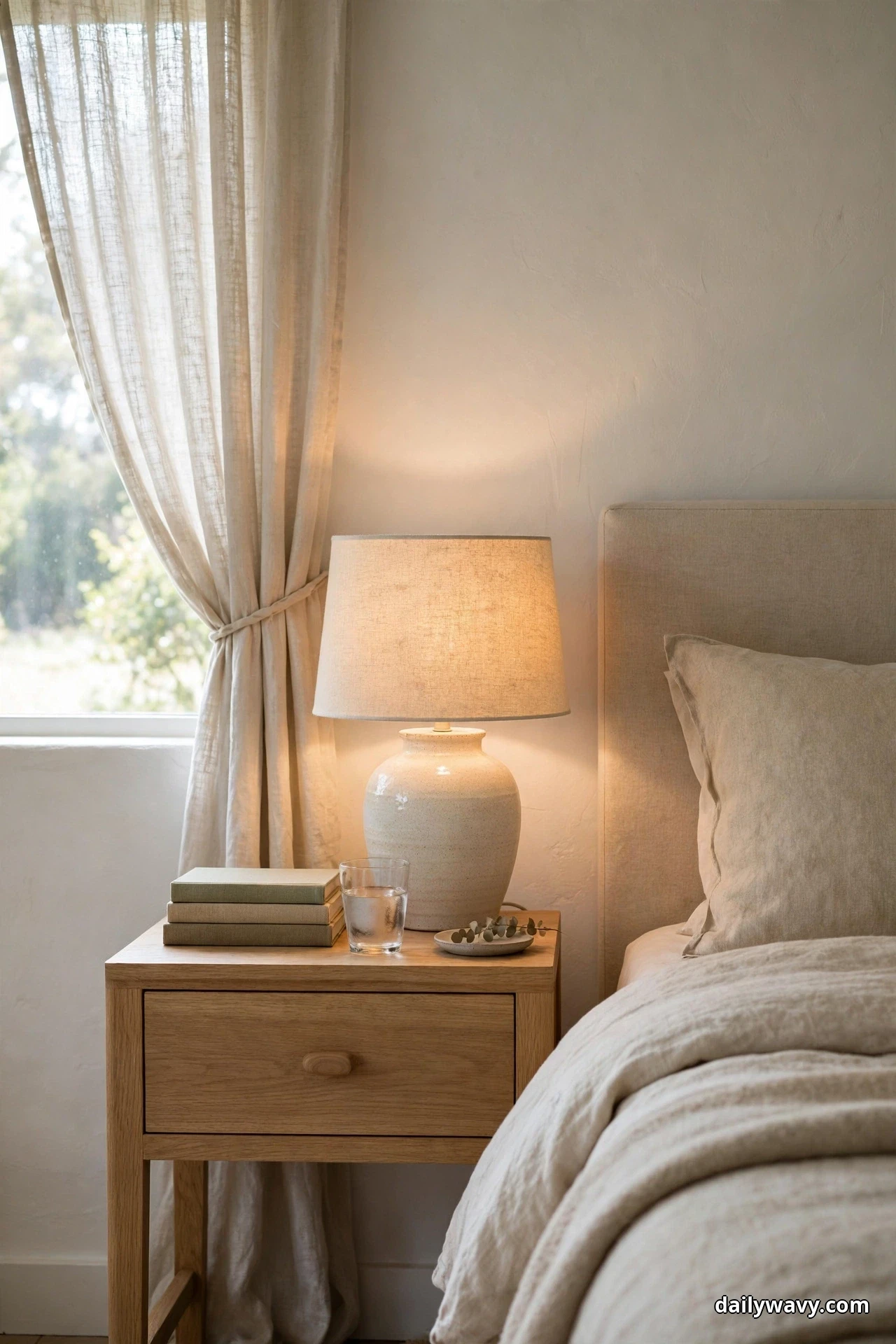
The nightstand is the hardest-working small surface in the bedroom, and the Scandinavian version keeps it honest: light wood, clean lines, and a lamp with a fabric shade that throws warm light instead of glare. This is sleep-friendly lighting at its most practical. A shaded lamp at bed height gives you reading light that does not blast the room awake.
Size the nightstand to the bed. The top should sit roughly level with the mattress, usually 24 to 28 inches high, so reaching for water or a book feels natural. A single drawer plus an open shelf is the ideal layout: the drawer hides the clutter, the shelf holds the books you are actually reading. Anything bigger dominates a small bedroom.
The shade does the real work. Choose linen or cotton in white, cream, or soft gray, and pair it with a warm bulb around 2700K. Cool white bulbs make a bedroom feel like an office. Keep the nightstand top edited to three things: the lamp, one book or a small stack, and one personal item. If it holds more than that, it is a dresser, not a nightstand.
Pro tip: Put the lamp on a small smart plug or a plug-in dimmer. Being able to dim the light from bed is a small luxury that changes how the room feels at night.
12. Curtains Hung To Frame The Window
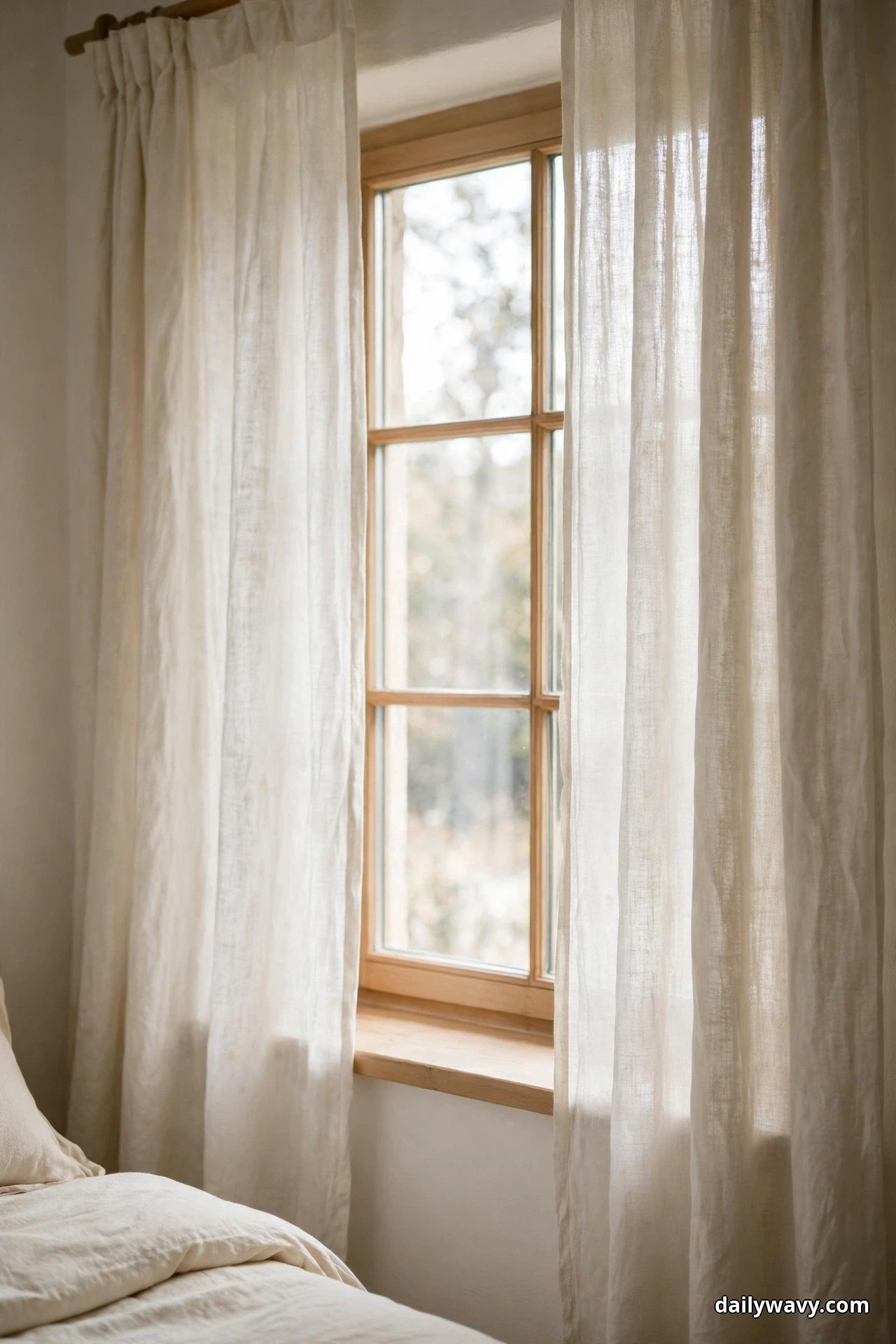
Curtains are the finishing frame of a Scandinavian bedroom, and hanging them well matters more than what they cost. The classic mistake is a rod that barely spans the window with panels that pinch the glass. The Scandinavian fix is generous: mount the rod 4 to 6 inches above the window frame and extend it 8 to 12 inches past the frame on each side, so the panels stack on the wall and the full window stays visible.
Fabric choice sets the mood. Washed linen or a linen blend in warm white is the default for a reason. It filters daylight beautifully, hangs with soft natural folds, and never looks fussy. For sleep, layer a simple roller blind or blackout lining behind the linen panels. You get the soft daytime look and a truly dark room at night, which is what sleep-friendly lighting is really about.
Length is non-negotiable. Panels should just kiss the floor or break slightly on it. Anything that floats above the floor looks unfinished, and anything pooling heavily collects dust. Measure from the rod to the floor and buy accordingly. Most ready-made panels come in 84, 96, and 108 inch lengths, and one of those usually works with the high-and-wide mounting.
Pro tip: Steam or iron linen panels before hanging. Linen wrinkles are charming once hung, but the hard packaging creases from the store never look intentional.
Frequently Asked Questions
How do I make a small bedroom feel Scandinavian without it feeling empty?
Small rooms actually suit the style. Keep the palette pale, choose one statement piece like the bed or a dresser, and let negative space do the work. If you are working with tight square footage, our small bedroom with a queen bed ideas show how to fit real furniture into a compact layout without losing the calm.
What colors are truly Scandinavian for a bedroom?
Warm whites, soft grays, pale greige, muted sage, and dusty blue in small doses. Wood tones count as color too: light oak, ash, and pale pine warm up the neutrals. Keep any stronger color to a single accent, like one pillow or one piece of art.
Is Scandinavian style expensive to achieve?
It does not have to be. The style favors fewer, better things, which actually saves money. A secondhand solid-wood dresser, washed linen-look bedding, and one good lamp get you most of the way there. Spend on what you touch daily: the mattress, the bedding, and the lighting.
How is Scandinavian different from minimalism?
Minimalism often strips a room down to almost nothing. Scandinavian design keeps the warmth: more texture, more wood, more softness. It is minimalism you can actually live in, with throws, plants, and books allowed as long as everything has a place.
Can I mix Scandinavian with other styles?
Yes. Styles like mid-century and japandi share the love of clean lines and natural materials, so they blend easily. Borrow an idea or two as inspiration, but keep this room’s palette quiet so the mix reads as intentional. For layout thinking across styles, the narrow living room layout guide shows the same proportion rules applied to a different room.
Where should I start if the budget only covers one change?
Paint the wall behind the bed and upgrade the bedding. Those two changes touch the largest surfaces in the room and deliver the biggest transformation per dollar. Lighting comes next: one good shaded lamp changes evenings completely. Our small entryway decor ideas use the same high-impact-first thinking for another part of the home.
The Takeaway
A Scandinavian bedroom is not a shopping list. It is a set of decisions: pale walls that hold the light, honest materials that age well, and furniture that works for its place. Start with the biggest surfaces, the walls and the bed, then add the smaller layers one at a time. A throw here, a plant there, a lamp that makes evenings feel soft. None of these ideas needs to happen this weekend. Pick the one that bothers you most about your room right now, fix that, and let the calm build from there. For more rooms built on the same principles, browse the full Home and Decor collection and keep going.